Contaminated Water is the Main Cause of Diarrheal Diseases in Cuba

The poor water service in most of the country forces a large part of the citizens to use the water they have at their disposal / Invasor

14ymedio bigger14ymedio, Havana, 11 March 2024 — Acute diarrheal diseases in Ciego de Ávila, Cuba, increased by 86% compared to March 2023, the official newspaper Invasor reported this Monday. Despite the excessive increase, which has translated into a worrying increase “in hospital care,” the epidemiological authorities of the region assure that the cases are within the estimates for this period of the year, which is why they estimate that the situation is still located in the “safety zone.”

“Even though epidemiologically speaking we are not in a critical situation, we do have to worry and take measures, especially at home,” José Luis López, deputy director of Epidemiology at the Provincial Hygiene Center, clarified to the newspaper.

As explained, the institution establishes four categories to monitor the progress of these diseases on the Island: success zone, when there are fewer cases than estimated; safety zone, when the estimate is met; of alarm, when cases increase; and epidemic, when cases exceed what was expected. For “this time of year,” the manager insisted, “cases have increased, but within limits.” continue reading

“In the studies that have been done, more than 38% of the samples analyzed have been positive for protozoa (parasites)”

Invasor, however, was not satisfied with López’s statements and stressed that months ago the newspaper highlighted the increase in annual cases in the province, which as of September 2023 exceeded 1,000, at a rate of 37 per week in that month and with “emphasis on pediatric ages.” The figure exceeded the number of cases of the same period in 2022 by 71.2%. With such clear warnings, even if it is a “seasonal increase,” even the official media questions whether the authorities could have been able to prevent a greater increase this year.

“In all municipalities, except Chambas and Bolivia, cases of diarrheal diseases have increased and the highest incidence is in children under 15 years of age, and, among them, infants up to one year of age, which sets off the alarms due to the risks of dehydration in that age group,” adds López.

As for the causes, the director points out an evident increase in “intestinal parasitism” in a large part of the patients suffering from these conditions. “In the studies that have been done, more than 38% of the samples analyzed have been positive for protozoa (parasites), and in some cases salmonella, which causes salmonellosis, a common bacterial disease has been isolated that affects the intestines, and can cause diarrhea, fever and abdominal cramps,” he says.

In this sense, explains López, outbreaks of diarrheal diseases escape the hands of health institutions, since many of these parasites and bacteria are found mainly in water or in the food itself, so it is up to other authorities to verify, for example, the quality of drinking water.

The poor water service in most of the country, however, forces a large part of citizens to use the water they have at their disposal, whether from cisterns with stagnant liquid, polluted dams and rivers, or wells that do not meet the quality parameters for consumption. Added to this are the constant blackouts suffered by the Island, which have intensified during the last week, and which make it difficult to refrigerate food.

Last December, the official press reported an outbreak of leptospirosis in the eastern provinces, another of the diseases generally associated with unsanitary cities and the alarming presence of rodents. The gigantic garbage dumps that the cities of the Island exhibit, denouced to this newspaper at that time by a Havana woman, are the main cause of the increase in this disease.

The authorities, however, once again limited themselves to blaming the population for not going to the hospitals in time to be treated, and did not offer a clear explanation for the increase in cases.

____________

COLLABORATE WITH OUR WORKThe 14ymedio team is committed to practicing serious journalism that reflects Cuba’s reality in all its depth. Thank you for joining us on this long journey. We invite you to continue supporting us by becoming a member of 14ymedio now. Together we can continue transforming journalism in Cuba.

Long Blackouts in Cuba Provoke Popular Protests in Holguin and Camaguey

This Saturday night there were protests in Holguín and the municipality of Florida, in Camagüey, after the long blackouts of recent days on the Island / 14ymedio

14ymedio bigger14ymedio, Miguel García, Holguín, 10 March 2024 — Cacerolazos* in several neighborhoods of the country and throwing stones at a State institution marked the protests that took place this Saturday night in cities such as Holguín and the municipality of Florida, in Camagüey, after the long blackouts that have occurred in recent years, lasting for days throughout the Island.

“The Manuel Angulo Dental Clinic in Pueblo Nuevo was hit with stones in the middle of the blackout, and in the 26 de Julio and Alcides Pino neighborhoods they ‘played cazuelas’* last night,” a Holguin resident described to 14ymedio.

“Last night all the police sector chiefs of the Popular Council of Pueblo Nuevo were on guard and ready to repress,” warns another neighbor, who also confirmed that the dental clinic that was stoned remains under State Security surveillance this Sunday.

A few videos that have come to light on social networks record some of the cacerolazos that took place on Saturday in Holguín. Currently, much of the city remains without electricity, so the mobile signal is weak or non-existent and users cannot publish images of the protests because they do not have an internet signal. continue reading

“The Manuel Angulo Dental Clinic in Pueblo Nuevo was hit with stones in the middle of the blackout and in the 26 de Julio and Alcides Pino deliveries they ‘played cazuelas’ last night

Other testimonies that reached the 14ymedio editorial office confirm that in the capital of Holguín the repressive forces of the regime continue to be “on guard” against the possibility of new protests emerging in the streets.

For his part, journalist Luis Tan Estrada confirmed on his Facebook page with several sources that, this Saturday night, several residents of the Camagüey municipality of Florida “took to the streets to protest in the midst of the blackouts.”

“Although the authorities of that territory tried to prove the opposite through posts on Facebook, the reality was different,” the reporter insisted when referring to a publication by the Party secretary of that municipality on the social network, in which she illustrated with some photos that the people were “enjoying the tranquility of my Cuba, free and sovereign.”

But in reality, Tan Estrada describes, his sources informed him that the atmosphere in Florida “got hot” and that shortly after the protest “they turned on the electricity.” Other reports also confirmed demonstrations in Batabanó, in the province of Mayabeque.

The blackouts will continue all day Sunday. The Electrical Union predicts for this day a deficit of 1,045 megawatts (MW) and an impact of 1,115 MW during peak hours. Last Friday, an impact of 1,566 megawatts was recorded at the time of maximum demand, an unprecedented number since the energy crisis worsened two years ago.

*Translator’s note: ‘Cacerola’ and ‘cazuela’ both translate as ‘pot’ and a ‘cacerolazo’ or ‘tocan cazuela’ where people bang on pots and pans is a common form of protest across Latin America.
____________

COLLABORATE WITH OUR WORKThe 14ymedio team is committed to practicing serious journalism that reflects Cuba’s reality in all its depth. Thank you for joining us on this long journey. We invite you to continue supporting us by becoming a member of 14ymedio now. Together we can continue transforming journalism in Cuba.

Colombia Sends a First Batch of Half a Million Eggs to Cuba

“We are sure that our high-quality fresh eggs will be well received by consumers on the Island” / 14ymedio

14ymedio bigger14ymedio, Havana, 11 March 2024 – After starting negotiations last July and after approving the health certifications in December, the Colombian Agricultural Institute (ICA) will send the first batch of eggs to Cuba. Two 40-foot containers with 17,280 boxes of 30 units – 518,400 eggs in total – will soon leave for the Island, the Institute assured, although without revealing the exact date.

Juan Fernando Roa Ortiz, general manager of the ICA, described the agreement between Bogotá and Havana as “an important milestone” and assured that “this first export of eggs to Cuba is testimony to the commitment of our producers to health, safety and quality, allowing our products to reach more international markets.”

“We are sure that our high-quality fresh eggs will be well received by consumers on the Island,” said Roa Ortiz.

Since 2023, both Governments have been discussing health frameworks and import requirements so that the Colombian product reaches Cuba as soon as continue reading

possible. After reaching an agreement at the last Havana International Fair (Fihav), the ICA and the National Center for Animal Health (Cenasa) of the Island gave the green light to export in December.

Roa Ortiz said that he hopes that business with the Island will bring “great benefits for the national economy, the generation of employment and the transformation of the Colombian countryside”  

“Last year we had the opportunity to participate in the largest food fair in Cuba, Fihav, with the help of Procolombia and the ICA; in which not only commercial agreements were consolidated, but sanitary agreements were defined between the ICA and Cenasa, the Cuban health authority, to achieve effective admissibility for eggs in shell,” stressed Gonzalo Moreno, executive president of the Federation of Poultry Farmers. from Colombia.

In his December statement, Roa Ortiz said that he hopes that business with the Island will bring “great benefits to the national economy, the generation of employment and the transformation of the Colombian countryside.” Likewise, he celebrated the approval of the relevant certifications, which require Colombia to keep its data updated with the World Organization for Animal Health, to be a territory free of avian influenza and Newcastle disease – two diseases with a high level of contagion that can damage both the life and production of birds and are transmitted to human beings – in addition to the fact that the breeding farms where the eggs are collected are under official veterinary control.

On this occasion, Moreno also promoted the Colombian product, and said that “two years ago, the Poultry Sustainability Seal was launched, as a result of comprehensive work to promote sustainable practices in the poultry sector. This seal is unique in the world and is a testimony to the commitment of Colombian poultry farming to sustainability.”

In Colombia, an egg has a price of 581 Colombian pesos, which is equivalent to 14¢ US or 37 Cuban pesos

In Colombia, an egg has a price of 581 Colombian pesos, which is equivalent to14¢ US or 37 Cuban pesos. Although the value is only a third of the almost 100 pesos that a unit can cost on the Island – between 2,700 and 2,800 for a carton of 30 units – it is likely that the import cost will end up increasing its price in the Cuban market.

According to the ICA, since 1995 egg production in Colombia has gone from 5 billion units to more than 16 billion. Although Havana does not appear as one of Bogotá’s main partners, this country does export large quantities of eggs to other nations in the region.

In 2022, Colombia exported eggs worth $1.25 million to Venezuela, its main buyer. In that same year, Colombia’s total egg export was valued at 1.6 million dollars, but the country imported the same product for 3.81 million dollars, making it a net importer.

Eggs are in high demand by Cubans who, faced with the food crisis and the inability to pay the high prices of meat, turn to this product, which has reached prices that border on the prohibitive in the face of the debacle of the poultry industry. The shipments of ’food combos’ paid for by relatives abroad have been another of the alternatives that families have resorted to in search of eggs, one of the great absentees from the Cuban table.

Translated by Regina Anavy

____________

COLLABORATE WITH OUR WORKThe 14ymedio team is committed to practicing serious journalism that reflects Cuba’s reality in all its depth. Thank you for joining us on this long journey. We invite you to continue supporting us by becoming a member of 14ymedio now. Together we can continue transforming journalism in Cuba.

The Economic Debacle Accelerates the Decline of Rail Transport in Cuba

Interprovincial rail transport will also experience the price increase expected for the entire sector. / Sierra Maestra

14ymedio bigger14ymedio, Madrid, 7 March 2024 — The rail industry in Cuba is also at a standstill. The lack of investment, especially due to a shortage of foreign exchange, deepens the crisis of trains and infrastructure, causing the transport of goods to decrease, which is also the result of fewer goods to transport. With the economic debacle there is less to mobilize. In short: another disaster.

Some 67% of tracks and 40% of infrastructure need maintenance, as explained this Wednesday on State TV’s Round Table program by Lisvany Fernández Rivero, acting general director of the Railway Transport Administration, who began his speech by boasting that the Cuban railway was the first in Latin America and seventh in the world, decades before independence.

Returning to the 21st century, there is little joy. The official put the needs of the railway at 900 million pesos per year, of which a large part is in foreign currency, specifically 25 million dollars “for materials, supplies and parts.” continue reading

The official put the needs of the railroad at 900 million pesos per year, a large part of which is in foreign currency, specifically 25 million dollars “for materials, supplies and parts”

It was enough to look at the graphs to check the status of the infrastructure and its rapid decay. For the maintenance of the railway, between 60,000 and 80,000 concrete ties are needed annually, but in 2023 funding was obtained for only 15,000, which will be provided this year. In 2018, 51,600 were manufactured, and in 2019 it was increased to 61,600, quantities that, without covering the needs, today are splendid, since in 2020 and 2021 there 45,000, while in 2022 it fell to 12,000, and last year only 7,200 were produced. In other words, a catastrophe.

Fernández Rivero said that the wooden ties are made mostly in the country, and compared to 3,500 in 2020, in 2021 there only 270 made. He concluded by saying that there are problems with bridges and railways “in general.”

Then, Luis Roberto Rosés Hernández, general director of the UFC (Union of Railways of Cuba), took over. He provided figures for the entire fleet and summarized the consequences left by the situation, since cargo transport works both to distribute through the rationing system the – ever fewer – products from the basic family basket and the sugar harvest, and provide cement and aggregates to the Port of Mariel. And, worst of all, it transfers the fuel. “Of the locomotives, only 12 are large enough; we really need 34. This is the biggest difficulty we face today,” he said.

Thus, “cargo transport has shown a downward trend, mainly due to the reduction in economic activity,” and – although he did not say it – the reduction in economic activity burdens the improvement of the railway network. The official said that last year the state company achieved a participation of 24.5% in cargo transport, and this year it expects to contribute 26%, but for this it will need to repair 335 railcars, in addition to solving issues of logistics technology, scales, lighting, prevention of occupational risks and too many other things, since, he admitted, there are problems that range from the lack of parts to obsolescence, lack of tools and equipment, fuel and lubricants.

“The railway system needs approximately 34 million in foreign currency to be maintained, so alternatives must be sought to generate additional income,” said Rosés Hernández, who aims to increase the transport of cargo destined for export to receive payments in foreign currency.

Passenger transport affects the economy less, but it does affect people’s lives. “In relation to the problems of delay in domestic trains, these are well known to the population,” said the manager. He indicated that the demands of passengers must be addressed, and he mentioned the difficulty of reconciling their needs. At the moment, he specified, there are requests to add 15 additional stops, which would increase the travel time of each long-stretch train by four hours, such as those from Havana to the eastern provinces. The decision will be in the hands of the provincial authorities.

There are requests to add 15 additional stops, which would increase by four hours the travel time of each train for long stretches, such as those from Havana to the eastern provinces

Rosés Hernández praised his boss, the Minister of Transport, Eduardo Rodríguez Dávila, for his active Facebook profile that “not only provides news and information, but also receives opinions to work together to find solutions to the problems that arise.” The official explained that the main “dissatisfactions” pointed out by the passengers are the lack of discipline – he did not specify, although it is supposed, of the workers – and the lack of attention to and information for the traveler.

The manager stated that they expect support from Cuba’s allies, China and Russia, which have helped in recent years – along with French collaboration – to upate the workshops, locomotives, trains and infrastructure. In addition, they plan to continue building ferrobuses, a hybrid remedy between the bus and the train originating in the 70s. It was attempted during the Special Period, but it doesn’t work for transporting large numbers of people.

Interprovincial rail transport will also experience the price increase expected for the entire sector. “The service without air conditioning to Santiago de Cuba, which is one of the longest trips, [previously] cost 95 pesos and now will cost 670 pesos. Before, the air-conditioned car from Havana to Santiago de Cuba cost 132 pesos; now it will cost 820,” Rodríguez Dávila said on the day of the fare increase. Quite an expense for a 14-hour journey.

Translated by Regina Anavy

____________

COLLABORATE WITH OUR WORKThe 14ymedio team is committed to practicing serious journalism that reflects Cuba’s reality in all its depth. Thank you for joining us on this long journey. We invite you to continue supporting us by becoming a member of 14ymedio now. Together we can continue transforming journalism in Cuba.
Romanticizing the Electricity Cuts in Cuba, More Than Cynical It Is Offensive

Romanticizing a blackout by alluding to the fact that the great classics of universal literature were written by candlelight, surpasses cynicism and becomes an offense / 14ymedio

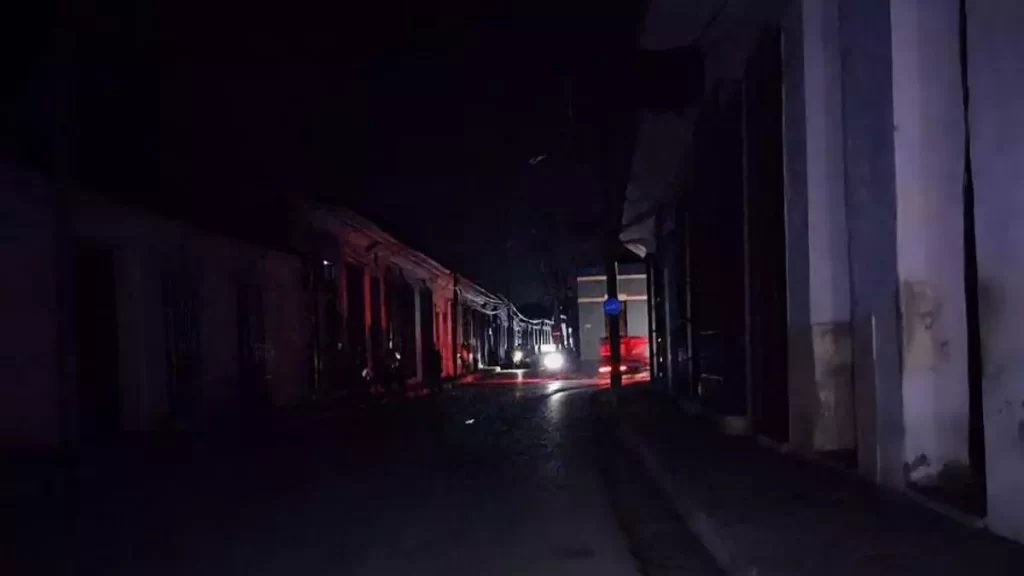
14ymedio bigger14ymedio, Yoani Sánchez, Generation Y, Havana, 12 March 2024  — A ‘snort’ runs through the neighborhood. They have just cut off the electricity service and life is paralyzed until the power returns. The elevator does not work, the elderly residents of the upper floors wait on the ground floor of the building because arthritis and fatigue do not allow them to climb the stairs. The cafeteria on the corner closes to the public since the oven is electric and its main offering is pizzas. The pipes remain dry because the water pump could not complete the rise to the tank and, furthermore, “for two days there has been a break in the Palatino pipeline,” says a neighbor.

There is nothing romantic, beautiful or creative about blackouts. They are not, as official media assures, the opportunity to prepare a candlelit dinner for a couple,  to get away from the mobile screen or read a book. Not having power is something much more mundane, irritating and limiting. Bedridden patients are flooded with sweat because the fans no longer work; the little milk that the family saves for the baby spoils due to the lack of refrigeration; the poor young man who earns his living as a bicycle messenger loses his little income. because the shipping application stops working after the telecommunications towers are turned off. continue reading

Now, they claim that darkness can return us to a calmer and more natural life, when in reality it makes our existence more distressing

With the blackout, people become more aggressive and in the silence left by the engines and devices, domestic fights, swearing and insults emerge more strongly. With the power outage, private businesses are sinking, the dangers of accidents with disconnected traffic lights multiply, night outings are reduced even more, plans are postponed and the idea of ​​packing suitcases gains strength. Weddings are also postponed, schools further reduce the quality of their teaching and bureaucratic procedures become much more complicated.

Romanticizing a blackout, alluding to the fact that the great classics of universal literature were written by candlelight surpasses cynicism and becomes an offense. Just like when, during the Special Period, some leaders of the Communist Party praised the flavor that cooking with firewood left in food, due to the absence of gas. But, while they evoked the charcoal that leaves a smoky touch on food, we burned our grandparents’ furniture so we could eat. Now, they claim that darkness can return us to a calmer and more natural life, when in reality it makes our existence more distressing.

No, there is nothing beautiful about a blackout, especially when you have suffered them for a good part of your life and you cannot see, in the short or medium term, that they will stop breaking into our daily lives.
____________

COLLABORATE WITH OUR WORKThe 14ymedio team is committed to practicing serious journalism that reflects Cuba’s reality in all its depth. Thank you for joining us on this long journey. We invite you to continue supporting us by becoming a member of 14ymedio now. Together we can continue transforming journalism in Cuba.

Facebook Goes Down for More Than Two Hours and Cubans Think the Internet Has Crashed

On the Island, Facebook is the main means of communication, not only between acquaintances, but also with the outside world.

14ymedio bigger14ymedio, Madrid, March 5, 2024 — For Cubans, the inability to access Facebook on Tuesday was almost a complete internet disruption. Around 10 am, Facebook and Instagram, both owned by the American company Meta, suffered a worldwide outage.

The problem, which also affected Messenger, persisted for more than two hours. According to Andy Stone, Meta’s communication director who apologized, the situation was resolved “as quickly as possible” for all those affected.

The technology company has not revealed the cause of these incidents, which also affected Threads, another Meta application that is linked to Instagram and which can be used without signing up. However, WhatsApp, also from Meta, continued to work normally.

“There’s no internet,” someone said on the streets of Havana this Tuesday, after the collapse of the social networks. “They don’t realize that there’s no connection, that there’s no Facebook,”observes Yulia, on the streets of Centro Habana. “Cubans spend most of their time online all day long . That addiction is worse than this,” she says, pointing to her cigarette. continue reading

“Cubans spend most of their time  online all day long. That addiction is worse than [cigarettes]”

On the Island, Facebook is the main way of communication, not only between acquaintances but also with the outside world. While Facebook attracts 82.2% of connected users, other applications, such as YouTube, Twitter and Instagram,  only  have close to 12% of the traffic

In addition, ever since  internet began to be allowed on mobile phones in 2018, it became a powerful tool for dissidence.

On 11 July 2021, a demonstration in San Antonio de los Baños was broadcast live on Facebook. It spread across the entire Island an eventually became the most important protest in Cuba since 1959, coming to be known as ’11J’.

Translated by Regina Anavy

____________

COLLABORATE WITH OUR WORKThe 14ymedio team is committed to practicing serious journalism that reflects Cuba’s reality in all its depth. Thank you for joining us on this long journey. We invite you to continue supporting us by becoming a member of 14ymedio now. Together we can continue transforming journalism in Cuba.

The Murders of Two Women, in Matanzas and Las Tunas, Bring Femicides in Cuba to 13 in 2024

In 2023, feminist activists recorded 87 women killed at the hands of their partner or ex-partner. (Escambray)

14ymedio bigger14ymedio, Havana, 6 March 2024 — The murders of Dinosca Rivera Martí, a resident of the town of Carlos Rojas, in Matanzas, and Martina Hernández, a resident of Becerra, a rural neighborhood in the city of Las Tunas, are the two newest cases of femicides reported this Wednesday by the Women’s Network of Cuba, Alas Tensas and Yo Sí Te Creo en Cuba.

The murder of Rivera Martí, 34, occurred on March 5 at the hands of her partner and the father of her children. “The aggressor attacked her in public on the road, after she left her two young children at school, who at least did not witness the events,” explain the feminist platforms.

In the case of Hernández, whose age could not be specified, the murder occurred on February 12, also at the hands of her partner. continue reading

The average profile of a victim of femicide in Cuba in 2023 is that of a 37-year-old woman, with at least one minor in her care, murdered by her ex-partner.

The platforms, which sent condolences to family members and friends close to the victims, clarified that the femicides were confirmed by the joint effort of independent media, citizens and activists.

With the deaths of Rivera Martí and Hernández, there are 13 femicides recorded by 14ymedio. So far, independent platforms have not confirmed the femicide of Samantha Heredia, a 22-year-old nurse, murdered in Santiago de Cuba by her husband, Dr. Pedro Carmenate, last weekend.

An employee of the Juan Bruno Zayas Clinical Surgical Hospital in the eastern capital, where the victim and aggressor met and the latter worked as a resident doctor, confirmed to this newspaper Heredia’s murder.

In 2023, feminist activists recorded 87 women killed at the hands of their partner or ex-partner, more than double the 36 recorded the previous year.

The average profile of a victim of femicide in Cuba in 2023 is that of a 37-year-old woman, with at least one minor in her care, murdered by her former partner.

Translated by Regina Anavy

____________

COLLABORATE WITH OUR WORKThe 14ymedio team is committed to practicing serious journalism that reflects Cuba’s reality in all its depth. Thank you for joining us on this long journey. We invite you to continue supporting us by becoming a member of 14ymedio now. Together we can continue transforming journalism in Cuba.
Discontent Grows in Cuba With a New Record of Blackouts

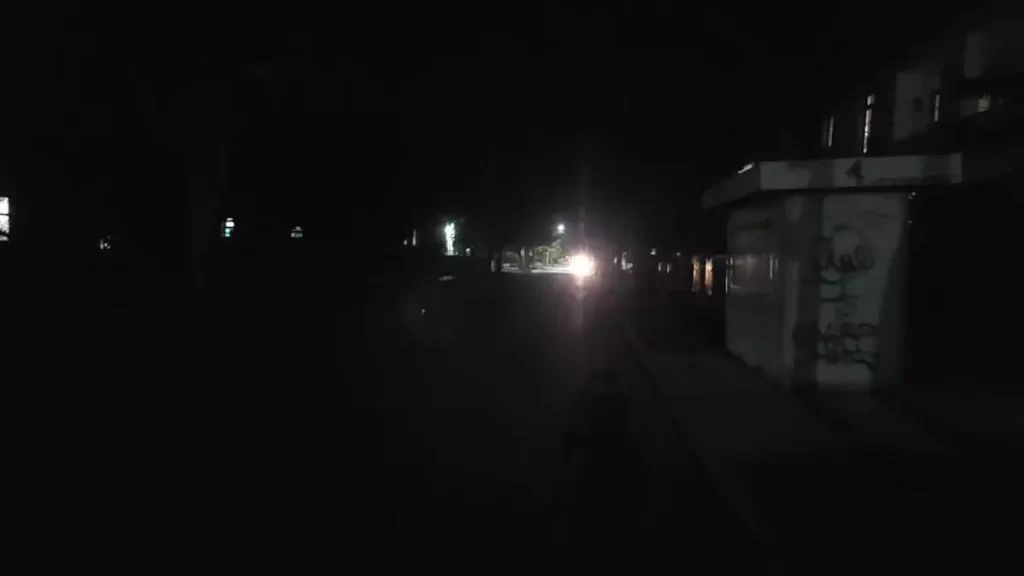
Havana, which until a few days ago was free of blackouts, is now suffering from them every day / 14ymedio

14ymedio bigger14ymedio, Havana, 9 March 2024 — The power blackouts in Cuba are reaching a record never seen in recent years. On Friday, the official press itself reported, “there was a deficit of electricity generation for 24 hours, and it has not been possible to restore the power this morning.” The maximum recorded yesterday, 1,566 megawatts at the time of maximum demand, is unprecedented since the energy crisis escalated two years ago.

For Saturday, the outlook is not much better: an availability of 1,600 MW and a demand of 2,550, which means an average impact of 1,300 MW.

The figures included in the statement of the UNE (Electric Union of Cuba) speak for themselves: 85 distributed generation plants, plus the Moa fuel plant and the Santiago de Cuba plant are out of service due to lack of fuel. There are also 16 plants “with low coverage.”

Thus, the citizens are desperate, and rumors of demonstrations run throughout the Island. The SEN (National Energy System) barely exceeded 1,000 MW when, in August 2022, mass protests broke out in Nuevitas, Camagüey. continue reading

“I imagine that those poor people who had only two hours of power must be on the verge of suicide”

The repression unleashed after the demonstrations – similar to what happened on 11 July 2021 – may explain why for the moment, the frustration is only expressed in complaints on social networks. One of the posts that asked users about the place and time of the power outages was immediately followed by hundreds of comments.

“Four hours with power and twenty without,” said one of them, corroborated in some areas of the Island, such as Santiago de Cuba, by the official newspaper Sierra Maestra.

In Güines, Mayabeque, another commentator said that the power had been missing this Friday “since 8 at night, and still nothing. We had 12 hours without power and yesterday only 3 hours during the day.” In the same province, in San José de las Lajas, the power went off at 5 in the morning until 3 in the afternoon, and after two hours it went off again for 10 more hours. In Sancti Spíritus, there were places with up to 14 hours of blackouts.

The complaints cover the entire national territory. In Bayamo, Granma, people also reported 14 hours of blackout; in Minas, Camagüey, up to 18 consecutive hours. In the municipality of Céspedes in Camagüey, a neighbor complained: “From yesterday until now they gave us three hours of power. They only put it on from 2 to 6 in the morning; let’s see if they put it on when no one is cooking or awake.”

Havana, which until a few days ago was free of the power cuts, now suffers from them on a daily basis. Four hours in a row of no power is predicted, for example, in the municipality of Nuevo Vedado, where the editorial staff of this newspaper is located.

“These blackouts make life miserable, but I really can’t complain,” concedes a woman living in Central Havana. “The power has been off for several hours two days in a row, and the water pump in the building didn’t allow the water to fill the tank enough for me to wash. I imagine that those poor people who had only two hours of power must be on the verge of suicide.”

Translated by Regina Anavy

____________

COLLABORATE WITH OUR WORKThe 14ymedio team is committed to practicing serious journalism that reflects Cuba’s reality in all its depth. Thank you for joining us on this long journey. We invite you to continue supporting us by becoming a member of 14ymedio now. Together we can continue transforming journalism in Cuba.

Blackouts Have Reduced Sugar Production by Half in the ‘Colossus of Cuba’

So far, the Antonio Guiteras sugar mill has ground only 3,954 tons of the 39,000 tons that were planned.

14ymedio bigger14ymedio, Havana, 9 March 2024 — The Antonio Guiteras sugar mill in Puerto Padre (Las Tunas) has lost 75% of grinding time due to the prolonged blackouts suffered in Cuba. The lack of electricity interrupts the process of receiving and cleaning the cane every day for between four and five hours, before it is transferred to the industry. This has caused only 48% of the potential daily standard to be ground, as reported this Friday by Periódico26.

The official media spells out all the calamities that affect the sugar harvest for the Antonio Guiteras mill. In a visit, Manuel Gallego, secretary of the Communist Party in Las Tunas, “indicated” to the directors a need to “continue implementing alternatives” and “improving attention to the staff.” He hopes that granting better conditions in the workers’ dining room and cafeteria will give the necessary impetus to overcome the failing harvest.

After 50 days of the campaign, this mill is very far from reaching the more than 39,000 tons of sugar that were planned for it. So far, at a production rate of 84 tons per day, it has accumulated only 3,954 tons. continue reading

After 50 days of the campaign, this mill is very far from achieving the more than 39,000 tons of sugar that were planned for it

Juan Carlos Molina Diéguez, director of the sugar mill, puts leaks in the pipes and “other operational obstacles” at the top of the list of problems in the industry. According to the official, these problems have not been “resolved” because the contracted workforce does not have the necessary experience to fix them.

There are additional impediments to the current harvest. Only 40% of the trucks that transfer the cane to the mill are working. Accidents on the railway tracks are not taken care of promptly, and, in addition, there are not enough rail cars to transport the cane.

The result is the decrease in industrial efficiency of a sugar mill recognized in its best years as the “Colossus of Cuba”. Rafael Pantaleón Quevedo, director of the Antonio Guiteras Agroindustrial Sugar Company, said that “the sugar now arriving from the field has a better quality but is not in the quantities needed.”

Pantaleón Quevedo also stressed that they are paying “permanent attention” to equipping trucks with a global positioning system (GPS) “to prevent labor indisciplines.” Given the shortage of spare parts for the vehicles, drivers usually buy parts on the black market at exorbitant prices and also use the trucks to offer transport services that are paid for privately.

In Las Tunas, the 2023-2024 harvest began on January 7 at the Majibacoa sugar mill, the other mill in the province. The two mills have, together, the highest sugar production plan on the Island – 61,500 tons – a goal that, as the 77 days of milling approaches, is moving further and further away from the boilers of the Las Tunas sugar mills.

Only 40% of the trucks that transport the cane to the mill are working

When the incorporation of Majibacoa into the national harvest was announced, Periódico26 explained that this sugar would be destined for the standard family basket (under the rationing system). However, once again, plans give way to the harsh reality of the country. In the Mexico neighborhood of the municipality of Las Tunas, to date the ration stores have sold only one pound of sugar per person, and no one knows when the rest of the food included in the basic basket will arrive.

It’s the same situation in Granma province. On a tour of the Enidio González sugar mill in Campechuela, Yudelkis Ortiz Barceló, first secretary of the Communist Party, learned that the planting of cane is at 51.4% of a plan that was not mentioned in the official newspaper La Demajagua.

Ortiz Barceló called for raising the awareness among workers to “be more efficient by superior efforts for recovery and progress in the production of sugar” for the family basket. The leader stressed “there is a need to continue adopting measures to ensure that productuon is where it should be.”

In addition to the technical problems that affect Cuban sugar mills, the lack of spare parts and the loss of highly qualified workers, the late start of the 2023-2024 harvest predicts that, once again, it will be a disaster.

The late start of the 2023-2024 sugar harvest predicts that it will, once again, be a disaster

At the end of November 2023, the official press announced that of the 25 sugar mills involved in the current harvest, only two would start late. However, when Periódico26 announced the start of the harvest in Las Tunas, it said that “the Majibacoa is part of the group of 15 sugar mills in Cuba that are now working, of the 25 that will participate in this campaign.”

The newspapers of Granma and Las Tunas have not said anything about what the fuel deficit implies for sugar production. On March 4, an official of the agricultural sector in Las Tunas confirmed to 14ymedio that the province had not received fuel for 19 days, and “it is not even for sale in dollars in the gas station.”

Translated by Regina Anavy

____________

COLLABORATE WITH OUR WORKThe 14ymedio team is committed to practicing serious journalism that reflects Cuba’s reality in all its depth. Thank you for joining us on this long journey. We invite you to continue supporting us by becoming a member of 14ymedio now. Together we can continue transforming journalism in Cuba.

Convictions for Femicides in Cuba Tripled in 2023, According to Official Figures

Miguel Díaz-Canel, Raúl Castro and Teresa Amarelle Boué, during the closing of the FMC Congress in Havana

14ymedio biggerEFE/14ymedio, Havana, 9 March 2024 — Last year Cuba tripled the number of people convicted of femicides compared to the 2022 record, going from 18 to 61 rulings, according to official data released this Friday.

The president of the country, Miguel Díaz-Canel, announced the 2023 figure at the closing of the Congress of the Federation of Cuban Women, an official social organization of the Communist Party of Cuba. Díaz-Canel also stated that 93% of the sentences were for more than 20 years in prison, and in five cases the penalty was life imprisonment.

The Cuban Government does not offer updated statistics on femicides. For their part, the independent feminist platforms Yo Sí Te Creo and Alas Tensas reported, in their annual dossier also presented this Friday, a total of 89 femicides, more than double those recorded the previous year.

Of these, three cases were not considered femicides by this newspaper: that of a girl mistreated by her stepfather and her own mother; an assault on the street; and a woman killed by “gynecolo-obstetric violence.” On the other hand, 14ymedio did consider the death of Miriam Isern Mompié, not continue reading

included by independent platforms, among its list of femicides.

“We can categorically state here that this is a media construction completely unrelated to Cuban reality,” Díaz-Canel said.

Despite recognizing that cases of gender violence on the Island “appear with an unfortunate frequency,” Díaz-Canel argued that the “enemies of the Revolution,” whom he did not name, “have a tendency to handle (the figures) conveniently.”

“The subversive anti-Cuban platforms try to impose a pattern of ’femicide’ in Cuba, a term that indicates alleged state inaction in the face of violent acts on the basis of gender. We can categorically state that this is a media construction completely alien to the Cuban reality,” he said.

Regardless of whether or not there is state inaction, the Cuban Government differentiates between female deaths and femicide, a distinction not widespread in Spanish-speaking countries.

Independent feminist groups in Cuba, however, have sometimes denounced state inaction. In two of the twelve femicides that they have verified so far in 2024, they say that the aggressors had a history of violence.

In two of the events documented by these platforms in 2023, the victim had already warned on social networks that she feared for her life

In addition, in two of the events documented by these platforms in 2023, the victim had already warned on social networks that she feared for her life. And in another case the alleged killer – 50 years old – murdered his partner – a minor – inside a police station.

The Attorney General’s Office acknowledged that at the end of October 2023, 117 crimes against women had been recorded on the Island. This data, published in state media, did not specify the exact period in which those events were counted, nor if they included cases in the process of investigation and already sentenced.

The average profile of a victim of femicides in Cuba in 2023 – elaborated based on the information of Alas Tensas and Yo Sí Te Creo – is that of a 37-year-old woman, with at least one minor in her care, who was murdered by her ex-partner.

Translated by Regina Anavy
___________________

COLLABORATE WITH OUR WORKThe 14ymedio team is committed to practicing serious journalism that reflects Cuba’s reality in all its depth. Thank you for joining us on this long journey. We invite you to continue supporting us by becoming a member of 14ymedio now. Together we can continue transforming journalism in Cuba.

Red Beans Have Become a Luxury in Cuba

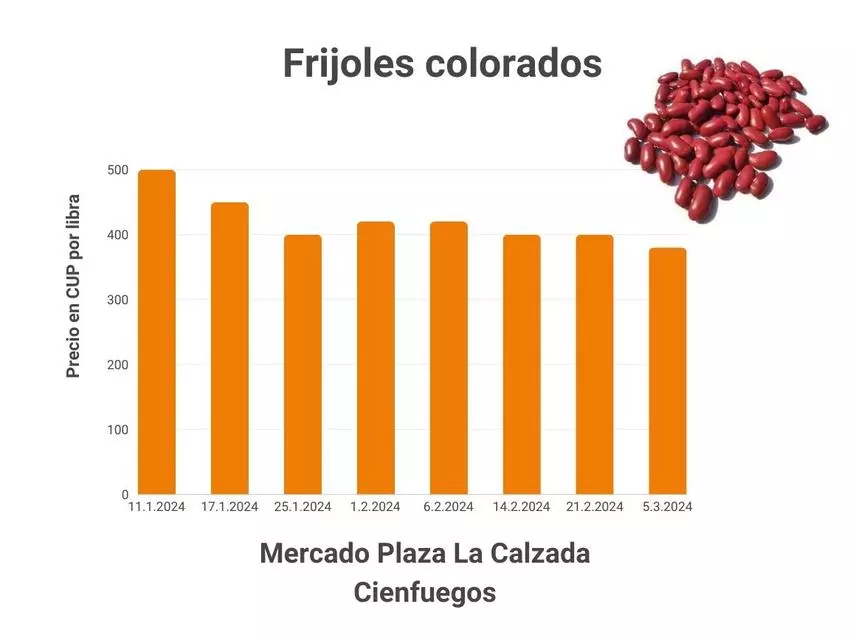
From the basic basket, it’s the red beans that have risen the most in price, costing 500 pesos per pound at the beginning of this year / 14ymedio

14ymedio bigger14ymedio, Havana, 9 March 2024 — A region with a long tradition in the cultivation of rice and beans, the province of Cienfuegos has not been able to honor its agricultural heritage in the face of the inflation that runs through Cuba. Accustomed to dense stews, residents in this area in the center of the Island have had to give up, in recent years, the plate of beans that was so common in their daily diet.

In the basic family basket in the State rationing system, it’s the red beans that have risen the most in price, costing 500 pesos a pound at the beginning of this year. Although this week the legume dropped to 380, its price is still prohibitive for many in Cienfuegos. This newspaper has followed the bean’s journey, and this province has been one of those that illustrates the pace of the rise that the product has experienced in recent years. continue reading

The Plaza La Calzada market in the city of Cienfuegos is the main indicator of how the cost of living has escalated. On its wide stands, where customers, sellers and producers gather, the table for beans does not receive as many buyers as before. Red beans are almost always consumed in Cuba accompanied by a piece of meat or sausage, along with numerous spices.

If you want to eat them with rice, currently at 150 pesos per pound in the Plaza La Calzada, then the cost skyrockets. With their attractive red shine, the beans are now a food considered by many as a luxury only for holidays or special occasions. A hot and thick stew can cost retirees a whole week’s pension. From a custom carved out of decades of life, they are the ones who most long for the steamy and aromatic dish on their tables.

Translated by Regina Anavy

____________

COLLABORATE WITH OUR WORKThe 14ymedio team is committed to practicing serious journalism that reflects Cuba’s reality in all its depth. Thank you for joining us on this long journey. We invite you to continue supporting us by becoming a member of 14ymedio now. Together we can continue transforming journalism in Cuba.
Corruption in Cuba: Sacrificing Gil to Save Diaz-Canel

Miguel Díaz-Canel (left) and Alejandro Gil Fernández (right), in an archive image / Granma

14ymedio bigger14ymedio, Rolando Gallardo, Huesca (Spain), 9 March 2024 — The Cuban regime’s media landscape needs to be understood with certain tips to develop an analytical perspective and avoid falling into the system’s deceptions. Between Yarelis* and Alejandro Gil, the Cuban news events of these days are summarized, diverting attention from what is truly important to superficial elements. This show, with its jesters and lynchings, is everything necessary for a Roman circus but without the bread.

The system must always be kept oiled and ready to survive, but the warning indicators do not stop setting off alarms. The Cuban Revolution has become a media myth where the real results of the policies implemented are irrelevant; the crucial thing is to sustain the idea of ​​solidity, eternity and trust in the project. To do this, techniques are used to control the eventual rage of the masses who, for decades, have been domesticated and dumbed down by propaganda.

Few connect the events that occurred in a period of approximately one month, immersed in immediacy and losing the interlinking of events and intentions behind them. As time progresses, the ridiculousness of Diáz-Canel’s visit to Río Cauto on January 26 is forgotten, when “God Fidel” was seen walking among mortals, and those ladies, as if they had been previously indoctrinated, expressed their support for Díaz-Canel with a fervent and unusual bristling. Why was this “bath of the people” and the equation with the “enigmatic historical leader” so necessary? continue reading

The president’s journey occurred a week before the surprise dismissal of Alejandro Gil on February 2. This man, known for his advocacy of radical measures, was stripped of his position without us seeing it coming. His thesis tutor, Miguel Díaz-Canel, and the leadership that pulls the strings of the political guignol withdrew their support. Gil was the undesirable face of the economic failures of the regime, his loyalty to the dictatorship made him the image most hated by the popular majorities on the Island, victims of inflation, inequality and hunger. It was necessary to get rid of such company and make the most of the situation.

Considered the useful idiot, Gil will bear the blame for the economic disaster, while an effort is made to rehabilitate the image of Díaz-Canel, a man with less charisma than a sweet potato  

In those days, Cuba’s collapse in the international measurement of the perception of corruption was broadcast. The country has experienced a precipitous decline since 2020, going from a score of 47 out of 100 to 42 in three years. Although this data may seem superfluous compared to other countries in the region, it is serious when analyzed internally. In Chile, before the devastating social outbreak of 2019, there was a drop of just one point in the corruption perception index. With a drop of five points in three years, the regime is trying to plug the hole before it is too late.

Gil is convenient in this context. Considered the useful idiot, he will bear the blame for the economic disaster, while an effort is made to rehabilitate the image of Díaz-Canel, a man with less charisma than a sweet potato. This anti-corruption round-up seeks to give the impression that the Revolution and its top leadership are clean and willing to fight against any negative trend that threatens the heroic and rebellious “continuity” of Fidel and the leaders of the Revolution, although everyone knows which leg the self-proclaimed revolutionary leaders are limping from. Gil is simply a scapegoat used to divert attention from the true roots of corruption in Cuba.

The circus has begun, and everyone will observe the arenas where Máximo Gil Décimo Meridio, former Minister of Economy and general of the legions of fallen bootlickers, will try to fight for his life. Meanwhile, the MSME [micro, small and medium enterprises] stores are full of American products, defying an embargo that is gladly flouted, at the same time that the regime requests urgent international help from the UN due to its inability to provide food to the overwhelming helpless mass, throwing the blame on someone it no longer makes sense to blame.

Gil has been made the scapegoat, he will go down in history as el más gil de todos los giles [the dumbest of all the dumb]**, and we, along with him, look towards the wrong side of the media illusion. In today’s Cuba, justice cannot be done to Gil. The day those conditions arrive, he and the entire leadership will be in the dock. And if we cannot deliver justice in this life, we will know with total conviction that Gil and his current jailers will share a destiny in Antenora, Dante’s 9th and final Circle of Hell, dedicated to traitors to their people and country.

Translator’s notes:
*’Yarelis’ is apparently an otherwise anonymous Cuban woman recently captured in viral videos with ’boyfriends’.
**A Spanish-English dictionary offers the following translations of ‘gil’: idiot, numskull, twat, nerd, twit, twerp, dumb.
____________

COLLABORATE WITH OUR WORKThe 14ymedio team is committed to practicing serious journalism that reflects Cuba’s reality in all its depth. Thank you for joining us on this long journey. We invite you to continue supporting us by becoming a member of 14ymedio now. Together we can continue transforming journalism in Cuba.

The Definitive Collapse of the Cuban Economy?

A recent study revealed that 21% of Cubans households on the poverty line stopped eating breakfast, lunch or dinner at some point due to lack of money / 14ymedio

14ymedio bigger14ymedio, Ariel Hidalgo, 4 March 2023, Miami — That the Cuban Government has asked, for the first time, the management of the UN World Food Program, for help to subsidize milk for children under seven years of age is a clear example of the situation that the country is going through, since the Cuban leadership has generally been reluctant to accept food aid from abroad so as not to expose the unsustainability of its economic model.

It has also been announced that recently, with the last reserves of the Cuban State, 500 tons of powdered milk were purchased in the United States, the same country that supposedly maintains an “imperialist blockade” against Cuba. It is scandalous that in Cuba there is no milk even for small children in a country whose livestock farming, in another time, was only surpassed in Latin America by Argentina and Uruguay.

The Government has also declared that the population’s basic food basket will not be able to be maintained until the end of March. It had already been said before that in Cuba not only “is nothing being produced,” mainly due to lack of a labor force in agricultural work, but that there is no way to pay to import the food. continue reading

When the Revolution triumphed, the Cuban peso was on par with the US dollar. Today, the national currency is worth less than half of a tenth of one US cent, exactly 0.042, according to an official calculation reported on February 20.

So, what threatens the Cuban people, immediately, is a famine like there has never been before, not even at the time of the so-called Special Period, when Cuba lost subsidies from the former Soviet Union. We do not know what the population will live on for a full month, but we do know its consequences: more exodus, more deaths at sea, more crime than already exists, and more protests.

Cuban Women Live at the Margins of a Regime Led by Men

It is women who mostly stand in Cuba’s endless lines to get food / 14ymedio

14ymedio bigger14ymedio, Juan Diego Rodríguez and Olea Gallardo, Havana, 8 March 2024 — The eleventh congress of theFederation of Cuban Women (FMC) was formally closed this Friday by the six men who govern the destiny of the country. The female quota in the presidium made up of Raúl Castro, Miguel Díaz-Canel, Esteban Lazo, Manuel Marrero, Roberto Morales de Ojeda and José Ramón Machado Ventura is covered by one woman: Teté Puebla, member of Las Marianas in the Sierra Maestra and first (and only) Brigadier general woman on the Island.

“The Feminist Path is Not Exclusive to Women,” the State newspaper Granma headlines its note on the occasion of March 8, in case things were not clear.

At the same time, the ruling FMC assures that “the development of scientific research is urgently needed to study the implementation of public policies with a gender perspective to move towards full equality.” And we must “overcome the meeting schedule.” And “update communication codes.”

Far from so many words, the streets show that the face of Cuba, increasingly empty, increasingly poor, is that of a woman / 14ymedio

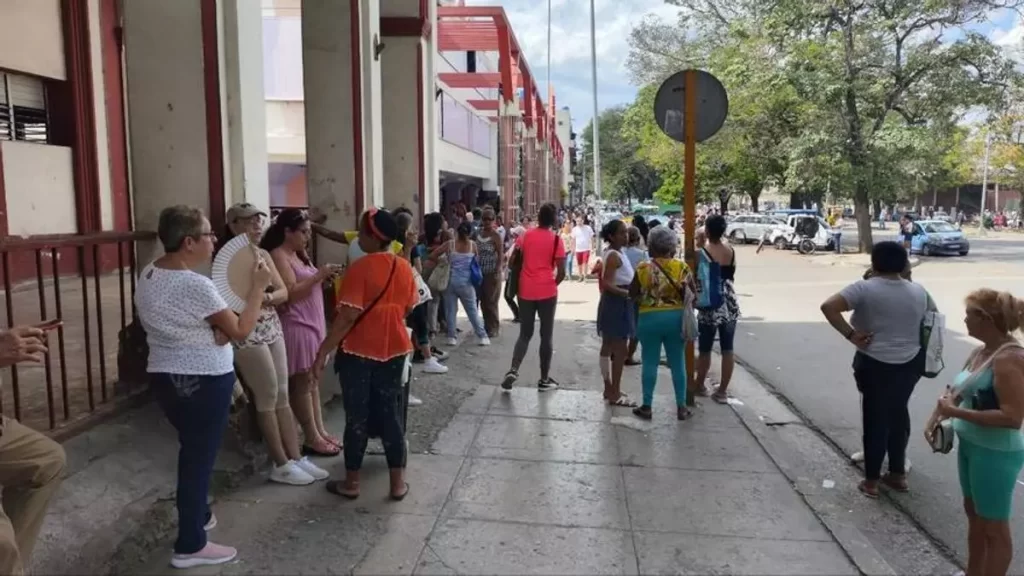
Far from so many words, the streets show that the face of Cuba, increasingly empty, increasingly poor, is that of a woman. It is women who continue reading

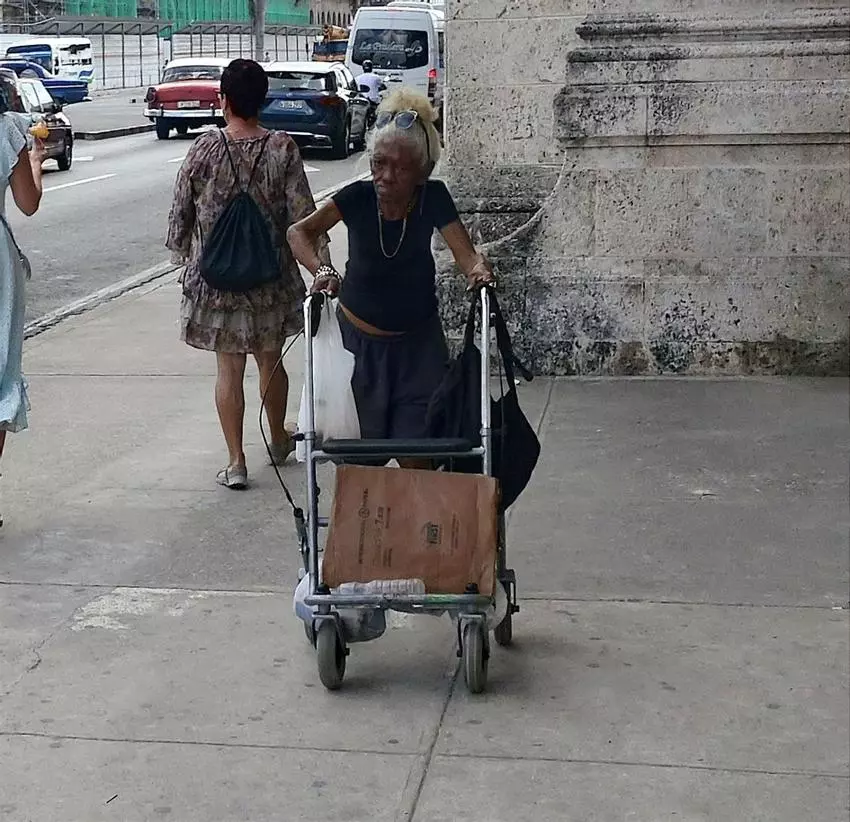
mostly stand in endless lines to get food. The oldest ones have to bring their own stool to endure the hours and the heat.

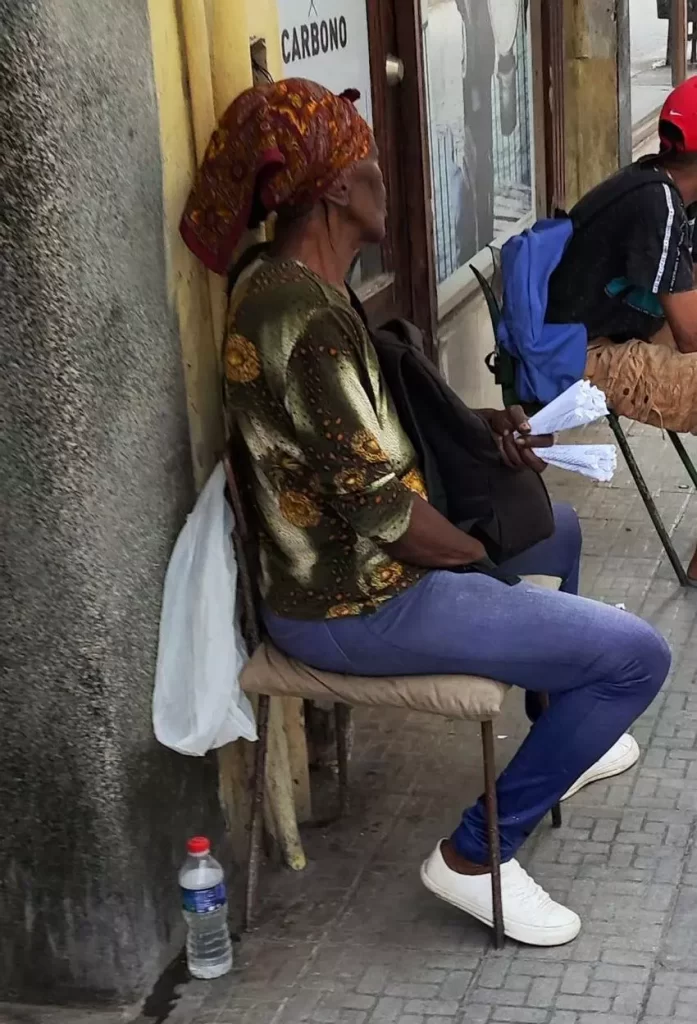
If you have to put a color on those faces, it is fundamentally dark. The color of those who cannot emigrate due to lack of resources / 14ymedio

If you have to put a color on those faces, it is fundamentally dark. The color of those who cannot emigrate due to lack of resources.

The oldest ones have to bring their own stool to endure the hours and the heat / 14ymedio

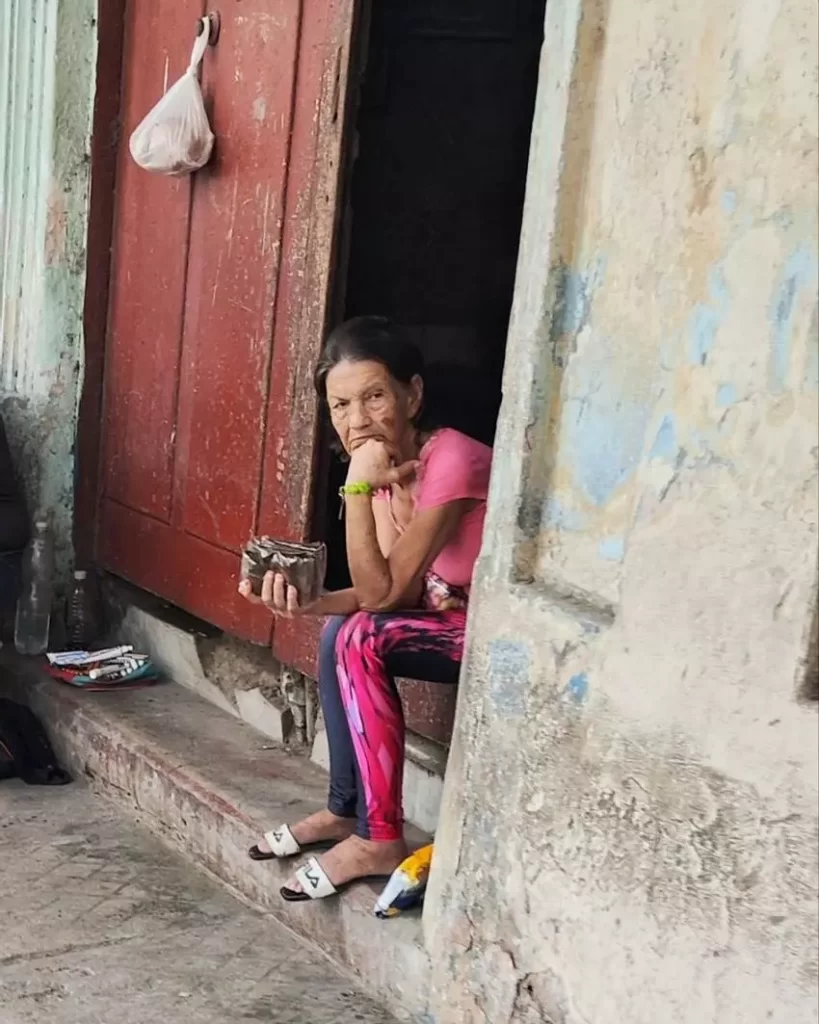
State workers, informal saleswomen or retirees – the luckiest ones, with emigrated families – all have poverty and boredom in common. Neither the FMC nor the men who protect it have solved their problems one bit in 65 years.

State workers, informal saleswomen or retirees – the luckiest ones, with emigrated families – all have poverty and boredom in common / 14ymedio

____________

COLLABORATE WITH OUR WORKThe 14ymedio team is committed to practicing serious journalism that reflects Cuba’s reality in all its depth. Thank you for joining us on this long journey. We invite you to continue supporting us by becoming a member of 14ymedio now. Together we can continue transforming journalism in Cuba.

The Smokescreen Expands: The Cuban Regime Asks for the Head of the Former Minister

“Corruption should not surprise us. We see it every day in the favors that certain children, grandchildren and nephews/nieces have,” says Mauricio de Miranda Parrondo. Photo: Raul Castro/ cdn.mediawpaccore.net

14ymedio bigger14ymedio, Madrid, 8 March 2024 — Two things have caught the immediate attention of the Cuban economist Mauricio de Miranda Parrondo in the brief statement with which the opening of an investigation against the former Minister of Economy and Planning Alejandro Gil was announced on Thursday. The first is the concern for what “the enemy” will say and not the Cuban people; the second, how much it reveals about the inability of the system to really fight corruption.

“As expected, the enemy will unleash a new propaganda campaign against Cuba, but our people, as we are accustomed to, will remain firm on the side of their Party and Government, faithful to the legacy of the Commander-in-Chief and the teachings of Army General Raúl Castro Ruz,” closes the statement, signed by the President of the Republic, Miguel Díaz-Canel.

“Really? Is that what the opinion polls say or are they no longer being carried out? The more than 500,000 Cubans who have left the country in two years selling houses and furniture don’t count? And are those who are silent out of fear also on the side of the Party and the Government or rant about it in a low voice in their kitchens as was the case in the former USSR?” wrote the economist, a professor at the Javeriana University of Cali (Colombia), almost immediately after he heard the news. continue reading

Do the more than 500,000 Cubans who have left the country in two years selling houses and furniture not count?

In an extensive reflection, shared on his Facebook page, the expert addresses the differences that exist in a case of corruption in a democracy and in a dictatorship without separation of powers. “There is corruption in almost every political system in the world. What happens is that this scourge has a propitious breeding ground in those countries where there are no independent legal controls and audit mechanisms.”

In case there were doubts, the official report makes it crystal clear that the investigation will be carried out “at the proposal of the Attorney General’s Office, the Political Bureau of the Central Committee of the Party and the Council of State,” which “approved that the competent bodies of the Ministry of the Interior initiate the corresponding actions for the total clarification of these behaviors.”

Contrary to other systems, in Cuba it is the Party and the Government who give the order to the Police to start an investigation, which means that nothing will ever be known that the authorities do not want known. “The explosion of scandals will depend on the ’scapegoat’ on duty,” warns De Miranda.

The economist recalls that this is not the first time that similar events have occurred in which defenestration is followed by a complaint for criminal offenses, but it is not explained how the Government trusts – publicly at least – that the population will defend the system from the enemy’s attacks when that same citizenry suffers the effects of a corruption that it sees on a daily basis.

“Corruption should not surprise us. We see it every day in the favors of certain children, grandchildren and nephews/nieces turned overnight into successful businessmen and true tycoons in the midst of the poverty of most of the country. And when I say poverty, I mean that even those who do not suffer from it are saved thanks to their FAITH (fe) that is, their relatives (familia) abroad (en el exterior).”

“Corruption should not surprise us. We see it every day in the favors of certain children, grandchildren and nephews/nieces turned overnight into successful businessmen”

“How did those children, grandchildren and nephews/nieces who become potentates in the blink of an eye originally accumulate the capital? Where did some get the money to build mansions to rent and others to develop prosperous businesses of all kinds, while those who are “less equal,” to paraphrase Orwell, suffer restricions”? he asks.

With little faith, the expert requests that what happened with Gil Fernández not be “a smokescreen” and that “the specific charges of which he is accused” be known.

That is, precisely, one of the requests that is most repeated in the more than 200 comments that the report has generated in Cubadebate since it was made public. Most of the readers of the official media have shown the desired adherence to a Revolution that, with the investigation of the former minister, is “relentless, ethical and transparent,” but the demand for explanations is a constant.

“There will be no trust unless the information is accurate and enlightening, taking into account Gil’s position and that his  performance affected the entire population,” says a commentator. Another asks for more details: “Yes, we need more information: What exactly did he do? How long did he do it? Did he do it with someone else? At that level, it seems impossible that someone else is not directly involved or that at least they have turned a blind eye. Transparency must prevail here! An important step has already been taken, but it is not over. And let the one who has to fall fall.”

“Don’t close the door yet, there are a few missing”; “They have to keep shaking the tree. There are many others like him, for sure”

That shadow of doubt is present in countless messages. “Don’t close the door yet, there are a few missing”; “They have to continue shaking the tree, there are many others like him, for sure”; “We must delve into the state of opinion of the population, who in different scenarios and moments express opinions about certain leaders and close relatives with indirect participation in private businesses. Anyone understands that behind these opinions there can be a whole enemy strategy, but be careful: sometimes, where there’s smoke, there’s fire.”

In the case of Alejandro Gil Fernández, whose personal matters are in fact unknown, the report speaks of “serious errors” but lets drop that corruption is being investigated, which, far from a mistake, is a crime. This has allowed an opening for many Cubans to start asking for everything to be reviewed.

“Research in depth the offers of premises and leases for private businesses. In Holguín there are many who are involved in this process, a tremendous amount,” says a message. “It is very easy to detect someone who is corrupt,” says another reader. “Follow those next to him, below and above him, many interact with him. Something has been going wrong for many years and we don’t realize it, or we don’t want to.”

On February 6, just four days after his dismissal, Gil Fernández received a warm congratulations from the ministry he headed for his 60th birthday. “Many congratulations on your birthday. Health and success in your new tasks. And as you well say: ’We are still fighting for our country and our Revolution’,” the organization wrote on its X account. The message was one of gratitude by the former minister, who called the department a “family” that he would always carry in his heart.

Less enthusiastic was Díaz-Canel, who wrote an extremely conventional message: “Another hug for Alejandro Gil on his birthday.” The president had already begun to get rid of his former subordinate.

Translated by Regina Anavy

____________

COLLABORATE WITH OUR WORKThe 14ymedio team is committed to practicing serious journalism that reflects Cuba’s reality in all its depth. Thank you for joining us on this long journey. We invite you to continue supporting us by becoming a member of 14ymedio now. Together we can continue transforming journalism in Cuba.