A Diminished Coppelia Reopens in Havana with Tiny, Bare-Minimum Scoops

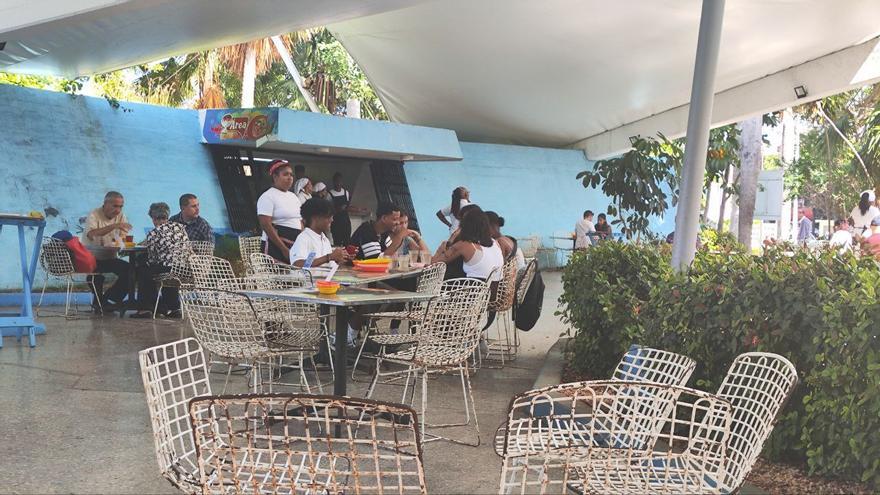
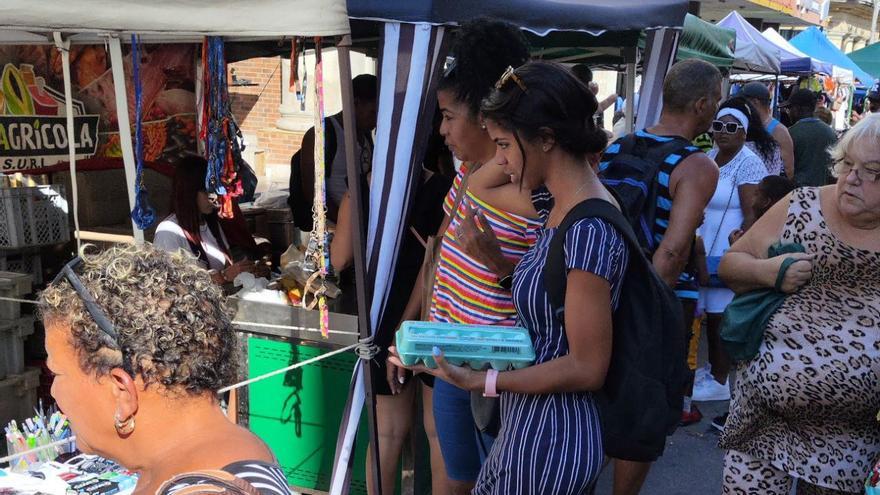
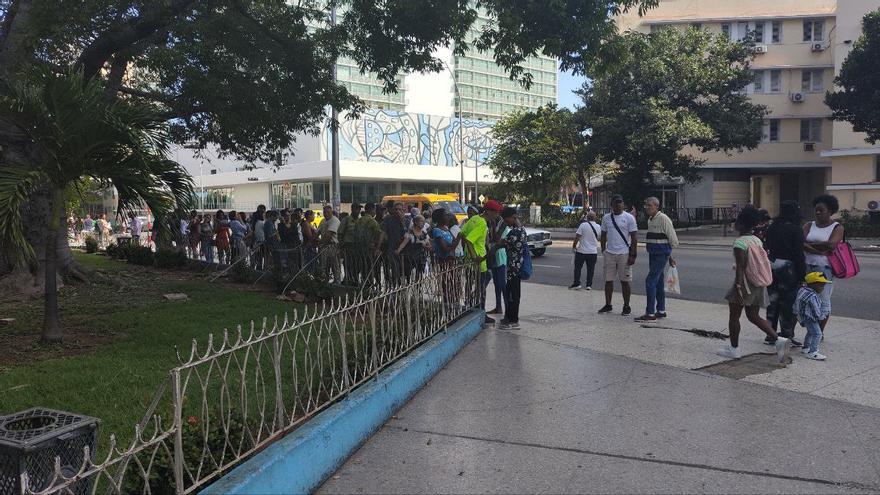
In no time at all, the line of people waiting to get into Coppelia was several yards long. (14ymedio)

14ymedio bigger14ymedio, Juan Diego Rodríguez, Havana, 28 November 2023 – When it comes to ice cream and sweets, Cubans are true believers. On Tuesday, they lined up In front of Coppelia, Havana’s much-diminished “cathedral of ice cream,” which had been closed for several weeks. They had little reason to rejoice, however. The sluggish employees and poor service have been ridiculed by customers, who claim the only one thing that is back to normal is the long lines.

“There’s ice cream but no cookies,” an employee warns at Coppelia’s entrance. It has become common practice for the establishment’s staff to speak in negatives. When the closure was announced a few days ago, the explanation was equally concise: “There’s no ice cream, there’s no milk, there’s no sugar.

Customers have come up with an explanation for the staff’s lethargy. “They’ve spent so many days without work that they must have forgotten how to do it,” says one elderly woman in a loud voice, unconcerned whether the staff can hear her or not.

Customers come hoping to order the Palmero, an ice cream of slightly higher quality than the regular options, at a cost of 65 pesos a scoop. But anyone who manages to get past the “first circle” learns that, to enjoy it, she or he must first get a table at the Four Jewels, the closest thing Coppelia has to an exclusive seating area. continue reading

The staff is lethargic even though and several tables are empty. (14ymedio)

Those seated in the common area soon realize that their options are limited. The multi-scoop “mixed salad” is available but one customer complains that the only flavors she and her fellow customers have to choose from are vanilla and chocolate. As for the cookies — an accompaniement that goes well with the ice cream — she is out of luck. “They didn’t deliver any today; we’ll see about tomorrow,” says a waitress pessimistically.

“Tiny, bare-minimum scoops” says an elderly man, amazed at the staff’s ability to reduce the serving sizes. “More for them at the end of the day,” replies another.

At noon, students from nearby schools realize that the “cathedral” is open. The avalanche is unstoppable and the number of people in line triples in just a few minutes. The electronic payment terminals – made necessary by the government’s newly mandated digital banking regulations – are slow as evidenced by the long lines, which grow ever longer with every kilobyte the devices need to process.

Lines are not a problem in areas where customers must pay using foreign, hard-currency debit cards but people try to avoid digital banking transactions as much as they crave ice cream. When it finally hits the tongue, the palate immediately recognizes its mediocrity: “The same as always, neither good nor bad. But you have to kill your hunger.”

____________

COLLABORATE WITH OUR WORKThe 14ymedio team is committed to practicing serious journalism that reflects Cuba’s reality in all its depth. Thank you for joining us on this long journey. We invite you to continue supporting us by becoming a member of 14ymedio now. Together we can continue transforming journalism in Cuba.
‘In Line with the Revolution’ — Havana’s Dilapidated Lisboa Pizzeria Awaits a Private-Sector Savior

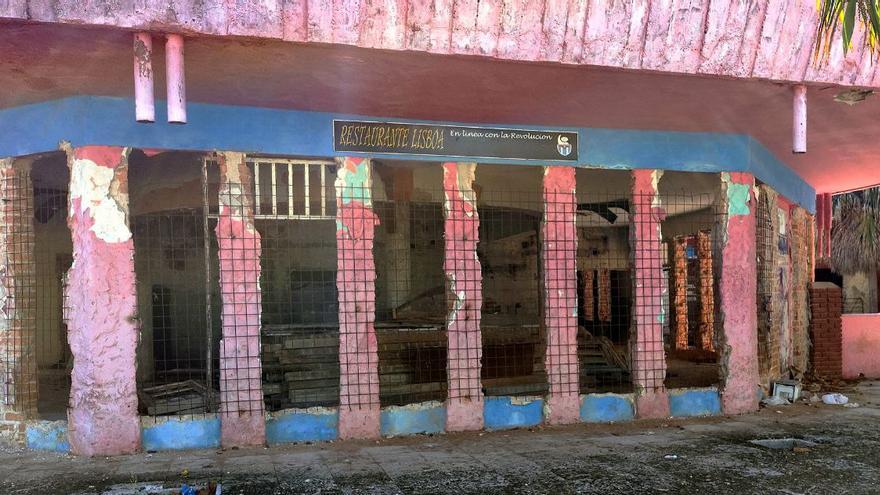
Lisboa was closed during the pandemic but it is not known if the closure was due to health restrictions. (14ymedio)

14ymedio bigger14ymedio, Juan Diego Rodriguez, Havana, 22 November 2023 — With few of its walls still standing and pieces of rubble strewn about, the old Lisboa pizzeria in Havana’s Playa district has gone from being a popular restaurant to a complete ruin in the span of a few years. Neighborhood residents, who watched as the state-run business became a den of drunkards and night owls, pray that private business interests take over what remains of the building before the few columns supporting it finally give way.

“It has been abandoned for a while,” says Reina, who lives on the same block. She remembers that, about four or five years ago, the pizzeria still had customers. As she recalls, Lisboa was closed during the pandemic though she does not know if the closure was due to health restrictions. “Now it’s just a reference point,” she says. If anyone who asks me for directions, I tell them to look for the block where everything is in disarray. No one gets lost.”

Under some almond and palm trees that provide shade during the day and shelter at night, the pizzeria has become what local residents describe as a public toilet. “In the last hour I have seen three people go over to that wall and urinate, including that guy there,” says Reina, pointing to a man who parks his motorbike, slowly approaches the wall and “draws his sword.”

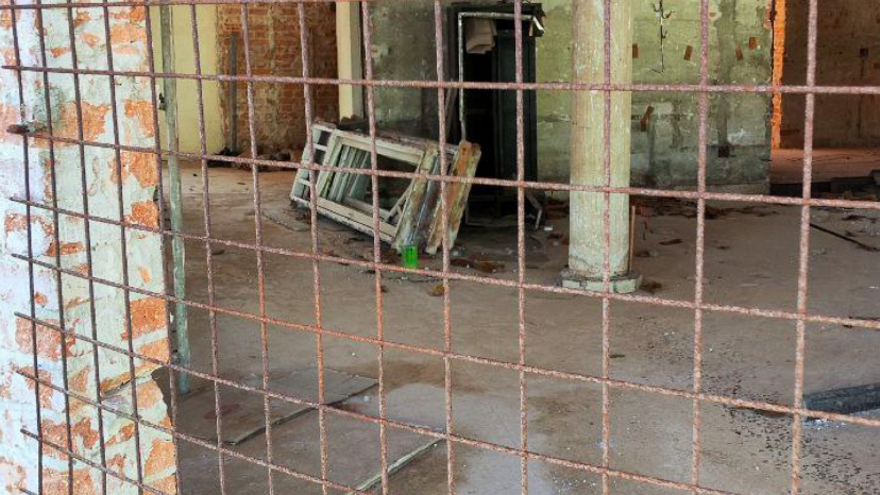
Interior of the old Lisboa pizzeria, now in ruins. (14ymedio)

Nor has Lisboa escaped the ravages of “scavengers,” as she describes those who have, out of sight, been chipping away at the walls of the restaurant until it becomes what she describes as a living brick. “They’ve taken the doors, windows, rods, everything they could carry. Even the walls have become thinner because they’ve torn out bricks,” she says.

“When they saw what was happening, the authorities put up some flimsy metal barriers to keep the building from collapsing.” Some very rustic rebar fences are the only thing that separates the interior of the restaurant from passersby on the adjoining street. Amid the rubble inside, the remains of windows and plaster can be seen as well as bags of gravel and a few cement blocks.

A pyramid of boards is stacked on one side. “It looks like they were brought in to prop things up but they never did anything with them,” she says.

“People have been saying for a long time that a private investor is going to take over Lisboa. I’m not sure about that but at least I held out hope that would happen before it fell apart or became a nest of criminals,” says Reina.

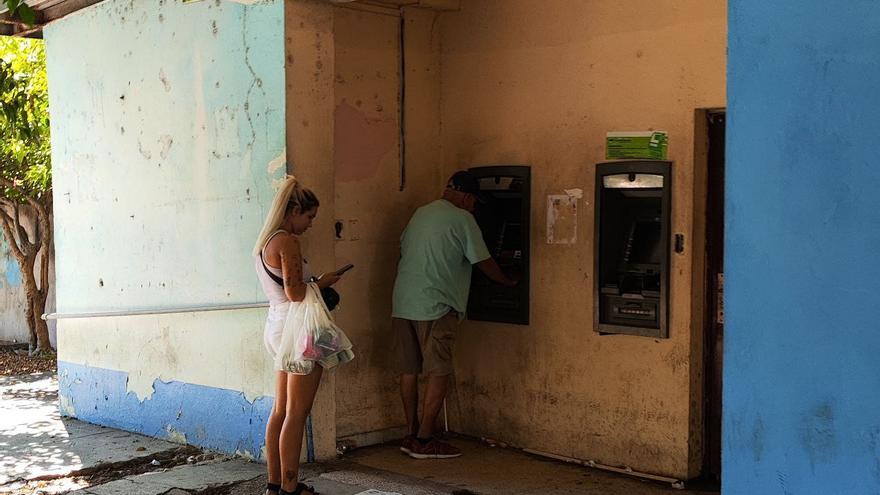
The ATM is more often used as a makeshift toilet. (14ymedio)

On one side of the old pizzeria is La Copa, a shopping center whose tenants are mostly private businesses whose good condition stands in contrast to the rubble that is Lisboa. Several cafes, a hair salon and a barber shop – all in private hands – put the mediocre state-run businesses, that are also part of the complex, to shame.

Customers might think twice about opening their wallets after seeing the menu at one of the cafes. An espresso costs 100 pesos, a capuccino goes for 150 and a café bombon — equal parts espresso and sweetened condensed milk — for 300. Except for the Michelada,* which costs 350, the cocktails are all around 550 pesos. Beer is purchased separately.

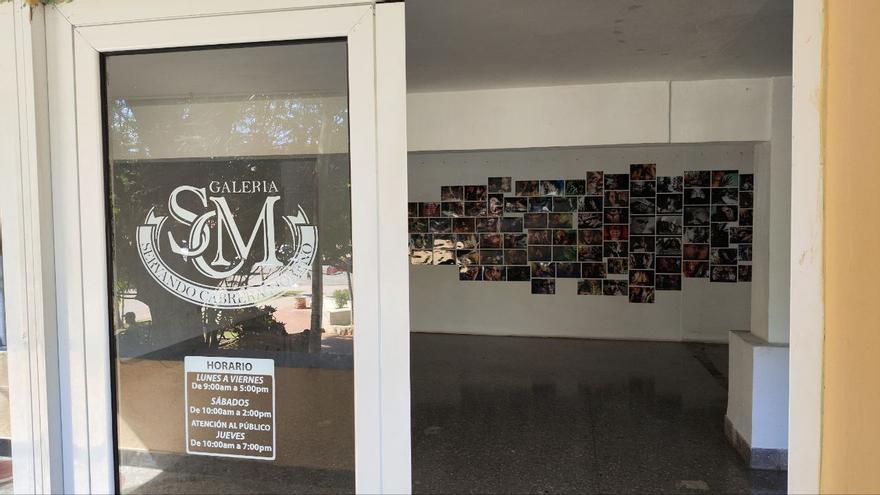
La Copa’s other tenants include a pharmacy without medications, a vacant hard-currency store and two ATMs — only one of which works — in a corner which more often serves as a makeshift urinal. The dilapidated Servando Cabrera gallery a few steps away, which authorities describe as a “bastion of emerging art in Cuba,” pays homage to Lisboa’s old slogan: “In line with the Revolution.”

The Servando Cabrera gallery, “bastion of emerging Cuban art, is empty. (14ymedio)

*Translator’s note: a Mexican drink of beer, lime juice, assorted sauces, spices, and chili peppers, served in a chilled, salt-rimmed glass.

____________

COLLABORATE WITH OUR WORKThe 14ymedio team is committed to practicing serious journalism that reflects Cuba’s reality in all its depth. Thank you for joining us on this long journey. We invite you to continue supporting us by becoming a member of 14ymedio now. Together we can continue transforming journalism in Cuba.

Cuban Police Arrest the Alleged Murderer of a French Tourist in Havana

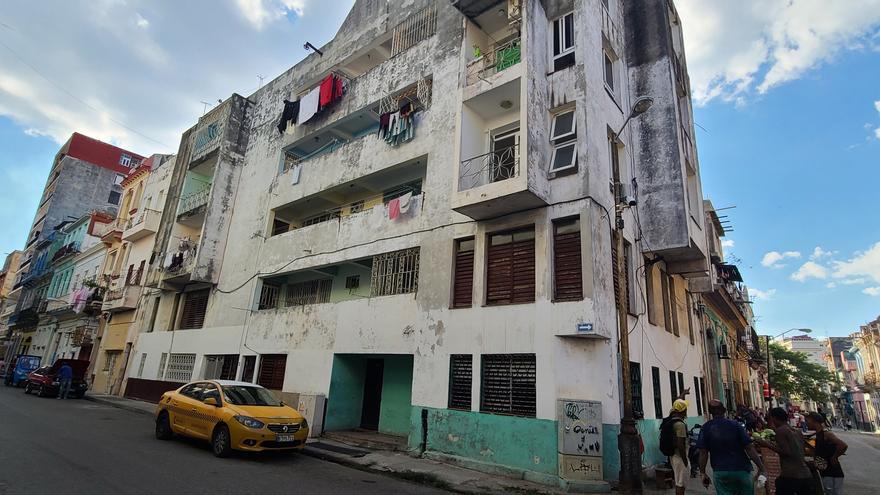
The French tourist was staying in this building on Industria Street, in one of the poorest neighborhoods of Central Havana. (14ymedio)

14ymedio bigger14ymedio, Havana, December 2, 2023 — A man of French nationality, about 60 years old, was murdered in the early hours of Thursday morning in a building located on the corner of Industria and Virtudes, in Central Havana. The victim had gone up to a tourist rental apartment with two girls, who gagged and suffocated him with the alleged intention of robbing him.

The police intercepted one of the young women in the bus terminal of La Coubre, where she intended to escape to the east of the country, one of the neighbors told 14ymedio. He did not know if the other woman was also located by the agents.

“The Frenchman had young girls in the apartment every night,” the source told this newspaper. “In the early morning of Wednesday to Thursday, he came with the girls, who were drugged, and they killed him to rob him.” The age of the murderers ranges from 18 to 25 years old, he calculates. continue reading

According to the neighbor, the body was discovered on Thursday, probably when the owners of the apartment went to change the victim’s bedding

According to the neighbor, the body was discovered on Thursday, probably when the owners of the apartment – located on the fourth floor of the building – went to change the victim’s bedding. “In the morning, the neighborhood was filled with patrols,” the man explains. The building is not far from the old Great Musical Theater of Havana and a Methodist temple.

The neighborhood where the French tourist stayed is one of the poorest in Central Havana. Formerly known as the neighborhood of Colón – and famous for the practice of prostitution – its accommodations are highly sought after by tourists looking for a low-cost rental that is not far from the historic center of the city.

Bunkhouses proliferate, and the buildings are very deteriorated. The Colón neighborhood is also known for the abundance of members of the Abakuá secret society and for the practitioners of Santería and other Afro-Cuban religions.

Neither the Police nor the French Embassy in Havana have comment on the event, although it is common for the regime to keep secret the murders of foreigners on the Island, even more so in a context of a debacle of international tourism such as the one that the country is currently going through.

Neither the Police nor the French Embassy in the Cuban capital have commented on the event

One of the few exceptions is Antoinette Traboulsi, a 52-year-old Canadian tourist, murdered in Varadero in November 2020. The death of the woman, who had three children and worked as a hospital porter in Quebec, was reported by the authorities to the Canadian government, and it was a Canadian channel from that country, CTV News, that told the story.

Sami Soussa, the victim’s cousin, told CTV News that Traboulsi’s body was found by the Cuban police after his disappearance was reported by a friend the day after his arrival on the Island. The body was buried under 3.3 feet of sand with signs of violence. “In the Cuban morgue they confirmed that it was my cousin’s body,” Soussa explained at the time.

The Cuban Government has also not revealed how many foreign tourists have died from violent causes on the Island in recent decades

The Cuban Government has also not revealed how many foreign tourists have died from violent causes on the Island in recent decades. A note published by Martí Noticias in 2013 estimated that the figure – at that time – amounted to fifty.

Citing sources from the Ministry of Tourism, which asked for anonymity, the channel also revealed that another 50 foreigners were injured in 2013 alone. The main causes, they said, were “assaults or homicides to rob them; drowning in the sea, usually in a state of drunkenness; traffic accidents, in many cases due to ignorance of poor road conditions; and drug overdoses or heart attacks caused by Viagra consumption, among those who go to the island looking for sex tourism.”

Translated by Regina Anavy

____________

COLLABORATE WITH OUR WORKThe 14ymedio team is committed to practicing serious journalism that reflects Cuba’s reality in all its depth. Thank you for joining us on this long journey. We invite you to continue supporting us by becoming a member of 14ymedio now. Together we can continue transforming journalism in Cuba.

Shock in a Santiago de Cuba Town Over Murder of a 15-Year-Old Girl

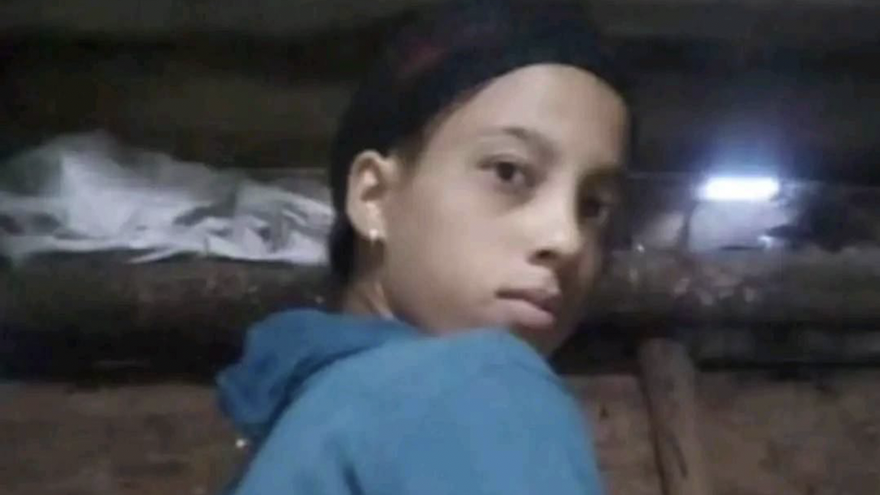
Dorka Velázquez Casal, victim of a horrendous femicide. (Social networks)

14ymedio bigger14ymedio, Havana, 2 December 2023 —  The murder of Dorka Velázquez Casal, age 15, has shocked the rural town of Aguacate, belonging to the municipality of Palma Soriano, in Santiago de Cuba. The platforms monitoring femicides also reported this Friday the death of Beatriz García, murdered in Bayamo, which brings the number of victims of misogynistic violence in Cuba to 79 in 2023.

According to user Jeissy Borrell Gámez, one of the Facebook profiles cited by Yo Sí Te Creo en Cuba (YSTC) to verify Velázquez’s death, the minor was raped and her throat was slit with a knife. Likewise, Borrell published a photo of the alleged murderer, also a resident of Aguacate, whom he identifies with the nickname Pipito, who, he claims, has already been arrested by the Police.

YSTC also confirmed the femicide of Beatriz García, committed on November 22, in her home, in the town of El Horno, Bayamo, in the province of Granma, at the hands of her ex-partner, who then committed suicide. The victim is survived by three children, two adults and one minor.

In a message published on the social network X this December 1, YSTC warns “once again of the horrendous consequences of the State’s inaction with regards to the prevention of misogynistic violence.

According to the most recent Latin American Map of Femicide released within the framework of the International Day for the Elimination of Violence against Women, Cuba is the country with the greatest increase in the number of femicides, exceeding 20 cases in the first half of 2022, versus 50 in the same period of 2023, that is, 150% more. continue reading

Paula Spagnoletti, one of the coordinators of the Mapa, in conversation with the media Télam, explained that according to YSTC and the Observatory of the Cuban feminist magazine, Alas Tensas, “there is an increase in verifications and not in the number of femicides, since there is an official base and updated figure available that sets a benchmark.”

The Cuban Government does not produce reports, which implies that the organizations are in charge of verifying femicides due to their management and, furthermore, the government does not have data to compare. Added to this is the silence of the official press, which barely publishes these events and in most cases does not classify them as femicides.

Although recently the official media Girón and 26, from Matanzas and Las Tunas, respectively, broke their silence on the matter. Girón acknowledged that seven women were murdered in the province in the first half of 2023. The victims were between ages 20 and 57, and the most recurrent causes of death were wounds caused by knives.

For its part, 26 published that the Las Tunas Prosecutor’s Office, during this year, has opened more than 200 legal proceedings for “threats, injuries, sexual assaults and murders” of women and girls.

Both media recognize that femicides are “sadly increasing” due to the indifference of the authorities and the silence of the official press.

____________

COLLABORATE WITH OUR WORKThe 14ymedio team is committed to practicing serious journalism that reflects Cuba’s reality in all its depth. Thank you for joining us on this long journey. We invite you to continue supporting us by becoming a member of 14ymedio now. Together we can continue transforming journalism in Cuba.

A Young Woman of 20 Murdered by Her Partner in Bayamo, the 77th Femicide in Cuba This Year

Dailenis Nápoles Zamora, 20, was murdered by her partner in Bayamo, Granma. (Facebook/Marlene Sandoval)

14ymedio bigger14ymedio, Havana, 23 November 2023 —  The independent observatories Alas Tensas and Yo Sí Te Creo (YSTC) confirmed this Thursday two new victims of misogynistic violence in Cuba. The deaths of both women brings the number of femicides on the Island since January to 77, more than double the number recorded throughout the year in 2022 by unofficial records.

The first reported death was Dailenis Nápoles Zamora, 20 years old and resident of Bayamo (Granma), who was murdered on October 20. The alleged murderer of the young woman was her partner, identified by the independent media Asere as Alexis Castañedas.

According to the media, citing witnesses to the event, after a “heated” argument, Nápoles threatened to leave the house where they both lived and go live with her parents. Castañedas chased the young woman to a bus stop and made her return to their home, where he allegedly murdered her with a knife. continue reading

Before surrendering to the authorities, the alleged aggressor informed the victim’s mother, who found her daughter wrapped in a sheet with her throat slit

Before surrendering to the authorities, the alleged aggressor informed the victim’s mother , who found heer daughter wrapped in a sheet with her throat slit. Sources close to the victim told Asere that Nápoles used to be frequently mistreated by Castañedas.

The second case confirmed by YSTC – which 14ymedio had alreadyalluded to this Monday – was that of Sarahí López Pérez, 48, murdered by her ex-partner on November 18 in the Havana municipality of Cerro. Days before the confirmation of the femicide, the Asere media outlet identified inmate Yordano Quintanal Díaz as the aggressor, who took advantage of a prison pass to murder López.

The events occurred on Salvador Street, between Parque and Bella Vista, in the Consejo Popular Canal. YSTC sources told 14ymedio that the victim’s mother and brother were also injured, and were admitted to the Calixto García hospital with minor injuries. This Monday, both family members were discharged from the hospital.

“She had broken up with him and did not accept him. He is a very violent man,” a neighbor of López told CubaNet, who reported that the woman had received previous threats from her attacker. “During the previous [prison] pass he threatened and attacked her, but she did not report it out of fear. Now he came out again and killed her,” the neighbor added.

The cases registered so far in 2023 by independent activists are on track to triple the number of misogynistic murders from last year

The official Federation of Cuban Women (FMC) recognized this Monday the increase in sexist murders, but without mentioning any of the cases registered this year by independent activists; the total is on track to triple the number of misogynistic murders in 2022, when 34 femicides were reported.

For its part, the official newspaper Girón revealed this Saturday that, in the first half of 2023, seven women were murdered in the province of Matanzas; four in 2021, and three in 2020, “whose basic causes of death were strangulation, burns from flames and assault with a blunt object.”

The media also confirmed the existence of a “sexist, possessive pattern” that is repeated on the Island, in addition to “threats” and “injuries.” Other women, she lamented, “do not report or seek help,” but rather “protect the aggressor and justify it.”

“In the Penal Code there is no article or criminal type that defines the exercise of violence against women,” provincial prosecutor María Elena Govín, of the Department of Criminal Procedures, admitted then. The absence of a legal tool against misogynistic violence, denounced on numerous occasions by Cuban feminists, has found a deaf ear in the Government, which continues to refuse to offer official figures, hence Govín admits that it is “a debt” of the authorities with Cuban women.

____________

COLLABORATE WITH OUR WORKThe 14ymedio team is committed to practicing serious journalism that reflects Cuba’s reality in all its depth. Thank you for joining us on this long journey. We invite you to continue supporting us by becoming a member of 14ymedio now. Together we can continue transforming journalism in Cuba.

The Cuban Army Exhibits its Underground Arsenal and its ‘Katiushas’ on Russian Television

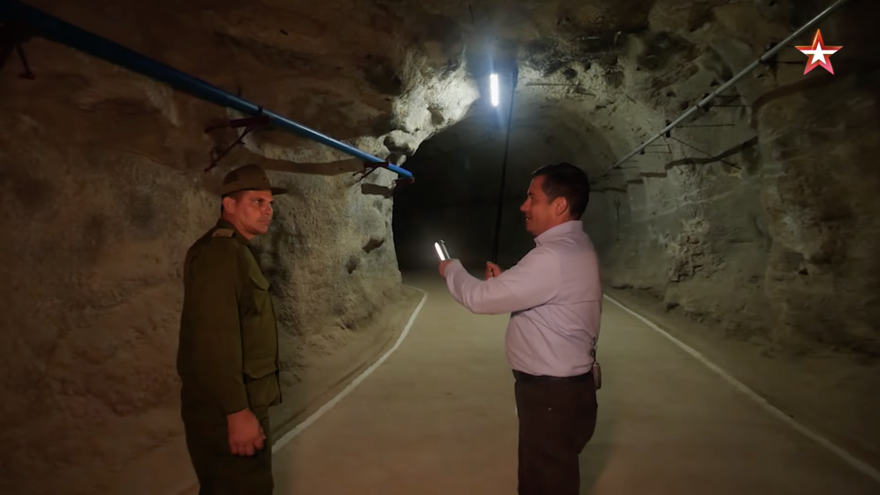
Egorov boasted that in his raid into the Cuban Army tunnels he achieved “unique images.” (Zvezda/Capture)

14ymedio bigger14ymedio, Havana, December 2, 2023 — War tanks, missile launchers, Ural-4320 trucks, soldiers capable of walking on barbed wire and a labyrinth of secret tunnels. The disturbing images that the Cuban Army allowed a reporter from the Russian channel Zvezda to record have all the ingredients of a propaganda cocktail, but they offer a clear message: Cuba has no complexes in showing itself to its allies as a key military point in the region.

The Military Acceptance program, led by Alexey Egorov and specializing in analysis of war material, dedicated 40 minutes to tour various facilities of the Armed Forces, including the Granma Naval Academy, the Museum of the Revolution in Havana and an underground arsenal more than 100 meters deep.

Egorov boasted that in his foray into the Cuban Army tunnels he achieved “unique images,” and that his team is “the first foreign media outlet to descend into the weapons warehouses” on the island. While examining the rocket launchers – known popularly called katiushas and capable of simultaneously firing 40 projectiles — the reporter stressed that Cuba was only 180 kilometers from the coast of the United States, although, he admitted, more than 9,700 kilometers separate it from Russia. continue reading

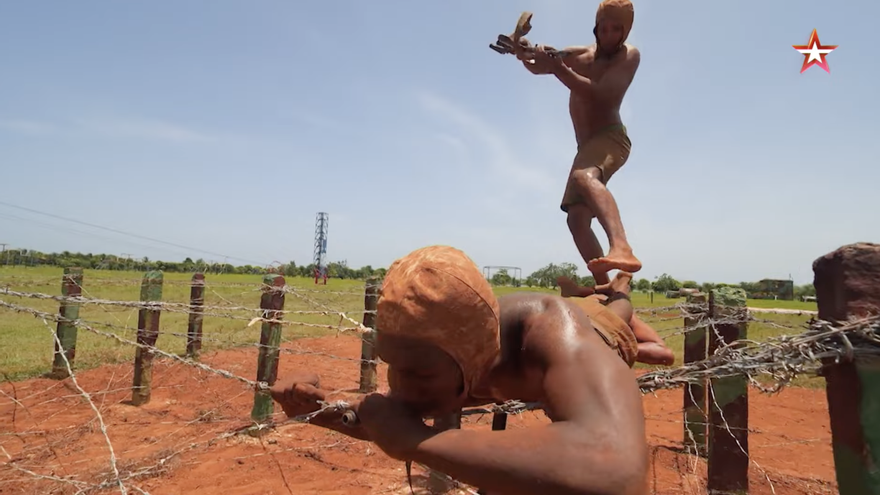
In addition to physical exercises, tactical studies and hand-to-hand combat, recruits must walk barefoot and shirtless over barbed wire. (Zvezda/Capture)

The intention of the program – which will have a second episode – is to show “how Caribbean steel is hardened” and “where the island’s warriors get their combat experience.” In addition, it devotes numerous comments to describing “how the Soviet Union protected Liberty Island, with its nuclear shield, from American attacks,” alluding to the missiles with atomic warheads that the USSR quickly installed and removed on the Island at beginning of the 1960’s.

Alexey Egorov, the Russian journalist to whom the Army opened the doors of its facilities, is a staunch supporter of Vladimir Putin and an enthusiastic defender of his invasion of Ukraine. Bulletproof in ideological matters, Egorov appears on the list of 1,500 warmongers in the service of the Kremlin published by the Free Russia Forum.

The hosts spared no attention to the Moscow envoy. With a lamp in his hand and after handing over his cell phone, Egorov began his program praising the Cuban military installations and going through several meters of tunnels in excellent condition, well lit and signposted. He was accompanied at all times, although they were not identified, by a first colonel of the Armed Forces and several colonels in field dress.

The reporter highlighted a virtual simulator that occupies an entire room, and that reproduces the bridge of a warship. (Zvezda/Capture)

Covered with tarps to protect them from humidity, there were several war tanks, Russian Ural 4320 trucks and Chinese Howo, which the Army had already exhibited during parades at the beginning of the year. He also visited the so-called Reactive Artillery Group, where the missile launchers, installed on Ural vehicles, and various Army logistics implements and food suplies are kept.

Egorov compared the Cuban tunnels with those in North Korea, which he also visited during a broadcast of his program. The training and protection systems of the arsenal, he demonstrated, are very similar, and the island’s troops have proven their effectiveness in operations in Angola, Ethiopia and Granada, he listed, although it is known that the Cuban soldiers fled in disarray before the 82nd US Airborne Division in Grenada.

The camera then moves to open fields, where several platoons of Black Wasps – armed with Kalashnikov rifles and wearing camouflage paint – demonstrate their training maneuvers along the coast. In addition to physical exercises, tactical studies and hand-to-hand combat, recruits must walk barefoot and shirtless over barbed wire. Another operation consists of lying on the wires so that other soldiers can walk on their backs.

At the Granma Naval Academy, east of Havana, Egorov examined the training techniques of the Cuban Navy. Among his equipment, the reporter highlighted a virtual simulator that occupies an entire room, and that reproduces the bridge of a warship. The training images are those of a hypothetical battle in Havana Bay.

The images published by Egorov come to light in a diplomatic context in which Havana must tread carefully. (Zvezda/Capture)

To illustrate the excellent health among the senior military officials of Russia and Cuba, Egorov showed recordings of the meeting in Moscow between the Cuban Minister of the Armed Forces, Álvaro López Miera, and his Russian counterpart, Sergei Shoigu, last June. The journalist also showed unpublished images of the visit to Havana of the Russian training ship Perekop – whose authorities canceled, without explanation, the visits that Cuban civilians had scheduled to its deck, last July – and his tour of the Museum of Revolution and Playa Girón [referred to as the Bay of Pigs in the US].

The images published by Egorov come to light in a diplomatic context in which Havana must tread carefully. On the one hand, the recent announcement that the regime plans to buy Polonez-M missiles from Belarus, with a range of 300 meters, would be a direct military provocation for the region. On the other hand, the ratification of Cuba as one of the countries sponsoring terrorism, according to the annual list prepared by the United States.

Everything, after a year of maximum tension in which rumors about Russian spy bases on the Island, the presence of Cuban soldiers in the invasion of Ukraine and the alliance between Havana and the Kremlin, have filled the front pages of all the newspapers from around the world, except those from Cuba.

____________

COLLABORATE WITH OUR WORKThe 14ymedio team is committed to practicing serious journalism that reflects Cuba’s reality in all its depth. Thank you for joining us on this long journey. We invite you to continue supporting us by becoming a member of 14ymedio now. Together we can continue transforming journalism in Cuba.

Given the Debacle of National Production, Cuba Will Import Eggs from Colombia

Packaged by the dozen, clean and size large, the imported eggs enjoy great acceptance among Cubans. (14ymedio)

14ymedio bigger14ymedio, Havana, December 1, 2023 —  The Colombian Agricultural Institute (ICA) announced that it will soon begin exporting fresh eggs to Cuba. Negotiations with Havana began in July, the entity explained in a statement, but they needed approval from the Island’s National Center for Animal Health, which finally gave the green light to the purchase.

“We are pleased to announce this important news for the poultry sector, which will bring great benefits to the national economy, job creation and the transformation of the Colombian countryside,” said Juan Fernando Roa, manager of the ICA.

The official also welcomed the approval of the relevant certifications for the shipment of food, which require that Colombia keep its data updated with the World Organization for Animal Health, that it be a territory free of avian influenza and Newcastle disease, two diseases with high level of contagion that can damage both the life and production of birds and which are transmitted to humans. Likewise, breeding farms where eggs are collected are required to be under official veterinary control. continue reading

In Havana, a thirty-unit carton of eggs costs around 3,000 pesos, a figure that exceeds the average monthly salary.

In Colombia, an egg has a price of 581 Colombian pesos, which is equivalent to 14 cents USD or 37 Cuban pesos. Although the value is only a third of the 100 pesos that a unit can cost on the Island, it is likely that the cost of importing will increase its price.

Although Havana does not appear as one of Bogotá’s main partners, this country does export large quantities of eggs to other nations in the region. In 2021, Colombia exported eggs worth $600,000 to Ecuador, its main buyer. This was followed by Venezuela (397,000) and Aruba (2,700). In that same year, Colombia exported eggs, in total, worth one million dollars, but imported the same product for 1.89 million dollars, making it a net importer.

Eggs are in high demand by Cubans who, faced with the food crisis and the inability to pay the high prices of meat, turn to this product, which has reached prices that border on the prohibitive.

For those who have family abroad, the alternative has been virtual sales platforms such as Supermarket or Tuambia

The debacle of the poultry industry worsens the situation. In addition to the health problems of the animals, aggravated by the lack of feed and vitamins, the list of deficiencies that affect the entire national production is notable: there is no food, but also no fuel or supplies to achieve the basic conditions of comfort for chickens, whose egg production experiences a brutal drop due to these factors.

The authorities, who have not been able to guarantee the delivery in recent months of the five eggs per person per month provided for in the ration system’s basic basket, justify the failure of the farms by alleging that Cuban birds are very “sensitive and get stressed easily,” in addition to pointing to, as usual, the US embargo on the Island.

For those who have family abroad, the alternative has been virtual sales platforms such as Supermarket or Tuambia, which offer to deliver the food on the Island if it is paid for from the United States. The egg brands sold on these portals are mostly American.

MSMEs [small businesses], with import facilities, also offer eggs purchased abroad which are widely accepted among Cubans. Packaged by the dozens, clean and stamped, these eggs are generally larger in size and have more intensely colored yolks than those produced domestically.

In Havana, a thirty-unit carton of eggs costs around 3,000 pesos, a figure that exceeds the average monthly salary.

____________

COLLABORATE WITH OUR WORKThe 14ymedio team is committed to practicing serious journalism that reflects Cuba’s reality in all its depth. Thank you for joining us on this long journey. We invite you to continue supporting us by becoming a member of 14ymedio now. Together we can continue transforming journalism in Cuba.

Ruins Overlooking the Sea in a Depopulated Havana

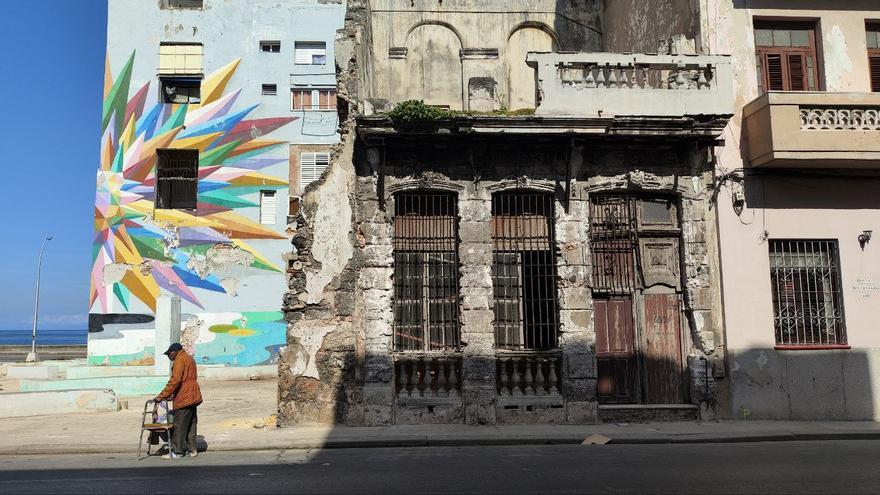
Travelers do not approach San Lázaro and Campanario. Children are no longer heard in the streets. An old man walks past the cement park creeping with a walker. (14ymedio)

14ymedio bigger14ymedio, Juan Diego Rodríguez, Havana, December 1, 2023 —  The colorful paint behind the building on the corner of Campanario and Malecón, in Havana, is only there to hide the hole left by a collapse on the San Lázaro side. The same function is fulfilled by a kind of park – if you can call it that, a piece of gray cement land, bare of trees – where a building once stood.

However, it cannot be hidden, because, attached to the adjacent number, there are remains of the façade. As if they had purposely wanted to record one more trace of the ruin of Central Havana.

With its back to the avenue that faces the sea, whose buildings do, from time to time, have the good fortune to receive maintenance, as it is an obligatory gateway for tourists and foreign guests of the regime, San Lázaro is one of the most forgotten streets in the capital. Here it doesn’t matter if saltpeter, scarcity and apathy eat into the facades until they collapse. continue reading

It wasn’t always like this. This same corner is halfway between two arteries that once bustled with commerce and exuded luxury: Belascoaín, on the one hand, and Galiano, on the other.

Next to Belascoaín and San Lázaro is one of the emblematic places of the municipality, Parque Maceo, where the Torreón de San Lázaro is located, a 17th century lookout point, and where the children of Centro Habana could escape from their tiny and overcrowded homes to run, play, ride a bike, scrape their knees.

Today, fewer and fewer toddlers are seen in the area. The birth rate is reduced by the migratory exodus and hopelessness. There are no longer activities or children’s shows

The place is also considered a hub because several neighborhoods converge there: San Leopoldo, Pueblo Nuevo and Cayo Hueso.

Today, fewer and fewer toddlers are seen in the area. The birth rate is reduced by the migratory exodus and hopelessness. There are no longer children’s activities or shows in the park. The cafeteria that opened in the nineties during the first dollarization and was quite busy, closed years ago. The bad reputation of the basic secondary school, right there in Belascoaín and San Lázaro, of marginality, bullying, violence and drugs, has spread throughout all these streets.

At the other fundamental point, Galiano, little remains of its previous commercial heart. On the corner with San Lázaro, the Deauville hotel is not remembered for having been a cabaret and casino owned by gangsters – and correspondingly looted with the outbreak of the Revolution – but for one of the focuses of the then historic protests of August 1994 known as the Maleconazo.

That area is saved by already having one foot in Old Havana, pampered by the Historian’s Office, international donations and tourists.

But travelers do not approach San Lázaro and Campanario. Children are no longer heard in the streets. An old man walks past the cement park creeping with a walker. A corner fallen into disgrace, like the entire Island.

____________

COLLABORATE WITH OUR WORKThe 14ymedio team is committed to practicing serious journalism that reflects Cuba’s reality in all its depth. Thank you for joining us on this long journey. We invite you to continue supporting us by becoming a member of 14ymedio now. Together we can continue transforming journalism in Cuba.

Patients Go Through an Ordeal To Be Treated in the Calamitous Cuban Hospitals

A doctor working without light, in a polyclinic in Centro Habana. (14ymedio)

14ymedio bigger14ymedio, Olea Gallardo, Havana, November 30, 2023 — The bursting into tears last Monday of Dr. Yoandra Quesada de Bayamo (Granma), who is being tried along with five other colleagues for the death of a 23-year-old patient, is nothing but the vivid image of what remains of healthcare in Cuba, the eternal jewel in the crown for revolutionary propaganda.

What the surgeon said to the journalist Ernesto Morales – “all your colleagues leave, you are working alone and without materials, exposed to being killed one day by a desperate relative” – is verified daily by any Cuban who steps into a healthcare center. The situation of primary services is especially dramatic.

“There are no syringes, there are no reagents for the tests, there are no nozzles to give aerosol, there are no esfigmos [sphygmomanometers] to take blood pressure.” Aleida, who unravels this litany, is still young, but she is beginning to have problems with hypertension, a condition that leads to the number one cause of death on the Island. continue reading

“One day when I arrived at the hospital with high blood pressure, they wanted to give me oxygen, but there were no mouthpieces, so the doctor gave me the hose and said: ’don’t put it in your mouth, put it close, so that you feel the oxygen.’” Aleida couldn’t do it, because of the stench that the instrument gave off and out of shame. “I took it and told him: look, this doesn’t smell good. But in addition, I felt ridiculous, with that oxygen escaping everywhere.”

That day, she was lucky, because she usually has to walk miles and make a pilgrimage through several centers before finding one where a device to measure blood pressure is available. “The first time I went to the polyclinic near my house, where there were no esfigmos anywhere, the doctor told me: I can’t take your pressure, little girl, but come and sit here, the only thing I can give you is a long talk.’”

There are no syringes, there are no reagents for the analyses, there are no nozzles to give aerosol, there are no sphygmomanometers to take blood pressure

Who does have sphygmomanometers? “Foreign residents often have them and are always given a more pleasant treatment than Cubans by the way,” says Aleida. Faced with the exodus of specialists, outside the Island or to other jobs that provide them with better salaries, the Government tries to solve the lack of labor with exchange students, who cover the emergency rooms.

Luis, who is only 40, is frightened. He has been urinating blood for a few weeks and still doesn’t have the results of the tests he was finally encouraged to do. He was unsuccessful the first time he went to the hospital because “they didn’t have reagents,” but they did the second time. “But then I had to bring the syringe myself because they didn’t have them either.” Now he waits anxiously for an appointment with a specialist: in eight months.

Mild diseases and once-luxurious centers are not spared from the debacle. The 19 de Abril polyclinic, in Nuevo Vedado, for example, the favorite place to take foreign visitors on an official trip to the Island, has serious infrastructure problems.

“There are cracks at a 45-degree angle on several important walls, even cracks that can be seen on both sides of a window,” observes Juan, who for many years dedicated himself to construction and recently had to go to that health center for rehabilitation due to a dislocation. “The building was built during the Revolution, so it is no more than 65 years old.”

The wave of indignation over the trial of the six doctors of the Carlos Manuel de Céspedes hospital accused of negligence not only made the Ministry of Public Health react, which had to clarify that the process is carried out “with adherence to the guarantees established in the laws,” but continues to have echoes.

In the face of the exodus of specialists, the Government tries to solve the lack of manpower with exchange students, who cover the emergency rooms

Thus, in the midst of the controversy, the Communist Party of Cuba in Granma province decided this Wednesday to dismiss its first secretary, Yanaisi Capó Nápoles, and to put in Yudelkis Ortiz Barceló instead. The official press did not detail the reasons and highlighted Ortiz Barceló, who comes from being a member of the Executive Bureau to “attend to ideological political activity” in the Provincial Committee of the PCC in Santiago de Cuba.

This Wednesday, four doctors residing abroad signed a harsh letter addressed to José Ángel Portal Miranda, Minister of Health, in which they sympathize with the doctors “unjustly accused.” The letter, signed by Alexander Jesús Figueredo Izaguirre, Arnoldo de la Cruz Bañoble, Sergio Barbolla Verdecia and Jorge David Yaugel, describes what happened in Bayamo as a “national shame.”

“The accusers should point out those really responsible for that death. These doctors are also victims of the conflict between their professional commitment and the impossibility of succeeding in the conditions in which they are forced to treat their patients,” the doctors said in the text. “The ones responsible for diverting the resources provided by the medical brigades” are the ones who should appear before the courts.

The regime has received “billions of dollars” in the last decade, money that “has not been invested in the Cuban health system as was argued at the time to justify the arbitrary deduction of between 70% and 90% of the salaries* of the brigade members during all these years.” With this, they continue, “there would have been more to keep the health system in optimal conditions and pay decent wages to professionals in the sector.”

These doctors are also victims of the conflict between their professional commitment and the impossibility of succeeding in the conditions in which they are forced to treat their patients

Among their demands is that from now on they pay health workers “the full salary when we go out to provide services to other countries and not just give us a minimum stipend from it,” as well as an “immediate” salary increase for all those who work in the health system.

They also commented on the case of Amelia Calzadilla, who from Spain, where she managed to escape a little more than two weeks ago, asks doctors to refuse to work in such terrible conditions.

She is not the only one who thinks like that on the Island. “The situation requires a general strike, but if you say this in public they’ll put me in prison.” The woman, who doesn’t want to be more precise, predicts: “One day everything will stop working; the doctors will not go to the hospital to work; the teachers will not go to school; the ration-store shopkeepers will not take care of the ration stores; and then the system will collapse. Because if there’s nothing anywhere, what’s the point of all this?”

*Translator’s note: Cuban medical personnel serving on ’brigades’ or ’missions’ in foreign countries are paid a very small percentage of what those countries pay Cuba for their services.

Translated by Regina Anavy

____________

COLLABORATE WITH OUR WORKThe 14ymedio team is committed to practicing serious journalism that reflects Cuba’s reality in all its depth. Thank you for joining us on this long journey. We invite you to continue supporting us by becoming a member of 14ymedio now. Together we can continue transforming journalism in Cuba.

Azcuba Invokes a Confusing ‘Business Model’ To Avoid Another Disastrous Sugar Harvest

The 14 de Julio sugar mill, in Cienfuegos, is one of the few that currently meets the forecasts. (ACN)

14ymedio bigger14ymedio, Madrid, 1 December 2023 — After the “small but more efficient” harvest of 2023, a new edition will begin next week, which will be “superior to the previous one.” This is how Julio García Pérez, director of Azcuba, defined the production scheduled for 2024 this Thursday on the Cuban State Television program Mesa Redonda [Round Table], in the face of the skepticism of a population already accustomed to the collapse of the results year after year.

This year the sugarcane will be ground in 25 sugar mills. Twenty-three of them begin in December, and the other two will be added later, since “the boiler pipes have not yet arrived in Cuba. They are financed, but the funds are held in a bank, subject to agency inspections, due to the restrictions of the blockade,” said García Pérez, who did not dare to offer an official forecast of the number of tons projected for this year.

Although “the blockade” was among the reasons cited as “external” by the manager, there was a list of internal culprits this time. Excessive burning of cane, sugar quality problems, poor business management – “under the same conditions, some companies and cooperatives maintain acceptable production levels and others decrease” – and the lack of control over crime were the causes accepted as their own by the state monopoly. continue reading

García Pérez assumed, as it could not be otherwise, the failure of last year, with a shortcoming of 30,000 tons of the forecasts

García Pérez assumed, as it could not be otherwise, the failure of last year, with a shortcoming of 30,000 tons of the forecasts, so that it was also not possible to cover exports, “affecting very serious commitments,” he stressed, nor to provide energy to the National Electricity System. In addition, the departure of workers to the private sector or from the country reduced the workforce by 10%.

The manager also referred to two serious problems that affect production: illegalities, which will be tackled with more video surveillance, and the land, of which only 60% of the 579 square miles destined for cane is sown, the rest lying fallow due to soil preparation problems.

How it is planned to remedy such a painful situation remained a mystery, despite dedicating more than an hour to the interview. “Among the main strategies to advance in the sector, the approval of a new business model stands out, which allows 84% of the foreign currency to buy inputs for cane, such as herbicides and fertilizers,” said the director, but viewers were left without knowing how such a feat will be achieved.

From the “new business model,” to which they have already referred on previous occasions without further details, it is known that the approval to produce wine and rum is part of it, especially for the sugar mills that aren’t able to produce sugar, but it is not known if exporting that production would guarantee hard currency. Yes, the rum would, but not in the desired amount.

Among the options to improve the harvest, “foreign investment will be essential,” the manager added, since the business portfolio contemplates 16 opportunities. “We have approved foreign investment negotiation directives. In that sense, we are linked to the BRIC countries that are traditional sugar producers and contribute to the sector with modern technology – mainly India, Brazil and China,” said García Pérez.

His optimism, in this sense, is not convincing. The portfolio, presented at the International Fair of Havana, contains about 700 proposals each year, of which only about 30 are approved (mostly in the food and tourism sectors) and which, when they prosper, do so very slowly, which at best could take years.

As novelties, Azcuba pointed out that 14 mills will grind sugarcane that is planted at some distance, due to the need to replant closer to the mill

s novelties, Azcuba pointed out that 14 sugar mills will grind sugarcane that is planted at some distance, due to the need to replant closer to the mill. The mere mention already advances an excuse for the foreseeable bad data of the 2024 harvest: the shortage of fuel will have prevented that transporting of the cane to more than half the mills.

Another issue that left viewers wondering was the mention of the State’s debt to the farmers. “A business model was designed,” said García Pérez, dating back to 2022, “that at first had a debt to the farmers of 2 billion pesos.” The manager said that “products were introduced into the value chain, and a special tax emerged that does not affect the retail price of the products.” And so he settled an issue as worrying as how much the account currently amounts to and how those novelties will change it, which was not clarified.

For the new sugar harvest, seven tons of rice are needed, which must be delivered by national companies, García Pérez said, also leaving doubt as to whether it referred to food for employees. “That’s the way not to represent a burden for the country,” he said. Where he did clarify that efforts are made to retain workers is in the construction of homes, which “allows a different well-being for the sugar company.” Retaining young people is essential, he insisted and spoke of how many new graduates are entering the sector or have been promoted within it.

“We know that an economic recovery of the country happens through the contribution of the sugar sector,” he concluded. A gloomy omen, because if – as does not escape anyone – sugar largely marks the prosperity of the Island, the results of recent years speak for themselves.

In 2022-2023, barely 350,000 tons of sugar were reached, according to the data provided by Homero Acosta Álvarez, secretary of the National Assembly and the Council of State, and derived from a sector report. This amount is far from both the amount destined for national consumption, placed at 500,000 tons, and from the export commitments of 411,000 tons.

Translated by Regina Anavy

____________

COLLABORATE WITH OUR WORKThe 14ymedio team is committed to practicing serious journalism that reflects Cuba’s reality in all its depth. Thank you for joining us on this long journey. We invite you to continue supporting us by becoming a member of 14ymedio now. Together we can continue transforming journalism in Cuba.

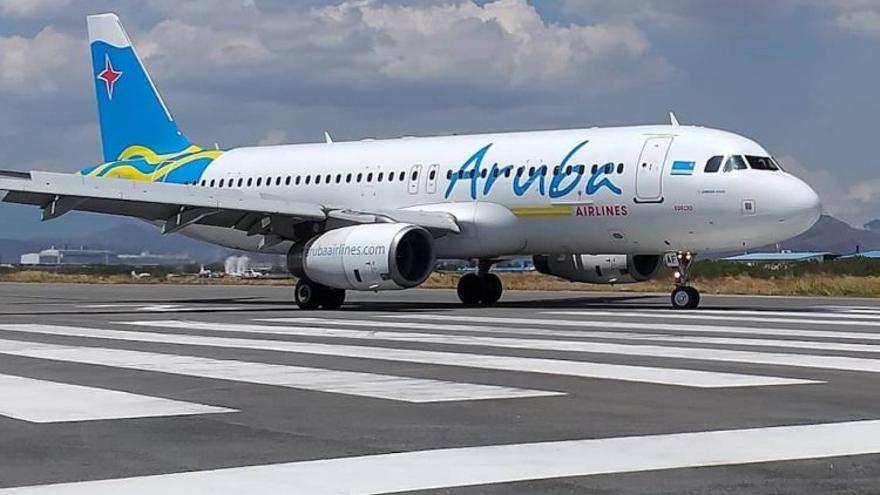
After Warnings From the United States, Aruba Airlines Cancels Its Flights Between Cuba and Nicaragua

Although Aruba Airlines has not issued any official statement, travel agencies no longer market their route between Havana and Managua. (@ArubaAirlines)

14ymedio bigger14ymedio, Havana, 1 December 2023 — Following the warning from the United States about the sanctions it will impose on airlines that encourage the migration of Cubans through Nicaragua, Aruba Airlines suspended its connection between Havana and Managua. The company, from the Venezuelan capital, was one of the only two – along with Conviasa – that maintained flights between the two countries after other airlines, such as Air Century and Sky High canceled their routes.

Although Aruba Airlines has not issued any official statement, a journalist from the Telemundo news channel said on Wednesday that travel agencies that marketed flights on the company’s planes stopped offering the tickets corresponding to the Cuba-Nicaragua connection. As they explained, only those who had already bought their tickets before the cancellation of the route will be able to travel.

Except for companies that make flights between Managua and Havana with a stopover in a third country, such as the Mexican Viva Aerobus or Aeroméxico, Conviasa is the only one that has ignored the U.S. warning and continues to maintain flight frequencies between the two countries. continue reading

On November 21, the United States Government announced that it would impose a visa restriction policy

On November 21, the United States Government announced that, in order to control the entry of Cubans through its border with Mexico, it would impose a visa restriction policy on owners and senior officials of airlines that operate charter flights between Cuba and Nicaragua, the first step in a long trajectory that has become a lucrative business for both the regimes of the region and for human traffickers.

According to the Department of State, these airlines have been selling tickets at “extortionate” prices (up to $4,000 per person for a trip from Havana to Managua) to migrants who lack legal conditions to enter or stay in U.S. territory – the goal of their trip – and who, many times, end up facing deportation processes.

Three days after the announcement, several airlines connecting Cuba with Nicaragua began to suspend their charter flights. This is the case of Air Century and Sky High, which canceled all the operations that were scheduled for the coming months.

A month earlier, the Government of Haiti had reported the ban on flights between Port-au-Prince and Managua, a common route among Haitians who, like Cubans, intend to reach the United States. It is not known, however, if there were secret negotiations between Washington and the Haitian authorities to stop the flow of migrants.

On the other hand, the Cuban ambassador to Russia, Julio Garmendia, reported on Thursday that there is an agreement between the two countries to establish a route between St. Petersburg and Cayo Coco (Ciego de Ávila), as well as between Havana and Moscow, at the end of the year.

“At the end of December it is planned to resume Aeroflot’s direct trips, carried out by the Rossiya airline, between the capitals of both countries, as well as one every ten days from St. Petersburg to Cayo Coco,” he said.

The diplomat’s announcement responds to the agreement between Havana and Moscow to boost Russian tourism on the Island

The diplomat’s announcement responds to the agreement between Havana and Moscow to boost Russian tourism on the Island, which so far has not yielded all the fruits that both governments expected.

For its part, the Spanish company Iberojet will stop flying to Havana in 2024. As confirmed by an employee of the company to 14ymedio, they will have no connection with the Island from next January 15, and they do not know when they will resume operations. However, they will open two routes to Santa Clara, the same source explained, from Madrid and from Lisbon, but “beginning next summer.”

The airline already canceled its Madrid-Santiago de Cuba route last September, just a year after inaugurating it, but, on this occasion, it is a measure that will take place in the middle of the high season, which evidences the debacle of foreign tourism on the Island.

Translated by Regina Anavy

____________

COLLABORATE WITH OUR WORKThe 14ymedio team is committed to practicing serious journalism that reflects Cuba’s reality in all its depth. Thank you for joining us on this long journey. We invite you to continue supporting us by becoming a member of 14ymedio now. Together we can continue transforming journalism in Cuba.

A Femicide in Vinales Brings to 67 the Number of Women Murdered in Cuba in 2023

Image of Yulia Valle published in social media (Facebook).

14ymedio bigger14ymedio/EFE, Havana, 24 October 2023 — Cuba’s independent feminist platforms Alas Tensas [Outstretched Wings] and Yo Sí Te Creo [I Do Believe You] (YSTC) confirmed on Tuesday two new femicides in the country, bringing to 67 the total number of women murdered so far in 2023.

On top of the verification of the murder of Cristina Ramírez Milián, 49, which occurred last October 18 in the town of Birán (Holguín), at the hands of her ex-partner, they added the confirmation of the femicide of Yulia Valle, in Viñales, Pinar del Río, last October 12th. The alleged assailant of this woman was also her ex-partner, according to independent observatories.

Sources close to her published on social media that Valle had been granted humanitarian parole and was to travel to the United States on Monday, October 16th. The woman, according to these same sources, left behind an orphaned minor “who turned 14 on the day of her burial.”

With just over two months to the end of the year, Cuba is about to double the total number of femicides verified in 2022 (34), according to the underreported data of these platforms. continue reading

With just over two months to the end of the year, Cuba is about to double the total number of femicides verified in 2022 (34), according to the underreported data of these platforms

 On Monday, independent observatories denounced the murder of Lisandra Perez Marcial, 35, who died on October 15th at the hands of her partner in their home, in Caibarien, Villa Clara. They also confirmed the death of Bárbara Rodríguez Guerra, 41, who was also assaulted by her partner in Manzanillo, Granma province. Rodríguez, a teacher, was murdered on September 20th and is survived by two minor daughters. Pérez Marcial’s son witnessed the assault and death of his mother.

The work of these feminist collectives and their dissemination in the independent media have helped to shine a spotlight on the cases of misogynistic murders as well as disappearances of Cuban women in recent years. The activists insist that a “state of emergency for gender violence” be declared, and regret that the government has not taken any measures in this regard.

In addition, they advocate for a comprehensive law against gender-based violence (misogynistic murder is not classified in the Penal Code) and the implementation of protocols to prevent these events, as well as the creation of shelters and systems of protection for women and their children in danger.

The pro-government Federation of Cuban Women presented in early June the Cuban Observatory on Gender Equality, which includes statistics on “women who have been victims of intentional homicide as a result of gender violence in the last 12 months.” However, it does not record all the cases reported by independent organizations. For its part, the Supreme People’s Court (SPC) reported in mid-May that in 2022 there were 18 convictions for femicides, all with sentences – for the crime of murder – beyond 25 years in prison.

Translated by Skyler Brotherton-Julien (Spanish 321, University of Miami)

______________

COLLABORATE WITH OUR WORKThe 14ymedio team is committed to practicing serious journalism that reflects Cuba’s reality in all its depth. Thank you for joining us on this long journey. We invite you to continue supporting us by becoming a member of 14ymedio now. Together we can continue transforming journalism in Cuba.

Cuba, So Far From God!

Image of the protest in front of the Cuban Institute of Radio and Television during the mass demonstrations on 11 July 2021. (Facebook/Leonardo Fernández Otaño)

14ymedio bigger14ymedio, Yunior García Aguilera, Madrid, 29 November 2023 — A recurring phrase in Mexico is the one attributed to former President Porfirio Díaz: “Poor Mexico, so far from God and so close to the United States.” Although the expression brilliantly summarizes the history of a country, the truth is that many Mexicans have seen this proximity as quite the opposite. Even today’s President Andrés Manuel López Obrador himself modified the phrase before the North American Secretary of State, Antony Blinken, in 2021. For López Obrador, those 3,180 kilometers of border were a juicy blessing from which they should get every possible benefit.

The US has land borders with Canada, to the north; and with Mexico, to the south. But the case of Cuba is quite unique. It is not only about the famous 90 miles that separate us, and that beat in the minds of a good number of Cubans like a fixed idea. There is also the land border that, de facto, covers 44 kilometers of wire fences at the Guantanamo Naval Base. The Mexican phrase could well be extrapolated to a country where poverty, the denial of God and belligerence with the North have been taken to absurd limits.

In 1961, 136 Catholic priests were expelled from Cuba. In his pathetic speech of 13 March 1963, Fidel Castro also attacked other religious groups that he called “instruments of imperialism.” For decades, admitting your religious creed could deprive you of studying for a university degree. I myself was “not approved” at the end of my secondary studies and could only aspire to study masonry at a trade school, despite having a notable academic record. My parents managed to remedy that matter and I was able to go to a civil construction polytechnic. I studied there for two years, without being able to build a single wall, because there were no bricks or cement anyway. continue reading

Some Jehovah’s Witnesses suffered unspeakable torture. One of them, after refusing to salute the flag, was hoisted as punishment on the flagpole itself, where he remained hanging upside down, under a hellish sun, for long hours.

Popular culture reflected the denial of faith that some had to feign. Adalberto Álvarez marked a musical milestone with his hit And what do you want them to give you?, where he sang: “There are people who tell you that they don’t believe in anything, and they go to consult each other early in the morning…” But others had worse luck. There are hundreds of testimonies of those who ended up in the UMAP camps, our concentration camps. I personally knew some Jehovah’s Witnesses who suffered unspeakable torture. One of them, after refusing to salute the flag was, as punishment, hoisted on the flagpole itself, where he remained hanging upside down, under a hellish sun, for long hours.

Although the regime never managed to completely distance us from faith, the visits of three Popes in recent years have also failed to erase the ditch imposed by an atheist State. The power aspired for the only sacred word to be that of the maximum leader. And the party cadres were to be the only clergy.

It already hurts to continue talking about Cuban poverty. It has become customary to recalculate the real value of the salary every week, watching helplessly as Alice in Wonderland’s potion is drunk. If the World Bank has established $2.15 a day as the poverty line, at what threshold do Cubans find themselves? We already know how the regime cheats with numbers to camouflage our misery in global statistics. With this they manage to deceive two or three clueless people who continue to mention Cuba as an example of certain “achievements.” But the Cuban who is there, biting into the mud, knows perfectly well what figures he carries in his stomach.

And we are left with the old and new relationship with the United States. The island’s politics have never depended as much on Washington’s sneezes as in these six decades. The North is the Goliath at whom Castro could not throw the stone, because Nikita Khrushchev took away the slingshot. The neighbor has become the magnet of blame, the perennial excuse, the wild card for the regime to to declare itself a victim before the world and hide its own atrocities against its citizens.

The truth is that the United States doesn’t care much about us. Its policies towards Cuba respond, above all, to the demands of a community with electoral weight in the state of Florida. The real conflict of the Cuban regime is not with the government of the Stars and Stripes, but with an ever larger exile and with more reasons to fight for the overthrow of that shameful dictatorship.

Poor Cuba, so far from God, from the United States, and from itself.

____________

COLLABORATE WITH OUR WORKThe 14ymedio team is committed to practicing serious journalism that reflects Cuba’s reality in all its depth. Thank you for joining us on this long journey. We invite you to continue supporting us by becoming a member of 14ymedio now. Together we can continue transforming journalism in Cuba.</p

The FBI Agent Who Arrested Ana Belén Montes Presents His Book in Miami, ‘Queen of Cuba’

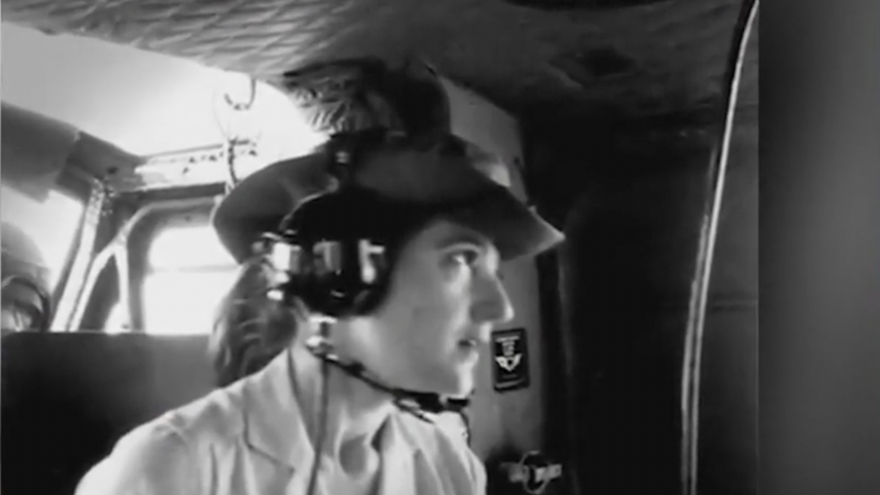
The information that Montes provided to Havana might have cost the life of Gregory Fronius, a US soldier murdered in El Salvador. (Pete Lapp/América TeVé)

14ymedio bigger14ymedio, Havana, 30 November 2023 — The days before her arrest, on September 21, 2001, the spy Ana Belén Montes lived immersed in stress that she tried to mitigate with meditation and sports. She had asked her contacts in Havana for “a boyfriend,” because she was thinking of leaving counterintelligence and rebuilding her life. It wasn’t to be: after 17 years serving Fidel Castro, Montes was arrested by the FBI.

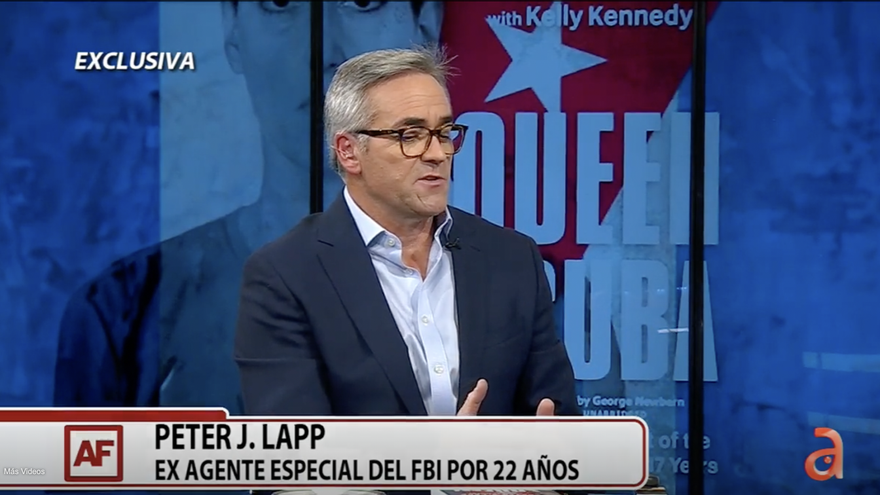
The man who put the handcuffs on her after months of investigation, Pete Lapp, tells Montes’ story in great detail in his book Queen of Cuba, which will be presented this Friday, at seven p.m., at the Books and Books bookstore in Miami. Lapp – who gave a detailed interview to 14ymedio when the spy was released last January, after 20 years of imprisonment – ​​believes that Montes’ work for Havana can be summed up in a symbol: her shortwave radio.

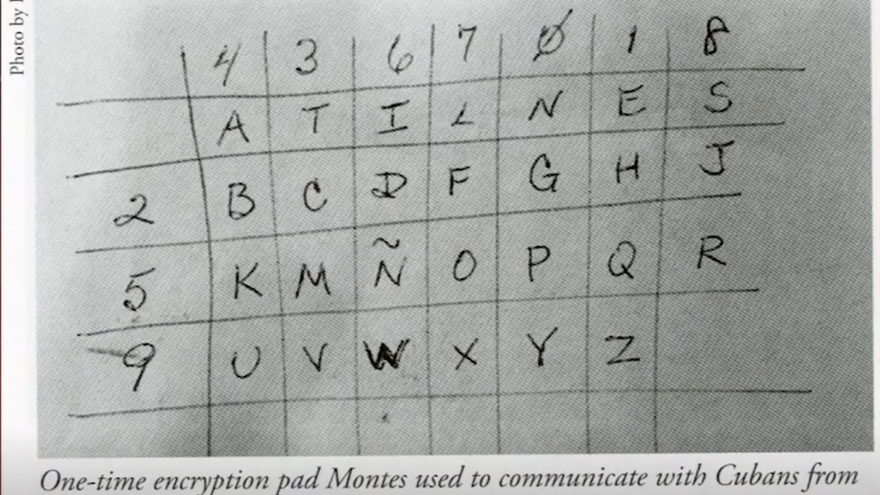
The device, a Sony brand which was confiscated by the FBI after the arrest, accompanied Lapp during his conversation with journalists Juan Manuel Cao and Miguel Cossío, on América TeVé. With that radio, Montes wrote down the coded messages that Havana transmitted on the Radio Habana Cuba station and received instructions from her Cuban bosses. continue reading

The agent, who today works as the head of the Threat Analysis Center of the US Department of Defense, defines Montes as a very intelligent woman and an exceptional spy. From 1950 to 2021, Lapp explains, 148 spies of different nationalities were identified in the United States. Of them, only 12 were women, seven of them of Hispanic origin and all linked to high positions in government institutions.

Pete Lapp, former FBI agent who arrested Montes. (Screen capture)

Only Montes was single and held a prominent position as Washington’s chief analyst on Cuba-related issues. “The Cubans were very careful not to refer to her gender in the encrypted communications that we intercepted,” says Lapp. In fact, the messages constantly talked about Agent S, sometimes called Sergio, so as not to give away Montes or her alias: Sonia.

Montes had a contact who assisted her in the United States, a certain Ernesto, Lapp details, and an anonymous boss in Havana, to whom she passed the information she collected. “The more prestige she gained as an analyst in Washington, the more meetings she was invited to and the more access she had to confidential information,” she adds. “Her skill opened many doors for her.”

“The day we arrested her, her boss said: she was my best analyst,” says the former FBI agent. To reach Montes, it took years of hunting until, in 1994 – with the dismantling of the so-called  Wasp Network of Cuban spies – a method to decrypt Cuban communications began to be seen more clearly.

Montes wrote down the coded messages that Havana transmitted on the Radio Habana Cuba station. (Pete Lapp/América TeVé)

“This is how Agent S was identified,” says Lapp, who, being a radio amateur since he was a child, found an additional clue: Havana was not transmitting to someone who had a radio in Miami, but to a person located much further away, in a city from the northern United States. When Lapp found the Sony device in Montes’ apartment, he had no doubt that the FBI’s hypotheses had been correct.

A photograph from 1988 is, for Lapp, another of the images that summarizes Montes’s life. The image shows the spy with her family. Her father, a former soldier, and two of her brothers, who had successful careers in US government agencies. When that photo was taken, Montes had already traveled clandestinely to Cuba on two occasions, she had been awarded a medal and – although Lapp regrets not being able to prove it – she had “blood on her hands.”

The information that Montes provided to Havana might have cost the life of Gregory Fronius, a US soldier murdered in El Salvador. When Montes was questioned after her arrest, she told Lapp that the US soldiers who died as a result of the information she sent to Cuba “knew the risk” of working for a “war machine” like the USA.

After 20 years, Lapp claims that he does not admire the Cuban intelligence services, but he does recognize their ability to find cold, intelligent people willing to do anything for the regime, like the “queen of Cuba” Ana Belén Montes.

____________

COLLABORATE WITH OUR WORKThe 14ymedio team is committed to practicing serious journalism that reflects Cuba’s reality in all its depth. Thank you for joining us on this long journey. We invite you to continue supporting us by becoming a member of 14ymedio now. Together we can continue transforming journalism in Cuba.

The Chinese Account of Cuba’s Possible Purchase of Polonez Missiles From Belarus

The missiles were first presented in 2015, during the Victory Day parade in Minsk. (Military Watch)

14ymedio bigger14ymedio, Havana, 30 November 2023 —  The Cuban Army is interested in buying Polonez-M missiles from Belarus, with a range of 300 kilometers and reputation for being “the most dangerous artillery system in Europe.” The acquisition of the weapons, actually manufactured by China, would be under negotiation outside of a cooperation agreement with Minsk that the island’s military agreed upon during a meeting held in Havana, according to a statement published this Wednesday by the Belarusian Ministry of Defense.

Neither the Chief of the General Staff of the Cuban Army, Roberto Legrá – who signed the agreement with the Belarusian delegation, headed by Colonel Valery Revenko – nor the other military authorities of the country have revealed why Cuba needs the rockets, installed on MZKT-7930 launch vehicles.

The Belta agency, which claimed to have learned of Cuba’s interest in the missiles through information from the Belarusian Army itself, assured that they are part of a bilateral plan that will be executed starting in 2024. The sale of the Polonez has great geostrategic importance. Insisting that they were manufactured in Belarus is a way of hiding the sale of sophisticated weapons from China to a Russian ally, closely linked to the conflict with Ukraine. This is a violation, albeit indirect, of Beijing’s commitment not to deliver weapons to Russia in the context of the war with Kyiv. continue reading

The delegation that traveled to Havana, led by Colonel Valery Revenko, also visited a tank division and an air defense brigade in the Western Military Region of the Cuban Army. It has not been revealed what are the other components of the “cooperation” program between both countries.

Neither the chief of staff of the Cuban Army nor the country’s other military authorities have revealed why Cuba needs the rockets. (Belta)

Despite Minsk’s attempts to deny that the Polonez missiles come from China, there is sufficient evidence that Belarus is only putting the final touch on their manufacture. The specialized magazine Military Watch reported on November 21 that the Chief of the General Staff of the Belarusian Army, Viktor Gulevich, recently received – in ceremony and celebration – a batch of rockets sent by Beijing.

Belarus, the media noted, only manufactures the launch vehicles, while China provides the weapons. In fact, it is not even known for sure whether Minsk already has the missiles in its arsenal, since only the launchers were seen at the ceremony presided over by Gulevich, which, the magazine suggests, may be a sign that China has not even made the shipment. Alexander Lukashenko’s regime, he concludes, could be boasting – for propaganda reasons – of a weapon that it does not have.

Military Watch recognizes, however, that the Polonez-M are extremely lethal rockets, which according to several specialists have nothing to envy of the weapons that both Russia – an ally of Minsk – and the NATO countries have today. Russian Tornado-S missiles have a range of up to 120 kilometers.

Lukashenko is increasingly investing in the modernization of his weapons, which already included Iskander-M missiles sent from Russia, several of them equipped with nuclear warheads. The Polonez have been praised by the official Russian agency Sputnik, which has also insisted that China has nothing to do with their manufacture.

Sputnik defines the rockets as “impressive”, and although it says that Belarus “received” the weapons, it claims that they were assembled entirely at the state-owned Precision Electromechanics Plant

Sputnik defines the rockets as “impressive,” and although it says that Belarus “received” the weapons, it claims that they were assembled entirely at the state-owned Precision Electromechanics Plant. The agency limits itself to saying that the Polonez “have been tested in China before being put into service,” although, it admits, “several observers suggest that Belarus has received help from Beijing in the field of development of the weapon’s projectiles.”

The missiles, he adds, were first presented in 2015, during the Victory Day parade in Minsk. Guided by an “inertial navigation system with satellite correction,” each Polonez rocket measures 7.26 meters and weighs 750 kilograms. The explosive warhead they carry weighs 140 kilograms. Each vehicle has eight missiles and can fire them in 50 seconds, plus two minutes of preparation and 20 minutes of reloading. “They are extremely difficult to intercept,” the agency warns.

Although there was no explicit mention of the Polonez during the visit to Minsk of the Cuban Minister of the Armed Forces, Álvaro López Miera, last June, there was talk of “intensifying military contacts.” The Belarusian Minister of Defense, Víktor Khrenin, received the Cuban general after a trip that had also taken him to Moscow, just after the uprising of the Wagner mercenary group against Vladimir Putin. Both Moscow and Minsk then described their alliance with Cuba as “strategic” against the “enemies of the West.”

____________

COLLABORATE WITH OUR WORKThe 14ymedio team is committed to practicing serious journalism that reflects Cuba’s reality in all its depth. Thank you for joining us on this long journey. We invite you to continue supporting us by becoming a member of 14ymedio now. Together we can continue transforming journalism in Cuba.