Cuban Protests: The Curse of Fear Has Been Broken, the Final Collapse of the System Has Begun / Dimas Castellano

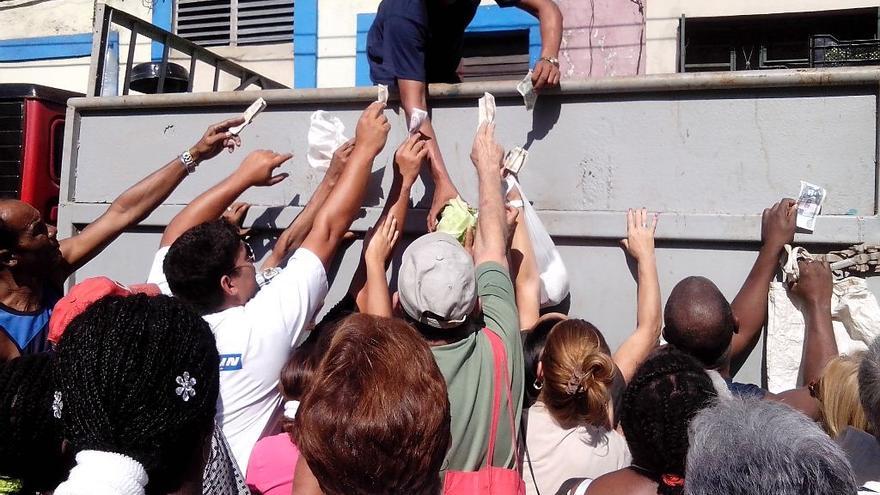
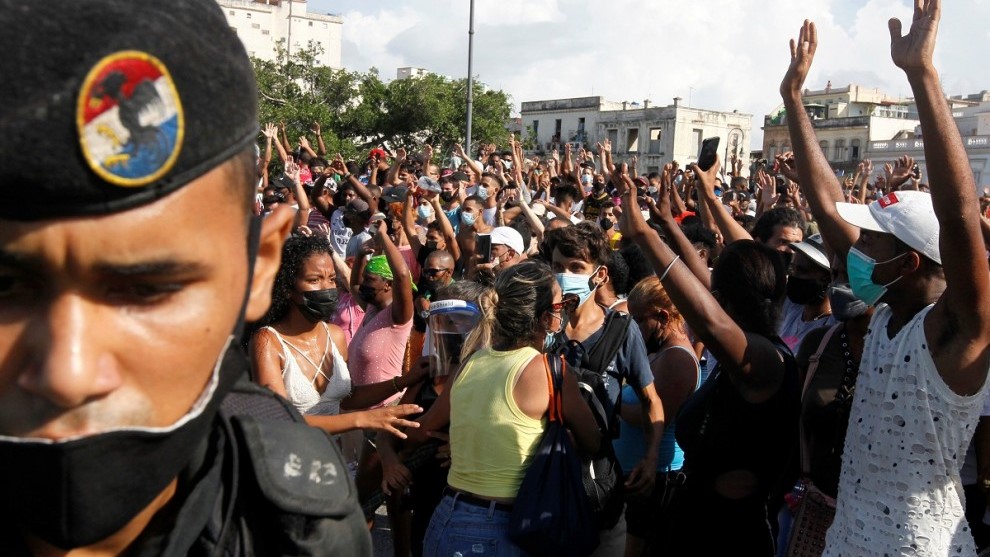
Dimas Castellano, el Blog de Dimas, 13 July 2021 — “It is the ultimate breakdown of the system. It had been coming for months. The curse has irreparably been broken. The Cuban people were tired of the state acting with impunity. It has been sixty-years of abuse and humiliation. This is not an economic crisis; this is a systemic crisis.” This is how the economist Emilio Morales summed up for Diario de Cuba what happened in Cuba on Sunday, when thousands of citizens across the island took to the streets to protest, shouting “Freedom!”

After the protests Diario de Cuba interviewed Morales, political scientists Juan Antonio Blanco and Dimas Castellanos, and activist Boris Gonzalez Arenas about what happened and what it could mean for Cubans in near future and for the regime.

“In addition to being unpopular, the government’s latest economic measures have had profound adverse effects on the economy. First of all, the economy was partially dollarized without meaningful structural changes or reforms to unleash productive capacity. Then there was currency unification, whose stated objective was the elimination of the dual currency system, something that in practice has not happened. Quite the opposite,” says Morales.

This has led to “an increase in inflation, shortages in the retail sector, increased loss of purchasing power and growth in public frustration, as reflected in the protests.”

He also alludes to “the financial massacre of forcing people continue reading

to deposit dollars they have been keeping under their mattresses.”

“Adding to this is the impact of the pandemic. Covid-19 has obliterated the vaunted myth of Cuban medical prowess in the blink of an eye. The epidemiological situation in the country is very serious and highly explosive socially. The increase in the number of infections and deaths has been growing rapidly for days while at the same time public frustration is growing over the lack of governmental response,” he says.

He adds, “In the midst of this brutal humanitarian crisis, the regime has refused to accept help from the Cuban diaspora, which has tested the patience of citizens who lack medicine and food.”

For Morales, all these events “have produced a great rebellion” in which “Cubans have used their voices and social networks as weapons.”

He believes that “these events are a stern warning to the political leadership and the military that impunity has come to an end.”

“Senior career military officials without links to the mafia chieftains running the country, and whose hands are not stained with blood, are taking note of the situation. They will not part in any massacre that the puppet Diaz-Canel might order,” he says.

The economist believes, “This situation could lead to a fracture within the armed forces.”

“Most high, medium and low-ranking officers are experiencing the same hardships as ordinary Cubans: lack of food, medicine, blackouts, inflation, the humiliation of having to pay for basic necessities with dollars when their salaries are in pesos,” he says.

“It would not be the first time a dictatorship in Cuba has fallen. It would not be an an exception. There are already rumors that the families of Raul Castro and Lopez-Callejas have begun sending their relatives out of the country. If this turns out to be true, it would not come as a surprise. Large sums of money have been ferried out of the country for years. The generals and colonels commanding the troops are not going to bloody their hands repressing the people, nor are they going to lend themselves to the farce of watching that these crooks flea the country with their families,” he adds.

In regards to the government’s options for responding to what has happened, Morales believes that those in power “have run out of resources, have nothing to say and nothing to offer.”

“All they can offer is slavery, barbarity, hunger, submission and obedience. An economy in ruins, a country that exports practically nothing, that does not allow its citizens to generate wealth, that exports them as slaves and steals their wages, a government that steals the remittances from exiles and hides them in bank accounts in a third country or invests them in luxury hotels on the island while the public suffers from shortages of medicine and food, and the onslaught of a pandemic that has gotten out of control,” he laments.

What would Emilio Morales advise the Cuban government at this point? “The only possible recommendation would be to urge them to hold free, transparent elections with international supervision. Allow Cubans to generate wealth, end one-party hegemony, allow freedom of thought and association, and end political exclusion. Liberate the economy, the market, prices and put an end to parasitic centralization once and for all. Allow Cubans who live outside and inside the country to invest unhindered and with full legal guarantees. Allow citizens to save the country,” he urges.

Not that he expects the government to do any of this.

“It will try to buy time. It will not acknowledge the crisis. It will say that the thousands of Cubans who took to the streets are criminals, are mercenaries being bankrolled by imperialists. It will say that what they want is annexation and will repeat all those arguments and rhetorical idiocies they have been using for six decades to subdue the masses and justify their acts of violence.”

“In reality, what they will do is increase the repression and persecution of activists. The country will be increasingly militarized to discourage people from returning to the streets. In practice this will be unsustainable and will be very difficult to avoid,” he adds.

“It’s just a question of time. The dictatorship is demoralized. This is the last round and only a united Cuban people can overturn it. They already took the first step by going out into the streets. The curse of fear is already broken. There’s no going back. It does not matter if the internet is shut down or the phone lines are cut. The flame of freedom has already been ignited in the hearts of all Cubans and that cannot be extinguished by any dictatorship, no matter how violent and malevolent it may be. The beginning of the end has finally come,” concludes Morales.

A national rebellion

This is what political scientist Juan Antonio Blanco believes has clearly occurred.

“The regime has already lost two of its three supporting pillars. One was its ability to co-opt the public through subsidized employment, healthcare, and other policies. Investing in those things requires financial capital and political will, neither of which this government has.”

“The other pillar was ideological domination, its ability to present itself as a power allegedly legitimized by history, the voice of the downtrodden. It was their symbolic capital. The San Isidro and 27N movements ripped that apart,” states Blanco.

“The third pillar was fear of the the state’s capacity for repression. Sunday’s protests demonstrated that this fear is not insurmountable. The biggest gain of July 11 is the people suddenly discovering their own power,” he says.

“This system of domination is in crisis and getting worse.” The regime’s leadership, he believes, has no choice but to “leave or repress.” He is reluctant to give any suggestions. “I trust in its capacity for self-destruction,” he says.

Blanco believes the regime’s ruling elite will close ranks with those who have a stake in the system of repression.

“On Sunday there were police and rapid response brigades who refused calls for mobilization. We will see where their criminal foolhardiness leads them,” he says.

As for President Miguel Diaz-Canel’s ongoing denial of the seriousness of the crisis, Blanco believes it is “abject stupidity to say that the US government is so bothered by Cuba’s political system that it has manufactured all these protests.”

“It is an insult to Cubans’ intelligence. The assumption is that people are living happily so they must have been manipulated by another country that wants to put an end to this reign of harmony. The scarcity is due to an outdated system that seeks to create wealth rather than prevent the growth of poverty. After sixty-two years of experience, it is not a theoretical discussion as to whether or not the system in Cuba, and other Asian and European countries, has failed,” he says.

As for the Cuban president’s call for government supporters to confront demonstrators expressing their desire for freedom and to walk over their corpses, Blanco describes it as “an irresponsible, criminal statement which will have future legal consequences for this mediocre wimp from the ruling elite.”

Cuban political scientist Dimas Castellanos believes what has happened is “clearly a manifestation of exhaustion, hopelessness and despair.”

“It had been building and on Sunday it took a qualitative leap. I would not yet describe it as a national rebellion but it is a prelude,” he tells Diario de Cuba.

“The causes for this are not external. They are fundamentally internal, measures the government has refused to take. It has been delaying them and that is what has led us to this point. If there were the political will and an average level of intelligence, the situation could be turned around immediately,” he says.

“But that is not what they are signaling. As for the causes of the blackouts, for the pandemic, they claim everything is the fault of the United States and the embargo. There is no acknowledgement that the totalitarian system does not work, that it has failed,” he states.

Castellanos believes the basic reason for the protests “is the absence of liberties: civil, political, economic, every kind.”

“My advice would be to take measures they have been putting off: grant freedom to small producers, allow the creation of small and medium-sized businesses, do not try to save state-owned companies. Give Cubans total freedom to be active participants of their economy, with the ability to trade freely rather than having to go through an intermediaries like Acopio or state import/export monopolies,” he suggests.

In Castellos’ opinion, “the situation will not change from one day to the next but it will begin to change. The US would then have no rationale for maintaining the embargo.”

“They are trying to make excuses for their ignorance, for leaders who are confused, by claiming there is a foreign plot to overthrow the government. That is not the solution. You have to start by asking a simple question: Are Cubans free to participate as active agents in solving the problems of their country? No, they are not,” he concludes.

“Castroism will be subjected to ever greater social and international ridicule in the coming months.”

Independent journalist Boris Gonzalez Arenas, spokesperson for Council for a Democratic Transition in Cuba, notes, “Without a doubt, Sunday’s events were a spontaneous national rebellion.”

“As for the regime’s argument that it was all planned, what has happened is simply the classic, spontaneous manifestation of a people who have had enough. 2021 is no different from 1789 and the French Revolution. Desperate, hungry people, without medicine, without food, in the midst of a health crisis that the Covid has made worse,” he says.

“They have come out against Castroism, against the dictatorship, with information provided by social networks.”

Gonzalez believes “what this event most closely resembles is the crisis in Venezuela.”

“They are brutally repressing a hungry nation. Whether communism ends tomorrow or not, Castroism will be subjected to ever greater social and international ridicule in the coming months. If this degenerate conduct continues, Diaz-Canel will be another Maduro,”

The Cuban government’s first step must be to start abiding by the 2019 constitution, which it has crudely trampled on since its inception. The second is to recognize social diversity and then establish a process for political reform that will lead to a transitional system. I don’t know when, but there is no long-term possibility that communism will retain power the way it has up till now,” he says.

He denounces “what they have done in shutting down mobile phone networks. That is characteristic of communist tyrannies.”

“A tyranny as shameful as the one we have experienced in Cuba is only possible because of the denial of two basic freedoms: freedom of assembly and mobilization, and freedom of the press and expression. So, of course, the first thing they do is shut down the internet so that we cannot express ourselves,” he notes.

He is  also critical of the security forces’ repressive actions during the protests. “When shots are fired in Cuba, they are against unarmed individuals. This is a crime, state sanctioned murder, a crime against humanity,” he maintains.

By calling for acts of mass violence, Arenas contends Diaz-Canel himself has already signaled what the regime’s next step will be. “Depending on how things play out, Diaz-Canel could emerge strengthened in the eyes of Cuba’s old guard and gain the respect of powerful factions who now dismiss him.” But what will his lasting legacy be?

Che Guevara Goes from Defeat to Defeat

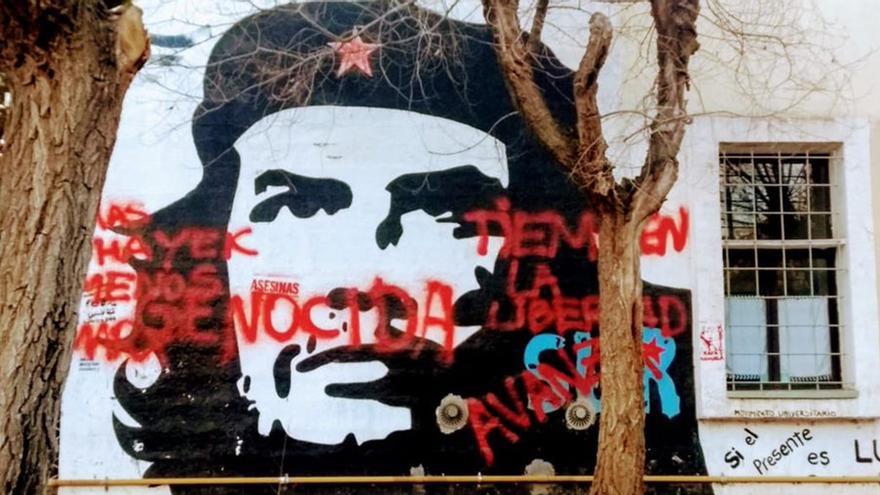
The defaced mural is located in the National University of Comahue, in the province of Neuquén, Argentina. (Agustin Antonetti / Twitter)

14ymedio bigger14ymedio, Havana, July 30, 2021 – “They tremble, freedom advances.” The phrase appeared this Friday on the face of Ernesto “Che” Guevara painted on a mural at the National University of Comahue, in the province of Neuquén, Argentina. The young human rights activist Agustin Antonetti shared on his Twitter account an image of the graffiti, which also contained the word “Genocide” and the phrase “More Hayek, less Marx.”

The Argentine, who studies International Relations at the Inter-American Open University of Rosario and frequently criticizes the human rights violations committed by the Cuban regime, wanted to record in his publication the meaning of what happened: “A great change is taking place in young people and it shows.”

“We are seeing a gigantic change in the mentality of young people in Latin America, although in many universities they are pressured by professors not to speak; now is the time for us to accompany them and promote them. A change has already begun and there will be no turning back,” Antonetti, who is also coordinator of the Youth Group of the Freedom Foundation, added in the Twitter thread.

Antonetti is one of the human rights activists who has most echoed continue reading

the denunciations of the repression carried out by the Cuban regime against the July 11 protesters. On the same social network, he has shared the many reactions of Cubans both inside and outside the island, of governments and organizations, and in addition he has issued alerts about the hundreds of detainees and “disappeared” after the protests.

Also in Argentina, a group of young people from the group “Alternative” that belongs to the Faculty of Political Sciences of the National University of Rosario, is promoting an initiative to revoke the title of “illustrious citizen of Rosario” to Che Guevara. “Out with the dictator,” they argue via the citizengo.org platform and also affirm that they support “the fight of the Cuban people for freedom.”

The promoters of the initiative note that while in Cuba “there is no free expression, basic goods are scarce, and 51% of the population lives in poverty, in Argentina the authoritarian leaders who plunged Cuba into this chaos are honored and worshiped.”

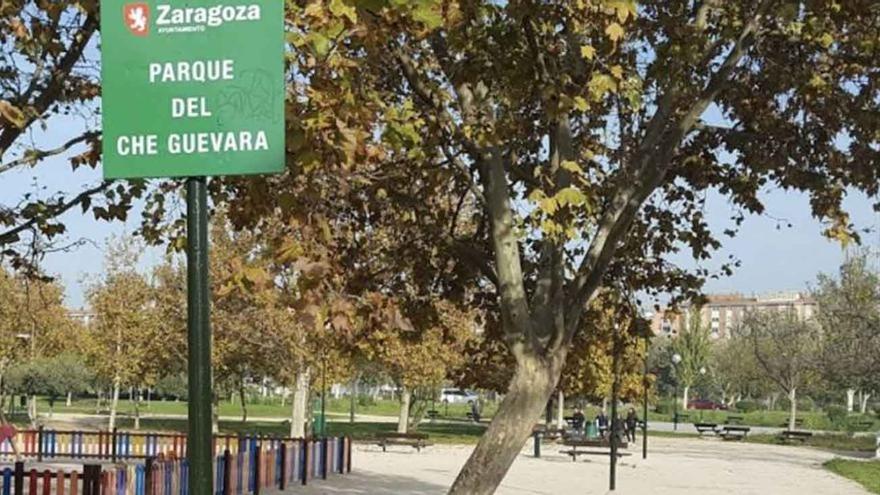
Meanwhile in Spain, the Zaragoza city council approved this week, in an extraordinary session, that “Che Guevara” Street be renamed after Ana María Suárez (a Zaragozan victim of the 2017 jihadist attack in Catalonia), and that “Guevara” Park take the name of the Paralympic athlete Teresa Perales.

The announcement was made during the debate on a motion of the Popular Party (PP) and Ciudadanos (Cs), in charge of the municipal government, to condemn the Cuban regime’s repression against civil society demonstrations and to defend a transition towards democracy on the island.

A week earlier, in Galicia, more than fifty people gathered in front of the statue of Che Guevara located in a roundabout in Oleiros to demand the removal of this figure, and freedom for Cuba. The attendees, assembled by the Patria y Vida platform, where the Association of Victims of Castroism is located, exhibited Cuban, Spanish, and Venezuelan flags, as well as banners that read SOS Cuba, and also chanted slogans such as Viva Cuba libre, We want freedom! and Homeland and Life.

In Mexico, after the 11J (11 July) protests, several politicians resumed the debate to remove the sculpture in the capital that portrays Fidel Castro and Che Guevara seated together.

“It must be withdrawn. Last year the PAN (National Action Party) presented a resolution to withdraw it because the two characters were human rights violators, and are responsible for the misery in which the Cuban people find themselves. They are dictators that led a people to be prisoners of the elite that controls power and the economy,” said the deputy of the Congress of Mexico City, América Rangel.

Another member of PAN, Diego Garrido, spoke with Rangel, and agreed, according to Sé Uno, that the Cuban regime is repressive and that it violates the human rights of its own people. “They’ve kept their people in extreme poverty, in conditions of misery. Hundreds of people flee the island every year, so it is absurd that they have statues to commemorate these characters.”

Translated by Tomás A.

____________

COLLABORATE WITH OUR WORK: The 14ymedio team is committed to practicing serious journalism that reflects Cuba’s reality in all its depth. Thank you for joining us on this long journey. We invite you to continue supporting us by becoming a member of 14ymedio now. Together we can continue transforming journalism in Cuba.

Cigarettes Return to the Rationed Market in All Cuban Provinces

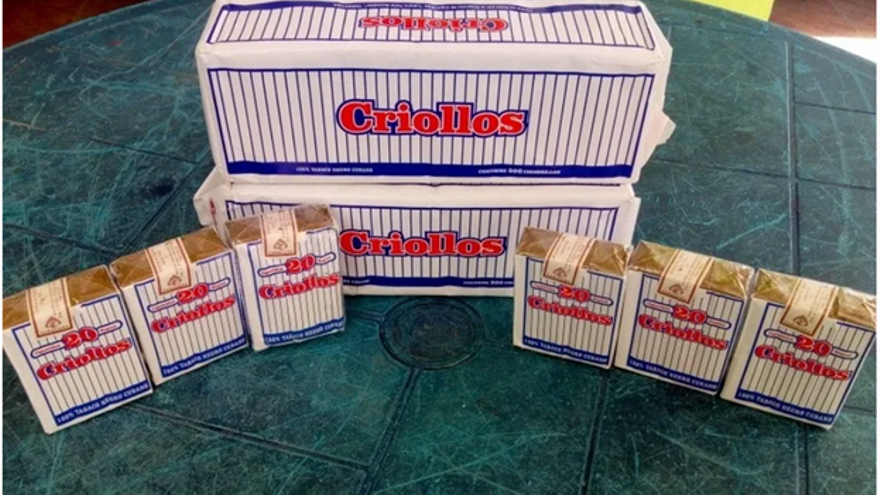
On the informal market a pack of the Criollos brand can cost up to 50 pesos each. (Mercado Libre)

14ymedio bigger14ymedio, Havana, July 29, 2021 – What was announced last June as an exceptional measure just for the capital, became the norm for the entire country this past Thursday: the sale of cigarettes will be rationed. This was reported by Tribuna de La Habana, which said that it has gotten to this point “due to problems with the availability of raw material.”

This shortage caused the Tabacuba Group to deliver “24 million fewer packs of cigarettes for one month,” according to information from the Ministry of Internal Trade.

The Minister of Commerce, Betsy Díaz Velázquez, explained to the official press that, although this is not a product that is part of the regulated family basket, its sale will be controlled due to “a monthly supply deficit of 37 million packs” in order to “prevent hoarding.”

The minister asserted that there are families, none of whose members smoke, who nevertheless continue reading

buy cigarettes, which “affects” those who do smoke. Just like, though a bottle of wine is not a regulated product, the wine shops ask whether the buyer is the consumer of that product or not. Díaz insisted that as production from the factories and from Brascuba [the Brazilian/Cuban joint venture] decreased, prices in the market rose “due to speculation and hoarding;” so it was decided to regulate the sale of this product “as a containment measure.”

In the informal market a pack of the Criollos brand can cost up to 50 pesos each.

Díaz pointed out that though cigarettes are covered by the ration book “this does not mean that this is a product of the regulated family basket.”

The General Director of Merchandise Sales of the Ministry of Internal Trade, Francisco Silva Herrera, reiterated that the “interruptions in production” are due to difficulties “with the arrival of raw materials in Cuba.” He explained that for that reason the volume of cigarettes available for sale doesn’t meet 100% of the country’s demand, and pointed out that so far this month they have received only 34% of what the plan called for.

Silva Herrera said that, depending on the available supply in some provinces, they are going to limit sales to “a tiny amount” of packs per person, sometimes limiting them to people over age 19, or by family.

For months, Cubans have faced the dilemma of acquiring packs of cigarettes on the black market or buying them in stores which only take payment in foreign currencies (MLC). In the capital’s state-owned shops and cafes, the shortage gets worse every day and huge lines form.

“I buy in quantity. I pay 750 pesos for the H. Upmann wheel, which gives you 10 packs, otherwise it’s impossible to always have it on hand, because there are days when no matter how far you walk, you won’t find cigarettes of any kind for sale on the street,” Leonardo Felipe, a 26-year-old man told 14ymedio.

Added to the dilemma of not finding the desired cigarettes is the complaint of many smokers about the poor quality of the product. The flavors have changed, and sometimes the cigarettes come incompletely filled, or with little glue, so the filter separates from the rest.

Translated by Tomás A.

____________

COLLABORATE WITH OUR WORK: The 14ymedio team is committed to practicing serious journalism that reflects Cuba’s reality in all its depth. Thank you for joining us on this long journey. We invite you to continue supporting us by becoming a member of 14ymedio now. Together we can continue transforming journalism in Cuba.

To Calm Cubans, Discontent, Distribution of International Aid Donations to Begin Tomorrow

The minister of Domestic Commerce stressed that the state would pick up the costs of aid distribution.  (14ymedio)

14ymedio bigger14ymedio, Havana 29 July 2021 — Tons of aid that partner nations are sending to the island will be distributed to Cuban families starting Friday. The process will begin in Havana, epicenter of the July 11 protests. It will continue in other provinces with large populations and where demonstrations were significant — Matanzas, Ciego de Avila, Santiago de Cuba, Holguin, Guantanamo and Isla de La Juventud — before extending throughout the country.

The minister of Domestic Commerce, Betsy Diaz Velazquez, said the aid will be distributed “for free,” Normally a shipment of humanitarian aid would not require such an unnecessary clarification but there is widespread fear in Cuba that aid from Russia, Mexico and Nicaragua will end up for sale on the rationed market or, even worse, in hard currency stores.

The minister stressed that the costs associated with distributing the aid — which will consist largely of rice, grains, cooking oil, tuna, canned meat, past and sugar — will be covered by the state.

Diaz explained that each province will also receive extra shipments of certain products. For example, the city of Pinar del Rio will receive canned meat as well as flour to be used in the production of bread and cookies.

Each household in Cienfuegos will receive a liter of cooking oil, Sancti Spiritus residents will get flour for cookies, families in the eastern provinces will get tuna while Villa Clara, Camaguey, Mayabeque y Las Tunas will get dried beans. Havana will get continue reading

flour for bread and cookies as well as milk, with priority for the latter be given to seniors over the age of sixty. This generated critical comments on government media outlets from people who considered this unfair and demanded that the milk go to entire households instead.

The minister thanked “friendly nations” for their contribution of aid to the Cuban people during the pandemic and once again laid all blame for the current economic crisis on the US embargo despite the fact that the country is the island’s main food supplier.

In recent days Cuba has received tons of humanitarian aid from its main partners. On Sunday two Russian planes carrying ninety tons of humanitarian aid touched down in Havana. The cargo consisted mainly of wheat flour, canned meats and sunflower oil as well as a million surgical masks. (Domestically produced masks, which were expected to available for sale by the end of June, have yet to appear in stores.)

Two ships have arrived from Mexico with deliveries of fuel, food and medicine. Among the main foodstuffs are powdered milk, dried beans, flour, canned tuna and cooking oil.

On Wednesday Nicaraguan First Lady and Vice-President Rosario Murillo announced the pending arrival of a shipment from Nicaragua, though she did not provide details. Murillo stated, “Very soon our people, our government, will be sending… a boat with Nicaraguan food supplies to Cuba to contribute [to relief efforts] in these pandemic times, which include a pandemic, the Yankee plague, which we are battling.”

In the words of Madrid-based Cuban economist Elias Amor, the aid is “a treatment for pain more intense than the nation is experiencing.” In a post about the planned aid distribution, which also discussed the 60-year-old basket of rationed foodstuffs that that has long curtailed people’s freedom of choice, Amor warns that this new humanitarian aid is “bread for today but hunger for tomorrow.”

Although the aid’s arrival could mollify those who took part in the July 11 protests out of desperation and weariness, Amor believes further outbreaks could occur once supplies run out.

“If the regime wanted to use this aid to buy time in order to implement structural reforms, that would make sense. But many of us fear the necessary 180-degree turn towards the economic freedom that Cuba needs is not part of their plans.”

____________

COLLABORATE WITH OUR WORK: The 14ymedio team is committed to practicing serious journalism that reflects Cuba’s reality in all its depth. Thank you for joining us on this long journey. We invite you to continue supporting us by becoming a member of 14ymedio now. Together we can continue transforming journalism in Cuba.

In Cuba, the Number of Those Vaccinated is More Than 50% Higher Than Those Infected, Well Above the World Average

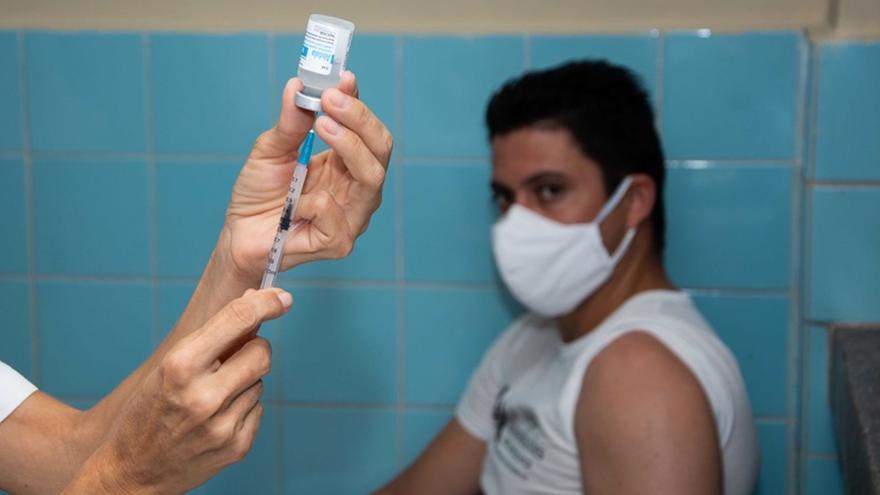
CECMED (Center for State Control of Drugs, Equipment and Medical Devices) noted that Abdala (a COVID-19 vaccine developed by CIGB, the Center for Genetic Engineering and Biotechnology in Cuba) presented “an adequate safety profile.” (ACN)

14ymedio bigger14ymedio, Madrid, July 29, 2021 – “One underestimates this about Covid. I walk stumbling like this, with short steps, falling on both sides.” Caridad, a resident of Centro Habana, fell ill with Covid-19 just after receiving her first dose of Abdala, the only Cuban vaccine candidate approved for emergency use by CECMED.

Its developer, the Center for Genetic Engineering and Biotechnology (CIGB) established its effectiveness at 100% “in the face of severe disease and death,” but insisted that the vaccine did not stop contagion and it was essential to maintain prevention measures, such as is being done in the rest of the world. Despite that warning, the data is worse than expected.

According to the Ministry of Public Health, to date 3,484,672 people have received at least one dose “of one of the Cuban vaccine candidates” (the official reports do not specify whether Soberana 02 or Abdala), of which 2,954,759 have also received the second and 2,460,919, the third. That is, 20% of the population has received the complete vaccination schedule.

But what is more worrying is continue reading

the number of people who have already been vaccinated. At the national level, the authorities give assurances that “work is being done” to “establish how many of the sick people have been vaccinated with all three doses in order to be able to determine the effectiveness of the vaccine,” but they have only provided figures from Havana.

This Saturday, Emilio Delgado Iznaga, provincial director of Health, announced that of the documented infections “96% were symptomatic and 73% were already vaccinated.” This supposes an increase compared to the previous day, when the Havana Tribune calculated that of the total confirmed, 71.7% “appear vaccinated” (although it was around 56% vaccinated with the three doses).

Cuban immunologist Eduardo López-Collazo, director of the Research Institute of Hospital La Paz, in Madrid, hypothesizes that those who have received a dose have become confident and relaxed their safety measures for avoiding contagion. “As we already know, none of the vaccines is completely sterilizing, that is, they do not completely cut the contagion, but rather reduce the possibility of suffering from the disease,” he recalls.

However, after studying the “few data” that the authorities provide, he raises another possibility: that the vaccines are not effective against the new variants.

This would be consistent with the fact that the trajectory of the island’s case curve has skyrocketed at the same time that the Beta and Delta variants of the virus have expanded (the Delta is considered more contagious and aggressive).

Delta has come to complicate the situation of the pandemic even in areas with the highest vaccination rates, as the authorities discussed ten days ago during a Roundtable program on Cuban TV aimed at analyzing the usefulness of Soberana 02 and Abdala in the face of new variants.

Although investigations are ongoing, Dr. Verena Muzio González, director of Clinical Research at CIGB, said that correct immunity is achieved only with the complete regimen (three doses in Cuba) and that you have to wait at least two weeks for the immune system to generate the appropriate antibodies to defend itself against the most serious forms of the disease.

The data are comparable to other countries, but it is difficult to find similar examples in which the percentage of infected is so high among those vaccinated. In Spain, where more than half of the population (26 million people) are already immunized, only 5.5% of those infected were fully vaccinated (11.4% among those who received a single dose). In addition, although the country is experiencing a fifth wave that is beginning to cause worry, most infections occur among young people (who are not yet vaccinated) and the average age of those hospitalized has dropped dramatically to below 50.

In the United States, where immunization has lagged and the most contagious variants are spreading, “more than 97% of people hospitalized for COVID-19 are not vaccinated,” according to a New York Times report.

The closest case to the Cuban situation is that of the United Kingdom, where according to an investigation conducted by the Financial Times, the number of positive cases among those vaccinated with a complete schedule has shot up to almost half in recent weeks. However, the director of the study, Tim Spector, an epidemiologist at Kings College, clarified to the local press, “although the figures seem worrying, it is important to note that vaccines have greatly reduced severe infections and that Covid for the post-vaccinated is a much milder illness for most people. ”

Spector did not go into assessing whether the rise in the contagious vaccinated has to do with the expansion of the Delta variant. British health authorities worry that good weather, and the lifting of the latest restrictions on July 19, may shoot up the number of cases in the summer.

Several reports have come to this newspaper, of people who have contracted the disease while being vaccinated with one or two doses of the compound. On case is that of Yoel, from the Havana neighborhood of Nuevo Vedado, who lost the sense of smell and taste after his second dose with Abdala, the second week of July, and is still awaiting the results of a PCR Covid test.

Although some are beginning to fear that it was the vaccine itself that caused the disease, this is scientifically impossible in the case of protein subunit vaccines, which this vaccine is.

“It is not possible for this vaccine to cause the disease because it is made with a harmless protein from the virus; they are not injecting an attenuated virus or anything like that,” explains Dr. López-Collazo.

Last week, a team from the Pan American Health Organization (PAHO / WHO) office in Cuba visited the National Center for Scientific Research (CNIC) to learn more about the efficacy results of the Cuban vaccine candidates.

That day, Vicente Vérez, the director of the Finlay Vaccination Institute, was optimistic about next month, since at the end of August, 14 days will have passed since the application of the last dose to the general population of Havana, which will allow knowing more data.

As he explained, the British medical journal The Lancet is reviewing a study by Soberana that would shed some light on the opaque and controversial Cuban vaccines. So far, there are no public results of clinical trials of Cuban vaccine candidates, nor are there any articles in scientific journals, except for two on Soberana 02 about a preclinical trial on mice.

Translated by Tomás A.

____________

COLLABORATE WITH OUR WORK: The 14ymedio team is committed to practicing serious journalism that reflects Cuba’s reality in all its depth. Thank you for joining us on this long journey. We invite you to continue supporting us by becoming a member of 14ymedio now. Together we can continue transforming journalism in Cuba.

Cubans Can Now Import Solar Panels Without Paying Duty

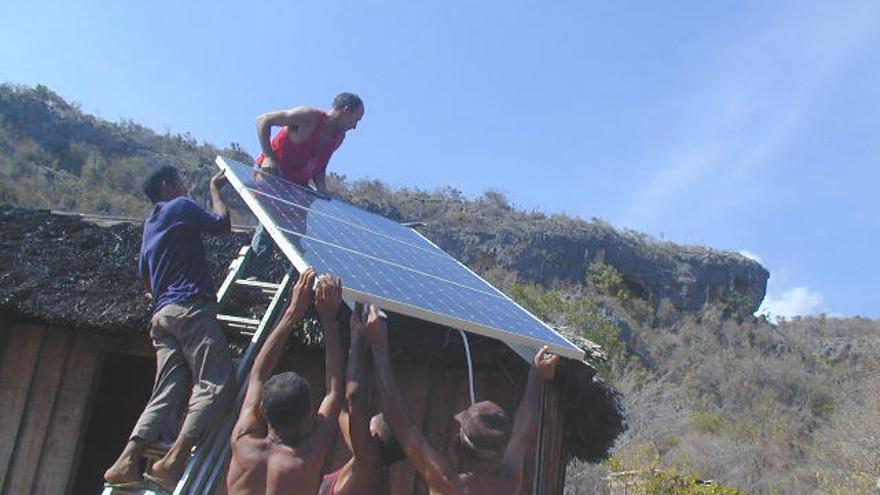
The new provision will allow electric self-sufficiency to Cubans who can install a solar panel on their homes. (wikimedia.org)

14ymedio bigger14ymedio, Havana, July 29, 2021 — In the midst of a pressing electricity shortage, the Cuban government has taken a step demanded by the population to authorize the duty-free import of photovoltaic systems, including parts and pieces of panels that generate energy by direct transformation of sunlight into electricity.

The resolution, published this Wednesday in the Official Gazette, allows the populace to purchase these products abroad as long as the purposes are not commercial. That is, Cubans who generate electricity must dump the surplus of their personal consumption into the National Electric System so that it may be distributed among the rest of users.

The document specifies that the panels, the inverter, the support structures, the electric boards, the cabinets for parts, and the grounding system are considered essential parts and pieces, therefore they are exempt from customs payment. continue reading

The rest of the components — direct and alternating current buffers, batteries for energy storage, electric conduit, battery charge regulator, and system components and electrical accessories for assembly — are considered common use and are subject to the usual tax rates.

The Gazette establishes that the person who acquires the panel will be responsible for the system and its maintenance, in addition to re-contracting the service to the Electric Utility, which must certify that the requirements for installation are met and verify the meter for energy measurement.

The tax exemptions have been approved, argues the text, “with the aim of increasing participation of renewable energy sources on the electric power generation grid.”

In 2019, through Decree Law 345, the sale of surplus electricity generated by private producers from this type of source was authorized, but the provision did not modify the state monopoly of the Electricity Union, the only one authorized to buy, distribute, and commercialize energy of private origin.

The Cuban Electricity Union (UNE) specified that an average household on the island needs around 185 kWh per month. To cover these needs, 5 solar panels of 260 watts are necessary.

The importation of tax-free solar panels was in high demand by those who are eager to supply their own electricity, an increasingly precarious good on the Island. Depending on the power, the rates (before the Tarea Ordenamiento* [Ordering Task] took effect) ranged from 200 to 1,000 pesos for panels generating from 900 watts to 15 kilowatts.

In March, the authorities began to pitch the idea of bonuses or exemptions for those who wanted to import panels. But the blackouts, which have increased this summer, when municipalities throughout the Island have seen their number of hours of electricity regulated, and the historical protests in more than 40 cities on the island, may have accelerated the decision.

To date, the panels available in Cuba were sold through the state virtual store Bazar Virtual, where 270-watt installations could be found, at a cost of $2,549.

Most of the solar panels on the Island, due to the high cost involved, are in the hands of the State and have been donated by China. The announcements by two companies — Spanish and German — that wanted to install these devices in several Cuban provinces, came to nothing, and the telephone number of one of them is no longer in service.

Solar energy is one of the government’s biggest bets for taking advantage of a natural resource that Cuba has in abundance, but the main problem continues to be the investment necessary to build a solar park.

Before the pandemic, the Island had planned to build 65 facilities of this type, and another 15 were under development, in order to increase the currently installed power by 42 gigawatts, which accounts for barely 1.15% of national consumption.

*The so-called ’Ordering Task” — Tarea ordenamiento — is a collection of measures that includes eliminating the Cuban Convertible Peso (CUC), leaving the Cuban peso as the only national currency, raising prices, raising salaries (but not as much as prices), opening stores that take payment only in hard currency which must be in the form of specially issued pre-paid debit cards, and others. 

Translated by Tomás A.

____________

COLLABORATE WITH OUR WORK: The 14ymedio team is committed to practicing serious journalism that reflects Cuba’s reality in all its depth. Thank you for joining us on this long journey. We invite you to continue supporting us by becoming a member of 14ymedio now. Together we can continue transforming journalism in Cuba.

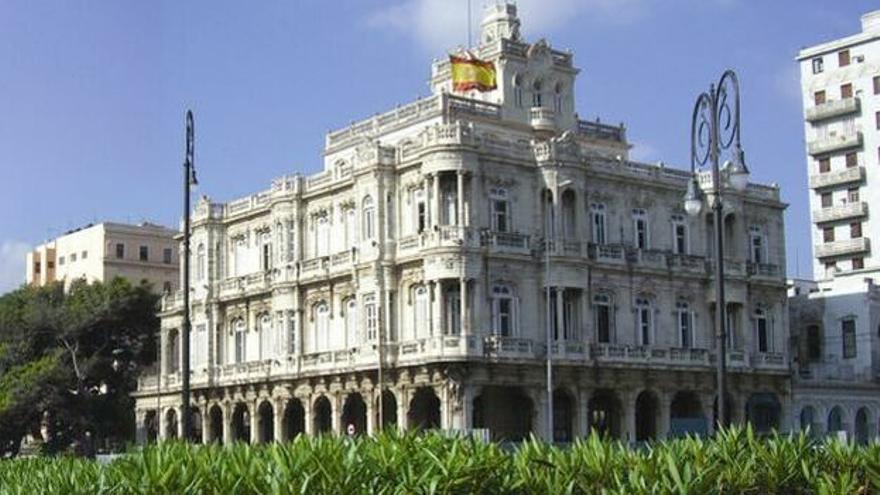
The Spanish Consulate in Cuba Suspends August 2 Passport Appointments

The Consulate of Spain issued the information through a tweet, without explaining the reason for the suspension of its computer system nor answering questions from users. (exterior.gob.es)

14ymedio bigger14ymedio, Havana, July 30, 2020 — The Consulate General of Spain in Havana warned this Thursday that its computer system will not be operational on August 2 and asked all those who have appointments for that day to reschedule “through the new centers” to renew a passport or obtain one for the first time.

The diplomatic office issued the information through a tweet, without explaining the reason for the suspension of its computer system or answering questions from users. For example, one of them asked if the appointments to sign up in the Consular Registry have also been canceled, and another, “when do they plan to activate the appointments for those registered in 2021 for their first passport?”

Last spring, the Spanish Consulate suspended its services for a few days due to an employee’s close contact with someone who was Covid-19 positive.

Cuba has the third-largest community of Spaniards living abroad–about 200,000 according to the 2019 census–after Argentina and Venezuela, due in part to the passage of the Historical Memory Law in 2007 by the Government of José Luis Rodríguez Zapatero. The law allowed the nationalization of at least 80,000 Cubans of Spanish descent.

Translated by Tomás A.

____________

COLLABORATE WITH OUR WORK: The 14ymedio team is committed to practicing serious journalism that reflects Cuba’s reality in all its depth. Thank you for joining us on this long journey. We invite you to continue supporting us by becoming a member of 14ymedio now. Together we can continue transforming journalism in Cuba.

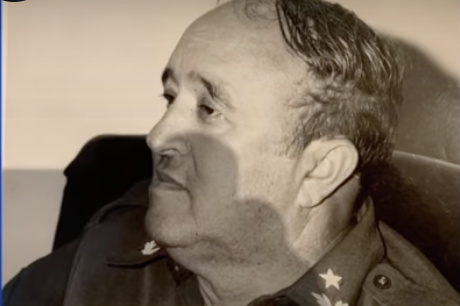
A General Dies in Cuba, Forgotten by the Regime / Juan Juan Almeida

Juan Juan Almeida –One of the most legendary Cuban Brigadier Generals has died in Havana, and his wife refuses any government aid, and rejects mention of his death in the official media.

Manuel Suarez Alvarez, nicknamed Chomón, after a long history that we could describe as “Handing over the Revolution to Fidel and Raúl”, died on Sunday, August 23, and did not receive a single carnation from the leadership of the country nor any mention in the press.

His wife, Magali, refused to allow the leadership of the MININT or the country to attend the funeral of her husband, nor to send wreaths or any such hypocrisy, because – according to sources close to the family – General Manolito had been living with severe Alzheimer’s for more than two years that prevented him from even walking, and the leadership of the country had abandoned him.

According to his wife: “It wasn’t right for them to send him wreaths then, when they didn’t even give him medicine, nor access to a hospital.”

At least two of his 4 children were unable to attend the wake:

Manuel, his eldest son is imprisoned in the Combinado del Este and they would not give him a pass to go to the funeral; Julio lives in exile in Aruba and was not allowed to enter Cuba. And I do not know if his daughters Tania and Mayret (from his second marriage to Magali) were able to be with their father during his last minutes in this world.

Translated by Tomás A.

‘Che Guevara’ Park and Street Name Changed in Spain in Rejection of Repression of Cuba

From now on, the Che Guevara Park will be called Teresa Perales Park. (Google maps)

14ymedio biggerEFE, via 14ymedio, Zaragoza, 29 July 2021 — In Spain, the government of Zaragoza has approved, in an extraordinary session on Friday, that Che Guevara Street will, from now on, be called Ana María Suárez (a Zaragoza victim of the jihadist attack in Cambrils), while the park with the same name will bear the name of Paralympic athlete Teresa Perales.

The announcement was made during the debate on a motion of the People’s Party (PP) and Citizens (Cs), led by the government, to reject the Cuban regime’s repression against civil society demonstrations and to defend a transition towards democracy on the island.

The initiative has gone ahead with the vote of the PP, Cs, Vox and the Spanish Socialist Workers Party (PSOE) in response to the concern for human rights in Cuba and, in particular, the ABC correspondent Camila Acosta, who was released after five days detention and is in home confinement awaiting trial.

During the debate, councilor Alberto Cubero, general secretary of the Spanish Communist Party in Aragon, defended the Cuban regime as a demonstration that continue reading

“another world is possible,” and has presented the island as an example of a country in which there is no eviction, because the banks have no more power than the Government, in the face of the “dictatorship of capital” in the West.

“Go live in Cuba,” replied the mayor of Zaragoza, Jorge Azcón, adding “not on vacation” but to stay and live, if he really believes that it is a “communist paradise.”

“When he loses a few kilos, he will return to Spain and will be convinced that it is the best country in the world,” he added.

Previously, the PP spokesperson, María Navarro, had reiterated that “all those who live in communist countries want to get out of them” and that everyone who does not defend human rights and democracy at all costs is not a democrat.

“No matter how much you don’t say dictatorship, there is a dictatorship in Cuba,” she remarked in response to the left of the vice mayor and spokesperson for Cs, Sara Fernández, who added that “they have remained in the symbolism and have closed their eyes to reality.”

From the PSOE, its spokesperson, Lola Ranera, has justified her rejection of most of the points of the motion because “you have to be respectful of the Cuban people”, who are carrying out their own transition and, consequently, you have to stand with them and not use them as a “political football.”

For her part, Amparo Bella (of the Podemos communist party) has urged not entering into the “partisan use” of human rights made by the “extreme right” and has defended the correction of Cuba’s democratic deficits as the only viable and peaceful solution to the conflict.

“How easy it is to be a communist in a free country and how difficult it is to be free in a communist country!” Said Vox spokesman Julio Calvo, who said that he is ashamed to see how the Spanish “far left” parties position themselves in favor of the Cuban regime.

Likewise, the government team has given the green light to the renaming of Pedro Lázaro and Agustina Simón streets, in compliance with the Democratic Memory Law of Aragon, although the Francoist names of 12 other streets remain unchanged.

On July 25, a group of young people from the university group Alternative, from the Faculty of Political Sciences of the National University of Rosario, in Buenos Aires, demanded the revocation of the title of “illustrious citizen” of Rosario to ’Che’ Guevara, and through the citizengo.org platform published: “Out with the dictator Che Guevara from the City of Rosario.”

The petition was addressed to the mayor of the city of Rosario, Pablo Javkin, and the president of the Deliberative Council, María Eugenia Schmuck, and published on July 15. It already has 17,847 signatures, and states “Young people from Rosario support the fight for the freedom of the Cuban people.”

The promoters of the initiative note that while in Cuba “there is no free expression, basic goods are scarce and 51% of the population lives in poverty, in Argentina the authoritarian leaders who plunged Cuba into this chaos are honored and worshiped.”

For this reason they ask the political class for honesty and coherence and demand the revocation of the title of “Illustrious Citizen,” granted in 2003 by the Deliberative Council of Rosario, to a person who facilitated the arrival to power of the Castros. In addition, the ask for renaming the Plaza del Che with a name voted on by the Rosario citizenship. “Also, we request the removal of the Guevarist mural from the Plaza de la Cooperación.”

_______________

COLLABORATE WITH OUR WORK: The 14ymedio team is committed to practicing serious journalism that reflects Cuba’s reality in all its depth. Thank you for joining us on this long journey. We invite you to continue supporting us by becoming a member of 14ymedio now. Together we can continue transforming journalism in Cuba.

‘Call the Dictatorship by its Name’, Ask Cubans Living in Spain

Repression of the political police of protesters during the protests of July 11, 2021 in Havana. (Marcos Evora)

14ymedio bigger14ymedio, Jorge Ferrer, Ginés Górriz and others, Barcelona, 29 July 2021 — We have witnessed a popular uprising in Cuba like no other that has been known in the last 60 years. The inertia and fear generated by decades of that sinister cocktail that is made by mixing enthusiasm with repression — the exact symbolic reverse of a free Cuba — was blown up on July 11 under the push of a generation of young Cubans who have abandoned the aspiration to emigrate, but they refuse to be part of a system that now only gives them the spurious illusion of Cuba’s exceptionality.

They are Cubans who want to live in a more prosperous and more just country, and who, spurred by the hunger for bread and freedom, together with concern for the health management of the pandemic, are raising a rebellion these days that places the Cuban youth in the same range of desires manifested by young people all over the world.

Cuba, for some years, and resoundingly now, is no longer an exception. Quite the contrary, young Cubans are part of a world and a generation that claim a preponderant role in the construction of a society of equality and rights. It is not for pleasure that the demand for political and economic freedoms made by Cubans has been accompanied in recent years by urgent demands regarding race, gender or animal rights.

The testimonies of the passion and despair of those young people that we have seen marching through the streets and cities of Cuba are eloquent. On Sunday, July 11, tens of thousands of Cubans took continue reading

to the streets in many locations, which included Santiago de Cuba and Havana. They did it without more coordination than that dictated by the echo that resonated on their mobile phones, on social networks. It was beautiful until the beatings began, because the images of the repression we have witnessed are no less eloquent.

Men and women dragged, beaten and detained by government troops and paramilitary forces that have been used for decades to repress, frighten and silence Cubans. Kidnappings, house raids, detainees who are still missing, at least one dead…

In a televised address to the country in the mid-afternoon of that day, Miguel Díaz-Canel, who today serves as president of Cuba, called for violence, unequivocally, for civil confrontation between Cubans: “The order to combat is given: the revolutionaries take to the streets,” he said. It was the natural extension of a motto he inherited from the Castro brothers. That “the street belongs to the revolutionaries” as the perpetrators of the “repudiation rallies” have chanted for decades,

His words meant that the physical integrity and even the lives of the protesters were threatened from the highest authority of the State. But those words meant even more: the divorce between the political hierarchy in Cuba and the people is already an incontrovertible fact. Just a few hours later, the police began shooting at people.

In the midst of this exciting and terrible situation, those of us who signed this letter, mostly Spanish citizens born in Cuba, are witnessing with amazement and indignation the refusal of the Government of Spain to adopt a clear and firm position in favor of the protesters and against the authoritarian regime in Havana.

The refusal, hurtful and pathetic, to recognize that a dictatorship prevails in Cuba that deprives citizens of basic human rights, the verbal pirouettes of leaders of the main left-wing parties in Spain who hold the highest positions in the Government (Pedro Sánchez , Nadia Calviño, Yolanda Díaz, Isabel Rodríguez …) to avoid a clear and resounding denunciation of a despicable regime, does not seem consistent with politicians and parties that, with so much passion, claim to defend the expansion of citizens’ rights.

They are immersed in the denunciation of the dictatorship that Spain suffered for decades, and ultimately they present themselves as parties of progress. Don’t Cubans deserve to enjoy the same rights and freedoms as the rest of the citizens of Latin America? What’s more, do the tens of thousands of Cubans who have nationalized ourselves inSpain and have made this country of freedom ours, do we deserve such contempt on the part of the government?

Nothing can, nothing should prevent the political leaders of the Government of Spain and the left-wing parties that govern today from denouncing the Cuban dictatorship. Neither the opposition to the North American embargo that weighs on the island, nor the short-term calculation that seeks to protect Spanish investments in Cuba — taking advantage of the immorality of claiming economic advantages by taking advantage of the same embargo that they denounce — are useful. These are two equally slave excuses of a landscape before the one that Cuba and Cubans now inhabit. Cuba no longer lives in the territory of the debates of the past. Taking to the streets to ask for freedom, Cubans have leaped ahead a century and drag us, and also Spanish politicians from the right and the left, with them.

That the Cuban economy is a disaster, that its military and civil elites — if anyone can call them that — are corrupt, that in the last decade the reforms in favor of opening up to the private economy, the so-called self-employed, have been squandered. These are truths available to even the laziest of today’s Cuba cheerleaders.

At this point, we Cubans do not ask for compassion. After decades of loneliness, of so many years watching the governments of the world, and those of Spain as well, look the other way and respond to the policy with both bravado and victimizing of the Havana regime with concessions and the sterile exercise of “fellow travelers,” a colonial transcript of appeasement, many of us no longer even ask for solidarity.

But respect yes. Respect for the truth. Respect for the young people who these days take Cuba out of the night of history to put it suddenly in the landscape of protest and the global demand for rights and freedoms. Respect for those who face a regime armed to the teeth with the mere strength of their bodies and the voices with which they shout. And they shout, aware of the nature and size of the monster they face: “Down with the dictatorship!”

Together with Jorge Ferrer and Ginés Górriz the following signatories add their names:

Cesar Mora

Abilio Estevez

Rolando Sánchez Mejías

Antonio Jose Ponte

Juan Abreu

Heidi Hassan

Carlos Quintela

Ladislao Aguado

Leandro Feal

Pio Serrano

Eduardo López-Collazo

Pablo Diaz Espí

Patricia perez

Marco Castillo

Dean Luis Reyes

________________________

Editor’s Note: This article was originally published in the newspaper El Mundo.

COLLABORATE WITH OUR WORK: The 14ymedio team is committed to practicing serious journalism that reflects Cuba’s reality in all its depth. Thank you for joining us on this long journey. We invite you to continue supporting us by becoming a member of 14ymedio now. Together we can continue transforming journalism in Cuba.

Cuban Military Figures Continue to Die: Commander Cardero Sanchez Makes Six

Image of the building where the headquarters of the Ministry of the Revolutionary Armed Forces is located in Havana, Cuba. (Cuba-Explore)

14ymedio bigger14ymedio, Havana, 29 July 2021 — Gilberto Antonio Cardero Sánchez is the sixth military man to die in Cuba in less than two weeks. The national television news program confirmed this Wednesday the death of this “Rebel Army fighter” who came to occupy the position of commander. Before him, five generals died in nine days, after the protests on July 11, and without the authorities having detailed the causes of the deaths.

Like the five deceased soldiers, the body of Cardero Sánchez was cremated and, according to a note from the Ministry of the Revolutionary Armed Forces, “his ashes deposited in the veterans’ pantheon of the Necropolis of Colón, where they will remain until their subsequent transfer to the mausoleum of the Frank País Second Eastern Front in the province of Santiago de Cuba.” The text does not specify t Cardero Sánchez’s military rank or his age.

In May 1957, Cardero Sánchez participated in the clandestine struggle and joined Column 1 of the Rebel Army under the orders of Fidel Castro. He founded the Frank País Second Eastern Front under the orders of Raúl Castro, “where he remained until the triumph of the Revolution,” says the Ministry’s statement. continue reading

In the Revolutionary Armed Forces he was in the units dedicated to the construction of works for defense. He does not seem to have had a prominent role as he does not have a profile on Ecured, where he is only mentioned in passing due to a slight injury he suffered in 1958 when he was captain of the Rebel Army.

On July 17, a week after the start of the 11J (11 July) demonstrations, the head of the Eastern Cuban Army, General Agustín Peña, 58, died. On the 20th, Reserve Brigadier General Marcelo Verdecia Perdomo died and on Saturday 24th, Reserve Major General Rubén Martínez Puente, identified as the soldier who ordered the downing of the Brothers to the Rescue planes.

Finally, this Monday 26, Reserve General Manuel Eduardo Lastres Pacheco died and the Central University of Las Villas Marta Abreu gave the news of the death of FAR Brigadier General Armando Choy Rodríguez.

____________

COLLABORATE WITH OUR WORK: The 14ymedio team is committed to practicing serious journalism that reflects Cuba’s reality in all its depth. Thank you for joining us on this long journey. We invite you to continue supporting us by becoming a member of 14ymedio now. Together we can continue transforming journalism in Cuba.

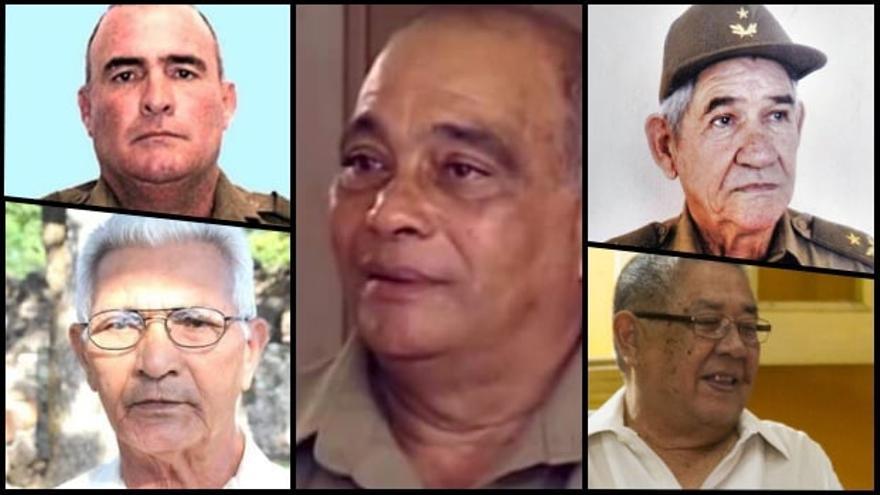
Five Cuban Generals Die After July 11: Strange Coincidence or Purge?

Agustín Peña, Marcelo Verdecia Perdomo, Rubén Martínez Puente, Manuel Eduardo Lastres Pacheco and Armando Choy Rodríguez, the five high-ranking Cuban military personnel who died this July. (Collage)

14ymedio bigger14ymedio, Ariel Hidalgo, Miami, 29 July 2021 — Although I am not a fan of conspiracy theories, I think it would be very necessary, to heal open wounds and put the accounts clear for history, to have a commission without political and ideological prejudices to investigate, seriously and professionally, many mysterious deaths reported in Cuba from 1959 to the present.

I am not referring to opponents such as the case of Oswaldo Payá, who although there is no conclusive evidence, it is generally presumed that he was murdered. Rather, above all, I’m talking about people from the regime itself. The list of “injured” or “suicidal” people would be very long, longer than a moderately informed reader would believe, and I will not be the one to list them. The task will be left to that future commission.

But what cannot wait, due to the relevance of the circumstances, are the successive deaths of five generals of the Armed Forces, one at the time, in just a space of nine days. I say five generals and I do not know if the number will increase by the date this article comes out. [As of 29 July the number is now six.]

The deaths began six days after the massive popular demonstrations took place on July 11 in nearly forty towns in continue reading

the 14 provinces of the country, beginning on the 17th with Agustín Peña Pórrez, head of the Eastern Army, followed on the 20th; Marcelo Verdecia Perdomo, Brigadier General of the Reserve, then on the 24th; Rubén Martínez Puente, director of the Military Agricultural Union of the Ministry of the Revolutionary Armed Forces, on the 26th: Manuel Eduardo Lastres Pacheco, brigadier general of the Reserve, and on the same day, Armando Choy Rodríguez, brigadier general and general coordinator of the Group of History of the Las Villas Combatants.

All these deaths have in common that the causes of their deaths were not revealed and that their bodies were cremated immediately without receiving the honors normally given to high officials. The hypothesis that they were all of advanced age and that they probably died from the Covid, as some people disaffected to the regime have suggested, face some questions: Did they all agree to die in the days after the protests and the subsequent brutal governmental repression? How many generals died in the two weeks before the protests? Does anyone remember them? Were these five successive deaths a few days after the protests just by chance? Something that I have learned in these 62 years is that in the political world of Cuba there are no coincidences.

I do not affirm anything, but these deaths are very similar to the purges that were carried out in Stalin’s Russia. He executed so many Red Army generals that he later found himself in a tight spot when Nazi troops invaded the Soviet Union. If this is the case in Cuba, obviously it would have to do with those events that occurred in the previous days.

In the first place, we must take into account what it must have been like for many of those who dedicated their lives to defending that regime, to realize that the vast majority of the people, for whom that “revolution” was supposedly carried out, repudiated that regime.

It was not a demonstration in a neighborhood or in a town, but in all of Cuba, and they were not demonstrations of 20 or 30 people, but of hundreds and thousands in each of those populations.

And second, it must have been shocking for many of those high officials to see the repression so brutally carried out against the people, first in the streets and then in the homes, house by house, to violently remove people who were presumed to have participated in the protests.

The soldiers of the Revolutionary Armed Forces have not had a history of repression against the people as has the Ministry of the Interior and, in particular, State Security. It has been said that one of those generals was the one who gave the order to shoot down the Brothers to the Rescue planes in 1996. In reality, the one who gave that order was Raúl Castro according to the wish of his brother-in-chief, and the pilots were very well chosen: the stepchildren of Wilfredo ’Felo’ Pérez, the one who piloted the plane that fell in Barbados by a bomb allegedly planted by the enemy.

That in the present circumstances a soldier or a sergeant expresses concern about the demonstrations and repression and thinks that changes should be made could get him fired, but that a general does so, with the influence he can exert on his troops, can be considered as treason.

Commander Húber Matos, when he was still at the head of the rebel troops in Camagüey, served 25 years in prison for asking for the leader’s resignation. They simply, could have replaced him, since he had the support of the people at that time, and yet they did not take that risk. Now, with the regime’s weakness, do they have the luxury of letting it go.

So it will not be at all strange that high officials continue to die for unknown reasons.

____________

COLLABORATE WITH OUR WORK: The 14ymedio team is committed to practicing serious journalism that reflects Cuba’s reality in all its depth. Thank you for joining us on this long journey. We invite you to continue supporting us by becoming a member of 14ymedio now. Together we can continue transforming journalism in Cuba.

Lawyers Group Denounces the Exploitation of Cuban Healthcare Workers in Uruguay

For years Uruguay has been a place highly sought after by Cuban doctors to go on an official mission, due to its social stability. (Facebook)

14ymedio bigger14ymedio, Havana, July 28, 2021 — The Alliance for Global Freedom (GLA) filed a complaint this Monday with the Attorney General of Uruguay in which it denounces the continuous exploitation and forced labor to which the Cuban medical brigades are subjected in that country.

The lawyers’ group alleges that the island’s health workers “are compensated at such a minimal rate that the work they carry out in the South American nation is considered slave labor.”

“The personnel of the medical brigade are subjected to long hours of work without fair wages, and are pressured to participate, for fear of reprisals by the Cuban state if they do not comply,” the Alliance alleged in a statement published on its website.

“We continue to fight for human rights and appeal to the republican culture and respect for human rights in this country,” said lawyer Sabrina Peláez Iglesias, a member continue reading

of the GLA in Uruguay.

The organization, headquartered in Washington DC, has been seeking for the last two years “records and information on Uruguay’s cooperation agreement with Cuba.” Among other actions, Peláez also filed a complaint with the National Institute of Human Rights and Uruguay’s Ombudsman in July 2020.

According to the statement, currently about 30 health workers, most of them ophthalmologists, make up the mission, and unlike Uruguayans and other professionals, Cubans do not have to certify their postgraduate degrees with the Ministry of Public Health to practice.

The Governments maintain two health agreements: the first began in 2007 and includes ophthalmological services, and the second, finalized a year later, covers orthopedic care for people with disabilities. Both have been renewed to date.

The second bilateral agreement, extended in 2018, set a cost for Uruguay of 174,000 dollars per year, of which $124,000 is paid directly to Havana and $31,000 is designated as stipends for professionals and technicians on the Island, as well as their national and international transportation, accommodations, and other expenses, according to an investigation by the Cuba Archive.

But it was only recently divulged that the first agreement required that Montevideo spend 250,000 dollars a year on Cuban collaborators, including a monthly stipend of $800 for each one, but the contract did not clarify the amount that Havana received for the services.

The preparation of Cuban doctors has been questioned in several countries where they have worked under agreements with the Cuban Government. In 2019, the press reported that nine specialists from the Island had deserted and that they tried to accredit their degrees in Uruguay, but six of them did not pass the exam and the others did not receive a final definitive qualification.

When these facts became known, suspicions among Uruguayan professionals increased, among them the members of the Uruguayan Association of Ophthalmology. Its president, Andrea Merrone, stressed that they are not opposed to foreign doctors coming to the country, but she insisted on knowing if the professionals “have sufficient qualifications” to practice.

For years Uruguay has been a place highly sought after by Cuban doctors to go on an official mission, due to its social stability. The selection of professionals who travel to that country is made within Cuba and the brigades rotate every two years.

In July of last year, the Alliance for Global Freedom presented a demand to the Uruguayan Government for disclosure of the records related to the hiring of Cuban health workers. Their demand was mainly focused on the bilateral agreements on the service at the José Martí Hospital for exchanging funds and making commercial arrangements.

It is not the first time that the conditions in which Cuban doctors are forced to work in the missions have been denounced. Organizations such as Cuban Prisoners Defenders (CPD) have carried out various actions to expose the medical missions as the Cuban government’s “great capitalist slave business.”

In August 2020, CPD filed a complaint with the United Nations and the International Criminal Court on behalf of 622 Cuban doctors who have been on missions abroad. In its report, the Madrid-based NGO warned that these professionals are forced to participate in “conditions of slavery” with long working hours and restrictions on their freedom.

In most cases, the Cuban government takes away their passports in order to keep a hold on them, and pays them between just 10% to 25% of the salary it charges to recipient countries, arguing that Havana needs money to finance the Health system.

Translated by Tomás A.

____________

COLLABORATE WITH OUR WORK: The 14ymedio team is committed to practicing serious journalism that reflects Cuba’s reality in all its depth. Thank you for joining us on this long journey. We invite you to continue supporting us by becoming a member of 14ymedio now. Together we can continue transforming journalism in Cuba.

Free Internet Access for Cuba: Wishes and Realities

The Internet is a tool, but it is not the only one available for overthrowing the dictatorship. (14ymedio)

14ymedio bigger14ymedio, Jorge Tintorero, New York, July 28, 2021 – Since last July 11, the demand for free internet access for Cubans has become a trend, supported by Senators, Congressional Representatives, and a multitude of public and political figures in the United States. There has been no lack of promises, including that of President Biden, to satisfy this demand, and many are waiting for this wish to come true at any moment. There has also been no lack of fake news, some well intentioned and others not, of “enabling satellite internet for Cuba,” and other niceties.

Pardon me for being the bearer of bad news, but this is not as easy as many think, nor does it depend exclusively on the political decision of some  particular person. In the field of telecommunications there are limitations dictated by physical laws that cannot be ignored, much less modified for someone’s convenience. But even with significant recent technological advances, there are solutions that are impossible to implement, as I will explain below.

Satellite Internet

The existence of commercial satellite internet services is a reality, but in order to use these services it is essential to have a specific modem to connect to the corresponding satellites. These modems are popularly known as BGAN (Broadband Global Area Network), which is just the trademark of one of the most popular continue reading

providers of this service.

The need to have one of these modems to access satellite internet is easy to explain. These satellites mainly use 3 commercial frequency bands: C band, X band and Ku band. None of these frequencies match those used in cell phones, either CDMA or GPRS. The only phones capable of connecting to these services are satellite telephones specifically designed for this, and, as you would expect, they are prohibited in Cuba, as are satellite modems or BGAN.

The only satellite signal capable of being received by mobile phones is GPS service in any of its variants (GPS, GLONASS, Galileo, etc.), but communication in this case is unidirectional, that is, it works only from the satellite to the mobile phone, but not vice versa.

To use the internet, communication must be established in both directions — to both receive and send data packets. It’s like a conversation between two people: one speaks and the other listens; then the second responds and the first listens. If these people walked away from each other they could continue talking through megaphones, but each would need one, otherwise one could listen but would be unable to respond. The megaphones in this case would be the satellite and the BGAN modem.

In short, there is no such thing as free “satellite internet access” for Cuba or anywhere else. Regardless of whether the satellite internet service providers agreed to provide their service without charge, if you don’t have a compatible modem, it’s impossible to access the service.

Mobile phones, smart or not, can only be connected to radio base stations (or cells, hence the name “cell” phone), which in this case all belong to Etecsa (the Cuban telecommunications monopoly) and use GPRS (General Packet Radio Service) technology.

GPRS

In order to provide internet service using this technology, it is necessary for mobile phones to connect to base stations that don’t belong to the Etecsa network, something that doesn’t exist in Cuba. It’s impossible to deploy an alternative cell network without permission from the Cuban government. Alternative solutions for deploying base stations are emerging, such as drones, balloons, or some other type of platform.

But, and here is the limiting factor, these platforms must be located at a distance (or height) that guarantees that the signal can be received by mobile phones and that these in turn are able to communicate effectively with the base stations. It’s possible to boost the transmission power of a base station so that its signal reaches the mobile phones, but that doesn’t increase their power to connect to the base station.

But locating any of these platforms over Cuban territory would be considered a violation of its airspace, with all the implications that entails. Here, in addition to technological limitations to overcome, the political decision factor for their implementation is primary, something for which there does not seem to be a will at any level, given the diplomatic and other consequences.

The other connection option for using mobile phones is Wi-Fi, a different technology that we’ll analyze below.

Wi-Fi

This type of technology allows the connection of devices in a relatively small area, for example the Wi-Fi services enabled in some parks, as well as at the residential level. A possible contribution to the free internet that Cubans are demanding could be the enabling of Wi-Fi access by the embassies of countries supportive of freedom for Cubans. Clearly this would be something very limited, restricted to specific areas in the city of Havana, which the dictatorship could impede simply by preventing people from approaching those places to access the connection (adding another to its habitual diplomatic scandals).

But in exceptional cases, it could help citizens, activists, and independent journalists to get valuable information out of Cuba in moments of a total blockade by Etecsa. This would also require a lot of political will and decisiveness on the part of those governments that decided to support the Cuban people.

There is also equipment that, using this same technology, allows distant subnets to link to each other, such as what is known as SNet in Havana, and similar ones in other Cuban cities. In any case, even using Nano-type devices or equivalents of greater or lesser capacity or power, they have to connect to a point that has internet access through a service provider other than Etecsa.

This could be a solution, assuming the existence of one or more of these connection points, but even so, there are also limitations.

First, the effective connection distance through this type of device usually doesn’t reach more than ten miles, or slightly more in ideal conditions.

Second, a stable connection requires an unobstructed line of sight between the two connecting devices.

And third, a secondary network is required to share this connection and give access through Wi-Fi or local area networks (LAN) to the end-users’ mobile phones, tablets or computers.

Given these limitations, especially the first one related to distance, it is easy to conclude that locating connection points outside the limit of Cuban territorial waters, regardless of the cost involved, would place them beyond the effective scope of this technology.

This is without even mentioning the need to establish a network within the Island to “distribute” the connection from points near the coast into the interior, with all that would imply in terms of investment, coordination on the part of the citizenry, and the propensity of the dictatorship to persecute those involved, seize equipment, etc.

Conclusions

Even if some combination of the technologies described above could be deployed in certain localities, the reality is that there is not a solution currently available that would satisfy the desire we all have for free internet access in Cuba. This doesn’t mean that we should give up the fight, but rather that it’s necessary for us to take advantage of what little is available and use it effectively.

Wishing and hoping for a miracle that will suddenly grant us free access to the internet doesn’t help, but disarms us at a time when the fight for freedom should not cease. If tomorrow a loophole opens in the dictatorship’s information blockade, we must make the most of it, but we must also recognize that these are the conditions we have to deal with. The Internet is a tool, but it is not the only one available to overthrow the dictatorship. Our will and our action are the only things that will achieve that.

Translated by Tomás A.

____________

COLLABORATE WITH OUR WORK: The 14ymedio team is committed to practicing serious journalism that reflects Cuba’s reality in all its depth. Thank you for joining us on this long journey. We invite you to continue supporting us by becoming a member of 14ymedio now. Together we can continue transforming journalism in Cuba.

Distribution of Donations: Bread for Today, Hunger for Tomorrow

A Youth Labor Army market in Havana lists few foods for sale while empty stalls predominate. (14ymedio)

14ymedio bigger14ymedio, Elías Amor Bravo, Economist, July 29, 2021 — The Cuban communists announced in the State newspaper Granma that they have begun the distribution of food products that have come from international donations (Russia, Mexico, etc.) into the network of state warehouses.

An insistent rumor had been circulating on social media: the products will end up for sale in the MLC stores — which take payment only in foreign currencies — in order to obtain foreign exchange at a crucial time for the regime. But this has been flatly denied by the Minister of Internal Trade, Betsy Díaz, who took the opportunity to link the distribution of donations with the rollout of the August standard family basket – in the ration stores — in 98% of the country’s municipalities, another way for the regime to appease the social unrest that led to the explosion of July 11th.

Under the communist regime, the regulated basket continues to be the only option for those Cubans who don’t have dollars, and therefore can’t shop in MLC stores, or informal markets, where it’s easier to find essential products, but at greatly inflated prices.

This perverse mechanism, which eliminates at its roots Cubans’ right to free choice, has been in force for more than 60 years. Never before in history has a scarcity-based rationing system continue reading

lasted so long in a country. In Spain, it did so for almost two decades after the civil war. In Cuba there have been no wars, no climatic or natural disasters. Only the express will of a communist regime for controlling the population from the point of view of consumption.

Now, at a critical moment when Cubans’ blindfolds have completely fallen off their eyes, and they’ve identified the communist government as responsible for the national economic disaster, the authorities have once again trotted out the standard family basket in an attempt to sidestep the protests. They have a difficult task.

Basically because when you look closely behind the standard basket, you realize how perverse the mechanism is. Let’s take an example: each Cuban receives from the “ration book” a total of 7 pounds of rice per month. This amount is set by central planning because rice is a product in high demand in Cuba. And they may be right, but what about those Cubans who don’t like rice and would rather eat, say, cookies, or taro, or potatoes? That doesn’t matter to the planner. Cubans, all Cubans, regardless of their tastes and preferences, have to eat rice. And whoever doesn’t like it can do whatever they want with their 7 pounds. But can you come up with a stupider mechanism for regulating consumer choice? It’s hard.

Even more so when, as a result of the donations received, it’s announced that those 7 pounds for the month will be increased by an additional 3,  so that if you don’t like rice, the regime will now give you 10 pounds. The book and its political regulation are above individual preferences. No free choice is possible. Well, a solution may be for you to sell your monthly ration to a neighbor, or give it to someone. But it doesn’t matter what individual Cubans do with the rations that the state gives them. All that matters is the need to deliver that rice, in this case 7 pounds plus another 3.

Who can get their head around this distribution mechanism, with arbitrary allocation, perverse in the 21st century? When will the Cuban communists realize the uselessness of the basket and all the instruments they have to control the population? Someone will say that they have been a success, in view of the last 62 years in which they have done and undone whatever they wanted in Cuba. And therein lies the quandary, that this is over, that there is no way to continue deceiving and manipulating Cubans, and that either they change, or they are going to have a very bad time.

The communist planners know more than we think. If that economic intelligence had been put in the service of a rational and efficient functioning of the economy, it would be a different story.

The Minister of Internal Trade explained that, thanks to donations and the existence of large volume of a certain group of products, food modules have been designed with rice, pasta, grains, and sugar, which will be delivered at a rate of one per household, to all Cuban families, gradually. The territorial sequence established for deliveries is Havana, Matanzas, Ciego de Ávila, Santiago de Cuba, Holguín, Guantánamo and the special municipality of Isla de la Juventud, giving priority to the most densely populated areas where the social explosion of 11-J was most intense.

In addition, she said that products arriving in the country through donations that cannot be “confirmed for all the households on an equal basis” (without explaining very well what this confirmation consists of) will not be included in the distribution; and this is where the logical doubts arise about what is going to happen to these “non-approved” products and where they are going to go.

Meanwhile, canned meat delivery is announced in specific places; oil in other areas; cans of tuna, in others; beans; powdered milk to those over 65 in other areas, and thus, by means of a light rain the authorities intend to put out the fires of social protest and at the same time announce that, if you behave well, you will have powdered milk or tuna. A series of political arbitrariness that confirms the perverse nature of the system of the regulated basket, the old ration book.

There are those who think that the regime is going to take advantage, for its own benefit, of the international donations in order to calm the social protests and buy time. Bread for today and hunger for tomorrow. The underlying problems are not solved with donations, but by changing the productive structure of the nation so that Cuba, the Cubans, can be more efficient and productive. Moreover, there are those who think that these donations will merely act as a palliative of the most intense pain that the nation is suffering, and as soon as they are used up, which will surely happen, the discomfort will return because then there will be no one to stop it.

If the regime wanted to buy time with this distribution of products in order to promote structural reforms, its action would be correct. But we fear that the necessary 180-degree turn towards economic freedom that Cuba needs doesn’t enter into its plans. The donations will be bread for today and hunger for tomorrow.

Translated by Tomás A.

____________

COLLABORATE WITH OUR WORK: The 14ymedio team is committed to practicing serious journalism that reflects Cuba’s reality in all its depth. Thank you for joining us on this long journey. We invite you to continue supporting us by becoming a member of 14ymedio now. Together we can continue transforming journalism in Cuba.