Cuban Doctors in Exile in Brazil Will Return to Work in Health Centers

Of the group of Cuban health professionals who stayed in Brazil, approximately 700 have regularized their situation and are able to work in their profession. (OPS)

14ymedio bigger14ymedio, Havana, 11 July 2019 —  The Brazilian government is shaping a provisional measure so that Cuban doctors exiled in that country can rejoin the health care  field in August, according to the Brazilian newspaper Estadao .

The objective of the authorities is that the Cuban physicians can return to work providing basic care in the Unified Health System (SUS) for a period of two years. At the end of that period, they will have to validate their diploma in order to continue working, explains the note.

This plan is aimed at Cuban professionals who worked in the Más Médicos program and who, after the proposal comes into force, will be able to obtain a special credential to carry out their work in health centers. continue reading

The draft of the measure should be presented to parliamentarians this week and the proposal is expected to advance without major obstacles in the National Congress. There are still some points to be defined, including the new name of the program because Mais Médicos has become a registered trademark of the Government of Dilma Rousseff.

Brazilian authorities estimate that 2,000 of the more than 8,000 Cuban doctors who worked in the South American country remained in the country after the end of the Mais Médicos program, suspended by the Government of Cuba after a criticism from then president-elect, Jair Bolsonaro.

Of the group of health professionals who stayed in Brazil, approximately 700 have regularized their residency situation, because they are married to citizens of that country, but most have not yet been able to validate their credentials.

Last February, these doctors sent a letter to US Senators Marco Rubio and Bob Menéndez asking both politicians to continue supporting the efforts to restore the Cuban Medical Professional Parole, repealed by former President Barack Obama in 2017, which granted US visas to Health professionals who leave international missions in Cuba.

A month later, the Brazilian government announced that it sought to regularize the situation of these doctors and the Minister of Health, Luiz Henrique Mandetta, explained that these professionals had been left in limbo because they could not practice in the country but the Cuban government considered them deserters for not having returned to the Island.

However, from Havana the Ministry of Public Health responded to this offer saying that it was in a position to receive Cuban doctors, “including those who decided not to return at the conclusion of their mission” in Brazil and offer them employment in the national health system, according to a statement released by state media.

___________________

The 14ymedio team is committed to serious journalism that reflects the reality of deep Cuba. Thank you for joining us on this long road. We invite you to continue supporting us, but this time by becoming a member of 14ymedio. Together we can continue to transform journalism in Cuba.


"Available," the Official Cuban Euphemism for the Unemployed

Low wages, the desire to emigrate and the informal labor sector are some of the reasons for not having a permanent job. (Pedro S.)

14ymedio bigger
14ymedio, Marcelo Hernández, Havana, 5 July 2019 —  Official terminology in Cuba has its forbidden words. A lot of missing terms that can not be used by national officials, ministers or media. That forbidden vocabulary includes concepts such as crisis, femicide or unemployment. For Cubans who do not work, despite having the age and physical conditions to do so, the Government prefers the phrase “available workers.”

Although the official figures place unemployment below 3% on the Island, it is enough to walk the streets on a weekday during working hours to see the large numbers of people who are doing nothing. Of the 7,173,150 Cubans of working age reported in 2017 by the National Office of Statistics and Information (ONEI), only 4,474,800 worked, whether in the state, private or cooperative sector.

More than 2.7 million Cubans are in the limbo of unemployment, a situation that they have reached mainly due to the little stimulus that state salaries provide. Other influences, according to testimonies collected by 14ymedio, include the desires to emigrate, which lead people to devote most of their time to paperwork or tasks related to the departure; or involvement with some kind og informal business that provides individuals more resources than legal employment.

They are those who live on the margin, those who do not have access to a paid vacation or a pension when they get older, but who nevertheless boast of not having to “spend eight hours in one place for a few pesos a month,” as described by Pablo, 33, who only worked for two years after graduating from an engineering and spent his required social service in a state agency.

“I was offered a place, but I’ll never again work like that on a a fixed schedule,” he says. Now he devotes his time to the resale of perfumes and underwear through digital classified sites. “There are weeks that I earn more and others that I earn less but I am my own boss.” Pablo does not consider himself unemployed. “What I am is free,” he clarifies.

___________________

The 14ymedio team is committed to serious journalism that reflects the reality of deep Cuba. Thank you for joining us on this long road. We invite you to continue supporting us, but this time by becoming a member of 14ymedio. Together we can continue to transform journalism in Cuba.

14ymedio Headline News Summary: Human Rights Groups Denounces Risk of Famine in Cuba

The document states that “the agricultural policies of the Cuban government — centralized and state — prevent private and cooperative farmers from producing the necessary supply for the country’s diet.” (14ymedio)

EFE (via 14ymedio), Havana, 9 July 2019 — The Cuban Observatory of Human Rights (OCDH) reports that the social and economic situation in Cuba worsened in the first six months of 2019.  The group also denounced the absence of “positive changes” with regards to citizens’ political rights. The report will be delivered to the headquarters of the European Community in Madrid.

Key findings include: “The population is heading into a new period of famine, the economic autonomy of citizens continues to be diminished, and rates of poverty and indigence are not published by the Cuban government.” Housing shortages are also worsening, the report said.

"What Comes Out of the Pipes Looks Like Coffee"

Camagüey residents complain about how often bad water comes out of the pipes. (La Hora de Cuba)

14ymedio bigger14ymedio, Marcelo Hernandez, 8 July 2019 — The highest summer temperatures arrive and everyone dreams of water. Whether in a glass with ice, in a comfortable pool or in the waves of the sea. These are also the moments when one faces the greatest risk of being infected with pathogens that come from bad handling of what we drink or eat, the experts warn us.

The sanitary authorities remind us throughout the year that the water that arrives through the pipes or water trucks must be treated before being consumed, warnings that are redoubled in the months of greater heat increase the consumption of prepared beverages , ice creams, slushies and cocktails.

With more than a million students on vacation and domestic life also stressed by the imperatives of heat, for many families it becomes difficult and expensive to rigorously maintain the process of water purification for the substance that comes out of the taps or is acquired by some other source of supply near their homes. continue reading

In most Cuban homes residents treat the water in some way, using methods such as filtering it through appliances with active carbon, boiling it, or adding drops of chlorine-based purifying products. But there are also many families who ingest it without subjecting it to any kind of improvement or purification.

A special report published by the University of Miami in 2017, detailing the results of almost 500 surveys of travelers arriving from the Island, determined that one of the most serious problems with the water supply mentioned was: “obsolete pipelines are so rusty that water is often contaminated.”

“Here the water comes looking like coffee, but the worst is the smell of rust,” laments Lianne Céspedes, a resident of the city of Camagüey where problems with the water supply are widely denounced by citizens. “We have two small children and for them we have to buy water from a vendor who has a well,” she tells 14ymedio.

“For the adults of the house we boil the water and filter it and all that takes a lot of work, my mother is the one who takes care of it and dedicates several hours each day to be able to guarantee that the water we drink is moderately safe,” explains Céspedes. “We can not buy water at the ’shopping’, so this is the only thing we can do.”

The purchase of water bottles is a luxury that few can afford and in the networks of state stores there have been cases of employees who falsify these containers by simply filling them with tap water. It is common for tourists to come down with cases of the so-called “traveler’s diarrhea,” a gastroenteritis that is usually caused by bacteria endemic to local water.

“I have not been able to enjoy anything, since I arrived, I’m vomiting and having diarrhea,” says Thomas, a 29-year-old German who was waiting on the weekend at the Cira García international clinic in Havana, from which he left with a prescription to buy ciprofloxacin and the recommendation to also take oral rehydration serums.

“I have no doubt where I got sick,” says the traveler. “The day I arrived I went to a small bar in Old Havana and I had two mojitos, the next morning when I got up I felt bad and I am convinced that it was ice which wasn’t made with safe water.”

Thomas’s story is so common that many private guides recommend to their customers that they notconsume any drink or cocktail with ice. “I tell them to only drink canned and bottled beverages and, preferably, directly from the container because many glasses are also poorly washed,” says Mónica, 24, an English translator who is dedicated to giving tours of Havana’s historic disctrict.

In Cuba, as in other countries of the region, the protozoa of the genera Cryptosporidium and Giardia are the parasites that cause the most common diarrheal outbreaks of water origin. People can accidentally swallow them when they drink water at recreational places, or even at home if, for some reason, it is not completely clean.

Research carried out by specialists of the Provincial Center of Hygiene and Epidemiology in Ciego de Ávila warns that in the case of Cryptosporidium the chlorination of water does not destroy it and it can “survive in incompletely filtered water.” It is transmitted through the fecal-oral route through consumption of unfiltered water, through the ingestion of food, as well as through the water in swimming pools, cow’s milk, and contaminated vegetables.”

Other medical research conducted between 2013 and 2014 in Havana and Santiago de Cuba revealed that Cubans have a low perception of the risk of acquiring Acute Diarrheal Disease (ADD). The majority of respondents said they consume the water as it arrives through the pipes, due to lack of time or resources, especially among those who do not have manufactured or liquefied gas for cooking.

“It is impossible to boil the water because here we cook with an electric stove and sometimes with a little wood in the patio,” says a neighbor from Palmarito del Cauto in Santiago de Cuba. “We had a filter that my daughter bought me the last time she came to Cuba but to keep buying the pieces and the carbon is very expensive,” she says.

Water filters, mainly manufactured in South Korea, which are sold in the network of national stores, require replacements several times a year. The authorities of the Ministry of Public Health (MINSAP) have also warned that these processors, manufactured with activated carbon and other elements, are not capable of eliminating the most dangerous bacteria and microorganisms.

Nor do customers inquire too much about the quality of the water used in state or private businesses that provide food services. On the central 23rd street in Havana, a small line of users waited this Saturday to buy a ’frozzen’, a light ice cream made mainly of water and flavor extracts.

“This is the cheapest thing you can take on the streets and costs three Cuban pesos (CUP — roughly 12¢ US),” a student at the nearby Faculty of Economics told this newspaper. “Everyone knows that with this price it is very difficult for this to be done with safe water, but we are already immunized,” he adds wryly. “But if I had children I would not give them a ’frozzen’ for anything in the world.”

____________________

The 14ymedio team is committed to serious journalism that reflects the reality of deep Cuba. Thank you for joining us on this long road. We invite you to continue supporting us, but this time by becoming a member of 14ymedio. Together we can continue to transform journalism in Cuba.

"They’re terrified," says Iliana Hernandez About the Repressors Who Arrested Her

The activist Iliana Hernandez has suffered several arbitrary arrests in recent months. (14ymedio)

14ymedio bigger14ymedio, Havana, 7 July 2019 — The activist and independent reporter Iliana Hernández was released this Sunday after spending almost 24 hours in detention after being arrested the previous day at a bus stop in Cojímar, in the province of Havana, while participating through the social network Twitter in the campaign to #BajenLosPreciosDeInternet (Lower the Prices of Internet).

At the time of the arrest, Hernandez managed to send a tweet warning that she was being taken away by the police. “Hey, they’re taking me,” she published in the social network.

A collaborator on the CiberCuba site, Hernandez was transferred to the National Revolutionary Police (PNR) Station in Guanabo. Minutes after being released this Sunday, Hernandez told this newspaper that she was alone in a cell from the time of her arrival at the station and during all that time she was never interrogated. “I’m going to keep moving forward,” she said about her activism and her job as a reporter. “This happens at any time, they [the system ] have tremendous fear,” she added. continue reading

The activist Boris González Arenas denounced on Facebook that from the moment of the arrest it was not possible to communicate with Hernández through his mobile. “I call Iliana Hernandez’s telephone number and the same voice always answers me, which says it’s off or out of the coverage area, a voice that becomes familiar to many mothers and fathers, brothers, couples and children, when they detain their loved ones.”

“I am experiencing today the suffering of the other, that of my wife and my friends when I am locked in a cell. Neither is preferable, freedom for Iliana Hernández,” González demanded.

Taylor Torres Escalona, a journalist and coordinator of the site YucaByte, also joined the complaint and commented that Hernández “has had to deal with arbitrary detention after arbitrary detention, her human rights are constantly being violated.”

In May, during an independent march organized by the LGBTI community, Hernández was violently arrested on the Paseo del Prado. Last Wednesday the activist again suffered a repressive act, when agents of the State Security tried to prevent her from meeting with a group of friends to celebrate her 46th birthday.

Hernández has been one of the most active voices in the call to the Telecommunications Company of Cuba, Etecsa, to reduce and improve the quality of its web browsing services. For five consecutive weekends, thousands of users of the state monopoly have made the hashtag #BajenLosPreciosDeInternet a trending topic on Twitter.

_____________________

The 14ymedio team is committed to serious journalism that reflects the reality of deep Cuba. Thank you for joining us on this long road. We invite you to continue supporting us, but this time by becoming a member of 14ymedio. Together we can continue to transform journalism in Cuba.

Governance Without Transparency

The press did not detail the agreements and conclusions, nor any final consensus outlining the future lines of work. (Cubadebate)

14ymedio bigger14ymedio, Regina Coyula, Havana |7 July 2019 – In forums about the governance of the internet it is easy to determine who represents the governments, almost always in formal clothes, and who represents business, also formal but with more expensive clothes. Then there is the academy, with that mix of athletic shoes, jacket and blazers, and finally, in a group with very permeable borders, those who are concerned with the development of technology and the representation of civil society.

This latter is undoubtedly the most attractive group, with its casual attitude toward dress and in the way it conducts itself. It is also almost always the youngest group. And above all, the most numerous and active group in the panels and discussions. continue reading

Participating in these forums is a great experience, unforgettable the first time, at least in my case, as I had the privilege to start doing it when internet access for citizens in Cuba was scarce, slow and very expensive. The absence of ceremony and protocol between participants from different geographical points, cultures, languages, allows us to acquire and weave numerous affinities and relationships, even though we have different problems.

The essence of these forums is to achieve consensus between competing interests such as cybersecurity in the fight against terrorism and the protection of privacy and citizens’ data, the sale of personal data to third parties by platforms such as Facebook, or the fight against false news, to give recurring examples.

For these reasons, I received with optimism the news that provincial forums were being organized in Cuba for the first time, and that their results would be represented at the National Internet Governance Forum held from June 25 to 27 at Havana’s Palace of Conventions under the title: Social Justice And Sustainable Human Development.

Having participated in May in the Havana Forum, I could see that, at least in the capital, the participants represented organizations such as the Computer Association, the Union of Jurists, the Higher Pedagogical Institute, Etecsa (the state-owned telecommunications company), and journalists from the capital’s media, and they did not have much, if any, information about what Internet Governance is and the nature of these meetings.

I was very active in the event, touching on topics such as the use of proprietary software and migration to open source, which excited the computer scientists, and I emphasized the need to improve the interaction of public officials on their Twitter accounts. Finally, I proposed to raise as a theme for the National Forum the establishment of a University for All course on the Internet, taking into account that we have an educated but aging population that has arrived late to the development of information and communication technologies (ICT).

It was encouraging to converse with very capable people, among them a telecommunications engineer was was a pioneer in the assembly of satellite receivers, or a CUJAE professor with three doctorates, who approached me to thank me for my interventions, because they had provided a glimpse of where Governance is heading.

The topics discussed were the same in all the provinces and in the national meeting: obviating the peculiarities of each region. The topics were very general and, at least in the provincial instance, treated in the form of tedious readings whose content was good for a classroom, not for the dynamic forum that it should have been.

I expressed to the organizer of the provincial forum my interest in participating in the national, but as part of the public, because I did not intend to make a formal presentation, like those representing the state-sponsored organizations. Always in those events there are more participants than speakers, and the organizer found my request logical.

Anyway I tried to formalize my presence by writing to the vice president of the Organizing Committee, since it appeared that a requirement for participation was membership in the Computer Association, or that of Jurists, or to be a collaborator with the Cuban Association of the United Nations, and I did not fulfill said requirements. Instead, I could contribute my experience in seven international forums on Internet Governance, including three global forums. The response was very bureaucratic: since I did not belong to any of the organizations mentioned, I could not attend.

I tried to follow the development of events in the Palace of Conventions through the press and television, since there was no streaming, but it was all very general and repetitive from one medium to another. They highlighted and confirmed the idea expressed by the first vice president of the Computer Union: We need to build in Cuba our own vision of the Internet, a postulate that leads us to ask ourselves in whose name we speak to build that vision.

On Twitter the hashtag #IGFCuba2019 barely reached 60 tweets, and of those only 27 were originals. There was nothing about the development of applications for the national environment. Although the University of Havana and the University of Information Science (UCI) must have been present, there was no information about Etecsa’s service expansion plans and how it plans to reduce rates, a demand that now has its own hashtag and a full news campaign. No original tweets came from civil society on topics of citizen interest.

Given all of this, it is difficult to get an exact idea of ​​what happened at the event. I have not found a repository where video or audio is stored; only the presentation of Rosa Miriam Elizalde, a student, on the topic of the media and internet.

Far from the transparency that characterizes the conclusions in these conclaves, the press did not detail the agreements and conclusions, nor any final consensus outlining the future lines of work.

As I expressed to the Minister of Communications through Twitter (to which, with a custom that is already becoming a trend, he did not respond), the meeting could have marked a milestone, but it was nothing more than the fulfillment of one more task.

__________________

The 14ymedio team is committed to serious journalism that reflects the reality of deep Cuba. Thank you for joining us on this long road. We invite you to continue supporting us, but this time by becoming a member of 14ymedio. Together we can continue to transform journalism in Cuba.

Fidel Castro and The Press As Propaganda

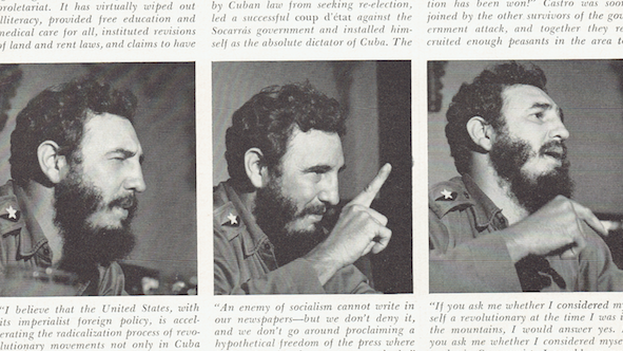
The magazine titled this interview “Fidel Castro in ‘Playboy’: a candid conversation with the bellicose dictator of Communist Cuba.

14ymedio bigger14ymedio, Yoani Sanchez, Havana, 6 July 2019 — While in the official media Fidel Castro was presented as an austere ruler, reserved with his private life and little given to worldly pleasures, in the American press the image of him was closer to that of a superhero, a villain and a seducer. In his new book on Fidel Castro, the historian Abel Sierra has traced with precision the contrast between the sober comandante en jefe projected by Cuban newspapers and the sensationalist tints that accompanied his name in most of the media across the Strait of Florida.

The man who upset Cuban history and radiated his willful personality throughout Latin America took great advantage of the fascination he generated among reporters in the United States, using them to export an oversized and irresistible image of himself. That relationship began before the triumph of the Revolution, when he was in the Sierra Maestra. Journalists of the time, such as Herbert Matthews from The New York Times, helped create an epic story about revolutionary exploits, which their readers devoured with delight. continue reading

Castro knew well the importance of using the front pages of newspapers to erect the myth of the system he built. He used the foreign press to reinforce certain clichés about the Cuba of the past — clichés that would justify the excesses after January 1959 — and to charm his ideological sympathizers such that they set aside their criticisms and only applauded. To expand his myth he used publications such as The New York Times, Time and Playboy, but he was also helped in that endeavor by cartoons and comic strips, and these pages were one of the many battle fronts on which he fought for power.

Fidel Castro, El Comandante Playboy: Sexo, Revolución y Guerra Fría (Fidel Castro, The Playboy Commander, Sex Revolution and the Cold War) is the story of a fascination, the meticulous description of how the American press contributed to the creation of a leadership that allowed the authoritarian Commander in Chief to become a figure familiar to the citizens of the United States. With this book, readers now have before them the detailed itinerary of a romance, between the media and the guerrilla; between the editors and the dictator.

Many of the attractions of the ideological theme park into which Cuba was converted, and whose montage Abel Sierra describes chronologically, are born of that romance. A parallel island that is formed not only from a carefully made-up reality, but also a skillful directing of the eyes of foreign visitors and reporters. With overwhelming effectiveness, Castro sends them to see for themselves, but sets a tight schedule that does not let them peer beyond the windows of their air-conditioned car, and rewards them when their articles follow the script of the Plaza of the Revolution.

For decades it has been very difficult for professionals of the press to escape from this warped view and to avoid swallowing whole the information pap fed to them by the Castro regime. Those who did not want to put aside their professionalism to engage in propaganda for socialist Cuba were considered traitors, revisionists or CIA agents, and in most cases they were not allowed to step foot in utopia ever again.

In his book, Sierra also finds the points of contact between the magnetism of the worlds created by Hugh Hefner and his Playboy fantasies on the one hand and, on the other, the revolutionary universe Castro tried to establish on the island. A bubble that has fascinated a good part of the international left for decades. If the American magnate promoted a life of pleasure surrounded by bunnies, the Cuban leader reciprocated with a country of docile militia members ready to die at the slightest wave of his hand.

This world created by Castro attracted comrades from other parts of the planet who arrived eager to find the keys to the materialization of an ideology on the island of Cuba. For them. There was a broad repertoire of statistics that insisted on the superiority of the system, which they found evidence of in their visits to schools and hospitals, the long speeches expounding on “the conquests of the Revolution” and, for the most incredulous, scenes of the leader surrounded by children and chanting young people could always be arranged.

The several interviews that Fidel Castro offered to Playboy also speak of his astuteness in placing himself in one of the most read magazines of those years, a way to reach the average American who came to those pages in search of nudes, celebrities and interviews with controversial personalities. Between an highbrow photo on one page and a photo of a nipple on another, Castro hurled his political darts.

This book shows an impressive sequence of covers of those years in which the Cuban dictator alternated with faces such as Elizabeth Taylor and Elvis Presley on the cover of Playboy. But what follows is not only a collection of covers, references and dates, but a pleasant journey through the years in which Castro’s profile was chiseled for the American people.

Like a jigsaw puzzle, we assist in shaping an image with some pieces that are pleasing and others terrible, but all extremely alluring. The mere mention of Castro’s name was a profitable hook to sell more copies of magazines and newspapers, in addition to the damage that this massive dissemination posed for the present and the future of Cuba.

The media-savvy Commander always saw the press as an animal to domesticate, hypnotize and hold tightly by the reins. Thus, reporters who managed to reach the island to interview him, after having pressed numerous contacts and appealed to influential intermediaries, had to spend long weeks waiting docilely by the phone for the call confirming that they could approach Castro and ask him questions.

Over time, the circle of chosen reporters narrowed and by the end of the last century only figures very close to the Plaza of the Revolution managed to interview the Cuban leader. Beyond interviews, the result of those talks carried all the traces of a sounding board from which only one voice was heard, as in the books published by Frei Betto and Gianni Miná after several meetings.

In one of life’s ironies, the last years of Fidel Castro’s life passed away from the public scene and the press. Only the most trusted fellow travelers, comrades such as Evo Morales, Cristina Fernández de Kirchner or Nicolás Maduro, served as chroniclers who told the national and international public how the former president was doing. They were, at that moment, the “complicit reporters” of his end, and tried to create, like so many others described in this book, the legend of his exceptionality, the false impression that he was an extraordinary man who had to be allowed everything.

__________________________________

The 14ymedio team is committed to serious journalism that reflects the reality of deep Cuba. Thank you for joining us on this long road. We invite you to continue supporting us, but this time by becoming a member of 14ymedio. Together we can continue to transform journalism in Cuba.

We are on the new host

7 July 2019

Dear Readers: As you may have noticed we’ve had some problems with our site recently so we  moved to a new hosting company to try to ensure these problems don’t continue. There still may be some glitches to iron out.

Karen wants us to give a shout out to Hosting Matters for being a terrific hosting company with super-responsive support and nice people.  She uses them for many of her other sites so she’s had a long time to insure they are good folks and will do a good job keeping Translating Cuba up and running.

Although – like we said – there could still be a few glitches here and there as we shake down.  This is a very complicated site with lots of custom programming.

14ymedio Headline News Summary: "Behind the Scenes" Videos Filmed by Rihanna in Cuba

A series of five to seven minute videos manage to encapsulate the extraordinary visual richness and color of Cuba without the ’makeup’ that appears in the movie ’Guava Island’. (EFE)

Source: EFE via 14ymedio, Yeny García, 5 July 2019 — Cuba shows its most authentic side in five documentary videos, produced by Amazon and available since Thursday on YouTube , which narrate “behind the scenes” stories about the rhythms, the sets and the Cuban actors involved in Guava Island, the musical filmed by Donald Glover and Rihanna on the Island.

Government Strengthens Its Control Over Content on the Web

Access to the web from Wifi sites had been a breath of fresh “informative” air for Cubans. (EFE)

14ymedio bigger14ymedio, Mario J. Pentón/ Yoani Sánchez, Miami/Havana, 5 July 2019 — The control that the Government has had over the media for years has a mirror for the virtual world. So far, online publications have been able to escape the legal censorship that weighs on analogue media, but the days are numbered for that status.

This Thursday, the authorities published a set of laws “on the computerization of society in Cuba” that have as their objective, “to elevate technological sovereignty for the benefit of the society, the economy, security and national defense” and “to counteract the cybernetic aggressions.”

One of the contraventions that has generated the most controversy so far is the penalty for “disseminating, through public networks of data transmission, information contrary to the social interest, morals, good customs and integrity of people.” Several users on social networks have expressed concern that this section is aimed at controlling opinions on the networks. continue reading

“This is like the Law of Pre-Criminal Dangerousness, but in the world of cyberspace. It is a tool to be used against those who annoy the system,” says an independent journalist. With these regulations, the Cuban government expands the control it has over printed matter and media circulating on paper throughout the national territory, to the web.

In addition, the new regulations prohibit “hosting a site on servers located in a foreign country, other than as a mirror or replica of the main site servers located in national territory.” With this measure, the government makes illegal dozens of blogs, media and magazines that have emerged in the last decade and are characterized so far by their ability to escape state control.

The measure not only affects informational sites and digital spaces dedicated to activism, but also portals dedicated to the promotion of accommodations for tourists, others focused on classified sales and those that promote private restaurants. The fine for contravening the regulation can amount to 1,000 CUP, a figure close to the average monthly salary on the island, recently raised to 1,067 Cuban pesos.

The new regulations require companies to use national antivirus software. Should the user prefer to use a foreign antivirus software, they must get authorization from the Ministry of Communications. In addition, mobile phones that are marketed within Cuban must use apps developed on the island.

The system electronic control internet access by the Government, the creation of applications for the payment of services and the terms of  legalization — effective as of July 29 — of the private data networks that have operated clandestinely throughout the country, are some of the measures covered by this policy that are criticized by some sectors, which see it as one more form of control.

The measures could directly affect the network of independent media that have proliferated on the island in recent years as a result of the emergence of new technologies. From portals dedicated to sports, to fashion and even to news portals that are produced primarily with reporters and journalists based in the country.

At the end of April, and for the first time, hosting service for websites operated by natural persons began to be offered in Cuba. However, the announcement was met with skepticism and criticism due to costs ranging from 1.50 to 55 CUC per month.

After the publication of the offer on official sites, Internet users demonstrated their dissatisfaction. For example, a user with the pseudonym Nick Bombadil insisted that “with these prices international hosting is more profitable , offers more storage space and bandwith, and in addition eliminates ‘the eyes of Etecsa’ [the State telecommunications company] watching from above.”

A user identified as Berta said the announcement “is not serious” because “prices are sky high and connectivity is terrible. Who is going to be responsible if there is an attack on the server or an avalanche of traffic,” she lamented.

In the digital site Web Hosting Secret Revealed, dedicated to reporting web hosting options worldwide, the designer and computer expert Jerry Low detailed the best deals of this type as of the middle of this year. In the list of the ten best companies, the monthly price varied between $4.00 and $9.95, with capacity to host from one domain to an unlimited number.

“These are resolutions that, in the manner of Decree 349 [which regulates artistic dissemination] and the latest regulations on wireless signals, are designed not to be applied in their entirety against anyone who contravenes them, but rather as a matter of discretion against individuals, independent media and certain phenomena of diffusion of content,” says the tweeter and lawyer Luis Carlos Rojas, a resident of Havana.

“They are inserted in the same line that we have seen other regulations in recent months: to give the Government control over certain phenomena, especially those linked to the dissemination of content, the transmission of information and the presence of critical voices in social networks” says the young jurist.

For Rogelio A. Yero, the danger lies in how this new legislation can be interpreted. “I wonder who will define whether a publication is or not in accordance with the interests of Cuban society,” warns the Internet user in reference to one of the law’s clauses which forbids the “spread, through public networks of data transmission, information contrary to the social interest, morals, good customs and the integrity of people.”

The journalist Elaine Díaz, director of the site Periodismo de Barrio , called the Ministry of Communication to obtain more information about to reference to web hosting in another country. “I was referred to a specialist, the specialist tells me that it applies to any natural person. I asked him if I want to have a WordPress blog not on a national server what happens. He told me it is forbidden.”

 @DiazCanelB Presidente, ¿why is it prohibited for natural citizens to host sites on foreign servers? pic.twitter.com/BTevXbF1E4

— Elaine Díaz (@elainediaz2003) July 5, 2019

“I speak with a second specialist, he says yes, it applies to any natural citizen. I ask him if I have my blog on WordPress and I do not want to have it on a national server, can I be fined?” He replies: “Well, if they detect it,” says Díaz.

The opponent and former prisoner of the Black Spring, José Daniel Ferrer, has gone a step further and announced his attitude of rejection of the new legislation. “I solemnly declare that I will fully violate the new and dictatorial technologies regulations of tyranny, nor do I pay fines,” the leader of the Patriotic Union of Cuba (Unpacu) wrote on the Twitter social network.

_________________

The 14ymedio team is committed to serious journalism that reflects the reality of deep Cuba. Thank you for joining us on this long road. We invite you to continue supporting us, but this time by becoming a member of 14ymedio. Together we can continue to transform journalism in Cuba.

Think Like a Country

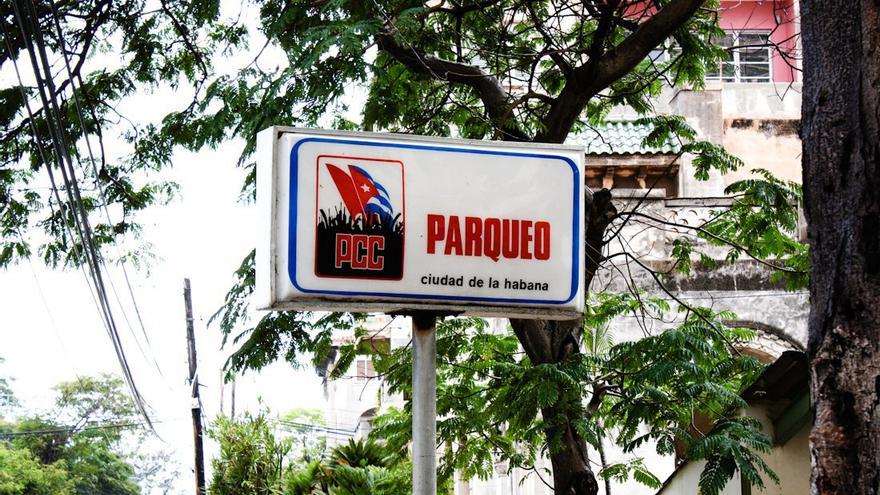
The motto “Think like a country” would be acceptable if the Cuban government would stop thinking like a party. PCC= Cuban Communist Party

14ymedio bigger14ymedio, Reinaldo Escobar, Desde Aqui, Havana, 4 July 2019 — The most recent political marketing discovery launched by Cuban President Miguel Díaz-Canel is summarized in his call to “Think like a country.”

The call comes in the midst of a plan to increase wages “in the budgeted area of the state sector” and aims to mobilize an awareness among different economic actors to, on the one hand, avoid an indiscriminate rise in prices and, on the other, to increase the diversity and quantity of  goods and services.

As Fidel Castro’s successor and scion, Díaz-Canel seems to be inspired by the Maximum Leader’s idealist postulate that it was correct to create wealth with conscience and not vice versa, as proposed by the materialist rules of orthodox Marxism. continue reading

The motto to think like a country would be acceptable if those who govern stop thinking like a party. Or even better if those who govern will realize that party and country are not synonymous.

One can only think like a country when the thought in question is the result of a national consensus where partisan interests are relegated in the interest of prioritizing the most shared interests of the nation, the population, the citizenship, whichever you prefer. If the Revolution — and socialism — is invoked as a condition, Fidel Castro’s legacy is no longer thinking like a country, but as a party.

To determine what is appropriate for the country in the short and long term, we have to listen to everyone, but there is no point in being willing to listen when those who express different ideas are repressed, when government media attack and discredit those who depart from the official thinking.

As long as the national dissenter continues to be identified with the foreign enemy, thinking like a country will only be an empty slogan. This country will arrive late to the fourth industrial revolution if it remains committed to economic self-sufficiency; it will compromise its future if it keeps the productive forces of the non-state sector chained; it will impoverish its intellectual creation and its spiritual production if the cultural institutions do not abandon their inclination to gag all who disagree with them.

This country, diverse, plural, with genes of modernity and propensity to connect with the rest of the world, can expand an advanced, humanistic and innovative thinking, a generator of solutions. All that is required is to stop criminalizing those who think differently.

______________________________

The 14ymedio team is committed to serious journalism that reflects the reality of deep Cuba. Thank you for joining us on this long road. We invite you to continue supporting us, but this time by becoming a member of 14ymedio. Together we can continue to transform journalism in Cuba.

14ymedio Headline News Summary: Diaz-Canel Links Salary Increases to the End of the Dual Currency System in Cuba

Source EFE, via 14ymedio: Cuban president, Miguel Diaz-Canel, denied on Tuesday that the imminent rise in state wages is a populist measure, and he assured that it will be accompanied by other economic reforms, such as the long-awaited elimination of the double currency.

The president affirmed in an appearance on the Roundtable TV show that the elimination of the double currency will be one of the measures that will go along with the increase of salaries, without specifying a date or the strategy that his Government will apply for the unification.

He also emphasized that Cuba will achieve “prosperity” despite the financial and commercial embargo imposed by the United States and hoped to correct the “internal blockade,” referring to inefficient production and excessive bureaucracy of state agencies.

More detail here, in Spanish

 A note to TranslatingCuba.com readers: The purpose of our project is to translate independent Cubans writing from the Island. In addition to its own articles, 14ymedio also publishes syndicated articles which we rarely translate. In the interest of ensuring our readers get critical news about Cuba from whatever source, we are going to experiment with these “News Summaries.”

Independent Journalism In Cuba: Flourishing But Underfunded / Ivan Garcia

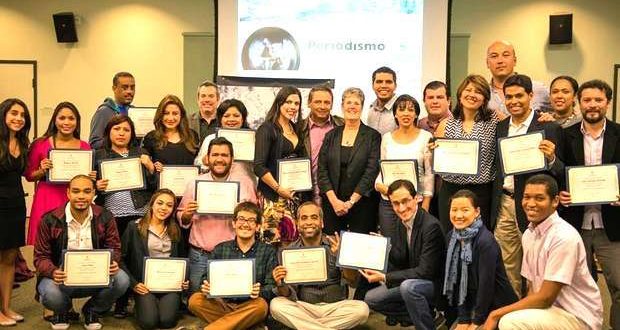
Journalists from Latin America, Central America, and the Caribbean participate in the Investigative Journalism Workshop, organized by the Institute of the Americas on 10-14 November 2014, in San Diego, California. Representing Cuba was the independent journalist Iván García Quintero (back row, far left).

Iván García, 9 May 2019 — Around the mid-1990s, the cohort of official reporters taking the leap into unrestricted journalism in Cuba had — besides experience and media training — the privilege of typewriters at their disposal. Those just starting out in the world’s best occupation were hand-writing their articles in school notebooks.

Newbies would be tasked with reporting evictions, setting up interviews, or being gofers. Those who had been at it longer would sign the articles to be published later by some daily or website based in Florida. In 1995, when poet, writer, and journalist Raúl Rivero founded the Cuba Press agency, he opened the door to a handful of young people who lacked a journalism education but had the desire to learn and work.

To the rookie reporters, Raúl would assign brief write-ups, which after his meticulous review of spelling and style, would be replete with strike-throughs from his red pen that he kept in the pocket of his perennial blue denim shirt. Rivero would dress up the story and insert a compelling headline, never longer than five or six words. In the end, the text would emerge, infused with the literary flavor of his excellent compositions. continue reading

Twenty-four years later, Luis Cino, Jorge Olivera, Víctor Manuel Domínguez and I, among others of Raúl’s followers, continue to religiously publish two or more columns per week on several sites.

We learned that work culture and respect for the profession from dyed-in-the-wool journalists such as Raúl Rivero, Tania Quintero and Ana Luisa López Baeza (deceased in 2018 in exile). It was a time when the Internet sounded like science fiction. Articles would be read by telephone to someone in Miami who would record the texts and later upload them online.

At that time, at the start of the independent journalism movement, you had to climb a sort of military ladder. First, you had to learn to write longhand. Then, you had to master the heavy-duty typewriters made in East Germany. And when you were finally capable of writing a decent text, you could produce it on a laptop that was rotated among various journalists. In those hard years, the beginner reporter learned by doing.

In the spring of 2003, Fidel Castro made a gross mistake: he sent 75 peaceful opposition members, 27 of whom were independent journalists, to prison. He expected that, by jailing a third of those who dedicated themselves to writing freely, he would intimidate the rest. But from the Island there was no stopping the denunciations about repression, the political prisoners of the Group of 75, nor about the situation in Cuba or of Cubans – even if the texts were published unsigned.

Fear did not freeze the writing pens. In November 2007, a group of journalists headed by Juan González Febles y Luis Cino founded Primavera Digital (Digital Spring), an openly anti-Castro weekly. Others continued sending their articles to Cubanet, Cubaencuentro, Revista de la Fundación Hispano-Cubana, and the Sociedad Interamericana de Prensa website.

Some months before, in April of 2007, following the success of the Generación Y blog created by Yoani Sánchez, other oppositional blogs began multiplying. Dozens of bloggers irrupted into digital journalism. Starting in 2012, the incessant trickle of journalists quitting their positions in state media has been unstoppable. As of today, the independent (or free, or alternative – whatever you want to call it) press has grown impressively.

To the more than 200 reporters who, on their own and at their own risk systematically write from Cuba on political, social, cultural, ecological or sports-related topics, we must add newspapers, magazines, Facebook accounts, YouTube channels, and other online platforms.

Also administered from the Island are Primavera Digital, 14ymedio, Periodismo de Barrio, Postdata Club, La Joven Cuba, El Estornudo, El Toque, and Vistar Magazine, among others. Ignacio González of En Caliente Prensa Libre, headquartered in Havana, and Rolando Rodríguez Lobaina of Palenque Visión, located in the eastern zone of the Island, lead audiovisual agencies that are notable for their social protests.

Almost all free communicators lambast the government. Others demand democratic changes, but they recognize and accept the status quo. The biggest problem faced by sites edited in Cuba is monetary. Periodismo de Barrio is the only one that transparently informs the public how it receives and spends its funding, which isn’t much.

The lack of regular cash flow when it’s time to pay contributors for their work, and of the minimum financing needed in journalism, puts the brakes on various projects. Journalistic investigations and in-depth reporting are expensive: they tend to be team efforts, they can last for months, and occasionally require travel to other locations, provinces or countries. With no access to bank credits, the new independent journalism presents a great many difficulties for self-management, growth, and solvency.

The majority of independent journalists in Cuba survive by writing for sites whose editorial staffs are based abroad. A great portion of the materials published in Diario de Cuba, Cubanet and Cubaencuentro come from Cuba. But other sites, also located in foreign countries and dedicated to the subject of Cuba, are sustained by contributors who do not live in Cuba, by international news agencies, and by the rehashing of content from independent sites or the official Cuban press.

Some non-official reporters collaborate on commercial sites run out of the United States, Mexico, and Spain. Those who do this on sites that are subsidized by various foundations will charge $30 to $40 dollars per published text, a bit more if accompanied by photos or videos. Those who publish in for-profit media can make double that, from $50 to $60 per piece. But there are very few who can publish between eight and ten works per month in a private newspaper.

Due to the boom in the number of journalists and a deficit of financing for the editorial offices anchored in other countries, even a willing editor cannot publish more than five or six pieces per month by a single contributor. On average, an independent journalist in Cuba makes somewhere between $125 and $150 per month. This amount is the equivalent of four to six times the median salary in Cuba, but given the scarcities and inflation rampant in the country, it is not enough to live on and provide for a family.

So, what happens? With no outlets for their writing, talented journalists – who, besides lacking material goods, are harassed by State Security – are making plans to exit the country permanently. This is a shame. Young people are leaving who excel in the profession and have even taken courses and won scholarships in foreign universities.

One solution that would stem this bloodletting might be that serious and professional sites such as Diario de Cuba, Cubanet and Cubaencuentro, could receive greater funding so that they could publish more journalists residing on the Island and pay them better rates. Or that foundations or non-governmental organizations would facilitate funds for independent reporters with possibilities of establishing a digital journalism site headquartered in Havana.

Cuba’s future will be decided in around five or six years. By then, the country will find itself with an even more ruined economy, without public infrastructure to speak of, and decapitalized corporations.

And, contrary to the spokespersons for neo-Castroism in the state-run media, Cuban independent journalists will continue denouncing injustice and shedding light on the reality of their country and people. As they have done up to now.

Translated by: Alicia Barraqué Ellison

Multitudes and Frustrations at the New Coppelia

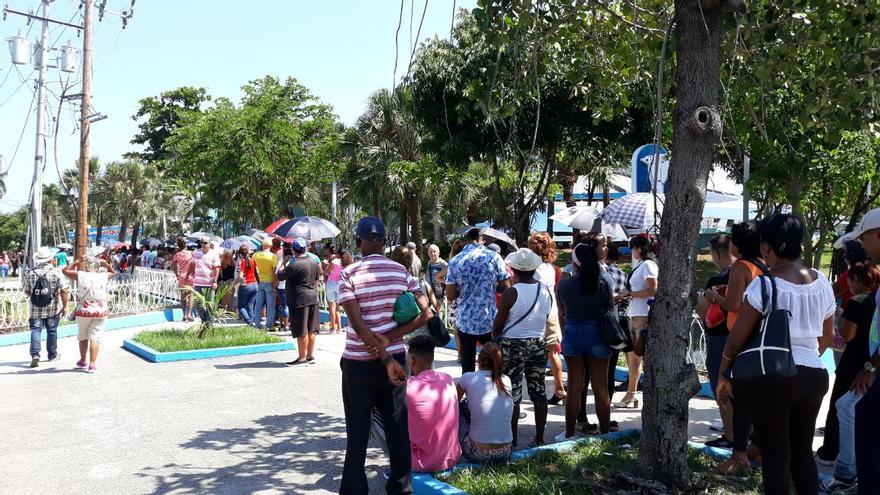
Customers protect themselves from Havana’s summer sun while waiting outside Coppelia.

14ymedio bigger14ymedio, Luz Escobar and Yoani Sanchez, Havana, June 26, 2019 — At what has been called the Cathedral of Ice Cream, the faithful wait outside for hours on the day that the Coppelia ice creamery is scheduled to reopen after a weeks-long remodeling. The first day of operation is marked by scenes of people shoving each other as police try to control the line of customers waiting to try the long anticipated chocolate ice cream.

On Monday, after official news outlets announced the date of its reopening, dozens of people with the patience of pilgrims start lining up outside. Designed by architect Mario Girona, the iconic Havana building looms as large in the public imagination as the Giraldilla statue, Morro Castle and the Malecon. As they wait patiently, hundreds of customers try to glimpse the menu board inside to see if it lists all fifteen flavors promised in official media reports.

Such a high level of anticipation should come as no surprise. Coppelia is one of the few places in the capital where ice cream can still be bought with Cuban pesos rather than hard currency, something hard to fathom for the astonished, open-mouthed tourists who walk past the enthusiastic throng, asking if they are part of a demonstration. When told the crowd is just waiting to buy ice cream, they can be heard saying, “I can’t believe it.” continue reading

In spite of a sign announcing a 10 o’clock opening, Coppelia begins its first day of operation an hour later, much to the discomfort of customers, who have to rely on umbrellas and sports caps to escape the relentless summer sun. This means that, before cooling off with ice cream, customers are first treated to a “free tropical sauna,” as one woman waiting in line notes ironically.

Every generation is represented. There are those who remember Coppelia in its heyday, after its debut in 1963, when it offered dozens of flavors; those who watched it languish during the Special Period of the 1990s, when it operated almost as a workers’ canteen; and those born after the advent of the dollar economy, who grew up eating Nestlé ice cream at shopping malls or coveting it through display windows.

Everyone arrives armed with cell phones to report the reopening to a family member who has emigrated to Buenos Aires, Miami or Berlin, someone who met her partner in the historic ice cream parlor, where a man’s wife began to feel her first delivery pains, or where someone had a final conversation with a friend who passed away not long after. Each of them has some memory sewn into the metal trellis chairs on the ground floor or to the thick shade trees.

Between the shoving to get inside and the screaming at others who have jumped the the line, there is the sound of “clicks” from dozens, or even hundreds, of cell phone cameras. “This is for Instagram and this for Facebook,” explains a teenager who poses in front of the sign of a ballerina’s plump legs above the iconic location’s name. He also takes a snapshot in front of a slogan, “La Habana real y maravillosa” (The real and wonderful Havana), that now appears on an exterior wall.

As the hours pass, enthusiasm dims and outrage grows. Around noon, after getting past the doorman trying to control the entrance, an avalanche of people runs through the esplanade to the staircase on the second floor, where the area known as the Tower is located. Their first surprise is the wallboard menu in this most exclusive area of Coppelia, which lists only eight flavors, half of what was promised.

When the crowd gets to the bottom of the stairway, they regroup. Some take the opportunity to fix their hair, some to straighten shirts which were rumpled in the scuffle outside and some to make sure they have not lost their wallets in the tumult. Children cannot stop smiling, their eyes open wide, as if they were on an adventure, monsters included, with a promised reward.

Eventually, little by little, everyone sits down. Then comes a second surprise: you may only order two specialties per person, a restriction that began with the crisis of a quarter of a century ago and which apparently is still in force despite a new, strikingly blue paint on the walls and employees in redesigned uniforms.

As has become customary, tables at Coppelia must be fully occupied. It does not matter if the people with whom you are seated are complete strangers. Some customers enjoy the surprise of being able to have a conversation with someone they are seeing for the first time. Others resent the lack of privacy and the unwanted, frightening encounters they imagine having.

Now seated after waiting four hours in line, Ulises — a 60-year-old restaurant worker — is still running his hand over a rib which was jabbed during the scrum to get inside. “Older people being pushed around, women with small children shoved to the ground, people in wheelchairs and with canes not given priority. And everyone fighting with the employees. I’ve never seen anyting like it,” he tells his companions.

“You didn’t experience Coppelia when it was Coppelia,” he says with a certain taste of nostalgia. Before paying, he very slowly counts his coins because, as he notes, no one gives him anything; he lives on his salary. This is a rarity, as difficult to find as a sliver of almond in the ice cream, which is now served on plastic plates when you order three scoops.

Next to him is a Cuban couple who now live in Florida and cannot stop laughing. “We needed a dose of Cuban reality but here we’ve gotten a full shower,” they joke. When the ice cream arrives, the woman takes a small taste but leaves the rest while the man takes several photos, which he will later post on Twitter. Meanwhile, Ulises takes a plastic container out of his bag and begins filling it with a melted chocolate and strawberry combination.

“The chocolate failed the test,” a young woman seated at another table is heard to say. “But the only thing on this plate I can eat is the chocolate. The strawberry is totally synthetic. There’s no fruit in it,” she adds with her nose near the plate. A dusting of cookie crumbs begins to fuse with the melted ice cream scoops.

One of the most frequently heard complaints involves the well known combination known as the “salad,” a mixture of five scoops with a few small cookies on the side, which can only be ordered with a mix of ice cream flavors. When a group of adolescents at one table asks an employee why this is, her only response is that it results from “a desire to provide a variety of flavors.”

But the ice cream fails to deliver. “Not creamy, tasteless and melted,” is how a mother with two children describes it, wrapping up her assessment with an “I won’t be coming back.”

After returning to his table smiling, another guest is eager share the details of his trip to the restroom. “They fixed all the toilets and there was even water for the sinks,” he explained. Though he wanted to provide more details of his experience, few listen to him.

At three o’clock a lady who has been in line with her granddaughter to go up to the Tower finally cries out in despair, “I have been here since 1:30 and everything they are saying on television is a lie. It’s an insult.” The woman has brought her daughter here for her birthday after the girl became intrigued by a report on the midday news about the successful reopening earlier in the day.

Images of the fights were not shown on national television, nor was the presence of police, who were there to maintain order, or the attendant trying to maintain discipline in the line. Instead, news reports only described calm and happiness. One customer adopted the idyllic tone, tellling a reporter, “It’s all beautiful, so beautiful.”

Far from camera range, one woman is compelled to seek shelter under a tree after waiting three hours in line. “This is abusive,” she repeats. Meanwhile, her two grandchildren, now on vacation from school, take advantage of not having to contend with the sun’s glare on their cell phone screens to share some wifi apps.

In the distance they can see an air-conditioned upper-floor salon offering ice cream for sale in hard currency. At The Four Jewels,* as the space inside Coppelia is known, smiling, sweat-free customers are enjoying a much more costly and creamy ice cream.

*Translator’s note: The space, named for four legendary dancers of the National Ballet of Cuba, was inaugurated in June 2013 by the ballet’s then-director, Alicia Alonso, in a ribbon cutting ceremony.

____________________

The 14ymedio team is committed to serious journalism that reflects the reality of deep Cuba. Thank you for joining us on this long road. We invite you to continue supporting us, but this time by becoming a member of 14ymedio. Together we can continue to transform journalism in Cuba.

A Rabid Dog Always Ready to Bite

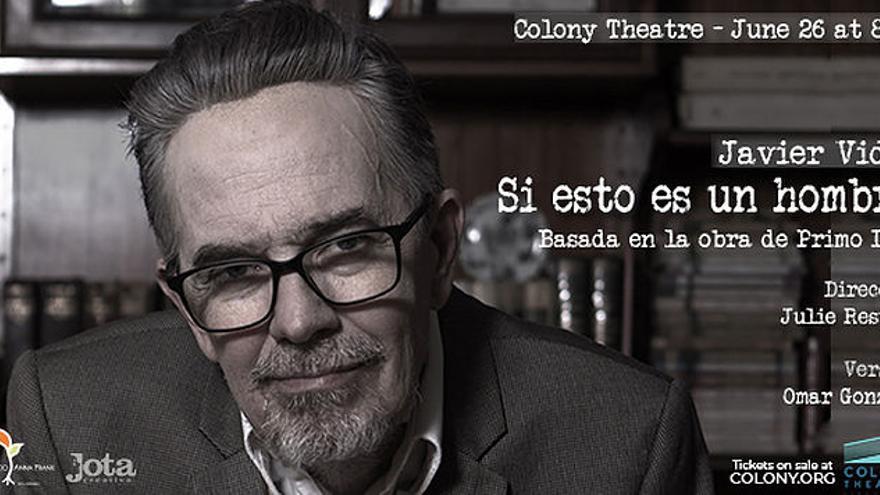
Promotion for the monologue of the Italian Primo Levi entitled “If this is a man.” (Cortesía)

14ymedio bigger14ymedio, Carlos A. Montaner, Miami, June 30, 2019 — Incredible. Anne Frank is a venerable old woman of 90. She remained frozen in the image of a smiling, sensitive, and good girl who discovered love and sexuality in the middle of adolescence as she records in her Diary. The Nazis murdered her in February or March of 1945, a little before the end of the war. She had been born in June of 1929.

So a foundation called “Anne Frank Space,” at this time led by its vice president, the architect Ilana Beker, caught my attention. It is composed, essentially, of Venezuelan Jews. If the massive immigration of that people is great for the societies that receive them, it is even more significant when it comes to Jews. They tend to have excellent education and a profound sense of social responsibility. This foundation’s objective, in essence, is to fight againt prejudices and that we manage to live together in harmony with different people. continue reading

Within that spirit, they brought to Miami Beach, to the Colony theater, the monologue of the Italian Primo Levi entitled If This is a Man, published in 1947. They are his memories from the Auschwitz concentration camp. Along with Levi, 650 Italian Jews were transported like animals to that horrible slaughterhouse. Only 20 survived. Four decades later, in 1987, hounded by depression, Levi committed suicide by throwing himself to the pavement from a third floor. Elie Wiesel, upon finding out, wrote: “Primo Levi died in Auschwitz forty years later.”

The actor Javier Vidal achieves a tremendous resemblance to Primo Levi and turns to an excellent “trick:” he recites the text admirably with the accent and cadence of an Italian who speaks Spanish. For an hour and a half it is very easy to believe that Levi himself transmits to us his experiences. His wife, Julie Restifo, directs the work with an enviable economy of media. A few chairs on the stage and the projection of some drawings and images set the horror with total clarity.

Almost at the end of the work, Primo Levi warns that what they are suffering can be reproduced in the future. And thus it is so. One of the constant features of Western civilization is antisemitism. Hitler and the Nazis did not invent anything. They limited themselves to picking up a bloodthirsty tradition initiated by the Egyptians, Greeks, and Romans, but amplified by primitive medieval Christianity, which has been changing with each generation and adapting itself to every stage of history.

Hitler attributed to the Jews the German defeat in the First World War, despite the heroic participation of many Jews on the German and Austrian side, and supposed that by eradicating that “damned race” from the face of the earth all of Europe’s problems would suddenly disappear. Of course it was an unjust stupidity, but the ground had been fertilized for centuries with outrages against Jews.

It is true that the Roman papacy has asked forgiveness for its criminal excesses, but antisemitic prejudices are still alive in our culture. I remember a meeting of the Liberal International in Finland, in which they asked me to sit with an enigmatic Russian politician, Vladimir Zhirinovsky, who had created a supposed Liberal Party and wanted to affiliate it with our political family.

It was enough to ask him “how are things in Boris Yeltsin’s Russia” for antisemitism to rise to the surface. “Imagine,” he said to me, “the Jews are keeping everything.” He criticized to me the “cosmopolitanism” of that ethnicity and even mentioned “the conspiracy of the Jewish doctors” denounced, persecuted, and murdered by Stalin at the end of the forties.

Everything continued the same way in the Russian mentality, like in the time of the czars, when the political police, the fearsome Okhrana, fabricated The Protocols of the Elders of Zion, as if there existed a Judeo-Masonic conspiracy to take control of the planet. Of course antisemitism has not diminished. It has mutated and presents itself today as anti-Zionism, but it is the same dog with a different collar. A rabid dog always ready to bite.

Translated by: Sheilagh Herrera

___________________________________

The 14ymedio team is committed to serious journalism that reflects the reality of deep Cuba. Thank you for joining us on this long road. We invite you to continue supporting us, but this time by becoming a member of 14ymedio. Together we can continue to transform journalism in Cuba.