
The Two Faces of Paseo del Prado

For sixty-six convertible pesos, a “day pass” will provide access to the hotel pool and spa at the Manzana Kempinski. (14ymedio)

14ymedio bigger14ymedio, Zunilda Mata, 17 July 2019 — The pool’s water jets create a relaxed atmosphere while on the other side of the glass the city swelters under a relentless sun, rendered benign by the Manzana Kempimski’s air conditioning system. Down below, two men use a hose to fill a rooftop tank, empty after two weeks with no water supply. The revolution that promised to end inequality has, sixty years later, instead made it blatant on one particular street.

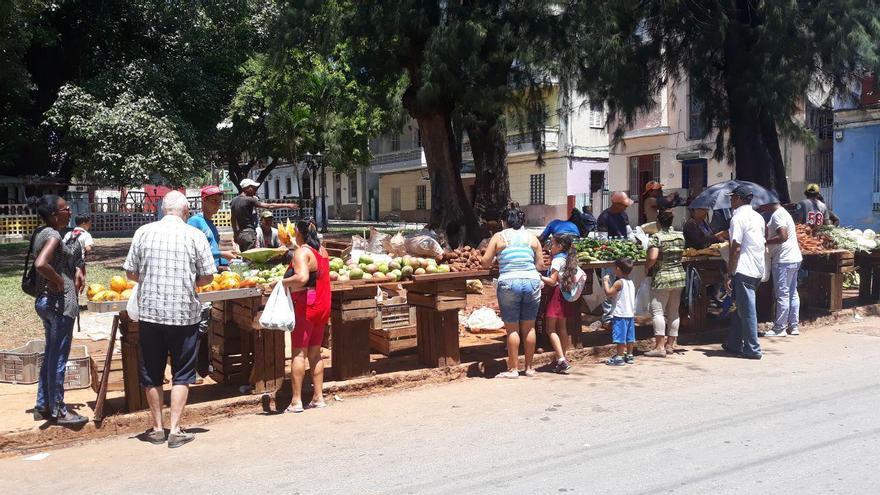
The Paseo del Prado is not just an avenue of bronze lions, glamorous Chanel fashion shows and a backdrop for provincial tourists’ obligatory snapshots. It is also where the starkest contrasts of today’s Cuba are most evident. With at least two luxury hotels in operation and another about to open, it is a reflection of an incongruous Island.

Yusi, who prefers to remain anonymous, is all too aware of its contradictions. She lives in a working class area near Virtudes Street in a two-story building of small apartments where multiple generations are piled one atop the other. She was born there forty-one years ago and, though she has “moved heaven and earth to leave the country,” she still lives in the same place where her mother and grandmother were born. continue reading

Last week a friend from overseas invited Yusi to spend a day at the spa in the Manzana Kempinski, a luxury hotel that opened two years ago, which neighborhood residents call “the spaceship.” Located in the former Manzana de Gómez, a 19th century shopping arcade, the hotel caters to a discerning clientele looking for lots of comfort but little reality, classic cocktails and soft sheets.

“When she told me she was inviting me to spend a day there, I felt like telling her I could live for a whole month for the cost for a day pass.” says Yusi. A few years ago the young woman was sentenced to several months in a reeducation camp for engaging in prostitution with foreign tourists. She later became certified as a cultural promoter and spent a year working for the state.

“I didn’t realize I would be working with tourists again but this time I give walking tours and provide them with company,” she says. On that July day she was the only Cuban in the warm waters of Kempinski’s pool, with the scent of vanilla permeating the air.  Yusi takes deep breaths to see if she can “take some of that aroma back to the hovel” where she lives.

Yusi is not terribly surprised by the contrast between her lodgings and the luxurious spa. Her adolescence coincided with the advent of tourism, the dollarization of the economy and foreign investment, and she has experienced the pluses and minuses of the transformation. Unlike her mother, who for years refused to set foot in a  shopping mall because she believed it was “a place for gusanos“* with hard currency, she knows that she lives in a country where political slogans are one thing and reality is another.

Her building has not had water for two weeks. Less than a hundred or so yards from the luxurious hotel, her mother carries several jugs of water to bathe her bedridden grandmother and to clean the dishes piled in the sink. “My neighbors would go crazy if they saw me like this. They’d have a heart attack because, in my building, you have to save the bath water to clean the house,” she adds.

Old Havana and the areas closest to the hotel have been plagued by poor water supply for decades, a situation that has not improved even as the Paseo del Prado and the historic city center have gradually become the golden mile of Havana tourism. “This has actually aggravated the problem because now there is more demand,” says Yusi.

Shelves filled with neatly folded towels at the hotel’s pool reminds Yusi of the pile of dirty clothes on the edge of the cot where she sleeps. “When I leave here, the spell is broken. Or rather, the bubble bursts,” she notes ironically as she orders a mozzarella pizza and a tropical fruit cocktail. “I feel like I am in another world, that I am not in Havana.”

Residents living near the Manzana Kempinski Hotel face serious water shortages. (14ymedio)

Seated in the shade on one of the wide benches a few yards away, 79-year-old Pablo is waiting for a miracle. “The soup kitchen at Holy Angel Church, where I have lunch several times a week, is closed because they don’t have water,” he laments. “A lot of elderly people here have been left hanging. Without the extra help, everything becomes very difficult.”

Pablo lives near the majestic Prado. “I was born in this neighborhood but there are things here I don’t recognize,” he says, pointing to the facade of the Grand Hotel Packard from which freshly watered green plants hang. Upstairs, on an intermediate floor, we can see sun bathers and a couple of tourists leaning on the railing with beers in hand. “It lacks for nothing,” he says, annoyed.

When Pablo was young, political slogans emphasized equality and social justice for all. In those decades, capitalism was blamed for some people being rich and others poor, for the disparities in purchasing power. He worked hard, thinking that the neighborhood where he grew up would get better for the people who had stayed, for those who did not leave during the Mariel boatlift. Now retired, he sees inequality wherever he looks.

Employees clean the windows of the wide entry to the hotel. They wear work clothes, and use long brushes and buckets of soapy water. Paul’s eyes remain fixed on the workers. “With that much of water, or just a little more, you could make lunch for the old folks at Holy Angel,” he figures. But it is not that easy. “The water for tourists is different. “It does not come from the same place nor does it taste the same,” he jokes bitterly.

Down the street and near the Malecón seawall the SO/Paseo del Prado Hotel is almost finished. It stands out like a newcomer in front of Morro Castle. There is a visible swirl of activity as workers add the final touches. It is schedule to open in September and its five-star rating is bound attract tourists who do not worry about expenses or hesitate to reach into their wallets.

This week work is being done to exterior, trucks arrive with deliveries for the large building and finishing touches as being made to the sidewalks. Among them are fire hydrants, which now stand out in the July sun. A few yards away is another Cuba, where a sign in a small government office warns, “No restrooms and no water.”

“We are operating at reduced capacity because we have problems with the water supply and the employees are only working half days,” says an administrator, who has brought a plastic water bottle from home. It still has an ice cube in it.

*Translator’s note: Literally, “worms.” A derogatory term coined by Fidel Castro to refer to Cubans who fled the island after the revolution.

__________________

The 14ymedio team is committed to serious journalism that reflects the reality of deep Cuba. Thank you for joining us on this long road. We invite you to continue supporting us, but this time by becoming a member of 14ymedio. Together we can continue to transform journalism in Cuba.
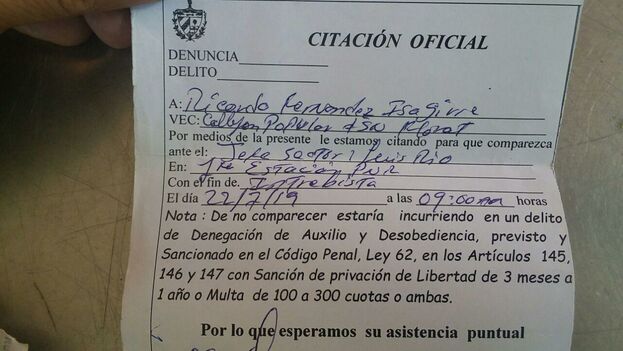
Reporter Ricardo Fernandez Released After Nine Days

On Friday morning, Fernández had been transferred from the El Vivac de Calabazar detention center, south of Havana, to a police station in the city of Camagüey. (14ymedio)

14ymedio bigger14ymedio, Havana, 21 July 2019 — The independent journalist and 14ymedio collaborator Ricardo Fernández Izaguirre was released this Sunday after nine days in detention. The police issued a warning letter regarding his “illegal” stay* in Havana, which the reporter refused to sign, he told 14ymedio

In conversation with this newspaper, minutes after being released, Fernández said that after being freed he had passed through the house of his colleague Henry Constantin, director of the La Hora de Cuba publication, with which he also collaborates. “I’m going to run to my house to see my daughter, I’m crazy to see her,” he added.

The reporter believes that the warning letter that the police issued to him is “arbitrary” since he was not “even 24 hours” in the capital. Upon release he was given an official summons for tomorrow, Monday, at 9:00 am.

On Friday morning, Fernández had been transferred from the El Vivac de Calabazar detention center, south of Havana, to a police station in the city of Camagüey, where he resides.

The reporter was arrested last Friday in Havana when he left the headquarters of the Ladies in White Movement to go to the national bus terminal. Fernandez arranged with activist Berta Soler to make a phone call to confirm that he had arrived safely at the terminal, but never called.

The independent journalist also collaborates with the Christian Solidarity Worldwide (CSW) organization.

“Violations of freedom of religion or belief have increased in Cuba in the last six months, and Ricardo has dedicated himself to traveling throughout the country, often with great personal sacrifice, sleeping in bus stations and skipping meals, to document these cases and offer solidarity to the victims. We ask the authorities to release him immediately,” said Anna Lee Stangl, head of Defense of Religious Freedom at CSW.

Last Tuesday, The Inter-American Press Association (IAPA) condemned the journalist’s arrest by Cuban State Security, while demanding his immediate release.

When he was released Fernández, he was given an official summons for tomorrow, Monday, at 9:00 am. (14ymedio)

In a letter sent to the Interior Minister of Cuba, Vice Admiral Julio César Gandarilla Bermejo, the IAPA demanded the release of Fernández, detained since July 12. They also requested that the reason for his detention be reported.

In the correspondence signed by the president of the IAPA, María Elvira Domínguez, from El País, Colombia and the president of the Committee on Freedom of the Press and Information, Roberto Rock, from La Silla Rota, Mexico, it was stated that “keep a a person detained without due process, without a court order and keeping their family and colleagues uninformed and in a state of distress, constitutes a severe violation of civil rights, human rights and, in this case, freedom of the press and the free exercise of the profession.”

*Translator’s note: Residence in Havana is restricted and Cubans from elsewhere must have formal permission to live there.

____________________

The 14ymedio team is committed to serious journalism that reflects the reality of deep Cuba. Thank you for joining us on this long road. We invite you to continue supporting us, but this time by becoming a member of 14ymedio. Together we can continue to transform journalism in Cuba.
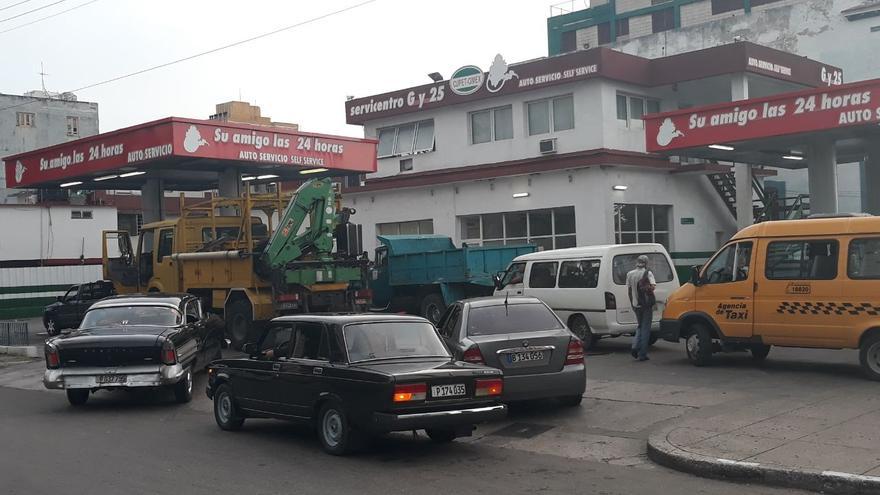
Cuban Government Blames Gas Shortage on Increase in Vehicles

A line of cars waiting to refuel at a gas station in Havana. (14ymedio)

14ymedio bigger14ymedio, Havana, 20 July 2019 —  After days of complaints on social networks and long lines at gas stations, this Friday Tomás Pérez Álvarez, the marketing director of the state oil company, Cupet, said in Havana on the television news that one of the causes of the deficit of gasoline is the “large number of vehicles circulating” in the country.

The shortage, which has caused lines hundreds of yards long in several gas stations in the Cuban capital, has affected gasoline D-90 and B-94, known as “regular” and “special”, said the official. The sale of the first will be restored tomorrow Saturday “in the afternoon,” he said, while the offer of special gasoline “should be resolved on Monday or in the early hours of Tuesday.”

“In the case of B-90, we are at this moment, as part of the logistics that has been structured to respond to this situation, bringing tanks of support from other provinces,” he added. The official did not make any reference to problems with the importation of crude, nor, to any, technical difficulties in the four refineries of the country.

“Consumption is 20% above previous stages, even 10% more than the previous summer”, added Pérez, who blames the increase on the fact that “the country has made an extraordinary effort, especially with regards to taxis, and all this results in a greater consumption of these two types of gasoline.”

As of May, there are 24 minibus routes in the capital with a capacity of 12 passengers, using Russian made vehicles. In January, 450 of these vehicles entered the country, and with them the authorities seek to alleviate the serious problems of public transport.

However, the greater presence of these vehicles in the streets of Havana has also coincided with a decrease in the number of cars operating in the private service of fixed-route shared taxis, known as almendrones*, due to a package of new regulations that came into force in December 2018 and that has caused dismay among self-employed drivers providing this service.

This Thursday, 14ymedio reported long queues in the service centers of Havana. Just two days earlier, the Minister of Energy and Mines, Raúl García, had denied on Cuban television any problem with the supply of fuel to the energy sector as a cause of the blackouts that the island has experienced in the last week.

The long line for gasoline ave 23 and 24. #somoscontinuidaddicen #micubasufre pic.twitter.com/CksyhyfBo2– Tocororo (@ Tocororo11) July 18, 2019 [Note, this appears to be a video of several blocks of parked cars, but in fact it is a line for a gas station]

The situation has caused a flood of complaints and photos on social networks, especially on Facebook and Twitter. Users demand an explanation and link the shortage of gasoline with food shortages and power outages. “The crisis is seen everywhere, they can not cover the sun with a finger,” writes a young man who relates his odyssey trying to get fuel and his tour of “five gas stations without being able to fill the tank.”

The problems with the supply of fuel have also limited the fumigation work in Havana municipalities where the presence of the dengue virus has been detected. In the area of La Timba and Nuevo Vedado the fumigations planned for Thursday and Friday could not be carried out because “the fuel did not arrive for the backpacks [fumigation equipment],” said a source at the April 19 Polyclinic, who preferred anonymity.

“The last fuel we received had to use to fumigate the houses of the patients that had already been confirmed with dengue, but since Tuesday we have not been able to continue the task,” an official who works in the antivectorial campaign against the Aedes Aegypti mosquito, transmitter of the viral disease, commented to this newspaper.

“We hope that next week new supply will arrive because that is what we have been told by the Ministry of Public Health, but right now we are at a standstill, we are only doing focal inspections to detect where there are outbreaks of the mosquito,” he adds.

*Translator’s note: The vehicles used in this type of service are largely classic American cars; the nickname “almendrones” is a reference to the ’almond-shape’ of the vehicles.

___________________

The 14ymedio team is committed to serious journalism that reflects the reality of deep Cuba. Thank you for joining us on this long road. We invite you to continue supporting us, but this time by becoming a member of 14ymedio. Together we can continue to transform journalism in Cuba.

The Generation of the Heirs

The young people who were born since the 70s can lead a change in Cuba in the coming years. (14ymedio)

14ymedio bigger14ymedio, Reinaldo Escobar, Havana, 19 July 2019 — No study on the behavior and scope of a generation can be circumscribed schematically to the data that is identified with the date of birth. Although age is one of the factors to be taken into account, it will always be possible to find, in a human group, people who identify more with generations previous to, or later than, their own.

The events that occur in an era, the ways of life and the imprint of the influential personalities tend to be markers of greater intensity to define belonging to a given generation.

The so-called historical generation of the Cuban Revolution was mainly nurtured by people born between 1910 and 1940, so that in 2020 the youngest of these will be octogenarians and in 2030 they will definitely be characters of the past. continue reading

Behind this group came another (following the demographic norm of framing a generation as a period of 30 years), that entered the world between 1940 and 1970. They are those who lived the most important part of their youth and adulthood starring in or witnessing the events most notable in recent history.

In a vertiginous summary of these decisive events, we should mention the literacy campaign, the battles of Playa Girón (Bay of Pigs), the missile crisis, the Escambray civil war, the death of Ernesto Guevara, the sugar harvest of the 70s, the military campaigns in Africa, the first socialist Constitution, the exodus of the Mariel boatlift, the defeat in Granada, the execution of General Arnaldo Ochoa and the collapse of the socialist camp.

These are the years dominated by atheism, homophobia and political intolerance, and a time when the support of families depended exclusively on a salary provided by the State; when to obtain a home it had to be built by the microbrigade system; and to acquire appliances it was essential to accumulate labor and social merits; while the rationed-subsidized market “covered” most of the needs.

This generation, which was formed listening to the speeches of Fidel Castro and waiting for him and only him to make the decisions, was the object of a massive indoctrination campaign that started at the beginning with the Revolutionary and Prolonged Instruction Schools with the introduction of Marxism-Leninism as a compulsory subject in all university degrees. They were convinced that they were living through the transition period between capitalism and socialism, that the communist future was already in sight in the Soviet Union and that the United States was humanity’s main enemy.

Those who were children were integrated into the Pioneers, while teenagers were initiators of the Association of Young Rebels, which became the Union of Young Communists. They were instilled with the idea that they had a debt to the previous generation that they could only pay with obedience and absolute devotion to the unpostponable tasks of the Revolution, that would anticipate the bright future.

Many of them joined the Cuba Communist Party (PCC) displaying their credentials of having participated in these revolutionary tasks, striving to be exemplary workers and combative defenders of the process in the face of any ideological deviation; but also, in many cases, hiding their religious beliefs or their sexual preferences and removing from their biographies everything that would distance them from that favored letter of introduction: having a humble origin.

This generation, the immediate heir of the one that had achieved the revolutionary triumph, also had the task of obtaining professional training that would allow them to occupy various political, military and administrative positions that could not be filled by the old combatants, many of whom were semi-illiterate.

At present the members of this offspring constitute the majority of the current Central Committee of the PCC, of the Councils of State and of Ministers and of the Parliament and occupy the full spectrum of the academic environment and the control of state enterprises. Their main responsibility has been to maintain the docile unanimity under the watchful eye of a handful of survivors of the so-called historical generation.

It is a domesticated generation (not to say castrated) that knew that the slightest deviation from the official line could result in ostracism, imprisonment or the firing squad, the only alternative being to leave the island forever leaving behind property, families and dreams.

A man who was not eligble to vote for the 1976 Constitution, because he was 65 days short of the required age, was the first and will be the last Cuban president contributed by the generation of the heirs.

Promising to maintain continuity, Miguel Díaz-Canel has served as president of the Councils of State and of Ministers and will be appointed at the end of this year or the beginning of the next one in the new position of President of the Republic where (if he serves a second term) will remain until 2030.

By that date the younger contemporaries of Diaz-Canel will already be preparing their retirement while “the older ones,” born starting in the 1940s, will vegetate in the asylums or rest in the cemeteries.

If events do not take a dramatic turn, whoever replaces Díaz-Canel will be someone born no later than 1970 and before 2000, fulfilling the requirements of the current Constitution. This new breed of Cuban political personalities will also occupy a large part of the ranks of the Parliament, the ministerial portfolios and the seats of the Central Committee of the Party. Maybe that is the generation of change. It will have to draw its own portrait.

______________

The 14ymedio team is committed to serious journalism that reflects the reality of deep Cuba. Thank you for joining us on this long road. We invite you to continue supporting us, but this time by becoming a member of 14ymedio. Together we can continue to transform journalism in Cuba.
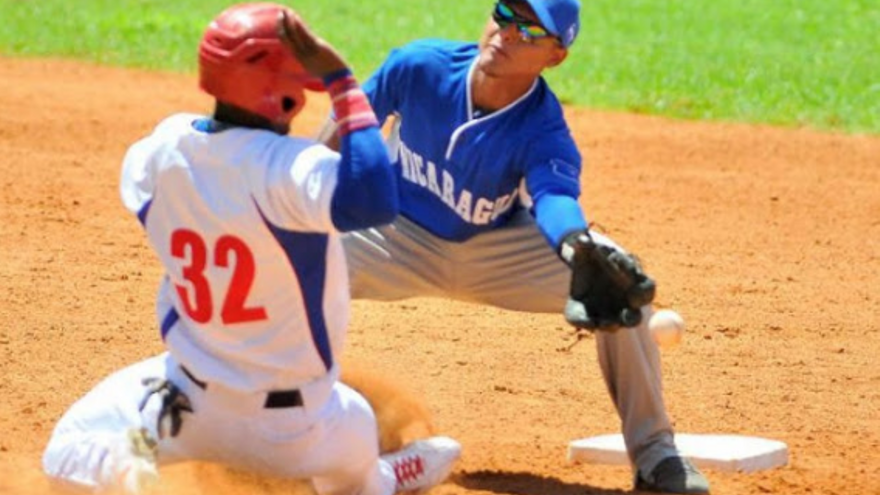
There is No Name for What is Happening in Cuban Baseball

When the fourth and last game in Nicaragua was suspended by rain on Tuesday, the team led by Rey Vicente Anglada had been officially swept.

14ymedio bigger14ymedio, Ernesto Santana, Havana, 18 July 2019 — At this point, to say that Cuban baseball suffers from an unprecedented crisis doesn’t begin to describe what is happening. The game against Nicaragua, closing the preparation for the Pan American Games in Lima, has surprised even many skeptics.

When the fourth and last game was suspended for rain on Tuesday, the team led by Rey Vicente Anglada had been officially swept away in the most surprising way by a team that, it was supposed, did not even come close in quality, but that won twice (4-1 and 4-3) and tied once.

When that tie occurred, in the first match, Nicaragua had played 23 games without beating a Cuban team and, nevertheless, won the next two games. The visitors only came up with 15 hits in those three games, including a double from César Prieto, the only one, and batted for a fabulously miserable average of 167. continue reading

Previously, since June 14, Cuba had played five series of three matches in the CanAm League, against different squads from Canada and the United States. In total, it won eight games, with two blanks, sweeping the Capitals and the Boulders, and suffering a sweep against the Aigles. The offense averaged a discrete 257.

Those who worried about these results later saw how the American university students beat the Cubans in the traditional annual match-up with a lower batting average (224). They lost four of five games and hit just three doubles and a home run, scoring 11 runs in 45 innings. The pitching, without surprises, appeared very vulnerable in this tour of North America, throwing balls of 85 miles and less.

Although the CanAm League certainly does not have a remarkable quality, its pitchers showed the Cubans, in general, a speed and a variety of pitches that they are not used to facing. But in North Carolina, facing the students, they were overwhelmed by an overwhelming efficiency.

Among the young Americans, some 19 or 20 years old, 15 were about to sign professional contracts. In total, these guys exemplify the current revolution of American baseball, especially the students, with a level of competitiveness todaynever before known.

Their pitchers easily reach 95 miles per hour and have a reserve of three or four secondaries, and there is no way to compare them with Cuban pitchers, who also lack a well-thought-out sequence. As a result, our hitters struck out 38 times and pitching gave away 19 bases on balls.

Undoubtedly, it was easy to lose four of five games against a team like that, but neither can it be said that the Cubans won in experience, taking into account what happened shortly after against Nicaragua. The escape of three players — who left the team to play in the United States: Yoelkis Céspedes, Norge Carlos Vera and Orlando Acebey — was not decisive. Fortunately, and for a reason that is still unknown, the United States will not participate in the hemispheric match up, thus saving our national team a serious problem.

The worst of the sweep before the Nicaraguans has less to do, basically, with the lack of a winning pitching staff as with the absence of combativity itself, of the live game and creativity. What was the value of altitude training in Mexico and the months of intensive preparation in different countries, which not a few have criticized since it was announced?

According to the specialized press, the selection that will go to the Pan American Games will be more complete than this one, as it will be reinforced by up to a third of the lineup with players from foreign leagues, but it has already happened in the past that those players, exhausted and without time to recover, have not turned in the expected performance.

Cuba has become accustomed to losing against inconceivable rivals — let’s remember Germany — against strong and weak, against countries with a baseball tradition and without one, with the pitching or the offense of opponents, dues to the lack of timely batting and due to the lack of pitchers with sustained efficiency.

Before the shipwreck in Central America, Yosvani Aragón, leader of the Cuban team, declared: “We can not think of anything other than winning the Pan American Games in Lima and for that we carefully prepared and it ended with blanks in Nicaragua.” What would he say now? Surely he keeps thinking with the same optimism, as do all the nefarious baseball bureaucracy.

But fans believe something very different. They are not blind and they know that there is no name for what is happening in Cuban baseball.

________________

The 14ymedio team is committed to serious journalism that reflects the reality of deep Cuba. Thank you for joining us on this long road. We invite you to continue supporting us, but this time by becoming a member of 14ymedio. Together we can continue to transform journalism in Cuba.
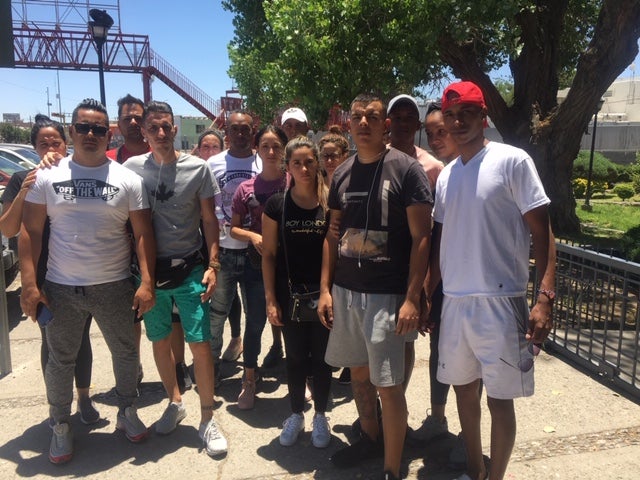
To Live Without a Future: Cuban Migrants’ “Legitimate Fear” / Miriam Celaya

Cuban migrants in Ciudad Juárez. File photo.

Cubanet, Miriam Celaya, West Palm Beach, 16 July 2019 — Just five years ago, when the governments of the United States and Cuba reestablished diplomatic relations after 18 months of secret talks, there were ominous voices that predicted the end of the privileges for Cuban immigrants to the northern country.

According to this gloomy forecast, an accelerated increase in the number of nationals leaving the Island, both by sea and by land, began to take place. The continental exodus has not stopped even with the end of the policy of “wet foot/dry foot”, when – rumors turning into reality – the then outgoing president, Barack Obama, announced its immediate repeal on 12 January 2017.

Meanwhile, the incoming president not only did not restore that migratory privilege, but rather reinforced the obstacles. In fact, during the current administration, there was a cessation of consular functions in the US embassy in Havana, which makes it difficult to carry out the corresponding procedures. Added to this is the significant decrease in the number of visas granted in the last three years, the recent elimination of the multi-entry visa, valid for five years, and the marked slowing down of family reunification processes. continue reading

But the problems do not stop there. In recent times the avalanche of asylum seekers in the US southern border, mostly from Central America, exceeds the response capacities of the US authorities and prevents both the processing of the requests and the assimilation and adequate attention at the border posts destined to the temporary reception of migrants.

Thus, in an attempt to overcome the crisis, this Monday, July 15th, the official US Department of Homeland Security website has published a new regulation for asylum seekers, which will go into effect on Tuesday, the 16th of this month. The new regulation does not make a distinction among national origins in its text and, consequently, it could potentially also apply to Cuban immigrants.

“A foreigner who enters or intends to enter the US through the southern border without having sought protection in a third country outside of their countries of citizenship, national origin or of his last customary legal residence, who has been en route to the United States, is not suitable for asylum,” reads the rule that casts another shadow of uncertainty on the future of island migrants, especially those who cannot justify a “legitimate fear of being persecuted” or who generally avoid seeking protection in transit countries , either for fear of being deported to Cuba or to avoid the usual extortion from a large number of corrupt officials.

Meanwhile, the Trump administration continues to weave containment strategies against illegal migration and seek agreements with the countries of origin or transit in order to contain the disorderly exodus to the US border. Nor is it known to what extent the Cuban-American exile community can influence (or be willing to do so) in favor of the current Cuban migration. There are sectors that – understandably – distance themselves from the new waves of migrants. At the border, these sectors declare themselves to be “politically persecuted”, and once they get the coveted green card, they return to visit the Island as economic emigrants.

It is early for the lapidary assertions, but all signs tend to spread alarm among the most suspicious hopefuls to reach the American dream, awakening fears about the eventual disappearance of the Cuban Adjustment Act, in force since 1966, the last remaining prerogative for Cubans that allows them to legalize their immigration status and apply for the permanent resident card one year after their entry into the United States.

For the time being, far from slowing down the migratory flow from the Island, each new obstacle seems rather an incentive to escape as soon as possible to any point in the hemisphere, preferably in the northern direction. Because, what is unquestionable is that the only true and legitimate fear of the tens of thousands of Cubans who emigrate each year, is to have to live and die in a country where they feel condemned not to have present or future.

(Miriam Celaya, resident in Cuba, is visiting the United States)

Translated by Norma Whiting

Maduro-Guaido Dialogues: Between Murkiness and Hope / Miriam Celaya

Nicolás Maduro and Juan Guaidó (venezuelaaldia.com)

Cubanet, Miriam Celaya, Havana, 15 July 2019 — I confess that I am an unrepentant “dialoguer”. This is what the most radical sectors disparagingly call those who favor peaceful, agreeable and gradual changes – political dialogue by means of – over the violence of coups d’état and the revolutions of any ideological label.

In fact, in any moderately healthy democracy politics is essentially “dialogue”, where parliaments are the natural scenario of debates where the direction of nations are resolved. It is well known that even in conditions of dictatorship it has also been possible to find peaceful solutions to achieve democracy through dialogue as a political tool, as happened in late-Franco Spain – against the violence of fundamentalist sectors – and in the Chile of Augusto Pinochet, two of the most notorious examples of the effectiveness of dialogue.

A successful dialogue is one that manages to establish mechanisms to overcome political and social tensions, especially when these affect governance in countries where democratic institutions have been broken or – even worse – repression, terror, torture and murder have been systematized as resources of a dictatorship clinging to Power, as is the case of Venezuela. continue reading

The exhaustion and failure of the system, the irrevocable economic and constitutional crisis, the majority rejection of the usurpation of power by a mafioso group – with Maduro at the helm – the majority support of that population to a peaceful solution before military intervention, the national and international recognition of the opposition leadership, and the mediation of international actors in the process are basic conditions for the potential viability of dialogue leading to a negotiated solution in Venezuela.

These premises, however, are not enough. The failure of the attempts of dialogue between the dictatorship of Nicolás Maduro and the opposition in the last three years, mainly due to the failure of Executive’s willingness to abandon power and submit to the popular will at the polls, overshadows somewhat the expectations on the results of the current process of talks, which this time is being developed with the mediation of Norway and representatives of the European Union, and which has the participation of the interim president, Juan Guaidó.

Also contributing to reasonable doubts is the little transparency of this process, not only on the part of the representatives of Maduro, whose statements on the results of the negotiations contradict those of the opposition, but also for the never-explained change of position before the operating dialogue of the president in charge of Venezuela and, in general, by the absence of guarantees that, this time, the agreed agreements are fulfilled.

Let’s review: On January 25th, 2019, the newspaper El Espectador published a statement by Guaidó in response to Nicolás Maduro – who had said he “would be willing to dialogue with the opposition leader” – to which Guaidó had responded that it would not happen “given false dialogues.” A few weeks later, in a review published by CNN, Juan Guaidó once again maintained that “With Nicolás Maduro there is no possibility of dialogue, (…) because he has already demonstrated in previous situations, such as in 2017 in the Dominican Republic, that he used it to mock the citizens.”

However, on May 6th, after rumors broke out about the presence of the opposition at the dialogue table in Oslo, and after the ruling party’s boasting in attempt to show the event as its own achievement, Juan Guaidó confirmed that, in effect, the opposition had “sent several people to Norway to lay the foundations for a possible negotiation with the government of Nicolás Maduro”, although he stressed that any agreement would include the exit of the usurper, the establishment of a transitional government and the call for free elections with the presence of international observers.

The acceptance of the dialogue by Guaidó provoked both critical and supportive reactions within the opposition, as well as on the part of its allies in this region. However, as long as the unity of most of the opposition is maintained around the three points of consensus raised by the interim President, dialogue must be maintained as an option, although without renouncing the street demonstrations and all forms of pressure against the dictatorship.

The truth is that, for the moment, Nicolás Maduro has not shown any signs of goodwill or a negotiating spirit. Political prisoners remain imprisoned; repression in the hands of the paramilitary bodies, torturers in police barracks and other thugs who continue to sow terror among Venezuelans remain intact; and several of the closest collaborators and officials claim that there will be no elections in Venezuela and that Maduro will continue in power, statements which the Executive has not been bothered to refute, so far.

Meanwhile, the opposition has closed ranks around Juan Guaidó’s proposal as the sole candidate for the possible presidential elections that – at the closing of the third round of talks, held in Barbados – would have to be held between February and April of next year with a completely renewed National Electoral Council. For its part, the ruling Socialist Party of Venezuelan Unity (PSUV) would try to wash its face by proposing as candidate the current governor of the state of Miranda, Chavez supporter Héctor Rodríguez.

Apparently, there is finally something cooking on the table. The days and weeks to come will tell us if in reality progress is made based on the still secret agreements and steps taken by the parties, or if the current dialogue ends up being another magic trick of the Venezuelan dictatorship to, once again, evade the expectations, demands, and the hopes of its people.

Translated by Norma Whiting

Cuban President Diaz-Canel Gives the Mules a Reprieve Until Further Notice

The Cuban minister of economy raised the alarm in his speech on Tuesday, when he announced that imports made by natural persons would be regulated. (EFE)

14ymedio bigger14ymedio, Havana, 4 July 2019 — Cuban State Television’s Roundtable show has needed two days to explain,  with Miguel Diaz-Canel and his Economy Minister, Alejandro Gil Fernandez, the salary increase for state sector employees announced last Thursday.

Among the few novelties outlined by the duo responsible for the economic march of the nation was the advancement of a new regulation to reduce “the flight of foreign currency from the country” through the so-called “mules” that buy merchandise abroad to resell in the island.

Gil raised the alarm in his speech on Tuesday on the matter, when he announced imports made by natural persons for the private sector would be regulated, mainly from countries such as the United States, Panama and Mexico. A day later, he added nuance to his words stating that it is not about “prohibiting the current ways” but the State will launch “competitive offers” to counteract the phenomenon. continue reading

‘Mules’ are the main suppliers of clothing, footwear and appliances in the informal Cuban market. Many private businesses dedicated to hairdressing services, massages, repairs of electronic devices and even food preparation are supplied with some of the raw materials they need through the personal luggage of travelers.

Hence, after Gil’s first statements on Tuesday, many feared a cut in the amount and variety of products that can be imported. At the moment, the General Customs of the Republic maintains a strict regulation of personal imports, limiting even the number of copies of the same product that can be brought into the Island.

Regarding the salary increase, Díaz-Canel clarified that, since the measure will begin to go into effect this July, “we are working in an accelerated way” so that the changes also reach the education sector, which is on pause this month for summer vacation.

For the Cuban economist Elías Amor, resident in Spain, there will be time enough to realize the ineffectiveness of these decisions. “It will soon be seen that increasing wages does not benefit the budgeted sector, nor the economy, it is bread for today and hunger for tomorrow,” he criticized in his blog Cubaeconomía .

Amor warns that “the price increases will certainly happen, and will not come from the demand, that is the big mistake, because the salary increase is very limited, and does not support a big boost in spending.”

The economist thinks that the supply will not increase and that “without support for productivity the unit production costs will increase, and this will be transferred to the rest of the economy.”

In addition, he belives that “if you practice regulation measures and price controls, or price caps, the situation will be the same as always, and even worse.”

The Roundtable addressed the new economic measures for two consecutive programs, mainly focusing on the salary increase and tiptoeing around the rest of the actions, still to be finalized in the coming months.

There were allusion to a near term end of the dual currency system — the Cuban peso and the Cuban convertible peso — without specifying a date, and mentions of the possible use of cryptocurrencies caught the attention of many, but the ministers did not delve into these issues.

On Tuesday, Díaz-Canel insisted that the measures taken are not populist and, although he denied categorically that the current moment is similar to the so-called Special Period — a time characterized by a devastating shrinkage of the Cuban economy after the fall of the Soviet Union and the withdrawal of its support for Cuba — he did call to resuscitate ideas from that time.

“Also taken into account were all the directives of the Commander in Chief for the Special Period, which were issued at two moments in the 1990s. There are documents that are in the territories, that have to be dusted off, that everyone has to study, because there are things that we did in those moments that gave us a lot of results and then, unfortunately, we dismantled them and we have to return to development at the local level.”

The fear that the recent rise in wages will bring an increase in prices has been growing on the streets of Cuba after the official announcement of a plan of economic measures that will come into force gradually. Diaz-Canel, on the other hand, refused to go to that extreme and asked the population to help avoid inflation: “We are calling [on people] to act and think as a country,” he said.

In the program on Tuesday, the Minister of Finance and Prices, Meisi Bolaños, indicated that actions are already anticipated in the private sector, very focused on food services and transportation. “In this task the institutions responsible for monitoring and reviewing the behavior of prices, both wholesale and retail will participate.”

Previously, the Government has used the imposition of price caps to regulate product prices in agricultural markets and in private shared-taxi services in several municipalities of the country.

An extensive body of inspectors focused on the self-employment sector has been another of the tools to prevent inflation in the last year, but those decisions have not yielded the expected results. The price of the pound of pork has practically doubled in recent months, as has the cost of the average ride on an almendrón — privately-operated shared fixed-route taxi — as well.

Many private merchants responded to the price caps by taking their products to the black market, which has represented a very important source of supply in the lives of Cubans for more than half a century.

On this occasion, voices of concern have also begun to be heard, such as that of economist Pedro Monreal, who posed the question on his Twitter account “supposing prices are ‘frozen’ to prevent the supply and demand gap from manifesting as open inflation in legal markets, how much is the level of inflation on the black market estimated to be?”

Monreal warned that the increase in salary will bring an “increased demand for food in the second half of 2019 (2.550 billion CUP — Cuban pesos)”, which “would represent an increase of 49.3% compared to food sales in the 2nd semester of 2018. In order for such an increase to not be inflationary, a proportional increase in supply is needed.”

The wage increase establishes that minimum monthly salaries will rise from 225 Cuban pesos or CUP (equivalent to 9.3 dollars) to 400 (16.6 dollars). The median salary will rise from 767 Cuban pesos (30.6 dollars) to 1,067 pesos (44.4 dollars) and the maximum will rise to 3,000 pesos (125 dollars).

In the contributions of Diaz-Canel on Tuesday’s Roundtable the role of the eternal enemy and the usual dose of the ‘epic’ was not missing. The president said that Cuba will achieve “prosperity” despite the financial and commercial embargo imposed by the United States and hoped to correct the “internal blockade,” referring to productive inefficiency and excessive bureaucracy, a concept that until recently was only used by government opponents and the most critical voices.

So far, all the measures outlined have been aimed at the state sector, but self-employed workers trust that there will be reforms directed at them. For years they have been clamoring for a reduction in taxes, the legal capacity to import and export independently and a wholesale market with real preferential prices.

Another demand of this sector, which was only authorized on the island in the 90s, precisely during the Special Period, is that licenses be extended to the exercise of qualified professions, which now can only be practiced in state-run companies and institutions.

 _________________________

The 14ymedio team is committed to serious journalism that reflects the reality of deep Cuba. Thank you for joining us on this long road. We invite you to continue supporting us, but this time by becoming a member of 14ymedio. Together we can continue to transform journalism in Cuba.

Lack of Funding and Legal Security Delay Renewable Energy in Cuba

The seminar was held at the end of June in Madrid and was organized by Carlos Malamud. (@sllaudes)

14ymedio bigger14ymedio, Havana, 18 July 2019 — In tune with the energy crisis currently facing the island, a Spanish-Cuban seminar organized in Madrid by the Elcano Royal Institute has analyzed the role of renewable energies in the EU-Cuba Political Dialogue and Cooperation Agreement signed in 2016.

Cuba’s weakness with regards to energy in the last sixty years has been revealed on two occasions that coincide with the collapse of its partners, the Soviet Union in the 1990s, and Venezuela now. The blackouts of recent days, reminiscent of the times of the so-called Special Period — after the collapse of the Eastern Bloc and the withdrawal of its subsidies for Cuba — although the Government attributes today’s blackouts to breakdowns rather than oil shortages, are the latest evidence that Havana’s dependency on other countries is a severe problem not only for the population, but for the whole of the economy, since it affects strategic sectors such as health and industry. continue reading

To alleviate the energy crisis, the Government proposed in recent years to resort to the exploitation of its own resources and promote renewable energy, a sector that would have prospects to prosper if not for the eternal problem of legal uncertainty that exists for potential foreign investors.

At the meeting on June 26 at the Spanish Study Center it was concluded that the take-off of renewables is being hindered by financing, since foreign investment faces several risks, among them non-payment of debts, Cuba’s dual currency system, the lack of transparency, the absence of a clear regulatory framework with professional and independent supervision, and the lack of guarantees and reliable mediation mechanisms.

The meeting found that, in 2018, 96.5% of Cuba’s primary energy came from oil and the Government’s 2020 renewable energy targets are far from being met. As for the forecast for 2030, if the authorities intend to meet it, it needs attract about 4 billion euros to install more than 2,000 MW of renewable sources.

Gonzalo Escribano, director of the Energy and Climate Change Program, explained the details of the meeting and its conclusions in the blog of the Elcano Royal Institute, where he gave an account of the renewable resources that Cuba intends to exploit.

The expert indicated that, although there are plenty of solar and wind resources, “it highlights the potential of biomass, which is to be exploited with the construction of 25 new large bioelectric plants and more than 500 smaller biogas plants. The potential of biomass comes from bagasse, a residue of sugarcane, and marabou [a highly invasive shrub that has spread across Cuba]. (…) Consequently, biomass, despite not eliminating greenhouse emissions, does have other positive environmental externalities, such as complementarity with the cultivation of sugarcane and control of an invasive species.”

In recent years, Cuba has signed several agreements with countries such as Russia or Algeria to alleviate the energy emergency due to the Venezuelan debacle, but the cost of imports is a burden that the Plaza of the Revolution can not afford even in the advantageous conditions that these allies offer.

The Agreement with the EU seeks to promote inclusive sustainable development and the 2030 Agenda through different forms of cooperation, such as technical and financial assistance, scientific and technological cooperation, and Cuba’s participation in related European programs to develop capabilities for technology transfer and management of the electricity sector and improvement in its operation, and the generation of investment opportunities. But, according to experts, the goals achieved are poor to date and, if nothing changes, they will continue to not be achieved.

______________

The 14ymedio team is committed to serious journalism that reflects the reality of deep Cuba. Thank you for joining us on this long road. We invite you to continue supporting us, but this time by becoming a member of 14ymedio. Together we can continue to transform journalism in Cuba.

France Will Contract for Cuban Doctors for its Overseas Territories

Cuban doctors will have to demonstrate their professional and linguistic skills if they are to work in French territories. (OPS)

14ymedio bigger14ymedio, Havana, 18 July 2019 — On Tuesday the French parliament approved on  a project to reform the health system that includes a small article that will benefit Cuba. Pressure from the senators for Guadeloupe, Dominique Théophile, and Martinique, Catherine Conconne, achieved a provision that provides that the territories of the French Antilles can hire doctors and health personnel from outside the European Union, a rule designed to facilitate the recruitment of the Cuban specialists, as its promoters have expressly indicated.

“We are very happy that the wording of this provision allows us to make use of a resource available an hour by plane from our homes, and I am referring to the Cuban doctors. It will soon be possible not to have to wait for more than a year and a half to have an appointment with a cardiologist, an ophthalmologist or even a gynecologist,” said Conconne. continue reading

French legislation forbids hiring doctors, dentists, midwives or pharmacists from countries that do not belong to the European Union or the countries with which they have agreements, such as Morocco or Tunisia. The only exception to date was Guyana, which since 2005 had an ordinance that allowed it to hire personnel from other countries on a temporary basis.

hat exemption caused a controversy in February when the president of the French territory in South America, Rodolphe Alexandre, held several meetings with Cuban health authorities to hire a hundred doctors from the island. The idea met with the resistance from the professionals of Guyana, who questioned the technical and linguistic skills of Cubans who have been covering the country’s health needs for the last decade

According to local health authorities, this system “has led to recruitment of a poor quality” and the population has lost confidence in doctors who barely speak French. “We maintain a clear refusal against any massive importation of Cuban doctors; we do not agree with some local elected officials,” they say.

The rule, which will be in effect until 2025 in Guyana, Martinique and Guadeloupe, will also apply in the French department of Saint-Pierre-et-Miquelon, a small archipelago located off the coast of Canada. The local authorities must verify the qualifications of the professionals and validate them, and the Council of the Order of Physicians must validate their registration and verify that the applicant has a sufficient level of French. Finally, during the first year of practice, doctors will have a professional in the field who supervises their work.

The senator for Guadalupe, Dominique Théophile, was also very satisfied with the approval of the article: “Today, thanks to the amendment adopted, with a doubly favorable opinion, from the Government and the Commission, new opportunities are opened for the arrival of Cuban doctors to the French Antilles to fight against medical ’desertification’,” he explained.

According to data from the French National Institute of Statistics, in Paris there are 246 doctors per 100,000 inhabitants, compared to 140  in Guadeloupe and 143 Martinique.

The approval of this rule comes at a time when there are several complaints in the International Criminal Court against the Cuban Government, which is accused of enslaving its doctors. Cuban health professionals serving abroad barely receive between 10% and 25% of the salary paid for their services and the rest goes to the coffers of the State, which has come to realize amounts exceeding 8 billion dollars annually under this concept, which have become the largest source of income for the Cuban Government.

_________________________

The 14ymedio team is committed to serious journalism that reflects the reality of deep Cuba. Thank you for joining us on this long road. We invite you to continue supporting us, but this time by becoming a member of 14ymedio. Together we can continue to transform journalism in Cuba.

Law Restricting Asylum in US Comes Into Force

According to official figures of the US, between October 2017 and September 2018, 13,168 asylum protections were granted out of more than 162,000 petitions made. (EFE)

14ymedio bigger14ymedio, Havana, July 17, 2019 — Requests for asylum in the United States have become complicated for thousands of applicants, a large many of them Central Americans and Cubans, with the entry into force this Tuesday of the new law to put a check on immigration.

The order, published in the Federal Registry last Monday, grants the right to request political asylum at the southern border of the country only to those migrants, of any nationality, who have had their refuge requests rejected in a third country.

“An alien who enters or attempts to enter the United States across the southern border after failing to apply for protection in a third country” other than his country of origin, nationality, or last legal residence, is ineligible for asylum, says the new regulation. continue reading

The Departments of Justice and Homeland Security affirmed in a statement that the new order intends to “improve the integrity of the process” by imposing more restrictions and limits of eligibility on the foreigners seeking asylum in the US.

This measure affects a good number of the Cubans who emigrate to the United States by leaving other countries that they use as a platform because they have more lax visa policies, as in the case of Guyana, Panama, and Nicaragua.

In recent years, especially since the end of the wet foot/dry foot policy in January 2017, Cubans have opted for these routes and, additionally, for remaining temporarily in countries like Chile, Uruguay, and Brazil, with the final objective of being accepted by the United States. In these cases the asylum route will remain closed, if the courts do not annul the new law.

The American Civil Liberties Union (ACLU) has stated that it will take legal measures. “The Trump administration is trying to unilaterally reverse our country’s legal and moral commitment to protect people who are fleeing danger. This new rule is patently unlawful. We will sue swiftly,” it wrote on its official Twitter account.

In the event that the lawsuits succeed, a judge could temporarily or permanently suspend the law, which has also been condemned by organizations like the UN Agency for Refugees (UNHCR), and politicians like the Democratic candidate Julián Castro, who wrote on Twitter: “[Trump] wants to replace the torch in the hand of the Statue of Liberty with a middle finger. He must be defeated.”

The acting Secretary of Homeland Security, Kevin K. McAleenan, said that the funds meant to control immigration are not sufficient if the laws aren’t changed. “Until Congress can act, this interim rule will help reduce a major ’pull’ factor driving irregular migration to the United States,” he said.

The new law also provides for certain exceptions. Those who have requested asylum in a third country and been denied can request it in the US, as can those who can prove they have been victims “of a grave form of human trafficking.” Also included in exceptions are those who transited through countries that have not ratified the international protocols on political asylum, like the 1951 Convention Relating to the Status of Refugees, the 1967 Protocol, or the Convention against Torture.

Washington has attempted to make Mexico become the “secure third country” along with the only other country that is now: Canada. However, and although negotiations continue, Mexico’s Foreign Secretary Marcelo Ebrard has expressly rejected it in the last few hours.

“A secure third country means that Mexico would process, in Mexican territory, the asylum procedure for entering the United States. That is not going to occur with this law,” said the Mexican Foreign Secretary at a press conference in Mexico City.

The Foreign Secretary criticized that “what this law means is a limitation on the right to asylum with which Mexico does not agree,” but he rejected that Central American migrants be able to undergo the process in Mexican territory as occurs in Canada.

According to official figures from the US, between October 2017 and September 2018, 13,168 asylum protections were granted out of more than 162,000 petitions made.

Translated by: Sheilagh Herrera

____________________

The 14ymedio team is committed to serious journalism that reflects the reality of deep Cuba. Thank you for joining us on this long road. We invite you to continue supporting us, but this time by becoming a member of 14ymedio. Together we can continue to transform journalism in Cuba.

100% Habanera

El Morro at the entrance to Havana Bay

Rebeca Monzo, 27 June 2019  — I am 100% Habanera. I was born in the Reina Clinic in Central Havana but I only stayed there for a couple of days. I went home to the Los Pinos, which in those days was an attractive and friendly neighborhood with a pleasant micro-climate that encouraged the growth of wonderful trees and ornamental plants.

The neighborhood had many charming wood frame houses, known as bungalows, as well as beautiful residences made of “brick, cement and sand.” That is how the singer José Antonio Méndez, a neighbor and family friend, described the area, which had originally been populated mostly by Americans and Spaniards.

I grew up in a very loving environment. Aunt Concha, in whose house we lived, was the principal at Public School #31 for many years. She was a great teacher and educator, known far beyond the boundaries of our neighborhood. continue reading

Years later, when I was about to turn nine and my sister twelve, we moved to the most beautiful “hurricane-proof” farmhouse which my aunt had built on the outskirts of Los Pinos in Calzada de Aldabo, an area where years later a modern community of the same name was developed.

Our farmhouse was surrounded by fruit trees that completely covered the extensive two-acre property.

On one side of our house was the very beautiful, elegant residence where Mr. Cordova, the Argentinian ambassador to Cuba, lived with his large family, which formed a lovely friendship with my own.

This beautiful residence had charming gardens and two pools, a big one for adults and another one for children. In the gardens there were fountains and gazebos where beautiful parties and meetings took place, with live music provided by the once famous Spanish orchestra Los Chaveles de España.

The grounds of that mansion adjoined our property. My sister, my cousin Ignacito and I spent a lot of time with the ambassador’s younger sons, Nabor and Lucón, as well as with their huge, skinny dog, Naguel, who was always following us around or playing with our pets. I have always been and still am very fond of animals. In that house I spent a wonderful childhood.

My Aunt Concha was a good, generous woman but also an authoritarian who, as head of the household, was always in command. Her sister Maria, my grandmother, was an exceptional human being who also lived with us. Though married, she was separated from my grandfather José, who often visited us, bringing toys he had made himself. He was a famous artist and sign painter in Old Havana.

Once again my aunt decided we should move, this time to the center of Los Pinos, to the stunning and enormous “Villa Concha,” where my mother and her sisters had lived when they were single but which had been unoccupied for several years.

My cousin and I were very sad to leave the “little farm,” as we called it. We were also leaving behind our Argentinian friends, with whom we had played games and shared secrets, climbed trees and ran through the fields, picking and eating the mangoes, plums, cashews, blackberries and all the delicious fruits that they produced. It was in that same landscape, when the house was under construction, that I saw for the first and only time in my life a beautiful wild boar, live and firsthand, which vanished once the house was built.

Our new home, whose facade to this day retains the name “Villa Concha” in bas relief, was comfortable and spacious. There were six bedrooms, two baths, two dining rooms, a large living room, a big kitchen with an adjoining pantry room, a charming patio with two mango bushes, and garages. The front of the house faced the sacristy of the Sacred Heart of Jesus Church. On one side was an extremely beautiful house where an American family, the Damers, lived. On the other side lived a Spanish family, the Besteiros, who were wonderful neighbors.

This beautiful home still exists and is in perfect condition because it was and still is owned by the family. The other houses that Aunt Concha rented out at very low rates were lost after 1959 along with two hardware stores and two dry cleaners, both family businesses.

At Los Pinos we had many good friends — cultured, educated people, almost all of them professionals — with who we always maintained excellent relationships. Another aunt, who was married and had a son, lived across the street in a charming bungalow that is still there. Other family members lived only a few blocks away, with the rest of the family in Vedado or Alturas de Biltmore, now known as Flores.

On Sundays everyone came to Villa Concha. Given the number of people, all of them family members, it felt like a party. This became a tradition, gathering together to enjoy a delicious arroz con pollo that my mother used to make. She would garnish it with green peas, pimentos and asparagus tips, to be accompanied by cold beer for the adults and Coca Cola for the kids, the muchachitos, as they called us.

In Los Pinos there was a recreation center, where dances and other events were held, called Casas de las Americas (of which only the slab remains). There were also two cinemas: the modern little Darna and the big, traditional Gallizo. It was there, as a child, that I first saw my first 3D film, The Mummy. When you got your ticket, they gave you a pair of white cardboard glasses with plastic lenses — one red and the other green — which allowed you to see the 3D effects.

Something else I really enjoyed about my lovely city was going with my mother to “Havana,” which is how people used to refer to downtown, where the famous stores and businesses were. We would take a stroll along Galiano, San Rafael and Neptuno streets, each with countless and beautiful establishments. The most famous of those streets were also where the department stores were — El Encanto, Fin de Siglo and La Epoca being the most splendid. Galiano was also the site of the famous Ten Cents store, with is fabulous club sandwich and chocolate shakes.

Something else I used to enjoy doing was strolling through Central Havana and admiring the beautiful neon signs around Fraternity Park and Central Park. The one that impressed me the most, and that I can still see in my mind, was for Jantzen swimwear. It featured a pretty woman in a black swimsuit climbing the stairs of a diving board, throwing herself into the water and creating a big splash. It was spectacular. There were many others, which were also very beautiful.

I can also recall those weekend strolls through Old Havana, when we went to cinemas, restaurants and cafes, then walked — as we still do today — to Maestranza Park to sit on a bench facing the Bay and wait for the nine o’clock gun.

I remember the nights when vehicles with enormous round brushes would drive through the streets, scrubbing them. I also remember the buses were always clean because, at the end of each route, they would scour them inside and out before sending them out again. That is why you could take the bus even when you were at your most impeccably elegant.

In my family all the women were either teachers or educators. I received my teaching certificate at a very young age. I had needed a special waiver to enter the program because I did not meet the minimum age requirement. I started working right after graduation in spite of my mother’s objections. I remember telling her, “I didn’t get my diploma just to frame it; I got it so I could use it.”

After the abrupt changes of 1959, I lost my job as a substitute teacher at High School #10 in Puentes Grandes because the regular teacher returned to her old job. To keep myself occupied, I began studying French. It was at this point that a friend asked me to help her organize an event that was to take place at the Ministry of Foreign Trade, where I eventually worked for fifteen years. While there, I was chosen to be a Miss Carnival in 1963.

In 1968 I went to work in Paris as a diplomat. Upon my return, I worked at the UNESCO office in Havana, which was under the auspices of the Ministry of Foreign Affairs. In 1986 I quit work and retired to become an independent artist and member of the Association of Cuban Artisans, which I remain to this day.

I have traveled to many different countries as an artist and craftswoman. I have received numerous offers to stay in some of those countries but I have always returned home. Havana is where all the memories and beautiful reminders of my family are and I have never been able to give those up.

I love this city, where I was born and grew up, but I regret and am very saddened to see the deterioration, filth, neglect, disorder and bad behavior to which it has been subjected over these past sixty years.

Cuban Government Creates a Prices Observatory to Stop Inflation

Fearing inflation, the authorities have capped the prices of several agricultural products. (14ymedio)

14ymedio bigger14ymedio, Havana, 9 July 2019 — Concerned about the risk of inflation after the salary increase decreed by the Government two weeks ago, on Monday the Ministry of Finance and Prices published a list of prices, in convertible pesos (CUC) and in national currency (CUP), for products that are sold in the network of state stores and agricultural markets.

A Price Observatory will be created to evaluate, at the municipal level, the “trends and behaviors” of the internal market. The inventory of products, barely twelve pages, includes food but also some appliances, such as televisions and coffee makers, as well as two types of cement and cigarettes.

The agency will rely on “the participation of specialists from various administrative entities” and, according to the official press, may sanction state or private establishments that violate the regulated price lists. continue reading

The president of the Parliament, Esteban Lazo Hernández, spoke of “the battle” against those who try to raise prices for goods and services. “It is won with the people, with control and denunciations,” he said, warning of possible irregularities by administrators or employees. A call for customers themselves to report price cap violations have been frequent in the last year, with the increase in the prices of the basic products, cleaning supplies and private passenger transport.

In a country where the minimum monthly salary does not exceed 16 CUC (Cuban convertible pesos, roughly $16 US), the Ministry of Finance and Prices decrees that the cheapest coffee package sold in state stores costs about 0.85 CUC and the most expensive — always produced domestically — costs 14.45 CUC.

In those same premises, a 20-liter bottle of oil, another product that has been scarce this year, has a price of 38.40 CUC while a kilogram of spaghetti is 1.65 CUC and a 22 kg box of chicken thighs is 37.40 CUC.

The Ministry also disclosed a list of maximum prices in national currency for products marketed in state-managed agricultural markets. A pound of black beans is set at 10 Cuban pesos (roughly 40¢ US) and fruits and vegetables will have prices regulated by season.

The president of the National Assembly alluded in his words to privately managed agricultural markets and regretted that in some of these establishments “in the capital a pound of pork these days is priced at 70 Cuban pesos with lemons at 35.” Lazo explained that “as a result immediate and vigorous action by the corresponding authorities these prices were lowered to 45 and 15, respectively.”

The president of the Assembly of People’s Power in Havana, Reynaldo García Zapata, said that prices had fallen because of the “actions of the authorities.” However, this week meat prices remained the same in the markets in the capital.

Díaz-Canel and his cabinet have devoted ample space on state television to ensure that the dreaded price increase will not happen. On a recent Roundtable TV show, the Cuban leader defended himself against those who criticized the wage increase and denied that it was a populist measure at a time of crisis.

Economy Minister Alejandro Gil Fernandez said that “the rules of the game remain the same and from the point of view of the cost of production everything will continue as before.” Gil Fernandez dismissed that the prices are rising because according to him the law of supply and demand “does not apply” to the Cuban economy.

Since the end of 2016, the imposition of price caps began on the island, initially in the province of Artemisa, reaching all the municipalities of Havana, Cienfuegos, Villa Clara and other regions of the country. Most consumers have celebrated the lower prices but regret the drop in quality and supply.

The prices have also led to the diversion of agricultural products to the black market, an increasingly common practice on the roads of the island, where unlicensed merchants offer products hard to find in markets, such as onions, garlic, beans and pork.

___________________

The 14ymedio team is committed to serious journalism that reflects the reality of deep Cuba. Thank you for joining us on this long road. We invite you to continue supporting us, but this time by becoming a member of 14ymedio. Together we can continue to transform journalism in Cuba.
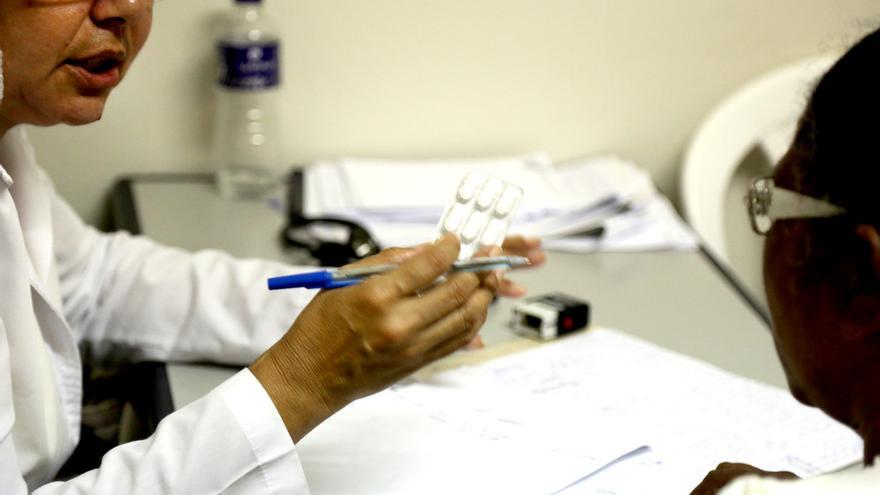
Cuban Government Prepares New Rules to "Stop Illegalities" in the Private Sector

Up to May 2019, 605,908 self-employed workers worked in the 128 authorized activities. (Alfonso B.)

14ymedio bigger14ymedio, Havana, 10 July 2019 — Authorities will approve a new package of measures to “stop illegalities” in the private sector, Margarita González Fernández, Minister of Labor and Social Security, announced Tuesday during a session of the National Assembly of People’s Power.

The official explained during, a meeting of the Parliamentary Committee on Economic Affairs, that the new rules will tackle “illegality with impunity” that “provokes discontent among the self-employed who do comply with their obligations and see that in their environment there are others who violate the provisions”.

The notification of these regulations, the details of which have not yet been specified, comes a few days after the Government announced a package of economic measures that include a salary increase and greater internal flexibility in state companies. continue reading

In what is considered as an attempt to prevent inflation, both President Miguel Díaz-Canel and Economy Minister, Alejandro Gil Fernández, called on citizens to denounce merchants who raise prices after the increase in salaries. A list of products with their corresponding prices was published, as a guide for consumers to demand compliance from merchants.

Now the Minister of Labor and Social Security has joined those appeals and blames many of the illegalities that are committed in the self-employed sector on the fact that citizens “look away and don’t confront them in a timely manner. “

Among the illegalities mentioned by the official, is the sale by private merchants of “products imported or coming from the national trade network” — that is the sale of products stolen from the state. Since December 2013, the Government has banned the sale of imported clothing and footwear and other merchandise from state stores.

Merchants’ stands, as they are known, are in high demand, especially because they offer household supplies, toiletries, disposable batteries, scouring pads and a wide range of plastic goods that merchants often buy in bulk and then sell at retail.

As of May 2019, there were 605,908 self-employed workers in the country in the 128 authorized activities for which licenses may be grated, explained the minister. Havana, Matanzas, Villa Clara, Camagüey, Holguin and Santiago de Cuba, account for 65% of the total non-state labor force, which has grown in the last decade but is still a small share of total employment.

In the first five months of this year, there were 185,000 new license registrations in the sector, especially in activities related to the preparation and sale of food, transportation, beauty services, producer or seller of various items, and contract workers.

But there were also 77,522 licenses canceled, mostly in the areas related to food services, masonry, beauty services and hired workers. This figure includes both workers who decided to cancel their permission to work in the private sector, and those whose licenses were canceled at the request of the National Tax Administration Office (ONAT) for non-compliance with tax obligations.

The ONAT reported 41,311 self-employed workers with defaults in their tax obligations, most of them in the capital, Matanzas and Las Tunas. In that period, more than 43,000 bank accounts were also opened, with a total of just over than 84 million pesos; more than half corresponding to lessors of houses, rooms and premises.

So far it is not clear whether, in the parliamentary sessions of this week, there has been debate about the demands that the private sector has pushed for years, including a reduction of taxes, the legal capacity to import and export directly and the access to wholesale markets with truly preferential prices.

_____________________

The 14ymedio team is committed to serious journalism that reflects the reality of deep Cuba. Thank you for joining us on this long road. We invite you to continue supporting us, but this time by becoming a member of 14ymedio. Together we can continue to transform journalism in Cuba.
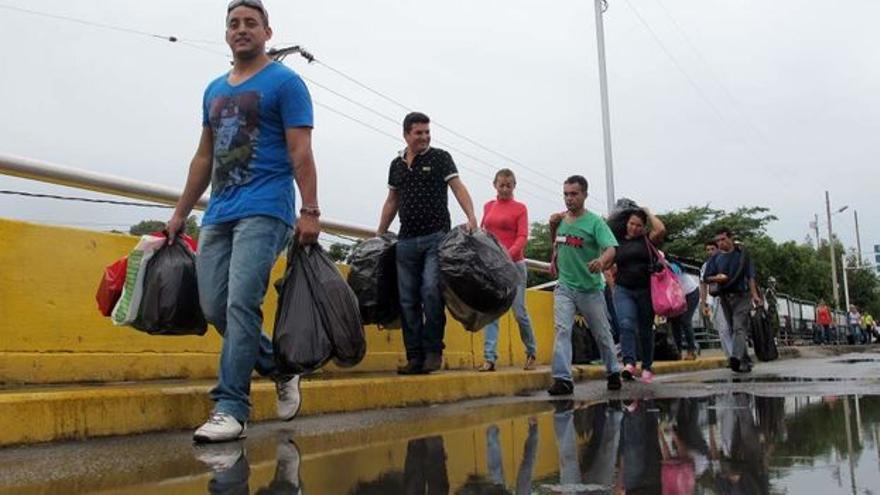
More Than 4,000 Cubans Entered Mexico in the First Months of This Year

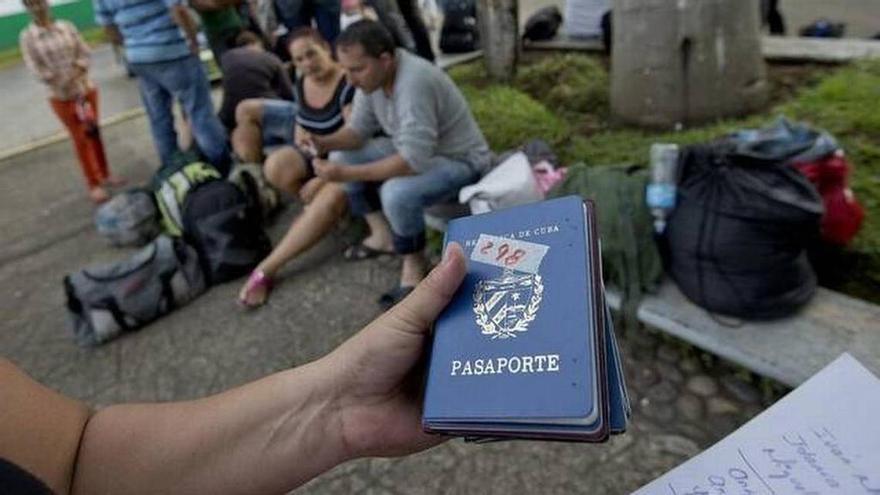
A Cuban migrant with passports to deliver to the National Institute of Migration after crossing the Suchiate River between Guatemala and Mexico. (Patrick Farrell / Miami Herald Archive)

14ymedio bigger14ymedio, Havana, 7 July 2019 — In the first five months of this year, 4,225 Cubans entered Mexican territory. The figure is 30 times higher than the 135 that arrived in Mexico in the same period the previous year, according to data from the National Migration Institute of Mexico.

There are many fewer Cubans than Central Americans, but they contribute to the increase in a route that also includes migrants from Asia and Africa who cross Mexico to try to reach the border with the United States.

Currently, Cubans have grown more than any other group this year, according to data published by the Immigration Policy unit of the Ministry of the Interior. continue reading

Last week a hundred Cuban migrants in Mexico rioted near the US border in protest at the slow pace of their asylum process. The islanders were stationed in one of the international bridges that connect Mexico and the United States in the state of Tamaulipas, in front of the facilities of the National Institute of Migration (INM).

“The National Institute of Migration is not receiving us (…) They do not take our names, they do not call anyone, and some of us have already been here four months, others even longer, we are desperate, we can no longer live in these conditions,” they related through social networks.

Finally, the immigration authorities met with several of the protesters and explained that the delays are due to the United States, on whom the bureaucratic process depends. While waiting for a response from the United States, many of these migrants have camped on the banks of the Rio Grande in tents.

Between last March and April, at least 300 Cubans were deported from Mexico back to the Island on five flights that arrived at the José Martí International Airport in Havana. The National Migration Institute reported that these were migrants who had an ‘irregular’ stay in Mexico and were returned according to current legal procedures and in agreement with Cuban authorities.

Washington has demanded that Mexico work to reduce the flow of migrants, mostly Central Americans who are escaping poverty and violence in their countries, but also Cubans, Haitians and Africans. President Donald Trump has threatened his neighboring country with applying tariffs to Mexican imports if that demand is not met.

Between January and June of this year, Mexico arrested more than 74,000 migrants and deported more than 53,000. In May 2016, a memorandum of understanding between Cuba and Mexico entered into force in which Havana committed to receiving back its citizens who arrive in Mexico with an irregular migration status.

__________________

The 14ymedio team is committed to serious journalism that reflects the reality of deep Cuba. Thank you for joining us on this long road. We invite you to continue supporting us, but this time by becoming a member of 14ymedio. Together we can continue to transform journalism in Cuba.