Havana: Return to the Bicycle Era? / Miriam Celaya

> Cubans on bicycles. Photo taken from the Internet

Cubanet, Miriam Celaya, West Palm Beach, 19 November 2018 — The eternal transportation problem in the Cuban capital and the intricacies of the ever-impossible solutions of the official agencies in charge of the matter have just led to a new proposal for Havana residents. According to Guadalupe Rodríguez, an official of the Cuban Ministry of Transportation, via the Havana TV channel, a new public bicycle rental transportation system will be inaugurated in Old Havana on November 24th.

The popular evening show Hola Habana, on the aforementioned channel, was the platform for launching an initiative that brings us back to the memory of the 90s, when pedaling on Chinese bicycles that were distributed at workplaces was practically the only means of transportation for ordinary Cubans.

As always, it happened under the then “undefeated” Chief’s baton, one ill-fated day when decided for us, almost by decree, was the option to ride bicycles. In fact, far from assuming it as an effect of the crisis, which it really was, the eternally hallucinated man declared, without ambiguity, that this would put us at the same high level of countries as developed as Holland and Belgium. Ergo, the imposition of the cycle was not a setback, but an extraordinary advance. continue reading

That is why those of us who lived through the terrible experience of those years and survived to tell the story, cannot help but feel a sort of scary deja vu and seeing it as a warning sign. Especially when the outlook around us promises (more) difficult times ahead for those of us who inhabit the battered island. It is almost impossible not to see in this “solution” an obvious sign of worse times ahead in the short term.

Returning to the referenced subjec, it is curious that the inauguration of this mode that is now returning with updated variations will be carried out at the Muelle de Luz, (Wharf of Light) point of embarkation/disembarkation of Havana’s very well-known icon, the little Regla motor launch, in proximity to the site where a private establishment known as “Cuba 8” existed until 1968, dedicated to the rental of bicycles and tricycles for recreational purposes that delighted kids, especially on Sunday mornings, when the flock of children happily crowded the nearby Amphitheater.

The details of the “new” system have not yet been disclosed and, as is usual in Cuba, it will be experimental in nature, with the intention of gradually extending it to other municipalities of the city according to its “acceptance” level. However, the aforementioned official reported that this service will be activated from a system of “associates”, which will allow access to it by prior contract arranged at a designated location in Old Havana proper. Also announced was the creation of several points located in the Historic Center, already selected, where associates can access a bicycle or return it once they have used it.

At first glance we must admit that the use of bicycles could be not only a partial solution to the acute crisis of traffic in the capital, but it could also provide recognized benefits to the health of those who take advantage of it. It is also true that it will benefit the environment of a city that is already sufficiently polluted by the emissions of an old, obsolete and inefficient vehicle fleet.

However, the stubborn reality is imposed on this initiative disguised as ecological intentions, preventing it from being feasible. In fact, the difficulties for the effective functioning of the cycling alternative in the capital are numerous and well known. Unlike many towns and cities in the interior of Cuba, Havana has never been characterized by an extensive use of bicycles as a means of transport, except in the bloody years of the “Special Period” when not only was it compulsory but also an inevitable imperative.

But Havana is essentially a city designed for cars and most of its residents have always dreamed of cars, not bicycles. The roads were never conceived for this type of vehicle, including the very poor state that they are in – emulating the craters and unevenness of the lunar surface — together with the scarcity of traffic signals and the proverbial disrespect for the rules of road by drivers of both cycles and motor vehicles. Havana cyclists are the most fragile element of urban geography. Not coincidentally, accident rates skyrocketed during the 90’s, when cyclists were the main victims of traffic-related fatalities.

To all of this, we could add the absence of a network of repair shops and bicycle parking to effectively sustain the development of cycling as a more general alternative than the current official proposal.  Other objective material limitations are also present, such as the scarce supply of cycles and replacement parts in commercial networks, high retail prices in stores and low personal income of the population that hinder the proper maintenance of bicycles, just to mention the most obvious obstacles.

But the difficulties do not end at this point. The accelerated aging of the population and food deficiencies are both factors to consider when designing strategies of this nature. This means that bicycle use would not only be limited to a minority segment of the population, but it would increase the dangers for the elderly when they move about on public streets.

For its part, the “experimental” municipality chosen, Old Havana, is characterized by its narrow streets, the frequent crowding of its also thin or crumbling sidewalks and the terrible state of disrepair of its many balconies and eaves.  Because of this, Old Havana’s residents have developed the habit of walking in the streets, rather than on the sidewalks, in order to avoid the dangers of a collapse and of broken sidewalks, but increasing the risks of traffic accidents.

It is assumed that those responsible for carrying out the new experimental plan have taken into account these risk factors, including an efficient control system that prevents the theft of bicycles or their parts at the different “stations”, an impossible mission in the Cuban social landscape. However, the “master plan” has already been born with an obvious flaw: the cyclists are hardly circumscribed to ride on the only two bike lanes enabled for this purpose. It is obvious to any person who knows the area in question that these will not be sufficient to allow the “associates” to access their multiple destinations without leaving the original layout.

There will be plenty of stubborn optimists willing to face these “small subjective details” who will believe in very good faith that they will be resolved in the course of the test. That is how forgetful Cubans can be after 60 years spent accumulating failed experiments without ever having worked out even one of them.

Or maybe it’s that, in the background, in the national spirit, the specter of the father of all the impossible nonsense continues to dwell, the one who was once photographed jumping from a war tank in simulated heroism, but never sweating and panting while pedaling on a Chinese bicycle, under the torrid sun and the dust of the merciless city. Perhaps that would explain why many of those who did not live through the hardships of the last century and other incurable enthusiasts — those who are so abundant among us in all occasions — today embrace this old novelty with the expectation and naïve illusion of children on the eve of the arrival of the three Wise Men.

As for me, I don’t like to be the bearer of bad news, but something tells me that the experiment is not going to work this time either.

Translated by Norma Whiting
Cuban Chess Masters Criticize the Precarious Situation of the Sport on the Island

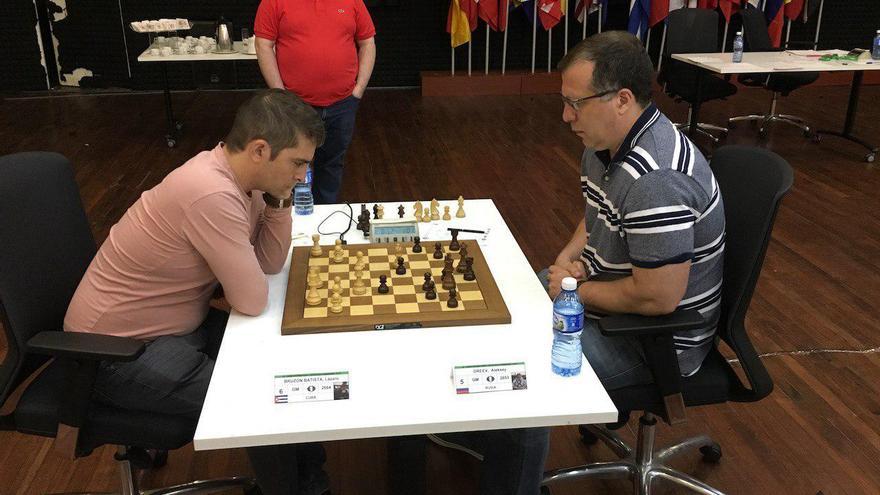
The sports authorities attribute the poor results of Cuban chess to the departures from this sport on the island like that of Lázaro Bruzón’s . (14ymedio)

14ymedio bigger14ymedio, Luz Escobar, Miami, 20 November 2018 — The wave of disagreements between the best Cuban chess players and sports authorities never ceases. After the declarations of Lázaro Bruzón last September against the authorities of the National Institute of Sports, Physical Education and Recreation (Inder) for their exclusion from the national preselection process for refusing to return to Cuba, now the protests against this institution come from the pen of Yuniesky Quesada and Alejandro Yanes. Both chess players have published in social networks the complaints and wishes of their guild on the island.

This past November 13, Quesada, an International Grand Master (GM), published a comment  on his Facebook wall criticizing the chess authorities on the island, which received great support among the chess players. The sportsman recounted that in the years he represented Cuba, he did not feel valued by Inder or by the National Chess Commission. “In addition to injustices perpetrated against me throughout my career, even while being ranked as the third best player in the country since 2008, I have felt unmotivated in the last few years,” confessed Quesada. continue reading

At the beginning of this month another chess player, Alejandro Yanes, a Master of the International Chess Federation (FIDE), wrote on his Facebook wall a list of nine points that summarized, in his opinion, the complaints of Cuban chess players and their possible solutions. According to Yanes, he developed the document after “long hours of talking with players both in Cuba as well as those residing abroad” while also relying on his personal experience.

The sportsman, 34, invited his colleagues to contribute to the text with the aim of achieving “awareness of the grave condition” of chess on the island. After the publication of the note, the recent scandals and the declarations of Bruzón, for Yanes now “the ball” is in the court of the sports authorities and “they can no longer state that they are unaware of the current situation”.

Yanes calls for the authorities that represent the players “to demand access to the Internet from the central agencies of the State” because he believes that in the current context “there can’t be a chess player that can reach elite status” without this tool.

In addition, he requests “making public and transparent” the regulations and classification clauses for tournaments that affect chess players so that they aren’t changed annually “depending on the person who they wish to benefit or harm”. In a similar vein, he demanded transparency in the “budget dedicated to chess by the central body of the State”, claiming that they have the right to know “how it is invested.”

Among the nine written points, Yanes asks the Cuban Chess Federation that every athlete who is a member of this entity has the right “to play for their country in Cuban and foreign events” and that the organization has the obligation to reclaim their titles before the FIDE, even if they are overseas. He also demands the authorities not give priority in any tournament held on the island “to a chess player or foreign official to the detriment of the national athletes”.

“It would be good to supervise the Capablanca Tournaments where many foreigners receive lodgings from the state budget, while many Cuban International Masters get neither accommodation nor lodging,” he denounced, in accordance with his own experiences. He also pointed out irregularities when delivering the prizes of the event. “While foreign chess players are paid in cash at the end of the contest, Cubans are paid years later,” he commented.

Meanwhile, the Cuban Federation and the National Chess Commission look the other way. According to a document published by Alejandro Yanes on Monday, the authorities blame the bad results in the last Chess Olympiad on the “loss” of those “key athletes” who guarantee the highest level of play in this type of competition. The solution proposed by these authorities is to give “priority to ideological political work” and to the “formation of values”.

The latest results of Cuban chess in international events have been described by experts as the worst in decades. In the Olympiad, which took place last month in Batumi (Georgia), the men’s team finished in 61st place, their worst showing ever, while the women’s team finished in 27th place.

The precarious situation of chess on the island is causing the flight of Cuban chess players. Both Bruzón and Quesada today form part of the roster of the Webster University chess team, in the United States, and were already selected to play during the 2018-2019 season.

“Now I feel that I can continue improving my chess. Here at the university we have a very strong team and there is a lot of professionalism in the training which helps to increase the level of chess. I also have aspirations to make it a career”, Quesada said on the social network.

Translated by Wilfredo Díaz Echevarria

______________________________

The 14ymedio team is committed to serious journalism that reflects the reality of deep Cuba. Thank you for joining us on this long road. We invite you to continue supporting us, but this time by becoming a member of 14ymedio. Together we can continue to transform journalism in Cuba.

“The ‘Yumas’ will be something else, but the ‘Pepes’ are family”

Tapas y Toros, a ’paladar’ (private restaurant) serving Spanish food in Havana, was a hotbed of questions about the visit of Pedro Sanchez this Wednesday. (14ymedio)

14ymedio bigger14ymedio, Reinaldo Escobar, Havana, 22 November 2018 — A head with horns dominates the room. It’s nearly noon and not a single paella has emerged from the kitchen of Toros y Tapas, a paladar (private restaurant) in Havana’s Miramar neighborhood. In the restaurant, a favorite among diplomats, there was a certain expectation, this Wednesday, a few hours before the arrival in Havana of the Spanish President Pedro Sanchez.

“If Sanchez goes to eat at any private restaurant, it will be here, because many of his compatriots are our customers,” predicts the waiter who serves olives and cold beers as a relief to Havana’s November heat. But other than the official meetings, no one knows anything about the schedule of theSpanish president.

That enigma fuels expectations. From all sides, invisible arms pull at him. The grandchildren, great-grandchildren and great-great-grandchildren of Galicians, Catalans, Basques, Canaris, Valencians and Andalusians seek to grab his attention. Hoping to catch his ear for a sea of requests and questions. He needs a very receptive ear for so many demands. continue reading

The first official visit of this kind in 32 years is not a game. So close in history, culture and language, Spain feels so distant from the Island due to the diplomatic distance between the Moncloa Palace and the Plaza of the Revolution, the limitations imposed on its embassy, and the vagaries of political interests.

What history separates is united by “blood,” as Sandra María Jiménez, 42, describes the “pull of Spanishness,” a link that, every day, leads dozens of girls under the age of 12 to flock to dance classes with their castanets and fans. “Whether you like it or not, this is still the most Spanish country in America,” she says.

However, the years and closer neighbors push in another direction. “Now we eat more hamburgers than churros, Lady Gaga won the fight with flamenco, and stiletto heels are more common than espadrilles,” Jiménez laments. Even at home, photos of the Puerta de Alcalá, in Madrid, alternate with ones of the Brooklyn Bridge, in New York.

In Cuba there has been a long fight of more than a century, and on Thursday Sanchez landed in the middle of it. A confrontation between Spanishness and the influence of the close neighbor of the North. The majority of the vehicles that circulate in the streets emerged from American factories and inside them we see the the stars and stripe flag, not the red and yellow.

Only when soccer is talked about does the former Motherland lead with its goals. Young Cubans are Spanish as soon as the goal unites them and the ball calls them. Rugby and tennis have little success on the Island.

Sanchez is going to put Cuba back on the Spanish map,” says Jiménez, who has not yet been invited to the meeting next Friday afternoon between Pedro Sánchez and the descendants of Spaniards settled on the island. “Those who attend will carry the demands of everyone,” says the dance teacher.

Others are more skeptical.

With a hot custard in hand, Serapio Rodrigues, 85, a descendent of Asturians, rocks in a hammock in the Artemisa village of Alquizar, where his father arrived at the end of the 19th century. In nearly 150 years, the Rodriguez family and saw their fruit empire flourish and die, sending two children to university and seeing all their grandchildren leave for abroad.

“Some live in Spain and others are in the United States but everyone has a Spanish passport,” says the family patriarch, who stayed so as not to abandon the farm and leave “the hens with the neighbors.” Rodriguez, who is Spanish since the Law of Grandchildren gave him the opportunity to acquire that nationality, wants Sanchez “to increase financial aid to retirees.”

With a pension worth less than 15 euros a month, this old militant of the Communist Party has parked his revolutionary medals in a drawer and hopes, like a prodigal son, that the Motherland will receive him with material support. “It does not matter if it comes through the Spanish embassy or through the Church, only that it comes, because the situation is very difficult,” he laments.

Among his priorities there are no luxuries: analgesics, milk powder, a cane (because the former broke going down a staircase), disposable diapers for “the bad days,” as he calls them, some vitamins that serve as a supplement and “a channel of postal mail, fast and direct” with which to communicate with the offspring who live on the other side of the Atlantic.

Rodriguez has his doubts if this visit of Sanchez will help him to overcome “the gap,” as life that takes place under the rigors of the rationed market and a salary in Cuban pesos is called. “The Yumas will be something else, but the Pepes are family,” says the ex-militant to distinguish Americans from Spaniards.

The lack of transparency, a constant in the last half century in Cuba, has also aroused all kinds of rumors before the arrival of Sánchez. In Santiago de Cuba, a refurbishing of the road that goes to the cemetery of Santa Ifigenia, site of the monolith that holds the ashes of Fidel Castro, has been converted into fuel for the fire of speculation.

The leader of the Patriotic Union of Cuba, regime opponent José Daniel Ferrer, suggests, “It’s not possible that a politician who is clamoring to dig up the remains of Francisco Franco in Spain comes here to visit the tomb of another dictator,” although there is no official confirmation of any journey to visit the remains of the deceased.

In the cemetery in Havana, an old gravedigger who boasts of having buried “half the city” speculates, without any signs, that the Spanish Prime Minister will visit the necropolis, where, among other illustrious compatriots, José Martí’s mother is buried; Martí was a hybrid man of both the island and the Spanish peninsula.

“How could he be in Cuba and not visit his dead?” asks the worker, a few yards from the resting place of Máximo Gómez, who fought on the side of Spain in Santo Domingo and against the Spanish army in Cuba.

 _____________________

The 14ymedio team is committed to serious journalism that reflects the reality of deep Cuba. Thank you for joining us on this long road. We invite you to continue supporting us, but this time by becoming a member of 14ymedio. Together we can continue to transform journalism in Cuba.

The Thursday of Sanchez’s Arrival

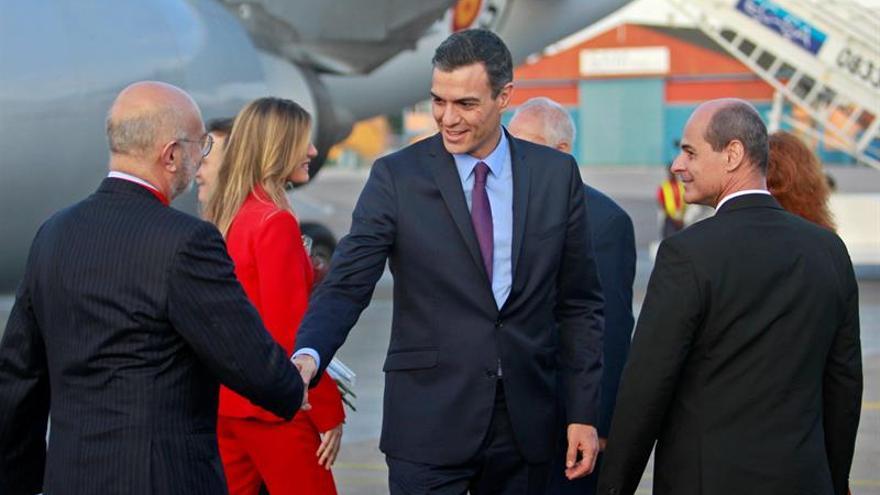
Caption: Rogelio Sierra (right), Vice Minister of Foreign Affairs of Cuba, and Juan Fernández Trigo (left), Spanish Ambassador to Cuba, receive the President of the Spanish Government, Pedro Sánchez, and his wife María Begoña Gómez. (EFE / Yander Zamora)

14ymedio bigger14ymedio, Marcelo Hernandez, Havana, 23 November 2018 –  Thursday, when the plane of the Spanish Prime Minister, Pedro Sánchez, landed in Cuba, began like any other day. National newspapers reproduced extensive tributes to the late leader Fidel Castro, at sunrise pharmacies  had long lines and in agricultural markets pork meat reached 55 Cuban pesos per pound, or two days’ salary for a state worker.

A brief note in the official newspaper Granma announced that Sanchez would arrive on an official visit to the island and in the centers of Spanish communities that dot the national geography, the descendants of Basques, Galicians and Asturians made the trip the main topic of the conversation. If in some places the subject was talked about intensely, among the broad social sectors that do not watch television or read the official press, the trip has barely registered.

On Monte Street, a Havana artery teeming with informal vendors and old shops converted to warehouses or stores selling in Cuban convertible pesos, Sanchez’s visit was only brought up this Thursday in connection with a desired modification of the so-called Law of the Grandchildren that permits application for Spanish citizenship to those who were left out in the prior iteration. continue reading

Lourdes, a self-employed worker who manages a small counter with scouring pads, plastic strainers and other kitchen utensils sees the arrival of Sánchez as “an opportunity to reopen to the descendants of Spaniards the process of applying for citizenship”. The seller assures that she does not want to emigrate “but to use the passport to travel to buy products in Panama and Mexico”.

The cubañoles (Cubans of Spanish descent) are the largest group of travelers who act as “mules”, Cubans who dedicate themselves to importing goods that are scarce in the networks of state enterprises. “A Spanish passport changes life for anyone,” says Lourdes.

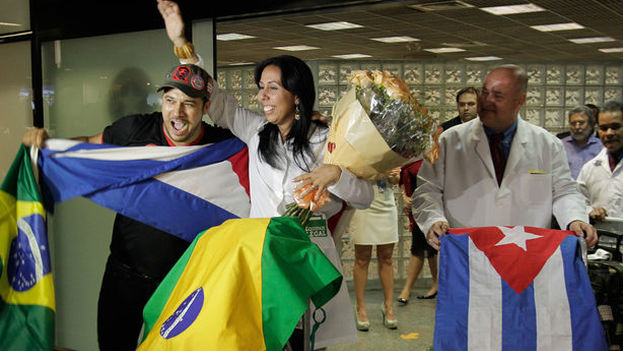
While the news of the arrival of the president was among the headlines featured in the evening news, in the first news summary on Friday, the presence of Sanchez had to wait for news about the constitutional reform, the return of Cuban doctors from Brazil and the weather report. In the dissembled official “grammar” of communication, everything seems designed to minimize the importance of the visit.

It did not go unnoticed by attentive viewers that at the foot of the steps of the plane, Sanchez’s counterpart, Miguel Diaz-Canel, president of the Council of State, was not waiting. Instead of the ruler, the Spaniard was received upon his arrival in Havana by the Cuban Vice Minister of Foreign Affairs, Rogelio Sierra, who accompanied him to place a wreath at the image of José Martí in the Plaza de la Revolución.

Sanchez has said his presence lays the groundwork for a possible visit to the island by the King and Queen of Spain in the setting of the 500th anniversary of the founding of  Havana that will be commemorated in November 2019. An announcement that has not escaped the sharp tongue of popular humor.

“They better hurry because at the rate of deterioration in this city they may find only ruins,” exaggerated a participant of the sports group* La Esquina Caliente (Hot Corner) in Central Park, a place through which Sanchez will walk to the Palace of the Captain Generals where this Friday he will hand over the chair of General Antonio Maceo .

A gesture of historical connotations that has been included in an agenda in which the Spanish Executive has preferred not to meet with the Cuban opposition, arguing that no European political leader has done it and that it was not about making gestures, but being effective. Sanchez and Diaz-Canel signed a memorandum by which the two countries commit to annual political contacts in which they will discuss, among other items, human rights.

In place of the dissidents, Sanchez prefers meeting with the descendants of Spaniards in the gardens of the ambassador’s residence in Havana. The guests include the layperson and editor of Cuba Possible, a moderate who is seen by the most radical opposition groups as a lightweight and by the spokesmen of the ruling party as an “enemy”. In the context of the meeting this Friday, he will be the most political figure who has been invited.

Others not invited have taken advantage of the new technologies to send Sanchez their views on the situation that exists on the island. As is the case of former political prisoner Librado Linares, who has sent an extensive missive to the Spanish president in which he takes the opportunity to denounce that part of the text of the Constitutional reform that includes articles that encourage “discrimination for political and philosophical reasons”, in addition to giving “a patent to the ’revolutionaries’ to commit outrages against the dissidents: acts of repudiation, assault against their homes, beatings, and other offenses.”

Translator’s note: The group is an informal, but unfailing, gathering of Havanans who vociferously talk about sports.

Translated by Wilfredo Díaz Echevarria

______________________________________

The 14ymedio team is committed to serious journalism that reflects the reality of deep Cuba. Thank you for joining us on this long road. We invite you to continue supporting us, but this time by becoming a member of 14ymedio. Together we can continue to transform journalism in Cuba.

The Official Cuban Press Bares Its Teeth to Jair Bolsonaro

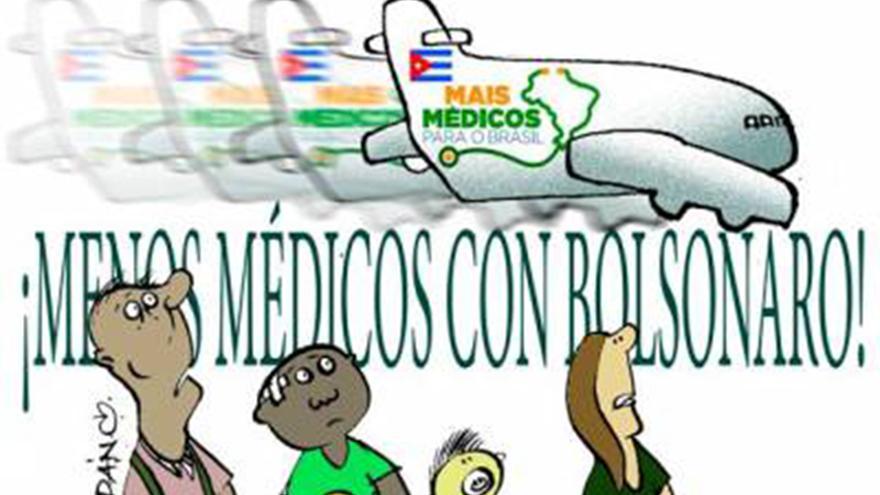
The official media has preferred to spread testimonies and stories about the return of the doctors as a very synchronized chorus and without different chords. Text: Fewer Doctors With Bolsonaro!

14ymedio bigger14ymedio, Marcelo Hernandez, Havana, 19 November 2018 — These days the official press controlled by the Communist Party has sharpened its rhetoric after the decision by the Ministry of Public Health (MINSAP) to close the door on the Mais Medicos (More Doctors) in Brazil program.  The Island’s press outlets have not spared insulting president-elect Jair Bolsonaro, who, under a humanitarian pretext by which in reality he sought to distance himself politically from Havana, conditioned the continued stay of the Cuban doctors on a series of measures that the Island’s authorities did not like.

The next leader of the South American giant combines characteristics that perfectly fit the mold of the adversary of Havana’s Revolution Plaza:  defender of the military dictatorship, ultra-rightist and very critical of the Island’s government.  His profile turns him into Ronald Reagan’s perfect successor for pro-government political forces. continue reading

“We get up and it’s Bolsonaro, we lie down and it’s still Bolsonaro,” complains Yanisbel, a Havana resident of 45 years who asserts that “recently it’s not worth it to turn on the television because it’s all the same.”  The news reports are filled with interviews of Cuban doctors who describe their sacrifices and achievements during the mission in Brazil and also attacks on the “new political shift” of the — for years — allied country.

Granma, the official mouthpiece of the Cuban Communist Party (PCC), has taken great pains in reports, opinion columns and bulletins in which it highlights the “lack of morality” of the next Brazilian government for questioning Havana’s actions and proclaims that “foolishness won” with the departure of the Island’s health professionals from the Mais Medicos program.

Among such profusion of words and adjectives, the readers and viewers have noticed that something important is missing.  “They have not told us the chicken of chicken with rice, and everyone knows it,” advises Duany, a self-employed barber who spent several days scrutinizing the topic with his customers.  “The Cuban press has not counted on Bolsonaro wanting our doctors to make their whole salaries and to be able to bring their relatives,” he opines.

In a country where new technologies put official censorship in check it is increasingly difficult to hide information.  “Everyone knows it, everyone talks about the same thing in the street, but the prime time newscast does not mention it,” complains Duany.  “That makes the press lose credibility and contradicts all the calls to end secrecy that some official makes from time to time on television.”

“This is the typical case that puts editorial policy to the test,” says a young graduate of the Havana Communications Department who asked for anonymity.  “The fact that the national press only reflects one opinion and one way of seeing the end of the agreement of the Ministry of Public Health with the Brazilian government is very significant.”

The young man rejects the idea that they have not interviewed “a single doctor among those who must return to Cuban who is not in agreement with MINSAP’s decision or who plans to seek the political asylum that Bolsonaro has offered.”  Nor “have they broadcast statements from relatives here who do not agree with the low salaries or the family separations that the mission imposes.”

Instead of that, the official media has preferred to broadcast statements and stories as a very synchronized chorus and without different chords.  “We fall again time after time into the same thing and later we are called to do journalism closer aligned with reality, but as if reality is not published,” complains the recent graduate.

Meanwhile, illegal parabolic antennas and other forms of information distribution are experiencing increasing usage.  “People are waiting for Bolsonaro to be able to widen the political asylum offer to other Cuban professionals or make more flexible the travel visa from the Island to that country,” speculates Ricardo, a distributor of several of the illegal signal antennas.

“Some days ago what was most in demand was the telenovelas and the series but in the last week they have asked me to transmit all the news from Florida and any program that touches on the topic of Bolsonaro,” he explains to this daily.  On the flat roof of his home in Central Havana, camouflaged behind a supposed dove cage, Ricardo has installed three antennas from which emerge yards and yards of cables that go to the living rooms of more than a hundred families.

In the official media, Bolsonaro’s counterpart is former Brazilian president Dilma Rousseff, who during her reign strengthened ties with Havana and provided the National Bank of Economic and Social Development with a loan of more than 680 million dollars to widen the Mariel port, the emblematic work of Raul Castro’s government.

“We have returned to the fable of the good and the bad, the hatchet man and the victim,” asserts Susana, a retiree who for more than a quarter of a century worked for the Ministry of Foreign Trade.  “This is going to last, and we are going to have Bolsonaro for a while,” says the woman with a daughter who is one of the more than 8,300 doctors who are still on Brazilian soil.

“This is like a Brazilian telanovela, by chapters, but it’s already known who is the bad guy and who plays the part of the slave Isaura,” says the woman.

Translated by Mary Lou Keel

__________________________

The 14ymedio team is committed to serious journalism that reflects the reality of deep Cuba. Thank you for joining us on this long road. We invite you to continue supporting us, but this time by becoming a member of 14ymedio. Together we can continue to transform journalism in Cuba.

A Woman Is In Charge of the University of Havana for the First Time In 290 Years

Miriam Nicado García is a member of the Communist Party of Cuba and, since April of this year, also of the Council of State. (Cubadebate)

14ymedio bigger14ymedio / EFE, Havana, 21 November 2018 – The University of Havana (UH) appointed Miriam Nicado García as the new rector of that institution, the first time that a woman holds the position in the center of higher education of the capital since its founding almost three centuries ago. The decision was announced Monday in an extraordinary session of the University Council of the UH, but was not divulged to the press until Wednesday.

Until now Nicado was the rector of the University of Information Sciences, created by the late leader Fidel Castro as a center of advanced technology to stimulate the national development of software.

The rector is a member of the Communist Party of Cuba and, since April of this year, also of the Council of State, in addition to being one of the deputies of the IX legislature in the National Assembly of People’s Power for the municipality of La Lisa, in Havana. continue reading

Full Professor, top level graduate and licensed in Applied Mathematics, Nicado is also a Doctor of Science in that specialty. Previously, she was dean of the Faculty of Mathematics, Physics and Computing at the Central University of Las Villas and vice-rector of that university.

As a professor she has taught in her field of study at universities in several countries in the region such as Mexico, Chile, Venezuela, Ecuador and the Dominican Republic. She has received the National and Provincial Vanguard award, a distinction granted by the Central de Trabajadores (Workers Center) of Cuba.

In the meeting where she was appointed it was also made known that Dr. Gustavo Cobreiro Suárez, rector who was in charge at the time of the announcement, “will assume other functions” from now on, the official press said without specifying more details.

Founded in 1728 by Dominican friars as the Royal and Pontifical University of San Geronimo de La Habana, UH now has 19 schools and 12 research centers.

It is the main center of higher learning on the island and was recently included in the list of the 20 best universities in Latin America, according to the London-based consultancy Quacquarelli Symonds (QS).

In September of this year Dr. Orquídea Urquiola Sánchez became the first woman to ever hold the position of rector in the country at the University of Cienfuegos.

Translated by Wilfredo Díaz Echevarria

_________________________

The 14ymedio team is committed to serious journalism that reflects the reality of deep Cuba. Thank you for joining us on this long road. We invite you to continue supporting us, but this time by becoming a member of 14ymedio. Together we can continue to transform journalism in Cuba.

Police Dogs

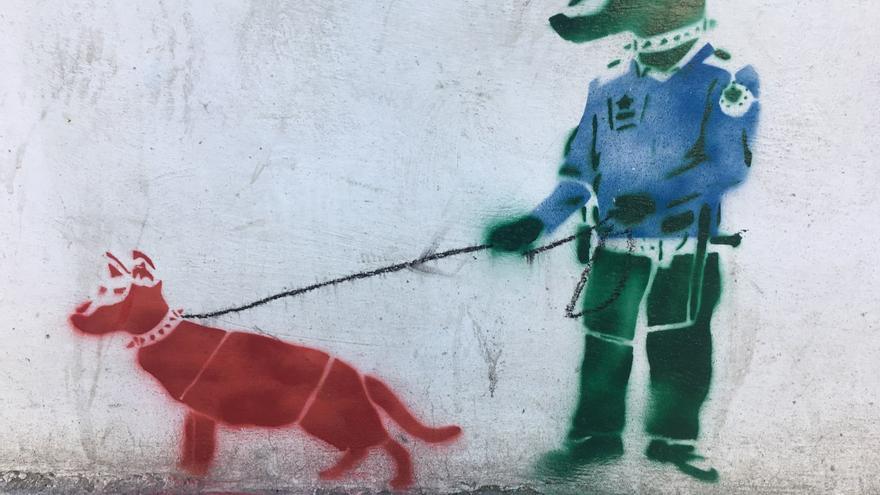
This graffiti has appeared in recent days on several buildings in Cuba’s capital. (14ymedio)

14ymedio bigger14ymedio, Marcelo Hernandez, Havana, 19 November 2018 — Several building facades of Central Havana display a very unique graffiti that has appeared in recent days. The image shows a uniformed National Revolutionary Police (PNR) officer accompanied by a dog with whom he shares the same face, snout, teeth and fierce gesture. Man and animal have the appearance of being alert, the ears attentive and an aggressive look, as if about to launch themselves on their prey. The graffiti alludes, without subtleties, to the police violence and aggression that characterizes this body of public order in Cuba.

For several years it has been common to see police accompanied by German shepherd dogs in the central zones of the Cuban capital. The area surrounding the Capitol, the areas near the Central Park, the busiest parts of Monte Street and even the most entertaining corners of La Rampa are a frequent stop for these officers accompanied by their dogs. Next to the whistle, the night stick and the walkie-talkie, the dog is already a distinctive sign of their presence. continue reading

That era during which television broadcast an announcement in which a small child claimed “police, police you are my friend”, has also been forgotten. Now, the members of the PNR are viewed with much distrust and fear by the population. The excesses committed during the arbitrary arrests, the fines and the detentions without cause have sufficiently stained their reputation, disseminated by the new technologies, have left testimony of the injustices or the excessive blows of these uniformed ones.

Part of that fear and suspicion has been captured by the graffiti artist in which the fierce irrationality of the animal is shared by a human being who should maintain order, not provoke violence or fear.

Translated by Wilfredo Díaz Echevarria

____________________________

The 14ymedio team is committed to serious journalism that reflects the reality of deep Cuba. Thank you for joining us on this long road. We invite you to continue supporting us, but this time by becoming a member of 14ymedio. Together we can continue to transform journalism in Cuba.

Dozens of Cubans Who Protested at UN Headquarters Detained in Trinidad and Tobago

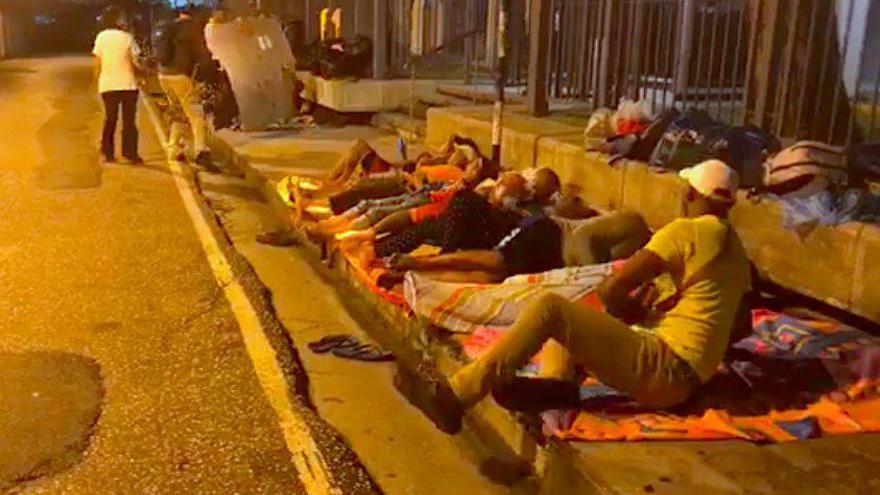
According to Bárbara Enríquez, a member of the protest, some 80 Cubans have been arrested, including her. (Courtesy)

14ymedio bigger14ymedio, Luz Escobar, Miami, November 16, 2018 — A group of Cubans who had protested for days at the UN offices in Port of Spain, the capital of Trinidad and Tobago, were arrested by the authorities of that country on Friday, the police of the Caribbean island confirmed to 14ymedio. The migrants were unhappy with the United Nations High Commissioner for Refugees (UNHCR) after the agency withdrew monthly financial aid in October.

The migrants were arrested after a meeting yesterday afternoon, during which a UNHCR representative warned them that, if they did not abandon the protest so that their asylum requests could be processed, “they would be detained,” Yaquelin Vera  Morfa, one of the migrants arrested, told this newspaper today. continue reading

A worker who collaborates with UNHCR, and who prefers to remain anonymous, explained that the arrests took place at around six in the morning. “They are detained at a police precinct called Belmont,” she explained. According to Barbara Enríquez, one of the women arrested who was able to get in touch by telephone with this newspaper from the police station, some 70 Cubans are with her.

A part of the group of Cubans, who this Tuesday had used plastic bags to tie themselves to the fence of the UN compound in the capital in order to request a meeting with UNHCR officials to discuss their asylum requests, were interviewed this Thursday by the organization.

In that meeting, which took place in a courtyard near the Venezuelan embassy, the UNHCR representative “did not want to discuss any issues” with the 15 representatives of the more than a hundred Cubans who are protesting their situation, according to Vera Morfa, and he also told them that the agency’s office was going to be closed for the next two months.

The police have assured that all the Cubans are well and, although they have not provided more details, Bárbara Enríquez has commented that until now the treatment “has been good.” 14ymedio has tried to repeatedly contact, without success, the responsible parties from UNHCR to learn their version of what happened.

The migrants began the protest two weeks ago after UNHCR decided in October to withdraw the economic aid that they received monthly and that allowed many to pay rent for a place to live, said Vera Morfa.

Last Tuesday, the day the migrants tied themselves up at the UNHCR headquarters, the government of Trinidad and Tobago described the situation of the Cubans in that country as “very complex.” The Caribbean nation does not have legislation with respect to refugee matters and asylum claims, although it is a signatory to the Convention on the Status of Refugees. This prevents these Cuban migrants from working legally, having a bank account or obtaining a driver’s license, among other difficulties.

“Everything has been very hard here, from the first moment I arrived in this country and I realized that there was no legislation for refugees it was a blow, now I have refugee status from UNHCR but knowing that there is no legislation here they took back the aid and left me with nothing. It’s been a month already that we haven’t gotten it. Because of not having that money, many of us were unable to pay the rent and that’s why we’re here,” lamented Vera.

Translated by Wilfredo Díaz Echevarria

_______________________

The 14ymedio team is committed to serious journalism that reflects the reality of deep Cuba. Thank you for joining us on this long road. We invite you to continue supporting us, but this time by becoming a member of 14ymedio. Together we can continue to transform journalism in Cuba.

Intellectuals, Politicians and Activists Denounce Cuban Constitutional Reform Process

Clockwise from top left: Former president of Colombia Andrés Pastrana, leader of the Ladies in White Berta Soler, writer Mario Vargas Llosa and activist Guillermo Fariñas.

14ymedio bigger14ymedio, Havana, 12 November 2018 — The Madrid-based Cuban Observatory for Human Rights (OCDH) has released a letter, signed by over twenty intellectuals, politicians and activists, which denounces the country’s constitutional reform process for not addressing “either democratic principles or the political and social plurality of Cuban society,” noting that it has been drafted “solely by Cuban Communist Party and in response only to its interests.”

Among the letter’s twenty-six signatories, who also claim the new constitution does not respect basic human rights such as “the existence of political parties, freedom of the press and freedom of association,” are prominent political figures such as Albert Rivas, head of the Spanish political party Ciudadanos (Citizens), writers such as the nobel laureate Mario Vargas Llosa and human rights activists such as Berta Soler, leader of the Ladies in White. continue reading

Since the draft constitution was published, criticism has focused on two articles that establish the core principles of the new constitution. Article 3 declares that “socialism and the revolutionary political and social system, established by the constitution, are irrevocable”, while article 5 describes the Communist Party as “the principle guiding force of society and of the state.”

In the letter released by the OCDH, the signatories — they include the Andrei Sakharov Prize winner Guillermo Fariñas and former Colombian president Andrés Pastrana — express hope that there will be “a real transition towards democracy” in Cuba and urge the “government of (President) Miguel Díaz-Canel to not pass up this historic opportunity.”

According to official sources, more than 7.3 million people have participated in public debates, which will end on November 15, on the constitutional reforms. Among the most frequently discussed changes are the legalization of same-sex marriage and presidential term limits. Official organization such as the Cuban Union of Writers and Artists, however, have not allowed the proposed constitutional changes to be debated within the organization.

Though the proposed document, which was approved by the National Assembly in the summer, does not include significant changes to the country’s political system, it does legally recognize private property and establishes the office of prime minister. Once proposals arising out of popular debate are included, a new draft will be sent to the parliament, to be approved and voted on in popular referendum in 2019.

____________________

The 14ymedio team is committed to serious journalism that reflects the reality of deep Cuba. Thank you for joining us on this long road. We invite you to continue supporting us, but this time by becoming a member of 14ymedio. Together we can continue to transform journalism in Cuba.

Cuba, A Risky Trip For Pedro Sánchez

Pedro Sánchez during the XXVI Ibero-American Summit held last week in Guatemala. (Moncloa)

14ymedio bigger14ymedio Yoani Sánchez, Havana, 20 November 2018 – Pedro Sánchez will arrive in Cuba and will put an end to a long period of 32 years during which the island has not hosted an official visit by a President of the Government of Spain. The former Motherland hopes to reaffirm its business presence and reconquer the land that the United States won with a diplomatic thaw. The visit, however, planned as promenade of smiles and handshakes, presents many possibilities for failure.

During his stay in Havana, Sánchez will be surrounded by three fires whose flames will point at him from different positions. There is no way he will not be burned, or at least singed, on this trip, but it would be good if he knew the extent of the fire before delving into it. continue reading

If the Spanish president has chosen Cuba because it is a seemingly comfortable plaza that avoids his reaching nations that are nearer but with which there are too many outstanding issues, he may pay dearly for his mistake. As in 1898, this may be the place where the fleet of his illusions is sunk. Especially because it comes at a time when his visit may generate more resentment than benefits.

One of the fires that will burn the head of the Spanish Executive will be that of the almighty Government, a true master in diplomatic choreography, which designs every step so that the visitor does not depart from an agenda meticulously planned to the last detail. This itinerary has a clear purpose: to show the benefits of the Cuban system and, incidentally, to put a hand in the guest’s pocket so that he grants soft loans to the island’s ailing economy.

Miguel Diaz-Canel will show off the visit as an accolade to his Government and a success of his newly inaugurated mandate. If Madrid “sanctifies” this handpicked president, it is very likely that Sánchez will be followed by other European dignitaries who do not want to miss out on the red carpet in Havana. After all, many of them think that Cuba is a country of beautiful beaches and smiling people where a “heavy hand” is needed to keep things under control.

Ministers, officials and apparatchiks will surround Sánchez and, with a gesture of a hand or a raise of an eyebrow, they will drop the idea that soon, very soon, the country will enter on a path of deep reforms and that all of today’s deficiencies will be tomorrow’s achievements. Dressed in suits and ties or the traditional guayaberas, they will sell him the mirage of a change that is just around the corner, one for which only a little more money is needed.

Perhaps it will be a handshake with Raul Castro who, although he no longer sits in the presidential chair, continues to pull the nation’s strings from his watchtower as general secretary of the Communist Party. With a constitutional reform about to conclude, the octogenarian general may try to raise Sánchez’s arm with his fist raised, as fellow travelers, a gesture he has made with others.

To exorcise the demons that might manipulate his words, Sánchez should demand, as Barack Obama did, an opportunity to speak directly to the people of Cuba, live and in real time. Not the typical intervention of a press conference, where the official journalists will crowd the space asking him to speak out against the US embargo, but a speech without censorship or intermediaries.

Fleeing excessive protocol and guided tours will be another challenge. In this case, as well, he could learn from the experience of the former US president who tempered his more formal agenda with some escapes to several areas behind the curtains of propaganda. What he sees there will not resemble the tourist postcards but it will leave him with a more authentic impression of our reality.

The other burning coal that Pedro Sánchez will have in front of him is the political opposition and activism. So far, it has not been reported that he is going to meet with any opposition figures, nor whether the independent press will be able to cover some of the events in which he participates. Maybe that information has not been revealed yet, to avoid annoying the susceptible official hosts, but not announcing it generates strong criticism that would be worth tackling.

If the presidential plane takes off from this Island without the president having heard a version of Cuba other than that of the Palace of the Revolution, this will have been a useless and incomplete trip.

From the voice of the dissidents, Sánchez will be able to learn of the persistence of repression, now masked in subterfuges such as condemning opponents for “attack on authority” or “disrespect,” codified as common crimes. They can also detail how in recent years many activists have been “regulated,” a bureaucratic euphemism that hides a prohibition on leaving the island. That, together with the surveillance and the execution of critics’ reputations, remain common practices in this country.

But the flames do not end there. Sánchez lands in a nation where more than 150,000 citizens have become nationalized Spanish citizens thanks to the so-called law of grandchildren. These cubañoles are also waiting for a response to their demands on issues they assume as rights. Financial aid, greater support for food and medicine for the elderly, and intercessions so that the Plaza of the Revolution finally recognizes dual citizenship.

This community of cubañoles, the vast majority of which has never traveled to the Spain but rather has spent their entire lives in the island, will not speak to Sánchez as they might speak to a foreign visitor who arrives for a short time and whom one tries not to annoy, but as those who are addressing their representative, a public servant of a nation that owes them answers, protection and solutions.

Nor will Sánchez find rest outside of those three fiery tongues. Each commercial agreement that he signs during his visit, each loan that he grants, and each debt that he forgives to the Cuban Government, will be in direct contrast with the economic and business segregation to which the citizens of this country are subject.

Under current legislation, it is forbidden for a group of neighbors, who can range from prosperous owners of paladares – private restaurants – to owners of rental houses for tourists, to invest, for example, in fixing the paving of the street where they live. However, if a distant Asturian, Basque or Galician disembarks in that same block to erect a hotel, they will be allowed to do so.

Sánchez arrives at a moment when the piñata has already been shattered and the governing elite has divided the most succulent pieces of the national economy, in chicanery with foreign investors. Investors who close their eyes to the lack of rights of their employees and the absence of equity of opportunities for those born in this land, under the argument that “if we do not invest, others will.”

In this Cuba, fractured economically and politically, it will be a real miracle if this presidential visit does not end more in criticism than applause. The fire of public opinion waits to make firewood from this tree.

_______________________________

Editor’s Note: This text has been published this Tuesday, November 20 in the Spanish newspaper El País.

The 14ymedio team is committed to serious journalism that reflects the reality of deep Cuba. Thank you for joining us on this long road. We invite you to continue supporting us, but this time by becoming a member of 14ymedio. Together we can continue to transform journalism in Cuba.

Cuba-Brazil: The Battle of the White Coats

Cuban doctors who stay in Brazil will be forbidden entry to the island for eight years. (14ymedio)

14ymedio bigger14ymedio, Yoani Sanchez, Generation Y, Havana, 19 November 2018 – We saw the conflict coming. From the moment Jair Bolsonero won the elections in Brazil, Cuba’s official discourse increased in rhetoric against him and prepared public opinion for the rupture that was imminent.

The straw that broke the camel’s back for the Plaza of the Revolution was the statements by the president-elect in which he warned that he would change the conditions of the agreement under which more than 8,300 physicians from Cuba work in Brazil’s Mais Medicos (More Doctors) program.

Last Wednesday, tensions escalated to their highest point when the Cuban Minister of Public Health announced that he was cancelling the contract and removing his professionals from the South American country. The official notice, read out on all of the island’s the news programs, repeated that Bolsonaro’s threats would not be tolerated but deftly ignored some of his words. Particularly those where the rightist leader insisted that the Cuban doctors should receive their full salaries and be able to bring their families to stay with them while they were in the program. continue reading

The Cuban government has made medical missions a lucrative business. With professionals deployed in more than 60 countries, the money raised by this practice is Cuba’s largest source of foreign currency, estimated to exceed $11 billion annually.

In the case of Brazil, Havana pockets 75% of the 3,300 dollar salary Brazil pays for each doctor, while the health professionals only receive a quarter of the total. On the Island, in a bank account which they do not have access to, their “Cuban” monthly salary of about 60 dollars accumulates, which they can only collect if they return to the island.

Those who leave the Mais Medicos program under their own will are considered deserters and are banned from entering Cuba for eight years. During the time the Workers’ Party (PT) was at the head of the Brazilian government, the doctors who escaped from their contracts were pursued by the Brazilian police and could be returned to the Island if they were arrested. None were allowed to bring their family members to be with them during their missions, and they were often housed in overcrowded hostels shared with other doctors, nurses and hospital technicians.

Despite so many difficulties and the low earnings, the missions were very much desired by the doctors because they were able to buy goods that are not available in Cuban markets, and to make contacts that would later allow them to return to Brazil privately, with a contract to work in some clinic.

Beyond its ability to provide healthcare for many Brazilians in the poorest areas of the country, the Mais Medicos program hid a political operation to build support for the leftist Workers’ Party and guarantee it the votes of the lower classes. It was clear that Cuba’s interest in this outcome was not going to continue with Bolsonaro in charge, thus it was only a matter of time before Castroism removed its healthcare professionals from Brazil. It only remains now to ask how many of them will actually return to the island.

The president-elect of Brazil has announced that he will grant political asylum to all Cuban doctors who request it and it is expected that a considerable number will benefit from this offer. Those who do so will lose the right to return to their homeland for many long years, they will be called traitors and, most likely, their families on the island will be under pressure. The battle of the white coats has barely begun.

__________________

Note: This column was originally published in the Latin American edition of the Deutsche Welle chain.

The 14ymedio team is committed to serious journalism that reflects the reality of deep Cuba. Thank you for joining us on this long road. We invite you to continue supporting us, but this time by becoming a member of 14ymedio. Together we can continue to transform journalism in Cuba.

Flour Shortage Affects Thousands of Private Businesses in Cuba

The Cuban milling industry is going through a bad time because of the lack of raw material and problems with infrastructure. (Imsa)

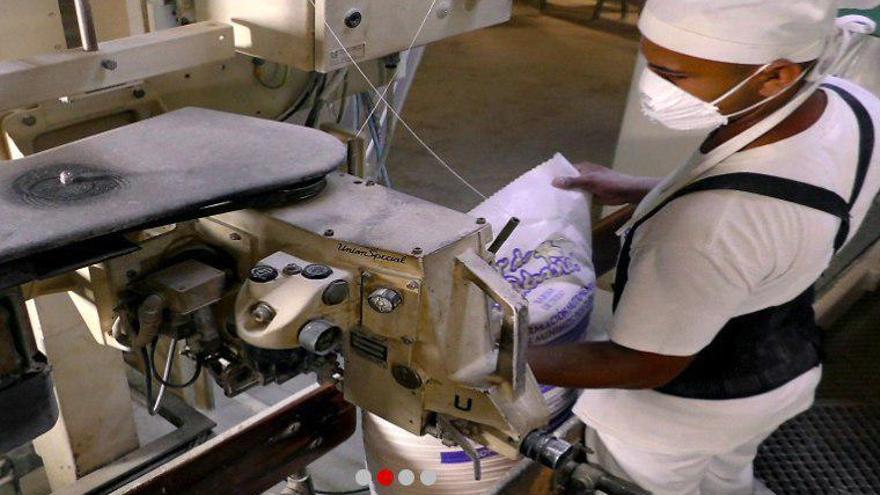
14ymedio bigger14ymedio, Zunilda Mata, Havana, November 18, 2018 — First eggs went missing, then it was sugar’s turn, and now it’s wheat flour that has been added to the list of products that are lacking in Cuban markets. The valuable ingredient is the basis of many recipes that are sold in private businesses, like sweets, breads, and pizzas, and so its absence puts the menus of these cafes and private restaurants in crisis.

The problems started in the middle of this year, when the lack of spare parts for mills and a drop in the arrival of raw material caused a shortage of wheat flour, as Jesús Rodríguez, first vice president of the Business Group of Food Industry (GEIA), told the official press at that time.

After the crisis generated by the deficit of the product in the markets for several weeks, authorities decided to import 15,000 additional tons to guarantee the preparation of bread for the rationed market and bread bound for social assistance. However, the hard currency stores remained secondary in the distribution. continue reading

Without a wholesale market to go to, the self-employed must buy from the network of retail businesses. “A few months ago we could still find a 5-kilo bag of flour but now not even the 1-kilo is available,” laments Jesús Ruiz, a vendor of sweets on Calle Infanta in Havana.

“For our business flour is the main ingredient, because pastries, cakes, and all the other sweets that we sell are made from flour,” the entrepreneur explains to 14ymedio. “When there is none, we can only remain open selling soft drinks and shakes, so we have a lot of losses, it’s as if they have taken away the oxygen that allows us to breathe as a cafe,” he points out.

Traditionally many owners of private businesses go to the black market to stock up on flour. The product arrives in the informal business network after being diverted [i.e. stolen] from bakeries on the rationed system and other state centers. However, the deficit of the past few months has sharpened the administrative controls and notably diminished the illegal sale of flour.

The shortage of the crucial ingredient “isn’t going to have a short-term solution,” according to an employee of the José Antonio Echevarría mill in Havana, one of the principal wheat processing centers in the country. The source, who preferred to remain anonymous, attributes the deficit to the “terrible situation of the infrastructure” of the industry.

“The spare parts that we were waiting for haven’t arrived, and the mill is far below its capacity, it’s only milling to satisfy the demand of the subsidiary services, like the one-pound loaf and whatever is bound for schools or work centers,” he clarifies. “From the 500 tons daily that we were expecting to be processing by this time of the year, we aren’t doing even a fifth of that.”

“But it’s not only a problem of parts, but also that the transporting of cereals via Cuba Railways and other methods isn’t functioning well,” adds the mill worker. “Sometimes the merchandise stays in our warehouses and deteriorates because they don’t come to pick it up in time.” Nevertheless, he emphasizes that the whole situation has worsened in the past few weeks because of the lack of raw material.

“There’s no money to buy wheat and even if we had a great industry with all new equipment, we can’t make miracles if there aren’t products to put through the mills,” he specifies. “Wheat flour is considered a strategic line of goods and it is like this for us, what will remain for other industries that aren’t prioritized,” he questions.

Something similar is happening at the Turcios Lima plant, also in the capital, which for the past few years hasn’t managed to regain the 130 tons of wheat that it obtained once a day. The other three mills, out of the five in the country, are located in Matanzas, Cienfuegos, and Santiago de Cuba, all of them in a deteriorated technical state.

In the portfolio of opportunities for foreign investment is included the assembly of a wheat mill for processing 300,000 tons of flour each year at a cost of $120 million, but the offer has generated little interest until now.

“Most affected are the businesses that sell Italian food,” says Ricardo Valdés, courier at a restaurant specializing in pizza and pasta in Havana’s Chinatown. “The flour reserves that we had for some emergency are running out and we don’t know if we are going to be able to remain open by the end of the year,” he tells this newspaper.

In the Milling Factory of Havana, located in the Regla municipality, the telephones haven’t stopped ringing in the last few weeks with calls from self-employed people worried about the supply of the product. The joint-venture, specializing in flours, semolina, and wheat bran, processes the majority of the merchandise that ends up on the shelves of stores that sell in convertible pesos.

In the last year packages of flour of a foreign make, originating primarily in Italy and Spain but also Mexico, have also arrived at these businesses. “We don’t have foreign flour now, either, because we ran out even though it’s more expensive than the nationally produced kind,” assures an employee of La Puntilla market, one of the best stocked in the capital.

“When we put out a few packets they run out right away because the self-employed take them,” says the employee. “We’ve had to put limits on purchases so that people don’t take 10 or 20 packets at once, but this doesn’t solve the problem.”

A few meters away, a private business offers empanadas, pizzas, and churros. “We are going to stay open until we run out of our last bag of flour but after that we will have to close,” says the owner. The self-employed man believes that a solution could be allowing people to import the product in a private manner. “But that would be asking a lot because they don’t allow us commercial import.”

The entire vast framework of businesses, small shops, points of sale, and the most sophisticated restaurants that operate on a basis of flour wait for the state to manage to revive production or permit private people to bring in the basic ingredient from other countries.

Translated by: Sheilagh Carey

___________________

The 14ymedio team is committed to serious journalism that reflects the reality of deep Cuba. Thank you for joining us on this long road. We invite you to continue supporting us, but this time by becoming a member of 14ymedio. Together we can continue to transform journalism in Cuba.

El Patrón Feels Wronged

Jair Bolsonaro conditioned Cubans remaining in the Mais Medicos program, to their receiving their total, among other measures. (EFE)

14ymedio bigger14ymedio, Reinaldo Escobar, Havana, 14 November 2018 — The most significant thing about the statement from Cuba’s Ministry of Health (Minsap) announcing the withdrawal rom Brazil’s Mais Medicos program is that it does not clearly mention the real causes of such a dramatic decision.

The angry reaction arose after Señor Bolsonaro, president-elect of the giant South American nation, announced that the new conditions for Cuba to remain in the collaborative program would be: first, that the Cuban doctors would have to revalidate their credentials according to Brazilian standards; second, that the collaborators would receive their full salary – that is the money that Brazil pays for their services would go entirely to them; and third, that they would have the right to bring their families with them to Brazil. continue reading

The official statement from Cuba’s Ministry of Health only mentions the need to revalidate the title, which is interpreted as disrespectful, as emphasized by the words: “It is not acceptable to question the dignity, professionalism and altruism of Cuban collaborators who, with the support of their families, currently provide services in 67 countries. ”

Another reason to terminate this collaboration which is not confessed in the Minsap statement, is that the Cuban government does not want a right-wing ruler to be able to show achievements in the health of his nation’s citizens. That was an advantage that Cuba was happy to offer to the Workers Party as part of the practices of political clientelism, which includes quotas for young Latin Americans to come to Cuba to study medicine.

Cuba today has about 8,300 doctors in Brazil for which Brazil pays a salary of 3,300 dollars a month, but in reality the doctors themselves receive only 25% of that because the rest goes into the coffers of the Cuban government. Hence, many doctors have been annoyed that Minsap’s statement announcing the withdrawal of the mission says, “Employees have been kept employed at all times and receive 100% of their salary in Cuba” without clarifying that the salary it is talking about is a monthly payment that seldom exceeds the equivalent of $60 US, insignificant when compared to the nearly $2,500 that the state receives for each doctor in Brazil.

On the national television midday news, where the statement was read in full, it was added that “Cuba’s medical collaboration in the world is used to pay for investments or programs that reach everyone on the Island, that generate income that contributes to the economic and social development and circumvents the United States blockade. ”

Since August 2013, when Dilma Rousseff organized this program in collaboration with the Pan American Health Organization, Cuban doctors were warned that they could not enter into contracts “freely” – that is on their own – and also since then they have been prohibited from taking revalidation exams.

Any “disobedients” caught in this “lack of discipline” were immediately returned to the island as punishment and if they dared to leave the mission they were defined as deserters and consequently were forbidden to return to Cuba for at least eight years.

In fact, the great offense that Bolsonaro has given the Cuban Government is to open the doors of his immense country to doctors who want to work there. Until now, the first reaction to the Cuban decision was a message on Mr. Bolsonaro’s Twitter account, where he lamented the withdrawal of Cuba from the Mais Medicos program; the second was his promise made at a press conference to give asylum to doctors who wanted to stay in Brazil.

In these critical moments for the Cuban economy, the annual 11.5 billion dollars that the country receives for the provision of professional services around the world, will be significantly reduced with the abrupt termination of the presence in Brazil, but in addition, the doctors who have to return to Cuba before their end of their “missions” in Brazil will be harmed.

Despite the difficult conditions that result from establishing themselves in places where no other medical professional wants to be and despite the burden of the low salary – from which the doctors had to cover their own living expenses – Brazil was one of the places most desired by Cuban doctors who, beyond their spirit of solidarity and altruism, wanted to fulfill a mission there to solve at least part that nation’s shortcomings in the provision of healthcare.

If something has been clear, it is that among the priorities of the Cuban government, rather than the humanitarian vocation to save lives, were to improve the image of a leftist party before its electorate and to earn money at the expense of the exploitation of professional work.

It is an indisputable sovereign right of Brazil to require any professional to revalidate their qualifications to practice in the country. It is a right of doctors to receive in full the salary that is being paid for them, and then pay the taxes on that salary that the law provides. It is also their right to be accompanied by family members if they wish.

Where is the offense?

_______________________

The 14ymedio team is committed to serious journalism that reflects the reality of deep Cuba. Thank you for joining us on this long road. We invite you to continue supporting us, but this time by becoming a member of 14ymedio. Together we can continue to transform journalism in Cuba.

Posthumous Novel by Rafael Alcides, Against Death, Against Oblivion / Ramon Fernandez-Larrea

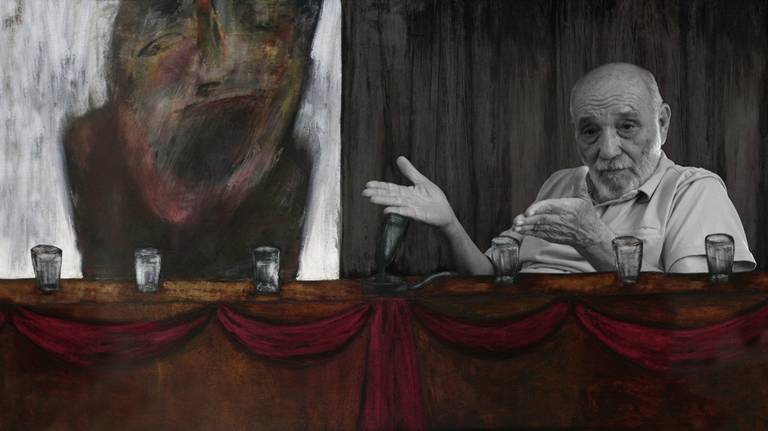
Rafael Alcides in a scene from the documentary “Nadie” (Nobody), by the filmmaker Miguel Coyula. (Courtesy)

Translated from* from El Nuevo Herald, Ramón Fernández-Larrea, 8 November 2018

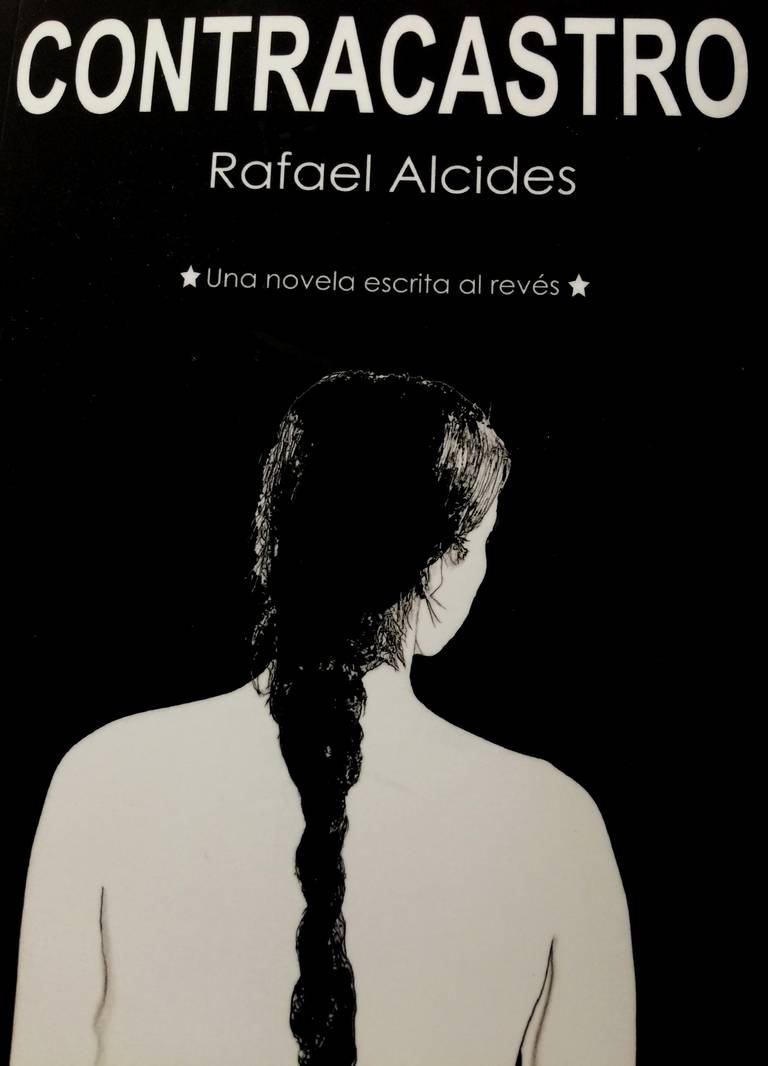
When one receives a novel – written by a friend who is a poet, or by a friend who has been and is forever a great poet – with the title Contracastro, one could never imagine that it is a love story, and not a pamphlet of accusations against power, nor the political testament of a worthy man, with a vertical and honest position.

And if that novel is also the posthumous work of that poet friend, which is also like a last will, and also, a very old story that Rafael Alcides began to ruminate on in the convulsive first years of the 1960s, and which he spent his life writing and rewriting, the result is a kind of testament, because this novel could be, or is also, the novel of our lives.

On the cover of the print edition it is noted that Contracastro is “A novel written in reverse.” Why? I suspect that it has to do with what Alcides himself says in the public history of the book: “In this second version the old love story is supported with very slight additions. Not so the context, this time evoked from today by Tom, already an old man, in a mega-Miami where he has been among the city’s forgers… For that first version, consistent with my political views of the time, the novel was nothing more than the many other pamphleteering-style texts of the time, against capitalism and the bourgeoisie.” continue reading

And Rafael Alcides continues telling us that “because of its title it frightened the Casa de las Américas officials when they saw it appear in the Literary Contest of 1965,” where “The juror Mario Vargas Llosa, who nominated it for a Prize, managed to obtain an Honorary Mention.”

What changed then? The world changed, Alcides changed. The years passed and the luminous future never arrived on the coasts of the island. Fatigue and disappointment arrived. And the masks fell from those heroes who wanted us happy all the time. And then came the time to tell, openly, the rending of the protagonists’ journeys to nowhere, the many protagonists of the other major novel, the epic of a people who emigrate, of families that are torn apart and walk through these worlds, without being able to tell their loved ones in a letter, all the love they still have.

Contracastro, published today by Eriginal Ediciones, is an inquest into Cuban history after 1959, told in first person, but in two alternating times, but, always in the background, it is a passionate story of love, sex, disgust and illusions, especially of lost illusions that the protagonist is capable of shouting to the four winds: “Burn down the world if they want, I have you.”

Contracastro is that then and this now. They are Tom and Carla in a provincial Miami that has been filled with Cubans who expect life to change in the next sixty minutes so that they can return to their country. A country that has already been filled with Russians, Chinese, Americans, abandoned houses, streets that will be, from then on, only in a bloody memory.

“Even though here in Miami they hate the word revolution,” writes the author, “it is here, nevertheless, where the Revolution really is. The Revolution with capital letters. In Cuba, the Revolution has already passed and what there is is the complete opposite of the ideals of democracy, present since the Guáimaro Charter of 1869.” … And at the end of that statement made by Tom, the protagonist, thinking like Rafael Alcides, or Alcides himself stuck in the skin and blood of Tom, one can read: “So while we can not return to Cuba, I will continue to consider myself a man from Guáimaro, a follower of Agramonte, a soldier of Céspedes, that is, a revolutionary.”

Contracastro is, in short, the legacy of Rafael Alcides, a man who lived and died telling his truths in Cuba today, and that was uncomfortable for the authorities, because honesty, in times of disappointment, is, at the very least, suspicious. Here the poet leaves us this intense story of a love that was and was not. A testimony against death, against oblivion. And we must read with gratitude to its author, to discover who we have been or who we are now. To know which side of History we are on. Or, better, to check, with pain and bitterness, which side of this story is ours.

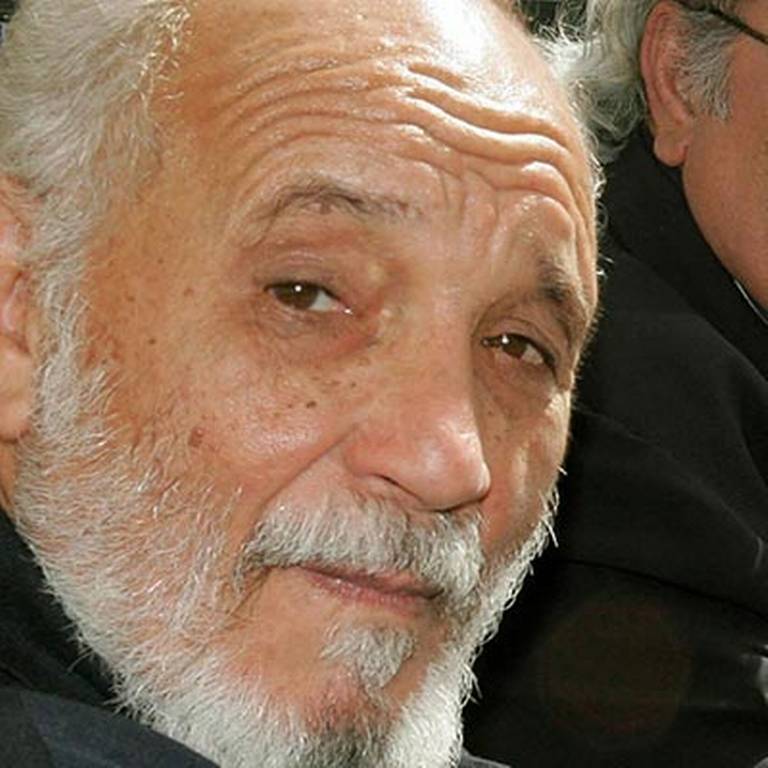
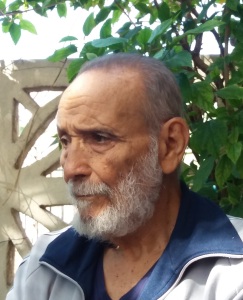
Rafael Alcides