For Cubans, A Week Like Any Other

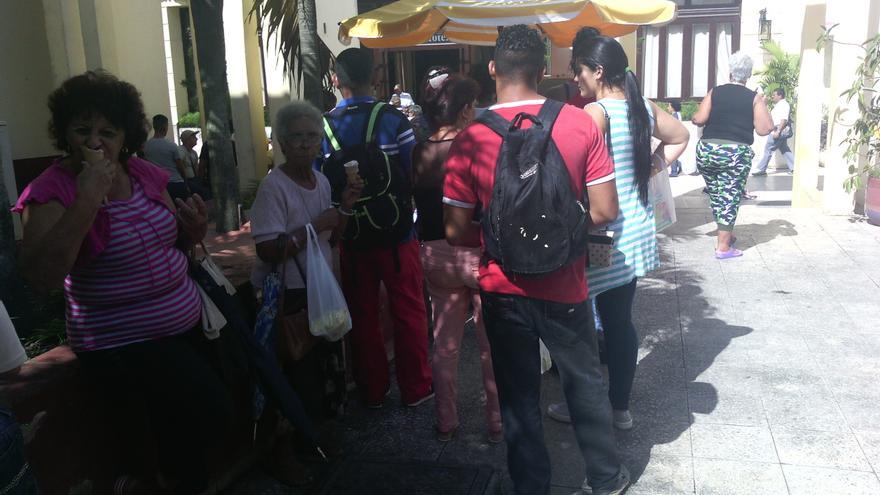
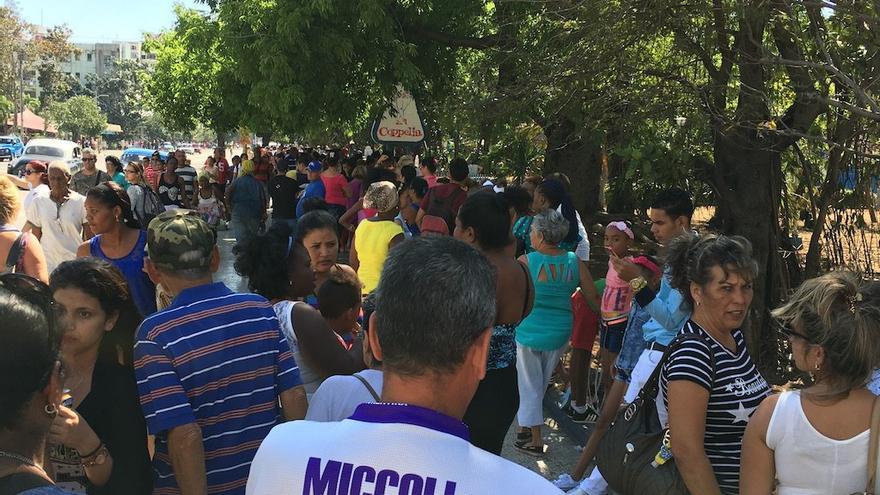
The line at the Coppelia ice cream parlour on Wednesday, while the Convention Palace hosted the opening session of the legislature. (14ymedio / Luz Escobar)

14ymedio bigger14ymedio, Zunilda Mata, 19 April 2018 — The week of “historic change in Cuba brought eggs to the Timba neighborhood, one of the poorest in the capital city. National television broadcast a movie, April Captains, based on Portugal’s Carnation Revolution, and parents rearranged their routines for school vacations.

The break in elementary and secondary school classes was obvious outside the Coppelia ice cream parlour, where the iconic strawberry and chocolate ice cream flavors continue reading

immortalized in Tomas Gutierrez Alea’s movie was obliterated.

The French Cinema Festival was held in the Chaplin Movie Theater on 23rd Steet. The starring actor from The Tall Blond Man with One Black Shoe (1972), Pierre Richard, traveled to the Island to present the film and proclaimed, “I love Cuba.”

Habaneros pulled their coats out of the closet because of the fall in temperatures and the forecast of heavy rains, which always bring the usual headaches of worrying about how leaks in the roofs and flooded streets will damage homes.

In the area around the Tulipan Hotel, in the Nuevo Vedado neighborhood, the internet went out. The external wifi networks had been disconnected to avoid inconveniencing the National Assembly deputies who were staying the hotel.

International reporters arrived by the dozens and busied themselves running around the capital’s most centrally located streets to take to the pulse, which they didn’t manage to find.

Sixty miles away, in the town of Vertientes in Camagüey province, all the talk was about some farmers who were arrested for letting their cows get out. The animals were eating the sugar cane on a state planation to the disgust of local authorities, who were stweing about the poorest harvest of the century.

The state doesn’t sell the wood or wire needed to build fences to safely contain the cows, say the farmers. Not only do they fear being punished to set an example for others, but they doubt the incoming government will do anything for them.

In Santiago de Cuba, speculation that the city is going to become Raul Castro’s residence, starting now, seems to have exhausted the resident Santiagueros, who would prefer that a luxury hotel be built at the entrance to the city, while lamenting the lack of salt in the marketplace.

For ordinary Cubans on the Island, this week has been like any other.

____________________

The 14ymedio team is committed to serious journalism that reflects the reality of deep Cuba. Thank you for joining us on this long road. We invite you to continue supporting us, but this time by becoming a member of 14ymedio. Together we can continue to transform journalism in Cuba.

Miguel Díaz-Canel, The Man Who Knew How To Wait

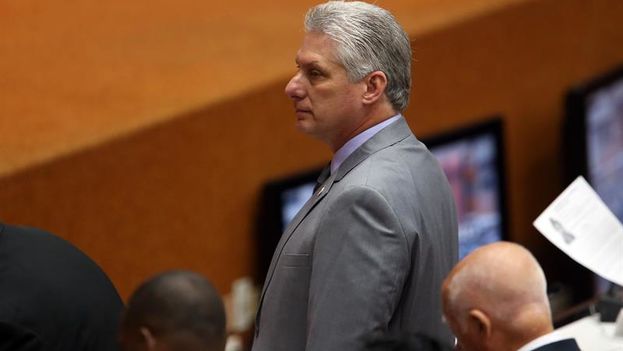
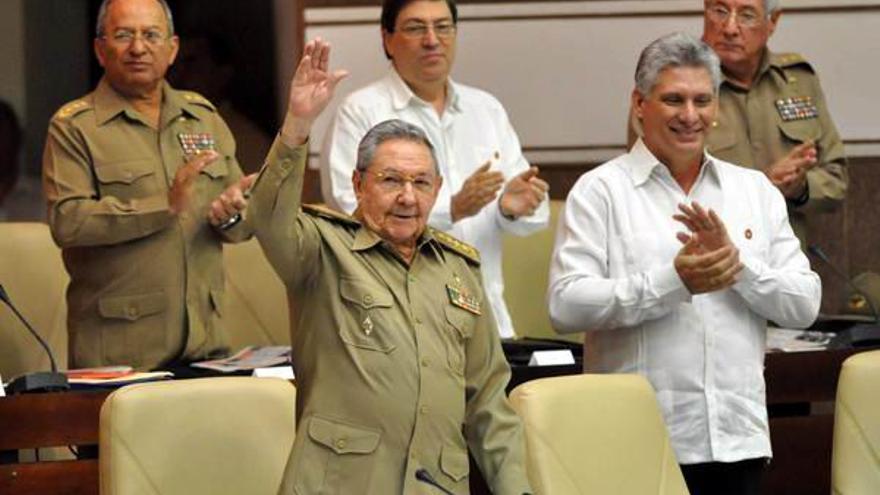
With his gray suit and contained smile, Miguel Diaz-Canel Bermúdez stood for the applause when being proposed to be the president of Cuba. (EFE / Alejandro Ernesto)

14ymedio bigger14ymedio, Havana, 19 April 2018 — With his gray suit and contented smile, Miguel Díaz-Canel Bermúdez rose from his chair to applause when his name resonated on Wednesday in the Cuban Parliament as the only candidate for president of the Council of State. To reach that moment, this 57-year-old electrical engineer spent years of discreet ascent and constant fidelity tests.

Methodical, patient, quiet and docile, this is how colleagues describe this graduate at the University of Villa Clara who has barely practiced his profession. Díaz-Canel has followed, however, the path of the “political cadre” since he joined the Young Communists Union (UJC) in 1987. continue reading

The image of the mature man, slightly overweight and gray-haired, that was transmitted by the official media during the first day of the 9th Legislature of the Parliament, strays far from the memory of his childhood friends who recall a thin boy with long hair and a passion for rock.

From that time he remembers a trait that the future president maintains: “He was very respectful and did everything that was demanded of him”

“At that time he was always laughing but now he looks very serious,” says a high school friend who, in the city of Santa Clara, used to go with him to “clubs and fiestas where he drank a lot of rum and there was little talk of politics.” From that time, he remembers a trait that the future president maintains: “He was very respectful and did everything that was demanded of him.”

A follower of The Beatles, a band censored by the Government in the 60s, those who know him say that Diaz-Canel also likes theater and has a special passion for the music of the Nueva Trova movement. “We spent hours listening to songs,” recalls this friend from their teenage years, who still lives Villa Clara.

Díaz-Canel’s first years in the UJC and his first stage in the Communist Party (PCC) happened at a difficult time. Shortly before, in 1986, Fidel Castro had promoted the process of ‘rectification of errors and negative trends’, a step back from the small economic reforms that had been started on the island, such as the existence of agricultural markets managed by farmers.

Soon after, Díaz-Canel experienced the fall of the Berlin Wall, the dissolution of the Soviet Union and the deep economic crisis of the so-called ‘Special Period in a Time of Peace’ – after the devastating loss of financial support from the Soviet Union – which affected his political development. When he assumed the position of first secretary of the PCC in Santa Clara in 1994, the country was going through a bad time and more than a few people approached him in the streets to complain about the situation.

“He was like a wailing wall of because people saw him and they fell on him to ask for solutions, but he could not do much,” recalls a resident

“He was like a wailing wall because people saw him and they fell on him to ask for solutions, but he could not do much,” recalls a resident of the Vidal Park area in this central city. He earned a reputation as a sober and honest official, but, above all, of being a man “faithful to the cause.”

In those years, many remember his support for El Mejunje cultural space, which put on transgender shows and was a gathering place for the gay community and also alternative groups and urban tribes in the area.

His passage through Holguin province, also at the head of the PCC between 2003 and 2009, did not garner much praise. Díaz-Canel engaged in an all-out fight against illegalities and he undertook as his personal battle the eradication of the black market in fresh milk that supplied the city.

“He insisted that all the milk that the farmers were selling directly to the people was stolen from the dairies of the rationed market,” recalls another cadre. They were years of drought and “the cows barely produced,” says the former official.

“Every night he would set up an operation of several police patrols at the entrance to the city of Holguín to prevent the guajiros from entering with their carts and the milk they were going to sell later,” he adds. “That caused a lot of inconvenience, because people had to leave the city to buy milk and ultimately the rationed supply did not improve either.”

That stern face appeared again last year in a leaked video in which he lashed out against the independent press and called for content censorship to defend the Revolution. Some considered these images a show of respect necessary to please the Party’s most hard-line, but others read them as sign of the repressive character of his leadership.

That stern appeared again last year in a leaked video in which he lashed out against the independent press and called for content censorship to defend the Revolution

In 2009, the same year that Raúl Castro dealt a devastating blow to Fidel Castro’s “favored sons” – Carlos Valenciaga, Carlos Lage and Felipe Pérez Roque – Díaz-Canel was appointed Minister of Higher Education and moved to Havana to lead a sector that was going through difficult times.

Under his mandate, the universities remodeled their curricula, began to install internet access in schools and tried to alleviate the shortage of teachers with student aides. They were years, too, of an ideological resurgence in education and of sticking more tightly to the motto “The University is for the Revolutionaries.”

In 2012 his loyalty was rewarded and he was promoted to vice president of the State Council, and a few months later he would climb to first vice president replacing the orthodox José Ramón Machado Ventura. From that moment his public projection began to be more cautious and careful.

The father of two children from a previous marriage, Díaz-Canel is currently married to Liz Cuesta Peraza, with whom he has appeared in several public events. The unusual image of the first vice president walking hand-in-hand with his wife on a visit to North Korea reverberated strongly in a country that for almost six decades has lacked the figure of the first lady.

Beyond the antipathies or sympathies he triggers, Díaz-Canel achieved what many tried to for decades: to become the favored son to whom the historical generation finally handed over the baton

“He looks more tired and, like almost everyone who gets there, he absorbed the biotype of the hierarchy,” jokes Lisandra, a 28-year-old Cuban. “Now he seems to have aged very fast and gained several inches in his neck and waist,” she says. “It’s a bad sign because that means that he has lost contact with the people and he no longer walks the streets.”

However, beyond the antipathies or sympathies he triggers, Díaz-Canel has achieved what many tried to for decades: to become the favored son to whom the historical generation finally handed over the baton. Born after 1959, with a fresh image and no responsibility for the executions or the confiscations of the first years of the Revolution, the big question now surrounding him is whether he will choose the path of continuity or reform.

For the moment he is cautious, faithful and quiet, characteristics that brought him to the control room of power in Cuba.

__________________________

The 14ymedio team is committed to serious journalism that reflects the reality of deep Cuba. Thank you for joining us on this long road. We invite you to continue supporting us, but this time by becoming a member of 14ymedio. Together we can continue to transform journalism in Cuba.

“There Will Be No Space For Those Who Want a Return to Capitalism”

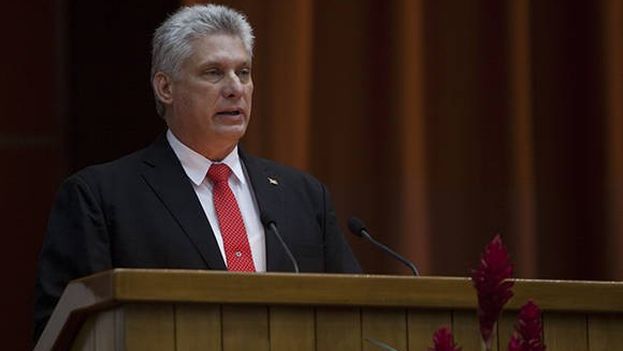
Díaz-Canel during his first speech as president of Cuba. (Screen Capture)

14ymedio bigger14ymedio, Havana, 19 April 2018 — The end of Miguel Diaz-Canel’s first speech as president of Cuba was the climax of a declaration full of acknowledgments to the historic generation. “Homeland or death, socialism or death. We will triumph,” the Cuban head of state shouted with his fist raised from the podium in the Havana Convention Center.

On his first day at the head of the country, the new president avoided talking about his own political program and stuck to the Guidelines of the VI Congress of the Communist Party. “What we can never forget is the commitment we have made to the people and to the future,” said Díaz-Canel. However, nothing in his speech referred to what is to come, but rather he devoted long minutes to speaking of the past. continue reading

“The revolution continues and will continue to live,” the president insisted, noting that “there will be no transition that breaks with the revolutionary past”

In front of the parliamentarians gathered on the second day of the opening of the IX Legislature, the president of the State Council took us on a tour of revolutionary exploits and devoted a good part of his speech to extolling the figure of Raul Castro, who “will continue to lead the decisions of greatest transcendence” of his Government. Speaking of his predecessor, he highlighted the thaw with the United States, his role a mediator in the Colombian peace process and his first Summit of the Americas, in Panama in 2015.

“I assume the responsibility for which I have been elected with the conviction that all Cuban revolutionaries will be faithful to the legacy [of Fidel and Raúl Castro],” said the president, who also spoke about the five Cuban spies detained for years in the United States. Some will interpret the latter as a gesture weighted with symbolism after the bitter controversy unleashed because two of them were not included in Parliament.

Miguel Díaz-Canel’s speech augured that there will not be many changes in the country under his mandate. “The Revolution continues and will continue to live,” the president insisted, noting that “there will be no transition that breaks with the revolutionary past” and “there will be no space for those who want a return to capitalism.”

The president emphasized from the beginning that “only the Communist Party of Cuba guarantees the unity of the Cuban nation”

“Cuba does not make concessions against its sovereignty or independence, we will never give in to pressure or threat, the necessary changes will be decided by the Cuban people,” said the new head of state.

Díaz-Canel also reaffirmed the democratic character of the elections in Cuba and promised to act in response to the confidence that the people have given him “with their vote.”

The president emphasized from the beginning that “only the Communist Party of Cuba guarantees the unity of the Cuban nation” and quoted singer-songwriter Silvio Rodríguez as he approached the end of his speech. “You do not need wings to make a dream, your hands are enough, your heart is enough, your legs are enough, with determination,” he paraphrased in a speech that, from beginning to end, spoke more to past than to future.

_________________________

The 14ymedio team is committed to serious journalism that reflects the reality of deep Cuba. Thank you for joining us on this long road. We invite you to continue supporting us, but this time by becoming a member of 14ymedio. Together we can continue to transform journalism in Cuba.

The Castro Regime, an Aged Boxer Who Won’t Leave the Ring / Iván García

Cubanet

Iván García, 16 April 2018 — By all accounts it is like a bad divorce. No one remembers the exact moment when things went from applause for every revolutionary project, no matter how ludicrous it might have seemed, to a torrent of unfulfilled promises and hollow rhetoric.

Martí Noticias wanted to solicit opinions on Cuba’s social, political and economic situation and on the country’s future prospects. It first chatted with three well-informed people, then it asked thirteen ordinary Cubans if they feel they are represented in the current power structure.

One of those interviewed was fifty-five-year-old Igor, who worked in Moscow’s railway industry during the Cold War and views politicians as a necessary evil but believes that “they are the ones who rule the world.” continue reading

“Not everyone can be a politician,” he says. “They have to have leadership skills and a gift for oratory in order to mobilize large segments of society. They must rely on image consultants and experts in specific fields. They need surveys to gauge levels of popular support and to determine what people want.”

Igor believes that a government has to govern on behalf of all its citizens, not just its supporters. “That is the main problem with the Cuban system,” he says. “Its leaders don’t listen to those with different opinions. Most of the island’s current politicians don’t know how to behave or express themselves in public. They have trouble reading and problems with diction. They have no empathy and seem to be improvising. My impression is that both the old government and the new government have no idea how to get us out of the current quagmire.”

In Igor’s opinion, they are just throwing stones, stalling for time, unable to grab the bull by the horns. “[President-designate] Miguel Díaz-Canel isn’t unattractive like other Cuban leaders, who come off like stock characters from a Soviet-era movie. When he was the party’s first-secretary in Villa Clara province, he was more spontaneous. Now he seems like a remote-controlled robot. He speaks without moving a muscle in his face, which is a sign that he doesn’t believe what he is saying. I don’t expect anything new from Díaz-Canel. Exhaustion is what will bring about real change in Cuba, when they realize they are just thrashing around aimlessly.”

From the time he was an adolescent, twenty-one-year-old history student Damián, was that rare individual who actually felt compelled to read the Communist Party newspaper Granma and watch state television news shows. He followed politics like a soccer fan. “At first, I believed what the state press said. But not now,” says Damián. “I read between the lines. I realized that communism is a utopian dream. And a society cannot afford to waste several generations, as has happened in Cuba, chasing a fantasy. The socialist ideal sounds nice — to give voice and a better quality of life to the dispossessed — but Marxist-Leninist ideology has failed all over the world.”

Damián asks himself what kind of society Cuba aspires to be. “We went from the Batista dictatorship to a totalitarian regime with overtones of nationalism. It made excuses for the lack of democracy because it felt it was under siege by the United States. That era has passed but Cuba doesn’t realize it. Díaz-Canel, or whoever takes over, will continue following the same script. That’s why Cubans don’t have any expectations. I hope I am wrong but what the Castro regime most closely resembles is an aged boxer who refuses to leave to ring, who wants to keep fighting even after the bell has rung.”

What most bothers Carlos, a sixty-six-year-old sociologist, is having been fooled for so long by Fidel Castro’s rhetoric. Carlos is no dissident. He is an intellectual who, like so many others, believes that time is up for Cuba’s current system. “Its time ran out decades ago. Behind all the clatter about a ’sustainable and prosperous socialism’ is bad faith and a hunger for power. Planned economies don’t work. [The regime] could opt for the Chinese or Vietnamese models, which have capitalist economies and autocratic one-party governments, but they don’t dare,” he says.

The worst part, he says, is that it has killed the aspirations of many talented people. “Men and women alike, almost all with university degrees, have seen emigration as the only way out. The National Assembly only represents the interests of the regime. It doesn’t matter that blacks and women make up forty percent of its delegates; every measure it votes on is approved unanimously. I see Miguel Diaz-Canel as a Russian matrioshka doll. He always follows a prepared script. Maybe I’m wrong, but Diaz-Canel represents the continuation of a failed system.”

The perception one gets from conversations with less well-informed Cubans, people who are apathetic about politics, is that they are not part of the game. They live in another dimension, one focused on survival. Of the thirteen people interviewed by Martí Noticias, six did not care who succeeded Raúl Castro as president, whether it was Díaz-Canel or the ballplayer Yulieski Gurriel.

“Man, what problem is that stone faced parasite (Díaz-Canel) going to solve? Here people just want a few pesos to get drunk, have something decent to eat, capture some fresh ’mangoes’ (girls) and play pululu (a video game app),” says a young vendor who sells internet SIM cards in a Havana park.

Three of those interviewed believe things could get better under Díaz-Canel. One of them is Anselmo, a forty-nine-year-old bus driver. “We won’t be worse off,” he says. “If Trump can meet with the fat guy from North Korea, he can meet with the man from Villa Clara. We’ll see what happens. We can’t count on Venezuela or Brazil any more. It would be ironic if we find ourselves once again in the arms of the bolos (the Russians). If that happens, it will be the overseers who have to lose the most.”

Four people are very pessimistic, among them Dania, a thirty-six-year-old dentist. “This situation has been going on for a long time in Cuba,” she says. “The best solution is to leave the country, whether things change or not.”

One option for a large segment of the population is to decamp to other shores. Watching the situation from afar is pleasanter than fighting for democratic change from within. That is a job for patriots.


Díaz-Canel, Raúl Castro’s Disciplined Pupil Who Will Pilot Post-Castroism

Miguel Díaz-Canel, named as a possible successor to Raúl Castro, with Castro and, between them, Castro’s grandson/bodyguard. (EFE)

14ymedio biggerEFE, via 14ymedio, Havana, 18 April 2018 — Miguel Diaz-Canel, Raúl Castro’s disciplined pupil, prepares to enter Cuban history books as the first president of post-Castroism, after a career forged from the base of the Communist Party, amidst unknowns regarding how he will pilot the new era that opens on the Island.

The name of the current first vice president is first on the proposed list from the National Candidacy Commission (CCN) for the formation of the highest government body, the State Council, which will be put to a vote in the National Assembly, the result of which will not be known until tomorrow. continue reading

The first president of Cuba in almost 60 years who will not be named Castro and who will not wear a military uniform (if we exclude the case of Osvaldo Dorticós, who formally filled the presidential chair under Fidel Castros’s rule and committed suicide in 1983), will lead the generational change promised by his predecessor, in a meticulously designed succession whose objective is to ensure the survival of the socialist system.

Belonging to a generation that did not participate in the struggle of the Sierra Maestra, educated in communist orthodoxy and marked in his youth by the socialism sponsored by the extinct USSR, Díaz-Canel is a man of the Communist Party (PCC) who has climbed, step by step and without histrionics, the rungs of power until reaching the highest leadership level.

“He is not an upstart nor unprepared,” said Raul Castro when in 2013 Diaz-Canel was appointed first vice president, the regime’s number two, which became his launching pad for the presidency.

Born in Placetas in 1960, this electronic engineer who turns 58 on Friday began his political career in 1987 in the Union of Young Communists (UJC) at the Central University of Las Villas, where he worked as a teacher.

Seven years later and, after progressing in the ranks of the UJC and joining the PCC, he was appointed first secretary of the party in his native province of Villa Clara.

There he left the imprint of a person accessible and close to the people during the hard times of the so-called Special Period in a Time of Peace, after the collapse of the Soviet Union and the loss of its enormous economic support for the Island. In Villa Clara he could be seen touring the neighborhoods by bike or on foot, dancing at festive events and even supporting initiatives such as El Mejunje, a pioneering center in transvestite shows which become a symbol of the struggle for LGTBQI rights.

In 2003 he took a major step in his career: in addition to being named first secretary of the Party in the province of Holguín, he joined the all-powerful Political Bureau of the PCC.

He was already in General Raul Castro’s sights, who at that time emphasized Diaz-Canel’s “high sense of collective work and effectiveness with subordinates” and his “strong ideological firmness.”

His move to the national government came in 2009 as Minister of Higher Education. Four years later, in 2013, he was elevated to first vice president of the Councils of State and of Ministers, “a defining step in shaping the future direction of the country,” Raúl Castro announced at that time.

With a serious mien and somewhat cold and expressionless in his official appearances, Díaz-Canel is an experienced politician who has behaved cautiously, aware of the risks involved in being tempted by “the honey of power.”

Temptations that ended in the defenestration of previous “dauphins” of Castroism, including Roberto Robaina and Carlos Lage, two of the failed promises of the Fidelista era that attracted the spotlight more than Castro allowed.

Now, as “number two,” Díaz-Canel has become visible to Cubans and internationally: on the island his appearance in the state media has been constant and in the last five years he has made numerous international visits and tours.

In his public speeches, Díaz-Canel has exhibited a discourse faithful to revolutionary orthodoxy, with continuous references of loyalty to Fidel and Raúl Castro and to the historical generation that fought in the Sierra Maestra.

Like his mentor, Díaz-Canel is not a friend of lavish personal displays before the media and even less so before international ones, although he has spoken on several occasions of ending the secrecy of news sources and has admitted limitations in the official media.

One aspect that distinguishes him from his predecessors is a certain sensitivity to promoting new technologies in Cuba – among the countries in the world with the least access to the Internet – but with a view to counteracting the “pseudo-cultural avalanche,” “the banal” and “the subversive,” in order to replace it with the “contents of the Revolution.”

The challenges Díaz-Canel faces are as many as the uncertainties he arouses.

Having ruled out a political transition, the candidate is called to complete the reforms that Raúl Castro has left pending such as ending the Island’s dual currency system, expanding private work, growing foreign investment and improving the precarious salaries in the state sector.

Another question is how he will manage the battered relations with the United States after the brakes imposed by the Trump administration on the thaw between the two nations.

And one of the most interesting enigmas is how he will consolidate his own leadership, both before the population and in the complex balances of power in Cuba between the Communist Party, the Armed Forces and the Government, and between the reformist and orthodox sectors.

Diaz-Canel is a leader circumspect about his family life, although it is known that he has two children from his first marriage.

His second wife is Liz Cuesta, an academic expert in Cuban culture who has been seen in numerous public events, where she projects herself, in an unprecedented image in revolutionary Cuba, as a “first lady” of the country.

_________________________

The 14ymedio team is committed to serious journalism that reflects the reality of deep Cuba. Thank you for joining us on this long road. We invite you to continue supporting us, but this time by becoming a member of 14ymedio. Together we can continue to transform journalism in Cuba.

Cuba Drilling the Deepest Horizontal Oil Well in Latin America

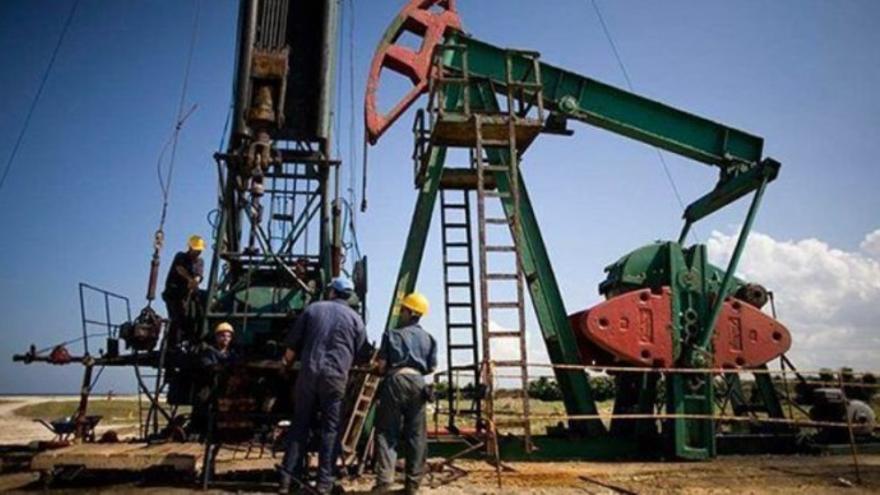
The well is located on the north coast of the island, and is already 6 km deep, although it must reach a record of more than 8.2. (Rincón cubano)

14ymedio biggerEFE, via 14ymedio, 4 April 2018 — Cuba is moving along with the drilling that will soon come to be the deepest horizontal oil well in all of Latin America and the Caribbean, located on the north side of the island (Cuba ) where it has already passed the 6 kilometer mark and will soon reach the record of 8.2 km according to a notice this past Wednesday from the official press.

The drilling of the West Varadero 1008 long range well has been supported with financing and guidance from Cuba, which has chosen this technolgy in order to “exploit from the coast, the crude that lies beneath the ocean” and “to lower the cost of investment” as pointed out on front page of the state daily Juventud Rebelde (Rebel Youth). continue reading

The drilling began on the twenty-eighth of December 2016 at Boca de Camarioca, Matanzas and has been complicated “by the geology of subterranean rock” explained the Director General of the state Central Company for the Drilling and Extraction of Petroleum, Marcos Antonio Pestana.

According to the bulletin, CCDEP has produced 8000 tons of petroleum more than was previously planned for the trimester.

“Drilling always brings on new challenges and we are, at this time, drilling six wells which are very promising for company production and for the nation,” added Pestana.

Since January of 2018, operations of the company have reached up to the central area of Ciego de Avila. In Cuba, the first long distance oil well was the Varadero 1000 and today there are already a total of nine active wells with this technology in Cuba.

The Cuban energy system depends almost completely on petroleum although the nation is working towards sources of clean energy.

At this time, Havana is looking for alternative providers in light of the reduction of shipments of crude at subsidized prices from Venezuela, its main regional ally

According to some estimates, in the last two years, Venezuela has reduced its shipments down to fifty-five thousand barrels daily, about half of its peak shipments because of its economic crisis and the fall of the price of petroleum.

Recently the Island announced a new petroleum supply agreement in exchange for medical assistance with Algeria, which in 2017 brought some 2.1 million barrels of crude to Cuba, an amount that could be repeated this year, according to involved sources.

Russia also came to the aid of its former ally and shipped, this past year, 200,000 tons of petroleum for the Cuban company Cubametals under an agreement between the governments of Moscow and Havana.

The Russian state petroleum company Rosneft has also negotiated the development of future projects in conjunction with the production of petroleum within Cuba on land as well as in the ocean.

Translated by William Fitzhugh (Welcome back, from HemosOido!)

_______________

The 14ymedio team is committed to serious journalism that reflects the reality of deep Cuba. Thank you for joining us on this long road. We invite you to continue supporting us, but this time by becoming a member of 14ymedio. Together we can continue to transform journalism in Cuba.

Cuba Undergoes Historic Change in a Climate of Political Apathy

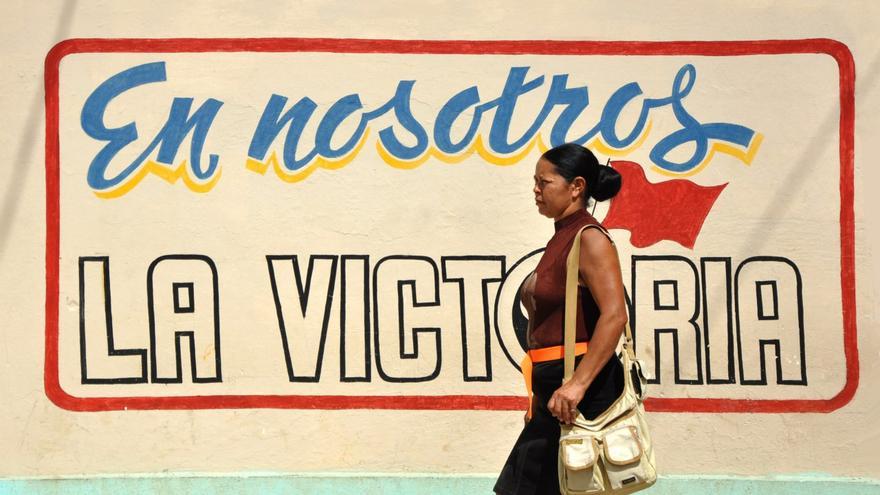
Most Cubans go about their daily lives, doubting the presidential transition will significantly alleviate their problems. (Poster: In Ourselves, The Victory) (Kapa, 14ymedio).

14ymedio bigger14ymedio, Marcelo Hernandez, Havana, 16 April 2018 — D-day is fast approaching but the Cuban parliament’s selection of the country’s new president on Thursday has raised few hopes among the population. For more than half a century someone with the surname Castro has led the country. However, the sentiment on the street, as well as in conversations between friends and family members, is that nothing will really change.

The presidential transition, initially scheduled for February 24 but postponed until April 19, represents a historic transfer of power from a generation that is more than eight decades old and has ruled the country with an iron fist for more than half a century. The current president’s retirement, however, will be limited. continue reading

Raúl Castro will remain secretary general of the Cuban Communist Party (PCC), an organization with just over 600,000 members which the Cuban constitution recognizes as “the leading force of society and the state.” His term in office could last until 2021, when the next congress is scheduled to take place.

Although it is not yet known with certainty who the successor will be, all indications are that it will be the current first vice-president, Miguel Díaz-Canel, someone who did not participate in the assault on the Moncada Barracks, did not fight in the Sierra Maestra, did not have a role the execution of political prisoners during the early years after the Cuban revolution and was not responsible for the confiscation of private property or businesses.

“It does not matter what his name is; what matters is that he will be different,” observed Danilo, a rabid baseball fan involved in a spirited discussion on Saturday at the Esquina Caliente sports club in Havana’s Central Park. In the discussion there was the occasional comment about what would happen on Thursday.

“Brother, everything is the same, nothing will change,” responded Mandy, a twenty-one-year-old who claims to have no illusions about the arrival of a reformist figure to guide the country on the path of economic and political change. “They know that any movement can derail the system,” he says.

The presence of Bruno Rodríguez in place of Raúl Castro at the Summit of the Americas in Lima this week aroused speculation about the Cuban chancellor’s possible ascent. His name, along with that of Díaz-Canel, the economist Marino Murillo and the head of the Havana PCC Mercedes Lopéz Acea are those most often mentioned as likely candidates to lead the Council of State.

These four apparatchiks lack the historic credentials that their predecessors have long relied upon to wield power.

“I don’t want to even think about much less watch television that day,” says Acela, a sixty-eight-year-old retiree. “The biggest problem for me is that my income is not enough. I spend all my monthly pension in less than a week and even that does not go very far,” she adds.

For weeks, there had been speculation that Castro might begin the complex process of currency unification before leaving office. But with “19A” — as some refer to it —rapidly approaching, expectations are falling.

“He is leaving his successor with a huge problem if he does not fix the two currency situation, because that is something that will cause people a lot of problems and a lot of headaches,” says Omar, a taxi driver who transports customers from Havana’s Chinatown.

A few meters from the taxi driver’s Soviet-made vehicle, a young man hawks a restaurant menu in which Chinese dishes alternate with Italian ones. “This week we have the ’president’ pizza,” he says. “It has a little of everything: seafood to please some and ham to please others …” he jokes.

The restaurant hawker believes Díaz-Canel will be designated the succesor. Brought up through the ranks of the PCC, the current vice-president has survived purges to which others fell victim. His lack of charisma has kept him in office and protected him from being sacked, as was the fate of other former heirs-apparent such Roberto Robaina, Carlos Lage and the energetic Felipe Pérez Roque.

Many students in the School of Civil Engineering at the Instituto Superior Politécnico José Antonio Echeverría are not shy about expressing their positive opinions of Diaz-Canel, a fellow graduate whose his professional life has been spent in the PCC.

“He is a practical man, trained to operate in a collegial work environment, like all of us engineers are,” says Raydel, a recent engineering graduate who maintains close ties with others in the field.

“The fact that he has a university degree shows he is well-prepared and I hope his training is useful when the time comes to make decisions because there are a lot of things that need urgent solutions,” says one engineer.

In Havana, however, others believe his strength lies in his image as “a family man who has been seen in photos out in public with his wife,” as Karla Lucía, a self-employed hairdresser who works in a small beauty salon on San Rafael street, explains.

“This speaks well of him, going out with his wife. And this country might finally have a first lady,” she adds.

Most of those interviewed confined themselves to trivial comments and avoided expounding on possible political changes. “No, people here continue to wonder if they will be able to go on vacation or buy a house but aren’t really thinking about the president,” says María Dolores, a fortune teller who throws snails in ritualistic gestures outside a church dedicated to the Virgin of Regla in a town near Havana Bay. “If you already know the answer, you don’t ask the question,” she says.

___________________

The 14ymedio team is committed to serious journalism that reflects the reality of deep Cuba. Thank you for joining us on this long road. We invite you to continue supporting us, but this time by becoming a member of 14ymedio. Together we can continue to transform journalism in Cuba.

Few Surprises in Cuba’s New Council of State

Raúl Castro with Ramón Machado Ventura in a session of the National Assembly. (EFE)

14ymedio bigger14ymedio, Reinaldo Escobar, Havana, 18 Paril 2018 — The proposal of Miguel Díaz-Canel to be president of the Council of State confirmed widespread expectations, however the nomination of Salvador Valdés Mesa as first vice president surprised those who bet on Mercedes López Acea, who, from her position of vice president, was removed from the list of members of the Council of State.

The departure of Raúl Castro and José Ramón Machado Ventura was foreseeable, which is why Ramiro Valdés Menéndez remains as the only representative of the historical generation continuing in a position as vice president, while Ines María Chapman and Beatriz Jhonson rise to that position in along with the current Minister of Public Health, Roberto Tomás Morales Ojeda, who was not a member of the previous Council of State. The Comptroller Gladys Bejerano Portela continued her position in this elite group. continue reading

Other small surprises were the departure from the Council of State of Marino Murillo and Adel Izquierdo Rodríguez, both vice-presidents of the Council of Ministers and of General Álvaro López Miera, who dominates the finances of military companies.

A widespread murmur passed among the deputies of the National Assembly when the name of the three-time world champion in hammer throw Yipsi Moreno Gonzalez was read out from the list of candidates. This deputy from Camagüey province becomes the first person to reach the Council of State without being a member of the Communist Party or its youth organization.

As was to be expected, the leaders of the so-called mass organizations maintained their symbolic presence.

Going forward, only the details that answer these questions remain: Where will the office of the new president be located? What will be the first law signed with his name? Will his wife be recognized as First Lady? Who will congratulate him on his appointment? Is his first speech already known before it is given? Will he swear allegiance to the party and the ideas of Fidel and Raúl Castro? He has at least five years to give his personal interpretation of how he will give continuity to that legacy.

__________________

The 14ymedio team is committed to serious journalism that reflects the reality of deep Cuba. Thank you for joining us on this long road. We invite you to continue supporting us, but this time by becoming a member of 14ymedio. Together we can continue to transform journalism in Cuba.

Important Questions About the “Transfer of Power” in Cuba

Our apologies: This video is not subtitled.

14ymedio biggerA quick guide to understanding the process that begins with the opening of the National Assembly of People’s Power this Wednesday.

  1. What is the body of Power whose leaders are going to change?

The Council of State, which exercises legislative power during periods when the National Assembly of People’s Power is not in session. This Thursday the names of the president, first vice president, five vice presidents, secretary and other members will be announced. The president of this entity is, at the same time, head of government and head of state.

  1. Will there also be changes in the other organs of the Power?

The first step of the process begins this Wednesday in the new National Assembly with the swearing in of the 605 deputies elected on March 11. Next, the deputies will meet to select the new president of the Parliament (Esteban Lazo Hernández currently occupies this position), the vice president and the secretary. continue reading

  1. Who proposes the candidates that will appear on the ballot to be voted on by the members of the Council of State?

The National Candidacy Commission (CCN) draws up the list of those who will make up the Council of State. This entity, chaired by Gisela Duarte Vázquez, is composed of representatives of the Cuban Workers Confederation, the Committees for the Defense of the Revolution, the National Association of Small Farmers, the University Student Federation, the Secondary School Students Federation, and the Federation of Cuban Women. The statutes of all these organizations reflect their loyalty to the Communist Party, the Revolution and the historical generation.

  1. How does the National Candidacy Commission make that selection?

The CCN selects from the 605 deputies that make up the National Assembly a list of 31 parliamentarians to be part of the State Council. Previously, 47.4% of the assembly members are chosen from among delegates at the district level, and the rest are named from among personalities in culture, sports and other sectors.

  1. Will there be more than one candidate for each position in the Council of State?

No, there will be a single candidate for each of these positions: president, first vice president and five vice presidents, in addition a secretary. All must be members of Parliament and parliamentarians must ratify their candidacy.

  1. Are the other 23 members of the Council of State also appointed from unique candidacies?

Yes, the other 23 members of the Council of State also appear in the candidacy list drawn up by the Commission, to be “ratified” by the parliamentarians. Although the president of the National Assembly of People’s Power informs the deputies that they have the right to modify totally or partially the proposed candidacy, it has never happened that they veto any candidacy.

  1. Is the vote secret?

The parliamentarians ratify the candidacy first by show of hands and then vote secretly for the proposals. The National Electoral Commission counts the votes and its president announces the result of the vote and declare who has been elected president, vice-presidents and secretary, which would be those who have obtained more than 50% of the valid votes cast. If one of the candidates did not obtain the required number of votes, a new proposal is presented by the CCN (something that has never happened).

  1. Does the Parliament choose the Council of Ministers?

No, the Council of Ministers is appointed by the Council of State.

  1. What will happen to Raúl Castro once he leaves office as president?

He could remain within the Council of State as vice president or as a simple member, otherwise he would be a “simple deputy.” He will continue as the First Secretary of the Communist Party, an organization that the Constitution of the Republic consecrates as the “leading force” of society. He will remain in that position until the end of his term in 2021.

  1. Can it happen that the positions of president of the Council of State and that of president of the Council of Ministers do not fall to the same person?

It is possible, but such a decision would be a novelty of “collegial mandate” in a centralized model such as Cuba has had in the last half century and that of the countries of the extinct socialist camp.

  1. What about the composition of the Council of State should we pay special attention to?

The numerical relationship between “hard-line” and “reformist.” In the absence of a clear and public policy agenda for each of them, age or belonging to the historic generation are not the only criteria, but it is likely that they some of the “historicals,” such as José Ramón Machado Ventura, Ramiro Valdés and Guillermo García, will be retired.

_____________________________

The 14ymedio team is committed to serious journalism that reflects the reality of deep Cuba. Thank you for joining us on this long road. We invite you to continue supporting us, but this time by becoming a member of 14ymedio. Together we can continue to transform journalism in Cuba.

Handpicked

Miguel Diaz-Canel is expected to take the reins in Cuba this Thursday. (EFE)

14ymedio bigger14ymedio, Luis Tornes Aguililla, Bordeaux, 16 April 2018 — As we already know what is going happen, it matters not if the date of this article is earlier than the date of the appointment of el señor presidente.

Miguel Diaz-Canel already knows that he was handpicked and perhaps suspects, because he has no other choice, that ultimately, the system improvised by Fidel Castro is a failure in all respects no matter how many billions in debt the capitalists of the Paris Club or the London Club have conceded to Cuba, to mention only two significant examples of the last three years.

The dilemma is simple: to pay a debt you have to work and produce, or steal. It was the Cuban people who paid, between executions and temper tantrums, for the deliriums that Fidel Castro promised, more or less, to make real their pipe dreams. continue reading

A lot of money was needed and that’s how colossal debt amply financed political irresponsibility. It is important that Cubans know that the dramatic story of these last 60 years has mortgaged, because of financial debts – and not just the financial ones – the future of several generations.

So, thus, the question: How can a future democratic government in Cuba confront the reality of the people? Diaz-Canel may know the answer but cannot express it.

Ordinary Cubans live in a black misery with the dual currencies, indecent wages and an unprecedented social disaster because the retractors of the dogma do not want to release the exponential creativity of the Cuban people. Let nobody be mistaken. The Holy Office will watch, with particular interest, the praxis of Diaz-Canel around this issue of freedom of self-empowerment, not so much for philosophical reasons but to avoid any slippage of Cuba towards a society where individuals do not have to depend on the regime.

The Castro regime artifice has been lacking for many years in its terrifying obligatory reality, a reality that the involutionists* will leave to those who come later.

That reality is the cause of the maintenance of the liturgy and the paraphernalia of everything in life, without which, the comrades would find themselves naked before public opinion.

Will Diaz-Canel be left holding the bag once Raúl Castro leaves this world?

Fortunately, in today’s Cuba there is not that massive ignorance of the codes of the world, which is a problem for any candidate for dictator. This is the first reason why Diaz-Canel, and the guards who are watching him, will have to walk a fine line with Cubans who, apart from the usual rowdiness, know what is happening beyond the seas.

A man handpicked cannot pretend to deal with a fed up people who want to abandon their country en masse even if they have to do it by way of Alaska. One can feel the grudge against what people have had to endure. Little by little, millions of Cubans have come to realize that they irremediably lost their youth and their lives in a spasmodic drunkenness paid for, for a very long time, by themselves. When the time comes, perhaps Diaz-Canel will rebel.

*Translator’s note: Involutionists predict the persistence of the worst features of state socialism in a condition of permanent underdevelopment. (See “Post Socialist Pathways,” David Stark and Laszlo Bruszt, 1998)

_____________________

The 14ymedio team is committed to serious journalism that reflects the reality of deep Cuba. Thank you for joining us on this long road. We invite you to continue supporting us, but this time by becoming a member of 14ymedio. Together we can continue to transform journalism in Cuba.

‘Raulismo’ in Ten Images

14ymedio bigger14ymedio, Havana, 18 April 2018 — Ten images from the regime of Raul Castro, which is slated to end tomorrow.

Raúl Castro assumes the presidency of Cuba

On February 24, 2008, Raúl Castro delivered his first speech as head of state when he formally assumed permanent power after the resignation of his brother, Fidel. By then, Raul had been acting president for more than a year and a half while Fidel was ill. In that first speech, he mentioned the heroes Martí and Maceo who “point out to each Cuban the hard road of duty and not on which side lives better.” (EFE)

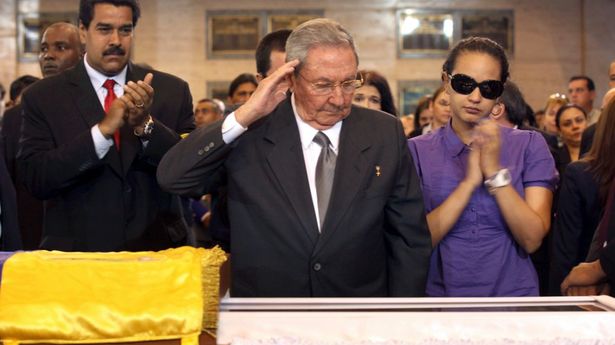
A place of honor at the funeral of Hugo Chávez

On March 8, 2013, Venezuela said goodbye with a great tribute to the leader of the Bolivarian revolution, who died three days earlier, the victim of a cancer for which he received treatment in Cuba. Raul Castro was at Maduro’s side in a privileged position during Chavez’s funeral and said about Cuba and Venezuela: “The most important thing for our peoples is that we continue forward under his influence and not regress in a few years.” (EFE) continue reading

Castro represents Cuba at its first Summit of the Americas

On April 9, 2015, surrounded by a strong security detail, Raúl Castro attended the first Summit of the Americas in which Cuba was present. The invitation came in the new context of reestablishing relations with the United States and Barack Obama and Raul Castro held their first bilateral meeting at the hemispheric meeting of Panama. (EFE / Alejandro Bolívar)


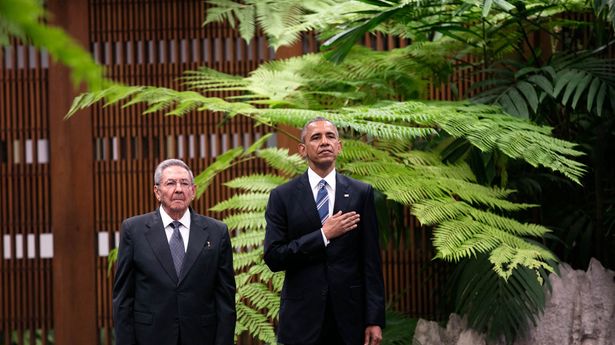
Barack Obama officially visits Cuba

On April 21, 2016, Barack Obama became the first American president to visit Cuba in more than half a century. The president toured Havana with his family, met with opponents, attended a baseball game and gave a speech at the Gran Teatro de La Habana, but also complied with the protocol at the Palace of the Revolution by putting the final touches on the rapprochement between both countries announced on December 17, 2014. (White House)

First official visit to Europe

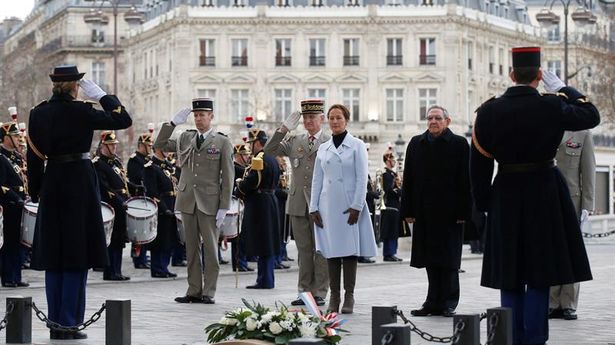
On February 1, 2016 Raúl Castro went to France made his first official trip to Europe, one of the most important during his presidency. François Hollande had opened the way by speaking him in Havana in May 2015 during a trip in which he discussed debt relief and business opportunities on the island. In Paris, the Cuban president paid tribute to the fallen in the First World War in an official act at the Arc de Triomphe. (EFE / Jacky Naegelen)

The opening of the Mariel Container Terminal

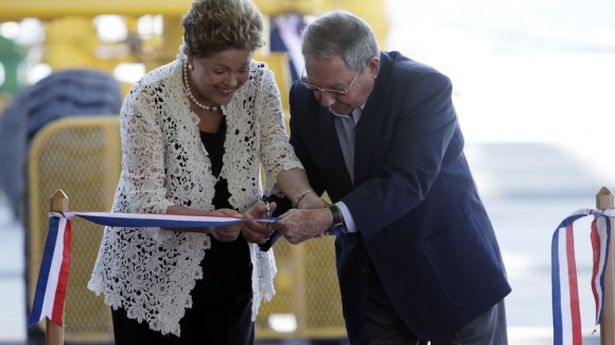
On January 27, 2014, Dilma Rousseff, then president of Brazil, visited Cuba to open the Port of Mariel Container Terminal, located in the Mariel Special Development Zone (ZEDM). The port infrastructure is the most important public works carried out under the mandate of Raúl Castro, and was partially financed with money from Brazil and built by the controversial Odebrecht company, protagonist of the biggest corruption scandal in Latin America. (EFE)

Guarantor of Peace in Colombia

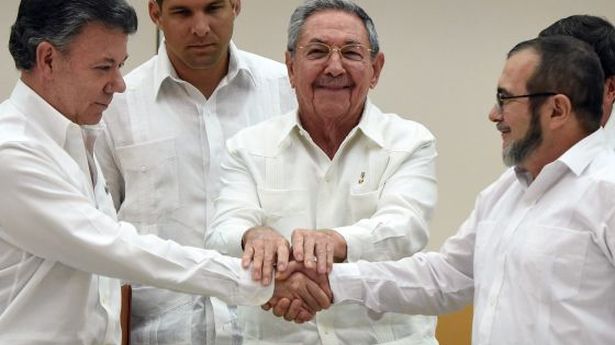
Cuba was the key country in the peace talks between the Colombian government and the FARC guerrillas that led to an agreement that ended more than 60 years of conflict. Brazil, Chile, Ecuador, Norway and Venezuela were also among the guarantors of the process, but the talks took place in Havana, where the negotiating teams resided for months. Raúl Castro was the protagonist of the peace signing on September 26, 2016. (EFE)

The end of the EU Common Position

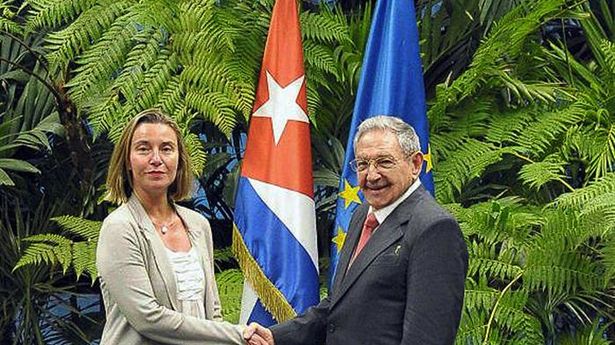
In the framework of the thaw with the United States, the European Union also realized that the message that its Common Position towards Cuba in previous years had not produced changes and opted for pragmatism in the restructuring of relations. On January 3, 2018, the High Representative of the European Union for Foreign Affairs and Security Policy officially visited the island for the signing of the first bilateral agreement between the parties that ended the Common Position, in force since 1996, which had conditioned the agreements between the EU and Cuba on changes in the situation of human rights on the island. (EFE/ Estudios Revolución)

The funeral of his brother Fidel

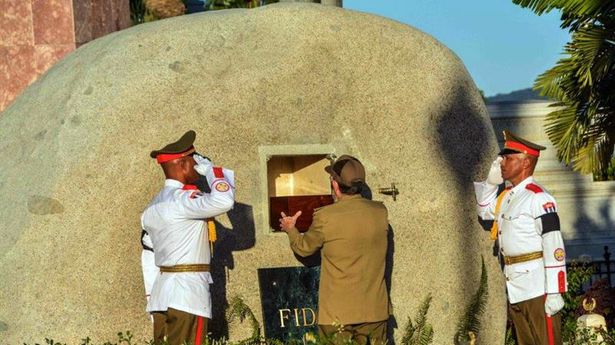
On December 4, 2016, nine days after the death of Fidel Castro, the president deposited the ashes of his brother in the Santa Ifigenia cemetery in Santiago de Cuba. The remains of the former president were carried across the island in a farewell caravan that departed from Havana heading toward the south east of the country, repeating in reverse the journey made by both brothers together with other guerrillas in 1958, in a revolution through which they changed the future of the country. (EFE)

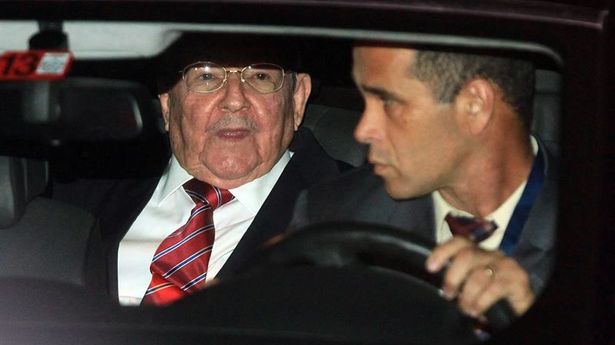
The final days

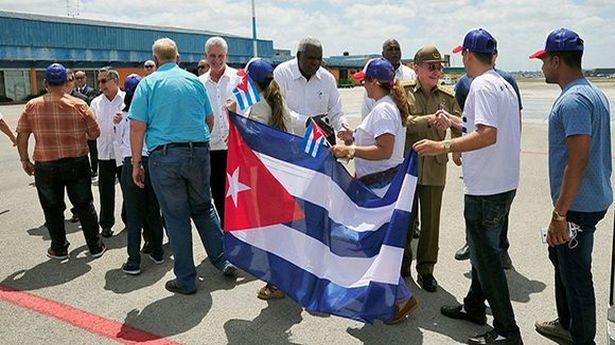
One of his last public acts as president, of Raúl Castro greeted and offered thanks to the official delegation Cuba sent to the Summit of the Americas held in Lima, Peru. The president decided not to attend the hemispheric meeting, which, for different reasons, would also lack the presence of his greatest ally, Nicolás Maduro, and his greatest enemy, Donald Trump. The Cuban authorities received with all honors this delegation sent from the official civil society, which demonstrated against several events in the civil society forums organized in conjunction with the Summit. (Estudios Revolución)

_____________________________

The 14ymedio team is committed to serious journalism that reflects the reality of deep Cuba. Thank you for joining us on this long road. We invite you to continue supporting us, but this time by becoming a member of 14ymedio. Together we can continue to transform journalism in Cuba.

Amnesty International Invites Cuban Government to "Transform Confrontation Into Dialog"

Amnesty International has recently denounced the Cuban government’s abuse of workers using its status as the country’s biggest employer. (14ymedio)

14ymedio bigger14ymedio, Madrid, 16 April 2018 — On the occasion of the transfer of power that will take place this Thursday in Cuba, the independent human rights organization, Amnesty International, has prepared a “road map” with the title Transform Confrontation into Dialogue in which it draws up a series of recommendations for the new Cuban executive to improve the situation of rights and freedoms on the Island.

Amnesty International emphasizes that, as an independent organization, it does not intend to take a position on the country’s political or economic system, but rather to promote progress in the situation of human rights. The NGO believes that the change in the presidency represents a “historic opportunity” to engage in a constructive dialogue and address pending challenges. continue reading

“The government must not squander this opportunity to usher in a new era of respect for human rights. Through dialogue with all sectors of Cuban society, including human rights organizations, independent trade unions, journalists and other civil society groups, authorities must guarantee the rights of all Cubans, including those who are critical of the government. This must include putting a swift end to censorship, bringing its criminal justice system in line with international standards, and tackling all forms of discrimination,” said Erika Guevara Rosas, Amnesty International’s Director for the Americas.

The organization has been refused entry into Cuba for 30 years, but has managed to document “the ongoing detention, harassment and intimidation of activists and independent journalists” in recent months, and has identified at least 11 prisoners of conscience “detained solely for their peacefully held beliefs.”

In its agenda for human rights for Cuba, Amnesty International finds the greatest challenges in the area of pending human rights and proposes five key action areas with 15 concrete measures. The proposals that appear in the document are:

1. Ratify key human rights treaties and allow independent monitors to visit Cuba.

Ratify, without delay, the International Covenant on Civil and Political Rights and the International Covenant on Economic, Social and Cultural Rights, and implement them fully into national law.

Ratify, without delay, the International Covenant on Civil and Political Rights and the International Covenant on Economic, Social and Cultural Rights, and implement them fully into national law.

2. Embrace dialogue with all sectors of Cuban society and allow plurality of voices.

Create spaces to allow for meaningful participation of people belonging to independent civil society, human rights defenders, and alternative trade unions, especially those critical of the government, to receive their feedback on proposed policies and laws.

Establish a regime of simple notification for the registration of associations, including human rights organizations, independent trade unions, and other civil society groups, and ensure that people working in unregistered associations are not criminalized.

Engage in consultation to reform the constitution and other laws regulating the media to allow for independent and critical views to be reported on, and allow journalists to work freely without fear of reprisals.

Pass laws that guarantee access by the public to information held by the government, to increase transparency and facilitate an informed public debate about policy development and decision-making.

Prohibit discrimination based on political or other opinion in hiring, promotion and termination of employment in the public and private sector, and comply with the International Labour Organization Conventions which Cuba has ratified.

3. Stop undermining the right to education through censorship and discrimination.

Prevent discrimination in access to education, in particular based on political opinions.

Guarantee universal access to uncensored Internet, a vital educational tool and catalyst for free expression.

4. Promote equality and prevent discrimination

Continue anti-bullying campaigns and programs promoted by CENESEX in schools to guarantee LGBTI youth access to education free from discrimination.

Become the first independent nation in the Caribbean to legalize same-sex unions, and ensure adequate consultation with LGBTI activists in development of legislation which facilitates this.

Consult with civil society to develop comprehensive anti-discrimination legislations which protect against stigma, discrimination and violence against marginalized and vulnerable groups.

5. Strengthen the independence of the judiciary and bring criminal laws in line with international laws and standards.

Ensure that lawyers are able to perform their professional functions without intimidation, hindrance, harassment or improper interference, and that they are not threatened with prosecution or administrative, economic or other sanctions for any action taken in accordance with their professional duties, in accordance with the UN Basic Principles on the Role of Lawyers.

Amend provisions of the Penal Code, such as those on “dangerousness”, that are so overly broad and vague that they allow for deprivation of liberty when no criminal offence has been committed or where they are applied to unduly restrict the peaceful exercise of human rights.

Abolish the death penalty for all crimes.

________________________________

The 14ymedio team is committed to serious journalism that reflects the reality of deep Cuba. Thank you for joining us on this long road. We invite you to continue supporting us, but this time by becoming a member of 14ymedio. Together we can continue to transform journalism in Cuba.

Session of New National Assembly That Will Designate Raul Castro’s Successor Approaches

Current Cuban president, Raúl Castro, accompanied by his political dauphin, Miguel Díaz-Canel, during an event in the national Parliament. (EFE)

14ymedio bigger14ymedio, Havana, 16 April 2018 — The meeting for the constitution of the new Parliament, the last step in the process that will culminate in the replacement of Raul Castro in the presidency, will begin on Wednesday, 18 April, a day before originally planned, according to Cuba’s official media.

According to a statement from the Council of State published in the press, this decision has been adopted to “facilitate the development of the steps required by a session of such importance.”

The Constitutive Session of the IX Legislature of the National Assembly of People’s Power will begin on Wednesday, April 18, 2018, at 9 o’clock in the morning at the Palace of Conventions in Havana. continue reading

The surprise announcement does not specify at what exact moment, on Wednesday or Thursday, the successor of the current head of state will be designated.

The Cuban leader had announced he would depart from power on 24 February 2018, but the date was postponed until 19 April “due to the effects of Hurricane Irma.”

Both the president of the Council of State, who is also the head of the Cuban State, as well as the first vice president, the five vice presidents and the other members are elected by the deputies of the National Assembly.

The National Candidacy Commission consults each of the 605 deputies of the National Assembly and prepares a single list of 31 candidates for the 31 members of the State Council, including the President.

The National Assembly approves this list by a show of hands vote. Should the list not receive 50% of the votes, something that has never happened, the process is repeated and the Nominations Committee draws up a new list. Once the list is approved, a secret vote of the deputies is held to elect the eight principal positions of the Council of State.

Most of the experts believe that the candidate for president will be the current first vice president, Miguel Díaz-Canel. The length of the presidential term on the island is five years and an individual can only serve two terms, for a total of 10 years in power.

Article 68 of the Electoral Law establishes that the Commission in charge of preparing the proposal to be voted upon by the Parliament is composed of “mass organizations,” such as the Cuban Workers Center, the Federation of Cuban Women, the National Association of Small Farmers, the Committees for the Defense of the Revolution, the University Student Federation and the Secondary Education Student Federation. All these organizations are linked to the government and are considered transmitters for the Guidelines emanating from the Plaza of the Revolution.

Outside the official scope, diverse experts in the Cuban electoral process agree in pointing out that, although the system presents the National Assembly as an expression of the plurality of the nation because of its composition in terms of sex, ages and race, it lacks political representativeness because almost all of its members belong to the Communist Party or the Young Communists union.

The candidacy commissions, according to the same experts, act as a screen to eliminate those candidates who represent a danger to the system or who have critical opinions.

Of the delegates who will vote for the next president of Cuba, 89.25% were born after Fidel Castro’s seizure of power in 1959.

 _____________________________

The 14ymedio team is committed to serious journalism that reflects the reality of deep Cuba. Thank you for joining us on this long road. We invite you to continue supporting us, but this time by becoming a member of 14ymedio. Together we can continue to transform journalism in Cuba.

Literature as a Refuge From Pain and Dead Words

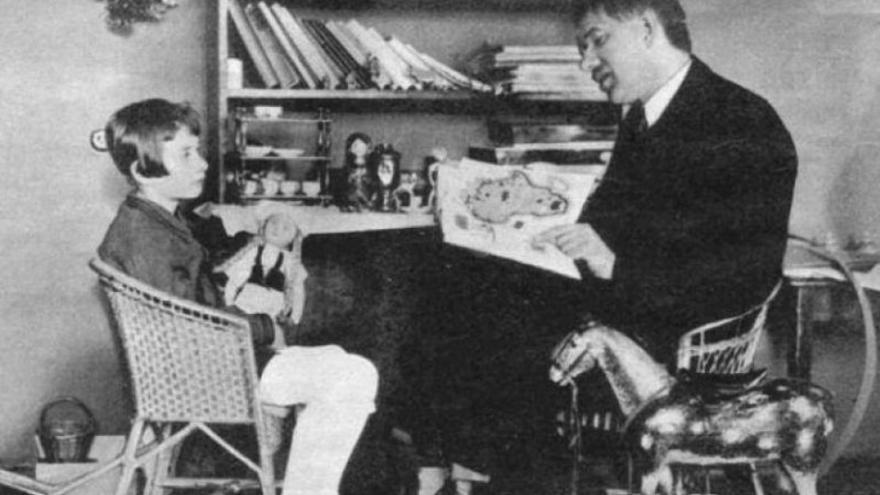
Chukovskaya as a child with her father, Korney Chukovsky. (CC)

14ymedio bigger14ymedio, Daniel Delisau,  Las Palmas de Gran Canaria, 15 April 2018 — The life of the Soviet writer Lydia Chukovskaya revolved around a question from 1937: What was the fate of her husband, a reputed physicist, after he was arrested that year in the cruelest moment of the Stalinist purges? As fruits of the pain caused by that question, and that took a long time to resolve, she wrote two novels, Sofia Petrovna, One Exemplary Citizen and Immersion, a Path in the Snow.

In both works, published for the first time in Spanish in 2014 and 2017 by Errata Naturae, it is easy to guess the markedly autobiographical character of Chukovskaya’s stories. Like her, the protagonists of both novels never saw those they loved most after the mass arrests that took place in the Soviet Union between 1936 and 1938, and that, according to the historian James Harris, in his recent essay The Great Fear, entailed the execution of some 750,000 people for political reasons. continue reading

The protagonist of Immersion — written between 1949 and 1957 — is Nina Sergeievna, a translator and writer who is supposedly enjoying a privileged break in a dacha on the outskirts of Moscow, with other colleagues. But instead of enjoying a holiday offered by the Writers Union (the body in charge of ideologically controlling authors’ literary creations), Nina spends those days of February 1949 working on her translations and searching, in the solitude of the snowy forests, for possible answers to the disappearance of her husband.

“What was his last moment like? How did they make him pass from life to death? I don’t even ask myself why. I only ask: how? where? when?” the protagonist reflects in one of the immersions in her memories. Although her husband had been condemned to “ten years in a prison camp without the right to correspondence and the confiscation of possessions,” she has long since assumed he was dead.

Perhaps because of this, when Nina discovers the truth about the fate of her husband, there is no place for an unshackled pain, but rather a stoic acceptance. Biliban, a writer who takes advantage of his leisure to write a commissioned novel faithful to Soviet values, becomes the most important person to the protagonist during these days in the countryside, because for her, above all, he is one of the few messengers “from there,” from the labor camps.

Bilibin had left behind, in the gulag, the tomb of his best friend, and as a result of forced labor he had serious heart disease and a deep knowledge of the penal system. He had never heard of camps where convicts were held “without right of correspondence.” It was simply a euphemism told to the relatives of the prisoners who had been executed shortly after their arrests.

“You aren’t crying?” Bilibin asks Nina, after assuming the death of her husband. “No. If you… and other people… could bear it, it would be unfortunate for me to burst into tears,” she replies, in what is the clearest example of Chukovskaya’s narrative style, in which deep emotions do not overflow in a torrent but are enclosed in the most contained words.

In her works, the Russian writer did not know or wanted to set aside the realistic patina that prevailed in artistic creation during a good part of the Soviet period. Although, paradoxically, Chukovskaya came closer to reality when talking about a subject that the rest of Soviet literature, clearly propaganda, never touched on.

But in Immersion the attachment to reality that the author reflects in the story is contrasted with a desire to transcend literality and elevate the spirit through poetry. Tired of living in a society of hollow and empty words, the work of the poet becomes, for Nina, one of her greatest refuges of freedom.

“As always, reading the newspapers did not offer me anything useful, I was curious, I am forced to read them without getting anything useful, I could browse them, yes, but find out something, never.” The letters were combined into words, words into lines, lines into paragraphs, paragraphs into articles, but nothing was transformed into ideas, into feelings, into images,” thinks Nina, weary of the official press.

Chukovskaya, who in her childhood was entranced with long walks through the woods with verses and stories recited by her father — the children’s literature writer Korney Chukovsky — who wanted Nina to also experience the poetry of authors as important in Russian letters as Pushkin, Nikolay Nekrasov and Alexander Blok.

“There is nothing like the impotence of translation to better reveal that the verses are not only constructed with words, ideas, metric feet and images, but also with time, mood, silence, separation…” the protagonist of Immersion reflects, on translating the verses of a holiday companion, an old Jewish poet who lives with the fear of anti-Semitism unleashed by the purges.

Immersion is a novel very similar to Sofia Petrovna, written shortly after the disappearance and murder of Chukovskaya’s husband, as a first exercise to exorcise the pain and raise her voice even if there was nobody to listen to it. But it is more interesting to observe the differences between the characters in their ways of approaching life.

In Sofia Petrovna it is not a rebellious wife, aware of the lies of the state, who loses her husband in the purges, but a happy mother satisfied with the Soviet model who sees how her son is arrested, an engineer with a promising career ahead. The selfless mother, who stands in endless lines to ask about him in every prison and writes as many inquiries as necessary, will end up losing her mind when she sees no difference between the state propaganda she believes in and the injustice of the arrest and murder of her innocent son.

“If Sofía Petrovna symbolizes the failure of imagination and individual resistance, Nina Sergeievna, the protagonist of Immersion, a character much closer to the author, is capable, on the other hand, of understanding the genuine use of words and relies on writing as a defensive trench before the depraved use of language,” writes Marta Rebón (the translator) and Ferrán Mateo in an endnote.

Throughout her life, Chukovskaya was aware that the way she spoke and wrote conditioned her way of seeing reality and that poetic language was her best shield against the rhetoric that impregnated political and social life in the USSR.

Like Nina, she was also a deeply empathic person who ultimately could not remain quiet in the same way that her literature had been silenced. She ended up being expelled from the Writers Union in 1974 for her public defense of authors such as Andrei Sakharov, Aleksandr Solzhenitsyn and Boris Pasternak.

Today, reading Chukovskaya’s work also awakens in the reader the need to defend herself against dead words through her own literary universe. But the words without a life of their own, to which the writer referred, have been forgotten in all those countries where the communist regimes were replaced by other forms of government. It is now lucid readers who must discern what is the inert language of their own time and of the place in which they have been fated to live.

 _____________________

The 14ymedio team is committed to serious journalism that reflects the reality of deep Cuba. Thank you for joining us on this long road. We invite you to continue supporting us, but this time by becoming a member of 14ymedio. Together we can continue to transform journalism in Cuba.

IAPA: Cuban Government Wants a "Mute, Deaf and Blind Country"

Independent reporters, such as Sol García Basulto and Henry Constantín, have suffered different attacks “in a climate of total legal defenselessness”. (14ymedio)

14ymedio biggerEFE via 14ymedio, Medellin, 15 April 2018 — The Cuban government wants “a mute, deaf, and blind country” with regards to communication, journalism and the internet, according to the Inter-American Press Association (IAPA) in its report on Cuba presented this Saturday in Medellín.

It is “an increasingly difficult goal because of the growing, albeit slow, citizens’ connections to the internet and the perseverance of journalists and independent media that do not cease their work despite restrictions,” reads the document that was read by the executive director of the IAPA, Ricardo Trotti. continue reading

The director presented the report on behalf of the journalist Henry Constantín, who was not allowed to leave the island to travel to Medellin to the IAPA mid-year meeting.

In reference to the upcoming departure of Raúl Castro from the Presidency of Cuba, the IAPA insists that “no improvements are expected,” since Castro will continue to hold the position of first secretary of the Communist Party.

The report also states that, following the announcement of President Donald Trump to create an “operating group” to support Cubans’ access to the Internet and the development of independent media, Cuban State Security “increased its aggression against non-official journalists.”

Despite this harsh situation, the independent press “seeks to survive and grow” with citizens who sign their work “with their own names or under a pseudonym.”

According to the report, attacks have targeted the Cuban Association for Freedom of the Press, the Coexistence Thinking Center, the digital newspaper 14ymedio, the videojournalism agencies Palenque Visión and En Caliente Prensa Libre.

The Cuba Posible platform and the magazine La Hora de Cuba have also suffered attacks, and even projects outside the island, such as Diario de CubaMartí NoticiasCubanet and El Estornudo, among others have as well.

The study mentions dozens of journalists who suffered different aggressions, and stresses that these attacks occur “in a climate of total legal defenselessness and a state that governs everything.”

With regards to internet access in Cuba, the report states that “it is still expensive,” and that the average monthly salary is the equivalent of the cost of 30 hours connection.

In addition, the government blocks websites and “e-mail addresses related to journalism and human rights,” in addition to “several national and foreign news websites in Cuba.”

Finally, the report details that the surveillance of internet navigation and telephone data, and the “hacking” of personal profiles on social networks “is commonplace” on the island.

 ________________________

The 14ymedio team is committed to serious journalism that reflects the reality of deep Cuba. Thank you for joining us on this long road. We invite you to continue supporting us, but this time by becoming a member of 14ymedio. Together we can continue to transform journalism in Cuba.