The Age of Reptiles / Miriam Celaya

The times are propitious for the unveiling of the proverbial national fickleness. The blurring of the mythical figure of the supposedly invincible commander within the Cuban panorama–his disappearance from the Roundtable talk show and from the public eye in general–has unleashed a wave of criticism of the earlier period of this same process called the “Cuban Revolution,” which occurred during the absolute reign of Castro I.

With the inevitable (and forced) accession of Castro II, we have witnessed a spectacle which is as depraved as it is unexpected: like pilot fish who abandon the shark in disgrace, the servants, who until recently revered the patriarch of disaster and had only praise for his work, have changed masters and are hurrying to catch up with the discursive tone of the “pragmatic reformer” (every little king requires his own label), whose first step has been to harshly question the evils generated by bureaucracy, excessive state control, centralization and corruption, stemming from the “erroneous interpretation” of socialism. The General, of course, doesn’t throw the darts directly at his mentor, but the disquisition is clear considering that for half a century his brother was the absolute master of the helm, and monopoly of power leads inevitably to monopoly of responsibility.

Thus, until now, most reformist we’ve seen in Cuba in the last five decades is the official discourse, rapidly adopted by a choir in which we hear more or less the same voices, although they occupy different positions and tones on the stage. The same ones who yesterday deliriously applauded the caudillo, today criticize the evils unleashed under this government, as if they had been produced by spontaneous generation and without regard of the good intentions and purity of the leader. In fact, many avoid even mentioning the absent one.

The list of neo-reformists of the word would be so extensive and its composition so varied that I prefer to dispense with it. And they are not necessarily “young,” rather they swell the entire age spectrum of society. By way of example, let suffice the recent declarations of Alfredo Guevara, a stalwart of the regime, when he asserted to a group of university students that Cuba is producing a “ridiculous transition to a socialist society,” thanks to the reforms of Raul Castro. Guevara now says that it is necessary “to destroy this huge apparatus that has seized society.” In a display of criticism, the man who was the founder and president of the Cuban Institute of the Art and Industry of Cinematography (ICAIC), said that “today” dogmatic ideas don’t prevail in the high echelons of power, as they did for years, when they trained leadership cadres who studied Marxism “like a Stalinist catechism.” A word to the wise…

There is no need to dwell on the details, nor do they require much comment. One can only wonder what made this and the so many other functionaries and lackeys of the system avoid or warn of “the nonsense,” what and who says that the institution of which he was the top leadership was free of bureaucracy and of dogmatic ideas that mutilated, in small or large measure, creativity, and why he and his associates seem to consider themselves morally superior to the fundamental architects of the collapse.

But let’s not fail to consider a good sign. Undoubtedly, we are witnesses to the process of political mimicry that has characterized all the transitions of the old socialist countries, by virtue of which the most astute attendants of the dying regime remodel their discourse, re-accommodate themselves, and adapt to new trends to try to survive in the times ahead. Among them there will be no lack of the businessmen and politicians of the future, perhaps by then with an harangue completely opposed to what they hold forth about today, we shall see. It is, therefore, a sign of the process of decay itself that I prefer to view it with optimism, even though it stinks. It’s true that Alfredo Guevara–an octogenarian intellectual with a full life and relatively large body of work–whose eventual episodes of false rebellion have been mysteriously tolerated by a government never given to pardoning stupidities, means little in view of a period of changes that at some point on the road they will begin to hasten; but we know that we can count on the appearance of many more chameleons like this one. And it will be logical. They are the small lizards who try to survive the extinction of the dinosaurs. In short, we have to prepare ourselves to pass to a new stage that–despite everything–signals times of change. Meanwhile, everything indicates that we will still continue for some time in the age of the reptiles.

July 5 2011

Sell and Leave / Yoani Sánchez

Imagen tomada de: Ben, a Cuban in Europe. https://bendeasis.blogspot.com/

News has several lives on this Island. First they hint at something but don’t publish it, then they announce it tersely in some national media, and later its echo repeatedly feeds popular fantasy. This has happened with the recent information about the new flexibility in buying and selling homes. For months–perhaps years–we spun the rumor that a new housing law was about to be approved, that the absurdities of real estate would no longer stand. But only when the Cuban Communist Party Congress addressed it in Guideline No. 297, could we put some hesitant certainty to it. Although late, the measure has sparked an exclamation of relief, but has also revealed our suspicions.

Curiously, most people who bring up the issue, repeatedly put the same question to me. “Can you sell your house before leaving the country?” everyone asks, as if the real estate business was just a step to fulfilling the widespread dream of emigration. Until now, someone who permanently left the country was dispossessed of their property. Only a family member living under the same roof–and for ten years–was able to stay put, but they had to pay the National Institute for Urban Reform the value of the house. Forced evictions of those who didn’t follow this rule became a common sight on the streets of this capital. Now, the great conundrum is whether a property owner will have the power to dispose of their home on the market and use that money to relocate to another latitude. How much time should elapse between this commercial transaction and the departure from the national territory?

We have been conned so much that people prefer to wrap themselves in skepticism and believe that the new selling measures will also be full of restrictions. I am surprisingly optimistic amid so much suspicion. I argue to the doubters, “The government is forced to open up, or the reality will leave them behind,” but they prefer to carry on without illusion. Notwithstanding their distrust, many cherish the idea of offering the walls within which they live in exchange for a ticket and visa to get out of Cuba. Sell and leave, trading a roof here for one there, using their small patrimony to escape. And do this before the real estate flag drops again, before the step back is taken.

5 July 2011

Notes from Captivity XVI / Pablo Pacheco

Image from the Internet

The complaints cost me points with the commander.

by Pablo Pacheco Avila

It has been 92 days since my last meeting with my wife and son. I was impatiently looking forward to the officer on duty calling my name for the visit, and being able to hug my family and talk with them, even though it was only for two hours. In captivity, visiting time is considered a blessing from God.

Around noon I heard my name on the guard’s walkie talkie and he immediately presented himself at my cell asking, “Are you ready?” “For more than three hours,” I answered.

I’d spent more than two months without breathing free air. The guards hadn’t taken me outside the bars and walls of my cell during this whole time. One week after the last visit they had taken me to the prison infirmary for a routine medical check-up and since then I hadn’t left the confines of “The Polish.” Whenever I passed the barriers of confinement I felt like another man, a free man, if only for an instant.

Between hugs and tears my wife and I greet each other. With my son I had to pluck up my courage so he wouldn’t notice my distress and to a certain extent I succeeded. Then, he started to tell me about his experiences at school and innocently asked about my studies. Oleivys looked at me and inevitably our eyes welled up with tears, fortunately Jimito wasn’t looking at us at that moment. The white lie we told our son after my arrest, about my supposed school, broke our hearts.

Oleivys clued me in to recent events in Cuba and the campaign for our release. The three of us ate together. In reality, only the boy ate well. We two, knowing the crude reality of our lives, made it difficult to eat the food that Oleivys had made with so much effort and sacrifice in our home, almost eight hours before the meeting.

Suddenly Captain Peñate of the political police burst into the office where we were and announced the end of the visit. Oleivys looked at her watch and we had actually passed the two established hours. We said goodbye on the spot, my partner and I having agreed not to show our despair in front of the “executioner” when it came time to say goodbye, it was one of our most effective weapons against the guards.

Back in my cell, I waited for Captain Emilio Cruz Rodriguez, Chief of Internal Order in the prison and the main “executioner” of the prisoners. He ordered his subordinates to search my belongings minutely.

Emilio took umbrage with a small jar of mayonnaise my wife had bought in the hard currency stores. They made me put it in another container because the metal detector beeped at the metal that protected the mayonnaise. I explained handling the sauce could contaminate it, but they ignored me. After an exchange of words he said, “It’s not my problem if it gets contaminated, I’m following orders.” Never mind Captain, I’m a prisoner for my ideas, not for my food,” I told him.
Before leaving the cell Emilio told me, “Pablo, on your previous visit your wife lodged a complaint about me with regards to a beating given to a prisoner.” It’s possible, I responded. 
“I just want to inform you, Pablo, that these complaints of your result in my getting points from my Commander in Chief,” he added. To which I replied, “Captain, may your Commander in Chief be equally brave the day it’s not about protecting yourself and you have to respond before a court for your abuses.” Emilio stared at me, upset, and didn’t say another word.

When I got back to my cell I wrote a note to my brothers in the cause telling them the details of the visit. Then, out of an instinct of solidarity, I sent them a bag of goodies that my family had brought. It was customary among all the political prisoners in “Polish” to share opinions, food, books and everything we could share. Among us prevailed the power of solidarity above selfishness and human misery. Time proved that captivity strengthened us as human beings and we today we give thanks to God for it.

That night, the words of Emilio hammered in my brain and I confess they kept me up late. I never imagined so much evil in one person, I understood that the cruelty with regards to mayonnaise was in retaliation for the complaint Oleivys had lodged with the military.

Three days after the visit I had to throw away the sauce because it was rancid. I lost one of my most precious foods in prison. It always lasted me five or six weeks, saving it, but this time Emilio’s hate and intolerance forced me to throw out the food. Little did this guard imagine that his attitude gave me extra strength to continue denouncing the abuses and crimes in the Cuban prison system.

2 July 2011

To Keep the Cuban Blogosphere Excited / Iván García

I have received an unexpected gift: a ship’s log with my name on it. Marco A. Pérez López and Liu Santiesteban, administrators of Tania Quintero’s blog, opened it for me.
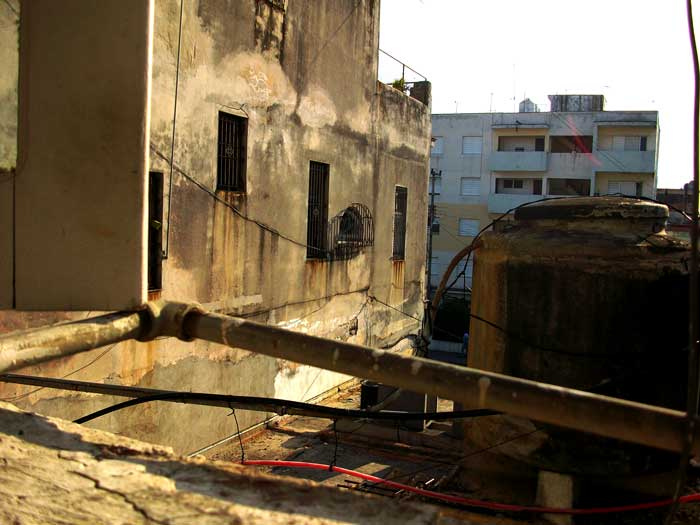
The blog of Iván García and his friends, is in no way affecting Desde La Habana, founded 28 January 2009 and since January of 2010 administered by Carlos Moriera, a Portuguese friend in whose debt I shall be forever.

It will be a new space in the creole blogosphere. Now animated enough, with alternative blogs and officials from the island and also with those produced by Cubans overseas.

I take this moment to wish a happy summer to all readers.

Iván García

Share on Facebook

Translated by: JT

July 3 2011

Busy, But Not Lost / Regina Coyula

I haven’t repented, it’s that after walking around “the countries”; my house, largely torn up owing to renovations, has been, the poor thing, the principal beneficiary. We aren’t imagining grand things, it’s repairing ceilings, plumbing, a broken masonry wall that wasn’t on the list but occupied priority number one immediately, and giving my boy a door to his room for the privacy necessary for an adolescent. I’m among cement – bought legally – iron bars – the same – plumbers and a pretty stressed-out mason, in a little house like mine, these kinds of gifts are chaotic because everything stacks up and gets dirty. But like a friend told me: you’re lucky to have a house to repair. And without internet after having been in the world, disconnection punishes me harshly. So much silence doesn’t mean I might abandon the blog, but not only a live blog, although it might give me life. Then a month of making an extraordinary life, routine will seize me again as a final end to my constructive experience.

For those who asked and also for those who felt curiosity, my trip was of an absolute normalcy. In leaving I expected questions, inquiries. Nothing. “On my return,” I told myself. Nothing. Well, almost nothing, thanks to some sausages without gluten for my celiac brothers, but just as tasty anyway, I passed through Customs at an explosive speed. I didn’t bribe anybody, I came prepared to pay what I had to pay, but the attractive sausages of “The English Court” recently bought on the morning of the same day opened doors for me without having to say a word. We’re in Cuba now, I said to my husband.

Translated by: JT

June 24 2011

Nostradamus in a Gypsy Cab (Almendrón) / Rosa María Rodríguez Torrado

I was on my way back home in a collective gypsy cab or almendrón which I took at the intersection of Linea and G streets, in the Vedado neighborhood, where there is a popular route of these cabs going towards La Vibora. Before arriving 23rd Ave. the old car was already full. The last passenger that got in the vehicle commented “how rough is the life out there” and that was the fuse which set off all of us, including the driver, to channel our opinions. We expressed different judgements and new projects and political ideas, as well as, sociological, economic and even philosophic, over the things that should be done to rule the destinies of our country in the future. We exercised our freedom of speech in that rolling piece of junk and we were engaged in an amused and productive debate for most of the trip, in which the one who started the conversation showed a wide political culture that was praised by some of the riders. He also said that all of us in the archipelago were prophets in the political, social and economic scenes that inevitably will prevail in Cuba in the near future.
When we passed the traffic light on Santa Catalina and Vento, the debate’s protagonist raised his voice in an authoritative tone and said:

– Driver, take this car directly to Villa Marista*, because you are all arrested.

We were astonished and for a few seconds that felt like an eternity, a thought came to my mind of the upcoming trouble I would have, if, at the headquarters of the political police they dig through my long and old record as a dissident. I wished more than ever to have a cell phone at hand, to warn my family about how difficult that circumstance could be. However, in face of the silence of the rest, I replied very upset:

– What’s the reason why ? We only exercised our freedom of speech. What’s the problem ? Driver, don’t go anywhere, because this supposed officer didn’t identify himself yet!

-Lady- argued the driver in a whiney tone – Are you suggesting I should disrespect the authority ? I am a revolutionary, although I disagree with certain things, but I give my life for the Cuban Revolution and Fidel.

Just when I was expecting another intervention earmarked by fear, we turned towards Mayia Rodriguez street and the young Nostradamus ordered the owner of the vehicle:

– Stop at the next corner.

When the old car stopped he extended his hand with a ten pesos bill, got out of the car laughing, and started walking on San Mariano St.

Some of the passengers remaining in the car shouted all sort of insults, but he didn’t answer to anybody. He kept on walking, meanwhile there was a scattering of nervous laughter all around, and turning back his head every now and then as if he was a chased maniac. After that, there was a long silence that lasted until the place where I got out of the car.

I am not quite sure if we the passengers on that trip lost our sense of humor or we gained humor in the sense, but the fact is, it happened the same way as I am telling you right now.

*Translator’s note: Villa Marista is the headquarters and jail of the Cuban political police.

Translated by: Adrian Rodriguez

June 16 2011

Nostradamus in a Gypsy Cab (Almendrón)

I was on my way back home in a collective gypsy cab or almendrón which I took at the intersection of Linea and G streets, in the Vedado neighborhood, where there is a popular route of these cabs going towards La Vibora. Before arriving 23rd Ave. the old car was already full. The last passenger that got in the vehicle commented “how rough is the life out there” and that was the fuse which set off all of us, including the driver, to channel our opinions. We expressed different judgements and new projects and political ideas, as well as, sociological, economic and even philosophic, over the things that should be done to rule the destinies of our country in the future. We exercised our freedom of speech in that rolling piece of junk and we were engaged in an amused and productive debate for most of the trip, in which the one who started the conversation showed a wide political culture that was praised by some of the riders. He also said that all of us in the archipelago were prophets in the political, social and economic scenes that inevitably will prevail in Cuba in the near future.
When we passed the traffic light on Santa Catalina and Vento, the debate’s protagonist raised his voice in an authoritative tone and said:

– Driver, take this car directly to Villa Marista*, because you are all arrested.

We were astonished and for a few seconds that felt like an eternity, a thought came to my mind of the upcoming trouble I would have, if, at the headquarters of the political police they dig through my long and old record as a dissident. I wished more than ever to have a cell phone at hand, to warn my family about how difficult that circumstance could be. However, in face of the silence of the rest, I replied very upset:

– What’s the reason why ? We only exercised our freedom of speech. What’s the problem ? Driver, don’t go anywhere, because this supposed officer didn’t identify himself yet!

-Lady- argued the driver in a whiney tone – Are you suggesting I should disrespect the authority ? I am a revolutionary, although I disagree with certain things, but I give my life for the Cuban Revolution and Fidel.

Just when I was expecting another intervention earmarked by fear, we turned towards Mayia Rodriguez street and the young Nostradamus ordered the owner of the vehicle:

– Stop at the next corner.

When the old car stopped he extended his hand with a ten pesos bill, got out of the car laughing, and started walking on San Mariano St.

Some of the passengers remaining in the car shouted all sort of insults, but he didn’t answer to anybody. He kept on walking, meanwhile there was a scattering of nervous laughter all around, and turning back his head every now and then as if he was a chased maniac. After that, there was a long silence that lasted until the place where I got out of the car.

I am not quite sure if we the passengers on that trip lost our sense of humor or we gained humor in the sense, but the fact is, it happened the same way as I am telling you right now.

*Translator’s note: Villa Marista is the headquarters and jail of the Cuban political police.

 Translated by: Adrian Rodriguez

June 16 2011

A Sui Generis Walk / Miriam Celaya

LGTB Walk through Havana. Photo courtesy of Dimas Castellanos

On Tuesday the 28th, at three in the afternoon, the first LGTB (Lesbians, Gays, Transsexuals and Bisexuals) Observatory Walk took place in Havana, along the middle of the central street of the Prado, starting from the corner of Neptune and continuing to the sea. The date selected recalls the massive gay pride march celebrated in New York in 1970 that marked an important victory for these minorities. The parade, of small numbers but peaceful was not interrupted or repressed by the uniformed police force, or by civil agents of the political police who, however, were abundant in the sites adjacent to the popular avenue.

Around twenty members of the independent organization marched down the center of the old Paseo del Prado, waving their multicolored flags and proclaiming the right to freely choose their sexual preferences and opposing discrimination against different minorities. A march of this nature, led by an organization not attached to the official CENESEX led by Mariela Castro, has no antecedents in Cuba, so the small representation achieved in this first edition does not discount its significance, and perhaps in future years it will be exceeded. Surely the fear that dominates vulnerable sectors of society faced with the repressive forces, coupled with a strong social prejudice aimed at these groups, was a decisive factor in the number of witnesses who crowded into the area and the silent multitude formed by both curious homosexuals and heterosexuals unaccustomed to such boldness in our streets, who accompanied the demonstrators from a certain distance and from nearby sites, without openly joining in with the walk. We can not forget that, until recently, homosexuality was fiercely persecuted and harassed by the powers-that-be, that its members continue to be stigmatized and discriminated against in various ways and that, in general, society tends to marginalize those who are different.

The small number of determined demonstrators, however, could congratulate themselves on the importance of the event, given that this is the first unofficial public demonstration of an eminently civic character that has occurred in Cuba without having been prohibited or repressed by the authorities. Unable to anticipate, until this moment, what would be the reaction of the usual repressors, one has to respect the bravery of the organizers of the small event who intended to peacefully claim their own public space. It was established, by a decision of its members, that each June 28 there will be a LGTB Walk in the same place.

On the other hand, the official institution headed by Mrs. Castro Espin does not accommodate the LGTB Observatory. The desire for official control does not allow the existence of independent civil society organizations, not even those that relate to an element so personal as the free choice of sexuality of individuals and their right to exercise it. That is, homosexuals do not escape the primary classification of “revolutionaries” or “not revolutionaries.”

I must admit that I was pleased to see that the LGTB Walk was free of political signs, of slogans for or against the system or of the discourse of the barricades. Nor was there praise for the representatives of the government, nor a display of supportive images of the five State Security fighters imprisoned in the United States, as usually occurs in the demonstrations called by CENESEX. No ideological disorder contaminated the civic scene of the Tuesday march. It remains to be seen whether the strained tolerance exhibited by the authorities this Tuesday will continue, or if this is a preamble that, in some ways, convenes a broader civic participation of citizens who represent various interests that include the entire complex spectrum of Cuban society.

July 1 2011

A Note / Rosa María Rodríguez Torrado

To all visitors of “The Barefoot Rose”:

Because of the limited access to the Internet, I needed to complete the publication of a work in different days once more, then the super-slow connection from where I accessed before prevented me from adding the image of the writing “Nostradamus in Shared Taxi” and completing the same edition; loading of the page of the WordPress text took almost an hour. I apologise for the inconveniences and thank you for your sympathy.

Translated by: Ivana Recmanová

June 19 2011

Cuban Women: Three Cases to Think About / Luis Felipe Rojas

I made this documentary some time ago, and had to film it with one small photographic camera that I had at the time.

If you follow the film to the end you will see pieces of the lives of three women in eastern Cuba.

I wanted to get into the homes of these women who still live in the countryside and do not have the benefits of country life with nearby river water and the mountain breezes. They live in a dark corner of the province. In no man’s land.

Clearly this is not a total image of Cuban women, I wouldn’t dare to try that because I couldn’t do so much.

It just interests me to show what that amateur documentary maker has been able to do with a workforce of only two, my wife Exilda and me… because although you may not believe it, we too have “rearranged our workforce” and “reduced the payroll.”

I hope the vision of these women sparks some opinion in you, because this is the reason for the “Barbed Wire.”

June 30 2011

Hugo Chavez’s Secret / Yoani Sánchez

Hugo Chavez’s announcement that Cuban doctors had found and removed a cancerous tumor, coming after weeks of speculation about the Venezuelan president’s absence from public life, touches a particular chord for Cubans.

For decades, the health of the Cuban president was information cloaked in secrecy. It was the least transparent topic in our national life, until reality forced disclosure about the physical state of our ruler. On July 31, 2006, a proclamation announcing the sudden illness of Fidel Castro was read. I remember that night, when my phone seemed on the verge of exploding because all my friends called to confirm that we had heard the news.

The next day, the streets of Havana were surprisingly empty. Those who were out tended to speak in whispers and avoided looking each other in the eye. Many of us, who had been born and grown up under the rule of one man, were in shock. Some were filled with sadness; others — the great majority, I must confess — with relief.

Then came the many months when we were administered doses of medical news, like tablespoon-size updates. Sometimes foreign visitors would announce they had seen the commander in chief. A Non-Aligned Nations summit held in Havana that September named, in absentia, the olive-green-clad convalescent as its leader. To us, however, he never appeared. Speculation grew and grew about whether he continued to breathe or had gone to swell the pantheon of historical figures.

But the official media maintained its silence, interspersed with some triumphalist phrases about his recovery. Few dared to say aloud that the health of our ruler couldn’t be treated as a state secret. Even fewer called for his resignation on the grounds that he was unfit to carry out his duties.

Nearly three years inched by like this before the patient himself confessed, in one of his “Reflections of Fidel” published in the newspaper Granma, that he had been on the brink of death. Thus, we discovered that those who had had access to him and who reportedly said such things as “He’s walking in the countryside and through villages,” “He looks like he will live to be 120” or “His state of health is enviable,” had been lying to us. Only then did we know how we had been cheated, the victims of a political trick to keep us under his paralyzing influence.

Accustomed as we are to reading medical reports upside down and lacking confidence in benign diagnoses, the convalescence of Hugo Chavez had not gone unnoticed in our country. As with Fidel Castro, Cuban media sought to allay concerns about Chavez. Until Thursday night, details of his condition had not been made public. The secrecy surrounding the surgery performed on Venezuela’s president reinforced our feeling that information was being concealed. As was the case five summers ago, the official reports play at distraction and understatement. The lack of clarity suggests we are reliving those paranoid days when a curtain of silence was drawn around an old man, and we didn’t know whether he was still breathing, able or unable to continue to command “his troops.”

Chavez’s illness has other implications for us. The man’s fragility has been exposed from under his familiar red jacket. The degree of economic dependence binding Havana’s Revolution Square to the Miraflores Palace in Caracas suddenly seems more perishable than it did just a few weeks ago.

Now, long-term forecasts have to be reformulated: How many had dared to consider that the other Commander would not be eternal, either? Over the past few weeks, panic has gripped fat-necked bureaucrats, officials who control the subsidies that come from Venezuela and entrepreneurs who resell a portion of the hundred thousand barrels of oil sent to us by what we like to call our “new Kremlin.” They are all holding their breath, hoping that, as soon as possible, he will be signing agreements, speaking to the cameras, governing by force of presidential decrees.

In an effort to quell the speculation about Chavez’s presence in our country, the official media recently published a brief note mentioning an intestinal abscess. There was no word of the cancer Chavez disclosed Thursday. But the official message only stoked the questioning. There was something morbidly in the insatiable nature of the gossip. It is not the fault of our outgoing and garrulous nature but, rather, a reaction to silences maintained for too long. When a subject is taboo, there is nothing more attractive to whisper about.

For 50 years they made us believe we were ruled by someone who knew no illness, no pain, no fatigue. Once the bubble of the “invulnerable” commander in chief burst before our eyes, reports about the health of those governing us were seized on with skepticism. Now, Chavez is also the object of this incredulity, a target for our rumors. Thus, we have come to know that in the span of history he — like Fidel Castro — is mortal, ephemeral and transient.

Yoani Sanchez is a writer in Cuba and winner of the 2010 World Press Freedom Hero award. She blogs at www.desdecuba.com/generationy and is the author of “Havana Real: One Woman Fights to Tell the Truth About Cuba Today.” This column was translated from Spanish by M.J. Porter.

This post originally appeared on the Opinion page of the Washington Post on July 1, 2011

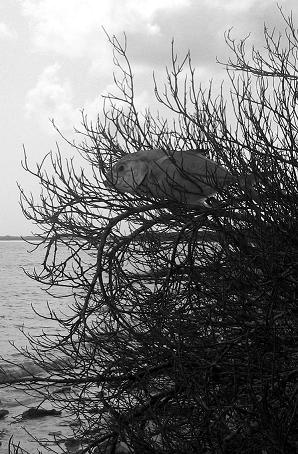
The Word Birch / Francis Sánchez

Photo: Francis Sánchez.

One day a long time ago, I drew the word birch

to my favourite and beloved poet Herberto Padilla,

the word which he could never climb in such a short life

the place where we had gone running to with our eyes

so little we cut ourselves with the crystal of the dead

One day I gave him like a saddened thief

new words, undomesticated

like iron knees

transparent embraces

that bow to the touch along with the spike

hard mouth of distant almonds

One day I said to him the word Rest

stop walking on the ground

because this is the greatest marvel, that of the trees

don’t leave alone into the dream,

don’t exasperate alive before the crowd

And the word Stay

you don’t have to prove where we spend the nights

you don’t have to say anything else

until the stars speak.


[Note the shape. The gaphics has to form a tree.]

Translated by: Ivana Recmanová

March 31 2011

Gimme Light / Claudia Cadelo

I’m so accustomed to the lack of information in our media that when I hear a story, not just of current national or international importance — as one can’t ask for so much — but of something as simple and useful as the repairs that occasion power outages, or about water shortages in certain areas of the city, I’m surprised. By the way, this kind of information — highly advantageous for making life easier for citizens — is only aired on the Havana channel. Sadly, I don’t get that channel at my house so I’m obliged to watch it when I’m visiting friends.

A few weeks ago I heard on the news for the first time a detailed explanation of the water shortages we inhabitants of Havana are suffering, particularly in the central neighborhoods and of course in Vedado where I live. It even made me happy, because they’ve always treated us so badly that the mere fact of announcing a lack of drinkable water during certain hours is appreciated. In general, you wake up one day to no gas, or water, or electricity, and you don’t know why. With any luck, you discover the cause of the failure several hours later.

I prepared, obviously, for the following day and filled my reserves: buckets and plastic jars adorned my kitchen and my bath to weather, as best as possible, the absence of the vital liquid. But when the sun came up I was surprised to find water in the pipes, and by mid-morning — don’t let anyone believe that in Cuba this comes as a surprise — the lights went out and didn’t come back on until dawn of the following day. In the end, I don’t even regret not hearing any information about the shortages that affect us, I prefer the confusion of filling up buckets when I should be out buying candles.

2 July 2011

A Note

To all visitors of “The Barefoot Rose”:

Because of the limited access to the Internet, I needed to complete the publication of a work in different days once more, then the super-slow connection from where I accessed before prevented me from adding the image of the writing “Nostradamus in Shared Taxi” and completing the same edition; loading of the page of the WordPress text took almost an hour. I apologise for the inconveniences and thank you for your sympathy.

Translated by: Ivana Recmanová

June 19 2011

CNN’s Havana / Ernesto Morales Licea

When the documentary was close to its end, I discovered an unbelievable sensation deep inside of me: the “destination” Claudia Palacios was proposing was absolutely unknown to me and made me feel the urge to visit it. CNN, through one of its reporters of spectacular beauty and proven professionalism, had just managed to make a Cuban who has only been out of his country for 6 months, hardly recognize Havana, and see himself tangled in a unrepresentative trap and the superficiality of the ample report to the point where he could accept the reality its author was proposing: yes, Havana is a place of enchantment in a paradise which had to be visited.

So different was the city that the ineffable journalist presented to me some days earlier, on the segment “Destinations CNN,” with a Havana I had visited dozens of times throughout my life, as a Cuban, and whose intricacies I knew like the palm of my hand.

The gray antecedent of this unfortunate material came from a Spanish television show. It was called “Spanish in the World”, and also filmed a sweetened, graceful, smiling Havana, which no doubt exists, but as an epidermal make-up which those inside know is empty and incomplete.

But the miscalculations of Claudia Palacios, the incisive interviewer of public figures, the journalist who knows her profession well enough to be able to assume that “speaking without knowing” is understandable in tourists interested in vacationing, not in communication professionals, seemed mildly scandalous to me.

Let’s say: to present Havana as a festive, tropical city, a city of clandestine cigars and people who serve you, is not exact. To only present Havana as a city of never-ending festivities, of happy and dancing Cubans, of mojitos and rental cars, without later delving into the refinements, inside the veins under the social skin, is a journalistic misfortune. And by this, I know I am not saying anything new to the talented reporter, which makes it worse.

Was it necessary or essential to present the most cruel Havana of all, of nocturnal thugs, the galloping corruption or the semi-juvenile prostitution? I wasn’t even asking for that, as a spectator of a coverage that evidently didn’t try for depth or questioning. I know the profiles and perspectives in which journalists sometimes focus our work.

But to affirm that behind the plans of “economic reactivation” undertaken by Raul Castro’s government, Havana had bloomed in a spectacular way, seems to me to be a conscious falsification of the truth, and that, in all its essence, is a crime of “lese journalism.”

Didn’t the smooth Claudia Palacios visit the barracks where hundreds of Habaneros or Orientales stack themselves, people who come from any part of Cuba or those born in the capital, without potable water, between cracked walls and grime stamped on the ceilings? Why was the reporter content with following the tour of La Habana Vieja (Old Havana) offered to her by a designated guide from Havana Tour, and not stepping out of the script of that tropical Virgil, not going down the pestilential streets that haven’t been repaired by the Historian’s Office, which are very close to those places she filmed? Perhaps the informed journalist is unaware of the usage of nations like Cuba, where those guides are faithful people chosen by and for the State Security, people who know precisely what they can and cannot show?

Perhaps Claudia Palacios didn’t see the private businesses with repeated products, fried flour patties, breads filled with spreads made from indecipherable ingredients, because of the lack of viable source materials that would allow them to grow as true business men? In that city she described as a Paradise made up of sea water and smiling people, didn’t she see the sweat running down the skin, the anguish of hunger, the buses crowded with irritable people, didn’t she see uncertainty, a little bit of indifference and a lot of hopelessness? Perhaps the beautiful Palacios doesn’t know that in that city whose growth in tourism she praised no end, attributing it among other reasons to the festive nature of Cubans, that a cohort of adolescents sell their bodies to repugnant tourists for barely a decent dinner or a letter of invitation to another country?

I find it impossible to grant credibility to the reporter of a leading world news chain, who doesn’t know that an immense percentage of Habaneros cannot visit those luxurious restaurants she showed in her documentary, and that for Habaneros and Cubans in general the fascinating Valle de Viñales remains of those places like Varadero, Cayo Coco, and the Hemingway Marina, that have been prohibited to Cubans due to the economic inaccessibility.

Evidently the objective of “Destinations: Havana” was simply marketing. It was to sell a destination, and nothing more. But I ask myself how far can journalistic ethics and decency permit, how far is it lawful to accept a manipulation of realities, showing only half the face of a city so complex as is Havana only because your work load is this and not that.

I ask myself: if all of a sudden the series “Destinations” thought it necessary to recommend Teheran, would Claudia Palacios step on Iranian soil concentrating only on showing the Tomb of Cyrus, the friezes of Persepolis Palace, or address with silk gloves the obedience of its feminine population, without delving into the whys, without diving under the surface, as her journalistic responsibility requires?

I think that aside from pink-skinned Europeans with desires to spend their savings well (I will always remember the words of an Italian in his sixties who said, in front of me, while he caressed the rear of a very young mulata accompanying him:”What would we be without Cuba!”). Aside from the brainless tourists from half the world, and aside from the representatives-implementers of a system like the one my native country suffers from today, nobody else could have enjoyed the “Destinations” filmed by Claudia Palacios.

Not even the people of the city where she took her images. Unfortunately those cannot give their opinion, because they live in one of the few countries where watching CNN is prohibited outside of some hotels, where cable TV doesn’t exist in each home, and so they will not be able to watch the fair mantle of the surreal circus attraction with which the journalist has shown them to the world.

Right this second I still ask myself if I ever truly got to know my Havana. I think that along with that Havana told by Dulce Maria Loynaz in her memoirs, along with the delinquent Havana of Pedro Juan Gutierrez, or the eternal nocturnal and sinful Havana of Cabrera Infante, we can now start to include the Havana of the beautiful Claudia Palacios. I wouldn’t know how to distinguish which of these belongs more to fiction.

Translated by: Angelica Morales

June 23 2011