The Philosophy of Marti versus the Totalitarian Model

Published in the second edition of Cuadernos de Pensamiento Plural, April 2013.

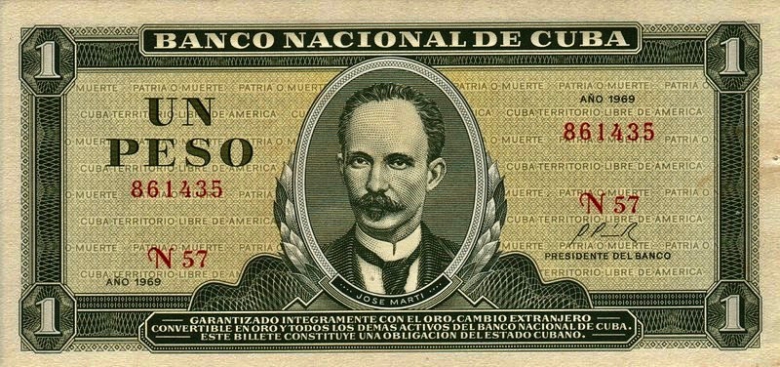
People cannot live without history. On the 160th anniversary of the birth José Martí, “the crowning figure of Cuban political thought,” his ideas, instead of being used to solve the serious social problems that afflict Cuban society, continue to be manipulated in order to validate a failed social model whose goal was to increase production while ignoring basic economic laws such as respect for fundamental rights and freedoms.

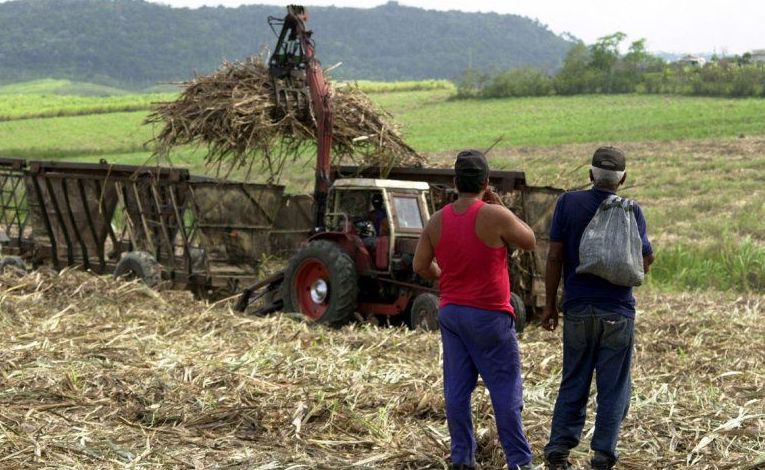
The process began on February 19, 1959 when, just days after assuming the post of Prime Minister, Fidel Castro — in one of his typical fits of volunteerism — stated that he would significantly increase agricultural production and double the consumption capacity of the rural population. He added that “Cuba would sweep away its horrific rate of chronic unemployment, achieving for the people a higher standard of living than any country in the world.” However, the dismantling of civil society, the suspension of civil liberties and the process of economic nationalization led to stagnation and international isolation, to discontent and hopelessness among the citizenry, to apathy, corruption and mass exodus.

Since the early years of revolutionary government this process has had two co-existing pathways to a socialist economy. One is the Economic Calculation in which businesses operating under a state plan enjoy a certain level of independence and self-financing. Employment decisions are based more on financial concerns than moral ones. The other is the System of Budgetary Financing, characterized by greater centralization, a high degree of subjectivity and a preference for the use of moral incentives over financial ones. For decades these two pathways have alternated with an exacerbating volunteerism. This phenomenon can be summarized in the six examples that follow.

1. Between 1962 and 1965 the Economic Calculation system was applied to agricultural businesses, although not in a comprehensive way. For example, self-financing, one of its cardinal features, was not applied, which led to businesses having to turn to the government for funding. During this period the leader of the revolution ignored planning guidelines and allocated large resources to develop his own initiatives such as the Agrupación Básica del Cauto, an agricultural project made up several western municipalities headquartered in the city of Bayamo.

 2. In 1967 more rational standards were instituted. The System of Budgetary Financing was introduced, though with restrictions. It was called the New System of Economic Accounting. Its introduction led to the disappearance of the Ministry of Finance, the state budget, methods for billing and payment, and salary scales.

To develop the “new man,” a work schedule was introduced based on conscience and the extreme use of moral incentives. One of its failed attempts was the conversion of the Isle of Pines into Cuba’s first communist territory.

Later, the Revolutionary Offensive of 1968 did away with the last 56,000 small commercial businesses and private service providers which had managed to survive nationalization. This period reached its climax with the crazed attempt to produce ten millions tons of sugar, an effort which deformed the entire economy.

The mistakes made then were acknowledged in a report to the First Congress of the Cuban Communist Party in 1975 during which Fidel Castro said he had made the least correct decision by developing a new methodology. “We wanted to establish our own methods through the New System of Economic Accounting, which was preceded by the eradication of mercantile categories and the elimination of billing and payment practices between state enterprises.”

3. In 1972 Cuba gained entry to the Council for Mutual Economic Assistance, or Comecon, and in 1975 introduced the System of Economic Management and Planning (whose Spanish acronym was SDPE). It combined state planning, top-down management and rejection of the market. The SPDE was doomed to failure from the start since the Soviet experience had already demonstrated that efficiency in a planned economy was dependent on decentralization and the introduction of market forces.

The most daring initiative from this period was the opening of the Free Peasant Market (Mercado Libre Campesino or MLC) which began operations in 1980. It allowed small producers to sell their surpluses based on supply and demand, “after fulfilling their commitments to the state,” and to hire contract workers. It also allowed for self-employment in forty-eight activities.

In 1986, due to the influence of perestroika in the USSR, the reform experiment was interrupted. In a rush to reject the laws of economics, the Cuban leader decreed that in the area of production we would have to use economic tools to augment political and revolutionary work. This led to his replacing the Central Planning Board and its directors with the Support Group. The MLCs were closed and replaced with state agricultural enterprises. Economic decision-making was recentralized.

The Process of Rectification of Mistakes and Negative Tendencies began based on the argument that negative phenomena were appearing which threatened “the process of building socialism.” There was a return to subsidies for inefficient state enterprises. In the context of this counter-reform there emerged a slogan: “Now We Will Really Build Socialism.” Later, the collapse of the Soviet Union and the loss of subsidies which it had granted to Cuba, combined with the domestic counter-reforms, would lead to a steep drop in the nation’s GDP.

4. The above-mentioned disaster led to a deep crisis which the government termed the Special Period. In response a package of reforms was introduced between 1995 and 2003 that permitted the sale of food in homes, and snacks, soft drinks and ice cream on the street. It also made possible the existence of workshops and small studios, foreign investment, the reopening of the MLC’s (now termed Agricultural Markets), and the opening of a market for industrial products.

The dollar could circulate freely and legally, foreign commerce was decentralized, free trade zones were opened and UBPCs (so-called co-operatives set up by the state) were created. During this period the System of Corporate Perfection continued to be applied, though in a selective way, to those military-run businesses which had been experimenting with it for several years.

5. Although the reforms of the previous period generated good results, they were put on hold in 2004 in yet another return to centralization and a limitation on the role of the market. The Battle of Ideas, initiated by Fidel Castro, was adopted as a method for fighting administrative corruption, the siphoning of state resources and illicit personal enrichment — evils of the socialist economic model that were blamed on the market. As a result the issuance of new business licences was limited, taxes were increased and foreign investment was reconsidered. This shift was linked to closer relations with Venezuela, a country which supplied petroleum at cut-rate prices in exchange for services. The magnitude of this trade, which made up for the loss of Soviet subsidies, replaced sugar, nickel and manufacturing as the top export sectors.

6. The beginning of the current period began with the transfer of power from the First Secretary of the Cuban Communist Party, Fidel Castro — who also served as President of the Council of Ministers, President of the Council of State and Commander-in-Chief — to Army General Raul Castro. In the absence of civic forces with the ability to influence the course of events, the transfer took place within the existing power structure, which determined the character, sequence, depth, direction and speed of change. Raul Castro, faced with an extremely complex national and international scenario, began a period marked by speculation, aspiration and hope.

With the goal of introducing some rationality to the Cuban economic model while at the same time ignoring the role of the market in relation to property and individual liberty, Raul Castro began by getting rid of methods and plans which relied on the volunteerism that was part of the Battle of Ideas. He announced the introduction of structural and conceptual changes outlined in a basic reform plan.

These included: 1) building a strong and efficient agricultural sector capable of providing food for the population and reducing imports, 2) making people feel the need to work in order to survive, 3) strongly rejecting illegalities and other signs of corruption, 4) reducing workplace staffing, whose redundancies exceeded one million and 5) encouraging self-employment as a way to absorb the surplus workforce.

The most important aspect of this basic plan was a provision to lease out idle farm land. It was an insufficient and contradictory measure since it acknowledged the inability of the state to produce while identifying food production as a national security problem, but kept property in the hands of the state, reducing producers to nothing more than tenants. Although the changes were too little and too late, they nevertheless marked a shift after decades of stagnation.

Attempts at reform were hindered by a kind of power sharing agreement in which all important decisions were made only after the new president had consulted with his brother, who was opposed to change. The critical point in this arrangement came in mid-2011 when Fidel Castro, in repeated appearances before the National Assembly on and before August 7, expressed his concerns about an “imminent” nuclear war.

During his final appearance he referred to President Barack Obama, who would presumably order the commencement of this holocaust, stating that perhaps he would not would give the order if we could persuade him otherwise. In contrast, on August 1, 2011 at a session of the National Assembly Raul Castro announced the expansion of self-employment, including the right to hire employees, something unprecedented in Cuba. And on August 13, Fidel Castro’s birthday, the release of six more political prisoners was announced.

The key features of the basic program were “outlined in the Guidelines of Economic and Social Policy.” Approved by the Sixth Cuban Communist Party Congress, they were constrained by the system of socialist planning and state-owned enterprise, which remained the principal means for economic development. In addition to these constraints the inherent contradictions and inconsistencies of the reforms became clear during fifteen provincial party conferences held after the party congress.

During these conferences the party’s second secretary, José Ramón Machado Ventura, reiterated certain ideas, saying, “We have to know beforehand what every producer is going to plant and harvest,” adding, “We must demand this of those who do not make the land productive.”

Decrees were issued to make sure the economy remained under state and party control. Finally, between June 11 and June, 2012 eight short pieces by Fidel Castro appeared in the official press. Nebulous and out of touch with Cuban reality, they marked the end of the period of power sharing. Only then and not before could one speak of the government of Raúl Castro.

During a session in July 2012 of the National Assembly, the president of the Council of State returned to decrees issued in a report to the Sixth Congress. Several days later in Guantánamo he once again took up the subject of a willingness to improve relations with the United States and on July 30 he led a parade on Martyr’s Day in Santiago de Cuba, which marked the real beginning of his rule.

Since then his time as head of government has had, on balance, the following results:

1. Agricultural production fell 4.2% in 2010. In 2011 GDP grew less than expected. Food imports increased by 1.5 billion in 2010 and 1.7 million in 2011. Sales decreased 19.4% compared to 2010 and retail prices increased 19.8%. Meanwhile the average nominal monthly salary increased only 2.2%, leading to a worsening situation for workers. Yields from sugar harvests were comparable to those at the beginning of the 20th century. This included the 2011-2012 harvest, which was forecast to 1,450,000 tons of sugar, but which failed to meet either its target amount or target date.

2. Criminal activity, as evidenced by the number of completed and pending criminal procedures, grew to such a degree that corruption and economic inefficiency became national security problems.

3. The limitations imposed on self-employment prevented this sector from absorbing as many state workers as anticipated. Of some 400,000 self-employed workers, more than 330,000 lacked work experience or were retirees, which meant that less than 17% of state employees were absorbed into the private sector.

Among the multiple reasons for these failures was the attempt to overcome a structural crisis by applying partial measures. There was also a lack of political willingness to allow diverse forms of property ownership, the formation of a middle class or to alter the unsatisfactory state of civil rights.

The First Conference of the Cuban Communist Party, held in January 2012, once again did not address these basic issues. More recently President Hugo Chavez’ illness has threatened the huge subsidies that Cuba receives from Venezuela, which means the authorities will have to introduce more energetic, profound and comprehensive reforms. Regardless of what happens in Venezuela, nothing will be be the same without Chavez.

The most recent measures reflect this. Non-agricultural cooperatives have been created with greater autonomy than their predecessors. A new emigration policy has relaxed absurd prohibitions on freedom of movement. Tariffs on cell phones have been reduced, a move which will lead to increased communication.

The amount of live programming from Telesur has greatly increased, weakening the official media’s monolithic control and its attempts at disinformation. Coverage of professional sports such as basketball and baseball on Cuban television — something unheard of until now — has been introduced.

Information has been released on the first tests of the fiber optic cable intended to normalize electronic communications, breaking the government’s extended silence on this issue. The timing of these decisions suggests they are a response to issues that will arise upon the impending demise of President Hugo Chavez and the subsequent need to improve relations with the United States and the European Union.

These steps point in the direction of change. However, as long as the provisions of the Universal Declaration of Human Rights, the Convention on Civil and Political Rights and the Convention on Economic, Social and Cultural Rights are not adopted as legal foundations for citizens’ rights, one cannot properly speak of a true political willingness for change.

The relevance of Marti’s philosophy

Is there some relationship between the José Martí’s ideas regarding the party, freedom and democracy, Cuban political participation, and small and medium-slzed property on the one hand, and the current state of Cuban society on the other?

After analyzing the causes for the failure of the Ten Year’s War, Martí conceived the Revolutionary Party of Cuba (PRC) as a tool for organizing, controlling and creating a conscience for developing the nation and defining the republic. He believed that winning immediate independence would plant the seeds of permanent independence. On April 1, 1893 he said in New York, “The greatness of the Revolutionary Party is this: In order to found the Republic, it has begun with a republic. This is its strength: In the work of everyone, it gives rights to everyone. It is an idea that we must take to Cuba, not a person…”

And in the statutes of the PRC he defines it as follows: The party “does not propose to perpetuate in the Cuban Republic the authoritarian spirit and bureaucratic composition of a colony through new forms or alterations that are more superficial than essential. Rather, it proposes to establish, through the honest and cordial exercise of legitimate human abilities, a new people and true democracy, capable of overcoming, through the discipline of real work and a balance of social forces, the dangers of sudden democracy in a society designed for slavery.”

In regard to other things we currently lack such as freedom and democracy, he wrote, “Let us close the path to a republic that is not prepared to provide dignified means to human decency, for the good and prosperity of all Cubans…”

In 1891 he said, “Of the things for my homeland that I would prefer to have, it would be a good for everyone, a fundamental good that would be the basis and beginning of all others, and without which the others would be false and uncertain. This would be the good that I would prefer: I want the first law of our republic to be the cult of Cubans for the full dignity of Man.”

In New York on October 10, 1889 he stated, “Everything in my homeland is common property, and the free and inalienable object for action and philosophy of all who have been born in Cuba. The homeland is the happiness of everyone, and the pain of everyone, and the sky for everyone, and not the fiefdom or chaplaincy of anyone. And public things in which one group or party of Cubans puts its hands with the same undeniable right with which we put them, these are not theirs alone. And privileged property, through subtle virtue and unnatural character, is ours as well as theirs…”

And in a letter to José Dolores Poyo from December, 1891 he wrote, “It is my dream that every Cuban shall be an entirely free political man.”

In reference to Cubans’ participation in political matters, he stated on February 17, 1892, “I will show them those workshops where men practice politics, dealing with real life instead books, which is  the study of the public interest, in work that cleanses it and moderates it and in the truth that places it on solid ground.”

On the third anniversary of the PRC he returned to this subject: “A people is not the will of one man, no matter how pure he may be, nor the puerile determination to effect in one human group the naive ideal of a celestial spirit, a blind graduate of the unsteady university of the clouds… A people is a composition of many wills, vile or pure, honest or stern, constrained by timidity or precipitated by ignorance.”

On a subject as vital for its social function as property, José Martí said, “Rich is a nation with many small property owners. A people with a few rich men is not rich, but rather one in which everyone has a bit of wealth. In political economics and good governance its distribution is beneficial.”

Conclusions

Martí’s philosophies retain their relevance not only because they were advanced in his lifetime or because they have stood the test of time, but also because, in terms of rights and freedoms, Cuba has regressed to the 19th century in which Martí lived.

Martí imagined the Republic as a path to destiny. In contrast he imagined the Party as a tactical necessity in a larger strategy, not as a way to represent one social class, or to have electoral goals, or to dominate other parties or prohibit their existence, or to annul voter participation, or to declare that the street and the university belong to the revolutionary, much less to repress those who have every right to think differently.

For Martí the republic, by its very nature, had to be inclusive. It had to be a Cuban-born state of equal rights for all, a place of free expression, and for the good and prosperity of all, a republic where every Cuban could be an entirely free man. For such elevated goals he dreamed, thought, fought and died so that the First Law of the Republic might be the full dignity of Man.

Therefore, since the socialist model has failed, Martí’s philosophy — one which is both historical and current — serves as a valid point of reference which we should use to overcome the stagnation in which we find ourselves. That would be the best and most poignant homage to him on anniversaries to come.

24 April 2013


The Morality of the Survivor / Dimas Castellanos

corrupcion230513

What is taken here is for the PEOPLE.

In the expanded meeting of the Council of Ministers held on Friday May 13, the head of Foreign Trade and Foreign Investment reported on the irregularities in the operation of businesses with foreign capital and international contracts; the Minister of Economy and Planning spoke about the irregularities and criminal activity in the marketing of fuels; while the Comptroller General of the Republic recognized that although there are improvements in the evaluations with respect to previous reviews, serious problems and vulnerabilities persist.

An objective analysis on the subject should begin to banish the use of euphemisms to sugarcoat reality. It is not about irregularities, but rather a marked deterioration of ethics, of corruption, which if it didn’t begin in 1959, it was after that date that it expanded from the political-administrative sphere to all social relations to become a culture and to act as a brake on government projects themselves.

This phenomenon, which starts in the economy and even reaches the spirituality of Cubans, is one of the factors that shows the structural character of the current crisis and explains the failures in the attempts to overcome it with limited changes to the economy.

Among the factors that condition this reality is the disappearance of the tens of thousands of proprietors who were replaced by “bosses,” the total implementation of the “property of the whole people” and the failure of wages and pensions; it was a combination of harmful agents that have led to robbery, theft, bribery and deception in order to survive. It is also because the moral standard is a collection of socially accepted norms, that change depending on purposes, interests and social conditions, such that survival is a form of morality that emerged from the profound structural crisis we’re immersed in. Continue reading


A Second Evaluation / Dimas Castellanos

Human Rights Council, UN, 30 April 2013. (CUBADEBATE)

Human Rights Council, UN, 30 April 2013. (CUBADEBATE)

On May 1 the government of Cuba was the subject for the second time of the Universal Periodic Review (UPR), a tool of the Human Rights Council (HRC) of the United Nations responsible for reviewing the obligations and commitments made by the members States in this area.

When this function was exercised by the former Commission on Human Rights, under the UN Economic and Social Council, the dispute between the governments of Cuba and the United States led to a growing politicization of the issue until if became a total bottleneck. Each year the same script is repeated: lobbying before and during the sessions, offensive debates, exchange of accusations, voting on a resolution and finally the Cuban government’s announcement of the defeat of imperialism. From that time until the next session nothing changed in Cuba, because when dealing with “false” and “gross” accusations of the enemy, there was nothing to change.

For Cubans what happened in Geneva had no effect on their lives, because conflicts between states tend to the underhanded and therefore to demobilize conflicts within states, and much more so when the external contradiction is brought to the fore. This situation was used by the Cuban authorities to support ideological nationalism and to “prove” to the world that in Cuba there were no human rights violations, it was all lies told by enemies. Continue reading


We Approach the Present Through the Past / Dimas Castellanos

New resolutions issued by the Ministry of Economy and Planning, introducing changes in economic relations, give more attention to the re-insertion of non-state forms of management. The measures, published in the Official Extraordinary Gazette, No. 4, of February 21, 2013, authorize the “payment in convertible pesos (CUC), to legal entities to natural persons in certain activities.”

Among the new provisions are food services offered by self-employed workers, the contracting of minor repairs services for government entities and the tourism system. They also apply in the experiments that are approved as new forms of management. Contract payments are to be made by “checks, cards, notes, bills of exchange, local credit cards and others.” The amounts payable are not limited by administrative decisions, as the amounts to be executed must be approved in the budgets and plans for the fiscal year of legal persons.

The information, that with the exception of North Korea which has no news range anywhere in the world, in Cuba, due to the pushback suffered in economic relations, is a peculiar, necessary and important fact.

It is a peculiar fact, because it is a step backwards. In 1959 the government unleashed a crackdown on private property and economic rights that began with the nationalization of foreign-owned companies, continued with national companies and did not stop until the elimination of the last 56,000 small private enterprises with the Revolutionary Offensive of 1968.

The result of the nationalization was inefficiency. The disappearance of the products and services provided by the closed establishments could never be made up for by the State. Instead, interest in productive results began to decline, which together with the insufficiency of wages, forced Cubans to survive on the margins of legality with consequent ethical deterioration.

It is, therefore, a partial return to what existed in Cuba before 1959, when the products and services offered by small private companies were paid for with the Cuban peso which was pegged to the U.S. dollar. The difference with the past is that there is now a dual currency: charge devalued pesos salary paid in CUC and the vast majority of products and services, which means Cubans return to the past in worst conditions.

At the same time, it is a necessary event because limitations and contradictions of the measures introduced to overcome the crisis in which the country is sunk, are not yielding positive results and must be amended and supplemented. Self-employment, a step in that direction, is only a tenuous resurrection of what existed before 1959 and require the removal of the barriers that were born to play an effective role in economic relations. Hence the need for the recent measures and other measures that will have to be enacted.

And finally, it is an important event because the delay has been so great that the return to the past is a step forward. The intention of the changes, that were manifested in 2006 and began to take shape from 2008, has not yielded the expected results. While the causes are many, among them two contradictions are highlighted: one, the attempt to achieve an efficient economy while preserving the model that led the country into the crisis; two, changing some aspects of the economy while ignoring the systemic character of social phenomena. These two contradictions, in an unfavorable national, regional and international context, with a huge debt and the possibility of losing at least part of the large subsidies from Venezuela, prevents the possibility of further retreat.

In this sense, according to an article by Yaima Puig Meneses, that appeared in the newspaper Granma on Thursday February 21, Marta García Pino, the specialist of the  Macroeconomic Policy Group of the Standing Commission for Implementation and Development, said, “It is not a casual or isolated measure, rather a strengthening of self-employment in conjunction with the creation of other forms of non-state management as part of the reorganization of the economy in the country, making it necessary to modify the limits for the payments to natural persons from legal persons.”

The few results obtained with the measures that have been implemented are forcing them to reform the reforms in real time, complementing them with new provisions, such as the recent decisions about the payment in CUC from legal persons to natural persons as well as other provisions sure to be enacted.

Consequently, to advance is imposing the need to reintroduce economic relations and forms of property that were removed and remained banned for decades.

The result of this process is that it is producing changes. Whether or not the results of political will, what is important is that each step generates new contradictions, new scenarios and new possibilities. For that reason opinion journalism has a duty to point out the slowness, limitations and inconsistencies of the changes with critical remarks and suggestions, and at the same time to stimulate everything that goes in the direction of the transformation, until vital aspects that remain outside the government agenda are introduced.

I mean citizen rights and freedoms, without which the current measures also will not yield the results that Cuba urgently needs.

Published in Diario de Cuba

1 March 2013


Are There Unions in Cuba? / Dimas Castellanos

ctc logo index“Without a strong union there will be no economy,” said Salvador Valdes Mesa, vice president of the Council of State and member of the Politburo of the Communist Party of Cuba (PCC) in the recently concluded plenary session of the National Union of Sugar Workers. An approach which clearly expresses the vision of unions as instruments of the State and not as an association to defend the interests of workers.

Valdes Mesa, replaced the previous week as general secretary of the Workers Central Union (CTC), in the last two decades was first secretary of the PCC of the municipality and of the province of Camagüey, secretary-general of the Agriculture and Forestry Labor Union, Minister of Labor and Social Security. Continue reading


The Constitution of La Yaya and the Future Cuban Constitution / Dimas Castellanos

1352037605_conztituicion-300x168On the 29th of October of 1897 in the pasture of La Yaya, in Sibanicú, Camagüey, the drafting of what would become the last mambí Constitution came to an end. The resulting text represented a qualitative leap forward in Cuba’s constitutional history. This was due to the inclusion, for the first time, of a dogmatic part that included the most advanced individual political and civil rights at the time: habeas corpus, freedom and confidentiality of postal communications, freedom of religion, equality before taxation, freedom of education, right to petition, inviolability of the home,  universal suffrage, freedom of expression and the right of assembly and association.

This result was determined by multiple causes; particularly because the always-present interdependence between development and individual freedoms in every social project is reflected in the constitutional history of human rights. Continue reading


The 2013 Cuban Elections and the Multi-Party System / Dimas Castellanos

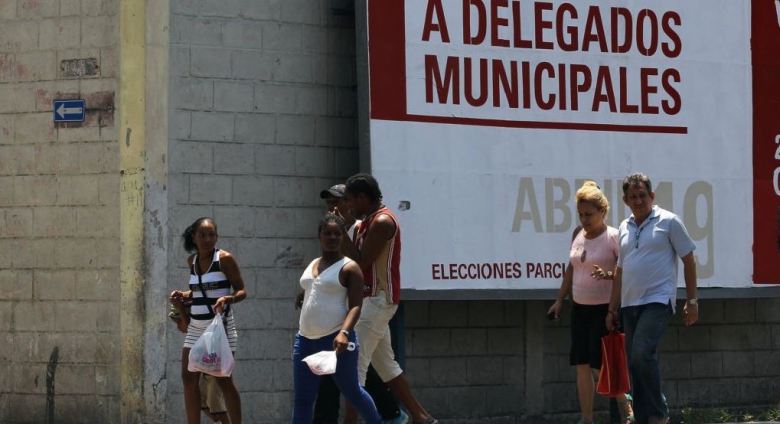
According to the official results of the “elections” held on Sunday, February 3 of this year, 1,249,832 Cubans, “14.22% of all voters,” did not go to the polls or cast invalid ballots in a clear display of their rejection of the Cuban electoral system.

The number of people behaving in this way has been growing over the last few elections. In 2003 the total of these two categories (non-voters and those who cast invalid ballots) was 506,453, or 6.09% of the electorate. In 2008 it was 657,119, or 7.73%. In the most recent elections, however, it rose to 1,249,832 Cubans, or 14.22% of the electorate, almost double the number from the previous balloting.

The most notable thing about this jump was the number of people who decided not to vote. In 2003 193,306 people abstained, 2.35% of the voters. In 2008 the figures were 264,212, or 3.11%. In 2013 the number rose to 790,551, 9.21%, nearly three times as many as in 2008.

To not vote “in a society without civil or political rights, under almost total state control and with only one constitutionally recognized party” is the most daring option.

In Cuba, where the only option is to approve the candidates chosen by the Candidacy Commissions — committees made up of leaders of mass organizations, whose own statutes declare them to be subordinate to the Communist Party — not voting is proof that the Government has lost the popular consensus. The results, therefore carry a clear lesson and are a message that the Cuban authorities should take to heart. To ignore this would lead to an inability to govern.

The reason behind the results is that it is really the Candidacy Commissions which choose the deputies who make up the National Assembly of the People’s Power. These deputies then choose the Council of State and its president as well as the president of the Council of Ministers. The latter then chooses the members of the Council of Ministers itself. As a result the National Assembly and the government are really determined by the powerful Candidacy Commissions. This explains why many Cubans decide not to vote to such a degree that abstentions now account now nearly 15% of the Cuban electorate. This is three times the number of members in the Communist Party. It also shows that the so-called elections in Cuba have little bearing on the difficult living conditions of the thousands and thousands of Cubans who live outside the law or who choose to leave the country.

Faced with a profound structural crisis like the one threatening Cuba, the election results are confirmation that is impossible to limit change to certain aspects of society. Therefore, in spite of the government’s persistence in ignoring the subject of a multi-party system, reality has succeeded in bringing it to the forefront. The election figures confirm the existence of a non-conformist segment of society that is demanding a political role. It is made up of Cubans who lack the right of free association and the right to participate in deciding the fate of the nation. How is it possible to justify the existence of a single party when almost 15% of voters do not respond to its call?

Social development does not exclude but rather implies a multi-party system as the natural expression of a diversity of ideas and interests. It is the mechanism by which citizens express themselves politically. The nation is a community of people who are diverse but equal in dignity. They are looking for a common good for which full economic, civil, political and cultural rights and responsibilities are essential. Therefore, the restitution of the right of association and the depenalization of political differences are necessary for Cubans to be able to play their corresponding active and decisive role in the changes to come.

In The Social Contract Jean Jacques Rousseau wrote that the union of persons to defend and protect their well-being emanates from a general will that transforms the parties to the contract into a collective political body. The exercise of this will confers power, which is referred to as sovereignty, and the party exercising it is sovereign. Based on this sovereign status, the people choose officials to carry out the general will and temporarily invest them with a mandate to propose and effect laws, and to preserve citizens’ liberties. In other words elections are a manifestation of popular sovereignty.

The violation of the constitutional order in Cuba, which occurred in 1952, gave rise to an insurrectional movement which overthrew the dictatorship in 1959. On January 8 of that month the leader of the revolutionary movement swore that he would hold elections in the shortest period of time possible and restore the constitution of 1940. However, several days later and without popular consultation, the nation’s Magna Carta was replaced with the Basic Law of the Republic of Cuba. By virtue of this Law, which was in force until the adoption of the constitution of 1976, the Council of Ministers assumed all legislative power and constitutionally affirmed one-party rule. From then until today “elections” have been carried out under this policy of exclusion in which the people cannot directly elect the president of the republic. This amounts to a clear rejection of our historic legacy.

The current system, which limits direct vote by the people to delegates for municipal assemblies, is one of the main causes for the indifference of those who do not take part or who cast invalid ballots. It is an efficient system for holding on to power, but useless for advancing the changes that society demands. All these issues emphasize the need to introduce a multi-party system and to carry out the corresponding changes to the constitution.

Published in DiariodeCuba.com

8 March 2013


The Small Farmers Association, Today as Yesterday / Dimas Castellano

A report released on Friday, January 25, 2013 in the newspaper Granma reports that the National Association of Small Farmers (ANAP) replaced or “released from their duties” 632 presidents of agricultural cooperatives. The president of that institution, Viego Felix Gonzalez, said at the Eighth Plenum of the National Committee, that a cooperative can not function well if those who direct it do not. The news is proof that what in Cuba is called by the term “cooperative” are actually enterprises created, controlled and directed by the State. Continue reading


Decree-Law 300 Will Not Make the Land Produce / Dimas Castellano #Cuba

DSC07434Just a few days ago, December 9, 2012, Decree-Law 300 came into effect, authorizing the leasing of idle state lands under the concept of usufruct. The new measure repeals Decree-Law 259 of July 2008, whose ridiculous results led to its repeal by the State Council.

Judging by the official criteria reported in the press, now the land will indeed produce. Among others, the legal director of the Ministry of Agriculture said the new Decree-Law will strengthen the process of leasing vacant land and ensure continuity and sustainability in its use; meanwhile the director of the National Control Center of Land, under the same ministry, ruled that the application of the law will allow an increase in food production.

These triumphalist statements do not take into account the relationship of the recent Decree-Law with the background of the agrarian problem in the country, especially with regard to land tenure and its efficient exploitation. Continue reading


The Move Towards Female Suffrage in Cuba / Dimas Castellano #Cuba

In the TV program “Round Table” on Thursday, October 18, Teresa Amarelle Boué, a History and Social Science graduate and Secretary General of the Federation of Cuban Women,more or less said that, thanks to the 1959 revolution, Cuban women had gained the right to vote. Since then she has been interviewed on various occasions about this claim, which gave rise to my decision to compile the following notes.

A monument in Santa Clara to Marta Abreu

A monument in Santa Clara to Marta Abreu. Flickr

Since the 19th century, various Cuban intellectuals have constructed models for women’s rights. The Countess of Merlín reflected in her literary work her feminine feelings, her national roots and her points of view. Gertrudis Gómez de Avellaneda edited Álbum cubano de lo bueno y de lo bello, a woman’s magazine in which she challenged male domination and urged other women to do the same.

Marta Abreu, sublime personification of charity and patriotism, extended charity to the long-suffering people of the country when José Martí put the Cuban people on a war footing.Referring to her,Máximo Gómez said, “If you thought about what rank such a generous woman should occupy in the Liberation Army, I dare say it would not be difficult to see her on the same level as me.”

During the wars of independence Ana Betancourt de Mora defended female emancipation in the Constitutional Assembly of Guáimaro.

In 1895 María Hidalgo Santana joined the insurgent army and participated in the Battle of Jicarita upon the death of the standard bearer. She took up the battle flag, charged forward, received seven gunshot wounds and was promoted to captain. Edelmira Guerra de Dauval, founder and president of the organization Esperanza del Valle, helped to formulate the revolutionary manifesto of 1897, which stated in Article 4, “It is our wish that women be able to exercise their natural rights by allowing women who are single, widows over twenty-five years of age, or divorced for just cause, to vote.”

maria dolzindexIn 1897 María Luisa Dolz, a professor at Isabel la Católica girls’ school, linked educational reform to nationalism and feminism. For this she is considered to be Cuba’s first modern feminist.

In the early days of the Republic a group of women founded associations and press outlets to defend women’s interests. Among them were Revista de la Asociación Femenina de Camagey, the first feminist publication on the island, Comité de Sufragio Femenino, Club Femenino de Cuba, Alianza Nacional Feminista,Lyceum, a predominantly cultural organization, which considered change to be impossible without access to education and culture, and Unión Laborista de Mujeres, a radical organization which gave priority to workers’ issues over women’s suffrage.

In 1912, after the crime against the members of the Partido Independiente de Color, a group of black women began a campaign seeking approval for a law granting amnesty to those who had been incarcerated. At their meetings and conferences they expressed support for women’s rights, such as the right to vote and divorce. In 1923, when the Asociación de Veteranos y Patriotas was formed, among its founding members were ten directors of Club Femenino de Cuba.

Among the notable women during the era of the Republic it is worth mentioning Mari Blanca Sabas Alomá, Ofelia Rodríguez Acosta, Ofelia Domínguez Navarro and María Collado, who played important roles in the struggle for women’s rights. They and other feminist leaders held conferences, submitted petitions to politicians, established coalitions among diverse groups, held street demonstrations, informed the public through print and broadcast media, built obstetric clinics, set up night schools and health programs for women, and established contacts with feminist groups in other countries.

Although the constitution of 1901 recognized the equality of all Cubans before the law, the Spanish Civil Code, still in-force at the time, held that women were inferior, which hindered their advancement and closed the door to women’s suffrage. Thanks to the civic movement of 1914, however, debates on divorce began to take place. On July 18, 1917 women were granted parental authority over their children and the the power to control their assets, and in July of 1918 the Divorce Law was adopted.

By 1919 Cuban women had achieved the same level of literacy as men, and in the 1920s Cuba was graduating proportionally as many women as American universities. These developments weakened those opposed to the female vote. In this context the battle for women’s suffrage gained strength.

In 1923 thirty-one organizations attended the First National Women’s Conference, and in 1925 seventy-one organizations attended the Second National Women’s Conference. As Pilar Morlón said, this was “a congress of women, conceived by them, organized by them, brought to fruition by them, without any official help whatsoever!” and, I would add, without any men presiding over the event.

This congress had such an impact that Cuban President Gerardo Machado promised to grant women the right to vote. When he named a constituent assembly to legalize his reelection, women’s suffrage was included among his proposals. Due to his failure to fulfill this promise, however, feminist groups allied themselves with other political groups after 1931, and when rebellion broke out, the issue of votes for women became a symbol of Machado’s abandonment of democracy.

On August 13, 1933, after Machado was deposed and Carlos M. de Céspedes (son and namesake of Cuba’s founding father) assumed the presidency, the Alianza Nacional Feminista sent an appeal to the new president, demanding the right to vote. Subsequently, the government of Ramón Grau San Martín promulgated Decree no. 13, which called for a constitutional convention, which in turn recognized a woman’s right to vote and be elected. Six women from the provinces of Havana, Las Villas, Camaguey and Oriente were elected as delegates.

In February 1934, during the presidency of Colonel Carlos Mendieta, a provisional constitution was approved. Article 38 of this document formally extended the vote to women. In February of 1939, prior to the Constituent Assembly, which drafted the 1940 constitution, the Third National Women’s Conference was held during which various resolutions were approved, one being the demand for “a constitutional guarantee of equal rights for women.” The feminists Alicia Hernández de la Barca from Santa Clara and Esperanza Sánchez Mastrapa from Oriente took part in this appeal, which was discussed in the Constitutional Assembly.

The struggle that began in the 1920s ended with the adoption of Article 97 of the constitution of 1940, which states that “universal, equal and secret suffrage is established as a right, duty and function for all Cuban citizens.” As a result, Cuban women were able to exercise their right to vote – including in the elections of 1940, 1944, 1948, 1954 and 1958 – until revolutionaries took power in 1959.

Dimas Castellanos

Published 13th November in Diario de Cuba.

November 16 2012


Why the UBPC Cooperatives Failed / Dimas Castellano #Cuba

cpa peopleindexLast August, the Cuban Council of Ministers approved a new General Regulation for the Basic Units of Cooperative Production (UBPC), which was complemented by a packet consisting of 17 measures. The purpose, according to the daily Rebel Youth on September 23, consists of liquidating the dependency of those with respect to state enterprises.

The original Regulation issued in 1993, although it did not recognize the legal character of the UBPC, which is to say, the capacity to acquire rights and contract obligations, stipulated in its foundational points the correlation between production and income and the effective development of management autonomy.

The breach of those and other positive aspects was reflected in the poor results. Of the 170 thousand hectares that the existing 1,989 UBPCs possess, almost 40% of their lands remain idle; although their extent represents 27% of the agriculture surface of the country, they produce only 12% of the grains, tubers and vegetables and 17% of the milk; only 27% have satisfactory results; the rest, to greater or lesser extent, present difficulties; in the year 2010 15% of the UBPCs closed with losses and another 6% did not even present a balance sheet; and their losses exceed 200 million pesos.

The UBPCs were created when it was demonstrated that the concentration of the country’s arable land in the hands of the State had generated disinterest of the agricultural workers, the generalized debasement of agricultural products and enormous expansions of vacant lands infected with the marabou weed. A deplorable picture aggravated by the loss of the subsidies provided by the socialist countries of Eastern Europe.

In that context the country’s authorities decided to convert a part of the unproductive state lands into cooperatives, but without giving the requisite freedoms nor waiving the monopoly of property. The ignorance of the essence of cooperativism and the subordination of economic laws to ideology explain both the cause of the failure and the effort to repair that decision with the recent measures.

The Declaration of Cooperative Identity, adopted in 1995 in the 2nd General Assembly of the International Cooperative Alliance (ACI), defines the cooperative as an autonomous association of people who voluntarily join to address their economic, social and cultural needs and aspirations by means of a business of jointly and democratically controlled property.

In accordance with this definition — of an organism like the ACI, that since1985binds and promotes the cooperative movement in the world — the UBPCs are not classified as true cooperatives since they were not created voluntarily by the owners of land and means of production but emerged from an agreement of the Communist Party.

In spite of the new General Regulation (Resolution 574 from August 13, 2012) the UBPCs will count on legal personality; the power to elect the administrators for the majority of the General Assembly of Partners; to buy products and services from any legal or natural person; to establish direct contractual relations with the input provider companies; and to decide the percentage of the utilities to distribute among the partners; other vital aspects are still missing.

Again it is the State and not the agricultural workers who make the decision to join in cooperatives. If it is added to that that those workers are not owners but usufructuraries (a kind of leasee) of a state property, it is not difficult to envision that we are facing the beginning of a new failure and therefore the need to implement new reforms, good for the current government or good for the successor, until the UBPC members become collective owners of the land they work.

The virtual lack of agricultural cooperatives before 1959 is understandable because of the advances in the sugar industry since the end of the 19th century which had generated enormous landholdings through the dispossession of thousands of small owners. What is absurd is that with a revolution that declared itself socialist, cooperativism, akin to that social system, has been absent and in its place they have experimented with arbitrary and subjective forms applied vertically by the revolutionary State.

Before 1959 there were in Cuba some hundred thousand landowners, to whom were added another hundred thousand to whom the Revolution delivered ownership titles with the First Law of Agrarian Reform of 1959. Those two hundred thousand farmers constituted the basis for the development of a true cooperative movement. Nevertheless, the concentration on the part of the State of 70% of the arable land was a coup de grace to a process of association that had contributed much to the Cuban economy and society.

The first manifestation of state arbitrariness in the agriculture cooperativization was the creation in March 1960 of the sugar cane cooperatives in areas that previously belonged to the sugar mills. Nevertheless, the decision to monopolize landownership made these businesses become property of the State. Then the true cooperativism was limited to a few associations formed over the base of private farmers.

Fidel Castro himself once expressed: “those cooperatives have no real historical basis, given that the cooperatives are really formed with the farmer landowners. In my judgment we were going to create an artificial cooperative, converting those agricultural workers into cooperativists. From my point of view, and maybe applying some of the verses of Marti, slave of the age and the doctrines I favored of converting those cooperatives that were worker cooperatives and not farmer cooperatives into state enterprises.”

Not satisfied with most of the soil in the hands of the State, instead of promoting voluntary cooperativsm, there began a process aimed at diminishing the quantity of independent farmers. In May 1961 the National Association of Small Farmers was created, and a policy aimed at trying to “cooperativize” the 200 thousand farmer owners began. Farmer associations were created, then came the Mutual Help Brigades and next the Cooperatives of Credit and Services (CCS),made up of farmers who maintained ownership of the land and the means of production but lacked legal character.

cpaindexAfter 1975, with the thesis of the 1st Congress of the PCC concerning the need for cooperativization of the land, the development of the Cooperatives of Agricultural Production (CPA) were promoted, formed by farmers who united their farms and other means of production “voluntarily” as a means of socialist development of the countryside.

At the end of 1977 the number of CPAs was 136 and in June 1986 it was 1,369, representing 64% of the farm lands, at the same time that state ownership had increased to 75% of the arable land due to the reduction of volume of land in the hands of private farmers.

The results were not long in coming; Cuba has to buy from outside agricultural products that are perfectly growable in our soil, as is the case with the coffee that we have had to acquire in Vietnam, a country that Cubans taught how to reap the grain. That’s why insisting on reforms of the cooperatives without permitting the farmers to be the ones to voluntarily organize and without counting on the collective ownership of the land that they work, is to insist on failure.

Published Wednesday, November 21, 2012: http://www.diariodecuba.com/cuba/14133-por-que-fracasaron-las-cooperativas-castristas

Translated by mlk

November 26 2012


An Assessment of the Cuban Government’s Management Over the Last Six Years / Dimas Castellano

Four decades after taking power through revolution in 1959, the factors which made totalitarianism in Cuba possible have reached their limit. The populist measures imposed during the first years after the revolution were accompanied by the dismantling of civil society and a process of government takeover which began with foreign-owned companies and did not end until the last 56,000 small service-related and manufacturing businesses, which had managed to survive until 1968, were eliminated.

The efforts to subordinate individual and group interests to those of the state has led to disaster. The confluence of the breakdown of the current economic and political model, national stagnation, citizen discontent, external isolation and the absence of alternative forces capable of having an impact on these issueshave created conditions for change. On the one hand this has led to despair, apathy, endemic corruption and mass exodus, while on the other hand there has been an emergence of new social and political figures.

It was in this context that the provisional transfer of power from the Leader of the Revolution took place. The fact that this transfer was carried out by the same forces that led the country into crisis meant that the order, depth and pace of change were determined by the power structure itself, which explains the effort to change the appearance of the system while preserving its character – an unresolvable contradiction – doomed governmental efforts from the start. This process, now in-progress, has passed through three phases led by Army General Raúl Castro.

Phase One

On July 31, 2006, as a result of illness, the First Secretary of the Cuban Communist Party (PCC), President of the Council of State and Council of Ministers, and Commander-in Chief, Fidel Castro, divided his multiple responsibilities and temporarily transferred them to seven party and government leaders.Raúl Castro was named First Secretary of the PCC, Commander-in-Chief and President of the Council of State.José Ramón Balaguer Cabrera was tapped to head the National and International Program on Health.Ramón Machado Ventura and Esteban Lazo Hernández were named to the National and International Education Program, and Carlos Lage Dávila became the driving force behind the National Program for an Energy Revolution. The programs for Health, Education and Energy were to be led respectively byCarlos Lage, Francisco Soberón (President of the Central Bank of Cuba), and Felipe Pérez Roque. These appointments marked the beginning ofRaúl’s administration.

In discussions, interviews and statements the new leader spoke of the need for change, including a willingness to normalize relations with the United States – an idea he expressed in an interview published inGranmaon August 18, and which he reiterated on December 2 of that year in the Plaza of the Revolution. Without blaming his predecessor,Raúl began discarding previous methods and plans. Military marches, secret trials and other politically motivated actions which made up the Battle of Ideas disappeared while strong criticisms were leveled at the inefficient agricultural production industry.

In the same vein, on July 11, 2007 the National Assembly of People’s Power (ANPP) raised the idea that “Each province should have its own builders, should have its own teachers, should have its own police… ” It criticized the bloated labor force (an artificial means of “reducing” unemployment to almost zero in order to demonstrate the superiority of the Cuban system). It called on retired teachers and professors to return to the classroom. It announced the elimination of improper free services and excessive subsidies. It set out to reverse the trend towards a reduction in the area of land under cultivation, which had decreased by 33% in the years between 1998 and 2007. Later, on July 27, 2007 inCamagey, he spoke of the need to introduce structural and conceptual changes. He emphasized the vital importance of manufacturing products in Cuba which are now purchased from overseas, and acknowledged that huge tracts of land are now overrun by the marabou weed.

Subsequently, he initiated the sale of computers, DVD’s, electronic equipment and access to mobile phones. He allowed Cubans to book hotel rooms reserved for tourists and to rent automobiles using hard currency. The licensing of private food vendors was expanded. Workers dining halls were closed. Cars, barber shops with up to three chairs and small beauty salons were rented out to workers. Regulations on the construction and repair of homes were relaxed, and the sale of fruits and vegetables from pushcarts was allowed.

Most striking was Decree/Law 259, which covered the leasing of idle land. It was an important but insufficient and contradictory measure. While it acknowledged that food production was a serious national security concern andrecognized the inability of the state to produce it, the law allowed the state to retain ownership of the land, thus reducing efficient producers to lessees.

Phase Two

As a result of Fidel’sdeteriorating health, the “Message from the Commander-in-Chief” was published on February 19, 2008 in which he permanently gave up his numerous positions. Five days later, on February 24, the ANPP electedRaúl Castro President of the Council of State, marking the second phase of his administration, which gave rise to a period of conjecture, desire, aspiration and hope.

The fragmentation of power that Fidel Castro had decreed in June 2006 was no longer in effect.Lage and Pérez Roque left the PCC, while the others quit their positions and assumed others in the new government. Among these wereJosé Ramón Machado Ventura, who became Second Secretary of the PCC and Vice-President of the Council of State, and Esteban Lazo, who kept his position as member of the Politburo.

This second phase began with the introduction of a series of measures that could be classified as a basic reform plan. It was limited to certain sectors of the economy and its goals could be outlined as follows: 1) To achieve a strong and effective agricultural sector capable of feeding the population and replacing imports, 2) to make people aware of the need to work in order to survive, 3) to firmly reject illegalities and other manifestations of corruption, 4) to reduce the state workforce, whose redundant job positions exceed one million workers, and 5) to jump start self-employment.

In the second half of 2011 various decrees and resolutions were issued authorizing the private sale of automobiles, the buying, selling, exchange and donation of homes, a relaxation in rules governing rentals, and the commercialization of agricultural production in the tourism industry. The credit policy was expanded to cover self-employed workers and small farmers, and restrictions on emigration from the countryside to Havana were relaxed.

Among other factors, this basic program of reform was limited by a kind of power sharing arrangement in which the new leader agreed to consult with Fidel on major decisions and the latter provided indirect criticism in the form published reflections and public statements. The most critical point in this duality came in the middle of 2011 when the leader of the revolution reappeared in public. On July 11 he appeared at the National Center for Scientific Research and on July 13 at the Center for World Economic Research, where he ordered that an urgent investigation into the post-war era be carried out. On July 15 he appeared at the National Aquarium and on July 16 at the Ministry of Foreign Affairs, where he met with Cuba’s overseas ambassadors. On July 25 he appeared in Artemesia on the eve of the anniversary of the assault on the Moncada Barracks, dressed in military fatigues. On the following day, July 26, he celebrated the commemoration with artists, intellectuals, members of Pastors for Peace and other invited guests.

Finally, on Saturday, August 7, at an extraordinary session of the ANPP, Fidel appeared to once again express his concerns about eminent nuclear war and relations with the United States. In his address he asserted that the world would be saved if it accepted the logical arguments he was espousing. Referring to President Obama, he said, “Perhaps he will not give the order if we can persuade him.”

In the midst of these activities, in a regular session of the ANPPon August 1,Raúl Castro announced the expansion of self-employment along with a reduction in the state labor force – something unprecedented in Cuba. On August 13 the release of six political prisoners was announced. These two events revealed two contradictions that could suggest a failure of government.

What is significant about this second phase ofRaúlCastro’s administration is that the measures, which were introduced in an unfavorable national and international economic environment and which no country could sustain indefinitely, made it impossible to return to the stagnation of the past.

Phase Three

At the Sixth Party Congress and the First National Conference of the PCC, which took place in April 2011 and January 2012 respectively, were defining events for change.

In a report to the Sixth Party Congress,Raúl argued that self-employment should become a facilitating factor for the building socialism in Cuba by allowing the state to concentrate on raising the level of efficiency of the primary means of production, thus permitting the state to extricate itself from the administration of activities which were not of strategic importance to the country. At the session he explained that updating the current economic model would take place gradually over the course of five years. He acknowledged that, in spite of Law/Decree 259, there were still thousands and thousands of hectares of idle land. He called on the Communist party to change its way of thinking about certain dogmas and outdated views, which had constrained it for many years, and declared that his primary mission and purpose in life was to defend, preserve and continue perfecting socialism.

The outlines of a basic reform plan, approved by acclamation at the party conclave, were codified in the Political and Social Guidelines, but constrained by the socialist system of planning which viewed state-run enterprise as the primary driving force of the economy.

Several days after the Sixth Party Congress had agreed to separate political from administrative functions, Machado Ventura began reiterating the following ideas at the fifteen provincial conferences of the PCC: “The party does not administer. That is fine, but it cannot lose control over its activists, no matter what positions they may occupy… We have to know beforehand what each producer will sow and what he will harvest… We must demand this of those who work the land.” These were arguments intended to keep the economy under the control of the party and to hamper the interests of producers.

It was in this context that, in the thirty days between Thursday, May 10 and Saturday, June 9 of 2012, Fidel Castro published four essays. Between June 11 and June 18 he then published eight short pieces – each forty-three words on average – onErich Honecker, Teófilo Stevenson, Alberto Juantorena, Deng Xiaoping, poems about Che Guevaraby Nicolás Guillén, the moringa plant, yoga and the expansion of the universe. Nebulous messages with no relationship to each other and divorced from our everyday reality. Since then there have been no more such writings, and their disappearance seems to have marked the end of the period of power sharing. Only now and not before are we able to talk aboutRaúl’s administration.

At a meeting of the Ninth Regular Period of Sessions of the ANPP in July, 2012, after Fidel’s essays had already been published,Raúl Castro returned to proposals he discussed in his report to the Sixth Party Congress, such as the increase in the amount of idle land. On July 26 in Guantanamo he once again took up the theme of relations with the United States. And on July 30 he led the Martyr’s Day march in Santiago de Cuba, which seemed to confirm that he had entered the third phase of his administration.

Results of the Three Phases

In spite of efforts to achieve a strong and efficient agricultural sector capable of providing Cubans with enough to eat,agricultural production fell 4.2% in 2010. GDP in 2011 grew less than expected. Food imports rose from 1.5 billion in 2010 to 1.7 billion in 2011. Retail sales fell 19.4% in 2010 while prices rose 19.8%. On the other hand the median monthly salary rose only 2.2%, a factor which made things worse for the average Cuban just at the moment that changes began to be introduced. The 2011-2012 sugar harvest, officially slated to produce 1.45 million tons, had the same disappointing results as in the past in spite of being able to count on sufficient raw material, as well as 98% of the resources allocated to this effort. It neither met its target nor was completed on time.

The proposal to make people realize they need to work in order to survive, an issue closely associated with illegalities and other forms of corruption, has gone nowhere. On the contrary, criminal activity has increased to such a degree, as evidenced by the number of legal proceedings that have either been held or are ongoing, that corruption, along with economic inefficiency, now threaten national security. The government’s response, which has been limited to repression, vigilance and control, has not been successful. Even the official state media has reflected in recent years on the continual instances of price fixing, diversion of resources, theft and robbery carried out daily by thousands and thousands of Cubans, including high-ranking officials who are now being tried in court. Nevertheless, the problem persists.

In regards to shrinking the state’s labor force, the limitations imposed on self-employment have prevented this sector from absorbing the projected number of state workers. Of the 374,000 self-employed workers, more than 300,000 are people who were either already unemployed or retired. Besides being unconstitutional–the constitution stipulates that ownership of the means of production by individuals or families cannot be used to generate income through the exploitation of outside workers–self-employment has absorbed less than 20% of state workers. The assumption that this measure would absorb layoffs from the bloated state labor force byallowing the state to focus on raising the level of efficiency of the fundamental means of production and permitting the state to extricate itself from the administration of activities not of strategic importance to the country have not yielded the expected results.

The implementation of the new measures which have been announced–among them, an income tax exemption through 2012 for businesses with as many as five employees, an increase in tax exemption of up to 10,000 pesos of income, a 5% bonus for early filing of income tax returns, the creation of new cooperatives and a new law which will relieve the tax burden on the private sector of the economy–will not resolve the crisis either.

The Real Causes

To deal with a profound structural crisis like Cuba’s, changes must be structural in nature. With the passage of time it has been shown that small changes in some aspects of the economy must be extended to include coexistence of various forms of property, including private property, the formation of small and medium-sized businesses, and the establishment of rights and freedoms for citizens. Proposals which try to preserve the failed socialist system of planning as the principal route for the direction of the economy, and the refusal to accept that diverse forms of ownership should play their proper roles mean that the economy–the starting point for any initiative–will remain subject to party and ideological interests, while citizen participation will be notable by its absence.

The failure of the totalitarian model has forced the Cuban government to belatedly opt for reforms that have already been introduced by Cubans operating on the fringes of the law. Updating the model has been more an acknowledgement of the existing reality than an introduction of measures arising out of a real desire for change.

The First Cuban Communist Party Conferencedefinitivelydemonstrated the infeasibility of the current model and the inability of its leaders to sever the ideological attachments preventing it from moving forward. Their refusal to consider citizen’s rights shut off any possibility of change. The delays in relaxing restrictions on emigration, democratizing the internet and reincorporating into Cuban law the rights and freedoms outlined in the Universal Declaration of Human Rights, the Convention on Civil and Political Rights and the Convention on Economic, Social and Cultural Rights are the principal causes for this failure.

Additionally, it must be added that time is running out. Now, with little time left, there is talk of going slowly and steadily, which clearly suggests a decision to not change anything that might threaten the grip on power.

Independently of the obstacles that have hampered General Raul Castro in the three phases of his administration, the decisive factor has been the infeasibility of the current model. Even if his management of the government had been carried out under the best possible conditions for implementing reform, it still would have failed due to a lack of freedom – something which is a prerequisite for modernity – and the lack of a high degree of political will to forge a new national consensus. Without these it is impossible to wrest Cuba out of the profound crisis in which it is immersed. The abilities and intelligence of one man or of his governing team, no matter how high they might be, are not enough to overcome the current situation. That is both the reality and the challenge.

Originally published inhttp://convivenciacuba.es/content/view/842/58/

November 5 2012