The Spanish singer chose the San Francisco El Nuevo church for her concert.
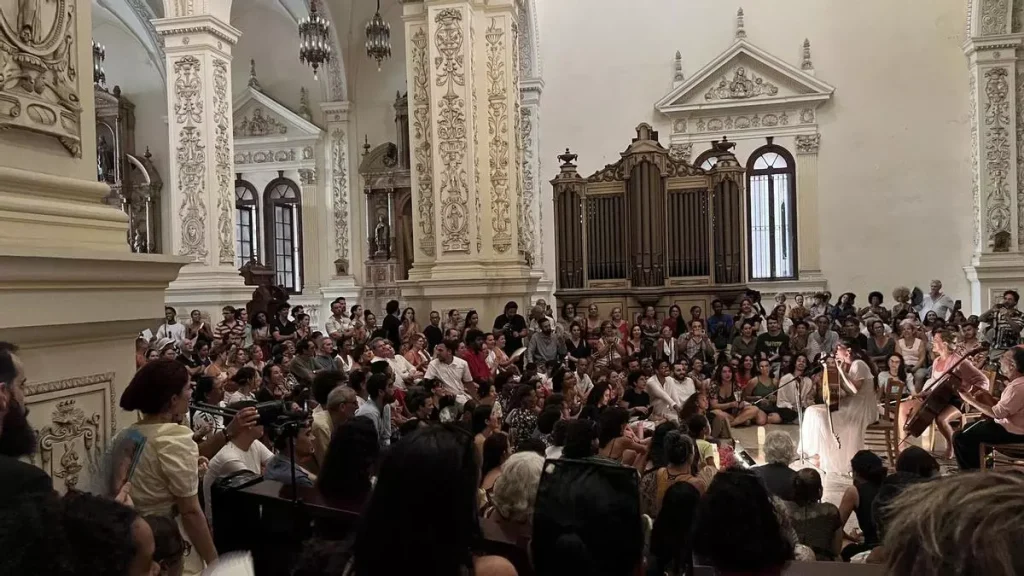
 14ymedio, Darío Hernández, Havana, August 26, 2026 – Sílvia Pérez Cruz’s velvet voice, capable of moving from flamenco to bolero, from jazz to fado, from copla to French chanson, from Mediterranean folk music to all the colors of the Americas, could not be appreciated in all its splendor this Sunday in Cuba. The concert she gave, free of charge, at the San Francisco El Nuevo church, in the heart of Old Havana, disappointed part of the audience because of the poor sound.
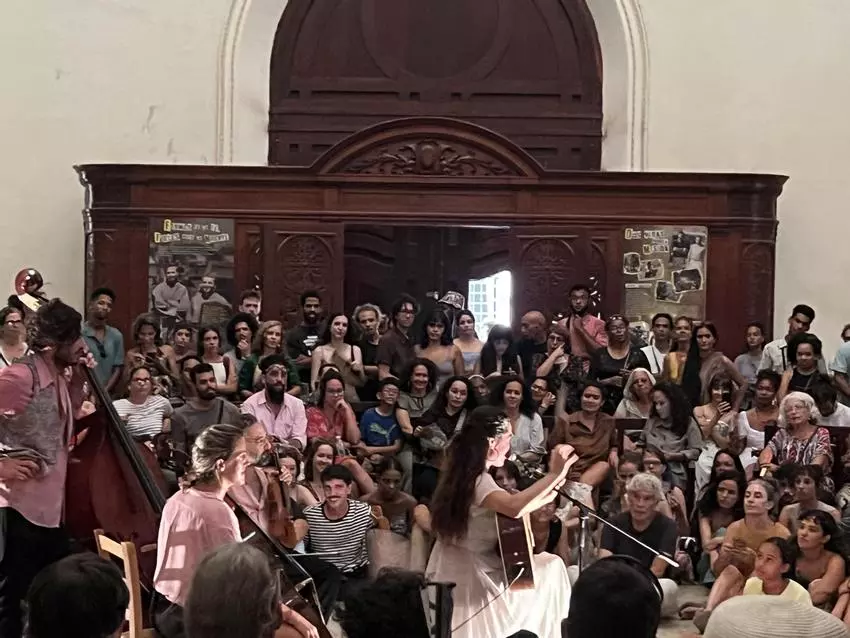
The Renaissance-era church had been deliberately chosen by the Spanish singer precisely because of its acoustics, so that she could offer a recital without electricity and by candlelight. But it did not work out. The cacophony eventually prompted the artist to use a microphone, although it did little to help. The smiles and tireless efforts of the ensemble, completed by the trio of Bori Alberto (bass), Marta Roma (cello) and Carlos Monfort (violin), did not quite succeed.
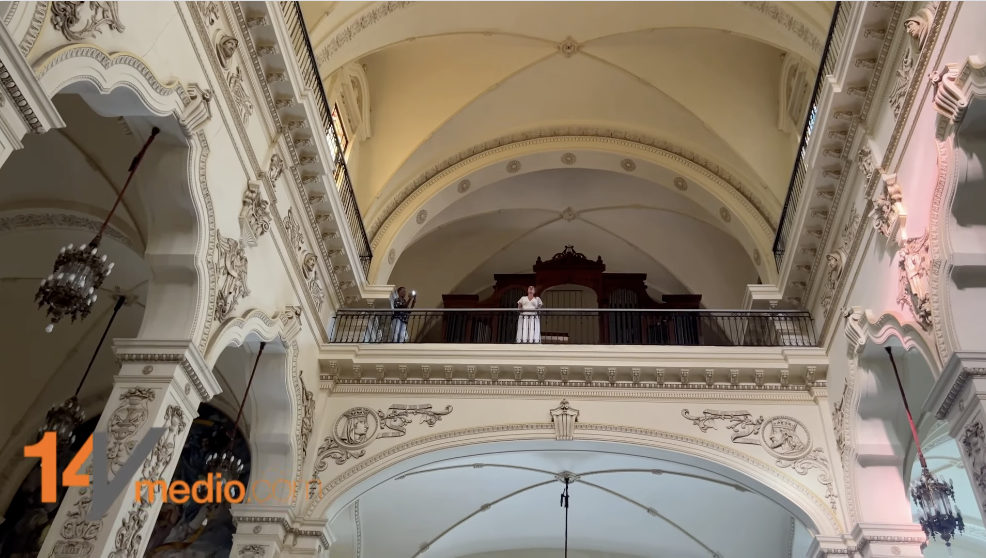
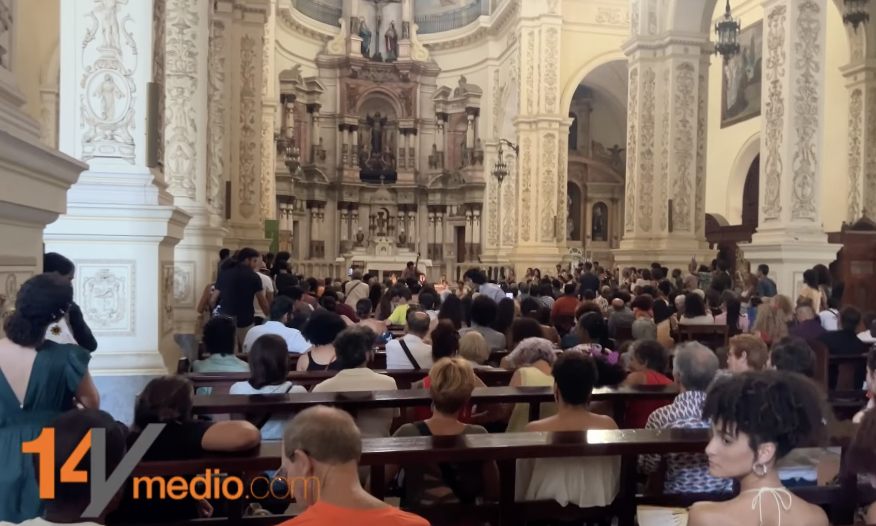
With the church packed with people, spectators scattered across the floors, the doors open letting in all the noise from the street, and the heat activating hundreds of fans, it was difficult to hear. Her own songs, such as Verde o Mañana, and versions of others, much beloved in Cuba, such as Veinte años and La tarde gradually made their way through.
“For a reason, Havana’s orchestras give their concerts at the San Francisco de Asís convent or the San Felipe Neri Oratory, which do have good acoustics,” an expert explained to 14ymedio.
“You can’t understand anything at all, not a single word,” a woman complained before leaving the venue, barely half an hour after the concert had begun. Like her, many others left the concert early.
Another spectator said: “Everyone appreciates that someone like her comes to Havana under these circumstances and gives a free concert, but did no one do a sound check? Someone here didn’t do their job.”
The night before, those attending the private bar La Casa de la Bombilla Verde, in El Vedado, had better luck. There, Sílvia Pérez Cruz sang some “improvised songs,” as she herself described them on her social media, alongside her friend Roly Berrío, and she could be heard flawlessly.
The Cuban singer — who takes part in the Catalan artist’s song Nombrar es imposible from the album Toda la vida, un día, whose music video was filmed in Havana in 2022 — also attended the San Francisco El Nuevo concert and told 14ymedio about the difficulties of the performance.
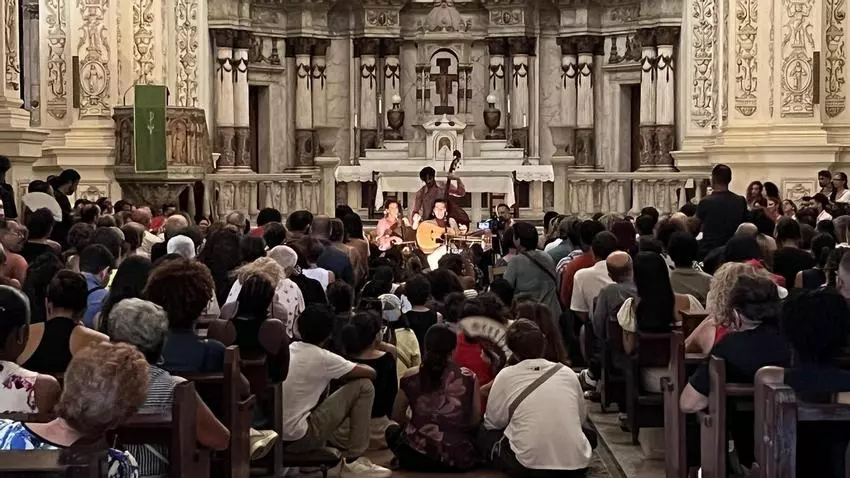
“It was a beautifully difficult concert. A lot of people, an immense space and a tiny bit of audio, just enough for the voice to float a little above the acoustic, unplugged instruments,” she said in her defense. For the artist, the experience “required a supernatural silence and stillness that was achieved, but which could be broken by little more than a fan moving against the heat.”
Berrío asserts that it was “a very loving concert. Added to the delicacy of the songs and the performance was a strong energy of desire, of wanting to be there, to share, to reach out. Giving and giving and giving. I enjoyed it very much and I will be grateful for it all my life.”
The applause from those who did stay until the end confirms that this was the majority sentiment. At the end of the concert, the artist asked everyone to join together for “one more,” and together they sang De qué callada manera, by Pablo Milanés.
Pérez Cruz herself has spoken of her “intimate relationship” with the Island, which she first came to know through her father, jazz musician Cástor Pérez, who, she says, taught her La tarde, by the legendary Sindo Garay, when she was four years old. She recorded a version of this bolero in 2010, when her father died. He was an expert in Cuban music, as well as a researcher and composer of habanera music, which became enormously popular in Spain beginning in the 19th century.
Another Cuban composer featured in her discography is Marta Valdés, to whom she dedicated an entire album, En la imaginación, in 2011, together with Javier Colina’s trio.
Born in Palafrugell (Girona), Pérez Cruz began her musical career as a member of Las Migas, an original female quartet that has received several Latin Grammy awards, shortly after graduating from the prestigious Catalonia College of Music.
The celebrated Rosalía also studied there, and she has stated that Pérez Cruz was always an inspiration to her and, in fact, invited her to collaborate on La rumba del perdón from her most recent album, Lux.
Translated by Regina Anavy
______________________
COLLABORATE WITH OUR WORK: The 14ymedio team is committed to practicing serious journalism that reflects Cuba’s reality in all its depth. Thank you for joining us on this long journey. We invite you to continue supporting us by becoming a member of 14ymedio now. Together we can continue transforming journalism in Cuba.