As announced in June, Cubans will be allowed to own two homes, mortgage financing is authorized, and the sector is opened to private and foreign capital.
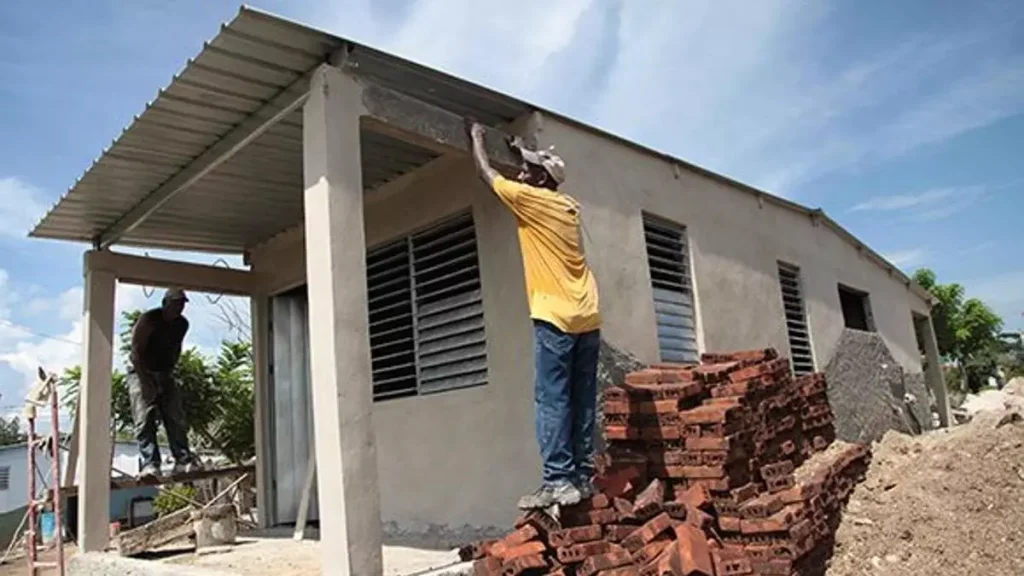
 14ymedio, Madrid, October 14, 2026 / The long-awaited new Housing Law, finally published this Wednesday in the Official Gazette, will enter into force sooner than planned in the draft legislation released four months ago. The final text thus reduces the period before the regulations take effect from 90 days to seven, something that has also occurred with the most recent decrees approved, demonstrating the urgency the Government wants to bring to its desperate measures to revive the economy.
For the most part, the legal document differs little from the version announced last June, which, among other provisions, eliminated the State’s confiscation of property belonging to emigrants, opened the sector to private capital, foreign investors, and mortgage financing, and allowed Cubans to own up to two homes, in addition to a “vacation or summer home.”
In this regard, the law states that if it is established that the limit on property ownership has been exceeded, the Municipal Housing Directorate may order the loss of the last home acquired.
Among its provisions, the law recognizes the participation of different forms of management, including micro, small, and medium-sized enterprises (mipymes), real estate companies, housing cooperatives, and microbrigades
The new framework also retains the possibility of the municipal administration asking a court to revoke the rights to an abandoned home that has been declared structurally derelict.
The owner or holder is required to take measures to restore its use value; if they fail to do so, the Housing Directorate may petition the courts to make the property available for subsequent allocation.
This authority, therefore, does not translate into an automatic loss of ownership: the procedure provided for requires the intervention of the competent court. Both the draft and the final law provide for this possibility.
What has been expanded compared with the June text is the overall framework, providing details covering the construction, financing, distribution, use, maintenance, access to, and transfer of homes.
Among its provisions, the law recognizes the participation of different forms of management, including micro, small, and medium-sized enterprises (mipymes), real estate companies, housing cooperatives, and microbrigades. The legislation also provides for construction through the population’s own efforts.
The law also maintains State intervention in housing policy and the protection of certain population groups in accessing housing. The participation of other economic actors is incorporated into this framework without eliminating the administrative powers held by public agencies.
The approved legislation retains this requirement but adds a clarification regarding the 15-year period: according to the new Article 57, the period begins with the State’s first allocation of the home
The publication of the law is accompanied by three Council of Ministers decrees: Decree 176/2026, which establishes the general regulations for the Housing Law; Decree 177/2026, concerning condominium ownership; and Decree 178/2026, which regulates housing cooperatives. The Official Gazette also includes two resolutions issued by the National Institute of Territorial Planning and Urbanism.
Unlike the June draft, the final legislation also specifies how the 15-year period is calculated for certain subsidized homes subject to repayment obligations and the State’s preferential right to purchase. The original draft established that the right of first refusal and repurchase, along with other obligations related to these homes, had to be recorded in the constitutive title and registered in the Central Registry of Real Estate Property.
The approved legislation retains this requirement but adds a clarification regarding the 15-year period: according to the new Article 57, the period begins with the State’s first allocation of the home. Subsequent transfers do not restart the period, and once the 15 years have elapsed, the holder is released from the obligations to repay the subsidy and from the State’s preferential right to purchase.
The amendment thus clarifies an issue that the draft did not specify in that article: the point at which the period begins to run and the effects of subsequent transfers. It also prevents each change of ownership from restarting the clock.
Regarding the sale price, the law establishes that it is agreed upon by the parties and that the transfer is formalized before a notary, subject to the exceptions established for homes allocated by the State. The tax regime for these transactions is also modified: the taxable base for the sale becomes the transfer price, provided that it is equal to or greater than the cadastral value.
The regulations also establish a deadline for regularizing certain longstanding situations. Thus, “legitimate occupants, usufruct holders who pay for their use, and certain tenants or their heirs” have five years from the law’s entry into force to request the transfer of ownership. If they fail to do so within this period, they will become tenants of a State-owned home.
Because the State remains, in any case, a key player in the matter.
Translated by Regina Anavy
______________________
COLLABORATE WITH OUR WORK: The 14ymedio team is committed to practicing serious journalism that reflects Cuba’s reality in all its depth. Thank you for joining us on this long journey. We invite you to continue supporting us by becoming a member of 14ymedio now. Together we can continue transforming journalism in Cuba.