In addition, it reduces the natural gas production of the Canadian company that supplies Havana.
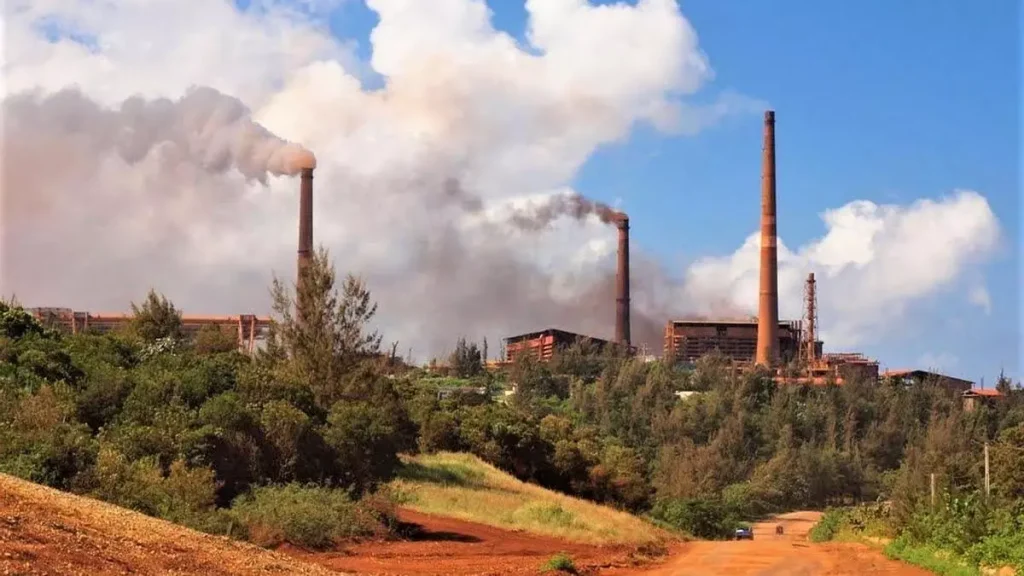
 14ymedio, Madrid, January 12, 2026 — The warning by U.S. President Donald Trump that he would cut off Venezuela’s oil supply to Cuba—more than plausible after the capture on January 3 of President Nicolás Maduro and his wife, Cilia Flores—threatens to exacerbate Sherritt International’s problems on the Island. The Canadian giant needs imported fuel to operate the nickel and cobalt mines it runs in Moa, Holguín, which, according to William Pitt, have been the company’s economic backbone.
“This company was the best foreign investment Cuba has ever had,” observes the U.S. businessman, whose family had multiple mining properties expropriated by the regime in 1960. As Pitt explains to 14ymedio, although historically the power plants and gas wells associated with Sherritt, which operates in cooperation with the state-owned Energas, have produced “the most reliable and best-managed energy services” in the country, this is no longer the case.
“Sherritt has lost so much money that it is undergoing a shareholder revolt in Canada,” says the U.S. businessman, referring to the recent replacement of Leon Binedell as the company’s chief executive officer (CEO) just four years after his appointment, by “personnel from another competing company.”
“Sherritt has lost so much money that it is undergoing a shareholder revolt in Canada”
According to a Sherritt statement dated December 8, he has been replaced on an interim basis by Peter Hancock, “an experienced mining industry executive with more than 35 years at Glencore plc, where he led nickel mining operations and participated in the development and commercialization of process technologies.”
The corporate text refrains from criticizing the outgoing Binedell, but makes clear that recent times have not been easy: “Since his appointment in June 2021, Mr. Binedell has guided Sherritt through one of the most challenging periods in its history, overseeing progress on several key strategic initiatives, including the expansion of the Moa joint venture, the implementation of the cobalt exchange agreement, the optimization of the energy division, and the completion of debt and equity transactions earlier this year.”
Indeed, in its report last year, the Canadian multinational had already warned of the risks of operating in Cuba, where blackouts, fuel shortages, natural disasters, and the loss of workers threatened its profitability. In the second quarter of 2025, the company posted multimillion-dollar losses—from $51.4 million in the same period the previous year to $43.7 million—along with a sharp drop in production and significant cuts to its workforce in Canada, as operating conditions in Cuba deteriorated.
As Pitt rightly recalls, without electricity Cubans depend on gas for cooking
Last year, there were several occasions when the Energas–Sherritt plant in Boca de Jaruco (Mayabeque) went out of service due to breakdowns, seriously affecting the national electric system (SEN). With a usual contribution of between 100 and 120 megawatts (MW), the thermal plant is vital to the SEN. In fact, the two plants operated by the Canadian company in Cuba—Boca de Jaruco and Varadero in Matanzas—have been key to restoring electricity to the Island during the several total system collapses it has suffered since late 2024.
Beyond that, as Pitt rightly notes, without electricity Cubans depend on gas for cooking. In most of the country this means liquefied petroleum gas (LPG), sold in cylinders, and in Havana additionally natural gas delivered by pipeline to the capital from wells located to the east, near Varadero, Puerto Escondido, and Boca de Jaruco. The latter is produced entirely by Sherritt International, the businessman emphasizes.
Thus, whatever the Canadian company suffers will also be suffered by Havana residents, especially those living in the municipalities of Plaza de la Revolución, Cerro, Centro Habana, Habana Vieja, Diez de Octubre, Playa, and Marianao. “Without bottled gas or piped gas for cooking, and without electricity to cook on electric stoves, Cubans who have enough money will be able to cook with charcoal (if they can find it, since there isn’t much), and if they cannot find charcoal or do not have the money, with firewood,” Pitt concludes.
Translated by Regina Anavy
____________
COLLABORATE WITH OUR WORK: The 14ymedio team is committed to practicing serious journalism that reflects Cuba’s reality in all its depth. Thank you for joining us on this long journey. We invite you to continue supporting us by becoming a member of 14ymedio now. Together we can continue transforming journalism in Cuba.