My daughter says, “Mom! A Fountain!” But it’s the sewage water in front of a polyclinic.

English Translations of Cubans Writing From the Island
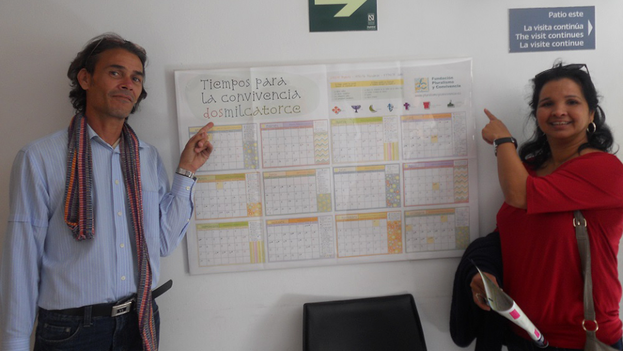
Yoani Sanchez, Havana, 7 October 2014 – Monday afternoon was like any other for Juan Carlos Fernandez. The water stubbornly persisted in not coming out of the pipes, so cup by cup he collected it from the lowest source in his house. The family revolved around his mother-in-law, who had been suffering for half a year, dying, and now and again this lanky and smiling man from Pinar del Rio looked at the phone to see if there were any messages.
The routine was broken when someone knocked on the door and handed him a summons from the police. El Juanca – as his friends call him – is accustomed to State Security calling him to account. His longtime work with Coexistence magazine and his nonconformity as a citizen have taken him, on many occasions, to police cells and stations. So, he didn’t even flinch and notified all those who love him and appreciate him.
This morning he was finally face-to-face with a police official at the Technical Investigation Department (DTI). The topic at hand was as predictable as it was invasive of his rights. His collaboration with our little digital daily newspaper was the reason for the most recent box on the ears they gave him.
“They gave me a written warning for working for an illegal unregistered publication,” Juanca told me. With the mix of playfulness and good humor that characterizes him, he quickly suggested to the lady “that they allow the legalization of 14ymedio.”
Clearly, she responded evasively to his proposal, because fact of not allowing non-governmental media to exist seems to be an indispensable condition to sustain the official press, which is so bad from the journalistic point of view that only its status as a monopoly can ensure that it has an audience.
“You people are not journalists,” the official snapped. To which Juanca shot back, “Differences aside, neither was José Martí.”
Among other falsehoods, the police told him that 14ymedio was a newspaper financed by USAID. Although this accusation is repeated against any independent project, in this case it demonstrates ignorance more than malice. This newspaper, publicly and transparently, has a business structure that can be read in detail in the “About Us” section of its digital page.
This financial arrangement was precisely one of the conditions we found indispensable to undertaken renewed journalism with a sustainable press media. Unlike the government newspaper Granma, and all the official newspapers, we do not dip our hands into the state coffers to produce political propaganda. We are waiting anxiously, it’s true, for them to allow us to register our small enterprise in the corporate records of our country. Will they dare to allow it?
We are waiting anxiously for them to allow us to register our small … Will they dare to allow it?
We want to have legal status, to hang a sign on the door of our editorial offices and display, without fear, our press credentials. Why do they refuse us this right? Haven’t they realized that a press hijacked by a single party doesn’t meet the information demands of a plural and diverse country like ours? Will they ever have the political courage to pass a law so that independent journalism will emerge from the shadows into public life?
When that functionary lies without giving us the right to reply, she is using her authority to commit a true abuse of power. Which becomes even more dramatic because of the level of disinformation within which most Cubans and apparently, the political police as well, exist.
Wrapped in her uniform, the official also told Juanca that our media dedicated itself to “defaming and denigrating the achievements of the Revolution.” With this statement, the lady made it clear that in this country only media that sings the praises of the system can exist; and on the other hand, it gives the impression that she has privileged access to 14ymedio, because since our birth, on 21 May 2014, we have been blocked on the Island’s servers. Madam, do you enter our page via anonymous proxies? Or, even worse, are you talking about something you’ve never seen? I fear it’s the latter.
I also challenge this policewoman to point out to me a single characteristic of the current Cuban political system that allows her to call it a “Revolution.” Where is the dynamism? The character of renewal? The movement? Please, update your words – not out of respect for this renegade philologist who believes in the semantics of the terminology – but because, as long as you don’t publicly acknowledge that you are stuck in a stagnant and fossilized history, you will not be able to implement the solutions this nation urgently needs.
During the interrogation, our Pinar del Rio correspondent was also threatened that, if it looked like he was practicing journalism, he would be arrested and his phone and camera confiscated. Let’s hear it for the ideological bulwark information puts at risk! I understand the truth less and less.
In this situation we have come to, everything is possible. Repression, in the worst style of the 2003 Black Spring; the rifle butts breaking down the doors; the continuation of the campaign of defamation, increasingly ineffectual… this and much more. What will not happen is that, faced with the fear and the pressure, we will cease to do journalism. 14ymedio is going to be around for a long time, so you might as well get used to living with us.

Photo taken from Periodico Escambray
The periodical “Escambray” published a somewhat contradictory note. It said that next Saturday Cuban children and adolescents would send a message of hope, unity, happiness and love to their contemporaries in the world and to all humankind to celebrate in advance, “de San Antonio a Maisi”, the 21st of September, the day of International Peace. According to the spirited newspaper, Cuban youth will occupy the main plazas, parks and streets of every corner of the country in order to celebrate with different motivations between those who emphasize allegorical songs of the Revolution, stilt races, sack races, and we repeat, stilt races, sack races; stilt races, sack races; stilt races, sack races. And after so much repetition, I am not sure I know what they will celebrate.
18 September 2014
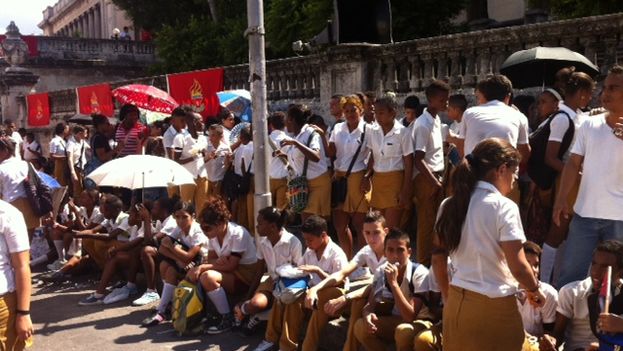
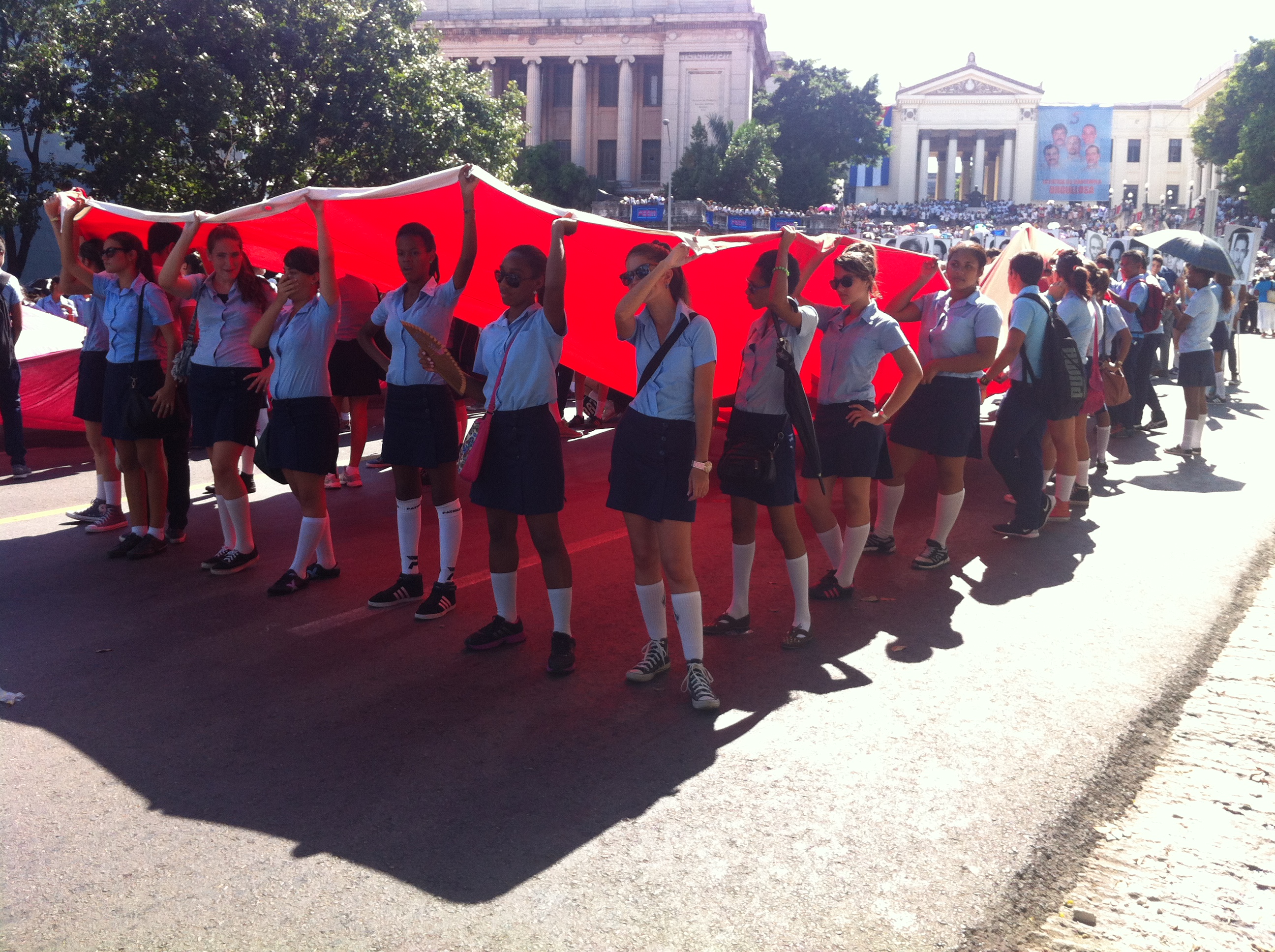
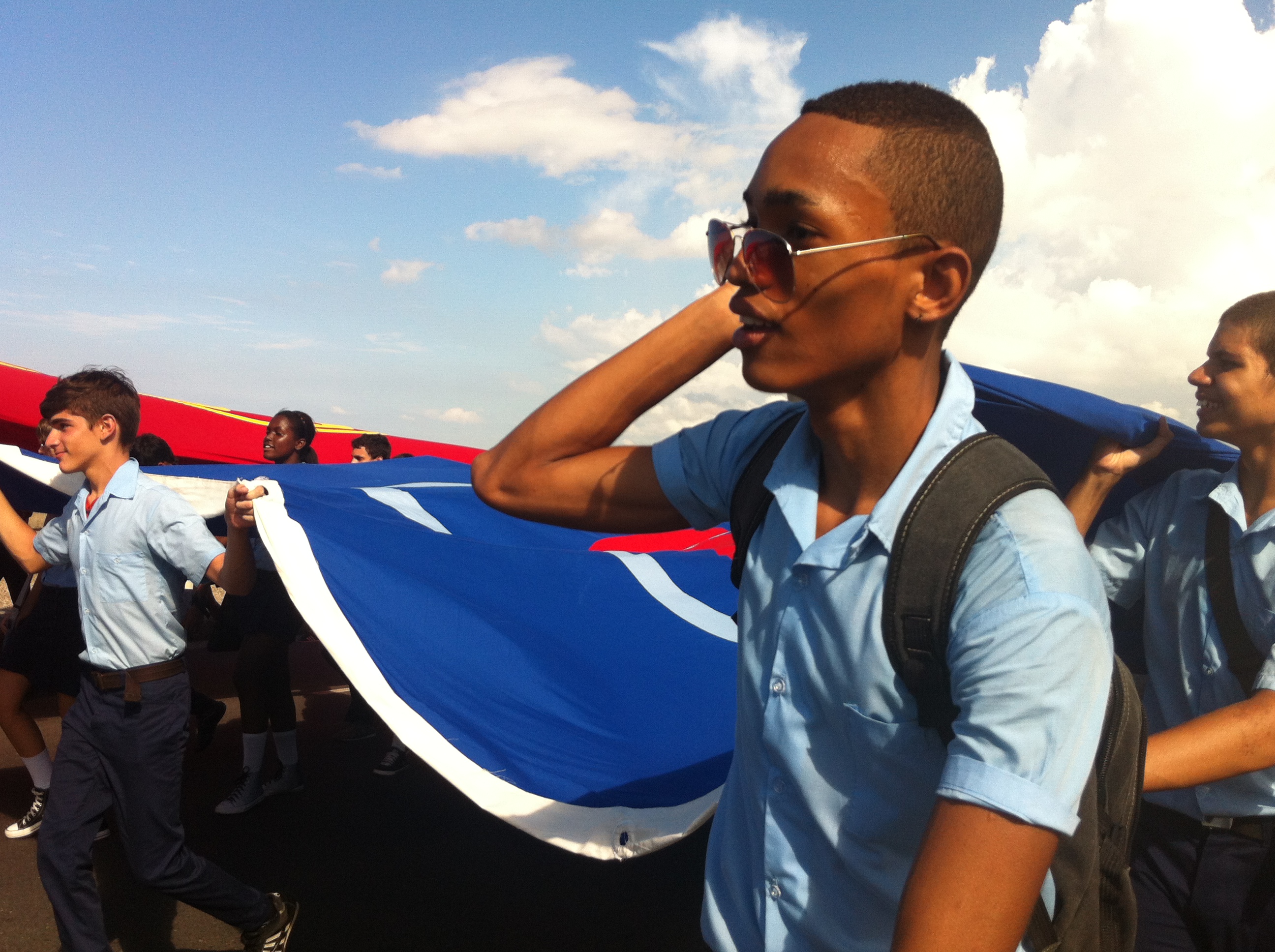
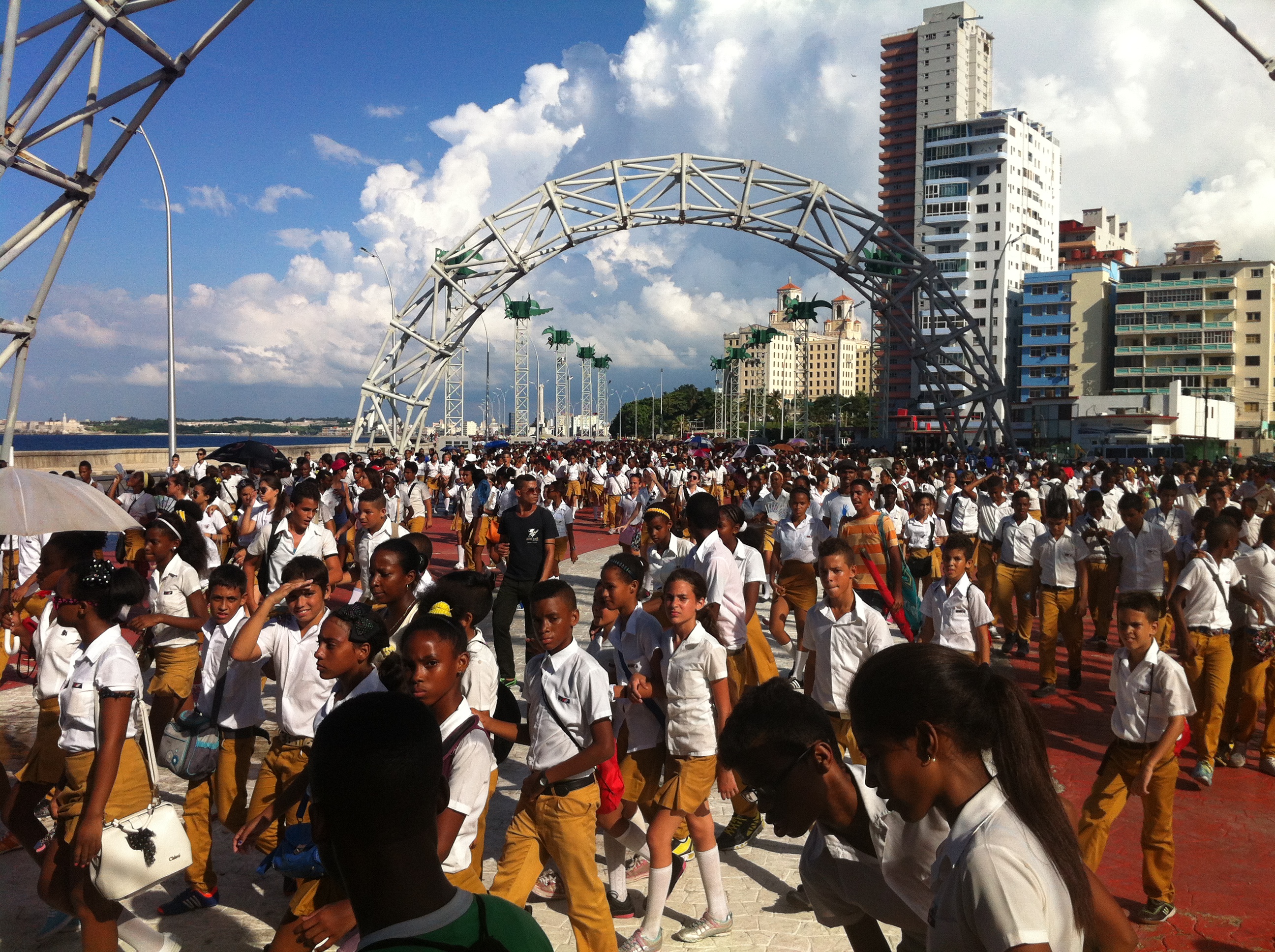
14ymedio, Eliecér Avila, Havana, October 2, 2014 — I saw the images of the Cuban students’ march in support of “the Cuban Five” and against “terrorism” and “subversion.” Telesur also echoed the news. I don’t know if any other television network has covered this topic. What I do know is that the participants believed they were giving an indisputable show of strength, principle and, possibly, valor.
So what did the nation gain from this audacity? Nothing – except many public expenses.
In contrast, I watch what is happening in Hong Kong, one of the most economically dynamic cities in the world, where thousands of students have been able to mobilize massive public sectors in support of their call for free local elections. The central government in Beijing opposes this demand.
Let us compare these two situations, both of which are developing in Communist territories.
In one case, protesters are taking to the streets calling for more democracy and for respect of citizens’ ability to elect their own representatives, against obstructionist government forces. In the other case – the one here (in Cuba) – the demonstrators travel comfortably to their site on buses, with snacks, slogan-emblazoned T-shirts, and security detail all included. All this to make a show of boldness geared to and directed by an agenda that has nothing to do with student demands or social protests in our country.
The students in Hong Kong get by with using social networking applications that make a joke of state censorship. When denied Internet access, they communicate directly with each other. The Cuban students use powerful megaphones to shout their “Long Live!” chants to those who are not allowed Internet access.
The apathy of Cuban university students towards the state of the nation does not cease to astound me.
The apathy of Cuban university students toward the state of the nation does not cease to astound me. If the young people of our country, with their vibrant health and energy, do not defend our elderly, our poor, our workers – our own selves – who will do it? —The state? —The bureaucracy? —The very causers of our problems?
Of what use is a march which forgets that we live in a country without the least shred of freedom of the press? Where the workers cannot afford even to eat adequately with the wages they are paid? And where the capital city is crumbling? What manner of respect can a youth and university movement inspire if it is incapable of empowering itself to recapture its autonomy and liberty?
It is clear that these marches are not initiated by the students themselves. We should also recognize that many who will read this article, and its author, took part at some time in similar marches – to break the monotony of our class schedules – to ride the wave that everyone says is the correct one – or simply to have a free day’s outing in Havana. When we grow up a little and leave the ideological bubble which our university system has become, reality punches us right in the face. We realize then the extreme manipulation to which we were subjected in order to defend the interests of a minority comfortably in power because we put them there. And this hurts.
We realize then the extreme manipulation to which we were subjected in order to defend the interests of a minority comfortably in power….
Being that nobody learns a lesson unless he learns it for himself, we will have to wait for the many Olympic champions of enthusiasm to graduate—and then face the challenge of maintaining their own households as citizens and workers.
But by then it will be too late. By then nobody will arrange buses and snacks to facilitate their expressions of nonconformity. Alternatively, if they go and do it on their own, they will discover a little-known aspect of the system, which will increase their frustration but will clarify much in their minds.
Some will decide to leave Cuba and will easily exchange their “Long Live!” megaphones for the steering wheel of the comfortable car that the ideological enemy will allow them to buy in exchange for their labor. Others will settle for eking out any kind of living they can and … “we’ll see what happens.” There will always be those others who are set on attaining positions from which they will have to convince a new generation of youths and students to march against the “historical enemy.” Their contribution will be the mental castration of the masses – an indispensable step towards constructing “The New Man.” These are the worst.
Still and all, I am convinced that this cycle of disempowerment and deception of the people cannot last forever. I feel that we are ever growing in number—those of us who in every corner of this country, including the universities, feel responsible for contributing to the profound and vital change that we need. All we have to do is agree to work together, as those demonstrators in Hong Kong are doing with such commendable maturity.
Translated by: Alicia Barraqué Ellison
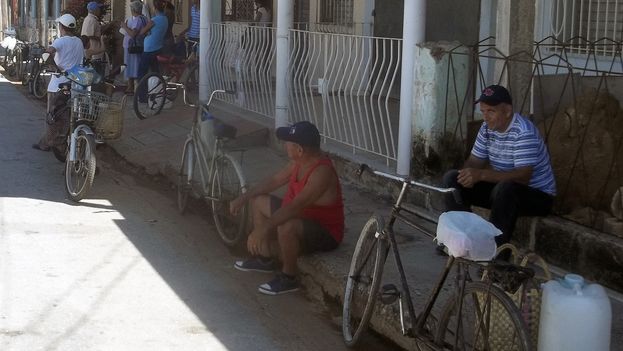
14ymedio, Ciego de Avila, Elvira Fernandez, 26 September 2014 – “This water will satisfy you for today. Jesus will satisfy you for eternity, do you accept him?” it reads above the two taps, in one of the most useful and widely appreciated places in Ciego de Avila today. It is the people’s filtered water service point opened by the Pentecostal Evangelical Church in its Voice of Jubilee Assembly of God Church in the La Guajira neighborhood.
It rains frequently here, but the city suffers a scarcity of potable water. People are afraid to drink the water from the aqueduct network because it is almost always contaminated with sewage waste, due to the abundance of cracks and leaks in the pipes. For the people, in addition, in an environment where hygiene isn’t front and center, this water is one of the few chances to prevent contagious diseases such as cholera, which seems to be here to stay.
The modern filtration equipment has been donated by an evangelical congregation in the United States, which is dedicated to providing this type of assistance to countries facing humanitarian crises, such as Haiti. In Cuba they keep about forty similar pieces of equipment running. In Ciego de Avila province there is another in the Pentecostal church in the Venezuela municipality.
The modern filtration equipment has been donated by an evangelical congregation of the United States
Four days a week (Tuesday, Thursday, Saturday and Sunday) the doors of the side yard of the church open to all, believers and non-believers, between 2 pm and 11 pm. At first they came with small bottles, but most have already made tanks, tanks and big jugs because, with a single trip and after waiting so long, they are trying to accumulate the water for several days. And the lines are getting longer again. The people waiting when the sun shelter in the doorways all around.
The church can not cope and, lately with very little water falling in the tank, they have to pay for water from the Communal Company’s pipes. A woman carrying several bottles says: “I have two children and I feel very safe when I can be assured of this water. In my house, no one wants to drink any other. But I’m worried, what if this disappears?”
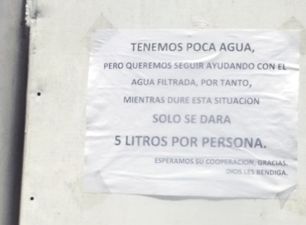
Given the shortage, the increasing demand and the difficulties, expands fear of a reduction in service. A new sign has appeared on the church gate has caused general concern, as it heralds drastic rationing:
“We have little water, but we want to continue helping with filtered water, therefore, during this situation, we can only give you 5 liters per person. We expect your cooperation, thank you. God bless you.”
Granting the wish of Ángel Santiesteban-Prats, who remains unjustly imprisoned, that his voice is not silenced, and while I await for him to find a way to send me his posts, I will be publishing, starting today, the ones he sent me in the past, as to keep his voice alive in these isolating times that prevent him from publishing in his own blog.
The post I share today was written in May, in the Lawton Prison.
The Editor
—————————————————————————————
The New Robin Hoods (II)
Last night, after we were locked in our barracks, we heard screams and remained alert. Shortly after, we saw the prison guards running around and calling for the military-on-guard. They had caught a thief who had entered one of the storage rooms that hold construction materials. When he was brought close to a light, we were even more surprised: we soon recognized him as the other military officer who guards the prisoners. He’s not more than twenty years-old.
While being taken, he kept explaining he needed to fix his house, as he was getting married. For this, he would need to divide the space so he could be independent from the rest of the family and start his married life.
We can imagine it was humiliating to him for the prisoners to see him detained and then see him being pushed into the patrol car that would carry him to the police station. One of the inmates joked: “The birds shooting the rifles.”
One more young man who will be added to the thousands waiting in Cuban prisons.
I’m sorry for those who do not understand this, but in the prison cell where they lock in people who rob, not for luxuries, but for necessity, I would instead lock in the politicians, whom I blame for cutting those young lives short and ignoring their most objective needs.
Ironically, it is a sort of luck and a relief for their families to see them in prison, as at least they know they will be alive and they know they can wait for them to return, as opposed to the families of those hopeless ones who venture into the sea risking their life and, in many cases, losing it in the attempt.

Those who live or have lived in Cuba know that the salary here is not enough to live on, not even in the case of the most lauded or brilliant professional.
Inmates assure us that the real ambition of the guard, now locked inside some dark and fetid cell, was—after becoming independent of his family—to buy himself a bicycle.

Ángel Santiesteban-Prats
Lawton Prison. May, 2014.
Ask Amnesty International to declare Cuban dissident Ángel Santiesteban a Prisoner of Conscience
Translated by: T
15 September 2014
14ymedio, Fernando Damaso, Havana, 1 October 2014 — The foreign policy of the Cuban government, which promised to start with democracy and freedom, soon showed its tendency to ally with authoritarian regimes when it suited the government’s interests.
From the first months of 1959 the Cuban government maintained close economic ties and a careful political deal with the Franco regime, although publicly it criticized it. In the case of Latin America, it interfered in the internal affairs of less like-minded countries and gave its political and logistic support to local guerillas, with the objective of weakening the influence of the United States in the region. Most of the attempts were defeated and failed, not receiving the hoped-for popular support, so it became interested in African countries, where it sent military advisors and even regular Cuban troops.
The African adventures were financed by the Soviet Union in the name of “proletarian internationalism” and with the objective of consolidating socialist influence on the continent. Over more than thirty years and at the cost of damaging its prestige, Cuba unconditionally supported Soviet policy in international forums, even when Moscow intervened militarily in Czechoslovakia in 1968 to liquidate the Prague Spring, or when it invaded Afghanistan eleven years later. continue reading
Whatever the “friends” and the friends of “friends” did received immediate support, and everything the “historic enemy”—the United States—and the friends of the “enemy” did was censored. In fulfilling this irrational principle, the Cuban government increased its support for dictatorial or totalitarian governments in Asia, Africa and even in Latin America. This context includes the strange alliance between Cuba and Argentina between 1976 and 1983, when the military was in power in Buenos Aires. Kezia McKeague, a political scientist specializing in Cuba, explains it in the 50th issue of the Bulletin of the Center for the Opening and Development of Latin America (CADAL).
In this context is the strange alliance between Cuba and Argentina between 1976 and 1983 when the military was in power in Buenos Aires
“While relations were not always optimal, despite the conspicuous ideological differences both governments approached each other regarding the sensitive issue of human rights and established a mutual support, to prevent violations of human rights in both countries being considered at the United Nations, specifically before the [Human Rights] Commission,” Kezia McKeague wrote. The Argentine dictatorship’s then ambassador in Geneva, Gabriel Martinez, described this relationship as “optimal” and “extremely close” adding, “The Cubans always, always supported us and we supported them.” As Cuba chaired the movement of Non-Aligned Countries in those years, it also played an important role in the defense this organization mounted for the Argentine regime, as well as serving as “interlocutor” between the Buenos Aires delegation and Eastern Europe.
In those years, Argentina was looking for support for its claim over the Falkland Island, and it and Cuba needed to prevent the issue of human rights violations from being taken to the United Nations Commission of Human Rights: here is the reason for this strange relationship which, ignoring the ideology and principles so often proclaimed, responded to simple short-term interests.
In later years, Cuban foreign policy has maintained the same course, introducing the practice of “solidarity” as well, through offering and sending specialists in health, education, sports and other areas, as well as awarding scholarships for study in Cuba, receiving in return political support in international forums. While, in Latin America Cuba tries to consolidate a common front against the United States, regardless of the different ideologies, politics, and economies of the countries—The Community of Latin American and Caribbean States (CELAC) is the principle instrument—in the international arena it continues to maintain close relations with dictatorial governments and extremist movements, giving them its unconditional support: the dynasty that governs North Korea, some of the African countries with long-standing one-man regimes, the “family” regime in Syria, the totalitarian Belarus, or the Islamic Palestinian movement Hamas.
When voting in international organizations our government always starts from ideological principles
If we follow what is published in Cuba, our government and its representatives in international organizations always start from principles of an ideological character when it comes time to vote: supporting Russia in the annexation of the Crimea and condemning Ukraine for trying to defend its territorial integrity; condemning Israel for bombing Palestinian territory but not saying a word about the Palestinian attacks on Israel; sympathetic to Hamas terrorists and those they call patriots and freedom fighters, while accusing the Hebrews of genocide; opposing the bombing of the so-called Islamic State; applauding constitutional changes in “brethren” countries, where their presidents, intoxicated by the enjoyment of power, seek to be reelected indefinitely; they do not hide their sympathy for the Colombian guerrillas and, ultimately, they are against those who question and criticize, albeit respectively, and in favor of those who accept and applaud unconditionally.
Although it is undeniable that, in recent times, the Cuban government has maintained a more pragmatic foreign policy, managing to establish relations with countries with different political, economic and social regimes, and abandoning costly and unproductive offshore military adventures, it has not yet been able to develop a serious and viable policy of normalizing its relations with its principal neighbor, the United States. This constitutes, without a doubt, its principal unresolved foreign policy matter.

The little box or the hospital?
A friend, whose name I withhold in order not to harm him, tells me of a neighbor “partner” of his who works in the Ministry of the Interior and who became, what we call here a “super salary,” who confessed to having raised the following complaint at his work center:
“I earn 690 CUP (Cuban pesos), which here is considered a good salary. Recently they passed by my office taking note of colleagues who were interested in buying the decoding boxes for digital television; this equipment, according to what they explained to us, has the purpose of converting the digital signal into analog for those people who, like me (the majority), cannot immediately replace the less modern televisions that we own.
To my understanding, they are of two prices: they cost 30 and 38 CUC (Cuban convertible pesos), depending on their functions. I, of course, would opt for the more economical which, multiplying its price by 25 CUP, as they do in the stores, becomes 750 CUP and I earn 690 monthly, therefore I would have to take 250 CUP from my salary for three months until matching the price of said box, and make do however I can during those 90 days, which means that during this period of time I will not be able to buy milk, pork meat or vegetables and will even have to neglect my grooming a little, besides which with the remaining 440 CUP I will have to pay each month for gas, electricity, water, phone and some other essential grooming article like soap, which would be impossible because that would far surpass my meager budget.
“What to do then? Get used to not watching television when I arrive home, tired after a long work day, because of not acquiring the little box, or failing that, go after acquiring it, directly to a hospital?”
Translated by mlk.
30 September 2014
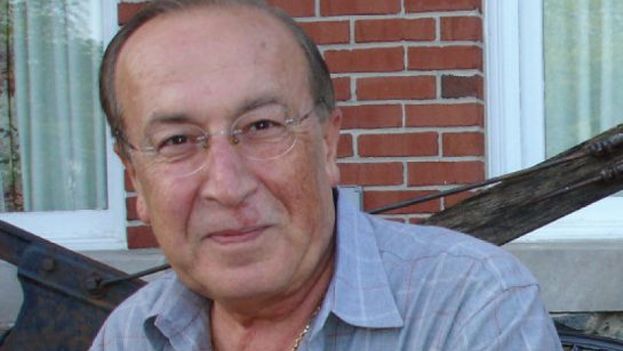
14ymedio, Havana, Ignacio Varona, 30 September 2014 – Few expected a magnanimous gesture from the Cuban courts toward the Canadian businessman Vahe Cy Tokmakjian. After he was arrested in September 2011, this 74-year-old man was turned into a test case for those thinking of investing in the Island. “If Tokmakjian is judged too harshly, few are going to want to put their money here,” whispered many in charge of businesses at embassies and other market and capital professionals.
The 15-year sentence for the president of the Tokmakjian Group may now seem a gesture of strength on the part of Raul Castro, but the main outcome is the weakening of investor confidence and the withdrawal of capital from the island. The idea has gained strength in diplomatic and business cliques, who placed all their hopes… and their suspicions on the judicial process that started last June.
According to the prosecutor, Tokmakjian was tried for the crimes of bribery, acts to the detriment of economy and contracting activity, fraud, trafficking in hard currency, forgery of bank and business documents, as well as tax evasion. Two other Canadian citizens, managers in the same company,Claudio Franco Vetere and Marco Vinicio Puche, were sentenced to 12 and 8 years in prison, respectively.
The excessive sentences fell not only on the foreign defendants. Fourteen senior officials and Cuban executives were tried in the same process and received sentences of between six and twenty years. Nelson Labrada, former vice minister of Sugar, will spend the next two decades of his life in prison, according to the ruling of the Provincial Court of the Havana.
The main outcome is the weakening of investor confidence and the withdrawal of capital from the island
On learning of the sentences, relatives and defense attorneys let out a cry of horror that had been pent up for three years. The Ontario-based company has denounced “the lack of due process” and the CFO has confessed that the Cuban authorities have demanded some 55 million Canadian dollars from the group to let Tokmakjian walk the streets again.
Freedom has a price for this foreign businessman, although in the case of the Cuban defendants little can be done to lessen their sentences. If it is an act to make an example and stop corruption, as some say, the severity of the punishment was greater for those who don’t hold a passport from the other side of the world.
The sentence has been made public after months of waiting and tons of speculation. Some ventured that with the new Foreign Investment Law, which came into force last June, the Cuban government would “pass the case under the table” to avoid provoking fears among potential entrepreneurs who want to settle in our land.
Others believe that only an exemplary sentence against this group would make the rules clear and avoid future corruption. For those who believe that the accusations against Tokmakjian are substantiated, the law that has fallen upon him with its full weight will deter others from playing tricks with taxes, appealing to patronage and graft, or falsifying accounts.
This second line of opinion, which considers Tokmakjian guilty and deserving of a heavy penalty, ignores that similar actions are taken by figures from the government itself and the family clan that rules the destinies of the nation. “Do as I say, not as I do,” the generals and lieutenant colonels turned career businessmen seem to say. Not holding military rank is a dangerous condition for businesses on this island.
“Do as I say, not as I do,” the generals and lieutenant colonels turned career businessmen seem to say
Almost a quarter of a century’s presence in Cuba was useless to the Tokmakjian Group in making the prosecutor lenient. Their business group calculated some 100 million dollars of the company’s assets have been confiscated during the judicial process. On top of that, the prosecutor is about to demand some 91 million as compensation for the economic damages allegedly inflicted on the national economy.
Only the Canadian nickel company Sherritt International was ahead of the Tokmakjian Group with regards to commercial operations in Cuba. Specializing in construction and mining equipment, this latter does business worth up to 80 million a year and brings in many of the Hyundai cars that are still circulating in our streets. The niche market they took advantage of included replacement parts and engines for old transport vehicles imported from the Soviet Union.
One could say that Tokmakjian fished in the troubled waters of the lack of business rights for Cubans. He made his fortune when we couldn’t, although that’s not a crime but rather an ethical omission that allowed him to profit where nationals are banned. However, one day he upset someone, and the courts undertook to remind him who rules in this house.
Now, with their offices in Havana closed and sealed, the Tokmakjian Group is claiming in Canadian courts about 200 million dollars from the Cuban government. The case promises to be an interminable sequence of chapters where complaints, negotiations and gestures of clemency or arrogance play out. However, what happens there is beyond the fate of the 17 defendants who have just suffered firsthand the lack of autonomy of the Cuban courts and the regrettable absence of separation of powers.
The harsh sentences against Tokmakjian and the others who were tried is a direct signal to those who believe that they can make easy money in Cuba with the approval of the authorities. The reality is a world of snares: some are activated immediately and others take twenty years to close on the victim.



In 2010 the Canadian businessman stressed his full confidence in the Island’s authorities in an interview with Excelencias del Motor magazine.
14ymedio, Havana, 30 September 2014 — A year before his arrest in Havana in September 2011, for a host of crimes (bribery, fraud, trafficking in foreign currency, forgery, tax evasion, acts to the detriment of the national economy), the Canadian businessman Cy Tokmakjian, sentenced last week to 15 years in prison, made very positive statements about the business climate in Cuba.
In an interview published in January 2010 in Excelencias del Motor magazine, belonging to a Spanish group with representation on the Island, the owner of the Tokmakjian Group spoke of the success of his company and its projects after 21 years in Cuba.
At that time, the company was expanding with the opening of the technical facilities of Wajay (Havana), Camaguey and Moa (Holguin), which had helped increase the number of Cuban employees from 140 to 230 workers.
The Tokmakjian Group, according to its founder, intended to use Cuban specialists for trade with the rest of Latin America, especially Panama, Nicaragua, Costa Rica and the Dominican Republic. The businessman introduced high-tech equipment to manufacture products in Cuba, “to solve national problems quickly and export from this country,” through joint ventures.
“We have to maneuver carefully not to lose the investment, the support and the confidence we have in Cuba”
Cy Tokmakjian showed no fear, faced with the ravages of the global economic crisis. “I’ve been in Cuba 21 years, I know the current situation in the country. During the years 1991 and 1992, the situation was no better, we are ‘accustomed’ to working in difficult times,” he explained. “The parent company in Canada trusts Cuba and the Cubans, which allows flexible receipts and payments; we expect Cuba will recover; we will continue doing business. However, we have to maneuver carefully, not to lose the investment, the support and the confidence we have in Cuba. We are all working on this together, Canadians and Cubans,” he added.
“Cuba greatly appreciates the foreign companies that continue to work in Cuba through difficult times. Together, Cubans and Canadians, we maintain an ethic, a principle, and mutual assistance,” he revealed.

Michael H. Miranda. Photo: Martha María Montejo.
Michael Hernandez Miranda (Holguín, Cueto, 1974) has come from the Far West (College Station, Texas, where he prepared his doctoral thesis) to show us his first collection of poems written halfway between Cuba and the United States. In A Foreign Country (Silueta, 2014) is the forthcoming event for August 7 at the Spanish Cultural Center in “Sun City” (Miami, Florida).
Miranda is an editor of books written on the shores of the province, for years he worked for the publishing house of the Cuban town where he lived, and after some skirmishing to make an alternative promotion (Bifronte Magazine, 2005-2006), came to the United States , where he has collected a bunch of poems he brings wrapped in a country that does not seem very “foreign” to him.
More than a decade after the publication of his first poetry book, Old Lies of Another Class (2000), Silueta (Silhouette) Publisher presents In A Strange Country. It is a wide selection of texts where Michael opens a range of possibilities between the strength of the images raised in his daily readings, the fruits of his best talks and a pedigree of being an outcast, a man who never looks back. This book looks like a farewell book, but it is a book of new “beginnings”, such that one is drawn by a human being when he understands the other dimensions the world offers him.
“there is nothing in the world called man or woman / we have sought to the point of desperation for something beyond / ourselves. we still have silence. we still have loneliness as / a copper sword that multiplies.”
The best way to sink one’s mind into this “foreign country” is to read without thinking about the blogs of the generations to which so much damage has been done in recent years in Cuba. The island was scrapped between critics and strangers who tried to frame a photo that wasn’t. To read “Nothing I say or will say has the taste of water” doesn’t need a group mapping. Michael (Hache) Miranda has understood the distance of five years outside of the fictional wall of his other country. We are in the presence of a poet who puts the word above any perks. And Michael comes from a country where such a simple action costs dearly.
An editorial effort
This collection is among the last dozen books published by Silueta and the commendable work of Cubans who parked their literary work away from the false reflectors, beyond the commitment of applause. The publisher Silueta is marking the footprints of Cuban literature, and it does it going forward, opening a path … or its wings, so that others avoid the censorship of the country they have left. It is something that is appreciated in advance.
Miami has been branded “a literary desert” and place “of cubaneo,” references launched pejoratively. However, since 1959 outstanding Cuban intellectuals who fled the repression and censorship on the island have settled. Economists, essayist sand philologists have occupied important positions in educational institutions of the place such as Florida International University (FIU ) or Miami Dade College (MDC). In recent decades small publishers have been responsible for promoting and marketing the work of Cuban writers, scattered around the world. Along with Silueta there are Neo Club Editions and the Alexandria Library, among others.
In a quick reading it is understood that we are invited to a poetry without linguistic moorings: “naked I’ll be when you come to ask me again / where I come from. // and I will say: I have a word here / a word / one / hard to kill / a word / island / hard to kill / a word / shot in the head.// the island is a cardinal point in this fiesta.// to whom to I owe my two shores.”
Michael Hernandez is also the author of the poetry collections Las invenciones del dolor (2001) (The inventions of pain) and en óleos de james ensor (2003) (in paintings by james ensor). “His poems, narrations and articles appear in several anthologies, selections and publications in Spain, Mexico, Canada, the United States and Cuba, among other countries. He has lived in the United States since 2008,” says the catalog of the publisher who is publishing him today.
The poet lives in College Station, Texas, where he is writing a thesis on Cuban literature in exile. The presentation will be at 7:00 pm and will be led by prominent essayist and professor Joaquín Badajoz.
4 August 2014
His Excellency, Dionisio García Ibáñez
Archbishop of Santiago de Cuba and Cardinal Primate of Cuba
Your Excellency:
Last night I had the opportunity to meet you at a reception in your honor given by Archbishop Carlo Maria Viganò, the papal nuncio to Cuba. Today I am writing to you regarding several concerns of the Center for a Free Cuba with the hope that in your role as president of the Cuban Conference of Catholic Bishops you might forward this letter to your fellow bishops.
The Center for a Free Cuba is an independent organization that promotes respect for human rights and the re-establishment of a democratic government under the rule of law in our beloved Cuba.
The Center considers the evangelization and humanitarian work of the Church in Cuba to be of utmost importance and has always responded to the requests of priests and bishops who have approached us. In light of our strong desire to continue collaborating with the Church, please allow us to share with Your Excellency the following concerns:
1) It has been reported that there are over three thousand cases of dengue fever in Cienfuegos. What can you tell us about the causes of this epidemic and what steps are being taken to counter it? How can we support the Church to help those affected?
2) As of more than two years ago, two devout Cuban Catholics have been held prisoner without trial. They were arrested and beaten by State Security agents as they were preparing to attend the mass celebrated in Havana by Pope Benedict XVI in March of 2012. Sonia Garro is being held in the Manto Negro prison. She is not in good health. Her husband, Ramón Alejandro Muñoz, is being held in the Combinado del Este prison.
Could not the Church urge the authorities to release them, or at least to put them on trial? We would also greatly appreciate it if the bishops celebrated a mass on behalf of Sonia and Ramón and all other political prisoners, as Archbishop Wenski did recently in Miami.
3) It is well known that the regime has intensified its repression of peaceful opposition figures such as the Ladies in White. Could not the Catholic Bishops Conference of Cuba ask the authorities to cease acts of repudiation and the excesses of the Rapid Response Brigades for the sake of peace and national reconciliation? Is there anything that might be preventing this noble and urgent request?
4) In the [Church sponsored] periodical, Espacio Laical (Secular Space), there have been articles about the need to encourage a “loyal opposition.” Many ask, loyal to whom or to what? To the regime or to freedom, democracy and the full dignity of all human beings? Clarification of this issue would be helpful so that the publication or the Church is not seen to be branding as “disloyal” anyone not in agreement with those who for more than half a century have held the people of Cuba hostage.
Given our great respect for your high office, we would very much appreciate your comments on the concerns we have outlined in this letter.
In extending this cordial and patriotic message to Your Excellency, as well as to the other bishops of our forlorn homeland, we evoke the memory of the historic visit of His Holiness, St. John Paul II, who urged all of us to be “valiant in truth, bold in freedom, constant in responsibility, generous in love, invincible in hope.”
Respectfully yours,
On behalf of the Center for a Free Cuba
Guillermo Marmol, businessman and civic leader
Filiberto Agusti, Esq., attorney and legal counsel for the Center for a Free Cuba
Dr. Néstor Carbonell Cortina, businessman, intellectual and civic leader
Ellis E. Briggs, former United States ambassador to Portugal, Panama and Honduras
Beatriz Casals, businesswoman, intellectual and civic leader
Prof. Carlos Eire, Yale University
Dr. Sergio Díaz Briquets, international advisor
Prof. Jaime Suchlicki, University of Miami
José Sorzano, former United States ambassador to the United Nations
Prof. Enrico Mario Santí, University of Kentucky
Otto J. Reich, former United States ambassador to Venezuela
Joaquín P. Pujol, economist, former assistant director of the International Monetary Fund and member of the Association for the Study of the Cuban Economy
Victor J. Pujals, P.E., professional engineer and civic leader
Robert A. O’Brien, businessman, civic leader and philanthropist
Frank Calzon, executive director for the Center for a Free Cuba [frank.calzon@cubacenter.org]
Posted to this blog:
25 September 2014

29 September 2014
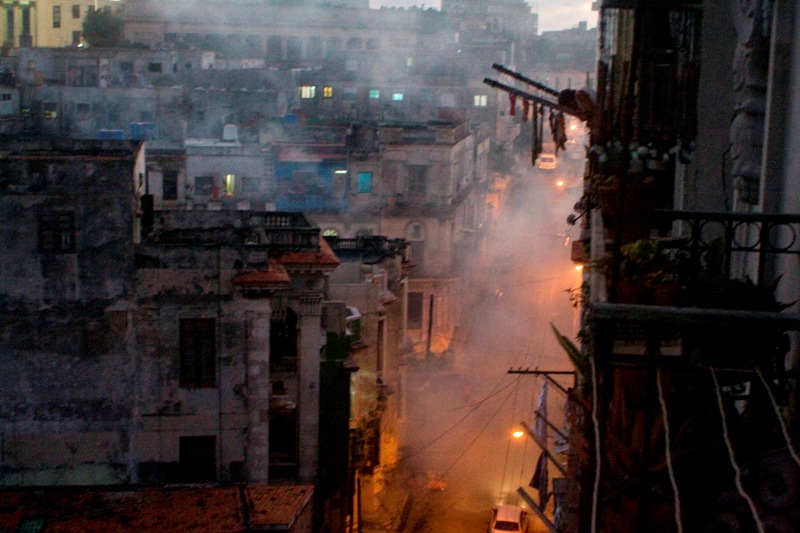
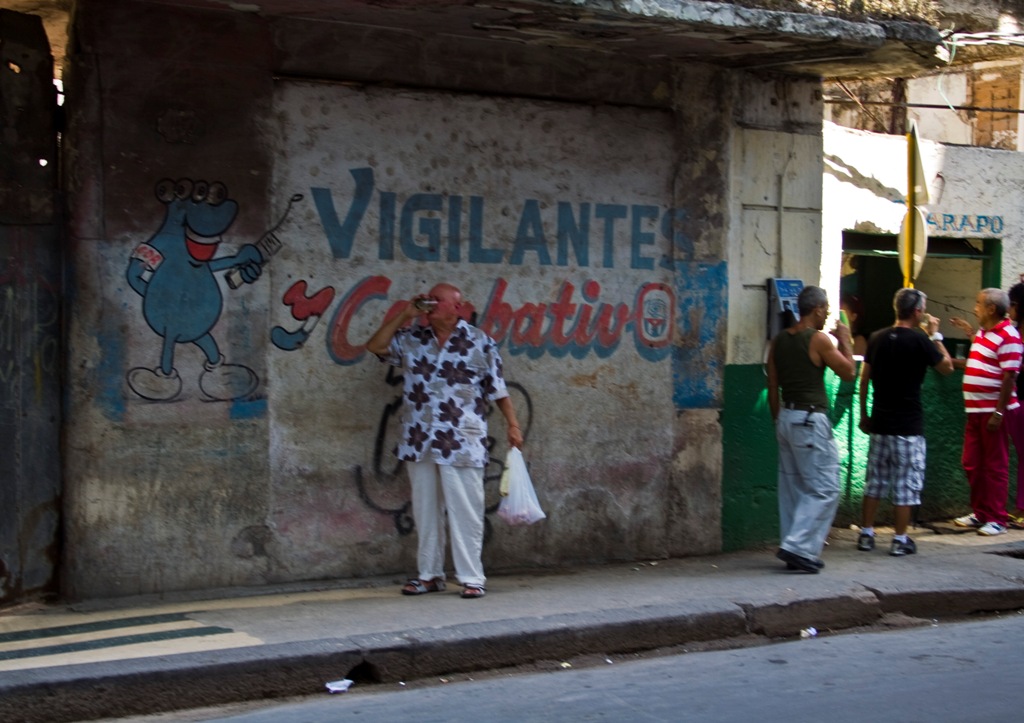
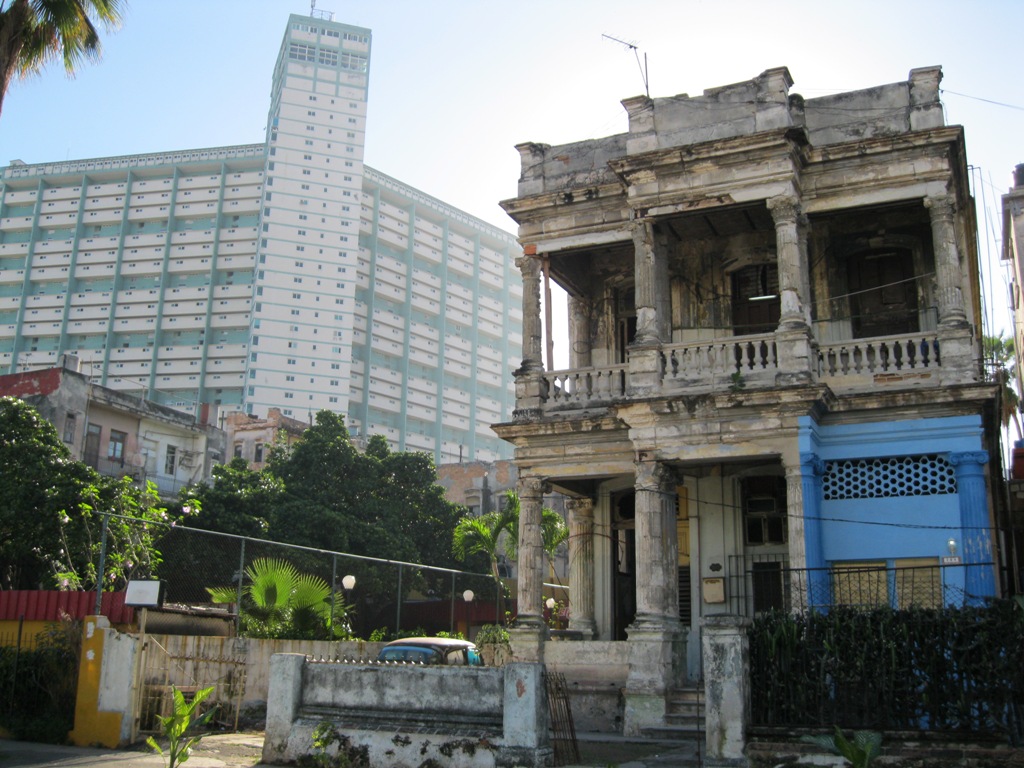
Havana has chosen to title itself as one of the Wonder Cities of the Modern World, a contest organized by the by the Swiss New 7 Wonders Cities Foundation.



25 September 2014