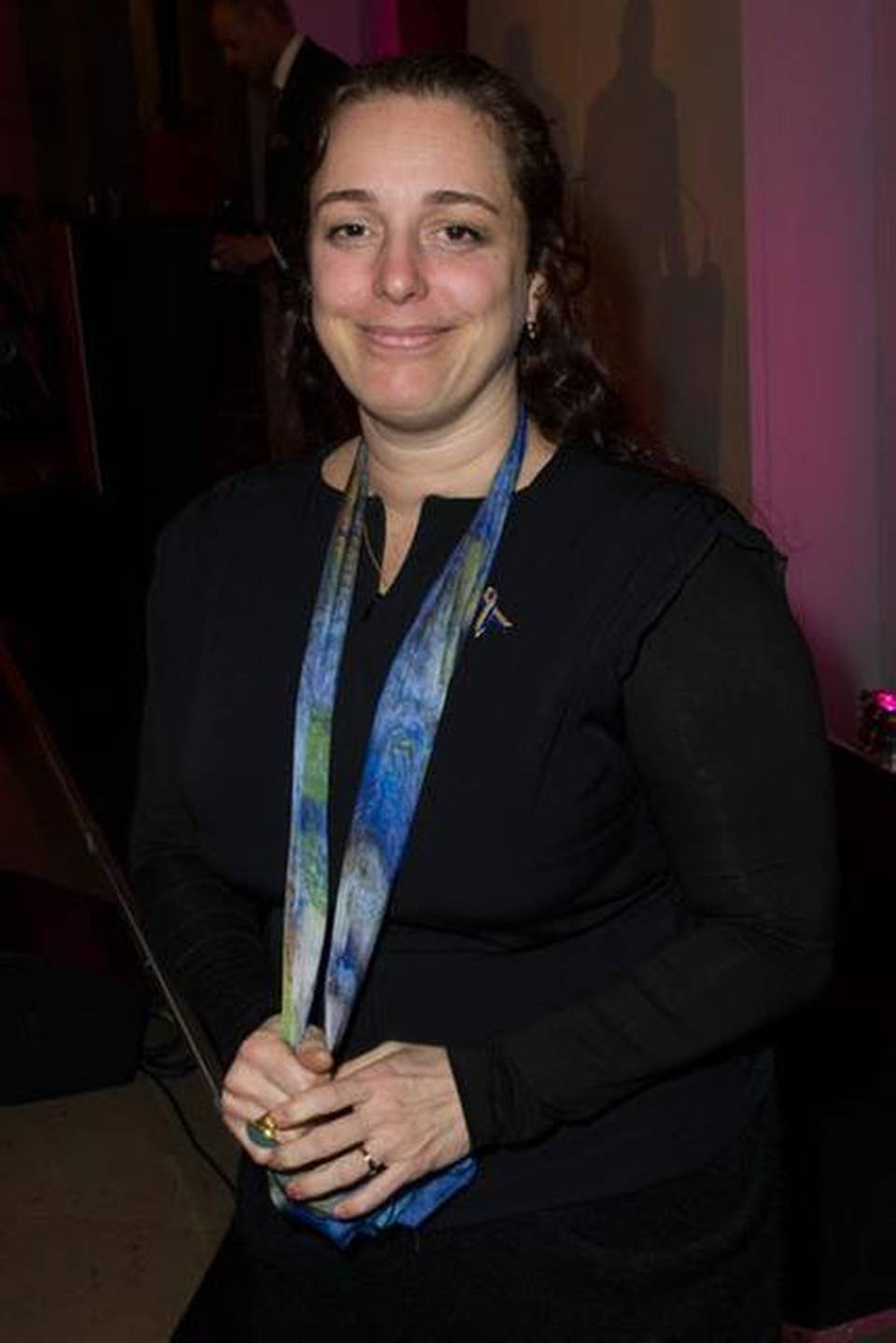
Granting the Cuban Child the Ability to Travel / Dora Leonor Mesa

Granting Visas to those younger than 18 years old during the School Year

By Lic Dora Mesa Crespo* and Lic. Odalina Guerrero Lara*
(Mesa Crespo is the Coordinator of the Cuban Association for the Development of Child Education (CADCE), an NGO.)
(Guerrero Lara is an attorney with the NGO Cuban Legal Association)

The obligation to study is specified in Cuban law (1) long before 1989, the year in which the Convention of the Rights of Child was signed. The Convention is an international treaty of the United Nations by which the signatory states recognize the rights of those younger than 18 years old.  Currently thousands of Cuban families residing in the country have Dual Nationality, which is laid out as a conflict of interests and loyalties for the holder. continue reading

The person should have nationality because this grants rights and powers to individuals, for example the power to travel overseas with a passport that vouches for belonging to a particular nation. For International Rights, an affiliation with a State is needed to invoke the exercise of rights and protection.

Any request relating to family reunification (2) made by a child or their parents to enter a State Party to the Convention on the Rights of the Child, or to exit from one for purposes of family reunification, will be taken care of in a positive, humane and expeditious manner, i.e. as quickly as possible.

The States will guarantee, in addition, that the submission of such petition will not bring unfavorable consequences to the petitioners, nor to his/her family.  The right to leave from any country will be subject only to those stipulated necessary restrictions that are in harmony with the rest of the rights recognized by the Convention.

The current possibilities for travel by Cuban minors (3, 4) should be analyzed at the moment that the visa is granted by the diplomatic or consular representative of the country where the person proposes to go.

Depending on the types of visa, the authorization for entry, passage or permanence in the destination State should be seen as a concession to minors if it exceeds the period of school vacations, because an absence from classes of more than that could be seen as harmful for the traveling student, as for the rest of the student body if the act is seen as discriminatory (5), infringing not only on social norms, but also internal laws (6) and international agreements.

To a certain extent, Cuba as a State Party to the Convention complies with the articles relating to Education. (7, 8)  The Constitution of the Republic of Cuba establishes that education is a function of the Cuban state and is free. (9, 10) The Convention of the Rights of a Child recognizes the children as subjects of rights, but become as adults, subject to responsibilities.

Parents as representatives of minors should be concerned with what is established in the Family Code (11), which classifies as a duty the “tending to the education of their children; inculcating in them a love of study; minding their attendance at educational institution where they are enrolled, as well collaborating with the educational authorities on school plans and activities.”

Article 18 of the Convention, upon referring to parents’ responsibility in the rearing of their children, insists that “their fundamental concern will be the greater interests of the child.”

Parents should not impede their children’s enjoyment of their fundamental rights, nor leave them without direction and guidance in the use of liberty (12). For minors younger than 18 years, travel to other countries is very good. All the more reason: To study is essential.

*Translator’s Note: “Lic.” is an abbreviation of “Licenciado” or “Licenciada,” which identifies the individual as a licensed attorney.

1. Ministry of Education. Law # 680, 23 December, 1959. Comprehensive Reform of Education in Cuba. Chapter 10. Page 21. Cuba.

2. United Nations (1989) Convention of the Rights of the Child. Article 10. Page 5. Available at: http://www.unicef.org/mexico/spanish/mx_resources_texto

3. Council of State (14 January, 2013). Decree # 302. Modification of Law # 1312, “Law of Migration,” 20 September, 1976. Official Gazette of the Republic (044). Ordinary Law (1357). Cuba.

4. Council of Ministers (14 January, 2013) Decree # 305. Modification of Decree # 26, “Regulation of the Law of Migration,” 19 July, 1978. Official Gazette of the Republic (044). Ordinary Law (1360). Cuba.

5. Convention on the Rights of the Child (1989). Article 2. Page 2. Available at: http://www.unicef.org/mexico/spanish/mx_resources_textocdn.pdf

6. Ministry of Education (16 March, 2012). Ministerial Resolution # 11/2012. Educational Regulation. Official Gazette of the Republic (007) Special Law (20). Cuba. Article 19, Section H.

7. Ibid. Article 28.

8. Ibid. Article 29.

9. Council of Ministers. Law S/N of 6 June, 1961. Law of General and Free Nationalization of Education. Official Gazette of the Republic (7). Ordinary Law. Cuba. Available at: http://www.oei.es/quipu/cuba/Ley_educ.pdf

10. National Assembly (31 January, 2003). Constitution of the Republic of Cuba. 24 February, 1976. Official Gazette of the Republic (3). Special Law (7). Article 9, 35, 38, 39, 51, 103-106.

11. Idem. (15 February, 1975). Law #1289, 14 February, 1975, “Family Code.” Official Gazette of the Republic (6). Ordinary Law (71). Cuba. Article 85. Section 2.

12. Op. Cit. Article 5. Page 3.

 Translated by: Alicia Barraqué Ellison, and others.

7 November 2014

Neighborhood Circus / Rebeca Monzo

December has for decades always been a month of circuses, but, in the economically failed regimens, the circus is always present: “If there’s no bread, give them circuses*,” says an old refrain.

The principal actors at this year-end have been the unstocked farmers markets which, upon closing their doors, have given way to improvised fairs where, in place of food, police have abounded.

Yesterday on Monday, when I went to take a turn using the Internet, I took the P3 Bus, at the 26th and 41st stop, the closest to my house. The bus had barely made it past the next two stops when all of us passengers who were traveling to Playa** had to get off at 26th and 25th. The route was detoured due to an agricultural fair that was taking place on 24th and 17th, next to the farmers market at that location — which, by the way, was empty and closed off.

Three trucks filled with sweet potatoes, plantains and tomatoes made up the fabulous offerings at the fair. A line of naive customers waited their turn among dirty puddles, squalid stray dogs, and more law enforcement officials.

A friend and I, due to the absurd diversion of the only route, were returning in the afternoon, walking from the recently-restored iron bridge, searching for the P3 stop so that we could ride the bus back to our neighborhood. Imagine our surprise when we discovered that the morning’s detour was still in effect. We were forced to continue on foot until we reached our respective homes in Nuevo Vedado.***

Upon nearing the trucks that bore the agricultural products on offer, I overheard the following comment: “Such a fuss over a tomato that’s more expensive than at the farmer’s market!”

Translator’s Notes:
*Literally, in this post, “A lack of bread, circus.”
**Playa is a municipality in the city of Havana.
***Nuevo Vedado is a neighborhood in the Plaza de la Revolucion municipality of Havana.

Translated by: Alicia Barraqué Ellison, and others.

31 December 2014

Tania Bruguera released / 14ymedio

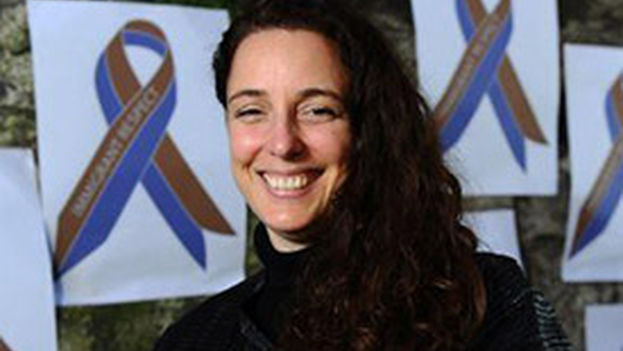
Tania Bruguera
Tania Bruguera

14ymedio, 2 January 2014 — The #YoTambienExijo.(I Also Demand) platform announced this Friday afternoon the release of the artist Tania Bruguera from the Acosta y Diez de Octubre Police Station. According to the platform, “Bruguera is already in her family’s apartment in El Vedado, she is going to rest right now and be with her mother.”

As of now, Bruguera has made no additional statements, but she appreciates all the support from the international community in the last few days. “Now is the time to be with my mother,” Bruguera stated, through the Twitter account of #YoTambienExijo.

Tania was arrested on Thursday outside the police center known as the Vivac de Calabazar. By the time of her release, thousands of people from all over the world had already signed a letter addressed to Raul Castro demanding her immediate release.

Bruguera made clear that she did not want to be released until all those arrested because of her artistic performance were released. “I cannot allow people to remain prisoners on my account, I can’t accept that the audience of political art is repressed, censored and suffers on my account,” the artist declared.

Bruguera’s case will be evaluated by the prosecutor in the coming days, the platform said. Her passport has been confiscated and she cannot leave the country.

Hundreds of Artists Address a Letter to Raul Castro To Seek the Release of Tania Bruguera / 14ymedio

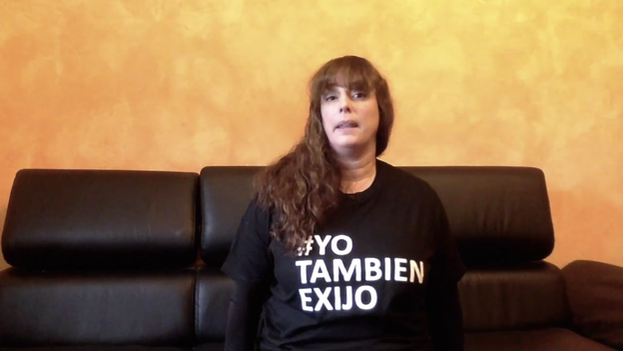
Tania Bruguera. Slogan on T-Shirt says "I Also Demand"
Tania Bruguera. Slogan on T-Shirt says “I Also Demand”

14YMEDIO, 2 January 2014 – As of right now, almost 300 artists have signed an open letter to President Raul Castro to petition for the release of Tania Bruguera and the other activists arrested after the performance organized by the artist last Tuesday, December 30. The initiative comes from Cuauhtemoc Medina (curator and critic of Mexican art), Andrea Giunta (Argentine art historian), Miguel Lopez (curator and critic of Peruvian art) and Octavio Zaya (curator and critic of Spanish and United States art), and the list of signatories keeps growing. continue reading

The letter considers that the staging that Tania Bruguera organized at the Plaza of the Revolution on the 30th had as its objective “promoting a moment of reflection and civilized debate about the changes that Cuban society and the government will experience after the re-establishment of diplomatic relations with the United States as announced this past December 17.”

The signers, who remind Raul Castro that Bruguera is one of the world’s most recognized Latin American artists, lament “with deep concern” seeing that the initiative “not only found no echo from authorities but that it caused the arrest of the artist and a diverse group of Cuban citizens.” “With all due respect, we ask you to discharge Tania Bruguera and the other arrestees,” they demand.

The work by Tania Bruguera, they recall, is “focused on the social and political intervention that is a result, as she herself has demonstrated repeatedly, of the development that produced the Cuban Revolution.” That is why they consider the arrest of the artist and seizure of her passport for the mere fact of creating an artistic work “that only sought to create a public discussion space” an inappropriate reaction.

Cuban cultural institutions have considered, on the contrary, that the effort by Tania Bruguera was precisely intended to damage relations with the US. As confirmed this Friday to 14ymedio by Elizardo Sanchez, spokesman for the Cuban National Human Rights and Reconciliation Commission (CCDHRN), at least 13 activists continue to be detained in connection with the events of December 30. Also, the artist was taken from the Vivac de Calabazar prison in a car, and her whereabouts are still unknown.

Translated by MLK

The Gag Law: A Victim of the Rapprochement between Cuba and the US? / 14ymedio, Victor Ariel Gonzalez

The legislation that has endorsed flagrant human rights violations seems to have its days numbered.

14ymedio, VICTOR ARIEL GONZALEZ, Havana, 30 December 2014 – Following the custom of seeing the speck in the eye of another, the “gag law” that in recent days has caused a waved of protests in Spain has been criticized by Cuba’s official Cuban. The Prensa Latina news agency recently cited a Spanish activist, opponent of the Popular Party’s legal project, who predicted that the edict “will repress rights like that of free assembly” as well as freedom of expression.

Nevertheless, the menacing “Law of Citizen Security” which has raised so much commotion in that European country has a counterpart on this Caribbean island. The “Law No. 88 for protection of national independence and the Cuban economy” has been, since its approval in February 1999, our own gag law, and its description is identical to that offered by the aforementioned activist and quoted by Prensa Latina: “A way of creating fear and exerting media pressure to criminalize protests.”

But in Cuba, unlike in Spain, for more than half a century one simply could not protest, and fear was consolidated into terror. The Cuban “Gag Law” affects, among others, those who “collaborate in any way with radio or television stations, newspapers, magazines or other foreign media,” “disturb the public order” or “promote, organize or incite disturbances of the public order.” The sanctions range from three to 20 years in prison. continue reading

Nothing better characterizes Law No. 88 than its first article, which reads that its objective is “to criminalize and punish those actions designed to support, facilitate or collaborate with the objectives of the Helms-Burton law, the blockade and the economic war against our people.” Throughout the text are repeated ad nauseam the elements that turn the United States into an enemy that wants to see us crushed.

This was the law that sought to justify the mass incarcerations of the 2003 Black Spring. But now the legislation that has supported flagrant violations of human rights seems to have its days numbered.

With the end of the Cuba-US confrontation a document loses meaning that consecrates as “an unavoidable duty responding to the aggression whose object is the Cuban people” who desire to maintain their “independence and sovereignty.” For decades the regime has shielded itself behind this discourse to refuse to open itself to hearing its opponents or, at least, to not repressing them.

The recent statements that ended 53 years of Washington’s “hard” line towards Havana were the exorcism of the imperialist demon who threatened Cuban sovereignty, as the regime defines it. According to the law, which serves above all to imprison peaceful opponents, the actions of the US are designed to “break internal order, destabilize the country and liquidate the Socialist State and Cuban independence.” But Barack Obama himself, when he describes the American strategy as “failed” underscores official Cuban paranoia.

With the December 17 statements from the White House, the foundations of the “Gag Law” wobbled. This shows that its reach was as terrible as it was weak. In the next months we may be witnessing the definitive emptying of its contents, ever more hollow. What remains to be seen is if they withdraw the law, ease it or just replace it.

Translated by MLK

Several activists arrested outside Vivac Prison on outskirts of Havana / 14ymedio

Police arresting activist Eliezer Ávila on Tuesday, since released. (14ymedio)

14ymedio, Havana, 1 January 2015 (Developing news) — Speaking to 14ymedio , blogger Agustín López Canino confirmed his arrest and that of some fifteen activists at 3:52 PM outside Vivac Prison in Calabazar, on the outskirts of Havana. On the list of those arrested is Tania Bruguera, who had solicited an interview with the detention center authorities to ask for explanations regarding those arrested on 30 December.

The activists Ada María López, Antonio González Rodiles, Margarita Rodríguez Díaz, Adnaloy Rodríguez and Ailer González are also among those arrested, according to what some family members told this newspaper. Meanwhile, Eva Baquero, seized just outside Vivac Prison was taken to the Cotorro Police Station and later released. continue reading

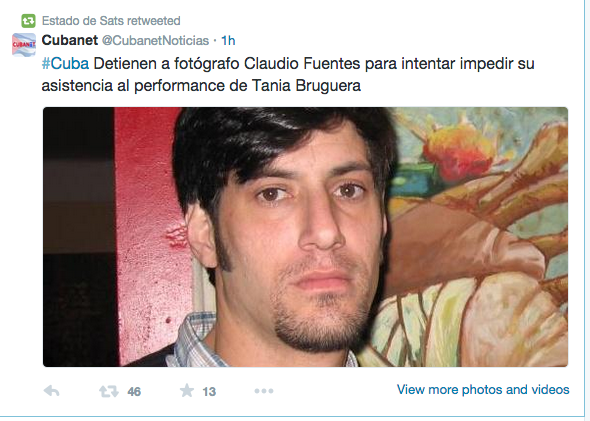
On Thursday morning, there were fifteen activists still being held of the fifty arrested to prevent them from participating in the performance of Tatlin’s Whisper #6, called by the artist Tania Bruguera to take place in the Plaza of the Revolution. Some of the prisoners had been transferred to the prison known as Vivac of Calabazar, a processing center where inmates await trial or the setting of bail. Over the course of the day at least three of them were released: Claudio Fuentes, Delio Rodriguez Diaz and Miguel Daniel Borroto.

The blogger Agustín López Canino, while heading to Vivac, had said that he would demand, “The release as soon as possible of people who had only tried to exercise their right to expression.” The group also included relatives of detainees who claimed not to have been able to spend the New Year’s celebrations with their loved ones.

Tania Bruguera had declared this morning that, “We will be outside Vivac until the last of those arrested is released.” At the exact moment this newspaper was speaking with her, the photographer Claudio Fuentes was released.

This newspaper has been able to confirm that among those detained in Vivac de Calabazar are the historian and filmmaker Boris Gonzalez, and UNPACU (Patriotic Union of Cuba) member Omar Fayut. Also on the list of those incarcerated are two activists from Independent and Democratic Cuba (CID), and Camilo José Olivera from the Estado de Sats team. Also in the same detention center, from days earlier, is the graffiti artist El Sexto (Danilo Maldonado), also for attempting to stage a performance.

The Cuban Commission for Human Rights and National Reconciliation (CCDHRN) reported a partial estimate of detainees, which amounted to fifty arrested, along with those who suffered house arrest, forced transfer to Santiago de Cuba, or threats to discourage them from participating in the artistic performance.

A fair idea in the depths of the dungeon / 14ymedio, Reinaldo Escobar

ImAgenes-Plaza-RevoluciAn-diciembre_CYMIMA20141231_0003_16
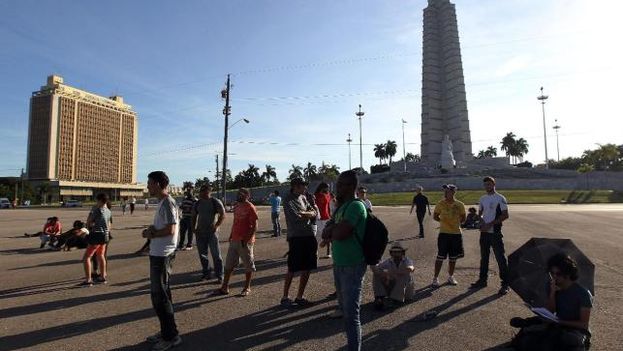
Images in the Plaza of the Revolution on December 30th. (EFE)

14ymedio, Reinaldo Escobar, 31 December 2014 – In the mouse gray uniform worn by inmates, as disheveled as usual and with eyes open wide, Tania Bruguera sitting on a bench in the Acosta Street Police Station seemed to be giving the best performance of her artistic career. At that point at noon on 30 December 2014, they’d already arrested dozens of people in the city of Havana to prevent them from answering the invitation to gather at the Plaza of the Revolution. continue reading

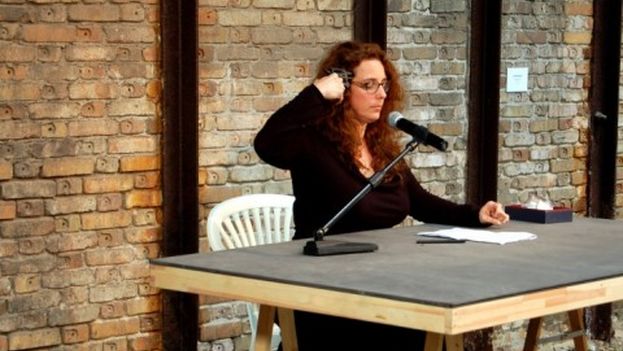
As Arnold Hauser said, “Artworks are provocations, we can’t explain them to ourselves, at most we can argue with them.” In 2009, at the Wilfredo Lam Center, during the Havana Bienniel, Tatlin’s Whisper had given us much to talk about. An open microphone, where everyone could say what they thought for one minute, was too much for the bureaucrats of the Ministry of Culture’s National Council of Plastic Arts, who arrived to make public their indignation with the libertarian event. But this one went further: it wasn’t in a closed gallery space, but in the Plaza of the Revolution, and it wasn’t just any moment, but two weeks after the announcement of the reestablishment of relations between Cuba and the United States.

If what the performance proposed was to measure and demonstrate the extent of the government’s lack of tolerance for freedom of expression, we must say it was a success, although for some it only highlighted a self-evident truth. If the style of “slowly but surely” has characterized the work of “the gradual revolutionary” in less complex areas, such as self-employment or the leasing of land in usufruct, what could be expected of civil liberties and politics a few days from the beginning of the dismantling of this “besieged plaza,” where all dissent has been interpreted as treason.

Far from harming the normal development of eventual negotiations between the participants in the old dispute, what happened in the final days of 2014 makes clear for both parties the limits within which conditions and requirements can move. Above all, it sheds light on the absence from the discussion table of alternative civil society, ordinary Cubans, the people, or whatever you would like to call the most injured party in this conflict on the path to extinction.

From Tatlin’s Whisper to Tatlin’s Cry / Yoani Sanchez

Images from the first Havana edition of "Tatlin's Whisper"
Images from the first Havana edition of “Tatlin’s Whisper”

Yoani Sanchez, Havana, 31 December 2014 – Those of us who participated in that first edition of Tatlin’s Whisper in Havana will never forget that minute of freedom in front of the microphone that would cost us years of official insults. The project to reenact the performance, but this time in the Plaza of the Revolution, invariably brought back to us memories of that night in the Wilfredo Lam center and the hope that this time the microphones would be open to a larger number of Cubans. I confess that I came to reflect on where it would be best to raise the podium, to place the actors dressed in olive-green who would regulate the time of each person’s speech, and how the white dove would look, fluttering over the shoulder of each orator.

On the eve of December 30 I talked with Tania Bruguera who, hoarse and exhausted, already felt the cage closing around her. All the signs pointed to their not allowing her to even reach the Plaza and the political police unleashing a wave of repression against those who wanted to accompany her. I ventured to describe three possible scenarios she might face: that they would not let her leave her home, or would arrest her; that they would let her get to the plaza which would be taken over by a last-minute popular festival with cheap beer, parades and loud music; that they would let her stage Tatlin’s Whisper, but fill the time at the microphone with voices shouting official slogans. There was no way to add to these variables one that would conclude with a chorus of plurality and tolerance making itself heard in front of the statue of José Martí.

In that conversation I told her that “The performance is already done; the artistic action achieved,” because with her project Bruguera had unveiled the framework of censorship, cultural cowardice and repression that immobilizes Cuban life. Many of her artist friends had declined to accompany her, some acquaintances had called on her to concede and move Tatlin’s Whisper to the interior some institution and others, more committed, had warned her that there was a plan to “abduct her from the Plaza.” From the early hours of the morning the macabre dance of arrests and intimidation began.

Ladies in White, activists, journalists and dissidents were jailed or blocked from leaving their homes. Many communicators had their cellphones cut off, text messaging cancelled and access to the government-operated Nauta email system restricted. In a whisper, information about what was happening began to surface. The 14ymedio team suffered a hard blow, with two reporters and a contributing writer arrested and our press office under a police operation for hours. The list of the jailed was growing and as communications began to work again we started calling each other to keep ourselves up-to-date.

But the whisper turned into Tatlin’s cry. One that is now heard through the phone lines, on Twitter, outside the police stations, where family members demand to spend the last day of the year with their loved ones. There is no microphone, no white dove, no one minute of freedom, but rather long hours of suffering and uncertainty.

Tania, among all the scenarios we projected, we missed this one. You in jail and from there, dressed in the gray uniform of an inmate, you performed the most devastating and unforgettable of all your artistic actions. The Plaza is today in each one of us.

Declaration of “Convivencia” Magazine on the Restoration of Diplomatic Relations Between Cuba and the U.S.

Convivencia (Coeixistence) magazine salutes the reestablishment of diplomatic relations between the Republic of Cuba and the United States of America.

We hope that this climate of dialogue and negotiation is also established between the Government of the Republic of Cuba and independent Cuban civil society, with a respect for unity in diversity, the right to self-determination and the exercise of citizen sovereignty.

Convivencia magazine is glad for the release of political prisoners, and believes that all political prisoners must be released, including those who are on parole in Cuba.

In the same way, all repression for political reasons must cease. The Cuban Government should ratify the United Nations Human Rights Covenants and the conventions of the International Labor Organization, as they claim the four points of consensus identified by a growing and significant group of Cuban civil society. continue reading

Convivencia magazine is grateful for the mediation by his Holiness Pope Francis in the restoration of diplomatic relations between the Republic of Cuba and the United States of America.

Likewise, we hope that the Church can continue to offer its service of mediation in an achievable and necessary dialogue between the Cuban Government and independent civil society in Cuba, with the consequent recognition of the latter as valid interlocutor.

Convivencia magazine believes that the restoration of diplomatic relations between the Republic of Cuba and the United States of America removes a serious obstacle so that the fundamental dispute can be clearly seen as being between the Cuban Government and its citizens, not between Cuba and the United States. Thus can it be understood that the most important thing for our people is inclusion, civil and political, economic, social and cultural freedoms and the exercise of an ever more participatory democracy in Cuba.

Convivencia magazine hopes that this historic event and the lifting of all blockades, especially the one that the Cuban government uses against the initiative and entrepreneurial nature of its citizens, will create the necessary conditions so that the Cuban people are the principal actors of their own history, and so lead the nation — including all our compatriots on the Island and in the Diaspora — towards a future of peace, freedom, progress and social justice.

The Editorial Board

Translated by: Hombre de Paz, with some assistance from Alicia Barraqué Ellison

18 December 2014

Tania Bruguera Under Arrest at Acosta Police Station in Diez de Octubre, Havana / 14ymedio

Tania Bruguera (photo from her blog)

14ymedio, Havana, 30 december 2014 — Contacted by phone at her home, the director of 14ymedio, Yoani Sanchez, said that Tania Bruguera was under arrest at the Acosta Police Station in the Diez de Octubre municipality in Havana.

Reinaldo Escobar was released from the same station Tuesday night at 10:00 pm. Escobar affirmed that he saw Tania “wearing the gray uniform of a convict,” It is still unknown when Bruguera will be released.

The two police cars surrounding Yoani Sanchez’s building have been removed and the director of this digital daily is no longer under house arrest.

The 14ymedio reporter Victor Ariel Gonzalez is still being detained, in Guanabacoa. Still unknown are the whereabouts of the activists Antonio Rodiles, Ailer Gonzalez and Eliecer Avila, along with the photographer Claudio Fuentes and his partner, Eva Baquero.

Developing news.

UPDATE: Ailer Gonzalez has been released.

Several activists and Reinaldo Escobar, editor-in-chief of ’14ymedio’, arrested / 14ymedio

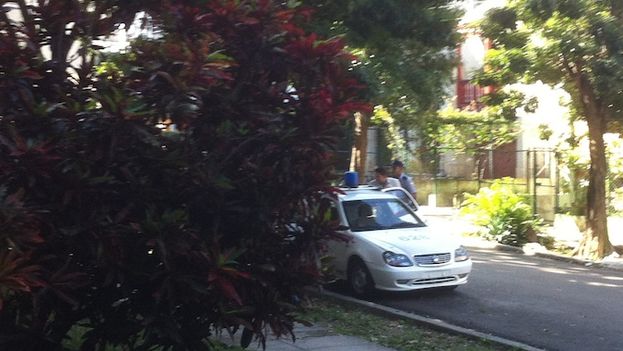
The police car in front of the apartment of Reinaldo Escobar and Yoani Sanchez. (14ymedio)

The director of this newspaper, Yoani Sánchez, is under house arrest

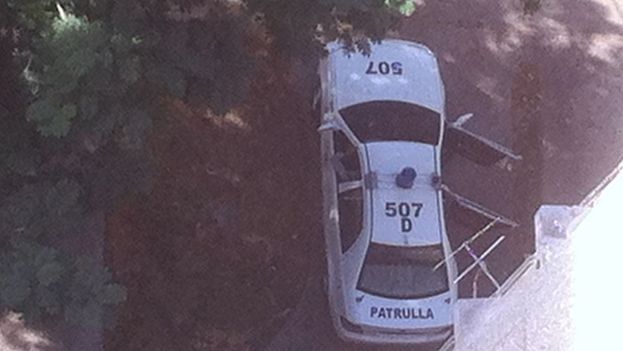
14ymedio, Havana, 30 December 2014 – Contacted by phone at her home, the director of 14ymedio, Yoani Sánchez, explained the circumstances of the arrest of her husband, Reinaldo Escobar, and of several other people this Tuesday in Havana. She is under house arrest. Patrol car No. 507 is stationed in front of the building where she lives, while four plainclothes offices are controlling the building entrances. continue reading

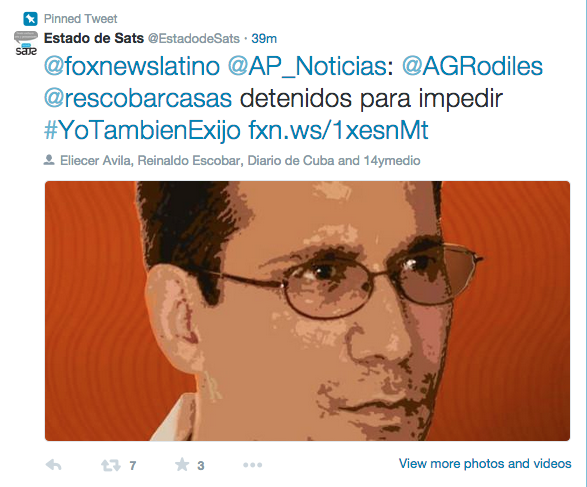
Reinaldo Escobar was arrested when he left the building where he lives in the company of the activist Eliécer Ávila, founder of the group “Somos Más” (We are More). Both were handcuffed and put in a patrol car waiting in front of the building in the Havana neighborhood of Neuvo Vedado. Reinaldo’s daughter, Luz, who was with her father, has not been arrested, but a State Security agency told her, “We are not going to let you leave.” The same official visited Luz Escobar’s home yesterday to warn her not to go near the Plaza of the Revolution today, where the artist Tania Bruguera has scheduled a performance titled “Tatlin’s Whisper #6” for 3:00 in the afternoon, to demand freedom of expression for Cuban’s citizens.

Also arrested were photographer Claudio Fuentes and his companion Eva, while the activists Antonio Rodiles and Ailer González were not answering the phone. Social networks also inform us of the arrests of José Díaz Silva, Raúl Borges, Lady in White Lourdes Esquivel, and of the 14ymedio reporter Víctor Ariel González.

Members of the #YOTAMBIENEXIJO [I also demand] platform issued a press release denouncing their inability to contact Bruguera. The organization explained that the artist’s telephone number is blocked and expressed their fear, given the arrests of the leaders of civic organizations currently underway.

Several Activists and Reinaldo Escobar, Editor-in-Chief of “14ymedio”, Arrested / Cubanet

Cubanet, 30 December 2014 — The activist Eliezer Ávila and journalist Reinaldo Escobar, Editor-in-chieft of the independent daily 14ymedio and husband of the blogger Yoani Sánchez, were arrested this morning at 11:40 am by members of the State Security outside the building where Escobar lives, according to the lawyer Laritza Diversent from Havana.

The source, after a telephone conversation with Yoani Sánchez, added that the patrol officers of car N.328, carried out the arrest violently. So far the whereabouts of detainees is not known. According to Yoani she was not allowed to leave her residence.

It is presumed that the authorities are trying to prevent the attendance of opposition figures at the performance of artist Tania Bruguera to be held this in the Plaza of the Revolution.

Also arrested were activists José Díaz Silva, leader of the Opposition Movement for a New Republic (MONR), and the Lady in White Lourdes Esquivel, according to the Twitter account the opponent Manuel Cuesta Morua.