After Four Months’ Detention In The United States, A Freelance Journalist Fears Repatriation To Cuba

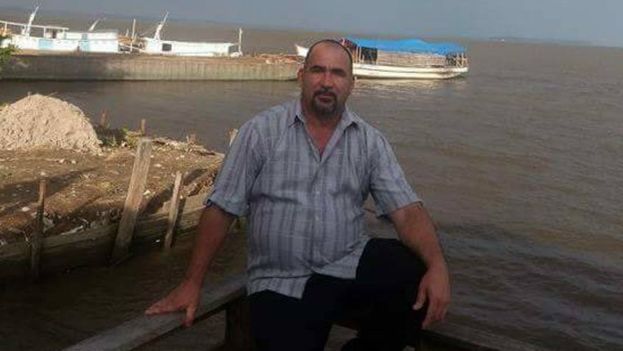
Freelance journalist Serafín Morán Santiago (Cubanet)

14ymedio bigger14ymedio, Mario J. Pentón, Miami | The Cuban freelance journalist Serafín Morán Santiago, who arrived at the United States border to ask for political asylum in April, will appear on Friday before a court that will decide whether to grant him bail. This Wednesday in Miami, organizations that promote freedom of the press declared that if he is repatriated to the island, Morán Santiago’s life will be in danger.

“Serafín had a trial fixed for October, but they have cancelled it and they announced this bail hearing. Fundamedios and Reporters Without Borders (RSF) are worried about an eventual deportation to Cuba because of the Cuban government’s persecution of him,” said María Fernanda Egas, a journalist from Fundamedios, an organization that defends freedom of the press in the United States.

Morán Santiago is being held at an Immigrations and Customs Enforcement (ICE) facility. continue reading

Egas explained that RSF and Fundamedios have been keeping an eye on Morán Santiago’s situation and they urge his immediate release. “He considers himself a candidate for parole because he was a victim of torture by the Cuban authorities, and he believes that bail would take away his possibilities of obtaining the political asylum that he seeks,” she added.

Cubans benefitted for more than two decades from the “Wet Foot, Dry Foot” policy, which permitted their entry under parole to the United States if they stepped on US land. In January of 2017 President Barack Obama repealed the policy, and ever since Cubans have been treated like any other immigrant who arrives at the border without a visa, so now they can be deported back to the island.

The Zero Tolerance policy of the current Administration requires that political asylum seekers be detained while their cases are processed. Morán Santiago has spent four months in an ICE detention center and, although he successfully passed a “credible fear” interview, he still has to argue his political aslyum case, a long and complex process, according to lawyers.

“This is an opportunity for an immigration judge to grant bail and he can argue his asylum case from the street,” explained the immigration lawyer Wilfredo Allen to this newspaper by phone.

“A bail hearing is not a final trial, when the judge decides whether or not to grant political asylum. If he demonstrates that he won’t be a public charge for the United States and isn’t a danger to this country, they can grant him bail so that he can walk free. Otherwise he will have to remain in detention like the majority of asylum seekers until the definitive trial,” he adds.

Allen explains that it’s not the judge who grants parole, necessary to have recourse to the Cuban Adjustment Act, which gives permanent residency to Cubans who remain legally for one year in the country. The parole document is granted by an ICE official present in the detention centers.

“Bails can be as low as $1,500 or as high as $25,000,” adds Allen. If the judge doesn’t grant bail, Morán Santiago will have to remain in detention in Texas until the final trial where it will be decided whether he receives political asylum or not. The immigration attorney is skeptical of the possibility that Morán Santiago will be granted bail.

A judge imposes bail to ensure that the asylum seeker will appear at the final trial and will not remain undocumented inside the country.

In the last fiscal year, which ends in September, 364 Cubans have been deported to the island. Since January 12, 2017, Havana has committed to receive all Cubans deported by the American authorities for arriving at the border without a visa.

“Solidarity Without Borders has been helping Morán Santiago with his legal representation. We ask the help of the Cuban community in Miami and of the media so that it is known what is happening with this journalist,” he added.

Serafín Morán, 40, has worked as a freelance journalist for such media outlets as Univisión 23, Telemundo, Hispano Post, Primavera Digital, Cubanet, and TV Martí.

The reporter has said that he was threatened with death if he continued working as a journalist on the island, but the US Embassy in Cuba refused on two occasions to start a file to request asylum.

Morán Santiago left Cuba for Guyana and then crossed to Mexico, where he remained in a temporary shelter. As he has reported, he was harrassed by the Cuban embassy in that country. He appeared at the American border to seek political asylum in April and since then he has been waiting for a response to his case.

________________________________

The 14ymedio team is committed to serious journalism that reflects the reality of deep Cuba. Thank you for joining us on this long road. We invite you to continue supporting us, but this time by becoming a member of 14ymedio. Together we can continue to transform journalism in Cuba.

Cruises Bring Many Tourists but Little Money to the Streets of Havana

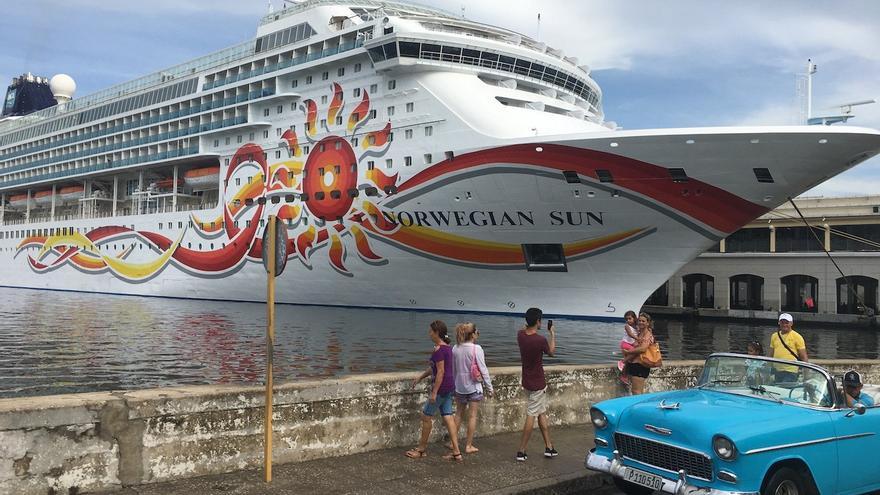
14ymedio bigger14ymedio, Marcelo Hernández, Havana, 20 August 2018  —  The gleaming behemoth docked in Havana Bay and, within a short time, dozens of travelers in sunscreen and shorts  began to pass quickly through the customs gate. Waiting for them were several buses to take them for a tour of the city arranged ahead of time.

From the moment when the ship appears on the horizon there is a constant coming and going in the area of the Sierra Maestra Cruiseship Terminal where tourist guides with signs in English and French present their offerings such as a program of “Salsa, Rum, and a Fine Cigar.”

A fisherman looked upon the scene with boredom. “They get off, walk about for a little while, and go back to the ship,” recounted the man who said his name was Sergio and he had once worked as an electrician. “That type of visitor doesn’t even have time to chat for a while so I don’t bother with them; I prefer those who come  more relaxed.” continue reading

One morning, with his fishing rod pointing to the dark waters of the bay, not only does Sergio catch some small fish to put on a plate, but also tips from tourists who want to take a picture of him or talk about the kinds of fish there are in their countries.

Nevertheless, with the travelers that arrive in big ships, he hasn’t had such luck. ” A cruiseship is a floating hotel that doesn’t even leave trash let alone money,” he lamented. “These people don’t sleep ashore, almost never eat in the restaurants and do little more than leave the ship to wait to get on a bus that takes them somewhere else.”

Sergio’s assessment coincides with the data from the 2016 Statistical Yearbook. That year, each foreign visitor spent an average of 765 dollars, while a cruise passenger spent only around 50. “For every $15.30 spent by a tourist who arrives on the island by plane, the tourist who travels by cruise ship spends $1.00,” adds a report prepared by The Havana Consulting Group (THCG).

“The income for the State is what the ships pay to dock inCuban ports but in terms of services, of course, they leave much less profit,” says Rodobaldo, a guide who works especially with Canadian cruise passengers.

“The client who arrives in this way does not need much from outside the boat because he has entertainment on board, so when he goes for a walk he does it for short periods and he only wants to go to places where everything is safe and well organized to get the most out of his minutes on land,” the guide explains.

“A bar, a place to dance and a museum, but they do not want to go further or risk getting into the depths of Centro Habana, or getting to know Alamar, leaving the city a bit to see something like the Botanical Garden or anything like that,” the guide explains to this newspaper. “It is a very isolated tourism that does not want risks of any kind.”

Some merchants near the port try to shape their offerings for quick visits. In the nearby San José dock, a handicraft and souvenir market has been serving “customers in a hurry” for months, as Liván Ramos calls cruise passengers. “They come and they want to get something before the ship’s siren sounds, so they pick up anything.”

At Liván’s stand there is a wide variety of products, such as an elderly couple carved in wood, the man with a bowler hat and the woman with an umbrella, for about $5.00. “These are in high demand among those who arrive on cruises as are the small canvases with images of the cathedral, the Bodeguita del Medio or the face of Che Guevara, which sell for $10.00.”

“We have collected the schedules for Royal Caribbean and other companies, so we already know that at least three times a week and after lunch they will drop by here in groups and in a hurry,” Ramos explains. “They do not bargain, they pay fast and even the bottle of water they are carrying has been taken from the boat,” he explains.

Ramos regrets that the infrastructure around the port “is still not very developed for the arrival of so many tourists.” In his opinion, “There is a lack of restrooms, places to sell drinks and more information points, as well as shaded areas.” The port also needs “urgent maintenance,” he says.

A private tavern, a few yards away, has placed a blackboard on its doorstep with the offers of the day that can be seen from the opposite sidewalk. The drinks have marine names like “Hola Ola” (Hello Wave), and “Velero Azul” (Blue Sailboat). “From the time the customer sits down until he has a drink in hand, is less than three minutes,” reads the poster advertising the cocktails.

The entire tourist geography of the area seems to have adapted to a type of express visitor who spends little. Tapas win the most complex dishes in the bars and restaurants closest to the sea, while sunny terraces are also more in demand than indoor air-conditioned ones.

“There are some who get off the boat and do not want to lose sight of it, so they ask to sit on the terrace,” says Malcom, who works in a small privately managed restaurant that has changed it offers to suit the new times. “No rice with beans, these people want fast and safe food like some fruit, croquettes, olives or snacks with cheese.”

Some young people eager to connect to the internet wait for cruise passengers and ask them for the login information for the floating wifi zone enabled on each boat. “There are people here who know that ‘the Royal’ has arrived not because they saw the boat but because with their NanoSation or Mikrotik (wireless routers) they can see the Wi-Fi signal,” explains Malcom.

“You need some user data to access the portal but any tourist will give it to you and once you get connected it works better than the Etecsa internet because it is very fast and without censorship,” he points out. “They don’t leave us with a lot of money but at least we save a few pesos we would otherwise have to pay to Etecsa,” the state communications monopoly.

Recently, it was announced that the Cuban corporation Aries Transporte signed a contract with the Turkish company Global Ports Holding (GPH) to expand and manage the cruise port of Havana. The agreement includes increasing the two cruise terminals currently operating to six. The details revealed do not include, however, any infrastructure other than berthing and passport and customs control for the ships.

Havana Bay still has large areas that are very deteriorated, with wharfs where there is only an old rusty structure and a narrow path that winds around the coast and makes it very difficult to bring in large buses like those for tourists. The increase in the arrival of cruise ships is making these problems even more evident.

The massive arrivals in the area began after the diplomatic thaw between Washington and Havana that began at the end of 2014. The United States relaxed some restrictions so that the ships passing through its waters also stopped at the Island and the Cuban authorities softened the previous positions of Fidel Castro, who demonized the cruise ships saying that they only left “their trash” in the places where they passed.

Last year the port of Havana received some 328,000 passengers and by the end of 2018 it was expected that the figure would grow to 500,000. But the first months of this year did not bring good news for tourism on the Island. The THCG report says that the first semester “has been traumatic and devastating for the Cuban tourist industry.”

Factors responsible for the fall in visitors range from a decrease in the interest in traveling to the Island, reinforced by the warnings from the US Government to its citizens; the damages caused by the weather, including hurricanes and droughts; and the stiff competition from other countries in the area, with cheaper offerings and higher quality services.

However, in the midst of this bleak scenario, “Cruise tourism enjoyed a 3% increase in market share compared to the same semester of the previous year, going from 12% to 15% of market share,” points out the THCG report released by economist Emilio Morales.

The rise in the number of cruise passengers is due, among other reasons, to the measure announced by the Donald Trump administration that prohibits Americans from staying at hotels or eating in restaurants managed by the Armed Forces, which control a large part of these services, through groups such the powerful military company Gaviota.

Cruise companies see a niche market and for more than a year companies like Carnival, Norwegian Cruise Line and Royal Caribbean have added dozens of new itineraries to the Island, including new ports of departure in the cities of Tampa (Florida) and Charleston (South Carolina).

The Royal Caribbean company launched a larger ship for its trips to the Island. The enormous Majesty of the Seas is 880 feet long and travels between four and five nights from Tampa to Havana, including day or night stays.

With a capacity for 2,700 passengers, the shining floating city has become part of the landscape of Old Havana at the entrances and exits of the bay. One of the trips organized by the shipping company brought Samantha, a young woman from Indiana, who was making her first visit to the Island.

She told 14ymedio that she was especially interested in the old town and on a trip to the Vigía estate, as part of a tour organized to the place where the writer and Nobel Prize winner Ernest Hemingway lived. She has no plans to return to the island for a trip with more time because she prefers “to travel several countries at one time” via cruise ship.

The Island’s private sector, which survives from small commerce, private restaurants known as paladares, and private lodging rentals, does not like this type of tourists who do not spend anything. In addition, a sector of the exile sees in those cruises an instrument to “strengthen the totalitarianism” and has launched the campaign “Do not help the repression” which describes this form of tourism as “illegal and immoral.”

In spite of everything, the number of cruise ships arriving in Cuba is increasing and some companies have announced new routes. This is the case for the luxury company Seabourn, which will operate routes from Miami and San Juan starting in November 2019, which will include nights in Havana and stops in Cienfuegos and Santiago.

 __________________________

The 14ymedio team is committed to serious journalism that reflects the reality of deep Cuba. Thank you for joining us on this long road. We invite you to continue supporting us, but this time by becoming a member of 14ymedio. Together we can continue to transform journalism in Cuba.

Too Many Currencies, Too Little Wealth

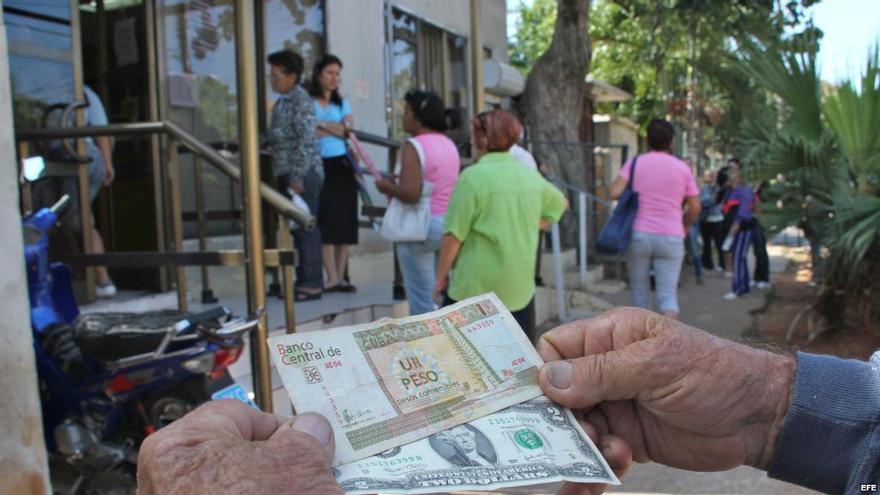
In Cuba there are three currencies and several exchange rates, in addition to five different forms of property according to the constitutional reform project. (EFE)

14ymedio bigger14ymedio, Eugenio Yáñez, 22 August 2018  — In “socialist” Cuba, nobody is surprised by the marvelous reality or the magical realism of everyday life.

In this relatively small country there are three currencies and several exchange rates, in addition to five different forms of property according to the constitutional reform project, despite which, or precisely because of this nonsense, the economy has not worked properly for six decades.

The US dollar circulates in Cuba, which is the true measure of the value of things in the country.

The Cuban convertible peso (CUC) circulates, supposedly “equal to the dollar,” but in reality its value disappears beyond Cuba’s coasts. In a certain sense, the CUC is reminiscent of the “wet foot/dry foot” policy: on Cuban soil, (“dry foot”) it is accepted and circulates; beyond the coasts (“wet foot”) is neither valid nor accepted. continue reading

And a third currency circulates, the Cuban peso (CUP), the one with which the Government pays its employees, who are the majority of the country’s workers. But those Cuban pesos, devalued for more than 25 years, never stretch far enough to satisfy the most basic needs of the population.

As if that were not enough, within the country different exchange rates between these currencies work legally, and the esoteric Castro regime accounting is hocus-pocus, trying to record transactions decently, but the only thing it achieves is making mistakes and not controlling anything. Because although the official exchange is 1 dollar to 1 CUC (which in turn equals 24 or 25 CUP), in practice tourists visiting the country receive 0.87 CUC for every dollar delivered to the currency exchanges.

Meanwhile, importing companies, thanks to sibylline accounting techniques, when they import, let’s say, raw materials for national production, even if the payment is made in euros, yen, or sterling, they will be accounted for in US dollars at a rate of 1 dollar for 1 CUP, that is, with a different exchange rate from that in the market.

Thus, if raw material was purchased for an equivalent of one million dollars, the official accounting will register a cost of that import as 1 million CUP, which is totally and absolutely false, because with 1 million CUP one can only get $40,000 at the official rate of 1 dollar for 25 CUP. And if at the end of the production cycle the company that used these raw materials achieved a supposed net profit of 10 million CUP, it will be a pretend triumph that will stand out impressively in the official press, filled with congratulations for the business group and its leaders.

Although there is a “small detail” that the official press would not take into account: those 10 million CUP in supposed profits really amount to 400,000 dollars at the real exchange rate in Cuba. So, if that “triumphant” company had used $1 million in raw material and in the end it shows a supposed profit of a million CUP, in reality during that productive cycle it would have had losses of $600,000 instead of the vaunted benefit of $400,000.

The supposed productive achievement is due to the conceptual barbarism (trademarked by Castroism) by which accounting works in Cuba, more typical of Macondo* than of a serious nation in the 21st century.

There is more. Workers of foreign companies, both in the Mariel Special Development Zone and in other economic activities, are paid at a rate of 2 CUP for every dollar of salary. In an act of immorality and illegality the parasitic State collects the dollar from the foreign entity, and passes on the equivalent of 8 cents to the employee, taking away from the Cuban worker practically 92% of his salary.

In contrast, to stimulate the supply of meat, fruit and vegetables for tourism, the farmers and cooperatives that supply the Varadero resort have an established rate of exchange of 1 dollar for 7 CUP for each dollar of fresh agricultural products destined for tourism that they sell to the State. It is probable that this mechanism will also be applied in the other tourist resorts on the Island, to limit the imports of these products from the Bahamas or Jamaica.

In other specific activities related to foreign companies, exchange rates equivalent to 1 dollar per 10 CUP are mentioned.

Faced with these realities, it does not do much for the Government to meet constantly or for the President to visit here or there day after day, if the cardinal problems are not addressed and no real solution is sought.

Why talk about so many less important things in the meetings of the Government and the Party, if the issues of monetary duality or unreliable accounting are not touched on?

With these two thorns stuck in the heart of the national economy, you can’t even dream that things will improve. Not recognizing it can only be because of immorality or ignorance. Or for both reasons.

*Translator’s note: Macondo is the fictional town in Gabriel Garcia Marquez’s “One Hundred Years of Solitude.”

________________________

The 14ymedio team is committed to serious journalism that reflects the reality of deep Cuba. Thank you for joining us on this long road. We invite you to continue supporting us, but this time by becoming a member of 14ymedio. Together we can continue to transform journalism in Cuba.

Sugar Everywhere

For René, pastry chef by profession, the high sugar intake of his countrymen is exactly what guarantees his business. (14ymedio)

14ymedio bigger14ymedio, Marcelo Hernández, 22 August 2018 — René calls himself “artisan of the sweet” and for more than a decade he has been making birthdays and weddings happy with enormous cakes full of merengue that have become more sophisticated every day. His cakes now sport fountains, dolls, tiny spinning mechanisms and even couples that dance. His creations are in high demand despite the high prices. “This is to be enjoyed,” says the pastry chef, who fishes in the troubled waters of a country with a high consumption of sugar, a country where diabetes affects a million people out of a population of about eleven and a half million.

Scientific studies have indicated that among the habits and dietary attitudes of Cubans, the excessive consumption of sugar stands out, representing between 20% and 25% of total energy requirements. Sweets, soft drinks, shakes and other preparations loaded with sucrose are common at the country’s tables and, in many homes, take the place of fruits, vegetables and proteins, more expensive in the markets. continue reading

For René, the high sugar intake of his compatriots is exactly what guarantees his business. “This is a profession that is fighting with dentists and nutritionists,” he jokes, saying that many of his customers ask him to make “dough that is not tasteless but very sweet.” Covered with chocolate, multi-layers with custard and crepes made of colorful meringues, the baker does not skimp on adding more and more sugar.

However, indoors, when he sits down to eat in front of his own plate, René avoids this ingredient. “I can’t even look at sugar because I have had diabetes for a lot of years, so I prepare these cakes and my wife is the one who tastes them to see if they are any good,” he says. This week he has a commission for a three layer creation with a fountain for a wedding. “I’m going to make it a cataract style and get a liquid chocolate preparation that’s good, very sweet,” he says.

 _______________________

The 14ymedio team is committed to serious journalism that reflects the reality of deep Cuba. Thank you for joining us on this long road. We invite you to continue supporting us, but this time by becoming a member of 14ymedio. Together we can continue to transform journalism in Cuba.

The Essence of Decree 349/2018: subparagraph a) of Article 2 / Cubalex

In the foreground, Vice President Miguel Díaz-Canel. Beside him, Miguel Barnet, president of UNEAC, and Abel Prieto, Minister of Culture (Photo: Leyben Leyva / Juventud Rebelde)

Cubalex, 27 July 2018 — Details of Decree 349/2018, dictated by the Council of Ministers, which establishes the “Violations of the regulations in respect to the cultural policy and concerning the provision of artistic services”: In accordance with subparagraph a) of Article 2.

Possible behaviors that violate this provision: 

That you approve or permit the realization of artistic service without said service having been approved and contracted for by the cultlural institution responsible for that artistic service.

That you approve or permit the realization of artistic service with the use of media and installations belonging to an entity, without said services having been approved and contracted for by the cultural institution responsible for that entity. continue reading

That you approve or permit the realization of artistic service with the use of those associated with the commercial activity which has authorization, without said services having been approved and contracted for by the cultural institution responsible for its authorization.

Applicable sanctions:

These behaviors are considered very serious and the amont of fine imposed is 2,000 Cuban pesos.

If in the period of one year the same person incurs more than one violation or is warned, this is considered another incident and a single fine of 4,000 Cuban pesos is imposed.

In addition they can seize the equipment, computers, fixtures and other property, suspend immediately the performance or the showing of material.

They also can cancel the authorization to show it, based on self-employed work activity.

Commentary and doubts: 

The non-specified norm that is understood by artistic services allows a wide margin of discretional activity to those charged with its execution. It’s a form of advance censorship because it doesn’t allow the realization of artistic activity without authorization from the Ministry of Culture.

You have to be approved and contracted by a cultural institution, but not just any, only the one responsible for the provision of artistic services. Can’t they give an example of the cultural institutions that provide artistic services?

Here it’s not clear to whom this rule is directed, to the owner of a business or a director of an entity belonging or subordinated to the Ministry of Culture? Please inform us if you know of any business that can be affected by these rules.

Is the fine of 2,000 pesos commensurate with the income artists receive?Make this calculation taking into account that many times their works require investment in raw material or high-cost equipment, in specific markets.

Comment and share! Send your responses to info@cubalex.org.

The entry The essence of Decree 349/2018: subparagraph 2) of Article 2 first appeared in Cubalex.

Translated by Regina Anavy

An Alliance is Created to Denounce the Violations of Human Rights in Cuba

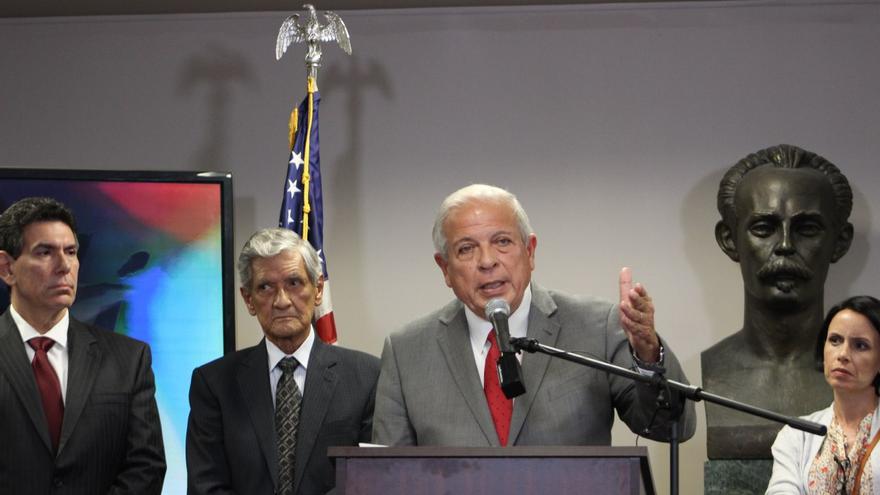
Tomás Regalado, Director of the Office of Transmissions to Cuba, during a press conference this morning in Miami. (14ymedio)

14ymedio bigger14ymedio, Mario J. Pentón, Miami | August 14, 2018 – Radio and TV Martí together with the non-governmental organization Freedom House launched a campaign on Tuesday that will aim to disseminate the Universal Declaration of Human Rights, as well as setting up a telephone number to receive complaints from Cuba.

“If you feel that your rights have been violated, denounce it on our human rights line. Call +1 305 437 7301. You’re not alone” says one of the promotional messages that will be broadcast on Radio and TV Martí, presented by Tomás Regalado, former mayor of Miami and current director of the station.

“We have seen an extraordinary upsurge in the violation of human rights,” added Regalado, who directly ordered Los Martí journalists to process the complaints received from Cuba. continue reading

“Through our network of correspondents on the island, those of the opposition and this hot line, human rights violations will be exposed. The News Department will dedicate itself to verify in a reliable way the denunciations and then present them  to Freedom House”, explained the official.

Carlos Ponce, director of Freedom House for Latin America, considered the alliance with Los Martí “a golden opportunity” that will promote the “Cuban, know your human rights” campaign.

“Every time the regime feels weak, it increases the repression of human rights,” he said.

For Ponce, the Cuban government infringes on their citizens “most basic rights”, such as educational freedom and political rights. “It is time for people to open their eyes so that Cuba not continue being the same old story that people no longer want to see,” he added.

“With this strategic alliance we will be able to bring a number of significant complaints to international organizations and give visibility to what is happening on the island,” he said.

In statements to 14ymedio, Ponce lamented that media coverage of human rights violations often focuses on Venezuela and Nicaragua, with no references to Cuba.

“Unfortunately the media has turned a blind eye to the situation in Cuba. The root of evil in Latin America is a dictatorial regime that with impunity continues to operate in the region,” he said.

“Cuba is a dictatorship that influences other countries, such as Venezuela and Nicaragua, in order to leach on them, prop up their regimes and destroy democratic systems. We call on all Cubans to denounce the violations of their rights,” he added.

Radio and TV Martí bet on reaching more Cubans with new technologies

According to statements from Tomás Regalado, director of the Office of Transmissions to Cuba (OCB) of the US Government, the coming months will see a substantial increase in the number of Cubans who can listen to the station or watch the television programs of Los Martí.

Regalado recently announced the addition of a new frequency for radial transmissions at 11860 kHz. “In short wave we had three frequencies and the regime managed to block one or sometimes two frequencies. With three we have the means to be immune to their blockade,” remarked the newly appointed director to 14ymedio.

For its part, a new type of technology, whose technical details have not yet been made known, will make it possible for TV Martí to be seen on the Island, according to its directors. “It is a novel technology that will allow what we call the Martí Communities to establish themselves,” explained Regalado.

At the moment there are more than 200 of these devices on the island and several communities of neighbors who can watch the TV Martí signal, the former mayor told the local media in Miami. According to him, it is impossible for the Government of Havana to track the signal of the devices, a concern of many activists who fear the sentences that can be faced by “counterrevolutionaries.”

“In the Cuban penal code there are criminal forms that put these people (who are part of the Martí communities) in danger, but the people defy it. The most important guarantee is that the Government does not know where the signal is shared,” explained Regalado.

“The regime can interfere with the output signal of the equipment but not the one that enters (input). It is immune to being detected,” he said.

The appliance that will allow TV Martí to be seen on the Island was designed by Cuban engineers on the Island and in South Florida. Regalado will present the results of this new technology at the beginning of September at an event of the Board of Governors of Radiodifusión, the federal entity in charge of Radio and TV Martí.

The Cuban Government has made a particular effort to block the Marti signal and accuses the United States of violating international radio broadcasting agreements by allowing and financing the stations. During the administration of Barack Obama, which promoted the thaw with the island, Cuba took the opportunity to demand the dismantling of these communication media.

Radio Martí began broadcasting its signal to Cuba in 1985 under the government of Ronald Reagan. In the early nineties, TV Martí followed and the Martí Noticias portal appeared with the digital era. This year the budget allocated by the US Congress to both broadcasters will exceed 28 million dollars.

Translated by Wilfredo Díaz Echevarria

____________________

The 14ymedio team is committed to serious journalism that reflects the reality of deep Cuba. Thank you for joining us on this long road. We invite you to continue supporting us, but this time by becoming a member of 14ymedio. Together we can continue to transform journalism in Cuba.

Cuban Schools Have a Shortage of 10,000 Teachers

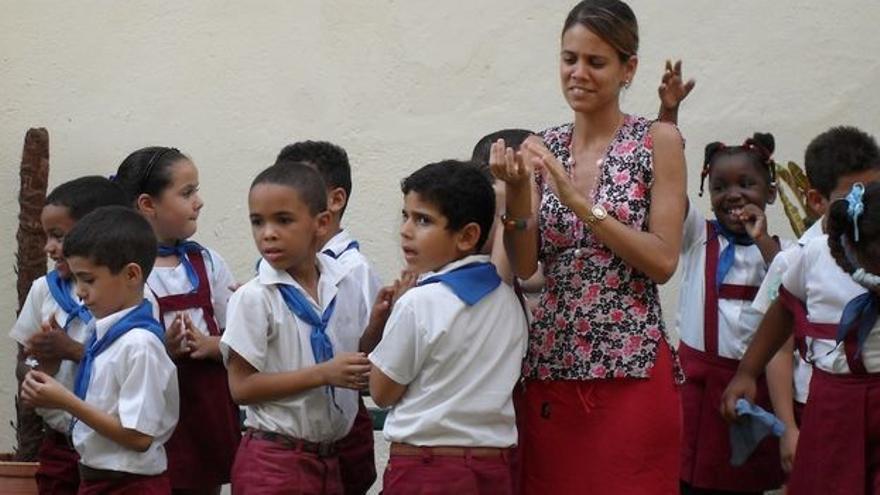
A primary school teacher looks after her students during recess. (14ymedio)

14ymedio bigger14ymedio, Miami, 21 August 2018 — The Minister of Education, Ena Elsa Velázquez, acknowledged on Tuesday in statements to the official press that, despite the “attention” and “stimulation” accorded to teachers by the Cuban government to “avoid the exodus,” there will be a deficit of about 10,000 teachers at the start of the coming school year on September 3rd.

Velázquez heads a government delegation that is touring the provinces to ensure everything is ready for the start of the school year. Only Granma, Guantánamo, Las Tunas, Pinar del Río and Santiago de Cuba are in a favorable situation in terms of teacher coverage.

The average salary of a teacher in Cuba is 533 Cuban pesos per month according to official data, which equals about $21 US. The low salary coupled with difficult working conditions, along with deteriorated equipment and a strong ideological burden in the study programs, have caused thousands of educators to leave the classrooms to work in better paid sectors such as tourism. continue reading

To alleviate the exodus of teachers, the authorities have resorted to hiring teachers by the hour, the reincorporation of retirees, and the use university students as teachers at lower levels.

Some analysts have pointed out that from 2006, when Raúl Castro took office, the budget of the Ministry of Education and the number of schools have both fallen. In the last decade at least 21,000 teachers left the classrooms, according to a report from the state Office of Statistics and Information.

According to research conducted by the economist Carmelo Mesa-Lago, education expenditures, which represented 14.1% of GDP in 2008, fell to 9% in 2017. During this period, 1,803 schools were closed, according to official figures.

In the last decade, the Cuban State has tried to make up for the shortage of teachers with initiatives such as ‘Emerging Teachers*’ and ‘Integral Teachers*’, who receive intensive training to ready them for the classroom in just a few months. In exchange for becoming teachers, the State promises them a university degree and, in the case of men, exemption from military service.

In spite of the efforts of the State, which provides all the education in the country, at no cost to students, the quality of the schools has been questioned in the official press. Cuba does not participate in international examinations of educational quality and many analysts believe that high esteem in which the island’s educational system was held in the past, thanks to Soviet subsidies, is a thing of the past.

In 2017 there were 16,000 unfilled teaching positions on the island, that is to say 6,000 more than for the coming school year. Official statistics indicate that there is a rebound in the number of teachers in front of the classroom, which went from 242,103 in the 2015-2016 academic year to 248,438 teachers in the 2016-2017 academic year.

*Translator’s note: “Emerging teachers” are high school graduates with very little training, and “integral teachers” are junior high school teachers who are required to teach all subjects (sometimes with the help of videos), again, with very little training in the subjects they would not normally teach.

 _________________________

The 14ymedio team is committed to serious journalism that reflects the reality of deep Cuba. Thank you for joining us on this long road. We invite you to continue supporting us, but this time by becoming a member of 14ymedio. Together we can continue to transform journalism in Cuba.

Prague 1968, My First (and Belated) Disappointment

Warsaw Pact Tanks invade Prague, capital of the then Socialist Republic of Czechoslovakia. (Twitter)

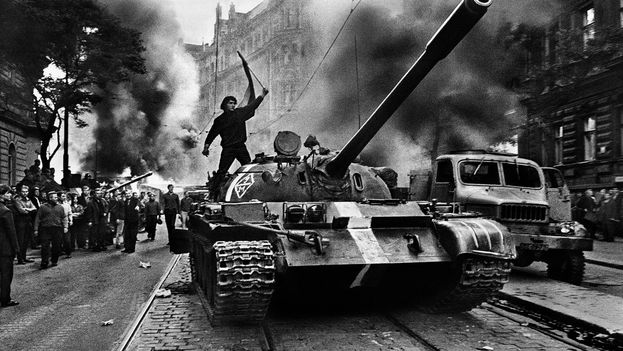
14ymedio bigger14ymedio, Reinaldo Escobar, Havana, 20 August 2018 — On the cover of the newspaper Juventud Rebelde on that Tuesday, 20 August 1968, a disturbing headline surprised everyone: Czechoslovakia Invaded. The subheading added that Warsaw Pact troops were the executors of the action.

On Wednesday the 21st, a group of students from the School of Journalism of the University of Havana was urgently summoned to the offices of the People’s Opinion of the Central Committee of the Communist Party. There we were given the task of collaborating in a survey to determine as quickly as possible what the state of mind of the people was in the face of these transcendental events.

One day later, some of us who did the interviews worked long hours to compute the results. We felt privileged to know the opinion of the people and especially by the encouragement of knowing that the Commander in Chief was waiting for the results before making a public statement. continue reading

Obviously, I do not remember the exact numbers, but three answers predominated. In first place, the majority rejected the invasion, defending their position with the argument that “nonintervention in the internal affairs of a country” was something sacred and that accepting what happened in Czechoslovakia would legitimize the right of the United States to invade Cuba.

The second most expressed response was: “I’ll tell you my opinion after I hear that of the Commander.” And the third, frankly a minority, was limited to expressing that “if the Russians were behind it, they would have had their reasons.” The remainder was made up of those who had not even heard about it or the usual cautious ones who opted for silence.

On the night of Friday, August 23, Fidel Castro made a special appearance before the national television cameras to publicize the position of the Revolution, that is, his.

Having just turned 21, the fool that I was expected a strong condemnation of the unspeakable invasion. Surely our survey had already been studied.

But the Commander in Chief had his own way of looking at the matter:

“The essential thing that is accepted or not accepted, is whether the socialist camp could allow or not the development of a political situation that would lead to the breakdown of a socialist country and its fall into the arms of imperialism. And our point of view is that it is not permissible and that the socialist camp has the right to prevent it in one way or another. ”

After that affirmation, Fidel Castro extended himself in criticizing the economic reforms of the Prague Spring, mentioning the details of the self-financing and the material stimuli that he described as “liberal bourgeois reforms.”

In what can clearly be considered a political negotiation, Castro wondered if perhaps the troops that had invaded Czechoslovakia would be sent to Vietnam or North Korea to defend those countries from imperialism and concluded by asking: “Will they send the divisions of the Warsaw Pact to Cuba if the Yankee imperialists attack our country, or even before the threat of attack (…), if our country requests it?”

With his applause for the invasion of a brother country, Fidel Castro tried to buy military backing for his outrages on the island, as long as he requested it.

That same year, 1968, Fidel Castro unleashed the war against bureaucracy on his island, imposed the Revolutionary Offensive, initiated the Havana Cordon, and the madness of 10 million ton sugar harvest. That year the microfaction process* took place, Cuba refused to sign the Nuclear Non-Proliferation Treaty, the program of schools in the countryside began and Castro announced the simultaneous construction of socialism and communism.

A week after those ominous statements by the Maximum Leader supporting the invasion, the ICAIC news program, directed by Santiago Álvarez, dedicated its space to what happened in Czechoslovakia.

The image of the Wenceslas Square occupied by Soviet tanks and the soundtrack with the initial notes of the Tocata and fugue in D minor by Johann Sebastian Bach, remained forever in my memory, not as the testimony of the tragedy of Prague but as the reference to my first disappointment.

Then I knew that disappointment had come too late.

*Translator’s note: In 1968, the ‘microfaction’, nine pro-Soviet members of the Central Committee including Anibal Escalante, were tried as “traitors to the revolution” and received jail terms.

__________________________________

The 14ymedio team is committed to serious journalism that reflects the reality of deep Cuba. Thank you for joining us on this long road. We invite you to continue supporting us, but this time by becoming a member of 14ymedio. Together we can continue to transform journalism in Cuba.

Dead Animals, Feces and Plastics Envelop the Quibu River as it Passes Through Havana

14ymedio bigger14ymedio, Luz Escobar, Havana, 17 August 2018 – “River Quibú, nobody washes on your shores,” the singer Frank Delgado chanted in the eighties. Three decades later the panorama has not improved around the river that crosses the western neighborhoods of Havana.

The neighbors denounce a delicate epidemiological and ecological situation caused by the great accumulation of solid waste that washes down the river.

“You can find anything from a floating dead pig to cupboards, chairs, tables or feces when there is flood,” says an inhabitant from the lower part of the basin, very close to the coastal area. continue reading

Along its route, the locals tell 14ymedio, the river collects several drainages and the garbage that people throw in. In addition, they assure that a project that began in 2006 to expand the mouth of the river and avoid floods “has not been finished” and is no longer talked about.

Some of the neighbors insist on the need to return to the idea of dredging to avoid the accumulation of garbage and assure that each year this matter is brought up to different institutions and responsible bodies, as well as being a recurring issue in the community’s “accountability assemblies” where the elected deputies offer residents a report on the year’s accomplishments.

The biologist Isbel Díaz says that “there is no project to sanitize the river in an integral way” and, although in some places sanitation works are carried out, this does not “mean anything when the river enters the city.” For Díaz, the fact that there is no project with this objective has to do with the fact that the waters flow “through a place that is one of the least privileged” and that “are further away from the tourist’s eye.”

The Quibú river basin is located within the City of Havana and passes through the municipalities of Marianao, Playa, La Lisa and Boyeros, including 16 People’s Councils which, in most cases, are made up of populations in very precarious economic situations, like the neighborhoods of Siboney, Buena Vista, Zamora, Santa Felicia, Pogolotti, Balcony of the Lisa, San Agustín, Heights of the Lisa, El Cano and Wajay.

In accordance with some scientific studies undertaken in the last decade, the main economic activities carried out in its surroundings are related to agriculture and scientific research. According to several university studies by the University of Havana, the environmental problems of Quibú have been evaluated as “of great importance” and the river is considered one of the most polluted in the city.

A UH master’s thesis on coastal zone management, published by Edgar Alexander Amaya Vasquez in 2015, argues that the origin of pollution in the Quibú basin is of both domestic and industrial origin, among the latter it mentioned the presence of heavy metals, detergents, pesticides, oils and petrochemicals. The contamination of the river, whose level is higher than that established by the Cuban Standard of Sanitary Quality, extends to a large part of the coastal zone, frequently used by bathers.

Inhabitants of the river bank tell of frequent mosquito outbreaks and that many people have already been infected with diseases such as zika or dengue. “The patios are full of mosquitoes and mice, you have to always have poison traps because if you don’t they get inside the house,” they say. Near the mouth of the river, all kinds of solid waste, jars and plastic bags, as well as old shoes accumulate on its shores, an ideal scenario for the proliferation of insects and rodents.

Díaz warns that, although the river water is not potable, it is used for other purposes such as agriculture, so that pollution can reach “the digestive system of the human being in an indirect way.”

In February 2017, the Law on Terrestrial Waters in Cuba came into effect, regulating, among other issues, the dumping of liquid and solid waste in the waters of the country, but the impact this legislation has had on the environment has yet to be evaluated.

This newspaper has not found a single person or company that has been fined for dumping waste or untreated waste into the river, which has contributed to creating a situation of impunity for those responsible for the contamination.

Translated by Wilfredo Díaz Echevarria

____________________________________

The 14ymedio team is committed to serious journalism that reflects the reality of deep Cuba. Thank you for joining us on this long road. We invite you to continue supporting us, but this time by becoming a member of 14ymedio. Together we can continue to transform journalism in Cuba.

We Will Have an Electoral Law in 2019 but Constitutional Reform Retains One Candidate Per Position

A billboard in support of the Cuban government’s revised Constitution

14ymedio bigger14ymedio, Reinaldo Escobar, Havana, 16 August 2018 — In view of the deadlines imposed by the draft Constitution in its First Transitional Provision, and knowing that the referendum will take place on February 24, it can be calculated that by September 2019,the Cuban parliament will have approved a new electoral law.

If Raul Castro had fulfilled his promise of February 2015 to modify the electoral rules, the constitutional project now being debated would be adapting to what had already been enacted and not the other way around. The new law will be born chained to what is imposed by the reformed Constitution, in which the threads that bind can already be clearly seen.

The fantasy of new electoral legislation establishing a direct vote of citizens to elect their president was finally annihilated in the first paragraph of Article 104 that establishes that the National Assembly of People’s Power, in the exercise of its powers, “elects the President and Vice President of the Republic.” Later, in Article 121 it states that the President of the Republic “is elected by the National Assembly of People’s Power from among its deputies […] for a period of five years.” continue reading

For its part, Title IX, referring to the Electoral System, introduces a new element that denies voting rights to “those who do not comply with the requirements of permanence in the country provided for in the law.”

This detail, absent in the current Constitution, was specified in Law 72 of 1992, which in Article 6 says that “to exercise the right to vote requires the obligation to be a permanent resident in the country for a period of not less than two years before the elections” while, in order to be elected, Article 8 requires a candidate to be a “permanent resident in the country for a period not less than five years before the elections.”

The constitutional reform anticipates that the next electoral law will continue denying Cubans living abroad not only the possibility of being elected but also the right to vote.

In the particular case of the highest positions, from President of the Republic to provincial governor, articles 122, 124, 138 and 171 now include the requirement of not having any other citizenship to fill these positions. As a result, the tens of thousands of Cubans who have taken refuge in Spanish nationality*, plus the other thousands who hold any other nationality, will be excluded from the main rudders of the country.

Lawmakers will have to take into account a new constitutional provision included in article 182 of the draft, which modifies the elections of district delegates: they will no longer be held every two and a half years as established in article 111 of the current Constitution, but rather every five years.

One question that remains unanswered is whether the Candidacy Commissions** will be maintained in the next electoral law. The project under discussion does not allude to the subject, but neither is it in the current Constitution.

The elimination of the Candidacy Commissions is one of the main demands of independent civil society and the political opposition because it would open the possibility that voters are not simply approving a list that includes only one candidate for each seat in the Parliament; instead, voters would be able to choose between diverse candidates according to their personal political views.

After a comparative observation between the language used by the 1976 Constitution (with its successive reforms of 1978, 1992 and 2002) and that used in this project, there are indications that suggest what the 2019 electoral law might look like. The text under discussion no longer includes the term “merit” which, together with “capacities,” pre-conditioned the access of citizens “to all positions and jobs of the State.”

Current legislation is anchored in the idea of a ‘meritocracy’, and prohibits candidates from campaigning at all.  Voters are allowed “only to take into account, in determining which candidate to vote for,” the candidate’s “personal conditions, prestige, and capacity to serve the people.” In practice, the candidacy commissions (not the candidate) prepare a single-page biography for each candidate which is posted in a window and is the only legal form of “campaigning.”

Clearly, no one should have any illusions. It is enough to read articles 3 and 5 of the constitutional draft to affirm that the new electoral law of 2019 will not assume a multi-party system nor will it allow political campaigns to compete for the vote. Cubans living abroad, opposed to the system in their majority, will not have a presence in the polls. The reins are already firmly in place.

Translator’s notes:

*Spain’s “Historical Memory Law” allows the children and grandchildren of Spanish citizens born outside the country to apply for citizenship.

**Cuba’s Candidacy Commissions are made up of individuals from mass organizations created by the government/communist party. From wikipedia: “Candidates for provincial assemblies and the National Assembly are nominated by the municipal assemblies from lists compiled by national, provincial and municipal candidacy commissions. Suggestions for nominations are made at all levels mainly by mass organizations, trade unions, people’s councils, and student federations. The final list of candidates for the National Assembly, one for each district, is drawn up by the National Candidacy Commission.”

__________________

The 14ymedio team is committed to serious journalism that reflects the reality of deep Cuba. Thank you for joining us on this long road. We invite you to continue supporting us, but this time by becoming a member of 14ymedio. Together we can continue to transform journalism in Cuba.

Informative Note about Detained Members / Somos+

Somos+, 18 August 2018 — The Executive Council has been able to contact the six members of our movement who had been arbitrarily detained by the State Security in Puerto Padre, province of Las Tunas. All have been released and are in their respective homes.

We are deeply grateful to all our members for their solidarity, and to the honorable and exceptional instances of journalists, influencers and members of other political projects that responded on behalf of our representatives during these days. continue reading

  • In our initial contact, these brave men and women have expressed firmness in their decision to stay in our movement and the certainty that nothing will make them bow down.

As we have already reported, their phones, a video camera, as well as the money provided for their travel expenses and performance of their duties, were confiscated

Repressive actions against Somos + is increasing, but no obstacle will stop us.

Executive Council

Political Movement S+

Translated by Wilfredo Díaz Echevarria

Another Another Cuban Physician from the Mais Medicos Mission Dies in Brazil

The Cuban doctor Ramón Domínguez Rivera. (Facebook)

14ymedio bigger14ymedio, Miami, August 18, 2018 – Cuban doctor Ramón Domínguez Rivera, originally from the province of Pinar del Río, who was on assignment in Brazil, died on August 16, as reported by his Medical Brigade. Dominguez Rivera worked in Melgaço, Pará state. His body was found three days after he disappeared, according to the local press. One of the heads of Mais Medicos, Lizander Rubio, said on Facebook that the cause of death could be “a cardiovascular condition.”

Some of Dominguez Rivera’s colleagues expressed their grief on the loss of the doctor in social networks. Guillermo Fernández Maqueira stressed the generosity of the deceased. “I know that many of us will remember you, those of us who shared a meal with you, those of us who shared clothes and shoes in the dormitory in order to go out with our girlfriend at night,” he wrote. continue reading

According to data compiled by 14ymedio, this is the fifth Cuban doctor that has died in the last four months in the mission deployed in Brazil. In April, Guantanamo native Adrián Reyes Valverde was killed in a motorcycle accident in the municipality of Babaçulândia. A few days later physician Jorge Alberto Borrego died in the crash of the Cubana de Aviación flight last May in Havana.

Luis Alberto Martínez Vila, 29, died last month in a car accident near the city of Redenção, in the state of Pará, and Yanier Samón De Hombre, 32, died after a bout of severe abdominal pain two weeks ago.

Official media rarely report the deaths of any Cuban aid workers abroad.

More than 18,000 Cuban doctors have passed through Brazil since the two governments created the Mais Medicos program in 2013 to increase the presence of health personnel in municipalities and rural areas. After the impeachment of Brazilian President Dilma Rousseff, the number of Cuban doctors in the program has decreased. However, the figure still exceeds 8,000.

Brazil pays Havana around $3,600 per month for each doctor, who, in turn, receives only $900 from the Cuban government. Cuban professionals or their families do not receive compensation in case of accidents or death at work.

The export of medical services is one of the main sources of revenue for the island government, which maintains tens of thousands of health professionals deployed in more than 60 countries, from which it annually derives more than 11.5 billion dollars according to official figures. Human rights activists have criticized this work activity as a form of “modern slavery.”

Translated by Wilfredo Díaz Echevarria

_______________

The 14ymedio team is committed to serious journalism that reflects the reality of deep Cuba. Thank you for joining us on this long road. We invite you to continue supporting us, but this time by becoming a member of 14ymedio. Together we can continue to transform journalism in Cuba.

In Camaguey, Neglected Beaches in Cuban Pesos, Beautiful Beaches in Hard Currency

The most ‘democratic’ of Camagüey’s beaches suffers from a chronic neglect. (14ymedio)

14ymedio bigger14ymedio, Ricardo Fernández Izaguirre, Camagüey | August 18, 2018 – The sun rises and dozens of bathers start to arrive at the beaches of the Bay of Nuevitas, on the north coast of the province of Camagüey. They are equipped as if for battle: food, water, sturdy shoes to deal with stones and even an improvised kit for the possibility of cuts on pieces of glass or cans. The poor conditions of the coast do not manage to cool the desire to take a dip.

The province of Camagüey has 25% of all the beaches in the archipelago but the state of the coast has been getting worse in recent years due to climate change, lack of maintenance and deterioration of infrastructure, to which is added the discharge of industrial or domestic waste. Some areas that were once a haven of peace and beauty today seem to come out of a post-war scene.

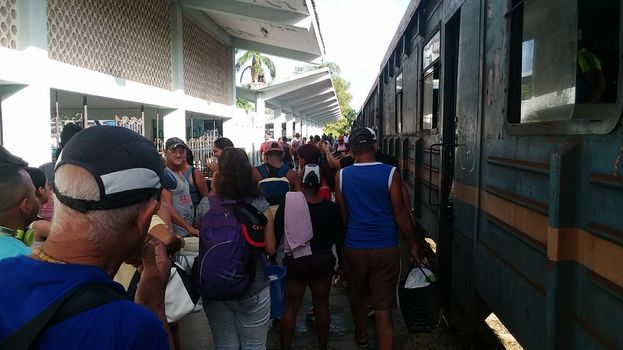
Among the extensive coastline, Nuevitas is the busiest resort because it is cheaper thanks to the “beach train” that runs in summer, from Friday to Sunday, from the city of Camagüey and arrives a few meters from the sea. continue reading

The beach train runs in summer, from Friday to Sunday, from the city of Camagüey and reaches a few meters from the sea. (14ymedio)

For low-income families this is one of the few possibilities of having a day sunbathing in front of the waves, because the most beautiful and well-kept areas, such as Santa Lucía beach, have been filled with hotels where mainly foreign visitors stay.

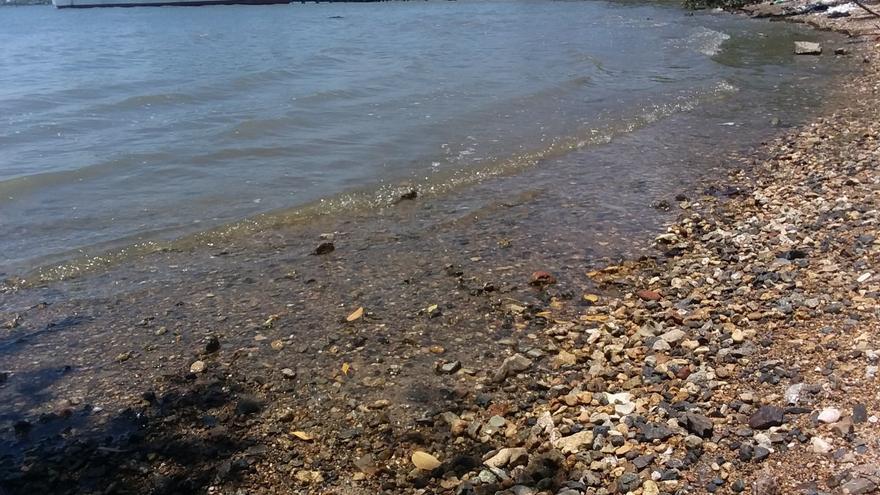
Getting there is expensive and complicated, so Nuevitas is a more accessible option. However, the most democratic of Camagüey’s beaches suffers from chronic neglect. The ruins of old buildings destroyed by hurricanes or abandonment dot part of the coastline and holiday makers are forced to bathe in the middle of concrete fragments, metal beams and other types of rubble (debris).

Among the beaches with the highest number of visitors Las Piedras, La Colonia and the others that extend close to the old railway line stand out, although some opt for the more distant ones such as Santa Rita and the one with better seabeds such as Varaderito, about three kilometers from the city, but which can only be accessed by a road in poor condition.

“Here it has been years that no repairs have been made nor the beach dredged,” laments Mily Marín, a local resident who takes her children to the beach. “These places do not look like the beaches I knew as a child, my children leave with wounds on their feet,” laments the mother, who recalls a childhood with a maintained coastline and denounces the institutional abandonment that the area has reached.

The industrial growth that the zone experienced during the years of Soviet subsidy made industries proliferate, among them some very polluting ones like the 10th of October Thermoelectric Company and a fertilizer factory. The damages left by strong hurricanes, such as Irma last September, have exacerbated the situation.

The rising waters have also taken space from vacationers. During the last century an increase in the average annual temperature of 0.6 ° was registered in Cuba and the average sea level has increased at a rate of 2.14 millimeters per year. At least 291 beaches in the country (84% of the total) have already been affected by these changes. The climate changes and industrial discharges are compounded by the problem of domestic waste carried to the sea by the waters of the Saramaguacán River and from places as far away as the north of the municipality of Camagüey and the plains of Sibanicú.

The neighbors of Nuevitas remember the beautiful beach before industrial waste and neglect appropriated their coastlines. This is the case of Juan, a retiree who makes a few pesos selling corn chips to holidaymakers and regrets that the bay is now invaded by a “fetid mud.” He only has one word to define the situation: “It’s a disaster.”

The authorities have been working on a project supported by the United Nations Development Program that seeks to alleviate the environmental impact in the area. “A series of results has already accrued that have repercussions not only on biodiversity, but also on the economic development and good social living of the territory,” assured the local newspaper Adelante.

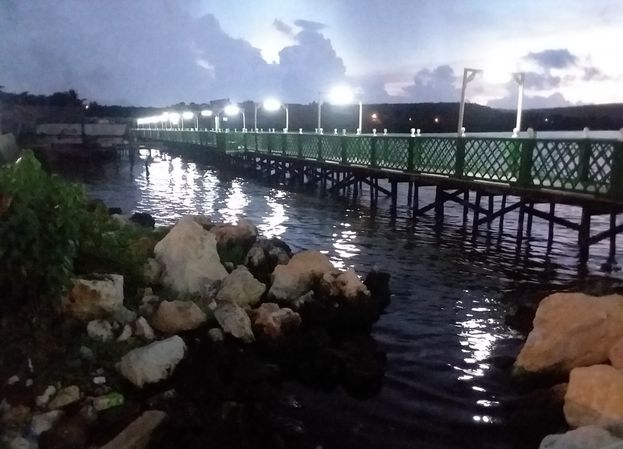
The signature work of this collaboration is the so-called Malecón-Patana Rosa Naútica Complex, inaugurated at the end of last year, which includes a seawall on the coast with various recreational opportunities nearby. The work, 320 meters long, was erected partly over an old pier.

The Malecón-Patana Rosa Naútica complex, inaugurated at the end of last year, includes a wall on the coast with various recreational offers around. (14ymedio)

“It turned out very good, but the vacationers of Camagüey do not come to these places,” clarifies Pastor Yilber Durand. “They want to enjoy the beaches, which are in terrible conditions. I think it would have been better to invest all that money by improving them.”

The difference between “the beaches of the people,” as many call the coast where the Camagüeyans dip and “the beaches of the tourists” does not only lie in the quality of the maintenance they receive, in the cleanliness of their waters or in the number of houses that rent rooms for vacationers. The gastronomic offers also mark a great difference

While in Santa Lucia you can buy “almost anything […], in Nuevitas the offerings are poorer,” says Roxana, mother of two girls and resident in the city of Camagüey, who frequently visits the north coast. She has no doubt that “many sellers prefer to go to those places where customers can pay better for a sandwich, a soft drink or a fresh fruit.”

However, Roxana is happy that some private businesses remain in Nuevitas. If they were not here, “there would be very little left to enjoy, because between the dirty waters and the attention that you have to take with the garbage on the coast, at least drinking a cold juice in front of the sea is worth it.”

“We are the ones who guarantee food and drink to those who arrive from the main city, because the state offers are very scarce,” the owner of a restaurant that operates in a place leased to the State confirms to 14ymedio. The small businessman and some others plan to stay, waiting for good luck and care to return to the beaches of Nuevitas.

Translated by Wilfredo Díaz Echevarria

___________________

The 14ymedio team is committed to serious journalism that reflects the reality of deep Cuba. Thank you for joining us on this long road. We invite you to continue supporting us, but this time by becoming a member of 14ymedio. Together we can continue to transform journalism in Cuba.

"Resisting For the Sake of Resisting Makes No Sense"

Ileana Álvarez and her husband Francis Sánchez decided to leave the country, along with their youngest son, due to the “pressures and threats” to which they were subjected by the authorities. (Facebook)

14ymedio bigger

14ymedio, Havana, 16 August 2018 —  Two weeks ago, Ileana Álvarez and her husband Francis Sánchez went into exile in Spain. Both are known for their prolific work as poets, writers and essayists. They decided to leave the country, along with their youngest son, due to the “pressures and threats” to which they were subjected by the authorities.

Álvarez founded the magazine Alas Tensas [Tense Wings] in 2016 , an independent media that explores issues such as gender violence in a country that for decades has distanced itself from discussions about the role of women in society. Sánchez, meanwhile, is the author of more than 20 books published in Cuba, Mexico, Spain and the United States. From Ciego de Ávila, in the center of the country, he founded the magazine Árbol Invertido [Inverted Tree] in 2005, which he conceived of as a space to reflect the needs and voices of creative communities outside of Havana.

From Madrid they answer 14ymedio’s questions about the reasons that led them to make such a drastic decision.

What were the circumstances that led you to make this decision?

Francis Sánchez: Actually, “the circumstances” would be our entire lives. I have grown up like any Cuban of this era under the heavy burden of authoritarianism, also suffering that alienation from human relationships when many people around you live in fear, with masks and lies, something I never wanted to adapt to. continue reading

I always felt a little proud of the challenge of residing, resisting in a small city in the interior, irreverent, solitary, and achieving in these adverse conditions my personal goals, even if they were not the greatest, such as making a family, doing literary work, having a blog or founding an independent magazine. I found myself frequently in the midst of censure and other unpleasant situations. It was an exhausting daily resistance, sometimes telling myself that this was my destiny.

Nevertheless, in the last months, since March, we began to be the targets of great harassment. Ileana was interrogated and threatened by State Security, they interviewed me upon entering the country and they confiscated my laptop. In a short time, we became targets for State Security, their intimidations were very strong, they forbade us to leave the country several times, coerced our friends and collaborators, and we began to notice dangers that even touched our children.

We realized that we could be trapped in the fallacy of some kind of common legal case*, I doubt that then we would have had a way out or to get support, something that I am more convinced of today. Pen América published a dossier on the risk of our situation [Status: Threatened]. But, ultimately, we felt extremely vulnerable and isolated. I saw clearly that sometimes resisting for the sake of resisting does not make any sense. My goal and my victory is in creating, and I decided to take advantage of Spanish nationality to provide a period of tranquility for my family, and maybe a better future for my children.

Ileana Álvarez : I have always believed in the possibility of change, with faith that the future will be better, in the same way that I believed in the commitment and responsibility of the intellectual with her time. This led me, from my years as a Philology student at the Central University of Las Villas, to create or ally myself with literary projects and the founding of magazines such as ImagoVidenciaÁrbol invertido and Alas Tensas, where I have expressed my ideas and conceptions about culture and society.

However, the harassment, the ideological and psychological harassment suffered in recent months by an independent feminist magazine made my faith falter. Far from what was happening in the world, intersectional feminism, not at all essentialist, even from the culture that made Alas Tensas, had become dangerous for the structures of the patriarchal power existing in Cuba.

The situation became particularly intolerable, we could not — under that harassment, which included our collaborators — continue to develop our work. I felt as a woman, mother, journalist and poet who lived in the provinces, even more vulnerable and alone. I saw that my children were no longer safe, and that is very painful and disequilibrating for a mother. The situation was untenable and I realized that I needed a break.

There is something that I would like to add, which aggravates the state of vulnerability of many Cuban feminists: feminist activists are rejected from different political extremes. For the Government and its institutions, feminism is a falling backwards to bourgeois liberalism, while for a good part of the opposition, which has not shed its macho thinking, it is not to be trusted because of its leftist tradition. Both positions forget all the gains that feminist struggles have brought to the world.

What risks did you face staying on the island?

Ileana Álvarez : I was facing greater harassment, since some of the serious threats made to me by State Security became a reality and affected loved and innocent people; I was facing more psychological and emotional damage than I had suffered to date and that was seriously affecting my physical condition; I was facing greater social isolation than I was already experiencing in my city, and other ignoble practices that the blind mass performs, and losing my right to enter and leave my country whenever I wanted. That and more, because I was going to continue doing feminist activism from Alas Tensas.

What is the current legal status under which you are in Spain?

Francis Sánchez : I obtained my Spanish citizenship, through the Law of Historical Memory. It was a process I started in 2010. I have come to Spain, therefore, with a Spanish passport, our son will soon receive Spanish nationality by choice, while Ileana will obtain her residency.

What will happen from now on with the projects ‘Alas Tensas’ and ‘Árbol Invertido’?

Ileana Álvarez and Francis Sánchez : So much resistance we have encountered to carry out personal, independent projects, such as the cultural medium Árbol Invertido (since 2005) and the feminist magazine Alas Tensas (since 2016), only confirms that they are our raison d’être, even to our regret, they define us, and we will continue with them always, in the midst of new and unpredictable difficulties such as those we will encounter in Madrid.

The attacks we received signify a kind of praise and recognition of the work we have done. Without a doubt, Cuba needs alternatives for free expression. We have always thought that our magazines were a space of freedom, a kind of virtual country, ideal, without censorship or rancor, as was our literature, because in such deteriorated internal and social conditions we needed to invent an island better than to inhabit, and the ubiquity of the internet allowed us to do that very well.

Now, for other reasons, perhaps we need more than ever to keep that tunnel open to the utopia of an island with everyone and for everyone. These projects are nourished by the Cuban reality, and by collaborators and readers who, for the most part, are still on the island. Cuba needs projects like Alas Tensas and Árbol Invertido.

What would have to happen to make the decision to return to Cuba?

Ileana Álvarez and Francis Sánchez: Our family and our house are there, along with other people and places we love. We have the right to be there, to never have left and to return as soon as we decide. We are traveling legally, and we prefer to think about our departure, as well as our probable return, as part of the natural freedom of movement of human beings.

For those of us who have positioned ourselves in favor of freedom of expression and democracy, exile does not have a pejorative weight. But, in the contemporary global village, Cubans also take advantage of multiple opportunities that come from abroad, a fellowship, a master’s degree or a work contract, and today many intellectuals and alternative journalists reside outside of Cuba, sometimes temporarily, without this being a straitjacket.

Of course, we would like to return to a different country, where real feminist activism is not a threat, independent journalism is not demonized and the freedom of expression of artists is not throttled by the State. The ideal would be to return to a country where nobody is afraid to say what they think. By the way, if we were to choose, we would then find a society in which two abominations do not exist: the death penalty and acts of repudiation. In short, that Cuba we dream of, and that all Cubans, regardless of our differences, and wherever we are, we have the right to build.

How do you imagine life in exile now?

Ileana Álvarez and Francis Sánchez: The Turkish poet Nazim Hikmet said: “Exile is hard work.” Socrates preferred to drink the hemlock rather than be expelled from the city. Those who manage the life of generations and the time of the island, have abused that master key. “Outside,” for now we barely have had time to imagine, we have very little apart from our will, proven by where we come from. We are willing to work on anything and start from scratch as millions of compatriots have done, for as long as we consider necessary, and return to Cuba when it seems appropriate.

A message for those who pushed you to make this decision?

Ileana Álvarez and Francis Sánchez : We do not think about the faces of “those” of flesh and blood. The evil lies behind and above simple instruments. But, a message, with all my heart, could be: “Thank you.” It could also be: “We will continue discussing in eternity,” or “Violence is not an argument.”

We have always clung to positive emotions, we decide what we are. In short, for us, poets who try to live in coherence with our consciences, it is rather stimulating to feel that we are again at the beginning, not at the end. We remember Pablo Neruda: “You can cut all the flowers, but you cannot stop the spring.”

*Translator’s note: Sanchez is referring to the practice of falsely charging dissidents with common crimes (ranging from domestic violence to murder) rather than with political crimes, to prevent people from being considered “political prisoners” by international human rights organizations.

_____________________

The 14ymedio team is committed to serious journalism that reflects the reality of deep Cuba. Thank you for joining us on this long road. We invite you to continue supporting us, but this time by becoming a member of 14ymedio. Together we can continue to transform journalism in Cuba.

Without Guarantees of Due Process, Detentions Always Appear Unjust / Cubalex

Cubalex, M.sc. Laritza Diversent, 3 August 2018 — The constitutional reform will recognise Habeas Corpus, as it is applied in domestic law. An obviously ineffective procedure. It does not provide protection against arbitrary detention or enforced disappearance. Nor does it comply with international standards in terms of due process.

“No-one who is imprisoned considers that it is in order,” was  José Luis Toledo Santander’s cynical comment. “Everyone detained by the police considers himself innocent and to have been unfairly detained,” adds the deputy and member of the editing commission of the constitutional text. “That implies,” he concludes, “that every person detained by the police would be able to seek a writ of Habeas Corpus.”

Abuse of power and excess of discretional authority

The agents of police and security (Ministry of the Interior) have minimal training and excessive authority. After being recruited and a 6-month course, they are ready to exercise power and enjoy the impunity guaranteed by their uniform and their licence. continue reading

Whether on the orders of a superior, personal dislike, or a battle for territorial control — it’s all the same. No-one who has a business escapes the payment of tribute to the authorities. The evidence presented and declarations to a tribunal, whether true or not, carry more weight than the law itself.

In such circumstances, it is logical that everyone detained by the police considers himself unfairly detained. That’s the logic in a country where guarantees of due process do not exist.

Do you know that the police can interpret and apply, acting as judges, 27% of the offences in the Penal Code?

Without remission of the case to a tribunal, they are authorised to judge it, and apply a fine. When they exercise this power, they do not inform the detainees that, in the event of their accepting it, they are recognising their guilt (loss of the presumption of innocence) and abandoning the right to be judged by a tribunal.

Absence of independent, impartial tribunals

Do you know that the Committee against Enforced Disappearance (an office of the United Nations) is concerned that the subordination of the tribunals to the National Assembly and the Council of State affects the independance of the judiciary?

Yes, judges are subject to all types of political influence. Both of these state organs are charged with appointing, promoting, suspending, and dismissing them. A judge can be dismissed from a tribunal, for not being willing to join the Cuban Communist Party, which subjects them to conflicts of interest and intimidation.

Total absence of the right to defence and therefore the presumption of innocence

Did you know that the national tribunals only accept legal service contracts issued by the Collective Law Firms (Legal practices supervised by the Ministry of Justice)?

Yes, in practice they are obliged to contract defence lawyers from an organisation which is unique in the country and ideologically committed to the political group holding power in the country. This situation affects the right to freely select your lawyer.

Nor are the ONBC lawyers are not independent. They are subject to interference, pressure and undue influence from the authorities who intervene in the penal process, which prevents them from performing dilligently and fearlessly, acting against the interests of their clients.

First published in Cubalex

Translated by GH