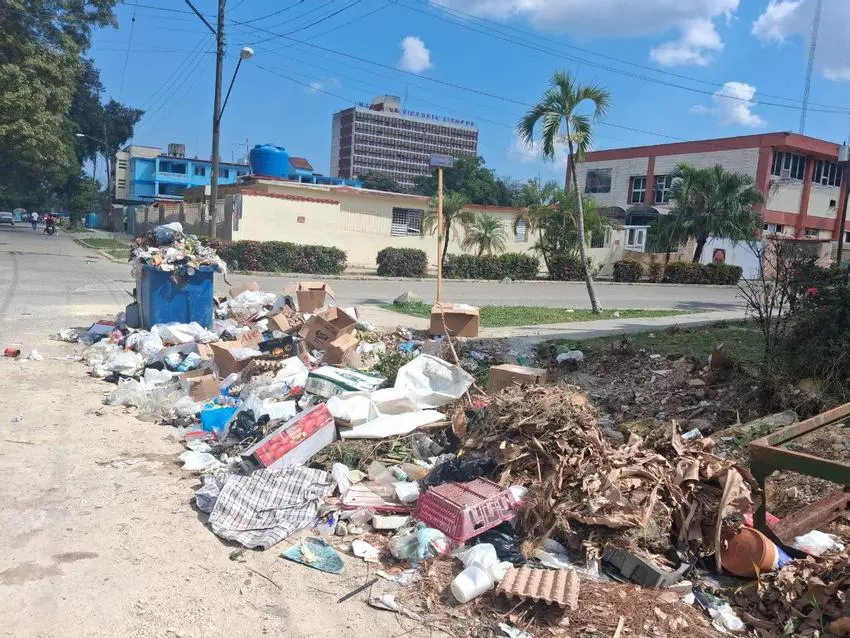
The Well-Kept Secret of Ciego de Avila’s La Cuba, a Successful State-Owned Business

The publication of the price list sparked controversy among the public, who thought it was fake news. / Cubadebate

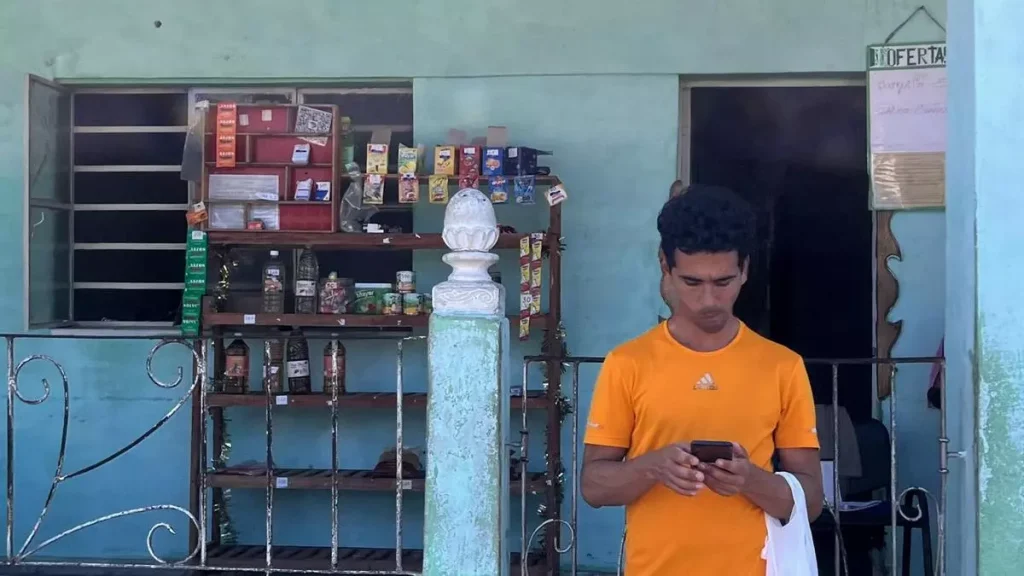
14ymedio bigger14ymedio, Havana, July 27, 2025 — In a country where a trip to the farmers market is a game of Russian roulette, a place with more emotion than food, where the price board is often left blank, a phenomenon that defies Cuban logic has emerged: a state-run produce market with stable supplies, no middle-men and reasonable prices. At least that’s how state media describes La Cuba, a produce market in Ciego de Ávila that is one of the few agricultural companies in the country that still produces food.

The fact that the province is once again hosting the annual 26th of July celebrations has been a godsend for La Cuba, a standout among the many ruined “production centers.” Battered by the country’s ongoing economic crisis, the company has been trying to recover for a year and the government’s attention in recent months has been helping it achieve that goal.

All the collective had to do was declare that it wanted to surpass its plantain production record by planting 2,800 hectares of their principle crop by July 26, with that number increasing to nearly 3,000 hectares by August 30, Fidel Castro’s birthday. A year ago, they were happy to have planted 300 hectares.

The business has been profitable. Not only is La Cuba is producing, it is diversifying. It also grows corn, cassava, beans, malanga, tomatoes, sesame, sunflowers, sweet potatoes, cucumbers and melons. Its workforce has grown to 1,570 employees, more than double the mere 600 it had a year ago. In return, the government has a successful company it can boast about. continue reading

While the rest of the country is grappling with empty farms and prices on par with those of New York, La Cuba has even opened a retail market — also to commemorate July 26th — promising, in addition to food, no scalpers, no mystery and affordable prices. After the opening and the publication of a photo showing the price board, the public was quick to react. Some even thought it was, according to Cubadebate, “staged” and found it “insulting.”

La empresa asegura que su buena producción le permite mantener bajos los precios. / Cubadebate

“It seems like fake news but it isn’t. It is La Cuba, the exception that proves the rule until it becomes the rule and not the exception,” a state-media article pointed out, fully aware that La Cuba is a rare bird.

A month ago, the TV interview program Mesa Redonda (Roundtable) dedicated an entire episode to the company and its director, Ariel Nieves Concepción, who was congratulated on his achievements. These include 1,000 boxes of bananas per day, a closed production cycle and a level of diversification that allows the company to supply not only its new produce market but also to fulfill government contracts.

Workers’ wages have also improved. “Those directly involved in production earn between 20,000 and 30,000 pesos [a month], which allows them to purchase products more easily. Furthermore, when harvests are good, their income will be even better,” he said.

These results, however, have not come easy. In its current situation, with every sector of the economy in crisis, the Cuban government is far from being able to guarantee the company the resources it needs to maintain production. This is especially true when it comes to fertilizers and fuel, two essential supplies that are not widely available in the country.

The company has had to bite the bullet and find its own ways to ward off insects. “The use of biological solutions at the company is no longer an option due to a shortage of chemicals. It has now become a business strategy,” explained a technical specialist on Mesa Redonda, adding that they have been able to increase production by turning to organic pesticides.

The company has had to bite the bullet and find its own ways to ward off insects

As for fuel, which depends solely on government allotment, the story is different. Company executives must resign themselves to whatever they get. “Everyone is always working hard to get the job done but, without fuel, you have to prioritize a lot,” said one of them.

Clearing land covered with marabou and other weeds has been another daunting task for La Cuba, which barely had enough workers a few months ago. Televisión Cubana reported that some areas have not been planted for 10 to 15 years.

The company also had to address the poverty faced by many of its workers, for whom it has begun building housing. “Shelter is essential. It’s not easy to come home from work and not have a place to rest,” said one of the interviewees. “We are also planning to build homes for workers, to sell roofing material at affordable prices and to create small public plazas within communities.”

State officials as well company directors both know that La Cuba is a special case, not only because of its favorable location and fertile fields but also because of the special attention it receives from the Cuban government. No other company would be able to stay afloat while paying salaries of thousands of pesos a month while selling its bananas for 24 pesos a pound. It is clear that officials are not telling the truth and that the alleged success of this state-owned company is likely due to hidden subsidies.

Nevertheless, government officials argue that the company’s accomplishments are the result of good management. They believe La Cuba should can serve as an example for the rest of the agricultural sector, for which moving crops from farm to table without food evaporating in the process seems like an impossible task.

____________

COLLABORATE WITH OUR WORK: The 14ymedio team is committed to practicing serious journalism that reflects Cuba’s reality in all its depth. Thank you for joining us on this long journey. We invite you to continue supporting us by becoming a member of 14ymedio now. Together we can continue transforming journalism in Cuba.

Piglia, Detective on the ‘Che’ Guevara Case

First part of a text about the Argentine writer’s trip to Havana in the 1960s

Piglia never won the Casa de las Américas short story prize; Antonio Benítez Rojo won it with the formidable “Tute de reyes.” / Anagrama

14ymedio bigger14ymedio, Xavier Carbonell, Salamanca, 7 September 2025 — I am the proud owner of the first edition of Jaulario by Ricardo Piglia, published in 1967 by Casa de las Américas*. Why repress my vanity? The tiny copy looks like it’s fresh off the press—a sign that it’s been read little in six decades—the green outline of the alligator designed by Umberto Peña is intact, and the note by the forgotten Antonio Benítez Rojo provides a good definition of Piglia’s style: “to pound words a little in the Chinese way but to write effectively, with rigor; to go back, to move forward, to swing like a pendulum seeking balance, to situate oneself between yin and yang .”

Piglia never won the Casa de las Américas short story prize—it was Benítez Rojo who won it for the formidable Tute de reyes —but the publishing house also published the aforementioned authors. The Argentine was 27 years old at the time. In 1999, already one of the great Spanish-language authors, Valoración múltiple was published in Havana. His novel Blanco nocturno won the José María Arguedas Prize in 2012, I don’t know under what terms, and Formas breves was sold in Santa Clara that year , a must-have for anyone starting out in writing.

Jaulario contains nine short stories, in the style of Salinger. Some of them are anthological, such as Tierna es la noche and Mata-Hari 55. For a Piglia fan, owning one of the 4,000 copies of that collection is a luxury, because his biographers often mistakenly consider La invasión his first work. For me, the twists and turns of Jaulario reveal Piglia’s ambiguous and discontinuous relationship with Cuba.

The first time Piglia mentions the island in his diaries is in 1960. News of Fidel Castro reached young Argentinians, who were quickly enthusiastic about los barbudos, the bearded ones. On July 9, he noted: “Russia continue reading

announces it will support Cuba with its rockets.” He had previously written that the country lived in perpetual “pressure, difficulties, conflicts.”

To twist a phrase of Piglia’s, that was an extraordinary discount in the supermarket of history: the romantic idea of ​​a revolution

The Cuban historical drama will continue to be the subject of various marginal notes. The writers invited by Castro to Havana return to Argentina with a message: “They are not communists, they’re humanists.” Piglia himself will assess the phenomenon with skepticism: “If it is true that they are humanists, they will last three months,” he whispers to a girlfriend. Upon hearing the news of the executions of former Batista supporters, he has another enigmatic reaction: “Justice equals power,” he says in a group of friends.

But Cuba offered them too strong a temptation. To twist Piglia’s phrase, this was an extraordinary discount in the supermarket of history: the romantic idea of ​​a revolution.

In 1961, Guevara appeared in Uruguay, and all the students were dazzled by his speech at the OAS. They were impressed by “his sparse beard and the five-pointed star on his beret, which seemed to be a third eye on his very Argentine face.” In a famous essay, years later, Piglia would speak of Guevara as the reader who resolved the contradiction between life and literature, because he is the guerrilla-who-reads, or as Michel H. Miranda writes, the killer reader.

The news of Guevara’s death in Bolivia—just as the seven typewritten copies of Jaulario are on their way to the Havana competition—is Piglia’s first major doubt about Fidel Castro. “If it’s true that Che Guevara was killed in Bolivia, something has changed forever in the lives of my friends, and in mine as well. A turbulent week, with confusing news,” he writes on a Friday the 13th.

For Piglia, Guevara is a decent writer and Fidel an effective speaker; one takes books to the bush to read in silence, the other is an imposing talker.

The “confusing news” can be summed up in one question: “Why didn’t the Cubans rescue him from the field?” The key lies—Piglia puts it in police terms—in Castro. “Fidel Castro confirmed the death of Che Guevara. The question now is why Guevara left Cuba and why he went to the Congo and then, without support, embarked on a guerrilla war in Bolivia.” The explanation offered among Guevara’s Argentine admirers was that “his criticism of the Soviets and, therefore, of certain lines of the Cuban revolution” had caused disagreements with the regime.

In El último lector [The Last Reader] , the dichotomy between Guevara and Castro is presented with a vengeful tone. For Piglia, Guevara is a decent writer and Fidel a showy orator; one takes books into the bush to read in silence, the other is an overbearing talker; one is hairy like hippies and Beat Generation writers, the other pursues Elvis-like behavior. Of course, this idealistic tension could only be posed by an Argentine, who sees double where a Cuban would see the same thing.

However, the contrast between Castro and Guevara is important to understand Piglia’s relationship with Cuba, the almost total silence about his trip to the island in his famous diaries, and his distrust of Cuban institutions that begins with spite (“my book was first until the end but then they awarded the Cuban Benítez”) and ends with his resounding “Me caí de la mata” [The penny dropped**], just before the Padilla Case.

Translator’s notes:

*Online searches as of this date show the book selling for close to $500.

**Literally “I fell out of the bush”

____________

COLLABORATE WITH OUR WORK: The 14ymedio team is committed to practicing serious journalism that reflects Cuba’s reality in all its depth. Thank you for joining us on this long journey. We invite you to continue supporting us by becoming a member of 14ymedio now. Together we can continue transforming journalism in Cuba.

Mexico Sent More Than Three Million Barrels of Oil and Derivatives to Cuba Between January and June

Compared to the first half of 2024, the value of shipments grew by 6% to $289 million

The oil tanker ‘Sandino’ is one of the ships that transport crude from Mexico to Cuba. / Shipspotting.com

14ymedio bigger14ymedio, Madrid, 16 September 2025 — A new report from Gasolinas Bienestar, the subsidiary used by the Mexican state-owned oil company Pemex to ship fuel to Cuba, certifies that crude exports to the island increased during Claudia Sheinbaum’s mandate compared to that of her predecessor, Andrés Manuel López Obrador.

In the first half of 2025, the value of the oil increased by 6% over the same period last year, from 5 billion pesos (about US$ 272 million) to 5.3 billion pesos (US$ 289 million). Based on these data, it can be estimated that the total number of barrels was 3,257,800.

According to the document that the company must deliver this month to the U.S. Securities and Exchange Commission, which it is obliged to do as a listed company, the growth is due to crude oil, whose shipments increased by 2.8% in volume. In the first half of 2024, exports were quantified at 17,400 barrels per day (bpd), while in the same period of 2025, they rose to 17,900 bpd.

Meanwhile, derivatives declined, a trend already reflected in the first quarter data. From 1,800 bpd in 2024, it has risen to 1,700 bpd. In volume, “these sales represented 3.3% of total crude oil exports continue reading

[from Pemex] and 1.8% of total exports of petroleum products, respectively,” the report said, according to the Mexican newspaper El Universal on Tuesday.

“The company emphasizes that “the sales of Gasolinas Bienestar are made through contracts denominated in pesos at the rates prevailing on the market”

“Bienestar is the intermediary for contracts denominated in pesos at prevailing market rates” and insists that it has “procedures to ensure that such sales are made in accordance with applicable law.” The clarification, which is noteworthy because Pemex tries to make it clear that it complies with U.S. legislation as far as the embargo on Cuba is concerned, repeats the word “sale” twice.

Since mid-2023, when Mexico started shipping fuel to Cuba, payments have remained a mystery. Initially the possibility of donations was contemplated, an extreme denied by the president of Pemex, although the statement of then chancellor Alicia Bárcenas on studying how to charge Cuba for the shipments generated doubts. Two years have passed, and it is still not known if the island receives oil as barter or as part of some triangulated agreement with Venezuela, which, for more than a year, has been in breach of the agreement to export at least 55,000 bpd to Cuba.

In Mexico, skepticism about the nature of these exports is high, not only because of an ideological issue but also because of the risk that it will lead to confrontation with the U.S., its main trading partner. In addition there is concern about the debts that are piling up for the State oil company.

“Anything that the Mexican government does against the interests that President Trump has put on the table is dangerous, because it can affect expectations or agreements that have already been achieved,” Ana Lilia Moreno, the Coordinator of the regulatory program in Mexico Evaluates, told El Universal.

The expert adds that it is a complex issue, because helping Cuba stay afloat may be considered necessary for the population, but the Government still does not guarantee human rights. “The problem is that the Cuban regime does not give in to the pressure of the people themselves and continues to repress them. For President Claudia Sheinbaum, it is difficult, but it can really have a serious impact. There is even talk that Cuba could not be paying for this entirely,” she says.

The newspaper has reviewed the total exports of Pemex and concludes that, although they have generally decreased, the volume destined for Cuba is increasing

The newspaper has reviewed the total exports of Pemex and concludes that, although they have generally decreased — almost by half in the first half of 2025 in comparison to the same period of 2020, with 628,000 bpd compared to 1,142,000 — the amount destined for Cuba is increasing, as is the value.

Gonzalo Monroy, director of the energy consultancy GMEC, who was also interviewed by the newspaper, says that this occurs at a time when the State has $23 billion in debt to suppliers and $98 billion in financial debt.

“Now, in Trump’s second term, the Mexican government must be careful with these operations, since they can’t conduct commercial relations with companies that are on the list of the embargo imposed by the United States,” he says

A peculiarity of this report is that Pemex announces that it will allocate 130 million pesos in financial investment to Gasolinas Bienestar.

The Mexican Organization against Corruption and Impunity (MCCI) has received different estimates from oil exports. Based on numerous ship movements between May and June, it puts the value of crude oil shipments to Cuba in the first half of 2025 at $850 million or more.

Translated by Regina Anavy

____________

COLLABORATE WITH OUR WORK: The 14ymedio team is committed to practicing serious journalism that reflects Cuba’s reality in all its depth. Thank you for joining us on this long journey. We invite you to continue supporting us by becoming a member of 14ymedio now. Together we can continue transforming journalism in Cuba.
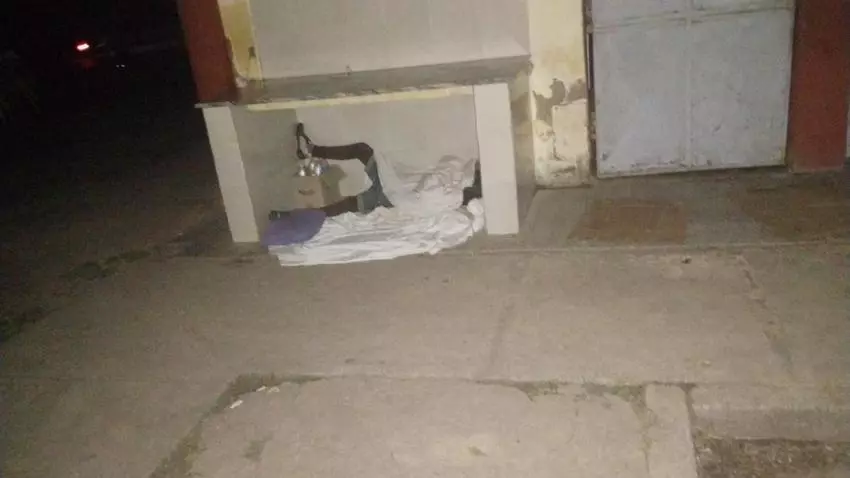
Cuban Books of August: Dying with Padura, the “Yuca Fool,” and the Recovered Childhood of Luis Felipe Rojas

‘Poisoned Utopia’ describes the mechanisms of ideological export and political control that have characterized Havana in recent decades.

Image from the presentation of Padura’s new novel in Madrid. / 14ymedio

14ymedio bigger14ymedio, Xavier Carbonell, Salamanca, 14 September 2025

1. Paneles solares [Solar panels]. According to Padura, his latest novel begins when the protagonist steps in cat droppings. Space: “a very fucked-up country for everyone.” Time: the present and whatever memory can offer. It’s called Morir en la arena (To Die in the Sand) (Tusquets) and has just gone on sale in Spain, which means it will be a few weeks before it arrives as contraband in Cuba. 

Engrossed in supervising the installation of solar panels, the price of which El País, to add a local flavor, reveals—$4,000—Padura is trying to promote the book from his neighborhood, Mantilla. It’s the umpteenth story the Cuban has written, he asserts, “based on real events” and, even more so, family events. He also insists that it’s an apologia for his generation.

Rodolfo is an Angolan veteran. Each of Padura’s novels features a soldier who went to Africa and lived to tell the tale. His brother is about to be released from prison—which is like returning to Africa, because the prison is in Cuba—where he served time for killing his father, and he has nowhere else to return to. Their daughters are exiles, and Rodolfo is in love with his sister-in-law, “an old love from continue reading

his youth.” That should be enough to achieve the “dramatic story, the masterful novel” promised by Tusquets on the back cover.

The best-selling Cuban novelist suffers, though always vicariously. Life is elsewhere, not in the socialist Matrix, and he’s the first to admit it.

“In Cuba, we have no choice but to incorporate misery into life and remain silent,” Padura explains to the El País journalist under his solar-paneled rooftop. The best-selling Cuban novelist suffers, though always vicariously. Life is elsewhere, not in the socialist Matrix, and he is the first to admit it: “I finish the book, press a key, and in two seconds it’s in Barcelona.”

2. Dos exiliados [Two Exiles]. The Yucca Fool and Other Old Stories (Verbum) is the testimony of a double exile, Miguel Sales, who escaped not only from a country but from an entire era, the one before 1959. According to journalist William Navarrete, these stories conclude “the taste of other times” in the mouths of their protagonists. These four pieces address, among other topics, “the journey of the Archangel Raphael to America, the Castro utopia, the presence of the Chinese on the island, and the Fitzgerald mansion.”

With a prologue by Iván de la Nuez, American Playgrounds (Rialta) by Juan-Sí González is the latest installment in the Fluxus series, coordinated by Carlos A. Aguilera. Born in Santiago de Cuba in 1959, González offers an exile’s view of the United States. His collection of photographs of the North American country is, according to the publisher, an “interpellation of the present” that captures a kind of open-air museum.

3. Quijote remediano. Several books of poetry were published in August. Among them, “Del polvo no he venir” [The dust hasn’t come] stands out, which Betania publishing house offers free to readers. Its author, Omar Rodríguez García, who died in 2009, was born in Remedios and remained outside the institutions. He left behind several unpublished books and a series of semi-legendary anecdotes.

4. El desierto de la revolución. [The Desert of the Revolution]. Utopia Poisoned (4Métrica) brings together some of the most lucid voices on the Cuban issue to reflect on the regime’s alliances with many complicit states. The book examines the mechanisms of ideological export and political control that have characterized Havana in recent decades. Its conclusion, endorsed by authors such as Hilda Landrove and Eloy Viera: “The emancipatory paradigms of the 21st century need to overcome the desert of the ‘Cuban Revolution.'”

“Poisoned Utopia” brings together some of the most insightful voices on the Cuban issue to reflect on the regime’s alliances with many complicit states.

5. Un recordador [A Reminder]. Luis Felipe Rojas aspires for El ruido de los libros [The Noise of Books], recently published in Miami (Media Mix), to become his personal time machine. Its theme—”how the diverse voices of the people shaped the reader, the writer that this book shows you today”—recalls Fernando Savater’s Recovered Childhood: “The books and the voices of the people make a fuss so that the words spin in a cyclonic wind toward me and so that I don’t miss the stories that were invented to be heard.”

6. Posdata [P.S.]. Those who enjoyed Princesa Miami, the “political and population atlas” by Legna Rodríguez Iglesias (Incubadora, 2024 Franz Kafka Essay/Testimony Prize winner), can listen to the soundtrack of the book prepared by Walfrido Dorta here. It’s a minefield: from Ozuna to The Beatles, from Shakira to Roxette, and vice versa. Consider yourself warned.

____________

COLLABORATE WITH OUR WORK: The 14ymedio team is committed to practicing serious journalism that reflects Cuba’s reality in all its depth. Thank you for joining us on this long journey. We invite you to continue supporting us by becoming a member of 14ymedio now. Together we can continue transforming journalism in Cuba.

The Victim of a Vicious Assault in Cuba Discovers that His Attackers Now Live in the United States

José Enrique Morales links the Herrera Pardo family to State Security

Morales (shown in photo) finds it astonishing that his assailants would be living in the United States. / Cortesía

14ymedio bigger14ymedio, Elena Nazco / Luz Escobar, Madrid, 19 July 2025 — After leaving Cuba for Mexico and requesting asylum in the United States during Donald Trump’s first term, José Enrique Morales Besada never thought he would cross paths with his attackers again. He was wrong. He discovered them eight years later where he least expected: in the very country that had given him refuge. The family of the men who brutally beat him and shattered his jaw in 2017 in Morón (a town in Ciego de Ávila province) for being gay, contacted him through social media and threatened him.

“It all started when I found out they were here in the United States,” Morales told 14ymedio in a phone interview. Now 28-years-old, he was twenty at the time of the attack. He thought he would never be able to sing again. It had been both his passion and source of income. He now earns a living as a healthcare worker and influencer under the name Vida Victoria. It was his followers who warned him that his attackers were now living in the U.S. “My followers started writing me to ask, ‘Aren’t these the guys who beat you up in Cuba?’ They also sent me photos of their profiles.”

Morales finds it astonishing that the assailants named in his asylum application, twin brothers Reisel and Leiser Herrera Pardo, would be living legally in the United States. Though now residents of Miami, the two were living for a time in Tampa, where Morales, now a naturalized citizen, currently resides. “One day I saw one of them in a pizzeria as I was leaving work and thought I was hallucinating. It turned out I wasn’t. They were here,” he recalls.

Following a video in which Morales talks about the arrival of the their family in the US, the assailants’ younger brother posted an insulting message to him online

Following a video in which Morales talks about the arrival of the brothers’ family in the US, Yaisel — the twins’ younger brother — wrote him an continue reading

insulting message to him on an Instagram chat. Soon thereafter, Morales posted a video on the platform, reporting the threats he had received during the exchange. The attackers’ father, Reisel Herrera, whom Morales claims was a well-known Cuban State Security agent in Ciego de Ávila going by the name “Mamporro,” also joined in.

“They told me to give them my number and address, that they already knew where I lived, so everyone would see that I wasn’t as brave or as handsome as I look on social media,” reports Morales, who says he will soon file a complaint against them. “They made a mistake. They told me the twins were police officers. That is impossible given the length of time they have been here.”

Reisel Herrera Pardo y Leiser Herrera Pardo / Cortesía

According to Morales, his attackers came to the U.S. during the Biden administration and are now legal residents. He points out, however, that police officers are required to have American citizenship. “They could have taken a class that trained them to be security guards but falsely claiming to be a police officer is a crime,” he notes.

“On June 11, 2017, I was savagely attacked by Cuban State Security agents and members of the National Revolutionary Police. As a result of this beating, I suffered three bone fractures in my jaw, which was displaced to the left. I lost several teeth and had bone fragments protruding from under my tongue. My face was mercilessly disfigured,” Morales wrote at the bottom of his Instagram post, in which he shared audio recordings and conversations with his assailants’ brother and father.

“I am now horrified to find out that my attackers and harassers are here in the United States, the country where I came seeking freedom, protection and justice. They wander around with impunity, seeking refuge on the very soil that saved my life,” he added.

Though the 2017 incident was treated as a homophobic hate crime, Morales is now believes the beating has the hallmarks of political corruption.

Though the 2017 incident was treated as a homophobic hate crime, Morales now believes the beating has the hallmarks of political corruption. Two other young men from Morón had their skulls beaten in by the same twins at that time. One victim never reported it “out of fear,” he says, and the other now lives in the United States.

Both of these incidents, as well as his own case, lead him to believe that his attackers were political police agents like their father, whose jobs were to intimidate homosexuals. “They didn’t just do it to me; they did it to two other two boys also. That was their thing. Would anyone be surprised to learn that State Security hires young criminals as informants, as plainclothes thugs?” he asks.

He also believes that the reason his assailants were only fined and never faced trial was because Morón’s chief prosecutor at the time was their aunt.

Morales hopes that — at least in the United States, where the law operates very differently than it does on the island — such violence and threats of attack will not fall on deaf ears. In Cuba, not even the intervention of the National Center for Sexual Education (CENESEX) — an organization headed by Raúl Casstro’s daughter, Mariela Castro —led to justice. But now, he points out, “they are here.”

____________

COLLABORATE WITH OUR WORK: The 14ymedio team is committed to practicing serious journalism that reflects Cuba’s reality in all its depth. Thank you for joining us on this long journey. We invite you to continue supporting us by becoming a member of 14ymedio now. Together we can continue transforming journalism in Cuba.

Millions of Dollars in Debt to Sugar Cane Producers Augurs for Another Disastrous Harvest in Cuba

Farmers complain about repeated non-payments, another factor for the shipwreck of the industry that was once a symbol of Cuba

Planting of cane in Artemisa, where they try to arrive on time despite non-payments / Trajabadores

14ymedio bigger14ymedio, Madrid, September 15, 2025 — Everything indicates that the next sugar harvest will once again snatch the title of “worst in a century” from its predecessor. This was warned last July by the Minister of Economy, Joaquín Alonso Vázquez, who said that the delays in the planting of sugar cane were persistent, and if they continued, it would not be possible to “achieve significant increases in the 2026 and 2027 harvests.” The official blamed it on the shortage of raw material, but it is thanks to a report published this Monday in Trajabadores that the shortage of cane is better understood.

It is well known that the lack of fuel and inputs for planting has repercussions, but the State still owes millions of dollars to producers. “For the 2024-2025 harvest, I delivered 2,080 tons of seed between April and May, and I have not received a penny of the more than 4 million pesos from that sale,”says Joel Collazo Apaceiro, an Artemis producer who emphasizes that the situation has nothing exceptional. “The default for the harvest is the same. Contracts are violated, but we continue planting despite dissatisfaction,” he adds.

“Although the industry has not paid for the cut cane, the planting campaigns of the winter and cold seasons do not wait for bureaucracies,” adds another producer. The secretary of the National Union of Sugar Processors, Yrrael Rouseaux Mansfarroll, says that this delay in 33 Basic Units of Cooperative Production affects no more and no less than 4,700 producers.

“It is the boards’ responsibility to seek an alternative to protect the wages of their workers,” he claims, although he states that Deputy Minister Jorge Luis Tapia Fonseca is finding a way to solve the problem with Azcuba. continue reading

This delay in 33 Basic Units of Cooperative Production affects no more and no less than 4,700 producers

Elba Peña Rojas, president of a cooperative located in Banes, Holguín, expresses the same reproach. “It is harmful to have cane stalks from three years ago, which we have stopped cutting for one reason or another. The contract to pay tax to the Fernando de Dios plant is violated, and today the Agroindustrial Azucarera owes us 22 million pesos. This affects the payment to the sugarcane growers and the distribution of profits to the cooperatives.”

Peña claims that this is not the only thing missing. The lack of fertilizers, herbicides, fuel and other resources — which have reduced the cane yield from 100 to 45 tons per hectare — is compounded by malicious fires, which have left great damage in their territory.

To the pile of misfortunes, producers add one more: the theft of wire used to fence the fields, which allows livestock from surrounding areas to enter the land and destroy the cane. “We have 210 hectares. Once again, cattle are being raised in the area, and we have put fences around the cane fields, but it is not enough because the wire is stolen and the animals kill the plants. We report it and no one acts to stop the crime,” he complains.

Trabajadores interviewed Antonio Viamontes Perdomo, director of the only mill that met the targets of the sugar plan of the last campaign, the Melanio Hernández of Sancti Spíritus. “In the last four years, fuel restrictions have affected the planting of seeds and limited the amount of cane grown. The idea is to stop the decline in June 2026,” he says. Despite honorably fulfilling their targets, the territory that supplies them does not have good news. “There, 75% of the land used for cane cultivation is empty.”

More examples: The Carlos Manuel de Céspedes plant, in Camagüey, milled 21% of burnt cane and transported 70%, which took more than 12 hours to arrive, affecting efficiency, which was only 20% of the plan. In Artemisa, the company 30 de Noviembre had a fuel shortage. It took 34 days to move the cane, so only 1,762 tons were processed.

The Antonio Guiteras of Las Tunas remained at 16% of what was projected, 7,200 out of the planned 45,000 tons. The figure is very worrying because this is the mill that agreed to deliver more sugar to the state, but everything bad that could happen, happened, including a shortage of staff, which is increasingly pressing.

The Ciro Redondo, in Ciego de Avila, has gone seven consecutive years without fulfilling the order, aggravated this year because it milled more than half, but 70% was cane from previous harvests, which gave worse results. The same goes for the neighboring bioelectric, which adds up to “millions of kilowatts left to contribute since the launch in 2020, although this press team did not have access to official information on that subject,” the text says.

Trabajadores repeats the complaint by referring to the Uruguay sugar mill, closed for years when it was planned that the Russians would renovate it. “Some obstacles have also made it necessary to grasp first-hand what is happening in the Uruguay industry of Sancti Spíritus. However, through other legal channels it was known that its machines were shut down in 2022, due to the decrease of cane and the lack of resources to revitalize factory equipment,” says the article, which highlights the government’s failure to comply with its own Social Communication Law, refusing to give data required by the official press.

The Urban Noris, in Holguín, had its last harvest in 2023, says the management of the sugar business group in the province, since “it needed a capital repair that was not possible, because it depends on an investment”

The Urban Noris, in Holguín, had its last harvest in 2023, says the management of the sugar business group in the province, since “it needed a capital repair that was not possible because it depends on an investment.” Planting has been another problem. The cane needs to grow, but if it did there would be no industry to process it. “In the fields there is evidence, with large quantities of stalks left and requisitioned,” says José Luis Jomarrón Cera, president of another las Tunas cooperative.

“They subtracted from us for harvesting 14,000 tons of cane with approximately 28 million pesos to collect. On the other hand, non-payments for raw material, which has now been provided and processed, hampers the delivery of advances and the purchase of the inputs necessary for production. In addition, costs are altered, since by not paying off the loans granted by the banks, the interest goes up and substantial amounts of money have to be paid.” The few measures taken, he adds, have come too late, as the sugar industry is dying.

The latest harvest data have not been officially disclosed, but it is known that it did not reach 150,000 tons and that the quantity may even be much lower. Fifteen sugar mills participated in this campaign, of which 10 have contributed their results to the official media, totaling 95,584 tons. The remaining five have not disclosed their production, but it is known precisely that among all of them they targeted 52,068 tons of sugar. That is, if they had met it, the harvest would amount to 147,652 tons. However, only one, in Sancti Spíritisdid did so. Forty years ago, a record was reached with 8.5 million tons of sugar. Since then, the drop is like a bottomless pit.

Translated by Regina Anavy

____________

COLLABORATE WITH OUR WORK: The 14ymedio team is committed to practicing serious journalism that reflects Cuba’s reality in all its depth. Thank you for joining us on this long journey. We invite you to continue supporting us by becoming a member of 14ymedio now. Together we can continue transforming journalism in Cuba.
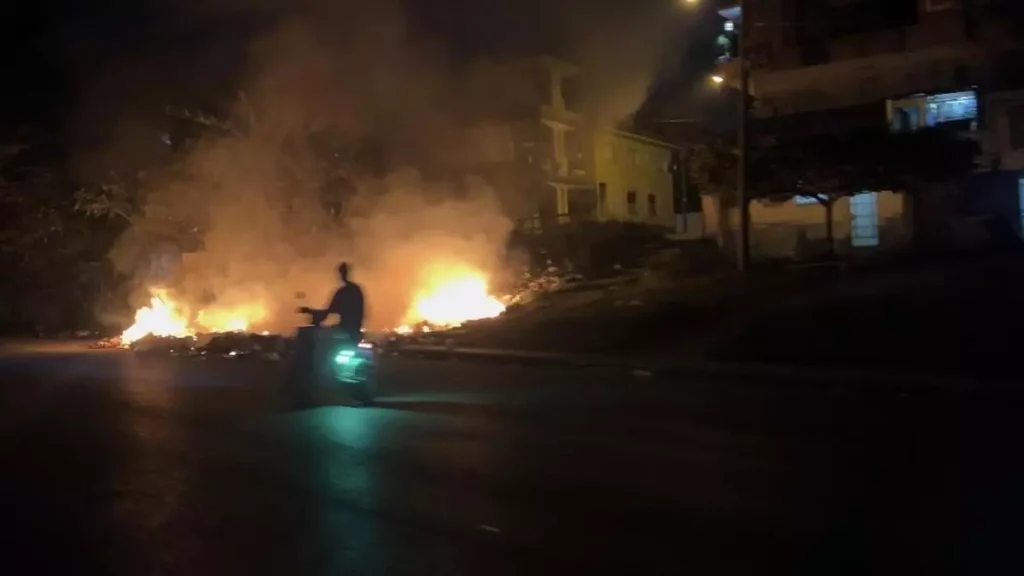
Seizures of Cuban Cigars: 4,500 in Havana, 133 in Spain

For the second time in a week, Customs at José Martí Airport has detected “fake goods,” but the Spanish courts ruled in favor of a passenger who was fined for bringing Cuban cigars for a birthday party.

Cigars seized by Cuban Customs. / Wiliam Pérez

14ymedio bigger14ymedio, Madrid, 15 September 15, 2025 — Several workers in Cuban Customs and the Ministry of the Interior received diplomas this weekend for attending a five-day course about handling drug trafficking, given by French Customs at facilities in the José Martí International Airport in Havana. 

Cooperation between Cuban and French Customs goes back a long way. The two countries signed an Agreement on Mutual Administrative Assistance for the Prevention, Investigation and Combating of Customs Fraud in 1996, which was renewed in 2022. The pact includes collaboration between customs training schools in several matters, one of them being the Single Window of Foreign Trade. The most important part concerns drug trafficking in ports and airports, which these seminars and visits address.

The course, with theoretical and practical exercises, started on Monday and ended on Friday, coinciding with the detection of a smuggling operation involving 4,500 Cuban cigars, brought in by two passengers. The incident was reported by Wiliam Pérez González, first deputy head of the General Customs of the Republic, who reported on X that once the goods were found to be fake, the complaint was made to the police and the case expanded.

Bruno Margarite, an official of the French Embassy in Cuba, participated in the closing event and stressed the importance of these workshops to “consolidate ties of cooperation and strengthen the fight against illicit drugs.”

It was the second time in a few days that the official had been alerted to a similar event, also in terms of quantity. On September 2, nine days earlier, Pérez González also raised the alarm about the detection of 4,400 loose cigars with rings that were packed to leave the country without being declared. “The smuggling of this item brings large profits,” he said, adding that it had been duly reported.

Operations of this type, or at least their disclosure, have accelerated in recent times. In July last year, Pérez González showed photos of another large seizure of cigars detected by Customs. Although on that date he did not give the number of cigars that had been recovered, the images showed another large amount of Cuban cigars, as well as cigar bands and labels of all kinds. “Authorizations of recognized brands that people try to introduce into the country from the United States and significant quantities of cigars are seized at the exit, violating the established regulations for illicit trafficking operations,” he warned.

A very similar message was posted on the last day of May 2024, warning of more cigar detections. “Those who try to profit from one of the main exportable products of Cuba will collide with the defense of our borders,” he said.

A batch of cigars is now also the subject of an article in the European press, although for very different reasons. In this case, it is a Balearic Islands court that has ruled in favor of a man against the regional delegation of the Spanish Customs responsible for excise taxes.

In January 2020, the complainant traveled with two friends to Cuba and brought 133 cigars from the island to Ibiza, where they resided. Since the exemption limit is 50 cigars per person, the group left the airport without declaring the product. However, once they were in their homes they collected the product and packed it to send to the neighboring island of Mallorca, where a friend was going to have a birthday party. At that time, the man indicated to the shipping company what was in the box.

In January 2020, the complainant traveled with two friends to Cuba and brought 133 cigars from the island to Ibiza, where they resided

The technicians of the Risk Analysis Unit seized the package and contacted the sender to inform him that he would be penalized for having concealed this import. The file included the valuation of the cigars, worth 3,710 euros and a fine that multiplied them by three, exceeding 11,000 euros. According to the Diario de Ibiza, in addition to the money, the product never arrived at the party and remained in the Customs warehouse.

The tourist complained before the administrative courts, claiming that there was no “concealment precisely because the cigars in question were legally introduced into Spain. No offense was committed, so there was no need to conceal any information.”

The Court found that, in effect, there was no intention to hide or deceive. “Contrary to the foregoing, it is established that no fictitious addresses or names were used in the consignment and that the appellant, from the outset, although unaware that the consignment had been intercepted, stated how he had acquired the cigars, which did not belong exclusively to him, and made it clear to the carrier that the package contained cigars,” the judge wrote in his ruling.

“Therefore, the fine of 12,245 euros plus interest generated and the 133 cigars seized are to be returned to him.”

Translated by Regina Anavy
____________

COLLABORATE WITH OUR WORK: The 14ymedio team is committed to practicing serious journalism that reflects Cuba’s reality in all its depth. Thank you for joining us on this long journey. We invite you to continue supporting us by becoming a member of 14ymedio now. Together we can continue transforming journalism in Cuba.
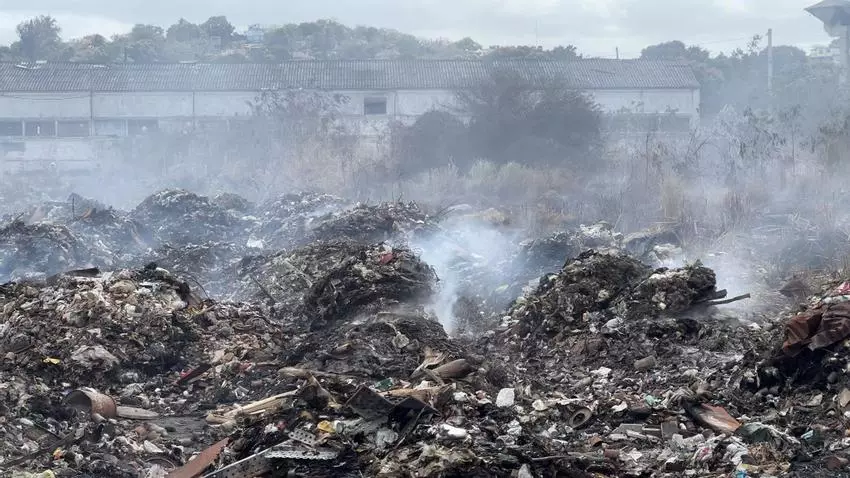
continue reading

Protests in Gibara, Cuba Against the Blackouts to the Cry of “Turn On the Current”

Officialdom plays down “nonconformities” and speaks of dialogue “on the basis of empathy and respect”

Demonstrators took to the streets in Gibara / Screen capture

14ymedio bigger14ymedio, Havana, 14 September 2025 — Banging on pots and pans and with cries of “Turn on the current, dick” and “Díaz-Canel, motherfucker,” the inhabitants of Gibara, in the province of Holguín, took to the streets on Saturday night after a long day without electricity. With the noice from the pots and pans accompanying their slogans, the demonstrators demanded “the current.”

In a video, despite the darkness, you can see dozens of people outside their homes and hear the sounds. “All day without power, they put it on for 30 minutes and nothing,” says a man. In another film, several protesters are seen defending young people from being arrested by a police officer: “Not the people!” they shout. “This is what we need here,” says a female voice in another video. The scene takes place in one of the main streets of the town, which is surprisingly illuminated while the rest of Gibara remains dark. “The people united will never be defeated” was another of the slogans chanted by the neighbors, recorded and spread on Facebook.

In another video in the shadows, broadcast by the journalist Mario J. Pentón, another Cuban who is defined as “elderly” describes her ordeal without electricity, with a mosquito allergy that keeps her locked in and afraid to be stung by the swarms of insects lurking everywhere. “It’s time to go out on the street like in Nepal,” says the woman, who does not specify from which province she sends her message.

The local media Gibaravisión has been one of the few to cover the protest, although they have downplayed it by saying that it was a dialogue between neighbors and authorities “on the basis of empathy and respect.” In its report, the local channel claims that “a group of residents of Güirito in continue reading

Gibara, affected by the complex energy situation, left their homes to express their nonconformity from a position of respect and dialogue.” The authorities responded to “questions” and “the population returned home.”

“Currently the white village remains calm and with its usual tranquility,” said the media, which shared images and videos of the town to show that the streets were empty, although still dark.

It also denounced the “politicization” and “manipulation” of events on social networks and called on Cubans to obtain information from “reliable sources.”

Since the national electricity system (SEN) collapsed on Wednesday morning, the hours of electricity for Cubans have been scarce. Although the authorities soon celebrated the “recovery” of the country, many households remain in blackout or with an unstable service.

Tempers have flared throughout the island after the energy collapse, and the tension is palpable. The closure of many private businesses, the cancelation of medical appointments, the suspension of classes in numerous schools and the spoiled food in refrigerators have put an end to the patience of Cubans.

In early August, Holguín staged another protest. In the village of Cajimaya, in the municipality of Mayarí, residents took to the streets to demand water, food and other essential services. Several images and videos then shared on social networks recorded the moment when the police arrested several of the protesters. 

Shortly before, in June, something similar happened in Guanabacoa, in the capital. Then, the neighborhood protest ended with a fire and a dozen detainees. The trigger was a blackout, coupled with the lack of water, which pushed residents of the neighborhoods Barreto, Teguete and Potosí to go to the streets among cries of “Freedom!” and the noise of bottles smashing on the pavement.

Police quickly charged several of the protesters. Among them was Sunamis Quintero Garcia, a young mother who, according to witnesses, did not participate directly in the protest. “She was sitting in the doorway. When she saw the police coming, she started shouting ‘Freedom! Long live a free Cuba!’ and right there three agents went after her,” said her mother, Moraima García, in a video broadcast from Florida.

Also in May, protests were reported in Granma, Cienfuegos, Ciego de Ávila and Santiago de Cuba. In all demonstrations, including the one this Saturday, the Cubans are only demanding their most basic rights.

Translated by Regina Anavy

____________

COLLABORATE WITH OUR WORK: The 14ymedio team is committed to practicing serious journalism that reflects Cuba’s reality in all its depth. Thank you for joining us on this long journey. We invite you to continue supporting us by becoming a member of 14ymedio now. Together we can continue transforming journalism in Cuba.
Sources in Holguín, Cuba, Report the Arrest of ‘At Least Seven People’ in Gibara

Police patrol the streets of the municipality where there was a massive protest last night against the blackouts.

Image of demonstrators who took to the streets of Gibara /Screen shot /14ymedio

14ymedio bigger14ymedio, Havana, September 14, 2025 — After the protest that filled the streets of Gibara, in Holguín, on Saturday night, the authorities decided to go out and look for the demonstrators. According to residents of the province, “at least seven people” have been arrested in that municipality by police and State Security agents.

“The people of Gibara only came out to demand their rights, but the police are stopping them,” a resident of Holguín tells this newspaper. He says he has managed to communicate with acquaintances in that municipality, where the International Festival of Poor Cinema is held every year. The fate of the demonstrators is not clear, but reports on social networks indicate that they have been transferred to the capital city or the Gibara police station itself.

“People are saying that there are special forces (also known as black berets) on the street, but in reality it is swarming with police and security agents,” says the man.

On social networks and Facebook groups, several users have reported the arrests and even circulated images of patrols roaming the neighborhoods in search of protesters. The events contradict the official version of the protests, which according to the authorities in Gibara were nothing more than peaceful demands from citizens tired of the blackouts.

The protests in the municipality began after nightfall, when dozens of residents took to the streets shouting “Turn on the current, pinga [dick],” “Díaz-Canel, singao [motherfucker]” and slogans like “The people united will never be defeated.” continue reading

A few hours later, Gibaravisión released its own version of what happened. “A group of residents of Güirito in Gibara, affected by the complex electroenergetic situation, left their homes to express their dissatisfaction from a position of respect and dialogue,” said the official media in an attempt to downplay the protests.

A few hours later, Gibaravisión released its own version of what happened.

“The authorities went to the site to answer questions and exchange views. Everything happened on the basis of empathy and respect,” they insisted, assuring that after the dialogue all the residents returned to their homes, and the atmosphere was calm. They also accused people of being “mostly from outside” and wanting to “manipulate and politicize” what happened by posting videos of dark streets that were empty.

Later, the secretary of the Communist Party in Gibara, Nayla Marieta Leyva Rodríguez, posted this message on Facebook: “Let us trust in the tremendous revolution that we have, which never abandons its children and is glorious in the search for solutions.”

Since the collapse of the national electricity system (SEN) on the morning of Wednesday, September 10, the tension from the long blackout hours has soared, and many homes are still in a blackout or with very unstable service.

At the beginning of August, another protest took place in Holguín, in the village of Cajimaya, in the municipality of Mayarí. On that occasion, residents took to the streets to demand water, food and other basic services. Several images and videos then shared on social networks recorded the moment when the police arrested several of the protesters.

Translated by Regina Anavy

____________

COLLABORATE WITH OUR WORK: The 14ymedio team is committed to practicing serious journalism that reflects Cuba’s reality in all its depth. Thank you for joining us on this long journey. We invite you to continue supporting us by becoming a member of 14ymedio now. Together we can continue transforming journalism in Cuba.
“Freedom!”: The Cry That Led to the Imprisonment of a Cuban Mother in Guanabacoa

Pot-banging protests were also reported in the municipality of La Lisa in response to the blackouts.

Among those arrested is Sunamis Quintero García, who did not participate directly in the protest / Facebook

14ymedio bigger14ymedio, Havana, 2 July 2025 (delayed translation) — In the early hours of June 29, the municipality of Guanabacoa was the epicenter of a neighborhood protest that left behind a fire, a dozen detainees and an atmosphere of growing tension. The trigger was a new blackout, added to the lack of water, which pushed dozens of residents of the neighborhoods Barreto, Teguete and Potosí to go to the streets among cries of “Freedom!” and the noise of bottles smashing into the pavement.

The official response was swift. Police patrols, plainclothes officers, and riot squads were deployed within minutes. “The police took everyone they could,” one resident denounced on an anonymous social media account.

“She started shouting ’Freedom! Long live free Cuba!’ and right there three officers jumped on her.”

Among those detained is Sunamis Quintero García, a young Cuban mother who, according to witnesses, did not directly participate in the protest. “She was sitting in the doorway. When she saw the police coming, she started shouting ’Freedom! Long live a free Cuba!’ and right there, three officers jumped on her,” her mother, Moraima García, denounced in a video released from Florida, where she has lived for 13 years.

Quintero, a mother of two young children, one five years old and the other barely one, was initially taken to the Guanabacoa police station. From there, continue reading

according to her mother, she was transferred to the Regla unit, then to Vivac, and later to Villa Marista, the headquarters of State Security. To this day, she remains incommunicado.

“My daughter has never protested before. She’s depressed, with two children and no food. She screamed because she couldn’t take it anymore,” García explained. The family has denounced the authorities’ attempt to prosecute her as the leader of the protest, something they consider a political maneuver to make an example of her.

The patrol cars arrived with their sirens off, so many neighbors did not notice their presence.

A resident of Quintero told 14ymedio: “As far as I know, she’s never been involved in politics, but obviously with the current situation, we’re all stressed.” The woman recounted that the patrol cars arrived with their sirens off, so many residents didn’t notice their presence until the arrests began. “The issue has barely been discussed here, as with so many other things… I don’t know if it’s out of fear. The little I’ve heard is that they’re still in prison. Yesterday the street was still littered with glass,” she added.

Organizations such as Cubalex have confirmed not only Quintero’s arrest, but also that of an entire family: Hiromi Moliner, her husband—identified as El Nene —and her older children, Donovan Fernando and Deyanira López.  Moliner, who also has two other children, is in delicate condition after undergoing breast cancer surgery a year ago.

According to Cubalex, the detainees were first taken to the Alamar police station and then transferred to Villa Marista. All remain without communication with their families.

“My daughter is treated like a criminal, like a dangerous leader, and all she did was refuse to shut up.”

“The repression was disproportionate, and the arrests were carried out without legal order or respect for due process,” the organization warned. “The regime resorts to criminalizing discontent to silence the voices of citizens who are rising, even in their most basic forms: shouting from the curb.”

The Guanabacoa protest was not an isolated incident. A day later, on June 30, pot-banging protests were reported in the municipality of La Lisa, also in response to the prolonged power outages.

The case of Sunamis Quintero García epitomizes that desperation. With no prior activism, no visible ties to opposition organizations, it took just two cries from her home to turn her into an enemy of the system. “My daughter is treated like a criminal, like a dangerous leader, and all she did was refuse to shut up,” her mother lamented.

Translated by Regina Anavy

____________

COLLABORATE WITH OUR WORK: The 14ymedio team is committed to practicing serious journalism that reflects Cuba’s reality in all its depth. Thank you for joining us on this long journey. We invite you to continue supporting us by becoming a member of 14ymedio now. Together we can continue transforming journalism in Cuba.
Matanzas’ Narváez Street’s Promenade Looked Good on Paper but Nothing Went as Planned

In 2016, an ambitious project was announced that promised to bring the street back to life but it ultimately it stalled.

There was a time when walking down Narváez at night meant immersing oneself in its constant hustle and bustle. / 14ymedio

14ymedio bigger14ymedio, Julio César Contreras, Matanzas, 1 August 2025 — On the banks of the San Juan River in Matanzas, an ambitious project sponsored by the City Conservation Office promised to restore vitality to Narváez Street. The plan included a boulevard that would stretch for several blocks. Retail shops and restaurants, both private and public sector, were to be located along its banks, offering cultural and recreational opportunities for a diverse clientele. With the added attraction of a waterside promenade with sculptures integrated into the surroundings, the space seemed destined to become a meeting point for Matanzas’ residents and visitors.

In early 2016, cafes and bars began to open in the first block. The idea was that more would gradually open up further along the street but the initial burst of growth quickly stalled. “My grandson filed an application to rent a space and convert it into a restaurant but, from the very beginning, these locations were set aside for influential people within the government. He had to abandon this idea and ended up leaving the country” says Gerardo, who claims that in the last five years “virtually nothing of the original project has moved forward.”

The signs of decline are clearly visible. “The 3D Salon is shut down and the wifi connection in the cafe is terrible. Those two businesses are state-owned but the decline is also obvious in the music school and the artisan workshop,” Gerardo notes. What was supposed to be a major cultural and social attraction is now just a “broken promise.” Instead of new businesses opening, some spaces have closed or were demolished, such as the boat-shaped restaurant built on the river, which went bankrupt due to lack of resources.

A partir de 2016 comenzaron a abrirse cafeterías y bares en la primera cuadra, con la idea de ir extendiéndolos paulatinamente. / 14ymedio

There was a time when walking along Narváez Street at night meant being immersed in a constant hustle and bustle. “This place used to be packed with people, especially on weekends,” recalls Mabel, a former employee of the For Love of Art café. “Back then, an espresso cost 25 pesos and a beer 50,” she reports. But when prices rose, traffic plummeted. With a cup of coffee now selling for 200 pesos, a milkshake for 500, and a pizza for around 900, customers are scarce. “A traditional Cuban meal will cost you continue reading

at least 1.500 to 2,000 pesos,” adds Mabel, who ended up looking for another job after her income fell.

“It’s not the fault of the bar owners,” she says. “They have to pay the rent, the taxes, the workers’ salaries and buy most of their supplies on the black market, where prices are sky-high. You can’t really blame them.”

On the sidewalk outside the bars, portable kiosks have proliferated . While they offer somewhat lower prices, they remain unaffordable for most people. “There’s not much difference,” says Damián, a young man who spends afternoons with his friends under the Tirry Causeway bridge. “Inside, you have loud music and air conditioning. Out here, we have the breeze from the trees and the river, which is still free.”

Fuera de los bares, en la acera, han proliferado puntos de venta móviles con precios algo más bajos / 14ymedio

Damián claims there are two side-by-side versions of Narváez. One can be found inside the bars and cafes, “for people with money.” They are almost always empty, their bored waiters not even noticing the pedestrians walking by. “I belong to the other Narváez, where people don’t have 1,800 pesos for a bottle of rum. I see parents here taking the last bit of money out their wallets to buy their children a 50-peso lollipop. Young people like me paint graffiti on the walls and dream about leaving Cuba.”

What promised to reinvigorate the so-called “city of bridges social and cultural life now, in 2025, looks like an abandoned project. In Narváez, it is common to see people of all ages begging for money or rummaging through trash cans. “This is our own Cuban resort,” says Damián. “We don’t have tourists or dollars but we do have music from our cell phones and want to have a good time with friends. I come here every afternoon, looking for what was supposed to be here but isn’t. And knowing that it probably never will be.”

“Inside, you have loud music and air conditioning. Out here, we have the breeze from the trees and the river, which is still free.” / 14ymedio

____________

COLLABORATE WITH OUR WORK: The 14ymedio team is committed to practicing serious journalism that reflects Cuba’s reality in all its depth. Thank you for joining us on this long journey. We invite you to continue supporting us by becoming a member of 14ymedio now. Together we can continue transforming journalism in Cuba.
The Average Daily Power Outage in Cuba Was Almost 16 Hours in July and 15 in August

  • The Director General of Electricity noted that “there were circuits that were turned off longer.”
  • Two Turkish floating power plants are maintained in the country, delivering about 70 megawatts per day.
A street in San Antonio de los Baños during a blackout at dusk. / Courtesy

14ymedio bigger14ymedio, Madrid, 9 September 2025 — The conclusions of the Ministry of Energy and Mines report are devastating. During the month of July, the average daily time without electricity in Cuba was 15 hours and 50 minutes. In August, the slight improvement left blackouts of 14 hours and 54 minutes. These are official data that corroborate the daily suffering of Cubans, whose main present concern is power cuts. In an appearance before the press on Monday, Lázaro Guerra Hernández, general manager of Electricity, also emphasized that the figure only reflects the average, since “there were circuits were shut down longer.”

The official, who is also an engineer, explained the disconnection of the electrical system in the eastern zone this Sunday, which occurred when bad weather aggravated the situation of an already very low generation situation. “One line was already de-energized due to high voltage in the region, and the storm caused the second 220 kV line to go offline. This led to a transfer interruption, separating the eastern region from the rest of the country.”

The breakdown, which included the untimely shutdown of Unit 6 in Mariel, was resolved around 1:25 a.m., but the problems are far from over.  “Currently the system is operating in a stable manner,” he said, “although there is still a deficit in generation capacity that had already been forecast.

This is the usual tone on the island. Lázaro Guerra’s appearance served to review the events of this summer, which once again marked another critical point for electricity generation in Cuba. The executive argued that July and August had been the months with the highest energy consumption in the country’s history. The coincidence of high temperatures with appliances that increasingly demand greater consumption is putting a strain on a dying electrical system continue reading

for which all the plans announced in the winter are useless.

“Currently the system is operating in a stable manner,” he said, “although there is still a deficit in generation capacity that had already been forecast.”

Guerra Hernández recalled that a strategy had been designed for this year to help start the summer “under the best possible conditions,” a plan that was explained by the minister of the branch, Vicente de la O Levy, in an interview published by the official  newspaper Granma in four episodes last March. One of the most important points was thermal energy, considered essential by the government because the plants are fueled by domestic crude oil. However, the schedule—as usual—has failed again due to the comings and goings of thermoelectrics that have long exceeded their useful life.

This was clearly explained at the press conference on Monday by Alfredo López Valdés, director general of the Electric Union of Cuba (UNE). “When you start dismantling, you begin to encounter problems you didn’t originally foresee,” he warned. The most prominent case is that of Unit 2 of the Ernesto Guevara Power Plant, located in Santa Cruz del Norte (Mayabeque). The manager believes that a new economizer was planned [to capture waste heat] for the boiler, but it was quickly discovered that it was also necessary to make an overheater and a reheater.

Although components were taken to the factory and Chinese welders helped, “the maintenance has taken longer than expected,” he said.

Another classic case is that of Unit 4 in Céspedes, whose maintenance revealed a defect in the pipes manufactured between 2019 and 2020. “Although the welds were certified, the appropriate technical treatment was not performed at the time,” admitted López Valdés.

The planned output at the thermoelectric plants was 27 gigawatts per hour per day, but in July it reached only 23, mainly due to recurring problems at the Antonio Guiteras plant in Matanzas. “One gigawatt per hour (GWh) no longer produced is equivalent to about one hour of average impact on all the circuits in the country,” said Guerra. He added that unit 5 at Renté (in Santiago de Cuba) did not work as expected either, although in August there was a slight improvement, with the generation of just 1 GWh more.

In addition, the forecast for distributed generation was not fulfilled, and here the disaster was greater. Of the planned 9.8 GWh, only 2.8 in July and 5.8 in August were reached. Now, said the director of the UNE, work has been carried out that allowed the recovery of more than 1,000 MW [1 GWh], including in the five largest turbines in the country, although the problem remains in the drop in imported fuel, despite the fact that the shipments of Mexican crude oil have provided a slight relief in the middle of the scarce Venezuelan oil, which now appears in dribs and drabs.

“Now, said the director of the UNE, works have been carried out that allowed the recovery of more than 1,000 MW, including in the five largest turbines in the country, although the problem remains in the drop of imported fuel.”

The same problem affected mobile generation: from the 10.2 GWh planned, 8.9 GWh were achieved. In August, with the departure on the 6th of the Turkish Suheyla Sultan patana [floating power plant], the quantity went down to 6.4 GWh. Two floating power plants are currently operating in the country, delivering about 70 megawatts (MW) per day. Although the managers did not clarify which ones, they are the Erol Bey, located in Regla and producing 63 MW, and the Belgin Sultan, which is in the port of Havana, whose function is mainly logistics but with a production capacity of up to 15 MW.

As for the Government’s great hope, renewable energy, the situation is going according to plan, but it is still greatly insufficient. At the moment, 29 of the 51 solar parks planned for this year have been synchronized, contributing 500 MW at midday. However, this power is “intermittent, so four battery storage systems have been contracted to stabilize the system,” they explained. This technology — which allows the accumulation and release of the energy produced– will be installed in the substation of Cueto in Holguín, of Bayamo in Granma, and of Cotorro y la Cuaje in Havana. “It’s a huge investment,” they said.

After nearly all forecasts failed, and the director of UNE acknowledged that “the situation is very difficult” and serious, Guerra Hernández emphasized that electrical workers—one of whom died this Monday in a work-related accident—are committed despite their dwindling numbers. “There has been no shortage of struggle, no shortage of work,” he stated.

Translated by Regina Anavy

____________

COLLABORATE WITH OUR WORK: The 14ymedio team is committed to practicing serious journalism that reflects Cuba’s reality in all its depth. Thank you for joining us on this long journey. We invite you to continue supporting us by becoming a member of 14ymedio now. Together we can continue transforming journalism in Cuba.
Acosta Dance, the Company of Cuban Dancer Carlos Acosta, Celebrates Ten Years of ‘Dedication’ Onstage

‘A Decade in Motion,’ taking place in Havana this Friday, Saturday, and Sunday

Dancers of the company Acosta Dance, pictured on August 27 during rehearsals for a show in Havana. / EFE/Ernesto Mastrascusa

14ymedio biggerEFE (via 14ymedio), Laura Bécquer, Havana, 5 September 2025 — Acosta Dance Company, under the direction of prestigious Cuban dancer/choreographer Carlos Acosta, celebrates, this weekend in Havana, a decade of “sacrifice and dedication” onstage, with its fusion of classical and contemporary dance technique.

“It’s been ten years of sacrifice, of dedication, of working alongside Carlos and making his dreams become a reality. We’re very happy with what we’ve achieved”, remarks the company’s artistic director Yaday Ponce in an interview with EFE.

Acosta (born in Havana, 1973) founded the company at the end of 2015, although it actually had its artistic debut in April 2016 during the course of a new cultural boom in Havana which was seeing a new closeness develop between Cuba and the United States.

For Ponce, “it was very difficult to begin with: getting the public to understand Carlos’s intentions – here was a classically trained dancer, forming a contemporary dance company”.

“This took quite a bit of work, but I think we managed it”, she says, from the headquarters of Acosta Dance in the Havana district of Vedado, during final rehearsals before the launch of a commemorative season, entitled ’A decade in movement’, marking the anniversary which takes place in Havana this Friday, Saturday and Sunday.

Acosta, the current director of the Birmingham Royal Ballet, is considered by critics to be one one of the foremost dance practitioners in the world 

Acosta, the current director of the Birmingham Royal Ballet, is considered by critics to be one one of the foremost dance practitioners in the world .

Trained at Havana’s National Ballet School, he consolidated, from a very young age, a career which was endorsed by numerous honours, including the Prix De Lausanne in 1990. He retired from performing in 2016 after 28 years as a professional dancer with prestigeous companies, both in Cuba and internationally.

It was at that point that he formed his own company, giving life to a personal project in which the classical ballet techniques in which he dominated were combined, with ease and imagination, with the liberty of movement of contemporary dance. continue reading

Ponce, who has accompanied the prestigeous dancer from the beginning, highlights that “he is a director who is always present”, even now when he resides in the United Kingdom.

“He’s a role model for me, not just as a dancer but as a director too. He’s very demanding: with the dancers’ precision, with the repertoire itself… everything. He’s in constant communication, present with us at all times, although he’s not actually physically present”, she explains.

Each one of the 14 dancers who make up the current Acosta Dance company – all young dancers trained in his own academy – transmits an energy and a passion to the rehearsals for the four pieces which will celebrate the ten year anniversary.

The evening includes: an interpretation of Spanish-Venezuelan choreographer Javier de Frutos’s ’98 Days’, inspired by Federico García Lorca’s visit to Cuba in 1929-30; ’The Equation’, by the Cuban Georges Céspedes; and ’The Calling’, with choreography by Goyo Montero.

The evening includes: an interpretation of Spanish-Venezuelan choreographer Javier de Frutos’s ’98 Days’, inspired by Federico García Lorca’s visit to Cuba in 1929-30

The show closes with ’From End to End’, by Ponce herself, based on the original piece by Cuban choreographer Alexis Fernández, a work nominated in 2022 for the Laurence Olivier prize in the UK.

On the subject of this final piece in particular, the young dancer explains to EFE that it has formed part of the repertory “since the company was founded, and it’s a reflection of the Cubans, a representation of what Cuba is, and of how Cubans feel, of their way of moving”.

“It’s a very integrated work because it includes dancers, musicians and audiovisual material. It’s what Carlos envisioned when he created the company in Cuba: that all the artistic elements of the show were to be integrated, to bring all this Cuban talent to the world’s attention”, she explains.

The company’s work has been endorsed through many diverse awards, among them the UK National Dance Prize (2025) for Best Medium Scale Dance Company.

For Ponce, her own “greatest personal achievement” has been in the training of her own dancers: “to be an artist-teacher for the company and for young dancers from all over Cuba”.

Translated by Ricardo Recluso

____________

COLLABORATE WITH OUR WORK: The 14ymedio team is committed to practicing serious journalism that reflects Cuba’s reality in all its depth. Thank you for joining us on this long journey. We invite you to continue supporting us by becoming a member of 14ymedio now. Together we can continue transforming journalism in Cuba.

Cuba Is Experiencing Its Third Day of General Blackout, With Sporadic Moments of Light

Authorities deny rumors about an imminent declaration of an “energy emergency” to address an out-of-control situation.

Cubans prepare for another night without power. / 14ymedio

14ymedio bigger

14ymedio, Natalia López Moya, Havana, 12 September 2025 — As of midday on the third day of the failure of Cuba’s national electricity system (SEN), it is clear that authorities were too quick to celebrate the country’s “recovery.” Many Cubans are still experiencing power outages or unreliable service, and they anticipate another night in the dark.

In Havana, authorities from the Electric Union reported that four of the city’s six power blocks are without service, including Nuevo Vedado and San Miguel del Padrón as 14ymedio was able to confirm. This newsroom also received reports of outages in Sancti Spíritus, Holguín, and Villa Clara that have lasted several hours and are accompanied by a drop in internet connection.

As if that weren’t enough, official media reported the shutdown of Unit 3 of the Carlos Manuel de Céspedes thermoelectric plant in Cienfuegos. “This incident complicates the operation of the SEN and increases the impact of the country’s generation capacity deficit,” officials admitted.

Block 5 of Renté, in Santiago de Cuba, which contributed 70 megawatts to the SEN (National Energy Service) this Friday, also went “unexpectedly off the system due to an automatic operation related to a boiler feed valve.” Authorities assured that they are working to ensure it can be brought back online this afternoon.

Block 5 of Renté, in Santiago de Cuba, which contributed 70 megawatts to the SEN this Friday, also “unexpectedly” went offline.

Ricardo is 72 years old and at his house they avoid opening the freezer so that the little bit of cold that protects the food stored in the refrigerator doesn’t escape. “My daughter had sent me a box of chicken a few days back, and now I could lose all of that if the power doesn’t come back on by tomorrow, Saturday at the latest,” this resident of the La Timba neighborhood, near the Plaza de la Revolución, told 14ymedio.

The Havana resident has taken extreme measures. “My grandchildren haven’t been to school for three days. On Wednesday, when the national blackout began, they had just entered their classrooms, and my son went and got them, brought them home, and they haven’t left the house since.” In the family home, continue reading

“you can count the hours of light” we’ve had, he laments.

The impact also directly affects the wallet. Ricardo’s son earns his living with an electric tricycle that moves goods that customers buy at a central Havana hardware store. “He has no way to charge it, and the sales of materials aren’t working because the hardware store doesn’t have a power plant,” explains the head of the family, who admits he hasn’t showered for three days due to the lack of water.

In the buildings with more than 12 stories that abound in the Nuevo Vedado area, near La Timba, residents who live on higher floors avoid going down because they’ll then have to use the stairs to return to their homes. “There are a lot of elderly people here, and they’re not up to navigating all those steps up and down,” commented a resident of the Los Pilotos building on Factor Street this Friday.

The lack of water is particularly acute at these heights because, even if the cistern has some reserves, the water pump lacks electricity to operate and fill the tanks located at the top of the building. Carrying full buckets or jugs up the stairs is also unfeasible for many of the residents on the upper floors.

This Friday, clinics at the 19 de Abril Polyclinic in the area were also suspended again. “That generator has been broken for years, but no one has reported it yet,” an employee responded to a frustrated patient who, for the second day in a row, was trying to be seen for an eye problem. The woman questioned the health center’s lack of power backup, despite the fact that a huge power plant is visible on one side of its facade. Fuel is needed to operate it, and there isn’t any.

The lack of water is especially striking at these altitudes because, even if the cistern has some reserves, the water pump does not have electricity to operate.

The critical situation has even prompted rumors circulating on social media that UNE will implement a controlled 72-hour power outage. The electric company denied that the government intended to declare an “energy emergency” and denounced a disinformation campaign.

In response to the article, reproduced by Cubadebate, the first four comments from readers of the official outlet harshly criticized the authorities. “Is there any information that correlates with the reality Cubans are experiencing today? What official reports say is one thing, but the reality Cubans are experiencing is quite another.”

Another commenter quipped: “Great, it was fake news… But we’re still without power for over 20 hours.”

The comments also reflected readers’ resignation and weariness, with phrases such as, “In short, massive blackouts across the country have already occurred five times, and not to mention that half the country is shut down every day.” It’s clear that Cubans know that the “stability” of the SEN lasts  only until “it breaks down again.”

____________

COLLABORATE WITH OUR WORK: The 14ymedio team is committed to practicing serious journalism that reflects Cuba’s reality in all its depth. Thank you for joining us on this long journey. We invite you to continue supporting us by becoming a member of 14ymedio now. Together we can continue transforming journalism in Cuba.
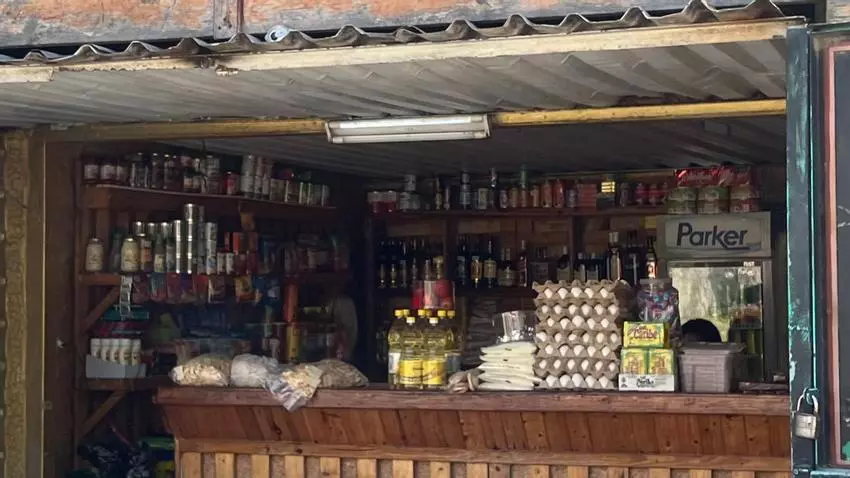
Elections Under Castrochavismo

The rulers of these countries tightly control the electoral mechanisms and present themselves as a bloc against a divided opposition.

Venezuelan citizens participating in primary elections. / EFE

14ymedio bigger14ymedio, Pedro Corzo, Miami, 7 September 2025 — In all honesty, I express my deepest doubts that the peoples subjugated by what we identify as Castrochavism – in Venezuela, Nicaragua, Bolivia and Cuba, controlled by organized crime in association with “real socialism” – can once again embrace democracy through the electoral route.

The rulers of these countries tightly control the electoral mechanisms and present themselves as a bloc in the face of a fractured opposition, with the exception of Bolivia, where the ruling party is broken into anthropophagic (cannibalistic) factions, which has led to its defeat.

With this statement I am not calling for violence, but for the leaders of the opposition of those nations to seek other alternatives to achieve the long-awaited change. If they do not do so, by participating in knowingly flawed elections, they are providing legitimacy to the regime they are fighting.

It is true that not participating in elections significantly affects the democratic identity of the cause that is defended, but to assume as valid spurious processes in which fundamental guarantees are absent, is to accept being part of the oppressive dystopia. It is a very complex situation, a real trap on the part of the ruling party. continue reading

The mock elections for the Castro-Chavistas are nothing more than public maneuvering, very similar to the military maneuvers to which dictatorships periodically resort

It is a kind of electoral suicide to exercise the right to vote regardless of the doubts we may have about the fairness of the process and knowing that the Government has abused the resources of the State in its favor, has resorted to the manipulation of information held by the State. This misinformation threatens the political challengers and undecided and announced that the triumph of the opposition could lead the country to ungovernability and Civil War.

The mock elections for the Castro-Chavistas are nothing more than public maneuvering, very similar to the military maneuvers to which dictatorships periodically resort to frighten the population and energize their supporters.

In each electoral cycle, controlled before it is carried out, these regimes emerge stronger and in clear progress towards the establishment of a totalitarian system of government whose only objective is the perpetuity and absolute power of its leadership, as has happened in Cuba, the model desired by the aforementioned partners.

Socialism of the 21st Century (read “Castrochavism”), encourages a false political pluralism that in each electoral incursion loses relevance and interest for the contenders, as a consequence of the growing rigidity of the imposed social control and the constant institutional reforms of the public powers that exclusively strengthen the executive.

The citizenry in general also suffers from the repression by the ruling class. The population suffers from the ineptitude of its rulers and the deterioration of the general conditions of the community, to which is added an abusive police action that enjoys total impunity, particularly when it acts against the sectors that antagonize it.

These servile collaborators of the despots in power do the real dirty work

The temporary enjoyment of freedoms such as those of expression and information decreases drastically until it reaches its absolute extinction. Civil society organizations will be integrated as a whole into the immense government machinery and formulas will be established that seek to outlaw the most innocuous opposition, while promoting apparently contrary political groups, which in reality will respond to the government’s plans.

These servile collaborators of the despots in power do the real dirty work. The so-called organic or functional opponents are those who most contribute to the fact that the citizenry, transformed into a servile mass, adopts a double standard in which they conceal their true views, contributing to the widespread display of hypocritical moral conduct in society in which the true opinion is ignored.

For its part, Cuban totalitarianism has all these ailments and more. Fidel Castro from the same year 1959 made his supporters proclaim a slogan against the elections, “Elections? What for?”, after having promised in a public statement to go to the polls within a year under the Constitution of 1940 and the Electoral Code of 1943.

Based on the beliefs of Nicolas Maduro, Daniel Ortega, and Evo Morales, the largest island in the Caribbean enjoys a kind of paradise from repression, a perfect police state where the only existing political party doesn’t require electoral simulations and the enjoyment of citizen prerogatives is a power of the totalitarian state, the blessing of all autocrats.

Translated by Hombre de Paz

____________

COLLABORATE WITH OUR WORK: The 14ymedio team is committed to practicing serious journalism that reflects Cuba’s reality in all its depth. Thank you for joining us on this long journey. We invite you to continue supporting us by becoming a member of 14ymedio now. Together we can continue transforming journalism in Cuba.