Belgium Closes Its Embassy in Havana and the Regime Expresses “Surprise and Disappointment”

The decision has a strong symbolic impact at a time when official ties with Europe have cooled and the regime’s international reputation has deteriorated
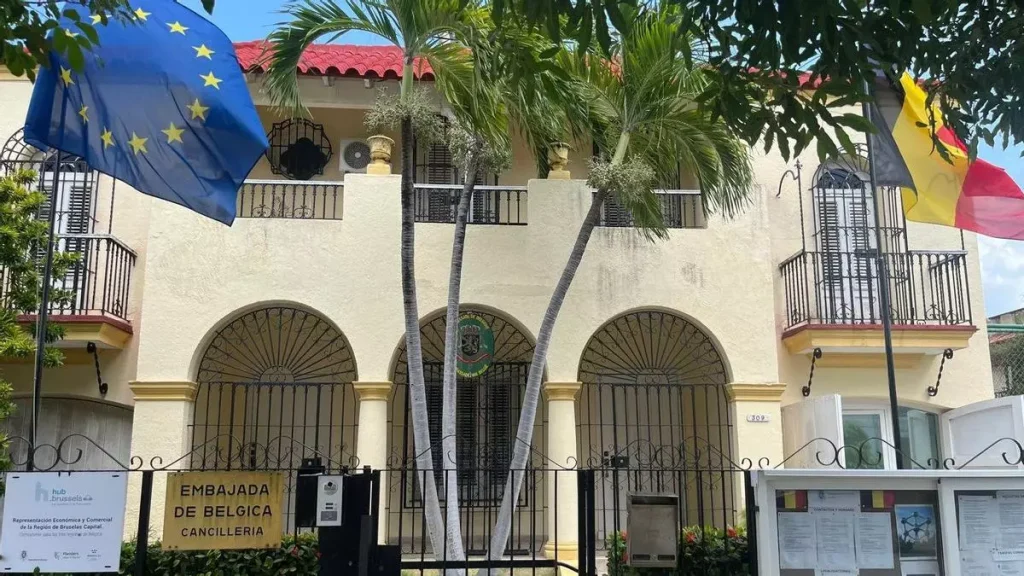

Belgian Embassy in Cuba. / cuba.diplomatie.belgium.be

14ymedio bigger14ymedio, Havana, November 20, 2025 — The Government of Belgium reported the closure of its embassy in Havana, and the Cuban regime has responded by expressing “surprise and disappointment.” The announcement, made on November 18 by the Belgian Ministry of Foreign Affairs, is part of a restructuring of its diplomatic network which includes the closure of eight missions and the opening of five new ones.

According to the official Belgian statement, the change is due to a “strategic redistribution” of resources and does not constitute a break in its relations with Cuba, since consular services will be taken over by other regional missions and special envoys.

For its part, the Cuban embassy in Belgium stated that the measure “does not affect the historical ties that unite both peoples,” emphasizing the more than 120 years of bilateral relations, which, according to the text, have included scientific, cultural, academic and economic exchanges.

The measure “does not affect the historical ties that unite both peoples”

The Belgian embassy maintained that the decision was based on a technical and strategic analysis. Foreign Minister Maxime Prévot explained that the review was the first in more than a decade and that the government is pursuing a more “broad, resilient and future-oriented” diplomacy. continue reading

For Cuba, the decision also has a strong symbolic impact at a time when official ties with Europe have cooled and the regime’s international reputation has deteriorated, especially after the recent closure of Ukraine’s diplomatic headquarters on the island and allegations of the recruitment of Cubans to participate in the Russian invasion of that country.

In the short term, Cuban and Belgian citizens will have to face changes in consular procedures. The services provided by the Belgian embassy in Havana — visas, citizen registration and consular assistance — must now be provided from other countries, such as Panama.

But the impact does not end there. In Cuba, the Belgian embassy was also an interlocutor between official institutions and the European Union in various cooperation projects. The closure can slow down cultural initiatives and academic collaboration.

The Belgian embassy held that the decision was based on a technical and strategic analysis

In its statement, the Cuban embassy in Brussels requested “that the measure not damage the links between institutions, entrepreneurs and ‘the many friendships established between both peoples.” It warned that the closure “contradicts” Belgium’s speech on Latin America and the Caribbean and expressed its hope that the decision will not result in “a de facto break.”

Although the Belgian authorities claim that bilateral diplomacy will continue through other channels, the move comes at a time of growing tensions between Havana and the West. For Havana, it represents a new challenge in its strategy to strengthen European alliances that counterbalance its isolation with Latin America and Russia.

The Cuban embassy concluded its statement stating that it maintains “the will to preserve existing links,” even in a scenario of “difficult understanding” for citizens who expect consular services and cultural cooperation that may be affected by the Belgian decision.

Translated by Regina Anavy

____________

COLLABORATE WITH OUR WORK: The 14ymedio team is committed to practicing serious journalism that reflects Cuba’s reality in all its depth. Thank you for joining us on this long journey. We invite you to continue supporting us by becoming a member of 14ymedio now. Together we can continue transforming journalism in Cuba.

Mexican Press Exposes Record Oil Shipments to Cuba Worth $850 Million

Despite everything, the population continues to suffer from endless power cuts.

The oil tanker Ocean Mariner is scheduled to arrive in Cuba this Sunday from Mexico. / 14ymedio

14ymedio bigger14ymedio, Havana, 16 August 2025 (delayed translation) — The Mexican press woke up on Saturday to inflammatory headlines questioning the management of Petróleos Mexicanos (Pemex). Between 29 May and 27 June 2025, the company carried out 39 export operations aboard 20 ships bound for Cuba, including 10.2 million barrels of crude oil and 132.5 million litres of refined products (jet fuel, diesel and petrol). And yet Cubans continue to suffer endless blackouts: this Saturday, the Unión Eléctrica forecasts a deficit of 1,675 megawatts during peak hours.

These products, valued at $850 million, were shipped through Gasolinas Bienestar S.A., the Pemex subsidiary created, among other “solidarity” objectives, to export fuel to the island. These deliveries even included jet fuel, which Havana was all but begging for, last December when flights had to be cancelled for several hours at the capital’s airport.

Mexico has even replaced Venezuela in terms of the amount of fuel sent to the island. In June, Caracas sent just 8,000 barrels per day (bpd), instead of the monthly average of 50,000 bpd in previous years, although in July it increased its exports to 31,000 bpd. In contrast, Mexico delivered 333,000 bpd of crude oil alone to Cuba in June, in addition to fuel.

The amount is almost equal to the value of the oil that Pemex sent to Cuba over more than a year, between July 2023 and September 2024: nearly $1 billion. Deliveries have continued since last June, with the Ocean Mariner, continue reading

scheduled to arrive in Cienfuegos tomorrow, 17 August, and the Sandino, which is currently loading crude oil in the Mexican port of Pajaritos-Coatzacoalcos, in the state of Veracruz, where it arrived on 28 June.

Of the total shipments in 2025, 19 departed from Coatzacoalcos and one from Tampico, in Tamaulipas, with 6.8 million litres of diesel. The importing company was Coreydan S.A., a Cuban state-owned company about which little is known, but which in 2023 imported hydrocarbons from Gasolinas Bienestar worth $60 million between July and another unknown date, according to Bloomberg. According to the Mexican press, the state-owned company shares its headquarters in Havana with Unión Cuba-Petróleo (Cupet), at 552 Amistad Street, in Centro Habana. 14ymedio was able to verify on site that no neighbour in the building had heard of Coreydan.

Of the shipments from May to June this year, all but one are registered as having been imported by Coreydan, with the exception of one dated 19 June, in which 8 million litres of regular petrol were shipped on behalf of the Mexican Ministry of Foreign Affairs.

Cupet and Coreydan, the state-owned company that imports Mexican oil, share headquarters at 552 Amistad Street in Havana. / 14ymedio

Other vessels involved in transporting crude oil between Mexico and the island include the Ocean Mariner, which arrived in Havana in July with 13,000 tonnes (approximately 91,000 barrels) of fuel from the Ciudad Madero refinery, after having made at least two previous trips during the year. The tanker is scheduled to arrive at the port of Cienfuegos on Sunday.

In previous years, according to Mexican media reports, there have also been frequent trips by the Bicentenario, owned by Pemex Logística, which made four visits to Havana and one to Matanzas in 2023. In addition, Cuban vessels such as the Delsa (eight trips), the Esperanza (six trips) and the Vilma (17 trips) made trips between 2023 and 2024, all from the Coatzacoalcos-Pajaritos terminal.

In a report to the US Securities and Exchange Commission in 2024, Pemex had already acknowledged that, since July 2023, its subsidiary Gasolinas Bienestar S.A. had been purchasing crude oil and petroleum products from its own companies for export to Cuba. In that same report, the company stated that it had exported products worth $400 million between July and December 2023 and another $600 million in 2024.

As for 2025, in the first quarter, Mexico sent 19,600 barrels of oil per day (bpd) to the island, worth more than $166 million, according to Gasolinas Bienestar S.A.’s own reports. In the absence of data for April and May, it is already a fact that Claudia Sheinbaum’s government has delivered more than $1 billion in oil and derivatives to its Cuban ally.

However, this million-dollar support has not been free for Mexico. On 25 February, the association Mexicans Against Corruption and Impunity (MCCI) revealed that Pemex has become even more indebted as a result of these shipments, which were subsidised at least until the last years of Manuel Andrés López Obrador’s term in office (2018-2024). It is currently unknown whether Havana pays anything for these deliveries, whether it is a barter in exchange for services (although Cuba already receives a very high payment for its health missions) or whether it is a donation from Mexico.

Pemex has become even more indebted as a result of these shipments, which were subsidised at least until the final years of Manuel Andrés López Obrador’s term in office.

Last July, the Mexican Employers’ Confederation (Coparmex) warned that Pemex’s accumulated debt to its suppliers, mostly SMEs, threatens thousands of businesses across the country, especially in key regions of the energy sector. 

According to a statement from the organisation, which represents more than 36,000 companies responsible for 30% of the national gross domestic product (GDP), although Pemex reduced its debt to suppliers by 20% at the end of the first quarter of the year – placing it at around $20.2 billion – the amount remains “unsustainable”.

Mexico is also unable to export such large quantities of crude oil, local media criticised on Saturday. With headlines such as “Pemex prioritises Cuba over Mexico in petrol shortage”; “Petrol shortages… and Cuba benefits from Pemex”; and “While Mexico suffers petrol shortages, Pemex sends million-dollar shipments to Cuba”, the press reported that petrol supply problems have been reported in Mexico City, the State of Mexico, Nuevo León and Chiapas.

14ymedio note: The data provided by the Mcci is the result of an erroneous interpretation of Mexican Customs statistics.

Translated by GH

____________

COLLABORATE WITH OUR WORK: The 14ymedio team is committed to practicing serious journalism that reflects Cuba’s reality in all its depth. Thank you for joining us on this long journey. We invite you to continue supporting us by becoming a member of 14ymedio now. Together we can continue transforming journalism in Cuba.

Cuba Received 35% Less Oil and Oil Products From Mexico and Venezuela Between January and October

The documents cited by Reuters contradict the record export figures published by the Mexican press and explain the deep energy crisis affecting the island.

Vilma is one of the tankers Cuba sends to Mexico in search of oil / Tomasz Nadolnik-Marinetraffic

14ymedio bigger14ymedio, Madrid, 20 November 2025 — The fuel deficit is affecting Cuba more than ever this year, when exports from its two regional benefactors are already down a third compared to the previous year. The collapse in oil shipments from Venezuela, which has been evident throughout the year, is now compounded by those from Mexico, whose deliveries between January and October 2025 fell by 73% compared with the same period last year. The collapse contrasts with data from the first half of the year, which showed a 2.8% increase in shipments, excluding derivatives.

Exports from state-owned Pemex to the island averaged 5,000 barrels a day (bpd) in the first ten months of the year, not very much compared to 18,800 in the same period in 2024, according to cargo dispatch data obtained by Reuters.

Figures from the British agency show that Mexico is reducing its cooperation with the island, spurred on by its own economic and productive limitations.

The figures from the British agency show that Mexico is reducing its cooperation with the island, spurred on by its own economic and productive limitations, after having become a new and important energy partner for the Havana regime in July 2023. That year, the country – then governed continue reading

by Andrés Manuel López Obrador – sent an average of 16,000 barrels of oil and derivatives a day to the island (equivalent to some £250 million, that no one knows how it was paid for).

Throughout 2024, collaboration rose to 20,100 bpd, up 20% (although derivatives fell by 18%), with an estimated combined value of $600 million. To get the global comparison, we will have to wait until the end of the year, as after months without receiving anything from Pemex, the Ocean Mariner arrived on the island on Monday with some 70,000 barrels of diesel (valued at approximately £12-18 million).

The Reuters data also casts doubt on the figures provided by the organisation Mexicans Against Corruption and Impunity (MCCI), which on 13 October published a report revealing extraordinarily high amounts. According to the document, the value of hydrocarbons sent by Mexico to Cuba between May and August 2025 exceeded $3 billion, delivered in 58 shipments.

“I understand that Mexico is not currently sending oil to Cuba,” Jorge Piñón, a researcher at the University of Texas at Austin, told this newspaper at the time, adding: “The MCCI has misinterpreted the Mexican Customs data and, in fact, Pemex has problems producing light crude oil (Istmo).”

So far this year, according to Reuters figures, the decline is 15% compared to 2024, when they had already fallen by 42% compared to 2023.

Added to this problem is Venezuela’s failure to comply with the 2000 agreements signed between Fidel Castro and Hugo Chávez, under which Caracas would deliver PDVSA crude oil to Havana in exchange for resources in various sectors, ranging from doctors to intelligence agents. So far this year, according to Reuters’ figures, the drop is 15% compared to 2024, when they had already fallen 42% compared to 2023.

In the first ten months of 2025, Venezuela’s average export volume was 27,400 bpd, and the product that declined the most was fuel oil, which is necessary for power generation.

Reuters puts the total impact at 35%, taking into account both sources and all products – crude oil, liquefied petroleum gas, and residual and motor fuels. The figure fell from 69,400 bpd to 45,400. According to the agency, both Mexico and Venezuela have little surplus to sell to Cuba – despite what President Claudia Sheinbaum claimed last October, which was denied by sources at 14ymedio – which adds to Havana’s problems in paying cash. This has led to a cap on imports, the agency notes, although the payment mechanism to Gasolinas Bienestar, the front company created by Pemex for this type of opaque business, is still unknown.

Two further problems compound all these difficulties. On the one hand, the Olmeca crude oil that Pemex used to supply preferentially to Havana is now being sold – according to Reuters – to solvent customers. Meanwhile, production of the residual fuel oil from PDVSA that the island requires for its electricity generators has fallen, according to internal company documents. Finally, Cuba’s lack of fuel storage capacity – following the 2022 fire at the Matanzas Supertanker Base, where 17 people died – was the final nail in the coffin.

Cuba’s lack of fuel storage capacity – following the 2022 fire at the Matanzas Supertanker Base, where 17 people died – was the final nail in the coffin.

For its part, Russia has only sent two shipments to Cuba – similar to 2024 – one in February and another in September. On the most recent trip, the Akademik Gubkin brought 740,000 barrels of Ural crude oil (valued at about £48 million) to the island, while the first shipment of the year brought 790,000 barrels, valued at £55 million.

On Wednesday, the Cuban Electric Union estimated the deficit at 1,775 megawatts (MW) during peak hours. The system was only capable of generating 1,375 MW during peak demand hours, which exceeded 3,000 MW.

The energy production of the 31 new photovoltaic solar parks was 1,659 MWh, with a maximum power of 392 MW, but the lack of batteries prevents this energy from being stored for times when there is no sun, and breakdowns in five thermoelectric units, together with the two that are out of service for maintenance, makes the situation worse. However, the real problem lies in distributed generation, where 91 plants are out of service, resulting in a loss of 731 MW.

“I’m just reporting this so you’ll publish it. Callejón de los Perros, in Santa Marta, Matanzas, today at 8 a.m. we had been without power for 27 hours straight and counting, because it still hadn’t come back on. And not a word,” complained one on-line commenter.

Translated by GH

____________

COLLABORATE WITH OUR WORK: The 14ymedio team is committed to practicing serious journalism that reflects Cuba’s reality in all its depth. Thank you for joining us on this long journey. We invite you to continue supporting us by becoming a member of 14ymedio now. Together we can continue transforming journalism in Cuba.

Cuba Is Freezing the Bank Accounts of All Foreign Companies

There is growing suspicion that the regime has appropriated these funds to pay for its imports

Line at a branch of the Banco Metropolitano in Luyanó, Havana. / 14ymedio

14ymedio bigger14ymedio / EFE, Havana, November 20, 2025 — The Cuban regime is communicating to foreign companies that they will not be able to extract or transfer abroad the currencies they currently have deposited in Cuban banks. This was confirmed to EFE by “multiple business and diplomatic sources.”

Foreign companies are also being offered the possibility of opening a new type of bank account, called “real,” which must be fed with “foreign currency.” These may be used for foreign transfers and cash withdrawals.

However, some foreign companies indicated to EFE that there are also problems in these “real” accounts with extracting currency in cash and repatriating money.

In an article published this Thursday, EFE says that the measure implies a recognition of the inexplicit “corral” that the country has been suffering for months, and generalizes the model that the Cuban authorities tested in the first half of this year with a handful of foreign companies, information also reported by the Spanish agency last April. continue reading

Although the regime formally restricted this kind of operation in early 2025, in practice it had already been controlling its partners’ finances for a long time

In fact, this newspaper had access last July to a letter from Agri VMA, a Vietnamese company with facilities in Mariel. The regime officially restricted this kind of operation in early 2025, but in practice it had already been controlling its partners’ finances for a long time, allowing them to make transfers only under express authorization.

In a desperate request for authorization, dated May 28, 2024, Agri VMA addressed three Cuban ministers to explain the imperative need to access their frozen funds in an account of the International Financial Bank — owned by the Cuban state — to send $300,000 to their headquarters in Vietnam. The company claimed to need these funds to “buy raw materials and ensure a perfect continuation of our services.”

It was not possible to know whether the transfer was finally authorized, but last year Havana became much more careful with its Asian ally, its second trading partner on that continent after China and its first in investment on the island. Agri VMA itself has not stopped appearing in the headlines for its “successful” rice project and last January became the first foreign company to which the Cuban state ceded land to exploit.

What is most suspect is whether the regime has been using these currencies to pay for its imports, in a context of absolute illiquidity in the banking system. Cuba has 334 businesses with foreign direct investment, of which 56 have 100% foreign capital, according to data from the Ministry of Foreign Trade.

According to what EFE published today, the plan is part of the mechanism for management, control and allocation of foreign exchange provided by the Government Program to Correct Distortions and Revive the Economy, the recently published plan of anti-crisis measures, which does not contain details.

According to the same EFE sources, the Cuban Foreign Ministry met this Wednesday with the diplomatic corps to communicate “a similar mechanism to alleviate the financial difficulties suffered by the representations of other nations,” although without having to open a “real” account. Thus, it was explained to them that a cut-off date for their accounts would be announced shortly. Foreign currency received from then on could theoretically be withdrawn and transferred abroad. The availability of previous funds is not guaranteed, they added.

The measure also takes place months after it was unexpectedly announced that all foreign entities must start paying rent in dollars

These announcements, which highlight the banking, economic and financial crisis that Cuba is suffering, take place at a time when many foreign companies are experiencing serious difficulties. These are aggravated by the distortions in the exchange rate, since legal entities must operate at 24 pesos per dollar when the street exchange of the greenback is around 450.

The measure is also taking place months after all foreign entities were unexpectedly told that they must start paying rent in dollars for the buildings they rent from Cuban real estate companies and for the salaries of their employees (which are paid through a Cuban agency that collects a commission).

Neither the Cuban government nor the Central Bank of Cuba, which is organically dependent on the executive, has publicly reported on these measures or explained the reasons. Experts and observers believe that the authorities have resorted previously to using the currencies in these accounts to be able to make payments abroad.

Also, several years ago, the debts of the Cuban State to more than 250 Spanish companies raised the sector’s complaints and forced the government of Pedro Sánchez to intervene. In a visit to Havana on the occasion of the opening of the Tourism Fair, dedicated in 2018 to Spain, the then Minister for Industry, Trade and Tourism, Reyes Maroto, asked the regime for a payment plan for its debt with Spanish entrepreneurs, as well as a reduction of bureaucratic obstacles so that they could do business on the Island.

In return, he offered Spain’s support for investment in Cuba, such as support lines for the internationalization of MSMEs* and, especially, an equivalent fund created with the $400 million debt that Spain forgave in 2015.

*Translator’s note: Literally, “Micro, Small, Medium Enterprises.” The expectation is that it is also privately managed, but in Cuba this may include owners/managers who are connected to the government.

Translated by Regina Anavy

____________

COLLABORATE WITH OUR WORK: The 14ymedio team is committed to practicing serious journalism that reflects Cuba’s reality in all its depth. Thank you for joining us on this long journey. We invite you to continue supporting us by becoming a member of 14ymedio now. Together we can continue transforming journalism in Cuba.

A 28-Year-Old Mother Is the Fourth Victim of Gender-Based Violence in November in Cuba

Diosdeisis Sandoval Damas was attacked and then dragged into the street, where an elderly neighbour tried to help her.

Diosdeisis Sandoval Damas vivía en el popular barrio de La Güinera, en Arroyo Naranjo. / Facebook

14ymedio bigger14ymedio, Havana, 19 November 2025 — Diosdeisis Sandoval Damas, 28, is the latest victim of femicide reported by the independent platforms Alas Tensas and Yo Sí Te Creo en Cuba. The woman, a resident of La Güinera, in the Havana municipality of Arroyo Naranjo, was allegedly murdered by her ex-partner on 13 November.

According to witnesses, the woman was attacked by the man, who then dragged her into the street, where an elderly neighbour tried to help her. The attacker stabbed her fatally in the groin, and when the man tried to intervene, the attacker started throwing stones to stop him. The victim had a young daughter.

According to 14ymedio’s tally, this case is the 37th femicide in Cuba so far this year and the fourth in November. Before this incident, the newspaper had reported on the murder of Liena de la Caridad Reinoso Ramos, a 23-year-old nurse stabbed by her ex-partner in Pinar del Río on 6 November.

The assailant allegedly stabbed her fatally in the groin, and when the man tried to intervene, the attacker started throwing stones to stop him.

Independent organisations that keep these records compile and verify femicides based on community reports, social media complaints and testimonies from family members, due to the lack of detailed official data.

With less than a month and a half left until the end of the year, 14ymedio’s records show 15 fewer femicides than at the end of 2024, when 52 were documented. However, it it is still impossible to know the true extent of gender-based violence in Cuba: many cases are never reported on social continue reading

media, and the government only releases data related to certain legal proceedings.

Last year, the authorities held 76 trials for gender-based crimes, but the dates on which the murders took place are unknown. In the trials held in 2023, 110 victims were recorded.

The Attorney General’s Office, the Ministry of the Interior, the Supreme Court and other institutions announced this year that they would create a computerised administrative registry to collect data on femicides, but shortly afterwards confirmed that it would not be made public.

Translated by GH

____________

COLLABORATE WITH OUR WORK: The 14ymedio team is committed to practicing serious journalism that reflects Cuba’s reality in all its depth. Thank you for joining us on this long journey. We invite you to continue supporting us by becoming a member of 14ymedio now. Together we can continue transforming journalism in Cuba.

“In the Last Sugar Harvest We Finished Without Collecting 14,000 Tons of Cane”

A producer in Las Tunas calls for increased incentives to workers and reproaches the state insurance company for its poor coverage: “Always looking for justifications”

A worker in a sugarcane plantation in Madruga, Mayabeque (Cuba). / EFE/Ernesto Mastrascusa

14ymedio bigger 14ymedio, Madrid, November 19, 2025 — The machinery for starting the sugar harvest of 2025-2026 begins to be greased with the doubt about how much planning will go up, in a year that could drown in the bottomless pit that has become Cuba’s former premier industry. The season should be “a watershed” with respect to recent years, Joel Queipo Ruiz, first secretary of the Communist Party in Holguín said last September, and although he was referring to the particular province, the message is valid for all.

Falling below the maximum 147,652 tons produced in 2025 would be disastrous, but it is quite possible. The loss of labor force is one of the factors that adds to the agricultural and technological problems, says José Luis Jomarrón Cera, president of the Diego Felipe cooperative. Located in Puerto Padre, Las Tunas, the company is one of the few that are doing well, although the sugar mill to which it delivers the cane — the Antonio Guiteras — remained at 16% of what was foreseen last year, 7,200 of the 45,000 tons planned.

So far this year, he has achieved a good yield: 42 tons of cane per hectare “in very poor quality and dry soil,” he says. In the spring campaign he achieved the goal of planting the 82 hectares planned. “Now we have the land ready to start the cold campaign and plant another 73.4 hectares,” he tells Periodico26, which today interviews the producer to try to understand what is failing in the Cuban sugar industry and how it could be helped.

So far this year, he has achieved a good yield: 42 tons of cane per hectare “in very poor quality and dry soil,” he says

“Producers know how to do it, and we are aware that much can be done,” he says after considering that the sector suffers from the dilemma of whether it is the chicken or the egg. “Should more cane be sown if the industry cannot process it?” the producers ask him. “If the industry does not grind there will be no cane, and if there is no cane the industry will not grind,” he continue reading

says. This is not the first time that the provincial newspaper has asked the same question: on October 18, it published a long and harsh article in which it directly accused the industry of being “totally obsolete.” For Jomarrón Cera, however, the main stumbling block is the lack of incentives for the workers.

“In the last sugar harvest we were left without collecting 14,000 tons of cane with approximately 28 million pesos to be paid, of which eight would be for expenses and 20 for distribution, which would represent 200,000 pesos per profit for each worker,” he explains.

In his view, the campesino must be aware that he owns the production, and he must be provided with materials and inputs and motivated. “This is not new, but you have to pay them a stimulus for productivity, quality and work discipline. There is legal support for implementing payment systems that take these attributes into account, but there is a lack of materialization,” he says, without going into detail.

The producer states that, despite contradictory data, the government has adopted decisions that have improved the situation — the known 93 measures to strengthen sugar production that came into force in 2022 — and ensures that the State accompanies workers through all institutions, except one entity that is accused of the contrary: the National Insurance Company (ESEN).

“Insurance is too expensive and yet does not cover even 10 per cent of the costs that affect production. There are persistent droughts, floods with large productive and economic impacts, and the ESEN does not cover anything, it always seeks justifications and in most cases it does not show up. This is the general opinion among the labriegos [farm workers].

This figure should be around 20%, but in many companies, they are working with percentages of between 40 and 70 percent

Jomarrón Cera, despite his conviction that the state supports them, has some criticism. “There should be more attention paid to the workers, because right now they are the only asset we have available, and they can generate many of the resources that we lack. We have lost 10 times more than we would have spent on such actions, but we have not paid attention to that strength. We have only had speeches, good intentions and stereotypical phrases.”

In his case, he considers that the cooperative has achieved good results as a result of linking the campesino to the land and achieving a good balance of cane varieties. This figure should be around 20%, but in many companies, he says, are working with percentages between 40 and 70%. “Also, the cane is milled too late because of delays in the harvest.” Jomarrón Cera says that his company is also failing to earn a lot of money. “We had planned to pay, between basic advance and incentive for performance evaluation, up to 17,000 pesos per month, and it was not possible.” But he still gives a weekly incentive to his workers.

The producer, who praises the ability of other countries to make money from the sugar sector, still defends the production model. “The State must give autonomy, but control more. It has to play another part, another role,” he says. And he points out that the cooperative model is a work organization that is “perfect for a socialist model,” which is not sufficiently recognized.” We cannot continue betting on privatization,” he concludes.

Translated by Regina Anavy

____________

COLLABORATE WITH OUR WORK: The 14ymedio team is committed to practicing serious journalism that reflects Cuba’s reality in all its depth. Thank you for joining us on this long journey. We invite you to continue supporting us by becoming a member of 14ymedio now. Together we can continue transforming journalism in Cuba.
Eight Arrested in Guantánamo for Fraud in Sale of Dollars

In Camagüey, several workers were arrested for the illegal sale of burial vault spaces.

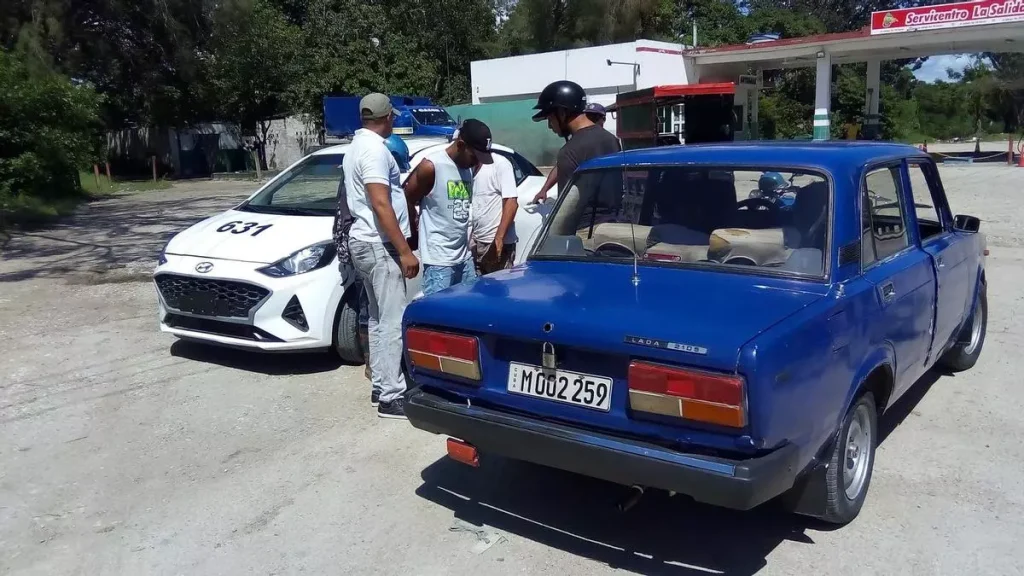
Image of the arrest of one of the individuals accused of fraud, published by ‘Héroes de azul’ (Heroes in Blue) / Héroes de azul

14ymedio bigger14ymedio, Madrid, November 19, 2025 — Eight people – five men and three women – have been arrested in Guantánamo for fraud in the sale of US dollars. The network had been operating in the province since at least July, but its operations extended to Havana, Villa Clara and Las Tunas, according to official police reports.

The news was reported by the Héroes de Azul account, an official profile dedicated to praising the successful operations of Cuba’s Ministry of the Interior’s forces. According to the publication, 100,000 Cuban pesos, mobile phones and lines used to carry out the fraud were seized during the operation. The economic impact of their activities is six million pesos and $1,000, according to the police.

The fraudsters used currency trading groups on social media to select their victims, agreed on a meeting point to hand over the currency, and fled the scene after receiving the money. “The authorities urged the public to report similar incidents in order to contribute to justice and public safety,” the post said, noting that this crime carries prison sentences of between six months and one year for those found guilty, as well as additional measures ranging from confiscation of illegally obtained assets to disqualification from certain functions. continue reading

The economic impact of their activities is six million pesos and 1,000 dollars, according to the police.

Héroes de azul echoed much less accurate information on the same day about the arrest of workers at the Camagüey cemetery for allegedly participating in the illegal sale of burial vault spaces. According to police details, those involved “obtained illegitimate financial benefits through these practices, which affect the transparency and dignity of funeral services.”

It is not known how many people are being investigated for these incidents, but just hearing about it has made Camagüey residents aware that the funeral home is acting illegally by prioritising burials in exchange for money. “The day I went to bury my mother, one of the gravediggers offered me a grave for her alone for 10,000 pesos. It was disrespectful,” one user reported. “And then there are the funeral home workers, who charge 5,000 dollars to prioritise transfers,” another one mentioned.

In recent years, the ruling party has created an ecosystem of affiliated accounts that publicise numerous crimes, always after they have been detected or the cases have been resolved. Mostly, these are relatively small matters: minor scams and drug seizures, or cases of corruption which, although they have an impact on citizens’ lives, are not particularly significant.

Readers often criticise these profiles for not providing information on major cases of corruption and crimes involving senior government officials.

Translated by GH

____________

COLLABORATE WITH OUR WORK: The 14ymedio team is committed to practicing serious journalism that reflects Cuba’s reality in all its depth. Thank you for joining us on this long journey. We invite you to continue supporting us by becoming a member of 14ymedio now. Together we can continue transforming journalism in Cuba.

Cuba Declines To Attend Baseball’s Caribbean Cup After Qualifying for the Central Americans

The trip involves additional expenses, which would be better spent on the National Baseball Series, says the Federation

Cuba has won 15 gold medals at the Central American and Caribbean Games / Cubadebate

14ymedio bigger14ymedio, Havana, November 19, 2025 — The Cuban Baseball and Softball Federation announced on Tuesday that the country will not attend the Caribbean Cup, which will be held in the Bahamas at the beginning of December. The decision was made after the Island qualified directly for the 2026 Central American and Caribbean Games in Santo Domingo.

According to a Prensa Latina statement, Juan Reinaldo Pérez Pardo, president of the Federation, explained that attending the tournament “made no competitive or logistical sense,” since the spot that would be contested in this event for the regional games was guaranteed.

To justify his decision, the official said that the trip involves additional expenses and that it would be better to concentrate those resources on the National Baseball Series. Since it began last September, Cuba’s participation has had to be suspended due to problems with hotel capacity, lack of fuel to move players to some of the venues and even infections with the viruses that plague the island right now.

Despite the economic, energy and even health crises that the country is experiencing, they will seek to “concentrate resources and planning” to organize a tournament

Encouraged, Pérez Pardo said that, despite the economic, energy and even health crises that the country is experiencing, they will seek to “concentrate resources and planning” to organize, in the last quarter of 2026, a continue reading

tournament that could award places for the next Pan American Games, to be held in Lima, Peru, in 2027.

Last Sunday, the Executive Committee of the Pan-American Baseball Confederation (COPABE) reported that it gave out five direct tickets to the Central American and Caribbean Games. The top five teams in the Americas (except the United States) received a pass: Mexico (third place in the Americas and sixth in the world), Puerto Rico (fourth in the continent and seventh in the world), Panama (fifth in the Americas and eighth in the world), Cuba (sixth at continental level and ninth internationally) and Colombia (eighth in the continent and thirteenth in the world).

Originally, access to the regional contest was going to be split into two events at this year’s close: the America’s Baseball Cup, which would be played in Panama but was recently canceled due to sponsorship issues, and the Caribbean Baseball Cup, to be held between December 1-9, in Nassau. In the first event there were going to be five tickets in play, while in the Bahamas one ticket will be contested.

Cuba will have the opportunity in the Central American Games to return to the forefront of the discipline

With its presence assured, Cuba will have the opportunity in the Central American Games to return to the forefront of the discipline, something that it has not been able to do for 11 years since it won the title in the Veracruz in  2014, and to confirm its dominance as the greatest winner in history at the regional contest.

Since the first edition of the Central American Games, held in Mexico in 1926, Cuba has won 15 gold medals, far above the rest, where the Dominican Republic and Puerto Rico appear with three. Nevertheless, Cuba’s domination has been diluted since the beginning of this century, because of the last six editions of the Games, where it won only two, as did Puerto Rico. The remaining games were divided between Mexico and the Dominican Republic.

It could also cut through the stalemate that has been especially evident in the last two years, leading to its 12th place in the World Confederation of Baseball and Softball (WBSC) ranking by mid-2025, its worst position ever since this system was invented in 2011. In recent months Cuba managed to advance to ninth place, just 41 points above Panama, in eighth place.

In addition, poor performance has also caused Team Cuba, which in 2012 was the leader of the world ranking, to fall even at the regional level, where for two years it occupied sixth place on the American continent.

Translated by Regina Anavy

Cuba: A ‘Very High’ Infestation of Aedes Aegypti Mosquitos Causes Arbovirus Cases To Rise Again

Cuba is registering an average of 700 new cases of chikungunya daily in October, according to the Pan American Health Organization.

“Your Health Says NO!” Last week, authorities reported a cumulative total of 21,681 chikungunya cases. / EFE

14ymedio bigger14ymedio, Madrid, November 18, 2025 — This Tuesday, a report from the Pan American Health Organization (PAHO) indicated that Cuba registered an average of 700 new daily cases of chikungunya in October, the vast majority in Havana and Matanzas.

Last week, authorities reported a cumulative total of 21,681 cases, while for dengue fever, data from the Pan American Health Organization (PAHO ) shows 9,602 cases and a very high incidence rate of 87.79 cases per 100,000 inhabitants. According to estimates from the Ministry of Health, approximately 30% of Cubans have contracted one of the two diseases during this outbreak.

According to data compiled by the Americas section of the World Health Organization (WHO), the cumulative incidence in Cuba is 183.43 cases per 100,000 inhabitants, the highest in all of the Americas this year, above Brazil (112.07) and the averages of the Caribbean (43.53) and the entire continent (26).

Adding to these figures is the fact that patients treated for fever symptoms increased by 2.5% last week, bad news after last Tuesday when the director of epidemiology, Francisco Durán said that infections had been declining for two weeks.

On Monday, Vice Minister Carilda Peña García delivered the bad news, adding bluntly that the fundamental cause is the “very high” infestation rates of the Aedes aegypti mosquito. The official stated that Pinar del Río, Sancti Spíritus, Camagüey, Santiago de Cuba, Havana, and Villa Clara are the most affected provinces, although the entire country is now affected, with the exception of Isla de la Juventud, which is still considered an “alert zone.” The rest of the country remains classified as an “endemic epidemic corridor.”

Dengue fever is more localized in the west and center of the island, with Villa Clara, Havana, Sancti Spíritus, Las Tunas and Artemisa continue reading

at the forefront, but transmission has been demonstrated in 13 provinces.

The worst cases are concentrated in Havana, Matanzas, Cienfuegos, and Guantánamo, which have simultaneous circulation of both diseases.

Peña García stressed the importance of fumigation – which has arrived late and with great difficulty, due to a lack of supplies, according to specialists speaking on television last week – and pointed out that it is progressing unevenly, since the plan was to cover all urban areas in three weeks, but only Mayabeque, Havana, Cienfuegos, Ciego de Ávila and Santiago de Cuba reached 95%.

Faced with resistance from some residents to allowing fumigation teams access, Peña García reminded them that during an epidemic, not only is it mandatory but obsctruction also constitutes a crime of spreading disease. He further emphasized the importance, now more than ever, of citizens participating in eliminating breeding grounds, cleaning water tanks, and other measures, each according to their means. The responses to the video, posted on Canal Caribe’s social media, reflect the discontent of a population that insists fumigation is not taking place.

“In Camagüey, we live two blocks from the provincial hospital, and everyone on my block has the virus, and there’s no fumigation,” laments one user. Responses from nearly every province highlight the alarming situation and how the reported cases are just the tip of the iceberg, since many people aren’t going to the hospital. “The saddest, most painful thing, and what should most concern our authorities is the loss of trust and credibility many Cubans have in our healthcare system, which was once, without any chauvinism, the best in the world. Why would I go if there’s nothing available and many healthcare workers are also infected?” another commenter laments.

Yamirka Montesino Felipe, head of the National Group of Pediatric Intensive Care and Emergency Medicine, reiterated that hospitalization is essential for all children under two years old with fever, as they are one of the most vulnerable groups. If, in addition, there is a comorbidity such as diabetes, cancer, epilepsy, or kidney problems, the risk is even higher.

“When a child develops a fever and the family seeks medical assistance immediately, we can reach the sick patient early and prevent complications,” something that is key to “reversing potentially adverse developments” for the child. He warned that fever is more persistent in children and can cause skin lesions, including blisters, which are very uncomfortable and painful for them. However, the very painful joint pain that adults experience is less pronounced in children.

Montesino Felipe reminded everyone that it is crucial to keep children hydrated, as gastrointestinal symptoms can lead to dangerous dehydration.

Montesino Felipe emphasized the importance of keeping children hydrated, as gastrointestinal symptoms can lead to dangerous dehydration. This basic advice wouldn’t seem so difficult were it not for the supply problems plaguing the island, exacerbated by Hurricane Melissa’s impact on some provinces. This situation, coupled with sanitation issues, hinders treatment and increases the risk of the disease spreading. Last week, María Guadalupe Guzmán Tirado, director of the Research, Diagnosis, and Reference Center at the Pedro Kourí Institute (IPK), acknowledged this, warning that the proliferation of water tanks in homes—caused by the unreliable water supply—is compounded by “inadequate solid waste management and sanitation deficiencies.”

Diana Couto Núñez, president of the Cuban Society of Gynecology and Obstetrics, also spoke about another vulnerable group: pregnant women, who also require urgent hospitalization. “Diagnosis cannot be done at home. That has to be done at the hospital,” she said, especially if they suffer from hypertension or diabetes, as serious complications could arise.

____________

COLLABORATE WITH OUR WORK: The 14ymedio team is committed to practicing serious journalism that reflects Cuba’s reality in all its depth. Thank you for joining us on this long journey. We invite you to continue supporting us by becoming a member of 14ymedio now. Together we can continue transforming journalism in Cuba.

“Mission and Vision” of an Undersupplied Market in the City of Matanzas, Cuba

“If you want something, ask me and I’ll tell you if it’s available or not.”

Inside, the Ideal Market of Versailles, in Matanzas, shows its unvarnished reality. / 14ymedio

14ymedio bigger14ymedio, Julio César Contreras, Matanzas, November 18, 2025 – At the entrance to the Versailles Ideal Market in Matanzas, the first impression is of a hastily assembled stage set. A sign welcomes customers with a list of 18 products: salt, sugar, rice, pork loin, oil… An inventory that, more than an offering, seems like an invocation. “They’re waiting here for some boss to visit,” Aurora, an elderly woman, quips ironically as she curiously examines the sign.

Inside, the shop reveals its stark reality: half-empty shelves, a few bottles of oil, a handful of cans of tomato sauce, seasoning packets, and jars of soy yogurt arranged more for decorative than commercial purposes. From behind the counter, the employee—looking weary—utters the phrase that shatters any illusion: “Ma’am, if you’d like something, just ask, and I’ll tell you if we have it or not.” Because in this market, the existence of certain products is real only in the ink on the sign.

Aurora presses on: “Do you have minced meat, mortadella, or chicken?” The response is a slow, decisive nod. “Maybe we’ll get some tomorrow,” the shop assistant murmurs. “It’s not certain. But come by and see what’s up.”

The place depends on the Matanzas Municipal Trading Company, which is experiencing fuel shortages that hinder the transport of goods.

The place depends on the Matanzas Municipal Trade Company, which is experiencing fuel shortages that hinder its ability to transport goods. The word “ideal” in its name has long since become a source of sarcasm for the locals. Marcelo, a father observing the scene from the entrance, sums up his experience: “The other day I bought four pounds of ground meat here, and it was spoiled because continue reading

they don’t have refrigeration; the refrigerator is broken.”

On the wall, two posters display the store’s “Mission” and “Vision,” hollow phrases in a place where even a simple “good morning” is rarely exchanged. Aurora finally buys a packet of cumin and tries to pay by bank transfer. The shop assistant responds with a smile that’s more of a warning than a friendly one: “It has to be cash.” Near the counter, a QR code promises to be a quick way to pay electronically. Just another sign out of touch with reality at the Versailles Ideal Market.

____________

COLLABORATE WITH OUR WORK: The 14ymedio team is committed to practicing serious journalism that reflects Cuba’s reality in all its depth. Thank you for joining us on this long journey. We invite you to continue supporting us by becoming a member of 14ymedio now. Together we can continue transforming journalism in Cuba.

The UN Considers the Detention of 49 Protesters From the 11 July 2021 Protests in Cuba To Be “Arbitrary”

The island ranks fourth on the United Nations list of enforced disappearances and first in arbitrary detentions.

Daisel González Álvarez, imprisoned in connection with the 11J massacre, is currently missing. / Facebook

14ymedio/EFE, Madrid, November 18, 2025 — The United Nations Working Group on Arbitrary Detention (WGAD) considers that 49 protesters who participated in the anti-government protests of 11 July 2021 (’11J’) in Cuba were detained “arbitrarily for political and ideological reasons and without due process or defense.” This is according to a report published Tuesday by Prisoners Defenders (PD), following receipt of the WGAD’s findings.

The organization, based in Madrid, was the one that reported the cases in this instance. The GTDA, which also acknowledged that they suffered other “multiple crimes against humanity,” such as enforced disappearance and isolation, torture, and rape, has called on the Cuban regime to release and exonerate these 49 people “immediately” and compensate them for damages.

The international organization also requested that Havana initiate a “thorough and independent investigation” into the proceedings against these participants in the 11J demonstrations.

Similarly, it considers the crimes the detainees were accused of, including contempt and resistance, to be “vague” figures and deems it a violation of due process that the arrested were tried in military courts.

Neither the detainees nor their families have a copy of the arrest warrants or the pretrial detention orders.

The WGAD accepted Prisoner Defender‘s version of events in its conclusions, stating that neither the detainees nor their families have copies of the arrest warrants or the pretrial detention orders. The group indicated that the Cuban government did not respond to its request to include its position in the report initiated following PD’s complaint.

In this regard, the organization stated in a press release that, by not responding, “the regime (…) tacitly agreed to the arguments and evidence presented by Prisoners Defenders.”

The complaining organization stated, according to the two opinions of the United Nations body, that the arrests were carried out “without a court order” and that many of those detained suffered “long periods of enforced disappearance and incommunicado detention (in some cases, up to 40 days) without access to legal counsel.”

It is precisely with regards to enforced disappearances continue reading

that Cuba’s ranking in these reports is particularly striking. Since 2012, Prisoners Defenders has filed 193 urgent actions with the UN related to the island, placing the country fourth, behind only Mexico, Iraq, and Colombia. The NGO points out one “essential difference”: “While in those other countries enforced disappearances are perpetrated by organized crime, in Cuba the only organized crime responsible for enforced disappearances is the government itself.”

In this regard, PD cites the case of Daisel González Álvarez, one of those detained after the July 11 attacks, “without judicial oversight” and without “independent legal and technical defense throughout the criminal proceedings, except for the lawyers appointed by the State,” all of which they describe as “especially serious.” He is currently missing, “with no confirmation that he has left the country and no immigration record to support this claim.”

According to news reports published in various media outlets last year, the young man left the island on a boat that departed from Güira de Melena, Artemisa, and disappeared upon reaching Florida. However, Prisoners Defenders asserts that this version “has been refuted by his own family, who indicate that he ultimately abandoned that idea.”

In reality, it concludes, “there is no verifiable information about his whereabouts, and State Security has stopped looking for him and shows no interest in clarifying his situation, a highly worrying indicator.”

With the 49 cases from the July 11 protests examined, the island is already the country with the most arbitrary detentions since 2019, according to the UN, with a total of 93, and “the only one,” says PD, that has been condemned in three opinions involving “more than 10 victims.” Cuba, Turkey, and Nicaragua are, in that order, the only three countries in the world with more mass condemnations of this type.

In its judgement, the GTDA, “with these 49 new cases, places Cuba as the first country in the world for arbitrary detention since 2019, with 93 cases between 2019 and 2025” and “the only one” that has been condemned in three opinions with “more than 10 victims.”

In that regard, PD lamented that in Cuba “prison is a tool of social discipline. Detention and imprisonment are punishments, but also recurring intimidating messages to society.”

In addition to detailing the current situation of all the cases examined, the organization’s report includes the names, surnames and positions of “repressors and agents of the regime” – including defense lawyers in the service of the State – involved in 66 of the cases examined by the GTDA.

____________

COLLABORATE WITH OUR WORK: The 14ymedio team is committed to practicing serious journalism that reflects Cuba’s reality in all its depth. Thank you for joining us on this long journey. We invite you to continue supporting us by becoming a member of 14ymedio now. Together we can continue transforming journalism in Cuba.

The Ministry of Fear and the Culture of Panic

The “suspect detector” has been perfected as a management tool, each official calculates how many times per day he should tweet the hashtag ordered by the boss.

The “people” is nothing more than a huge archive where everyone has an open file. / Facebook

14ymedio bigger14ymedio, Madrid, Yunior García Aguilera, November 18, 2025 — Terror has taken hold of Cuban institutions. Faced with a rumor circulating on social networks about the old and long-known corruption within the Ministry of Culture, the commissioners have come out to respond with a letter of self-vindication, accompanied by some 220 signatures. The answer may seem desperate and ridiculous if you do not understand the context in which it is written: there is an internal purge and all heads feel threatened.

Only panic can explain the clumsiness of those who wrote, signed and decided to make public the pamphlet. The hornet’s nest that can be stirred up behind this letter is far worse than any rumor about a spa in the home of a former deputy minister. Because, although the family business of Fernando Rojas is not news to all of us, there are juicier tidbits hidden in the Cuban cultural muddle. The Squirrel, in honor of his nervous name, far from protecting his henchmen is focusing on them. And there everyone has a glass ceiling.

Therefore, the most reasonable explanation for the official’s reaction may be related to the Gil case. After the accusations against the former deputy prime minister and head of Economy, every bureaucrat suspects that he or she may appear on the list (and not precisely Jeffrey Epstein’s). As they would say in the time of Stalin: “There is no one innocent, only people poorly investigated.” In Cuba it would be translated as: “No one knows the past that awaits him.”

As they would say in the time of Stalin: “There is no one innocent, only people poorly investigated.” In Cuba it would be translated as: “Nobody knows the past that awaits him”

All this paranoia and conspiracy theories have their origin in the obvious disaster that the country is experiencing. But perhaps it got even more complicated from a misunderstanding. A friend who’s a jokester but well-informed tells me that someone confirmed to Raúl Castro that the ship was sinking and it was hopeless. And Raúl, without taking his eyes off the screen of his television, replied that they would look for a scapegoat. So far, everything was normal; after all, his brother had shot his best general (and best colonel) when the trumpets of perestroika and glasnost sounded. What difference would it make to sacrifice a technocrat whom no one had heard of before the pandemic? continue reading

But here comes the possible mistake: perhaps the secretary misspelled the word expiar [atone for] and replaced it with espiar [spy]. Once you screwed up, you had to continue with the pantomime, and the former comrade of Díaz-Canel went from being merely insensitive to being a notorious spy, although we still do not know if he sent the alleged information to Agent 007 or to Mortadelo and Filemón [Spanish cartoon characters].

“The Cuban people can never be divided with messages of hate,” proclaims La Jiribilla’s text, refusing to recognize the curvature of the earth. Never before, my friends, had we been so divided! What they call “the people” is made up of the same people they call “enemies.” Their own speech betrays them. The “people” is nothing more than a huge archive where everyone has an open file.

Seeing some roofs burning and others running to hose them down, I remembered a phrase that may have escaped (or maybe not) the officer who questioned me during my last months in Cuba: “I’m itching to finish you off along with the insufferable little groups of your generation, in order to deal with the big shots we’re investigating.” It is possible that his phrase was part of the manual. But it is also likely that the officers were so saturated, propping up a building that was coming down without plans, that they did not give a fig about the manual. The truth is that, if my file was about ten pages long, that of the officials of the apparatus surely occupied several volumes. That’s why they all jump at the first accusation. They’re on edge.

The poor souls who stamp their signature on the pamphlet are old acquaintances of the guild. Some of the elderly included there are dependent on the increasingly meager aid of the “attention to personalities” department, a bureaucratic euphemism for state charity. Others expect a promised house, or hope to be prioritized if a ship arrives with a donation of paper. And there is no lack of those who retain good memories of some cultural drunkenness and feel indebted to the official who brought the bottle. But not a single one of those signatories can say, with his hand on his heart, that cultural institutions are corruption-free territory or that the country is doing well.

Not a single one of those signatories can say, with his hand on his heart, that cultural institutions are corruption-free territory or that the country is doing well.

Nor is it news that some in the world of culture play at being the mascot of power. Even the Austrian painter had several artists who put their talent at the service of horror. In our own history there is no lack of examples: Machado had his salon chroniclers; Batista his pen-pushers who called him “The Man”; and Fidel Castro his army of shaggy bards. But those who used to sing to the bearded man are today still on their knees before a bureaucrat whom they themselves recognize as a mediocre leader, even if he is disguised as someone who will help when a hurricane strikes.

In the corridors of the Ministry of Censorship five-year plans are no longer discussed, but rather daily rumors: who did not applaud enough during the last speech-poem by Alpidio Alonso; who fell asleep listening to Abel Prieto criticizing Shakira and talking nonsense about cultural colonization; who did not post a a heart emoji to the last profile photo of Amauri Pérez, Prieto’s new wardrobe consultant. The suspect detector has been perfected as a management tool, and each official calculates how many times per day he should tweet the hashtag ordered by the boss.

What is coming now is predictable. UNEAC, AHS, UPEC and all those subordinates to G2 will go through the list to collect new names. And after a while, the vast majority of those who stamp their initials will say as usual: “I didn’t know what I was signing.” And the worst is that they will be right, because many of them completely ignore what is hidden behind this pamphlet.

Translated by Regina Anavy

____________

COLLABORATE WITH OUR WORK: The 14ymedio team is committed to practicing serious journalism that reflects Cuba’s reality in all its depth. Thank you for joining us on this long journey. We invite you to continue supporting us by becoming a member of 14ymedio now. Together we can continue transforming journalism in Cuba.

Without Playing, Cuba Qualifies for the 2026 Central American and Caribbean Games

Cuba will seek again to win the regional tournament, which it has not won for 11 years.

Cuba seeks to confirm its dominance in Central America, where it is the biggest winner in history /Jit

14ymedio bigger14ymedio, Havana, November 18, 2025 — Without having to earn its place on the playing field and through the ranking, Cuba obtained its pass to compete in the Central American Games of Santo Domingo in 2026. This Sunday, the Executive Committee of the Pan American Baseball Confederation (COPABE) reported that it gave out five direct tickets to the tournament based on international rankings.

Originally, access to the regional competition was going to be split into two events at this year’s close: the American Baseball Cup, which would be played in Panama but was recently canceled due to sponsorship issues, and the Caribbean Baseball Cup, which will take place between December 1st and 9th, in Nassau and the Bahamas. Cuba will be present but without the pressure of gaining access.

However, due to the tight schedule, there will no longer be space to hold any tournament that would give those places, so they were awarded by world ranking and by using the last update of the list of the World Confederation of Baseball and Softball (WBSC) in mid-November. The top five teams in the Americas (except the US) received the pass: Mexico (third place in the Americas and sixth in the world), Puerto Rico (fourth in the continent and seventh in the world), Panama (fifth in the Americas and eighth in the world), Cuba (sixth continental and ninth international) and Colombia (eighth in the continent and thirteenth in the world).

The top five teams in the Americas (except the US) received the pass.

With ticket in hand, Cuba will try next year in the Dominican Republic to win back the gold in the Central American tournament, something that has not happened since 11 years ago, when they won continue reading

the title at the 2014 Veracruz Central American and Caribbean Games, confirming Cuba’s dominance in the discipline, where it is the greatest winner in history.

Since the first edition of the Central American Games, held in Mexico in 1926, Cuba has won 15 gold medals, far above the rest; the Dominican Republic and Puerto Rico won three. Nevertheless, Cuban domination has been diluted since the beginning of this century, because in the last six editions of the Games they won only two, as did Puerto Rico. The remaining wins were divided between Mexico and the Dominican Republic.

The team’s poor performance has been particularly evident in the last two years, which led to it being ranked 12th in the WBSC ranking by mid-2025, its worst position ever since this system was invented in 2011. However, in recent months Cuba managed to climb to ninth, just 41 points above the eighth place, Panama.

Last year was also one to be forgotten. The Cuban team generated the fewest points of the teams in the top 10 of the world ranking

Last year was also one to be forgotten. The Cuban team generated the fewest points among the teams in the top 10 of the world ranking. The team could only add 401, far from the second worst team in that year, the Dominican Republic, with 760. The classification also takes into account achievements in minor categories, where there were also no major results.

The low performance has also caused Team Cuba, which in 2012 was the leader of the world ranking, to fall even at a regional level, where for two years it has occupied sixth place on the American continent.

In 2026, in addition to the Central American and Caribbean Games, the World Baseball Classic -in which Cuba was runner-up in 2006- is scheduled, but Cuba’s participation is still up in the air. Until the end of October, there was no confirmation from the organizing committee. Germán Mesa, who was going to be at the head of Team Cuba in the canceled Copa América, declared that “for the 2026 World Classic, we still don’t know if Cuba has received permission.”

Translated by Regina Anavy

____________

COLLABORATE WITH OUR WORK: The 14ymedio team is committed to practicing serious journalism that reflects Cuba’s reality in all its depth. Thank you for joining us on this long journey. We invite you to continue supporting us by becoming a member of 14ymedio now. Together we can continue transforming journalism in Cuba.

Cuba: “Those Who Have Family Outside Survive Better; the Rest of Us Improvise”

New dollar stores feed the stomach and drive inequality in Guantánamo

For months, the city has been undergoing a silent transformation: a proliferation of shops selling exclusively in dollars. / 14ymedio

14ymedio bigger14ymedio, Guantánamo, November 17, 2025 — In Guantánamo, the line in front of the La Fragancia store forms early. Some arrive with international cards, others carry the Cuban Classic but all have something in common: they have dollars to buy anything from shampoo to soap. The arrival of hard currency stores in the city has been shaping domestic commerce and the economy, as well as dividing opinions between those who applaud their proliferation and those who renounce them.

On the outskirts of the central market this Friday, a dozen people were waiting to enter. From time to time, a customer came out with a transparent bag showing off some of those products that are barely found in Cuban pesos. “I have $8.70 left on the card and I have to manage it very well,” says a man who pauses for a moment and presses his face against the glass to observe the shelves inside.

For months, the city has been undergoing a silent transformation: a proliferation of shops selling exclusively in dollars, managed by Cimex, the powerful conglomerate under military control. So far this year, several of these air-conditioned spaces have been opened, with tidy shelves and products no longer seen in the dwindling shops in freely convertible currency (MLC): milk powder, detergent, pasta, imported chicken and, hopefully, some meat.

A few meters from one of these markets, a woman who identifies herself as a food worker summarizes the feelings of many. “This is an abuse: we earn in pesos and here everything is in dollars.” She says she has no hard currency card, does not receive remittances and depends on changing her Cuban pesos in the informal market to buy “from time to time a few cubes of soup and some sausages. If someone from outside doesn’t send it to you, you don’t eat here. But what are we going to do? I still have to come, because the MLC stores don’t even have oil sometimes.”

Miguel, an electrician, complains without hesitation. “This hurts. It hurts because it reminds you that your salary is not good enough to live in your continue reading

own country.” His gesture is one of exhaustion, not anger. He speaks with the serenity of one who has already spent all his fury. “If there are elderly people who don’t even have a peso to buy rationed bread, how will they get dollars to come to this kind of store?”

Next to him, an old lady with gnarled fingers holds a blue card that contains part of the money she receives monthly. ” My son in Tampa helps me refill it. If it weren’t for him, I wouldn’t even have coffee to drink in the morning,” she says. She recognizes that these shops “save” her but immediately lowers her voice, as if she were ashamed to admit it: “This is a blessing and an injustice at the same time.”

Foreign exchange businesses also shape the informal market and the prices of private traders selling in national currency. “The MSMEs* in my neighborhood use the prices in these stores to set the exchange rate for pesos. If a carton of eggs is six dollars here, then they automatically put it at 3,000 pesos,” she complains.

That is the tone tone among the majority of people: the resigned recognition of a “necessary evil.” They use dollar stores because there are no alternatives, but almost nobody approves of them. The one who has no hard currency looks from outside; the one who has it buys, but with a hint of guilt, aware that the whole system drives inequality.

In a nearby park, a group of young people agree that these shops are an “economic tightrope.” “Those who receive remittances have it made,” says one of them. “The rest of us are cooked.” Another adds: “Before there were difficulties, yes, but we all looked at the same shelf. Now there are full shelves for some and empty shelves for others.”

“Before there were difficulties, yes, but we all looked at the same shelf. Now there are full shelves for some and empty shelves for others”

Dollar stores in the city of Guantánamo usually have good air conditioning, soft music and uniformed employees. The Micro Caribe market, of the Pan-American chain, is one of those comfort bubbles. A few meters from the premises a middle-aged man launches his diagnosis: “This is not commerce, it’s natural selection. Those with families outside survive better; the rest of us improvise.”

In the Pastorita neighborhood, the line for the currency store has become a meeting place. People chat, exchange news and make mental calculations. “Do you think I can afford a package of chicken?” asks a mother who came with her little daughter. “Hopefully,” says another. Some carry dollars in cash but they are the few.

“I prefer to put the currency on the card because they never have coins to give change and you get back candies or soup cubes,” complains another customer. The door opens and a breath of fresh air with a clean smell emerges from inside. Card in hand, the next lucky group with hard currency enters the store.

*Translator’s note: Literally, “Micro, Small, Medium Enterprise.” The expectation is that it is also privately managed, but in Cuba this may include owners/managers who are connected to the government.

Translated by Regina Anavy

____________

COLLABORATE WITH OUR WORK: The 14ymedio team is committed to practicing serious journalism that reflects Cuba’s reality in all its depth. Thank you for joining us on this long journey. We invite you to continue supporting us by becoming a member of 14ymedio now. Together we can continue transforming journalism in Cuba.

Havana: If the Wastewater Affects the Railroad Tracks, Dig a Trench

At the 19 de Noviembre station, on Tulipán Street, the mixture of mud, grease and excrement has formed a quagmire that threatens both the nose and the metal.

As they dig, the smell becomes stronger in the midday sun. / 14ymedio

14ymedio bigger14ymedia, Havana, Natalia López Moya, November 16, 2025 — On Conill Street, in Nuevo Vedado, there is a smell that blots out the landscape. A thick stench that invades the sidewalk where every morning, almost in droves, the students of the José Miguel Pérez pre-university school pass by. For months now, the pestilence comes as a warning, a daily reminder that wastewater does not understand schedules or routines. The dark stream rises from a collapsed sewer and winds down the street.

The wastewater comes out through the gaps and edges of the metal lid, dragging bags and garbage along with it. In the course of its journey, the viscous liquid has been conquering ground until it has run into the tracks of the railway that leads to the 19 de Noviembre station on Tulipán Street. Along the way, the mixture of mud, grease and excrement has formed a muddy quagmire that threatens both the nose and the metal.

Ankle-deep in their boots in the fresh mud, they use their shovels to remove a dirt that smells like a public toilet. / 14ymedio

The image of the site this Saturday speaks for itself: a group of workers, with their boots sinking into the fresh mud, using their shovels to remove dirt that smells like a public toilet. Around them, the puddles reflect a blue sky that seems incompatible with the disaster under their feet.

One brigade embarks on what seems like an impossible mission to protect the iron tracks. They have no pumps, no new pipes or tools to rebuild the sewer system. They only have shovels, rubber boots and patience. Their “solution” — if you can call it that — is to open a trench under the rails to divert the water and prevent the tracks from ending up moving by losing solidity at the base. A kind of makeshift canal that, hopefully, will keep moisture at bay for a few days… or hours.

In a city facing a surge of viruses, this steady flow of wastewater seems like a direct provocation. / 14ymedio

As they dig, the smell becomes stronger in the midday sun. And the irony too: in a city facing a resurgence of respiratory and stomach viruses, with overcrowded hospitals and pharmacies without basic medicines, this constant flow of wastewater seems like a direct provocation.

The neighbors are no longer surprised. They have long since learned to coexist with “temporary solutions,” those patches that fill speeches and press reports but never get to the heart of the problem. The routine consists of patching, diverting, covering, filling, re-opening, recovering. As if the entire city lives under an endless cycle of cosmetic repairs that do not heal, but rather become chronic. A Havana where life passes between spills of wastewater and the slow passage of a train that, hopefully, will manage to advance without sinking into the mud.

Translated by Regina Anavy

____________

COLLABORATE WITH OUR WORK: The 14ymedio team is committed to practicing serious journalism that reflects Cuba’s reality in all its depth. Thank you for joining us on this long journey. We invite you to continue supporting us by becoming a member of 14ymedio now. Together we can continue transforming journalism in Cuba.