
Selling Gold and Silver Olympic Medals Is a Means of Subsistence for Professional Cuban Athletes

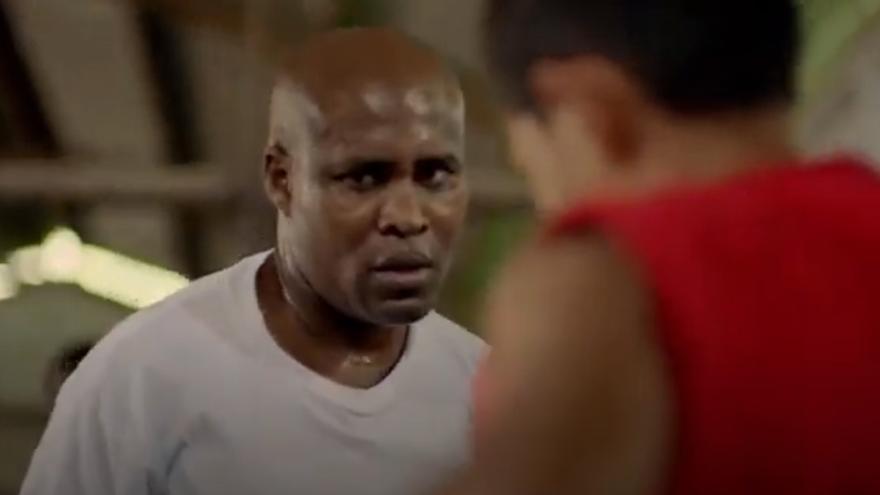
The Cuban boxer Mario Kindelán subsisted on the Island with 7,400 pesos. (Capture/Documentary ’Lucha’)

14ymedio bigger14ymedio, Havana, 28 December 2023 — Double Olympic boxing champion Mario Kindelán sold the gold medal he won at the 2000 Sydney Olympics because he “had practically nothing to eat” and to “support” his daughters. The confession of the legendary athlete, during an interview given to Play-Off Magazine at the beginning of December, is not the only testimony of athletes who had to give up their prizes for the sake of survival. Like others, the boxer – who also sold the gold medal he obtained in Athens 2004 – insists that he doesn’t regret it.

According to Kindelán, who also spoke in the documentary Lucha,* produced by the American production company Society, it was preferable to exchange his medals for “a television or a refrigerator.” The media reports that he sold his Sydney medal for $400 and used the money to support his family “for a while.”

The boxer described the precarious state in which he was living as “critical,” so much so that he and his wife divorced. Through Facebook and to help him, Kindelán was contacted to train young people at the Grappling Club of Bahrain, a country in the Persian Gulf, where he is currently located. Now Kindelán provides a fact that gives the measure of his poverty: on the Island he received 7,400 pesos for his status as Olympic champion, which “was not enough to buy candy for his children or have the security of eating.” continue reading

Yarelys Barrios sold the silver medal he won in Beijing 2008 for $11,600, on eBay

At the beginning of December, the boxer tried to sell his gold medal won in Athens 2004. Former British boxer Amir Khan, who admires Kindelán, donated $5,000 to the Cuban to build a house for his mother on the Island. According to Khan, the Cuban, in a moment of “despair,” told him to keep the medal he won in 2012, after defeating the British in Athens.

Kindelán is not the only athlete who has had to give up his medals to overcome poverty in Cuba. The discus thrower Yarelys Barrios sold the silver medal he won in Beijing 2008 for $11,600, on e-Bay. The case was announced after the International Olympic Committee reported that the athlete tested positive for the use of the doping substance acetazolamide, a diuretic and prohibited masking agent, and he was unable return the prize.

The cases of the boxers Roniel Iglesias, Carlos Banteux and Sixto Soria, the Greco-Roman wrestling athlete Juan Luis Marén, the shooter Leuris Pupo, the long-jumper Iván Pedroso and the baseball player Miguel Caldés are different: their medals appeared as part of the auction lots of RR Auction with few explanations about their provenance.

In January, as part of the Olympic Memorabilia lot, the gold medal that boxer Roniel Iglesias won at the Tokyo 2020 Olympic Games was sold. For the prize, which has the legend “Boxing, male welterweight (63-69 kg)” inscribed on the edge, RR Auction obtained $83,188; it is not known if the Cuban received any of this money.

In January, as part of the Olympic Memorabilia lot, the gold medal that boxer Roniel Iglesias won at the Tokyo 2020 Olympic Games was sold

In that same auction, Carlos Banteux’ silver medal, won at the 2008 Beijing Olympics in the 69-kilogram division, sold for $25,000.

In 2021, an American auction house sold for $71,335 the gold medals that Iván Pedroso won in hurdles in Sydney 2000, and those of the shooter Leuris Pupo, for $73,205.

On that same day, the silver medals of Cuban wrestlers were sold, that of Yasmany Lugo, which he won in Rio 2016 for $25,000 and that of Juan Luis Marén, which he won in Sydney 2000 for $10,000.

*Translator’s note: Lucha can be translated as “fight” or “struggle,” as in the daily struggle to get by.

Translated by Regina Anavy 

____________

COLLABORATE WITH OUR WORKThe 14ymedio team is committed to practicing serious journalism that reflects Cuba’s reality in all its depth. Thank you for joining us on this long journey. We invite you to continue supporting us by becoming a member of 14ymedio now. Together we can continue transforming journalism in Cuba.

Cuba: A Missing Young Man is Found Dead in Mayari, Holguin

Several relatives shared photos of the young man on social networks to facilitate the search. (Facebook/Alejandro Ramírez)

14ymedio bigger14ymedio, Havana, 28 December 2023 — This Thursday, the lifeless body of 25-year-old Eugenio García, who had been missing since last Tuesday in the municipality of Mayarí, province of Holguín, was found. The young man had left his house last Tuesday, taking 1,300,000 pesos with him to buy foreign currency in the informal market.

The journalist Mario J. Pentón, a resident of Miami, confirmed with family sources that the young man had been found dead. The reporter shared some images in which dozens of people are seen around the area where García’s body was found.

“He was under a bridge, as confirmed by the family,” adds Pentón, who was in contact with García’s sister. “He was beaten to death,” the relatives said, although the police authorities of the municipality have not yet pronounced on his initial disappearance or the discovery of the young man’s body.

Previously, in a video, filmed on Wednesday night, dozens of people were seen organizing to search in different parts of the area. “We’re going down, continue reading

in the alley, there, we’re going to look,” was heard in several voices. “Perhaps near the ice cream factory,” says another about where they should search.

For her part, the young man’s sister also released a video thanking the neighbors of Mayarí: “Thanks to the Mayari people, many people have gone into the street. More than a hundred people are helping us look for him.”

The young woman, who recorded the video “outside the police station” then pressed the officers to get dogs and do their job to find him. “I don’t see the police doing anything, I don’t see a breakthrough, I don’t see an answer,” she said with pain.

“It can’t be that the people are doing the job of the police,” the woman stressed. “They have come to support us, looking in the rivers and everywhere”

“It can’t be that the people are doing the job of the police,” the woman stressed. “They have come to support us, looking in the rivers and everywhere. I’m calling the Minint [Ministry of the Interior], the firefighters. What are they waiting for? For him to show up dead? We are wasting time.”

Pentón also reported that the police had arrested a suspect and published a series of messages, sent through Facebook Messenger, which the person in custody exchanged with García on the day of his disappearance to coordinate the informal transaction. The young man wanted to buy $4,000 to, among other things, celebrate his nephew’s birthday.

The suspect urged García to meet him at 8:00 pm on Tuesday, in an area known as Arroyo Hondo, a community belonging to the popular council of Chavaleta in the municipality of Mayarí.

Cases of missing persons are becoming more frequent in Cuba. Social networks have become a loudspeaker for families to report the absence of elderly people who, senile, walk away from their homes; women who, after going out, do not return home and people who left on their motorcycle or with large amounts of money and never return.

In 2022, the case of the murder of Santiago Morgado in Sancti Spíritus shook national public opinion. The teacher was killed with a stick and a stone to steal his vehicle. The attackers also used two pieces of agricultural machinery to submerge the teacher’s body in a well that was 10 feet deep. Subsequently, they sold the motorcycle for 200,000 pesos.

Translated by Regina Anavy

_____________

COLLABORATE WITH OUR WORKThe 14ymedio team is committed to practicing serious journalism that reflects Cuba’s reality in all its depth. Thank you for joining us on this long journey. We invite you to continue supporting us by becoming a member of 14ymedio now. Together we can continue transforming journalism in Cuba.
Manzanillo Cuba Is Without Water, With a Deteriorated Aqueduct and a Single Water Truck That Circulates Through Its Streets

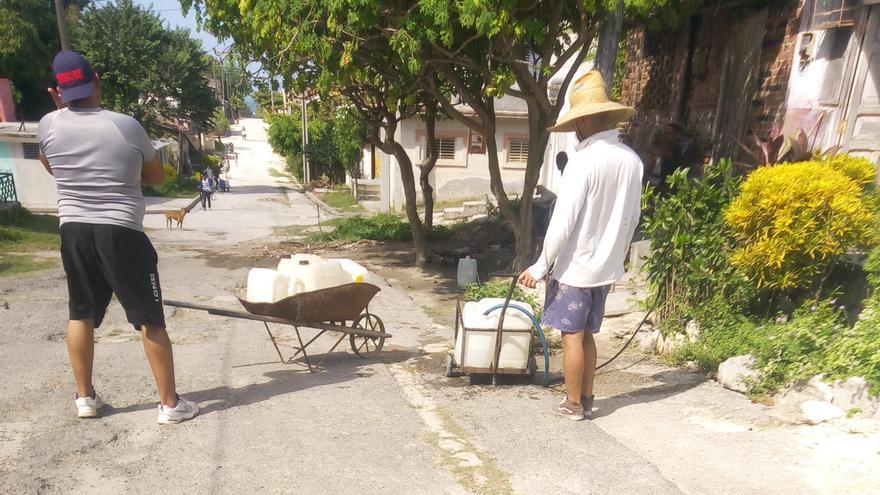
If the water truck is not sent by Communal Services but must be paid for by the families themselves, it is not uncommon for a single 55-gallon tank to cost 400 pesos. (14ymedio)

14ymedio bigger14ymedio, Juan Matos, Manzanillo (Granma province) | December 27, 2023 — When the families of Manzanillo, in the province of Granma, see a water truck parked on the corner of any neighborhood, the line takes only a few minutes to form. With a sudden drought, which compromises all the lines of production and daily life, arriving first – gallon container or bucket in hand – is not a matter of well-being or comfort, but of survival.

Even the streets of Manzanillo are eloquent about the water shortage. Dusty and yellow, when a pipa [water truck] spills a little water on the pavement, the dogs rush to lap up the liquid. If the water truck is not sent by Communal Services but must be paid by the families themselves, it is not uncommon for a single 55-gallon tank to cost 400 pesos*. At the end of the day, the business owner makes a good profit, and demand is increasing.

The lack of supply is inversely proportional to the price of products in the municipality, especially when it comes to fruits and vegetables. In a province with many farmers, the scarcity of resources has skyrocketed the price of a pound of beans to 500 pesos, a pound of rice to 150 pesos and that of pork – for whose rearing and hygiene water is indispensable – to 450. The work that is done so that an arid and battered land bears fruit, say the farmers, is titanic, although it cannot be expressed in numbers. continue reading

Nature has also begun to take its toll on the people of Manzanillo, whose authorities have been neglecting the province’s hydraulic infrastructure for decades. Last April, as a desperate measure to achieve the “sanitation” of dry areas such as Manzanillo, Deputy Prime Minister Inés María Chapman accepted from the hands of the Chinese ambassador to Havana, Ma Hui, a donation of 449 pieces of aqueduct and sewer system equipment.

Although the equipment – whose cost was 27.8 million dollars – was destined for the entire Island, the municipality of Granma topped the list of potential beneficiaries of the project, which included 93 water trucks, 60 unclogging trucks with high-pressure hoses and tools to repair leaks.

A pocos pasos de ahí, un tramo de acera en derrumbe da la medida de la insalubridad en el municipio y el estado de su red hidráulica. (14ymedio)
A few steps away, a section of collapsed sidewalk gives the measure of the unhealthiness in the municipality and the state of its hydraulic network. (14ymedio)

Of the formidable investment, as announced by the official media at the time, little actually reached Manzanillo, through whose avenues a single water truck was circulating this week. With hats and shirts – the sun of eastern Cuba does not give respite even in December – the neighbors get in line with wheelbarrows, jars and cans. Although there are young people in line, those who have the time and patience to wait their turn for several hours, often having traveled great distances, are the elderly, housewives and even children.

A few steps away, a collapsed stretch of sidewalk gives the measure of the unhealthiness in the municipality and the state of its hydraulic network. From a stagnant puddle full of garbage emerges, patched, one of the pipes that transport the town’s water, when there is some. The earth-colored liquid arrives in homes, and any precautions, such as boiling or chlorinating, are few.

Fainting or fatigue of the elderly who, poorly fed, carry a bucket to their homes is not uncommon. But there is no remedy: no one knows when the water truck will pass again, and they need to carry as much as possible. The free distribution points, opened by the Government in the vulnerable communities of Manzanillo, are not always supplied.

Although the entire Island faces the same problem of deterioration of its aqueducts and sewers, the east of the country has been especially affected by the drought. The province that has generated the most headlines has been Las Tunas, whose governor had to be held accountable last Friday to Parliament for the water crisis in municipalities that no longer know how to ask the Government for help.

The situation, according to the official press, has reached a “critical point,” in particular due to the extreme deterioration of pumping equipment. The local authorities, who depend on the “directions” from Havana, said that they could only make “patches” to the devices, which “can break at any time.”

Despair due to the lack of water reaches all parts of the eastern provinces, from the most populated cities such as Santiago de Cuba and Holguín, to the most humble hamlets of Guantánamo and Granma. Unable to solve the problem, the authorities call, of course, for “solidarity among neighbors”: “The situation is difficult, and no one can be certain. If you have a well, provide water to your neighbor, and if you have a cistern, save,” was the empty advice, of a manager of Aqueducts and Sewerage in Las Tunas.

*Translator’s note: Figures for December 2023: The minimum pension in Cuba stands at 1,528 pesos per month; that is, less than 60 euros, and the minimum wage at 2,100 (80 euros).

Translated by Regina Anavy 

____________

COLLABORATE WITH OUR WORKThe 14ymedio team is committed to practicing serious journalism that reflects Cuba’s reality in all its depth. Thank you for joining us on this long journey. We invite you to continue supporting us by becoming a member of 14ymedio now. Together we can continue transforming journalism in Cuba.
The Dominican Republic Received 10 Million Tourists This Year, Cuba Just Over 2 Million

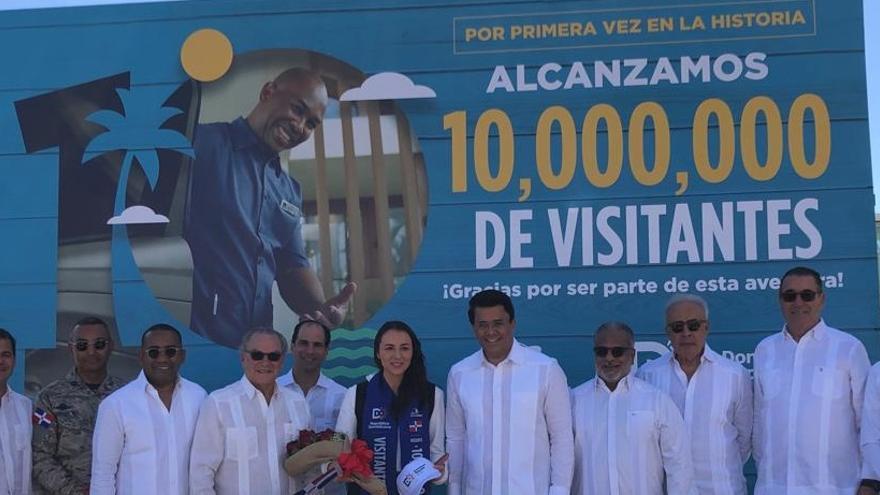
Ariana Guilak, the 10 millionth passenger, was received with honors in the Dominican Republic. (EFE)

14ymedio bigger14ymedio, Madrid, 27 December 2023 — Ariana Guilak got off an American Airlines flight from Miami this Tuesday in Punta Cana and found a surprise. David Collado, Minister of Tourism of the Dominican Republic, and Frank Rainieri, businessman of the founder of the Punta Cana Group, were waiting for her at the foot of the plane. Both gave her a bouquet of flowers, a flag of the country and a commemorative band: she was the passenger who symbolically marked the milestone of 10 million tourists in 2023.

The fact, spread by international media, has a devastating headline for the Cuban authorities, in the magazine Reportur, the most read in the sector in Latin America: Cuba is moving away from tourist records while the Dominican Republic pulverizes themit says, without mercy. The subtitle is not far behind: Heads and tails of Caribbean recovery.

“With this flight, the Dominican Republic has 10,031,000 visitors in 2023, the result of the work of the public and private sectors. Our country is celebrating today. This is an achievement of all Dominicans and we should all feel proud,” said Minister Collado at the event, which was repeated in the other two main airports in the country – Santo Domingo and Santiago – as well as at the two largest cruise terminals. continue reading

The sector contributed more than 20% to the Gross Domestic Product (GDP), a record in Latin America, and places the Dominican Republic as the second most visited Latin American destination, behind Mexico

The good news did not stop there. In December alone, the figure of 850,000 tourists arriving in the country by plane will be reached. The sector contributed more than 20% to the Gross Domestic Product (GDP), a record in Latin America, and places the Dominican Republic as the second most visited Latin American destination, behind Mexico. Furthermore, in 2022 it was a leader in the recovery of tourism in the region, with twice as many international travelers as giants such as Colombia, Brazil and Argentina.

With so much joy, it is not surprising that Frank Rainieri told Reportur that the goal should now be to achieve 15 billion dollars annually starting in 2030; this year foreign currency worth about 11 billion has been generated. “You stop at the store in the new terminal and there they sell 1,200 products from Dominican artisans and more than 400 bottles of mamajuana,” said the businessman, who put arrivals on December 24 at 18,000.

The news – which could be foreseen due to the good results of the Dominican Republic in recent years – must not be sitting very well with Cuba’s Minister of Tourism, Juan Carlos García Granda, who remains in office even though under his leadership the sector has sunk, notwithstanding its status as the authorities’ most-favored sector.

If none of his colleagues in the Council of Ministers can be happy with his management, the case of the head of tourism is the most bloody, since he received a department with dazzling figures: 4,750,000 international travelers in 2018, despite the increase in vaunted sanctions. He watched it fall in his first year in office (down to 4.3 million in 2019) and has been unable to recover it in the two years after the worst of the pandemic (which was 2021 for the Island) despite enjoying the greatest share of investments and having the rest of the sectors at its service, from food production to banking.

García Granda had to go through the trouble of telling Parliament last week that as of October 2,450,000 visitors had arrived on the Island “a growth of 50% compared to 2022, but that still represents 64% of what was achieved in 2019.” The data had a catch, since the minister was counting all travelers and not tourists, who as of the end of November numbered only 2,177,830, well below the 3.5 million expected, although close to the projections, made by the economist Pedro Monreal, who, applying mathematical logic, warned as early as April of the need to rectify.

In the absence of December data – predictably optimal, as it is the best month in the sector – the scenario described by the expert as “pessimistic” will prevail

“A simple exercise of scenarios – not a forecast – that could certainly be improved, would indicate a possible range between 2.3 and 3.1 million, with an intermediate scenario of 2.9 million,” he said in his X account. In the absence of December data – predictably optimal, as it is the best month in the sector – the scenario described by the expert as “pessimistic” will prevail.

García Granda blamed the “absence of a systems approach for the integrated management of the destination, the restriction in the forms of payment for services and offers, the deterioration of infrastructure to support tourism activity, the insufficient preparation of local governments to guarantee the tourism management of their territories and the difficulties with human capital.” He also used classic excuses such as Covid-19 and the embargo.

“Our main competition in the area, Mexico and the Dominican Republic, have recovered at a faster speed than us, but 50% of their tourists are Americans. Cuba cannot benefit from the main market in the region,” he lamented.

He was, however, able to take comfort in talking about the Canadian market, an origin that still slightly resists the Dominican Republic: it has received some 783,000 Canadians so far this year, compared to 557,000 in 2022, a very positive increase but one that falls short when compared to Cuba, which doubles the number of Canadian tourists, going from 428,146 to 822,825 this year, despite the alert activated by Ottawa this October.

“Canadians love our country so much that, despite the orchestrated campaigns against Cuba and distorted information about our reality, this year we will reach the figure of more than 950,000 visitors, with a recovery well above the rest of the markets,” García Granda added, while setting his sights on what are now two promising points: the growing Russian market and the highly desired Chinese one, with the exception of Taiwan.

____________

COLLABORATE WITH OUR WORKThe 14ymedio team is committed to practicing serious journalism that reflects Cuba’s reality in all its depth. Thank you for joining us on this long journey. We invite you to continue supporting us by becoming a member of 14ymedio now. Together we can continue transforming journalism in Cuba.
Cuba Acquires 100 Ambulances To Improve the ‘Depressed Health Sector’

Some of the vehicles are from the German brand Mercedes-Benz and the rest from the Chinese brand Foton (Capture/Caribbean Channel)

14ymedio bigger 14ymedio, Havana, 27 December 2023 — The Cuban authorities celebrated on Tuesday the import of 99 ambulances for “the gradual improvement of health services in the country.” The lot, with 50 new units and 49 in use, had an approximate value of four million dollars that was paid by the Government in full, clarified the ministers of Public Health, José Ángel Portal Miranda, and of Transport, Eduardo Rodríguez Dávila.

In a report made by Canal Caribe, officials avoided at all costs declaring the origin of the vehicles, but some of the Mercedes-Benz ambulances – presumably those in use – still had on their sides the name of their previous owner, the Valencian Community (Spain).

The second part of the lot is of the Chinese brand Foton, although it is not known if they were acquired directly in China or through a third country. Each province, including the municipality of Isla de la Juventud, will be assigned between three and four ambulances. continue reading

During the interview, the head of Transport highlighted the importance of the arrival of these vehicles, which will mostly be destined for emergency hospital services

During the interview, the head of Transport highlighted the importance of the arrival of these vehicles, which will mostly be destined for emergency hospital services, “at a time when the (Health) service is really depressed.” Rodríguez Dávila also pointed out that the vehicles are the first installment of a program that promises more lots.

For his part, Abel González Palmero, director of basic transport services at the Ministry of Public Health, acknowledged that the ambulances received “do not cover the needs of the provinces,” but softened the comment explaining that this is “a step forward” for the country.

The company in charge of managing the imports, as well as maintaining second-hand vehicles before the new ones are put into service, is MCV Comercial, a joint entity between the Ministry of Transport and Mercedes-Benz.

The manager of the company in Cuba, Ayman Makran, explained to the official channel that MCV will be in charge of checking the vehicles before incorporating them into the national fleet. “If any tire is worn, you have to change it; if any battery is old, you have to change it. We also need to incorporate more ambulances into the fleet, since it is aged,” the businessman said.

Established in 1995, MCV Comercial has been one of the arms of the regime to acquire vehicles abroad. In addition to the Mercedes-Benz brand, which is part of the joint venture, the company also imports the German cars Fuso; the Chinese Foton; Randon, Moura and Stemac from Brazil; Himoinsa and Lucas Diesel from Spain; and ZF and Voith, from Mercedes-Benz.

In addition, MCV has introduced equipment of the German brand MTU in Cuba, used in electricity generation and in industrial, maritime, rail, mining, construction and agriculture systems.

The company also has numerous Mercedes-Benz dealers on the Island, being the only one authorized to sell this brand, and some thirty workshops to repair the vehicles.

In its virtual store there are supplies available for the repair of the body, paints and tools

In its virtual store there are supplies available for the repair of the body, paints and tools. However, the products can hardly be purchased by Cubans, since they are charged in US dollars and at stratospheric prices.

It is not the first time this year that the Government has acquired ambulances. Last September, the official press announced a donation of four of these vehicles from Italy. However, the number of vehicles never seems to be enough to meet the demand of the health institutions, as the authorities of the sector themselves have admitted.

This December, vehicles were imported from Miami through the company Maravana Cargo, founded by the Cuban-American Alejandro Martínez with a license from the U.S. Treasury Department for the shipment of packages, appliances and other goods, without suffering sanctions.

The price for importing cars to the Island is determined by the regime itself, and so far it ranges between $20,000 and $56,000, depending on the model, year of manufacture and other variables. Much of this value remains in the hands of the Government, while Maravana retains an average of $8,000 per exported vehicle, which covers transport costs, insurance and the procedures.

Translated by Regina Anavy 

____________

COLLABORATE WITH OUR WORKThe 14ymedio team is committed to practicing serious journalism that reflects Cuba’s reality in all its depth. Thank you for joining us on this long journey. We invite you to continue supporting us by becoming a member of 14ymedio now. Together we can continue transforming journalism in Cuba.

The Body of a Cuban Who Drowned in His Attempt To Reach the United States is Recovered

The body of the Cuban Alejandro Díaz Albert was recovered by firefighters from the city of Brownsville (Texas). (Screen capture)

14ymedio bigger14ymedio, Havana, December 27, 2023 — On Monday, firefighters from the city of Brownsville (Texas) recovered the body of Cuban Alejandro Díaz Albert, 28, who drowned while trying to cross the Rio Grande to reach the United States. The rescue coordinator, Francisco Ponce Lara, told 14ymedio that the migrant had been reported missing by people who accompanied him.

The journalist Mario J. Pentón had been informed by one of the Cubans who accompanied Díaz Albert of his disappearance when he jumped into the river to try to hide from the U.S. Border Patrol. “When we were on the road to the river, the police on the U.S. side put their flashlights on us,” a woman said in an audio shared by the Pentón on his YouTube channel. “They began to speak in English, warning us that a migration van was coming for us from Saltillo (Coahuila) Mexico.

As she told Pentón, “they had to go down a ravine” to jump into the river. “At that moment it was everyone for himself.” Díaz Albert, “apparently didn’t know how to swim and sank.” continue reading

According to the rescue coordinator, the young man’s body was identified thanks to the papers he brought with him

According to the rescue coordinator, the young man’s body was identified thanks to the papers he brought with him. “The authorities are in charge of contacting the family, but I don’t know if contact has been made.”

Díaz Albert left behind a wife, a one-year-old daughter, his parents and his grandmother in Cuba. Pentón, who works for América TeVé, mentioned that the options for the family are the possibility of a humanitarian visa “so that some of them can come to the funeral and say goodbye.” However, “this procedure is carried out through local congressmen; for example, his parents or his wife could come.”

The other option, Pentón said, is to “cremate the body and send the ashes to Cuba,” a situation that the family is considering.

The rescue coordinator, Francisco Ponce, said that after recovering the body of the Cuban migrant, the authorities found another person dead on the banks of the Rio Grande at the junction of Tamaulipas Avenue and the Republic of Cuba.

Translated by Regina Anavy

____________

COLLABORATE WITH OUR WORKThe 14ymedio team is committed to practicing serious journalism that reflects Cuba’s reality in all its depth. Thank you for joining us on this long journey. We invite you to continue supporting us by becoming a member of 14ymedio now. Together we can continue transforming journalism in Cuba.
50 Years Ago He Diverted a Plane to Cuba and Now He Wants to Return to Argentina

Suffering from depression, with difficulty communicating and several after-effects of strokes, Mazor regrets being trapped in Cuba. (Infobae)

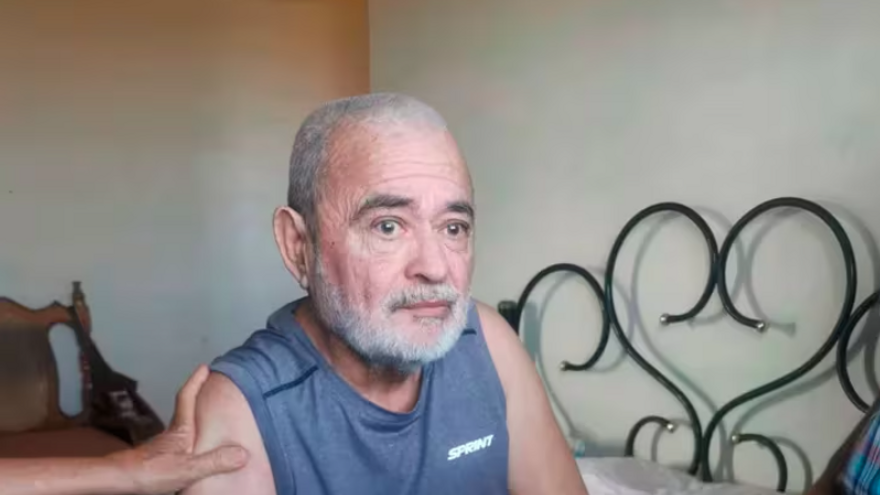
14ymedio bigger14ymedio, Havana, December 27, 2023 — With two strokes, a poorly shaved beard and a nervous wreck, no one would say that the patient Basilio José Mazor, awaiting death in the municipality of Artemisa, is the same young Argentinean who, on 4 July 1973, hijacked a Boeing 737 and forced its landing in Havana. Now, after spending his entire life in the country whose regime he revered, the impossibility of a decent old age has motivated his son to demand Mazor’s return to his native country.

Mazor starred in the “most forgotten air hijacking in Argentina,” the digital Infobae recalled this Tuesday, along with some photographs that show the deplorable state of the former “air pirate.” A sympathizer, although not a member, of the People’s Revolutionary Army – the military arm of the Marxist-oriented Revolutionary Workers Party – he boarded the Aerolíneas Argentinas plane that took him to Cuba at the age of 24 with a shotgun under his poncho.

He had a son in 1972, whom he named Basilio, and who now – after several decades of separation – he is the one who requests his return to Argentina

He was born in 1949 in the town of Pergamino, not far from Buenos Aires. He had a son in 1972, whom he named Basilio, and who now – after several decades of separation – is the one asking for his return to Argentina. The boy had to live with his grandparents from the time Mazor bought the ticket and boarded Aerolíneas Argentinas flight 558, from the capital to Jujuy, on the border with Chile.

The hijacking was covered down to the last detail, since a journalist and a photojournalist from Siete Días magazine were also traveling on the plane. Mazor, with his strange clothing (a 16-gauge double-barreled shotgun, a continue reading

cartridge belt across his chest and a poncho with Inca motifs) and an attack of nerves, claimed when asked why he was shaking that it was the first time he had flown in his life.

At noon, Mazor got up from his seat and went to the captain’s cabin, displayed his shotgun and said: “I am from the People’s Revolutionary Army. We are going to go first to Córdoba, where there will be an evacuation, and then we will head to Chile and then to Cuba.” The flight attendants tried to stop the panic, with little success: Mazor also announced the presence of a bomb on the aircraft. “It will explode when I want,” he threatened.

At noon, Mazor got up from his seat and went to the captain’s cabin. (Infobae)

The plane experienced numerous difficulties reaching its destination, with a stopover in Chile. There, President Salvador Allende provided it with fuel to reach Cuba, as he had done on other occasions with several ship hijackers. Mazor, as he later confessed, hoped that this “action” would earn him the respect of the leaders of the People’s Revolutionary Army and the Havana regime. “If Cuba does not protect a commander of an armed group, I would say that socialism is failing in its very cradle,” he repeated.

At the José Martí International Airport they disarmed him. The soldier to whom he handed the weapon then discovered that the kidnapper’s shotgun didn’t even work. The plane returned to Buenos Aires shortly after. Mazor, however, ended up in a prison in Pinar del Río.

His son Basilio, whom he abandoned when he was 15 months old, told Infobae that his life, more than the plot of a spy novel, is a soap opera. He entered the Island on his left foot, and after several decades “he is not living well,” he laments. The event cost the family left behind dearly. They received threats and, in a small town like Pergamino, they were marked, he says.

For his part, Mazor was released shortly after, and was issued a ration book and some clothing. He worked as a children’s soccer coach and was married twice. He had daughters from both marriages, but they emigrated to Mexico and Miami, respectively. Taking advantage of his status as a foreigner, for a time he dedicated himself to buying items and food in the so-called diplotiendas to resell them later. That business, however, also came to an end.

The plane returned to Buenos Aires shortly after. Mazor, however, ended up in a prison in Pinar del Río. (Infobae)

Mazor is alone in Artemisa and has said more than once that, after living in Cuba, not a day goes by without him regretting having hijacked the plane. “I only wanted to draw attention without hurting anyone,” he alleges, adding: “I hope the end of my life is not tragic. I would like to be able to live with my daughters and visit Argentina, which is why I insist so much on the forgiveness of Argentinians.”

Suffering from depression, with difficulty communicating and with several consequences from his strokes, Mazor regrets being trapped in the current crisis on the Island at the age of 74 and wants to leave. He never talks about what happened on July 4, 1973. His old friend Rody Piraccini, a journalist from Pergamino, summed up his life this Wednesday in a phrase that sounds like an epitaph: “He thought that in Cuba he would be a hero, but they put him to work in the sugarcane.”

____________

COLLABORATE WITH OUR WORKThe 14ymedio team is committed to practicing serious journalism that reflects Cuba’s reality in all its depth. Thank you for joining us on this long journey. We invite you to continue supporting us by becoming a member of 14ymedio now. Together we can continue transforming journalism in Cuba.
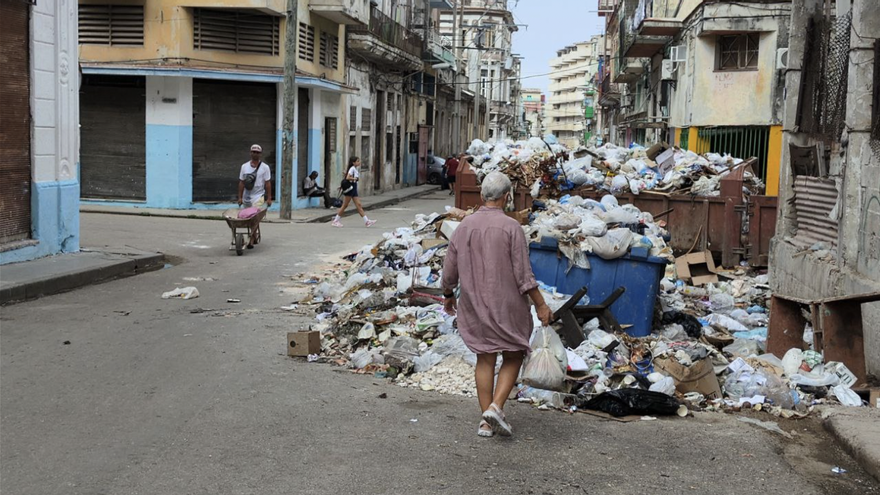
Leptospirosis Skyrockets in Cuba, the Country of Rats and Mountains of Garbage

The insalubrity of Cuban cities is the main cause of disease, say citizens. (14ymedio)

14ymedio bigger14ymedio, Havana, December 26, 2023 — Cases of leptospirosis are increasing, the health authorities of Guantánamo announced on Monday, after informing the official press that this year 44 people are suspected of having contracted the disease, 12 more than those counted in 2022. So far, they acknowledged, two deaths have been reported in the municipalities of Imías and Maisí.

In addition, the municipalities with the highest incidence of leptospirosis in the province are Baracoa, Maisí, Guantánamo and Yateras, the local newspaper Venceremos reported. Mileidys Gómez, head of the Zoonosis program of the Provincial Directorate of Hygiene, Epidemiology and Microbiology, told the media that many of the people who are infected end up suffering serious symptoms because they do not immediately go to the doctor.

However, Yamilé, a 45-year-old woman from Havana interviewed by 14ymedio, says that the official is not telling the truth about the sick people. A few months ago, she says, she went to the hospital because she suspected that she had contracted the disease. “The first thing they told me was that if I had leptospirosis I would have to rest and drink a lot of water, because there were no medicines,” says Yamilé, while questioning why the authorities insist that “it is people’s fault for not going to hospitals if there is not even anything to treat them with.” continue reading

After being scared in the hospital, where they finally told me that it was not leptospirosis that I had, I decided to ’harvest’ the rats  

The truth, she explains, is that “these diseases, such as leptospirosis, dengue or cholera arise from the poor hygiene of Cuban cities, where garbage piles up in any corner and rots there for days.” This, she adds, happens not only in Havana, but in any part of the country where “the same unhealthy situation exists.”

“After being scared in the hospital, where they finally told me that I didn’t have leptospirosis, I decided to ’harvest’ the rats that got into my house on the street or in the neighboring courtyards,” says the woman. “The first day I bought the traps, seven little rats were trapped. They had my yard full of tunnels to go from one house to another.”

“It’s just that with the level of dirt in this country, it’s no wonder. Rats must be partying. Our building is surrounded by four huge garbage dumps that are about to shake hands and close the circle,” she continues. “There are side streets where Communal Services sometimes take weeks to collect the garbage, and in the meantime, the plagues of cockroaches and rodents begin to infest the houses. The sellers of traps and poisons are going to get rich,” she says.

Yamilé has another concern, which is that for months she has not seen anyone selling poison or traps. “Before there were some old men who sold syringes with liquids to kill rats or balls of poison. Now you have to buy everything from [the classifieds website] Revolico. For example, a set of three strips of rubberized cardboard to treat rodents costs more than 2,000 pesos. Almost no one can afford this, because they need the money to eat,” she explains.

According to the habanera, by simply having adequate hygiene the Cuban neighborhoods could get rid of the plague of rats, but this is not possible either, since the mountains of garbage are added to the lack of cleaning products. “Even domestic animals end up sick,” she says.

Most end up dying, because if there is no medicine for people, imagine for animals”  

“A couple of months ago, my neighbor’s dog contracted leptospirosis, and in the veterinary clinic itself a worker told her that cases of this disease have increased a lot lately among pets. Most end up dying because, if there is no medicine for people, imagine for animals,” Yamilé says. The vaccine against leptospirosis in dogs is barely found in the country’s veterinary offices, and its price in the informal market is high, so many pet owners rule out immunizing them.

Far from the cities, in the fields and food warehouses, the plague of rats is also a pressing problem. This was recognized by the authorities of Guantánamo, who revealed that many of the cases of leptospirosis in the province were contracted while carrying out “agricultural work on moist land highly infested with rodents” that already carry the disease and transmit it through urine or other secretions.

“The lack of rat poison, the breeding of animals in urban communities without hygienic conditions and the non-use of means of protection for those permanently exposed” are other causes of the high rate of infection, Venceremos said.

Unfortunately, “the deficit of antileptospirotic vaccines” and the “low perception of the population in the face of risk conditions and the appearance of symptoms” make it impossible for the Health and Epidemiology system to treat in time or prevent the increase in cases, the health authorities acknowledged.

Translated by Regina Anavy

____________

COLLABORATE WITH OUR WORKThe 14ymedio team is committed to practicing serious journalism that reflects Cuba’s reality in all its depth. Thank you for joining us on this long journey. We invite you to continue supporting us by becoming a member of 14ymedio now. Together we can continue transforming journalism in Cuba.

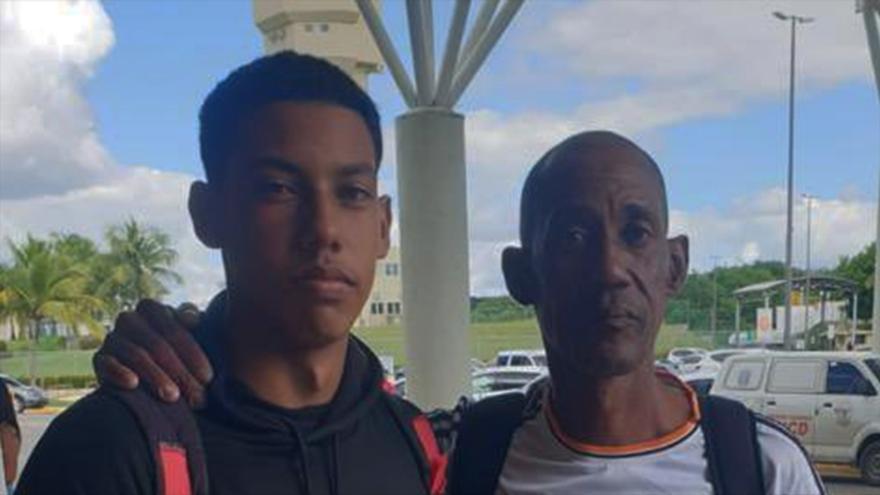
Two Prospects and a Former Baseball Player Leave Cuba To Try Their Luck in the United States and the Dominican Republic

Robier Hernández won the silver medal in the Under-15 World Cup in 2022. (X/@francysromeroFR)

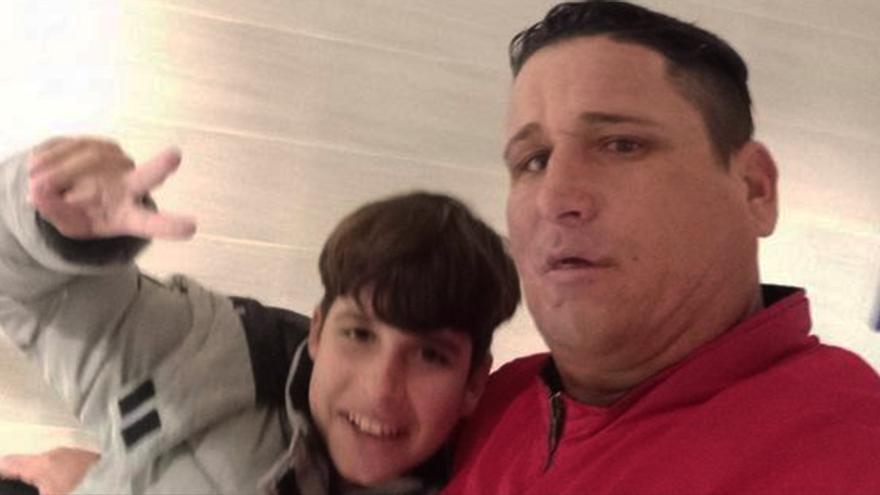
14ymedio bigger 14ymedio, Havana, 26 December 2023 — Sixteen-year-old Cuban pitcher Robier Hernández arrived in the Dominican Republic, in the middle of the Christmas Eve celebration, with the aim of being recruited by a team from the American Major Leagues. Days earlier it was known that retired baseball player Danger Guerrero had traveled to the United States with his 9-year-old son, who was part of the Cuban national team in the 9-10 pre-world tournament in Culiacán (Mexico), in search of sports opportunities for both of them.

The departure of both prospects and Guerrero, who has participated in 17 national series – and could, consequently, be an excellent coach – is eloquent about the reality of Cuban baseball: the stampede not only of professional players, but also of the relievers.

Hernández, baseball journalist Francys Romero reported, stood out in Cuba as an opening pitcher, has a good arm and is able to throw a straight at 90 miles per hour. With him, there are 17 players his age who left Cuba this year. Romero says it’s an alarming figure, since it represents 85% of the generational base that would relieve the current players of the different national teams of the Island.

For his part, Guerrero – the father – was part of the Havana and Mayabeque teams. In his statistics are 2,944 turns at bat, 821 hits, a batting average of .279 and 59 home runs. For his son, the stay in the United States will allow continue reading

him to develop his game and be seen by the headhunters who are responsible for recruiting young players for the Major Leagues from their own schools.

Danger Guerrero al lado de su hijo, ambos ya se encuentran en EE UU. (Facebook/Francys Romero)
Danger Guerrero with his son, both of them now in the United States. (Facebook/Francys Romero)

One figure gives the measure of the disaster facing the country: of the young people who represented Cuba in the U-15 World Cup, held in Mexico in 2022, only three players remain on the Island: Yordan Rodríguez, Yaidel Ruíz and Maikol Rodríguez.

Romero lists those who have left: Alejandro Cruz, Alex Santiago, Pedro Danguillecourt, Jaider Suárez, Dulieski Ferrán, Ernest Machado, Yosniel Menéndez, Roberto Peña, Segian Pérez, Alejandro Prieto, Danel Reyes, Ronald Terrero, Jonathan Valle, Yunior Villavicencio, Cristian Zamora and Mailon Batista.

“Those numbers show the state of despair of young players and their families,” the communicator stressed. “The Cuban State has not been able to provide a future for its citizens. Therefore, the response to this prolonged failure of the system has been the exodus,” he added.

The attempts of the Cuban Baseball Federation to retain young athletes have failed. In September, it organized the first international tryout with talent scouts at the Latin American Stadium in Havana. Representatives of Japan, South Korea, Dominican Republic and Ecuador observed 80 players, but there was little interest in them.

Although it has not acknowledge it, the Federation wants the talent scouts of professional leagues in Latin America – mainly from Mexico – and Asia to recruit their baseball players. In return, they take a percentage of the agreement if it is finalized.

Translated by Regina Anavy

____________

COLLABORATE WITH OUR WORKThe 14ymedio team is committed to practicing serious journalism that reflects Cuba’s reality in all its depth. Thank you for joining us on this long journey. We invite you to continue supporting us by becoming a member of 14ymedio now. Together we can continue transforming journalism in Cuba.

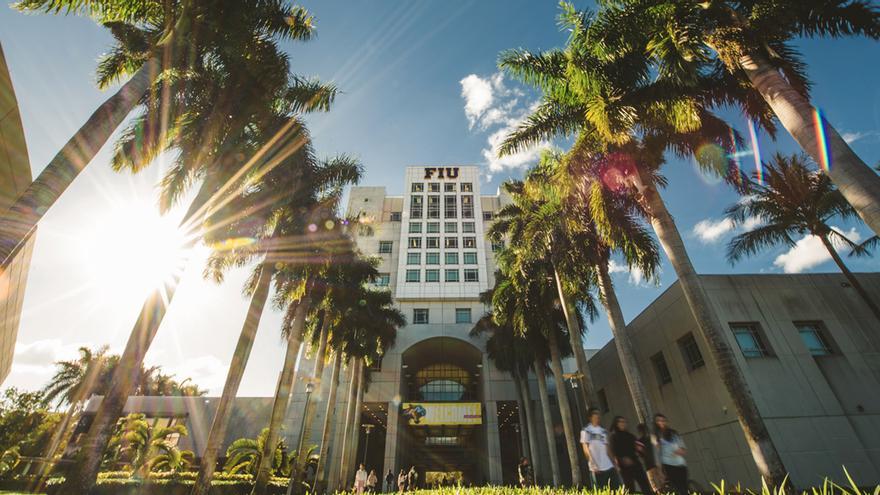
Florida International University Suspends the Hiring of Researchers From Six ‘Worrisome Countries’ Including Cuba

The Cuban Research Institute (CRI) could be one of the departments affected, according to the local press. (FIU)

14ymedio bigger14ymedio, Madrid, 25 December 2023 — Cuban researchers will not be able to work for Florida International University (FIU), which has decided to pause, immediately, the hiring of citizens of six countries considered “worrisome” by the government of that state, according to an email obtained by the WLRN radio station. Cuba is accompanied on the list by Venezuela, China, Russia, Syria, Iran and North Korea.

According to WLRN on Tuesday 19, Andrés Gil, Vice President of Research for the university and Dean of its graduate school wrote to the deans, department heads, directors of postgraduate programs and people involved in human resources that, due to the new laws announced in the state, it is necessary to “immediately pause any job offer or attempted hiring” that involves individuals from the “worrisome countries.”

Any offer that has been made and any active recruitment must be stopped until we have good control over the process

“Any offer that has been made and any active recruitment must be stopped until we have good control over the process, so that it is communicated properly to the candidates and is specifically indicated in our letters,” the text points out.

One of the affected departments, according to the local press, could be the Cuban Research Institute (CRI) of FIU, which works closely with Cuban – and Venezuelan – opponents for events, scholarships, programs, courses and all kinds of collaborations in which there may be vacancies if the continue reading

situation is prolonged. “Unpaid research fellows” are also affected by the rule, a situation in which many Cubans find themselves. There are also a multitude of Chinese researchers hired during their postgraduate studies affected by this standard.

Governor Ron DeSantis has approved several rules that affect higher education during 2023. Among them, this rule has the objective of “combating those who try to infiltrate the American university system from countries of concern,” although there may be “exemptions” that must be examined on a case-by-case basis to move forward with hiring.

Gil, who fears that the measures will decapitalize the university, specifies in his email that the university is not the “final approval body” of the candidates, something that falls to the Board of Governors of the state, whose members are appointed by DeSantis as are other FIU positions in turn. “The process for each candidate will take several months, and we cannot guarantee any employment or position for individuals from countries of interest,” he adds.

“The directors of postgraduate programs and deans will receive instructions on what to communicate in relation to this process to newly admitted graduate students and/or others potentially interested in obtaining a postgraduate assistant. Human Resources and Academic Affairs will communicate to the deans and staff of Human Resources the impact for those employees who were currently in an incorporation process,” he says.

The media of the Sunshine State have not provided further clarification since they had access to FIU, which has been more restrained than the University of Florida (UF), in Gainesville, about the consequences of this measure.

More than 300 professors from the University of Florida have protested against a rule that, in their opinion, prevents them from recruiting the best students for the sole reason of their nationality, according to Science magazine.

Teachers made public a letter stating that this law “could negatively influence the long-term development, reputation and leadership of UF”

Teachers made a public letter stating that this law “could negatively influence the long-term development, reputation and leadership of UF.”

“Restricting or even preventing the hiring of postgraduate, postdoctoral assistants and visiting professors from these countries would have a devastating impact on our graduate programs and research activities; in addition, it could negatively influence the long-term development, reputation and leadership of UF,” they explain.

Although the United States Department of State was already investigating foreigners before granting them study or investigation visas, Florida’s state rule requires an allegedly more conscientious process.

The law was approved this summer along with another regulation that restricts the purchase of housing by foreigners from the same countries in areas close to critical infrastructures, such as airports, ports or power plants.

Translated by Regina Anavy
________________________

COLLABORATE WITH OUR WORKThe 14ymedio team is committed to practicing serious journalism that reflects Cuba’s reality in all its depth. Thank you for joining us on this long journey. We invite you to continue supporting us by becoming a member of 14ymedio now. Together we can continue transforming journalism in Cuba.
Cuban Faces of 2023: Alina Barbara Lopez, the Rebellious Professor From Matanzas

Cuban professor and historian Alina Bárbara López Hernández. (Facebook)

14ymedio bigger14ymedio, Havana, 24 December 2023 — After the Hermanos Saíz Association (AHS) censored, in October 2022, the event The Worst Generation, with a poster of artists who had begun to question the regime, Alina Bárbara López Hernández began to be the object of attention by State Security. The professor and historian was going to moderate that debate, in addition to prefacing a book that would have the same title and that the regime also prevented from being carried out.

She herself reported the harassment through social networks and, after receiving several requests from the political police to appear for questioning, she presented a “formal complaint and annulment action against the official summons” to the Provincial Prosecutor’s Office of Matanzas, where she resides.” With this, the teacher achieved something unprecedented: State Security annulled the summons.

Her actions and arrests have been reflected in Havana by the writer and journalist Jorge Fernández Era, with whom she collaborated on the digital magazine La Joven Cuba. In January 2023, inspired by Matanzas, Fernández Era presented a similar demand for nullity in the capital, after receiving a summons to appear, and did not attend the scheduled meeting.

She was tried for “disobedience,” and declared guilty on November 28

In April, López Hernández was detained for several hours by State Security after protesting another detention of continue reading

Fernández Era in Matanzas’ Freedom Park. After being released, she recounted the details of the arbitrary detention in a long Facebook post and announced that every 18th day of the month she would demonstrate peacefully.

Her requests would be, month after month, several, among them “a democratically elected National Constituent Assembly to draft a new Constitution,” “freedom for political prisoners without mandatory exile” and “cessation of harassment of people who exercise their freedom of expression.”

The historian’s demands faced the usual reception in the regime: censorship and repression. She first discovered, when going to renew her passport for an academic trip to the United States – where she had traveled without problems before – that she was ’regulated’ [i.e. forbidden to travel] and could not leave the Island. Afterwards, she was put on trial for “disobedience,” of which she was found guilty this November 28.

Although her case has been reported by various international organizations, she was sentenced to pay 250 installments of 30 pesos, or 7,500 pesos, if she wants to see her “mobility limitations” lifted. The professor not only did not accept the ruling but she stated, once again, her reasons in public: “we are not subjects of a monarchy, we are citizens of a republic.”

Translator’s note: See the list of all “Cuban Faces of 2023” here.

____________

COLLABORATE WITH OUR WORKThe 14ymedio team is committed to practicing serious journalism that reflects Cuba’s reality in all its depth. Thank you for joining us on this long journey. We invite you to continue supporting us by becoming a member of 14ymedio now. Together we can continue transforming journalism in Cuba.
A Group of 13 Cubans Denounces Migration Agents and Thwarts an Attempted Extortion in Mexico

A Migration agent at the time of returning their passports to 13 Cubans. (Capture Facebook/Epicentre Chiapas RyTv Official)

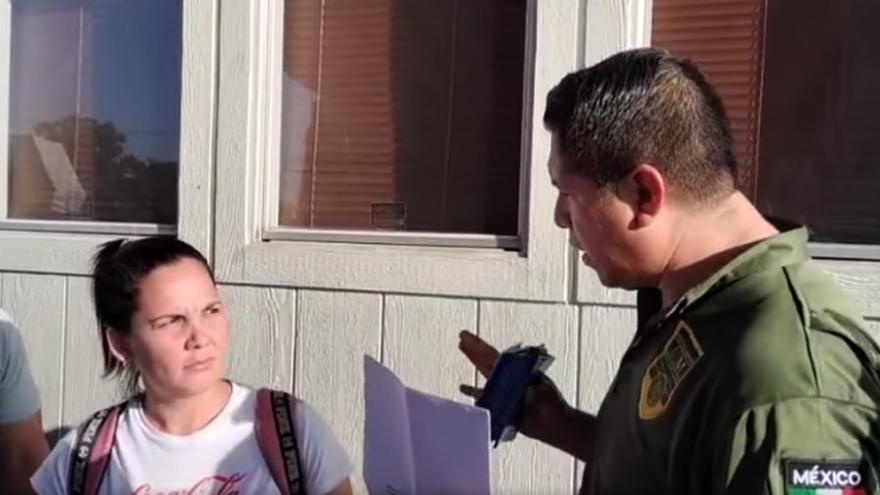
14ymedio bigger14ymedio/EFE, Mexico, December 25, 2023 — “Do you want to continue? You must pay 1,500 Mexican pesos (88 dollars),” said a Migration agent who withheld the passports of 13 Cubans on Monday at the checkpoint located in the municipality of Viva México (Chiapas). According to Zuselmi García López, they were traveling to join the caravan that left Tapachula on the same day with more than 10,000 migrants.

García López told local media that the agents first said that they were going to give them transport to Tuxtla Gutiérrez and that there they would “do the legal papers to continue.” This is the method that the officers use to dissolve the caravans. They put the migrants on trucks and return them to Tapachula; others take them to the Siglo XXI immigration station where they are detained for days.

At Cubans’ insistence to recover their passports, another officer told them that Admiral Roberto González would give them their passports when the caravan arrived. García López insisted that they wanted to continue with the group led by Luis García Villagrán, director of the Center for Human Dignity. That’s when they were told that they had to pay if they wanted to get their passports back.

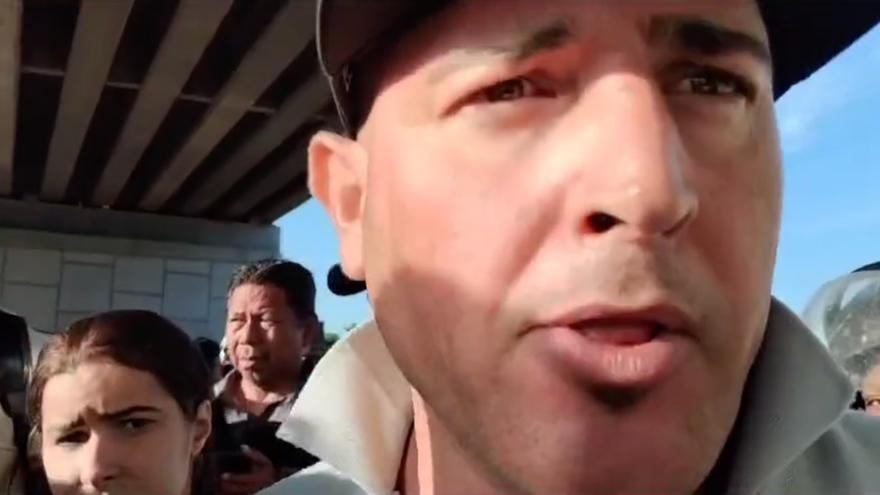
Before the caravan arrived at the checkpoint in Viva Mexico, the Cubans denounced the attempt at extortion before some media that were at the continue reading

scene. In front of the camera, García López accused Admiral González while recording the officers of the National Guard.

With the arrival of the caravan, García Villagrán used a loudspeaker to address Admiral Roberto González. “We asked for the passports to be returned to this group of Cubans. Why don’t you want to give them to them?” said the activist. Minutes later, the documents were returned to Zuselmi García López.

Another of the Cubans, who didn’t give his name, also denounced the Migration agents in Tapachula. (Facebook/Epicentro Chiapas RyTv Oficial)

According to Luis Rey García Villagrán, this caravan is the largest exodus of this year and could exceed 15,000 people who will walk for days to reach Mexico City as its first point. “We are leading this group, which has become a human traffic jam, and we tell the Mexican state that it leaves us no choice but to walk on the road until Migration and the president, Andrés Manuel López Obrador, tell us yes or no.”

García Villagrán stressed that “today we, the poorest of the poor, are walking, those who are at the peak of need, those who do not have money to pay for visas or coyotes.”

The Venezuelan Jesús Silva, who is traveling with his wife, told EFE that in Ciudad Hidalgo the Migration agents took him to the Siglo XXI Migration station, where an officer told them to leave Mexico.

“Really the only option is to walk. I rely on the caravan, because that’s where we feel the safest, with Latino brothers who have left their countries with a new dream, with hope of a better life,” Silva shared.

The Honduran José Wilmer Fernández Caballero, who showed his “positive resolution” paper from COMAR, the Mexican Commission for Aid to Refugees, has tried to leave Chiapas, but the immigration authorities tell them that his paper is worth nothing and doesn’t work.

“It didn’t help to spend so much time in Tapachula; it was lost time. They always take me back. We have the positive resolution paper with us, but they always take me out of the van and tell me that it’s not worth anything,” he said.

Translated by Regina Anavy

____________

COLLABORATE WITH OUR WORKThe 14ymedio team is committed to practicing serious journalism that reflects Cuba’s reality in all its depth. Thank you for joining us on this long journey. We invite you to continue supporting us by becoming a member of 14ymedio now. Together we can continue transforming journalism in Cuba.
Cuban Faces of 2023: The 14 Faces That Marked the Year 2023 in Cuba

We have focused on the people who left a mark, sometimes light and beautiful; others heavy and destructive. (14ymedio)

14ymedio bigger14ymedio, Havana, 24 December 2023 — If instead of choosing faces, at the end of 2023 we had compiled the objects that best represent Cubans this year, we would have included in the list a suitcase, some police handcuffs, a baseball, a judge’s gavel, a keyboard, a microphone and graffiti on some facade.

Every presence leaves traces and the protagonists of these 12 months that conclude could also be followed through the tools, supports and infrastructures that they have used. But this is the list of the protagonists, not their things. We are not compiling the tools they used but rather their personal responsibility for certain events. It is not even the mural of the victims or the perpetrators, but the canvas of those responsible who drew the lines of what we have experienced.

For this reason, we have focused on the people who left a mark, sometimes light and beautiful; others heavy and destructive. Nor is this a “doomsday” glossary, but rather a list of those who impacted our lives this year, for better and worse. Sometimes they helped us fashion wings and other times, unfortunately, they built anchors that made it more difficult to regain civic, economic and personal flight. But, in addition to their intentions, the snapshot we have captured of their faces and their stories forces them to share space.

In these 14 faces there is everything. Those who promoted and those who blocked. There are those who entered the list because they were fully exploring life, and others because they left this existence just in time

Most likely, the majority of them, if they had been consulted, would refuse to appear on a list with any of the others. But to be a public figure is, in some way, to stop belonging to oneself. Judgments, evaluations and labels are part of what awaits everyone who has moved away from the stillness of the anonymous individual and has crossed the red line to express their opinion and create “out loud.” All those mentioned here are children of that impulse: to remain silent or to speal; hide or show; let the story take its course or try to influence it.

Not everyone deserves applause. It is not enough to act. There is a minimum ethic to respect and, under a dictatorship, those points are very clear: you will not betray, you will not repress the freedom of another, you will avoid acting as a gag, scissors or shackle. There is everything in these 14 faces. Those who promoted and those who blocked. There are those who entered the list because they were fully exploring life, and others because they left this existence just in time. This is not an obituary but neither is it a podium with medals.

These that are read here are, simply, the names of those who shaped this year, 2023, in which we live in the limbo of political and economic uncertainty. There is no better image than theirs to tell of this “no man’s land” that we have inhabited in these months and to put a face to the advances and setbacks that an entire nation has experienced.

We present the anatomy of 2023.

[To our TranslatingCuba readers – We will update this list with the links to the English articles, as they become available. For now, here is the entire list, mostly ‘still to come’ in both languages.]

1- Alina Bárbara López, the Rebellious Professor of Matanzas

2- Michel Torres Corona (Con Filo) y su maestro, Iroel Sánchez

3- Los ‘mipymeros’ cubanos, la última esperanza económica de un régimen moribundo

4- Ricardo Cabrisas, el gran maquinador del régimen cubano

5- La Asamblea de Cineastas desafía la censura en Cuba

6- Las tribulaciones de Buena Fe en España

7- Los cubanos emigrados con el ‘parole’

8- Los que se quedan en Cuba

9- Idalys Ortiz, judoca

10- El Team Asere, sin patria pero con amo

11- Yasmany González Valdés, el “culpable” perfecto para la Seguridad del Estado

12- Rubén Remigio Ferro, cancerbero de “la ley y el orden” en Cuba

13- Bruno Rodríguez, ministro de la Desinformación

14- ‘Invasor’ se sale del redil

____________

COLLABORATE WITH OUR WORKThe 14ymedio team is committed to practicing serious journalism that reflects Cuba’s reality in all its depth. Thank you for joining us on this long journey. We invite you to continue supporting us by becoming a member of 14ymedio now. Together we can continue transforming journalism in Cuba.
The Assembly of Filmmakers Challenges Censorship in Cuba

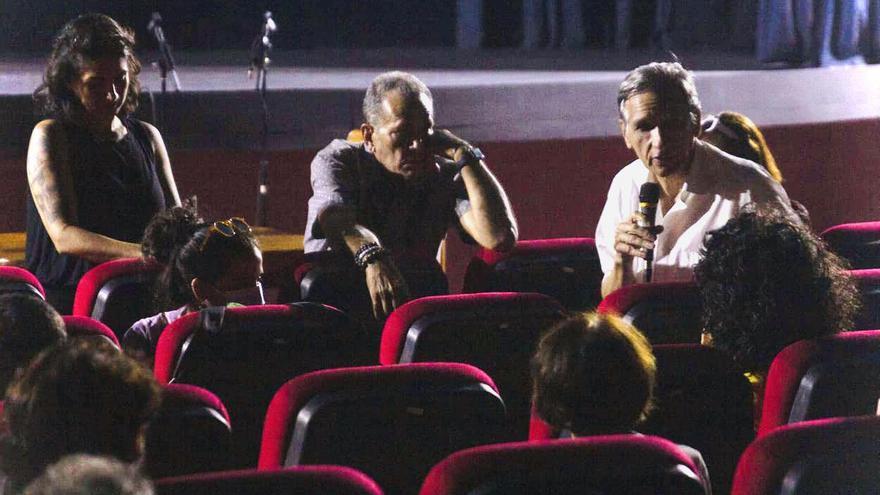
One of the debates of the Assembly of Filmmakers of Cuba. (Facebook)

14ymedio bigger14ymedio, Havana, 26 December 2023 — After perpetrating numerous acts of censorship against the works of several filmmakers at the beginning of the year, the Ministry of Culture topped it all off last June. The broadcast on Cuban Television of an unauthorized version of the documentary La Habana de Fito (Fito’s Havana), directed by Juan Pin Vilar, unleashed a swell of protests in the guild, which ended with the formation of the Assembly of Cuban Filmmakers (ACC).

The signing, by more than 600 filmmakers, of a letter condemning the actions of the authorities caused the regime to agree to meet “peacefully” with the filmmakers.

However, if on the side of the creators there were renowned figures such as the director Fernándo Pérez, the ministry could not be left behind. Alpidio Alonso and Fernando Rojas, minister and deputy minister of Culture, respectively, in addition to the first deputy minister Inés María Chapman and the head of the ideological department of the Communist Party, Rogelio Polanco, escorted Ramón Samada, then president of the Cuban Institute of Cinematographic Art and Industry (ICAIC), to the meeting with the filmmakers.

From the duel between bureaucrats and artists, unfortunately, not many solutions to the claims of the guild were born. On the contrary, the meeting only recalled the tension in the atmosphere and the intensity with which Samada demanded that the conversation not be recorded. Miguel Coyula, one of the directors present, turned a deaf ear and recorded, in audio and video, several of the official’s warnings: “No one was forbidden anything continue reading

here. Let’s not challenge ourselves.”

Ignoring the suspicion and official warnings, the filmmakers continued to meet, asking for the rehabilitation of the censored works and the emigrated filmmakers, consolidating their internal organization and demanding transparency.

When the Ministry of Culture finally dismissed Samada because he couldn’t “enlist” the filmmakers, they also protested. “Cuban cinema does not belong to a ministry or an institution. [The institutions] have to put themselves at the service of the artists and not the other way around,” they claimed.

Gradually, the public interventions of the ACC were diminishing while its ranks decreased. Several of the filmmakers who ended up forming the board of directors of the Assembly now live outside the Island. What seemed to be an advance of the world of culture against power was left in timid reproaches that, once again, stumbled against the wall of silence of the authorities.

Translated by Regina Anavy

____________

COLLABORATE WITH OUR WORKThe 14ymedio team is committed to practicing serious journalism that reflects Cuba’s reality in all its depth. Thank you for joining us on this long journey. We invite you to continue supporting us by becoming a member of 14ymedio now. Together we can continue transforming journalism in Cuba.

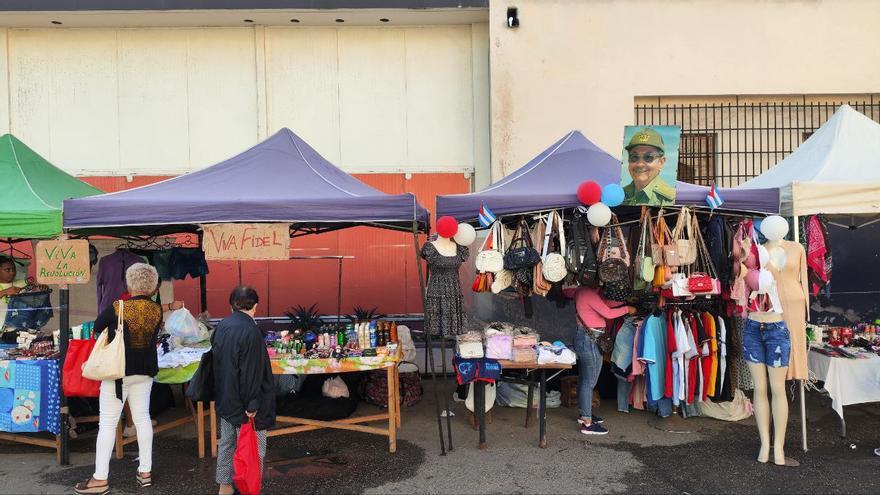
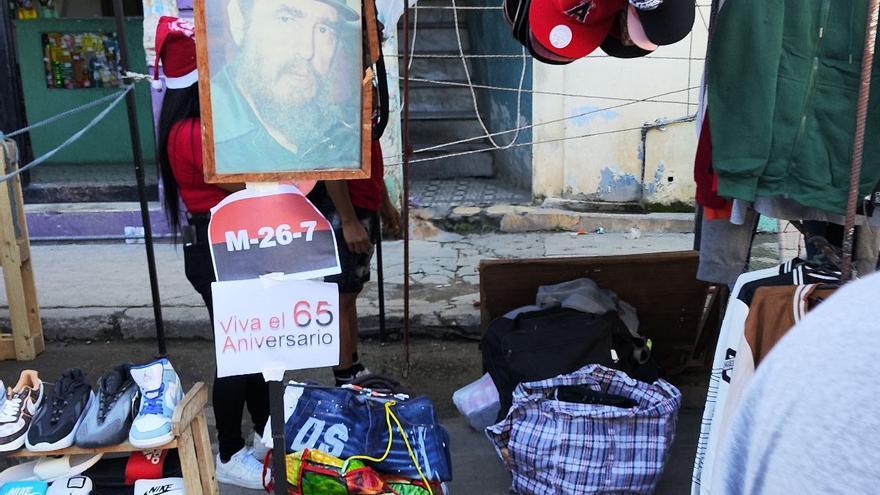
A Picture of Fidel Castro on Display, the Requirement for Cuban End-of-Year Sales

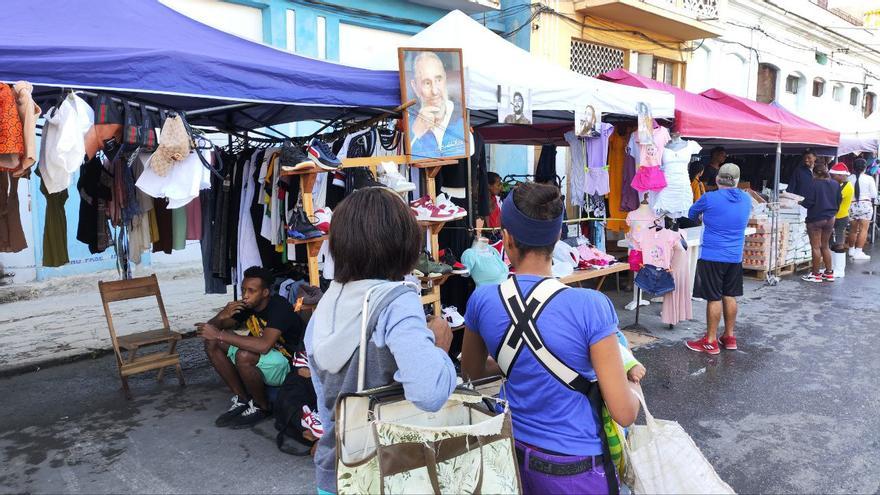
Authorities instructed the merchants that they should place some slogan, flag or photo of the leaders. (14ymedio)

14ymedio bigger14ymedio, Juan Diego Rodríguez, Havana | 23 December 2023 — This Saturday morning, a portrait of Fidel Castro waited for the curious people who approached one of the kiosks at the New Year’s Eve fair on Zanja Street in Central Havana. Next to the image, a pair of tennis shoes, a poor copy of the Nike brand, cost 16,000 Cuban pesos, four months’ salary for a professional. Authorities instructed the merchants to place some slogan, flag or photo of the leaders of the Communist Party in each stall.

“A lot of propaganda but everything is very expensive,” complained a young man who came to the fair to buy a new wallet. “Mine was stolen yesterday and now I’m doing the paperwork for a new identity card”, he lamented. Traditionally, during the end of the year, thefts spike “because everyone is desperate for money”, the man considers. “I’m going to have to add what I am going to spend here to what I lost because of the thief”.

“A lot of propaganda but everything is very expensive,” complained a young man who came to the fair to buy a new wallet. (14ymedio)

Others came to the fair searching for food for the Christmas celebrations. The Cuban capital’s authorities had announced the sale of agricultural products as a “salute to the upcoming 65th anniversary of the Cuban Revolution”, but at the Zanja Street Fair the supply of food, vegetables and meat was very scant. Some withered lettuce and some dirty beets made up the assortment to put on the plate. The rest were caps, clothing, footwear and personal hygiene products. continue reading

“At what price are they going to sell the broth?” an old man asked two men who were stirring a steaming pot behind a sign announcing “our challenges and our victories”. “It’s going to take a while, grandpa, because we’re starting now and when we get it out it will be 50 pesos a glass”, one of the improvised cooks responded. Under a photo of Raúl Castro, women’s handbags were displayed at prices between 1,500 and 3,000 pesos, depending on the size and the material.

Guarded by an image of Ernesto Guevara, cigar in mouth, a set of clothing for girls combined pink tones with the faces of Disney characters. Later, next to a July 26 flag, beach flip-flops were offered, also imitations of well-known brands, such as Adidas and Tommy Hilfiger. A few meters away, a Mipyme kiosk sold soft drinks and frozen chicken, all imported.

This Saturday, a few meters from the fair, the end of year summed up what Cubans are experiencing, trapped between inflation and the excesses of political propaganda.

The fair represents Cubans, trapped between inflation and the excesses of political propaganda. (14ymedio)

____________

COLLABORATE WITH OUR WORKThe 14ymedio team is committed to practicing serious journalism that reflects Cuba’s reality in all its depth. Thank you for joining us on this long journey. We invite you to continue supporting us by becoming a member of 14ymedio now. Together we can continue transforming journalism in Cuba.