
A Former Cuban Ambassador to Prague and Ukraine Dies Under Strange Circumstances in Havana

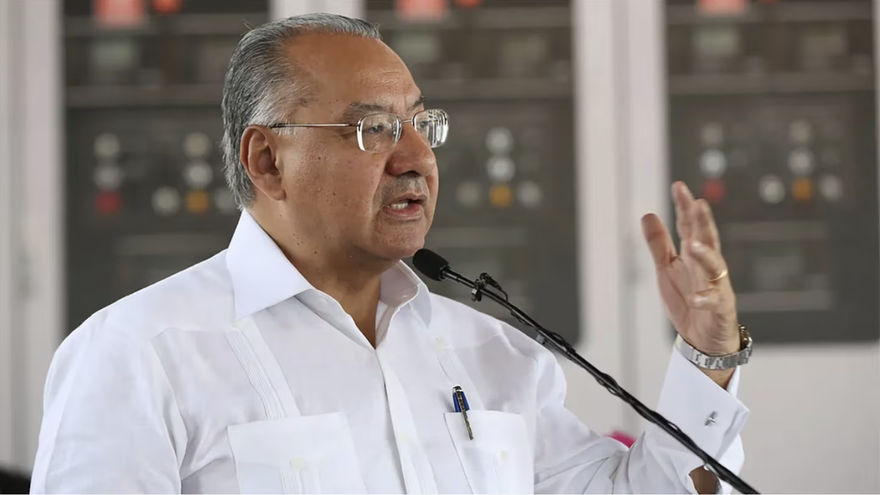
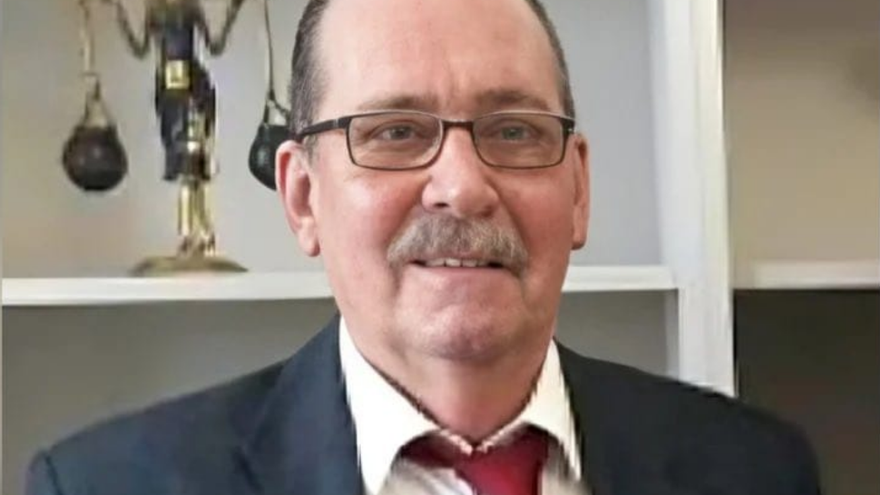
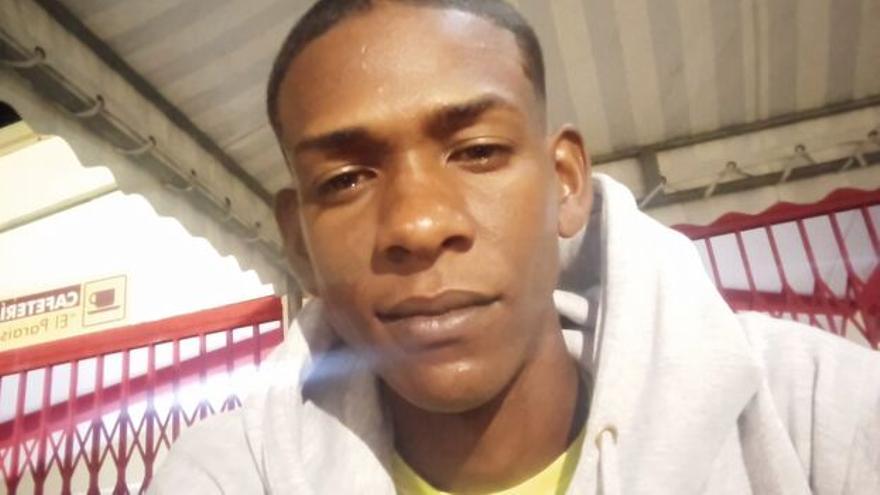
Félix León Carballo spent 40 years in the Foreign Service and was currently retired. (Facebook)

14ymedio bigger14ymedio, Havana, 19 February 2024 — Retired diplomat Felix León Carballo, ambassador to Belarus, Ukraine and the Czech Republic, among other charges, spent 40 years as an official of the Ministry of Foreign Affairs and died this Saturday in Havana under suspicious circumstances.

The Ministry of Foreign Affairs confirmed it this Sunday through a statement in which there is no mention of the cause of death, which was allegedly a homicide, according to a close friend, the Cuban ambassador in Djibouti, who was the source of the news.

“Felix León died on me… or rather ‘they killed him on me’. ‘Pacolo’ as we also know him (I refuse to talk about you in the past). So many years together! And some bastards got in the way of our plans. This is our last photo,” Caballero Torres wrote on Facebook, raising the alarm. continue reading

Félix León died on me… or rather ‘they killed him on me’. ‘Pacolo’ as we also know him (I refuse to talk about you in the past). So many years together! And some bastards got in the way of our plans

The post was deleted hours later, according to Café Fuerte, which was still able to capture some of the comments of those who reacted to the news. “I’m so sorry. They took brother Paco. Nor will justice calm our immense pain. There can be no impunity for that crime,” said Maura Quintero Dipotet, wife of the ambassador in Djibouti.

“Marcelo, how painful is Felix’s death. I can’t believe it yet,” wrote another acquaintance on the Facebook page of the Djibouti ambassador. “That’s life… sometimes it’s lost in the most fucked up and undeserved way,” he replied.

Several independent media cited Caballero Torres’ message as a source to report the violent death, but hours later the post had disappeared. Meanwhile, the Ministry of Foreign Affairs published a statement limited to reporting the death and offering condolences to relatives and colleagues.

In addition, the Ministry of Foreign Affairs said that León Carballo joined the Foreign Service in 1975 and worked in the Directorate of Europe and the Center for Information and Multimedia Services. “Let’s always remember his contribution to foreign policy and his eternal permanence in the Minrex family (sic.).”

The Ministry replicated the text on its social networks, where some acquaintances remembered the deceased, without anyone else mentioning the possible circumstances of the death. “I will always remember your sincere gratitude, your patience and determination to make us reflect. Your years of experience made you wise and a bearer of morality. Your revolutionary conviction was always an example and impetus for the whole group. RIP friend Felix,” the Embassy of Granada wrote on Facebook.

“Cuban diplomacy is in mourning. We have lost a valuable partner. Tremendous blow for all of us who knew him. Heartfelt condolences to his family and closest friends,” added diplomat Enrique Almeida.

“Cuban diplomacy is in mourning. We have lost a valuable partner. Tremendous blow for all of us who knew him. Heartfelt condolences to his family and closest friends”

“I deeply regret the death of our dear colleague and friend Félix León. Excellent diplomat, professional and human being, he will serve as an example to all those who embrace the Foreign Service of our Homeland,” the chain of messages continues.

On X, where it is not possible to delete the comments to your own publication, the situation has been different. The condolences for the death have been joined by critics of the Government who have demanded solidarity with other deceased allegedly due to negligence of the regime, and by those who demand that the events surrounding the death be revealed.

“Tell the truth. He was assaulted and killed in his home because the crime wave can’t be stopped,” demands a user.

At the end of November 2023, Bohemia magazine published an article entitled “Social violence in Cuba: Between Reality and the Idea.” From an unofficial digital survey, it found that 92.4% of participants said that violence has increased a lot on the Island. Forty-two percent said they had been aware of 10 or more violent crimes in the last six months, and almost half claimed that a family member or close friend had been a victim of violent crime.

In addition, a third of those affected did not report the crime, but among those who did, 73% did not get a resolution.

Translated by Regina Anavy

____________

COLLABORATE WITH OUR WORKThe 14ymedio team is committed to practicing serious journalism that reflects Cuba’s reality in all its depth. Thank you for joining us on this long journey. We invite you to continue supporting us by becoming a member of 14ymedio now. Together we can continue transforming journalism in Cuba.
The Failure of Electronic Transactions in Cuba: Only 5 Percent of State Ration Stores Make Them

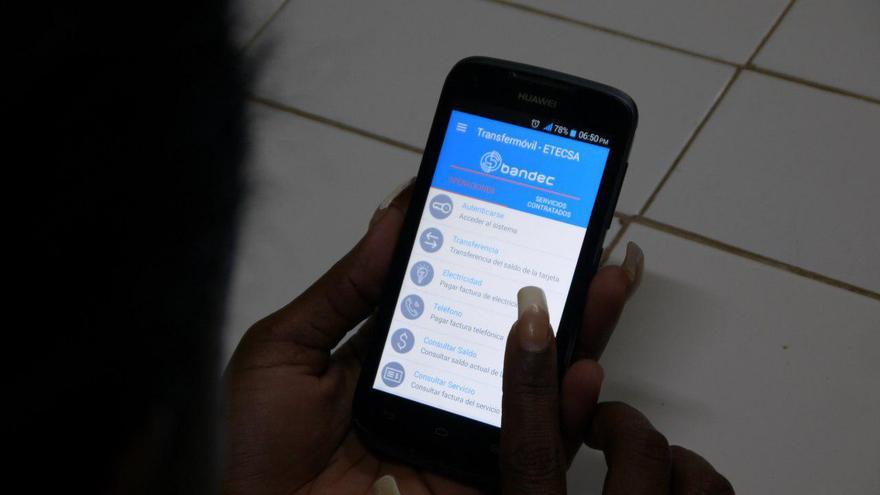
Readers were also asked about their preferred payment method, with Transfermóvil in the lead. (14ymedio)

14ymedio bigger14ymedio, Madrid, 19 February 2024 — “In our country, every new resolution is condemned to being violated before it is implemented, usually due to the ineffectiveness of those responsible for enforcing it.” This is one of the more than 100 comments made by readers who responded to the Cubadebate survey about the implementation of the regulations that oblige letting customers pay through any electronic means.

February 1 of this year was the day when all businesses had to have electronic payment available, under penalty of the suspension of their license, but in reality none of this has happened, and the authorities, the users insist, do nothing to solve it.

“I made a complaint more than a month ago about the non-compliance with the rule in the Coppelia [ice cream parlor], on the Presidency’s site,” a reader protests. “What protection do consumers really have when not even the Government is serious about citizens’ complaints? More than a month! And no one has bothered to give me an answer.” continue reading

The comments give life to what the note relates, written after verifying, with the votes of the survey, that private companies rarely comply with the provisions, although the situation in the State companies is not much better

The comments give life to what the comment relates, written after verifying, with the votes of the survey, that private companies rarely comply with the provisions, although the situation in the State companies is not much better. According to the results of the online survey – in which 2,839 people participated – in both sectors there are difficulties in paying electronically (67%), although 23% believe that there is more in the private companies, and 10% that it is worse in the State shops.

Some 80% of voters said that the regulations, approved last August as part of the banking process that sought to reduce the amount of cash movements due to the shortage of national currency banknotes and, at the same time, reduce the flow of informal operations, are not complied with. Of the 1,825 people who answered whether digital payment can be used correctly in the places where it exists, 63% said no.

Readers were also asked about their preferred payment method, with Transfermóvil in the lead (62%), followed by EnZona (19%) and the QR code (12%). The POS (card payment terminal) is the least used, with only 7%. As for the services where it works best – and, therefore, is used more – are paying bills for electricity (35%) and telephone service (33%) which are, by far, the ones that win. These are followed by gas stations (10%) and other services (7%), but the situation worsens with businesses, where more emphasis was placed.

The purchase of food in the State ration stores is paid for electronically on 5% of occasions, while in restaurants the figure drops to 4% and in bakeries it is null (0%).

Cubadebate’s article also cites those who participated in the debate opened by the media. The majority of those elected indicate the private companies as responsible for the situation, although officials against whom they throw accusations of corruption are not exempt from responsibility.

“They don’t give the option of paying by transfer and, when I inquire, they tell me that they are solving the problem with the inspectors,” says a quoted commentator. Among the most common barriers that private individuals have when accepting a transfer payment is the requirement of a minimum purchase value, but also the inefficiency of the administrations when it comes to providing the mechanisms.

“At the time of paying, the clerk said that they did not have a QR code, although they had requested it more than a month ago and it was not yet available”

“A reader identified as Arael refers to the service of an establishment located at 26 and 15, in Vedado, where he went days ago. At the time of payment, the clerk told him that they did not have a QR code, although they had requested it more than a month ago and it was not yet available. “To my great surprise, they told me to pay in cash, but they did not accept bills under 100 pesos,” he said.

The lack of visibility of the QR code is also one of the obstacles, either because it gives an error or because the employees try to hide it so that the customer gives up paying online. These obstacles are joined by the connectivity problems suffered by the entire Island, including Havana, which is the most advanced in this aspect. This situation causes confusion so buyers try to avoid it by paying in cash, since it is not uncommon for the connection to be interrupted in the middle of the operation, leaving in doubt whether or not the transfer has been completed and leading to non-payments or, on the contrary, duplicate payments.

There is also a significant group of Cubans, especially among the elderly, who do not have a smart phone or are reluctant to use one because of the complexities that this new technology holds for them. Having a QR reader, managing applications such as EnZona and Transfermóvil is a territory full of unknowns. In addition, the cost of the devices that support these tools is unreachable for the pocket of a pensioner who does not receive remittances from family abroad.

Translated by Regina Anavy

____________

COLLABORATE WITH OUR WORKThe 14ymedio team is committed to practicing serious journalism that reflects Cuba’s reality in all its depth. Thank you for joining us on this long journey. We invite you to continue supporting us by becoming a member of 14ymedio now. Together we can continue transforming journalism in Cuba.
At the Havana Book Fair, There Are Few Books, and You Can Look but Not Touch or Buy

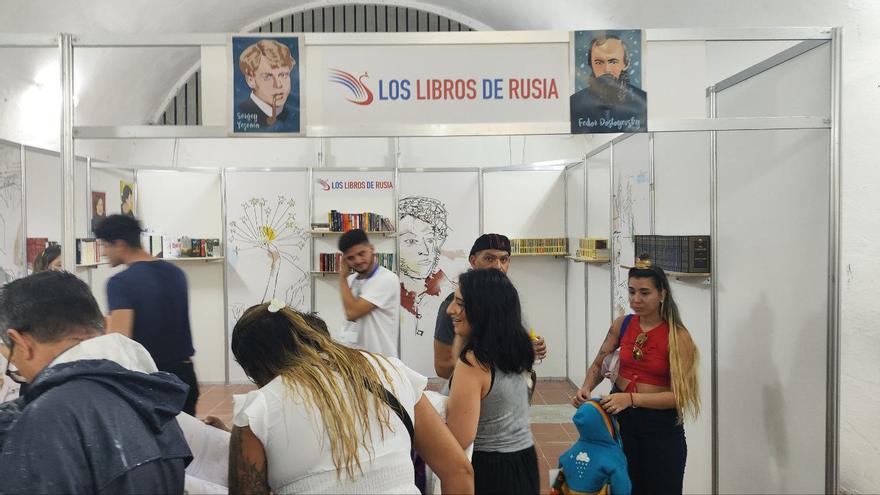
The Russian books at the fair were not for sale. (14ymedio)

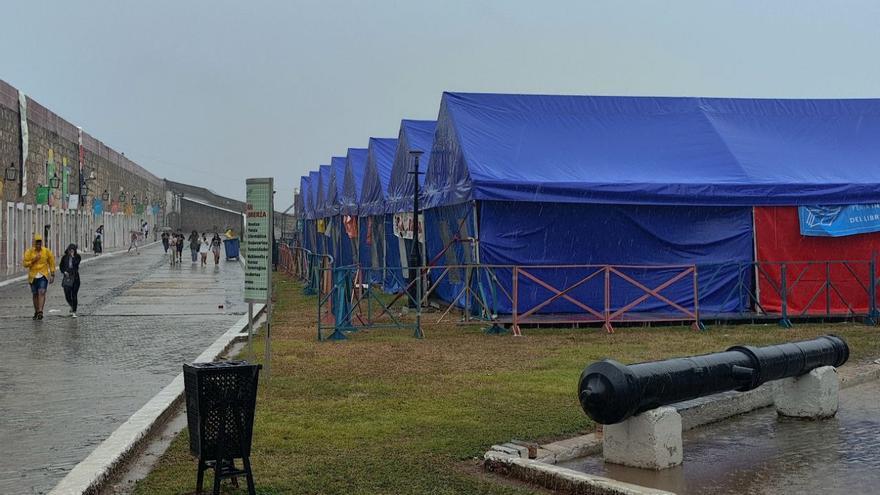
14ymedio bigger14ymedio, Juan Diego Rodríguez, Havana, 19 February 2024 — The Havana International Book Fair invited two countries this year: an official one, Brazil, and an “unofficial” one, Russia, whose booth, although small, is located at the same entrance of La Cabaña. This Sunday, however, neither of the two managed to satisfy the readers, who ended the day annoyed not only because of the bad weather, but because the few books they found – in Portuguese and Russian – were “only for display.”

Among the visitors, who were taking refuge from the downpour in the entrance, the irritation was evident: “They should have announced that this was going to be suspended today. Now we are here and can see that the tents are closed.” When the rain abated and the wet mass of people finally began to move towards the Russian pavilion – among others – the disappointment was even worse. “I thought I was going to find many more books. But what they sell is mostly stationery and office supplies,” complained a visitor.

Books from the Spanish publisher Everest, with stories adapted from Disney movies such as Pocahontas and The Ice Age, or from the DC Comics franchise – on several occasions described as “imperialist” and “subversive” on Cuban Television – accompanied the exhibition of Russian titles, guarded by three men who, when asked by some customers, debated whether they should sell the texts. “We should sell the books if no one is going to notice,” the manager told two women who accompanied him, although he did not clarify whose “permission” he needed. continue reading

Books from the Spanish publisher Everest, with stories adapted from Disney or from the DC Comics franchise – qualified as “imperialist” by Cuban Television – accompanied the exhibition of Russian titles

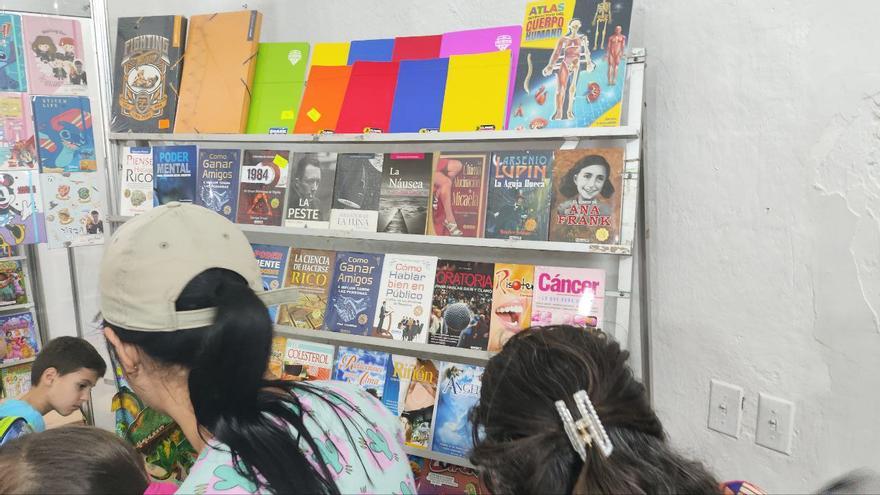
Further on, school notebooks, coloring books, children’s notebooks, crayons, felt-tip pens and pencils occupied several tables, where the majority of visitors crowded around. The reading material, with low-cost books and “gazette” paper, barely showed some classic foreign titles such as The Diary of Anne Frank, The Plague, by Albert Camus and 1984, by George Orwell, ignored by the clientele for their high prices. “The cheapest I’ve seen,” a reader said, “was one about Sherlock Holmes at 1,000 pesos.”

In the case of 1984, whose author was censored on the Island for several decades for his novels, which criticize totalitarian forms of government, there are only a few copies of a Cuban edition, published by the Colombian publisher, Globals Ediciones.

Further on, in the immense pavilion dedicated to Brazil, a presentation of a book in Portuguese barely attracted the attention of those who, more interested in taking refuge from the rain than in listening to the author, occupied the chairs. The exhibition of titles, here also, was one of “you can look but don’t touch,” according to two women.

The reading section, with low-cost books and “gazette” paper, barely showed some classic foreign titles such as The Diary of Anne Frank, The Plague and 1984. (14ymedio)

The main tent, which sold books from Cuban publishers with numerous titles dedicated to Fidel Castro and the defense of the regime, was closed. The same thing happened at the information checkpoints, whose custodians were frightened by the rain and left, or in the places where several presentations and events were scheduled for this Sunday.

“I came to fine inexpensive books (at state prices), but I have not been able to get anything I was looking for,” complained a young man who, angered by the rain and without books, was preparing to undertake the journey home.

The tents for Cuban books and publishers were closed. (14ymedio)

At a fair whose programming announced numerous events, presentations and a wide range of titles, this Sunday’s icing on the cake was a black backpack with the event logo, hung from the roof of one of the booths, which was selling for 7,000 pesos.

From a cafeteria, an employee was talking on the phone to one of his colleagues: “Don’t even hurry, this place is a disaster today. We haven’t sold anything, and anyone who happens to come by is running to avoid the rain. Don’t kill yourself to get here.” The food service on offer consisted only of a variety of corn dishes: boiled or fried ears and tamales.

Discouraged, visitors left the old fortress of La Cabaña as soon as they noticed the pitiful offers. “This year it seems that there is less transport, or maybe fewer people are coming,” reflected a woman with two children, carrying a bag of wet books. “It would have been better not to come.”

Translated by Regina Anavy

____________

COLLABORATE WITH OUR WORKThe 14ymedio team is committed to practicing serious journalism that reflects Cuba’s reality in all its depth. Thank you for joining us on this long journey. We invite you to continue supporting us by becoming a member of 14ymedio now. Together we can continue transforming journalism in Cuba.
Cuba: The New Minority

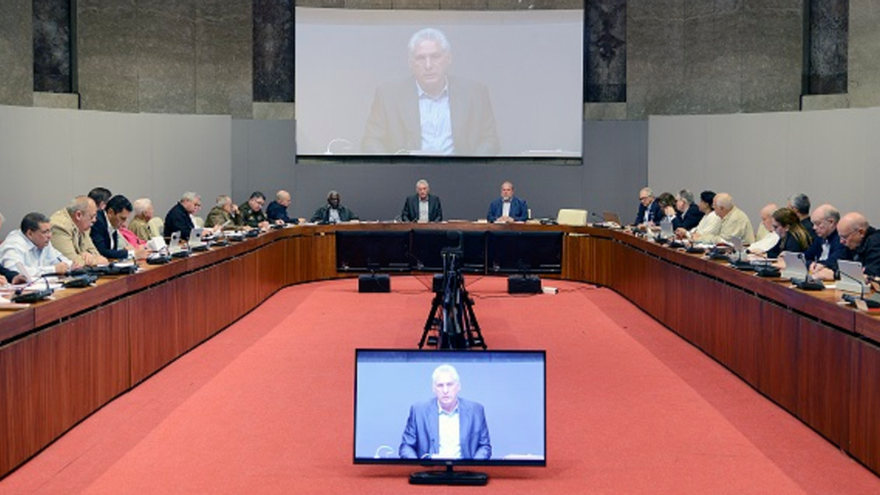
Meeting of the Council of Ministers chaired by Miguel Díaz-Canel in 2022. (Studies Revolution)

14ymedio bigger14ymedio, Reinaldo Escobar, Havana, 17 February 2024 — If it were possible to conduct a national survey without the participants being afraid to answer truthfully and with the guarantee that the results will not be manipulated, I dare to say that when asked, “Are you satisfied with the management of those who govern?”, we would see that the vast majority would mark the “no” box. If the question were more precise and investigated the popular will to carry out a profound change in the system, the same majority would mark the “yes” box.

I refuse to believe that all the people I talk to, those with who agree with me, in a bus, a taxi, a line or the privacy of their homes are lying when they show their disagreement with the rulers or when they project a new way of living in Cuba. In any case, if they were to lie, it would be to say that everything is fine and that socialism is the solution, but they would do it out of fear.

I have known many who believed in the project that was intended to build communism in Cuba and who today no longer believe in it, but I don’t know anyone who, having really been against it, have been convinced that the proposals of the only party allowed are the desired future for the country. There are many imposters among those who applaud, but the only ones who pretend are the State Security agents infiltrated into the opposition. continue reading

In any case, if they were to lie, it would be to say that everything is fine and that socialism is the solution, but they would do it out of fear

Communist Party militancy represents less than 9% of the Cuban population, but its presence in Parliament, in the Council of State and in the Council of Ministers exceeds 98%. These abysmal differences between a minority that rules and a majority that must obey are cemented in Cuba on apparent political differences, far from the entrenched divergences between Sunnis and Shiites that fractured Iraq or the ethnic conflicts between Tutsi and Hutu that ended with a genocide in Rwanda. Camagüey will never be separatist like Chechnya; the devotees of the Ocha Rule (UN Office for the Coordination of Humanitarian Affairs)* will not promote a massacre of Catholics; the war between blacks and whites that occurred in 1912** will not be repeated.

When those who occupy the seats in the spheres of power are a minority, they can only maintain their prevalence through force, expressed in the intimidating presence of repressive institutions, the political control of the judicial spheres and a network of collaborators dedicated to betraying and participating in acts of repudiation.

This structure can be corroded from below or from above.

Loyalty to historical nonagenarians is still the best currency to stay afloat

Here below you can see that, although many people continue to pay their fee as members of the Committees for the Defense of the Revolution (CDR), they only do it to keep appearances before a presumed “verification” to ascend at work, but no one is on night guard anymore, and the private businesses that pay better salaries than the State do not do verifications. The aspiration to emigrate, which entails the requirement to demonstrate a credible fear, far exceeds the ambition to be head of something in a State entity. The presidency of the CDR does not determine who is going to install a landline phone and, in short, with cell phones the communication issue is resolved.

“Up there” is where you can best see the masquerade dance. Loyalty to historical nonagenarians is still the best currency to stay afloat. But that minority that mostly occupies the positions in the chamber of power is composed of human beings who, no matter how cynical and opportunistic they are, realize that their commitment to those who rule is in contradiction to their responsibility to those they supposedly represent.

They are in the minority, and the majority realize it.

Translator’s notes:
*Resolution 46/182 and other resolutions affirm that UN humanitarian assistance must be provided in accordance with the principles of humanity, neutrality, impartiality and independence from political motivations.  
**The “Little Race War” in 1912 was a series of protests and uprisings in Cuba, in which the Cuban armed forces put down a rebellion by black Cubans in the eastern part of the country

Translated by Regina Anavy

____________

COLLABORATE WITH OUR WORKThe 14ymedio team is committed to practicing serious journalism that reflects Cuba’s reality in all its depth. Thank you for joining us on this long journey. We invite you to continue supporting us by becoming a member of 14ymedio now. Together we can continue transforming journalism in Cuba.
‘Revolutionary’ Opportunists, the Main Obstacle to Achieving Freedom in Cuba

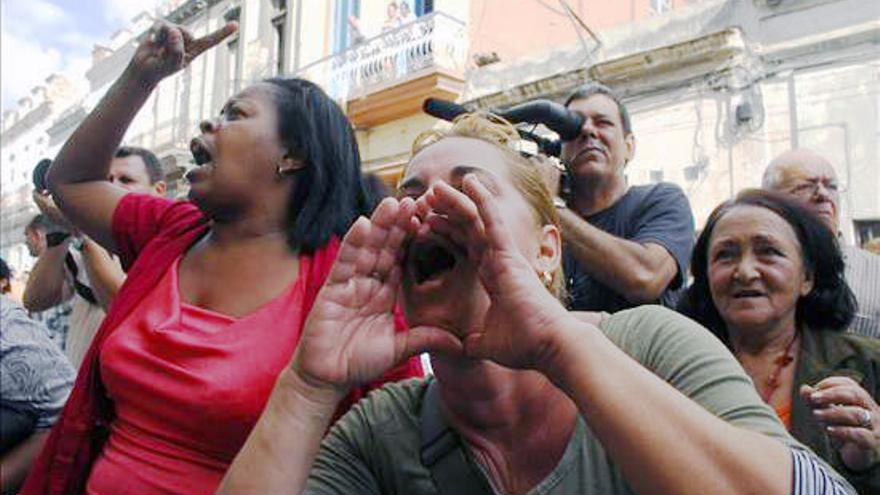
A Rapid Response Brigade performs an act of repudiation against the Ladies in White. (Cubasindical)

14ymedio bigger14ymedio, Karel J. Leyva, Montreal (Canada), 18 February 2024 — In the context of a totalitarian regime, an opportunist is that individual or group that seeks to benefit personally, socially, economically or politically by aligning themselves with the established system of power. They are characterized by prioritizing personal interests over ethical principles, showing remarkable flexibility in their loyalties, which they adapt according to what best serves their own advantages. The opportunists are distinguished by their indifference to the suffering of others and their total apathy to the negative implications of their support for the regime for society as a whole.

Throughout history, totalitarian regimes have repeatedly used opportunists. Citizens who denounce colleagues and neighbors, hoping to win the political favor of the regime; companies that collaborate enthusiastically with dictatorships taking advantage of the forced labor of concentration camps or prisons; members of the economic elites who do everything necessary to preserve their status; and a long etcetera. As these systems begin to show signs of weakness, opportunists show an amazing speed in changing sides, demonstrating the volatile nature of their ideologies.

This behavior not only reinforces the existing power structure but also perpetuates the division within Cuban society

The Cuban totalitarian regime is no exception. Here opportunism is manifested in an exemplary way in the attitude of government officials, members of the Armed Forces, businessmen, academics, artists and intellectuals, who receive privileges and recognition in exchange for their support or at least their silence, in the face of human rights violations, the repression of dissent and even forced exile. This behavior not only reinforces the existing power structure but also perpetuates the division within Cuban society, by contributing to the stability and legitimization of the regime through active or passive complicity. continue reading

Opportunists play a central role in the perpetuation of the misery of the Cuban people not only thanks to their macabre complicity but also to the extent that they contribute to projecting the illusion of “revolutionary” consensus. They call the dictatorship “revolutionary”; regression “progress”;  helplessness “social justice; totalitarianism “democracy”; indoctrination “education”; exploitation “solidarity”; and the despotic whim of a tyrant “popular will”.

Such a mirage hinders the possibility of an organized opposition and weakens international pressure, presenting the world with a facade of stability and acceptance. The opportunists present themselves as the legitimate face of civil society while promoting a culture of conformism that directly undermines the consolidation of dissident voices. Their tolerance and support for the repressive practices of the Cuban communist regime against those who dare to disagree legitimizes the use of force and coercion as tools of social control while revealing a deep ethical and moral crisis within Cuban society.

The opportunists present themselves as the legitimate face of civil society while promoting a culture of conformism that directly undermines the consolidation of dissident voices

In this way, opportunism erodes social trust, weakens bonds of solidarity and undermines the ability to organize collective efforts for change. The opportunist encourages distrust and skepticism. In the process, he not only degrades his own (a)moral values but also facilitates the acceptance of corrupt practices and the abuse of power, with degrading consequences for the culture and societal values.

To prove the weight that opportunism has in the maintenance of totalitarianism, it is enough to imagine what would happen if, betraying their own vile nature, the opportunists decided to withdraw support for the regime. Such a change of loyalties would trigger a cascade of effects with vast implications for the legitimacy, stability and political future of Cuba.

The loss of legitimacy would be the first and most immediate repercussion, marking the regime as weakened before national and international opinion. This questioning of its viability could accelerate doubts about government authority, eroding its power base. Simultaneously, the emptiness left by the opportunists could energize and give new life to the opposition forces, giving them an unprecedented opportunity to galvanize popular discontent and articulate the pro-democratic struggle with a stronger and more unified voice.

Such a change of loyalty would trigger a cascade of effects with vast implications for the legitimacy, stability and political future of Cuba

At the socioeconomic level, the withdrawal of support could precipitate an unprecedented crisis, exacerbating the already unbearable difficulties that exist. The interruption in the management of resources and services, caused by the departure of key actors, would further highlight the deficiencies of the economic model controlled by the State. This situation of instability could generate unsustainable pressure on the regime to implement any emergency reform.

The political landscape of Cuba could immediately undergo a significant reconfiguration, with the emergence of new alliances and leaderships that reflect a diversity of perspectives and aspirations. The withdrawal of opportunists’ support for the Cuban regime would have the potential to initiate a profound transformation on the Island, marking the way for possible democratic advances and social improvements.

But let’s not kid ourselves. The possibility of opportunists in Cuba withdrawing their support for the regime is quite limited. This statement is based on the very essence of opportunism and how it is intertwined with the peculiarities of the Cuban totalitarian system. The decision of opportunists to maintain their support for the Government is deeply rooted in a calculation of risks and benefits, where the balance tilts in favor of the regime as long as the personal and group benefits perceived outweigh the risks associated with a withdrawal of support. To do so at a time when they perceive that the Government, however weak it is, can still control destinies is antithetical to the nature of opportunists.

Opportunists need to glimpse an alternative scenario in which their interests are equally or better safeguarded than under the current regime. Without a movement of opposition with the strength and promise to offer such guarantees, the probability of a significant change in support is minimal. In a word, the anticipation of possible negative consequences – from the loss of privileges to more severe repressive actions – ensures the loyalty of opportunists to the regime. This fear, combined with moral connivance and inertia in the face of a known system, reinforces its reluctance to change.

The decision of opportunists to maintain their support for the Government is deeply rooted in a calculation of risks and benefits

In addition, as long as the regime continues to enjoy a certain degree of support or tolerance at the international level and external pressures do not increase significantly, opportunists will not find reasons to rethink their position. This reality suggests that, when these opportunistic elements finally choose to leave the dark side, their contribution to the democratic cause will be not only superfluous but also undesirable.

Their support would be due to the fact that they will only contemplate a desertion when the structures of the regime begin to falter irretrievably. That is, they would join the fight against the dictatorship when they no longer need it. The undesirability of this change of loyalty lies in the fact that it results not from an authentic awareness or a sudden moral awakening but from a calculated maneuver to perpetuate their personal interests and survival, even if it implies continuing to shamefully reject the ethical principles that must support Cuba’s freedom.

Translated by Regina Anavy

____________

COLLABORATE WITH OUR WORKThe 14ymedio team is committed to practicing serious journalism that reflects Cuba’s reality in all its depth. Thank you for joining us on this long journey. We invite you to continue supporting us by becoming a member of 14ymedio now. Together we can continue transforming journalism in Cuba.
Cuba: The Peseta President

Zayas’ eight-foot-tall statue has one hand in its pocket and the other pointing towards the Presidential Palace. (Carlos Jordi/CC)

14ymedio bigger14ymedio, Yunior García Aguilera, Madrid, February 16, 2024 — Alfredo Zayas is portrayed in Cuba as the most corrupt president of the pre-Castro era. To support this thesis, our school textbooks emphasize one event in particular: the Protest of the Thirteen. No one can deny that buying the old convent of Santa Clara for more than double its previous price was a very santa (saintly) or a very clara (obvious) thing to do. It is also true that the country was going through a profound economic crisis brought on by the collapse of sugar prices.

But Alfredo Zayas (a.k.a. El Chino, or the Chinese guy) was really no more corrupt that his predecessors. What there was, during his presidency, was greater freedom of expression. Everyone had carte blanche to publicly tear him to pieces. And that, at least, is certainly not something the last three people who have had their buttocks in the seat of power following the demise of the Republic can brag about.

Don’t tell me, “Yunior, you’re now going to defend Zayas!” Well, no. I am not related to the man though my relatives would have supported him. I won’t deny that he appointed himself the official historian, a job that came with a very nice salary, though he never did complete his promised History of Cuba. Nor will I deny that he had the astonishing good fortune to win the national lottery twice. I won’t ignore the fact that a statue of him was erected while he was still alive. continue reading

The eight-foot tall sculpture has one hand in its pocket and the other pointing toward the Presidential Palace. Cuban wags used to joke that the message was, “What I have in here, I took from over there.” In the place where that monument once stood, people now worship at a ship whose name [‘Granma’] means “grandmother” in English, the vessel that brought over from Mexico the biggest thief in our history.

I am not asking the Vatican to beatify Zayas. But despite his flaws, the Havana native — a man who always carried a Spanish peseta in his coat pocket — had many good qualities

A lawyer, poet, journalist and great orator, Zayas was the first doctor to become president. He was probably the most learned of our heads of state. He also managed to reach that position without causing a war, which was no small feat. In the Republic’s formative years, the fight between political parties for a piece of the action was violent and ongoing.

The press at the time called these constant internal battles la brava (the threat). El Chino had been eclipsed by former president José Miguel Gómez (a.k.a The Shark) in the Liberal Party’s ranks for too long. Until his “four cats” party — he actually preferred the term Popular — finally managed to win the presidency. He had already beaten General Mario García Menocal in 1916 but the general went into “Maduro mode” and refused to admit defeat, launching the failed Chambelona Revolt.

It must be said that, as a delegate to Cuba’s constitutional convention of 1901, El Chino opposed the Platt Amendment and to leasing the U.S. land for a naval base in Guantanamo. It must also be said that, during his presidency, women earned the right to vote. And the Isle of Pines was returned to us. It should be noted that he legally recognized the the University Student Federation, empowering the students. It must be emphasized that he suppressed an insurrection by the Veterans and Patriots Movement without issuing an order against the people and without firing a shot. It must be remembered that his package of measures did work, getting the country out of a tremendous economic crisis, unlike certain later realignments, reform measures and appeals to national self-reliance. Cuba was the first country in the world to replenish its treasury after the First World War. And it was also the first to pay its war debt to the United States.

Getting back to where we started, what our history teachers neglected to mention was what later happened to each signatory of the famous Protest of the Thirteen. Fifty years later, Juan Marinello himself wrote in the magazine Bohemia, “How many, among the thirteen protestors remained aligned with the masses and national liberation. The first traitor was Lamar Schweyer. Mañach, Ichaso, Lizaso and Masó went over to the enemy camp, taking up arms against the Revolution. The others shrugged their shoulders and categorized their protest as a youthful dalliance.” How ironic history often is.

I am not asking the Vatican to beatify Zayas. But despite his flaws, the Havana native — a man who always carried a Spanish peseta in his coat pocket from his days in exile — had many good qualities.

____________

COLLABORATE WITH OUR WORKThe 14ymedio team is committed to practicing serious journalism that reflects Cuba’s reality in all its depth. Thank you for joining us on this long journey. We invite you to continue supporting us by becoming a member of 14ymedio now. Together we can continue transforming journalism in Cuba.
South Korea Hopes To Obtain Economic Benefits From Its Diplomatic Relations With Cuba

Seoul and Havana formalized on Wednesday in New York the restoration of their diplomatic relations, broken since 1959. (Cubaminrex)

14ymedio biggerEFE (via 14ymedio), Seoul, 18 February 2024 — The restoration of diplomatic relations between South Korea and Cuba after 65 years can have a positive impact on the national economy, the South Korean Presidential Office said on Sunday, highlighting the richness of the island’s natural resources.

“Cuba has considerable mineral resources that are key for the production of electric vehicles (EV), such as cobalt and nickel,” the government institution stated, detailing the expected impact of the diplomatic rapprochement on different sectors of the economy.

South Korean companies can take advantage of Cuba’s vast reserves of natural resources when the United States lifts the economic and commercial embargo imposed on the country, which has the fifth largest reserve of nickel and the fourth largest reserve of cobalt in the world, according to details of the text published by the Yonhap news agency.

South Korea is the birthplace of three of the five largest manufacturers of electric vehicle batteries in the world. continue reading

The South Korean presidential office stated that it will help national companies interested in entering the Cuban market

The South Korean presidential office stated that it will help national companies interested in entering the Cuban market in sectors such as basic necessities, appliances and machinery, scarce in the Caribbean nation due to the aforementioned sanctions.

Seoul also pointed to potential business and cooperation opportunities in the energy sector, since Havana, which suffers from a chronic shortage of electricity, is looking for ways to expand its power plants and the use of renewable energies.

Medicine and biotechnology are other areas where the South Korean Government sees potential economic and research cooperation.

“Cuba has been an untapped market,” says South Korea, where “direct trade is still very limited due to United States sanctions, but we will take advantage of this opportunity with the establishment of formal diplomatic relations to lay the foundations for a gradual expansion of economic cooperation.”

Seoul also pointed to potential business and cooperation opportunities in the energy sector, since Havana suffers from a chronic shortage of electricity

On Wednesday in New York Seoul and Havana formalized the restoration of their diplomatic relations, broken since 1959, with the exchange of diplomatic notes of their representatives at the United Nations (UN).

In 2016, both nations took an important step in the normalization of their relations, with the signing between their chambers of commerce of a memorandum of understanding to share information related to business, carry out exchanges between their delegations and organize joint forums.

South Korea plans to establish a consulate in Cuba to help South Korean visitors to the Island, which were estimated at about 14,000 a year before the outbreak of the COVID-19 pandemic.

Translated by Regina Anavy

____________

COLLABORATE WITH OUR WORKThe 14ymedio team is committed to practicing serious journalism that reflects Cuba’s reality in all its depth. Thank you for joining us on this long journey. We invite you to continue supporting us by becoming a member of 14ymedio now. Together we can continue transforming journalism in Cuba.

Total Silence From North Korea in the Face of the Resumption of Relations Between Cuba and Seoul

Neither the North Korean Foreign Ministry, which had just received the credentials of a new Cuban ambassador in Pyongyang, nor the Government have yet broken the silence about its rival’s approach to the Island. (14ymedio)

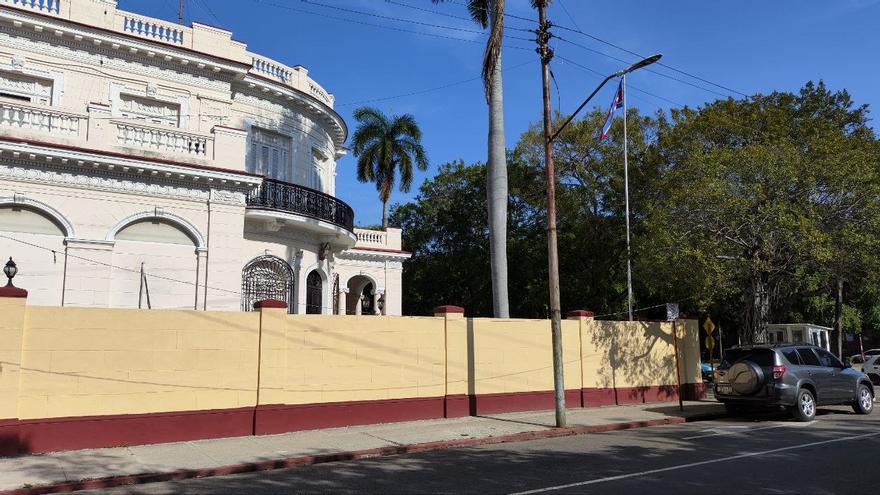
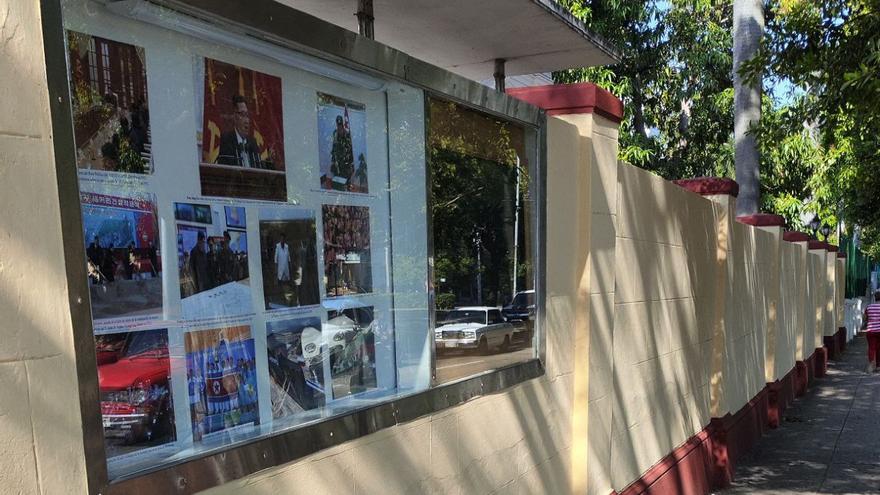
14ymedio bigger14ymedio, Havana, February 16, 2024 — The presidential office of South Korea described on Thursday the restoration of its diplomatic relations with Cuba as “a significant political and psychological coup” that will “inevitably” affect communist North Korea, according to the AP agency. Under lock and key this Friday, with several posters of “esteemed comrade” Kim Jong-un on its fence, the North Korean Embassy in Havana seems to agree.

This same Friday, on the occasion of the 82nd anniversary of the birth of Kim Jong-il, President Miguel Díaz-Canel sent, via X, an “affectionate greeting to the Party, Government and noble people of the DPRK.” And he added: “We reaffirm our historic relationship of friendship, solidarity and brotherhood.”

Meanwhile, neither the North Korean Foreign Ministry, which had just received the credentials of a new Cuban ambassador in Pyongyang, nor its Government have yet broken the silence about the rapprochement of its rival to one of its few allies since the time of the Cold War. The Associated Press agency (AP) says that a “high-level official of the South Korean presidency” explained to the press that the rapprochement will affect the traditional “brotherly ties” of Pyongyang with the Island. continue reading

The opening of diplomatic ties (with Cuba) is the culmination of our efforts to expand our diplomacy to nations that have been part of the socialist bloc

The official – who spoke on condition of anonymity – reported that President Yoon Suk Yeol “has worked actively to establish relations with Cuba, but Cuba had reservations at first due to its ties with North Korea.” The United States, he explained, was informed by Seoul “in advance” of the approach.

“The opening of diplomatic ties (with Cuba) is the culmination of our efforts to expand our diplomacy to nations that have been part of the socialist bloc, including countries that have been friendly with North Korea. It clearly shows where the mainstream is in the flow of history, and also who participates in that mainstream,” the official added.

On Wednesday, Seoul restored its diplomatic relations with Havana, broken since Fidel Castro came to power in 1959. A brief statement from the Cuban Foreign Ministry announced the “exchange of diplomatic notes” of both nations before the United Nations, in New York.

“The establishment of official relations between the two countries was carried out in accordance with the purposes and principles of the Charter of the United Nations, International Law and in accordance with the spirit and standards established in the Vienna Convention for Diplomatic Relations of April 18, 1961,” said the Ministry of Foreign Affairs.

Posters of “esteemed comrade” Kim Jong-un at the fence of the North Korean Embassy in Havana. (14ymedio)

The world press has described the event as a “historic step” between the two countries. BBC reported that Havana and Seoul had only enjoyed ten years of diplomatic relations, since 1949. The “communist bastion” that the Island became since Castro’s arrival made the country an ideal ally for North Korea.

BBC interviewed a South Korean diplomat who, under condition of anonymity, revealed that Havana was pressured by the North Korean Government, which tried to slow down the rapprochement, as well as by “high Cuban leaders of the old guard,” who do not welcome the reconnection.

“Cuba has a very great symbolic importance for North Korea because it is its base of operations in America, and that is why it has always pressured the Cuban government to stay away from Seoul,” he added. “It is a geographically strategic country, attached to the United States, and positioning ourselves there is important in the long term.”

“It seems that there was some kind of commitment dating from the time of Fidel Castro and Kim Il-sung not to take that step,” a former Cuban official told the BBC, who did not identify himself.

It seems that there was some kind of commitment that dated back to the time of Fidel Castro and Kim Il-sung not to take that step

The North Korean Embassy in Havana, according to the British media, is the nerve center of North Korean diplomacy and espionage in the region, in addition to being the largest in the Americas. However, trade and economic relations between the two countries are “practically non-existent,” unlike what happens between Seoul and Havana.

In 2022, for example, according to data provided by the Ministry of Foreign Affairs of South Korea, the country exported goods to Cuba for a value of 14 million dollars and imported goods for seven million. In addition, the “daily life of the Island,” explains BBC, is full of Korean equipment such as Samsung and LG phones, and Hyundai and Kia brand cars.

There was a South Korean stand at the Havana International Fair and Kotra, the state trade body, has served as an embassy on the Island, especially for economic exchanges. Also, among young Cubans, there are thousands of fans of Korean culture, who listen to their music and watch their soap operas. According to the BBC, the Korean fan club in the country exceeds 10,000 members.

Sangmi Han, a journalist with the Korean Service of the BBC, also offered his diagnosis: “The fact that Cuba, North Korea’s sister country, has established diplomatic relations with South Korea in extreme secret without Pyongyang knowing will be a huge wound, difficult for North Koreans to accept.”

On the Island, there is confusion about the change in the Chancellery’s roadmap. In the announcement, published in Cubadebate, dozens of readers gave their opinion on the approach. The stupor is summed up in a question: “North or South?”

Translated by Regina Anavy

____________

COLLABORATE WITH OUR WORKThe 14ymedio team is committed to practicing serious journalism that reflects Cuba’s reality in all its depth. Thank you for joining us on this long journey. We invite you to continue supporting us by becoming a member of 14ymedio now. Together we can continue transforming journalism in Cuba.
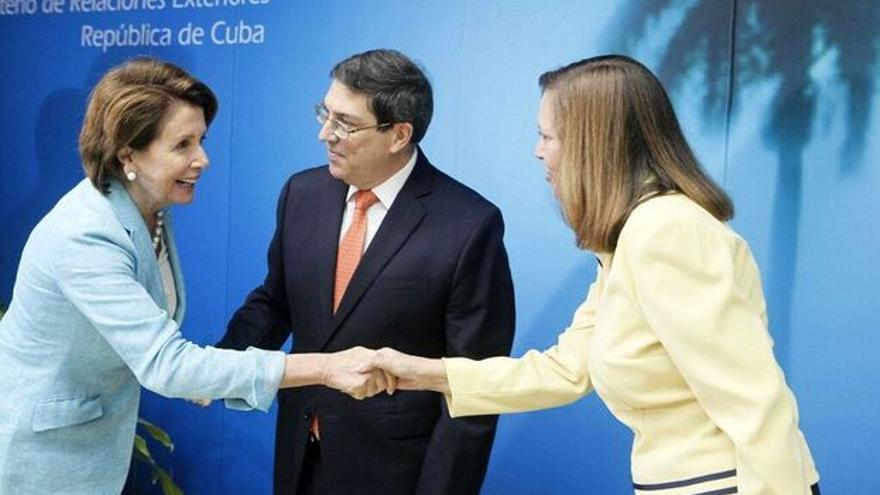
Cuba and South Korea Establish Diplomatic Relations, Broken Since 1959

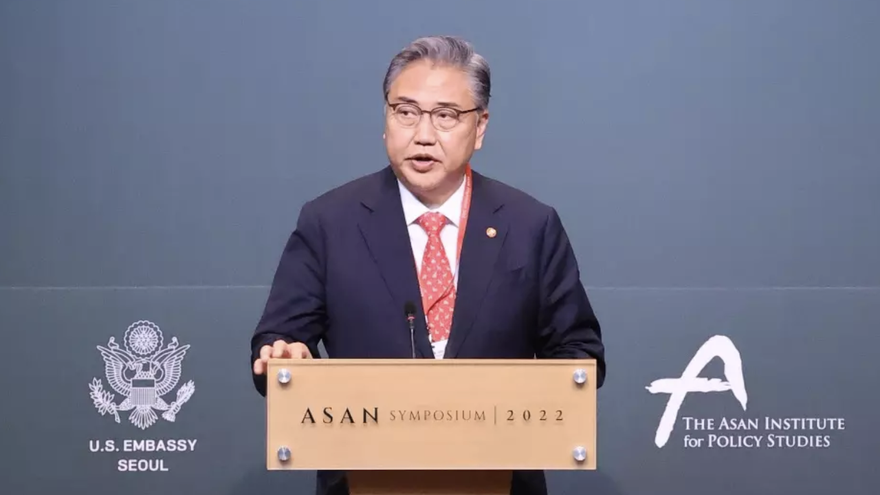
Archive image of Park Jin, South Korean Minister for Foreign Affairs. (EFE)

14ymedio biggerEFE (via 14ymedio), Madrid 14 February 2024 – Cuba’s Minister for Foregn Relations announced on Wednesday the establishment of diplomatic and consular relations with South Korea, broken since 1959.

A brief press release from the Cuban Chancellery noted the establishment of links “via an interchange of Diplomatic Notes between the Permanent Representatives of each country at the United Nations, in New York”.

“The establishment of official relations between both countries was brought about through agreement with the principles and objectives of the United Nations Charter, International Law, and in conformity with the spirit and the standards established in the Vienna Convention on Diplomatic Relations of 18 April 1961”, said the Foreign Affairs Minister. continue reading

South Korea and Cuba took a step towards normalisation of relations in May 2016, when the chambers of commerce of both nations signed a memorandum of understanding

Diplomatic links between South Korea and Cuba were broken in 1959, principally because of the historical, political and ideological alliance that existed between the Havana and the North Korean governments.

South Korea and Cuba took a step towards normalisation of relations in May 2016, when the chambers of commerce of both nations signed a memorandum of understanding for the sharing of information in the business sector, for bringing about an interchange between their respective delegations and for organising joint forums.

As well as South Korea’s interests in the energy sector, the country also considers that “Cuba has potential in both the medical and the tourism markets of the American continent”, said Seoul’s Minister for Strategic Planning and Finance.

Translated by Ricardo Recluso
____________________

COLLABORATE WITH OUR WORKThe 14ymedio team is committed to practicing serious journalism that reflects Cuba’s reality in all its depth. Thank you for joining us on this long journey. We invite you to continue supporting us by becoming a member of 14ymedio now. Together we can continue transforming journalism in Cuba.
Ukraine Places Between 400 and 3,000 the Number of Cuban Mercenaries in the Service of Russia

Raibel Palacio Herrera was the victim of an attack by a Ukrainian drone. (Facebook)

14ymedio bigger14ymedio, Havana, February 17, 2024 — The mother of Raibel Palacio Herrera, a 21-year-old Cuban recruited by Russia who died last week in Jerson, in southern Ukraine, said that her son was used as “cannon fodder” by the Russian Army. Interviewed by the American newspaper The Wall Street Journal (WSJ), Danelia Herrera, a resident of Havana, said that Russia will “kill everyone” who, like her son, traveled to Moscow in search of better living conditions and ended up enlisting in the invading troops.

Palacio was hit by a Ukrainian drone while trying to make a tourniquet to contain the bleeding of a leg wound, the WSJ says. Herrera’s mother, who lives in precarious conditions in a “wooden room” on the outskirts of the capital, vividly remembers his recruitment.

The young man and three other neighbors – his friends – boarded a flight to Russia in November looking for a way to “leave the poverty of the Island.” The selfies that the four Cubans took attest to the “enthusiasm” they felt for the trip. He was offered $2,200 in monthly salary, says the woman, an amount that the young man could never have dreamed of earning on the Island.

His death is the first death of a Cuban in the war against Ukraine that has been documented so far

“After five months, they were going to give him a passport and citizenship for me,” said Melisa Flores, his partner from Palacio. His death, confirmed last Tuesday by the Univision network, is the first death of a Cuban in the war against Ukraine that has been documented so far. continue reading

Cited by the WSJ, diplomat Ruslan Spirin, Ukraine’s representative in Latin America and the Caribbean, estimates that there are 400 Cuban soldiers in the service of Russia. “We take that matter very seriously,” Spirin said. Other sources, the newspaper points out, calculate higher numbers. One who does so is the Ukrainian deputy Maryan Zablotskyi, who places the number between 1,500 and 3,000.

In addition, there are mercenaries from the Central African Republic, Serbia, Nepal and Syria and volunteers – although their number is plummeting – and from other countries, including the United States. The WSJ explains that the Cuban contingent is one of the most numerous and that the economic debacle of the Island makes it easier for more and more young people to want to try their luck on the combat front. If they survive, they have their hopes set on Moscow’s reward.

Univision explained that Palacio was contacted by a Russian woman, who paid for the trip and offered him 200,000 rubles, the equivalent of $2,200. They promised him this money in exchange for construction work, but, according to the family, they had actually deceived him and sent him to the front line.

In addition, there are mercenaries from the Central African Republic, Serbia, Nepal and Syria, and volunteers from other countries

“Those people are scamming us. We thought one thing, and it turned out to be another,” Palacio Rivera said in an audio to his wife. “We were told that we were going to war, but that we were not going to fight. It was just to dig trenches.”

The couple has two girls, one of them newborn, whom their father will never know. The family resides in precarious conditions in the municipality of Songo la Maya, in Santiago de Cuba.

“I want to know where they have my son, when I can have him, because they told me that they were going to send me the body, that they were going to contact the Cuban Embassy in Russia and the Russian Embassy here. We haven’t heard anything,” said the young man’s mother.

Danelia Herrera showed Univision the message received by another young man named Gilberto Herrera Shuman last Saturday: “With immense pain I must inform you that today they brought us the news that Raibel was hit by a drone resulting in his death. My deepest condolences and that of all the colleagues who are here.” On his social networks, Herrera Shuman says that he is a Cuban from Havana and lives in the city of Vysókoye, in southern Russia.

On January 9, YouTuber Alain Paparazzi said that Yansiel Morejón, a former boxer from Santa Clara, had died at the age of 26, also at the front. The young man’s relatives did not respond to this newspaper, but another relative explained via social networks that the “official” version is that he died “of a heart attack,” although “he really died in the war.”

Palacio’s trip, in November, came two months after the Cuban regime detained 17 people for belonging to a “human trafficking network,” thus trying to detach itself from the recruitment of nationals to fight on the Russian side in the war in Ukraine.

Translated by Regina Anavy

____________

COLLABORATE WITH OUR WORKThe 14ymedio team is committed to practicing serious journalism that reflects Cuba’s reality in all its depth. Thank you for joining us on this long journey. We invite you to continue supporting us by becoming a member of 14ymedio now. Together we can continue transforming journalism in Cuba.
At Dusk, Criminals Take Over Havana’s Botanical Garden

To go to the Japanese Garden you have to board a vehicle that won’t leave until it’s full. (14ymedio)

14ymedio bigger14ymedio, Juan Diego Rodríguez, Havana, 17 February 2024 — The Havana Botanical Garden has been hurt by its distant location. In a city where going from one neighborhood to another is already a headache due to the lack of fuel and the poor state of transport, getting from the center to the periphery of the Arroyo Naranjo municipality is an impossible mission if you don’t have your own car, a good amount of money for the trip, or you are able to book  a tour with the bus included.

Once the threshold is crossed by paying 30 pesos to the guard, there are other problems:  insecurity and crime. The primary victims are the workers, especially those who are involved in the food service. “The vegetarian restaurant El Bambú exists, but it is no longer making that type of food; it has a Creole menu,” says a bored employee sitting under a tree. “It’s not open at the moment because it was robbed.”

The lootings have taken over the Garden at night. “We leave every afternoon just as the thieves are arriving,” says a guard. He complains that the security workers don’t have what they need to prevent the thefts.

“We have weapons but few bullets, and they arrive with machetes, in groups,” he describes. “The other day in El Bambú, which was the last place they assaulted, one of those gangs took a boss, who is very strong, by the way. They beat him, tied him up and put him under a table with several chairs piled on top of him.” continue reading

“There were seven with knives and machetes,” he says. The reason for the robberies is “to steal food from the restaurants.” In another restaurant, La Majagua, “they entered days ago and found no food. There was no meat, no rice, no preserves, so they stole the bathroom door.” El Yarey and El Ranchón have also been robbed in the early hours of the morning.

Entrance to one of the pavilions. (14ymedio)

“They emptied the creamery and took everything,” he says. Every attempt by workers to protect the goods has ended in physical aggression or threats. “If you don’t make things easy, we’ll kill you,” was the clear warning that the security guard of El Yarey received when, from the roof of the premises where he watched the area, he spotted the approaching criminals. “They broke the door, and there was no one to stop them.”

“They told him not to dare to use the phone because he wasn’t going to get out of there alive.” However, the worker recognizes that the outlaws don’t only arrive from outside. “Here there are bosses who do not want the guards to be in the places that have the most merchandise, so they can steal and blame the night gangs. Everyone steals, those from here and those who are not from here.”

In 1989, Fidel Castro inaugurated the icing on the Botanical cake: the Japanese Garden. It was part of an ambitious green belt with recreational options, areas to hold fairs and children’s playgrounds. “There will be six institutions, including Expocuba; four of them will be the Botanical Garden, Lenin Park, the Zoo and the Metropolitan, with many trees,” the ruler said, full of enthusiasm, before an audience that applauded with frenzy.

“I want to end by promising that this Botanical Garden will be more and more beautiful,” Castro wrongly predicted in that speech.

Crowded by tourists in another time, this Saturday only two foreigners wandered through the garden. (14ymedio)

Now, to go to the Japanese Garden, you have to board a vehicle towed by a tractor with a capacity of 15 people. “If there are not 15, I won’t leave,” the driver warns four customers and says he will return at two in the afternoon “to see if there are people,” unless, he clarifies, “you want to pay for the full transport.”

In El Ranchón, one of the several Creole restaurants in the garden, only beer and appetizers of sausage and ham were available this Saturday. “The kitchen is closed,” says an employee who approaches the tables with jugs of beer at the cost of 610 pesos. If someone wants to eat, they have to wait for them to prepare the food in a neighboring establishment.

This Friday, Cubadebate described it as “the largest botanical garden in the world” and spared no praise for its facilities. “This is how Fidel dreamed of it,” concludes the report, which presents the 1,180 acres of vegetation – with 3,000 species of plants – as a kind of earthly paradise.

But drought, little irrigation and lack of attention have also made a dent in the important collection of plants from several continents. Dry shrubs, areas where only weeds grow and the exposures of greenhouses with numerous notable casualties attest to the urgent need to replace certain species and take care of those that remain more carefully.

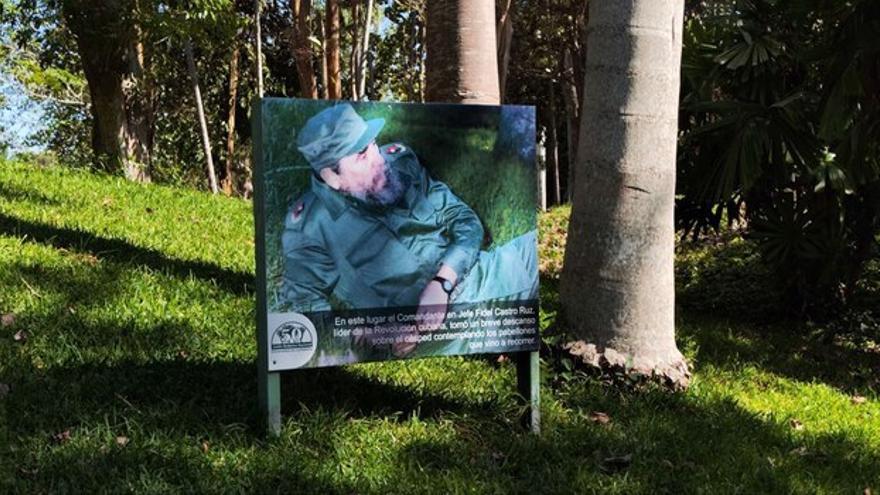
Poster alluding to a moment of “rest”  for Fidel Castro in the garden he “dreamed about.” (14ymedio)

The garden is attached to the University of Havana, and Cubadebate defines it as the quintessence of botanical studies in the region, alleging that more than 300,000 people visit it every year. Its workforce: 350 workers. The budget allocated to it by the State: 118 million pesos in 2023. “How is all that financed?” asks the regime’s media: thanks to the “generosity” of the Ministry of Higher Education, which manages the money destined for the Botanical Garden.

The digital newspaper admits that “the low technical availability of public transport and fuel,” in addition to the remoteness of the park, has caused a significant drop in visitors, 80% of what it received last year. For the Government, Cubadebate assures, improving this figure and using the garden to attract tourism is a matter of political and sentimental importance for Raúl Castro. For the nonagenarian general, the Botanical Garden is a “jewel of the nation.”

Translated by Regina Anavy

____________

COLLABORATE WITH OUR WORKThe 14ymedio team is committed to practicing serious journalism that reflects Cuba’s reality in all its depth. Thank you for joining us on this long journey. We invite you to continue supporting us by becoming a member of 14ymedio now. Together we can continue transforming journalism in Cuba.
The Two Cuban Doctors Held Captive in Somalia Have Died, According to Their Kidnappers

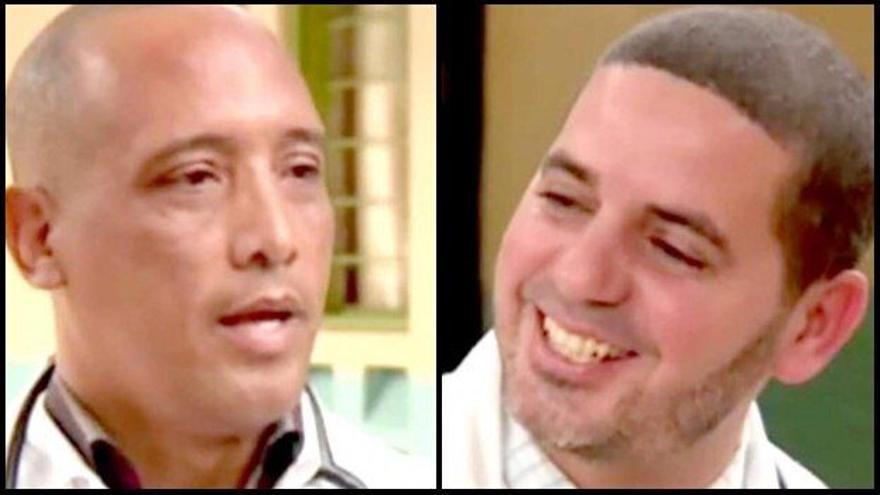
In April 2019, the news of the kidnapping of Assel Herrera Correa and Landy Rodríguez was reported. (Collage)

14ymedio bigger14ymedio, Havana, February 17, 2024 — The Cuban Foreign Ministry warned this Saturday that the reports on the death of Cuban doctors Assel Herrera Correa and Landy Rodríguez, kidnapped in Kenya since 2019, “have not been confirmed.” The jihadist group Al Shabab, which held both health workers, released a statement on X which claims that both died during a bombing attributed to the United States that occurred on Thursday, February 15 in Somalia.

“The Cuban authorities remain in permanent communication with their Kenyan and Somali counterparts, and our people will be immediately informed,” said the Foreign Ministry, which stressed that all the information circulating is, so far, “unofficial.”

Al Shabab also published two photographs of Herrera Correa’s alleged corpse, with his naked torso and traces of blood on his body, after the attack by American drones “at 12:10 am” on the Somali town of Jilib. Among the casualties of the alleged bombing were the two “Cuban prisoners” captured in Mandera, Kenya.

Al Shabab also accuses the United States of targeting its prisoners and describes that, in previous years, it has attacked at least two enclaves of the jihadist group with this objective. continue reading

Cuba’s Ministry of Foreign Affairs (@CubaMINREX) posted this notice today on X (formerly Twitter): In recent hours, unofficial sources have reported the death in a bombing last Thursday, February 15, of the Cuban doctors, Dr. Assel Herrera Correa and Dr. Landy Rodríguez Hernández, kidnapped in the community of Mandera, Kenya, on April 12, 2019.

Rodríguez and Herrera Correa were kidnapped on April 12, 2019 in the Kenyan city of Mandera, bordering Somalia and the target of jihadist attacks in the past. That day, the two doctors were traveling, as was their custom, in a convoy to the Mandera hospital, protected by armed escorts, when they were intercepted after a shooting in which one of the police officers guarding them was killed.

Until 2022, the Government of Kenya always stated that steps were being made to rescue the doctors, efforts that, to date, have been unsuccessful. Since the arrival of William Ruto to the Kenyan Presidency in September of that year, the Executive has not publicly pronounced on the case. Official silence has also prevailed in neighboring Somalia, where the two doctors supposedly remain captive.

“Nobody knows the current whereabouts of the two Cuban doctors. We also do not have up-to-date information about the current state of their well-being,” a source from the Somali National Intelligence and Security Agency (NISA) told EFE in April 2023, on condition of anonymity because he is not authorized to speak to the media.

“It is believed that they are still held somewhere in an Al Shabab bastion since their kidnapping,” the source said. “We don’t have any more details at the moment,” he insisted, “and nothing new has emerged in the last two years.”

Herrera and Rodríguez were part of a contingent of 100 Cuban professionals who arrived in Kenya in 2018

In May 2019, traditional leaders from Kenya and Somalia who traveled to the Somali region of Jubaland, controlled by Al Shabab, to negotiate in favor of the doctors, claimed to have seen the doctors providing medical assistance to the local population. According to the mediators, the kidnappers went so far as to demand 1.5 million dollars as a condition for their release, the Kenyan press reported at the time.

Herrera Correa and Rodríguez were part of a contingent of 100 Cuban professionals who arrived in Kenya in 2018, as part of a bilateral agreement to improve access to specialized health services in the African country.

Al Shabab, affiliated with the Al Qaeda terrorist network since 2012, carries out frequent attacks to overthrow the Somali Government – supported by the international community – and establish an ultra-conservative Islamic State. The jihadist group controls rural areas of central and southern Somalia and also attacks neighboring countries such as Kenya and Ethiopia.

Somalia has been living in a state of war and chaos since 1991, when dictator Mohamed Siad Barre was overthrown, which left the country without effective government and at the mercy of Islamist militias and warlords.

Translated by Regina Anavy

____________

COLLABORATE WITH OUR WORKThe 14ymedio team is committed to practicing serious journalism that reflects Cuba’s reality in all its depth. Thank you for joining us on this long journey. We invite you to continue supporting us by becoming a member of 14ymedio now. Together we can continue transforming journalism in Cuba.
‘Do Not Give Up’: The Message From Navalny We All Must Hear

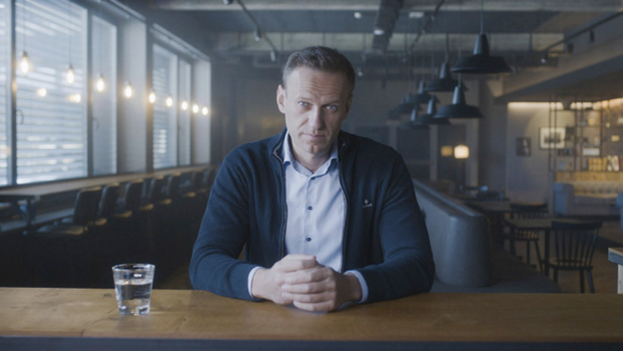
Frame from the HBO Max documentary ‘Navalny’ directed by Daniel Roher. (Capture)

14ymedio bigger14ymedio, Yoani Sánchez, Havana, 17 February 2024 — Yesterday, Friday, was a difficult day. The sun had not yet risen in Havana when I learned of the death in prison of the Russian opponent Alexei Navalny. That news immediately led me to reflect on the fragility of Cuban political prisoners, some confined to punishment cells, far from any contact with their families and at the mercy of a system for which the life of a dissident is worth nothing.

Vladimir Putin had confined Navalny in a cold prison in the Arctic Circle. He was so afraid of the 47-year-old lawyer that he tried to bury him in life away from Moscow, the Russian streets and his colleagues in the fight against corruption. Autocrats are like that, they can sign for the transfer of a political opponent to the most remote dungeon rather than face him at the polls. Cowards are known by their actions and the tenant of the Kremlin is just that: a fear-filled person with power.

In the Cuban streets, no one has bought the version of the sudden death, the result, supposedly, of a blood clot

It was already afternoon, when I had read the international reactions and thought, countless times, about Navalny’s wife and children, I looked out the window to see the obscene silhouette of the Russian Embassy in the Cuban capital, its demeanor defiant and aggressive. If in other parts of the world the surroundings of Moscow’s bases of operation were, and will be, in the coming days, the center of protests, demands and cries of “Assasins!”, in Havana none of that will happen. continue reading

Cubans will not go en masse to the crude pile on 5th Avenue, at the least to light some candles for the activist and blogger who challenged the corrupt circle of Russian power. They will not do it, not because they do not feel his death, but because the Havana regime is not going to allow it. Allied and dependent on the former KGB official, the Police of this Island will not accept any gesture that upsets the Kremlin. The official media took long hours to publish a note about Navalny’s death. Neglecting him, even after he died, was another way to ingratiate itself with Putin.

However, on the Cuban streets no one has bought the version of sudden death, presumably the result of a blood clot. “They killed him,” a neighbor told me as soon as she greeted me. “Why did he return to Russia if he knew they were going to assassinate him?” Questioned a friend who had followed Navalny’s journey since he opened a digital blog and began to expose the rot of Putinism . “What is the West going to do now?” He stressed.

“Not giving up,” the Russian opponent thus summarized his legacy in a biographical audiovisual that shortly after would win the Oscar for best documentary.

It is true that he could have gone into exile, he even had a great opportunity to stay in Berlin after the assassination attempt he suffered in 2020. The doors were open for him to settle in a capital of a democratic country, give lectures at universities and help activists in his country in many other ways. But I sense that Navalny knew that if he did that, he would stop being, in a certain way, himself. The exile killed part of the politician. Living in another nation was not what he planned for his life. For the short life he ended up having.

“Do not give up,” that was the message that Alexei Navalny left for his Russian compatriots in case he was assassinated. Emaciated by the health problems caused by the poisoning, the Russian opponent thus summarized his legacy in a biographical audiovisual that shortly after would win the Oscar for best documentary. In front of the camera, he is seen repeating the phrase, once in English, once in Russian. By the time he speaks in his language he is transformed. His eyes become sparkling, the deep grooves left by the long recovery look deeper. He takes a breath, joins his hands and releases the words with a conviction that shocks. Navalny is speaking to us, and he knows what awaits him.

Unfortunately he was not wrong in his prediction. I hope that he was not wrong either in calling on Russians not to accept that Vladimir Putin gets his way.

____________

COLLABORATE WITH OUR WORKThe 14ymedio team is committed to practicing serious journalism that reflects Cuba’s reality in all its depth. Thank you for joining us on this long journey. We invite you to continue supporting us by becoming a member of 14ymedio now. Together we can continue transforming journalism in Cuba.

In 2006, the Cuban CIA Agent Who Captured Che Suspected Manuel Rocha’s Betrayal

Several experts claim that Rocha had been under suspicion for three decades. (EFE)

14ymedio bigger14ymedio, Madrid, February 16, 2024 — It’s been 17 years since the United States could have arrested former American diplomat Víctor Manuel Rocha, who was ultimately arrested in December 2023 for allegedly spying on Cuba. A Cuban soldier who defected from the Island sounded the alarm to Félix Rodríguez, a former CIA agent, saying that the official was a mole of Fidel Castro infiltrated at the highest level. But no one believed him.

“We all thought it was defamation,” Rodríguez, an agent who participated in the invasion of the Bay of Pigs in 1961, and in the capture in Bolivia of Ernesto Che Guevara that ended with his death, told Associated Press (AP). That lieutenant colonel, who was his informant and whose identity he has refused to reveal, went to his home in Miami in 2006 and told him clearly: “Rocha is spying for Cuba.”

Rocha’s credibility was such, Rodríguez claims, that although he transmitted the message to the CIA, everyone was skeptical about the information and believed that it was an attempt to discredit a fervent anti-communist.

“I really admired this son of a bitch. I want to look him in the eye and ask him why he did it. He had access to everything,” Rodríguez said

“I really admired this son of a bitch. I want to look him in the eye and ask him why he did it. He had access to everything,” Rodríguez told AP, which on Thursday published an extensive article for which it interviewed two continue reading

dozen people linked to the case, including agents, former CIA agents, friends and partners of Rocha, to try to understand how the case of the greatest infiltration in the U.S. Government known so far could happen. The former diplomat, who this Wednesday pleaded not guilty to the 15 charges against him, will be tried on March 25.

But the great unknown, which according to AP may take years to uncover, is what the Cuban regime was able to have access to thanks to Rocha. The former officials interviewed agreed that the CIA had known since at least 1987, that Castro had a high-level infiltrator – “super mole” – in the U.S. Government and that the former diplomat, of Colombian origin, was probably on a list delivered to the FBI of alleged spies in high foreign policy positions.

Peter Romero, former Undersecretary of State for Latin America and Rocha’s colleague, does not hesitate to admit that the error was “monumental.” “We are all doing a huge examination of conscience, and no one can think of anything. He did an incredible job of covering his tracks.”

AP reconstructs Rocha’s biography, which he told to those who met him. His first years in the country, at the age of 10, were hard, they say, but his intelligence gave him access to a scholarship for minorities with which he could study in an elite school. “Taft was the best thing that happened to me in my life,” he said in an alumni magazine of that boarding school in Connecticut in 2004.

That life had a dark side. Rocha was discriminated against because of his origin – poor and immigrant – by the other students. Some say that in those episodes – which he himself defined as devastating and during which he even thought of committing suicide – is the germ that led him to sympathize with the Cuban Revolution.

As was already known, the former diplomat studied at Yale, Harvard and Georgetown. In those years some of his contacts with Cuba begin, the first in 1973 during a trip to Chile where he met agents of the General Directorate of Intelligence (DGI) deployed in that country in the time of Salvador Allende, according to recordings of the FBI’s covert operation. He married a Colombian woman, who is being investigated for possible links with Cuba and whom AP was unable to locate.

Rocha then worked at the United States Interests Section in Havana, where he was when the MiGs of the Cuban Air Forces shot down, in February 1996, the civilian planes of Brothers to the Rescue

In 1981 he entered the U.S. Foreign Service and was sent to Honduras where his task was to advise the contras fighting against the Sandinista Government of Nicaragua, supported by Cuba. His first relevant stop was in 1994, when he arrived at the White House as director of Inter-American Affairs in the National Security Council with responsibility for Cuba. From that position he wrote a memorandum urging Bill Clinton to dismantle the main sanctions against the Island, an idea that could not prosper since in 1996, the Republicans took control of Congress, and the policy towards Cuba hardened.

Rocha then worked at the United States Interests Section in Havana, where he was when the MiGs of the Cuban Air Force shot down, in February 1996, the civilian planes of Brothers to the Rescue.

The AP article reviews what is known as Rocha’s greatest favor to Cuba, when he was ambassador to Bolivia. He said during a conference that voting for a drug trafficker – alluding to the candidate and coca leader Evo Morales – would make the United States cut off foreign aid. Liliana Ayalde, also a diplomat, tells the agency that she felt very uncomfortable. “I told him that it was not appropriate for the ambassador to make those statements when the elections were just around the corner.”

“Now that I see it in retrospect, it was all part of a plan,” Ayalde considers. After those statements, which were considered an act of interference, Morales was catapulted into the presidential race. Although he didn’t win on that occasion, years later he did, calling Rocha his “best campaign manager.”

Cuban agent Florentino Aspillaga, who defected when he headed the DGI office in Bratislava (present-day Slovakia), was the first to speak to the CIA, in the mid-1980s, about the spies infiltrated into the United States. According to his statements, four dozen Cubans recruited by the CIA were double agents carefully selected by the DGI to penetrate the United States Government.

Brian Latell, a former CIA analyst, said that Aspillaga mentioned “two highly productive spies within the State Department” and that “Fidel Castro himself played a key role as the leader of Cuba’s spies.”

He claimed to have seen documents marked as secrets “so valuable that they were sent directly to Castro’s residence without going through the Minister of the Interior

Another deserter of the Cuban DGI consulted by AP, Enrique García, said he also had known about the Island’s espionage network since the 90s, and he claimed to have seen documents marked as secrets “so valuable that they were sent directly to Castro’s residence without going through the Minister of the Interior. “I have no doubt that [Rocha] was part of that network,” he says.

He has also talked about the case of Peter Lapp, an FBI agent who supervised, among others, the case of Ana Belén Montes, although he did not know if Rocha was at some point under suspicion, as Jim Popkin, author of a book about Montes, argues. He was forceful when evaluating the risk that Cuba poses to national security and said that it is usually underestimated, unlike Russia or China.

“It is a country that we ignore at our own risk. Cubans are not only really good at human intelligence, but they are also experts in brokering information to some of our greatest adversaries,” says Lapp.

Rocha, who in 2002 retired from public service and switched to private enterprise, dedicated himself to trying to influence the embargo by buying goods confiscated by the Revolution. He boasted about his contacts: “I have access to almost all the countries in the region or I know how to get it,” he told the Miami Herald in 2006.

Translated by Regina Anavy

____________

COLLABORATE WITH OUR WORKThe 14ymedio team is committed to practicing serious journalism that reflects Cuba’s reality in all its depth. Thank you for joining us on this long journey. We invite you to continue supporting us by becoming a member of 14ymedio now. Together we can continue transforming journalism in Cuba.
The Cuban Prosecutor’s Office Asks for Prison Sentences of 4 to 9 Years for the Demonstrators of Caimanera

The six accused of the demonstrations in Caimanera in May 2023. (Facebook)

14ymedio bigger14ymedio, Madrid, January 29, 2024 — Almost nine months after the anti-government protests in Caimanera, repressed by the black berets and during which there were deliberate cuts to the internet service, the Guantánamo Prosecutor’s Office has made public its ruling with the sanctions it requests for six of the detainees, of between four and nine years in prison.

On Saturday, the activist Marcel Valdés released the document, provided by the parents of some detainees, which includes the request for nine years in prison for the crimes of “public disorder” and “instigation to commit crimes” for Daniel Álvarez González, who has the highest penalty.

He is followed by Luis Miguel Alarcón Martínez, Rodolfo Álvarez González and Freddy Sarquiz González, whom the Prosecutor’s Office accuses of several crimes of public disorder, and asks for six years of deprivation of liberty.

He is followed by Luis Miguel Alarcón Martínez, Rodolfo Álvarez González and Freddy Sarquiz González, whom the Prosecutor’s Office accuses of several crimes of public disorder for which they ask for six years of deprivation of liberty

The judge has requested the same years, but also for a crime of attack, for Felipe Octavio Correa Martínez, while the request for a penalty for Yandri Pelier Matos, accused of public disorder and resistance, is four years in prison. continue reading

The document indicates that on 6 May 2023 Daniel Álvarez González and Luis Miguel Alarcón Martínez began to shout slogans such as “Abajo Díaz-Canel“, “Abajo la Revolución“, with signs of having consumed “alcoholic beverages” and in order to “promote chaos.” Their calls incited other neighbors to accompany them, according to the Public Prosecutor’s Office, which affirms that they came to try to impose themselves on law enforcement to avoid arrests.

The Prosecutor’s Office accuses several of the protesters of having “unadjusted behavior” and not participating in “activities guided by political and mass organizations.” In his opinion, the defendants maintain “reprehensible” behaviors, including games such as la bolita (a lottery) and dog fights, in addition to being unemployed. However, none of them have a criminal record.

Victoria Martínez Valdivia, mother of two of the accused, told Martí Noticias that the only one who had received the file was Yandri Pelier, while at home they were still waiting for the document. Her son Luis Miguel is in prison awaiting trial, while Felipe Octavio was released on bail.

“I expected it for Luis Miguel, because he did protest himself peacefully. Yes, he did, and he says he won’t regret it. He affirms that he simply asked for freedom and food for his family and his people. But Felipe Octavio Correa Martínez, what they have said about him is a lie, because the boy was not even at the demonstration. Felipe’s participation was when the abusers, those criminals, left him upstairs to kill his brother, and he hugged his brother. Felipe says: ’Mom, I don’t regret it, because I will guard my little brother so that they wouldn’t give him more blows,’” he said this Sunday in the middle of Miami.

Correa Martínez was released from pre-trial detention with Pelier Matos in June, after spending a month in detention. Two months later, in August, they also left jail after paying bail Rodolfo Álvarez González and Freddy Sarquiz González.

Luis Miguel Alarcón Martínez and Daniel Álvarez González, accused of instigating the protest, have since been in the Combinado de Guantánamo prison, where they have had to suffer the diseases derived from the poor living conditions that occur in the prisons of the Island.

“I expected it for Luis Miguel, because he did protest himself peacefully. Yes, he did, and he says he won’t regret it. He affirms that he simply asked for freedom and food for his family and his people”  

The protests in Caimanera, the emblematic municipality known for its proximity to the US naval base of Guantánamo, took place on the night of Saturday, May 6 of last year and were the most important after those of 11 July 2021, known as ’11J’, and those sparked by the power outages that splashed in the summer of 2022. Around a hundred people participated in them and they were repressed with blows and arrests.

The official press quickly launched a campaign to label the protest as counter-revolutionary and point it out as an action of the “hybrid war” against the Government. Cubadebate released an extensive article entitled Caymanera: What it was and what they tried to be in which it described what happened as an “unusual demonstration” of a few dozen people “initiated by an incident with a small group in a state of drunkenness” and taken advantage of in Miami to “try to give the image of a rebellious country and encourage the uncautious who believed it.”

Organizations such as Amnesty International have reacted against the arrests in Caimanera by telling the Government that the response to a protest could never be state violence.

Translated by Regina Anavy

____________

COLLABORATE WITH OUR WORKThe 14ymedio team is committed to practicing serious journalism that reflects Cuba’s reality in all its depth. Thank you for joining us on this long journey. We invite you to continue supporting us by becoming a member of 14ymedio now. Together we can continue transforming journalism in Cuba.