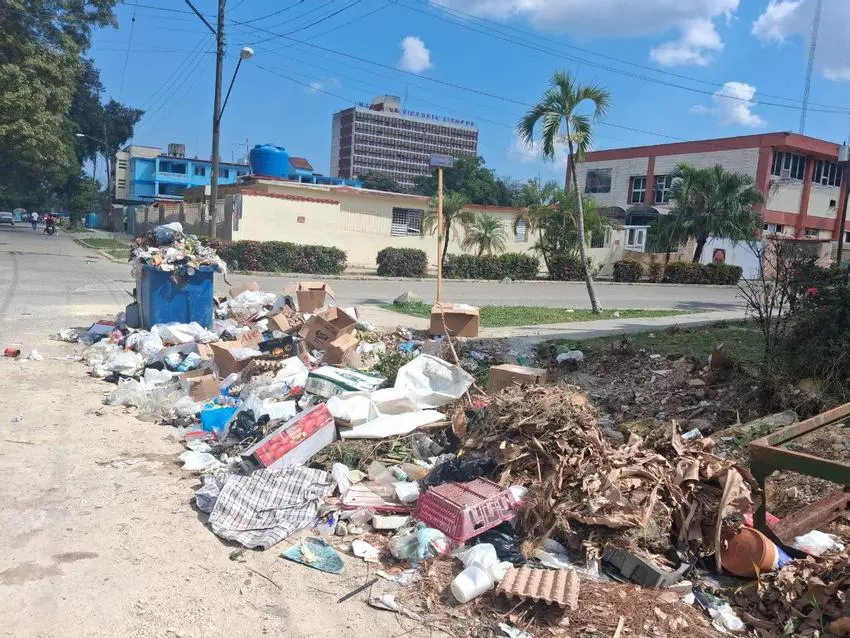
“It hasn’t been the worst flooding, but it’s come at the worst possible time: without water or electricity and with the garbage dump almost reaching half a block.”
“The water reaches as far as 3rd Street, and from D onwards. You can’t go there because it’s all flooded.” / 14ymedio
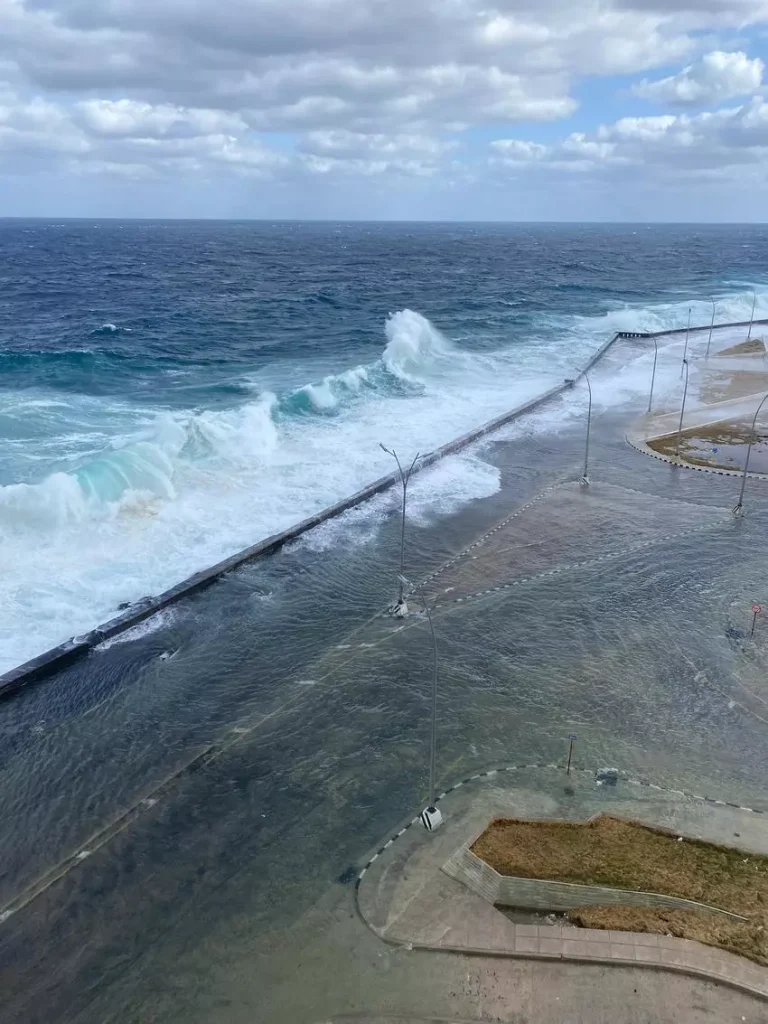
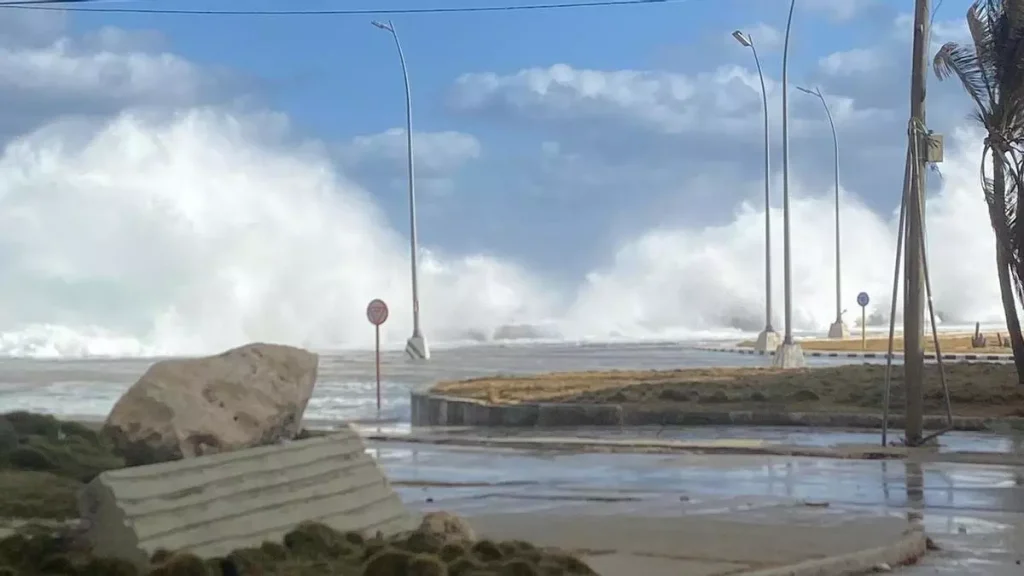
14ymedio, Havana, February 23, 2026 — Indifferent to internal crises and external tensions, the forces of nature stubbornly continue on their course, sometimes unpredictable, sometimes not so much. Such is the Atlantic Ocean off Havana during the winter months, leaping over the Malecón and spreading across several streets.
The image of the ocean forming a wall of white foam against the stone seawall has been a recurring theme in the most idyllic photographs of the capital, those that, looking west, show the old skyline—without the Torre K hotel —formed by the Habana Libre Hotel, the Hotel Nacional, and the Focsa Building, and, to the south, the Morro Lighthouse. In practice, it poses a problem every year, especially for traffic and residents of nearby areas.
From his balcony, indeed, one can see the waves crashing and the water penetrating unhindered. / 14ymedio
“The wind almost swept me away. Tremendous wind. The water reaches as far as 3rd Street, and from D Street onwards. You can’t go there because everything is flooded,” a resident of the Girón building, at Malecón and F Streets, lamented to this newspaper, as he was unable to leave this Monday to buy food.
From his balcony, indeed, one can see the waves crashing and the water pouring in unchecked. The empty avenue isn’t just because of the storm this time. “With the critical fuel shortage, there’s no need to even close the road,” the man says ironically. The streets have been almost deserted for a month, with very few foreign tourists, who in any case provide a stark contrast to an exhausted and aging population.
“It hasn’t been the worst or the most serious of the floods, but it has come at the worst possible time: with problems in the water supply, without electricity since last night, with the garbage on the corner that extends almost half a block and, to top it all off, with almost no internet access to communicate with the family and tell them that we are okay,” says a Havana resident at 1st and C.
Seeing the ocean so free is even beautiful. Some dare to say: “It’s not the only invasion we are expecting.”
______________________
COLLABORATE WITH OUR WORK: The 14ymedio team is committed to practicing serious journalism that reflects Cuba’s reality in all its depth. Thank you for joining us on this long journey. We invite you to continue supporting us by becoming a member of 14ymedio now. Together we can continue transforming journalism in Cuba.
Relatives of the creators of El4tico demand their release 17 days after their arrest
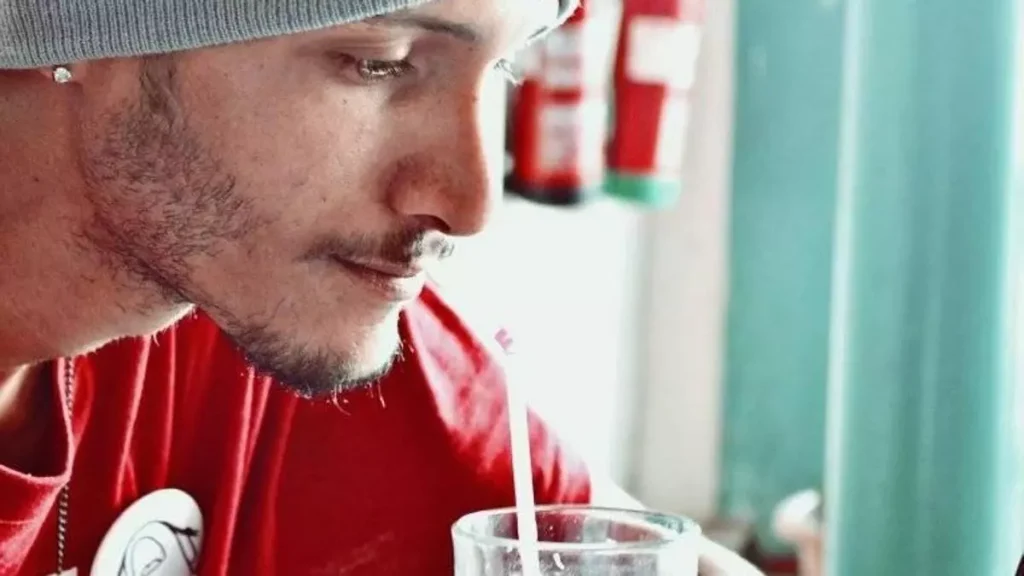
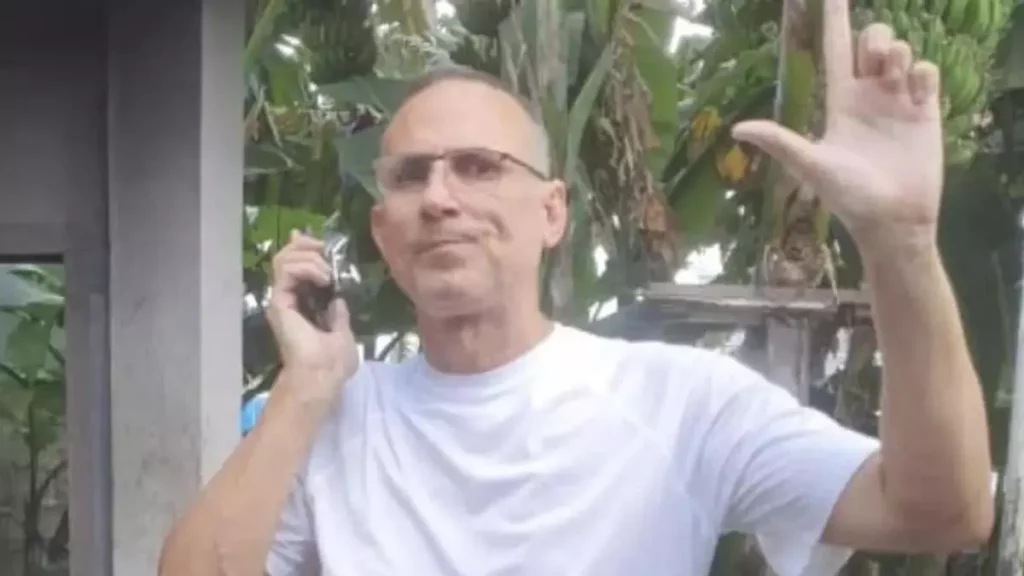
Kamil Zayas, one of the creators of El4tico, in an image shared on his social media in 2024. / Facebook/Kamil Zayas
14ymedio, Havana, February 23, 2026 — Family and friends of Kamil Zayas and Ernesto Medina, creators of the El4tico project, have made an urgent appeal to the international community, human rights organizations and the media to bring the case to light and demand the immediate release of both young men, who were detained on February 6 in Holguín.
In a press release issued this Sunday, their associates denounced the arbitrary nature of the arrest and pointed out that the charges brought by the Prosecutor’s Office— “propaganda against the constitutional order” and “incitement to commit crimes”—are based solely on opinions and content disseminated on social media. “Expressing oneself is not a crime. Freedom of thought and speech cannot be punished with imprisonment.”
The text also refers to the message that Kamil Zayas broadcast just the day before from the Holguín Penitentiary, where he is being held. “What began as a humble little room, they have managed to convert into an enormous house,” the young communicator says, adding: “It has been worth it. Don’t give up. Let’s build a nation now, a just and good one. We are counting on you. Long live a dignified Cuba.”
“What began as a humble little room, they have managed to turn into a enormous house.”
The message was shared by activist Paula Amador Lobón, who added in the post: “Pride and admiration fall short of describing what he has awakened. It goes without saying that Kamil is not alone. All that greatness is supported continue reading
by those of us who surround him.”
The families say they have lived in uncertainty for more than two weeks, given the lack of clear procedural guarantees, and denounce that it is “a disproportionate punishment for the peaceful exercise of freedom of expression,” and stress that despite the unjust situation, the young people “remain steadfast.”
The case of Zayas and Medina has drawn international attention in a context of extreme crisis and increasing repression, and adds to those of other Cubans prosecuted for publications on the internet or for expressing critical opinions against the Government, under criminal figures such as “propaganda against the constitutional order” or “incitement to commit crimes”.
This Monday, the Cuban Institute for Freedom of Expression and the Press (ICLEP) denounced the arrest in Havana of Moisés Legrá Díaz, who was detained after writing the phrase “Patria y Vida” [Homeland and Life] on a wall near the courthouse in the municipality of Arroyo Naranjo. According to information released by activist Anamely Ramos, Legrá Díaz was summoned days later under the pretext of an interview and subsequently transferred to Villa Marista, where he was held incommunicado for almost a week.
According to the complaint, although Legrá Díaz admitted to having done the graffiti, the authorities are trying to charge him with other acts and are also accusing him of propaganda against the constitutional order.
______________________
COLLABORATE WITH OUR WORK: The 14ymedio team is committed to practicing serious journalism that reflects Cuba’s reality in all its depth. Thank you for joining us on this long journey. We invite you to continue supporting us by becoming a member of 14ymedio now. Together we can continue transforming journalism in Cuba.
To avoid fines, private businesses stop selling products with capped prices, while State-run dollar stores are not subject to the same rules.
Customer in a private small business (mipyme) in Havana. / 14ymedio
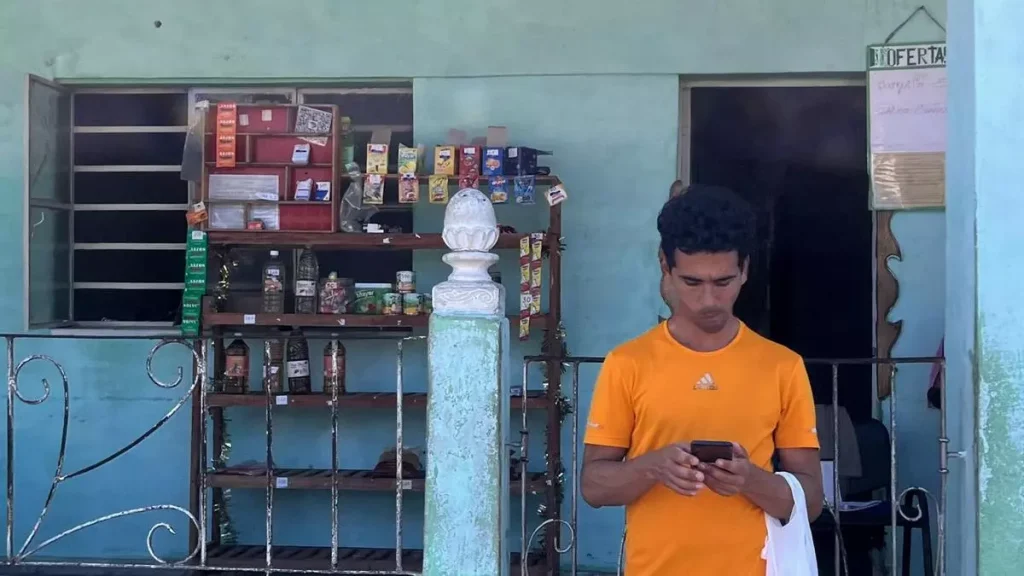
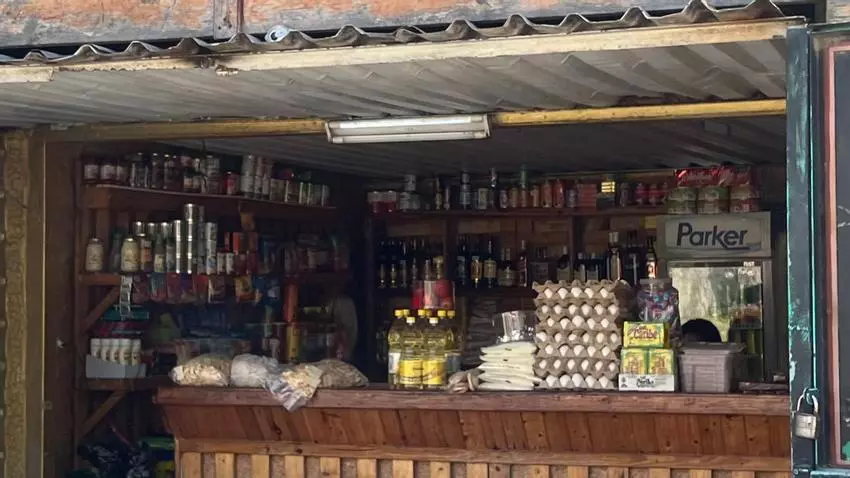
14ymedio, Havana, Darío Hernández, February 23, 2026 – Alejandro, owner of a small private business in Regla, has been fined 40,000 pesos in less than a week. His “little market” was one of the few businesses in the area that still dared to sell essential goods—chicken, cooking oil, sausage, powdered milk, pasta, and detergent—which, since July 2024, have had “agreed-upon” prices; that is, capped, but which the current crisis makes impossible to maintain.
“Last week, people came from all over the municipality looking for oil, because it’s not sold anywhere. I had it at 1,300 pesos per liter, and its capped price is 990. But how am I supposed to sell it for that, if suppliers charge me an even higher price?” says Alejandro, who prefers to use another name for this report.
The price of a dollar on the informal foreign exchange market did not exceed 400 pesos when the Government imposed, more than a year and a half ago, this limit on six products it considered essential. Today, while the dollar now surpasses 500 pesos on the unofficial market and the Central Bank of Cuba sets the rate above 460 pesos, the resolution to control prices, far from benefiting the population, has encouraged corruption and shortages in businesses.
“They’re expensive products, but at least I had them. Let’s see where people will find cooking oil at 990 now. That doesn’t exist”
“I made the decision to stop selling any price-capped products, like the rest of the businesses. Beer and snacks: that’s how I get those mafiosos off my back. I get screwed, but so do the people. They’re expensive products, but at least I had them. Let’s see where people will find cooking oil at 990 now. That doesn’t exist,” Alejandro says angrily.
His decision, he explains, comes after four inspections in one week. “The Municipal Inspection Directorate came, Hygiene, Finance and Prices… and they all fine you for the same thing: the capped prices, the profit margin, and so on. The worst part is that two and even three inspectors show up together, and you have to give each one their cut. That’s another thing: you give them something, whether cash or products, so they give you the 8,000-peso fine instead of the 16,000- or 32,000-peso fine. I swear I feel defenseless, at the mercy of a gang of mafiosos. My business right now continue reading
is ‘in check’ because of them.”
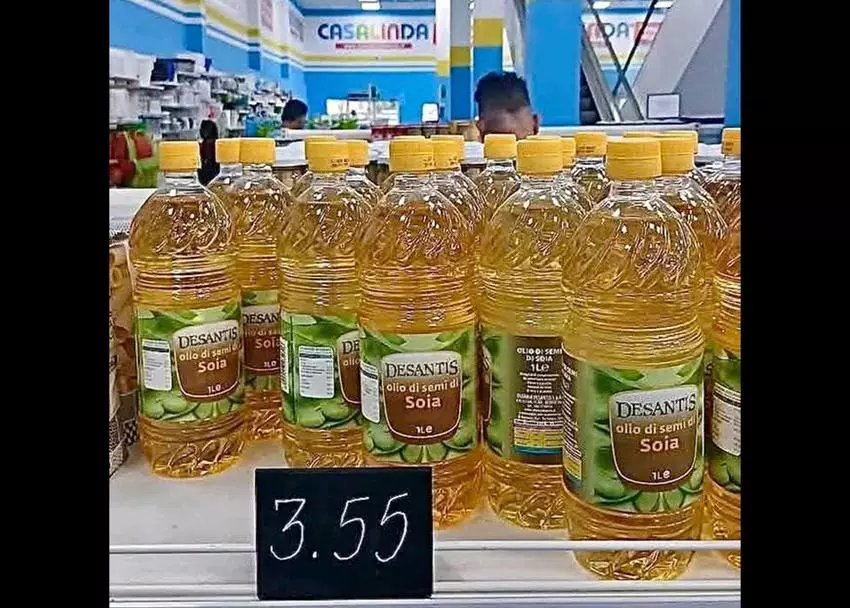
Cooking oil sold for 3.55 dollars at Casalinda, a State-run dollar store. / Image taken from social media
The Administration Council of Plaza de la Revolución, boasting of its “zero tolerance for indiscipline and illegalities,” a few days ago published on its Facebook profile a fine imposed on a business for 383,000 pesos. Among the violations mentioned were failing to display prices to the public, overcharging, and lacking cost sheets and the required paperwork for commercial activity. The post included photos of some of the business’s prices, where cooking oil could be seen priced at 1,000 pesos. Most of the comments, in a joking tone, asked where that small business was located, since its prices were lower than the current market.
“My theory is that those people live in a parallel reality. Who can afford those prices right now? Either they’re disconnected from everything—which I don’t believe, because later you see them buying the same oil and sausage at 500 pesos—or they’re cynical and have normalized that level of shamelessness,” says Alejandro.
Small private business in the Havana municipality of Regla. / 14ymedio
In a note published this Monday by Invasor, the provincial newspaper of Ciego de Ávila, the author reports that in many cases the shopkeeper openly admits that the posted price is only to pretend compliance with regulations, but if you actually want the product, you have to pay more.
Meanwhile, something very different happens in state-run dollar supermarkets, such as 3rd and 70th or Casalinda. There, a liter of cooking oil can cost as much as 3.55 dollars, which, at either the official or informal exchange rate, far exceeds the imposed cap. “What are inspection institutions for? To help the population or to sideline and control private businesses?” exclaims Alejandro. “They forget that with this ‘zero tolerance’ policy, very soon there will be nothing left to control.”
Translated by Regina Anavy
______________________
COLLABORATE WITH OUR WORK: The 14ymedio team is committed to practicing serious journalism that reflects Cuba’s reality in all its depth. Thank you for joining us on this long journey. We invite you to continue supporting us by becoming a member of 14ymedio now. Together we can continue transforming journalism in Cuba.
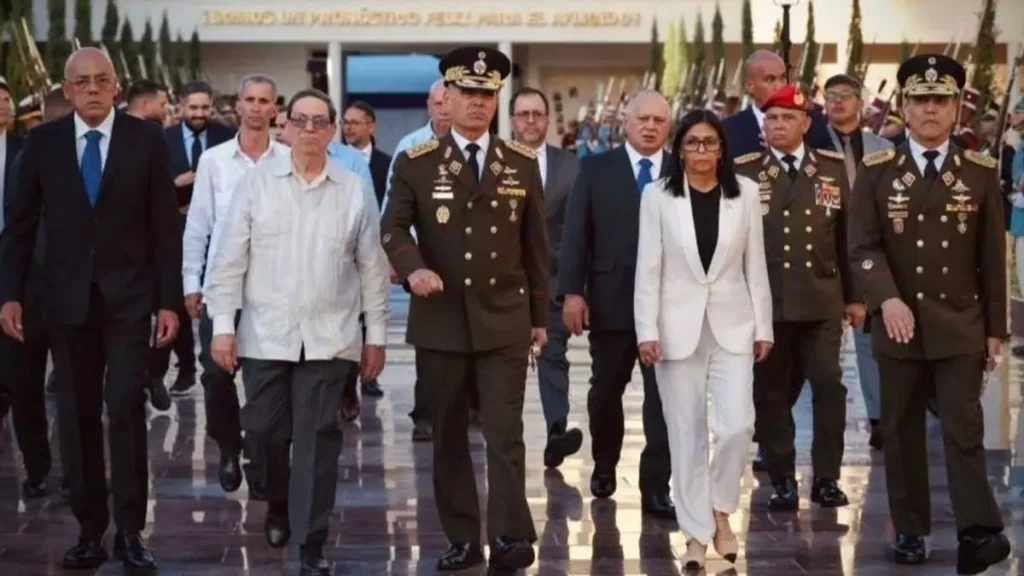
Bruno Rodríguez appears before the UN Human Rights Council in Geneva as part of his international tour seeking support against the “energy siege” imposed by Washington
Bruno Rodríguez at the High-Level Segment of the Conference on Disarmament in Geneva, where he took the opportunity to speak about the oil blockade / Ministry of Foreign Affairs
EFE/14ymedio, Geneva, February 23, 2026 – On Monday, Cuba’s foreign minister, Bruno Rodríguez Parilla, appeared before the United Nations Human Rights Council and sent a message to the United States that Cuba “will vigorously and courageously defend its right to self-determination,” while at the same time extending an offer to maintain dialogue based on mutual respect.
In an address to the forum, the foreign minister promised that a humanitarian crisis in Cuba would be prevented despite what his government calls the “energy siege” resulting from Washington’s decision to threaten tariffs on countries that export oil to the Island.
“Can a great power be allowed to attempt to destroy a small nation, provoke a humanitarian tragedy, shatter its national culture (…) all under the crude pretext of national security?” the foreign minister asked. continue reading
“Can a great power be allowed to attempt to destroy a small nation, provoke a humanitarian tragedy, shatter its national culture (…) all under the crude pretext of national security?”
On that point, he acknowledged that the situation created by the United States would cause “deprivation and suffering,” although he expressed confidence that “creative solutions” would be found to mitigate the humanitarian damage.
Nevertheless, in the same speech, the foreign minister assured that “there is also willingness for dialogue with the United States,” but emphasized that it would have to be based on “international law, mutual respect, and reciprocal benefit, without preconditions or interference in internal affairs.”
Rodríguez said the goal should be “to achieve a civilized relationship within our differences, and even to promote cooperation.”
In one passage of his speech, the Cuban minister praised the “community resistance of the people of Minnesota,” referring to demonstrations against the U.S. federal government’s immigration policy and the actions of Immigration and Customs Enforcement (ICE).
In recent weeks, the United States has repeatedly claimed that it is holding talks with representatives of the Cuban regime and has even insisted that part of the Cuban government is unaware of them. Accounts differ over who is involved in the dialogue, whether it is a son or a grandson of Raúl Castro.
The government of Miguel Díaz-Canel denies this and says that everything Washington states is intended to sow distrust in Havana, while acknowledging that talks do exist: the usual ones limited to migration and drug trafficking issues.
Translated by Regina Anavy
______________________
COLLABORATE WITH OUR WORK: The 14ymedio team is committed to practicing serious journalism that reflects Cuba’s reality in all its depth. Thank you for joining us on this long journey. We invite you to continue supporting us by becoming a member of 14ymedio now. Together we can continue transforming journalism in Cuba.
“The possibility of resuming flights will be addressed after the situation with fuel supplies is normalized,” the Kremlin said.
With 131,882 travelers to Cuba in 2025, Russia is the second largest source of tourists to the island, after Canada / 14ymedio
EFE/14ymedio, Moscow, February 22, 2026 — Russian airlines announced on Sunday that they have completed the repatriation of nearly 4,300 tourists stranded in Cuba due to the energy crisis caused by the US embargo. “The airlines have completed the repatriation flights for Russian tourists from Cuba,” the Ministry of Transport said in a statement on Telegram.
The last plane landed at 5:27 p.m. local time at Moscow’s Sheremetyevo airport, which had to limit the number of flights due to Ukrainian drone attacks.
It was a flight from the Rossia company (Aeroflot Group) that took off from Varadero – one of the favorite tourist destinations among Russians – and which represented “the final flight within the framework of the campaign that began on February 13.”
In total, according to the Ministry, “almost 4,300” Russian tourists were repatriated from Varadero, Havana, Holguín and Cayo Coco on nine flights.
“Nearly 4,300” Russian tourists were repatriated from Varadero, Havana, Holguín and Cayo Coco on nine flights
“The possibility of resuming flights will be addressed after the situation with fuel supplies is normalized,” he added. continue reading
On February 11, the Russian government recommended that tour operators stop selling trips to Cuba, after which airlines announced they would temporarily suspend flights.
With 131,882 travelers to Cuba in 2025, Russia is the second largest source of tourists to the Island, after Canada (754,010), which in turn finished the repatriation of its nearly 28,000 tourists on Friday.
Cuban Foreign Minister Bruno Rodríguez discussed the energy crisis this week in Moscow with Russian leader Vladimir Putin and his counterpart, Sergey Lavrov. “You know our position on this. We will not accept anything like this,” Putin said at the beginning of the meeting.
Bruno Rodríguez discussed the energy crisis in Moscow this week with Russian leader Vladimir Putin.
Kremlin spokesman Dmitry Peskov confirmed that the meeting addressed the specific assistance Moscow can provide to Havana under the current circumstances.
Previously, Lavrov and Rodríguez called for dialogue with the United States, asking it to abandon its plans for a naval blockade of Cuba.
Moscow recently announced that it is in contact with Cuban authorities and that oil supplies to the Castro regime are planned, something that has not happened since the shipment of 100,000 tons of crude oil in February 2025.
______________________
COLLABORATE WITH OUR WORK: The 14ymedio team is committed to practicing serious journalism that reflects Cuba’s reality in all its depth. Thank you for joining us on this long journey. We invite you to continue supporting us by becoming a member of 14ymedio now. Together we can continue transforming journalism in Cuba.
Analysts highlight the absence of star players and the lack of visas.
Analyst Will Leitch noted that the current team is far from the one that competed in 2006. / Jit
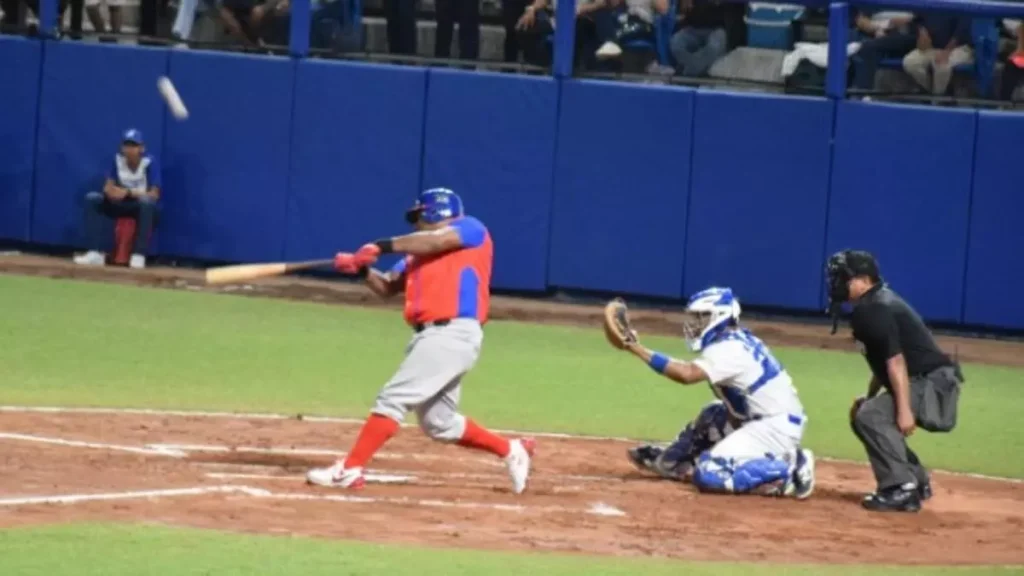
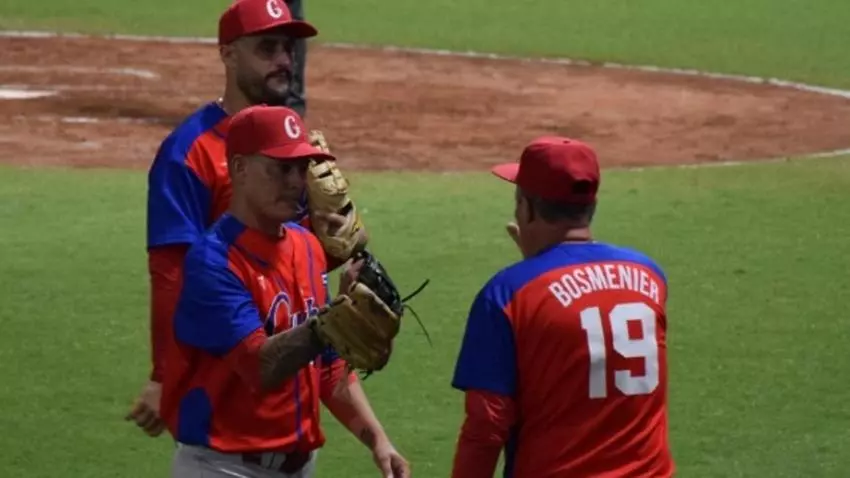
14ymedio, Havana February 22, 2026 – Cuba is considered one of the weakest teams in the World Baseball Classic, agreed U.S. Major League Baseball analysts Will Leitch and Michael Clair. The sports commentators point to the United States, Japan, and the Dominican Republic, where several Cuban players have defected, as the favorites.
Leitch, founder of the sports blog Deadspin under Gawker Media, emphasized the changes both on and off the field, noting that the current squad is far removed from the 2006 team, which drew attention as a “mysterious and intriguing” group that ultimately reached the championship game.
The analyst also recalled that, for various reasons, several players declined to join the team managed by Germán Mesa. “There is only one active Major League player on this edition of the Cuban team (Yoán Moncada),” he said.
According to Leitch, “It will be fun to see Alexei Ramírez, 44, on the team, nearly a decade after his last Major League game.” The commentator added that every time the veteran “comes to the plate, I’ll think continue reading
of Hawk Harrelson’s call during Mark Buehrle’s perfect game: ‘Alexei?!’”
Several players refused to join Cuba’s team led by Germán Mesa. / Jit
The analysis notes that Ramírez is not exactly a “new” player to watch in the World Baseball Classic. “He is the oldest player in the tournament. Ramírez—yes, the same Alexei Ramírez who retired from Major League Baseball a decade ago in 2016—returns to play for Cuba at 44, and frankly, we’re very curious to see what kind of numbers a 44-year-old retired Major Leaguer can produce.”
In response to these remarks, the specialized outlet Swing Completo acknowledged that the Cuban team “lacks well-established names, especially after several key players—Andy Pagés, Andy Ibáñez, Daysbel Hernández, Víctor Labrada, and Ernesto Martínez—withdrew their initial interest in joining.”
Manager Mesa will have to “lean on two standout pitchers at the top level of Japanese baseball, Liván Moinelo and Raidel Martínez, as well as reliever Yariel Rodríguez and young left-handed starter Daviel Hurtado, who has stood out in the New York Mets’ minor league system.”
Adding to the challenges, Cuban players currently in Managua lack visas to enter the United States. “No one who is there today in Nicaragua has a visa in hand yet,” journalist Yordano Carmona said.
In a recent interview, manager Germán Mesa maintained that historically visas have never been denied to the team. The federation insists that efforts are ongoing. Meanwhile, the players continue training as if their participation in the World Baseball Classic were assured.
Translated by Regina Anavy
______________________
COLLABORATE WITH OUR WORK: The 14ymedio team is committed to practicing serious journalism that reflects Cuba’s reality in all its depth. Thank you for joining us on this long journey. We invite you to continue supporting us by becoming a member of 14ymedio now. Together we can continue transforming journalism in Cuba.
The tanker was intercepted by the U.S. Coast Guard after making a suspicious maneuver.
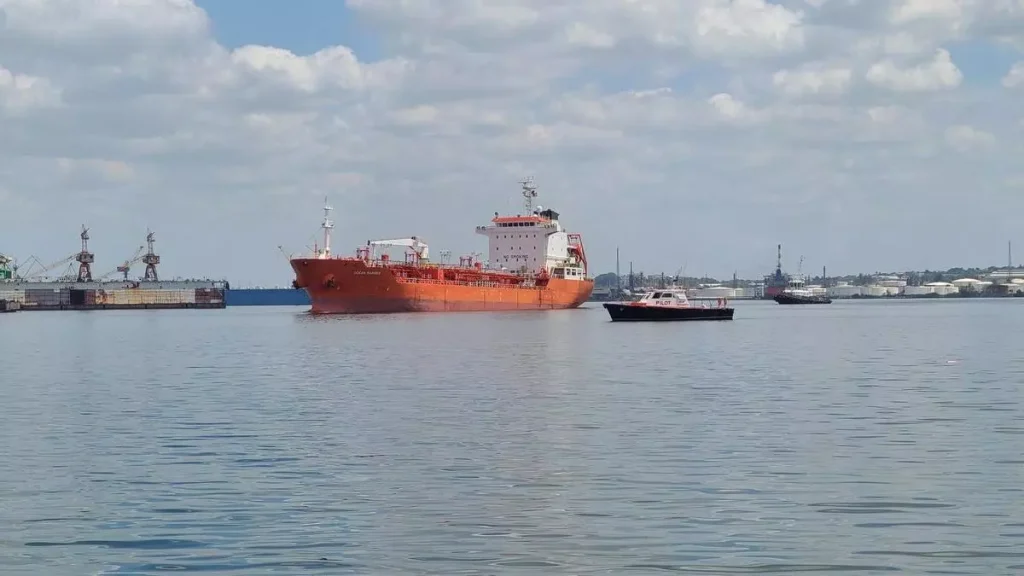
The vessel Ocean Mariner has transported several crude oil shipments between Mexico and Cuba / 14ymedio
14ymedio, Havana, February 22, 2026 – New details have emerged about the attempt by the Ocean Mariner, a tanker that usually transports Mexican fuel to Cuba, to circumvent the U.S. oil embargo on February 10 in order to deliver a shipment to the Island, after having declared that its destination was the Dominican Republic.
The fuel oil on board had three buyers since its origin in Colombia, the last being Trafigura Maritime Logistics, a Dutch multinational based in Singapore with commercial ties to the Cuban regime.
According to a report published Friday by Colombian outlet El Tiempo, the 84,579 barrels of fuel oil were originally sold by ISM Ingeniería Servicios, Montaje, Estaciones de Servicios SAS, and the initial buyer was Monarch Security Latin America Inc., based in Panama City. The Liberian-flagged ship docked at the Colombian port of Palermo in Barranquilla, Colombia, The New York Times also reported Friday, citing data released by the shipping company itself and satellite imagery. When it departed Colombia on February 5, it announced that its destination was the Dominican Republic, carrying fuel valued at $6.9 million.
After setting sail, the Ocean Mariner headed toward Dominican waters. However, on February 10 it changed course toward Cuba. A day later continue reading
, just 106 kilometers from the Island, it made a sharp U-turn, according to data from Kpler, a maritime transport data company. According to The New York Times, it “appeared to have realized it was being pursued.”
The Ocean Mariner initially headed toward Dominican waters. However, on February 10 it changed course toward Cuba.
The following day, a U.S. Coast Guard vessel, the Stone, approached the tanker to ask where it was headed. The response was that it was bound for the Dominican Republic, despite being far off course, according to a U.S. official. Given the suspicious maneuver, the Coast Guard sailed alongside the tanker for nearly two days and escorted it to Dominican waters, where it remained for several days without unloading the fuel.
After the vessel’s interception, Trafigura appeared in the transaction network. The company holds a 49% stake in Empresa Minera del Caribe SA (Emincar), together with Cuba’s state-owned Geominera (51%), and operates the copper mines of Matahambre in Pinar del Río. The firm officially purchased the cargo after the Ocean Mariner incident with the Coast Guard. However, Trafigura did not buy directly from Monarch, the original buyer of the shipment, but from a third company whose name no one has disclosed.
El Tiempo reports that the original seller and buyer argued that their responsibility “for the cargo ended once the ship set sail, under the terms of the contract in the Free On Board (FOB) modality.” Additionally, they have not so far received any request from authorities. They also insist that the operation followed legal export procedures and that information about a possible diversion attempt to Cuba “is not official but based on press reports.”
“The destination of the product listed in the shipping documents corresponds to Río Haina, Dominican Republic. Since the operation was carried out under FOB terms, once the product was loaded and dispatched from the port of Palermo, the availability, control, and management of the cargo rests with the buyer,” said Iván Lombana, legal representative of ISM, the original seller. He also emphasized that the company does not receive operational updates on routes once ownership (of the fuel) and risk are transferred to the buyer.
Spokespersons for Trafigura interviewed by the Colombian outlet denied any connection to a shipment to the Island.
Spokespersons for Trafigura interviewed by the Colombian outlet denied any connection to a shipment to the Island. They stated that they agreed to purchase the Colombian-origin fuel oil transported on the Ocean Mariner for delivery in the Bahamas. “Trafigura had no prior involvement with this cargo or voyage and did not charter the vessel. As one of the world’s largest traders of oil and petroleum products, we are regularly contacted by counterparties seeking buyers for uncommitted cargoes,” they said, though they declined to reveal from whom they purchased it.
This Sunday at 1:24 a.m., Colombian President Gustavo Petro, through X, without mentioning the fuel sale process or the attempted breach of Washington’s oil embargo, stated: “I do not agree with blockading a country; what is needed is more freedom, not more chains.”
In the post, in which he spoke about Cuban music and Silvio Rodríguez, he added that “there is no crime in the free transport of oil in the Caribbean, but it is preferable that the Caribbean’s energy be provided by the sun that rises almost every day.” He also said that the United States “must change its policy toward Cuba” and called for “unleashing the solar energy program across the entire Island. In Latin America we can support this by manufacturing solar panels. Colombia can provide its silica sands and copper. We already produce panels for export if necessary.”
Meanwhile, in an interview with the Spanish newspaper ABC,Mike Hammer, chargé d’affaires at the U.S. Embassy in Havana, confirmed that the aim is to send fuel to “support the Cuban people without it being exploited by the regime and used to sustain itself, which is what they have done for 67 years.” The official added that they would seek to replicate the model used for food and medicine shipments after Hurricane Melissa, in which donations were channeled through the Catholic Church and Caritas Cuba, “because we want to ensure that any assistance to those affected actually reaches them.”
Translated by Regina Anavy
______________________
COLLABORATE WITH OUR WORK: The 14ymedio team is committed to practicing serious journalism that reflects Cuba’s reality in all its depth. Thank you for joining us on this long journey. We invite you to continue supporting us by becoming a member of 14ymedio now. Together we can continue transforming journalism in Cuba.
Without transportation and without gasoline, La Rampa, 23rd Street, Coppelia and other iconic places suffer from the crisis affecting the entire country
It’ is the first vehicle I’ve seen after sitting in that spot for several minutes. / 14ymedio
14ymedio, Yoani Sánchez, Havana, Februay 22, 2016 — It’s Saturday and I’m heading out to Vedado. Just a few years ago, the combination of this day of the week with La Rampa, 23rd Street, and the area around the Hotel Habana Libre and the Coppelia ice cream parlor, for years mean fun, meeting up with friends and ending the night enjoying some shot. But this city no lonver exists. Now, the avenues are almost deserted, the clubs remain closed, and the familiar faces and names that once defined every corner have left. The only ones who remain are those who couldn’t leave.
I head through the La Timba neighborhood until I reach the edge of Revolution Square. Forget about catching a ride to the vicinity of avenida de los Presidentes. I’ll do the whole trip on foot. Paseo Street is deserted at ten in the morning. On a lamppost, someone has dared to hang a sign that says “Gasoline” and a cell phone number. I imagine that if I call, they’ll tell me the price of that liquid which, right now, monopolizes the dreams and anxieties of the entire country. Yesterday, a neighbor told me he had a liter of premium for 4,000 pesos, but it must have gone up by now. I imagine that if I call they’ll tell me the price of that liquid which, right now, monopolizes the dreams and anxieties of the entire country.
I imagine that if I call they’ll tell me the price of that liquid which, right now, monopolizes the dreams and anxieties of the entire country. / 14ymedio
On one corner, several gaudy pink convertibles participate in the filming of a music video. The contrast is brutal. The passengers smile at the camera from the peculiar row of gleaming vehicles just a few meters from a vast garbage dump. As I watch the spectacle, a mosquito bites my ankle, a patch of skin I forgot to treat with repellent. Insecticides have become an inseparable part of our “war kit” before leaving home. We’re in a constant battle to avoid catching one of the arboviruses that are plaguing us.
My husband has been suffering for months from the aftereffects of chikungunya. Swollen hands, joint pain, weakness, and a slow gait that has become the hallmark of those who have had the disease. Ahead of me continue reading
, on D Street, a woman walks with that robotic gait the illness has left her with. I can’t help but recall scenes from the film Juan de los muertos [Juan of the Dead], with a city full of zombies attacking those who are still breathing. But in Havana, there are no living people left to attack; we are all, in one way or another, already cadavers.
I am standing in front of Cuba’s tallest building. One would expect the areas around the Iberostar Selection Hotel, also known as Torre K, would be bustling with the comings and goings of taxis, tourists, and tour guides, but there’s nothing. The completely empty entrance lends an air of abandonment to this ugly block of concrete and glass. Only one man, delirious and shouting incoherent phrases, disturbs the lethargy that stretches along this stretch of sidewalk to what was once Havana’s most vibrant corner: 23rd and L.
Passengers smile at the camera from the peculiar line of gleaming vehicles just meters from a vast landfill. / 14ymedio
I cross to the other side of the left atrium of the heart of Vedado, even though the pedestrian light is still red. It doesn’t matter. I could dance for a while in the middle of the popular intersection and I wouldn’t be in any danger of being run over. Two teenagers pass by on their scooters , and another lunatic waves his arms like the blades of a fan in front of the Yara movie theater. Losing your mind is easy in a reality that challenges us with new absurdities every day. The friends who haven’t left live on pills that anesthetize them. “I don’t want to go crazy,” a neighbor repeats to me while showing me the blister pack of tiny pills she carries in her wallet.
I reach Infanta Street. It smells of urine. I sit down in a doorway across from Radio Progreso. Within minutes, several elderly people file past, begging for money. A nearby business has hired two burly security guards who prevent the beggars from interacting with their customers. A family of tourists, the first I’ve seen on my journey, approaches to read the restaurant menu. The woman asks the employee if he can help her get internet access because the SIM card she bought from Etecsa “isn’t working.” The man explains that the service is unreliable and there are times of day when it doesn’t work. Her face is a poem: she doesn’t understand why she was charged for something that doesn’t work.
A gleaming yellow excavator drives past me. It’s the first vehicle I’ve seen in several minutes of sitting here. Five men are riding on the bucket. I’m going to have to ask my neighbor for one of those little pills to keep from going crazy.
______________________
COLLABORATE WITH OUR WORK: The 14ymedio team is committed to practicing serious journalism that reflects Cuba’s reality in all its depth. Thank you for joining us on this long journey. We invite you to continue supporting us by becoming a member of 14ymedio now. Together we can continue transforming journalism in Cuba.
Among the 56 key figures of the Cuban regime, there is no one similar to the Venezuelan Delcy Rodríguez.
The Castro regime’s deck of cards is now circulating, ready for everyone to place their own bets. / Courtesy of the author
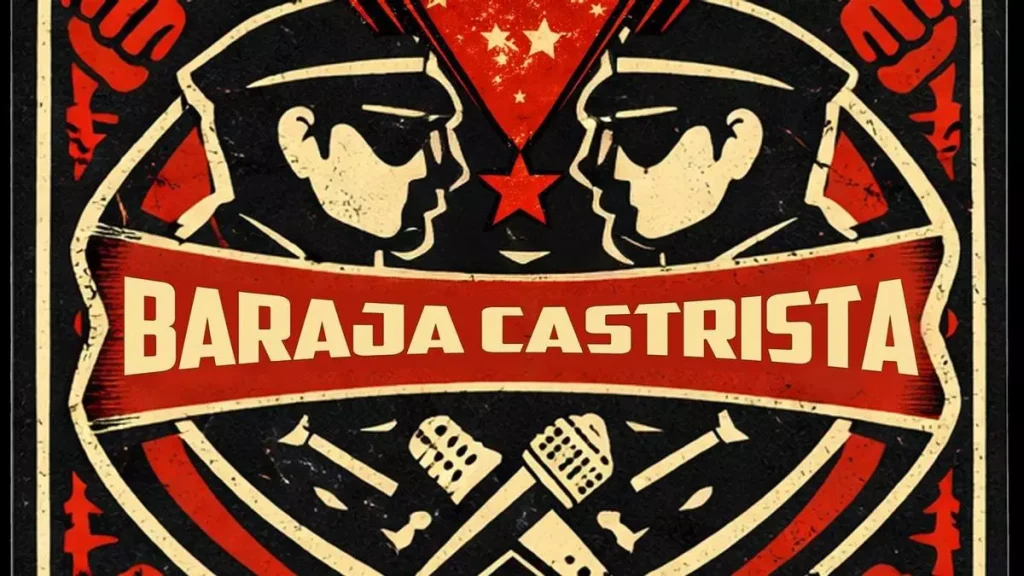
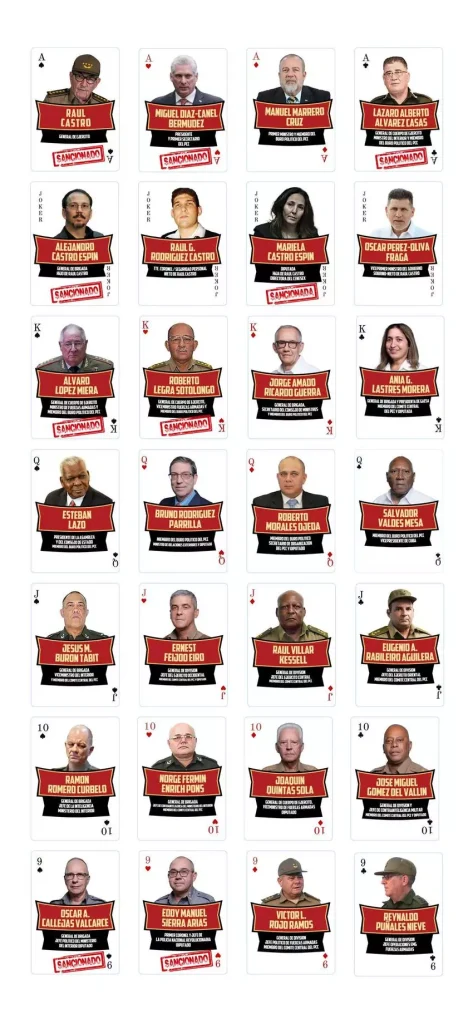
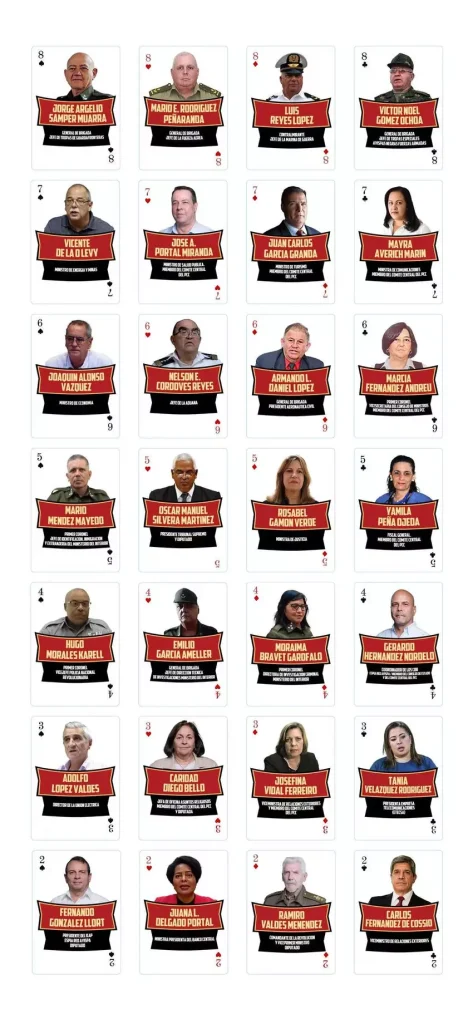
14ymedio, Havana, 21 February 2026 — A recurring question among those seeking to understand the power structure in Cuba is: who really runs things here? The recently released “Baraja Castrista” [Castroite Deck of Cards] attempts to answer this question in the form of a political casino game. There are 56 cards that reveal the faces, ranks, and pedigrees of the power players on the island, just as Washington speaks of negotiations “at the highest level” and Havana tries—without much success—to maintain a poker face.
In this deck, the ace of spades is beyond question. Raúl Castro—at 94 years of age and still with one foot in the casino, more than in the stirrup—heads the pack of cards. More colorful is the place assigned to Miguel Díaz-Canel, who appears in the deck as the ace of hearts. A flashy title, yes, although in practice many Cubans wouldn’t bet much on that card. The current president has shown that he doesn’t always have access to the pieces of hard politics, playing a role closer to bureaucratic window dressing than to actual decision-making.
Miguel Cossío, executive director of the Madc and the project’s mastermind, says it bluntly: the regime, he asserts, “has closed itself off to buy time” in the face of US pressure and the upcoming US elections. This move if it continues, he warns, could push the island into an even deeper humanitarian crisis.
The list is not limited to the usual faces on the news. It includes members of the Castro family, military leaders, state security operatives, and a collection of figures who, in the study’s own words, belong to the “nominal structure.”
Raúl Castro—at 94 years old and still with one foot in the casino, more than in the stirrup—heads the deck of cards. / Courtesy of the author
According to Cossío, who is also a journalist, real power remains concentrated within the Castro regime’s family and military core. In other words, the pieces haven’t changed hands. Among those directly linked to the clan are two of Raúl Castro’s children—Alejandro and Mariela—his grandson Raúl Guillermo Rodríguez, nicknamed “El Cangrejo” (The Crab )—a member of his personal security detail anda constant presence—and the Deputy Prime Minister and Minister of Foreign Trade, his great-nephew Oscar Pérez-Oliva Fraga.
But in every deck of cards, there are figures who seem secondary until they raise an eyebrow. The study underscores the importance of General José Amado Ricardo Guerra, a longtime confidant of Raúl Castro and for years Secretary of the Council of Ministers. Another key figure, however, has fallen to the bottom of the deck: Commander Ramiro Valdés now occupies the two of diamonds, following increased rumors about his imminent death.
For the authors, the initiative’s usefulness extends beyond the media attention it generates. Cossío argues that the map could be helpful to US agencies interested in understanding who is really pulling the strings in Havana, especially if the bilateral standoff evolves toward some kind of negotiation or negotiated transition.
Ramiro Valdés now wears the two of diamonds, following increased rumors about his imminent “physical disappearance”. / Courtesy of the author
The launch coincides with repeated statements by US President Donald Trump that his administration is holding talks with high-ranking officials of the Cuban regime. “Marco Rubio is talking to Cuba right now,” he stated a few days ago. Various media outlets have reported conversations with Alejandro Castro Espín or with El Cangrejo.
Cossío outlines three possible short-term plays: a repressed social explosion that forces external players to move; a humanitarian deterioration so severe that it forces an assistance intervention; or a more surgical strategy by Washington to fracture the core of power.
The analyst does, however, rule out the emergence in Cuba of a pivotal figure like Delcy Rodríguez in Venezuela. In his view, the difference lies in the system’s DNA, because the Cuban system was born of arms and structured with the discipline of a permanent barracks, without any hint of democracy.
From Miami, Marcell Felipe, president of the MADC, says the investigation comes at “a crucial moment,” while Tony Costa, of the FHRC, insists that any future for Cuba will have to be built on truth and justice.
Meanwhile, the Castro regime’s hand is already circulating, ready for everyone to place their bets. The White House seems prepared to go all in and has made it clear that this is no bluff. Whether the regime is a house of cards about to collapse or a poker table capable of withstanding the hand that’s coming its way is a debate yet to be decided.
______________________
COLLABORATE WITH OUR WORK: The 14ymedio team is committed to practicing serious journalism that reflects Cuba’s reality in all its depth. Thank you for joining us on this long journey. We invite you to continue supporting us by becoming a member of 14ymedio now. Together we can continue transforming journalism in Cuba.
The Cuban capital is living through its worst moments: trash on every corner, empty markets, sky-high prices, streets deserted because of the fuel crisis.
I can’t scan a single square meter without spotting some filth, breakage, or pothole. / 14ymedio
14ymedio, Yoani Sanchez, Havana, 20 February 2026 — When a cyclone is approaching, the streets of Havana take on another velocity. The pace accelerates, vendors offer their merchandise with more urgency, and the small businesses rush to close before the winds start blowing. This Friday there is no hurricane expected, but the city I’m walking through feels like it is waiting for a monster greater than anything on the Saffir-Simpson scale. The fear isn’t from possible gusts, but from the total paralysis of a country run out of fuel.
At the Tulipán Street market, several stalls are already shut down because of the energy crisis. “Tomorrow I won’t come, we are in critical state,” a vendor shouts into his cellphone, his stand overflowing with goods imported just a few days ago. People prefer food that doesn’t need refrigeration in fear that the blackouts, which have already multiplied in the last few hours, will keep getting worse until the whole city goes dark.
I put two packages of peanuts in the shell into my bag. They don’t need to stay cold, they’re pretty nutritious and, in case the gas service doesn’t work, it won’t be a great sacrifice to eat them raw. I leave the eggs even though I need them. They’re only selling them by the carton, 30 for 3,200 pesos, and I’m afraid they’ll spoil if the power outages drag on. I add some onions and a bunch of cilantro. The little I’ve bought costs me over 4,000 pesos, more than an average monthly pension.
Above, a tourist-postcard blue sky invites calm and, below, we move nervously amidst squalor and despair. / 14ymedio
A young guy jokes that soon we’ll have to come to the market with a wheelbarrow because the Cuban peso keeps losing value while prices keep climbing. I imagine myself pushing bills in one of those improvised carts that I used when I was a girl to help carry water to my house in Centro Habana. Life has this way of bringing us back to a point we thought we’d left behind, and doing so in a way that makes us feel nostalgia for the days when we were carrying water instead of useless paper to nearly empty markets.
Every area I pass through gives the impression that a hand, from the sky, has dumped an enormous trash bin. The trash that accumulates on the street corners, forming mountains of cardboard, bags, and plastic, is added to the debris scattered everywhere. I can’t find a single square meter without some filth, break, or pothole. I feel a bit shattered myself. My calves ache from climbing up and down 14 flights of stairs because there is no electricity to power the elevator. I hurt my elbow lifting bags of soil to plant some herbs on my terrace, facing the “zero option,” and I sleep little at night because of the constant power outages, generating buzzing, clicking, and shouts that echo through the neighborhood.
Now, on the outskirts of the market, the rush is palpable. “Grab your last garlic here before I leave,” shouts a shirtless man, accompanied by a teenage girl. It is barely nine in the morning, so his threat to leave has nothing to do with the market’s opening hours. “I’m not coming back, take advantage now,” he emphasizes, in case anyone didn’t get that this is the last day he has transportation to make it to Estancia street, full of potholes and where, traditionally, if inspectors don’t raid it, the stalls sprawl out, selling everything from Chinese ointments to disposable razors to liquefied gas cylinders.
The peanuts don’t need to be kept at low temperatures, they’re quite nutritious, and if the gas service goes out, eating them raw won’t be a big deal. / 14ymedio
But today the movie is playing even faster. It is like those scenes shot in early movies filmed at fewer frames per second that when played back in our time give the idea of wind-up puppets frantically jerking from one side to the other. Now my neighbors and I seem to be “out of revolutions,” never better said. The scene could not be more starkly contrasting. Above, a picture-postcard blue sky invites calm, while below, we move nervously amidst squalor and despair.
A motorcycle zooms right by me because I’m walking in the street. The sidewalks are devastated and dangerous for your ankles. But the driver doesn’t yell an insult or ask sarcastically if I maybe have a license plate. A strange understanding of others, a willingness to empathize with each other in the face of the collapse we’re experiencing, seems to have spread around the market. In my dirty neighborhood, at least these days, “the noble and the villain, the great man and the worm dance and shake hands,” or more accurately: we all suffer together and try not to step on each other.
An old lady sidles up to me while I’m buying some tiny carnations with more leaves than petals. “Give me something to eat,” she says in a low voice. Her facial skin is so tight to the bone you can make out every tendon, every muscle underneath. You don’t even know anymore what counts as a decent handout. If I give her 50 pesos, will she feel insulted because it won’t even buy an egg? A hundred still too little for this old woman to eat something? Even being generous in these chaotic money times is difficult. You don’t know if you’re helping or humiliating someone with these worthless colored scraps that make up our national currency.
Also, there is a gray dust covering everything. It falls on our heads. It’s from the trash piles they’ve set on fire. If I look out from the balcony, I see them smoking here and there, dotting Havana’s landscape. The city smells like a medieval village where flames try to do what modern sanitation services are supposed to handle. A neighbor tells me her asthma attacks have multiplied, her eyes water all the time, and she locks herself in her room under the sheet hoping, the stench and smoke don’t reach her.
My neighbors and I also seem to be “out of revolutions,” never better said. / 14ymedio
I hurry past the nearest mountain of trash closest to our building. Dominating the scene, on the sign over the Ministry of Transportation, it reads “hasta la victoria siempre.” A young guy is digging through the garbage. I wait for him to finish so I can take a photo. If poverty used to be more starkly visible among the elderly, now there’s a whole sector of Cuban children and teenagers whose faces bear the marks of hunger. They have that extreme thinness and yellowish complexion of someone who only eats small portions of poor-quality food every now and then.
I head home and pass a mipyme*-run shop. We’re in a blackout. The old garage converted into a little bodega looks like a dark cave. A customer complains he can’t pay electronically because there’s no power or data connection. The employee shrugs and says: “We’re lucky we’re even open, because who knows if we can be tomorrow.” An atmosphere of goodbye hangs over everything. No one knows for sure if the neighborhood store will open next week, if the guy with the electric tricycle hauling goods will have charged his battery, if the chronic patient in the nearby house will make it without transport to the emergency room. We’re all saying goodbye to each other, too, in fast-forward.
I get to the bottom of my concrete block. I joke with a neighbor who points out it is the third time today he’s seen me climbing the stairs. “I’m training for a marathon,” I tell him. Yes, I’m prepping for a long-distance run, though for the stretch ahead we need more inner strength than steady knees. Finally I make it upstairs. I look out. Smoke from another trash fire has emerged on the horizon. I think it’s coming from over there, from the neighborhood where I used to haul water as a girl.
*Micro, Small, Medium Enterprises [MSME in English; mipyme in Spanish]
______________________
COLLABORATE WITH OUR WORK: The 14ymedio team is committed to practicing serious journalism that reflects Cuba’s reality in all its depth. Thank you for joining us on this long journey. We invite you to continue supporting us by becoming a member of 14ymedio now. Together we can continue transforming journalism in Cuba.
The departure of security advisers and doctors comes as the U.S. steps up its strategy to weaken the alliance between Havana and Caracas.
Despite signs of operational distancing, both governments have publicly insisted on the continuity of the alliance. / Instagram / Venezuelan Embassy in Cuba
14ymedio, Havana, February 21, 2026 – Cuba’s presence in Venezuela, long regarded as one of the pillars of the survival of Chavismo, is showing signs of a pullback. Security advisers and medical personnel from the Island have begun leaving the South American country amid growing pressure from Washington to dismantle the alliance between the two governments, according to an investigation published this Friday by the Reuters news agency.
The move comes at a particularly delicate moment for Caracas and Havana. According to eleven sources cited by the agency, Venezuela’s interim president, Delcy Rodríguez, has chosen to rely on Venezuelan bodyguards for her protection, marking a departure from the usual practice during the administrations of Nicolás Maduro and Hugo Chávez, who depended on elite Cuban units for their personal security.
The withdrawal does not appear to be total or definitive, but it is significant. Some Cuban advisers within the General Directorate of Military Counterintelligence (DGCIM) have been removed from their duties, according to a former Venezuelan intelligence official. In addition, in recent weeks there have been return flights to Cuba carrying health professionals and security specialists.
A source close to Venezuela’s ruling party said the departures are a direct result of orders from Delcy Rodríguez
One visible sign of this movement has been air traffic between Havana and Caracas. 14ymedio has closely tracked the routes of Cubana de Aviación’s Ilyushin Il-96-300, which has made multiple trips in recent weeks to repatriate Cuban personnel stationed in Venezuela. The operation, far from being limited to healthcare workers, mainly involves uniformed members of the Ministry of the Interior and the Revolutionary Armed Forces. The aircraft has made around a dozen trips since the capture of Nicolás Maduro and does not continue reading
always return empty, suggesting a rotation or redeployment of personnel on the ground. These discreet but steady flights reinforce the hypothesis of a partial pullback under external pressure rather than a total withdrawal of Cuba’s presence in the South American country.
The exact reasons for the pullback remain the subject of conflicting accounts. A source close to the Venezuelan ruling party said the departures respond directly to orders from Rodríguez under U.S. pressure. Other sources, however, could not confirm whether this is a decision by Caracas, a voluntary move by the Cubans, or an instruction coming from Havana.
Washington has placed the Cuba–Venezuela relationship at the center of its regional strategy. Following the U.S. military operation of January 3—during which, according to the Cuban government, 32 Cuban citizens linked to security tasks were killed—President Donald Trump vowed to cut the ties between the two countries at their root.
“Cuba survived for many years thanks to Venezuela’s oil and money… but not anymore!” Trump wrote on January 11 on his Truth Social network, making clear the line of economic and political pressure.
Official media in Cuba avoid discussing the changes that have occurred in Venezuela following Maduro’s capture
For decades, the exchange was mutually beneficial: Havana sent thousands of doctors, sports trainers, and intelligence advisers, while Caracas supplied subsidized oil that was vital to the Cuban economy. That arrangement began to erode with Venezuela’s crisis, but it now faces its greatest challenge.
Since mid-December, Washington has blocked shipments of Venezuelan crude to Cuba, a move that has worsened the Island’s already severe energy crisis. This has been compounded by the executive order of January 29, in which the Trump administration threatens to impose tariffs on countries that export crude to Cuba.
A White House official cited by Reuters also said that the United States maintains a “very good relationship” with Venezuela’s new leadership and believes Rodríguez’s interests “align” with Washington’s objectives.
Despite signs of operational distancing, both governments have publicly insisted on the continuity of the alliance. On January 8, Rodríguez herself appeared in Caracas alongside Cuban Foreign Minister Bruno Rodríguez during an event commemorating the victims of the U.S. attack. Days later, the Venezuelan leader spoke by phone with President Miguel Díaz-Canel to reaffirm, according to the official version, the bilateral “brotherhood.”
The pullback reflects more of a tactical adjustment than a strategic rupture
In Havana, the rhetoric has also remained largely unchanged, although official media avoid addressing the changes that have taken place in Venezuela since Maduro’s capture. On the ground, however, the picture is more nuanced. A source close to the Cuban government acknowledged that while some soldiers wounded during the U.S. operation have returned to the Island, others remain active in Venezuela. The source also noted that a considerable number of doctors continue providing services.
Analysts consulted by Reuters agree that the pullback represents more of a tactical adjustment than a strategic break. Frank Mora, former U.S. ambassador to the Organization of American States, believes Rodríguez is acting cautiously. According to his assessment, she is trying to keep the Cubans “at arm’s length” until she consolidates her grip on power, without completely breaking with Havana.
Along the same lines, academic John Polga-Hecimovich stresses that the footprint of Cuban intelligence remains deeply embedded in Venezuela’s security structures. Although advisers failed to prevent Maduro’s downfall, their previous work, especially in counterintelligence, contributed decisively to the stability of Chavismo for years.
For now, the partial withdrawal raises more questions than answers. While return flights continue to multiply, U.S. sources warn that covert Cuban agents are likely to remain in Venezuela monitoring the evolution of the political landscape. What does seem clear is that the de-Cubanization of Venezuela is deepening, and the Havana–Caracas axis is going through its most fragile moment.
Translated by Regina Anavy
______________________
COLLABORATE WITH OUR WORK: The 14ymedio team is committed to practicing serious journalism that reflects Cuba’s reality in all its depth. Thank you for joining us on this long journey. We invite you to continue supporting us by becoming a member of 14ymedio now. Together we can continue transforming journalism in Cuba.
Agustín, a well-known figure in the neighborhood, died from the severity of his burns
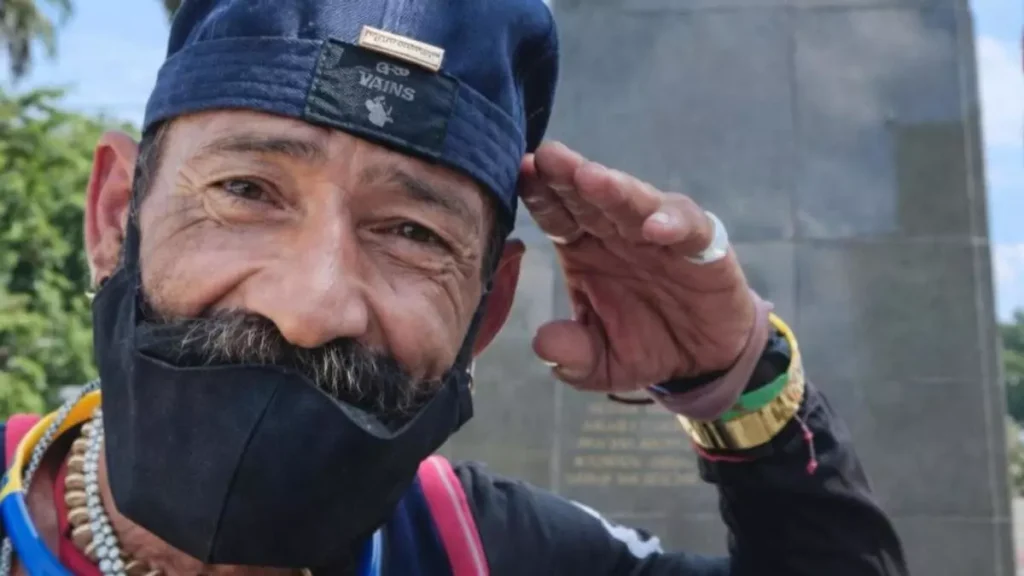
Several neighbors from the Fructuoso Rodríguez subdivision describe Agustín as a familiar face in the area who “didn’t bother anyone.” / Facebook / Christian Arbolaez
14ymedio, Havana, 20 February 2026 — The death of Agustín, a homeless man known in Cárdenas as Bin Laden, has once again spotlighted the vulnerability of beggars in Cuba. An 18-year-old has been identified as the alleged perpetrator of the crime after setting Agustín on fire while he was sleeping out in the open in the Fructuoso Rodríguez subdivision. According to several local residents, the suspect has been arrested, though the authorities have not released any detailed official statement about the incident or the current status of the detainee.
The attack, reported on social media by user Christian Arbolaez, took place in the early hours of Thursday morning while the victim was sleeping on a bench near some kiosks. A young guy managed to help him, putting out the flames and rushing him first to a hospital in Cárdenas. From there, due to the seriousness of the burns, he was transferred to the Faustino Pérez University Hospital in the provincial capital, where he eventually passed away.
The crime comes amid a context where the presence of homeless people has become increasingly visible in cities across the country. Although the government avoids talking about homelessness and uses the bureaucratic term “people with wandering behavior,” even the official press has had to acknowledge the scale of the problem. A report in the newspaper Trabajadores revealed that between 2014 and 2023, 3,690 people in this situation were attended to by the social assistance system in Cuba. The publication itself admitted that this figure doesn’t capture continue reading
everyone who survives by begging or rummaging through trash, pointing to a significant undercount.
Experts consulted have already warned that the profile of these “wanderers” is changing. It’s no longer just people with severe psychiatric disorders — the explanation the authorities keep repeating — but citizens hit hard by the economic downturn, broken family ties, aging, and the housing crisis.
“He didn’t bother anyone,” neighbors keep repeating in matching testimonies
The gap between reality and official rhetoric has been glaring. In 2025, the then-Minister of Labor and Social Security, Marta Elena Feitó, went so far as to publicly deny the existence of beggars in Cuba, insisting that the country takes care of all vulnerable people. Although the official was removed from her posts after massive backlash to her statements, the situation for the homeless on the island has only got worse.
In Cárdenas, neighbours from the Fructuoso Rodríguez subdivision describe Agustín as a familiar figure in the neighbourhood. “He didn’t bother anyone,” they repeat in consistent accounts. Precisely this profile — vulnerable, isolated people or those with mental deterioration — is the one that, according to several social workers, remains most exposed to violence. Poor street lighting in some areas, minimal nighttime patrols, the extreme economic deterioration, and drug use like el químico — especially among young people and teens — are all factors driving the rise in insecurity.
The case isn’t entirely isolated within the national picture, nor is the risk these people face limited to the streets. In recent years, there have even been reports of assaults inside healthcare facilities. In April 2025, a video showing physical abuse against patients by an employee at the Provincial Psychiatric Hospital Dr. Luis San Juan Pérez in Santa Clara forced the authorities to fire him. Once again, social media played a key role in the face of silence from the official press and the lack of transparency in the institutional system.
The question hanging over Cárdenas isn’t just who set the fire that early morning, but how many more Cubans are sleeping tonight without any protection in the province’s doorways. And above all, what new horrors will be seen in a country where the crisis is racing ahead, destroying respect for life along the way.
Translated by GH
______________________
COLLABORATE WITH OUR WORK: The 14ymedio team is committed to practicing serious journalism that reflects Cuba’s reality in all its depth. Thank you for joining us on this long journey. We invite you to continue supporting us by becoming a member of 14ymedio now. Together we can continue transforming journalism in Cuba.
In an interview with EFE, the former Cuban political prisoner speculated about a political transition on the Island similar to Venezuela’s
The opposition leader said the regime is now sustaining itself with fuel reserves stored “in the mountains of Oriente.” / X/@jdanielferrer
EFE (via 14ymedio), Miami, February 19, 2026 – Former Cuban political prisoner José Daniel Ferrer said that a U.S. strike on Cuba similar to the one dealt to the Venezuelan government last January should “remove from power” President Miguel Díaz-Canel and Colonel Alejandro Castro Espín, the eldest son of Raúl Castro.
“They are responsible for many crimes and much death, and therefore the solution is to remove them from power,” the dissident said in an interview with EFE in Miami.
Although he said he supports “serious talks to set the transition in motion” immediately, Ferrer added that if the “Cuban drama continues to worsen,” he agrees with removing both men from power even “Maduro-style,” referring to the U.S. operation that ended with the capture in Caracas of President Nicolás Maduro last January 3.
Asked who would be the “Cuban Delcy Rodríguez,” the opposition leader said that speculation on social media suggests that Ana María Mari Machado, vice president of the National Assembly of People’s Power, could assume leadership functions as the current acting president of Venezuela has done.
He specified that she is a “figure less hated by the people. The ones they cannot stand are those faces they constantly see on television, whether it be Miguel Díaz-Canel, Raúl Castro, or Prime Minister Manuel Marrero Cruz.” continue reading
The opponent specified that Ana María Mari Machado could assume leadership functions
However, he emphasized that he prefers a negotiated solution. “I have always defended the idea that we Cubans achieve freedom and democracy through our own efforts.” But “if the regime leaves no other option, what is needed is action,” Ferrer said. He arrived in Miami last October as a political refugee following an agreement between the governments of Cuba, the United States, and the Vatican.
The opposition leader asserted that for the first time in decades several factors are converging that point to a possible transition, beginning with the Cuban people, who, he said, are now protesting more openly and without fear, no longer in secret or only before trusted individuals and journalists.
“I would start with a Cuban people that is increasingly discontented and rebellious, increasingly less afraid,” he insisted. He added that there is an “awakening of youth,” such as the digital project El4tico, which “has received incredible solidarity from young people inside Cuba, never seen before.”
To that he adds the blow to Venezuela, with which “the Cuban regime lost an ally,” and the current U.S. government policy of “maximum pressure against the tyranny,” including the threat of tariffs on those who assist it.
“The regime’s allies are distancing themselves because they know that bad company does not suit them, and there are also threats of possible tariffs for those who help the Castro-communist regime, at least with fuel,” he said.
“The regime’s allies are distancing themselves because they know that bad company does not suit them”
“For many years it has been said ‘the time is now,’ but never have so many factors converged for us to affirm that this year the Castro-communist regime will not survive. Yes, now we are very close,” emphasized the founder of the Patriotic Union of Cuba.
Regarding the next step Trump should take, he said it is to “continue applying pressure,” enforcing “tariffs on whoever sends oil to the regime so that repression can continue operating and fuel does not run out for the vehicles of the repressive forces.”
The opposition leader said the regime is currently sustaining itself with fuel reserves stored “in the mountains of Oriente, where they continue extracting it from a very long and deep cave, with many fuel depots.”
As for Mexico’s president, Claudia Sheinbaum, the opposition leader said that “the oil she wants to send to the Cuban regime is not for ambulances; it is for the vehicles of high-ranking leaders and, first and foremost, for the repressive forces.”
He added that “if Sheinbaum truly supports the Cuban people and is in solidarity with them, she should only send aid consisting of food, medicine, and essential goods such as hygiene products, directly to the people through the Church or any other actor.”
Translated by Regina Anavy
______________________
COLLABORATE WITH OUR WORK: The 14ymedio team is committed to practicing serious journalism that reflects Cuba’s reality in all its depth. Thank you for joining us on this long journey. We invite you to continue supporting us by becoming a member of 14ymedio now. Together we can continue transforming journalism in Cuba.
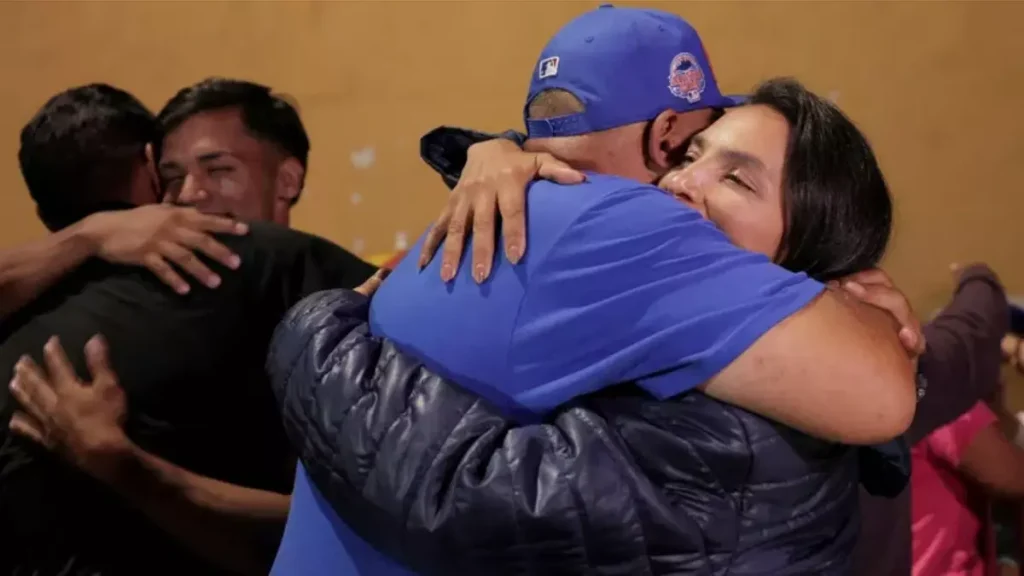
Juan Pablo Guanipa regains full freedom with the approval of the measure, which excludes those who promote or participate in armed actions.
Relatives of political prisoners at Zone 7 upon receiving news of the amnesty / EFE
EFE (via 14ymedio), Caracas, February 20, 2026 – The Amnesty Law unanimously approved this Thursday in a historic debate in Venezuela’s National Assembly is presented as an opportunity to lay the foundations for a new political future in the South American country, while NGOs and opposition figures express doubts about the prospects for reconciliation.
Venezuela’s acting president, Delcy Rodríguez, said she felt “very pleased” with the approval of the law, which she believes opens the door for citizens to reunite and for the country to learn to coexist peacefully and democratically.
“So that Venezuela sheds hatred and intolerance, so that human rights prevail, so that love, understanding, and recognition prevail,” she added after signing the legislation at the Miraflores presidential palace, accompanied by National Assembly president Jorge Rodríguez and Interior Minister Diosdado Cabello.
The Chavista leader maintained that one must “know how to ask for forgiveness and also receive forgiveness,” which, she said, is now made possible by this new law
The Chavista leader maintained that one must “know how to ask for forgiveness and also receive forgiveness,” which, she said, is now made possible by this new law. continue reading
“To be clear (…) amnesty is forgiveness for certain types of crimes,” Rodríguez said during the parliamentary session, adding that “one does not forgive someone who has not committed an offense” established in the law.
“Let no one think that we are endorsing impunity here. No, it is a pardon being decided by Venezuela’s political leadership, at the request of the acting president,” the lawmaker explained.
Likewise, the head of Parliament told a group of journalists in Miraflores that the amnesty could lay the groundwork for looking toward the future and embarking on a new path of peace in Venezuela.
The amnesty also comes amid the “new political moment” announced by Rodríguez after the capture of Nicolás Maduro by the United States, which also called for the release of political prisoners. The acting president also requested the closure of the feared El Helicoide prison, accused by opponents of being a torture center.
Lawmakers approved granting amnesty for acts or “offenses committed” during different episodes of political crisis between 2002 and 2025, such as the coup against the late president Hugo Chávez in April 2002, the oil strike at the end of that year and the beginning of 2003, and the anti-government protests in 2013, 2017, and 2024.
However, the acting president asked Parliament, the Coexistence and Peace program that promotes political dialogue, and the judicial reform commission to evaluate cases not covered by the approved law in order to “heal wounds, restore democratic coexistence,” and advance justice.
Article 9 of the new legislation excludes from amnesty crimes involving serious human rights violations, crimes against humanity, intentional homicide, very serious bodily injury, drug trafficking, as well as offenses established in the anti-corruption law.
It also excludes individuals who are or may be prosecuted or convicted for “promoting, instigating, requesting, invoking, favoring, facilitating, financing, or participating in armed or forceful actions against the people, sovereignty, and territorial integrity” of Venezuela by “States, corporations, or foreign persons.”
It also excludes individuals who are or may be prosecuted or convicted for “promoting, instigating, requesting, invoking, favoring, facilitating, financing, or participating in armed or forceful actions against the people, sovereignty, and territorial integrity”
Article 11 states that a court with jurisdiction over the alleged offense will verify the application of the amnesty and declare the nullity of all ongoing proceedings or review final sentences for annulment within a period “not exceeding 15 consecutive days.”
The legislation also provides that individuals benefiting from this law who commit crimes after its entry into force will be prosecuted normally under existing laws.
Several human rights NGOs and Venezuelan opposition figures expressed reservations on social media following the law’s approval. Among them, Provea’s general coordinator, Oscar Murillo, said the measure does not align “with the spirit of peace and reconciliation that such a norm should have.”
The president of the NGO Foro Penal, Alfredo Romero, wrote on X that the law should be received with optimism but it is also restrictive and leaves out “many cases.”
The NGO Justicia, Encuentro y Perdón stated that the approved text is “revictimizing, exclusionary, and in no way guarantees the full release of all political prisoners.”
Likewise, the opposition party Primero Justicia said the law is “insufficient and biased.” However, one of the first high-profile releases was that of one of its leaders, Juan Pablo Guanipa, a collaborator of the opposition leader and 2025 Nobel Peace Prize laureate Maria Corina Machado.
“I want to confirm that I am now fully free,” Guanipa said on social media. The former lawmaker argued that the law passed in Parliament “is not an amnesty at all,” but a document intended to “blackmail many innocent Venezuelans” and exclude people who remain imprisoned.
“Torture centers in Venezuela remain open, and hundreds of Venezuelans are still in exile. The laws used to repress remain in force, and dozens of officers from our National Armed Forces remain imprisoned”
“Torture centers in Venezuela remain open, and hundreds of Venezuelans are still in exile. The laws used to repress remain in force, and dozens of officers from our National Armed Forces remain imprisoned for speaking out against the plundering of our homeland,” he said.
In that regard, he called for focusing efforts and working tirelessly until Venezuela “is once again free and prosperous,” alongside Machado and the opposition leader in exile, Edmundo González Urrutia.
Guanipa reiterated his demand that all political prisoners be released “immediately” and that all exiles return. “I agree with reconciliation among Venezuelans but only with the truth upfront. A reconciliation based on lies is like a giant with feet of clay: it collapses at the first sign of trouble,” he said.
For his part, opposition lawmaker Stalin González, a member of the law’s oversight commission, believes the amnesty is a “tool to rebuild justice,” although “it is not perfect.”
Translated by Regina Anavy
______________________
COLLABORATE WITH OUR WORK: The 14ymedio team is committed to practicing serious journalism that reflects Cuba’s reality in all its depth. Thank you for joining us on this long journey. We invite you to continue supporting us by becoming a member of 14ymedio now. Together we can continue transforming journalism in Cuba.
A report by the consulting firm Auge states that “96.4% of small and medium-sized private enterprises face an impact ranging from severe to catastrophic due to the fuel shortage.”
A restaurant, for example, has “critical” dependency, as it “loses all its inventory if refrigeration fails.” / 14ymedio
14ymedio, Havana, February 20, 2026 – Some customers call it “La Navecita” (The Little Ship), because it is smaller and emerged after La Nave, the famous “Cuban Uber.” But the popularity it earned among travelers, thanks to lower prices and because, unlike its predecessor, it could be booked without relying on difficult internet access, is of little use now. Today, these private transportation agencies are among the hardest hit by the fuel crisis, worsened by the U.S. oil squeeze. “We only have two cars operating this Tuesday,” the operator’s voice told an impatient customer waiting to travel from Nuevo Vedado to Old Havana.
According to one of its managers, “more than 80% of La Navecita’s drivers have stopped accepting passengers in the last month.” Until a few weeks ago, it was enough to call a couple of mobile numbers and provide trip details: destination, currency for payment, number of passengers, and whether there were suitcases or pets. In a brief conversation, the client was informed of the price and, if accepted, within minutes a white Lada, a red Moskvich, or a modern Citroën would pick them up at their door.
Everything changed last January when the U.S. intervened in Venezuela, captured Nicolás Maduro, decreed the end of fuel shipments to Cuba from Caracas and threatened tariffs on countries that did so. “At first, gasoline was only available in dollars, and that pushed many drivers out of the business,” the source says. Drivers pay a fee to be included in the daily schedule and then transfer a percentage of their earnings per trip to the owners of the small enterprise. But they can’t say in the morning, “I’m ready to pick up passengers” if they do not have fuel or certainty that they will soon obtain it. No one in Havana right now can have that certainty.” continue reading
But they can’t say in the morning, “I’m ready to pick up passengers” if they do not have fuel or certainty that they will soon obtain it. No one in Havana right now can have that certainty
“We were doing well, we were growing and pushing out some competitors, but right now we’re considering shutting down operations,” the manager admits. “Just paying the operators’ salaries, license fees, and other costs takes a lot of money, and we don’t have enough drivers on the road to recover it.” Although they have added electric tricycles and even motorcycles to their fleet, “we can’t make up for what we’ve lost because we used to do many long trips, take people to the airport, and get lots of requests at dawn. We can’t guarantee any of that anymore.”
La Navecita’s case mirrors that of the vast majority of small businesses on the Island. According to a report signed by Oniel Díaz Castellanos and published by the consulting firm Auge, the oil shortage affects more than 96% of Cuban small and medium-sized private enterprises [SMEs or mipymes in Spanish]. “When blackouts in Cuba reach 20 hours a day and fuel on the black market exceeds six dollars per liter, thousands of Cuban entrepreneurs ask the same question: Can my business survive this energycrisis?”
Using data from the National Office of Statistics and Information (Onei), the consultant maps the 9,236 private enterprises registered in the country as of 2024, explaining where they are concentrated and which may be most harmed by this unprecedented crisis that is worse than even the darkest moments of the Special Period. He notes that 43% of the private business sector is concentrated in Havana, meaning “what happens in the capital — blackouts, fuel availability, import measures — will determine the fate of nearly 4,000 companies.”
Díaz Castellanos classifies firms into three levels of dependency — critical, high, and moderate — based on their activity and how much they can survive without fuel. The first group cannot survive at all, such as a textile workshop “that cannot turn on its machines,” or a restaurant “that loses all its inventory if refrigeration fails.” The second group can operate without electricity but at significantly reduced capacity, such as a store selling non-perishable goods that can function “only in daylight” and cannot sell fresh products. The third group can survive despite disruptions. This could include, for example, a consultant who can work with a laptop and small devices, as long as there is an opportunity to charge them at some point.
The list leads to a “forceful” conclusion: “96.4% of Cuban private small and medium-sized enterprises (8,904 companies) face an impact ranging from severe to catastrophic due to the fuel shortage.”
The consultant recalls that the First Business Climate Study for Cuban SMEs, conducted by Auge last December, already showed that the energycrisis “was a central concern.” Although managers “trusted their internal capacity,” they “distrusted the environment.” In effect, in that report, 76% of surveyed entrepreneurs said they felt optimistic or very optimistic about 2026, while 60% predicted that the national economy would be somewhat or much worse this year.
In effect, in that report, 76% of surveyed entrepreneurs said they felt optimistic or very optimistic about 2026, while 60% predicted that the national economy would be somewhat or much worse this year.
“While a significant portion of companies acknowledge having improved or maintained their situation in 2025 thanks to their own efforts, most foresee a decidedly pessimistic national outlook for 2026,” Díaz Castellanos writes. “The energycrisis has confirmed that pessimism: no matter how much individual effort is made, if the energy system collapses, the business collapses with it.”
The consultant does not mention the factors that have worsened the energycrisis or propose possible solutions, but announces that this article will be the first of several. Future installments, he says, will address specific impacts in each sector, who can actually access direct fuel imports, and “practical recommendations for entrepreneurs trying to keep their businesses afloat in this scenario.”
Hugo, a small shopkeeper in Havana, sees only one solution: “put everything on hold until the worst passes.” His business, a food and beverage shop near Ayestarán Street and 20 de Mayo in the Cerro municipality, had imported beer as its star product, which “had managed to maintain a low price compared to other stores in this neighborhood.” He sold it for between 230 and 260 pesos but can no longer sustain that price.
“A supplier brought me that beer directly from the port of Mariel, from a Chinese company located there.” With few intermediaries and quick transport, Hugo was able to keep prices lower than the 300 or 350 pesos typically charged for imported beer in his area. “For months I was earning quite a bit because everyone knew I had the cheapest beer and it was always cold,” he recalls.
The rest of the food he sells in his small shop cannot make up for the lost beer revenue. “I promised my wife that in March I will liquidate everything if the partner who picks up the goods in Mariel can’t stabilize fuel supplies.”
Translated by ReginaAnavy
______________________
COLLABORATE WITH OUR WORK: The 14ymedio team is committed to practicing serious journalism that reflects Cuba’s reality in all its depth. Thank you for joining us on this long journey. We invite you to continue supporting us by becoming a member of 14ymedio now. Together we can continue transforming journalism in Cuba.
 14ymedio, Havana, February 23, 2026 — Indifferent to internal crises and external tensions, the forces of nature stubbornly continue on their course, sometimes unpredictable, sometimes not so much. Such is the Atlantic Ocean off Havana during the winter months, leaping over the Malecón and spreading across several streets.