Agustín, a well-known figure in the neighborhood, died from the severity of his burns
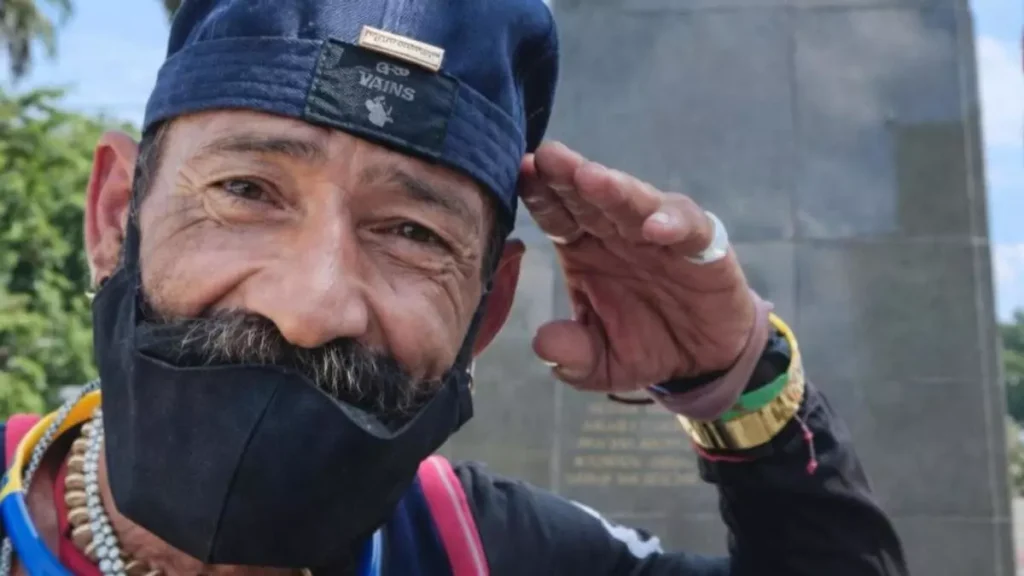
 14ymedio, Havana, 20 February 2026 — The death of Agustín, a homeless man known in Cárdenas as Bin Laden, has once again spotlighted the vulnerability of beggars in Cuba. An 18-year-old has been identified as the alleged perpetrator of the crime after setting Agustín on fire while he was sleeping out in the open in the Fructuoso Rodríguez subdivision. According to several local residents, the suspect has been arrested, though the authorities have not released any detailed official statement about the incident or the current status of the detainee.
The attack, reported on social media by user Christian Arbolaez, took place in the early hours of Thursday morning while the victim was sleeping on a bench near some kiosks. A young guy managed to help him, putting out the flames and rushing him first to a hospital in Cárdenas. From there, due to the seriousness of the burns, he was transferred to the Faustino Pérez University Hospital in the provincial capital, where he eventually passed away.
The crime comes amid a context where the presence of homeless people has become increasingly visible in cities across the country. Although the government avoids talking about homelessness and uses the bureaucratic term “people with wandering behavior,” even the official press has had to acknowledge the scale of the problem. A report in the newspaper Trabajadores revealed that between 2014 and 2023, 3,690 people in this situation were attended to by the social assistance system in Cuba. The publication itself admitted that this figure doesn’t capture everyone who survives by begging or rummaging through trash, pointing to a significant undercount.
Experts consulted have already warned that the profile of these “wanderers” is changing. It’s no longer just people with severe psychiatric disorders — the explanation the authorities keep repeating — but citizens hit hard by the economic downturn, broken family ties, aging, and the housing crisis.
“He didn’t bother anyone,” neighbors keep repeating in matching testimonies
The gap between reality and official rhetoric has been glaring. In 2025, the then-Minister of Labor and Social Security, Marta Elena Feitó, went so far as to publicly deny the existence of beggars in Cuba, insisting that the country takes care of all vulnerable people. Although the official was removed from her posts after massive backlash to her statements, the situation for the homeless on the island has only got worse.
In Cárdenas, neighbours from the Fructuoso Rodríguez subdivision describe Agustín as a familiar figure in the neighbourhood. “He didn’t bother anyone,” they repeat in consistent accounts. Precisely this profile — vulnerable, isolated people or those with mental deterioration — is the one that, according to several social workers, remains most exposed to violence. Poor street lighting in some areas, minimal nighttime patrols, the extreme economic deterioration, and drug use like el químico — especially among young people and teens — are all factors driving the rise in insecurity.
The case isn’t entirely isolated within the national picture, nor is the risk these people face limited to the streets. In recent years, there have even been reports of assaults inside healthcare facilities. In April 2025, a video showing physical abuse against patients by an employee at the Provincial Psychiatric Hospital Dr. Luis San Juan Pérez in Santa Clara forced the authorities to fire him. Once again, social media played a key role in the face of silence from the official press and the lack of transparency in the institutional system.
The question hanging over Cárdenas isn’t just who set the fire that early morning, but how many more Cubans are sleeping tonight without any protection in the province’s doorways. And above all, what new horrors will be seen in a country where the crisis is racing ahead, destroying respect for life along the way.
Translated by GH
______________________
COLLABORATE WITH OUR WORK: The 14ymedio team is committed to practicing serious journalism that reflects Cuba’s reality in all its depth. Thank you for joining us on this long journey. We invite you to continue supporting us by becoming a member of 14ymedio now. Together we can continue transforming journalism in Cuba.