Among the 56 key figures of the Cuban regime, there is no one similar to the Venezuelan Delcy Rodríguez.
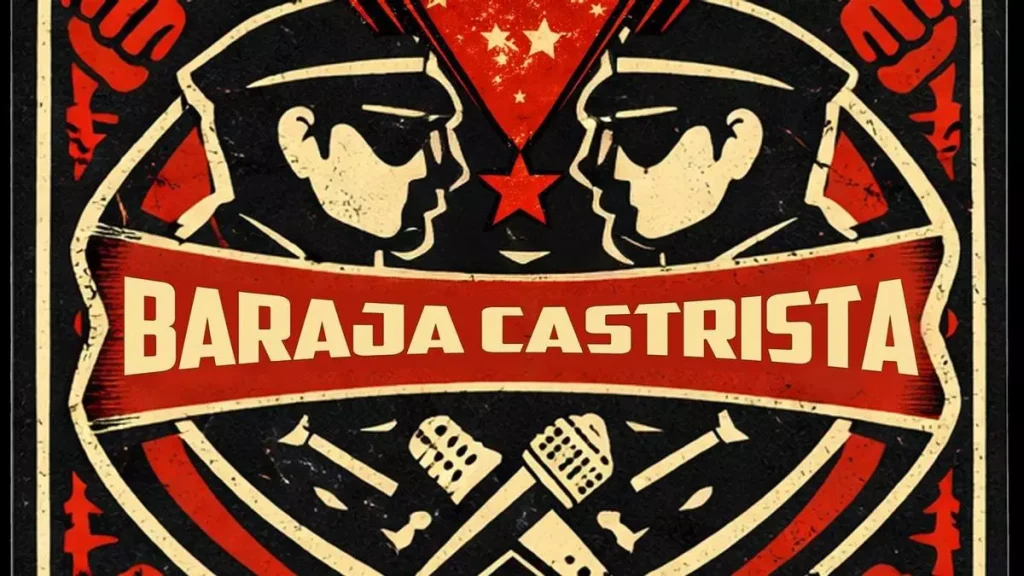
 14ymedio, Havana, 21 February 2026 — A recurring question among those seeking to understand the power structure in Cuba is: who really runs things here? The recently released “Baraja Castrista” [Castroite Deck of Cards] attempts to answer this question in the form of a political casino game. There are 56 cards that reveal the faces, ranks, and pedigrees of the power players on the island, just as Washington speaks of negotiations “at the highest level” and Havana tries—without much success—to maintain a poker face.
The project, promoted by the American Museum of the Cuban Diaspora (MADC) and the Foundation for Human Rights in Cuba (FHRC), comes at a time when the island’s economy is coming apart at the seams and the Cuban power elite is in the crosshairs of academics, analysts, and doomsayers.
In this deck, the ace of spades is beyond question. Raúl Castro—at 94 years of age and still with one foot in the casino, more than in the stirrup—heads the pack of cards. More colorful is the place assigned to Miguel Díaz-Canel, who appears in the deck as the ace of hearts. A flashy title, yes, although in practice many Cubans wouldn’t bet much on that card. The current president has shown that he doesn’t always have access to the pieces of hard politics, playing a role closer to bureaucratic window dressing than to actual decision-making.
Miguel Cossío, executive director of the Madc and the project’s mastermind, says it bluntly: the regime, he asserts, “has closed itself off to buy time” in the face of US pressure and the upcoming US elections. This move if it continues, he warns, could push the island into an even deeper humanitarian crisis.
The list is not limited to the usual faces on the news. It includes members of the Castro family, military leaders, state security operatives, and a collection of figures who, in the study’s own words, belong to the “nominal structure.”
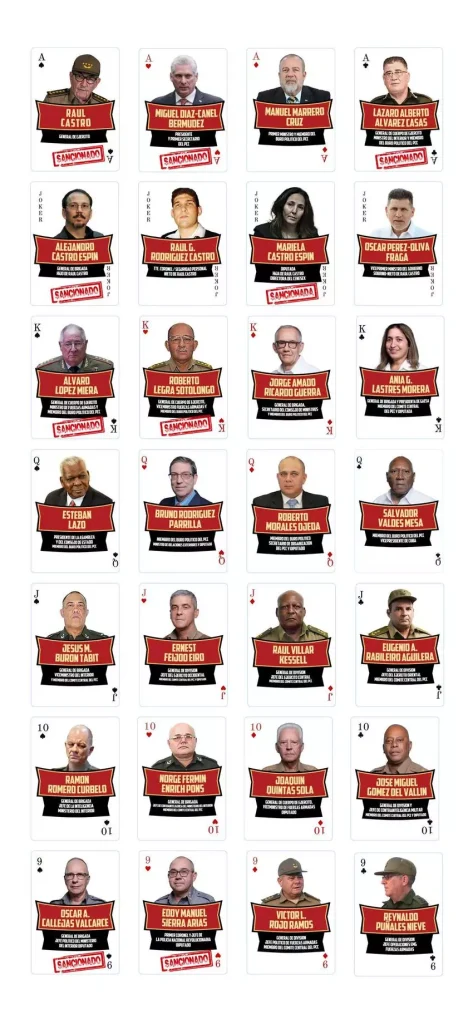
According to Cossío, who is also a journalist, real power remains concentrated within the Castro regime’s family and military core. In other words, the pieces haven’t changed hands. Among those directly linked to the clan are two of Raúl Castro’s children—Alejandro and Mariela—his grandson Raúl Guillermo Rodríguez, nicknamed “El Cangrejo” (The Crab )—a member of his personal security detail anda constant presence—and the Deputy Prime Minister and Minister of Foreign Trade, his great-nephew Oscar Pérez-Oliva Fraga.
But in every deck of cards, there are figures who seem secondary until they raise an eyebrow. The study underscores the importance of General José Amado Ricardo Guerra, a longtime confidant of Raúl Castro and for years Secretary of the Council of Ministers. Another key figure, however, has fallen to the bottom of the deck: Commander Ramiro Valdés now occupies the two of diamonds, following increased rumors about his imminent death.
For the authors, the initiative’s usefulness extends beyond the media attention it generates. Cossío argues that the map could be helpful to US agencies interested in understanding who is really pulling the strings in Havana, especially if the bilateral standoff evolves toward some kind of negotiation or negotiated transition.
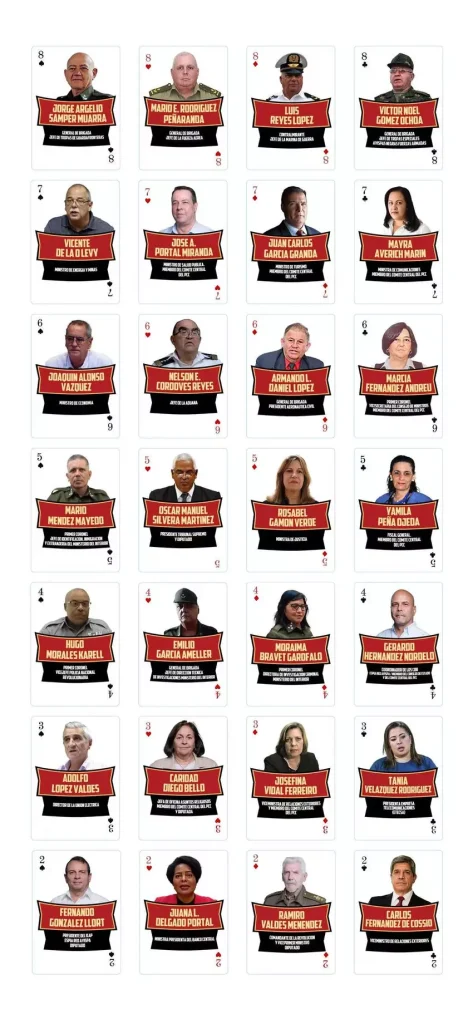
The launch coincides with repeated statements by US President Donald Trump that his administration is holding talks with high-ranking officials of the Cuban regime. “Marco Rubio is talking to Cuba right now,” he stated a few days ago. Various media outlets have reported conversations with Alejandro Castro Espín or with El Cangrejo.
Cossío outlines three possible short-term plays: a repressed social explosion that forces external players to move; a humanitarian deterioration so severe that it forces an assistance intervention; or a more surgical strategy by Washington to fracture the core of power.
The analyst does, however, rule out the emergence in Cuba of a pivotal figure like Delcy Rodríguez in Venezuela. In his view, the difference lies in the system’s DNA, because the Cuban system was born of arms and structured with the discipline of a permanent barracks, without any hint of democracy.
From Miami, Marcell Felipe, president of the MADC, says the investigation comes at “a crucial moment,” while Tony Costa, of the FHRC, insists that any future for Cuba will have to be built on truth and justice.
Meanwhile, the Castro regime’s hand is already circulating, ready for everyone to place their bets. The White House seems prepared to go all in and has made it clear that this is no bluff. Whether the regime is a house of cards about to collapse or a poker table capable of withstanding the hand that’s coming its way is a debate yet to be decided.
______________________
COLLABORATE WITH OUR WORK: The 14ymedio team is committed to practicing serious journalism that reflects Cuba’s reality in all its depth. Thank you for joining us on this long journey. We invite you to continue supporting us by becoming a member of 14ymedio now. Together we can continue transforming journalism in Cuba.