‘The Farmers We Treated at the Hospital Are Now Our Suppliers’

 Fernando and Odalis gave up medicine to open a restaurant in Cienfuegos
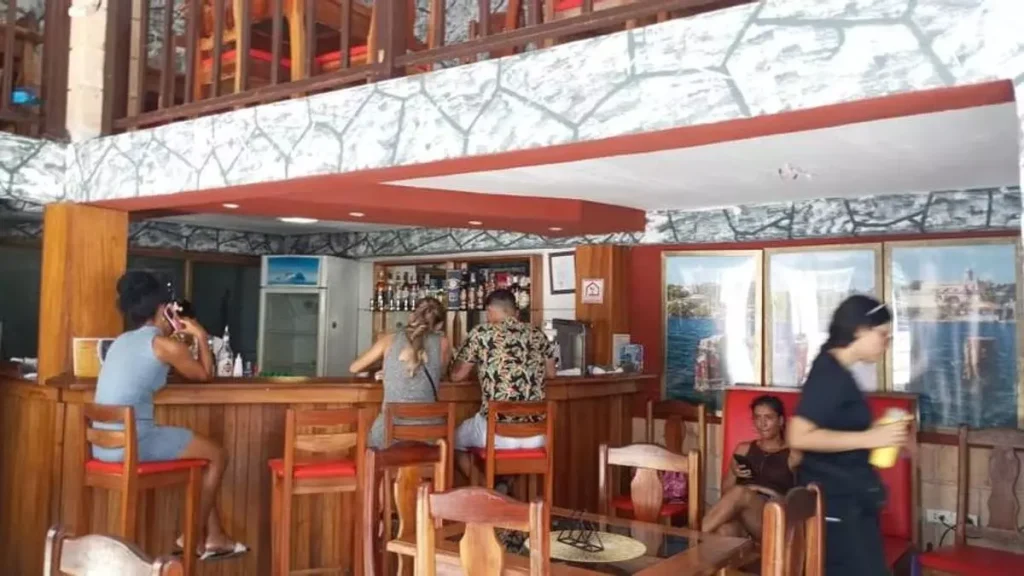

The couple invested the money they earned from serving on “medical missions” abroad in a restaurant. / 14ymedio

14ymedio bigger14ymedio, Julio César Contreras, Cienfuegos, 22 September 2024 – Odalis, a 55-year-old from Cienfuegos, has not worked as a surgeon for eight years. Instead, she started a restaurant with her husband, Fernando, also a doctor. “When I returned from my mission in Africa, I knew very well that I had to invest the money in some way. That’s when we opened a cafeteria, and now it also offers lunches and dinners at an affordable price,” this veteran doctor tells 14ymedio. Many, she says, called them crazy, including bank officials, who were reluctant to grant them a loan.

Like them, there are many Cienfuegos residents who, tired of the salary conditions in the service of the State, try their luck in the private sector, mainly in establishments dedicated to commerce and gastronomy, such as those that proliferate around the Prado or the Bulevar.

Odalis explains how she left the healthcare center where she worked. “Initially, I stayed at the hospital, while we were running the cafeteria, with great effort. When the business was thriving, my own co-workers made war on me, to the point that I asked for leave.” The doctor asserts, “It was not worth sacrificing myself for a miserable salary while also having envious glances turned on me.” continue reading

While speaking to this newspaper in her restaurant, she pauses to take an order from a customer who comes in. “This man comes every day from Pastorita to get his evening meal,” she says, boasting about the quality of the food they serve.

“It is a huge challenge to keep this place well stocked” 

Her husband Fernando has just arrived with some groceries and joins the conversation. “It is a huge challenge to keep this place well stocked,” he says as he sits down. He has gone through most of the private shops in the city looking for “meats” with great difficulty. “With this situation of price caps, many are closed waiting for the tide to go out,” he explains, referring to the price controls for basic products established by the Government in July.

Another problem that worries him is finding a place that accepts payment by bank transfer. “The owners of the SMSEs say that they can only receive cash, because it is the only form of payment that is accepted in Havana when they go shopping,” he argues. “There is a contradiction between what the Government imposes and what is established by reality.”

Among the few small and medium-sized businesses that accept electronic payments in Cienfuegos are El Eslabón, on 35th Street, and Camposososmani, between Prado and Cristina. “But sometimes you go and you don’t find the products you need,” says Fernando. “Everything becomes an obstacle to any goal you set yourself.” On the other hand, the doctor turned businessman says that the state stores selling in freely convertible currency (MLC) don’t solve anything for them: “They are half empty, but also, if we buy at those prices, we would have losses.”

In the absence of wholesalers who can guarantee them the necessary products, Odalis and Fernando have turned to old friends who provide them with first-hand goods. “Many of the farmers we treated at the hospital are now our suppliers,” says Odalis. “They sell us the goods in very good condition and at a fair price. That way, we can do the same with our customers, leaving everyone satisfied.”
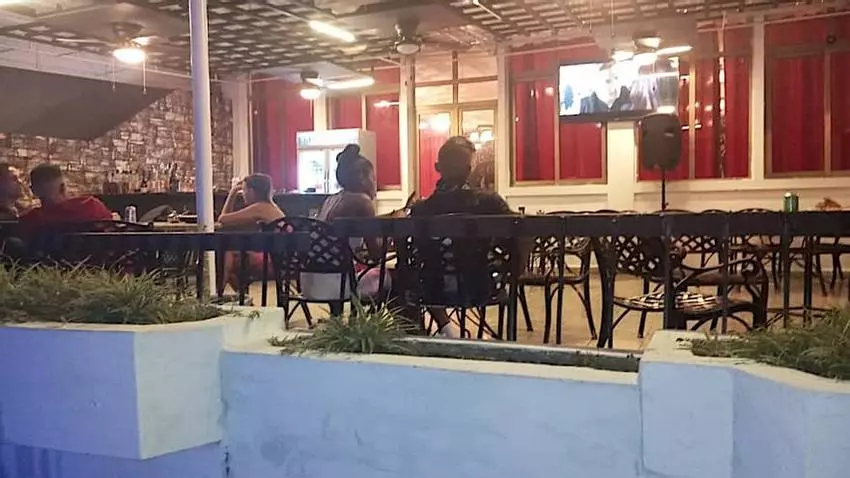
The string of complications faced by private companies has been joined by the tightening of controls. / 14ymedio

The string of complications faced by private companies has now been joined by stricter controls. The couple complain that the inspectors are not always looking for “illegalities” but rather “personal benefits.” “They have been asking us for all kinds of invoices and receipts. You get tired of explaining to them that most vendors don’t provide any paperwork. Then, the inspector tells you that the Article expresses such and such provision and to shut him up, you have to give him a little gift. That is inevitable,” confesses Fernando.

What began eight years ago as a humble venture is today an establishment recognized by the people of Cienfuegos. “An additional advantage is that we have the business in our own home, so we save on paying for rental space. “All the furniture and tableware we use is simple, but even the smallest detail is thought out so that the customer is satisfied, including home delivery if desired,” says Odalis proudly.

For this professional couple, living in a central neighborhood of the city, returning to the field of medicine is not an option. “My wife and I felt a calling for the career we studied and also for teaching. However, they never valued our experience and the results we obtained in the practice of public health. In addition to being poorly paid, we were mistreated,” laments Fernando, who went on no fewer than three international missions. In 2019, he requested leave from active medical service to devote himself entirely to developing the family business.

____________

COLLABORATE WITH OUR WORKThe 14ymedio team is committed to practicing serious journalism that reflects Cuba’s reality in all its depth. Thank you for joining us on this long journey. We invite you to continue supporting us by becoming a member of 14ymedio now. Together we can continue transforming journalism in Cuba.

‘Juventud Rebelde’ Denounces the Inaction of Cuba’s Leaders in the Face of Their Readers’ Complaints

Only 46% of the complaints received by the media in the year were responded to

Cuban President Miguel Díaz-Canel “attending” to the farmers of Sancti Spíritus / Escambray

14ymedio bigger14ymedio, Havana, 22 September 2024 — The uncomfortable “Acknowledgement of Receipt” section, in which one of Cuba’s official newspapers, Juventud Rebelde, takes advantage of its “freedom” to publish readers’ complaints, translated the inefficiency of Cuban officials into numbers on Sunday. “Of the complaints published here in 2024, only 46% received a response,” said the media, which considers that the situation “leaves much to be desired.”

José Alejandro Rodríguez, the journalist who has written the section for years and whose “criticisms” have gained popularity among the readers of Juventud Rebelde, explains that, after a “grace period” of 60 days that they grant to each official or organization to respond to the complaints of Cubans – some of them serious, such as the one published by two Cuban doctors who have not received their salaries in a year – the attitude remains disappointing.

Among those who did respond to the claims – which can range from a broken pipe to the absence of a basic service for months – 69.5% limit themselves to explaining the reason why the demand has not been resolved, and 30% do not even offer excuses. Once again, the newspaper regrets, the situation “reveals little respect” for the problems of citizens. continue reading

‘Juventud Rebelde’ is pleased that, with respect to the 2023 numbers, this year the section has received more responses

However, Juventud Rebelde is pleased that, with respect to the 2023 issues, this year the section has received more responses. On concrete solutions, however, there are no statistics – although it is expected that they were few – but the article reveals a clue to how the disinterest and lack of action of the leaders is handled at the state level: “Only 4.3% of the responses reveal the measures taken with those responsible for violations and negligence, whether they were managers or workers.”

The newspaper even goes to the newsroom psychologist to try to unravel the cause behind so much “non-compliance.” “The chronicity of some problems is still an excuse for not providing the follow-up and explanations to those affected. This causes the feeling of abandonment that afflicts those people, who already suffer major problems,” says the specialist, hitting the nail on the head.

Even so, hiding behind the seriousness of the situation is just one of the strategies that leaders have to escape public pressure. Generating in people the feeling of being heard and holding subordinates responsible for mistakes are other cards that officials hide up their sleeves.

Hiding behind the seriousness of the situation is just one of the strategies that leaders have to escape public pressure

This was masterfully demonstrated this week by Cuban Prime Minister, Manuel Marrero Cruz, during a visit to Gibara, in Holguín. The leader not only accused local officials of not sitting down like him to listen to the problems of the farmers, but also that – while he imparted classes on sympathy and paying attention to the complaints of Cubans – his voice was the only one that resounded in the building that served as his school.

Juventud Rebelde is clear: “The negligence and lack of institutional control continue to lacerate the citizen,” and Cubans are “stubborn” about not pointing out the problems. However, the newspaper follows the line of the Communist Party, which assures that the answer lies in listening to the people when, in reality, fewer ears and more solutions are needed.

The readers of the newspaper know it well. They applaud the “good analysis” of José Alejandro Rodríguez, but they regret that the situation has reached these extremes. “In my time, the answer to what was badly done was almost always ’it came from above’,” highlights one of the commentators at the bottom of the page. As a task, he adds, he suggests that the journalist investigate if “the one who does not respond” does not do so because he does not want to or if “muteness continues to come from above.”

Translated by Regina Anavy

____________

COLLABORATE WITH OUR WORKThe 14ymedio team is committed to practicing serious journalism that reflects Cuba’s reality in all its depth. Thank you for joining us on this long journey. We invite you to continue supporting us by becoming a member of 14ymedio now. Together we can continue transforming journalism in Cuba.

Mexico Paid Cuba More Than 21 Million Euros for 610 Medical Specialists for Almost Two Years

  • Between July 2022 and 2023, three contracts were signed between both countries, the last for 1,636,308 euros per month
  • From 2022 to December of last year, 48 doctors have fled
Cuban doctors at the community hospital of Zumpango del Río, in the state of Guerrero / 14ymedio

14ymedio bigger14ymedio, Mexico City, 22 September 2024 — The Government of Mexico paid Cuba 21,590,853 euros for 610 specialists as part of three agreements signed between July 2022 and 2023. From that group of doctors hired to provide health services in rural areas, 48 doctors fled, according to an investigation by the newspaper El Universal.

The Health Services organization of the Mexican Institute of Social Security for Welfare signed three agreements with Comercializadora de Servicios Médicos Cubanos S.A. de C.V., an island company internationally accused of human trafficking. The Regime received 1,177,300 euros monthly between July 2022 and May 2023.

The Human Resources Division of the Finance and Infrastructure Coordination of the Mexican Social Security Institute (IMSS) stressed to the Mexican newspaper that they do not have detailed information about the Cuban health professionals. In addition, they claimed to be unaware of the salary they receive.

The regime received 1,177,300 euros monthly between July 2022 and May 2023

However, an official of the Institute of Health for Wellbeing (Insabi) – created by the Government of López Obrador to provide health care and free medicines – told 14ymedio in 2022 that for each of the medical specialists hired, the Mexican Government paid Cuba 2,042 dollars monthly, and 1,722 dollars for each general practitioner. continue reading

On May 11, 2023, a second agreement was signed, through which Mexico promised to pay 1,636,308 euros a month. In July, a third was closed; for five months the López Obrador Administration disbursed a total of 8,181,544 euros.

The editorial staff of this newspaper was informed in August 2022 that the payments were deposited to an account of Banco Internacional de Comercio, S.A., with a tax address in Inmobiliaria Monte Barreto, Jerusalén building, ground floor, 3rd avenue, e/ 78 and 80, Miramar, Playa, Havana, Cuba.

The president of the Prisoners Defenders association, Javier Larrondo, denounced in that same month that there were “State Security agents” among the doctors hired by the Government of Andrés Manuel López Obrador. Despite the report, Mexico has continued to hire Cuban doctors.

A group of 184 Cuban specialists was received at Felipe Ángeles Airport by Mexican and Cuban authorities / X/@EmbaCuMex

Since last August, Mexico has accelerated the arrival of Cuban specialists. The goal is to have 5,223 doctors “as soon as possible,” an official confirmed to 14ymedio. The new stage foresees the “arrival of 4,023 health workers,” a figure higher than the 3,800 that the director of the Mexican Social Security Institute, Zoé Robledo, had announced last July.

Doctors with various specialties are arriving in groups of between 198 and 200 at Felipe Ángeles International Airport (Aifa), where, according to the official, “there are scheduled flights.”

As part of the relationship with Cuba, 14ymedio confirmed that the agency in charge of the logistics of the Island’s doctors in Mexico is Neuronic Mexicana, which depends on Neuronic S.A. Cuba. This company has been the representative of the products and services of the biotechnology and pharmaceutical industry of the Island since 2018; its president is the Cuban Tania Guerra.

Translated by Regina Anavy

____________

COLLABORATE WITH OUR WORKThe 14ymedio team is committed to practicing serious journalism that reflects Cuba’s reality in all its depth. Thank you for joining us on this long journey. We invite you to continue supporting us by becoming a member of 14ymedio now. Together we can continue transforming journalism in Cuba.

‘Everyone Get Out of the House, We Have You Surrounded’

  •  Shock in a village in Villa Clara due to a mistake by a command of ’black berets’
  • Officers raided several homes in search of a cattle thief
Residents of the community of San Benigno, in Villa Clara / 14ymedio

14ymedio bigger14ymedio, Yankiel Gutiérrez Faife, Camajuaní (Villa Clara), 18 September 2024 — Vicente Florit Viñales, 47, is still in a state of shock after the violent raid on his farm in San Benigno, in Villa Clara. The farmer was involved in a colossal police error, when several agents, believing that they had just caught a cattle thief, aggressively immobilized him on the floor until the head of the sector, present at the time, shouted: “He’s not the guy!”

The events occurred during the early hours of September 11, when more than 40 armed men, including members of the Special Brigade of the Ministry of the Interior – the “Black Berets” – with the head of the sector of the area in command, surrounded Vicente’s house and invaded it without prior warning.

“Everyone get out of the house, we have you surrounded,” a voice burst out around 3:00 in the morning in that peaceful village in the municipality of Camajuaní, of about 250 inhabitants who live from agriculture. Less than two minutes passed, but the impatience of the black berets overtook Vicente, who was heading towards the door at that moment. The agents opened it by force and, without saying a word, immobilized and interrogated him until the sector head spoke up and announced the mistake. continue reading

Vicente, without a word, was immobilized and interrogated until the sector head announced the mistake

However, the uniformed men did not give up and continued with their search of the house. Vicente watched stunned as the agents, accustomed to suppressing demonstrations and carrying out command actions against armed criminals, continued breaking things, including door and window handles. They stopped when a mysterious man with a long beard and crucifix-shaped earrings, about 35 years old, appeared. Faced with the farmer’s bewilderment, the agents withdrew without offering any explanation, or apologizing for the violent nocturnal intrusion and the mistake.

The ’Black Berets’ also broke into other homes / 14ymedio

The police operation aimed to arrest a well-known criminal in the area, nicknamed “Machetico,” with an extensive criminal record, who steals cattle from the farmers in the area and then kills them to sell. However, the inaccuracy in the information caused a disproportionate deployment in the wrong place.

“Someone here must have told the police that Machetico was staying at Florit Viñales’ house, because they first went straight to his house and, after seeing that he was not there, checked two other nearby houses, but they didn’t find him,” said Manuel González, a 64-year-old farmer.

The police operation aimed to arrest a well-known criminal in the area, nicknamed ’Machetico,’ with an extensive criminal record

According to some neighbors, during the afternoon some strange movements were seen, and someone apparently saw the criminal wandering around the area. “These guys don’t have a fixed address; they sleep wherever they find themselves at night,” said Ramiro, who lives nearby.

Florit Viñales was not the only one affected by the actions of the authorities. His neighbor, Dayana Espinosa Collazo, was sleeping with her husband when the Black Berets broke into her house. “I got the biggest scare of my life. They opened both doors and came in; they went from one door to the other as if they were the owners. They came screaming into my room with batons and tossed everything. We were even naked, but they didn’t care. The house was completely surrounded.”

The case sent shockwaves through the community of San Benigno and its surroundings, where Florit Viñales is known as an honest and respected worker. “It was very cruel, and we don’t know whose fault it was. Well, I trust in revolutionary justice, because I am forged under the principles of this Revolution,” says his wife, Leticia Galdona, indignantly.

The case sent shockwaves through the community of San Benigno and its surroundings, where Florit Viñales is known as an honest and respected worker

“For God’s sake, I know the farmer and his family; they are loved and respected people in this place. Do not remain silent, report this to the authorities. What’s going on? This looks like a western movie; someone has to pay for that abuse,” exclaims another neighbor, Milady Sánchez Mesa.

The neighbors, not very open to questioning the authorities, nevertheless express their astonishment. “I hope that justice is done and that the work of Alexey, the head of the community sector, who led the operation, is analyzed. When I went to talk to him, I did it with a lot of respect and decency; however, he mistreated me and didn’t let me speak. He received me with the worst rudeness you can say to a lady, even during my recovery process,” adds Florit Viñales’ wife, who is recovering from an operation for a tumor and a blood clot.

Residents of the community of San Benigno, Villa Clara / 14ymedio

Vecinos de la comunidad de San Benigno, Villa Clara / 14ymedio[/caption]

This newspaper tried to talk to the delegate of the area to get his version of the incident after Florit Viñales’ wife intervened. However, after a first contact, he stopped responding to messages and calls

Translated by Regina Anavy

____________

COLLABORATE WITH OUR WORKThe 14ymedio team is committed to practicing serious journalism that reflects Cuba’s reality in all its depth. Thank you for joining us on this long journey. We invite you to continue supporting us by becoming a member of 14ymedio now. Together we can continue transforming journalism in Cuba.
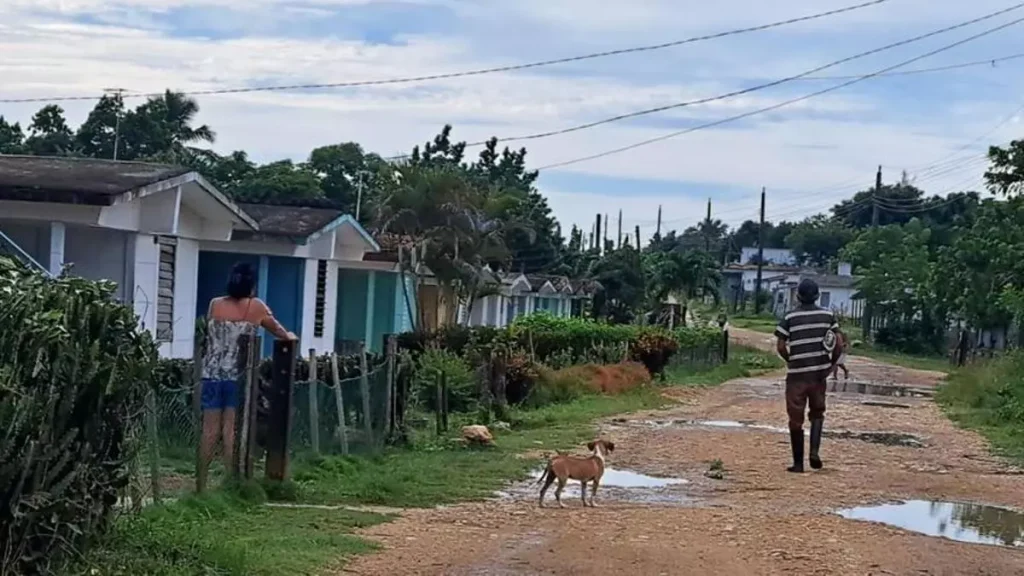
When It Gets Dark, Not Even the Police Enter the ‘Gloomy’ Las Tunas Cemetery

According to the workers and neighbors of the necropolis, looters and “fugitives” take refuge among the graves

The Vicente García cemetery lacks space to deal with the amount of remains / Periódico 26

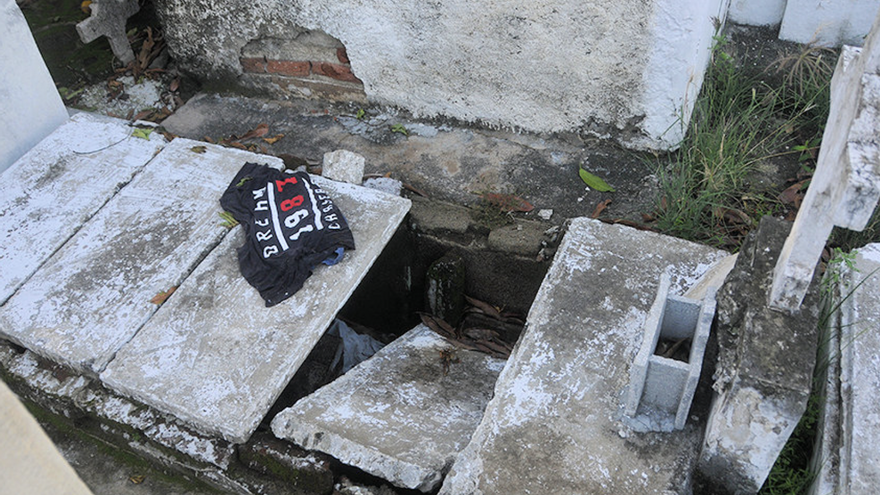
14ymedio bigger14ymedio, Havana, 20 September 2024 — “Cruel, gloomy, inexcusable.” With three adjectives, the official press summarizes this Friday the panorama of the Vicente García de Las Tunas cemetery, which has become, according to its own caregivers, a no man’s land. The necropolis is not only haunted by the typical cases of looted graves and drifting bones, but also, after five in the afternoon, when the workers leave and the darkness lends itself to misdeeds and hiding places for “fugitives,” not even the police dare to enter.

The unusual chronicle of Periódico 26 provides not only descriptions of the cemetery but also stories that could be part of a thriller. The protagonist of the article, Daysi Aguilera Santiesteban, a woman from Las Tunas who sought to move* the remains of her relatives to the Jobabo cemetery, tells the newspaper that after exhuming two brothers and their father – in a process already painful for the families – the plastic boxes where they were deposited disappeared.

Upon returning to the cemetery, the woman found the remains of the three men – all soldiers who went to Angola or participated in some campaign of the regime – scattered on the ground. There was no sign, in the pantheon of fighters where she had left them, of the funeral boxes.

“A head on one side and a bone on the other,” is how the remains spent the whole month of August, says the newspaper, “in God’s hands,” while Daysi knocked on the doors of the police, the technicians, the Prosecutor’s Office, the municipal government and even the Party. The answer was always the continue reading

same: “mistreatment” and “little sensitivity,” says Periódico 26. Only at the end of August was the woman finally able to transport the remains of her relatives.

“After 5:00 pm, this place has no security, and we are located in a very complex neighborhood”

One could think that what happened to Daisi Aguilera is excessive bad luck or an isolated case, but the confessions of the employees of the necropolis themselves – who have given up secrecy in the face of the situation – say that it is not. “After 5:00 pm, this place has no security, and we are located in a very complex neighborhood, constantly attended to by the structures of the Government and the Party,” is the first thing that Jorge Gordales Reyes, manager of Vicente García since the beginning of this year, tells Periódico 26.

The manager assures that, until recently, “many people lived in the cemetery.” He says there were “more than five workers” who have had to be separated from their positions, some “with more than 15 years of work,” for “violations and crimes.” “I can assure you that this place has not been like that for a long time. You can walk through it and not see any debris; it is clean, and we are very severe with indiscipline,” he says, although his own workers deny some of his statements.

Not only are most of the niches and graves dilapidated with slabs torn off, but two large bee hives hang from the back wall, and, faced with the problem of lack of space, the guardhouses have become depositories for the remains. “They removed the windows of the internationalists’ pantheon (guardhouse), closed it, and it’s full, because there’s no room for all the skeletons,” complains Ramón Nicolás Delgado, head of the group of custodians who also suffer from the place’s poor condition.

When the cemetery closes, the guard on duty is not only left without a place to rest but is also plunged into darkness. “The head of the sector has asked us not to have women guards at night for fear of what may happen to them. It’s totally dark here. There was a tower with spotlights focused on several perimeters, but not anymore,” he explains.

“The pantheon of the combatants, to give an example, has a 200-volt switch and can’t be used because there is no breaker. The main entrance is dark because it has not been possible to get a cable for the custodian to have light,” he summarizes. In difficult situations, such as a downpour, “the custodian takes down the flag, picks up the phone and asks the neighbors to give him shelter. And then the cemetery is unguarded, with no one here,” he says.

Many niches and graves are dilapidated, with slabs torn off/ Periódico 26

The lack of security has brought the consequent robberies. “The flower boxes, the little books, the little boxes that people buy for the remains of the family member are stolen. Many are worth 3,000 or 4,000 pesos. They empty them and resell them,” he says.

Periódico 26 also says that the workers don’t receive snacks, gloves or other basic tools for their work, and they’re not the only ones whose lives revolve around the cemetery. A neighborhood has sprouted there, full of people who live with the fetid odors and let their children play in the cemetery as if it were natural. In fact, one of the workers of the necropolis attributes the place’s destruction in part to the residents in the area.

“The children fly their kites; they start running around and when you step up and scold them, the parents fall on top of you as if you were the one invading a sacred space,” he says. He knows, however, that this is not the only reason. The Vicente García lacks maintenance, space and workers, but the employee confesses that “no one wants to work for 2,527 pesos in the midst of so many shortcomings, without lighting and in a diverse and complicated community.”

Periódico 26 reports that, not so many years ago, the provincial authorities announced the construction of another cemetery and an incinerator plant. The plans, however, never materialized despite the promotion they had then, something that the newspaper attributes to the “excess enthusiasm” of the leaders.

The land that had been planned to expand the necropolis, where the earthworks had already begun, was given to some individuals

At the moment, the Vicente García Cemetery lacks space to deal with the amount of remains, and the overexploitation of the cemetery is another reason for the poor condition of the facilities. As for the new projects, “the work on the crematorium is stopped due to lack of materials; the incinerator is already there but has not been installed, and the land planned for expanding the necropolis, where “the first earthworks had already begun, was given to some individuals,” regrets Eiser Prieto Pons, deputy director of Hygiene and Obituary in the province.

In Las Tunas, Vicente García Cemetery is not the only one in that situation. “In Puerto Padre, for example, whose main cemetery is equally overexploited, the work has stopped for bureaucratic reasons. It’s a shame, because we could comply with the rule of building this site next to the garbage dump with the distance it requires,” says the manager, without explaining the reason for the decisions that come “from above. ” However, he adds, the Party has favored the manufacture of coffins, and they will soon be able to add four hearses to the six they have for the entire province.

However, that is not enough to stop the deterioration of the province’s cemeteries like the Vicente García, which serves, according to its neighbors, as a warehouse for remains that are then sold for thousands of pesos to be used for santería rituals, depending on “which bone it is and the dead in question. If it is a child, a foreigner or a combatant, the price goes up.”

The anecdotes about fugitives and criminals who take refuge in the necropolis, the “harmful” policemen and the debacle of the cemetery, were a final point in the official chronicle, which closes without a direct allusion to the negligence of the State that has led to that environment. However, the reminder that, in one way or another, anyone can end up being part of the template of lost and dislocated remains of the cemetery does not go unnoticed in the article: “Death is the path we all take.”

Translator’s note: Cemeteries in Cuba with limited room require that families disinter remains after a given time period, and deposit them in a mausoleum to make room for new burials.

Translated by Regina Anavy

____________

COLLABORATE WITH OUR WORKThe 14ymedio team is committed to practicing serious journalism that reflects Cuba’s reality in all its depth. Thank you for joining us on this long journey. We invite you to continue supporting us by becoming a member of 14ymedio now. Together we can continue transforming journalism in Cuba.
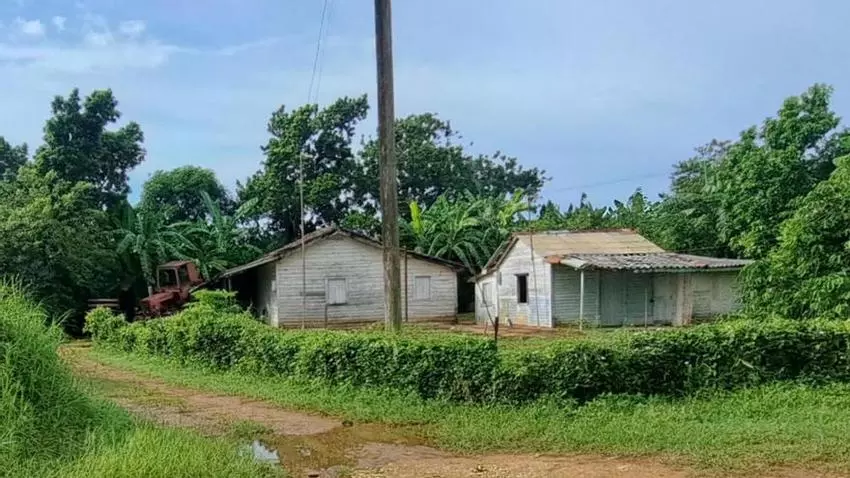
The Children of Cienfuegos, Cuba, Go to School Tired After Nights of Blackouts

A teacher tells ’14ymedio’ that schools have had to readjust class programs due to power cuts

Many students have to travel long distances to their schools, which takes away hours of sleep / 14ymedio

14ymedio bigger14ymedio, Julio César Contreras, Cienfuegos, 21 September 2024 — With dark circles under their eyes letting out long yawns, the children and teenagers of Cienfuegos were heading to school this Friday after a night of intense blackouts throughout the city. Overwhelmed by the heat, many of them could only fall asleep in the early morning, when the fans and air conditioners were turned on for just three hours. Waking up these days is more difficult than usual, because the night becomes too long in the face of involuntary insomnia.

“They turned off the power at 6:00 in the evening and turned it back on at 4:00 in the morning. It was ten uninterrupted hours of blackout in which my son had to do his homework with the light of a rechargeable lamp. His food was a pizza, because my stove is electric and I couldn’t cook. We ended up lying on the couch, with the living room door open and mosquitoes coming in,” says the child’s mother, Ania.

She and her son walk two kilometers every day, leaving their house in the Tulipán neighborhood to reach the school. “The teacher told me that in the last few days the child has fallen asleep in class. If I had someone to leave him with, I wouldn’t take him to school while the blackouts continue like this,” says the mother, who confesses to being very worried because not only her rest, but also her son’s learning has been interrupted. continue reading

Many children get to the classrooms without having had breakfast / 14ymedio

Due to the lack of public transportation, many family members and students have to get up between 5:00 and 6:00 in the morning to get to the morning classes on time. “In La Juanita we were without electricity for 16 hours straight. Even so, my grandson wanted to come to school, with a piece of bread and a little coffee as his only breakfast. Who can learn when hungry and sleepy?” asks Pablo, an old man.

The old man sees several sides to the problem, as his daughter is a teacher at a secondary school. “In addition to dealing with the children’s fatigue, she has to fight against her own physical and mental exhaustion.” Pablo tells 14ymedio that, “as if that were not enough, the government called her to do night shifts at El Prado, to avoid any protests from the people about the blackouts. This is unsustainable,” he adds.

In recent days, of the 60 megawatts consumed by the province – 75 at peak times – there has been a deficit of more than 90%. For students and teachers, the resulting blackouts translate into poor academic and professional performance. “When 11:00 in the morning comes, we are all desperate to go home, knowing that, in the case of adults, we will be forced to do all the housework without electricity,” says Claudia, who teaches Geography.

Parents are concerned not only about the few hours of sleep, but also about their children’s poor learning / 14ymedio

According to the teacher, schools have had to readjust class schedules, taking into account the difficulties with electricity and the low attendance of students. “We are just starting the school year and we have already had to start ’inventing’ to make the most of the little time available. Parents complain, with reason, that the teaching is of poor quality. We move children up a grade without providing them with sufficient knowledge,” laments Claudia.

There are many students and teachers who arrive at school in the morning walking slowly. They have in their eyes the weight of several nights without getting enough sleep. “Nobody calculates the gravity of this situation, not only for the present, but also for the future of the country. In addition to not being able to cook, wash or iron, we must add the damage that is being caused to the educational system with these endless blackouts,” says Pablo. The old man insists that the Cuban authorities, instead of worrying about a possible social explosion, should fear that children and teenagers will reject school due to the lack of electricity.

____________

COLLABORATE WITH OUR WORKThe 14ymedio team is committed to practicing serious journalism that reflects Cuba’s reality in all its depth. Thank you for joining us on this long journey. We invite you to continue supporting us by becoming a member of 14ymedio now. Together we can continue transforming journalism in Cuba.
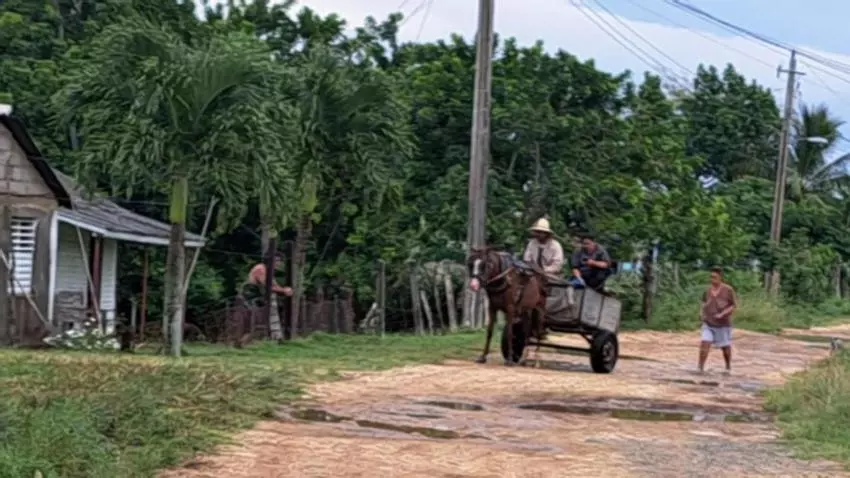
Cuban Prime Minister Marrero Gives Lessons in Democracy and Socialist ‘Sensitivity’ With a Monologue in Gibara

“The people need things to change, but with the Revolution that Fidel and Raúl made,” was his mantra

Cuban Prime Minister Manuel Marrero [center right with beard] “thanked [the villagers] for their support for the Revolution” although their situation was critical / Manuel Marrero Cruz
14ymedio bigger14ymedio, Havana, 21 September 2024 — In a battered fiber cement shelter in Cayo Palma, a small town in Holgüín, Cuban Prime Minister Manuel Marrero demonstrated his method for democratic consultation: the monologue. The cameras of Cuban Television, which followed him on his journey through Gibara from “the first light of day,” recorded the long scolding of the prime minister to “the odd leader who does not have the sensitivity required to be able to talk to the people.”

“They are afraid to come here and be told to their faces the things that need to be said,” Marrero exploded, sweaty from the heat of September and surrounded by local authorities. The difference – he stressed – is that he is willing to “sit down” with the guajiros and ask them to give him their criticism. The first row of about twenty seats in the little school were for officials; the farmers – few and standing – waited their turn to take the floor.

Cuban Television did not devote too much time to the “dissatisfactions” in Cayo Palma, nor in Muñoz, another more populated town. Off camera, the reporter admitted that there was a notable deterioration of the “roads” to both towns and a “scarce supply of goods and services.”

One of the few televised testimonies was that of a woman to whom the authorities brought some basic supplies – cooking oil and rice – and she complained that there was “nothing constant.” It’s not easy for the continue reading

inhabitants because of all the red tape, and they gave up a long time ago when it came to getting medications.

The bread rolls are not only tiny but are also transported in dirty boxes surrounded by flies

Bread is another of the great problems of the small towns of the eastern province. The images themselves were eloquent: the rolls are not only tiny but are also transported in dirty boxes surrounded by flies. The Muñoz bakery, in addition, leaves much to be desired due to the precariousness of the facilities.

Soon the microphone returned to Marrero, who thanked the villagers for their “support for the Revolution” even though their situation was critical. “We have to end the shoddiness, the bureaucracy,” he insisted, appealing to the people themselves to make an effort. “We have to know all the problems, which are many.” The solution is another story.

To top off the “high expression of socialist democracy,” according to Cuban Television, the prime minister went to a rural school, where the Pioneers* were trained and in uniform. It was a “frank and pleasant” dialogue with the humble communities of the Cuban East, the reporter summarized, while focusing in the foreground on an old man from Gibaro with a shiny US Marine cap.

At one point on his journey, Marrero confessed that he made those exchanges as a kind of model for the accountability assemblies formerly held. Suspended since 2021, these meetings return to Cuban neighborhoods as proof – says the official press – that the Government is willing to listen to the people in the midst of the crisis. “The people need things to change, but with the Revolution that Fidel and Raúl made,” was Marrero’s mantra.

The Communist Party newspapers reproduced on Saturday similar scenes in all provinces

The Communist Party newspapers reproduced on Saturday similar scenes in all the provinces, with lower-ranking leaders. In Sancti Spíritus, for example, they have achieved a curious sample of “patriotic virtues”: the creation of an official commission to “supervise the quality of the bread for the basic basket,” which soon became the main concern of the meeting.

In Villa Clara, on the other hand, people talked about the multiple problems of garbage collection and the proliferation of crime, but Vanguardia did not offer too many details about the debate. There, the delegates also gave scoldings and celebrated their own willingness to “listen to the voters.”

The 5 de Septiembre digital news source gives the chronicle of accountability the tone of an epic. It reports that the delegates “are moving heaven, sea and earth,” and don’t accept “unfinished or unconvincing answers” from those who “harm their people,” and they should “begin the task” – the kind of war cry attributed to Antonio Maceo – every day. In every town there are “dark minds longing for blackouts” for the meeting to be suspended but, they warn, not even that can prevent the leader from being there.

As for the municipality of Segundo Frente, according to Sierra Maestra, the delegates have asked for trust in the “influence of the Party” and its first secretary in Santiago de Cuba – Beatriz Johnson Urrutia – for a solution to their problems. An undated solution, of course, because now the Government only intends to “listen.”

*Translator’s note: In 1961, the José Martí Pioneer Organization for Cuban youth was created to replace the banned Association of Cuban Scouts.

Translated by Regina Anavy

____________

COLLABORATE WITH OUR WORKThe 14ymedio team is committed to practicing serious journalism that reflects Cuba’s reality in all its depth. Thank you for joining us on this long journey. We invite you to continue supporting us by becoming a member of 14ymedio now. Together we can continue transforming journalism in Cuba.

In Search of ‘Solidarity’ and Support, Cuba’s Foreign Ministry Brings Together Emigrants in New York

“The objective of the new Migration Law is to ensure that Cubans find prosperity in Cuba”

The focus was on the new laws that affect emigrants / Minrex

14ymedio bigger 14ymedio, Havana, 21 September 2024 — Despite the impression of “frank dialogue” with emigration that Cuba’s Foreign Ministry wants to give, those who attended the fifth meeting of this type organized by the Cuban Consulate in the United States, this Saturday in New York, did so with their backs to the cameras. Very few are willing to show their faces after, in past years, they were criticized for their approach – for economic reasons, in most cases – to the regime.

The focus was on the new laws that affect emigrants – those of Foreigners, Citizenship and Migration, approved by Parliament but not yet published in the Official Gazette – whose content was described by Colonel Mario Méndez, a high official of the Ministry of the Interior, dressed in civilian clothes. The director of Consular Affairs of the Foreign Ministry, Ana González Fraga, quoted at length what President Miguel Díaz-Canel thought about emigrants. She reminded them that, despite their living with the “enemy,” the Government “waits for their return” and applauds their “triumphs.”

She celebrated the migrants related to the Government who have sent “food donations” this year and have made “pronouncements” against the embargo, in addition to participating in “caravans” in support of the regime. These are “challenging moments for the nation,” he said, in which the Government “infinitely” values any “solidarity contribution.” continue reading

The diplomats celebrated that emigrants related to the Government have sent “food donations” this year

“All those who want to contribute are welcome,” Fraga said and began shouting slogans against the blockade, which the attendees chanted en masse. Only at the end of her speech – recorded from a cell phone and transmitted on the official profile Nation and Emigration, are some of the faces of the attendees seen, applauding the official.

The meeting was also attended by the Cuban Foreign Minister, Bruno Rodríguez, who in a brief post on X reported his attendance and said he was “happy” with what was discussed there. In addition, other senior officials of the Foreign Ministry, such as Carlos Fernández de Cossío, took the floor during the meeting.

Fernández de Cossío’s intervention left a phrase that the Cuban Consulate in New York – headquarters of the event – underlined: “The objective of the new Migration Law is to ensure that Cubans find prosperity in Cuba.” The reality of the country, hit by blackouts and shortages, is diametrically opposite.

Both in Havana and in Washington or New York, the regime has been organizing meetings for several years with those who are willing to be invited

Both in Havana and in Washington or New York, the regime has been organizing meetings for several years with those who are willing to be invited. They are, according to exiled opponents, old agents planted by the Government in the United States or businessmen who, despite their departure from Cuba – the typical case is the tycoon Hugo Cancio – consider it appropriate to invest in businesses on the Island.

Last November, while the country was going through one of the worst moments of the migration crisis, Havana carried out a large logistical deployment to receive dozens of emigrants. The conference La Nación y la Emigración – the binomial that the regime coined to allude to those who left – aimed to achieve greater investment in the country through SMSEs.

After a flourishing of small and medium-sized enterprises, the Government has been putting a stop to initiatives and increasing control for months. This Saturday’s meeting in New York, along the same lines, was limited to discussing the consequences of the new laws, but left the interest in investing in the background.

The first edition of this kind of conferences took place in 1978. The official press remembered that date again last month, with a long reflection by the regime’s spokesman Elier Ramírez Cañedo.

The conversation with Cubans living in the United States has become a habit every time a senior Cuban official visits the US capital or goes to the United Nations headquarters. The objective: not to lose sight of and to “forge ties” with those in tune with the regime within the Cuban community in the United States. Havana considers them “a priority,” Fernández de Cossío said last April.

Translated by Regina Anavy

____________

COLLABORATE WITH OUR WORKThe 14ymedio team is committed to practicing serious journalism that reflects Cuba’s reality in all its depth. Thank you for joining us on this long journey. We invite you to continue supporting us by becoming a member of 14ymedio now. Together we can continue transforming journalism in Cuba.
Whether Smooth or Wrinkled, the Garbanzo Bean is Very Expensive

 This week a pound of chickpeas costs 700 pesos. In September of last year, the price was 450.

Few customers can bring themselves to ask for even one or two packages. They quickly pay the vendor and hurriedly put their purchase in a bag /14ymedio

14ymedio bigger14ymedio, Natalia López Moya, Havana, 1 September 2024 — They share the market stall with black beans and green beans but no one would put them in the same category much less combine them. Of all the legumes consumed in Cuba, chickpeas — also known as garbanzo beans — are the most prestigious as well as the most demanding when it comes to preparation. A red line separates them from dried peas and lentils, one that clearly indicates that this is a luxury few can afford.

Never eaten just by themselves, in Cuba chickpeas are prepared mainly as part of a stew to which a long list of other ingredients must be added, each one more expensive than the last: chorizo, blood sausage, bacon, onion, garlic, chili, tomato sauce, cumin and some potato or pumpkin. The list of additional ingredients just happens to include almost all of the most expensive items on the market.

The first financial obstacle is getting hold of the wrinkled, pale yellow bean itself. Its size, the thickness of the shell, how much water it absorbs during the soaking process and its final texture are all indications of quality. The better the flavor, the more desirable. The better the breed, the tighter the supply. The higher the pedigree, the higher the price. Buying a package of chickpeas in Cuba has become an act of exhibitionism, a form of showing off, like saying, “Check me out. I can afford to eat a good ’garbanzada’.”

It is one of those dishes that Cubans associate with Spanish grandparents, who were not not able to serve it back in the 1970s and ’80s when chickpeas virtually disappeared from store shelves. The memory of their flavor and texture became almost mythological. It was story told round the table to keep hope alive and to make their grandchildren’s mouths water.

A red line separates them from dried peas and lentils, one that clearly indicates, “This is a luxury few can afford”

At the produce market on 19th and B streets in Havana’s Vedado district — a place with a reputation for having the widest array of products and the highest prices in the entire Cuban capital — a pound of garbanzos was selling for 700 pesos this week. Some of them were large, clean and and well continue reading

packaged. The chorizos and smoked ham hanging a few yards away could help complete the dowry necessary for the cooking ceremony.

A year ago, in September 2023, when the price hit 450 pesos a pound in the same market, customers raised their eyebrows, slapped their foreheads and swore off buying them.

Twelve months later, few customers can bring themselves to buy even one or two packages. Those who do quickly pay for the vendor and hurriedly put their purchase in a shopping bag. Showing off your chickpeas is now like wearing a gold chain around your neck or a Swiss watch around your wrist.

A monthly price comparison of chickpeas (also known as garbanzo beans) since September of last year / 14ymedio

“My mother died in 1991 at the height of the Special Period. Her last wish was to have a plate of chickpeas with chorizo. I was never able to give that to her,” recalls Margarita, the 67-year-old descendant of Spanish immigrant parents who met in Havana. Her mother came over to work at an uncle’s corner store and her father arrived on one of the many ships carrying migrants with dreams of making it rich in Cuba.

“My mother always used to say that the best garbanzo beans were grown in Spain, in her province, Extremadura. So when they were becoming scarce, there were a lot of problems because the ones you could buy here were of very poor quality — small, tough and without much flavor,” Margarita recalls. “When they opened the Mercado Libre Campesino (Free Peasants Market) in the 1980s, the first thing she did was to get all dressed up and head out to the Plaza de Cuatro Caminos like she was going to a wedding.”

Once the her mother got to the huge marketplace, now a hard-currency store, she went straight to the only stall selling chickpeas, her two children and six grandchildren in tow. There, before their eyes, were the coarse little balls that reminded her of her mother and grandmother, whom she never saw again after crossing the Atlantic.

“She bought a pound of chickpeas and I grabbed some chorizos. Once she ate the finished dish, she was sweating profusely. She said she was out of her mind, that all scarcity had damaged her stomach so much that she could no longer digest good food,” recalls Margarita. “That was the last of them. Then the Soviet Union collapsed, my mother died and we were never able to make the dish again. In those days, you couldn’t even find salt and we didn’t have gas to put the pot on to soften them up.”

Margarita’s mother has been dead for more than three decades. Chickpeas can now be found in Cuban markets. There are those grown on the island, which are less popular due to their small size and toughness, and others imported in packages with fancy names and colorful images. Both are still luxury items, one of those final requests that some elderly people still make, sending their children running to the market and draining the family coffers.

____________

COLLABORATE WITH OUR WORKThe 14ymedio team is committed to practicing serious journalism that reflects Cuba’s reality in all its depth. Thank you for joining us on this long journey. We invite you to continue supporting us by becoming a member of 14ymedio now. Together we can continue transforming journalism in Cuba.

Violation of Human Rights: Jorge Luis ‘Tangallo’ Rodríguez Valdés Is In a Punishment Cell / Cubalex

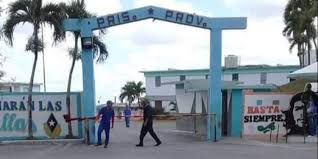
Facade of Kilo 8 prison, in Pinar del Río, Cuba

Cubalex, 13 September 2024 — Political prisoner Jorge Luis Rodríguez Valdés, known as “Tangallo”, was again transferred to a punishment cell in Kilo 8 prison, in Pinar del Río, for demanding a visit that the authorities arbitrarily denied him.

Tangallo has no close relatives and State Security forbade activist Eduardo Díaz Fleitas to visit him in prison. Although they arranged for someone else to deliver basic necessities to him, the authorities also prevented this.

According to information sent to Cubalex, Tangallo demanded his right to a visit in front of the head of the provincial prisons body, and for this reason he was sent to the punishment cell.

He recently spent 27 days in solitary confinement for an alleged suspicion of tuberculosis, and earlier he spent 17 days in solitary confinement, evidencing a systematic pattern of reprisals through solitary confinement. continue reading

The frequent use of prolonged solitary confinement fails to comply with international standards, such as the Mandela Rules, which prohibit this practice. The lack of independent review increases the risk of abuses and rights violations.

In addition, prolonged solitary confinement has a devastating impact on the physical and mental health of prisoners, leading to severe psychological disorders such as extreme anxiety and post-traumatic stress disorder. These practices are considered a form of torture.

The case of Tangallo is yet another example of the inhumane conditions to which prisoners are subjected in Cuba, and of the particularly severe reprisals faced by political prisoners.

Translated by GH

Can the Police in Cuba Ask for Identification Without Any Reason? / Cubalex

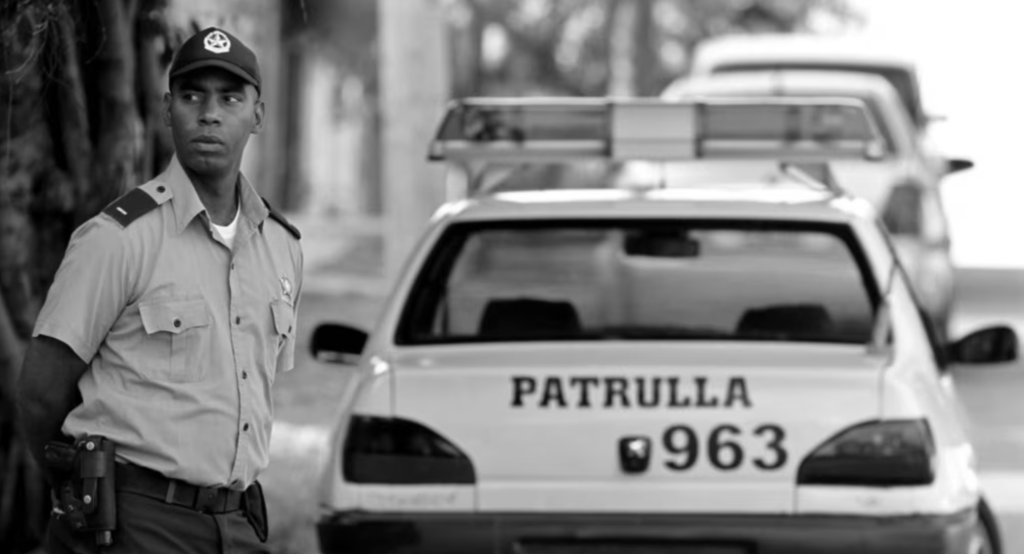
Cubalex, 10 September 2024 — A user commented on Facebook that, while visiting Havana as a tourist, she was stopped by a traffic police officer on the public road at around midnight. When asked for identification, she explained that she did not have her passport at the time, but that she could show her National ID. When she took out her mobile phone, the policeman allowed her to continue without asking any further questions.

Following this experience, the user wonders whether it is common practice in Cuba for the authorities to request identification for no apparent reason.

The Cubalex legal team responds:

In Cuba, the authorities can detain a person and ask for identification without a reason. This is a frequent practice, especially in central and tourist areas, and often targets women under the pretext of combating sex work. This occurs due to a lack of adequate oversight and the absence of constitutional guarantees protecting citizens from unwarranted harassment. continue reading

In this case, it is likely that the user was allowed to continue without inconvenience because she was a foreigner. However, if she had been a Cuban citizen, it is very likely that she would have been treated differently, with stricter and more prolonged restriction.

This practice, in addition to being common, has serious implications for human rights and individual freedoms, as it can invade privacy, restrict freedom of movement and create a climate of constant surveillance. It also encourages discrimination and arbitrary treatment, undermining fundamental principles such as the presumption of innocence.

If you need more information on this issue or legal advice, do not hesitate to contact the Cubalex legal team at info@cubalex.org or request safe legal advice through our Telegram channel: +1 901-205-9786.

We provide you with free and completely confidential legal advice.

Translated by GH

The Basic Ration Basket is Reduced and Arrives Late in Cienfuegos Stores

 The provincial government claims there is enough food to go around but the ration stores beg to differ

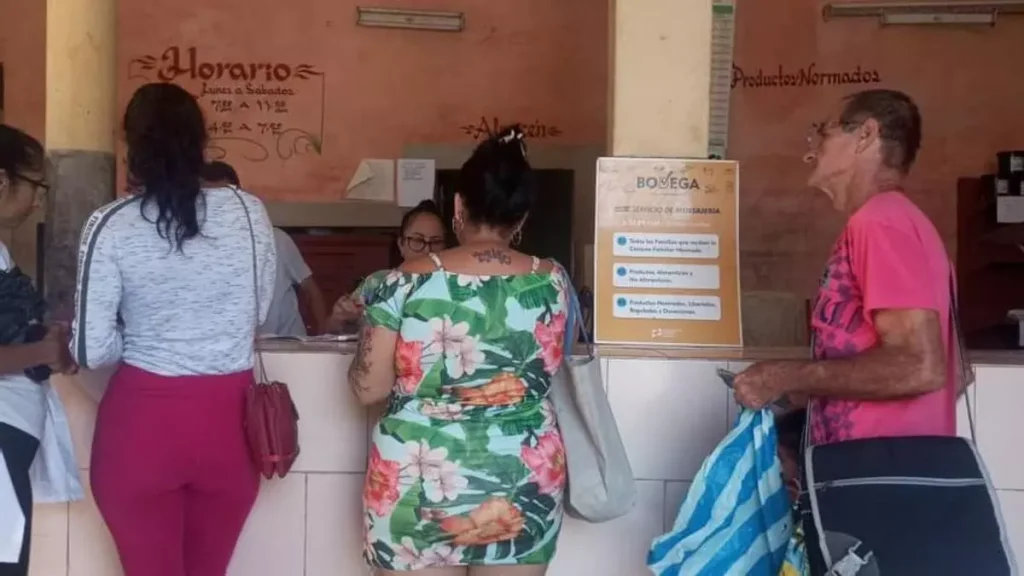
A Cienfuegos bodega selling rationed products /14ymedio

14ymedio bigger14ymedio, Julio César Contreras, Cienfuegos, 18 September 2024 – The flies circulating around the counter of the Calle Gloria bodega — the ration store — are witnesses to the fact that the regulated family ration basket has not yet arrived. September is nearly over and although the province’s interior commerce authorities give assurances that there are enough stocks to ensure distribution, in the actual ration shops themselves it’s the opposite that is obviously the case.

Alfredo, retired, 68, asks if anything has arrived yet, knowing full well in advance what the shop’s answer will be. “I don’t know what these people are thinking. It’s not enough for them that they remove some of the products from the baskets, but then they only distribute them when and if they can be bothered. Obviously, none of those bosses need a ration book to survive”, he says. But his experience is very different because he only gets 1,800 pesos in his pension each month.

There’s room in the shop to store what has been announced – for each person 7 pounds of rice, 2 pounds of sugar, 10 ounces of peas, 4 boxes of cigars and tobacco – none of which anyone believes can be maintained in the months to come. “Especially for those of us at the bottom who have to put up with hunger. When I finally actually see the two tins of sardines that they promised us over-65’s, then I’ll believe it”, Alfredo adds.

“The basic basket hardly lasts a week, so what happens then?” 

The pensioner refers to the new free food batch which the government has promised for the vulnerable – the elderly, pregnant women, under-weight people – who, apart from receiving sardines will get rice and peas. “They’re laughing in our faces, because actually most of the population are ’vulnerable’. The basic ration hardly lasts you a week, so what happens then?”, he says. In his opinion, these freebies only go to turn the distributors, warehouses, and others charged with delivery, automatically into retailers, making money on the back of everyone’s current misery. continue reading

The empty shelves are confirmation that any “glory” only exists in the actual name of the street – Calle Gloria – in which the shop sits, because the place itself is practically in ruins. “The shelving is full of termites and the roof leaks whenever it rains, but no one in power seems to care anything about the decline that’s happening everywhere”, says Xiomara, who hears that her son’s yoghurt will arrive after 2pm.

“The other problem is that there’s no guarantee about the quality or the stability of the foodstuffs. We’re still waiting for the July, August and September salt supplies. They tell us that they won’t remove that like they did with the cooking oil, eggs and coffee. The administration of this nation has no respect for its people, but tells us we live in a socialist country. And the worst thing is that as they keep crushing us with shortages of every possible kind we keep on playing their game of keeping our mouths shut”, the Cienfuegera adds.

On the store’s counter, sits a filthy box with a QR code, the only evidence of banking activity in the place. “They can’t provide a petty cash service, because, as there are no products to sell, they don’t actually have any cash. And until recently, there were difficulties with the automated system so they didn’t accept payment by bank transfer either”, says Xiomara.

“It won’t be long before the ration books disappear. We shan’t miss them too much because they’re already impractical”, says Alfredo, expressing a fear that is becoming more and more common in Cuba.

Translated by Ricardo Recluso

____________

COLLABORATE WITH OUR WORKThe 14ymedio team is committed to practicing serious journalism that reflects Cuba’s reality in all its depth. Thank you for joining us on this long journey. We invite you to continue supporting us by becoming a member of 14ymedio now. Together we can continue transforming journalism in Cuba.

Two Cuban Doctors Have Been Waiting a Year for the Bank To Give Them the Dollars They Earned in Angola

“Without the possibility of buying a house,” the doctors believe that the State is not repaying them for their sacrifice

Cuban health workers with officials from the Island and Angola at an event in Luanda / Cubaminrex

14ymedio bigger14ymedio, Madrid, 19 September 2024 — As if it were not enough to permanently retain more than 70% of the salaries of doctors on international “missions,” Cuban banks have denied two doctors who worked in Angola the extraction of the hard currency coming to them. The information was published this week by the official press itself, to which the couple appealed in a last attempt to obtain what is theirs.

“Acknowledgement of receipt,” a section of the newspaper Juventud Rebelde dedicated to publishing the population’s complaints, was the recipient of the claim of the married couple Eliannys Saborit Oliva and Alfredo Miguel Ramos, an anesthesiologist and an orthopedist, who live in the municipality of Bayamo, in Granma province.

After their return from Angola in 2023, where they spent three years as part of one of the health contingents that Cuba exports to many countries, the doctors earned an undisclosed amount of foreign currency for the State that was to be paid to them “after a reasonable time.” However, the Banco Popular de Ahorro de Bayamo has not paid the doctors since October 2023, claiming low availability of foreign currency. continue reading

The Banco Popular de Ahorro de Bayamo has not paid the doctors since October 2023, claiming low availability of foreign currency

Saborit Oliva and Miguel Ramos, who say they need the money to become independent, have run out of options, because as residents of Granma they can collect foreign currency only in that province. Meanwhile, their colleagues from other territories received their salaries long ago.

“Nor do they plan strategies for sending monetary aid, after almost a year of waiting to extract the cash in hard currency that is ours for having made money for the country, for representing our nation with dignity and for surgically saving lives, in adverse conditions of tuberculosis, hepatitis, HIV, malaria and Covid-19, with the sacrifice of abandoning our daughter and the rest of the family,” says the couple, who do not see their efforts being repaid.

“We have made three trips to Havana, with letters from the Council of Ministers, and the matter was transferred to the Central Bank of Cuba, which has the same answer: there is no availability,” say the doctors. They explain that they still “don’t have the money, after several complaints processed at the central banking level, without a date for delivery and without the possibility of buying a house.”

“The low availability is real, but we can’t understand, after almost one year, why they haven’t been able to resolve our demand,” the couple concludes, in their underlying criticism of the Cuban banking system.

Health workers are obliged to deposit the hard currency obtained during their missions abroad in Cuban banks, a policy implemented to try to avoid the desertion abroad of these professionals

Health workers are obliged to deposit the hard currency obtained during their missions abroad in Cuban banks, a policy implemented to try to avoid the desertion of these professionals. If they leave the mission, the health workers lose their wages, which pass to the State coffers.

This aspect of medical missions, as well as the withholding by the State of between 70% and 95% of the amounts paid by other countries for each Cuban health worker, has been pointed out by several organizations as a form of modern slavery.

Some of the health workers have even broken their silence and complained that the part of the money that Cuba leaves them to live on while they are on a mission is barely enough for basic needs. In 2023, one of the doctors of the more than 600 sent to Mexico that year told the newspaper Reforma that instead of a salary, he and his colleagues received a “stipend.” His salary, he added, minus the percentage taken by the regime, was in Cuba.

For its part, despite having a devastated health system – where there is a lack of supplies and medicines for the professionals themselves – Cuba insists that part of the money that other countries pay for Cuban doctors is reinvested in the Public Health sector of the Island.

“Doing away with this income means preventing Cuba from buying or manufacturing medicines, repairing hospitals, importing medical technology or, simply, the economic improvement of cooperating personnel and their families,” claimed Cubainformacción, a pro-Castro portal based in Spain, last February. The truth is that, as the Government of Cuba itself reports, more than 33% of the State budget goes to investments in tourism. This is reflected in the public accounts of 2023, where it is stated that the Health sector receives less than 2% of the State budget.

Translated by Regina Anavy

____________

COLLABORATE WITH OUR WORKThe 14ymedio team is committed to practicing serious journalism that reflects Cuba’s reality in all its depth. Thank you for joining us on this long journey. We invite you to continue supporting us by becoming a member of 14ymedio now. Together we can continue transforming journalism in Cuba.

The Cowardice of UNEAC, Cuba’s Writers and Artists Union

The history of the institution is a soap opera full of lynchings, expulsions, censorship and self-incriminations

Luis Morlote, former president of UNEAC, receiving congratulations from Esteban Lazo for his promotion to the Central Committee / Granma

14ymedio bigger14ymedio, Yunior García Aguilera, Madrid, 19 September 2024 — Last Sunday, Cuba’s official newspaper Granma published a pamphlet entitled “The Brave and the Cowardly.” It was obvious that the article referred to the reaction caused by the expulsion of Dr. Alina Bárbara López Hernández from the Union of Writers and Artists of Cuba (UNEAC), since several members resigned from the organization and expressed their disagreement on social networks. But the article never dared to mention her by name. It preferred to gloat, in super-worn nautical metaphors and the phraseology of José Martí taken out of context, as Yusuam Palacios, director of the Fragua Martiana Museum, usually does in his pseudo-poetic parliamentary speeches.

However, despite the fact that the text was loaded with all that revolutionary syrup frequently used by the deputy of Sagua de Tánamo, no one dared to sign it. It appeared under the authorship of “Cultural Writing,” a waste of courage. From the language used, everything indicates that it was written by a single person, a bad poet or some cadre who aspires to be the reincarnation of the Naborí Indian,* although only his “Elegy of the White Shoes” was read.

I have spoken to some UNEAC members who remain in Cuba, and they have confirmed to me that the author did not dare consult them before publishing this mock declaration. So it was something fabricated in an office from an order, or an initiative of some enthusiastic official. In summary, the article that calls itself “brave” is not able to mention the name of the person who inspires it, does not dare to affix the signature of anyone in particular and does not have the guts to consult about its content with members of the organization that is attributed to its authorship. continue reading

In the comments, a reader states that she is totally lost as to the content of the pamphlet

In the comments, a reader states that she is totally lost as to the content of the pamphlet. Mirella admits: “I am interested in having more information about what is happening at this time that brought about this statement as a consequence. I have some idea, but not enough to be able to enlighten others.” Another reader, Lázaro Numa Águila, confesses: “The editorial makes me feel that we continue to make use of speech that is often unintelligible for some; what is the reason for this reaffirmation?”

For several years I was a member of UNEAC, until I resigned, after the infamous statement that the organization published after 11J.** A few weeks before the incident, the late Corina Mestre had called me to a meeting to suggest that I voluntarily resign. I remember he said something like this: “Oh, Yunior, my son, haven’t you read the statutes?” And he was right. Article 2 clearly stated that UNEAC recognizes the Communist Party of Cuba as the superior leading force of society and the State. In other words, in no case is it a non-governmental organization that is part of civil society. Not at all. It is an institution, like all, subordinated to the single party. It is an extension of State Security, with the sole purpose of monitoring and controlling the guild of artists and intellectuals.

Believing that I was someone smart, I thought I could do something useful from within, that continuing to be part of their ranks served to raise my voice in the assemblies, denounce abuses and promote the democratic changes to which I aspired. Being totally honest, I also believed that continuing to be a member was a kind of protective shield, for the minions to think twice before siccing their dogs on me. But I was wrong. I wasn’t someone smart; I was naive and cynical. The history of UNEAC is a soap opera full of lynchings, expulsions, censorship and self-incriminations. UNEAC is not a guild fraternity, it is a minion institution. It’s not a protective shield, it’s a scaffold. From Heberto Padilla to Alina Bárbara there is a long list of convicts.

From Heberto Padilla to Alina Bárbara there is a long list of convicts

Some years ago, in Holguín, during one of those useless provincial assemblies, the troubadour Fernando Cabrejas asked: What is UNEAC for? Others, who also asked for the floor, argued that it was a cultural old folks’ home, which served to be shipwrecked on the Internet, to speed up a journey to capitalism, to drink cheap coffee and eat croquettes without having to line up or to have a bathroom to go to when walking through the city center.

UNEAC’s X Congress was scheduled for June of this year, but culture has never been a priority when it comes to authorizing budgets, nor was the oven used for pastries. In January, Luis Morlote was “promoted” and went from being president of the organization to being a second of Rogelio Polanco in the Auxiliary Structure of the Central Committee for Ideological Affairs: what a rise! Miguel Barnet praised his record as a leader; Polanco justified the decision made, not as a weakness, but as an ability of UNEAC to forge cadres, and Lazo gave a painting – according to the grotesque tradition – to the promoted cadre.

The conclave has been postponed to November. That’s why State Security is on the run threatening and cutting off heads. That is also why the entire propaganda apparatus of the regime publishes daily tomes about UNEAC, Although the note of pessimism is obvious. La Jiribilla, a weekly magazine of Cuban culture, has been repeating a litany of elegies for a week, hysterically shouting that UNEAC unites, adds, multiplies and any other mathematical operation they can think of. They are visibly desperate. They are afraid. They want the next congress to be like every other one, an inventory of complaints and promises. But they are terrified that someone will depart from the script and propose to delete Article 2 of their statutes. The Article 2 that demonstrates its absolute submission… and cowardice.

Translator’s notes:

* The Cuban poet, Jesús Orta Ruíz, was known as the “Naborí Indian.” After the defeat of the US in the Bay of Pigs, Orta Ruíz wrote the poem to commemorate the deaths of many civilians, including a boy whose white shoes were destroyed. A pair of bloody white shoes is on display in the Bay of Pigs museum, a memento of the first military defeat of the US in Latin America and the Caribbean.

** The first Vice President of UNEAC, Ernesto Limia Díaz, published a statement on Facebook on July 12, 2021, in support of the Regime’s suppression of the July 11th demonstrators.

Translated by Regina Anavy
____________

COLLABORATE WITH OUR WORKThe 14ymedio team is committed to practicing serious journalism that reflects Cuba’s reality in all its depth. Thank you for joining us on this long journey. We invite you to continue supporting us by becoming a member of 14ymedio now. Together we can continue transforming journalism in Cuba.

Lack of Access to Justice in Cuban Prisons / Cubalex

Cubalex

Cubalex, 10 September 2024 — In Cuban prisons, persons deprived of their liberty face numerous barriers that prevent them from accessing justice and defending their human rights. Below, the Cubalex legal team summarises some key aspects of this problem in Cuban prisons.

Complaints and Retaliation

1. Retaliation for Complaints:

Prisoners who file complaints with military prosecutors often suffer violent reprisals instigated by prison authorities. They may be beaten or transferred to solitary confinement if they do not withdraw their complaints.

2. Threats and Coercion:

Prison guards threaten political detainees with transfer to prison camps with dangerous inmates in order to intimidate them. This practice is intended to discourage prisoners from engaging in human rights activities inside the prison.

3. Handling of ordinary prisoners:

Prison authorities use ordinary inmates to harass and control political prisoners. These inmates receive benefits in exchange for harassing political prisoners, creating an atmosphere of constant intimidation and violence.

Obstacles in the Judicial Process

1. Lack of medical care:

Medical care in prisons is inadequate and often intentionally denied. Prisoners who suffer severe beatings do not receive adequate medical care, and in many cases, doctors justify violence as punishment for alleged misbehaviour.

2. Restricted Access to Visitors:

Family and conjugal visits are suspended as a method of blackmail and punishment. Persons deprived of liberty who make complaints have their access to their families restricted as a reprisal, hindering their ability to receive external support and assert their rights.

3. Isolation Conditions:

Persons deprived of their liberty are subjected to long periods of solitary confinement in punishment cells without adequate justification and without access to basic resources. This practice not only violates the Mandela Rules, which prohibit prolonged solitary confinement, but also aggravates the physical and mental suffering of persons deprived of their liberty.

The following are examples of how the lack of access to justice is evidenced in Cuban prisons:

1. Interference in Complaints:

1.1 Another practice that often occurs in Cuban prisons is interference with complaints. Cubalex has reported cases where prison guards have incited other inmates to beat those who file complaints. This type of practice is done with the aim of forcing the person to withdraw the complaints. This systematic interference discourages persons deprived of their liberty from seeking legal solutions that can protect them from prisons. An example that illustrates this is the case of Lewis Calas Herrera, a common prisoner who works as “Discipline” in Company No. 1 of the Provincial Prison of Pinar del Río. According to our information, this person is used by the Chief of Internal Order, Lázaro Castillo Placencia, and the re-educator, First Lieutenant Nivaldo, to beat other inmates.

2. Critical Care Negligence:

2.1 There are numerous documented cases of neglect and denial of medical care. Many prisoners have suffered serious consequences due to the lack of timely medical care. Medical negligence in Cuban prisons was evidenced in the case of journalist Lázaro Yuri Valle Roca. Despite his multiple health problems, the authorities of the Combinado del Este on several occasions denied Yuri access to the medicines brought by his wife, putting his life at risk.

Access to justice

The lack of access to justice in Cuba is a deep-rooted and systematic problem that severely limits rights. The Cuban judicial system, being closely linked to political power, has been criticised for its lack of independence, transparency and due process.The case of journalist José Luis Tan Estrada demonstrates the lack of access to justice in Cuba in several ways.

On 14 May 2024, the Havana Provincial Court dismissed the habeas corpus application filed on behalf of José Luis Tan Estrada. José Luis Tan Estrada, like many other activists and dissidents on the island, has been the victim of a judicial system that seems to be more focused on repressing dissent than on delivering justice.

The application for habeas corpus, a legal remedy designed to protect people from arbitrary detention, was rejected without adequate justification.

Tan Estrada’s case is not isolated; a further example is that of Daniel Moreno de la Peña. The situation of Daniel Moreno de la Peña, a Cuban political prisoner who weighs just 40 kilos (88 pounds) and is on the verge of death in prison, chillingly exemplifies the lack of access to justice in Cuba. Moreno has been detained for more than 18 months without trial, without even being able to see his file, in flagrant violation of his fundamental rights.

The case of the Caimanera protesters is another alarming example of the lack of access to justice in Cuba. These individuals have been denied access to documentation related to their cases, preventing them from preparing a proper defence and seriously violating their procedural rights. According to complaints by their relatives, the trial against these demonstrators is imminent, and the lack of transparency and access to legal information exacerbates the situation of defencelessness in which they find themselves. Such practices, common in the Cuban judicial system, demonstrate once again the urgent need for profound reforms to guarantee a fair and equitable judicial process.

These examples demonstrate how conditions and practices inside Cuban prisons not only violate international human rights standards, but also prevent persons deprived of their liberty from accessing justice and receiving humane and dignified treatment. It is essential to denounce these practices and to advocate for respect for human rights in all prisons.

The post Lack of Access to Justice in Cuban Prisons appeared first on Cubalex.

La entrada Falta de Acceso a la Justicia en las Prisiones Cubanas se publicó primero en Cubalex.

Translated by GH