A Decoration for Talent


This past Friday, January 7, 2001, I had the opportunity to enjoy together with my husband an outstanding soirée. We went to the home of the ambassador of the Queen of the Netherlands, where the official presentation of the well deserved Prince Claus award was made to Yoani Sánchez. Her participating family members and friends were extremely proud of the importance of this international recognition and of the fact that it had been granted to the pioneer and most outstanding vanguard of Cuban bloggers.

In a simple but emotional ceremony, the host read some words in which he explained to those present that Prince Claus was the late husband of Princess Beatriz, the Dutch queen; and the elements that are considered to award this prize annually to different persons on the world stage. In his reading he also added the fact that her right to travel had been violated, along with that of Guillermo Fariñas (Sakharov Prize 2010 and present at this ceremony), something that unfortunately continues to be a daily practice in Cuban reality.

Yoani’s statement started by thanking the Dutch ambassador, the members of the Prince Claus Foundation, those present, including the readers, commentators and translators of her blog — something that defines her in its simplicity. She also shared with us her plans for the immediate future and invited everyone to accompany her to be part of the same, distinguishing the importance of maintaining the differences that “feed our plurality and avoid the recognized error of unanimity.

* The photo which accompanies the present work was by courtesy of Reinaldo Escobar, Yoani’s husband.


January 10 2011

Dark Expressions, or Justice In Black and White

A few days ago, in the hairdresser’s, the woman who went ahead of me started to chat with me while she waited for them to finish cutting the person’s hair ahead of her. In the conversation she told me about her daughter who “was advanced enough”; she said that while she softly brushed her fingers on her other forearm to refer to the color of her skin. “Why ‘advanced’, señora?”, I interrupted. “Do you consider that being black or belonging to your race is a setback?”
I couldn’t help but butt in with a constructive and educational criticism because I was surprised that such a comment could come from a person of the black race. These were questions that just sprung out of me unexpectedly because I am sick of hearing expressions of this kind, as well as that many black and mestizo people should think that all white people are racists without giving any thought to whether we are doing everything possible to eliminate the traces of this scourge from today’s Cuban society.

Because the shop is little, in one form or another everybody there was involved somehow: with an assertive gesture, an interested look, or simply with silence, but this too could become an opinion when not refuted with a different point of view.

I analyzed with her and the rest of those present why we were repeating prejudices that were instilled in us down the years. If we want to really fight racism, we should erase those forms of expression from our speech. I pointed out how, for example, we sometimes hear references to children as a “negrito“* to emphasize the difference. Are we talking about children or colors? Why describe skin color when nobody has asked? Why do the police chase a “black man” and not a man? Why, when a white man commits a misdeed, does nobody comment on the color of his skin? Why are 7 or 8 out of ten detained by the National Police for lack of ID cards black? Why do they prevail in the Cuban penal population despite that one of the banners carried by today’s political model is the struggle against racism?

After these and other reasonings, we could only propose among ourselves to erase color from our sense of justice so that fairness improves. We should eliminate expressions that are obviously discriminatory and shed light on our actions and on our words; we should not shrink from obscurity and segregation, nor should we leave this for tomorrow, we should begin right now!

* Translator’s note: ‘negrito’ = “little black boy”

Translated by: JT

January 17 2011

Dark Expressions, or Justice In Black and White / Rosa María Rodríguez Torrado

A few days ago, in the hairdresser’s, the woman who went ahead of me started to chat with me while she waited for them to finish cutting the person’s hair ahead of her. In the conversation she told me about her daughter who “was advanced enough”; she said that while she softly brushed her fingers on her other forearm to refer to the color of her skin. “Why ‘advanced’, señora?”, I interrupted. “Do you consider that being black or belonging to your race is a setback?”

I couldn’t help but butt in with a constructive and educational criticism because I was surprised that such a comment could come from a person of the black race. These were questions that just sprung out of me unexpectedly because I am sick of hearing expressions of this kind, as well as that many black and mestizo people should think that all white people are racists without giving any thought to whether we are doing everything possible to eliminate the traces of this scourge from today’s Cuban society.

Because the shop is little, in one form or another everybody there was involved somehow: with an assertive gesture, an interested look, or simply with silence, but this too could become an opinion when not refuted with a different point of view.

I analyzed with her and the rest of those present why we were repeating prejudices that were instilled in us down the years. If we want to really fight racism, we should erase those forms of expression from our speech. I pointed out how, for example, we sometimes hear references to children as a “negrito“* to emphasize the difference. Are we talking about children or colors? Why describe skin color when nobody has asked? Why do the police chase a “black man” and not a man? Why, when a white man commits a misdeed, does nobody comment on the color of his skin? Why are 7 or 8 out of ten detained by the National Police for lack of ID cards black? Why do they prevail in the Cuban penal population despite that one of the banners carried by today’s political model is the struggle against racism?

After these and other reasonings, we could only propose among ourselves to erase color from our sense of justice so that fairness improves. We should eliminate expressions that are obviously discriminatory and shed light on our actions and on our words; we should not shrink from obscurity and segregation, nor should we leave this for tomorrow, we should begin right now!

* Translator’s note: ‘negrito’ = “little black boy”

Translated by: JT

January 17 2011

News To the Taste of Those Who Fabricate It / Miguel Iturria Savón

Pedro Álvarez

During the first two weeks of January, the Cuban press omitted news of interest to the island population. They forgot, for example, the declaration of the spy Gerardo Hernández, imprisoned in the United States since 2001, who, in a desperate appeal denied our government the affirmation that the small planes shot down by Castro’s orders fell in international waters.

To the intent to save this spy, an exodus got together towards the United States of Pedro Álvarez, ex-president of the Alimport enterprise and of the Cuban Chamber of Commerce, who was, besides, Vice-Minister of Foreign Trade and was in charge of all the food and medicine purchases in the United States in 2001, arrangements that even the island populace doesn´t know thanks to the omission of the press, so partisan and governmental that it leaves us in limbo.

In January 2011 the old news policy continues of legitimizing the regime measuring the manipulation of successes, the praises of the health care system, the passion for convenient figures, and masking figures of the past as if they stopped the vanities of time.

Luís Posada Carriles

The news game of January includes another chapter against Luís Posada Carriles, the violence in Southern Sudan and other international disgraces, almost all of which occurred in “enemy territory”, including the European Economic Community, which just denied them visa-less transit to the Union to citizens of Bulgaria, Romania, and Turkey, which worried Cuban censors, to whom it seemed find that our government maintains the Exit Visa and insists upon an Invitation Card to pariahs of the island.

The official press released the latest dismissals and naming of ministers ordered by General Castro; praised the anti-democratic opinions of the Venezuelan president Hugo Chavez and his counterpart in Nicaragua, Cuba’s playmates. They also reported on the British cruise ships that will stop in Havana in 2011, which promotes tourism and hard currency income. Forgotten, however, was the award ceremony for the Prince Claus Prize given to Yoani Sanchez, held on Friday the 7th at the residence of the Ambassador from Holland in our capital, because the military government refused an exit permit for the famous blogger for the eighth time.

Julio Antonio Mella

Offsetting the omissions several articles praised past figures who came down from their statues and applauded the leaders who rebuild socialism. Julio Antonio Mella, died in Mexico in January 1929, and Jose Marti Perez, born on January 28, 1853 and died in combat in May 1895, are the gladiators of the past who should guide us to victory.

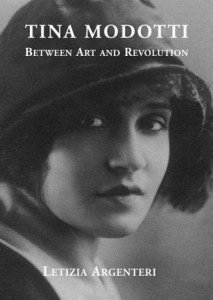
Tina Modotti

In the tribute to Mella, the inert god of the steps, they praised his work as founder of the Federation of University Students and the Communist Party of Cuba, from which was ousted for opposing the policy guidelines of the Soviet Union, so he went to Mexico, where he was accepted into the political body of the Marxists, where he shared the bed of the Italian model Tina Modotti, a lover of other communists. These things are said by contemporaries of the hero, not by Granma and Juventud Rebelde, who claim that Mella was not shot by Modotti’s husband, but by hired assassins of President Gerardo Machado, our first tyrant.

Although Jose Marti is the most trumpeted ethical and spiritual national icon, the scribes of our press take down his bronze busts and put him out to pasture in the meetings of bureaucrats and generals who rule the island as a military camp. Maybe that’s why, among so many omissions and tributes, ordinary people perceive Marti, Mella and other oversized figures as symbols of the past.

Share
January 20 2011

Alienating Myself from Pigeons / Rosa María Rodríguez Torrado

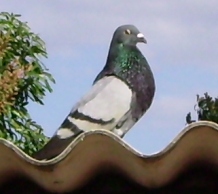
I am going to start raising carrier pigeons. Perhaps the color doesn’t matter to me as much as the animal. They must be pigeons! It has occurred to me that this bird, the one of peace, could also help me combat censorship and publish my ideas on the web. I have thought about my best strategy: Hang the post on the foot of one of these and a link to another through which I can “load it” on WordPress. My friends laugh and I’m exasperated.


Why not? Look? Why not?

Translated by Ariana

December 20 2010

The Delay in Justice Aggravates an Injustice / Yamil Domínguez

Written by: Yamil Domínguez

For some time I haven’t written for my blog, although I continue being grateful to the three women who, together with my attorney, have raised the flag in the fight for truth and justice: my venerated mother, my stupendous sister and my passionate wife. Today I decided to prepare these words before continue to deteriorate without knowing what will happen going forward. I believe it’s worth it to leave off writing until I know my current situation.

I started this hunger strike on 3 December of last year, suspecting that I would again face the illegalities of the Attorney General of the Republic of Cuba, violating the terms required by the Criminal Procedures Act. Let me make clear that my position is against the shameful conduct of his office, but I hold the Cuban government responsible for situations like these that occur when in its last speech emphasized it equal rights and duties for all, without exception, this from the body that is designed to ensure that expression, but that openly violates it.

Until now they have only given me the opportunity to observe their political hatred; bring a citizen of the United States of American that have seen me like the worst of criminal. I also perceive the cruelty against my person of the acting prosecutor, who clearly does not act alone, but who insists in denying me a change in the terms of my custody without any reason, supporting his opinion with the same reasons that originally put me in the provisional prison. The never existed facts to support such action, but today more than ever he holds onto his original reasoning.

The investigating body of Villa Marista and members of the Ministry of the Interior have expressed to me, on several occasion, errors of one kind or another, when led to my being charged with the alleged crime of trafficking in persons. They recognize and admit that they were wrong, but one learns from one mistakes. They tell me they will not ban my entry into Cuba nor the way it occurred. The conclusions of the investigator, then to widen the investigation, faced with the mandate from the Supreme Court [that I was not guilty] were reported to me, my family and my attorney.

Supposedly according to the investigator I entered illegally, when there is a report from the Institute of Meteorology of the Ministry of Science, Technology and the Environment, confirming adverse weather conditions in the straits of Florida, of which I was a victim. Moreover international laws are published through every means possible. For example, the International Code of Road Traffic indicates that a green light means go and a red light means stop, and this if valid around the entire world. If in Cuba there are exceptions to determined rules then they should be published in newspapers and magazines and made known to the outside world.

Ignorance does not exonerate you from responsibility but when it is beyond your control and impossible for you to know you should not be charged. If I have an illegal entry then everyone who arrived at an international port in Cuba does as well and if the objective is to justify the time I have been detained, there is no justification to detain me for one additional hour, when I have already exceeded the maximum limit of the sanction (3 years) for the supposed crime.

Why the is Prosecutor committed to the unjustifiable delay? What guarantees exist in the present for U.S. tourism? Doubts wash over me in the middle of this prison, I only hope that sooner rather than later, my most basic right is returned to me, which I never should have been deprived of.

“Respect is a right already won. Hatred takes away that right.”

José Martí.

January 26 2011

Thank you! / Iván García

When I invited a group of friends in December to send messages for the second anniversary of the Desde La Habana blog, I didn’t expect that so many would reply, much less with such praiseful greetings to the blog and to me.

In my style, I’ll continue reflecting the reality of my country and its people, without asking anyone for permission, be it from the opposition or from the regime. That’s the freedom I’ve earned in these 15 years I’ve been writing as an independent journalist.

Nor will I stop going to troubled neighborhoods or tenement courtyards. Nor will I stop talking to hustlers, pimps, gays, transvestites, drug addicts, pickpockets and common ex-cons, among others marginalized by society.

I received 19 messages in total. Here go the senders:

Delphine Bougeard and her Spanish-language students at the Julliot de la Morandière high school in Normandy, France; Zoé Valdés; Raúl Rivero; Jorge Luis Piloto; Charlie Bravo; Joan Antoni Guerrero Vall; Alberto Sotillo; Isis Wirth; Jorge A. Pomar; Camilo López-Darias; Carlos Alberto Montaner; Pablo Pacheco; Luisa Mesa; Carlos Hernando; Manuel Aguilera; Rolando Cartaya as well as Regina, Helen and María, translators of my posts into English.

To them and also to Carlos Moreira, Tania Quintero and all the readers of the Desde La Habana blog, I give thanks and send my most sincere embrace.

Painting: Catedral, oil on canvas painted in 1972 by René Portocarrero (Havana, 1912-1986).

Translated by: Yoyi el Monaguillo

January 27 2011

Alienating Myself from Pigeons

I am going to start raising carrier pigeons. Perhaps the color doesn’t matter to me as much as the animal. They must be pigeons! It has occurred to me that this bird, the one of peace, could also help me combat censorship and publish my ideas on the web. I have thought about my best strategy: Hang the post on the foot of one of these and a link to another through which I can “load it” on WordPress.  My friends laugh and I’m exasperated.
Why not? Look? Why not?

December 20 2010

A LEZAMA FOR MOPPING (DUPING) / Orlando Luis Pardo Lazo

FROM “THE FLIGHT OF THE CAT”* TO YOUR MOTHER’S TWAT**

Orlando Luis Pardo Lazo

There’s the lyrical Lezama Lima, of unintelligible flight, before whose spirals we bow because to read them would be in vain, and a pain. And good for us. That Lezamian lyricism never had much success, except for quoting and thus accumulating a certain intellectual prestige. That obscure yet not at all secretive writing, crippled by its symbols meant to multiply its meaning, was pure inner space, the intestines of an author that regurgitated everything. Solipsistic saliva, sometimes another mood of our sentimental being, interjections included. The least Cuban thing in the world, let there be no doubt.

But there’s also that big impressive bastard Lezama Lima. The prose-writer that flirts with the prosaic, although, unfortunately, his overdiscursive always impeded it. The man who filled his novels with a homo Bible to defend ourselves not just against the old Catholic God, but also, when it arrived, against the new communoid State. The guy who made guys hurl themselves at other guys, using strange verbs and invented adjectives, just the same at the end of our tiny Republican era as at the beginnings of the overstaying Revolution. The magister penis within whose paragraphs of impossible punctuation the only word missing to label the human cock is precisely that one: cock (at this point, the professional prudes may now proceed to spit on me, they won’t be the first: the Ministry of Culture and the secret police have beaten you to it).

That Lezama Lima of “your mom’s twat” and “no, a thousand times your mom’s twat” (they’re quotes from his Oppiano Licario), the one who disguised genitalia with undershirts because if the vagina appears… I don’t know, Fronesis cannot enter (now this quote is mine, luckily), the one of voyeurism in the dumpiest movie theaters and pissing on the shoes of the man that, during the last macho night, stuck it in you (in his Paradiso, that is), the one of the 20,000 Eudoxus cured of Foción’s father’s madness (army of characters that Cuban literature has not had the cojones to process), the one of incestuous three-ways and illicit trysts and throat-slittings with bound-up balls, plus the nocturnal groping of Parisian testicles by an arid Arab… anyway, that masterful Lezama Lima of anti-lyrical substance (even with his exhibitionistic and extravagantly thundering glands of cornaline agate), the one of certain etymology, for example: templar (“a delicate word in the extreme”), the one who waited for the death of his mother to then escape into desire, or at least publicize it at the UNEAC (National Union of Writers and Artists of Cuba). That underground author shall be forever our best unknown.

Lezama Lima deserves a little phallus upon his tomb the size of Revolution Square (in his work there is no lack of such penile visions, even right in the middle of a ragtag mob of students against the dictatorship of the time). But our baroque man is little by little getting stuck in the cultural swamp of mythic bullshit (even the minister of culture was a Lezama admirer!), as if the classics for their part (not very saint-like in their beginnings) weren’t fundamentalist fornicating fauns.

Lezama Lima was not. A shame. Those will be, I suppose, the limits of his colossal writing, never delirious. There he lacked, I think, the touch of Truth and Life in the experience of reading him. Sex for him continued to be a downfall. He wasn’t able to denounce head-on those who expropriated from him, because social blackmail works marvelously against someone who doesn’t dare to declare out loud his own pleasures.

Lezama Lima died sorely needed. He owed us a bit more. In his novels he was just starting to liberate himself of that more respectable and private pose. Perhaps his last verses tried to erase, by invoking the absolute void, all the back and forth of his countless paths and supposed poetic system, maybe to later insert in that black hole, if death had given him a chance, the macrogenitosomatic magnificence of that massive, pertinent prick.

Ah, spit away.

It’s not without significance that no biographer (he doesn’t have any, of course) has been concerned with identifying a Cuban who physically loved José Lezama Lima. Our man never found the love of another human being (that of the readers doesn’t count for shit, don’t play the anointed ones now). He only managed mediocre maternal friendships, wholesale spies (they sent anonymous threats as easily as they sent ambulances, so that he wouldn’t die without saying that Cuban healthcare was free), and the semen of strays in exchange for his salary. And that imago truly does disconcert me. The whole time he lived in internal exile in respectable suit and tie (except when fantasizing in his writing, and that gift saved him). The whole time he keeps getting parodied for his spicy, asthmatic wit and his affectionate touchy-feeliness (disciples still survive him who speak wheezing with emphysema, as a guarantee of authenticity). We don’t even know if upon ejaculating his prose he once cried out (in this sense, his transcendence is mute, almost null).

José Lezama Lima died a virgin, he could’ve been our first fag martyr. The little joy found in Cuba stuck a tampon on his pride of being the best (in gay pride he didn’t even reach gay shy). Maybe his cross was exactly that. Being forced into a closet, and on top of that saddled in a corset.

Translator’s notes:

*”The Flight of the Cat” refers to El vuelo del gato, the first novel by Abel Prieto, published in 1999. Prieto is Cuba’s current Minister of Culture and widely regarded by Cuba’s independent artists and intellectuals as the cultural gatekeeper of the regime.

**This refers to a very popular Cuban epithet, el coño de tu madre, yelled at someone in anger, which literally means “your mother’s twat”. This epithet, and countless versions of it, is also very common in at least Argentina, Spain and Venezuela.

Translated by: Yoyi el Monaguillo

November 30 2010

VOICES V / Orlando Luis Pardo Lazo

VOCES V, originally uploaded by orlandoluispardolazo.

The free-lance magazine VOICES Cuban will be launched free to the World blogosFREEra later this month of January 2011, “celebrating an anniversary” (of not adhering to the official discourse) of CUBAN VOICES www.vocescubanas.com web portal, which is blocked
as ordered by the State, within the interior of Cuba.

VOICES V, as the super-robot handsome guy VOLTUS V, yells at the Cuban solar system: LET’S GO…. UNITED…!!!

PS: Our laser sword is only a printer-laser …

January 22 2011

Signed in Havana / Iván García

The blog Desde La Habana is an adventure that today, January 28, is two years old. It has not been easy to get here. The idea of creating a blog came to me in the winter of 2006.

From the end of the 90s, I had been collaborating regularly with the online site of the Interamerican Press Society and the digital version of Encuentro de la Cultura Cubana, a project of the deceased Cuban writer Jesús Díaz that was launched in Madrid in 1996. Also with the Revista Hispano Cubana, funded in the spring of 1998 in the Spanish capital.

But there were difficulties for un-official journalism. In the spring of 2003, as is well known, Fidel Castro’s government unleashed a raid that put 75 dissidents in prison, among them 27 alternative communicators.

Between the fear that some late night the guys from State Security would knock on my door and arrest me without words, and the desire to try new paths, I decided to try my luck with other tools.

In an issue of Newsweek in Spanish I had read an incredible report about the blogger phenomenon. Just what I was looking for. An instrument where I would be writer and editor. But to make it a reality cost more than I’d hoped. I didn’t know the techniques to create a blog. Nor, at that time, were there public sites to connect to the Internet in Havana.

I didn’t lose faith. Three people signed on to the idea of my having my own blog. On March 25, 2007, my mother, Tania Quintero, an independent journalist and also a neophyte in the management of technology, Magia, and a Cuban living in Spain, opened a blog. Since November of 2003 Tania has lived in Switzerland as a political refugee. Her computer is old but it has 24/7 DSL.

Yoani Sánchez and Reinaldo Escobar were essential for enabling me to open my blog. Through a Swiss journalist I met the Sánchez-Escobar couple in December of 2004. On certain crisp and starry nights, in their apartment on the 14th floor, drinking Guayabita from Pinar del Rio and eating pizzas made by Yoani, several of us friends would talk about the state of things in Cuba.

And then Escobar, with his degree in journalism, had the idea for the magazine Consensus, he was thinking could be produced by our own effort. He invited me to write about sports, but I wanted something else.

Over the end of the year I continued visiting the couple now and again, and Yoani told me about the blog she had opened in April 2007. But it wasn’t until December of 2008, when Yoani lent me a hand. By this date in Havana one could navigate the Internet, paying a lot and in hard currency.

In my personal project, for the collaboration with me, I involved Luis Cino, in my opinion the best independent journalist on the island at that time, and Laritza Diversent, a recently graduated young lawyer. From Madrid my mother would write and from Madrid would come the stories of Raul Rivero published in El Mundo.

I remember going crazy managing a webmaster who charged $ 60 for designing a page layout and $ 5 extra every time he hung your posts. In a café in central Havana I met with Reinaldo and Yoani and they told me I didn’t have to spend a dime. On 28 January 2009 they were thinking of opening a platform they were thinking of calling Voces Cubanas — Cuban Voices.

I joined the party. To ease my ignorance in the management of a blog, they invited me to participate in an accelerated course that Sánchez offered twice a week in her house. I was in the first of six bloggers inaugurating Voces Cubanas.

For me, it was easy to write the posts. But I needed a person abroad to post them for me, because the rising cost of doing the task was unaffordable. Tania talked with Ernesto Hernandez Busto and he accepted. But the blog wasn’t going as I wished.

Starting on 1 January 2010, an extraordinary Portuguese friend, Carlos Moreira, despite having a lot of work, incredibly took on this function in his free hours. Like my mother, who spends up to eight hours a day in front of the Computer, revising texts, verifying dates, selecting photos and videos for the posts written in Havana that I send.

On 22 October 2009 I started to collaborate with the Spanish digital newspaper El Mundo/América. They pay me for my work and topped off with what my family sends with a million sacrifices, they help me to pa the 60 Cuban Convertible pesos I spend each month in Havana hotels to connect to the Internet.

I’ve had bitter moments. After cyber attacks against my blog and the disappearance of the archive with all the posts published in 2009, after I was thrown off Voces Cubanas without a convincing explanation.

Even today, the only argument I’ve been given as a cause for my exclusion as been articles critical of Guillermo Fariñas written by my mother (see the final note). I don’t share this argument. Personally I disagree with the form and content of some of the work written by Tania.

But at her 68 years, living in exile with more than thirty years of experience in journalism, first official and then dissident, she is completely within her right to publish what she thinks in my blog.

We talk enough about democracy and freedom of expression. A discourse in vogue. But in practice, we behave like bigots and censors. An basic evil we Cubans don’t manage to pull out at its roots. Neither those on the island nor those abroad.

I still don’t know if Voices Cubana threw me out because of my mother or if the one to blame is me. During the time I was a part of this platform I never had a serious incident with any blogger, to the point of spoiling the deal we kept. If I had enemies in this group, I didn’t know it.

If I’ve addressed this topic it is because many friends, Cubans and foreigners, have asked me and I don’t know what to say. The one who knows is Yoani.

I hope for an honest answer. I appreciate Yoani Sanchez, and more her husband, Reinaldo Escobar. I have nothing against Orlando Luis Pardo and Claudia Cadelo, two of the most active bloggers.

This adventure of creating a blog is marvelous, like raising a child. I have many material limitations and to top it off I can report enmities to you. But I don’t do journalism to please anyone. That’s the point.

Either way, 2011 appears promising to me. I have a ton of ideas to grow the blog in quality and content. For now, my posts from Havana will continue to appear on time.

*I took the title from a poem borrowed from Raul Rivero (Editorial Sibi, Miami 1996)

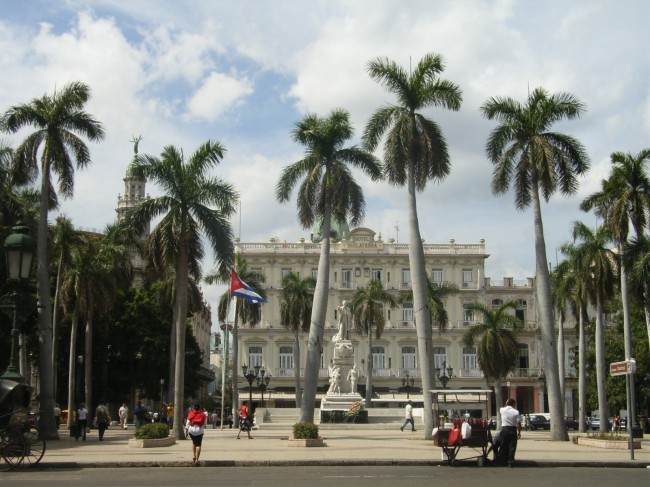
Photo: Stathis, Panoramio. Central Park in Havana where the principal statue dedicated to José Martí inHavana is found. The colonial style building is the Hotel Inglaterra, founded on 23 December 1875.

Translated by RST

January 27 2011