Specialized Media See Cuban Baseball As ‘A Showcase of Isolated Players’

The Cuban national team trains at the Taichung Intercontinental Stadium / JIT

14ymedio bigger14ymedio/Swing Completo, Havana, 4 November 2024 — The absence of players like Guillermo Avilés and Yasmany Tomás has generated suspicions about the offensive and pitching capacity of the Cuban national team. At the gates of the Premier 12 tournament, which will be held between November 13 and 18 in Japan, Taiwan and Mexico, coach Armando Johnson has had to go out to defend the exclusion of Avilés and the stay of Yadir Drake and Ariel Martínez.

“The squad looks slow, desperately slow, and the long-range batters stand out for their absence,” said the specialized media Pelota Cubana USA. The same space described the pitching as “implausible,” upon registering throws below 90 miles per hour.

“In modern baseball where breaking-ball pitches exceed that speed, the Cuban team presents itself, ironically, with a straight that in another time would have been worthy of a young pitcher,” warned journalist Yordano Carmona.

Despite the criticism of specialized media, Johnson gives a vote of confidence to Rafael Viñales and reaffirms the decision to leave out Guillermo Avilés, the left-hander who hit above .400 in the preparation stops in Ulsan, South Korea. In addition, Avilés had presented an acceptable level with the Alazanes team in the National Series. continue reading

“At first we talked about 14 pitchers, but what we have seen in the course of these stops is that Viñales was very good, as was Guillermo Avilés,” argued the national coach. “Viñales is more versatile than Avilés, and that’s why we decided on him,” he added.

Raidel Martínez with the national team before the Premier12 tournament / Jit

In the midst of the controversy, the arrival of the best closer of Japanese professional baseball, Raidel Martínez, to the national team has brought hope to Armando Johnson.

Another questioned absence is that of Yasmany Tomás. The Facebook space of DPorto Sports LLC commented that this baseball player, with experience in the Major Leagues of the United States, one of those “discarded” by the Cuban Baseball Federation, is “the top trailer pitcher in the Pacific League of Mexico.”

The absence of Tomás, according to the same space, “is due more to a personal issue with someone in management than to sports questions.”

For Pelota Cubana USA, baseball on the Island “has gone from being a spectacle of great figures to a showcase of isolated players who desperately seek to leave the country before getting lost in mediocrity.”
italic pelota

Cuba’s expectations in the Premier 12 are reserved. The team of coaches shaped by Armando Johnson and Pedro Luis Lazo said in Seoul that the goal is to “advance to the Super Round, and then try to reach the podium.”

Yordano Carmona says that “the decline of Cuban baseball is not an isolated phenomenon; it is a reflection of the blow that Cuban society has suffered in the last 10-15 years.” The journalist regrets that the National Series became “a survival tournament,” in which “talented young people escape in search of contracts abroad, and veterans without professional options fill the teams.”

Translated by Regina Anavy

____________

COLLABORATE WITH OUR WORKThe 14ymedio team is committed to practicing serious journalism that reflects Cuba’s reality in all its depth. Thank you for joining us on this long journey. We invite you to continue supporting us by becoming a member of 14ymedio now. Together we can continue transforming journalism in Cuba.

Public Health Collapses in Cuba / Iván García

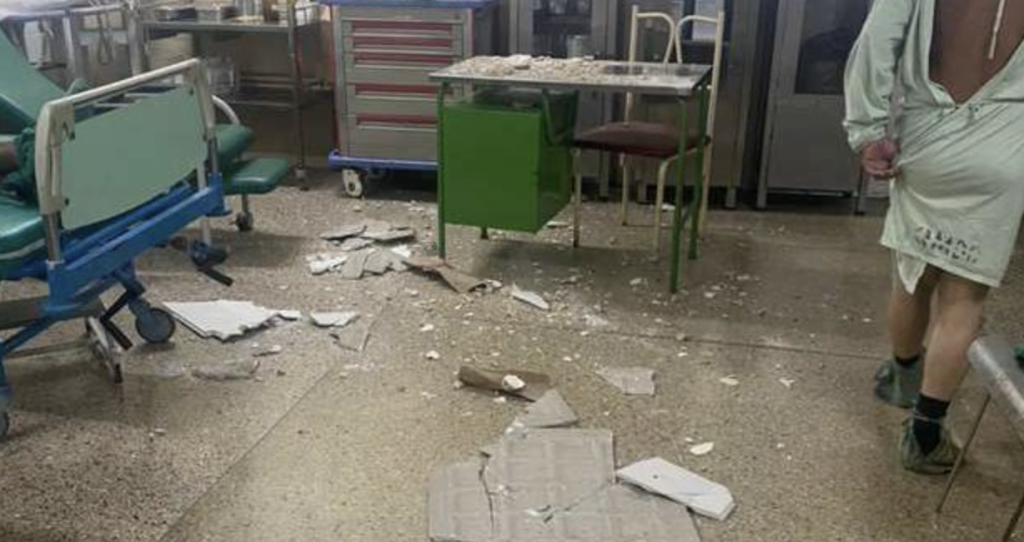
“Today is the second time that pieces of the ceiling have fallen in the postoperative room of the Calixto García hospital in Havana. Slabs fell from the false ceiling. The first time, three weeks ago, some debris fell on a doctor and a patient” / X

Iván García, 12 September 2024 — After midday, Dr. Geiser, 28, arrives sweating at the ramshackle doctor’s office in the neighborhood of Santos Suarez, in the municipality of Diez de Octubre, south of Havana. Before putting on her white coat and attending to patients, she keeps a bag of soft bread, two avocados and five pounds of pork ribs she bought at a farmer’s market on her way to work.

The family doctor’s office is supposed to open at nine o’clock. But the shortage of supplies and medicines is one of the reasons why Ismary, the nurse, sleeps until eleven o’clock in the morning and, after eating a snack, walks the two kilometers between her home and the office. When she arrives, six patients are waiting in the anteroom. The place is in a dilapidated state. The floor is dirty, most of the plastic chairs in the foyer are broken, and a white light bulb hanging at an angle from the ceiling threatens to fall.

There is no lighting in the nursing room. There is only iodine and mercurochrome on the medicine shelf. A small piece of equipment for sterilising needles and aerosol nozzles, donated to them, has long since broken. In the lobby hangs an outdated poster showing public health statistics in 2003. “It seems like a century ago. The health service in the last twenty years is a disaster when you compare those numbers with today,” says a man with a burn on his right arm. continue reading

In 2003, according to the poster, Cuba’s public health institutions had 286 hospitals, of which 83 were general, 34 clinical-surgical, 26 paediatric, 18 gynaecobstetric, 18 maternal and child, 64 rural and 43 specialised. In addition, there were six cardiocentres, 289 maternity homes and 1,961 well-stocked pharmacies. The infant mortality rate was 4.8 per 1,000 live births and life expectancy for both genders was 77.79 years, while for women alone the number exceeded 80 years of age. Some 99.1 per cent of the population was served by the family doctor’s offices, which were part of the primary health care structure.

A lot of water has flowed under the bridge since then, says a MINSAP (Ministry of Health) official, “infant mortality is over nine per thousand live births and in many provinces it rises as high as twelve or thirteen percent. More than a third of the hospitals have been closed or do not provide the services for which they were designed. Sixty percent of the family doctor’s offices are no longer functioning. The number of doctors, nurses and health technicians has fallen by more than 75,000 compared to 2003.”

As an example, “Between 2022 and 2023 alone there are 46,000 fewer health workers. Out of that number, 12,000 are doctors. Fifteen years ago, community polyclinics had weekly consultations with medical specialists. Today, patients have to travel, even from one province to another, to be seen, and consultations are usually every two months. Stomatology clinics are either closed or run informally as private entities. Life expectancy has fallen to 73 years for men and 76 for women. Food and medicine shortages contribute to this decline. Only emergency surgery is being performed. Hospitals are short of everything from disposable needles to adhesive tape. It’s an absolute disaster,” he says.

Dr. Geiser tries to do her job with hardly any medical supplies. “We can carry out some treatments thanks to the help of neighbors who have donated a little cotton and gauze. When people come for injections, they bring their own disposable needles. Most of the treatments I prescribe are based on green medicine. It’s very painful to treat the child of a low-income family or an old person who gets a pension of 1,500 pesos and who can’t buy the antibiotics for treatment in private businesses because they don’t have the money.

On a piece of paper from a school notebook, Dr. Geiser writes down the medicines to be taken and the treatment to be given. The pens are given to her by her patients. “We keep things going thru sheer willpower. My salary of 6,000 pesos is equivalent to 20 dollars. The nurse’s salary is 4,000 pesos. We open the clinic two or three times a week. The rest of the days we have to go out on the streets, to get food for our homes. Although it’s wrong, most doctors and health workers earn extra money by treating patients on the side. It’s the only way to avoid starving. The other way is to find work abroad.”

“Although the government keeps 80 percent of the salary in foreign currency that they pay you, you can at least get between 7,000 and 10,000 dollars, depending on the length of your stay and the country you go to. The best destinations are Italy, South Africa, Qatar, Mexico. The worst are Haiti and Venezuela. If you want to get a good posting, you have to pay two or three thousand dollars under the table”, explains the doctor.

Although medical service exports managed by the government bring in billions of dollars annually, most of the hospitals serving the population in Cuba are in fair or poor condition. Hygiene leaves much to be desired, as does medical care. Patients admitted to medical facilities must bring sheets, towels, a fan, drinking water and a bucket for washing, among other things.

According to the MINSAP official, “between 2008 and 2015, between 7 and 11 billion dollars were earned every year from export of medical services. Enough money to maintain the quality of the health system on the island. But GAESA (a military-run conglomerate) uses that money to build hotels and other businesses.”

According to figures for the first six months of 2024 published by the state-run National Statistics and Information Office (ONEI), the leisure and tourism sector received a budget fifteen times higher than agriculture, livestock and forestry. And 17 times more money than Public Health and Social Assistance, which received 769 million pesos. Although there were 46,000 fewer health workers in 2023 than in 2022, the regime has more than 22,400 Cuban health workers in 59 countries. And it is negotiating new contracts with other countries.

The shortage of medicines, poor diet, and the ageing population, with nearly 25 percent of the population is over 60 years of age, all contribute to the progressive deterioration of the health of the population. For over ten years, more people have been dying in Cuba than being born.

Dania, a psychologist with two decades of professional experience, says that “suicides and suicidal behaviour have increased by 23% in the last four years in the Diez de Octubre municipality, the most populated in Havana and the third most populated in the country after the municipalities of Santiago de Cuba and Holguín. A worrying fact: if a decade ago most of those who took their own lives, or attempted to do so, were elderly people, mainly men who lived alone, in recent years the suicide rate among young people and adolescents between the ages of 12 and 35 has skyrocketed.”

“Historically, suicide in Cuba is among the first ten causes of death. The rate per hundred thousand inhabitants has remained above 12 and 15 percent. But since 1972, the level has grown to be among the highest in the world and the fourth highest in Latin America. In 1982, a grim record was reached when suicides increased to 23.2 percent. We do not have updated figures now. But I see many cases of patients who have made an attempt on their lives due to frustration and lack of future”, the psychologist points out.

For the Castro regime it is more important to build hotels than to buy medicines.

 Translated by GH

Alarm in Sancti Spíritus, Cuba, Over the High Number of Teenage Pregnancies and Abortions

In Cuba 20% of pregnant women are under 19 years old and are not ready to be mothers

The official press does not mention the lack of access to contraceptives as a cause of the increase in premature pregnancies. / IPS

14ymedio bigger14ymedio, Havana, 3 November 2024 — Mental and physical maturity are the minimum requirements that, according to Escambray — the official newspaper of Sancti Spiritus — a woman who wants to be a mother must have. But the 56 teenagers from Sancti Spíritus who are currently expecting a baby lack both of these things. The figure , which has caused alarm among the authorities, has skyrocketed since last year by 3.5% and, in 2024, one in five pregnant women in the province is under 19 years old.

In total, 227 teenagers have given birth in the province since January. Among the municipalities with the most worrying figures are Jatibonico, where 29.3% of pregnant women are minors; La Sierpe, with 25.8%; and Taguasco, 25.4%.

The general reaction, the local newspaper admits, is fear of the response of parents, partners, friends, of being deprived of help and not knowing what they are up against. Over time, if the family environment is good – says Escambray, citing some cases – the teenager ends up accepting motherhood and even being happy about it. But – here the newspaper does not dare to collect testimonies – relatives are not always understanding, nor do they have the economic means to support a child. continue reading

“This happens, mostly, because the teenager does not visit the Family Doctor’s Office”

The opinions of several secondary school students from a school in Sancti Spiritus illustrate the general idea that teenagers have about premature pregnancies: “At this age I would never have a child.” “Without giving it a thought I would try to have an abortion.” “I leave school and work to support it.” “If my girlfriend tells me she is pregnant, I leave her, I never see her again.” In the opinion of the young people, “drawing attention” and “not protecting themselves” are the two main reasons why a girl their age could become pregnant.

On the subject, Lisandra Martín Rodríguez, advisor to the Municipal Department of the Maternal and Child Assistance Program (Pami), believes that the problem is one of “preconception risk.” “This occurs, in its majority, because the adolescent does not visit the Family Doctor’s Office, either due to a lack of knowledge about where to go or who her doctor is, denial or underestimation of the problems by the patient,” she says, although she recognizes that the inflexible hours of the consultations and the “failures in the appointment process” also make it difficult “to analyze the young women at this stage and leads to late detection of pregnancy.”

Escambray also lists the consequences for adolescents of early pregnancy: interruption of natural growth of the body, birth of low-weight babies, anemia, malformations in the fetus, interruption of studies in many cases, social isolation of the mother and even depression and anxiety. The response, when the decision is made to not continue with the pregnancy, is always abortion. According to data from Pami, in the province there were “361 voluntary terminations of pregnancies at these ages, whether by surgical methods, medication or menstrual regulation.”

“What is happening in today’s society when one of the biggest social problems becomes an everyday occurrence?”

“I found out four days ago that I was pregnant. It was a late detection of pregnancy, at 20 weeks. When I found out, without thinking, the first thing I did was go to the curettage clinic to have an abortion. With so much time passed, I felt obliged to have the baby. At that moment I had many mixed emotions, but I have accepted it and this will be my baby no matter what happens,” an 18-year-old girl told Escambray, whom the media describes as “disengaged from studies and the work sector.”

The official media even asks, “What is happening in today’s society when one of the biggest social problems becomes an everyday occurrence?” But its answers completely evade problems that have been worsening on the Island for years: access to contraceptive methods, to efficient sexual education and to consultations with specialists in health centers that have the technology and conditions to provide quality services.

____________

COLLABORATE WITH OUR WORKThe 14ymedio team is committed to practicing serious journalism that reflects Cuba’s reality in all its depth. Thank you for joining us on this long journey. We invite you to continue supporting us by becoming a member of 14ymedio now. Together we can continue transforming journalism in Cuba.

To Reassure Russian Tourists, Cuba Assures That Damage From Blackouts Was ‘Minimal’

During the general blackout, the regime supplied the hotels with water for their tanks and fuel for their generators.

The number of Russian travelers has increased in recent years. / 14ymedio

14ymedio bigger14ymedio, Havana, 29 October 2024 — The fact that last week’s news of the blackout was published in the world’s leading newspapers did not do the Cuban regime any favors, as it fears losing the few tourists that continue to arrive on the island. On Monday, the commercial director of the Cuban Ministry of Tourism, Gihana Galindo Enríquez, tried to dispel the bad opinions about Cuba as a vacation destination for Russians, a market that has shown growth in recent years. “The impact of this situation on the country’s tourism sector was minimal,” she assured the Tass agency.

Galindo does not deny the crisis, but treats it as a temporary inconvenience, despite the fact that the country has been suffering for several years from fuel shortages and breakdowns in thermoelectric plants, which have plunged Cubans into long days of blackouts. The official, however, presents it as a solved problem: “We were able to confront this crisis and take corrective measures.” This Tuesday, the Electric Union announced an energy deficit of 1,318 megawatts.

She also defended the actions of the island’s authorities, who did everything possible to ensure that travelers remained unaffected by the difficulties caused by the total blackout. “When this situation made it difficult to serve customers, they were transferred to other hotels where they were provided with complete recreational facilities,” she explained, which helped to ensure that no tourist itinerary was cancelled. continue reading

Authorities did everything possible to ensure that travelers remained oblivious to the difficulties caused by the total blackout

For the high season, which coincides with winter on the Island, Galindo said that the hotels have backup generators – the same ones that kept all the tourist establishments operating while Cuba was completely shut down for more than three days – which “guarantees the maintenance of the viability of tourist services.”

Galino also referred to the particular concerns of Russian tourists, such as the ability to pay in rubles through Mir cards. “We have not had any imbalance in transactions with the Russian market and with the markets of other countries,” she said.

As if the official’s words were not enough, the Russian agency also interviewed Konstantin Dudkin, head of the Varadero department of the Moscow-based travel company Pegas Touristik. The manager’s response did not disappoint the official line: “Based on some of the global problems that Cuba has experienced in the past, the Administration, the Government and the Ministry of Tourism have taken the necessary measures to provide everything required in a time of extreme uncertainty and to keep the tourism sector afloat.”

Dudkin added that the regime guaranteed hotel services by filling water tanks, refueling generators and transporting tourists to other facilities – all tasks that involve the use of fuel that the state had always told the population it did not possess.

The director of the tourist agency even defended the island’s government by speaking about the United States embargo

The director of the tourist agency even defended the island’s government, speaking about the US embargo and the unwillingness of some countries to assist Cuba. “We must bear in mind that we are not on the continent, where borders are open and these problems can be quickly resolved,” she explained, adding: “It is clear how difficult it is for them to do certain things, unlike other countries. I think everything was done at the right level. In my opinion, they tried to resolve all the problems that arose. It worked exceptionally well. Our company’s operations were not affected by this situation,” she concluded.

“As Artur Muradyan, vice-president of the Association of Tour Operators of Russia (Ator) for international tourism and general director of the Space Travel tour operator, told TASS earlier, the situation with the power outage in Cuba had virtually no impact on Russian tourists. Ator also reported that there were no mass cancellations of tours to Cuba due to a large-scale power outage there,” the news agency concluded.

In an interview with Tass a few days earlier, Galindo said that the Russian market was on the rise and that the number of travelers from that destination who had arrived on the Island in 2024 was 8% higher than in 2023. The official even estimated that “if there are enough planes that can fly such long distances, then in the last two months of the year” there could be more than 200,000 Russian travelers.

The overall numbers do not match the regime’s expectations of reaching 3.2 million travelers this year

While it is true that Russia has positioned itself as the country that sends the third most tourists to the Island, the overall numbers do not match the Cuban regime’s expectations of reaching 3.2 million travelers this year. As of September 1, 1,608,078 foreigners had arrived, 58,920 fewer than the same period in 2023, and expectations could not be worse, especially for a regime that has invested everything in this sector. Cuba’s main source of tourists, Canada, fell in August, with a cumulative total of 665,871, 1.5% less than the same month of the previous year.

With destinations that are better equipped and cheaper in the region, such as the Dominican Republic, Cuba is becoming an increasingly unattractive option for travelers. François Laramée, a Quebec travel agent who was in Varadero during the blackout, gave an interview to the LCN network where he could not have been more blunt. “It was pathetic,” he said, and concluded: “Even in a five-star hotel, it was catastrophic.”

____________

COLLABORATE WITH OUR WORKThe 14ymedio team is committed to practicing serious journalism that reflects Cuba’s reality in all its depth. Thank you for joining us on this long journey. We invite you to continue supporting us by becoming a member of 14ymedio now. Together we can continue transforming journalism in Cuba.

The Sentence Condemns the Spanish Journalist to 10,000 Euros for ‘Moral Damages’

Cuban Doctor Lucio Enriquez Wins Defamation Suit Against Castro Activist Ana Hurtado

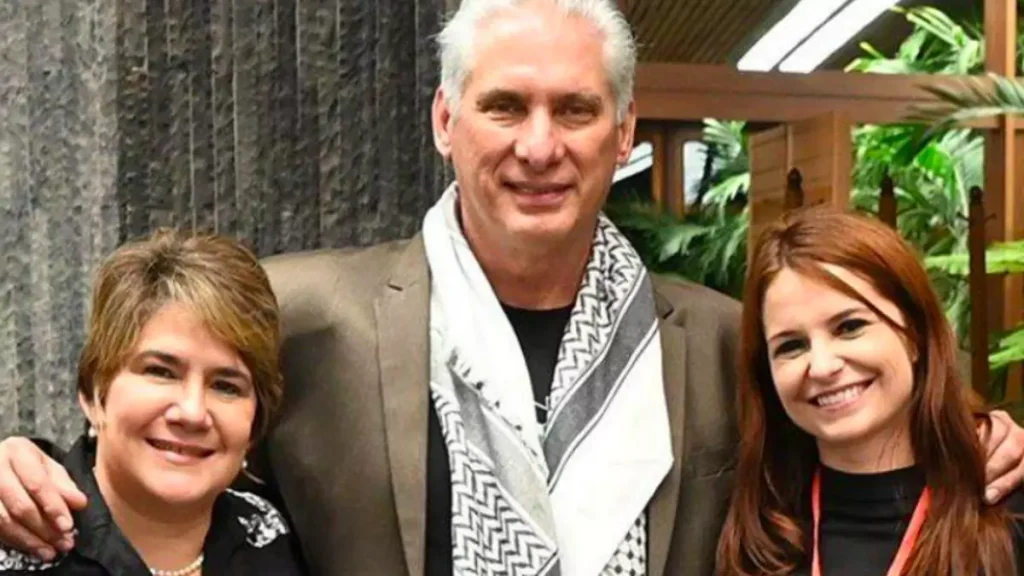
Hurtado, on the right, with Miguel Díaz-Canel and Lis Cuesta, during a political event of the regime. / Ana Hurtado/X

14ymedio bigger14ymedio, Havana, 31 October 2024 — The Spanish courts ruled on Wednesday in favor of Cuban doctor Lucio Enríquez Nodarse in a defamation suit against Spanish journalist Ana Hurtado Martínez, a staunch supporter of the Cuban regime. The court — according to the ruling that the activist exiled in Spain also sent to 14ymedio — states that Hurtado “has committed an illegitimate interference in the right to honor” of Enríquez.

Hurtado will have to publish, “in the same media where the offensive expressions against Enríquez were published,” the content of the sentence, which – the court warned – is not yet “final” and can be appealed in the next 20 working days. The journalist will also have to pay 10,000 euros “in moral damages” as compensation to her accuser, whose legal costs will have to be covered by the defendant.

The ruling notes the statements of the plaintiff, who points out Hurtado’s “staunch defense of the Cuban communist regime” on her social media, and her history of “harassment” of activists exiled from the island.

One of the episodes mentioned in the document occurred after a peaceful protest that Enríquez and activist Avana de la Torre held in 2022 in front of the house where Ángel Castro, Fidel Castro’s father, was born. On that occasion, the journalist insulted the doctor on her social media and accused him of “serious irregularities” committed in the practice of medicine, without providing evidence. “The little drug-dealing doctor” was one of the terms she used along with “criminal, terrorist, scum, marginalized people,” and added that he could “get 3 to 6 years (in prison) for being a criminal.” continue reading

“The little drug-dealing doctor” was one of the terms she used along with “delinquent, terrorist, scum, marginalized people”

In August 2022, her accusations became more serious. “I am unmasking the drug-dealing doctor,” Hurtado wrote, “and it seems that, according to gossip, it is said and commented, that the doctor, and there is the digital footprint in the services, in the Spanish health system, is leaking clinical records, of what medication the patients take, he is leaking clinical records, oh doctor, you are a very delinquent.”

The ruling clarifies that Enríquez, who has no criminal record, was acquitted by a court following this accusation. The document also stresses that there is no accusation against the doctor for leaking medical records.

Enríquez sued Hurtado – who did not appear at the hearing – in May 2023 for these acts of defamation and insult. At the bottom of a short video that accompanied the fragment of the sentence, published on X, dozens of people celebrated the result, and Enríquez thanked them.

She also said that if Hurtado did not comply with the sentence or appeal it, he would be guilty of contempt, “and then things would get much more complicated,” she said. For the moment, the accused – who writes a column in Cubadebate and participates, albeit very discreetly, in Havana’s political life – has not commented on the outcome.

After Enríquez announced the news, Hurtado posted a tweet stating that she was “giving a presentation at the José Martí memorial” in the Havana municipality of Plaza de la Revolución, as part of a symposium dedicated to the history of the regime. “Those who doubt our permanence and victory should wait for events to unfold. They will continue to watch from a cedar box. Long live Fidel!” she said, in what could be a veiled allusion to Enríquez’s message.

The doctor and activist has a notable history of denouncing the regime’s spokesmen abroad. He has also suffered harassment and physical violence. In June 2023, the Cuban pro-government group Buena Fe said it would take legal action in Spain against those who dedicated themselves to “damaging, harming and hurting” its image. They alluded to alleged “campaigns of harassment and hate” through social networks to boycott his tour of several Spanish cities.

At that time, Enríquez Nodarse, along with fellow doctor Emilio Arteaga Pérez, claimed to have been attacked on May 11, 2023 at the Buena Fe concert in Madrid by alleged agents of the Cuban political police posing as security guards.

____________

COLLABORATE WITH OUR WORKThe 14ymedio team is committed to practicing serious journalism that reflects Cuba’s reality in all its depth. Thank you for joining us on this long journey. We invite you to continue supporting us by becoming a member of 14ymedio now. Together we can continue transforming journalism in Cuba.

A Young Woman Was Murdered in Holguín, Cuba, by Her Ex-Husband, Who Was Blackmailing Her

Yoannia Hernandez had a four-year-old daughter from a new relationship and wanted to move abroad

Yoannia Hernández had been an art instructor and was the mother of a girl, who was orphaned at the age of four. / Facebook

14ymedio bigger 14ymedio, Miguel García, Holguín, 31 October 2024 — Yoannia Hernández was murdered by her ex-husband early Thursday morning in the 26 de Julio neighborhood of the city of Holguín. According to a resident of the area who spoke to 14ymedio , the attacker had a history of violence. “A few years ago he stabbed a neighbor of mine,” said the same source, who knew the victim well.

The 32-year-old woman, known to her family and friends as Yuyi, had been an art instructor and had a daughter with a foreign man, who has now been orphaned at the age of four. Although she lived in Holguín, this neighbor explains, Hernández frequently traveled outside the island. Meanwhile, her relatives say, the alleged murderer harassed her.

“He blackmailed her and asked her for money for his vices and his habits,” said another neighbor. “He killed her in front of a group of people, it was not in private. Several people said she said ‘I told you no, I won’t give you any more’, and then he grabbed her by the arm, stood up and stabbed her.” continue reading

With this femicide, there are 41 sexist crimes in Cuba so far this year, according to the ’14ymedio’ registry

They also say that the young woman had previously sought legal advice to take her daughter out of Cuba to a European country, which the sources cannot specify, and where the girl’s father resides.

With this femicide, there are now 41 such crimes in Cuba so far this year, according to 14ymedio’s records. The most recent known murder was that of Tamara Carreras Martínez, 57 years old and a resident of Santiago de Cuba, last Thursday. Her partner and alleged aggressor was later attacked by local residents.

Before her, also in Santiago de Cuba, the femicide of Yucleidis Morales was confirmed.

The murder of Yoannia Hernández in the early hours of Thursday morning took place two days after the UN Committee on the Elimination of Discrimination against Women (Cedaw) issued its observations on the island, which included a section dedicated to gender violence.

In this regard, the organization asked the government to incorporate the crime of “femicide” in the Penal Code, to “raise awareness and public recognition,” “strengthen measures to prevent, prosecute and punish perpetrators of cases of gender violence against women,” and establish shelters throughout the State, “including in collaboration with civil society organizations.”

____________

COLLABORATE WITH OUR WORKThe 14ymedio team is committed to practicing serious journalism that reflects Cuba’s reality in all its depth. Thank you for joining us on this long journey. We invite you to continue supporting us by becoming a member of 14ymedio now. Together we can continue transforming journalism in Cuba.

A Crisis in Cuba Since January: Egg Production in Sancti Spíritus Remains at Zero

Authorities have culled between 45,000 and 50,000 chickens in the past 12 days.

A man walks with five cartons of eggs, which can cost up to 3,600 pesos for each 30 egg carton / 14ymedio

14ymedio bigger14ymedio, Havana, 31 October 2024 — After nearly two weeks of fasting, the chickens of Sancti Spíritus have stopped laying eggs. Production is “at zero,” said Aliesky Guevara Molina, director of the provincial Poultry Company, speaking bluntly on Wednesday, and the feeding system “is severely affected.”

As if that were not enough, the authorities have slaughtered between 45,000 and 50,000 birds in the last 12 days, victims of the “affectation,” the word with which Guevara defines the drop in nutritional intake of the hens and the consequent loss of weight. It is a “considerable” and “strong” number, he said. There are 220,000 hens left in the province, half of them young.

Without food for the birds, which have been subjected to drastic reductions in their diet – in Isla de la Juventud the “diet” was only 50% of the standard – the distribution of eggs has been in crisis for months in the country. Sancti Spíritus has declared itself to be in a “process of recovery,” but has not shown any concrete signs of improvement since last January, the date when the debacle began, according to Guevara. continue reading

Sancti Spíritus has declared itself to be in a “recovery process,” but has not given any concrete signs of improvement

The official limited himself to commenting that “the animals are already gaining weight” and it is expected that they will begin to produce. What is specifically lacking is feed, for which the country must buy raw materials from abroad. Without resources, explains the director, they had to resort to “rice-based feed. In March it was just rice, in April it stabilized a bit and at the end of May it became complicated again.” That last month, the hens had to fast for five days.

In June there was some stability, but the following month the supply was suspended again for up to 10 days. “Then it stabilized in August and part of September,” but this month there was a new relapse. Gone are the days when 10 eggs were delivered per month per customer in the bodegas — ration stores — of Sancti Spiritus.

“Initially – before January – eggs were delivered to consumers in Sancti Spíritus and Trinidad, then it was continued last month and they began to be distributed in two more municipalities: Taguasco and part of Fomento, and when we were already recovering, the instability with food began again and deliveries stopped,” says Guevara.

Despite the circumstances, the director promises that at some point eggs will be delivered to “the municipalities that have been missing them since July.” In defense of his office, he assures that the problem is national. “It is not that Sancti Spíritus has done badly,” he says. “It is a balance sheet for the country. There are even many provinces that have not distributed the five (eggs) from July. Social consumption was always protected until the last moment with the same productions, but when it reached zero there was no other option.”

The director promises that at some point eggs will be delivered to “the municipalities that have been missing them since July”

A carton of 30 eggs costs around 3,600 pesos* on the informal market for Cubans who can afford it and who do not want to wait for the State’s promises to be fulfilled through the ration system. Problems with feeding chickens, as well as power outages, which leave them without electricity and water for days, have hampered egg production in Cuba, which fell from five million units per day in 2020 to just 2.2 in 2023.

Faced with this decline, the authorities have been forced to import food on a massive scale, as reflected in the expansion of exports from the Dominican Republic to the Island. Between June 2023 and August 2024 alone, the figure grew by 1,858.4% year-on-year. From July 2023, when this product began to be purchased in the neighboring country, until the end of that year, the expenditure was 1.5 million dollars, while in the eight months so far this year, more than 5.2 million dollars have already been invested.

Eggs have also been imported from Colombia, with a first batch of half a million eggs arriving last March, with the aim of reaching 40 million eggs throughout the year.

The problem will not be solved even if production returns to normal levels. At least that is what Guevara thinks, who washes his hands of the transport crisis and Havana’s mismanagement. The official said he could not guarantee that the well-being of the industry would automatically benefit Cubans. “As we have already explained,” he concluded, “we are not distributors, but producers, and it is the Ministry of Economy that decides what function to give to the eggs.”

*Translator’s note: Confirming current wages and prices in Cuba is difficult, but generally speaking, at this price the average worker would need more than an entire month’s wages to afford 30 eggs.

____________

COLLABORATE WITH OUR WORKThe 14ymedio team is committed to practicing serious journalism that reflects Cuba’s reality in all its depth. Thank you for joining us on this long journey. We invite you to continue supporting us by becoming a member of 14ymedio now. Together we can continue transforming journalism in Cuba.

After Two Years as Chargé d’Affaires at the US Embassy, Benjamin Ziff Leaves Cuba

The diplomat arrived a year after the island-wide ’11J’ protests and experienced the rise of the private sector on the Island

Ziff has been a diplomat in other countries such as Venezuela, Colombia, Iraq and Israel / Capture / US Embassy in Havana

14ymedio bigger14ymedio, Havana, 29 October 2024 — The United States Embassy in Havana announced on Tuesday the departure of its Chargé de Negocios on the Island, Benjamin Ziff, who served as the main representative of the White House in the absence of an ambassador. In a video published by the headquarters, the diplomat reviewed the two years he served in the post. He was assigned in July 2022, a year after the Island-wide protests of 11 July 2021 (11J), a period in which the issuance of migrant visas was resumed, and “hard work was done to improve the conditions of the Cuban private sector.”

“During these years we have been able to recompose the Embassy, its staff and its activities; we have begun to expand our cultural and artistic relationship with the people, and we have resumed the issuance of migrant visas. We worked every day to expand legal and safe routes of migration. We also worked hard to improve opportunities for the private sector in Cuba. We trust that it is the solution for the prosperity and future of the Cuban people,” Ziff said in his farewell speech and added that, despite his departure from office, “the commitment of the United States so that Cuba and its people have a freer, more democratic and more prosperous future will go forward.”

Ziff, with a perfect command of Spanish and a cheerful personality, arrived in Cuba at a bleak time for the US Embassy. The 2016 acoustic attacks on Embassy personnel, which came to be referred to as “Havana Syndrome,” and the Covid pandemic that practically closed the country in2020 significantly reduced the number of diplomats sent by continue reading

Washington. The Chargé d’Affaires not only had to relaunch consular services but also deal with imperatives such as the repair of the employees’ homes, plunged into deterioration and vandalized by remaining empty for many months.

The return of the festivities and cultural activities at Ziff’s residence and the programming of shows with American artists in several places in Havana were also part of the agenda of his team, made up largely of young people. However, despite his enthusiasm, the diplomat saw how the figures of Cuban culture who attended his gatherings, the number of activists in the celebrations for July 4 and the number of opponents and independent journalists he could visit in their homes diminished. Unlike other periods, this time the reason for such absences was not fear but because of the massive exodus that the Island was experiencing.

Ziff also was there during these years of galloping deterioration of the Cuban economy, the collapse of public transport, the fall in oil supply, the cut in the basic family basket of the rationing system and inflation. The crisis impacted the scope of his work and limited the Embassy’s contact with Cuban society.

However, the most bitter point of the time that Ziff spent in Cuba has been, without a doubt, the more than 1,000 political prisoners that the regime keeps in prison. When the diplomat landed in Havana, the popular protests of 11 July 2021 were still fresh, and the wounds of official repression were still open. In these years, with the exception of the prisoners of 11J who have served their sentences, the Regime has refused to release the detainees. Ziff, who withdraws from his exercise as a diplomat outside US borders, returns to Washington without having seen any sign of democratic openness in Cuba.

Ziff returns to Washington without having seen any sign of democratic openness in Cuba

The diplomat also received his scolding, when he was summoned by the Cuban authorities in March 2023 to answer for Washington’s decision to give asylum to the pilot who left the Island in October 2022 in a fumigation plane of the National Air Services Company (ENSA). Ziff had to listen to the “energetic protest” of Havana, which accused his government of being “accomplices and stimulators of piracy and air hijacking, crimes that, if tolerated and protected, could stimulate similar illegal acts with negative repercussions for the national security of both countries,” and they pointed out his “interventionist” behavior.

The long blackouts and shortages that have worsened on the Island in the last year also occupied part of Ziff’s agenda. The US Embassy had to suspend all services a week ago when the Cuban Energy System suffered a total breakdown.

According to his professional profile, published on the website of the diplomatic headquarters, Ziff led several working groups and departments involved in diplomatic relations in the Western Hemisphere. He was also deputy head of mission of the US embassies in Madrid (Spain) and Bogotá (Colombia); as well as a diplomat in Australia, Israel, Panama, Venezuela, Iraq, Italy and Peru. He was deputy director of the Office of Central American Affairs of the State Department.

Ziff, born in California, graduated in Political Science from California State University at Long Beach, obtained a master’s degree from the Fletcher School of Law and Diplomacy, and a master’s degree in National Security Studies from the National War College. He also received the Murrow Award for Public Diplomacy of the Department of State and the Presidential Rank Award.

Translated by Regina Anavy

____________

COLLABORATE WITH OUR WORKThe 14ymedio team is committed to practicing serious journalism that reflects Cuba’s reality in all its depth. Thank you for joining us on this long journey. We invite you to continue supporting us by becoming a member of 14ymedio now. Together we can continue transforming journalism in Cuba.

Cuban Telephone Monopoly Etecsa Attributes the Multiple Deficiencies in Its Services to ‘Crime’ in Santiago de Cuba

The State calls for severe penalties for vandals and punishment for citizens who do not report them

Office of of the State telecommunications monopoly Etecsa in the city of Santiago de Cuba / Sierra Maestra

14ymedio bigger14ymedio, Havana, November 2, 2024 — The official press called this Saturday for “strong measures” against the protagonists of “more than 30 acts of vandalism so far this year” at the Etecsa facilities in Santiago de Cuba. The telephone monopoly on the Island has not been the only state entity with “serious effects.” As Sierra Maestra admits, an “unidentified “vital economic center,” an unidentified military unit and the Renté thermoelectric plant have also been left “without communication.”

Sierra Maestra urges the police, at the request of the manager of
Etecsa in Santiago, Eolydis Montejo, to take action in the matter, not only against the “vandals” but against the citizens, “who sometimes witness indisciplines of this nature and do not report them.” Montejo washed his hands of the connection problems in the province, saying that these facts prevent the population from “enjoying” the internet, because each breakdown delays the restoration, and there is no money for the “replacement of the damaged technology.”

The José Martí neighborhood has the highest number of incidents. The most frequent crimes are the theft of fiber optic and copper cables, attacks against technology equipment and cell phone radio bases, and “battery theft.” According to Montejo, after each reported event, landline telephones, cell phones and Nauta Hogar home internet service were affected. continue reading

“Saturation levels increase, because when there is an affectation in the radio base, it is reflected in the coverage,” added the official, for whom all the deficiencies of his company have their explanation in “crime.” “Cutting cables, for example, can leave many people incommunicado in emergency situations. The lack of access to telecommunications services due to vandalism limits the development of the country and affects all its spheres,” he said.

“The lack of access to telecommunications services due to vandalism limits the development of the country and affects all its spheres”

The Communist Party newspaper in Santiago qualifies Montejo’s statements, recognizing that “Etecsa does not escape the limitations of resources to install new services,” but it does attribute a significant percentage of the failures to attacks, which have reached 10 more than in 2023.

The most recent, it reported, occurred at the cell phone radio base of San Agustín, a rural community located on the Mar Verde road. It is a “remote area” that barely has connection, so the whole town was left without internet after the crime.

The “cooperation” agreements with the Committees for the Defense of the Revolution (CDR) and the “night tours on non-working days” in each of the facilities in the province have been of no use. The offices are “dispersed” throughout the territory, and it is difficult to maintain effective surveillance.

“Not all the events occurred in rural communities. Most have occurred in populated areas, where there are nearby homes and work centers,” said the manager, who quoted the provincial prosecutor, Rolando Reyes, about punishments for “acts against telephony.” “They must be charged with the precautionary measure of provisional detention,” he said, “and receive a severe penalty in correspondence with the damage they have caused.”

“We are talking, for example, about a theft. The penalty can be from two years upwards, depending on the aggravation charge”

“We are talking, for example, about a theft. The penalty can be from two years upwards, depending on the aggravation charge, and up to 30 years of deprivation of liberty if it is a robbery with violence or with force. Imagine the magnitude of cutting the optical fiber,” he said. In addition, there are penalties for co-conspirators, since these are crimes that “are not committed alone.”

Montejo also asked for severe punishments for those who “receive” a cable or a stolen piece of equipment. “The self-employed worker who acquires that cable and then sells it in his establishment is receiving stolen property, and the law will impose a penalty in correspondence with his participation.

The manager did not reveal what the “vandals” were looking for in an Eastern Army unit or how they managed to circumvent the surveillance of the soldiers to carry out the theft. Nor did he give details about the impact suffered by the Renté thermoelectric plant or what the relationship of these crimes is to the popular discontent of Cubans, fueled by the total blackout of October 17.

Translated by Regina Anavy

____________

COLLABORATE WITH OUR WORKThe 14ymedio team is committed to practicing serious journalism that reflects Cuba’s reality in all its depth. Thank you for joining us on this long journey. We invite you to continue supporting us by becoming a member of 14ymedio now. Together we can continue transforming journalism in Cuba.

Cuban Opponents Sissi Abascal, Sayli Navarro and Félix Navarro Receive the Patmos Award

The three political prisoners are serving sentences for participating in the 11J protests

From left to right, Sayli Navarro, Félix Navarro and Sissi Abascal / Collage

14ymedio bigger14ymedio, Havana, 31 October 2024 — Political prisoners Sissi Abascal Zamora, Félix Navarro Rodríguez, and Sayli Navarro Álvarez (the latter two father and daughter), arrested during the Island-wide protests of 11 July 2021 (’11J’) in Matanzas, have been awarded the Patmos Prize, given annually by the homonymous Institute.

A statement published on the institute’s website states that the award, which celebrates its eleventh edition this 2024, is awarded on October 31 of each year to honor a Cuban believer on Protestant Reformation Day. In the case of Abascal and the Navarros, the award was given to them for what they “represent for Cuba.” “The three of them, like John of Patmos, are also a testimony of genuine faith and visions of hope on the island of Cuba,” said the jury.

Sissi Abascal and Sayli Navarro are serving six and eight years in prison, respectively, and since their arrest in 2021 they have systematically suffered harassment from State Security and prison officers. Last September, the authorities of La Bellotex, the women’s prison in which both opponents are serving sentences, gave a four-day pass to five women who participated in the demonstrations of 11J, but Abascal and Navarro were not among them. continue reading

“They have never given them a pass, so it is an absolutely discriminatory exclusion” against the opponents

“They have never given them a pass, so it is an absolutely discriminatory exclusion” against the opponents, who are also part of the Ladies in White Movement, stated Martha Beatriz Roque, director of the Cuban Center for Human Rights.

Inside prison, Abascal and Sayli Navarro have held hunger strikes, protests and commemorations of 11J, which has resulted in greater severity on the part of the prison authorities. Although three years have passed since their confinement, neither of them has been transferred to a less strict authority.

In the case of Félix Navarro, former prisoner of the Black Spring of 2003 and coordinator of the Pedro Luis Boitel Party for Democracy – of which the two Ladies in White are also members – he is serving nine years in the Agüica prison, in the same province. The courts convicted him of the crimes of “attack” and “public disorder” just for going out to demonstrate on 11J.

Navarro has seen his health deteriorate during his time in prison. In November 2023 he was transferred to the Faustino Pérez hospital, in the city of Matanzas. State Security told his family that it was a routine medical check-up. “We don’t believe that version. He is in a delicate state of health; he is 70 years old and has several chronic diseases,” Annia Zamora, Abascal’s mother, told 14ymedio on that occasion.

For Patmos, the three political prisoners are not only people of faith, but Cubans who are “consistent” with their ideas

For Patmos, the three political prisoners are not only people of faith, but Cubans who are “consistent” with their ideas. “Felix represents all the prisoners of the old guard, and all the prisoners of conscience; Sayli and Sissi represent the prisoners of the new generations and all the women prisoners.

Patmos has previously awarded Cuban opposition figures like the sisters María Cristina and Angélica Garrido, and the brothers Jorge and Martín Nadir Perdomo (2023), imprisoned for demonstrating on 11J. That year, the political police tried to boycott the award ceremony in the neighborhood of La Palma, in Havana, and summoned the host of the institute, the evangelical pastor Luis Maldonado. The same summons was received by pastor Alejandro Hernández Cepero, who was later arrested.

In an audio sent to his friends, Maldonado said that agents and police vehicles surrounded the meeting place, although that did not prevent some of the relatives of the prisoners from arriving, such as Jorge and Nadir’s mother, Marta Perdomo. In the award ceremony, it was the first time that the institute honored more than one person.

Catholic activist Martha Beatriz Roque Cabello (in 2020) and Dr. Oscar Elías Biscet (in 2016), a Baptist activist, have also received the award, which has been given annually since 2014.

Translated by Regina Anavy

____________

COLLABORATE WITH OUR WORKThe 14ymedio team is committed to practicing serious journalism that reflects Cuba’s reality in all its depth. Thank you for joining us on this long journey. We invite you to continue supporting us by becoming a member of 14ymedio now. Together we can continue transforming journalism in Cuba.

Omara Portuondo Announces That She Will Not Retire From Music ‘As Long as She Has the Strength’

Last October, the artist suffered an episode of “fatigue and disorientation” during a concert in Barcelona.

With time, concerts and recordings, Omara Portuondo first achieved national and then international recognition. / EFE

14ymedio biggerEFE (via 14ymedio), Havana, 1 November 2024 — The legendary diva of the Buena Vista Social Club, Cuban singer Omara Portuondo, announced on Friday that, despite having given up long concerts, she will continue to do recordings and other activities. “I will no longer do long live concerts because I get tired, and that is natural given my age. But I make it clear that I am not retiring from music. I will continue with my recordings, and other activities, as my age and health allow me,” Portuondo said on Facebook.

The singer, also known as la novia de filin [feeling’s sweetheart], added in her statement that “as long as she has the strength” and the support of family, friends and fans, she will continue singing. “With the respect of all the people who sincerely appreciate me, each person decides how they want to live and die as well,” she wrote.

The message comes less than a month after her son explained that she had decided to “retire permanently from the stage” after suffering health problems during a concert in Barcelona, ​​Spain, on October 2. The artist turned 94 on October 29.

“As long as I have strength and people want to listen to me, I will continue singing. Because as I always tell you: music is in me, sky, earth, sea and sun, joy and reason,” wrote Portuondo. continue reading

On October 2, during a concert at the Palau de la Música in Barcelona, ​​the artist suffered an episode of “fatigue and disorientation” that forced her to leave the stage after performing the first song, the classic from her repertoire Quizás, quizás, [Perhaps, perhaps], by Osvaldo Farrés.

Portuondo, born in 1930, began her career in the 1940s accompanied by her sister Haydeé

Portuondo, born in 1930, began her career in the 1940s accompanied by her sister Haydeé, performing Cuban music with a strong influence from genres such as bossa nova and jazz, before making the leap into the professional world shortly after.

Over time, concerts and recordings, the Cuban artist first achieved national recognition and then international recognition. In the latter, her work with the Buena Vista Social Club played an important role, especially in spreading her name to the general public.

Portuondo, in addition to his extensive solo career – with works such as Vida, Gracias and Flor de amor – has collaborated with artists such as Pablo Milanés, Chico Buarque, Chucho Valdés, Cachaito López, Jorge Drexler and Ibrahim Ferrer.

Among the awards that the Cuban singer has accumulated are the 2005 Latin Music Award from Billboard magazine, the Latin Grammy for Best Contemporary Tropical Album and the Gold Medal for Merit in Fine Arts in Spain.

____________

COLLABORATE WITH OUR WORKThe 14ymedio team is committed to practicing serious journalism that reflects Cuba’s reality in all its depth. Thank you for joining us on this long journey. We invite you to continue supporting us by becoming a member of 14ymedio now. Together we can continue transforming journalism in Cuba.

Two Coyotes Who Trafficked Cubans by Sea to Florida Face Justice in the United States

The investigation showed that their speedboat had a frequent route to the Island recorded in its GPS

Oscar Alfredo Bustamante Semeren and Alejandro Gauche Valdez have a long criminal history in Miami / Monroe County

14ymedio bigger14ymedio, Havana, 1 November 1, 2024 — The authorities of Monroe County, Florida, obtained arrest warrants against Oscar Alfredo Bustamante Semeren, 29, and Alejandro Gauche Valdez, 35, for the illegal transfer of Cubans who were taken from the Island in speedboats to bring them to the United States. The crime, for which a fine of $60,000 was imposed on each of them, is added to others related to firearms and theft of vehicles, for which they had already been imprisoned in Miami.

The arrests of Bustamante and Gauche by Monroe County will proceed after the authorities of Miami-Dade County release the traffickers, who were intercepted by the Coast Guard on July 5, 2024, in the Cotton Key area, in the vicinity of Islamorada, for “numerous security violations.”

The investigation revealed that the boat’s GPS showed an “active route” to Cuba, and Bustamante ended up confessing that he was going to the Island with his accomplice to pick up Cubans. The authorities, however, did not mention where in Cuba they traveled or how much they charged for each person they transferred. continue reading

The crime, for which a fine of 60,000 dollars was imposed on each of them, is added to others related to firearms and vehicle theft

Despite the coyote’s confession and the evidence obtained, the United States Attorney’s office refused to prosecute the detainees. But the case was taken up by Monroe County Sheriff’s Office Sergeant Joel Slough, who, in collaboration with the Border Patrol and the Department of Homeland Security Investigations, initiated a migrant trafficking case against Bustamante and Gauche.

“We will continue to take a firm stance on the crime, even when the United States Attorney’s office does not do its job,” said Monroe County Sheriff Rick Ramsay, who accused the agency of “not being willing to pursue criminals who traffic in humans.” “These criminals continue to wreak havoc on our community and other communities,” he added.

According to data from the United States Attorney’s Office, between October 2023 and 2024, more than 75 people related to migrant trafficking were prosecuted. This includes 25 coyotes and more than 50 immigrants who tried to enter illegally by sea.

Last August, Sheriff Rick Ramsay obtained enough evidence to prosecute a sophisticated gang of Cubans who were trafficking migrants by land and sea. Dianelys Pérez Escourido, Omar Liván Ripoll Pérez, Humberto Tamayo, Víctor Víctor Febles Gualpa and Joel Gil Egued are now detained in the Key West jail.

The investigations also revealed that Oscar Alfredo Bustamante Semeren belonged to the Venezuelan “Tren De Aragua” gang

Coyotes charged migrants different sums for transferring them to Florida depending on their nationality. Ecuadorians, for example, were asked to pay $4,000 to leave their country, another $3,000 for the Bahamas crossing and $1,000 for the driver of the vehicle that would transfer them when they reached land in the United States. Another 12,000 dollars had to be paid to reach the final destination: New York or New Jersey.

The investigations carried out in Monroe also revealed that Oscar Alfredo Bustamante Semeren, in addition to being a coyote, belonged to the Venezuelan gang, “Tren De Aragua,” which according to Telemundo, has about 4,000 members and is active in 15 US states.

The Colombian newspaper El Tiempo pointed out that among the crimes committed by this criminal group are the murder of a former police officer in South Florida, an attack against police officers in New York, the seizure of an apartment condominium in Colorado and an attack and robbery in a well-to-do area in Texas.

Translated by Regina Anavy

____________

COLLABORATE WITH OUR WORKThe 14ymedio team is committed to practicing serious journalism that reflects Cuba’s reality in all its depth. Thank you for joining us on this long journey. We invite you to continue supporting us by becoming a member of 14ymedio now. Together we can continue transforming journalism in Cuba.

The UN Will Dedicate 33 Million Dollars to Repairing the Damage of Hurricane Oscar in Cuba

Two people from San Antonio del Sur are still missing: Kaliannis Hernández Urgelléz, 35, and Orlenis Gamboa Pérez, 42

The aid will be extended for 18 months / Facebook / United Nations System in Cuba

14ymedio bigger14ymedio, Havana, 31 October 2024 — The United Nations System in Cuba will dedicate 33,235,167 dollars to assist the half million victims of Hurricane Oscar in Guantánamo. The emergency recovery plan, for which six million dollars has already been allocated, focuses on water availability and hygiene, shelters and housing, education, logistics, health and food security. According to the agency, immediate aid will be given for six months, and other restoration projects could extend up to 18 months.

In its report, prepared with data offered by the Cuban authorities despite their usual lack of transparency, the UN agency revealed that in the province, some 478,599 people were affected, of which 149,964 are critically impacted. More than half were left homeless. Some 14,300 homes and service facilities were damaged, as were 56 health centers, 349 schools and 15,000 hectares (37,066 acres) of land.

They also confirmed the death of eight people– seven in San Antonio del Sur and one in Imías – and on Thursday reported that the search for two missing people continues: Kaliannis Hernández Urgelléz, 35, and Orlenis Gamboa Pérez, 42, both from San Antonio del Sur. continue reading

The damage is considerable and will take, at the usual pace of the Government, years to recover from

The damage is considerable and will take, at the usual pace of the Government, years to recover from, but the authorities insist on presenting a climate of tranquility and demonstrating “the traces of recovery,” as the Presidency’s profile on X called the work of the Civil Defense.

In principle, the authorities have guaranteed food for the victims with products that are not very nutritious or healthy, such as condensed milk and soft drinks. In an article published this Thursday, the hot dog factory of Sancti Spíritus told Escambray that it has produced five tons of that product to send to Guantánamo.

“It’s about supporting the most vulnerable families in the affected areas, so the plant workers, in just two days, made that amount of packaged hot dogs, while in the Roberto Quesada packaging company, four tons of sausages were manufactured for them,” applauds Escambray.

Miguel Díaz-Canel visited Imías on Wednesday, repeating slogans and proposing the usual voluntarism*. The images disseminated by the official press are eloquent: schools in which classes are now taught, unharmed fields, factories in operation, bridges under repair. None of the places they visited are totally collapsed, and do not include centers that are closed or without service.

Surrounded by soldiers, in addition to his bodyguard, Díaz-Canel immersed himself in the crowd

The authorities also showed the president full warehouses, sawmills preparing wood for the reconstruction of homes and ration stores distributing the ’basic basket’. He responded by asking them to speed up the reconstruction of housing, so that people can be taken care of and “lost household goods” provided, all vague provisions. Only one specific fact was offered by the official newspaper Granma in its description of the presidential tour: 10,000 mattresses will be given to the affected families.

Surrounded by soldiers, in addition to his bodyguard, Díaz-Canel immersed himself in the crowd and reminded the people that “there are still many things to do.” “In Imías, the water service has begun to stabilize; there is electricity in 97% of the municipality, and we are going to move forward. I know that it has been hard, that many have lost property, but it is demonstrated once again that the Revolution does not leave anyone on their own,” said the president, who recognized, however, that “what will take the most time will be the recovery of homes.”

“We are moving forward on all fronts, including the people in the recovery process, to have a better Guantánamo, a more beautiful Guantánamo,” added Díaz-Canel, who promised that the order given to “all institutions” is to “make things better in the recovery than they were before.”

Translated by Regina Anavy

*Translator’s note: The principle of relying on voluntary action (used especially with reference to the involvement of voluntary organizations in social welfare) – Oxford Dictionary

____________

COLLABORATE WITH OUR WORKThe 14ymedio team is committed to practicing serious journalism that reflects Cuba’s reality in all its depth. Thank you for joining us on this long journey. We invite you to continue supporting us by becoming a member of 14ymedio now. Together we can continue transforming journalism in Cuba.

The Death Toll From Hurricane Oscar in Cuba Rises to Eight

Authorities are looking for two more people who are reported missing

According to the government of Guantánamo, Oscar has damaged more than 11,000 buildings, including housing and public infrastructure / Facebook

14ymedio biggerEFE/14ymedio, Havana, 31 October 2024 — The Cuban government raised the death toll to eight after the passage of Hurricane Oscar and said that the authorities are looking for two people who are reported missing, the state press reported on Wednesday.

This is the first official figure on disappearances, more than a week after Oscar’s scourge in the east of the country.

The two missing are a 42-year-old man and a 35-year-old woman, both from the town of San Antonio del Sur, in Guantánamo, according to a statement from the Civil Defense General Staff.

San Antonio del Sur, along with the neighboring municipalities of Baracoa, Imías and Maisí, was one of the territories most seriously affected by the floods of October 21, with numerous damage to the housing stock, health centers and schools, and losses of personal property.

This Tuesday, for the first time since the occurrence of the meteorological disaster, photographers from some international media accredited in Cuba – including EFE – had access to San Antonio del Sur. continue reading

This week some roads were opened to allow aid to reach the settlements that have been incommunicado

The United Nations resident coordinator in Cuba, Francisco Pichón, indicated that he will present an “action plan” prepared by UN agencies, which includes providing funds and programs “in order to join the concentrated recovery efforts of the national authorities” in support of the victims.

The intense rains that accompanied Oscar, which continue to affect the region, caused the flooding of rivers, landslides from the mountains that brought down mud, and the isolation of communities that rescuers have not been able to reach due to the state of the roads.

But this week some roads were opened to allow the passage of aid to settlements that have incommunicado, especially in mountainous or flooded areas.

Seven of the deceased were located in San Antonio del Sur, while the other deceased was located in Imías

Cuban President Miguel Díaz-Canel visited Imías on Wednesday to assess the damage after Oscar’s passage.

Also, the Guantanamo Defense Council reported this Wednesday that Oscar’s passage through the province damaged more than 11,000 buildings, including homes and public infrastructure, and affected more than 13,000 hectares (32,124 acres) of various crops.

Power cuts continue in the region due to the fall of 98 power poles and damaged transformers in five municipalities

The official provincial newspaper Venceremos reports that houses suffered the greatest damage, with 257 total collapses and 360 partial, while 9,198 houses lost part of their roofs, among other damage.

Facilities for 627 state institutions have been affected. Among them, the damage is mainly concentrated in commerce, with 183 establishments, health centers (71), and Education, Culture and Sports sectors, with 210 effects recorded.

Electricity cuts continue in the region due to the fall of 98 poles and damaged transformers in five municipalities, where more than 56,000 customers are still without service (some 35,000 now have power).

The report points out that to alleviate the generation deficit, 69 generators are being used to supply isolated communities, food production centers, public health centers and other services.

In agriculture, negative effects are reported in 13,255 hectares (32,754 acres) of banana, coconut, cocoa, fruit, forest fuels and, in particular, coffee, one of the main productions of the territory.

The committee points out that 14 national and foreign donations have been received, nine of them sent by the United Nations World Food Program

The recovery begins gradually with the arrival of materials and donations for the restoration of infrastructure and land communication with the four affected municipalities. This includes returning most of the evacuees to their homes, and the planting and harvesting of coffee in the unaffected areas.

In addition, the committee points out that 14 national and foreign donations have been received, nine of them sent by the United Nations World Food Program, plus others from the Bridges of Love initiative and The Peoples Forum in the United States.

Hurricane Oscar – the first meteorological event that directly hit Cuba in the current hurricane season – penetrated Cuba on Sunday the 21st as a category 1 hurricane (maximum of 5) on the Saffir-Simpson scale, very close to the coastal city of Baracoa, in Guantánamo, and became a tropical storm before leaving the next day through an area near Gibara, in the province of Holguín.

Translated by Regina Anavy

____________

COLLABORATE WITH OUR WORKThe 14ymedio team is committed to practicing serious journalism that reflects Cuba’s reality in all its depth. Thank you for joining us on this long journey. We invite you to continue supporting us by becoming a member of 14ymedio now. Together we can continue transforming journalism in Cuba.

Mexican ‘Coyotes’ Promote Themselves on TikTok To Attract Cubans Who Seek To Reach the United States

A VIP trip from the Cuba to the Mexican state of Chiapas can cost between $5,000 and $7,000 per person.

In the state of Chiapas there are almost 1,000 migrants stranded due to the delay in the CBP One procedures / EFE

14ymedio bigger14ymedio, Mexico City, 31 October 2024 — A VIP trip from Cuba to the Mexican state of Chiapas, on the border with Guatemala, can cost Cubans leaving the Island between 5,000 and 7,000 dollars per person. The coyotes claim that traffic is “safe” and that they know the tricks to mislead or convince the authorities. “There are no robberies, much less threats with firearms,” a coyote who calls himself ‘AK-47’ told Diario del Sur in an article published on Tuesday.

The search for customers begins on social networks, where traffickers present themselves as travel agents, the same source tells the Mexican newspaper. “We use the TikTok platform, which is the one that is fashionable. It helps us to publicize testimonies that people arrived well at their destination,” he explains. The flight to Nicaragua costs $3,600, and if you want a more thorough service, an extra $1,200 guarantees the arrival to Tapachula without problems. For that price, security is a fact: “We have bought the police. We use code words and above all ’official’ stamps, each one from his own company, and we avoid confrontations,” he says.

According to AK-47, the “center of operations” is Cuba, from where flights depart to Nicaragua, Russia, Peru and Guyana. There they have their “travel agency” installed and promote plane tickets to those destinations. If the client requires it, they provide ground transportation to get closer to the final goal: the United States.

Diario del Sur managed to interview a Cuban woman who hired — for herself, her husband and their two children — the agency’s services to fly to Bogotá (Colombia) and make a second stop in Nicaragua. In this way, Yadiris, 45, found it cheaper to cross than if she flew directly to Managua. From there, the coyotes took care of moving them to Mexico, where the family ran out of money. continue reading

A coyote claims to pay the police in Chiapas to allow them to traffic migrants / EFE

The trip wasn’t easy either. According to Yadiris, the driver who took them to Tapachula drove as if the vehicle were a racing car. Once in Mexico, they had to look for work to support themselves, but the Cuban woman says that she is still in contact with the coyote.

Karla, another Cuban interviewed by the Mexican media, tells a similar story. After reaching Tapachula, she was also stranded without money. Now she works as a waitress, because “it’s easy money,” and she hopes in a few months to have saved enough to request a CBP One appointment with US Customs and Border Protection.

Recently interviewed by 14ymedio, another Cuban migrant, experienced in the tricks of migration, Alexander Mori, told this newspaper that he has been approached by coyotes to offer him “facilities” to reach the border. “To get to Tijuana they charge you 2,000 dollars in a van, and 1,500 if you make the trip by bus. The traffickers give you a bracelet, which they say is to prevent Migration officials from arresting you,” said the Cuban, who hopes that in Chiapas, he will get a CBP One appointment.

According to figures from the Mexican Commission for Refugee Aid, up to September of this year, a total of 39,754 migrants had gone to their offices in Palenque and Tapachula seeking asylum. At the beginning of October, the director of the Human Dignity Center, Luis García Villagrán, said that more than 45,000 illegal foreigners were stranded in that state, of which some 1,000 were Cubans, due to the delay in the procedures through the US application.

Last week the mayor of Tapachula, Yamil Melgar Bravo, told EFE that the municipality has received 60% of the migrants in Mexico. Irregular migration rose by 193% year-on-year in the first half of the year to more than 712,000 people nationwide, according to the Government’s Migration Policy Unit.

Translated by Regina Anavy

____________

COLLABORATE WITH OUR WORKThe 14ymedio team is committed to practicing serious journalism that reflects Cuba’s reality in all its depth. Thank you for joining us on this long journey. We invite you to continue supporting us by becoming a member of 14ymedio now. Together we can continue transforming journalism in Cuba.