
Occasional photos… / Silvia Corbelle




Eugenio Yanez Remembers Oscar Espinosa Chepe
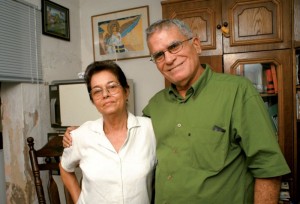
Oscar Espinosa Chepe was a person convinced of what he did in life, without any extremist opportunisms or false remorse about his “revolutionary” phase from his earliest youth. A person of integrity, when speaking or writing he did not care about what his bosses (when he had them) would like to hear; or, after breaking up with the regime, what opposition activists and exiles [would like to hear or read], but [about] the analyses needed to understand the Cuban reality. His didactic virtuosity made any topic that he took on look easy and simple, but the rigor of his analysis and the depth of his conclusions showed a professional committed to the pursuit of the truth. As an economist, independent journalist and opposition activist, he is an example to all Cubans on both shores of the Florida Strait.
Eugenio Yáñez. Writer and Columnist. He edits Cubanálisis-El Think-Tank
Translated by Ernesto Ariel Suarez
From Cubaencuentro
24 September 2013
Rafael Alcides about the Official Novel against Angel Santiesteban
I present to you here the article that writer and poet Rafael Alcides published in the blog Penúltimos Días about the judicial farce mounted against Angel Santiesteban with the sole and hidden objective of silencing his critical and damning voice about the Castro dictatorship.
I ask readers to read this article knowing that Rafael expresses himself ironically but without removing one iota of the truth from what he says about Angel, the horrible antihero into which they try to convert him, the false testimony and the judicial manipulation and from the proxies and scribes of infamy that the regime knew so well how to buy in order to execute and legitimize such a dirty objective.
I believe the clarification is necessary because of the many reactions that his first article about the topic provoked and because he already busied himself clarifying in another article and because such bad fury was used by the Writers of Infamy concentrated in the Cuban Writers and Artists Union (UNEAC) in order to criminalize their colleague (and friend in many cases) and convert him into an example of the macho, abusive and violent man whom they should only recognize in the Castro dictator, his minions and those men in Cuba who regrettably are violent with women and each day pursue and brutally beat the Ladies in White and other brave and peaceful opponents throughout the whole island.
It remains to be said that there also exists — regrettably — a large number of men who practice domestic and gender violence. Against these men among whom are found distinguished members of the nomenklatura, Justice has never done anything; it would seem as if they had assumed that violence against women and machismo are ingredients of national folklore.

BASIC CONSIDERATIONS ABOUT THE SANTIESTEBAN CASE
By Rafael Alcides
A novelist who would like to write the complex and diverse novel that is hinted at behind the bulky “Santiesteban case,” could begin with the presumably frightened faces that the poor magistrates who failed in said process to know the facts that they would judge. I get it, because of my own fear and because of what obviously brought the Women of UNEAC to manifest their wrath. The prize-winning author Angel Santiesteban, UNEAC Prize, Juan Rulfo Prize, House of the Americas Prize, and who physically only would lack the horse to seem an all-powerful rodeo cowboy (The Novelist could not describe his character), threatened his ex-wife with death, hit her, tied her up in order to rape her in comfort and set fire to the house.
I, who at the beginning believed it a magnified quarrel, discord, lovers’ disagreement of the kind that so often feed the great loves while they last (and in that respect I wrote some lines of which I now repent), on knowing the facts in detail or supposed facts (The Novelist will have to investigate them and take a position), I told myself: this is not the Angel that I know. It’s not him. And searching for an explanation for the undoubted failure of the judges, it even occurred to me to think of witchcraft. Had not Angel been a victim of the evil eye, one of those “hazards” of the sorcerers of the Guatemalan mountains in the time of my childhood? Also The Novelist would ask himself, but on finding a certain video downloaded from the internet maybe he would stop searching in the Hereafter.
Disturbed by the disconcerting mutations in the conduct of the protagonist in the mentioned video and main witness in the charge by the ex-wife of Angel Santiesteban, he would scrutinize the mystery of this young, good-looking, talkative, well-presented man who on appearing self-pitying retracts on the video his first statements in the police station against Angel. Regret, nothing strange, The Novelist would think, I have read Dostoyevsky in depth, but now he would draw a blank when he learns that later, in the trial, this same loquacious young man, generous to the point of opulence in the details in the filming seems to be erasing feelings of guilt that would not let him sleep, suddenly, as if suddenly exchanged for a clone, as if a power greater than all the witches of my childhood had placed grief over his head, he returned to being the fundamental witness for the accuser, the enemy of Angel.
Maybe The Novelist then imagines that compassion could very well be a named protagonist in the Case, and maybe he is wrong. As he is not The Novelist a person who believes in evil a priori, maybe he excuses Angel’s ex wife imagining her one of those poetic souls who end up believing and swearing with hand placed on the fire what they invented in one of those trances in which any of us, fantasy or not, would give half our lives to be able to transform ourselves into nuclear weapons, which would explain the eagerness of the ex-wife to erase her ex from the memory of well-born people. Because if anything seems like life it is radio novels. Not for nothing has Felix B. Caignet sometimes been as medicinal as the Virgin of Charity in Cuba.
Seen this way, maybe the Novelist would stop by the office of the police officer who, according to the young man in the video, began to visit the Ex after her denunciation in the precinct and frequently began to stay to sleep over in the house. In that case, at best it might give the Novelist to create a mutual inoculation between both characters. She passed him the bacillus against Angel and he to her those that would be expected in a police officer who was not born tomorrow. But let’s not complicate the Novelist. Let’s suppose that he has left the officer listening at the foot of the accuser’s tales about her unhappy days with Angel, sorrows so great and of such a kind that they moved him to pity and he couldn’t avoid infecting the officials charged with opening the indictment in the case, this solution would permit the Novelist to explain the part of pity that seems to have decided the failure of the Trial magistrates, in the first instance, and later those of the Supreme Court.
Investigating as was his duty, The Novelist “knowing, from his time as a psychologist, the best documented historian of his time, nonetheless availed himself of apparent fictions in order to represent it,” could then be aware that a few years ago, the young prize-winning author Angel Santiesteban started to think for himself, he was then assaulted by the unknown enthusiasts who broke his arm for educational purposes. So they might suspect that, the Novelist, asked to identify the educators with rebar wrapped in a newspaper so common at the repudiation rallies but unable to confirm it, were loose ends, adrift, down the drain (but refusing to disappear) of the old days before the Elian case, when the Rapid Response Brigades would go out to take back the street, a task that, in effect, these detachments would over accomplish with a subtle but sufficient breaking of bones, lost teeth, bleeding eyes and so-and-so’s here and there limping for weeks and some, “it’s inevitable,” who knows, perhaps for life.
The Novelist wouldn’t like these methods. Me neither. But shouldn’t The Novelist before judging talk to those who’ve been doing it? Perhaps then he wouldn’t accept it, but at least he would understand these devoted people. Or they have fought, and sometimes shed their blood in the numerous overseas wars waged by the Cuban government in its first thirty years in power or had elaborated all that was said and done by his government a mystic idea so powerful that there couldn’t exist someone on earth, in the sea or in heaven that didn’t share the idea of their leaders. Not even in heaven. “They are heretics”, one of them said to me once. Another one said “I would beat them to death”, and another who was very catholic, maybe thinking of the heat from hell, with teary eyes and the passion of a Arab who has seen his faith attacked said to me twenty years ago, holding my hand with fervor and staring at me at a table with two beers “I without laying a finger on them would let them fall from a very high roof into a pool filled with boiling oil”. There was no cruelty in the heart of those devoted people, however. There was love, devotion and unconditional love beyond death for the government project that constituted the reason for their life, their marrow that has gloriously burned to say it with the poet.
In statement on the Internet, Dr. Vallín, honorable man and prestigious attorney, claims that during the trial against Santiesteban, witnesses were not allowed and he alleges the defense was obstructed, mentioning laws that were not taken into account by the court. While they aren’t a justification, the rationale of government devotees explained in the previous paragraph, might have permitted The Novelist to understand the irregularities observed by Dr. Vallín. The pity already stated on the one side, and on the other that these learned men with cap and gown should have represented the free-thinker Angel Santiesteban, still alive, was too much. They failed.
Of course, “and The Novelist knows”, this mixture of sentimentality and governmental loyalty that on our Island has reasons to work in the garbage truck driver who has seen his son off to the university with a doctorate degree, it would not be convincing abroad. It couldn’t. Those curious people from “outside” see things differently. They still talk about social contracts and things like that. That’s why from the beginning I assumed, or “better, I believed in being sure” that the government of Army General Raul Castro, looking out for the good image of its administration in this pivotal moment in history, would do justice to the author Angel Santiesteban. He wouldn’t allow in this case, I thought (and I hope that with me the hypothetical Novelist believed it) to become something else. Because any person, however humble they may be (or seem to be) can be, nevertheless, the beginning or the end of an era. I think about the nobody in Sarajevo who stepped out in front of a coach.
Finally (second ending to the story: you choose) The Novelist appeared to say, obliquely, without seeming to, in his usual subtext (and if he wouldn’t say it, I’m telling you now so you won’t misunderstand me again), finally, ladies and gentlemen, enough of repeating episodes, of different dimensions but in essence like Christ, Herod and the Pharisees of that time.
Havana, March 19, 2013
Published by Penúltimos Días
Official Communication: Dengue Fever Confirmed; Angel Santiesteban Released from Hospital
On Saturday the 21st in the afternoon, Angel Santieseteban-Prats was released from the hospital after his diagnosis of dengue fever was confirmed, and he was transferred from Salvador Allende Hospital to the prison facility in Lawton once again.
Just yesterday afternoon, Angel began to feel more strength and has been eating with greater appetite, but he is still greatly weakened by the disease, which, thank God, has passed.
Now no one can lie, and cholera and dengue fever are rampant in Cuba, along with the lack of freedom and repression, but it is still rather striking that in prison facility in Lawton, to our knowledge, Angel is the only one infected, and also that he got sick on the exact day that, in Berlin at the Cervantes Institute, his novel “The Summer God Was Sleeping” was awarded the International Franz Kafka Novels From the Drawer Prize.
We give thanks to God for his recuperation. We feel great happiness and deep emotion knowing he is getting better. We continue to celebrate his greatly deserved prize. But we will not let our guard down for an instant.
Raul Castro Ruz, you and all your minions are directly responsible for what happens to Angel, there are no possible accidents, nor strange viruses, nor relapses, nor any excuses that justify absolutely anything.
The life and integrity of Angel Santiesteban-Prats is the ABSOLUTE RESPONSIBILITY OF RAUL CASTRO AND HIS REGIME.
The Editor
24 September 2013
The Anti-Gospel According to Orlando Luis Pardo Lazo

1 I, that had no motherland, have lost my motherland.
2 The motherland is, of course, the place where your neighbor will mourn over your dead body. 3 And, I never wanted this. 4 I resisted from the time I opened my eyes and saw. 5 Everything was so ugly, so false, so Cuban around me. 6 That I never wanted to give them the only thing that made me good and real. 7 My body.
8In the silent night of childhood. 9 In the fading light of adolescence. 10 In the early mornings being nude on stairwells and neighborhood alleys. 11 In the youth devastated by the nightmare of the 1990s. 12 In the two thousand-nothings when all who were to die had died and love still had not shown up. 13 Now. 14 When I want the least to be mourned in my country or to have a street named after me in democracy.
15 I do not want to be mourned. 16 Seriously. 17 But I want a country. 18 Please.
19 Life is too much of life for it to be humiliated by death. 20 If life ends in a wake, then it was not worth living it. 21 Life opens to life or it will never be life at all. 22 I wish to live.
23 I am going to repeat it slowly because these are two verbs that we Cubans did not know how to execute from that arrogance of beings living in freedom: to wish, to live. 24 We Cubans, who massacre each other in that mystic rapture called Motherland to achieve our most heroic state of slavery.
25 Neither wish. 26 Nor live.
27 Cuban politics is the organ (what a creepy word: organ) in charge of diplomatically avoiding these two vital verbs, to have them forgotten through pure patriotism and terror, to manipulate them in its image and convenience to cheat us out of our time and humanity. 28 That is why the people does not exist. 29 Because it has no body, just mass. 30 Because we fuse as a whole, as a something, as a living organism. 31 Because we are that: scattered organs. 32 Decrepit 33 Lifeless viscera.
34 That is why the Revolution and Castroism will have no day after. 35 It is impossible to resuscitate what has not even died, but continues to live in perpetuity. 36 An unlivable life.
37 The lyrics of the National Anthem are foreboding in that sense. 38 A macabre song, of incarnation of Evil in men and women who were already departing and in those who were yet to come. 39 Demoniacal march, just like the sight of its author on a horse in the outskirts of a city that should have been capital and ended up being holocaust. 40 Mortuary music composed precisely on a Horse*, apocalyptic beast that in less than a century will implement that same anthem to its last poetic consequences.
41 Poetry, and not Cuban politics, has been the main genocidal compulsion in what was on the verge of being my country. 42 Cuba, scaffold.
43 The word “motherland” is not better than the word “impiety.” 44 Someone had to state it for you, Cubans. 45 The word “hope” is not sterile, but breeds sterility exclusively.
46 On the claustrophobic line of the horizon 47 In the planetary twilight of the one thousand nine hundred and fifty-nine exiles. 48 In the bodies abandoned in the stampede. 49 In the love promptly betrayed. 50 In the invisible beauty. 51 In the family that vanished. 52 In the weightless home. 53 In the Cuban body constantly constrained to the cadaver that is going to inhabit it.
54 Men and women of my country, I have loved you from the distance of the most intimidating inner space. 55 From these trachea and intestines I have seen things that you, Cubans, would never believe.
56 Mercy is not enough. 57 You, that never had a motherland, will never lose the motherland. 58 And that pain is unspeakable.
59 May you remain, then, in the posthumous peace of my words.
*Translator’s note: From Spanish “El Caballo,” “the Horse,” one of Fidel Castro’s many nicknames among Cubans. It denotes masculinity and vigor, and it is deeply rooted in that Cuban tragicomic “machismo.”
Translated by Ernesto Ariel Suarez
19 August 2013
Edmundo and Robertico : The Opportunist and the Opportune / Miriam Celaya
HAVANA, Cuba, September, www.cubanet.org – Edmundo Garcia, ardent defender and offshore soldier of the Cuban dictatorship, hosts in Miami — in Miami no less! — a radio program that constitutes an extension of the Roundtable TV talk show in Havana. His insults against imperialism and against “anti-Cuban counter-revolutionaries,” like his praises rendered to the Castro regime, are the most convincing demonstrations that the ineffable Edmundo enjoys the opportunity that freedom of expression permits in a democratic country, which the peaceful opposition does not enjoy in Cuba because the regime that he defends denies it to us.
Edmundo rants publicly against the critics of the Castro regime, visits the Island to relax in restaurants and tourist resorts where the majority of his “compatriots” have no chance to even poke their noses, as cool as a cucumber, he walks through those northern and these southern streets without being arrested or harassed, which — let me say — seems great to me.
Many Cubans wonder what reasons pushed Señor Garcia to leave his native land, which — to judge by his own statements — he rates as the fairest system in the world with a government that any democratic nation would envy, to settle in the most hellish and imperfect nation on the planet where, to be precise, terrorists run rampant and the worst enemies of Humanity and Cuba govern. But this seems to be a mystery that only the bilious member of the claque himself can reveal, or — of course — the Cuban government. Meanwhile, Edmundo continues to preach in his underwear, because he is the living embodiment of the opportunist.
He projects this on others and he described as “unfortunate,” “opportunistic” and “disrespectful” the performance by the artist Robertico Carcassés at the recently held gala for the release of the Cuban spies who are serving long sentences in the United States. In the improvisation, Carcassés declared his desires for free access to information, the end of the blockade and the internal-blockade, the power to elect the president directly (“and not by other means”) and asked for “freedom for the Five and also for Maria,” and also launched a phrase that is highly radioactive in Cuba: “Neither militants, nor dissidents, all Cubans with the same rights.”
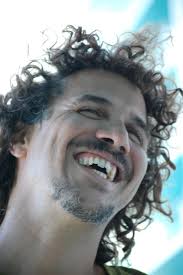
The audacity of the artist consists not only in the fact of having expressed publicly the desires of an immense majority of Cubans, without his suggesting he belongs to the opposition sector or is committing a legal transgression — all a flagrant challenge to the authorities on the Island — but in having done it precisely at the Protestdrome, in front of the United States Interest Section, the Castro-anti-imperialist scenario par excellence, and as part of an “activity” called with great fanfare by the official media, at which supposedly the entire cast should respond with absolute fidelity to the directives of the ruling elite.
And of course, for Robertico Carcassés it wasn’t opportunistic. Quite the contrary, it was marvelously opportune. So much so that — regardless of whether at some future mediated by the figureheads of the regime, making use of their usual resources of ideological conviction, they get him to publicly take back his (our) truths — as great as temples; and they were said. What’s more, it’s the first time that so much contained hope and so many desires shared by millions of Cubans were spoken live and so clearly on an official stage. And this is the most dangerous for the owners of Edmundo Garcia. If the opposition had had the microphone, it could not have done better.
Because, and here is what should be a lesson to us all, nothing is as powerful and effective as simply and plainly expressing the hopes of an entire nation, not from fiery patriotic discourse or from sectors of the opposition — as demonized and feared by the government as they are little known by society — without infringing upon the rights of those attending, but rather from the courage and shame of an individual not subject to ideological compromises. That is honesty, the exact opposite of opportunism. We need many Robertico Carcassés in Cuba, with or without microphones.
For a few brief minutes, this artist demonstrated, perhaps unintentionally, that the streets, the plazas, the platforms and the microphones do not belong to the “Revolutionaries,” but to all Cubans. For that alone his audacity had value, it was really worth it. Blessed be his way to taking advantage of the opportunity! For the gift of those moments of public freedom practiced from the official media we should thank the young Carcasses, with all our hearts.
From Cubanet
24 September 2013
Freedom / Luzbely Escobar
What Robertico Carcasses did at the Anti-Imperialistic Bandstand was an act of freedom and so can’t be looked at from a moral point of view. Some say that the cause for which the concert was called is “sacred” and consider his act one of “stupidity” but I believe that in Cuba there is not one cause more sacred than other. What Robertico said is a feeling shared by many Cubans and that is what this is not a contradiction with the initial cause.
It’s certain that for this act of freedom, by definition he had to make decisions ahead of time because this type of demonstration is always preceded by prior break from self-censorship, a leap over the invisible obstacles that normally obstruct our most sincere expression but once this frontier is crossed the most absolute freedom is what guides us. In other places, where there is no need to cross those obstacles, this freedom doesn’t take place and the person is simply starring in a reality absent obstacles to his expression.
In Cuban a good does of courage is always needed for these types of actions. That’s why Robertico later earned the respect of many on his Facebook page. Those who want to manipulate what happened that day — an authentic and happy improvisation by Robertico’s group, Interactive — are victims of the obstacles to free expression, they are forming a part of the fence against the freedom inherent in man, at every artistic event.
20 September 2013
Alejandro Armengol Remembers Oscar Espinosa Chepe
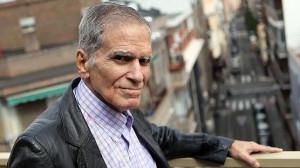 Two qualities, among others, were always prominent in the articles by Chepe that appeared regularly both in Cubaencuentro as well as other publications like El Nuevo Herald.
One of them is that he could achieve the delicate balance that allowed him to present a balanced article or analysis while making clear his point of view. To this end he would always base his writing on data and reflections free of bombastic criteria, the usual demagoguery and opportunism.
The other quality was the use of data supplied by the Cuban government itself, supported by other from international organizations, to support his analyses. That way he never conceded to the convenient argument that all information from the island is false; an argument that may have some truth to it, but that also brings an easy and complacent negativism among certain groups of exiles. It is not that Chepe believed all that the regime said, on the contrary, he knew what to question and how. In that sense, he and professor Mesa Lago have set the precedent, and have valuable information where others refused to look.
Personally, and during the time in which I had the pleasure of editing his works for Cubaencuentro, aside from an honor, it was always a pleasure to have such a precise intellectual, both in the numbers he offered as well as his composition and spelling, all of this done with absolute humility. He was what be said easily, but that is almost impossible to find: an example.
Alejandro Armengol. Journalist. Editor in Chief for Cubaencuentro.
Translated by Ernesto Ariel Suarez
From Cubaencuentro
24 September 2013
The Fault Always Lies With the People, or the United States / Martha Beatriz Roque Cabello
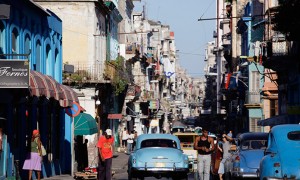 LA HAVANA, Cuba, September, www.cubanet.org — A new program recently started on television at the end of the newscast at 8 pm. It is named “Cuba says” and is listed as an investigative journalism program. There have been four broadcasts, Tuesdays and Fridays, with the objective of “criticizing” bad deeds.
On two of the broadcasts they addressed problems relating to construction, and the others talked about health care and transport. But even if they approach social and economic problems, which show the existing apathy and corruption, in short, the blame always likes with the people, for their lack of discipline; or the United States for the “blockade”; or with some other entity other than the regime with its inefficiencies.
The functionaries who have to respond to the journalists, look insecure. Evidently they are under the pressure of those who at any cost don’t want to leave the viewers with the impression that the problems are the fault of the government. One example: the Director of Transportation explained that the problem of lack of buses was centered on the broken equipment and the scarcity of spare parts, while the journalist Thalía González pressed him to say there were also organizational problems.
In the end, the public saw the problems they already know reflected on the screen, but without knowing how or when they would be solved.
The last program dealt with housing construction. They reported that up to 2019, they need to build 29,400 units in Santiago de Cuba, since there are 73 slum neighborhoods and more than 10,500 houses in difficult conditions, as well as unhealthy settlements. However, despite the resources they say have been allocated, after Hurricane Sandy (October 2012), they’ve only built 1,542 housing units, and by the end of the year expect to have completed 1,900. At this rate, they won’t build even half of those planned.
On other occasions we have already heard criticisms of this type, and answers that then fade into nothingness. However, we have to recognize that the regime has seen the need to admit that the country is in a sorry state, from all points of view.
Recently, we’ve sensed a tendency to look for help in the self-employed, trying to minimize al he problems brought on the country by centralization and the unified command. However, society, which is eager to solve its problems of economic stagnation, has taken these small apertures very seriously, and currently is swelling the numbers of different types of businesses, so that the regime is grasping at straws, reversing more than a few of their permissions.
In Pinar del Rio they withdrew the right of private sale of clothes, because this market has been strong competition for the State, whose prices are higher and whose customer service is greatly inferior, along with the well-known scams where the customer is the victim.
They could show hundreds of TV programs with critiques and suggestions from the people, but the reality is that none of the issues that they raise are going to be solved until there is an end to the main problem, which generates all the other problems, which is the same regime, which has plunged the country into an acute economic, political and social problem.
By Martha Beatriz Roque Cabello
From Cubanet
September 24, 2013
Oscar Espinosa Chepe Interviewed by Tracey Eaton: Video
From Tracey Eaton on Along the Malecon
Date of Interview: July 13, 2010
Haroldo Dilla Remembers Oscar Espinosa Chepe
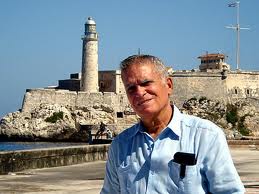 Despite living for so long on an island so small, I never met Oscar Espinosa Chepe in person. It would have been an honor and an opportunity for me, mostly after discovering him in one of his incisive articles for the late magazine Encuentro during a night of insomnia on a plane in route to Madrid.
Since then, I have read him faithfully. And every time, the acumen of the analyst and the consistency of the democrat, but most of all the integrity of the intellectual, have gratified me. Despite spending several years in prison for doing nothing other than thinking well and differently, Chepe never allowed his emotions to overcome his professionalism. And, this makes him one of those intellectual figures called to be enduring. And for that, we will continue reading him for a long time for the good of the prosperous, equitable and democratic that he advocated.
Dr. Haroldo Dilla Alfonso, Sociologist and Historian
Translated by Ernesto Ariel Suarez
From Cubaencuentro
Carmelo Mesa-Lago Remembers Oscar Espinosa Chepe
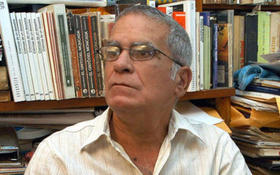 Oscar Espinosa Chepe was one of the best informed and courageous Cuban economists. Despite the difficulties to access the internet, he was always up to date on the regional and local [Economics] organizations’ publications; and his works were always well documented and objective.
His criticism was based on publications and official figures, but he also criticized the US embargo as an instrument that had failed to end the [political] system while being used as a scapegoat for all its economic failures.
To me, Chepe was always a source of inspiration, his articles are abundantly quoted in my own publications, and I had the honor of writing the foreword for two of his books.
When he came out of prison in Cuba, due to the bad state of his health’s, I was able to get two dozen prestigious economists from around the world to sign a letter to the Head of Government of Spain requesting his exit [from Cuba], but in the end he decided to continue writing in Cuba. He offered his life and his health for Cuba.
We met in person in Havana in 2010, and the tiny and modest apartment that he and Miriam inhabited surprised me; filled with books, magazines and papers, almost leaving no space for daily living.
He was a humble man, frugal and amiable, who loved his fatherland very much. I was able to see him in Madrid this past June and he was staying with Miriam in a tiny room of a hostel. Although already very sick, he attended the presentation of my book at Casa de América and I publicly paid him my last homage. We are going to miss him very much.
Carmelo Mesa-Lago, Professor Emeritus of Economics and Latin American Studies, University of Pittsburgh.
Translated by Ernesto Ariel Suarez
From Cubaencuentro
24 September 2013
The Morality of the Survivor / Dimas Castellanos
At an extended meeting of the Council of Ministers held last Friday, May 13, the head of Foreign Commerce and Overseas Investments reported finding irregularities in business operations involving foreign capital and international contracts. Likewise, the minister of Finance and Planning spoke of irregularities and evidence of criminal activity related to fuel sales. Meanwhile, the Comptroller General of the Republic acknowledged that, though recent audits have shown the situation is improving, serious problems and vulnerabilities persist.
Any objective analysis of this issue must begin by banishing euphemisms that just serve to sugarcoat reality. It is not an issue of irregularities but of marked ethical deterioration, of corruption, that while it did not begin in 1959, it was only after that date that it moved from the arena of political administration to all aspects of society, becoming not only part of the culture but an impediment to the government’s own efforts. This phenomenon which began with the economy and later seeped into Cubans’ spiritual consciousness is one of the factors pointing to the structural nature of the current crisis and the failure of attempts to overcome it through limited changes to the economy.
Among the factors contributing to this situation were the disappearance of tens of thousands of business owners and their replacement by “bosses,”[1] making absolute the “property of all the people,” and inadequate salaries and pensions, a combination of noxious factors that has led to theft, bribes and deceit in order to survive. It happens this way because morality is an amalgam of socially accepted standards of conduct which evolve in response to changes in goals, interests and social conditions; therefore, survival has become part of our morality stemming from the profound structural crisis in which we find ourselves.
The changes being implemented in Cuba under the title of Political, Economic and Social Guidelines of the Communist Party are stymied by the worst decline in moral conduct ever seen in our history. The struggle to survive, which stems from multiple frustrations, has led to apathy, hopelessness and escapism as reflected in a morality that employs various forms of patriotic vocabulary. The struggle now is not about abolishing slavery, achieving independence or overthrowing tyranny; it is simply about surviving. Nor is it a matter of “Freedom or Death” or “Fatherland or Death” but rather “Life or Death,” the slogan of the survivor.
The explanation for all this is that the primary moral and human imperative is the preservation of life. When social conditions preclude any hope of fulfillment, people are left with only two options: to renounce life or to survive. This is why Cubans, faced with inadequate salaries, turned to illegal activities; faced with the impossibility of being entrepreneurs, to the “Estaticular[2]” way, in other words, expenses for the State and dividends for the individual[3]; faced with shortages, to theft from the State whose property actually belongs to “all the people.” To the absence of opportunity, they respond by escaping into exile. To ideological entreaties, they respond with apathy. Certain verbs — to escape, to struggle, to resolve — have come to mean acquiring that vital “something extra,” in other words, to survive.
Faced with this obstinate reality, the State’s only option is repression: more police, more surveillance, more restrictions, and inspectors — actions which only address the symptoms without taking into account their causes, among which was the turn toward totalitarianism, that erased the citizen from the Cuban political scene. But what is most striking, as we can see from the examples below, is the stubborn focus on effects and the disregard for causality.
On May 22, 2001 the newspaper Juventud Rebelde published an article, “The Hunter of Deceptions” about a popular inspector in charge of rooting out instances of fraud in the quality, weight, price and sale of unauthorized goods in State stores. According to this inspector, when a violator was presented with evidence of his crime, customers became upset and actually came to the the man’s defense. In other words the victims stood up for their victimizer, demonstrable proof that the morality of the survivor enjoys popular acceptance.
On Saturday, November 28, 2003 Granma published “Price Violations and the Never-Ending Battle.” In it an official with the Ministry of Finance’s Office of Price Supervision reported that in the first eight months of this year there were irregularities found in 36% of the establishments inspected. In the case of farmers’ markets, festivals, outdoor food stalls and other points of sale for produce, the figure was 47%. In the food-service sector it was over 50%.
Granma reported that on Saturday, December 24, 2005, in an address to the National Assembly of People’s Power, Pedro Ross — then Secretary General of the Workers’ Central Union of Cuba (CTC) — said, “There are workers who respond but there are others who don’t and who continue to justify theft and other wrongful conduct.”
On February 16, 2007 Granma reported in the article “Cannibals on the Towers” on the theft of the metal braces that support the transmission towers for high voltage electricity. In 2004, 1,648 pieces of bracing disappeared from a 220,000 volt power grid and 545 from a 100,000 volt grid. In 2005, 532 and 544, respectively, were stolen from these two power grids. In 2006 — after stepping up surveillance, applying technical solutions and imposing sanctions — 267 and 1827 disappeared. There was a decrease in thefts from the 200,000 volt network only because screws and bracing up to a six-meter height were welded together, but the tenacious “fighters” climbed higher. Similarly, electrical transmission cables were stolen from the power grid for their aluminum and copper.
On Friday, October 26, 2010, Granma published an article called “The Price of Indolence” which reported that in the Villa Clara’s municipality of Corralillo 300 homes were built using stolen materials and resources. Some 9,631 meters of roadway material had been used in 240 of the inspected homes; 82% of them had train tracks taken from the Ministry of Sugar, disrupting 25 kilometers of rail lines; and 59 pieces of steel bracing from high-voltage electrical towers were used.
Even more recently, February 19 and 26, 2012, Juventud Rebelde, published an article containing an interview of the Comptroller of the Republic where she said: “According to our findings, the causes of corruption range from the fact of not having contracts overseen because the person who was supposed to do it didn’t do it, and the person that had to ensure they had reviewed it didn’t review it, or didn’t review it properly.
To that you have to add the constant pocketing of resources, the endless legal processes even to to the level of high ranking officials.
What the newspapers (i.e. Granma, Juventud Rebelde) have failed to show from the journalistic point of view, is the relationship that exists between, on the one side, corruption, and on the other the absolute State ownership of resources, the low salaries and the impossibility to be entrepreneurs. If they had addressed this, they would have shown the uselessness of repression if is not accompanied by measures that tackle the causes, because the police, the informers, the simple inspectors, integral inspectors or the inspector of the inspectors are all Cubans with the same needs as the rest of the population and thus they practice the same prevailing morality.
To change the course of the events, the economic changes will have to be extended to the rest of the social spheres, even if quite late; which means that they will have to look again to the civil liberties without which the formation and predominance of the civil morality required by the present and the future of Cuba will be impossible.
Farewell to the Cienfuegan in Love / Aleaga Pesant
HAVANA, Cuba , September 2013, www.cubanet.org.- He was the most in love Cienfuegan I knew. He was called Oscar Manual Espinosa Chepe, although to most of the people who knew him he was simply “Chepe.” His Dulcinea, Miriam Leiva, was at his side over the last thirty years with a loyalty tested in the harsh conditions imposed by the Cuban dictatorship. Both were driven from their important positions, and later Chepe was condemned to twenty years in prison during the Black Spring.
I met him when he was in his sixties. He was already an accomplished economist. Friend of the truth, he had a small space on Radio Martí to talk about the island’s economy. He was published in Cubanet, Cartes de Cuba, Disidente and CubaEncuentro. He had written a couple of books, and his opinions and judgments were listened to by all analysts of the Antillean situation.
Soft-spoken, like an asthmatic, and unstoppable. Each one of his words and reflections vallued in gold. He never interrupted conversations and loved to tell stories of his trip to Yugoslavia as economic attaché to the Cuban embassy in Belgrade.
Born in an educated cradle in the Pearl of the South, his parents, Oscar and Clara, were degreed professionals and had a pharmacy frequented by the “good” people, who knew the quality and reliability of the service, and popular among the common people, because they knew they would find solidarity and help.
With these virtues in the home, he grew up knowing the potential of republican democracy and took advantage of it. Full of courage and patriotic enthusiasm, he joined the 26th of July Movement. For his actions, he was tried in Santa Clara and absolved by this “cordial republic,” that saw no danger in his ungovernability, and by the good offices of the then attorney and Commodore of the Cienfuegos Yacht Club, Osvaldo Dorticós Torrado, who later would become President of the Revolutionary Government.
The “Revolutionary dawn” found him immersed in the tasks of the “process.” Although he had visited Havana from a young age, he decided to settle in the great city due to a proposal from a fellow countryman to work in the recently created Ministry of Foreign Trade (MINCEX, 1961), an entity supposedly created to meet the needs of the Cuban state to assume the management and control of imports and exports. His knowledge and daring made him stand out, but at the same time they reprimanded him and sent him from his work at the Infanta and 23rd building to rough and complicated places, where he was meant to reform himself. It was in one of those places where he contracted an intestinal illness which marked his entire life.
On returning to his offices, after being “Revolutionarily re-educated,” Chepe revised his scale of values. He continued his economic studies and concentrated still more, and from his own perspective and vision, on the analysis of the national economy. For these efforts he was expelled from MINCEX in 1984, as stated in the act of the trial of the 75, and gradually he became a member of the pro-democratic groups and participated in the independent press as an economic analyst who was a reference point for everyone.
Chepe has died in Madrid, far from his beloved homeland. The generation that knew him will remember him forever. Rest in peace.
By Aleaga Pesant – aleagapesant@yahoo.es
From Cubanet
23 September 2013