Testimonies And Evidence Puts The Hitmen In The Dock Of The Accused / Angel Santiesteban

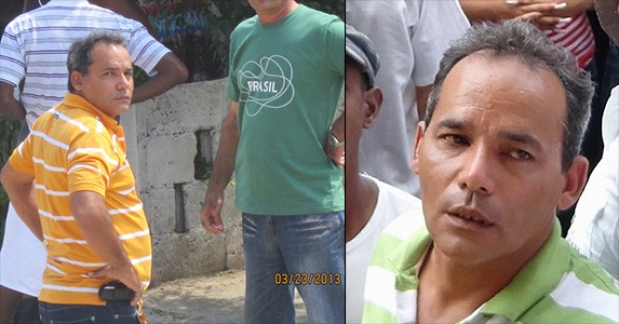
Viewing the videos of the assassins of the regime, especially against the Ladies in White, their constant abuse, cynical laughter and death threats after forceful beatings, we can assure ourselves that they are ruthless beings who do not deserve to be born of a woman. It is so obvious that their feelings belong to mercenaries, who would work with the regime in power to get perks and extra benefits from them.

Testimonies of Jews who survived the concentration camps tell us that other Jews collaborated with the soldiers, although they knew that those whose clothes they collected would be taken to the gas chambers, but they did it to survive, they stayed there or went to join the ranks of those sentenced.

Those who collaborate with the Cuban dictatorship, like all minions, lack feelings and ideology. Unequivocally, these officers of the dictatorship, will be thugs under the command of the Mafia, or the highest bidder to buy their criminal services. They have signed on so that they can avoid their criminal actions and from now on, and save lives

If we’re still alive by then, with our testimonies, we can put them in the dock of the accused and they will pay once and for all for their abuses and crimes. Patience, there is increasingly less time for the Arab seated on the door of his cabin waiting to see the corpse of his enemy pass by.

We don’t want too much, we will be satisfied at the trial with their fake shame and repentance, another strategy to elude justice, and apply international law for their crimes.

When that hope is met, there will be the announcement of a Cuba that reorganizes individual rights.

Ángel Santiesteban-Prats

Lawton Prison Settlement. November 2013

Translated by: Shane J. Cassidy

9 December 2013

One Day More, One Day Less / Yoani Sanchez

yoatree11298559784_8187f16d02_z
The tree of rights, hard to grow, easy to cut down #DDHHCuba

“Repetition is the mother of learning,” an old professor of Military Preparation in my high school used to say. He wasn’t, however, referring to the repetition of a phrase in order to learn it, or of a particular mathematical operation to memorize it. In fact, he was referring to punishment, the correction which, according to him, should be insistent to generate respect. So he overwhelmed us with shouts, unnecessary reports and even insults of “slackers” when we didn’t know how to handle a rifle or crawl through the grass. But instead of cementing in us the knowledge he imparted, we all feared and detested him.

This same logic of applying repression over and over again is used by the State Security apparatus every December 10th. On World Human Rights Day we live through 24-hours of clubs and threats. Every year it’s the same thing and a little more, because like all correctives it seeks to paralyze its victims. Arrests, besieged homes and threats delivered ahead of time to the members of the different civic movements are all part of this “ritual of terror.” They’ve also added cutting off cellphone service — with the complicity of the Cubacel company — and sending apocryphal messages to sow confusion among activists.

But the repeated penance isn’t working. The numbers of those who engage in some demonstration for Human Rights are increasing, not declining. The old pedagogy of beatings no longer serves as an example, but rather fans the reasons to speak out. On the other hand, there are people who don’t belong to any critical organization or to any dissident group who are witnessing and taking note of these repressive waves. Witnesses of the moment when some Ladies in White are forced into cars or when an independent journalist’s camera is taken from her. After seeing something like this, you can no longer say you didn’t know, you will no longer be the same.

The repetition of repression only stirs up nonconformity, it doesn’t dampen it. Insistent beatings don’t teach us… because the lesson of meekness is not one we want to learn.

10 December 2013

Antonio Rodiles’ House Besieged at Dawn / Augusto Cesar San Martin, Camilo Ernesto Olivera

policias1HAVANA, Cuba  December 10, 2013, Augusto César San Martín / www.cubanet.org.- The home of Antonio Rodiles, leader of the independent group Estado de Sats, which from today through tomorrow is celebrating the First International Conference on Human Rights, was besieged by the police and plainclothes agents as the sun rose this morning. Third Street, from the Copacabana Hotel, is closed.

Around nine o’clock in the morning, this reporter was able to see a strong force deployed with the purposed of blocking political opponents, both from within the island as well as those who have managed to come from abroad, from participating in the day.

The director of Estado de Sats and the For Another Cuba campaign has said that this is the first attempt to organize an event of this kind, in which the topic of ratification of the UN covenants on human rights, signed by the Cuban government, will be addressed.

This reporter, in a taxi, tried in vain to reach the house, located in the Miramar neighborhood. The car was diverted. From 3rd and 42nd Streets the police are directing traffic. There are agents on the corners, with civilian staff. State Security cars and minibuses are located at the intersections.

The front of Rodiles’ house is deserted because 1st Street is closed. Cars coming from the Copacabana Hotel are diverted.

The Social/Labor Circle adjacent to Rodiles’ house has speakers playing the music of regime supporter Silvio Rodriguez very loudly.  The audio can be heard from 3rd Street.

The few participants who were able to reach the house days earlier have not been able to leave to avoid being arrested. Among them is the troubadour Boris Larramendi, from the Cuban group Habana Abierta (Open Havana), based in Spain.

Larramendi traveled specifically for the meeting and will close the event tomorrow, December 11.

The event from within

HAVANA, Cuba, December 10, 2013, Camilo Ernesto Olivera / www.cubanet.org.- Ultimately, and contrary to expectations, there was no direct police action against the organizer, Antonio Rodiles, who yesterday was accused of a traffic violation that he, in fact, had not committed. The initial session of the First International Conference on Human Rights was held without incident.

The turnout from the public has not been as expected, only twenty participants have managed to arrive, almost none from outside the country. But the foreign media and embassies accredited on the island, such as Spanish Television, have been able to report on the event.

The first panel, led by researcher Walfrido Lopez, was on human rights and the new media. Lopez presented a video on media from abroad which follow Cuba with interviews with directors and newspaper editors

Coming up is a panel on human rights in Latin America, and the another on institutional violence against women in Cuba.

There will also be an exhibition of posters of the event and for tomorrow a concert with Boris Larramendi troubadour, who came from Madrid.

As interference, the government, through State Security and its mass organizations, has mounted a kind of Street Plan in front of Rodiles’ house. They have staged a party with music and snacks for neighborhood children, who did not attend classes today, to justify closing the street to traffic.

Also, the social / labor circle known as La Copa (The Cup), located on 1st and 42nd Streets is being used as the command post by the political police.

Since early morning they have been playing the songs of troubadours who support the government, Silvio Rodriguez and the duo Buena Fe.

The operation recalls the era of General Abrantes, the Interior Minister in charge of acts of repudiation against citizens trying to leave the country. The siege techniques are the same except that no one is throwing eggs.

10 December 2013

Malmierca or Death: We Will Overcome! / Orlando Luis Pardo Lazo

A Cuban Minister announces that Castroism will reign in perpetuity.

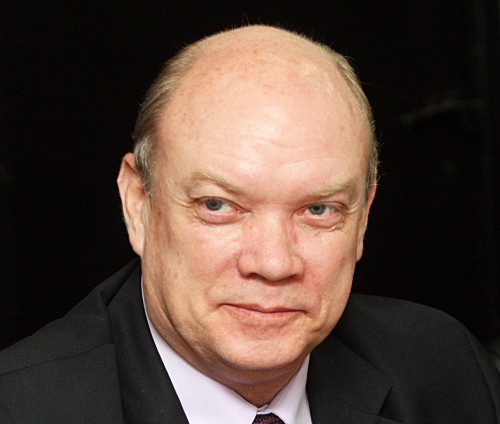
Rodrigo Malmierca Díaz

Rodrigo Malmierca Díaz, Cuban Minister of Foreign Trade and Investment. Photo: Ministério da Saúde via Flickr.

When the Cuban government acts with complete impunity and without transparency, it could be useful to know what destiny our leaders have in store for us millions of Cubans. Well, now at least we have one political certainty…

On November 22 Rodrigo Malmierca, Cuba’s Minister of Foreign Trade and Investment, declared that, on the island, there would never be elections involving parties other than the Cuban Communists. That is to say, the Castroist regime has quite serious plans to hold onto power beyond the deaths of the Castro brothers, who are already in their eighties.

As Malmierca made this announcement in Rio de Janeiro, at a seminar intended to encourage Brazilian investment in Cuba, he clarified the fact that even though the Cuban system is the polar opposite of Western democracy, such ideological differences would not stand in the way of commercial links between the island and the free world.

The name of the game is to put a form of state capitalism in place: There will be economic reforms, but they will hold the basic rights of the Cuban people for ransom—people who have gone decades without fairly electing their representatives, and who cannot form allegiances or opinions without persecution.

It’s odd that the minister feels no remorse in announcing this death sentence for Cuba’s peaceful pro-democracy movement. It’s a disheartening message for the social democrats, the Christian democrats, the republicans, the liberals, the ecologists, the anarchists, the socialists, and many other denominations of Cuban dissidence.

If the legal route to a multiparty system is closed, what should Castro’s opponents do now? Conform and stay silent? Leave Cuba? Perhaps some kind of armed resistance? In all options, Castroism—which began with violence and longs to conclude with violence—comes out the winner.

Let’s hope that Malmierca is stripped of his high office as soon as he steps foot in Havana again. Let’s also hope that his despotism was just the poisoned apple of his own imagination. There are some policies so horrendous that it’s almost better not to know about them in advance.

From Sampsonia Way Magazine

10 December 2013
The Henchman Camilo Is Leading the Repression Against Human Rights Day

The State Security henchman known as "Agent Camilo"
The State Security henchman known as “Agent Camilo”

State Security showed up at home of Antonio Rodiles, leader of Estado de SATS, and tried to arrest him to avoid the celebration of the events for Human Rights Day.

[Tuesday] the First International Event For the UN Covenants will begin, organized by Estado de SATS, an event that forms a part of the of the For Another Cuba Campaign, and includes panels, audiovisuals, an exposition titles “Art and Human Rights,” performances and a closing concert.

The agents tried to handcuff him and take him to the police station, supposedly for violating traffic laws. The event participants confronted the uniformed offices to block the arrest.

Rodiles had gone to pick up a collaborator. On the way there he saw Agent Camilo, known for the cruelty of his methods against the opposition, who ordered the police to arrest him.

The police left the dissident’s house, apparently to get an arrest warrant.

From Diario de Cuba, 9 December 2013
(My) Declaration of Human Rights / Regina Coyula

Piranesi etching of an imagined prison.

Lately the mass media talks a lot about “the Human Rights we defend.” The topic is no longer taboo, with limited coverage of health, education and social security. Very few Cubans know the Universal Declaration of Human Rights, despite that fact that putting it in a tabloid would cost a peso, but no one has dared to publish it. University students don’t know what it’s all about, the whole body of it seems like a venereal disease that no one dares to mention.

For the first time I am aware that to honor the date on which the Universal Declaration of Human Rights was enacted can be risky. The visit from “the comrades” and “the factors” last week opened a parenthesis of threats that can range from instilling fear to physical action. I do not know what will happen tomorrow and I would like that nothing happens, but any action against peaceful people who want a thriving and diverse country, would confirm the need to expose once again a government that says it champions the Human Rights “it defends” while ignoring those it disrespects.

In the imaginations of much of the world, Cuba remains an alternative where altruistic citizens build the social project of the future. Cubans in reaction, for so many years, have constructed a Piranesian project. We are suspicious and it has brought out the worse in us, stirring up rich vs. poor, homosexuals vs. heterosexuals, religious vs. atheists, exiles vs. those on the island.

It would seem these differences are surmountable, but since the government continues to instigate the “good citizens” against the dissidents, and meanwhile the dissidence and different concepts of freedom are criminalized, it remains an unfinished task.

Because it has the means, the government can ban meetings and even imprison activists. But new faces will continue to appear, because the objective conditions exist and in the sleep society there is a secret will for change. A quick look at those who enter the visa lottery, to go to the United States, those who have abandoned and continue to abandon the national territory in all directions — including those who have lost their lives in the attempt — the women who put off giving birth and the couples who barely conceive one child; those who vote blank ballots or annul their ballots or don’t vote at all, those who daily steal from the State by action of omission. People without confidence in the successive promises. It is an enormous subjective figure. Subjective, but as weighty as a plebiscite.

State Security possess all the information about the internal situation, how it’s analyzed and what patterns it shows remain to be seen. Tomorrow we will have a preview.

9 December 2013
Bastion 2013, A Little Game in a Make-Believe War / Jorge Olivera Castillo

HAVANA, Cuba, December, www.cubanet.org — The Bastion 2013 Strategic Exercises recently concluded with the so-called National Days of Defense. Headlines such as “The Heart of the Country Is Invulnerable,” “The Enemy Will Have No Peace,” “An Unbreakable Coastline” and others equally ridiculous could be read in the November 25 edition of the weekly Trabajadores.

They have once again taken the military paraphernalia out of storage to inflict an imaginary defeat on the enemy, which occasionally lands in the country with its phantom divisions.

As well as being something outside the bounds of common sense, fabricating external aggression at this point is increasingly useless. There have been so many combat preparations and invasion warnings that have proved pointless that almost no Cuban believes in the demagoguery that sustains them anymore.

Indifference and mockery are the routine reactions to these expenditures of human and material resources, which are not even successful at diverting attention from the serious social and economic problems that affect a wide segment of the population.

“They are shameless. Instead of investing money in important things, they waste it knowing full well that we will never see American troops in Cuba. It is a cliche they use for the sake of convenience. Essentially, it stems from a need to present an image of unity and strength. They know that the probability of a military confrontation between the two countries is very low, practically impossible,” says a former military official.

Very few citizens spend time on this sort of news. The most widely read items in the official press continue to be the television schedule and the sports page.

“I don’t waste my time on this nonsense. We have had enough of this war for subsistence. If the Americans ever come, I would be happy if they brought food and other stuff. With that they would win two out of three. The country is already in ruins, even without a missile having been fired from overseas,” says a retiree living in the capital.

After a series of virtual military battles throughout the country, Cubans are still confronting challenges brought on by difficult circumstances. Dealing with the bureaucracy, finding their way through the maze of the black market and struggling with high prices for essential consumer goods are some of their primary concerns. According to the vox popoli, however, efforts to keep us mired in poverty will be even more intense in 2014.

There is no shortage of reasons for such assumptions. The just completed Bastion 2013 is a bagatelle, a children’s game compared to the battles we have to face every day in the farmers’ market, with their heart-rending prices, or in the hard-currency stores, which are fully capable of destroying anyone’s patience.

oliverajorge75@yahoo.com

Cubanet, 2 December 2013
She Can’t Return to Cuba: She’s on the Blacklist / Lilianne Ruiz

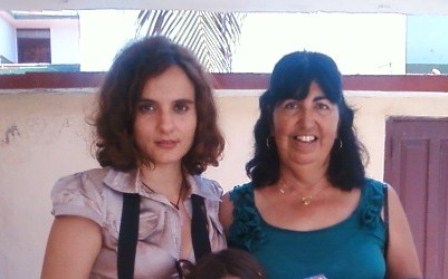
HAVANA, Cuba, December 2013, www.cubanet.org. – Guadalupe Bustos left Houston, Texas on November 27, enthusiastic about her upcoming trip to Cuba. But she didn’t know that she is on the “black list,” delivered to the Miami airport authorities by the Cuban Immigration Office, with the names of Cubans who are forbidden, for political reasons, from returning to their country.

Lupe, as she is known to friends and family, traveled by car from Houston to Miami. She was loaded down with gifts for her family and many friends in Cuba. Some are human rights activists and political dissidents. But she also has brothers and nephews waiting for her. One of her brothers is recovering from a complicated operation and, because of his advanced age, Lupe’s first priority was to visit him.

She arrived in Miami on the 28th. She could barely sleep that night, thinking about everything that she would be doing within a few hours. Early the next day she left for the airport. Upon arriving she presented all her papers in proper order: her U.S. passport, Cuban passport, and return ticket. At the airport they gave her the well-known “Cuban entry card” for her to fill out later, on the plane.

She still had her papers in hand when an airport official hurriedly approached, asking the employee at the window to point out the one named Lupe. Upon being told he said:

“No, stop her luggage. Cuban Immigration just called; they said that she is denied entry for failure to comply with ’immigration requirements’.”

In an email interview Lupe said:

Lilianne Ruiz (l) with Guadalupe Bustos

“I was floored. I talked to the man and he put me on the phone with the head of Cuba flights, who had received the call, and I told him I needed them to explain to me which ’requirements’ I did not meet, and if this were true, then why they had not advised the travel agency and stopped me from buying the ticket, something that the agency itself says that it can’t explain, because when a person does not have permission to enter they must communicate this before the passage is booked.”

The Cuban immigration authorities did not respond to any of the emails sent by Lupe:

“The Cuban government has prevented me from entering my country, my homeland, without any basis, without setting out a single argument against me, as the law requires.”

And she points out:

“They are a disgrace to the world, acting like this to protect their policy of totalitarianism, of opposing all desire for change, for freedom, for improving our people. But I also believe that they are not the owners of a land, and of a history of emancipation that dates back many years. They are not the owners of the children of Cuba nor their dreams of freedom.”

For years Lupe has maintained her solidarity with the Cuban democratic movement. She is the mother of Ernesto Hernández Bustos, editor of the Cuban-affairs blog Penúltimos Días.

The government ban to keep her out of the country coincides with the approach of December 10. Historically that day in Cuba has been characterized by an increase in arbitrary arrests carried out by the political police in order to prevent the celebration of World Human Rights Day, and to impede the emerging civil society.

Lilianne Ruiz

Cubanet, December 8, 2013

Translated by: Tomás A.

Letter from Antonio G. Rodiles to Raul Castro / Antonio Rodiles

antoniorodiles-e1386618774168Letter from Antonio G. Rodiles to Raul Castro

Havana, December 6, 2013

Mr. Raúl Castro Ruz,

My name is Antonio Enrique González-Rodiles Fernández, Cuban citizen, resident of Ave 1ra. Number 4606 in the municipality of Playa, Havana. I studied physics at the University of Havana and later earned the titles of PhD Candidate in Physics and Masters in Mathematics from the National Autonomous University of Mexico and Florida State University, respectively. After 12 years living outside my country, I decided to return with the idea of being part of a process of change that will help us out of the disastrous situation in which we live.

In the summer of 2010, as a result of these concerns and with a group of friends, artists, intellectuals, activists, Estado de SATS was developed, a civic and cultural project that proposes through art and thought a public space for free debate of ideas and views about our nation.

The project has been carried out in my own home for three years, given the impossibility and refusal of the authorities to accommodate it in a public space or institution. Since its inception, dramatic police operations around my house, accompanied by beatings and arbitrary arrests against the attendees, have been a constant.

My family and I have received multiple threats and pressure including my being beaten by several State Security agents and detained this November for 19 days for the supposed crime of resistance. The authors of this violation continue to commit the same abuse with impunity.

Last week two of the tires on my car were punctured and a chemical liquid with a terrible stench was poured on the seats, as stated in Complaint number 66804 filed on November 26 at the 5th Station of the People’s Revolutionary Police (PNR) in the municipality of Playa.

Just two days ago urine was thrown on the front seats and, to all of this, is added the warnings that we have been sent of possible acts of repudiation to block an event we are going to hold on December 10 and 11, celebrating the 65th anniversary of the Universal Declaration of Human Rights, as part of a campaign asking for the ratification and implementation of the UN Covenants.

This event will have the same characteristics as all those we have developed previously, where a plurality of opinions and full respect for others have been our premises.
The situation we are living in is unsustainable, after 54 years of running the country on whims, violations and abuse, the result screams before our eyes. Every individual who dares to publicly express their disagreements is destined to be treated in a degrading and humiliating way with no possibility of appeal to any authority.

The deplorable acts of repudiation, managed through groups of vigilantes, all the abuses of power and the legal violations committed, keep Cuban citizens in a state of total defenselessness. The great irresponsibility and excessive ambition of those who now govern will lead our nation to an even greater debacle.

With this I mean not only to emphasize the complex situation in which we live, but to make clear my total commitment to the construction of a nation based on respect for the fundamental rights and freedoms of all Cubans. It is impossible to remain indifferent before a power that systematically ignores the dignity of its citizens and its own laws, with total impunity. A power that orders its representatives to act as common criminals.

Those who have the reins of power in their hands also carry the major responsibility for the course of coming events. It is impossible to remain indifferent to the violations and abuse.

6 December 2013

What’s Happening in Ukraine? / Yoani Sanchez

Protests in Kiev, photo from http://www.cadenaser.com/internacional/articulo/oposicion-insta-mantener-presion-presidente-ucrania/csrcsrpor/20131208csrcsrint_7/Tes

The official Cuban media reports, immediately, when the citizens of the world’s imperfect democracies take to the streets. In these cases the words “injustice,” “capitalism” and “exploitation” are used by the court’s newscasters to explain the whys of such social protests. Something very different occurs if the protestors rise up against an authoritarian regime, or against a government “friendly” to the Plaza of the Revolution. In that case, the informative script is peppered with qualifiers such as “mercenaries,” “financed from abroad”…”insurgents” or the “so-called rebels.” The people are not people everywhere… this hemiplegic analysis seems to want to tell us.

Occasionally, however, something doesn’t fit within the strict patterns of our national press. This week with the events in Ukraine, for example, the Communist Party’s political news reports have seemed disoriented. Verbal malapropisms, caution and even actual stuttering, have been heard on TV from the mouths of those reporters who are most combative when addressing other topics. Why is what happened in the former Soviet republic so upsetting to them?

In the first place, because with Russia, the USSR’s old information pact of never questioning its foreign policy or reporting on its internal problems, has been left behind. Hence the awkwardness of reporting the popular rejection of President Viktor Yanukovich for preferring to approach the Kremlin instead of Brussels. In this scheme designed by the Department of Revolutionary Orientation, the European Union is to be vilified and whatever it does called into question whenever possible. Thus, it is now difficult for the same media to explain why so many Ukrainians are demanding to become a part of this political community.

Given the apparent contradiction, the newscasters choose to play down the news and limit the use of images of the crowded squares in Kiev. Instead, they accompany the reports with several scenes from inside the Kremlin, with the announcers insinuating that some foreign power is behind the revolt. Twenty-four hours after the first note we haven’t heard anything more.

I imagine that many viewers, like me, watching that incoherent sequence, are asking themselves, “What? What’s happening in the Ukraine?” But the official press can’t answer us, because they can’t even fulfill their role of telling us what’s happening in Cuba.

9 December 2013

The Other Raul / Reinaldo Escobar

I was eleven on a day in August 1958 when my neighbor Ermeregildo, with tears in his eyes, received his son Jorgito who had arrived covered with bruises after a torture session at the police station in Camagüey. The father of that young man, who was a member of the 26th of July Movement, was a Batista supporter and never stopped saying, between sobs, “The General has to know what barbarities are going on here.”

The general who rules us today has many Ermeregildos who think that he, also, is not aware of certain atrocities, especially with regards to acts of corruption and disrespect for human rights. They assert he is pragmatic and attribute to him a deep paternal feeling for his children and grandchildren; they say his abrupt outbursts are due to so many years surrounded by soldiers; they assert that he prefers to work in a team and even plays the piano very well.

The fault, the grievous fault for the problems of Cuba, cannot be carried by a single person, nor even by the small group of octogenarians who survive at the helm of power under the epithet “the historic generation of the Revolution.” But blame is one thing and responsibility is another.

Those who seek to monopolize the glory of what they exhibit as achievements, should take the responsibility for what only deserves to be called failures.

If there is another Raul I haven’t had the opportunity to meet him. The one I have news of is a man who was looking the other way when his brother committed the errors he now seeks to rectify. The one I know is the one who orders arbitrary arrests and beating, the one who obstinately resists bringing reform to the political camp, the one who proclaims a war without quarter against secrecy and then issues circulars prohibiting the publication of this or that issue.

Ermeregildo declared to me that the general is not to blame. Right now he is writing him a letter to let him know what’s going on.

9 December 2013