“A country cannot live at the expense of charitable donations, which are appreciated, but do not solve daily problems or foster development,” writes Elsa Ramos in ‘Escambray’
 14ymedio, Madrid, July 14, 2026 / It is hardly surprising that Elsa Ramos has written the most critical article about the 176 economic reforms announced by the government. The journalist, a multiple recipient of the Juan Gualberto Gómez National Prize, has distinguished herself as one of the most outspoken critics of the regime—from within the system—in the pages of the Sancti Spíritus newspaper Escambray, and her opinion column this Monday is yet another example. The urgent need for change to rebuild the country is a picture painted by the government of the total disaster that everything on the island has become.
Ramos expresses the need to analyze the measures, even though – she begins – “in this scenario of blackouts and disconnections, most people cannot be well informed.” The general panorama is starkly described by the journalist, who mentions how, with “galloping inflation, chronic shortages, no fuel, no transportation, no financing, no access to foreign markets amidst accumulated debt and a blockade more concrete and atrocious than ever due to cuts in fuel supplies and sources of foreign currency income, Cuba cannot continue as it is.”
The question she poses is how all these changes can be implemented while maintaining the socialist model, given that the announcements involve “unprecedented transformations, many of which resemble those of the capitalist model.” Ramos asks why it has taken so long to implement these reforms if they were so necessary to “mitigate the internal gridlock” that has caused so much “damage.” “A country cannot live at the mercy of fuel arriving ship by ship; nor can it depend on charitable donations, which are appreciated but do not solve daily problems or foster development,” she asserts.
Still conscious that violations of the previous regulations were constant, Ramos expresses misgivings about how price liberalization will ultimately end.
The journalist emphasizes the need for a more thorough explanation of the measures that most significantly affect citizens, one of which is the elimination of price caps. While acknowledging the constant violations of the previous regulations, Ramos expresses concerns about how price liberalization will ultimately play out. “We’ll have to see if, as in capitalism, the laws of competition, the laws of capital, don’t swallow us up in a free-for-all, with paltry pensions and salaries, and no purchasing power,” she warns.
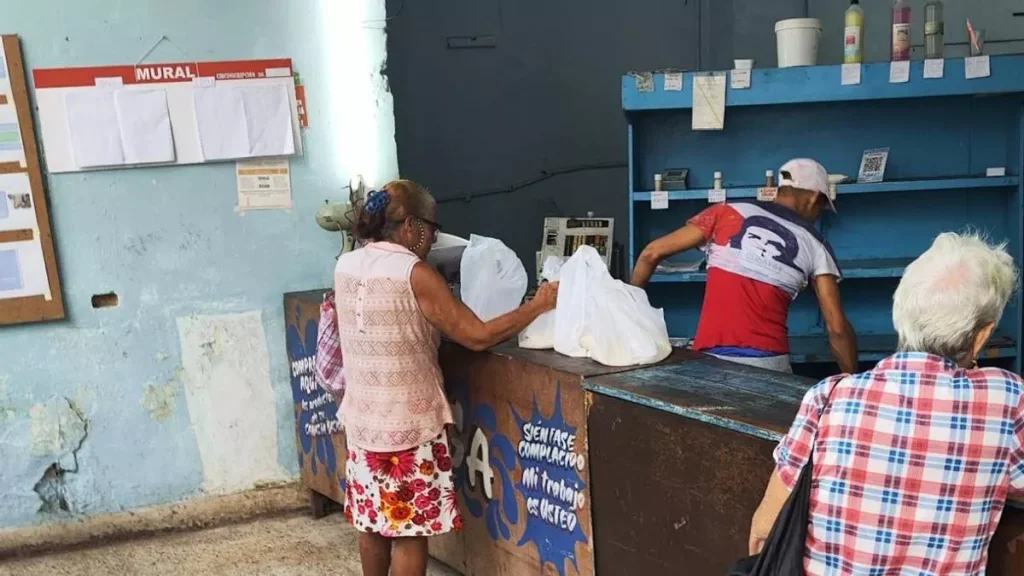
Another key point for the journalist is the much-touted end of the ration book, announced since the beginning of Raúl Castro’s presidency. “In truth, we’ll just be burying it, since it died months ago, when most of its products began to disappear, dwindling to a pound of sugar, a few peas, intermittent bread, and inconsistent milk for children and pregnant women,” she emphasizes.
The journalist reveals a surprising statistic: according to the Ministry of Labor and Social Security, only 0.5% of Sancti Spíritus residents are considered vulnerable. However, she points out, “due to the nature of daily life, the vast majority, including state workers, live or survive in that condition, and now they will have to eat, wash, bathe, and transition from the subsidized food basket to unsubsidized sales in the retail network.”
Ramos also looks at the process of layoffs that will result from the liquidation of unprofitable companies or entities that will have to merge. “Little attention has been paid to the thousands of workers who find themselves in a state of employment limbo, many at home on indefinite leave, since last February,” she points out. Furthermore, she questions how skilled workers can be attracted to food production “in a country where reselling candy is more profitable than working in the fields,” and she criticizes decades of obstacles, which she refers to as “the bureaucracy and stubbornness that swallowed up thousands of hectares,” which have finally led “to the logical point of granting the real right of usufruct.”
Regarding how foreign investment is to be attracted, the journalist also doubts how it can be achieved “with our history of prohibitions, in a stagnant country, without foreign currency and with obstacles to withdrawing it from banks, in addition to the sanctions imposed by the United States.” And, in that context, Elsa Ramos raises the issue of the contribution of emigrants with unprecedented frankness. “Cuba does need, however, a multinational dialogue between those who left and those who stayed, without bitterness or resentment, and — without ignoring the past — we must, with our hearts on our sleeves, have the courage to forget and forgive. Because if we open the economic doors to everyone without exception, it is because we need them, and urgently.”
“Are we mentally prepared to see the resurgence of landowners, even if it’s in a socialist style? (…) Will we avoid the so-called Russian mistake of the 90s, when many oligarchs were former leaders in various sectors?”
The string of questions continues: “Are we mentally prepared to see the resurgence of landowners, even if it’s in a socialist style? (…) Will we avoid the so-called Russian mistake of the 1990s, when many oligarchs were former leaders in various sectors? How do we stop corruption? Will we fully address the deep gaps between rich and poor and the increasingly inverted social pyramid?” And she alternates with sharp barbs: “Did we have to wait so long to remove the intermediation of importers who (…) have filled a natural process in many countries with obstacles and deviations?”
Ramos welcomes any measure that eliminates absurd prohibitions, but urges close attention to how they are implemented and how they function. “We will have to face the risks and dangers, with the socialist lens that still defines the project in this endeavor to not relinquish the preservation of the Revolution’s main achievements, now crumbling,” he says, acknowledging the erosion of the accomplishments of that era.
She warns, towards the end, that much patience will be needed and that “many of our leaders are not prepared (…) they tend to see the ‘enemy’ everywhere they look or entrepreneurship as a capitalist evil.” But we must be aware that “so many years of anguish, precariousness, and inaction have fueled apathy, and that (…) is as damaging as the pot-banging protests or banging of pots and pans in various parts of the country, which express social discontent.”
______________________
COLLABORATE WITH OUR WORK: The 14ymedio team is committed to practicing serious journalism that reflects Cuba’s reality in all its depth. Thank you for joining us on this long journey. We invite you to continue supporting us by becoming a member of 14ymedio now. Together we can continue transforming journalism in Cuba.