Inflation has turned the most anticipated fruit of the summer into a luxury, unattainable for many Cuban families.
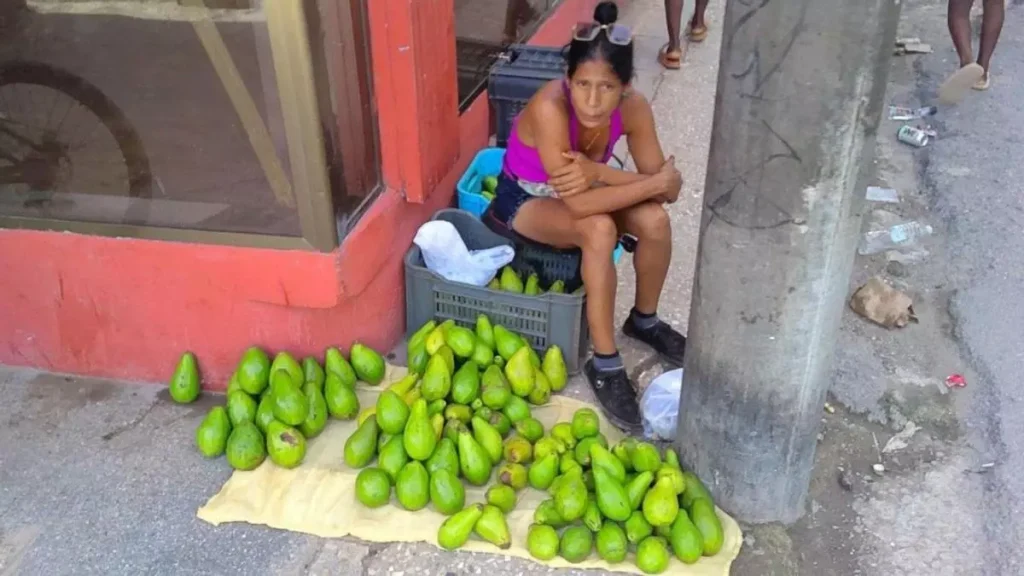
 14ymedio, Havana, Natalia López Moya, July 13, 2026 / The woman watches customers pass by from a plastic crate placed on a corner of Lealtad Street in Central Havana. At her feet, spread out on a piece of cloth on the sidewalk, dozens of avocados display that intense green that for generations heralded summer in Cuba. Just a few years ago, simply arranging the produce would have been enough to attract a small group of buyers. This Monday, however, many more glance over and continue on their way.
Only one elderly woman dares to ask. “How much are they?” The answer comes without hesitation. “There are 200s and 300s. I have some that are ready today,” the vendor says.
The woman barely finishes her sentence when the potential customer’s eyes widen in surprise. She thanks her for the information and continues walking. She doesn’t even try to haggle. The price has transformed the fruit that for decades was a staple of lunch for the poorest families ,into a luxury few can afford. Today, depending on the size, quality, and where it’s purchased, a single avocado can cost up to 600 pesos.
The lack of agricultural incentives, the deterioration of transportation, and the absence of organized production have turned an everyday food into yet another symbol of national impoverishment.
For a long time, simply cutting one in half was enough to complete a plate of white rice, beans, and, with luck, a fried egg. In many Cuban homes, the avocado filled the void left by the absence of meat, provided fat, satisfied hunger, and transformed a modest meal into a decent lunch. It was the perfect ally during the summer months, when the trees in yards and farms seemed to give away their fruit.
But inflation eventually caught up with the green king too.
Rising transportation costs, fuel shortages, and the general increase in food prices have driven up the price of a fruit that until recently seemed immune to market forces. Just two years ago, a good-sized specimen could be found for half of what it costs now, and at the end of the season, vendors were practically giving them away to avoid losses. Today, not even the abundance typical of these months has managed to stem the price surge.
The contrast is striking in a country where avocados were never an unusual crop. They grow in private backyards, small farms, and rural areas all over the island. However, the lack of agricultural incentives, the deterioration of transportation, and the absence of organized production have transformed a staple food into yet another symbol of national impoverishment. Like so many other Cuban fruits, the avocado is no longer measured by its seasons but rather by its economic impact.
Inflation eventually caught up with the green king too.
While waiting for a determined buyer to appear, the vendor on Lealtad Street rearranges her merchandise. She separates the ripest avocados from the still-green ones, wipes a speck of dirt from one of the fruits with her hand, and sits back down. Dozens of people pass by a short distance away. Some glance down at the avocados, make a quick calculation, and continue on their way.
______________________
COLLABORATE WITH OUR WORK: The 14ymedio team is committed to practicing serious journalism that reflects Cuba’s reality in all its depth. Thank you for joining us on this long journey. We invite you to continue supporting us by becoming a member of 14ymedio now. Together we can continue transforming journalism in Cuba.