The ‘Official Gazette’ publishes a “capitalist” law, but retains “centralized administrative measures” in the name of “social interest”
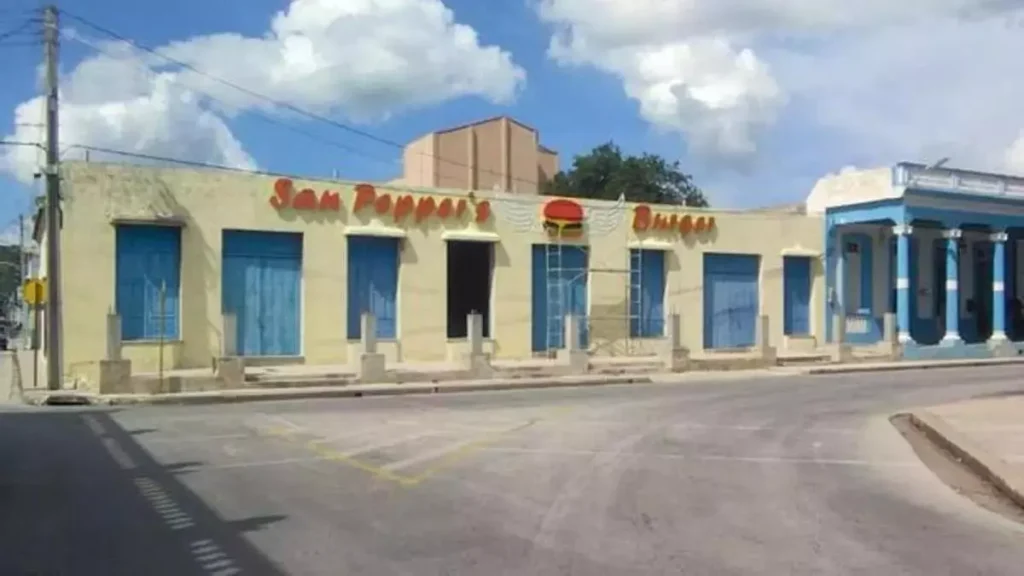
 14ymedio, Havana, August 28, 2026 / The Official Gazette fulfilled, this Friday, the promise made in mid-June by Prime Minister Manuel Marrero to allow the creation of a “light food service network of recognized brands, restaurants, cafés, and burger joints.” Decree 167 opens the way for McDonald’s, KFC, or Starbucks. In theory.
Just four days ago, Miguel Díaz-Canel denied to a Brazilian journalist that Cuba is applying “capitalist reforms.” The president now finds himself contradicted by none other than the Official Gazette, which now publishes rules in force governing the market economy – covering competition, profit, foreign investment, public-private partnerships, dollarization, the exchange market, and store and restaurant chains extending across the island.
Decree 167, “On Domestic Trade,” is one of 176 reforms with which the government is attempting to revive a free-falling economy while simultaneously maintaining the socialist definition of the model. This maneuver is not new. For decades, Cuban authorities have alternated between opening up the economy during times of crisis and reversing course when they deem the market has gone too far.
The language appears to be lifted straight from a capitalist manual: “market signals,” “tastes and preferences,” and being competitive “in quality, price, and timing”
The new legislation defines commercial activity as that which is habitually carried out “for profit,” and lists among its objectives the promotion of “fair competition” and the consolidation of participation by both state and private management forms, as well as foreign investment. It even promises the different forms of ownership “similar conditions of access to markets” for their production and supplies.
The leap is especially visible in Article 15, which grants marketers the right to set product assortments, sales methods, and prices, to participate in public procurement, and to “create chains of stores, restaurants, and light food service networks of recognized or other brands that extend throughout the country.”
The Decree further orders the “promotion of public-private relations” and facilitation of the development of both domestic and foreign actors. For wholesalers, the language appears to be lifted directly from a market economy manual: they must consider “market signals,” study customers’ “tastes and preferences,” and favor domestic production whenever it is competitive “in quality, price, and timing.”
Meanwhile, provincial and municipal authorities are rolling out a new offensive of price caps, inspections, fines, seizures, forced sales, and closures
All this comes after Mônica Bergamo, of Folha de S.Paulo, asked Díaz-Canel directly whether it was necessary to “promote capitalism to save socialism.” “There are no capitalist reforms,” the president replied, invoking the precedent of the Special Period and recalling that Fidel Castro had accepted “concessions” at that time in order to preserve the Revolution and socialism.
The contradiction does not remain merely at the level of words. While the central government expands the space available to private businesses by decree, provincial and municipal authorities are rolling out a new offensive of price caps, limits on trade margins, inspections, fines, seizures, forced sales, and closures.
In June, as part of the 176 measures, the Government had announced the general elimination of price caps. Not even two months had passed before Artemisa, Matanzas, Holguín, and other territories began setting maximum trade margins of 30%, while municipalities in Guantánamo, Santiago de Cuba, and other provinces imposed maximum prices or, under another name, “reference” prices.
Resolution 15 repeals the rules with which the Ministry of Domestic Trade itself tightened wholesale trade for MSMEs, cooperatives, and self-employed workers in 2024
Nor has the result been unexpected. In some places, products subject to greater administrative pressure, such as cooking oil, have disappeared from stores or returned to the informal market at higher prices.
The Gazette itself unwittingly sums up this ambivalence. Alongside competition and market signals, Decree 167 enshrines “centralized administrative measures” intended to induce economic actors to make decisions “in line with the interests of society.” It also reserves for the State the ability to introduce restrictions or prohibitions and to intervene in price formation in the name of “social interest.”
Even one of the resolutions published this Friday acknowledges another about-face. Resolution 15 repeals the rules with which the Ministry of Domestic Trade itself tightened wholesale trade for MSMEs, cooperatives, and self-employed workers in 2024. It now deems it necessary to “ease” those regulations.
This looping pattern also has precedents. In 1986, Fidel Castro launched the “Rectification of Errors and Negative Tendencies,” initially aimed at economic mechanisms that the leadership considered deviations from socialism. Decades later, the Ordering Task (Tarea Ordenamiento) was again presented as the solution to distortions accumulated over years. Beginning in January 2021, it was meant, among other things, to end monetary duality and restore the Cuban peso’s central role in the economy. Barely a month after it took effect, Granma was already publishing an article titled “Prices and Cost Cards: ‘Ordering’ the Ordering Task,” while the Government introduced new mechanisms to contain prices that had exceeded its projections.
The Cuban economy remains trapped in the same pendulum swing: opening up when the crisis leaves no alternative, correcting course when the opening threatens to escape control, and opening up again when the restrictions produce a new suffocation
Five years later, the new commercial legislation in fact enshrines another dual system. Decree 168, within the same Gazette, divides the Central Commercial Registry into two sections – one for “Cuban Pesos” and another for “Foreign Currency” – and requires establishments that sell in both currencies to hold a license for each. Registering or re-registering a business that operates in foreign currency can cost $500, updating its records $370, and obtaining a duplicate license $450, while the same procedures cost 1,300, 600, and 1,000 Cuban pesos, respectively, for those operating in national currency. Resolution 195 itself justifies these fees on the grounds of “partial dollarization in inter-enterprise and commercial operations.”
After six decades, the Cuban economy remains trapped in the same pendulum swing: opening up when the crisis leaves no alternative, correcting course when the opening threatens to escape control, and opening up again when the restrictions produce a new suffocation.
Translated by GH.
______________________
COLLABORATE WITH OUR WORK: The 14ymedio team is committed to practicing serious journalism that reflects Cuba’s reality in all its depth. Thank you for joining us on this long journey. We invite you to continue supporting us by becoming a member of 14ymedio now. Together we can continue transforming journalism in Cuba.