The official who requested the arbitrary arrest of Sady Companioni is a lieutenant colonel in the Revolutionary Armed Forces
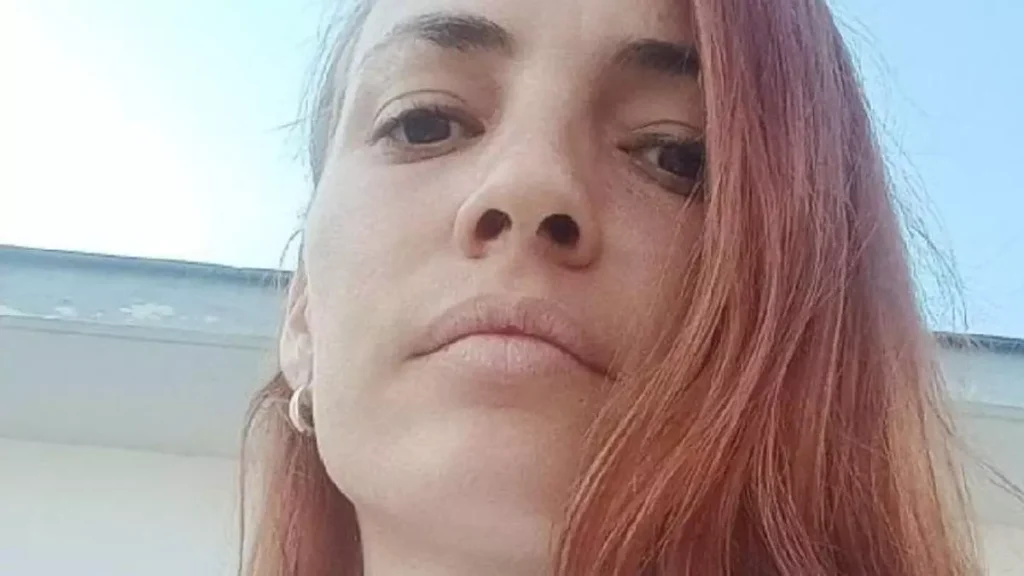
 14ymedio, Havana, 29 August 2026 / After several weeks of denouncing the lack of water in her home on social media and receiving threats for documenting the favors granted by a local delegate in her neighborhood through water trucks, Sady Reynaldo Companioni, a resident of Lawton, in the municipality of Diez de Octubre (Havana), was detained this Friday and taken to the Aguilera police station.
According to Companioni’s own account shortly before her arrest, four uniformed police officers arrived at her home to take her away over “an accusation” on file at the police station on Aguilera Street. Among the officers, according to testimonies circulated afterward, were a member of the Search and Capture unit, a major, and a first lieutenant.
The woman had not previously received a summons. The detention took place, moreover, in front of her parents and her six-year-old daughter, who began crying as she watched her mother being taken away. Her relatives later confirmed that she remained in a holding cell at the Aguilera station.
A water truck had once again arrived in her area, but a woman she identifies as “the delegate” again prevented her home from being supplied
The arrest occurred just one day after Companioni posted a message titled “I’m Scared!”, in which she again denounced the reprisals she had faced for demanding water for her home. According to her account, a water truck had once again arrived in her area, but a woman she identifies as “the delegate” again prevented her home from being supplied.
Companioni stated that the official pointed her out to the driver and told him: “that’s the woman who doesn’t need water.” She also said the woman was filming her and had threatened to bring her social media posts to the sector chief on a claim of “defamation.” Activist Tania Tasé, who has followed the case and remains in contact with the family, says she has identified this official as Yanelis, a delegate of the Poder Popular (People’s Power) and a lieutenant colonel in the Revolutionary Armed Forces.
In a message sent to Tasé during her niece’s illness, Companioni said that “the water truck and the delegate” passed by her house some days without stopping. “She only stops when she’s paid, and as soon as I have proof I’m going to file a formal complaint,” she wrote.
Companioni also reported that at Aballí hospital “there isn’t even drinking water for the children”
The situation worsened as an eight-year-old niece of Companioni’s grew sicker after several days of vomiting, diarrhea, and fever. The family took her repeatedly to the Ángel Arturo Aballí Maternal and Child Hospital and to the William Soler hospital, but she was initially sent home. After vomiting bile with traces of blood and, later, developing bleeding gums, she was finally admitted, and tests determined that she had dengue with warning signs and, according to relatives, several inflamed organs, meaning she needed to be transferred to a pediatric facility with intensive care. Companioni also reported that at the Aballí hospital “there isn’t even drinking water for the children, literally.”
While the girl remained hospitalized, the family continued to have no regular water supply at home. Companioni said they even relied on collecting rainwater. “Today at home we don’t have a single drop of water, because it hasn’t rained,” she wrote to Tasé. “I’m not going to stay silent in the face of so much shamelessness and helplessness,” she added.

The government’s own leadership acknowledged the severity of the problem this week. On Thursday, Miguel Díaz-Canel visited the Paso Seco water supply source in Boyeros, a strategic point for pumping water to the southern and central parts of Havana. The official press acknowledged that the facility had entered a “critical situation” and that work is underway to restore equipment, motors, and power lines to sustain service during the prolonged blackouts. The president had ordered that “permanent protection” be sought for the water supply of the capital, home to nearly two million people.
A day later, the United States Embassy in Havana issued a health alert warning that Cuba’s water supply infrastructure is “increasingly unstable” and that there are residential neighborhoods that go long periods without receiving water from the municipal networks. The diplomatic mission noted that the supply problems, worsened by the blackouts and the drought, pose “significant challenges for health and safety.” That same Friday, police detained Companioni, whose protest had begun precisely over one of those prolonged water cutoffs.
A conflict presented as a neighborhood dispute is serving to conceal a reprisal that is political in nature
The conflict began in early August, when the woman reported that her family had gone about 15 days without water service. She went to the municipal government’s command post and to other institutions, including the Communist Party headquarters, without obtaining an effective solution. Days later, a state water truck arrived on her block. Neighbors were able to fill their containers, but she was denied water. When she tried to film the scene, an official warned her that she could be detained if she continued photographing or filming what was happening.
The sequence of events now makes it difficult to reduce the case to a simple neighborhood dispute. That she was detained by a group of police officers that included Search and Capture personnel and high-ranking officers, after weeks of public complaints against local authorities, shows the significance that has been attached to the case. In addition, the reference to an official linked to the FAR, the prior threats, and the speed with which an alleged accusation of “defamation” turned into an arrest all support the belief that a conflict presented as a neighborhood dispute is serving to conceal a reprisal that is political in nature.
Companioni had not led an organized protest or issued any opposition call to action. She had demanded something more basic: water for her home while a girl in her family was seriously ill. And despite admitting her fears, she had made clear she did not intend to stay silent.
______________________
COLLABORATE WITH OUR WORK: The 14ymedio team is committed to practicing serious journalism that reflects Cuba’s reality in all its depth. Thank you for joining us on this long journey. We invite you to continue supporting us by becoming a member of 14ymedio now. Together we can continue transforming journalism in Cuba.