The Cuban Regime Denies Its Involvement in Venezuela, Despite the Evidence Provided by the Opposition

The Cuban Foreign Ministry accused María Corina Machado of being a “promoter of lies” and of responding to the interests of the United States.

Machado said in an interview that Cuba is partly responsible for the repression in Venezuela / EFE

14ymedio biggerEFE (via 14ymedio), Havana, August 21, 2024 — The Cuban Government denied on Tuesday any involvement in the repression of the protests in Venezuela and criticized the opponent María Corina Machado, whom it described as a “promoter of lies” and a “person of the oligarchies” and “the interests” of the United States. In a statement, the Ministry of Foreign Affairs attacked the former deputy – without mentioning her by name – four days after the opposition leader said in an interview with Mexican journalist León Krauze that the Island “has had an impact” on “methods of repression, persecution, espionage and torture” in her country.

In this regard, the Ministry of Foreign Affairs pointed out that, “once again, invention and delirium come to life in the construction of a matrix of lies against Cuba.” It also added that Machado’s statements respond to “despair to hide the failure of the coup plans in Venezuela.”

“Cuba emphatically rejects the falsehoods that are fabricated to reinforce the policy of harassment,” the statement says. In the same way, it stressed that the Island does not “interfere – and never will – in the political and economic life of another country with sanctions, pressures and regime change plans.” continue reading

“Cuba emphatically rejects the falsehoods that are fabricated to reinforce the policy of harassment,” the statement says

The Cuban president, Miguel Díaz-Canel, applauded last Sunday the pro-government demonstrations that took place on Saturday in response to the opposition marches in Venezuela and in dozens of cities around the world that same day. “The people of Venezuela spoke again. In marches for peace and against fascism, it ratified the recognition of President Nicolás Maduro,” Díaz-Canel wrote, ignoring that the overwhelming majority of participants in those marches demonstrated in support of the opposition.

According to the Venezuelan Government, the post-election protests have left more than 2,400 detainees and 25 deaths in the numerous protests that have taken place after the elections of July 28, when Maduro declared himself the winner.

For its part, the largest opposition coalition assures that its standard-bearer, Edmundo González Urrutia, obtained the majority of the votes and exhibited the 83% of the tally sheets that they managed to collect, which validate his victory.

In this scenario, where the international community has recognized González Urrutia as the winner or, at least, has asked Maduro to prove his alleged victory with its voting records, Cuba has been one of the few countries, along with others such as Russia or Nicaragua, that insist on declaring Maduro as president-elect.

Translated by Regina Anavy

____________

COLLABORATE WITH OUR WORKThe 14ymedio team is committed to practicing serious journalism that reflects Cuba’s reality in all its depth. Thank you for joining us on this long journey. We invite you to continue supporting us by becoming a member of 14ymedio now. Together we can continue transforming journalism in Cuba.

The Debacle of Tourism in Cuba Continues, With a 14 Percent Decrease in July

Foreign tourists in Old Havana / 14ymedio

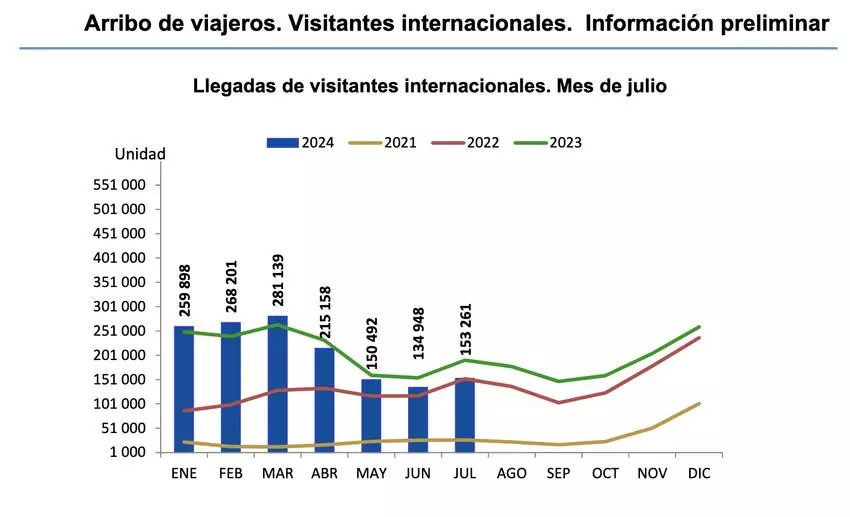
14ymedio bigger14ymedio/EFE, 20 August 2024 — Far from improving, or even maintaining, as happened with the June figures, tourism in Cuba continues to sink. In July, according to the report published on Tuesday by the National Office of Statistics and Information (ONEI), 153,261 travelers from abroad arrived in the country, a figure similar to that in the same month of 2022, but 13.56% lower than last year, when 177,306 tourists were received.

Between January and July, a total of 1,463,097 international travelers entered, 26,230 fewer – 1.8% – than in the same period of the previous year. Although the largest market is still Canada – with 613,227 people – the North American country registers a fall in its travelers to the Island, and the same happens with other European countries, such as Spain, Italy and France.

In July 2023, the United States measure eliminating Europeans from the ESTA rapid visa eligibility who have been in Cuba since January 12, 2021 – the date on which the U.S. Administration included the Island on the list of state sponsors of terrorism – came into force, a reason that may be behind the decrease in European tourists.

Visits by Cubans living abroad also decreased by 14.4%: in 2023 there were 210,026 such visitors between January and July, in the same period this year there were 179,746. continue reading

Year-on-year comparison of international travelers to Cuba / ONEI

On the other hand, visitors from Russia rose by 41%. With 123,358 travelers in the first seven months of 2024, it is still the second largest market, and with the bilateral agreements signed in the last two years, Russian tourism is expected to continue growing.

In any case, the Regime’s goal is to achieve 3.2 million international visitors in 2024, which was already a figure much lower than the data prior to the COVID-19 pandemic (4.2 million in 2019 and 4.6 million in 2018), and which contrasts dramatically with the Island’s direct Caribbean competitors – the Dominican Republic and Mexico – which have had historic high numbers of tourists in these post-COVID years.

The authorization, a few days ago, of the eVisa to facilitate the entry procedures into Cuba is also not expected to help much, taking into account the internet connection problems on the Island.

At the same time, and according to another report published on Tuesday by ONEI — Cuba’s National Office of Statistics — Cuba increased by 112% per year, more than double, its investment in hotels and restaurants in the first half of 2024. In absolute terms, it allocated 15,779.1 million pesos to the Tourism sector, 36.5% of the 43,12 billion pesos authorized in the first six months of the year.

For Pedro Monreal, these data confirm the “persistence of a very deformed investment structure”

If the investments are divided by segments, the Business Services, Real Estate and Rental Activities section – which includes the construction of hotels – accumulated 26.4% of the total investment. It is followed by the manufacturing industry, with 19.5%, and hotels and restaurants, with 11.4%.

Faced with this, public spending decreased by more than 20% in education, construction and public administration.

For the Cuban economist Pedro Monreal, these data confirm the “persistence of a very deformed investment structure in Cuba,” with almost 40% of spending concentrated on tourism-related activities. In a thread on X, the specialist highlights the growing investment in hotels and restaurants “despite the low occupancy rate of 28.4%.”

Similarly, he draws attention to the low agricultural investment, only 2.5% of total public spending (15 times less than what is allocated to tourism), which, in his opinion, indicates that the official “priority” “with respect to food security is no more than a slogan.”

Translated by Regina Anavy

____________

COLLABORATE WITH OUR WORKThe 14ymedio team is committed to practicing serious journalism that reflects Cuba’s reality in all its depth. Thank you for joining us on this long journey. We invite you to continue supporting us by becoming a member of 14ymedio now. Together we can continue transforming journalism in Cuba.

The OAS Considers Democracy in Venezuela To Have Collapsed

The president of Paraguay, Santiago Peña, expressed his concern about the resurgence of authoritarianism and populism in the region

The OAS Secretary General, Luis Almagro, sent a video message during the XVII Inter-American Meeting of Electoral Authorities  / Nina Osorio/EFE

14ymedio biggerEFE (via 14ymedio), Luque (Paraguay), August 20, 2024 — The lack of transparency in the July 28 elections in Venezuela shows that the democratic system of that country has collapsed, the Secretary for the Strengthening of Democracy of the Organization of American States (OAS), the Mexican Francisco Guerrero, declared on Tuesday.

“In what electoral process in the world do you wait three weeks to know the evidence that guarantees a result? Nowhere else in the world. What this confirms is that the democratic system in Venezuela has collapsed,” he told the EFE Guerrero agency, which is participating in the Paraguayan city of Luque of the XVII Inter-American Meeting of Electoral Authorities (RAE).

According to the official, the Venezuelans decided “on a direction that was opposite” to the results issued by the National Electoral Council (CNE), which formalized Maduro’s victory for a third six-year term in power, a result questioned by the opposition and by a large part of the international community. continue reading

The electoral authority has been characterized as ’being in the hands of the regime’

“In the case of Venezuela, in particular, I think it has been evident, it has been very clear, that people decided on a direction contrary to what the electoral authority says,” Guerrero said. In addition, he considered that the electoral authority “has been characterized as being in the hands of the regime of Nicolás Maduro.”

The Democratic United Platform (PUD), the largest Venezuelan opposition coalition, called the results announced by the CNE fraudulent and said that its standard-bearer, Edmundo González Urrutia, was the winner of the elections. Guerrero pointed out that the electoral “lack of independence” in Venezuela, as well as the “lack of political capacity” of the Maduro Government “to recognize what people have truly said at the polls, is what generated this crisis.”

In that context, the OAS delegate stressed the importance of “the electoral authorities being autonomous, being independent, not responding to the dictates of the powerful or to the interest groups.”

At the inauguration of the meeting, the Secretary General of the OAS, Luis Almagro, said, through a video, that they will continue to “fight for the return to democracy in Venezuela.” “The goal remains a democratic future, without political persecution, with full respect for fundamental rights,” said Almagro, who urged the electoral authorities to ensure that every voice and vote counts.

The OAS will continue to fight for the return to democracy in Venezuela, Almagro assured

During the opening of the meeting, which will conclude this Wednesday, the president of Paraguay, Santiago Peña, expressed his concern about the “slow resurgence of authoritarianism, populism and anti-democratic ideas” in the region.

He mentioned that many want to make people believe “that democracy is not up to the great challenges,” such as transnational crime, economic inequalities or insecurity.

To him, to them, I say today loud and clear: false prophets. On the contrary, I am convinced that the only way to fight against these dangers is not with authoritarianism or its first cousin, demagogic populism, but with democracy,” he concluded.

Peña also urged the representatives of the 27 countries participating in the meeting to ensure the validity of democracy and to give “clear answers” that guarantee citizen confidence.

“I hope that in these days when we hear voices of hopelessness that struggle for the return of authoritarian models, this meeting will constitute a true beacon of hope, of struggle for democracy, and that it is a light in the midst of darkness,” he said.

The crisis in Venezuela is not explicitly on the agenda

In Paraguay, the authorities of the 35 inter-American electoral bodies will analyze the impact and risks of artificial intelligence on democracy and the integrity of electoral processes.

Likewise, they will discuss multilateral efforts to preserve democracy, the health of the system and democratic institutions, and the promotion of secure information ecosystems in the electoral sphere.

Similarly, there will be a space for dialogue on the effects of political violence on the elections. The crisis in Venezuela is not explicitly on the agenda, although it will surely be one of the topics of debate.

Translated by Regina Anavy

____________

COLLABORATE WITH OUR WORKThe 14ymedio team is committed to practicing serious journalism that reflects Cuba’s reality in all its depth. Thank you for joining us on this long journey. We invite you to continue supporting us by becoming a member of 14ymedio now. Together we can continue transforming journalism in Cuba.

The Mystery of the Dominican Eggs at Half Price: They Arrived in Cuba and Disappeared

Sale of eggs in foreign currency in La Época on Saturday / 14ymedio

14ymedio bigger14ymedio, Natalia López Moya, 19 August 2024 — A candle with the number seven is all that Jean Carlos’ family has for the cake they need to celebrate his birthday this Tuesday. The shortage of eggs has caused a crisis in the private sweet shops that prepare the traditional cakes, made with brown sugar and meringue. On the black market in Havana, a carton of 30 eggs is close to 3,600 pesos, and “they don’t have them anywhere,” complains the child’s mother.

This Saturday, Jean Carlos’ grandmother paused all household chores after receiving a call: “They brought out eggs in La Época and people are taking them in quantities because they are 5.95 MLC (freely convertible currency) a carton,” a friend residing near the corner of Galiano and Neptuno streets in Central Havana alerted her. “Run and see if you can get any!”

Traditionally, when the product reaches the foreign exchange markets, a carton is sold above 10 MLC (equivalent to 2,750 pesos, according to the parallel exchange rate); hence the astonishment of the 69-year-old habanera. Between doubt and despair, she took her wallet and ran to Rancho Boyeros Avenue where, after waiting half an hour, she managed to find an almendrón. After paying 200 pesos, she arrived at the market, which was already surrounded by a crowd of people.

“By the time I arrived they had run out because people were buying cartons and cartons”

However, she had no luck. “By the time I arrived they had run out because people were buying cartons and cartons,” she says. Through the door of the foreign exchange store, customers loaded down with dozens of cartons were leaving, while the line to get in stretched along Neptuno Street, as verified by this newspaper. The frenzy of grabbing the product was such that, a couple of hours after the market opened, there weren’t any eggs left. continue reading

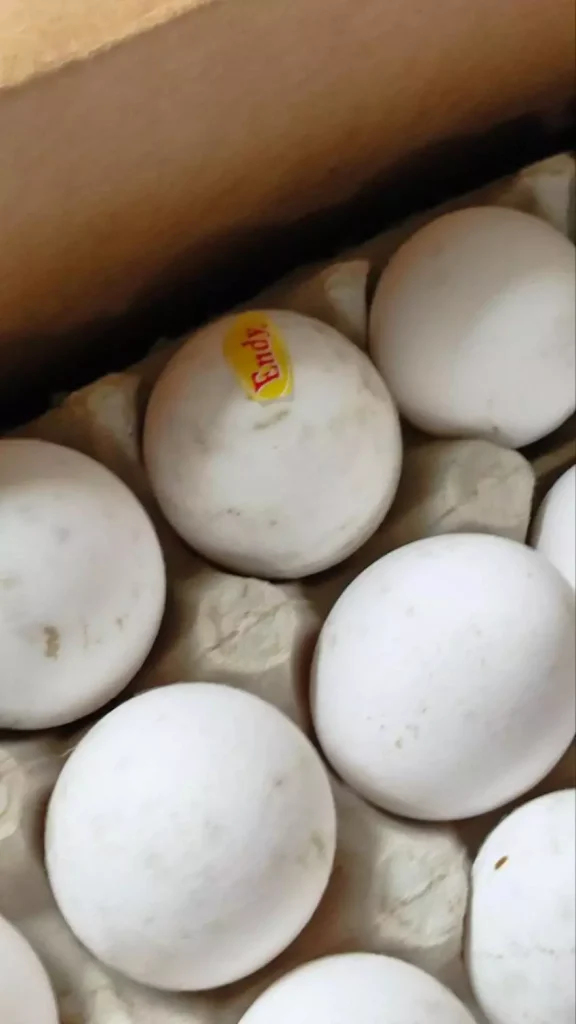
With a small red and yellow Endy label that revealed their origin in the Dominican Republic, the cartons looked somewhat dirty on the outside, as if they had been stored in a place with little hygiene. “They are very cheap; each egg comes out at less than 20 cents (from MLC), and I don’t know whether to get in line to buy them because they may not be fresh at all,” said a client who roamed around the store.

“The egg might contain a surprise, and that dirt on them makes me suspicious,” the woman added. Next to her, another potential buyer also expressed doubt: “At this price they must have been confiscated from some MSME, or maybe they’re in a hurry to get rid of them because they’ve been without refrigeration for days. I prefer not to risk it,” she said.

Others, more daring, chose to try their luck and take all the cartons they could carry and that their MLC cards allowed. The final destination of so much merchandise was not exactly the frying pans of their homes but resale. “Tomorrow we will see these eggs on San Rafael Street at 3,000 pesos per carton,” complained an employee of La Época. “But we haven’t been told to set a limit, so we have to sell all the cartons they ask for.”

The anxiety to acquire more and more was spurred on by the deficit of food sold in Cuban pesos on informal networks. The private businesses that sell sweets are the most affected by the shortage of the product, to the point that some have preferred to close until lower prices appear among the informal sellers.

In the neighborhood of Nuevo Vedado, an MSME dedicated to the preparation of cakes for weddings and birthdays has not been providing service for more than two weeks due to the lack of the essential ingredient. The place, next to Tulipán Street, has a loyal clientele among several neighbors in the area who can afford to pay the high prices of their sweets and cakes.

With a small red and yellow Endy label that reveals their origin in the Dominican Republic, the cartons looked somewhat dirty on the outside / 14ymedio

The owner of the candy store was excited about the sale at La Época, believing that the resellers were going to flood the market with new offers, but on Monday her frustration reached a higher level. “There’s nothing at all; it’s a mystery because everyone I’ve called keeps telling me that there aren’t any eggs left, that we have to wait. Where did all those cartons go?” she asks. Her hypothesis is that much of the product has already been sold directly to those who offer sweets through digital portals in foreign exchange.

“It gives them more business like this because there the prices are 25 dollars and up for a cake, and it is a quick way to get the product out without having to risk the eggs spoiling or having to offer them at retail on the street,” she says. One solution is to “buy egg powder to replace the fresh eggs, but it doesn’t work for all kinds of recipes,” she admits.

“We are not getting orders because we don’t have eggs,” the owner of the candy store warns several residents nearby who share a WhatsApp group. “We will let you know when we can make the cakes again, but at the moment we don’t have a reopening date,” said the entrepreneur, illustrating her message with the emoticon of a piece of cake.

The image of the appetizing sweet, like the candle with the number seven for Jean Carlos, is the closest thing to a birthday cake that those enrolled in the group – and a good part of the Cubans who suffer from the shortage of eggs – have seen in several days.

Translated by Regina Anavy

____________

COLLABORATE WITH OUR WORKThe 14ymedio team is committed to practicing serious journalism that reflects Cuba’s reality in all its depth. Thank you for joining us on this long journey. We invite you to continue supporting us by becoming a member of 14ymedio now. Together we can continue transforming journalism in Cuba.

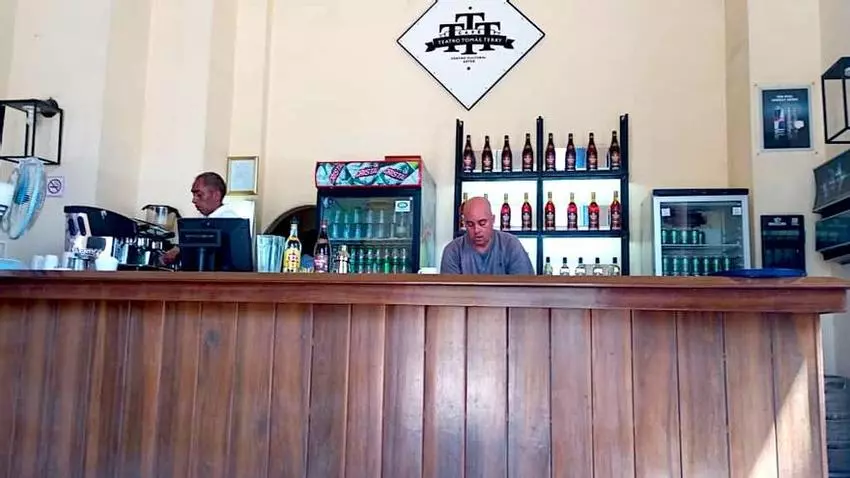
In the Café of the Terry Theater in Cienfuegos, Business Is Done Behind the Bar

In the state cafeteria “everything is bought and sold, even what one cannot imagine”

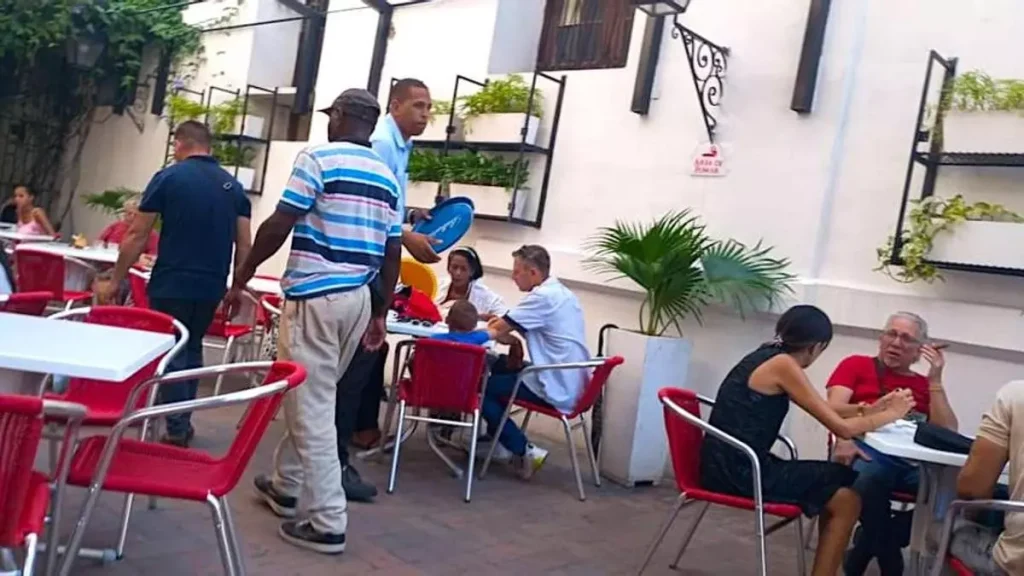
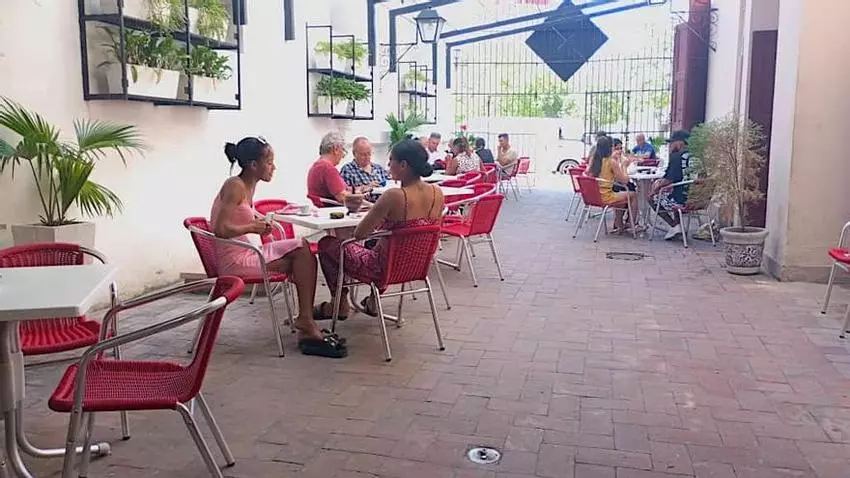
Located in front of José Martí Park, the Tomás Terry Theater cafeteria has a privileged location / 14ymedio

14ymedio bigger14ymedio, Julio Cesar Contreras, Cienfuegos, 20 August 2024 — At the cafe tables in the Tomás Terry Theater in Cienfuegos, all kinds of deals and business agreements take place, and the authorities turn a blind eye. From foreign currency and illicit substances to the body of a cienfueguera girl, in a place managed by the state-owned Artex, “everything is bought and sold on the premises, anything one can imagine,” whispers a bar customer.

Facing José Martí Park, a central area of the city, Terry’s cafe is not empty even when there is a blackout. Sitting at a table, tapping his foot impatiently, Adrián – who uses a false name so that he is not “booked” by the Police – waits for a foreigner who is looking to rent a room in a hostel. “This is my daily struggle: Getting tourists and hosting them in private homes, with a commission for me for each client I get,” the 26-year-old man tells 14ymedio.

Even when there are blackouts, Terry’s café always has customers / 14ymedio 

Those who, like him, travel around the city looking for potential customers are known as “managers,” a name that gives more prestige to their profession than it really has. “The owners of the hostels charge between 15 or 20 dollars a night, and I take a percentage of that,” he says. continue reading

For a few months – Adrián has only been in business for two years – the difficulty in attracting foreigners has increased, and tourists hardly arrive in the city or prefer to stay in state hotels. Because of this, the business of the young cienfueguero has been “low,” and the customers who do stay in private homes are now, for the most part, those who have a very specific interest: to be out of sight of the authorities.

“It’s not that you like this mess of prostitution, but sometimes the opportunity presents itself and you have to take advantage of it, because things are very hard wherever you turn, and that’s one way to hook tourists,” he explains. Normally, Adrián says, the cost for a night with a jinetera is around 100 dollars or euros, but “when things are tight” and there are almost no tourists, sometimes they accept 50. The woman is given part of the take depending on the deal, reveals the young man. He prefers to settle matters because the “question” brings its own risks.

From the outside, life in the Terry seems to be quiet, although, from the prices, anyone can deduce that those who come to have a coffee do not live on a worker’s salary

From the outside, life in the Terry seems to be quiet, although, from the prices, anyone can deduce that those who come to have a coffee do not live on a worker’s salary. With espressos at 60 pesos – a year ago one cost a third as much – cocktails between 150 and 300, or a beer at 280, the place still maintains a menu that is obviously State but also expensive. The tricks to keep the business afloat happen behind the bar.

Behind the bar is where the tricks that keep the business afloat happen / 14ymedio

“To maintain the service you have to stretch the coffee powder as much as possible, because the supply is very scarce and the demand is very high,” an employee tells this newspaper. At the cocktail bar is thrown “a lot of ice and a little alcohol,” and to “fatten” the salaries a little, which do not reach 3,000 pesos, some workers resell on the left “what appears.” As to what happens inside Terry’s doors, the workers prefer to turn a blind eye.”

Appearances are deceiving, and while the music goes on through Saturday night and into the next morning, there are also those who are selling, buying and negotiating anything,” explains Mercedes, another of the unique customers of the cafe. “Right now I bought 80 MLC (freely convertible currency) from a woman who has just left,” says the cienfueguera. She pretends to be surprised at the fact that the Government is persecuting the foreign exchange black market at the same time that it lets it happen on its own premises.

While the music goes on through Saturday night until the next morning, there are also those who are selling, buying and negotiating anything

If it were not for everything that is “offered” on the left in Terry’s cafe, the place, with an illuminated sign that, between blackouts and technical failures, never works – in addition to the 100 pesos that are requested to enter any event – would always be empty. “I shouldn’t say this, but sometimes certain drugs are even sold here,” says Mercedes, who has seen customers “pass pills” while hiding among the crowd and the music. “In the end everyone just minds their own business,” the woman alleges, for whom it is also a relief that – paraphrasing the famous Las Vegas saying – what happens in the Terry stays in the Terry.

Translated by Regina Anavy

____________

COLLABORATE WITH OUR WORKThe 14ymedio team is committed to practicing serious journalism that reflects Cuba’s reality in all its depth. Thank you for joining us on this long journey. We invite you to continue supporting us by becoming a member of 14ymedio now. Together we can continue transforming journalism in Cuba.

González Urrutia Demands That Maduro ‘Take the Step Now’ To Begin the Transition in Venezuela

Closed off in the Miraflores Palace, Maduro continues his campaign of discrediting the opposition and those who recognize its triumph

Maduro denounced an “increase in the cyber war against the country through bots” that he attributes to Argentina / EFE

14ymedio biggerEFE/14ymedio, Caracas, 20 August 2024 — The Venezuelan opposition leader Edmundo González Urrutia called on Nicolás Maduro on Monday to “take the step now” to begin “a peaceful transition,” through a political dialogue with the Democratic United Platform. The politician assured that citizens remain “firm” in their demand that “the decision” expressed in the July 28 elections be recognized.

In his opinion, every day that the authorities “hinder the democratic transition, Venezuelans suffer a country in crisis and without freedom,” and “clinging to power only exacerbates the suffering” of citizens. “The people are tired of so much abuse and corruption,” he said, and accused Maduro of being “responsible for so much poverty and pain.”

“It is our hour, the hour of millions of Venezuelans who want to give the best of our lives for the reconstruction of our homeland. All of Venezuela demands that we make the necessary efforts to ensure that popular sovereignty is respected. That’s why I am asking for a political dialogue to begin the definitive democratic transformation of our nation,” he added.

“It is our hour, the hour of millions of Venezuelans who want to give the best of our lives for the reconstruction of our homeland

Closed off in Miraflores, Maduro continues his campaign of discrediting the opposition and those who recognize its triumph. This Monday he attacked Argentine President Javier Milei – his nemesis in the international arena – whom he accused of spending more than 100 million dollars of Argentina’s budget on alleged bot attacks against chavista institutions. continue reading

Maduro denounced an “increase in cyber war against the country through bots” from Argentina, whose president has called the result of the National Electoral Council a “fraud” and a “scam.”

“What bot farms are attacking us from Argentina? The bot farms of Milei, of fascism, with money from the budget of the Argentine government, the more than 100 million dollars spent on the attacks of the last two weeks,” Maduro said, without showing any evidence, during his weekly program Con Maduro +, broadcast on the state channel VTV.

In addition, he said he had registered similar attacks from Spain, by the “ultra-right” of the European country, and from Mexico, without accusing anyone directly for these actions.

In his war against social networks as a ground of subversion against his regime, Maduro maintains his blockade of X

In his war against social networks as a ground of subversion against his regime, Maduro maintains his blockade of X, which he had suspended for 10 days. Although the authorities have not given explanations, it is impossible to access the application from Venezuela without using a virtual private network (VPN), which has become popular in the country – as happens in Cuba to read the independent press – as a method to bypass the blockades imposed by the state National Telecommunications Commission.

On Monday, Maduro and the president of Parliament, Jorge Rodríguez, spoke about the “damage” caused by social networks, but they did not directly allude to the suspension, ordered in principle due to the attempt attributed to this platform to “sow violence” in the country, as Maduro said at the time. This Monday, during his weekly television program, Maduro mentioned several times the owner of X, the South African tycoon Elon Musk, whom he accuses of promoting fascism and violence in Venezuela.

“Keep Elon Musk out of Latin America,” the president remarked without referring to the suspension, after saying that Musk “was wrong” and that he had “crashed” with Venezuela.

For many, Maduro’s aggressiveness is a sign that the regime’s days are numbered

For many, Maduro’s aggressiveness is a sign that the regime’s days are numbered. This is the opinion of former deputy Omar González, one of the six refugee opponents living in the official residence of the Embassy of Argentina in Caracas since March, under the protection of Brazil after the expulsion of Argentina’s diplomatic mission from Venezuela. On Monday, González pointed out that Maduro’s “weakness” “is increasing” as he approaches January 10, 2025, when the next presidential term begins.

“Many believe that time is Maduro’s ally, but they are wrong, because as we approach January, Maduro’s time will run out; he will become increasingly illegitimate, and his permanence in power will be increasingly illegal,” said the opponent, quoted in a press release from the Vente Venezuela party, led by the anti-chavista María Corina Machado.

In González’s opinion, the “fragility” of the Government “is obvious” and “is reflected in the emaciated, haggard and anguished image of a leader who can’t sleep or have peace of mind.” “Venezuelans have made it clear that we will not give up until Maduro and his accomplices leave power, using truth as our main weapon in this endless battle,” González added.

Translated by Regina Anavy

____________

COLLABORATE WITH OUR WORKThe 14ymedio team is committed to practicing serious journalism that reflects Cuba’s reality in all its depth. Thank you for joining us on this long journey. We invite you to continue supporting us by becoming a member of 14ymedio now. Together we can continue transforming journalism in Cuba.

“I Deserted From the Cuban Team Because I Was Looking for a Better Future for Me and My Family”

The triple jumper Jordan Díaz, gold medalist at the Paris Olympic Games, says he is happy to be “part of the history of Spain”

Díaz poses next to his prize at his uncle’s restaurant in Zaragoza / EFE

14ymedio biggerEFE (via 14ymedio), Zaragoza, 19 August 2024 — The Olympic champion in triple jump, Jordan Díaz, who defected from the Cuban national team in 2021 to seek a “better future” for himself and his family, said that this decision and his subsequent result at the Olympic Games in Paris is proof that “every sacrifice done well has its reward.”

The gold-medal winner stopped in Zaragoza to visit his uncle, a well-known hotelier whose restaurant employees paid tribute to Díaz. Díaz shared in an interview with EFE that he is “very excited” for what he has accomplished and for “being able to be part of the history of Spain,” a course that was set when he decided to stay in that country.

Despite not being able to see his family since 2021, Díaz is aware that “life is short and you have to make the most of everything.” He chose to continue with his fight to be World Champion, to achieve the triple jump crown and to repeat it at the Olympic Games in Los Angeles in 2028. continue reading

’I was looking for a better future for my family and for me; that’s why I deserted the Cuban team,’ said the athlete

EFE: How do you feel after having been able to taste, a bit more, the triumph at the Olympic Games in Paris?

Díaz: I’m quite happy with the whole result, to be honest. Not only with Paris, which, of course, is a dream. I am also very excited about the season I have finished, because I wasn’t able to compete much due to pain and injuries. I won the European championship in Rome with 18.18 meters, which is the third best score in history. Right now I’m on vacation. I needed to rest both mentally and physically, and I wanted to visit my family.

EFE: How long were the seconds from when you jumped until you landed?

Díaz: Wow… It’s so difficult! You’re just thinking about the technique and how you’re going to fall. You don’t think about anything else, neither sports nor emotions. You’re focused, and although you know that a medal can change your life completely, you don’t think about it much. I’m very happy with the season I’ve done, although I haven’t been able to compete much due to injuries.

EFE: The moment you saw your score did you think you could win the gold medal?

Díaz: No, not at all. I had a score that the first five athletes could have beat. However, I understood that in the Olympics, the pressure, the level of competition and tension could have an influence. There were also a lot of people in the competition. I tried to do my best in the sequences. I think it was a good competition in terms of stability, and I am happy with the result.

’The road has been quite difficult. Starting with the fact that I left my family and my whole life in Cuba’

EFE: Before Paris there have been many struggles. If you look back, how has the path been and what was the key to getting here?

Díaz: The road has been quite difficult. Starting with the fact that I left my family and my whole life in Cuba. I was looking for a better future for my family and me; that’s why I deserted the Cuban delegation. That motivation and that impulse has made me do what I’m doing now. Every sacrifice done well has its reward.

EFE: Is it worth it, therefore, to have left everything behind?

Díaz: Yes, of course. Life is short and you have to make the most of everything. I am happy for everything I am achieving and for being part of the history of Spain. It’s the goal I set myself when I stayed in this country. The truth is that little by little it is being fulfilled, and yes, as people say, there is still a lot of work to be done.

EFE: Did you dream of these Olympic Games?

Díaz: It is the goal of any athlete. It’s the biggest thing you can get! Another goal may be to have the world record. I don’t have it, but it still remains for me to be the first world champion to access the triple crown.

EFE: What is your link with Zaragoza?

Díaz: My uncle lives here, so I wanted to come and visit him. He has helped me since the first day I decided to stay in Spain. I spent three months with him, so he also deserves the medal and to celebrate it together. Everything that is happening to me is, in part, thanks to his help.

EFE: Do you think that with this triumph and, in addition, being the standard-bearer of the Spanish team at the closing of the Olympic Games, athletics is given the space it deserves?

Díaz: It’s a prize for a job well done. María (Pérez) won gold and silver medals [for Spain] in mixed race walking, and I won gold. Highlighting it may make everything that is done in athletics be recognized beyond the recognition that soccer has. Being a standard-bearer at the closing with María is an award for a job well done; highlighting it may make everything that Spanish athletics does be recognized.

’From long before competing in the final, I already had received a lot of support in the stands and from the organization’

EFE: What was the feedback you received when you returned from Paris?

Díaz: I’m not much of a social networker, but, from the little I’ve seen, I think I’ve been quite supported. I am very grateful. From long before competing in the final, I already had received a lot of support in the stands and from the organization. Having support is the best. I like that they recognize the job and, of course, it’s always good for other competitions.

EFE: And how are you facing the future?

Díaz: I’ll try to find some other dream. My dream was this, to be an Olympic champion. There are still four years left for the next Olympic Games and I’m not going to become lost in that either. Now I have to think about other things.

Translated by Regina Anavy

____________

COLLABORATE WITH OUR WORKThe 14ymedio team is committed to practicing serious journalism that reflects Cuba’s reality in all its depth. Thank you for joining us on this long journey. We invite you to continue supporting us by becoming a member of 14ymedio now. Together we can continue transforming journalism in Cuba.

Leaked Documents From the UMAP Reveal Techniques To ‘Rub Out’ Homosexual Behaviors

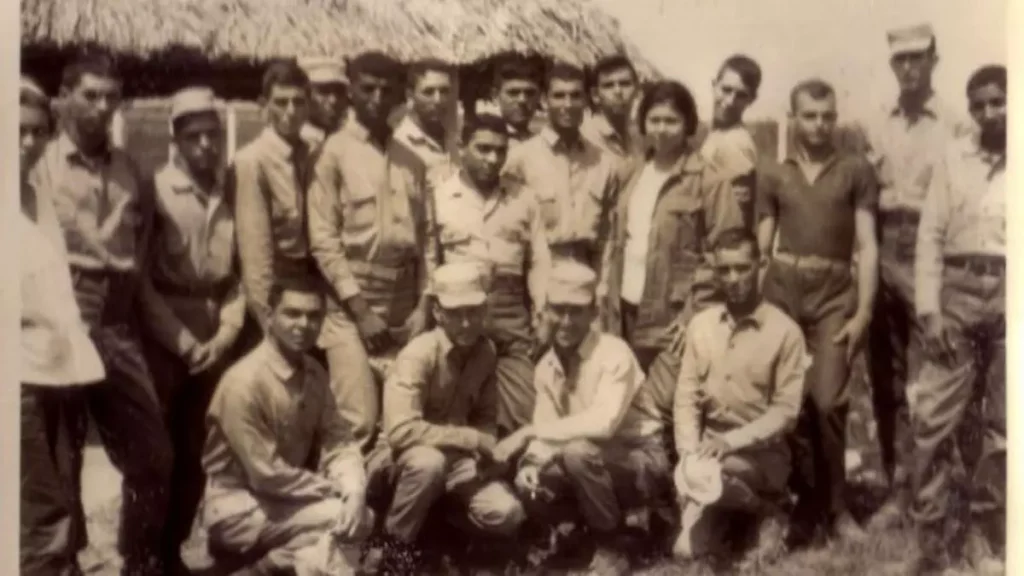
Image of young homosexuals and opponents in an UMAP, in 1967 / CC

14ymedio bigger14ymedio, Havana, August 12, 2024 — “Rub out all mannerisms and antisocial behavior” was the first commandment of the Military Units to Aid Production (UMAP), founded in Cuba in the 60s as forced labor camps for “homosexuals, the religious and the social lumpen.” The phrase is fixed, like a mantra, in several documents of the time rescued this Monday on social networks that expose the methods of indoctrination of those schools of “rehabilitation” in the time of Fidel Castro.

The documents – six in total – “were delivered by a source that asked for their publication and only had two conditions: anonymity and open access,” journalist José Raúl Gallego, a resident of Mexico, who disseminated the documents, said on Facebook.

The first two documents, dated in the mid-1960s, are perhaps the most shocking. First of all, they “study” the presence of homosexuals in the country and propose for their “reform” the creation of a Model Center, where military doctrine will lead them to become “useful” for the Revolution. However, not all the “deviants” would go to the camps. The revolutionary class, children of families committed to the process and those who had “real possibilities” of integrating into society would be separated.

These, the “privileged,” would become part of a group A. Groups B and C were the “counter-revolutionaries” who wanted to stay on the Island and those who wanted to leave, respectively. As for the latter, they were to be subjected to “very rigid” methods until they eventually left the country and the unit was dissolved. Or, which is the same, until the Revolution had shaken out the last “antisocial” element. continue reading

’Rub out all mannerisms of antisocial behavior’ was the mantra among the ranks of the UMAP

For company B, the objective was, if possible, more macabre: “Among counter-revolutionary homosexuals who for various reasons do not want to leave the country and are part of company B, the principle of detecting who among them can change political opinions and therefore opinions about their duties to society and rehabilitation will be followed. They will be gradually sent to company A and some of them later to the Model Center,” the document dictates.

For Groups A and B, the objectives changed: “to erase the mannerisms,” “anti-social behavior” and “any manifestation of hostility to the Revolution.”

The second document describes similar plans for those who – in the UMAP or the Compulsory Military Service – have presented homosexual behavior. “Prevention” is the key word here. It proposes the formation of Pre-Military Schools in which the boys lead the lifestyle of a recruit. It is accompanied by a Marxist psychological analysis of the ways of treating young people to achieve the desired result.

The proposal begins with a statement that, although it simulates an academic approach, would horrify any modern defender of human rights: “The scientific ignorance of the causes and remedies for homosexuality makes it impossible for us to find a definitive solution to this problem,” the report explains, but the “motivation” is enough to carry out the plan.

The segregation methods proposed in the document are similar to those in the first one. Recruits are to be separated by political affiliation and – here is the novelty – by the degree of exhibition of their sexuality. “We find homosexuals who, by their way of walking, dressing, speaking, etc., manifest themselves as such, and homosexuals without external manifestations. Among the former there are those who carry out a more fuller homosexual activity (they paint, let their nails grow, etc.) and at the same time are more undisciplined; and those who present effeminate external manifestations, but who accept discipline.

With this in mind, the report sets out the right method to deal with recruits: divide and conquer. “We will achieve our objectives” through the “group pressure on the individual,” as well as through “inflexible orientation and correction” of “inadequate” behaviors.

The “emulation,” as in a reward and punishment system, is the other side of the coin that relies on benefits such as granting passes and the possibility of accumulating departure days.

The report exposes the appropriate method to deal with recruits: divide and conquer

“The practice of sports and the realization of an adequate physical culture program are effective means to combat feminine gestures and poses,” is another of the conclusions of the report.

The rest of the documents contain an interview with one of the homosexuals sent to the UMAP and two reports on religions in Cuba. The first, which recalls the interviews of the KGB or the stories of Reinaldo Arenas – who described these units, without ambiguity, as “concentration camps” – is the summary of a meeting between an officer and a recruit who seems willing to do anything to “reinsert” himself despite his “bisexual” behavior. “He would like to take care of himself from a psychological point of view,” says the interviewer who several lines below, within his observations, diagnoses: “He is a skillful simulator and immoral.”

For those who practiced some religion – the list of churches and creeds is long and detailed – there was no consideration either. Catholicism, for example, is defined as “the most dangerous religion that operates in our homeland, and together with ideological diversionism, performs all kinds of counterrevolutionary activity and fundamental espionage. We can say without a doubt that in the religious formation in general and the Catholic in particular, it is a pit from which we ranks of the counterrevolution and enemy intelligence are nourished, not only in our country, but in all the countries that fight for their liberation in Latin America and other continents,” says the document.

The honeymoon between the Revolution and the Vatican had ended abruptly by that time, despite the apparent sympathy expressed for Castro by Pope John XXIII – mentioned in one of the texts – and his apostolic nuncio in Cuba. Several facts, such as the circulars critical of the Government issued by the Episcopal Conference of the Island – especially by Bishop Enrique Pérez-Serantes, who saved Castro from being executed in Santiago de Cuba – and the presence of priests and numerous young Catholics in the invasion of Playa Girón, determined the Church-State rupture.

In the report, which advances through different Protestant doctrines to the lodges – Masonic, Odd Fellows and Knights of the Light – religious beliefs are nothing more than an excuse to conspire and brainwash. In order to keep them in the spotlight, a detailed inventory of parishes, publications, activities and “attitudes to the Revolution” is made.

The report advances through different Protestant doctrines to some Masonic lodges

The presence of Catholic laity in the UMAP is not unknown, and although these archives in particular do not evoke their indoctrination, the treatment they received thanks to many Cubans who offered their testimony decades later is known. Cardinal Jaime Ortega, who died in 2019 and was known for being a skilled mediator between the Catholic Church and the Government – he helped release many political prisoners – spent part of his youth in the UMAP, although he was very discreet in his account of the experience.

Other figures were sent to the Cuban concentration camps, such as the musician Pablo Milanés, who, despite the injustice, never completely detached himself from the Regime. Important personalities of the regime were narrowly spared from being sent to the camps. This was the case of Eusebio Leal, on the list for his Catholic faith and “saved” by the intercession of Haydée Santamaría, as the historian himself once said.

In the UMAP, where several of the darkest pages in the Regime’s history were written, isolation and secrecy were two conditions for the experiment to work. In fact, the documents insist that the only contact with the outside world be with the parents of the recruits who were willing to help in the “rehabilitation,” the members of the Central Committee and “authorized foreigners.”

Without ever admitting the horrors committed in those camps, Fidel Castro referred to them very late, in 2010, with a brief phrase about the decision to create them: “If anyone was responsible, it was I.”

Translated by Regina Anavy

____________

COLLABORATE WITH OUR WORKThe 14ymedio team is committed to practicing serious journalism that reflects Cuba’s reality in all its depth. Thank you for joining us on this long journey. We invite you to continue supporting us by becoming a member of 14ymedio now. Together we can continue transforming journalism in Cuba.

Prisoners Defenders Registers 1,119 Political Prisoners in Cuba in July

The organization has counted 1,731 people imprisoned at some point for political reasons / X / Salomé García

14ymedio biggerEFE (via 14ymedio), Madrid, 15 August 2024 — The NGO Prisoners Defenders (PD) reported on Wednesday that at the end of July it registered 1,119 people imprisoned for political reasons in Cuba, two more than those included in its monthly June report.

The organization, based in Madrid, explained, within the framework of the third anniversary of the anti-government protests on 11 July 2021 (11J), that the Cuban Government deployed “a repressive operation against activists and independent journalists throughout the Island.”

PD cited the case of independent journalist José Luis Tan Estrada, who was arrested on July 5, “interrogated and warned that on July 11 he should refrain from making any publication on his social networks.”

The NGO, which registered three new incarcerations and one release in June, explained that 30 minors are still on the list of prisoners, of which 28 are serving sentences and two are being prosecuted. The minimum criminal age in Cuba is 16 years old. It also stated that 15 of the minors have been convicted of sedition, with an average sentence of five years of deprivation of liberty.

The statement added that 224 people have been accused of sedition

The statement added that 224 people – mostly participants in the anti-government protests of 11J – have been accused of sedition, and at least 223 have already been convicted of that crime, with an average sentence of 10 years of deprivation of liberty.

The NGO reported that it has counted 1,731 people imprisoned at some point for political reasons in Cuba since 11J.

According to PD, at the end of June, the number of prisoners (including minors and two trans women) remained at 119. “All trans women of conscience in prison have been and are imprisoned among men, which also happens with common trans prisoners, suffering situations among men that are indescribable for their sexual condition,” the organization said.

Meanwhile, this Wednesday, the Inter-American Commission on Human Rights (IACHR) issued Resolution 48/2024, which granted precautionary measures in favor of the Cuban prisoner Joel Jardines Jardines, considering that he is in a serious and urgent situation of risk of irreparable damage to his rights in Cuba.

The IACHR reported that Jardines Jardines, detained in Aguacate prison, Quivican, in Mayabeque, has not received adequate medical attention, which aggravates his state of health. He suffers from a laryngeal carcinoma, and since 2021, should have undergone tests to start a possible chemotherapy treatment. The IACHR said that the prisoner lacks treatment for his ailments and suffered physical repression after requesting medical attention from the authorities. In view of this, the commission urged that they allow him to be diagnosed, provide sufficient and timely medical information and define his treatment.

Translated by Regina Anavy
____________

COLLABORATE WITH OUR WORKThe 14ymedio team is committed to practicing serious journalism that reflects Cuba’s reality in all its depth. Thank you for joining us on this long journey. We invite you to continue supporting us by becoming a member of 14ymedio now. Together we can continue transforming journalism in Cuba.

Electoral Autocracy and Totalitarian Elections in Cuba

Within the autocratic totalitarian framework, elections will always be a mechanism to reinforce the power of an illegitimate elite / Escambray

14ymedio bigger14ymedio, Mexico City, 15 August 2024 — The general election in Venezuela on July 28 and its outcome have had an important regional and international impact. Despite the existence of different options on the ballot, Venezuelans witnessed an election in clear conditions of competitive inequality, opacity and state control of the electoral, judicial and military authorities, as well as limited access to information and the financial resources of the opposition. This electoral authoritarianism has generated a critical reaction from important global powers (USA, Europe) and a majority of Latin American countries, and even from academic organizations of progressive orientation (LASA).

Cuba is perhaps the most atypical case of today’s Latin American autocracies. Its history of democratic elections dates back to the period from 1940 to 1950. From the democratic rupture of March 1952, the elections have been irregular, and from 1959 until the institutionalization of the pro-Soviet single-party political system in 1976, there were no elections. From this date the elections have been manipulated, with single-party candidates pre-selected by criteria of ideological fidelity.

The last general election for president in conditions of multi-party competition was held in Cuba on June 1, 1948

Strictly speaking, the last general election for president and 50% renewal of the House of Representatives and Senators, under conditions of multiparty competition, was held in Cuba on June 1, 1948. The Cuban electoral calendar of the time, governed by the Electoral Code of 1943, defined general and partial elections combining the rule of plurality with a system of provincial votes to elect a president with a system of relative majority in multi-member constituencies, with representation of minorities for the Senate and the election of representatives from proportional representation with the Hare formula of ranked choice voting with 50% renewal in midterm elections every two years. continue reading

The electoral results of the period were not only conditioned by this combination of electoral rules (P/RP) but also by the characteristics of the Cuban party system; that is, a moderate multiparty system without a predominant party to compete and win alone, which produced incentives for the establishment of broad electoral alliances. Unlike the two previous elections (1940 and 1944), the general elections of 1948 marked the end of the great centripetal bipolar coalitions and the beginning of the fragmentation and polarization of the party system.

In June 1948, the number of competing candidates increased to four, reducing the size of the first two coalitions that nominated the strong candidates. The winning candidate of the Authentic-Republican Alliance (PRC-A/PR) was Carlos Prío Socarrás (PRC-Authentic), who obtained 46%, followed by the candidate of the Democratic-Liberal Coalition (PD-PL), Ricardo Núñez Portuondo, with 30%. The remaining 24% went to the two candidates of independent parties, Eduardo Chibás, of the new Cuban People’s Party (Ortodoxox-PPC-O), with 16.5%, and Juan Marinello of the Popular Socialist Party (PSP), with 7%.

The plurality of the party system of the period can be appreciated. It is reflected in the midterm election of 1950 where the PPC-O acquired legislative force by obtaining 13.6% of the seats, above the traditional right-wing parties: the Liberal with 12.1%, and the Democrat with 9%. A new center-right party appears, the Party of Unitary Action (PAU) of Fulgencio Batista, which collects 6%.

The Socialist Constitution of 1976 and Electoral Law 72 of 1992 defined the foundations of the Cuban electoral system until its marginal reform in the 2019 Constitution

The Socialist Constitution of 1976 and Electoral Law 72 of 1992 defined the foundations of the Cuban electoral system until its marginal reform in the 2019 Constitution. In general, these electoral rules were an efficient mechanism for the selection and rotation of loyalties within a cohesive elite.

Designed to (re)produce consensus in a single party system, its functionality depends on a selective filter aimed at guaranteeing the continuity and governance of a totalitarian regime. While it is true that the nomination of candidates is direct at the constituency level, candidacies for municipal, provincial and deputy governments to the National Assembly are subject to a “double selective filter” based on criteria of ideological suitability. The Electoral and Candidacy Commissions in the various instances fulfill this function: the cohesion and loyalty of the candidates on the closed list that will be submitted to a (in)direct vote by a select group of elected with proven loyalty.

It is important to emphasize that since the ’election’ for president in 2016, a process of decrease in electoral participation has begun

Fifty percent of the candidacies proposed at the municipal level for election to the National Assembly emerge from proposals prepared by these Nomination Commissions and must be approved by the Electoral Commissions, which subverts the notion of popular representation. It is important to emphasize that since the ’election’ (sic) for president in 2016, a process of decrease in electoral participation and an increase in blank ballots, null votes and selective voting has begun.

Despite the fact that the new Electoral Law No. 127 of July 2019 proposes to professionalize and give greater autonomy to the Electoral Councils and the Nomination Commissions in the various instances, Article 86 recognizes the ethical principle of the electoral authorities “to make clear, at all times, their loyalty to the Homeland, to the Revolution and to the political, economic and social system that we defend” (sic). Within the autocratic totalitarian framework, elections will always be a mechanism to reinforce the power of an illegitimate elite.

Editor’s Note: The author is a research professor at the Ibero-American University in Mexico City and a contributor to the Cuban Latino Dialogue of Cadal.

Translated by Regina Anavy

____________

COLLABORATE WITH OUR WORKThe 14ymedio team is committed to practicing serious journalism that reflects Cuba’s reality in all its depth. Thank you for joining us on this long journey. We invite you to continue supporting us by becoming a member of 14ymedio now. Together we can continue transforming journalism in Cuba.

African Snails and the Stench of Trash Dumps Extend to the Affluent Neighborhoods of Havana

Garbage dump on the corner of Pedro Pernas and Manuel Pruna, in Luyanó, municipality of Diez de Octubre / 14ymedio

14ymedio bigger14ymedio, Juan Diego Rodríguez, Havana, 13 August 2024 — Mayelín moved a week ago to the municipality of Diez de Octubre, and now that she walks daily on the Luyanó road, she says that all the neighbors live in a kind of “olfactory numbness.” According to the 28-year-old habanera, there are more trash dumps along the road than she can count, some even in a “wild” state, with small vermin and their own ecosystems. Living among the waste is already difficult, she says, but with the smell they give off “it’s impossible to breathe.”

On the pavement, says Mayelín, “a river of sewage passes through that comes out of a broken pipe, and, on its way, it collects all the liquid from the food, dirt and rot of the garbage dumps. The smell is unbearable, and it even upsets my stomach, but I have noticed that it only bothers me.” With little time living in Luyanó, the young woman has realized that her neighbors, although they complain about the garbage and other problems, don’t seem to care about the stench of the landfills.

“I think that living constantly among garbage, without a vehicle ever passing by to pick it up or an unobstructed pipe through which the water can leave, has forced them to adapt. I, who moved recently, am still sorry, but I am horrified by the idea that we can so easily normalize this situation because we have to,” she laments. continue reading

In Barrientos, as the area of the neighborhood sports complex is known, a huge garbage dump extends for several meters

In Barrientos, as the area of the neighborhood sports complex is known, a huge garbage dump extends for several meters – horizontally and vertically – on the corner formed by the streets of Pedro Pernas and Manuel Pruna. In the middle of the road where the waste does not reach, stagnant water prevents the passage of passers-by.

“Every morning when I take the dog for a walk I have to go around the pestilent mass to cross the street,” says Yunior, a resident of that area. According to the young man, the trash dump, one of the largest in Luyanó, has begun to attract its own fauna. Cockroaches, flies, mosquitoes and some rats that occasionally can be seen are not the only tenants. “African snails have also begun to appear. Wherever there is a piece of earth and grass, you’ll find one,” he says.

The invasive species, which years ago starred in the Public Health ads on Cuban Television for its danger to human life, has begun to roam freely throughout the Island. “Now that they are everywhere and there are no resources to kill them, the government has stopped talking about them, as if they were suddenly harmless. It’s obvious that they don’t want to create alarm,” Yunior reflects.

“The amount of bugs attracted by the garbage dump is so great that my dog, who likes to hunt flies, goes crazy chasing them. It’s funny, but when you think about where all that filth comes from, you lose the desire to laugh,” he explains.

On any piece of land that grows a little grass there are African snails / 14ymedio

While it is true that the less visible neighborhoods suffer the worst part of the garbage epidemic by being away from the eyes of foreigners and leaders, it is also a fact that, in the current state of the capital, not even the privileged areas are exempt. A video recently published by Martí Noticias showed the fountain of the National Hotel, one of the most emblematic sites in the city, right in front of the Malecón, where diplomats and guests of the regime go. In the images you can see a green crust of moss and garbage in a pool of fetid water.

The same happens with the bay of Havana , which is covered with cans, plastic cups and plastic bags when a storm removes the water.

The direct responsibility for this situation lies with the State’s Communal Services, but the truth is that company also does not know how – without the necessary resources – to deal with the garbage that accumulates throughout the Island. An almost pitiful example is that of Las Tunas, where the authorities have been trying to battle the waste for months, first by hiring private carts and then, when this measure did not work, by promoting voluntary work every Saturday.

This last proposal, as expected, did not go anywhere either, and now the province is trying to get Materias Primas [Raw Materials] to take action in the matter. The Reciclo mi Barrio [neighborhood recycling] plan, published on Tuesday in Periódico 26, suggests that the company collect “door by door” – in fact collection points were set in several neighborhoods – the waste donated or sold by the population. The official press applauded the initiative that, in addition to the main city, will begin in eight other municipalities.

Although the authorities promise that the initiative, which intends to reduce the amount of waste that ends up in the garbage dumps, “has arrived to stay,” we will have to see how long a plan that depends on the Achilles heel of the regime – fuel – lasts.

Translated by Regina Anavy

____________

COLLABORATE WITH OUR WORKThe 14ymedio team is committed to practicing serious journalism that reflects Cuba’s reality in all its depth. Thank you for joining us on this long journey. We invite you to continue supporting us by becoming a member of 14ymedio now. Together we can continue transforming journalism in Cuba.

The Crash of an ‘Almendrón’ Against a Tree Leaves Four Dead and Several Injured in Mayarí

The Chevrolet’s mishap was recorded last Saturday / Facebook

14ymedio bigger14ymedio, Havana, 13 August 2024 — Four people died last Saturday in a traffic accident in the city of Mayarí, in Holguín. Two of them died immediately, followed by the death of two women who were initially hospitalized after the crash was reported this Monday.The official journalist Emilio Rodríguez Pupo, who reported the fact, explained that the car, an old Chevrolet – known as an “almendrón” in Cuba – in which the victims were traveling hit a tree between the neighborhoods of Arroyo Blanco and El Solibano, in the town of Levisa, around 3:30 in the afternoon.

Yendri Saldaña Díaz, 40, and Alexander Santiago González Vera, 52, lost their lives instantly, and Yanet Rojas died hours later as did Maritza Paredes. Among the six injured were the two minor children of Yanet Rojas. Dailín Machado and Yurixan Ortiz Benítez are currently hospitalized.

The Chevrolet in which the victims were traveling hit a tree between the neighborhoods of Arroyo Blanco and El Solibano

So far, the two children are out of danger: Lisbeth Ávila Rojas, six years old, who had a fracture in her femur, and her brother Lázaro Ávila Rojas, eight years old. Both were admitted to the Children’s Hospital of Holguín. Meanwhile, Dailín Machado suffered head trauma, an occipital fracture, and is being evaluated for surgery. Yurixan Ortiz, 34 years old, has a fracture but is not in danger. continue reading

Many of the crashes that are reported on the Island occur because, as acknowledged by the Minister of Transport himself, Eduardo Rodríguez Dávila, some 75% of the roads are in poor or bad condition. The State has justified its nonexistent maintenance of the roads by referring to the low availability of raw materials and parts in asphalt factories. In addition, the country has a car fleet with a significant percentage of vehicles that have already been in operation for 40 to 70 years.

Some 75% of the roads are in poor or bad condition. The State has justified its nonexistent maintenance of the roads by referring to the limited availability of raw materials

According to the Transit authorities of the Ministry of the Interior, crashes on Cuban roads decreased in the first half of 2024 by 13% (543 fewer) compared to the same period last year, while the numbers of deaths and injuries fell respectively by 23% and 5%.

However, last year alone, 8,556 traffic crashes were recorded that left 729 dead and 5,938 injured. The authorities have stated that the main cause of accidents is the human factor, to which they attribute 91% of the mishaps. “The frequency and dynamics of the occurrence of traffic accidents in the country continues to be marked by the irresponsibility of drivers and pedestrians,” the ruling newspaper Granma said last January.

Translated by Regina Anavy

____________

COLLABORATE WITH OUR WORKThe 14ymedio team is committed to practicing serious journalism that reflects Cuba’s reality in all its depth. Thank you for joining us on this long journey. We invite you to continue supporting us by becoming a member of 14ymedio now. Together we can continue transforming journalism in Cuba.

In July, Prices Continued To Rise at an Annual Rate Just Over 30 Percent in Cuba

The Cuban State spent almost 39% more than it did in 2023, according to official figures

Tobacco, along with alcoholic beverages, had the largest year-on-year increase with 50.48% /Cubadebate

14ymedio biggerEFE/14ymedio, Havana, 15 August 2024 — Inflation remains unstoppable in Cuba and grew at an annual rate of 30.48% in July, according to data provided this Thursday by the National Office of Statistics and Information (Onei). The variation of the consumer price index (CPI) with respect to June was 0.83%, and the accumulated so far this year stands at 18.78%.

The official figure is not far from the one reported, independently by the American economist Steve Hanke, who places it at 32% per year and describes it as “crushing.”

The increase in tariffs on imported alcohol and tobacco, which entered into force in January, continues to leave its mark on the CPI that, for July, reports the largest year-on-year increase in alcoholic beverages and tobacco at 50.48%. It is followed by restaurants and hotels (36.71%), food and non-alcoholic beverages (35.17%) and transportation (32.58%). continue reading

The variation of the Consumer Price Index with respect to June was 0.83%, and the accumulated so far this year stands at 18.78%

As usual in monthly inflation reports, practically all items experienced year-on-year increases above 10%. During July, there were only three exceptions: recreation and culture (9.32%), communications (0.75%) and health (0.72%). The last two cases are state monopolies.

For the third consecutive month, the report emphasizes that the figures include the private sector, a clear boom since the legalization of MSMEs in 2021. Onei stated that 80.41% of the 8,176 establishments in the sample belong to the private sector, while the bulk of retail trade in the country is still in the hands of state companies.

In this context, the Cuban State spent 38.8% more than it earned in 2023, thus recording the highest fiscal deficit since 2020, according to official data published this Thursday by the Ministry of Finance and Prices. According to the figures collected in the Statistical Yearbook, the negative fiscal balance of the Cuban State amounted to 94,959 million pesos (3,798 million dollars, at the official exchange 24 CUP for one dollar).

Cuba spent 38.8% more than it earned in 2023

The income came mainly from the tax on utilities and other non-taxable revenues, while the main expenses were in the portfolios of Health, Social Assistance, Public Administration (which includes Defense) and Education.

Cuba accumulates five years of large fiscal deficits, and since the end of 2023, it has presented two adjustment plans to increase income – mainly in hard currency – and to cut expenses.

Total net income amounted to 245,076 million pesos, slightly more than in 2022, but less than in 2021. Total expenses rose to 340,492 million pesos, 8% and 6% more than in 2022 and 2021, respectively.

The country is immersed in a serious economic crisis that has worsened even more since four years ago, with the evident shortage of basics – including food, medicines and fuel; galloping inflation; the partial dollarization of the economy; and frequent power outages.

Translated by Regina Anavy

____________

COLLABORATE WITH OUR WORKThe 14ymedio team is committed to practicing serious journalism that reflects Cuba’s reality in all its depth. Thank you for joining us on this long journey. We invite you to continue supporting us by becoming a member of 14ymedio now. Together we can continue transforming journalism in Cuba.

Mexico Increased Its Oil Shipments to Cuba in Anticipation of the Venezuelan Crisis

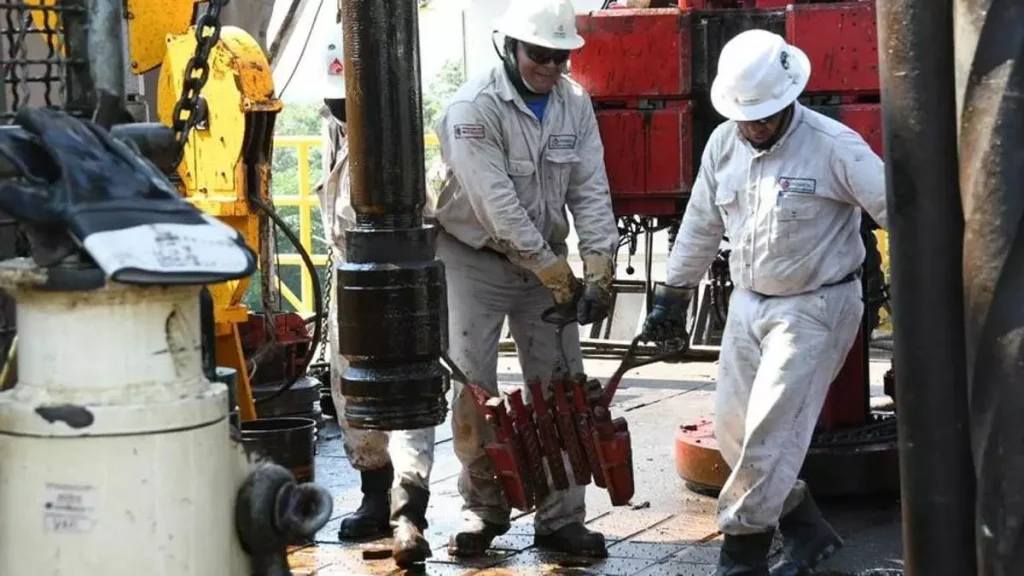
The oil romance between Havana and Mexico continues to be strong / Pemex

14ymedio bigger14ymedio, Havana, August 10, 2024 — Gasolineras Bienestar, a subsidiary of the state-owned Petróleos Mexicanos (Pemex), sold 21,800 barrels of crude oil per day (bpd) to Cuba in the first quarter of this year. The amount represents an increase of 30% with respect to the 16,800 bpd that the Government of Andrés Manuel López Obrador sent to its Cuban ally between July and December 2023. The oil romance between Havana and Mexico – in the midst of the political tension of Venezuela, the island’s main supplier – will continue to be strong.

Pemex also sent 3,600 bpd of gasoline and other petroleum derivatives to Havana, which is an increase of 9% compared to last year, reports El Universal. The total value of the shipments was 200 million dollars – 3.3 billion Mexican pesos – according to a report that Pemex sent to the United States Securities and Exchange Commission, which does not welcome the growing closeness between the two countries and warned that Pemex could suffer sanctions. However, it is still not known if it is a sale, a donation or a barter in exchange for services, such as the sending of 5,000 Cuban doctors to Mexico.

Havana has enjoyed shipments of Mexican crude oil since July 2023, when the rapprochement between the regime of Miguel Díaz-Canel and the Administration of López Obrador was consolidated. According to Gonzalo Monroy, director of the energy consulting company GMEC, fuel shipments are part of a “political decision” by the Mexican Government, and the proof is that they use Gasolineras Bienestar and not PMI, the subsidiary of Pemex responsible for international trade. continue reading

The United States, Monroy believes, “can severely punish the Mexican oil company,” with “serious financial consequences.” On the other hand, López Obrador’s gesture “reflects the actions of support between similar regimes” and places Mexico in a status of alliance with Havana similar to that of Caracas.

López Obrador’s gesture places Mexico in a status of alliance with Havana similar to that of Caracas

An expert from the consultancy Perceptia 21, Abril Moreno, warned that “Pemex can suffer sanctions if it is declared that the relationship with Cuba violates the Cuban Democratic Freedom and Solidarity Act”; that is, the Helms-Burton Law, since Pemex imports gasoline from the United States and seeks financing in that country.

Last June, the expert from the University of Texas, Jorge Piñón, had estimated that Mexico was not only sending oil to Cuba, but also fuel (gasoline and diesel). Pemex’s report confirms the professor’s forecast, who had also noticed that the quantities exported to the Island were increasing.

The Ocean Mariner, a small Liberian-flagged tanker that is subleased by Cuba and has a capacity to carry about 83,000 barrels, is part of the fleet that comes and goes between the Island and Mexico. While the Vilma and Delsa load crude oil in the port of Pajaritos (Veracruz), the Ocean Mariner collects fuel in the port of Tampico, which serves the Ciudad Madero refinery.

Piñón explained at the time that Cuba was “storing strategic oil reserves” in case Caracas was destabilized after last July’s elections. The situation, in fact, has arrived, and it has not been possible to know how much oil Venezuela has sent to its ally, although the British agency Reuters said – without revealing numbers – that export levels had remained normal during the month.

It is still not known if it is a sale, a donation or a barter in exchange for services, such as the sending of 5,000 Cuban doctors to Mexico

In the homes of the Island, the benefits of this movement are barely felt in an August marked by scorching heat, blackouts, shortages and dengue and Oropouche infections. In an energy limbo for months, Cubans are anticipating a weekend of power cuts.

The state-owned Unión Eléctrica warned that an affect of 783 megawatts was estimated for this Friday, and that the rest of the weekend would be similar. The company reported that unit 4 of the thermal power plant of Cienfuegos, 2 of Felton (Holguín), 5 of Renté (Santiago de Cuba) and 5 of Nuevitas (Camagüey) were out of service due to breakdowns. In addition, 49 distributed generation plants are also shut down due to various types of failures or lack of fuel.

Translated by Regina Anavy

____________

COLLABORATE WITH OUR WORKThe 14ymedio team is committed to practicing serious journalism that reflects Cuba’s reality in all its depth. Thank you for joining us on this long journey. We invite you to continue supporting us by becoming a member of 14ymedio now. Together we can continue transforming journalism in Cuba.

Despite the Controversy, Honduras Will Pay More Than One Million Dollars to Cuba for 170 Doctors

A group of 170 Honduran doctors will be awarded scholarships to study a specialty on the Island / El Libertador

14ymedio bigger14ymedio, Havana, 14 August 2024 — Honduras will send 170 general practitioners to Cuba to train in one of the 23 specialties offered by Cuban universities. The arrival of these health workers occurs through a scholarship program, similar to the one Cuba also has with other countries such as Mexico. For this first group, the Government of Xiomara Castro will disburse 30,000,000 lempiras (about $1,209,950), the newspaper La Prensa reported on Tuesday.

The Honduran doctors who will travel to Cuba were selected from 1,000 applicants. According to the same media, priority was given to recent graduates. “Young people are the ones who have the most time to serve,” said the Minister of the Secretariat of Social Development, José Cardona. What was stated by the official differs from the argument offered by the Ministry of Health (Sesal), which stated that “health workers were selected for their proximity to the areas where the new health system is being implemented.”

According to Sesal, the awarding of scholarships aims to have specialists who “are integrated into the new hospital network that is being built by the Administration of Honduras, which includes the construction of eight new hospitals.” continue reading

“Young people are the ones who have the most time to serve”

The measure takes place in the midst of the controversy over the hiring of 89 doctors in the Central American country. The Medical College of Honduras (CMH) claimed this provision from the Government of Xiomara Castro in November 2023, instead of employing the more than 11,000 Honduran doctors who are unemployed.

The CMH has expressed its dissatisfaction on several occasions. Last April, it denounced the Government for “violating the Constitution” by hiring health workers from Cuba without their having “the necessary accreditation to practice in the country.”

In addition, it noted that the Organic Law is very precise in pointing out that the CMH is the “only authorizing entity in the national territory of the Medical Brigades,” that they must provide their services free of charge and that their stay in the country must not be for more than 90 days.

Cuban specialists, the CMH said, not only do not comply with these requirements, they also violate Honduran labor regulations.

The method of operation is similar to that between Mexico and Cuba. The Government of Andrés Manuel López Obrador, according to official data up to January 2024, has 428 medical specialty students with scholarships, for which it pays Havana $27,914 (484,041 Mexican pesos) per year.

The Cuban specialists, the CMH said, not only do not comply with these requirements, they also violate Honduran labor regulations

Mexico’s support for the Island has been extended to the purchase of 16,000,000 doses of the Abdala vaccine, a drug that lacks the endorsement of the World Health Organization (WHO). Last February, a flight arrived with 4,530,600 bottles of the medicine for the National Vaccination Campaign against seasonal influenza and COVID-19. Many of these vaccines have been rejected by the population, and some of the doses have expired, despite which they are still being applied.

The agreement between Mexico and Cuba also includes the hiring of 5,000 Cuban specialists. Of them, more than 1,000 doctors have arrived, who have joined the Imss-Bienestar program to be sent to hospitals throughout the country.

For the services of the Cuban doctors, Mexico pledged to pay $1,308,922 per month to Neuronic Mexicana, which depends on Neuronic S.A. Cuba. Since 2018, this company has been the representative of the products and services of the biotechnology and pharmaceutical industries of the Island, under the presidency of the Cuban Tania Guerra.

Translated by Regina Anavy

____________

COLLABORATE WITH OUR WORKThe 14ymedio team is committed to practicing serious journalism that reflects Cuba’s reality in all its depth. Thank you for joining us on this long journey. We invite you to continue supporting us by becoming a member of 14ymedio now. Together we can continue transforming journalism in Cuba.