A New Contingent of Cuban Doctors Arrives in Venezuela

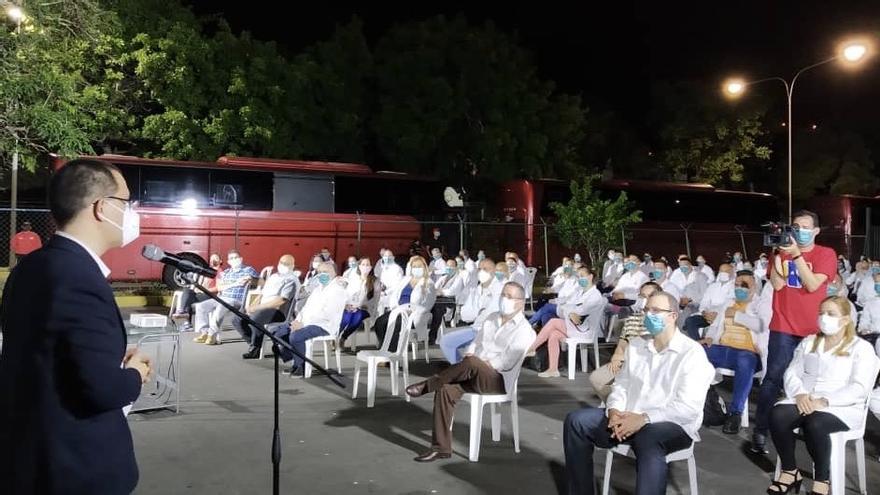
The Venezuelan Chancellor, Jorge Arreaza, receives the new contingent of Cuban doctors. (Twitter/@cancilleriaVE)

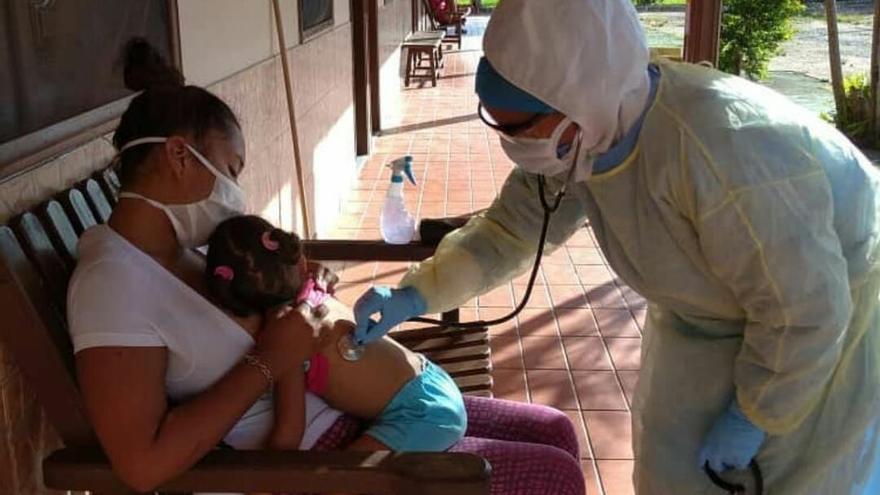
14ymedio bigger14ymedio, Havana, August 2020 — A new contingent of Cuban doctors arrived in Caracas on Sunday to join the Barrio Adentro mission, according to the Minister of Venezuelan Foreign Relations. This makes 230 health workers added to those already deployed in the Caribbean country to attend to the COVID-19 pandemic.

“This was what Chávez and Fidel dreamed about and constructed. It’s up to us to continue carrying forward the dreams of our commandantes and show the North American imperialists that no one and nothing will divide us,” said the Venezuelan Foreign Minister, Jorge Arreaza, in his statements on Twitter.

in his speech, Arreaza thanked the Cuban authorities for their support to Venezuela to combat coronavirus, qualifying the Cuban doctors as “heros and heroines who are risking their lives to work in our country”. continue reading

According to official data from the Cuban Ministry of Public Health, most of the COVID-19 positives entering the Island are coming from Venezuela. However, the Ministry has suppressed reports on the exact origin of 41 of the cases reported and where it said “traveler coming from Venezuela”, it now says “source of infection abroad”.

Last July, a group of 26 health workers arrived in Maracaibo, Venezuela, according to authorities, to reinforce efforts before an outbreak of coronavirus that was generated in the Las Pulgas market.

There are more than 20,000 Cuban health workers in Venezuela, including doctors, nurses and technicians, according to official data for 2019. Last April, the Government of Nicolás Maduro announced the importation of 1,200 professionals from the Island, justifying his decision by decreeing an emergency because of the pandemic.

For each health official, Venezuela pays Cuba more than $10,000 per month, in addition to supplying the country with fuel, although the opposition to chavismo has criticized this because of the shortages faced by Venezuela.

Translated by Regina Anavy

_____________

COLLABORATE WITH OUR WORK: The 14ymedio team is committed to practicing serious journalism that reflects Cuba’s reality in all its depth. Thank you for joining us on this long journey. We invite you to continue supporting us by becoming a member of 14ymedio now. Together we can continue transforming journalism in Cuba.

New and Drastic Measures to Control the Pandemic in Havana, Camajuani and Pinar del Rio

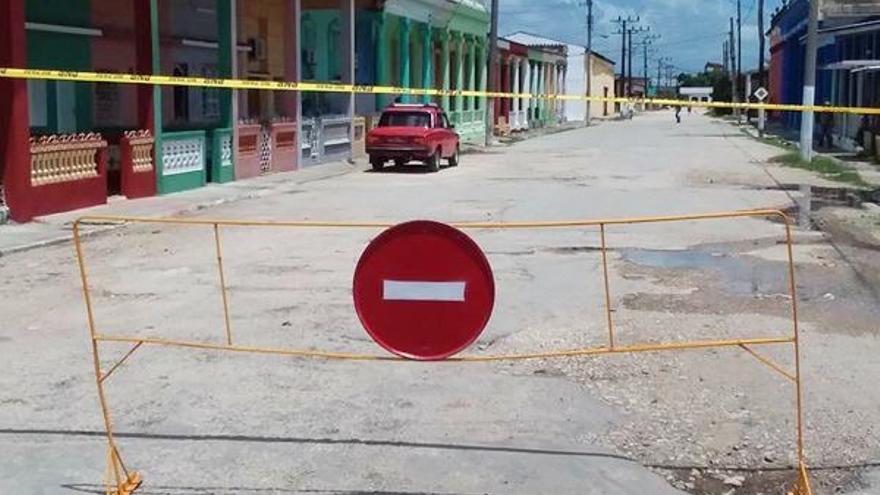
Camajuaní returns to quarantine for the second time since the beginning of the coronavirus pandemic. (Facebook/Dayron Pérez Urbano)

14ymedio bigger14ymedio, Havana, August 10, 2020 — The increase in Covid-19 cases in Cuba requires taking drastic measures not only in Havana but also in other zones of the Island that are affected by the resurgence, especially in Camajuaní, Artemisa and Pinar del Río.

The Cuban Minister of Public Health, José Ángel Portal, said on television Saturday during his daily report that “the forecast indicates that the situation is almost out of control,” especially in Havana.

Although the number of deaths remains the same at 88, health authorities confirmed on Sunday 65 new cases from the day before. Of these, 29 are in the province of Havana, where, since Monday, restrictive measures going back to Phase 1 of the reopening have been put into force. continue reading

The rules include the suspension of public transport, with the exception of buses for essential workers in production, health and services who continue to work, and the total closing of beaches, bars and parks.

Unlike the previous stage, the authorities decided to leave chains of stores and businesses open “to avoid concentrations in one single place”, they said. Restaurants and cafeterias will be allowed to serve food for takeout.

Because of the increase in cases, the Spanish Consulate in Havana announced on Sunday that it is suspending services until further notice. “A counter will still be open for emergencies and documents”, the Consulate states on Twitter.

In Artemisa, where an outbreak was detected after a religious event, there were 17 new cases.

In Camajuaní, Villa Clara Province, where a local transmission event had been detected, the authorities announced a quarantine on Sunday, for the second time since the pandemic began.

People’s Councils 1 and 2 are now isolated, and vacationers at Juan Francisco, a popular beach, were evacuated. Public transport has been eliminated between Camajuaní and Santa Clara, Placetas, Encrucijada and Remedios.

At the moment, health activists from other territories have been mobilized to determine the number of inhabitants in the areas at risk and then to proceed to disinfect State and private centers that receive the public. The authorities have ordered commercial centers to make their sales on tables placed at the door and not inside. In the previous quarantine, the motel La Cañada was used to house those suspected of infection, but now they’re moved to Placetas or Santa Clara because Camajuaní lacks a hospital.

The manager of the Ministry of Tourism in the province, Regla Dayamí Armenteros, told local media that a total of 220 workers on Cayo Santa María, many of them from Camajuaní, would not return to work while the quarantine lasts. Those installations belonging to the Gaviota corporation had been open to international tourism since July 1. She added that the money would be returned or the date rescheduled for nationals who had made reservations in the hotels and camping centers.

Librado Linares, leader of the opposition movement Cubano Reflexión, explained to 14ymedio that Independencia Street, at the center of the municipal capital, was cordoned off with tape, and the police were only allowing passage to those who were previously authorized.

“Camajuaní has been known in the last few years for having a booming private economy. During the previous quarantine, which lasted around four months, many private businesses were on the brink of bankruptcy, mainly because they didn’t have any kind of subsidy. Now, just when they seemed to be recovering, they have to go back to closing their companies,” said the dissident.

Apart from the local event of open transmission in this municipality, six others were found in the country: in the Havana municipalities of Habana del Este, La Lisa and Marianao. In Artemisa, three remain active: in the municipality of Bauta (center and Playa Baracoa) and in the Special Development Zone of Mariel.

In Pinar del Río, only one new case was reported on Sunday, but the provincial authorities decided to quarantine anyone who came into the province for 14 days. They also declared a curfew for the population between midnight and 6:00 am, the closing of commercial and recreation centers from 11:00 pm and beaches from 5:00 pm.

“We’re not prohibiting private cars from coming into Pinar del Río, but people who come in are going to be submitted to a period of vigilance for 14 days,” said the President of the Council of Provincial Defense, Julio César Rodríguez Pimentel.

The Minister of Health, who includes in his daily report the imported cases — almost all coming from the medical brigades — suppressed in his last report the exact origin of 41 of the cases reported. Where he used to say “traveler coming from Venezuela”, now he says “source of infection abroad”.

Venezuela recorded 795 new cases of COVID-19 and 7 deaths on Saturday. The total number went up to 24,961 positive cases and 215 deaths.

The new figures threaten still more the economic collapse of the Island, where the pandemic has been met with a shortage of food, medicine and other products and lengthened the lines to purchase these items.

The optimism that existed from the beginning of July, when the the next opening of the longed-for international tourism was anticipated, is, for the moment, history.

Translated by Regina Anavy

____________

COLLABORATE WITH OUR WORK: The 14ymedio team is committed to practicing serious journalism that reflects Cuba’s reality in all its depth. Thank you for joining us on this long journey. We invite you to continue supporting us by becoming a member of 14ymedio now. Together we can continue transforming journalism in Cuba.

Cuban Financial Institution Won’t Issue New Debit Cards Because of Shortages of Many Products

Debit cards are used to receive remittances and to make purchases in the hard-currency stores that have recently opened for the sale of food and personal hygiene and cleaning products.

14ymedio bigger14ymedio, Havana, August 16, 2020 — The financial institution Fincimex announced that beginning this Monday, it won’t accept new requests for AIS (American International Service) debit cards, used to receive remittances and make purchases in the hard-currency stores that were recently opened for the sale of food and personal hygiene and cleaning products.

“It’s reported that beginning this next Monday, August 17, we find it impossible to accept new requests for AIS cards. The rise in demand has surpassed our capacity to import certain consumables,” the company said on its official Facebook page. Fincimex belongs to the Cimex Group, which is managed by the Armed Forces.

Fincimex’ announcement contrasts with the company’s official statement four days ago, said a client on social media, who was worried about the delay in the delivery of his card. “They’re issuing 4,000 cards daily. Right now there isn’t any problem with the products.” continue reading

Last June, Fincimex, which was created as a company in Panamá 25 years ago, was sanctioned by Washington and included on the blacklist of firms with which the U.S. is prohibited from doing business.

The penalty from the U.S. Government heightened concern for many clients, but Fincimex said that “all the cards requested before August 6 are ready”. In the communication this week, the company explains that the cancellation of the service has given them incentive to “become better organized for the present high demand”.

“We are working to make the interruption as brief as possible. We shall return,” says the text.

However, complaints have leaked out about the cards, and many clients are upset about Fincimex’ inefficiency. “Why don’t they pick up the phone when you call? I need to know if I can get my card and not make an unnecessary trip,” asked Yami Romero in a comment. “The lines are dead,” was all the company answered.

“My husband spent days trying to request one for me and it was impossible. I wrote to them, called, and no one answered,” complained Dayanna Castillo.

The opening of hard-currency stores with food and personal hygiene and cleaning products forms part of the package of measures that the Government presented as a necessary decision before the economic crisis that the country is experiencing in the middle of the pandemic.

Before the controversy that this news generated, Government officials say that the income collected in these stores will allow them to improve the offers in the Cuban Convertible peso and Cuban peso markets, which are in constant crisis with the shortages.

Translated by Regina Anavy

______________

COLLABORATE WITH OUR WORK: The 14ymedio team is committed to practicing serious journalism that reflects Cuba’s reality in all its depth. Thank you for joining us on this long journey. We invite you to continue supporting us by becoming a member of 14ymedio now. Together we can continue transforming journalism in Cuba.

The Cuban State “Is Intensifying Its War Against Farmers,” Farmers’ Groups Inform Bachelet

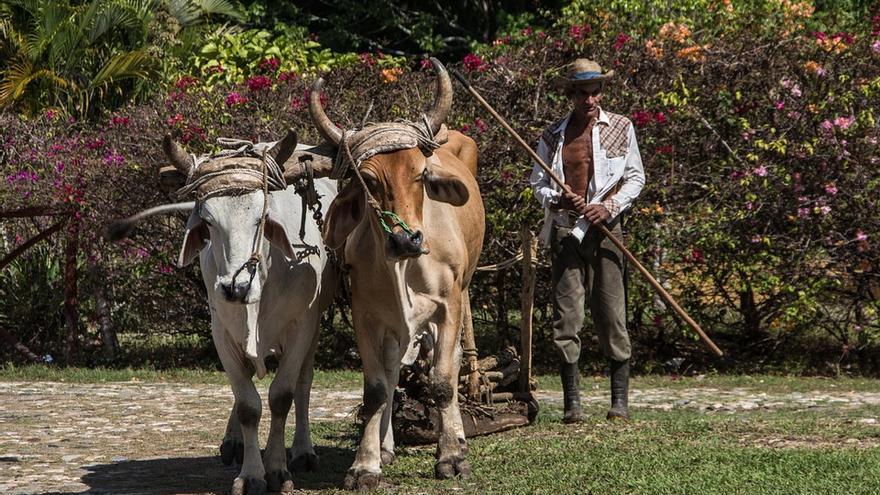
A Cuban farmer plows the land with his oxen. (CC)

14ymedio bigger14ymedio, Havana, August 13, 2020 — “We’re approaching a famine that can be avoided,” begins the letter that the League of Independent Cuban Farmers and the Latin American Federation of Rural Women (Flamur) delivered to the UN High Commissioner of Human Rights, Michelle Bachelet.

The authors of the letter request an urgent intervention from the ex-President of Chile, in order to avoid starvation on the Island. “The cause is not external or related to a natural disaster. The famine that is appearing on the Cuban horizon is a consequence of the fierce internal blockade of our productivity by the national Government,” say the signatories, who have been launching the campaign for a few months: Without the countryside there’s no country. They are asking the authorities to eliminate the tax on farming, and they demand permanent title to their property.

“We can assure you that the U.S. embargo doesn’t prevent the Cuban Government from buying, every year, tons of food from that country that it later sells to the population at notably higher prices,” they continue. “Nor are medicines included in the sanctions. Cuba imports 80% of its food because of the State’s inability to produce it. If now the Cuban Government doesn’t have money, it’s because, in addition to their poor economic management and the impact of Covid-19 on tourism, it hasn’t complied with its commitments to pay the interest on the debts it assumed after its creditors forgave billions of dollars five years ago,” they argue. continue reading

In a telephone conversation, Esteban Ajete Abascal, leader of the League of Independent Farmers and one of the signers of the letter, together with Lisandra Orraca Guerra, President of the Cuba Chapter of Flamur, told 14ymedio that the letter was sent to Bachelet “through friends of good will who have a way to channel this request”, and she claims that there’s a “permanent system of surveillance” over her “on the part of the political police and its other mechanisms of control. They’re waiting for the right moment to do us harm,” she says

The document points out something “that many ignore”: private Cuban businesses “are not included in the sanctions, and any business in the United States can do business with and even invest in them, but the Cuban Government has never allowed it”.

Furthermore, they criticize the State system of Acopio, which “monopolizes” the production and commercialization of the farmers, who are “up to their eyes in taxes, harassed with continuous inspections and the confiscation of their harvests and farming equipment”.

Ajete told this newspaper that he doesn’t rely on statistics about the number of farmers who have had the fruit of their labor and their farming equipment confiscated. “It’s really hard for us to have access to the data, and we lack the necessary mobility to get these statistics, but we rely on brave people who dare to denounce the abuses,” he explained. “We’re speaking for those who aren’t allowed to go on television or other official media to tell their version of events.”

“They’ve declared an economic war against us, and special operatives from the Armed Forces and the police are taking part in it, and through their monopoly of the communications media they’re engaging in constant assassination campaigns against our reputation”, they say in the letter to the High Commissioner.

While the official press portrays the independent farmers as “selfish bandits”, they themselves say they’re the “bearers of the solution to avoiding a famine for the population”.

As for the number of field workers who don’t own the land they work on, Ajete tells 14ymedio that “right now there’s an insignificant number of farmers who own very small parcels of land, and most of their production is in tobacco”, and he remembers when his grandfather was offered a ridiculous amount of money to buy the land for a farming cooperative in San Juan y Martínez, in the province of Pinar del Río. “The cooperativization wasn’t exactly forced, but there was enormous political pressure. Only a few resisted; some others were allowed to leave the land to their children and grandchildren.”

At the end of the letter, the farmers tell Bachelet that their initiative Without the countryside there is no country has not received a response from the Government.

On the contrary, they say that it “has intensified the Government’s economic war of confiscations and arbitrary arrests against the farmers”, and they make a forceful comparison: “Their present methods aren’t any different from those of the militant communism — which Lenin had to rectify — or those of Stalin, when he induced a famine in the Ukraine, which cost the lives of millions of people”.

Finally, the farmers urge the Commissioner: “Invite the Cuban Government to find inspiration in the political power of the Vietnamese leaders who, after helping the international community to feed a starving population, took the path of reform that made them self-sufficient and the exporter of food in barely five years”. And they conclude: “You are not Walter Duranty, the New York Times correspondent in Moscow who was complicit with Stalin in hiding the horror of the Ukraine famine during the Holodomar. To speak loudly, clearly and opportunely to Power in the name of those who don’t have voices, that is your mission”.

Translated by Regina Anavy

_________________

COLLABORATE WITH OUR WORK: The 14ymedio team is committed to practicing serious journalism that reflects Cuba’s reality in all its depth. Thank you for joining us on this long journey. We invite you to continue supporting us by becoming a member of 14ymedio now. Together we can continue transforming journalism in Cuba.

Project to Contract With Cuban Doctors Without Going Through the Cuban Government is Advancing

Some 25,000 Cuban doctors have been deployed in Venezuela on different missions. (Facebook/Misión Médica Cubana en Venezuela)

14ymedio bigger14ymedio, Havana, August 10, 2020 — The organization Archivo Cuba (Cuba Archive) and the platform No Somos Desertores (We are not Deserters), formed by Cuban health workers who are prevented by their Government from returning to the Island, have publicized an initiative for connecting Cuban doctors with countries that need reinforcements for their health systems during the pandemic. Negotiations have begun with two countries from the American continent.

The initiative, “Médicos Cubanos Libres contra el Covid-19” (Free Cuban Doctors Against Covid-19), intends to promote contracting directly with Cuban health workers without government intermediaries, as happens now, guaranteeing labor conditions, direct payment of salaries, trip expenses, lodging and medical insurance.

In the press release, the NGO, headquartered in Miami, announces that the project will allow Cuban doctors to “exercise their profession freely”. It also points out that, at present, they receive an average salary of less than 70 dollars a month and can work only “for the State, under total control of the Communist Party of Cuba”. continue reading

On the other hand, they explain that outside Cuba, most of the doctors who have emigrated in search of better conditions for life and liberty “aren’t managing to have their qualifications recognized and face all kinds of obstacles”. Archivo Cuba says that the countries that hire Cuban doctors independently will gain access to medical specialists “without entering into bilateral accords with the Cuban State, which institutes a form of modern slavery and human trafficking”.

Thus, they explain, the contracting party will avoid the Cuban Government’s requirements that the accords demand, such as “paying personnel who watch and discipline (“manage”) doctors and oblige them to buy drugs and medical supplies subject to murky practices for increasing income to the Cuban State, and they will have an alternative that “respects workers’ rights and upholds international rights”.

Archivo Cuba gives as an example the French territory of Martinique, which recently signed an agreement to import a brigade of 14 Cuban health workers and an “administrator”, through which the workers would be paid 23 euros a day. “This is less than 25% of the pay that toilet cleaners receive in the Fort-de-France hospital”, they say, and they argue: “France should abide by the institutional mechanisms of the European Union to combat human trafficking, and contracting Cuban doctors directly represents a practical and humanitarian solution that will avoid legal repercussions“.

In response to questions by 14ymedio, María Werlau, the President of the NGO, says that she’s been talking to parliamentarians “in two countries who are very interested, but that doesn’t include Martinique”.

As far as the professionals who might be interested, the organization says that it will notify them directly of any employment opportunity. The confidentiality of the organization’s data, explains Werlau, will be guaranteed, and only two people in Archivo Cuba will have access to it. “We’re only connecting interested parties with employment managers once we can give them the details of offers that are concrete and they authorize us to do so”, she specifies.

Exporting health services is the major source of income for the Cuban Government. In 2018, the last year of official statistics, Cuba received $6.4 billion for the export of health services.

Since last March, the Cuban Government has taken advantage of Covid-19 to send some 3,000 health workers to more than 40 countries, which, in addition to the fortune in payments this supposes, has allowed them to launch a world-wide propaganda campaign, even to claim the Nobel Peace Prize for the medical brigades, which they hope will be announced on the anniversary of Fidel Castro’s birth on August 13.

Translated by Regina Anavy 

_____________

COLLABORATE WITH OUR WORK: The 14ymedio team is committed to practicing serious journalism that reflects Cuba’s reality in all its depth. Thank you for joining us on this long journey. We invite you to continue supporting us by becoming a member of 14ymedio now. Together we can continue transforming journalism in Cuba.

Advice from Dentists on Avoiding Coronavirus Contagion / Juan Juan Almeida

This is a blue toothbrush (ready for a night on the town?)

Juan Juan Almeida, 8 August 2020 — Experts from the Official Dentists’ College of Castellón (CODECS) insist on the need to wash your hands before touching your toothbrush, clean and dry it correctly after each use and keep it from having contact with other members of the household in order to avoid cross contamination with Covid-19.

Other guidelines are to not share your toothbrush, place it in a vertical position and in a separate glass for each family member, put on the protective cap only if it has holes, wash your hands well before touching the toothbrush and keep it as far away as possible from the toilet. Make sure the whole bathroom is clean.

Translated by Regina Anavy

[Site Manager’s note: Yes, we’re all going a little stir crazy here.]

Havana Returns to a Previous Phase to Fight a Resurgence in Covid-19

The return to a previous phase of control for Covid-19 in Havana makes the lines and shortages worse.

14ymedio bigger14ymedio, Havana, August 8, 2020 — The Cuban Government ordered the province of Havana to return to the phase of “limited local transmission” after a month of Phase 1 of the recovery. This was announced on Friday, after the daily meeting of the temporary working group on COVID-19, headed by Miguel Díaz-Canel.

The number of positives and serious cases hasn’t stopped going up in the last 10 days, and on Friday, 165 active cases and six open events were reported in the municipalities of Habana del Este, La Lisa and Marianao.

The Vice Prime Minister, Roberto Morales Ojeda, explained that “mathematical models” suggest that the Government “take measures that are very energetic, restrictive, complete and immediate”. continue reading

So the capital and its province take a step backwards to Phase 1, where it was on July 3. The return to this “phase of limited local transmission” supposes that only essential activities will take place, and that there will be strict restrictions on transport.

As part of these measures, the Havana airport will remain closed for an indefinite period, according to a report in el Nuevo Herald, and the much-desired arrival of international tourism will remain stopped.

The return to classes in September also remains compromised.

In Friday’s meeting, the situation in the province of Artemisa was evaluated, where there were three events of local transmission: one in the urban center of the municipality of Bauta and another in the People’s Council of Baracoa, where authorities say they’ve stabilized the contagion. There is also a report of an event at the Company of Construction and Assembly belonging to the Mariel Special Economic Development Zone.

In the municipality of Camajuaní, Villa Clara, nine positive cases have been confirmed. Some of these people stayed in Havana, and the location was put under immediate quarantine.

For several weeks, the authorities have been blaming the resurgence in cases on “indiscipline”, and although Díaz-Canel reflected on the attitude of people who “aren’t inert, aren’t comfortable, aren’t satisfied” and therefore have the “will to confront anything”, he warned “the irresponsible ones, those who don’t cooperate: we have to tell them that this isn’t a game that you lose”.

With 310 active cases on the Island, the President notes that the pattern of behavior in the last two weeks has been favorable in the country, except in Havana and Artemisa: “In Artemisa, we can recover faster; in Havana, we have to work harder because the contagion is greater.”

The authorities in Havana have already published new restrictive measures on Thursday to try to stop the rise in illness in the capital, which includes a curfew from 11:00 pm to 9:00 am, restricting entrance from nearby provinces and limiting the hours for bars and restaurants.

Translated by Regina Anavy

________________

COLLABORATE WITH OUR WORK: The 14ymedio team is committed to practicing serious journalism that reflects Cuba’s reality in all its depth. Thank you for joining us on this long journey. We invite you to continue supporting us by becoming a member of 14ymedio now. Together we can continue transforming journalism in Cuba.

Cuba is Criticized for Home Detentions, Dollarization and Persecution of ‘Coleros’

Cuban State Security operatives are becoming more common at the homes of activists. (Archivo)

14ymedio bigger14ymedio, Havana, August 3, 2020 — The Cuban Observatory of Human Rights (OCDH), headquartered in Madrid, in its July report, denounced the consolidation of a new pattern of repression on the Island, keeping activists in their homes. According to the NGO, although the practice isn’t new, it has increased this year. Already in February, before the pandemic, there were 44 actions of this type. In June there were 55, and in July the number increased to 72.

The network of the organization’s observers on the island calculates 314 repressive acts in July, of which 97 were arbitrary detentions, 68 were against men and 29 against women. In addition, at least 19 detentions were violent.

The OCDH records that these detentions take place de facto, without any type of judicial order or written documentation. “Although sometimes you don’t even know why they’re doing it, as happened on July 30”.

That day, several activists and journalists, among them a good part of the editorial staff of 14ymediowere obliged to remain in their homes by State Security agents. The journalists, Mónica Baró, Luz Escobar, Iliana Hernández, Hector Luis Valdés, Yoani Sánchez and Reinaldo Escobar were affected, along with others, without having had any news about a trigger that would cause the authorities to protect themselves by taking such a decision. continue reading

On previous occasions, this type of action coincided with demonstrations against the Government or relevant political and social acts, something that wasn’t happening on July 30.

“While this mechanism is nothing new, we are seeing a growing trend in its application, in the measure in which they are lifting the restrictions for Covid-19. That’s why we’re identifying it as a pattern. Probably they’re looking to camouflage what in another moment will be an arbitrary detention,” says the OCDH.

“This type of mechanism is a clear violation of free movement and a way to prevent the exercise of other rights,” says the communication.

The NGO also reviewed the economic and social situation and believes that the elimination of the 10% tax on the dollar isn’t enough when prices are going up for basic necessities, which now are being sold in the hard currency shops. This situation is rejected by the Observatory, as three-quarters of Cubans don’t receive dollars, and salaries and pensions paid in Cuban pesos are very low.

“The dollarization of basic products in Cuba constitutes a violation of the right to food,” adds the report.

The report calls attention to a phenomenon that has been on the rise recently, first in the official media and now through direct physical confrontation: putting the coleros (people who stand in line for others) under the spotlight. Since last week, the official press has published columns of opinions that accuse resellers and coleros of hoarding and having no scruples about profiting by selling their turns in line to enter stores to purchase scarce items. On Friday, Miguel Díaz-Canel himself presided over a constitution ceremony of the new “groups to confront resellers, hoarders and coleros“, celebrated in the Plaza de la Patria in Bayamo.

“These groups will be formed by workers in the shops of Cimex, TRD and Caracol, by political cadres, mass organizations and members of the Revolutionary Armed Forces and the Ministry of the Interior, and will have the mission of combating the indiscipline generated outside these establishments and the acts of reselling and hoarding, among other criminal conduct,” said the provincial newspaper of Granma, La Demajagua.

“Social pressure has increased against people who are trying to get a certain quantity of food in the shops, which worsens the already serious economic situation,” denounced the OCDH, something confirmed in last week’s movements.

Translated by Regina Anavy

_________________

COLLABORATE WITH OUR WORK: The 14ymedio team is committed to practicing serious journalism that reflects Cuba’s reality in all its depth. Thank you for joining us on this long journey. We invite you to continue supporting us by becoming a member of 14ymedio now. Together we can continue transforming journalism in Cuba.</p

The Castro Regime Declares War on the ‘Coleros’

An “ordinary” line in Cuba in pre-pandemic days. (14ymedio)

14ymedio biggerElías Amor Bravo, Economist, August 4, 2020 — The Regime designed by Fidel Castro has been based historically on informing, pitting Cubans against each other. The Committees for the Defense of the Revolution (CDRs) were created to accomplish this mission. Denouncing deviant, non-revolutionary behavior was the slogan, so that then the authorities could take punitive measures. Snitching in itself became something inherent to the survival of the revolutionary Regime, a face of its identity that quickly obliged Cubans to react in order to survive.

With the passage of time, this system of informing acquired still more importance every time the country entered into crisis, as happened in different moments along its existence. Then someone “antisocial” was identified as the enemy and had to be harassed and have his life made impossible. Cubans know very well what I’m talking about, because that slogan of informing, repressing and expelling compatriots from Cuba has been happening for 61 years and has formed part of the DNA of three generations of Cubans. For the Communists, there’s only one model of society: theirs. The alternative isn’t admissible, and if it appears, it’s simply persecuted and eliminated. Cuba has been drained dry of its population because of the Regime’s ideological uniformity and policy of informing.

Now, in these most difficult moments with the economy moving towards collapse and the food crisis, the Castro Regime has identified a new enemy to destroy and has put all of the official press and propaganda at its service: the “hoarders”, resellers and coleros, (people who are paid to stand in line for someone else). This could become much worse if groups of “rapid response” are created, which has already been announced in Holguín. However, the Regime is surprised to see that the image of these citizens as “antisocial” and criminal collides with the extraordinary social acceptance of the services they provide. continue reading

Granma points out that attacks on hoarders, resellers and coleros are increasing on social networks, in Internet journals and television programs, and refers to multiple examples. But of course what they don’t say is that a good part of the complaints come from supporters and defenders of the Regime who have been instructed to post these messages. So far the waters are calm, but a storm may be coming.

Communist propaganda has put its point of view in a position that probably doesn’t coincide with most of the population. The criteria of the official Regime propaganda is based on a supposed nonconformity of the citizen affected by these behaviors associated with the “monopoly” of the lines that obliges them later to resort to acquiring products on the black market, at super-inflated prices. Certainly, this isn’t the order of things, as many Cubans explain.

On the contrary, the need to resort to those who “crash” the lines is motivated by the fact that, after several unsuccessful attempts, people are tired of wasting time and not getting what they want, because what exists in the shops is insufficient. Even more, people with physical difficulties can’t stand in line for hours.

Then along comes someone who offers his turn in line, generally among the first, so the consumer is sure of having access to the desired product. The early turn doesn’t fall from the sky, like manna. You have to fight for it, keep watch on the door of the establishment, spend one night or several out in the elements, sleeping the best you can and away from your family. The colero business, in the informal economy, is one of the most important that has existed in Cuba in its 61 years of lines and hardship.

What’s wrong with that? The line is nothing more than a consequence of the Regime’s poor economic management, and that’s where the responsibility lies, not with the people who dedicate time, strength, lack of sleep and the ability to manage a job that has a great social benefit, which, logically, should yield a private benefit, and which will last as long as shortages and poverty exist.

The Regime’s propaganda on this subject is so far off base that it even presumes that these behaviors are related to “the media war that has faced Cuba for more that six decades”. Incredible.

Coleros and resellers arise because there are lines. The hoarders, as Granma calls them, are people who fear that products will disappear from the store and simply won’t be there when you want them. The lines are caused by deficient economic management. Citizens who attack the coleros and resellers, if they even exist, should direct their anger at the Communist leaders, who, for sure, don’t have to spend long hours in the lines of misfortune. If someone doesn’t have access to “essential purchases” as a consequence of the monopoly and control of the lines, he should know that the only one responsible for that situation is the Communist leader at the head of the country, and he’s the one they should ask to explain.

The great irresponsibility of the official press is to use this scenario to pit Cubans one against the other, promote snitching and accusations, and ultimately, return to more of the same, always. This isn’t good for a country, nor should it continue in these times of special gravity. In addition, if the Regime continues forward with its plans to eliminate coleros, hoarders and resellers, as the Cimex stores have announced, the economic situation for many Cubans will get worse, and the need to “resolve” [ed. note: the all-purpose Cuban word for figuring out how to get by] will again become a difficult problem.

Lastly, Granma has to be told that of course Cubans have the right to complain about shortages in the shops, without the need to ridicule anything. The Regime’s errors in economic management are very visible here. In the stores that accept only dollars and a few other foreign currencies there is no problem with buying what you want; in the State stores there is greater injustice. In Cuba, as much as the State declares that no one will be abandoned, the coleros, hoarders and resellers help resolve the need for food and cleaning products. More than a negative social attitude, they offer a service to society. They don’t abandon anyone.

Thus, there is no historic duty for revolutionaries to close the way to those Cubans who want to offer solutions to their compatriots. Those who close the way are precisely those who cause the lines, and they need to understand this in order to break the chains that bind the Cuban people to a policy and ideology that is contrary to human reason.

Translated by Regina Anavy

____________________

COLLABORATE WITH OUR WORK: The 14ymedio team is committed to practicing serious journalism that reflects Cuba’s reality in all its depth. Thank you for joining us on this long journey. We invite you to continue supporting us by becoming a member of 14ymedio now. Together we can continue transforming journalism in Cuba.

UNEAC Expels the Writer Pedro A. Junco for his Letter to Cuban President Diaz-Canel

Pedro Armando Junco in his house in Camagüey. (Sol García Basulto/14ymedio)

14ymedio bigger14ymedio, Havana, August 5, 2020 — The Camagüeyan writer, Pedro Armando Junco, has been expelled from the Union of Writers and Artists of Cuba (UNEAC) for “acting in stark contradiction to the principles, statutes and rules” of the organization, according to what the author himself posted on his Facebook page.

“As all my followers can imagine, this has been in response to my daring to write a public letter, through Facebook, to President Díaz-Canel,” says the writer, who admits he was hardly surprised by the violation of the constitutional article that guarantees freedom of thought and expression.

Junco published his missive to the President on July 19, in which he rejected government measures like the opening of shops for food and cleaning products in hard currency, and, especially, qualifying anyone who questions this and other decisions as an “enemy”. continue reading

“When they tried to get me to apologize at the end of July, like Herberto Padilla almost 70 years ago*, I expected this,” he adds. Junco was held for almost a month and pressured to retract his criticisms of Castroism and recognize his alleged “counterrevolutionary” attitude.

Junco, who claims his letter was respectful and well-presented, thinks the Government was upset by the “positive reception” that thousands of people gave his words, sharing the post or marking “Like” on the social network. “This letter captures the feeling of most of the Cuban people: NO to the segregation of our money in the face of foreign currencies, and economic freedom for all those who produce food,” he continues.

The writer says that there are many who supported the text in the shadows, but didn’t say so openly for fear of reprisals. “And I understand them. They’re afraid! They don’t want to put their feet in hot water and risk their salaries, which barely allow them to eat, or the social perks that some enjoy. They are ignorant of that aphorism of Alejandro Jodorowsky: ’Your fear ends when your mind realizes that it’s the one creating this fear’,” he adds.

Pedro Armando Junco, 72, has had a long trajectory in Cuban letters since publishing his first work in 1984. He’s won awards on numerous occasions in Cuba, even winning the David National Prize, which he received from the association that now expels him, for his book, La furia de los vientos (The Fury of the Winds), one of the most important in recent literature and the name of his blog.

On May 16, 2015, his son, the rock musician Pedro “Mandy” Junco, was murdered in Camagüey, and the writer led a campaign for increasing the penalty for homicide on the Island. Junco has collaborated several times with 14ymedio, among them telling the story of the sad death of the young man, who was 28 years old.

*Translator’s note: Herberto Padilla was a Cuban poet imprisoned in 1971 after publication of Fuera de Juego (Out of the Game), where his ideas were considered “counterrevolutionary”. He was released 37 days later, after a self-criticism session in a UNEAC meeting, and he urged other writers to follow the principles of the Revolution. He was not allowed to leave Cuba until 1980.

Translated by Regina Anavy

________________

COLLABORATE WITH OUR WORK: The 14ymedio team is committed to practicing serious journalism that reflects Cuba’s reality in all its depth. Thank you for joining us on this long journey. We invite you to continue supporting us by becoming a member of 14ymedio now. Together we can continue transforming journalism in Cuba.

Salaries in Cuba: Source of Injustice and Social Inequality

“Does anyone actually believe this?”(ONEI)

14ymedio biggerElías Amor Bravo, Economist, July 30, 2020 — The recent publication of the National Office of Statistics and Information (ONEI), “Average Salary in Figures. Cuba 2019” has confirmed what is more or less already known.

In the first place, average nominal monthly salaries in Cuba have grown since 2015, when they were a little more than 687 Cuban pesos (roughly $28 US), up to 879 pesos in 2019. The growth accelerated that year by 192 pesos, 28%, showing a necessary evolution, if salaries are to mean anything.

Secondly, the same as before, this average salary in 2019 is the equivalent, according to the present exchange rate, to a little more than 37 dollars, and given the prices in the convertible-money stores, it’s obviously not enough. The buying power of salaries for daily basic necessities outside the subsidized “basket”, despite having increased, continues to be insufficient.

The combination of these two tendencies explains why salaries are one of the main concerns for Cubans, a result obtained in all the known opinion polls about the social reality of the Island. continue reading

Salaries are a double-edged sword in an economy.

On one hand, excessive growth has a negative effect on external competition, driving up production costs, limiting profits and generating inflationary pressure. Equally, higher salaries (with inflation under control) create high levels of buying power in the population, which leads to a succession that, in the words of Díaz-Canel, is fundamental for stimulating consumption and production. In this case, inflationary tension also appears.

Growing salaries are the main threat to inflation. For this reason, economists insist on the need for salaries to correlate with labor productivity. If the two variables keep pace, unit costs remain stable, competition is not eroded, businesses produce more to meet increasing demand, and this results in greater buying power. Managing this virtuous circle isn’t easy and depends on policies of growth and well-being, plus the R and D (research and development) of technological innovation.

How much have prices increased in Cuba since 2015? And what has productivity done?

The question of prices is complicated, because the Consumer Price Index refers only to the national market. In such conditions, you have to refer to the GDP deflator, which offers official data only up to 2018. Taking into account these limitations, a growth in prices of 20% (possibly more) can be estimated between 2015 and 2019, which leaves a real salary increase of 8% in these years, around 1.6% annually. Barely perceptible.

The indicator for labor productivity is obtained from dividing GDP in constant prices by the occupation level. In accord with our estimates, which include up to 2019, productivity increased in the same period by 12%, as a result of the decrease in occupation level. This indicates that the growth in unit costs has been 16% between 2015 and 2019, the equivalent of 3.2% per year. There have been inflationary tensions on the cost side.

In sum, salary increases since 2015 have had limited impact on real buying power, but, through the weak growth experienced by productivity, have generated inflationary pressure on costs, above all on the budgeted sector [that is operations included in the State budget that do not return revenue to the State, including: public health, education, culture and sport, public administration, community services, housing and defense]. The policy of central planning has ended up being, in terms of salaries, another resounding failure.

In addition, other results arise from the analysis of the official ONEI data.

For example, salary inequality among Cubans is increasing.

By territory, the distance between the lowest salary earned in 2015 on the Isle of Youth, barely 617 pesos, and the highest in Ciego de Ávila, with 752 pesos (equivalent to 135 pesos, or 22%) in 2019, hasn’t been corrected. Just the opposite. Ciego de Ávila loses first position at the expense of Artemisa in 2019, with an average salary of 989 pesos, while the lowest corresponds to Santiago de Cuba, with 757 pesos, a difference of 232 pesos (double what it was in 2015), the relative equivalent of 31%.

In addition, in Artemisa, the increase in salaries in those years approached 50%, (specifically, 48%), while on the Isle of Youth, salaries increased by only 24.3%, below the average. The provinces that experienced higher salary growth are those that had the highest levels, and at the same time, those in which the lowest salaries were paid have been those that registered less growth. Santiago de Cuba, for example, barely saw growth of 20% for salaries in this period, clearly lagging behind. So what kind of central planning is this?

It’s easily observed that salary inequalities in Cuba are a function of where you live. And then Díaz-Canel goes and announces that development in his strategy should be launched from the municipalities, a clear bet for keeping and increasing these unjust inequalities. The economy of central planning, without ownership rights or a market, cannot ensure salary justice among the territories of the Island. On the contrary: it increases the differences.

Salary inequalities for Cubans are greater still when distribution by economic activity is analyzed. In this case, the difference in 2019 between construction, which paid 1,597 pesos, the highest salary, and hotels and restaurants, with 529 pesos, the lowest, reached 1,068 pesos. A Cuban who works in construction receives a salary three times greater than someone who works in tourism.

As for trends, there are activities that gain and others that lose in regard to salaries. For example, the sugar industry, which paid 1,238 pesos in 2017, barely paid 1,062 in 2019, a decrease of 14% in this period. Even hotels and restaurants, which had the lowest average salary in 2019, had a downward trend in salaries after 2017, from 546 pesos to 529, or -3.1%. For education and health professionals, the results are contradictory. While the first receive salaries lower than the average 783 pesos, the second receive 965 pesos. The increase in salary for educators since 2017 has been 47% and for health workers, 16%.

One last inequity. The official statistics for salaries support the observation that the high intensity of non-State activities, private or self-employed, like hotels and restaurants, transport and trade, shows lower salary levels (and fewer salary increases) than in the budgeted sector that depends on the Government. Does anyone actually believe this?

Translated by Regina Anavy

_______________

COLLABORATE WITH OUR WORK: The 14ymedio team is committed to practicing serious journalism that reflects Cuba’s reality in all its depth. Thank you for joining us on this long journey. We invite you to continue supporting us by becoming a member of 14ymedio now. Together we can continue transforming journalism in Cuba.

Seller of Auto Parts Arrested in the Middle of Cuba’s ‘Battle Against Illegalities’

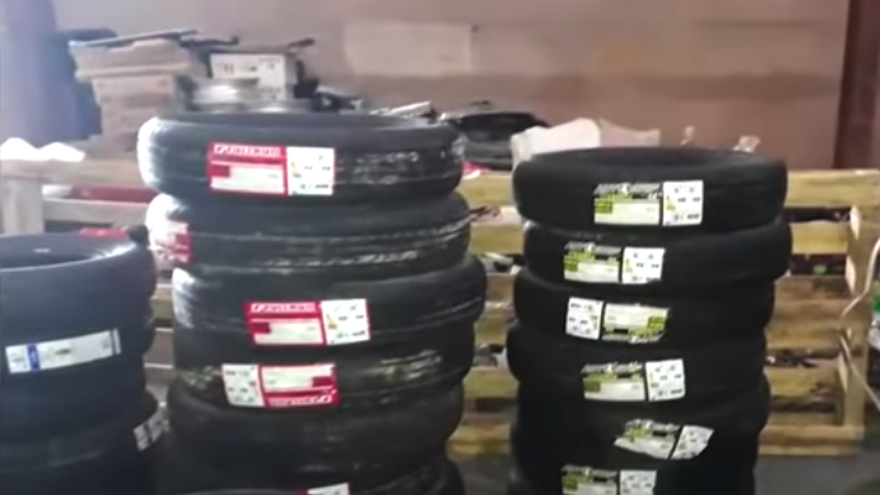
The police confiscated hundreds of auto parts in addition to cash and three houses belonging to a citizen who was selling accessories and auto repair services. (Capture/You Tube)

14ymedio bigger14ymedio, Havana, August 2, 2020 — In the bull’s eye of the police and the official campaigns are now hoarders and coleros (someone paid to stand in line for someone else), whom the Government blames for the shortages. The case of a resident in the Havana municipality of Cotorro, accused of “illicit economic activity” and “”contraband,” is added to other arrests of this type denounced in the national media.

The police confiscated hundreds of auto parts, in addition to cash and three houses belonging to a citizen who was selling accessories and auto repair services, according to a report transmitted on July 29 by the Caribe Channel, in which it defined the businessman’s arrest as part of “the battle against illegalities and corruption.”

In the report can be seen images of police officers entering a home with several rooms in which there are hundreds of spare parts for vehicles. The video also includes a tour through another two houses linked to the accused. One of them was rented out as a glassworks to another citizen. continue reading

In this domicile, the police seized 158 plates of glass and 17 window frames, “on which they were working to determine their origin,” the report specified. In the cash registers of the three homes, they found 15,870 euros, 1,100 dollars, 68,718 convertible pesos and 57,010 Cuban pesos.

First Lieutenant Susana Cañizares Corps said that the “negative economic effect” on the country is more than 306,000 Cuban convertible pesos. This affirmation is accompanied by the statement of Gustavo Reyes Sierra, business director of the State company, Auto Parts, who says he has no idea how the accused “can have this volume of auto parts.”

Sierra reminds us that when these types of products are imported as personal effects, “in no case can they be used commercially. This is such a considerable quantity it had to be acquired inside the country,” he adds, saying he opened his door to businesses or individuals with the legal capacity to import commercially and they might be involved.

“There’s a huge volume, and they’re from the same lot,” Sierra says about the hundreds of tires found in the place. A statement that points to a possible network of corruption in the State import infrastructure, a route that is regulated by the authorities but frequently used for bringing in merchandise to the black market.

This Wednesday’s report is nothing new. From the beginning of the pandemic they have escalated persecution and punishment of those who practice “illicit economic activities,” “speculation” and “hoarding,” crimes that are especially sensitive for a country that suffers from chronic shortages, now aggravated by Covid-19.

Several trials of these presumed offenders have been televised as “exemplary measures,” and the police have allowed State media to accompany the agents on the raids to capture the criminals, who are identified and interviewed on camera.

Translated by Regina Anavy

_______________

COLLABORATE WITH OUR WORK: The 14ymedio team is committed to practicing serious journalism that reflects Cuba’s reality in all its depth. Thank you for joining us on this long journey. We invite you to continue supporting us by becoming a member of 14ymedio now. Together we can continue transforming journalism in Cuba.

Remittances in Dollars to Cuba Through Cubamax and VaCuba Are Halted

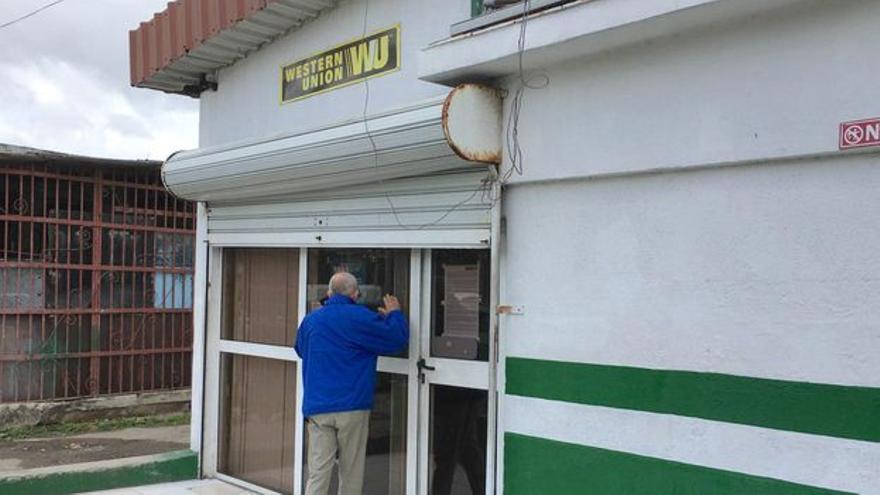
Western Union continues sending remittances to the Island, but not in dollars, only in CUC (Cuban convertible pesos). (14ymedio)

14ymedio bigger

14ymedio, Havana, July 31, 2020 – The delivery to Cuba of remittances in dollars sent from the United States, which had begun through the agencies Cubamax and VaCuba, is now paralyzed.  On Thursday, el Nuevo Herald reported that the French bank Crédit Mutuel, for fear of possible sanctions by Washington, stopped service to Fincimex, the financial arm of the Cuban army, which controls these deliveries.

“Crédit Mutuel closed its doors to Havanatur, Cubapack and American International Service,” said one the Nuevo Herald’s sources, who requested anonymity for fear of reprisals. “They tried to get other banks to take this business, but none wanted to for fear of the sanctions. What’s sad is that the people in Cuba need dollars, and it deprives their families of sending support to them.”

Western Union, which will continue sending remittances to the Island, denied on Wednesday, however, that it is sending dollars. The addressee in Cuba will continue to receive the money in CUCs (Cuban convertible pesos), which are losing value day after day in the informal market and are not accepted in the new hard currency stores. continue reading

The closing of the French bank accounts also hurts other Cuban Government businesses, like the sending of packages from the U.S. through Cubapack, and individuals traveling to the Island. One of the sources cited by the Miami newspaper said that charter flight agencies cannot pay Havanatur due to the closing of the accounts.

On June 3, The U.S. Department of State included Fincimex on the “black list” of Cuban entities with which Americans are prohibited from doing business. In its press release, the Department notes that these “subentitites”, as it calls them, “disproportionally benefit the dictatorship of the Castros”, which it accuses of using “the profits from these businesses to oppress the Cuban people and finance its interference in Venezuela”.

Translated by Regina Anavy

________________

COLLABORATE WITH OUR WORK: The 14ymedio team is committed to practicing serious journalism that reflects Cuba’s reality in all its depth. Thank you for joining us on this long journey. We invite you to continue supporting us by becoming a member of 14ymedio now. Together we can continue transforming journalism in Cuba.

The Resurgence of the Coronavirus Frightens Cuban Authorities

The lines at the shops aren’t helping to contain the expansion of Covid-19 throughout the Island. (14ymedio)

14ymedio bigger

14ymedio, Reinaldo Escobar, Havana, July 31, 2020 – The resurgence of the coronavirus has frightened the Cuban authorities, who have decided to apply new measures that affect Havana and Artemisa, places with a concentration of new cases.

This Friday, the figure for confirmed cases (11) is higher than that of yesterday (9), but it shows a descent with respect to the worrisome data of the preceding days, when 33 cases were reported. It remains to be seen if the data are timely or confirm a tendency to spike provoked by the last infections. Of the 50 local transmission events that have happened in Cuba since March, six continue to be active and are concentrated in certain provinces.

Two of them happened in Bauta after the celebration of a religious festival, and another four in the capital, in the municipalities of Centro Habana, Cerro and La Lisa. This last, according to what was known on Thursday, was the most recent resurgence, which affected 11 people. continue reading

Local authorities in Havana have warned that there are municipalities with very high risk in the capital; among those are La Lisa, La Habana del Este, Centro Habana, Marianao, Diez de Octubre and Cerro. Arroyo Naranjo, San Miguel del Padrón, Playa, Plaza de la Revolución, Regla and Cotorro are considered high risk, and La Habana Vieja, Boyeros and Guanabacoa remain medium risk.

In order to stop the transmission, the plan proposes that Havana consider forming groups of health workers or students to intensify surveys, in addition to increasing testing according to the risk in each zone. Besides municipalities, there are businesses and areas considered high risk, such as beaches, transport, swimming pools and restaurants, where there should be more testing.

Havana continues relying on homeopathy as a prevention method and will keep giving the product PrevengHo-Vir to the vulnerable population and to those already in quarantine through contact or return to the Island. Also, Nasalferon (a type of interferon), will be sent to workers like health personnel and drivers, who come into contact with widespread populations, sick or healthy.

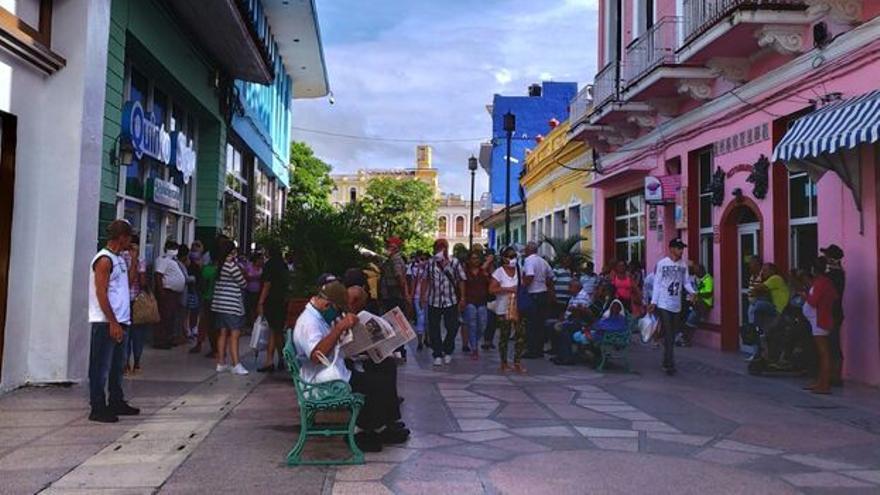
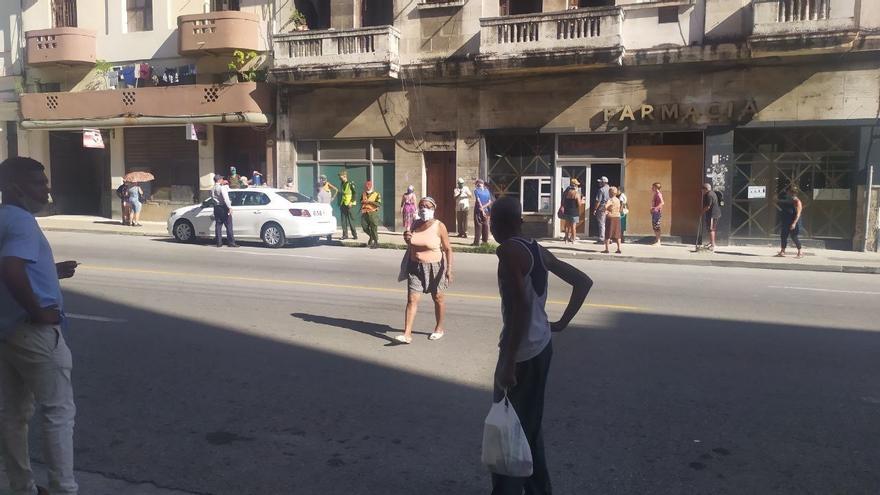
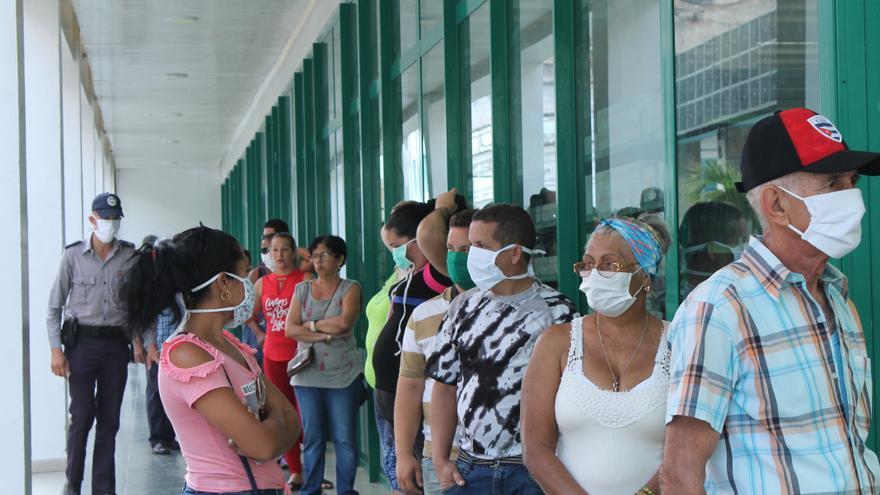
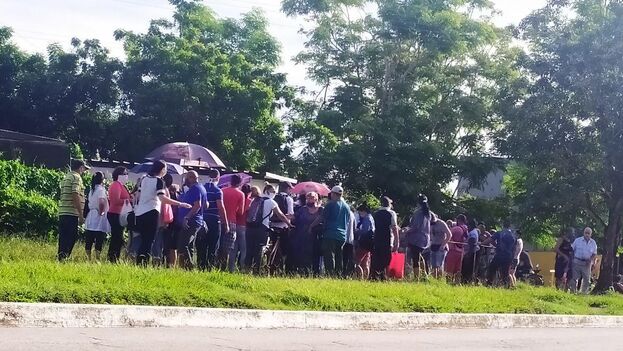
What the authorities most insist upon is the need to educate the population, which, they maintain, has lost the perception of risk. In the Cuban capital, after ordering phase 1 on July 3, there’s been a relaxation of prevention measures plus a large number of people in the streets. The long and many-times crowded lines to buy basic products also make any strategy to contain the virus more complex.

Health officials have noted the lack of social discipline as a cause for the present outbreaks, and they point to private parties, family reunions and inconsistent use of a mask as the main problems. However, they avoid mentioning the crowds on public transport and the lines to buy food as two high-risk scenarios.

In Artemisa in the last 15 days, the rate of incidence has grown enormously and is situated at 12.24%; on Monday it was 6.41%. The governor of the province says that he’s trying to control it by complying with the ordered quarantine. There are 14 isolation centers in the province with more than 700 places, which now house the contacts of everyone infected in Bauta.

The Minister of Public Health, José Ángel Portal Miranda, gave a figure 153 patients with Covid-19 in Cuba, of which 152 are in stable condition, while the figures on deaths have remained steady for two weeks.

Translated by Regina Anavy

________________

COLLABORATE WITH OUR WORK: The 14ymedio team is committed to practicing serious journalism that reflects Cuba’s reality in all its depth. Thank you for joining us on this long journey. We invite you to continue supporting us by becoming a member of 14ymedio now. Together we can continue transforming journalism in Cuba.

Defending the ‘Coleros’ and ‘Dishonest Speculators’

Cubans spend a huge part of their lives standing in line to meet their everyday needs. (14ymedio)

14ymedio biggerElías Amor Bravo, Economist, 29 July 2020 — Granma, on its website, says that complaints from readers about so-called “dishonest speculators” are accumulating. Really, you can’t fall much lower or be worse. On the part of Granma, of course.

The article, I can’t remember the author, describes the long lines and the coleros, who are people who are paid by others to stand in line for them. Both things are plentiful in these months of COVID-19 in Cuba, but the most important question isn’t asked: Why do the lines and coleros exist? It’s curious that the article doesn’t mention Miami, Madrid or Mexico City, where no Cuban has to get up at dawn and spend sleepy hours of sweat standing in interminable lines in order to get groceries. It’s unthinkable.

In Cuba, the line is a hardship, something that can’t be avoided if you want to eat every day and have some basic cleaning product to combat the dirt. And Granma, instead of going to the root of the problem, which they know perfectly well, attacks and insults the “dishonest speculators”, who are just the tip of the iceberg. continue reading

The article describes the numerous and varied behaviors of “resolving” that Cubans practice, as if it were a matter of a crime, “like standing two or three times in line for several people, selling their spots to anyone who can pay at high prices, to accelerate their moment of buying”.  Serious crimes, no doubt. They don’t say, however, that this happens when the consumer, after desperately trying to buy a product for several unfruitful days of standing in line, ends up running to the service that assures him of being among the first to have access to one of the scarce products for sale.

Equally condemned are those who “whisper in your ear that you can have what you want (wet wipes, diapers, chicken, picadillo, oil, air conditioners, freezers…), but only if you’re ready to pay double, triple or who knows how much in Cuban convertible pesos (CUC) over the price in the State stores”. It’s normal; for a start, these people can communicate their services however they find it convenient, and, in addition, they have every legitimate right in the world to profit from an activity in which they spend time, strength and, in many cases, economic resources.

And of course, immediately the Ministry of Interior arrived and ended the fun, with the emission of sanctions for more than 1,285 coleros from the beginning of the pandemic, with the certainty that not everyone who received a fine actually engages in these activities. There’s always a threat of repression thrown in, just in case.

So that, in order to be prepared for what the Ministry views as a growing phenomenon, and thus nothing is said about how to address it with economic measures that are necessary and advisable, the Government announces through Granma more repression against what it calls “the indolence of people with no social commitment, dedicated to accumulating products needed by families in the midst of a context of shortages and a national health emergency”. Once more, incredible but true. Insults, condemnations, judgments about presumed crimes, lack of respect for the principle of presumed innocence. For the Communists, the guilty are the innocent.

The columnist even “doubts the humanity of these beings, who, motived by individualism, forget that the children, elderly, pregnant and sick won’t have the opportunity to get what they need”, without realizing that thanks to these dehumanized beings, many of the above-mentioned people now manage to have access to the goods and services they need but can’t get in any other way, not even in their dreams. Rather than committing crimes, these beings are providing a benefit to many people who are willing, logically, to pay for that. Nothing is free, and the Communists know it, although they toe the Party line when it’s convenient.

The amount of the fines is also questionable, because they don’t bring in a lot of money. If the fines were excessively high, the sanctionable act would demand a higher price from the client, which would reduce the size of the demand and, thus, the potential capacity of the offer. So these fines of 100 to 300 pesos are perfectly designed by the Government to keep the coleros and “dishonest speculators” continue to offer their services. Ask the authorities why.

The article continues along other paths, pointing out that many coleros are the same people in charge of organizing the lines in these establishments, which makes the crime worse, but without recognizing that the problem could be solved by supplying enough products in the shops. Then in Havana, as in Madrid, the lines would disappear, along with the coleros and the speculators. An impossible dream for several generations of Cubans who know that their economic system is incapable of accomplishing this basic life goal.

Proposals like scanning identity cards to organize the lines, improving control inside the shops, using the ration card, administrative surveillance of workers, etc. are the Communist solutions to this phenomenon, which, if applied, would surely multiply. Don’t be deceived. These proposals are the ones that Granma says must reach online readers of the newspaper. I’m afraid there are many people who are ignorant about economic matters and only see the situation through an absurd ideological lens that has reached its end. Perhaps the moment for education has arrived.

Translated by Regina Anavy

_____________________

COLLABORATE WITH OUR WORK: The 14ymedio team is committed to practicing serious journalism that reflects Cuba’s reality in all its depth. Thank you for joining us on this long journey. We invite you to continue supporting us by becoming a member of 14ymedio now. Together we can continue transforming journalism in Cuba.