
The Choice of the Official Cuban Writer Nancy Morejon To Preside Over the Poetry Market Is Criticized

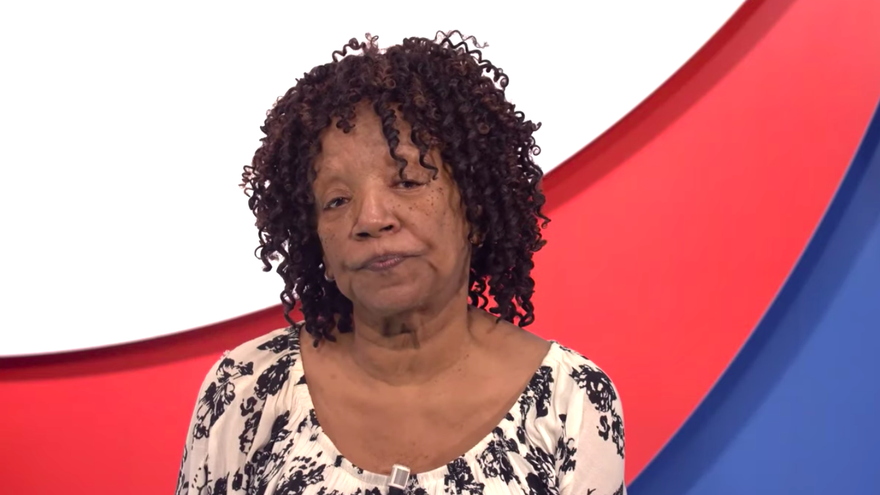
In addition to attending the inauguration, Morejón has planned two presentations on Caribbean poetry for June 7 and 10. (Captura)

14ymedio bigger14ymedio, Havana, 25 May 2023 — The Cuban writer Jacobo Machover criticized the election of the official poet Nancy Morejón as honorary president of the Poetry Market, an important literary event held annually in Paris since 1983. Through a review of the history of support for the regime that has characterized Morejón, the professor also argues that it is a “crazy” decision, which will undermine the reputation of the event.

Held from June 7 to 12 in the Saint-Sulpice square of the French capital, the Poetry Market will be inaugurated by Morejón, whom the official site of the event characterizes as a “translator of French and French-speaking poetry,” in addition to being the winner of several distinctions, some of them awarded by institutions in France.

In an open letter to the organizers, Machover points out that Morejón is aligned with the “the dictatorial regime prevailing in Cuba” and is part of its “cultural authorities.” In addition, she is director of the magazine Unión, organ of the “very official” Union of Writers and Artists of Cuba (UNEAC), which “only admits into its ranks the intellectuals close to power and from which all dissidents or critics are mercilessly excluded,” he says.

As part of UNEAC, Morejón has been a signatory of several documents of loyalty to the regime, the most recent of them, recalls Machover, is the “Message of Cuban educators, journalists, writers, artists and scientists to their colleagues from other countries,” signed in October 2022, in which the poet’s signature appears in sixth place. continue reading

In that text — supported by, among others, the “official biographer of Fidel Castro and the Venezuelan Hugo Chávez,” the Spanish-French journalist Ignacio Ramonet — she expressed her full support for the Government, in addition to alleging the non-existence of repression by the authorities, a situation described as “a distortion of our reality.”

Machover reflects on the “truth about Cuba” that the UNEAC message defended, saying that the signatories hide the existence of “more than a thousand political prisoners detained following or on the sidelines of the peaceful demonstrations that took place on July 11 and 12, 2021 throughout the country.”

“Among the people imprisoned and sentenced to insane sentences are several brave artists, writers and poets, who refuse to abide by the obligation of everyone, intellectuals or the ’people’s people’, to dedicate themselves to permanently praising the regime,” adds the professor, who points out Morejón’s “custom” of signing this type of document, which justifies “the worst governmental crimes.”

Another letter that the poet signed twenty years ago, says Machover, was the one that justified the arrest and conviction of 75 dissidents, several of them writers, during the so-called Black Spring of 2003. Among them was the poet Raúl Rivero, whom Machover has translated and published in French. In addition, the document intended for the “peoples of the world” validated the execution of three young people who had tried to escape from Cuba by hijacking the small ferry boat of Regla.

One day after the protests of July 11, 2021, the Ministry of Culture had several intellectuals appear on Cuban Television to denounce the demonstrators. Morejón then said: “These events of yesterday, unacceptable, condemnable in every way, are part of an old pandemic as terrible as this one that plagues us (Covid-19): that of the empire.”

The writer points out that Morejón “is nothing more than an accomplice and propagandist of the Castro regime, which has prevailed for more than 64 years,” and her honorary presidency in the Poetry Market insults “freedom of expression throughout the world,” which the event defends.

“I demand that this error be corrected and that the poet Nancy Morejón be removed from the honorary title that has been improperly attributed to her. That act would contribute to the freedom of Cuba and, of course, of its poetry and literature, which constitute the common heritage of all writers and poets throughout the world,” concludes Machover.

The Poetry Market, created in 1983 by the editor Jean-Michel Place and the critic Arlette Albert-Birot, summons poets and publishers from all over the world every spring in Paris. It is currently organized by c/i/r/c/e, a French association dedicated to literary, critical and artistic studies. In addition to attending the inauguration, Morejón has planned two presentations, on June 7 and 10, on Caribbean poetry,

Translated by Regina Anavy

____________

COLLABORATE WITH OUR WORKThe 14ymedio team is committed to practicing serious journalism that reflects Cuba’s reality in all its depth. Thank you for joining us on this long journey. We invite you to continue supporting us by becoming a member of 14ymedio now. Together we can continue transforming journalism in Cuba.
Cuba Will Remain on the List of States That Do Not Cooperate in the Fight Against Terrorism With the United States

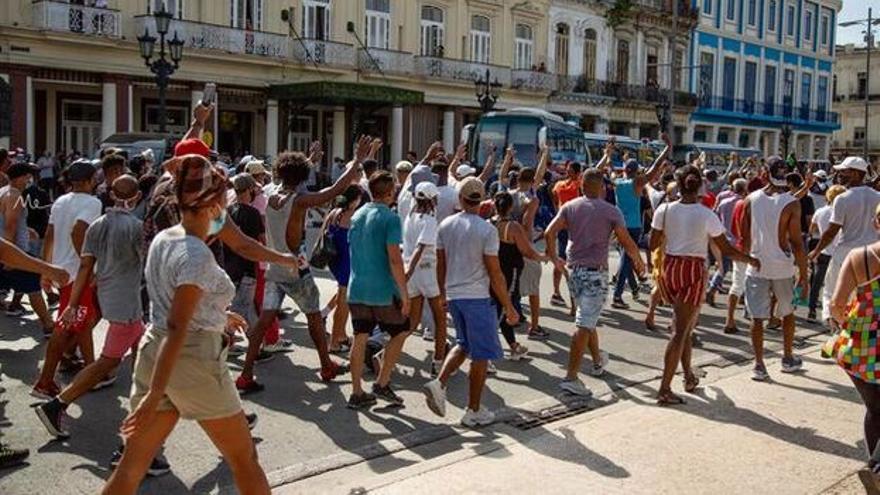
The protests of July 11, 2021 put an end to any potential elimination of some US sanctions on Cuba. (Marcos Évora)

14ymedio bigger14ymedio, Madrid, 23 May 2023 — Joe Biden’s Administration has once again included Cuba in the list of countries that “do not fully cooperate” in the fight against terrorism, a decision that maintains the line of previous years.

“I hereby determine and certify to Congress that the following countries are not fully cooperating with the anti-terrorist efforts of the United States: Cuba, Democratic People’s Republic of Korea (North Korea), Iran, Syria and Venezuela,” wrote the Secretary of State, Antony Blinken in the notice, published on Tuesday in the Federal Registry.

The British agency Reuters, which has advanced the news, consulted with the State Department over the reasons that have led to keeping Cuba on this list, but for the moment has not received a response.

Cuba’s reaction has not been long in coming. “The mendacious accusations against Cuba regarding terrorism are an abominable crime that the United States has practiced without scruples and that, with opportunism, it uses as a tool of political coercion,” the Minister of Foreign Affairs, Bruno Rodríguez, wrote on his Twitter account.

It is the third consecutive year that the State Department, which must provide the list to Congress every year, includes the Island in this category, different from that of states that sponsor terrorism, which has not yet been decided. In 2020, the Government of Donald Trump added Cuba to this list for the first time since 2015. On that occasion and later, the State Department attributed it to the regime’s refusal to extradite to Colombia the guerrillas of the National Liberation Army who were in Havana, as Bogotá requested after an attack that left more than twenty dead. The Cuban government affirmed that the protocol of the talks prevented it, but the reason did not convince Washington, which cites this reason in subsequent reports. continue reading

It is joined by the protection that, according to the United States, Cuba offers to criminals who are wanted and claimed in their countries for crimes linked to terrorism.

Both reasons are also alleged from Washington when adding the Island to the list of states that sponsor terrorism, which is pending an update. Although very similar, the consequences are more serious for this second case.

According to the State Department, the marketing or granting of export licenses for defense items and services with countries that are on the list of states that do not cooperate with terrorism is prohibited.

Meanwhile, in the case of terrorist sponsoring states, “people and countries that enter into commercial deals are penalized, US foreign assistance is limited, exports and sales in the defense area are prohibited and certain controls are established on exports of dual-use items.”

The Cuban government has been fighting for years to be removed  from these listings that hinder foreign trade, and its hopes were placed in the Joe Biden Administration. The Democrat, who at the beginning of his mandate hinted that he would study a change in policy towards the Island, not only followed the line of his predecessor, Donald Trump, but also issued new sanctions following the repression unleashed by the regime against the peaceful protests of July 11, 2021.

Translated by Regina Anavy

____________

COLLABORATE WITH OUR WORKThe 14ymedio team is committed to practicing serious journalism that reflects Cuba’s reality in all its depth. Thank you for joining us on this long journey. We invite you to continue supporting us by becoming a member of 14ymedio now. Together we can continue transforming journalism in Cuba.
The Cuban Regime Will Discuss ‘The Constitutional Design of the State’

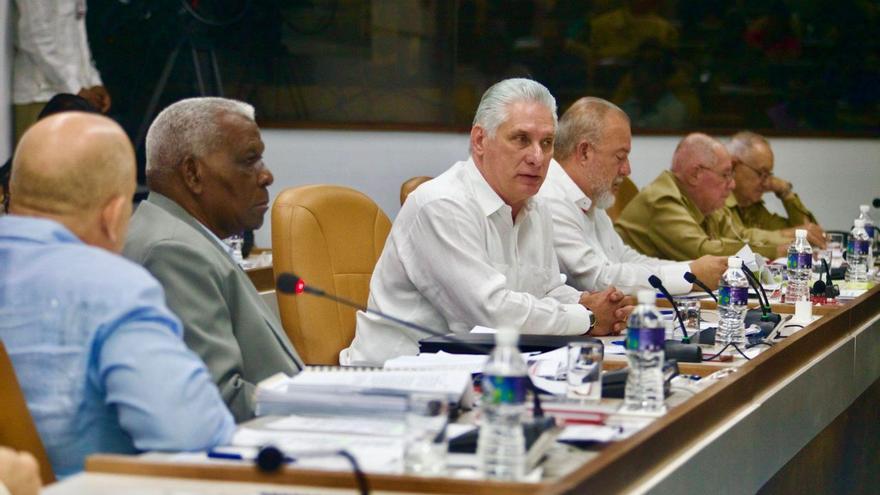
The highlight of both meetings will be the discussion on the “development of the economy” and “the solution of problems” of high priority. (Twitter/Cuba Presidency)

14ymedio bigger14ymedio, Havana, 23 May 2023 — The two highest powers in Cuba will meet this Tuesday. While the Parliament will discuss for two days “the constitutional design of the State and elements of the Constitution,” the Communist Party began its Sixth Plenary of the Central Committee focused on economic aspects. Both meetings take place a few days after Russian Deputy Prime Minister Dmitri Chernishenko, during his visit to Havana, suggested “some modifications” in the legislation before the country is completely incorporated into Moscow’s “roadmap.”

The call for the Plenary was only disseminated in the official media on Monday, something that has made Cubans suspicious about the importance of these meetings, which define everything from economic policies to cultural guidelines. The urgency of the date and the context of serious crisis that the Island is experiencing, together with Chernishenko’s statements, predict that important announcements will emanate from this event.

Chaired by Cuban President Miguel Díaz-Canel, the plenary of the Party is attended as special guests by Deputy Prime Ministers Ramiro Valdés and Ricardo Cabrisas — head of Foreign Trade and Foreign Investment — and the Minister of the Armed Forces, General Joaquín Quinta Solá, who will also assess the “compliance” with the Political and Economic Guidelines of the Government and evaluate the role of the National Assembly and the Party. It was not announced, however, whether Raúl Castro will be at any of the sessions.

As for the meetings of the National Assembly, the deputies will also discuss “the laws that regulate the functioning of the different structures of People’s Power,” while the Party will focus the conversation on the “assessments, criticisms and proposals” about the Cuban economy that they have received from 48,000 population centers throughout the Island. continue reading

The highlight, the official press points out, will be the discussion about the “development of the economy” and “the solution of economic problems (of) a high priority,” but little else has been said about this accountability.

The announcement of the meetings has been commented on by Cuban economist Pedro Monreal on Twitter. He asks Havana, first of all, for “data instead of a story” and suggests, before any analysis, to attend to the “verifiable situation” as presented in May 2023. He criticizes the Party plans to follow the dynamic of “counting ’fulfillments’” by passing them off as achievements, and asks the Party to “self-critically evaluate the results.”

In addition, he recalls the priorities, at least on paper, during the “update” of the Guidelines in 2021: solving the country’s structural problems and favoring the socialist state enterprise; promoting agricultural development; replacing imports with local production; an adequate flow of exports; boosting tourism; achieving financial balance and “improving consumption and the standard of living of the population.”

The plan crashes against reality point by point, since the official sources themselves confirm — this same month — that 480 state companies (24% of the total) closed the previous year with losses. The profit on the net sales of those same companies reached 17.2%, which represented a loss of 20.9 billion pesos. As a result, in 2023 the State will have to spend 52 billion on subsidies and another billion to make up for the losses.

As for structural problems, food and agriculture, it is evident, Monreal maintains, that the “food security crisis, instability and usual deficit of energy supply,” the “acute fuel crisis” and non-compliance with exports shatters the Government’s plan.

Regarding tourism, the level of expected visitors was not reached in 2022 either, and the forecast had to be rectified on several occasions. Not to mention, Monreal points out, the low rate of hotel occupancy, which also warns about the “absence of official data on the general level of foreign investment,” which the regime has stimulated with “fiscal and discriminatory investments with respect to national capital.”

As for the “consolidation” of the Ordering Task* — another of the great objectives of the Party during the last two years — Monreal details its “resounding failure,” since state workers are not “in better condition,” as the Government promised in 2021. In addition, the Government abandoned two essential features of the Task: monetary and exchange rate unification, leading to a “persistent macroeconomic imbalance with no solution in sight” and a growing dollarization of the economy.

Scientific and technological development also failed, a reality that eloquencely demonstrates the fact that the State has only invested 0.7% of its budget to boost the sector in 2021 and 2022.

And, finally, the failure is also evident in terms of social justice, improvements in consumption and elevation of the quality of life. “The absence of official data on levels of poverty and inequality fail to cover up the increase in those two dimensions of social exclusion,” says Monreal, in addition to pointing out that the purchasing power of Cuban families has been drastically reduced in recent years.

The economist demands from Parliament and the Communist Party a clear analysis of all these factors to assess whether 2023 will be a “better year” for Cuba. “Anything else would be dull propaganda or incompetence,” he summarizes.

*The Ordering Task is a collection of measures that include eliminating the Cuban Convertible Peso (CUC), leaving the Cuban peso as the only national currency, raising prices, raising salaries (but not as much as prices), opening stores that take payment only in hard currency, which must be in the form of specially issued pre-paid debit cards, and a broad range of other measures targeted to different elements of the Cuban economy. 

Translated by Regina Anavy 

____________

COLLABORATE WITH OUR WORKThe 14ymedio team is committed to practicing serious journalism that reflects Cuba’s reality in all its depth. Thank you for joining us on this long journey. We invite you to continue supporting us by becoming a member of 14ymedio now. Together we can continue transforming journalism in Cuba.

The Lack of Fuel Forces the U.S. Embassy To Rent Electric Cars From the Cuban Government

The U.S. Embassy has rented at least four electric vehicles manufactured by China. (Cubatrade)

14ymedio bigger14ymedio, Havana, 25 May 2023 — The U.S. Embassy in Havana has been forced to rent “numerous” electric cars, made in China, from the Cuban Government due to the fuel shortage on the Island, an anonymous State Department official confirmed to the Miami Herald. In a statement sent to the newspaper, the institution said that it will “continue to do so until the crisis subsides” and they can use their own vehicles.

Last April, the fuel crisis in Cuba worsened, attributed by the Government of Díaz-Canel to the non-compliance with the agreements of its main suppliers. Although several oil tankers have entered ports in recent weeks, the supply has not been sufficient to meet national demand, and several production lines remain out of service.

The U.S. official explained to the Miami Herald that they simply use the Chinese vehicles because “there are no electric cars made in the United States in Cuba available for rent.”

The U.S.-Cuba Economic and Commercial Council, based in New York, said that the diplomatic headquarters leases four cars and mentioned the tensions between Washington and Havana that prevent U.S. companies from sending vehicles to the Island. continue reading

The Council, led by businessman John Kavulich, said that in 2017 the Office of Industry and Safety (BIS) issued the first license to Premier Automotive Export (PAE), based in Maryland, to export an electric vehicle and a charger to the U.S. Embassy on the Island. However, in January 2022, the Undersecretary of State, Brian A. Nichols, rejected an offer from the company for a donation of four battery chargers to the diplomatic headquarters.

At the end of September 2022, the U.S. Department of Commerce issued an authorization to Premier Automotive Export to export motorcycles and electric skateboards, which can be purchased by residents and private companies of the Island.

However, John Felder, director of the company, confirmed to the Miami Herald that they have not been able to export a single vehicle to private companies because the requirements of the Cuban government have delayed the process.

In its Cubatrade blog, the Council explains that the fees for sending an electric vehicle through a financial institution represent a “substantial percentage” of the price of the car, which also hinders export operations.

The ties of cooperation between Havana and Beijing are increasingly close, as are those with Russia. Chinese companies have had preferential treatment from Havana to ensure their incursion into the Cuban market and enjoyed the use of facilities to install the automobile assembly plant in 2019 by the Tianjin Dongxing Industrial and Commercial Group, in partnership with the Cuban state company Minerva.

The official press published last January that since opening the joint venture, called Electric Vehicles of the Caribbean (Vedca),  located 15 kilometers from the center of Havana, it has manufactured 2,500 motorcycles, 1,500 tricycles and 1,000 children’s cars, whose sales exceed six million dollars. Cubadebate explained at that time that the Chinese part represents 58% of the investment with the contribution of technology and equipment, while the Cuban counterpart offers the installation and remodeling.

Translated by Regina Anavy

____________

COLLABORATE WITH OUR WORKThe 14ymedio team is committed to practicing serious journalism that reflects Cuba’s reality in all its depth. Thank you for joining us on this long journey. We invite you to continue supporting us by becoming a member of 14ymedio now. Together we can continue transforming journalism in Cuba.
Contraceptive Implants, the ‘Ideal Product’ To Prevent Teenage Pregnancies in Cuba

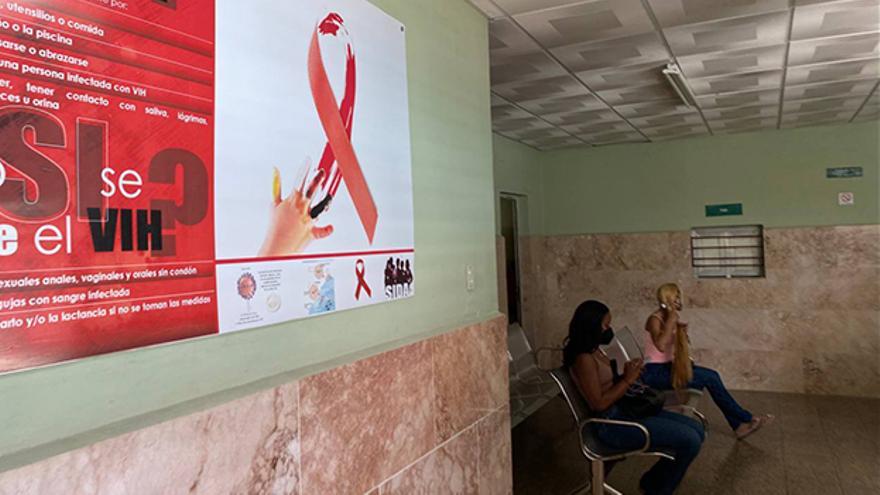
Cuba is facing an upsurge in sexually transmitted diseases and unwanted pregnancies due to the shortage of contraceptives. (14ymedio)

14ymedio bigger14ymedio, Havana, 22 May 2023 — In the midst of a shortage of condoms and an upsurge in sexually transmitted diseases, the Health authorities in Santiago de Cuba announced a campaign for adolescents to get contraceptive implants.

As published this Sunday by the provincial newspaper Sierra Maestra, the suggestion seeks to “benefit sexually active girls” with an “ideal product” to reduce the incidence of early pregnancy. The head of the Family Planning Program of Santiago de Cuba, Estrella Soler Alonso, explained that the implant is “very safe and effective,” unlike other contraceptive methods, such as the pill, which require a frequency to be effective.

Both this “subdermal hormonal” implant (under the skin) and the intrauterine device (IUD) are methods widely used in Latin America to prevent pregnancy and are affordable for most low-income women; however, they do not protect from sexually transmitted diseases. Among their benefits are that they are long-lasting and do not generate hormonal changes like the pills.

Soler Alonso explained that the implant contains a hormone derived from progesterone, effective in preventing ovulation, that makes the cervical mucus thicker, thereby preventing sperm from entering the uterus for fertilization. This device, the size of a match, has a useful life inside a woman’s body for five years, she added. continue reading

The official note does not explain where the devices come from, but since they are not national technology, it is likely that they are imported or are part of a donation.

Medical personnel of the Maternal and Child Care Program of the province will visit schools and communities to “dialogue” about the “good qualities of the contraceptive method” and, subsequently, with the consent of the adolescents and their legal guardians, place the implant.

The specialist pointed out that they will identify adolescents who are part of a reproductive risk group, due to the insufficient maturity of their reproductive systems. They will have complications during pregnancy or childbirth, in addition to the “unfavorable psychological and social consequences that pregnancy can bring at this stage.”

Women in vulnerable situations who for health reasons cannot use another contraceptive will also be included in the campaigns, the specialist added. In addition to the campuses in the communities, adolescents can receive the implant in the Armando García, Ramón López Peña and Josué País García polyclinics.

The doctor said that 150 mg medroxyprogesterone, an injectable drug that prevents pregnancies for three months, is available in the offices, but only with a prescription issued by the Family Planning unit. However, Aminor, a synthetic oral progestin contraceptive for patients who have estrogen intolerance, is sold without a prescription in pharmacies.

Cuba has one of the highest teenage pregnancy rates in Latin America and the Caribbean, with a fertility rate of 51.10 per 1,000 women between the ages of 15 and 19, according to 2018 data from the World Health Organization. Last January, the Government recognized the failure of its programs to contain this public health problem, due to the lack of contraceptive methods and sex education.

Translated by Regina Anavy 

____________

COLLABORATE WITH OUR WORKThe 14ymedio team is committed to practicing serious journalism that reflects Cuba’s reality in all its depth. Thank you for joining us on this long journey. We invite you to continue supporting us by becoming a member of 14ymedio now. Together we can continue transforming journalism in Cuba.
After Uniforms and Balls, Cuban Baseball Is Left Without Bats

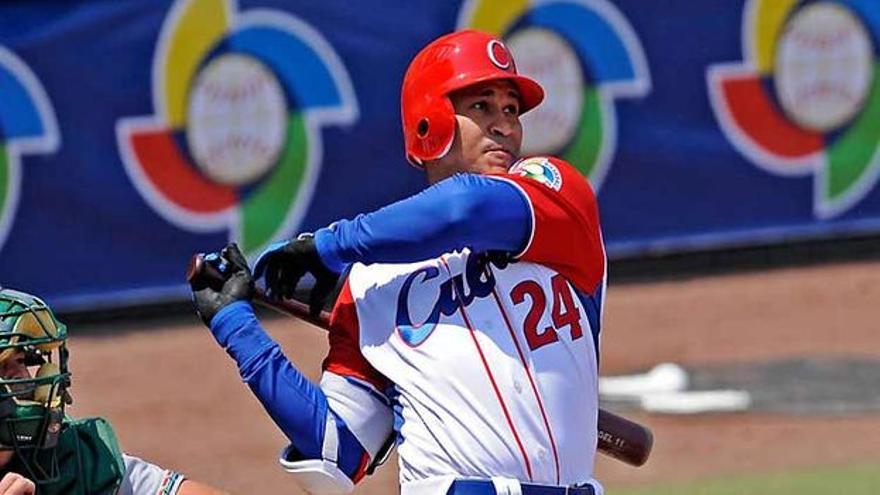
The Special Baseball Series began in March and ends on June 3. (PL)

14ymedio bigger14ymedio, Havana, 24 May 2023 — In addition to the desertions of athletes, the players who still remain in the National Baseball Series (SNB) must juggle in each game without the necessary elements. The last episode of shame in the SNB occurred this Tuesday, when, in the match of the Elefantes de Cienfuegos against the Gallos de Sancti Spíritus, the players ran out of bats just a few minutes after the challenge had begun.

What happened was broadcast by Tele Rebelde and led the provincial newspaper 5 de Septiembre to dedicate a long text this Wednesday to the difficulties faced by the main “sports spectacle” of the Island.

The newspaper recognizes the debacle of baseball, considered the national sport and the “greatest priority” of the National Institute of Sports, Physical Education and Recreation (INDER). Despite the fact that “baseball is always defended by tooth and nail,” the official media rules out the success of the 62nd edition of the SNB, in which 16 teams participate, due to the “difficult economic conditions” that the country is going through.

5 de Septembre points out that the “incredible incident” that occurred at the José Antonio Huelga stadium, in Sancti Spíritus, highlighted the situation that other teams in the league could face. According to the report, the Cienfuegos selection warned in advance about the lack of equipment, but there was no response. continue reading

Athletes also face a shortage of balls. The National Commission reported on May 18 that the Series will continue its training with the national balls, of the Batos brand, due to a delay in the shipment of the official TeamMate balls, an Italian company based in the Republic of San Marino, which since 2022 has been a sponsor of the tournament.

The newspaper says that TeamMate last year forced a postponement in the start of the Elite League due to a delay in the delivery of uniforms, and that they even arrived on the Island with spelling errors. The balls provided by the company, the report adds, are manufactured in “distant China.”

The official newspaper says that if TeamMate had fulfilled the terms of the contract, the ball would have been “more lively” and would not have “enlarged” the bad performance. As a result, “it is not surprising that during the most recent subseries the pitchers have been submersed [sic], the bats depleted and the scoreboards exhibiting multiple poor results and anemic offensives.”

To the litany of complaints, says 5 de Septembre, is added the extra charges of the National Commission for the purchase of lost balls in the stadiums, which until last May 17 totaled 4,207. The most serious cases are the matches that have taken place in the stadiums of Guantánamo, Villa Clara, Isla de la Juventud, Pinar del Río and Havana, where between 17 and 20 balls are lost in each game.

Another “mistake” of the National Series is the continuous complaint of athletes about the lack of food or the poor quality of food during the games, as well as the low salaries. There is also “the constant exodus of players, by contracts in other leagues or by personal decisions, which turns the directors into true magicians,” the newspaper says.

With the Central American and Pan American Games just around the corner, to be held in June in El Salvador, the official press warns that Cuba is “unlikely” to have good results when athletes “are literally torn to shreds on the ground.”

Translated by Regina Anavy 

____________

COLLABORATE WITH OUR WORKThe 14ymedio team is committed to practicing serious journalism that reflects Cuba’s reality in all its depth. Thank you for joining us on this long journey. We invite you to continue supporting us by becoming a member of 14ymedio now. Together we can continue transforming journalism in Cuba.
Three Other Cuban Hockey Players Escape, This Time in Chile

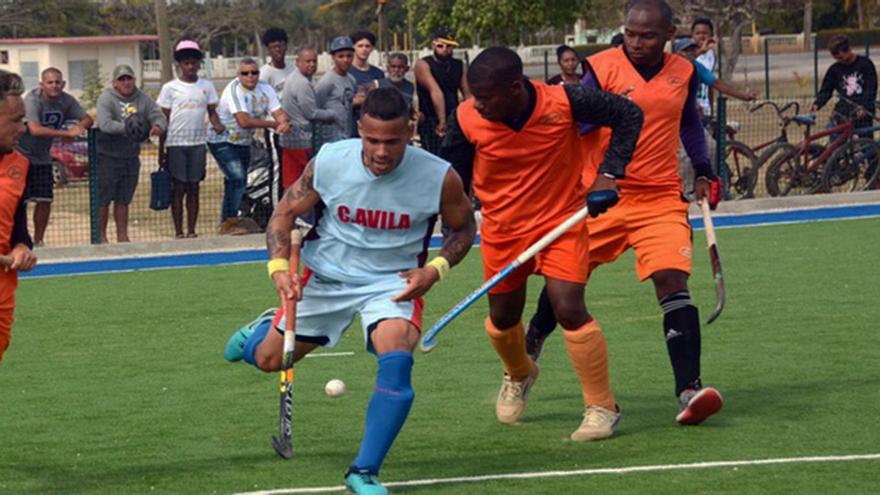
The Cuban team faced Manquehue in their debut in the Rudi Westendarp Cup in Chile. (Jit)

14ymedio bigger14ymedio, Havana, May 24, 2023 — The Cuban regime still had not digested the escape in Spain of the members of the field hockey team, Yadira Miclín Galbán, Marianela López and Daylin Suárez Pérez, when journalist Francys Romero revealed on Tuesday the escape of three other athletes of the same specialty. “Lázaro Tolón, Yuri Brown and Yordanqui Méndez left “a training camp in Chile,” he reported on his social networks.

Up until then, the official media Jit, which was closely following the athletes led by Hilario Yera, had not reported any desertion. The president of the hockey federation, Alex Hernández, focused his comments on the seven games scheduled in Chile and on the level of preparation they will have for the Central American and Caribbean Games of San Salvador 2023.

Francys Romero specified that the first abandonment was that of goalkeeper Lázaro Tolón. On “the second day of stay” in Chile he separated from the group that planned to participate in the camp from May 16 to 27. From this schedule, he inferred that the native of Sancti Spíritus was no longer part of the squad that debuted on May 19 with a victory of 4-3 over Manquehue in the Rudi Westendarp cup.

The day after Toulon’s escape, the absence of defender Yuri Brown was reported. The athlete from Havana did not show up for the roll call held by those responsible for the entourage. continue reading

While officialdom highlighted last Sunday the beating that Cuba gave by 11-0 to the Manquehue club team and the feat of the team getting, undefeated, the Rudi Westendarp cup, Yordanqui Méndez starred in the team’s third flight. With the escape from the native of Las Runas, there are already 15 dropouts of Cuban athletes this year.

On May 27, the Cuban team concludes its stay in Chile to continue its trip to Argentina where it will play three matches with host teams before returning to Havana.

The chain of escapes occurs while the Island faces a serious economic crisis, manifested by the lack of fuel, continuous blackouts and food shortages. Before those six hockey, rowers Maykol Julio Álvarez, Yoelvis Javier Hernández and Osvaldo Pérez escaped in the last week of April.

Álvarez deserted in Chile after winning with Carlos Ajete, Yoelvis Hernández and Reidy Cardona the silver medal in the four pair category and thus guaranteeing his ticket in the Pan American Games that will be held from October 20 to November 5.  Hernández, a native of Sancti Spíritus, and Cardona, from Cienfuegos, took advantage of the stopover in Mexico to escape.

Translated by Regina Anavy

____________

COLLABORATE WITH OUR WORKThe 14ymedio team is committed to practicing serious journalism that reflects Cuba’s reality in all its depth. Thank you for joining us on this long journey. We invite you to continue supporting us by becoming a member of 14ymedio now. Together we can continue transforming journalism in Cuba.
At the Antonio Maceo Hockey School in Havana ‘There is a Lot of Hunger’

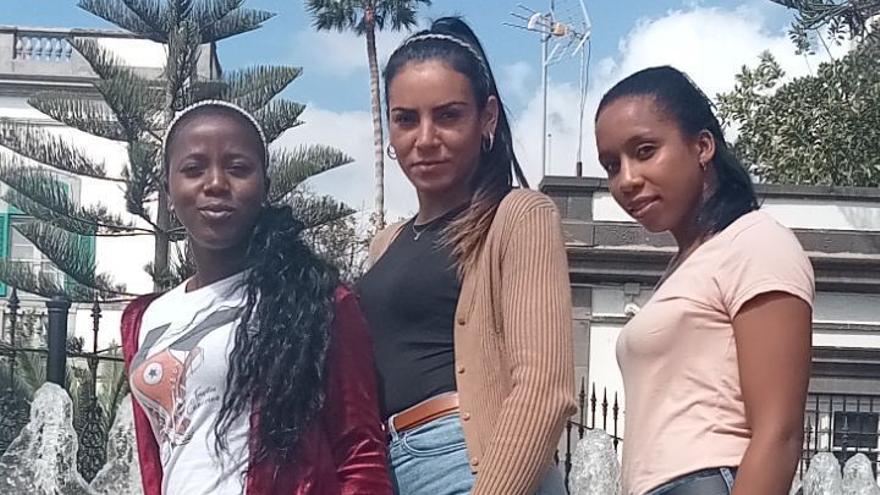
From left to right, Yadira Miclín Galban, Marianela López and Daylin Suárez, the three hockey players who escaped to Las Palmas de Gran Canaria. (Cortesía)

14ymedio bigger14ymedio, Havana, 23 May 2023 — On May 6, the plane where Cuban hockey players Daylin Suárez, Yadira Miclín Galban and Marianela López were traveling left Barcelona and landed on the island of Gran Canaria. Taking advantage of a “shopping” outing, the three athletes had managed to escape from their delegation, having received training in Spain from May 3 to 13 to attend the Central American Games in San Salvador, and they bought tickets to travel to the Canary Islands.

“Nothing was planned before, everything was improvised,” says Daylin Suárez from the city of Las Palmas, where she now lives with her two companions. “But I didn’t think twice. I thought about my future and my family, and I left everything behind for something better,” she says.

However, the trajectory has not been without difficulties. After applying for political asylum in Spain, she will not be able to meet with the immigration authorities until February 2024. In the meantime, she is taking the first steps towards her new life.

“I see a future in this country as an athlete, but we need to get our papers and start opening pathways,” acknowledges Suárez, who together with Miclín and López was received for a few days by a friend in Gran Canarias and now subsists thanks to the help of the Catholic Church and the Red Cross.

“We are together but working. We slept in the church that welcomed us and are moving forward,” she adds. continue reading

Getting to Las Palmas de Gran Canaria was a challenge, explains the hockey player to this newspaper. The delegation arrived in Barcelona on May 4 and immediately had their official passports withdrawn — with the visa to be legally in Spain — delivered by INDER (National Institute of Sports, Physical Education and Recreation). “We had the ordinary passports hidden, but that one didn’t have a visa,” says Suárez.

The day that they arrived they bought sports shoes to start training: “They were the cheapest there were,” says the hockey player, who shows 14ymedio the deteriorated pair of shoes she used to play in Cuba.

Miclín, López and Suárez managed to buy the plane tickets and risked going to the Barcelona airport without a visa. They were lucky. As it was a flight within the Spanish territory itself, they were not strict with their documents, so they were able to reach their destination without difficulty.

“The situation at the Antonio Maceo Grass Hockey School in Havana is very sad. There is a lot of hunger,” she recalls. “We train in terrible conditions, without sports equipment, because the country says that it does not have the resources to take care of  athletes. We almost always were hungry, because there was no bread for breakfast. We did three training sessions on an empty stomach.”

The three hockey players know that they will not return to Cuba for a long time, although they have not received any notification from INDER. But their position is clear: “We do not agree with that system and even less with how high-performance athletes are treated in Cuba.”

Suárez and her teammates join the more than 75 Cuban athletes who have left their delegations between 2022 and 2023, according to journalist Francys Romero, who does not include in the number those who have left the country after asking for leave, retiring or leaving the Island by legal means.

On April 12, the Cuban News Agency (ACN) expressed itself in laudatory terms about Cuban hockey players of both sexes, whose delegations trained to “maintain regional supremacy” in the San Salvador games.

That’s why there’s a “great motivation” for the trip to Barcelona, the person in charge of pre-selecting the athletes, Mileysi Argentei, told ACN. At the Barcelona training base, Yadira Miclín and Dailyn Suárez were scheduled to play as defenders, while Marianela López would serve as a forward.

After the Cuban defeat in Miami during the controversial World Baseball Classic, the catcher Iván Prieto also escaped from his hotel and stayed in the United States. The stampede of Cuban athletes became a headache for the regime, which in July 2022 — after the escape of several Cubans in the Athletics World Cup, also in the United States — dismissed Yipsi Moreno, the national commissioner, from his position.

Moreno, one of the unconditional supporters of the regime, was also removed from the Council of State, the body that is responsible for choosing the Government and approving the laws proposed by Parliament. Upon leaving the athletics commission, INDER issued a brief statement: his dismissal, they said, responded to the “personal will” of the former athlete.

Translated by Regina Anavy

____________

COLLABORATE WITH OUR WORKThe 14ymedio team is committed to practicing serious journalism that reflects Cuba’s reality in all its depth. Thank you for joining us on this long journey. We invite you to continue supporting us by becoming a member of 14ymedio now. Together we can continue transforming journalism in Cuba.
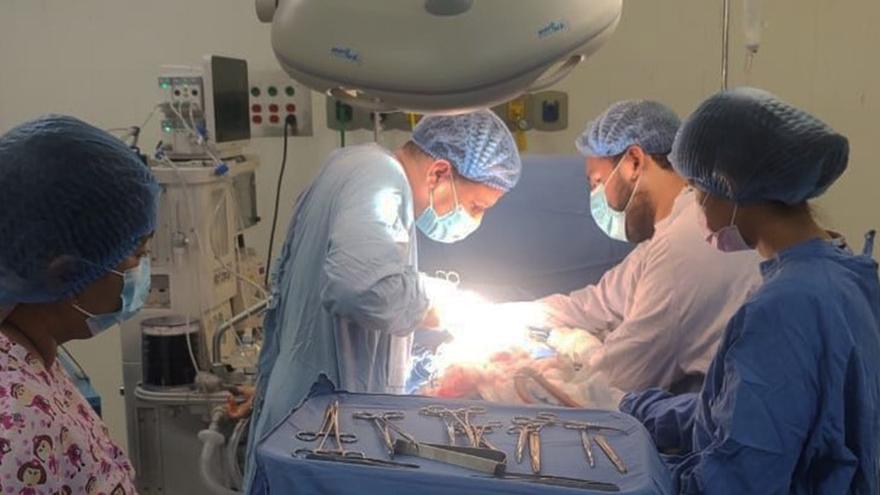
Cuban Doctors Announce a Gallbladder Surgery in a Hospital in Mexico Where Nurses Are Lacking

Cuban specialists performing an extraction of a gallbladder at the Hospital of Xpujil (Campeche). (Twitter/@ConsulCuMerida)

14ymedio bigger14ymedio, Ángel Salinas, Mexico, 23 May 2023 — The Government of Mexico updated the number of Cuban specialists who are working in hospitals. According to President Andrés Manuel López Obrador, there are 700 health workers who “provide their services for the benefit of the Mexican people,” but he did not offer details about the remote areas in which they are located.

López Obrador proclaimed on Tuesday the strengthening of his Health Plan for Welfare implemented in 2022 with doctors from the Island and the improvement of hospital infrastructure. “An investment in the Health Plan of 389,471,652 dollars destined for the conservation, maintenance and equipment in units (hospitals) of first and second level of care in 14 states of the country,” said the general director of the Mexican Social Security Institute (IMSS), Zoé Robledo.

Since February, several groups of health workers from the Island have arrived in Mexico as part of the extension of the agreement with the Comercializadora de Servicios Médicos Cubanos to select another group of 610 people. On May 12, 129 doctors were received by diplomatic authorities.

The Consulate General of Cuba in Mérida (Yucatán) highlighted on its social networks the extraction of a gallbladder carried out on May 20 by Cuban doctors. This is the first surgery of this type in 15 years performed at the Hospital of Xpujil (Campeche). López Obrador affirms that with his health plan “it will be possible to have the necessary doctors 24 hours a day,” but the facts contradict the president’s version. continue reading

In September of last year a group of Cuban specialists was received by the governor of Campeche, Layda Sansores. (Facebook/Juan Manuel Herrera Real)

In that same hospital, meanwhile, since last May 10, a patient has been waiting for a date for a gallbladder surgery. His wife, who gave the name of Ana, tells 14ymedio that he was admitted to the emergency room that day and a few hours later was discharged. “At midnight he got sick again and they took care of him again.” In the morning he asked to be scheduled for surgery, but he was told that “there were many appointments and a surgeon was on vacation.”

In addition, this hospital lacks a laboratory for sampling and for performing ultrasounds. “We have done all that on the outside,” he says. She confirmed that her husband has been treated by Cubans, but she doesn’t know if they are going to operate on him. “The only thing they have told me is that there are no specialized nurses now.”

Last February, the arrival of the first 610 doctors on the Island concluded. The initial agreement is that these doctors would be sent to remote areas, so most Cuban health workers would have as a work base “the Montaña de Guerrero,” one of the most violent points in the country. As of April 26, 43 specialists had arrived in this state, whose main mission was to form “mental health caravans” in the region.

This newspaper obtained information about the lodging, the “a la carte dinners” and the free transportation enjoyed by several of these specialists in the central states of the country, as well as the claims about the lack of capability and professional cards to practice.

In Morelos, the leader of the union of the state Ministry of Health, Gil Magadán Salazar, told 14ymedio that a Cuban anesthesiologist did not even “know how to put in a block.” In addition, the Imss-Bienestar, a program of the Mexican Government in charge of offering health services, sent geriatricians and psychiatrists without having their professional certificate and not the cardiologists, gastroenterologists and pediatricians they require.

There is also discomfort among the doctors and nurses of the IMSS-Bienestar because the Cubans are paid more. According to Fabián Infante Valdez, leader of the National Union of Mexican Nursing, when the reform that took away the Institute of Health for Welfare and passed to the IMSS-Wellness, as a decentralized body, was approved, salaries were reduced by up to 50%.

According to him, where three categories for nurses are established by zone, those classified as type “B” went from earning 620 dollars to 290 per month. The assistants received $657 and now $308. To the graduates, if they earn 931 dollars, they are given $372.

General practitioners received 1,224 dollars a month, now $491, and specialists who received 1,487 dollars now get $647. On the other hand, according to the agreement with the Comercializadora de Servicios Médicos Cubanos, Mexico disburses to Havana for each specialist 2,042 dollars per month and $1,722 for each general practitioner.

The export of medical services continues to be the first source of income for the Island, which on Monday celebrated 60 years of medical collaboration, a practice denounced by international organizations for being a method of “modern slavery.” According to Cuba’s ambassador to Mexico, Marcos Rodríguez Costa, there are 22,000 health collaborators on an internationalist missions in 58 countries.

Translated by Regina Anavy 

____________

COLLABORATE WITH OUR WORKThe 14ymedio team is committed to practicing serious journalism that reflects Cuba’s reality in all its depth. Thank you for joining us on this long journey. We invite you to continue supporting us by becoming a member of 14ymedio now. Together we can continue transforming journalism in Cuba.

A Breakdown in the Puerto Escondido Plant Leaves Havana Without a Gas Supply

Lanta de Energas in Puerto Escondido. (Cubadebate)

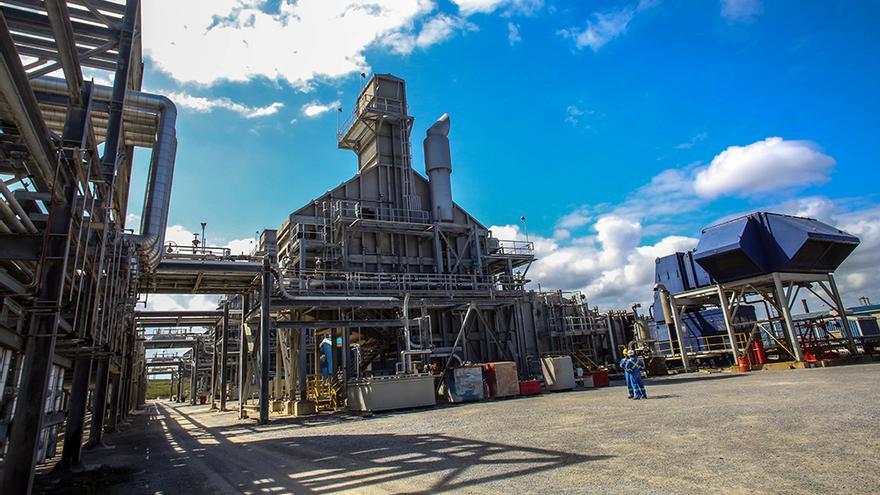
14ymedio bigger14ymedio, Havana, 22 May 2023 —  Night arrived this Sunday without many Havanans having a gas supply twelve hours after the breakdown announced by the Cuba-Petróleo Union (Cupet). The company issued a statement of a few lines reporting a failure at 12:10 in the switch of the compressor system of the Puerto Escondido plant, in Mayabeque, which supplies the gas to Havana. The plant belongs to Energas, a joint venture managed by the Canadian company Sherritt and the Cuban state company Cupet.

“Only 40% of power will be received in the plants that produce manufactured gas, so if not solved in the early hours of the morning there could be a partial or total shutdown in the service to customers,” the note added.

The breakdown also affected the generation of electricity at the Boca de Jaruco Power Plant, causing a deficit of 200 MW, to which was added another breakdown in block 6 of the Máximo Gómez Báez de Mariel Thermoelectric Plant, which stopped providing 95 MW, so more blackouts were expected during peak hours.

Those affected soon complained through social networks after not being able to cook all day.

“It’s morning and NOTHING works,” a Cubadebate reader wrote on Facebook. “We have endured the repetition, to the point of exhaustion, of effort on top of effort, the visits of such and such a well-dressed official and his meetings with the Temporary Working Group and its analyses and strategies. And again more efforts and ’creative resistance’.” continue reading

Most of the reactions accounted for the exhaustion of the population, tired of not having fuel, electricity and, now, not even gas. “Sell the country or we’re going to die,” wrote another user.

Part of the gas treated in the Boca de Jaruco and Puerto Escondido plants is sent to Havana for about 280,000 families, according to Edel Andrés Alfaro Pérez, the recent economic manager of Energas.

At the beginning of this year, a rupture of the duct caused a leak and left part of the Cuban capital without service. The neighbors of Puerto Escondido complained to 14ymedio this March about their situation because of Energas. The leaks are constant and the pollution is visible even in the vegetation. The town is not the same.

“Until a few years ago one said the name of this town and what came to mind was natural beauty, sea and fun, but Cupet has taken part of that from us. The oil stench in the air is constant,” said Dayamí, a resident, using a fictitious name.

Translated by Regina Anavy 

________________

COLLABORATE WITH OUR WORKThe 14ymedio team is committed to practicing serious journalism that reflects Cuba’s reality in all its depth. Thank you for joining us on this long journey. We invite you to continue supporting us by becoming a member of 14ymedio now. Together we can continue transforming journalism in Cuba.
The Cuban Opponent Sandalio Mejias Gets Out of Prison and Breaks Down in Tears Talking About the Mistreatment

Sandalio Mejías Zulueta was released from prison on probation for one year. (Screen capture)

14ymedio bigger14ymedio, Havana, 20 May 20, 2023 — “I am a warrior,” the opponent Sandalio Mejías Zulueta, a member of the Patriotic Union of Cuba (UNPACU) said with difficulty, after being released on probation from prison on May 14. In a short video published by the organization, the activist almost bursts into tears relating the torture to which he was subjected by his jailers during the three years he was detained.

Mejías, also a promoter of the Cuba Decide citizen movement, left the prison with a notable deterioration in his health and a speech disorder. The opposition leader denounced that in prison he suffered an ischemia (decreased blood supply) in his arm and right leg, but the Cuban regime denied him medicine to treat his ailments.

The Government granted him probation for one year, he said. Despite his difficulties in expressing himself, the activist said that the “freedom of Cuba has to come, whether they want it or not.”

The Ministry of the Interior arrested the activist on January 13, 2020 in a park in Old Havana. Seven days later, he was sentenced to one year in prison in a summary trial for a common crime. Four months later, he was released on parole, but the measure was revoked and he had to remain in prison. continue reading

Before his imprisonment, Mejía had been the victim of harassment by the authorities on several occasions. In September 2019, he was arrested to prevent his participation in a peaceful march, and in October of that year he was also arrested during a demonstration in favor of political prisoners.

In a publication on May 16, the Complaint Center of the Foundation for Pan American Democracy (FDP) reported that, according to a March 2021 report, the activist did not receive medical attention after suffering facial paralysis while in prison.

The Foundation urged the Government to stop the mistreatment of the activist, as well as the rest of the Cuban political prisoners, and said that the deprivation of medical care is a “blatant violation” of his human rights.

“We call on the international community, human rights defenders and relevant organizations to join us in this urgent call and take concrete measures to guarantee the freedom and well-being of Sandalio Mejías Zulueta, and of all those who suffer repression in Cuba,” they said.

Mejías is one of the hundreds of political prisoners of the regime, along with other dissidents such as José Daniel Ferrer, leader of UNPACU, whom the authorities have beaten, tortured and locked naked in a dungeon in the prison where he is held prisoner, according to complaints from his relatives.

Amnesty International denounced this week that there are still 768 political prisoners in the Island’s prisons, of the 1,812 people who were arrested for demonstrating against the Government after the massive protests of July 11, 2021. This figure exceeds 1,000 by adding the dozens of detainees in last year’s protests.

Translated by Regina Anavy 

____________

COLLABORATE WITH OUR WORKThe 14ymedio team is committed to practicing serious journalism that reflects Cuba’s reality in all its depth. Thank you for joining us on this long journey. We invite you to continue supporting us by becoming a member of 14ymedio now. Together we can continue transforming journalism in Cuba.

Police Operations, Internet Outages and Surveillance Against Activists Mark May 20 in Cuba

State Security agents in front of the Deauville hotel in Havana on May 20. (14ymedio)

14ymedio bigger14ymedio, Havana, 21 May 2023 — Police barricades in front of homes  and internet cuts on the cell phones of opponents, activists and independent journalists marked this May 20 on the Island, during the 121st anniversary of the founding of the Republic of Cuba. Part of the editorial staff of 14ymedio was incommunicado throughout the day due to the interruption of its mobile lines.

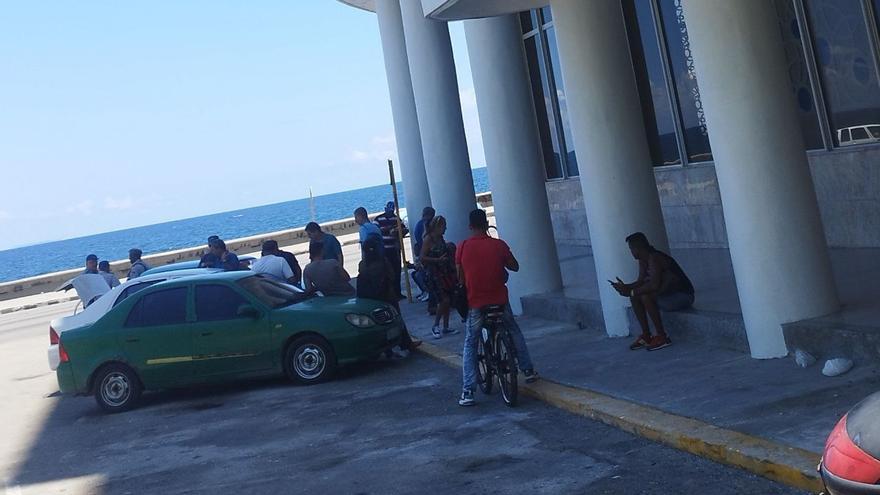
The area of the Havana coast was also, from the early hours of this Saturday, under an intense operation. The call launched by some activists to remember the founding of the Republic caused State Security agents and uniformed police to patrol the area, stand on the corners and monitor everyone who approached the Malecón.

At the confluence of Galiano Street with Malecón Avenue, several police vehicles and a large operation were observed around noon. This newspaper received reports from military service recruits who were transferred from their units to monitor the coastal area because “something is going to happen on May 20,” according to the mother of one of these young people.

Activist Agustín López Canino, who had called for a commemoration of the anniversary on the Malecón of Havana, broadcast live from Facebook early in the morning to say that he was going to be arrested. “They’re coming for me. I have been informed that the patrol is advancing towards my house and well, let’s see what happens with all this on May 20. I can’t transmit more because they’re are already arriving.”

“Thank you to all those who care about the freedom of Cuba… and what needs to be done here is to peacefully claim the rights that correspond to us by human condition,” added the leader of the Cubanos de Adentro y de Abajo movement who resides in El Globo, Calabazar, and who was arrested years before on the same date. continue reading

“Also for the 121st anniversary of the founding of the Republic of Cuba, on May 20 they have posted three political police officers on the outskirts of our building to prevent us from leaving,” Yoani Sánchez, director of 14ymedio, posted on her Facebook page, after making public that the regime had cut off her access to the internet, a repressive action of which the journalist Boris González was also a victim.

Activist Niurka Caridad Ortega Cruz, a member of Independent Democratic Cuba, received a summons from the Ministry of the Interior for this May 20 with the aim of “being interviewed” at the Calabazar police station. The document, shared by friends on social networks, is signed by “Captain José” and is nothing more than another repressive instrument to keep opponents away from the commemoration of May 20.

The application of repressive measures, now usual on this date, is in line with the statements of the Cuban president, Miguel Díaz-Canel, who pointed out last year that only “the annexationists” celebrate on May 20, when Cuba was “kidnapped by the empire until 1959.”

However, 90 miles across the Florida Straits, the Cubans of Miami celebrated this May 20 with a series of political and cultural events.

Translated by Regina Anavy

____________

COLLABORATE WITH OUR WORKThe 14ymedio team is committed to practicing serious journalism that reflects Cuba’s reality in all its depth. Thank you for joining us on this long journey. We invite you to continue supporting us by becoming a member of 14ymedio now. Together we can continue transforming journalism in Cuba.
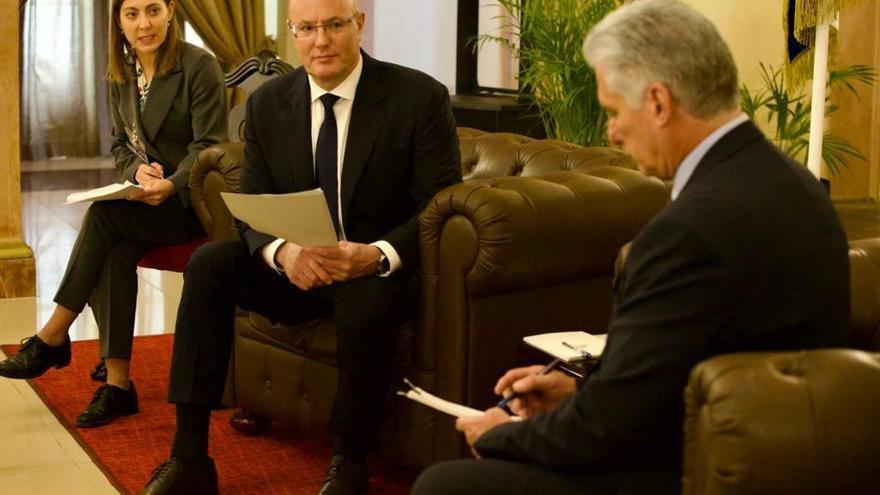
On the Eve of Republic Day, Cuban President Diaz-Canel Gives ‘Cuba’s Unconditional Support to Russia’

Miguel Díaz-Canel asked Chernichenko for “integral solutions to Cuba’s problems” and promised a “mutual benefit.” (Twitter/President of Cuba)

14ymedio bigger 14ymedio, Havana, 20 May 2023 — Before the satisfied gaze of Russian Deputy Prime Minister Dmitri Chernishenko, Cuban President Miguel Díaz-Canel assured this Friday “Cuba’s unconditional support for the Russian Federation in its confrontation with the West.” The declaration of loyalty, offered in the 1930 hall of the Hotel Nacional, crowned the signing of eight important agreements related to business cooperation, macroeconomics, artificial intelligence, wheat supply, the development of joint ventures and an Action Plan that will govern the “Strategic Alliance” between the two countries until 2024.

Chernishenko’s visit demonstrates “all the understanding that the Russian Federation, and in particular President Putin, has had for the situation in Cuba and the willingness to set an intense pace of follow-up to all agreements,” continued Díaz-Canel, who asked Russia for “integral solutions to Cuba’s problems” and promised a “mutual benefit.”

“We are highlighting the important role of the Russian Federation in the goal of achieving a multipolar, non-hegemonic world,” he concluded, celebrating the conversation with Chernishenko as “a real opportunity.” However, a 24-second cut in the recording broadcast by Cuban Television prevented listening to the rest of the president’s intervention, which was also not transcribed in the other official media.

The Russian deputy prime minister, for his part, did not beat around the bush. For Putin, the Havana regime is a “trusted friend” in the Latin American region, but it is essential to “make a road map to incorporate these preferences, which may need some changes in Cuba’s legislation.” Although he did not detail what those “changes” are that the Kremlin expects, he promised a meeting at the highest level between the two governments, scheduled for June.

The Intergovernmental Commission meeting to guarantee the agreements of the Cuba-Russia Business Economic Forum, held this week in Havana with the presence of more than 150 Russian and Cuban businessmen, completes the cycle of approaches to Moscow initiated by Díaz-Canel in November, when he traveled to the Russian capital as part of his “begging tour” to allied countries. continue reading

The link with the Government of Vladimir Putin, discredited internationally after his invasion of Ukraine in February 2022, has been affirmed since then, until reaching, according to Díaz-Canel, the “very particular, very special” moment that bilateral relations between the two nations are now experiencing.

During the meeting, there was no lack of allusions to Fidel Castro, who also positioned himself as an unconditional ally of the Kremlin until the fall of the Soviet Union in 1991.

At the Business Forum, which was also attended by the Cuban Prime Minister, Manuel Marrero Cruz, and the head of Foreign Trade and Foreign Investment, Ricardo Cabrisas, future agreements were negotiated in the fields of transport, agriculture, innovation, digital transformation, construction and tourism.

During the meetings, Cabrisas pointed out that Russia will occupy a privileged place of participation in the National Economic and Social Development Plan until 2030 on the Island. In addition, he argued that Havana is interested in “reversing the existing imbalance” in trade between the two countries, but he did not explain how he planned to achieve it.

Of course, he said that the Island expected “significant” help from its ally in matters of “the supply of oil, raw materials, technology, energy and tourism.”

Juan Carlos García Granda, Cuban head of Tourism, said that his ministry had proposed to “reach half a million Russians arriving in Cuba in a year.” “The goals will be much higher than those we had dreamed of,” he added. During the meeting with Chernichenko on future Russian investments in the Cuban hotel sector, Putin’s envoy said that work was being done on the “construction and repair of hotels,” as well as on the administration of existing establishments. There was also talk of facilitating the ability of Russian tourists in Cuban shops to pay with their Russian MIR cards and that the “perspectives of collaboration” included other factors, such as promoting the learning of the Russian language on the Island.

“We would like Russian companies to manage hotels in Cuba,” said Manuel Marrero in the same exchange, who asked Cuban businessmen to “move at a faster speed” in business with the Russians. At the end of the meeting, two “memoranda of understanding” were signed on the subject of tourism and to make travel viable. The Russian Deputy Prime Minister had announced, on the same day, the resumption on July 1 of regular flights between Russia and Cuba.

The climate of the exchange was reflected in the words of the president of the Russia-Cuba Business Council, Boris Titov, this Wednesday: “They are giving us preferential treatment, the road is paved,” he guaranteed.

The Kremlin consultant, who has been advising the Havana regime for months, informed the Reuters agency that, among the privileges that the Russians will enjoy in Cuba, will be the right to own land in usufruct for a period of 30 years, a concession unprecedented in the revolutionary regime.

In addition, Díaz-Canel offered special conditions for the “long-term lease of land such as the tax-free import of agricultural machinery, the granting of the right to transfer foreign exchange profits, and much more,” he said.

“Cuba is being transformed, mastering new rules for the interaction between the State and businesses,” he summarized.

Cubans who read the news of Cuba’s “unconditional support” to the Kremlin expressed their concern on the social networks of the official media. In addition to pointing out that this occurred on the eve of the 121st anniversary of the founding of the Republic of Cuba on May 20, a user wrote: “I hope that what is being negotiated with the Russians is not the loss of national sovereignty.”

Translated by Regina Anavy 

____________

COLLABORATE WITH OUR WORKThe 14ymedio team is committed to practicing serious journalism that reflects Cuba’s reality in all its depth. Thank you for joining us on this long journey. We invite you to continue supporting us by becoming a member of 14ymedio now. Together we can continue transforming journalism in Cuba.
Polarization in Cuba Is Part of a General Crisis, Says Academic Andres Ordonez

Mexican academic Andrés Ordóñez speaks during an interview with EFE, on May 18, 2023, in Mexico City. (EFE/Isaac Esquivel)

14ymedio biggerEFE (via 14ymedio), Mexico, 20 May 2023 — The Mexican academic Andrés Ordóñez regretted this Saturday the radicalisms in the debates on the Cuban Revolution and considered that they are not something exclusive to the Island but a trend in today’s world.

“We are living in times of polarization. That intolerance, that propensity to disqualify the other, is not exclusive to Cubans; it is part of the crisis in the West. We are in a very difficult time,” said Dr. Ordóñez in an interview with EFE.

The essayist, poet and diplomat will present in the coming days in Mexico his new book, El mito y el desencanto [Myth and Disenchantment], an essay on literature and power in revolutionary Cuba, in which he analyzes the role of writers on the Island and refers to key moments in the country’s history.

“One of the purposes of my book is not to disqualify; my interest is to understand each other from the limitations of my immigration, but also from my deep love for that country,” said Ordóñez, who was a diplomat in Havana during the presidency of Vicente Fox (2000-2006).

The author traces the Cuban literary canon in his work and ends at four of the main novelists of the Island: Norberto Fuentes, Leonardo Padura, Pedro Juan Gutiérrez and Abel Prieto. continue reading

The book , published by Planeta, pauses at key moments in the history of Cuba and takes a tour through Cuban literature.

The work considers as moments of rupture the case of the poet Heberto Padilla, who was forced to indict himself as a counterrevolutionary in 1971, and the shooting, in 1989, of General Arnaldo Ochoa, one of the most beloved heroes in the country.

“There are two very important facts in Cuban culture; the Padilla case and the trial of Ochoa and his followers. There was a rupture in the argument of the Revolution that had been so powerful, in terms of moral authority,” he said.

In referring to the art of writing novels, Ordóñez accepts that approaching works of fiction will, in the future, be a way to learn about the history of a country in which journalism is controlled by the government and only some independent media can dissent.

Ordóñez highlights in his book how the novelists Fuentes, Padura, Gutiérrez and Prieto, among others, reflect in their works of fiction the reality of the Island, but he believes that there are still issues to be addressed.

“There are gaps. For example, the great novel about the war in Angola has not been written; Padura and others touch on the subject, but indirectly. The Angola phenomenon is something that the protagonists of Cuban culture either do not yet have the critical distance to address it, or it implies something painful,” he says.

For officialdom in Havana, anyone who has a contrary opinion is a “worm,” a despicable being who is not just against the Government, but against the country.

Similar is the attitude of the radicals of the opposition, adorers of Donald Trump, who describe anyone who disagrees with them as “communist,” a major offense in their vocabulary, with whom he proposes to dialogue.

Ordóñez regrets the polarization, but he is an optimist and believes that there are people on both sides willing to open spaces for agreement and look for a better future for a country in which few things work and the leaders have a critical spirit equal to zero.

“I don’t see it as impossible (the possibility of a Miami-Havana dialogue). There is above all in the young people of the enlightened, more cultivated sector, a different attitude, each with their own point of view. It is possible to build bridges. I’m an optimist in that,” he insisted.

Translated by Regina Anavy 

____________

COLLABORATE WITH OUR WORKThe 14ymedio team is committed to practicing serious journalism that reflects Cuba’s reality in all its depth. Thank you for joining us on this long journey. We invite you to continue supporting us by becoming a member of 14ymedio now. Together we can continue transforming journalism in Cuba.
A Self-Employed Worker Denounces the Government’s Preferential Treatment of ‘MSMEs’ in Cuba

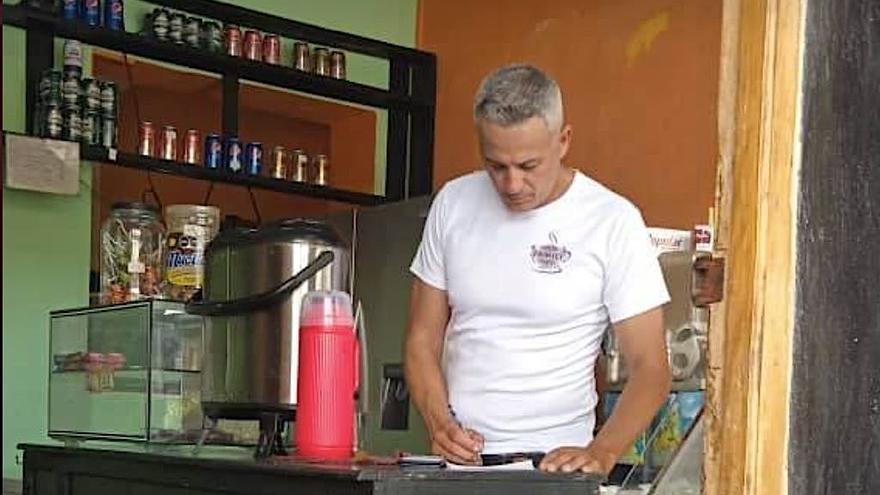
The Moteros cafeteria, founded by González, is near Independencia de Camajuaní Street, where vehicles from Santa Clara to the Cayería Norte pass. (Cortesía)

14ymedio bigger14ymedio, Havana, 19 May 2023 — Family man and owner of a cafeteria in Camajuaní (Villa Clara), Alexis González exploded this Tuesday in a direct Facebook broadcast that reached thousands of people. Faced with the shortage, bureaucratic obstacles and harassment by inspectors, he asked the authorities for an answer: “Someone explain to me how long the effrontery and lack of respect for self-employed workers will last.”

During the next fifteen minutes, he questioned the treatment that the Government is giving to the self-employed, the increasingly scandalous privileges for MSMEs [micro, medium and small enterprises] and the system of fines, raids and inspections to which small establishments such as his, the Moteros café, located near Independencia de Camajuaní Street, are subjected.

“Before founding Moteros, I started with a cart of popcorn and even that was difficult,” he now tells 14ymedio. “The oil was very expensive, the bag of corn came out at 8,000 or 10,000 pesos, and it did not generate the profit that I needed for my family. So I proposed to my wife that we start a cafeteria.”

With the sale of a small property that González had, he got the initial budget to buy a central space, on the road where vehicles pass from Santa Clara to the Cayería Norte of Villa Clara. “I set up the cafeteria, with the aim of selling pizzas and spaghetti, but lately it has been very difficult to sustain: the raw materials are missing,” he says. continue reading

https://www.facebook.com/100024818073308/videos/553805213586075

The worst, however, is the siege of inspectors who, in González’s opinion, “do not let anyone live.” “They ask where you got this, that… My explanation? That working is very difficult in Cuba, because 90% of the food that you put on your table is of illegal origin, so imagine what you have to get for a cafeteria.”

To supply Moteros, González turns to the MSMEs : “I made a contract with them, but that doesn’t solve everything.” He says that this exchange is also pursued by the inspectors, who thoroughly review every step taken by the products: “If I sell mayonnaise, I have to spread it on the bread. I can’t buy a jar of mayonnaise, a can of tomato paste, or a bottle of oil  and sell it, which I can do with a can of soda. Everything is very absurd,” he complains.

What González expects from the Government is greater flexibility, since there are many self-employed who, like him, do not have the conditions or the money to constitute a MSME: “The authorities have to create a wholesale company where you can buy the products you need. A company that really works, not like what there is now, always empty. That way you could buy supplies and set them a fair price, without abusing customers.”

He points out that the regime’s economic plans have not worked well, and that the strategy — if there is any — has been to repeat a wrong method and not provide a solution to the real problems. “Raising the prices of products, as they have done so many times with the farmers, is of no use,” he summarizes. “What you have to do is help the farmers and the producers in general.”

The self-employed, he says, can no longer hide their annoyance in the face of the privileged treatment given to the MSMEs. “They are the ones who have the most facility for importation. My business can’t be compared to a MSME. The bank doesn’t provide me with a credit, for example. And if it did, I have no chance or money to pay for it. A self-employed worker will never be at that level.”

In Camajuaní, a municipality considered the mecca of footwear in Cuba, the advancement of MSMEs is unstoppable. To the large producers and marketers of shoes, who subject their workers to strict surveillance and are relentless when it comes to setting prices, are added the farmers favored by the regime and, now, the gastronomic establishments.

Jona’s SURL, Calzados Yady’s, Yireh-Ebenezer, El Músico, the “private slaughterhouse” of farmer Yusdany Rojas and a few others chosen: they all have in common, as this newspaper has verified, an intimate relationship with senior officials of the regime — such as Economy Minister Alejandro Gil, President of the National Institute of Hydraulic Resources Inés María Chapman or President Miguel Díaz-Canel himself, who visit them regularly.

For the others, as González affirms, there is a fear that the aparatico — the police, inspectors or State Security — will take action in the matter and demand silence from those who decide, in a personal capacity, to protest against the suffocation of small businesses like theirs.

Translated by Regina Anavy

____________

COLLABORATE WITH OUR WORKThe 14ymedio team is committed to practicing serious journalism that reflects Cuba’s reality in all its depth. Thank you for joining us on this long journey. We invite you to continue supporting us by becoming a member of 14ymedio now. Together we can continue transforming journalism in Cuba.