Another Mexican State Wants To Remove a Group of Cuban Doctors Because of Their Poor Skills

Blanca Águila Lima, who represents Mexican doctors, confirmed that “they are gathering evidence of the negligence that Cuban health workers have committed.” (4th. Poder Tlaxcala News/Facebook)

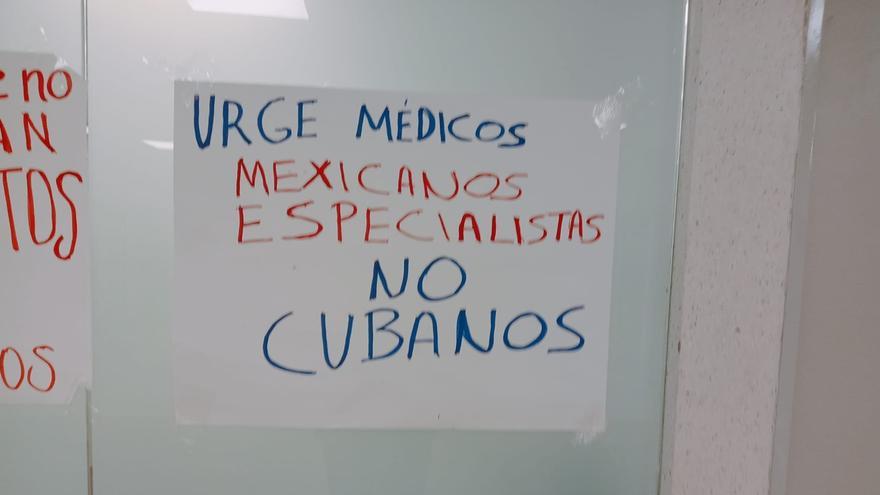
14ymedio bigger14ymedio, Ángel Salinas, Mexico, 9 June 9, 2023 — In the states of Tlaxcala and Morelos, Mexican doctors have expressed their dissatisfaction with the low level of preparation and the high salaries of health workers hired by the Government of Mexico from Cuba. Blanca Águila Lima, the head of a national workers’ union of the Ministry of Health, told the media on Wednesday that Cuban specialists “lack expertise” in surgical procedures.

Águila confirmed that “they are gathering evidence of the negligence they have committed, of the lack of expertise” and that she will present them to the corresponding authorities to remove the Cuban specialists.

The representative of Mexican doctors said that among these cases is that of a Cuban urologist. “This doctor initiated a surgical process to remove a patient’s prostate and could not complete the intervention… It was the Tlaxcala surgeons who had to take responsibility for completing the surgery successfully.”

The complainant was confident that 88 specialists from the Island, who are currently in several hospitals in Tlaxcala, would be removed. She said that in Morelos, 18 Cuban doctors were removed for not having a professional card. The leader of the union of the state Ministry of Health, Gil Magadán Salazar, confirmed that a Cuban anesthesiologist was not even “able to inject a block (an anesthetic).”

Mexican President Andrés Manuel López Obrador specified that there are currently 700 Cuban health workers in Mexico who “provide their services for the benefit of the people.” At the beginning of this week he defended the hiring of Cuban specialists, assuring that it was not “an ideological issue, nor did it have to do with anything political.” continue reading

Mexico, according to information that reached the editorial staff of 14ymedio, disburses 1,177,300 euros per month, from which the doctors do not receive anything. Everything goes directly to the Cuban company Comercializadora de Servicios Médicos Cubanos, S.A.

The Mexican government also acquired the Cuban vaccine Abdala. López Obrador has claimed to have obtained 230 million doses from various laboratories. Of these biologicals, 9,000,000 were bought from the Island, and a little more than half are still not used in the face of the distrust of Mexicans, because it is an option without endorsement from the World Health Organization.

Translated by Regina Anavy

____________

COLLABORATE WITH OUR WORKThe 14ymedio team is committed to practicing serious journalism that reflects Cuba’s reality in all its depth. Thank you for joining us on this long journey. We invite you to continue supporting us by becoming a member of 14ymedio now. Together we can continue transforming journalism in Cuba.
The Trail of Oil Sent to Cuba Is Lost Between the Cienfuegos Refinery and Matanzas

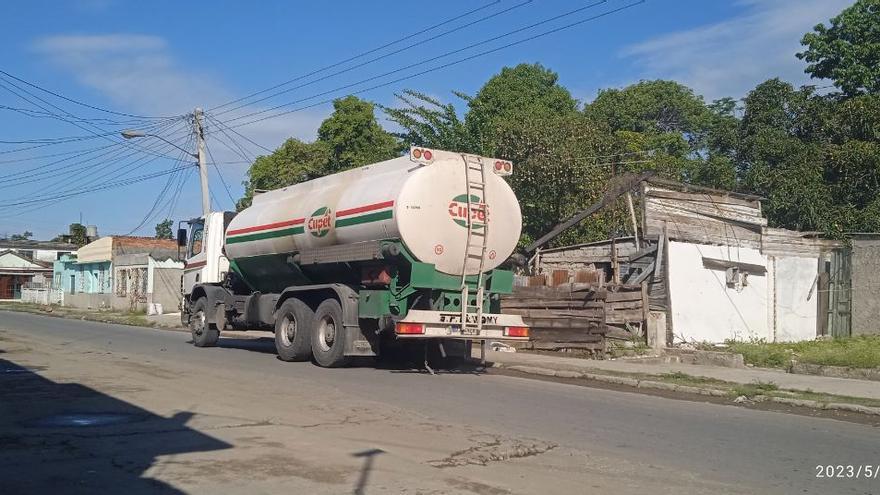
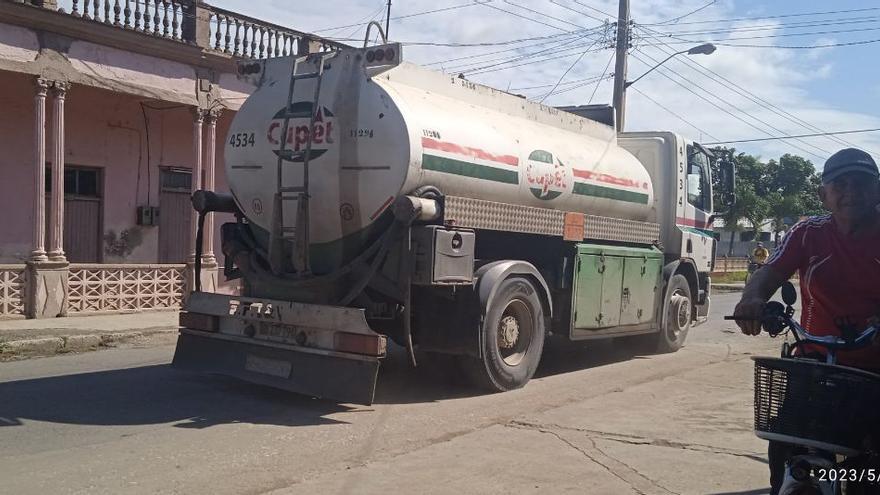
The tanker trucks cross Palmira, Cruces, Lajas, El Diamante, Aguada de Pasajeros and Jagüey Grande, until they reach Matanzas. (14ymedio)

14ymedio bigger14ymedio, Havana, 7 June 2023 — Every day, more than ten tanker trucks with the Unión Cuba-Petróleo (Cupet) logo depart from the Cienfuegos refinery and embark on a long route that takes them to Matanzas, passing through the municipalities of Palmira, Cruces, Lajas, El Diamante and Aguada de Pasajeros. The journey of 121 miles takes more than three hours. At the end of the road they wait at the demolished Supertanker Base – which burned down in August 2022 and is in the reconstruction phase with the support of Venezuela – along with several oil tankers, whose origin and destination are not reported by the regime.

It is necessary to resort to ship tracking applications, the data revealed by international agencies and, above all, to observation on the ground to reconstruct the important oil circuit that connects Cienfuegos with Matanzas: every two hours a Cupet tanker truck leaves the refinery, loaded with about 6,604 gallons of petroleum derivatives sent by Venezuela, and its trail is lost in the Matanzas terminals.

However, the path of the trucks and the frantic movement of oil tankers in Cuban ports continues to demand an explanation. Where is the oil that is brought from Cienfuegos currently stored, after the partial destruction of the Supertanker Base in 2022? Where is the refined fuel shipped in Cuba? Why doesn’t the country – which seems to be entering a new stage of blackouts – benefit from the trade of the nearly two million barrels of oil that arrive every month from Venezuela and also from Russia, Mexico and Algeria, in addition to the heavy crude oil from national production that is used in thermoelectric plants?

One of the custodians of the Cienfuegos refinery tells 14ymedio that the facilities process the heavy oil that ships with the Cuban flag, such as the Vilma and the Delsa, brought from the Venezuelan port of José. “Then it is sent to the Matanzas tanks, and stored as a ’state reserve’ while between 10% and 20% is mixed with Cuban crude, which has a very high sulfur content and high viscosity,” he says. All the work is carried out “under strong surveillance.” continue reading

In addition, Cupet uses trains with 14 tanker cars whose destination is also the Mantanzas base. Some of the vehicles, in addition, are diverted to Cabaiguán, in Sancti Spíritus, where there is a small refinery, he adds.

Some of the vehicles, in addition, are diverted to Cabaiguán, in Sancti Spíritus, where there is a small refinery. (14ymedio)

This Wednesday, four oil tankers were anchored in the bay of Matanzas, and the arrival of a fifth ship was expected. These are the Limo (from Ust-Luga, in Russia), the Marianna V.V. (from Venezuela), the Aquila (with the Panamanian flag and from Santiago de Cuba) and the Primula (with the Belize flag and that made a stopover in Moa, Holguín), while the tanker Nicos I.V., with the flag of Saint Vincent and the Grenadines, will arrive in Matanzas on Thursday, after several weeks without declaring its real position.

The influx of ships in the Matanzas terminal and the efforts of the Cuban government to hide the traffic no longer surprise anyone. At the beginning of May, for example, the oil tanker Calida, registered in Malta, docked at the deep-water port of Matanzas. After transmitting images of another ship, Cuban Television reported that it would unload 40,000 tons of diesel and claimed that the authorities had paid $29 million for the fuel, but did not indicate the origin of the product or reveal who had been paid.

The same strategy is followed with almost all the tankers that dock  in other ports on the Island, in particular in Havana, Santiago de Cuba and Mariel, where port activity has been increasing for several months.

As for the five oil tankers that operate under the Cuban flag – Vilma, Alicia, Sandino, Delsa and Pastorita – they usually move between the Venezuelan port of José and the bay of Jagua, in Cienfuegos, or from one terminal to another on the Island.

Researcher Jorge Piñón, from the University of Texas, informed 14ymedio about the amount of crude oil that each of these ships transported to the Island in May. The Vilma – a ship that disappears from the radar as soon as it approaches the Cuban coast – arrived in Cienfuegos on June 1st with 390,000 barrels of crude oil from José; the same amount was loaded by the Delsa, also from José, to the port of Antilla, on the 30th.

For its part, the Sandino sailed from José with 440,000 barrels to the bay of Nipe, in Holguín, where it arrived on May 5. The Alicia took 290,000 barrels from José to Havana on May 16 and another 295,000, from another Venezuelan terminal, Amuay, on the 28th.

When comparing these figures with those revealed by the Reuters agency last week, the total number of barrels of crude oil that arrived on the Island during the month of May – about 58,000 per day – coincides, says Piñón.

In its usual monthly report on the commercial activities of Petróleos de Venezuela S.A., the British agency detected a 14% drop in that country’s total exports in May compared to the previous month, but Havana was again saved from the cuts.

In an interview with TV Martí, Piñón recalled on Wednesday that Cuba lost one million barrels of storage during the fire in Matanzas and that, given the need to make room to store the 800,000 barrels of high-quality crude oil that arrived on the Island from Russia, it is likely that the loads of two of the oil tankers from Venezuela have been resold. The crude oil, he said, was too heavy for the Cienfuegos refinery to process and took up too much space.

Meanwhile, the repair of the Matanzas Supertanker Base predicts that Cuba is preparing at full speed for an increase in oil traffic. The official press announced on Wednesday that the repair of tank 88 will be undertaken, which will be ready in April 2024. The Petroleum Maintenance Company (Empet) placed the first steel plates of the tank, which will have an internal floating aluminum membrane and a geodesic dome. It is expected to be able to store 50,000 cubic meters [13,208,603 liquid gallons] of fuel.

In anticipation of fires, they explain, an “automated system” will be built that the Government of Vietnam paid for with a donation of $250,000. In addition, they plan to place only two tanks in the place previously occupied by the four original tanks, in order to increase the safety distance.

Havana is also betting on the “generosity” of Moscow, which has sent several loads of hydrocarbons and is in the process of extending its business with the Island. The Russian Prime Minister, Mikhail Mishustin, promised Cuban Prime Minister Manuel Marrero on Wednesday “the execution of large joint projects” concerning oil. In the resort of Sochi, facing the Black Sea, the head of the Cuban government gave his blessing to a new offer from the Kremlin for “the increase in oil production in Cuban deposits.”

Translated by Regina Anavy

____________

COLLABORATE WITH OUR WORKThe 14ymedio team is committed to practicing serious journalism that reflects Cuba’s reality in all its depth. Thank you for joining us on this long journey. We invite you to continue supporting us by becoming a member of 14ymedio now. Together we can continue transforming journalism in Cuba.

China Reaches a Financial Agreement With Cuba To Install an Electronic Espionage Base

The Radioelectronic Exploration and Listening Center, known as the “Lourdes base” of the University of Computer Sciences of Havana. (UCI)

14ymedio bigger14ymedio, Madrid, 8 June 2023 — China and Cuba have reached a secret agreement for Beijing to install an electronic espionage infrastructure on the Island aimed at capturing communications from all over the southern United States, according to Washington officials in an exclusive to The Wall Street Journal (WSJ). The newspaper says that the facility can give access to the many military bases that are in that area and monitor U.S. maritime traffic.

“Although I cannot talk about this specific report, we are very aware of China’s efforts to invest in infrastructure for military purposes around the world, including in this hemisphere, and we have talked about it many times,” National Security Council spokesman John Kirby told the WSJ.

The official added that Washington is following up on this situation and has measures to counteract it. “We are confident that we can meet all our security commitments within the nation, the region and around the world.”

According to media sources who are “highly classified” intelligence officials, China has offered Cuba billions of dollars in exchange for the authorization to build the espionage base, and the Havana regime, in great need of funds, would have agreed. The proximity of this location is an alarm signal for Washington, and the newspaper does not hesitate to describe the situation as an “unprecedented threat,” recalling the Lourdes base installed on the Island by the USSR last century and dismantled in 2001. continue reading

Officials claim to have information — although they refused to disclose it — about the location of the base, which would allow China to perform an intelligence technique known as “sigint” (signals intelligence), which consists of collecting information about a target, both for defense and offense, with supervision of communications, including emails, phone calls and satellite transmissions.

For their part, the embassies of the countries involved refused to comment, and even Cuba did not respond to the request.

The WSJ says that its sources also did not want to clarify whether the construction has begun or is just a plan, while admitting that it is difficult for the U.S. to intervene to stop the construction. It mentions the 1962 Cuban missile crisis and how the U.S. ended up stealthily withdrawing from Turkey the intermediate-range ballistic missiles, which allowed Moscow to take their own missiles out of Cuba and end the crisis.

“It is likely that Beijing will argue that the base in Cuba is justified, due to the military and intelligence activities of the U.S. close to China,” several analysts consulted told the American newspaper, pointing out that there are U.S. military planes that carry out electronic surveillance over the China Sea and that Washington sells weapons to Taiwan, where it also has troops and U.S. Navy ships.

US Secretary of State Antony Blinken is planning a trip to Beijing at the end of the month and may meet Chinese President Xi Jinping. Both powers are trying to resolve the crisis experienced a few months ago, when a Chinese balloon flew over the U.S. and was shot down in Atlantic waters. Beijing then admitted that the balloon belonged to them but claimed that it had gone astray and was used for meteorological purposes only, not for espionage.

Translated by Regina Anavy

____________

COLLABORATE WITH OUR WORKThe 14ymedio team is committed to practicing serious journalism that reflects Cuba’s reality in all its depth. Thank you for joining us on this long journey. We invite you to continue supporting us by becoming a member of 14ymedio now. Together we can continue transforming journalism in Cuba.

Cuba Offers Russia Its Catalog of Medicines in Exchange for Raw Materials for Azithromycin and Others

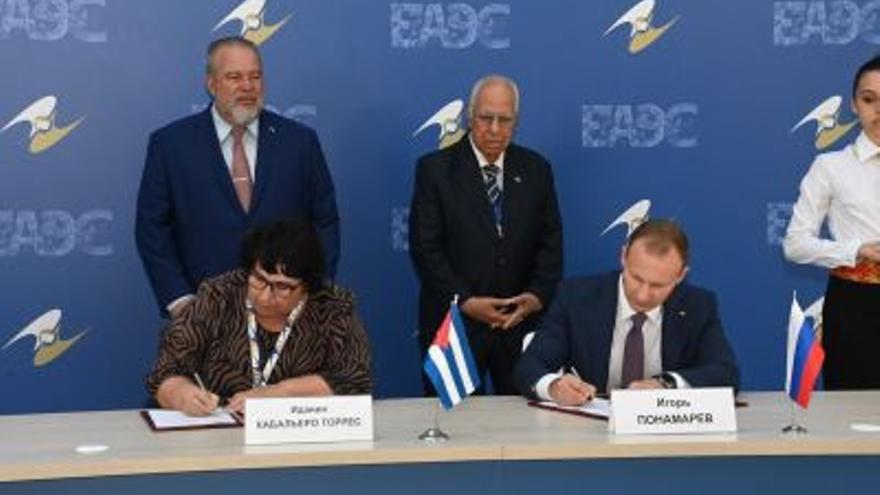
Manuel Marrero and Ricardo Cabrisas supervise the signing of the contracts with the Russian pharmaceutical company. (@R_Malmierca)

14ymedio bigger14ymedio, Madrid, 9 June 2023 — BioCubaFarma will return from Russia with the signing of at least three documents that the official press has described as contracts, although strictly there is only one that will allow the acquisition of active ingredients for the medications. The information gives as an example azithromycin, one of the most sought-after antibiotics in Cuba that is often scarce in pharmacies, although in the informal market it costs 400-500 pesos per blister pack.

Eduardo Martínez Díaz, president of BioCubaFarma, celebrated the agreement and announced two others, much less specific. One of them is a memorandum to “establish a strategy of scientific-technical cooperation and the transfer and assimilation of technology.” This agreement, which includes the commercialization of raw materials to make generic drugs, was signed with the Russian JSC Active Components.

The other is a “letter of intent from the Eurasian Economic Union (EEU) to create a multinational alliance” that allows achieving “sovereignty in the short term,” as well as the production of vaccines and medicines.

Martínez Díaz accompanied Prime Minister Manuel Marrero to the meeting of the Eurasian Intergovernmental Council in Sochi, and he sold a catalog of products to treat infectious and chronic diseases, including diabetes, neurological pathologies and all kinds of cancers. The intention, he said, is that they can be marketed in Latin America and the “Euro-Asian zone.” The three signed documents include Belarus, although its contribution is unknown. continue reading

For Cuba, the profit is in the acquisition of raw materials, technology and medical equipment especially, as emphasized by the authorities of the pharmaceutical sector present this Thursday at the event. But it was also clear what the Russians get in return.

“We want the company BioCubaFarma to represent us in Latin America. We are very happy to have signed these documents on cooperation with our partners and are sure that the results will be effective,” said the representative of JSC Components Activos.

In March of this year, Mexico, Colombia and Cuba announced the creation of a Medicines Agency of Latin America and the Caribbean with the aim of “consolidating the self-sufficiency of strategic inputs in the region” and strengthening the authorization of drugs and vaccines during health emergencies through common regulatory frameworks.

The agreement, open to other countries (Chile, Brazil, Argentina, Bolivia, Dominica, Ecuador, El Salvador, Honduras, Jamaica and the Dominican Republic were expressly cited), has declared a regional intention, both in terms of regulation and the exchange of raw materials, technologies and final products. In this equation Russia has the gateway through Cuba.

“This alliance that we have established today will provide very positive results for both the Russian Federation and Cuba, and also for other countries in the Eurasian region, Latin America and the Caribbean,” insisted Martínez Díaz, who asked the Russian side to work actively to make the agreement materialize as soon as possible.

Marrero, who witnessed the signing and stood next to the president of BioCubaFarma, dedicated the day in Sochi to emphasizing the ties between Cuba and Eurasia, and he offered the installation of an industrial park to celebrate their union.

“We propose to promote the creation of an industrial park in the Mariel Special Development Zone. Its realization would be an expression of our efforts to form connections that lead to that interregional integration to which we aspire, especially in the context of a multipolar world,” he said.

The prime minister further explained Cuba’s position as the key to the continent, “a region with which we have signed economic complementarity agreements for the reduction of tariffs. Our potentialities, as a bridge to Latin America, provide alternatives to complement us and project efforts towards new spaces of integration,” he said.

Marrero once again sold the “potentialities” of Cuba in the biotechnology sector and other joint businesses in industry, health, tourism, education, digital economy, e-commerce and energy — in  other words, almost everything. And he also offered Cuban businesspeople, who are interested in doing business with the Eurasian zone.

The speech was also sprinkled with ideological messages, starting with the statement that Fidel Castro would be “proud” to see Cuba participating in such an event, the challenges of a post-pandemic world, the importance of peace — without any reference, even veiled, to Ukraine — and the struggle of the Cuban people against adversity, attributed to the “intensified blockade.”

“We are fighting, not only to resist, but to develop, and I can assure you that Cuba will never surrender, and that we will always defend our independence and sovereignty ’until victory, forever,’” he intoned before the audience.

Translated by Regina Anavy

____________

COLLABORATE WITH OUR WORKThe 14ymedio team is committed to practicing serious journalism that reflects Cuba’s reality in all its depth. Thank you for joining us on this long journey. We invite you to continue supporting us by becoming a member of 14ymedio now. Together we can continue transforming journalism in Cuba.

The Cuban Foreign Ministry Denies There is an Agreement With China To Open an Electronic Espionage Center in Cuba

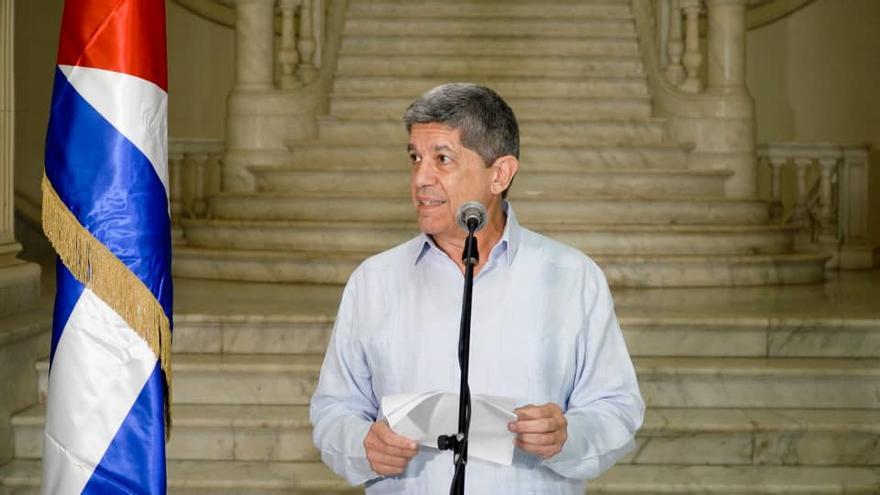
The Deputy Minister of Foreign Affairs of Cuba, Carlos Fernández de Cossío. (Foreign Ministry of Cuba/Facebook)

14ymedio bigger14ymedio/EFE, Havana, 8 June 2023 — The Cuban Foreign Ministry denied on Thursday the report in the American newspaper The Wall Street Journal that the Government of the Island signed an agreement with China to allow the installation on its territory of a large, secret espionage center.

The Deputy Minister of Foreign Affairs, Carlos Fernández de Cossío, claimed in a statement to the media that this report is “unfounded information,””slander” and “false,” and its purpose is to justify the U.S. sanctions against Cuba and destabilize the Island.

He added that the Cuban government rejects “all military presence” in Latin America and the Caribbean, including the American one in Guantánamo.

According to information from the New York newspaper, the center would allow communications to be intercepted at the regional level. For allowing the installation of this infrastructure, for which no location or more data were provided, Cuba would receive “billions of dollars” as a counterpart.

“Slanders of this type have often been fabricated by U.S. officials, apparently familiar with intelligence information,” Fernández de Cossío said. continue reading

The diplomat linked the contents of the article to other reports  published in the past such as the “supposed acoustic attacks against American diplomatic personnel” on the Island, “the non-existent Cuban military presence in Venezuela” and “the imaginary existence of chemical weapons laboratories” in Cuba.

“The hostility of the U.S. against Cuba and the extreme and cruel measures that cause humanitarian damage and punish the Cuban people cannot be justified in any way,” he concluded.

Speaking to the American MSNBC network, John Kirby, spokesman for the White House National Security Council, pointed out that the newspaper’s article is “inexact” but that the U.S. “is focused on making sure that it can mitigate any threat from China in the region.”

“What I can tell you is that we have been concerned since the first day of this Administration about China’s influential activities around the world, even more so in this hemisphere and this region,” Kirby said. “We are observing this very, very closely.”

For his part, the Pentagon spokesman, Brigadier General Patrick Ryder, quoted by Reuters, also said that the information from the U.S. media “is not precise” but that the U.S. is “aware that China and Cuba are developing a new type of espionage station.”

“In terms of that particular report, no, it’s not exact,” he added.

“Beyond that, we are well aware of China’s attempts to invest in infrastructure around the world that may have military purposes,” even in Latin America and the Caribbean, Ryder said. “We will continue to monitor it closely and trust that we can meet all our safety commitments at home and throughout the region.”

Translated by Regina Anavy

____________

COLLABORATE WITH OUR WORKThe 14ymedio team is committed to practicing serious journalism that reflects Cuba’s reality in all its depth. Thank you for joining us on this long journey. We invite you to continue supporting us by becoming a member of 14ymedio now. Together we can continue transforming journalism in Cuba.

The Cuban Regime Approaches the EEU: Geopolitics in Reverse

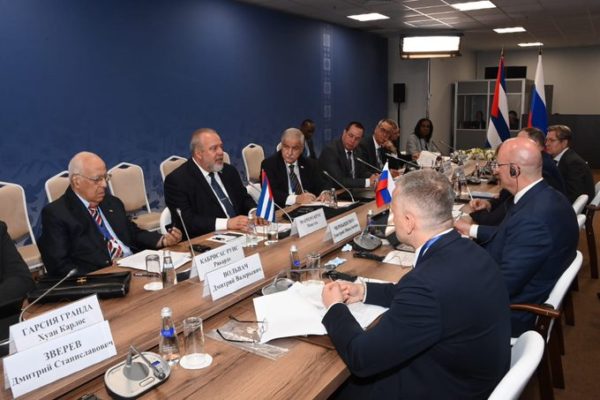
Cuban Prime Minister Manuel Marrero and other top officials with their Russian hosts in Moscow on June 7th.

14ymedio bigger14ymedio, Elías Amor Bravo, Economist, 7 June 2023 — Marrero has already arrived in Moscow, in what the state press says is his first visit as Cuba’s prime minister. Apparently, as soon as he arrived, he went to the summit in Sochi of the Eurasian Council, an organization in which the communist regime has high hopes, and which the media of the state press are in charge of turning into something exceptional. Now let’s see what it’s all about.

In another entry on this blog it was already explained that going to look for economic and commercial relations almost 10,000 kilometers away has little to do with geopolitics, and a lot to do with walking like a headless duck in the world economy. The Cuban economy still does not define its competitive position in the international division of labor, and the communists have caused with this type of operation a collapse from which it will be difficult to get out.

What is the Eurasian Economic Union? Basically, a union of countries for the purpose of economic and commercial cooperation, which came into operation on January 1, 2015, composed of Russia, Kazakhstan and Belarus. Subsequently, Kyrgyzstan and Armenia were also incorporated, so there are currently five countries in Putin’s sphere of influence, with a total of 180 million inhabitants in an area of 20 million square kilometers that represents 15% of the total land.

As indicated in the founding documents, the objective of the Single Economic Area was the development of an integrated market and the achievement of the “four freedoms”: the free movement of goods, capital, services and people within the single market. continue reading

The free movement of people allowed the free movement between Member States to live, work, study or retire in another EU country. The Member States had a common external tariff on all goods entering the market and have unified the valuation methods of imported goods since the creation of the Eurasian Customs Union. The objectives include the joint coordination of projects in the fields of infrastructure, energy, industry, agriculture and transport.

The Eurasian Economic Union has tried to base its model on the European Union. The decisions are made by the Eurasian Economic Council, composed of the heads of state of the member countries. The Supreme Council determines the strategy, direction and prospects of integration and makes decisions aimed at achieving the objectives of the Union.

The Eurasian Economic Commission carries out its work in accordance with the Treaty of the Eurasian Economic Commission (EEC) and with the international agreements that constitute the legal and regulatory framework of the Eurasian Customs Union and the Single Economic Area. In addition to the Commission, a Eurasian Development Bank has been created with headquarters in Kazakhstan, and a Court of Justice for the resolution of conflicts and the interpretation of the legal system of the Eurasian Economic Union has it headquarters in Minsk.

And seeing all this, what is Cuba doing in the EEU?

The Castroite state press celebrates the fact that Cuba is the only country in Latin America that has achieved the status of observer state in the Eurasian Economic Union, because “it gives us prestige and presents a great challenge,” according to a Minrex specialist who leads the Directorate of Europe and Canada. Now tell me how this fits.

It is as simple as affirming that for Cuba it is “an honor to participate in this integrationist bloc, because it allows us to know first-hand where its development is going,” and, therefore, the Cuban Prime Minister, Marrero, with everything that is falling apart on the Island, goes to Sochi to have the dubious honor of “observing the EEU.” Incredible.

Apparently it is the first time that Cuba is attending this forum in person, and Marrero has declared in Sochi that “we reaffirm the commitment to enhance our insertion in this integration mechanism and honor the condition that we received a little more than two years ago.” Another nonsense.

Along with Cuba, Moldova and Uzbekistan also participate as observers and are not so euphoric. There were plans to attract Ukraine, but no one expects them to materialize after the devastating war. The fact that the ESA is paralyzed, without new additions, says very little about the achievement of its foundational objectives. There is a feeling that Cuba arrived to the party late and may find the environment strained after the Russian destruction in Ukraine.

The objectives of economic modernization of the ESA, of cooperating and increasing the competitiveness of national economies and creating the conditions for sustainable development, have been interrupted, perhaps forever, after Putin’s war action in Russia, with the fear that the criminal sequence may continue.

The fact is that, quietly, Castro’s diplomacy had been working for years, practically since 2015, to put its nose in this forum almost 10,000 kilometers away from the Island’s borders, and apparently they have achieved their goal that was accelerated from 2019 after the visit to Cuba of Sergei Glazyev, Minister of Integration and Macroeconomics of the Union, who participated in the International Fair of Havana. The application was formally submitted in January 2020 and was finalized at the end of that year, despite the pandemic.

The regime has detected opportunities to expand economic, commercial and cooperation relations with observer status, and specifically “for the registration and positioning of biotechnological and pharmaceutical products, as well as services in high purchasing power markets, such as the Russian Federation and the Republic of Kazakhstan.”

With this clarification, it seems that Castroite leaders seek to place Cuba in the Eurasian market as a supplier of medicines and medical services. More or less, the same as going to China with honey when the Asian giant is the world’s leading producer of honey. But that’s how the communists are, and here in Sochi they propose, as observers, “to negotiate cooperative or licensed productions in nations whose manufacturing cost is low, as is the case of the republics of Armenia, Belarus or Kyrgyzstan, to later market them within the EEU or other markets.”

I’ll translate for you. This is neither more nor less than decentralization, the same strategy implemented by Western multinationals in Asia to produce goods at low cost. This is what the “revolution of the poor” has come to, the model of collectivism that leaves no one abandoned.

Cuba even intends to get from Sochi the aid for “the creation of industrial parks, the foundation of joint ventures and the promotion of integral digitization of the productive sectors, the expansion of access to foreign markets, as well as the possibility of insertion in Eurasian initiatives focused on the energy, industrial, transport and  tourism financial spheres, and the elimination of trade barriers.” The same thing they ask of Moscow. And then they talk about the embargo/blockade. Really?

To distract itself, the Cuban delegation participates in the Eurasia-Our Home International Exhibition, in different panels and stands based on the themes of tourism, health, food safety and industry. Cuban communists are going to sell their paradigm of solidarity, multilateralism and cooperation as the most effective way to face common challenges. But the EU countries are in other coordinates, and the commitment to economic freedoms has advanced so much that the creation of a common currency has even been proposed. It should not be forgotten that the model is Western Europe, so they will continue to take steps to achieve that full integration. Seen from this perspective, Cuban participation is that of a mere puppet. Observe and applaud.

Apart from folklore, it will be necessary to closely follow the results of the regime’s participation, once again as an observer, in two mechanisms that already work within the Union: the Pharmacopoeia Committee and the Working Group on the regulations of medical teams. It should not be forgotten that the acquisition of pieces of equipment and products is a priority for Cuban communists, and where they can earn a dollar they will not waste time. But 10,000 kilometers away is a long distance, geopolitics in reverse. Will it be worth it for Cuba?

Translated by Regina Anavy

____________

COLLABORATE WITH OUR WORKThe 14ymedio team is committed to practicing serious journalism that reflects Cuba’s reality in all its depth. Thank you for joining us on this long journey. We invite you to continue supporting us by becoming a member of 14ymedio now. Together we can continue transforming journalism in Cuba.

Private Carriers, Annoyed by the New Attempt To ‘Cap’ Prices in Cuba

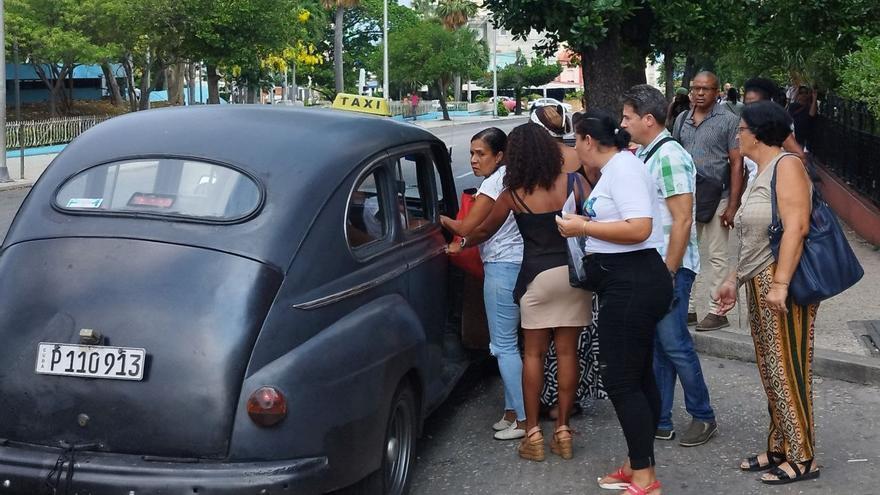
According to the Directorate, Havana has “46 passenger transport routes operated by private carriers, with an average distance of approximately seven miles.” (14ymedio)

14ymedio bigger14ymedio, Natalia López Moya, Havana, 5 June 2023 — The young man extends his hand with a 200 peso bill that the driver grabs, without returning any change. It is the price of a collective taxi on the stretch from the Parque de la Fraternidad to Santiago de las Vegas, in Havana, a distance of a little more than 14 miles. Beginning next Friday, private drivers will be obliged to charge half that for that journey, according to the new maximum prices set by the General Directorate of Provincial Transport.

The new rates arise “from the need to update the prices of the passenger transport service offered by the Non-State Forms of Management,” says the note published on June 5 by the state entity. The initial proposal was “coordinated with the majority of the holders who have a transport operation license, in each of their territories,” it adds.

According to the Directorate, Havana has “46 passenger transport routes operated by private carriers, with an average distance of approximately 7 miles.” The prices for a short section are set at 45 pesos, the averages at 70 and 100, and the longer routes, such as the one from Guanabo beach to Old Havana, is set at 170.

The new figures represent at least half of what private carriers are currently charging, rates that have not stopped rising since the fuel crisis decreased the availability of transport. Drivers allege difficulties in buying gasoline, high prices for spare parts and a  general increase in the cost of living. continue reading

In 2021, the year in which the Ordering Task* began, prices in Cuba suffered a 77.3% increase in the consumer price index (CPI) mainly from transport, which grew by 188%, a fact made public by the National Office of Information and Statistics (Onei). Since then, prices have continued to increase without seeing an end to the rise.

“Neither the State nor the passenger gives anything to the taxi driver,” laments David Pousada in a harsh comment on site of the Provincial Directorate of Transport. “As long as the driver has to buy medicines at 1,000 pesos, a can of oil at 1,500, a package of chicken at 3,000, fuel at 400 per liter and a soft drink in the cafeteria at 150, prices will not go down.”

At the collection points, such as the Parque de la Fraternidad, the news spread on Monday morning among the drivers. “This is the country of the 15 days: nothing is fixed. Now they are capping prices. The inspectors stand on every street corner, they fine us, they take some drivers prisoner to intimidate us, and after two weeks everything goes back to the way it was yesterday,” says Roly, who drives a nine-seater vehicle that makes the route to Playa.

Customers, on the other hand, are torn between hope and doubt. “It relieves me, of course, because if this is true I’m going to spend half of what I’m spending now to go from La Víbora to the Capitolio,” admits a young woman who works in a private restaurant near Central Park. “But other times, when they have announced capped prices, what has happened is that many drivers stay home and won’t go to work for that small amount of money.”

Others, such as Yuniel, 23, ask: “On the route that costs 45, what driver is going to return five pesos to you if you paid with a 50-peso bill?” According to this young man, “it’s not just about prices but also about the lack of paper money, especially small bills, because ATMs can spend days without cash, and the lines to withdraw money are getting longer and longer.”

The authorities warn that “the actions of confrontation and control on the road will be reinforced (…), applying to drivers who are detected in violation of the established prices, Decree 30 of 2021. In the case of those who exercise the activity illegally, it will act with greater rigor by applying Decree 45 of 2021.”

They have also enabled the telephone number 78813110 and the email oap.dg@getrans.cu so that the customers themselves report drivers who violate the new rates to “act on the offender” and ask that the report include “day, time, license plate number of the vehicle and the price charged.”

In addition to Havana, the new prices have reached the center of the Island, where on Monday the local press announced that “the price of 15 pesos per passenger is fixed for combustion tricycles, within the city of Cienfuegos, on the perimeter from any point of the city to the ring road,” and in the case of two-seater motorcycles, “the price is 30 within the mentioned perimeter.

It is expected that in the coming days similar news will be published in the official media of the rest of the country’s cities.

*Translator’s note: The “Ordering Task” [Tarea Ordenamiento] is a collection of measures that include eliminating the Cuban Convertible Peso (CUC), leaving the Cuban peso as the only national currency, raising prices, raising salaries (but not as much as prices), opening stores that take payment only in hard currency, which must be in the form of specially issued pre-paid debit cards, and a broad range of other measures targeted to different elements of the Cuban economy. 

Translated by Regina Anavy

____________

COLLABORATE WITH OUR WORKThe 14ymedio team is committed to practicing serious journalism that reflects Cuba’s reality in all its depth. Thank you for joining us on this long journey. We invite you to continue supporting us by becoming a member of 14ymedio now. Together we can continue transforming journalism in Cuba.

Two American Businessmen Meet with ‘SMEs’ in Cuba to ‘Do Business’

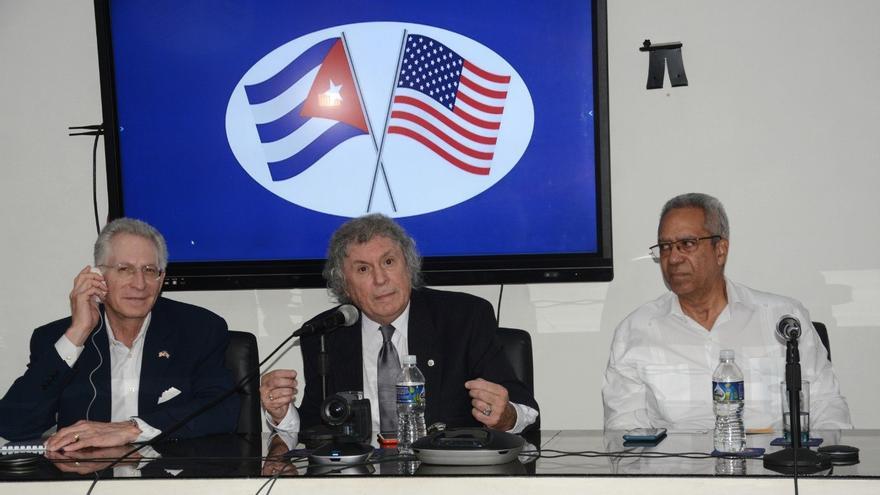
The president of the Chamber of Commerce of Cuba, Antonio Carricarte, in the center, flanked by American businessmen Mark Baum and Jorge Ignacio Fernández. (Tribuna de la Habana)

14ymedio bigger14ymedio, Madrid, 7 June 2023 — Two American businessmen visited Havana on Tuesday to talk “about the possibilities of doing business, scientific exchanges, cooperation and instruction,” according to Prensa Latina, which presented the meeting as one with large attendance.

At a press conference, the president of the Chamber of Commerce of Cuba, Antonio Carricarte, highlighted “the potential” for the “entrepreneurs” of the Island, whom he divides into “traditional” – that is, state – and private, to “promote the export to the United States of products such as honey, coffee and charcoal.”

However, the official did not mention that these products  already have an outlet in the European and Canadian markets and that Cuba does not have the capacity to increase production with its current economic rules.

Carricarte spoke of the “possibility” that small and medium sized Cuban businesses (SMEs) can “connect with their American counterparts.” He also said that this is “the first action” of a program that includes “a work agenda” for the rest of the year.

The entrepreneurs who are in Havana are Jorge Ignacio Fernández, as a representative of the Hope for Cuba Foundation, and Mark Baum, with the Food Industry Association.

The founder of the first, which is presented as an NGO that “promotes independent activity in Cuba to strengthen Cuban civil society,” told Prensa Latina that, after this meeting in Havana, “the next step will be to hold a forum in Washington to explain how to do business with Cuba.” continue reading

Fernández said that they are not only interested in business, but in “working on issues such as sustainable energy, and even with medical device companies interested in making Cuban vaccines.” These – Abdala, Sovereign 02 and Sovereign Plus – have not yet been recognized by the World Health Organization.

As for Baum, who “works in the packaged consumer goods industry and has more than 30 years of experience,” he expressed interest “in knowing the Cuban market to determine in which areas it is possible to collaborate.”

Both businessmen, the official agency said, “agreed about the effects of the US blockade of Cuba and the inclusion of the Island on the list of countries sponsoring terrorism.” Despite this, says the press release, they stressed that “there are small possibilities that must be taken advantage of in favor of trade.”

An article published by Tribuna de La Habana indicated that Americans want to “exchange with agencies, officials and representatives of local entrepreneurs” and “visit places of interest, in order to feel the reality and explain it to their fellow countrymen.”

The result of this visit, they say, will be “the sending of food to the Cuban people, both by commercial means and through donations.” This includes, according to the same report, the possibility of establishing “food-producing factories and achieving a rapprochement between the farmers of both nations, with the importation of better breeding stock, feed and other inputs in order to increase the levels of milk and meat” on the Island.

Translated by Regina Anavy

____________

COLLABORATE WITH OUR WORKThe 14ymedio team is committed to practicing serious journalism that reflects Cuba’s reality in all its depth. Thank you for joining us on this long journey. We invite you to continue supporting us by becoming a member of 14ymedio now. Together we can continue transforming journalism in Cuba.

Cuban Bitcoiners Gather in Havana, Despite Harassment by State Security

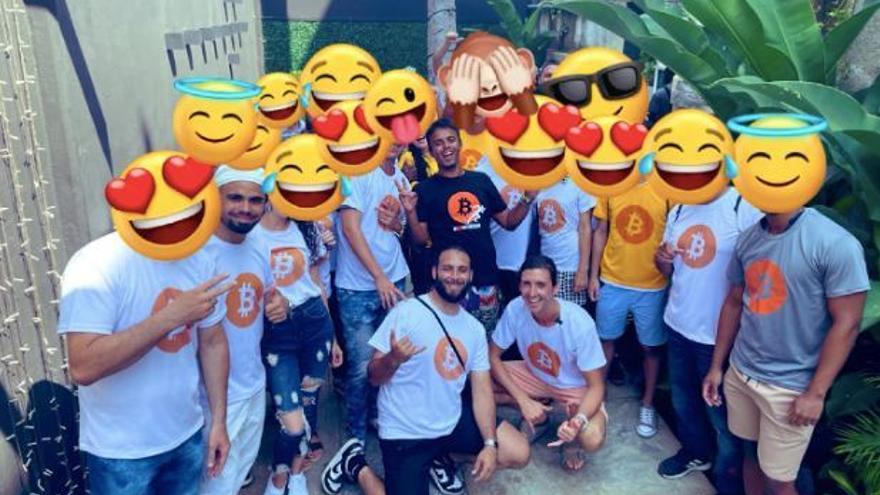
Joe Hall (lower, right), cryptocurrency specialist and journalist for Cointelegraph, is one of the few uncovered faces in the photo at the PaZillo bar. (Twitter/Joe Nakamoto)

14ymedio bigger14ymedio, Madrid, 3 June 2023 — Code names and emoticons instead of faces. The photo of the first meeting of Cuban bitcoiners, held on May 28 at the PaZillo bar in Havana, has gone viral in the world of cryptocurrencies. Surviving in a precarious economic environment like that of the Island, avoiding the surveillance of the regime and betting on the future of digital money has turned Cubans into heroes before their international colleagues.

Joe Hall, a specialist in cryptocurrencies and journalist for the British media Cointelegraph, is one of the few uncovered faces in the photo at the PaZillo bar. He traveled to Cuba to participate in the meeting of the “community,” and now, speaking from Madrid, he talks with 14ymedio about the enthusiasm of young Cubans for digital currencies.

“What moved me the most was to note that even under a regime as hostile as the Cuban one, where there seems to be no future, suddenly there is an economic hope – bitcoin – that does not allow itself to be crushed by the Government,” says Hall, who appears on Twitter as Joe Nakamoto: a tribute to the anonymous creator of bitcoin, Satoshi Nakamoto.

The trip to the Island, he says, was almost an expedition of discovery, to learn about the environment of digital money and how Cubans were dealing with it. “I went to Cuba to investigate,” he says, summarizing a trip that took him to several towns on the outskirts of Havana and to the capital itself, where bitcoiners develop their businesses.

There was a lot of talk at the PaZillo bar, Hall explains. “I decided to go after hearing Alex Gladstein’s opinion in 2021 about the introduction of cryptocurrencies in Cuba. He wrote a report about the bitcoin ’revolution’ on the Island. I wanted to go and see it with my own eyes.” continue reading

Camera in hand and with the intention of making a future documentary, Hall was fully introduced to the Havana world of cryptocurrencies, and, with the help of three organizers who prepared the meeting after a long organizing by Telegram, more than 60 Cubans were able to talk with him about digital money.

They were people of all ages and occupations, men and women, business owners and amateurs, or simply Cubans – “very intelligent and educated,” says Hall – who are interested in doing business in bitcoin.

“The goal was to educate the community on how to better use bitcoin, how to accept it and trade with it or pay in establishments and bars such as PaZillo, which are open to this type of currency,” says Hall, who admits that, with the exception of Havana and Matanzas, the other Cuban provinces have a long way to go in the matter.

To boost the use of bitcoin, the organizers sold sweaters with the bitcoin logo at 100 satoshis each, the equivalent of a dollar, “with a view to everyone being able to buy them,” he explains.

“Throughout the meeting, I tried to understand how Cubans use bitcoin,” says Hall, who also reflected on the limitations and difficulties of using digital money in the Cuban environment.

In an article published on May 31, he presented his conclusions: “Cuba’s foray into Bitcoin signifies a departure from the centralized economic model that has shaped Cuba’s economy for decades. Despite limited internet access, financial constraints and a socialist-styled government, the meetup underscored that Cubans are increasingly turning to crypto as a means of financial freedom and an ’exit’ from the local economy.”

What’s disturbing, however, is the attention that the Government has placed on that world and the concern with which they followed the announcement of the meeting in Havana. “One of the State Security spies began to follow me in a market and I had to play the role of ’dumb gringo’. However, he never questioned me,” he says.

Despite the economic precariousness of the country, Hall perceives a glimmer of hope in the relationship of young Cubans with alternatives such as bitcoin. He was in Cuba in 2019 and, despite the fact that it was a few months before the connection from mobile phones had begun, the most effective thing was to look for a Wi-Fi spot in the central square of the towns and cities.

The change came with the Internet, despite the connection difficulties. “Cubans are very intelligent. They learned to use VPNs and have found many ways to dodge government surveillance. It is true that the country has deteriorated, but the Internet is everywhere, and bitcoin, by nature, is the money of the Internet. That has made me optimistic, despite the fact that the regime’s first reaction to any eventuality is to cut the connection,” he reasons.

Another benefit of using cryptocurrencies faced with an economy like the Cuban one is that, as the country cannot guarantee stability, bitcoin becomes a good option for saving: “In Cuba you can’t really save in dollars or euros, much less in pesos. But in that context, questions also arise: “To what extent will the Government stand idly by?”

For people, on the other hand, it can be a viable economic solution in the face of the “horrible” situation that is being experienced. As for the regime, “it can’t touch bitcoin,” Hall summarizes, and that is the security of this currency: “It can’t be confiscated.”

Translated by Regina Anavy

____________

COLLABORATE WITH OUR WORKThe 14ymedio team is committed to practicing serious journalism that reflects Cuba’s reality in all its depth. Thank you for joining us on this long journey. We invite you to continue supporting us by becoming a member of 14ymedio now. Together we can continue transforming journalism in Cuba.

Mexico Continues To Use Pfizer To Vaccinate Children Against Covid Instead of the Cuban Abdala Vaccine

In Mexico City, the campaign to reinforce vaccinations with doses of the Cuban Abdala is maintained. (Twitter/@SSaludCdMx)

14ymedio bigger14ymedio, Mexico, 5 June 2023 — The Mexican state of Chihuahua, on the border with the United States, announced that on Monday, in 224 medical and clinical units, it began the application of 17,520 doses of the Pfizer vaccine to children between 5 and 11 years of age. According to the state vaccination coordinator, Hugo Elí Lechuga Barrera, the priority is to “immunize children who turn five this year” and those who do not yet have their complete scheme.

Lechuga Barrera stressed that 7,335 doses of this immunologic have been applied in the state, of which 4,634 were administered in Ciudad Juárez in previous months. These vaccines are part of the donation of 516,000 doses delivered by the Government of South Korea to Mexico in August last year.

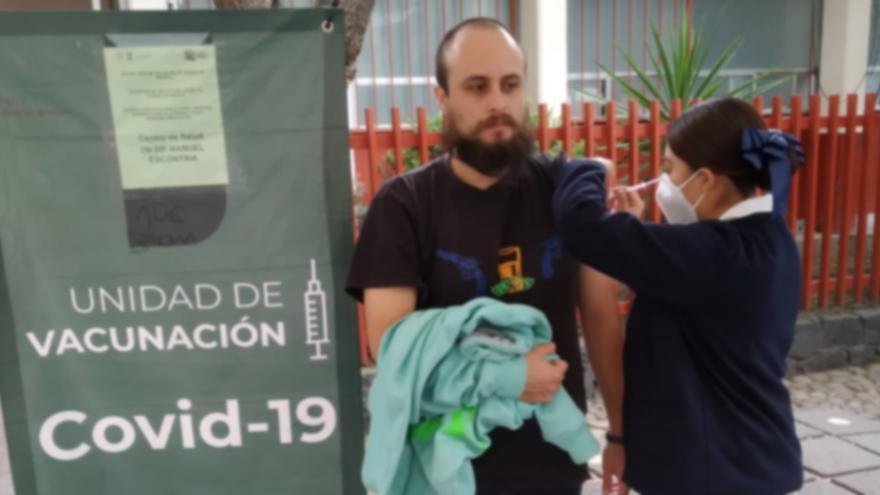
With the supply of Pfizer, the use of the Cuban Abdala vaccine in children is ruled out in Chihuahua. Mexico acquired 9 million doses of the Cuban formula, which does not have endorsement from the World Health Organization, as a reinforcement against Covid-19. Last May, the vaccine received a favorable review from the Committee on New Molecules, dependent on the Federal Commission for Protection against Health Risks, to be used in children under 11 years of age.

The state official indicated that doses of Abdala are available. In Chihuahua, 36,971 doses have been administered, and 4,114 people received them as their first vaccine against the coronavirus. Another 31,227 doses were given as reinforcement, and 1,630 are part of the scheme as a second dose. The federal Ministry of Health delivered 118,960 doses in February.

In Guasave (Sinaloa), the situation is similar to that of Chihuahua. On Monday, the delivery of Pfizer’s vaccines to vaccinate 100 children was confirmed. The director of the General Hospital, Jesús Antonio López Rodríguez, said that these doses will be for minors who have just turned five years old. continue reading

The Cuban formula still doesn’t convince Mexicans. In the state of Nuevo León, the reinforcement campaign against Covid-19 was announced, and for this there would be 176,000 doses. In the second week of May, only five people showed up, although the official report showed 63,000 doses given as of last week.

Translated by Regina Anavy

_____________

COLLABORATE WITH OUR WORKThe 14ymedio team is committed to practicing serious journalism that reflects Cuba’s reality in all its depth. Thank you for joining us on this long journey. We invite you to continue supporting us by becoming a member of 14ymedio now. Together we can continue transforming journalism in Cuba.

The Parents of a Priest Are Injured in an Assault on His Home in Santiago de Cuba

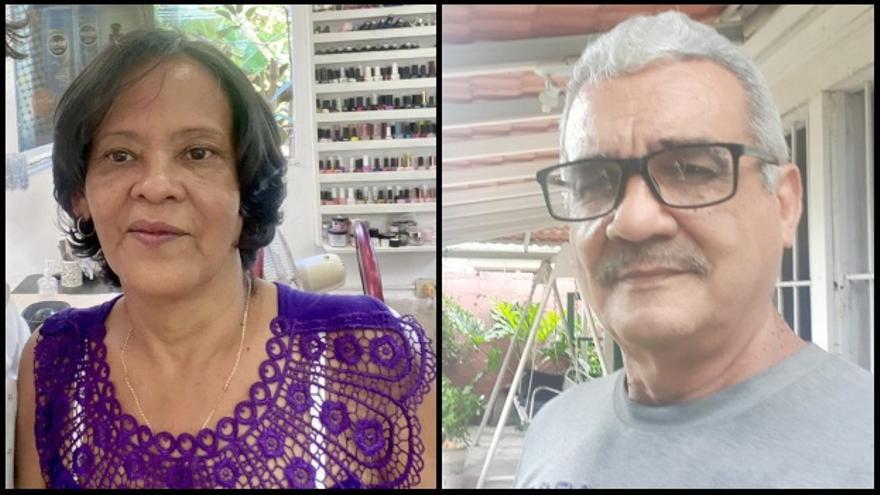
Elsy Hung and Nelson Naun, parents of the Catholic priest Leandro Naun. (Collage)

14ymedio bigger14ymedio, Havana, 6 June 2023 — The parents of the Cuban Catholic priest Leandro Naun were assaulted this Monday in the Santa María neighborhood, on the outskirts of Santiago de Cuba. Three masked men, who broke into their house around midnight to rob them, were discovered by Elsy Hung, the priest’s mother. In their escape, they beat her and hit her husband, Nelson Naun, on the head with a machete.

The thieves entered the house through “a side door that was weakened by the recent rains,” the priest tells 14ymedio from Italy where he is visiting, after denouncing the aggression on Tuesday morning. His father is now awaiting an operation in the hospital, and the priest has been able to communicate with him. He says that “there was a fracture, but no brain damage.”

“The thieves, before taking something, were at the refrigerator eating and drinking water,” he says, as a symptom of the moral deterioration that the country is experiencing. “The violence was unleashed when they were discovered” by the mother, who ended up kicked to the floor and asking for help. His father came to her aid and was wounded.

Naun says that his colleagues in the diocese of Santiago de Cuba immediately expressed their concern and that the archbishop’s driver, Luis, was the one who went to his house during the early hours of the morning, to take his father to the hospital for the operation, because, according to the family, “there is no ambulance.”

The priest considers the aggression as a “manifestation of the acute crisis” on the Island, in addition to reflecting “the loss of values and criminal impunity.” Despite everything, he considers it useful to denounce what happened in the middle of the current “wave of violence”: “My testimony is to help hundreds of people who suffer the same or worse but are anonymous due to the lack of repercussions.” continue reading

Asked if these assaults can be considered as an indirect reprisal to the Catholic Church, Naun is categorical: “We have no proof.” The police, he adds, continue to investigate the fact and look for those responsible, who the priest characterized as “three thin and masked young people.”

On May 19, the priest Eliosbel Pereira, rector of the church of San Francisco de Santiago de Cuba, also suffered a machete assault in the theft of his motorcycle. The news was spread after Dionisio García Ibáñez, archbishop of that diocese, sent a statement by WhatsApp.

According to journalist Adrián Martínez Cádiz, the aggressor, who was disguised as a doctor, gave the priest “a deep wound in his left hand” with a machete. Pereira had to undergo surgery at the provincial hospital of Santiago de Cuba “in a complex operation that lasted several hours, where his hand was reconstructed.”

On April 29, the church of San Charbel and Santo Tomás de Villanueva, located in the Havana municipality of Playa, was looted, and a week before, there was an attempted robbery at the San Juan María Vianney Priest House.

Two other robberies occurred on March 7 and April 5, respectively, in the parish of the Sacred Heart and the chapel of Jesús Obrero, both located in El Vedado, both under the responsibility of the Dominican friar Lester Zayas, one of the priests who is most critical of the regime.

Translated by Regina Anavy

____________

COLLABORATE WITH OUR WORKThe 14ymedio team is committed to practicing serious journalism that reflects Cuba’s reality in all its depth. Thank you for joining us on this long journey. We invite you to continue supporting us by becoming a member of 14ymedio now. Together we can continue transforming journalism in Cuba.

Thefts of Meat, Rice and Other Foods Are Multiplying in Cuba

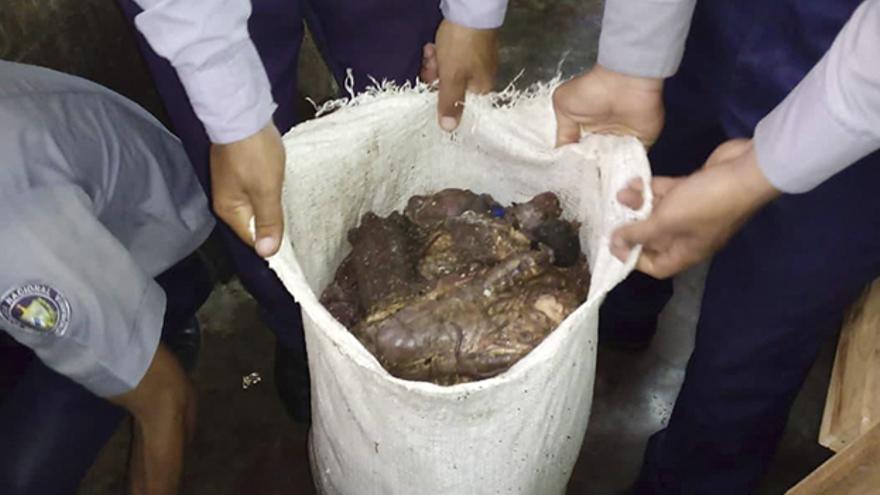
Beef confiscated in the municipality of Placetas, Villa Clara. (Facebook/Fuerza del Pueblo)

14ymedio bigger14ymedio, Havana, 6 June 2023 — The increasingly acute shortages in Cuba coincide with a wave of robberies in food outlets. In recent days alone, the authorities confirmed the confiscation of 133 pounds of beef that was sold illegally in the province of Villa Clara, while in Havana some thieves took all the rice stored in a warehouse in anticipation of its delivery in June to the rationed market.

In the town municipality of Placetas, the police reported on Monday that Maykel Vega, known in the town as Maykel Zapatilla, was arrested for illegally selling meat. The accused, upon noticing the presence of the uniformed personnel, tried to get rid of the product, throwing it out of the kitchen window of his house.

The operation took place after several members of the Committees for the Defense of the Revolution informed the police of the transfer of a shipment of meat at Vega’s house, in broad daylight, according to the Facebook profile of Fuerza del Pueblo, an account associated with the Ministry of the Interior.

The administrators of the profile said they had reports from several ranchers in the area, who indicated that Vega’s house was used as a stolen meat warehouse on the farms of the province.

In the operation, the authorities also seized “suitable instruments,” such as knives, a black briefcase with remnants of meat inside and black rubber boots with “blood stains.” continue reading

Villa Clara has one of the highest rates of cattle theft on the Island. A note from the official media Cubadebate, published on May 12, reported that the province lost on average two heads of cattle every hour between January and March of this year.

In the first quarter, producers lost 4,835 animals, of which 2,893 correspond to cattle (60%) and 1,942 to horses (40%). The number of crimes is more than double those reported in the same period of 2022, and the official press ventured to predict that, if the trend of theft continues, the province would lose more than 19,000 animals this year.

On Monday, the robbery of a bodega [ration store], located on H Street between 13 and 15, Vedado, Havana, was also confirmed between Saturday night and early Sunday morning. Quoted by the newspaper Directorio Cubano on condition of anonymity, an official of the Ministry of Internal Trade said that the thieves took all the rice that was in the establishment and a part of the sugar that was going to be delivered for the regulated basic basket, corresponding to the month of June.

The officer confirmed that this type of crime is increasingly common on the Island in the midst of a deep food-shortage crisis. “If the rice was already not enough, how are we going to solve it while they replace it?” asked a neighbor, according to the newspaper.

Cuba is facing an upsurge in violence, with armed robberies of cell phones, motorcycles and even horse-drawn carriages. In most cases, the police do not provide details about the progress of the investigations or whether they capture the culprits.

The disappearance and murder of doctor Pablo Corrales Susi, allegedly to steal his motorcycle in Havana, has been reported on social networks and by the independent press since day one, while the official media remained silent. The health professional was last seen alive on Monday of last week, and his body was found four days later with signs of violence.

Translated by Regina Anavy

____________

COLLABORATE WITH OUR WORKThe 14ymedio team is committed to practicing serious journalism that reflects Cuba’s reality in all its depth. Thank you for joining us on this long journey. We invite you to continue supporting us by becoming a member of 14ymedio now. Together we can continue transforming journalism in Cuba.

Cuba’s Prime Minister Arrives in Moscow With an Entourage of Ministers and the President of the Central Bank

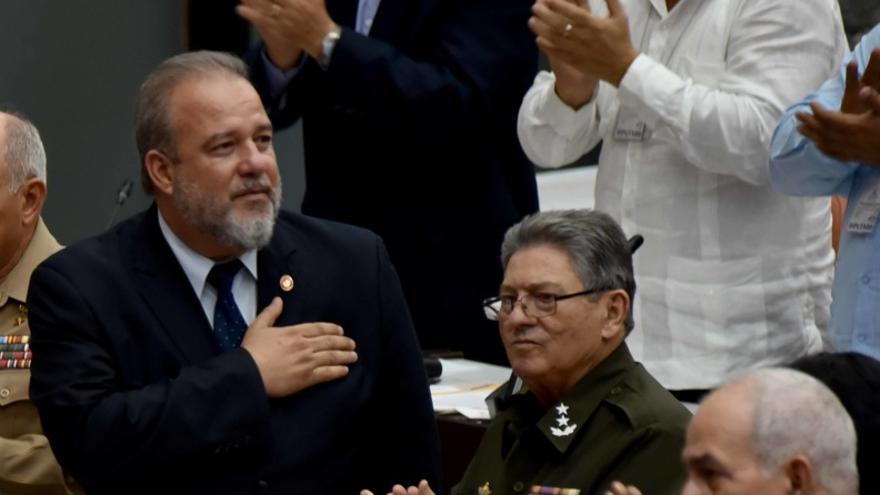
Cuban Prime Minister Manuel Marrero in his first appointment in office. (ACN)

14ymedio bigger14ymedio, Madrid, 6 June 2023 — The Cuban Prime Minister, Manuel Marrero, arrived in Moscow in the early hours of Tuesday “to expand and consolidate bilateral relations” between Russia and the Island. The official visit will last until June 17, as noted by the official Twitter account of the Government, which has changed the background image of the profile for one of the famous cathedral of San Basilio, located in Red Square.

Marrero was received by Julio Garmendía Peña, Cuba’s ambassador to Moscow, on his arrival from Turkey, where he attended the inauguration of Recep Tayyip Erdogan, re-elected as president of the country, and met with Turkish businessmen.

Eleven days of meetings await the prime minister “in the context of the expansion and consolidation of links, in particular economic ande commercial ones,” but he will not be alone. The bloated Cuban entourage is composed of the Deputy Prime Minister and Head of Foreign Trade and Foreign Investment, Ricardo Cabrisas, and the Ministers of Public Health, Tourism, Energy and Mines and Transport.

It also includes Gerardo Peñalver, first deputy minister of Foreign Affairs, and Joaquín Alonso Vázquez, minister-president of the Central Bank of Cuba.

First on Marrero’s agenda is his participation in the Eurasian Intergovernmental Council, which will be held between the 7th and 9th in Sochi, on the shores of the Black Sea. Subsequently, a “program” is planned in the capital that has not yet been detailed, and, finally, he will attend the International Economic Forum in St. Petersburg. continue reading

The Prime Minister’s visit was announced last April and comes seven months after the one made by Miguel Díaz-Canel in November 2022, also after passing through Turkey, on a tour that previously included Algeria and ended in China to gather help from all these countries, mainly to try to solve the energy problem that last summer plunged the Island not only into serious economic problems, but also into social protests against the Government. The inclusion of Minister Vicente de la O Levy in Marrero’s entourage invites us to think that there is a lot to talk about this issue.

The same can be assumed of the presence of Alonso Vázquez, after the request of three Russian banks to operate on the Island was made in May. Just a few months ago, Cuba implemented the operation of the Mir payment system (the Russian version of Visa or Mastercard), and its leaders have addressed on several occasions the possibility of adopting payment in rubles to circumvent international sanctions, although most experts consider this option as very unlikely in the regional context of Cuba, where the US dollar is the currency of reference.

The Minister of Tourism, Juan Carlos García Granda, has his own mission: to rescue the dwindling Russian market. The Cuban authorities have insisted on a recovery of travelers from that country despite the fact that the data indicate that the number is decreasing. That decrease has been attributed to the lack of flights for much of last year and from sanctions for the invasion of Ukraine, but the truth is that the Russians began to exchange Cuba for the Dominican Republic long before the war began.

As for the presence of the Minister of Transport, ties with Russia come from afar. In 2019, the Union of Railways of Cuba and the Russian RZD signed an agreement worth 2.314 billion dollars to modernize the Island’s railway infrastructure. Although a year later senior Russian officials explained that few of the sixty projects signed could be realized with Cubans because of their economic problems and their “mentality,” cooperation has not stopped completely. Among other things, the Island has received locomotives and wagons from Moscow, in addition to remodeling workshops with Chinese help.

Of course, there was the presence of Cabrisas, a debt negotiator and the visible face of Russian investments, which currently cover all sectors. However, the strangest presence is that of the Minister of Health since, although there are cooperation agreements between both countries in scientific and health matters, the materialization is less visible than in other areas. In June of last year, Cabrisas met with Mikhail Murashko, Russian Minister of Health, to discuss the possibility of a mutual supply of medicines and collaboration in the area of nuclear medicine.

Exchanges between Russia and Cuba have increased at a giant pace in the last year when, since the invasion of Ukraine, Moscow has needed the Island as a gateway to the entire Latin American continent, to replace Europe, which has put an end to its years of friendship with the Kremlin. The Havana regime, likewise, needs Putin’s help to survive and in exchange is willing to offer concessions never seen before.

Just a month ago, Boris Titov, a counselor of the Russian Government, said that the Island has offered Russian businessmen the right to land in usufruct for a period of 30 years, an unprecedented privilege since 1959. Those conditions affect, he explained, “both the long-term lease of land and the tax-free import of agricultural machinery, the granting of the right to transfer foreign exchange profits and much more.” The official added that they expect the reduction of “bureaucratic barriers.”

Titov has been advising the Government of the Island for months to transform its economy and open up more to the private sector, but fear has spread among many analysts who consider that Cuba is heading towards a Russian-style capitalism of oligarchies.

In recent months, Deputy Prime Minister Dmitri Chernishenko; economic adviser to President Vladimir Putin, Maxim Oreshkin; the president of the Duma, Vyacheslav Volodin; Foreign Minister Sergey Lavrov; Secretary of the Security Council, Nikolai Patrushev; and the executive director of the state oil giant Rosneft, Igor Sechin, have also traveled to Cuba.

Translated by Regina Anavy

____________

COLLABORATE WITH OUR WORKThe 14ymedio team is committed to practicing serious journalism that reflects Cuba’s reality in all its depth. Thank you for joining us on this long journey. We invite you to continue supporting us by becoming a member of 14ymedio now. Together we can continue transforming journalism in Cuba.

The Shortage of Banknotes in Cuba Forces Cart Operators To Accept Transfers

The cart operators, in addition to the option of payment by transfer, had something else that is scarce in the eyes of the habaneros in recent times: pumpkin. (14ymedio)

14ymedio bigger14ymedio, Juan Diego Rodríguez, Havana, 6 June 2023 — Modernity has reached the cart operators, who usually bet on the surroundings of the agricultural market at 17th and K, in Havana – by force, like almost everything. This Tuesday, among onions and bananas, one of the sellers exhibited an unprecedented poster. “Transfer is accepted,” it said, followed by the digits of a bank account.

The shortage of cash on the Island, especially of banknotes, has led merchants like this to look for a solution in banking transactions, although without much success. In the minutes in which this newspaper observed the scene, no one resorted to this form of payment, but it can be expected that there will be demand, if the operator offers it.

At the end of May, the Minister of Economy, Alejandro Gil, admitted to Parliament that inflation is having among its consequences the lack of cash. The Government lacks money to print more banknotes, and the idea of developing new series with higher denominations that respond to the current high prices is unthinkable in this context.

The minister proposed to the deputies the banking of transactions, which he praised for being a fast, safe and controlled mechanism. However, there are many Cubans who do not even have an account — much less in national currency — due to the distrust of the solvency of the system itself and the devaluation of the currency. Many, too, fear the close control of their funds — sometimes derived from the informal economy — by authorities who are characterized, precisely, by the lack of transparency with which they operate. continue reading

To all this is added the poor functioning of the technologies, from the card payment terminals to the Transfermovil and EnZona systems, which were praised this Monday on national television during a discussion on the day’s Roundtable program, dedicated to talking about electronic commerce and online sales.

The cart operator, in addition to the option of payment by transfer, had something more that is scarce in the eyes of the habaneros in recent times: pumpkin. In any case, the prices of all products were, as usual, higher than those of the state agricultural markets.

Translated by Regina Anavy

____________

COLLABORATE WITH OUR WORKThe 14ymedio team is committed to practicing serious journalism that reflects Cuba’s reality in all its depth. Thank you for joining us on this long journey. We invite you to continue supporting us by becoming a member of 14ymedio now. Together we can continue transforming journalism in Cuba.

Bosnia-Herzegovina, Gateway to the European Union for Cuban Refugees

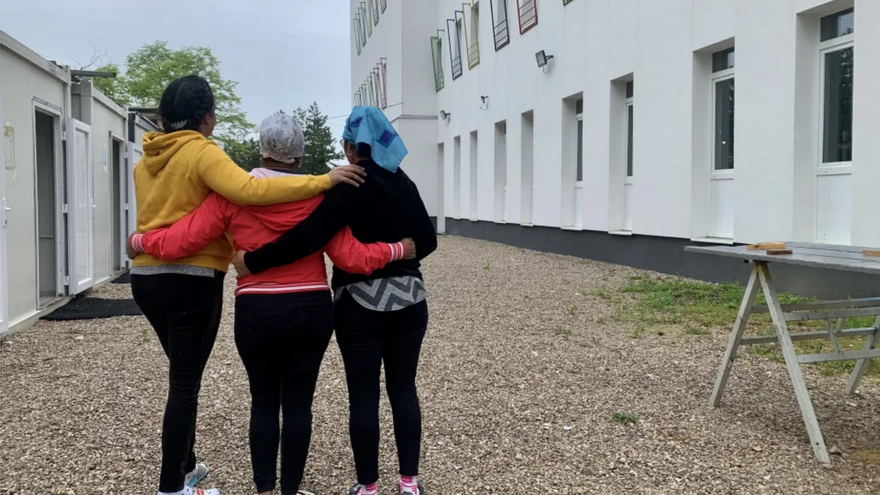
Refugees arrive in Bosnia-Herzegovina by bus, taxi, or even crossing the Drina River by boat.

14ymedio biggerEFE (via 14ymedio), Nedim Hasic, Sarajevo, 6 June 2023 —  Carolina is a 50-year-old Cuban who for a long time lived between the dilemma of remaining in poverty or trying to emigrate to Europe. Today she is stranded in the far west of Bosnia-Herzegovina, a few kilometers from the border with Croatia and the EU.

“It was my husband who made the decision for us. To go to a place where we can work and earn more, not just survive,” she tells EFE at the reception center for refugees in the town of Borici.

She did not want to reveal her real name or surname, fearing for the safety of their daughter and three grandchildren who have stayed in Cuba.

Carolina and her husband, like dozens of other Cubans in Bosnia, dream of being able to enter Croatia, a country that is part of the Schengen zone of free community movement. In this way, they hope to be able to arrive in Spain one day, “because of the language,” the desired destination for many Cubans.

“In Cuba I worked wherever I could. I am a seamstress by profession. I sewed clothes in my house and also worked in a factory where work clothes were made,” says Carolina. continue reading

They arrived in Bosnia from neighboring Serbia, where they entered when Cubans still did not need a visa. They stayed there for eight months but, in the end, decided to continue on the road to the EU.

Her compatriot Maria (another fictitious name) is a physics teacher. At 43 she is the mother of two children ages 18 and 19, who stayed in Cuba.

Together with her husband, she left the Island due to the poor economic situation of the family. “We had no other choice. We simply couldn’t live with the money we brought home; it didn’t even cover our elementary needs,” she recalls.

Both Carolina’s and María’s husbands refused to talk to EFE.

In the Bosnian Office for Foreign Affairs, EFE was told that in the Borici reception center, of the 1,620 migrants registered so far this year, 713 are citizens of Cuba, including 346 women and 97 children, and the rest are mostly Afghans.

In the center of Lipa, located in the same western area but intended only for adult men, 3,253 migrants were registered this year, most of them Afghans and Moroccans, as well as 114 Cubans.

Refugees arrive in Bosnia-Herzegovina by bus or taxi, or even crossing the Drina River by boat, Cubans say. Some traveled first to Russia, Cuba’s main ally, and from there to Belarus, Turkey and finally to Serbia.

The Cubans of Borici are afraid because they receive news about “hot returns” of migrants from Croatia, or about problems with clandestine boats to cross the border River Sava.

When they enter Bosnia-Herzegovina, Cubans announce their desire to seek asylum, which allows them a month to leave since they don’t want to stay in that country, one of the poorest in Europe.

Thirty years ago, Bosnia was the scene of the bloodiest of the civil wars in the former Yugoslavia, with about 100,000 dead and hundreds of thousands injured and displaced.

The Cubans interviewed by EFE point out that it was very difficult to decide to leave their country and leave for an unknown world. The key factor was confidence in a better future.

“It is said in the world that health care in Cuba is excellent. We don’t see it that way; in the end we have to pay for everything with our money,” says Valeria, another Cuban from Borici.

“Donations arrive in Cuba from abroad, but we do not see that they are invested in infrastructure or schools, nor do we know where the money goes,” says this woman, who wants to get to Germany, where she has relatives.

In Bosnia-Herzegovina, located on the so-called “Balkan route” of refugees, there are currently about 850 immigrants in reception centers, most of them from Afghanistan, according to data from the International Organization for Migration.

However, the local press estimates that so far this year, more than 7,000 immigrants have passed through the Balkan country, dreaming of reaching the EU.

Translated by Regina Anavy 
____________

COLLABORATE WITH OUR WORKThe 14ymedio team is committed to practicing serious journalism that reflects Cuba’s reality in all its depth. Thank you for joining us on this long journey. We invite you to continue supporting us by becoming a member of 14ymedio now. Together we can continue transforming journalism in Cuba.