
Cuba: The Seven Lives of Revolution the Cat

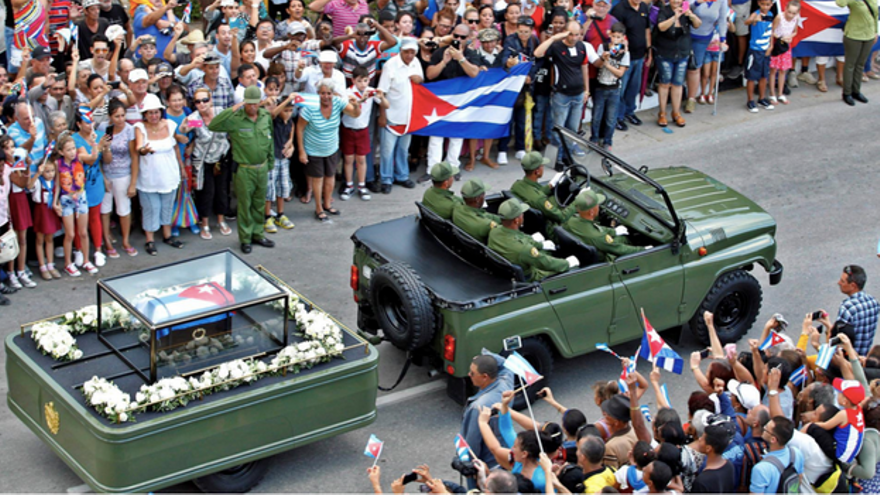
Four years after Fidel turned to dust, his name lives on in a new dynasty. (EFE)

14ymedio bigger14ymedio, Yunior Garcia Aguilera, Madrid, August 16, 2022 — Does the Cuban revolution still exist? For some it ended at the exact moment Fidel Castro delared it to be Marxist.  In the pages of Bohemia years earlier he had accused Fulgencio Batista of being the communists’ candidate in the 1940 election, of being photographed with Blas Roca and Lazaro Peña. Socialists writing for New York’s Daily Worker criticized the assault on the Moncada Barracks, characterizing it as a fool-hardy adventure, a provocation, a putsch. Even a far-left Chilean journalist claimed the events of July 26 had been organized by the CIA.

In his biography, History Will Absolve Me, Fidel makes no mention of Marxism. In interviews with journalist Herbert Matthews in the Sierra Maestra, he would deny that Marxist ideas played any role in his movement. And after taking power in 1959, he would again swear before the press and the entire world, in Spanish and in English, that he categorically rejected communism. To associate him with that ideology, he said, was “a smear campaign.”

But Eisenhower’s less-than-polite welcome during Castro’s visit to the United States would motivate Khrushchev to send an emissary. The revolution’s red shift was not borne of conviction, much less of popular demand. It was the result of a bruised ego. It was also the pragmatic solution of a street fighter. If he was going to take on the neighborhood bully, he had to join forces with another bully of the same weight and size as that of his enemy.

In December 1961 Fidel Castro not only betrayed all his democratic promises, he also killed off his “green as the palm trees” experiment, turning it into something else.

Thus began another revolution, one that aroused the sympathy of many leftist intellectuals, who saw in it the chance to cleanse socialism of its Stalinist stain. “It will be different in Cuba,” they claimed. Their enthusiasm would wane in 1968, however, when the bearded lover exposed his hairy chest. The Revolutionary Offensive to nationalize all of Cuba’s remaining small businesses was irrational and extremist. Censorship of poets was rampant. Che died disheveled and alone in a Bolivia that he neither knew nor cared about. Fidel supported Soviet tanks’ rolling into Prague. That year marked the end of another revolution: the romantic one. continue reading

A new constitution in 1976, a carbon copy of the bureaucratic Eastern European model, consolidated the state. Cuba had officially become a satellite, with the constitutional text itself serving as the marriage contract. The rhetoric and liturgy of the Leninist creed reached their climax in a country that, just a few years earlier, did not know how to say tovarisch (comrade) or spasiva (thank you).

Seemingly solidified, the regime managed to survive the 1980 Mariel crisis but would again be in mortal decline by the end of the decade. Perestroika and glasnost had supporters among the population but the nation’s leaders were not about to give up even a millimeter of their absolute control. The firing-squad execution of General Ochoa, a Hero of the Republic, along with three other officials sent a loud and clear warning. Not long after, General Abrahantes, a former interior minister and head of Fidel’s security detail, died in prison. As far as the Cuban public and the world at-large were concerned, it all had something to do with drugs. For reformist factions within the palace, it was an ultimatum.

So began the fifth life of a cat named Revolution. Like a feline on a hot tin roof, tired and bleary, it had to survive. People took to the streets for the first time to challenge the regime. They later took to the seas on anything that would float. After the economy hit bottom, strategists revived Bastista’s dream of filling the country with hotels. There was no miracle capable of multiplying the loaves and the fishes. Only the problems and the prostitutes multiplied.

A new feline life-cycle began when Castro took off his uniform and put on a suit to receive the pope. With Chavez, Evo, Correa and Kirchner in power, it was a new period of optimism: the Pink Tide. The cat thought it would live forever.

But death brought an end to that period too. Four years after Fidel turned to dust, his name lives on in that of a new dynasty. Except that New Man turned out to be just as clumsy as the Golem in Jorge Luis Borges’ poem. And today, lying in literal darkness, the cat counts out its days.

____________

COLLABORATE WITH OUR WORKThe 14ymedio team is committed to practicing serious journalism that reflects Cuba’s reality in all its depth. Thank you for joining us on this long journey. We invite you to continue supporting us by becoming a member of 14ymedio now. Together we can continue transforming journalism in Cuba.

The Arm Over the Shoulder, the Metastasis of Power in Cuba

In the ranks of the PCC and the UJC, opacity, mediocrity and the absence of authentic leadership reign. It would be enough to look at the character who has been placed at the top of the visible pyramid: the first secretary, Díaz-Canel. (Cubadebate)

14ymedio bigger14ymedio, Yunior García Aguilera, Madrid, 19 July 2022 — For millions of Cubans it is clear that sovereignty does not reside in the people, but in the Communist Party. We could even say that Article 5 of the Constitution is the Platt Amendment of our times, although in this case it is not a simple removable appendix, but a tumor embedded in the body of the nation.

Article 5 establishes that the single party is the superior force of society and of the State. Any initiative, proposal, idea or solution that opposes this totalitarian power is automatically branded traitorous or anti-Cuban. The main enemy of Cuban authoritarianism ceased to be external a long time ago. Today, all the cannons of the regime are aimed against its own citizens.

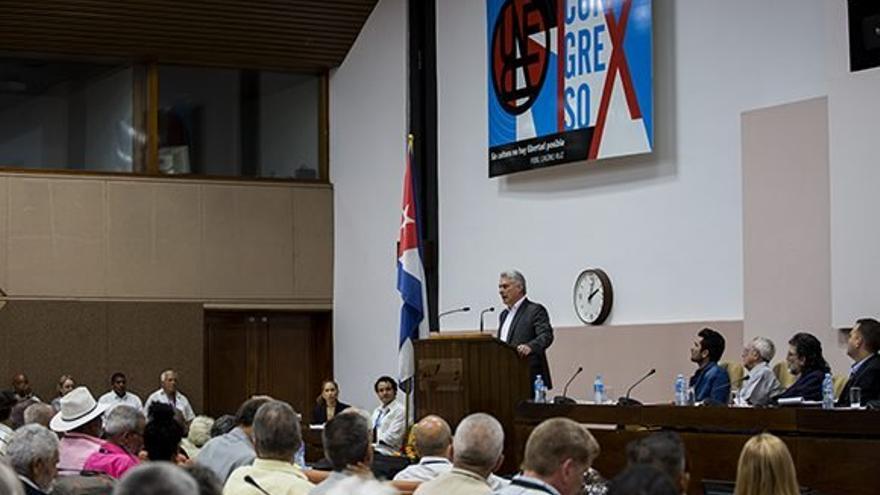
Even in supposedly cultural organizations the omnipresence of the Party is confirmed. The statutes of the Union of Writers and Artists of Cuba, from the second article, establish their full obedience to the PCC. And the same thing happens, although with an even more fundamentalist tone, with the Hermanos Saíz Association(AHS). Its statutes read: “The AHS recognizes the political direction of the Communist Party of Cuba (PCC) and the Union of Young Communists (UJC), the leading organization of the Cuban youth movement. For what is established as a principle, the strongest will of all its members in defense of the ideals of the Cuban Revolution.”

It is clear why both organizations turned their backs on their own members after the 27N (27 November 2020) and 11J (11 July 2021) protests. It is more than evident that this is not about civil society organizations that promote the creations of their artists, but crude control mechanisms by the State to monitor and control the guild related to culture.

It is difficult to understand the magnitude of ridicule when one is immersed in that broth of indoctrination and propaganda that normalizes the absurd. But it is unthinkable that, in democratic societies, a cultural association would have to swear allegiance in its statutes to a political party in order to exist.

Nor can Cuban citizens cannot freely choose their representatives, rather these are carefully selected by the Candidacy Commissions, which in turn are controlled by the Party and State Security. The Platform Otro18 [Another2018] convincingly demonstrated how the political police operate to prevent opposition candidates from running as delegates in their constituencies. continue reading

On the other hand, the cadre policy of the single party is designed so that it is not the most capable who climb the rungs, but the most obedient. In the ranks of the PCC and the UJC, opacity, mediocrity and the absence of authentic leadership reign. It would be enough to look at the character who has been placed at the top of the visible pyramid: the first secretary, Díaz-Canel. If this individual was the best choice of the dictator Raúl Castro to occupy his position, we can already imagine what the rest of the troops were like.

It seems that in the Ñico López (Higher School of the PCC) they are in charge of annulling individualities. When listening to the president of the Municipal Assembly of People’s Power, José Ramón Cabrera, speaking after the protests in Los Palacios, you feel you are facing a pioneer news presenter. Most of these “cadres” or “community factors” have the same gestures, emphasize the same words, are trained in the most simplistic demagoguery: that of placing an arm on the shoulder of the dissatisfied, without offering any concrete solution, just justifications.

The Party’s cadre policy cannot be fixed, because its architects do not tolerate competition. Its victims are chosen from an early age, and the casting takes place in school assemblies. From there, the young cadres begin a career of self-nullification. The continuous, endless and useless meetings will prevent them from frequently attending classes, but their absences will be justified. They will never be able to perform as a good professional sin their field, because the “Revolution” takes up all of their time.

Thus we have Pedro Jorge Velázquez, a young promise of official propaganda. The young man promotes himself as the super “cool and sexy” journalist, although in reality he is a student without many lights, repeating, with an exaggerated need to be taken into account by the nomenclature, but with very poor professional results. And the height of that policy is the “president” himself. The paradox of Díaz-Canel is his being nothing less than an electrical engineer, while under his mandate Cuban is suffering the worst energy situation in the last 30 years.

The only party is a tumor that has already metastasized.

____________

COLLABORATE WITH OUR WORK: The 14ymedio team is committed to practicing serious journalism that reflects Cuba’s reality in all its depth. Thank you for joining us on this long journey. We invite you to continue supporting us by becoming a member of 14ymedio now. Together we can continue transforming journalism in Cuba.
Cuba, Between Sects and Heretics

The fundamentalism of the Castro sect is radicalizing as the crisis of faith in its practitioners increases. (Cubandebate)

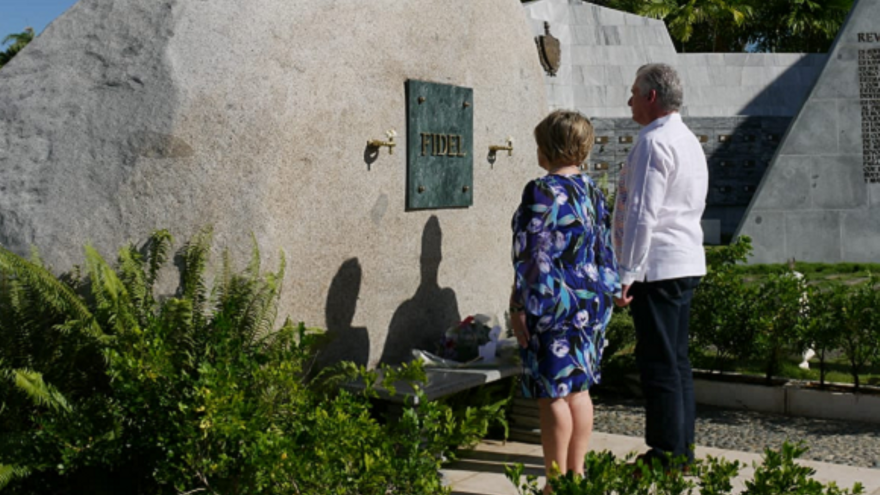
14ymedio bigger14ymedio, Yunior García Aguilera, Madrid, 6 July 2022 — According to the Pan-Hispanic Dictionary of Legal Spanish, a sect is a religious group usually characterized by a charismatic, messianic and dogmatic leader, with a vertical and totalitarian structure, which demands absolute detachment from its members. Any Cuban who reads this definition could agree that, effectively, the Cuban Revolution is a sect. Much more so now that the maximum leader of the doctrine rests on a stone altar, as if he were an Egyptian pharaoh.

The fundamentalism of the Castro sect is radicalizing as the crisis of faith in its practitioners increases. We have seen the high priests of the Politburo cling to the rock with the same devotion of a penitent before the Wailing Wall. “Talk to us, we need you!” murmur the worshipers with beards and uniforms before the rosary of plagues that a country that is so far from God and so close to Miami suffers.

But the new anointed one completely lacks what the Greeks called areté and that could be translated as the virtue that Olympus gives you. No white doves perch on his shoulder, only dyed doves of very bad omen. The only thing that he is capable of multiplying are lines, blackouts and discontent. The prosperous and sustainable paradise that he keeps promising is, in real life, the worst hell imaginable.

And those who dare to dissent are quickly excommunicated, demonized, expelled from the congregation. Whoever writes these lines many years ago was expelled from the Jehovah’s Witnesses and today he is once again a heretic, a wandering Jew, an apostate. That is my karma. But my real crime, my cardinal sin, has been refusing to die on the cross.

I do believe in what they call “anthropological damage,” I have seen it with my own eyes. I have seen how even those who oppose the cult can end up recycling its methods and fanaticism. They are like Thomas, the unbelieving apostle, who after seeing Jesus walk on the water, still needed to put his hand on the wound to be convinced that miracles exist. continue reading

Many of those who yesterday wanted to turn anyone into a messiah and pushed him to martyrdom, today claim that the same person is possessed by the demons of State Security. The G2 is more ubiquitous than the Holy Trinity. Many of those who shout the word freedom at the top of their lungs actually prefer their leaders behind bars, so that they become credible. Morbidity is stronger than reason and common sense. Many of those who learned Patria y Vida by heart continue to function with the logic of “fatherland or death.”

Small groups that proclaim themselves the “only true opposition” grow on social networks. There is a whole conspiracy and apocalyptic explosion burning other opponents at the stake of defamation. They have no proof, but they have no doubt either. Everyone is a traitor until proven otherwise. Anyone who does not agree with the new dogma is automatically declared a false prophet. The sects do not understand democracy, only inquisition.

The playwright René Ariza affirmed that we Cubans should be very careful with the Castro that each one carried within. Coca-Cola versions of Fidel are just as bad as the original. Never again should we allow single thinking, blacklisting, or acts of repudiation. The homeland will have to belong to everyone or we will continue, indefinitely, going around in circles. But Cuban civil society could take years to heal the wounds that seven decades of intolerance have caused us.

Although, when it comes to sins, I prefer to be optimistic. It only takes an ounce of lucidity to identify those whose mentality is as authoritarian as the dictatorship itself. They can swear that their ideology is the opposite, they can fill their profiles with anti-communist slogans, but deep down… they are Fidel. They repeat the scheme that excludes those who think differently. They hate the plurality of voices. They only accept their own speech.

As July 11 approaches, each of us should place less emphasis on the speck in the other’s eye. The dictatorship may be about to fall and we may not even be ready to prevent a new cycle of intransigence. Let’s not waste a single minute in slandering the other who is also risking everything. My truth, your truth, are only parts of a larger and more complex truth called Cuba.

____________

COLLABORATE WITH OUR WORK: The 14ymedio team is committed to practicing serious journalism that reflects Cuba’s reality in all its depth. Thank you for joining us on this long journey. We invite you to continue supporting us by becoming a member of 14ymedio now. Together we can continue transforming journalism in Cuba.
Cuban State Security and its Operation Babel

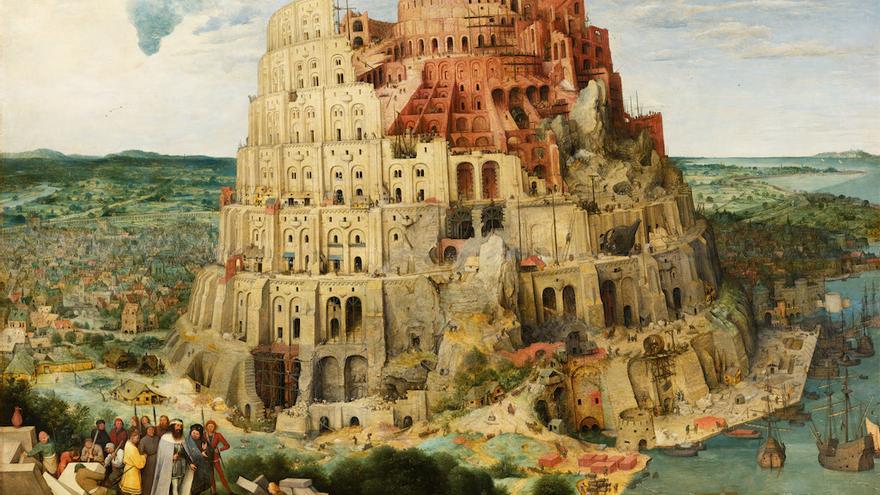
‘The Tower of Babel’, by Pieter Brueghel the Elder, exhibited in the Kunsthistorisches (Art History Museum), in Vienna, Austria. (DC)

14ymedio bigger14medio, Yunior García Aguilera, Madrid, 8 June 2022 — The Biblical story relates that, shortly after the universal flood, humanity spoke a single language and wanted to erect a tower so high that it reached the sky. Such arrogance aroused the wrath of the God of the Old Testament, who used a sui generis strategy to frustrate the attempt: to confuse the languages. The Almighty could have destroyed the city of Babel with fire, but it was not necessary. It was enough for him to prevent men from being able to understand each other, to communicate.

“Divide and rule” has been the favorite practice of State Security in Cuba. Repression, imprisonment or exile have not been able to annihilate an opposition that is renewing itself and surviving the constant harassment of the dictatorship. But that opposition has also failed to become solid. The continuous attacks between one and the other, the ideological differences, the caudillismos and the sectarian thought have kept it fragmented, confronted, Babelic.

Nor is it a new phenomenon among Cubans. Carlos Manuel de Céspedes, the Father of the Nation, was betrayed and abandoned by his own comrades-in-arms. It would be very difficult for José Martí to earn the respect of the mambises chiefs and he would even challenge one of them to a duel. His differences with Maceo are well known and who knows what internal pressures threw him to an early and useless death in Dos Ríos.

I remember every detail of my first interrogations. State Security took me to one of those houses with walls lined with long curtains. I knew there were cameras everywhere. Every word I said could be manipulated and used against me. In the center, a table showed the contradictions of a country where misery reigns. Filled with crystal glasses, there was everything that was scarce in the stores. Instinct prevents you from touching food, until the hours go by. So you eat and they record you doing it. And if another day they decide to torture you and you report it, they will take those images of you eating shellfish. And they will say: look everyone, this is the torture he talks about! And unfortunately many people will believe them, because the seafood tactic never fails. continue reading

In each interrogation, the officer insisted on speaking ill of other opponents to me. His objective was to confont Tania Bruguera and Luis Manuel Otero Alcántara. He mentioned horrible videos that I refused to see and that probably didn’t even exist. But the description of those images that he narrated stayed in my mind, as much as I wanted to ignore them. This is how they play with your psyche. I am convinced that they did the same later with some of the members of Archipiélago. They probably told them horrible things about me, activating their egos, mentioning videos that don’t exist either.

Social networks have constituted for Cubans a new space of struggle, but they are also a double-edged sword. The army of anonymous profiles created by the regime is not only made up of cyberclarias [cyber catfishing]. There are thousands of these profiles posing as opponents. The same template used by some declaring themselves 100% Fidelistas is used by others confirming themselves 100% anti-communist. The pattern is the same and its mission is very clear: attack other opponents.

Anyone who browses Twitter can see how many characters are used to disqualify anyone who has any leadership. This army is much more effective than the traditional cyberclarias. From an apparently radical discourse, suspicions are spread, opinion matrixes are sown, sterile confrontations are generated, reputations are dismembered.

Already the tactic of accusing dissidents of being paid by the CIA does not convince anyone, so they resort to another resource: accusing you of being from the G2 [Cuban State Security]. They know they are so discredited that they use their own discredit to crush the image of an opponent. And even if you are someone who shook the entire dictatorship, some will believe and suspect you.

The opposition must not be monolithic. To build democracy, open and free debate, the confrontation of ideas, the diversity of thoughts are vital. But to achieve a solid opposition that commands the respect and support of the international community, it is necessary to cultivate ethics and political maturity. No group is the absolute owner of the truth, no leader is exempt from errors, no strategy is infallible. When we learn to communicate without imposing our voice on others, we will be much closer to defeating Operation Babel. If we can understand each other, despite our differences, we can reach the clouds and, as the Greeks would say, take the sky by storm.

____________

COLLABORATE WITH OUR WORK: The 14ymedio team is committed to practicing serious journalism that reflects Cuba’s reality in all its depth. Thank you for joining us on this long journey. We invite you to continue supporting us by becoming a member of 14ymedio now. Together we can continue transforming journalism in Cuba.
The Left Hand of Latin America

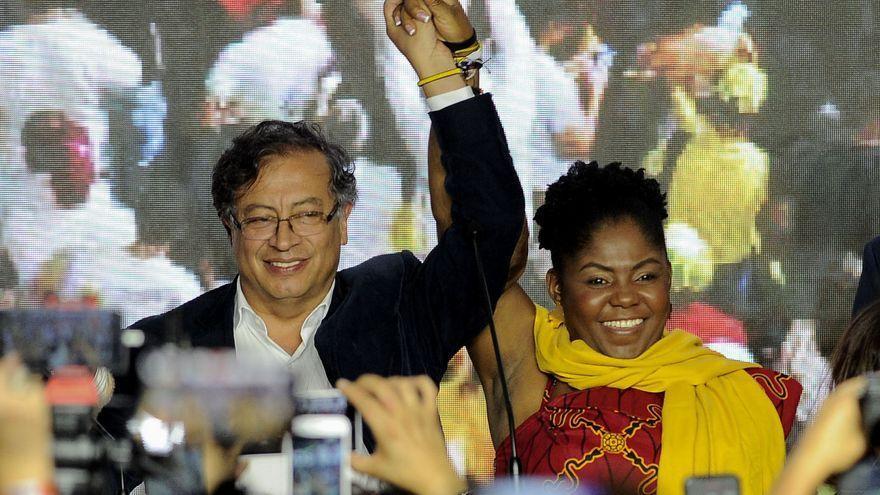
Gustavo Petro with his future vice president, Francia Márquez. (EFE)

14ymedio bigger14ymedio, Yunior García Aguilera, Madrid, June 21, 2022 — Latin America has voted again with its left hand. Gustavo Petro’s victory in Colombia breaks a historic wall that had kept his country on the right for 200 years. Among the causes of his unprecedented triumph is the deterioration of traditional political forces, unable to reinvent their proposals in the face of a completely new reality.

Nor can the impact of the pandemic, which accelerated popular discontent and caused a social explosion between April and June 2021, be ruled out. In addition, the Uribe leadership didn’t know how to handle the complexities of the peace process that, in the end, have placed Petro in the presidential sash. The Colombian left has achieved with the polls what it could not achieve with weapons. And society has not voted with its brain or heart, not even with its stomach: it has voted with its liver.

During the 20th century, there were several times when the left about to govern by electoral means, but in the context of the Cold War, the United States wasn’t willing to allow it. Latin America was shaken by various coups d’état that installed far-right dictatorships. Pinochet, Somoza and Videla caused panic in the face of possible communist expansion and shed rivers of blood in order to defend their notions of freedom.

At the opposite extreme, the Cuban dictatorship shot, imprisoned or banished anyone who dared to express an opinion against its doctrine, while exporting armed revolutions from the Rio Grande to Patagonia. With the collapse of the USSR, the United States softened its positions to the south and stopped seeing the victories of the left as threats to its national security. Fidel Castro, for his part, could no longer continue investing in expensive rebel enterprises and decided to use his tentacles to put his allies in power through a more sustainable path: the ballot box.

Then came the “pink tide” headed by Chávez, Lula, Evo, Correa and the Kirchners, among others. The Cuban regime was appointed as official guru and used its very long experience in propaganda and its romantic-mystical speech. The new great enemy would be neoliberal globalization. The successful formula was to shout to the four winds that the identity of the oppressed peoples was in serious danger. The ideologues of Castro-Chavism reformulated the proposals of 21st Century Socialism, presented in 1996 by the German sociologist Heinz Dieterich Steffan.

The São Paulo Forum was joined by ALBA and UNASUR, regional institutions opposed to the Washington Consensus and created with the purpose of establishing, on firm ground, the roots of the socialist clan. The wave advanced as much as it could, although it didn’t reach a tsunami. The deterioration of economies, the fall in the prices of raw materials, the corruption scandals, the death of leading figures, as well as the democratic inadequacies of Bolivarian theory, caused the decline of that crest, tearing it apart against the electoral reef. continue reading

However, at the end of the first quarter of a century, the Latin American left hand rises again. It does so in a post-pandemic context, in the midst of Putin’s war, with China pretending to be Swedish as it moves towards becoming the world superpower, with the United States weaker and more ignored than ever, and with the European Union frightened by the winds blowing from the other side of the planet. Global institutions responsible for ensuring peace, democracy and human rights now have symptoms of obsolescence. Humanity is on the verge of radical change, which could lead to a new order or the extermination of the species.

So far, the new Latin American left remains fragmented into three blocs. On the one hand, there is the Cuba-Nicaragua-Venezuela triumvirate, fossils that have survived embedded in the rock of authoritarianism, with strident discourses and policies. Very close to them, but with a more moderate tone, are López Obrador [Mexico], Xiomara Castro [Honduras] and Luis Arce [Bolivia]. All three were absent from the Summit of the Americas and have openly defended the triumvirate. In a third group we see Alberto Fernández [Argentina], Pedro Castillo [Peru] and Gabriel Boric [Chile], somewhat more correct than the previous ones and critical of the dictatorships in the region with which they are ideologically related.

It remains to be seen if Petro’s victory or Lula’s possible triumph unify these blocs and resurrect a cycle that pushes the left to its most sinister side. Among so many waves, there are already those who call our Macondian piece of world “América del Surf.”

Translated by Regina Anavy

____________

COLLABORATE WITH OUR WORK: The 14ymedio team is committed to practicing serious journalism that reflects Cuba’s reality in all its depth. Thank you for joining us on this long journey. We invite you to continue supporting us by becoming a member of 14ymedio now. Together we can continue transforming journalism in Cuba.
Cuba’s Machiavellian Use of Migration

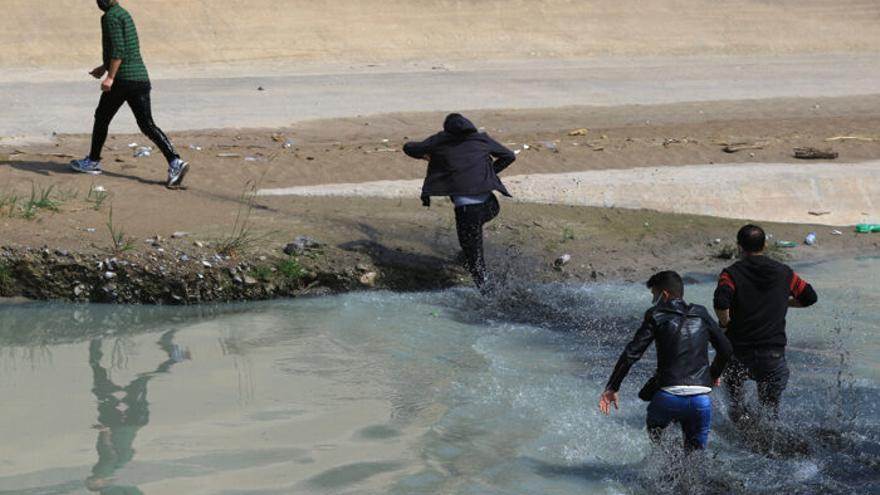
Four Cuban migrants cross the Rio Grande in Ciudad Juárez, Chihuahua (Mexico). (EFE/Luis Torres)

14ymedio bigger14ymedio, Yunior García Aguilera, Madrid, 25 May 2022 — On June 22, 1990, before the United Nations, Nelson Mandela firmly demanded that the sanctions against Pretoria be maintained. The African leader wondered what mistake had been made to allow a country with apartheid to be seated after the Universal Declaration of Human Rights or the Nuremberg Trials. He strongly urged that the measures not be relaxed until the crime is stopped.

In Cuba we have suffered for decades an ideological apartheid that segregates citizens into two camps: “revolutionaries” and “worms.” Those who have been pigeonholed in the second group have suffered imprisonment, physical and psychological torture, persecution, acts of repudiation, exclusion, censorship, harassment, separation from their jobs or expulsion from their places of study, forced expatriation and even death.

##The historical amnesia that they try to impose on us from the propaganda machine cannot erase horrendous memories such as the shootings, the UMAP (Military Production Aid Units), the ’parameterization’, the sinking of the tugboat March 13 or the combat order of July 11 of last year, where the “revolutionaries” obtained a license to stone, beat or shoot at the demonstrators.

There are testimonies that claim that several public health centers were instructed to deny medical assistance to those they considered “worms.” The irrefutable mark of that apartheid that we suffer is summarized in the phrase that affirms that the streets, the common space, belong only to the ethnic group that carries the revolutionary gene in its cells.

The accession of Miguel Díaz-Canel to the one-party throne has been a huge setback for the aspirations of citizens in areas such as freedom of expression, pluralism, social participation, rights, economic prosperity or democratic changes. Today, a generation without charisma, mediocre to the core, lacking legitimacy or historical weight, clings to the reins of power. The current leadership knows that it no longer has the support of the majority, and the panic of suffering the same fate as Nicolae Ceausescu is reflected on their faces. continue reading

That’s why they quickly resort to the club and the gag. That’s why they keep the largest number of political prisoners behind bars in all of Latin America and see young people as a major danger. That’s why they unanimously approve a reactionary, cowardly and medieval Criminal Code. That’s why they include penalties of up to ten years in prison for the crime of treason that not even contemporary monarchies have taken so far.

It’s a fact that the majority in Cuba is already fed up with the dictatorship and want change. Opinion is divided into how and where. Many were optimistic when Obama decided to try a new strategy, defrosting tensions and trying to empower the private sector on the island. Trump returned to ice and aggressive speech. Now Biden zigzags between isolation and the relaxation of sanctions.

But beyond the leaders’ back and forth is a population of 11 million trapped in hopelessness, misery, impotence and fear. That same citizenry that erupted on June 11 today finds no choice but to sell everything, grab a backpack and cross borders. Although the ruling press says with cynicism that Cubans go to Nicaragua to contemplate the lava of the Masaya volcano, we all know that the stampede advances much further north.

The regime, an expert in turning its defeats into victories, has always used migratory waves for a triple purpose. First, the exodus serves as an exhaust valve to release internal pressure. Second, migration crises are used as weapons to put anyone sitting in the White House on the ropes. These frequent exoduses have almost always been the responsibility of Democratic administrations. Lyndon B. Johnson naively believed that the quarter of a million Cubans who left through Camarioca and the Puente Aéreo could return to Cuba in a short time.

Jimmy Carter lost the 1980 elections, among other things, due to the bad press that exaggeratedly reported the exodus of the Mariel Boatlift. Clinton had to set up the Guantanamo Naval Base as a temporary refuge to avoid a collapse in south Florida, during the Rafter Crisis. But the third and most Machiavellian use of migration by the regime is to convert exile into economic investment. Every Cuban who flees becomes a potential sender of hard-currency remittances.

The vaunted national sovereignty is nothing more than a mirage, a kidnapping, a fallacy.

Translated by Regina Anavy

COLLABORATE WITH OUR WORK: The 14ymedio team is committed to practicing serious journalism that reflects Cuba’s reality in all its depth. Thank you for joining us on this long journey. We invite you to continue supporting us by becoming a member of 14ymedio now. Together we can continue transforming journalism in Cuba.
21st Century Fascism and Cuba

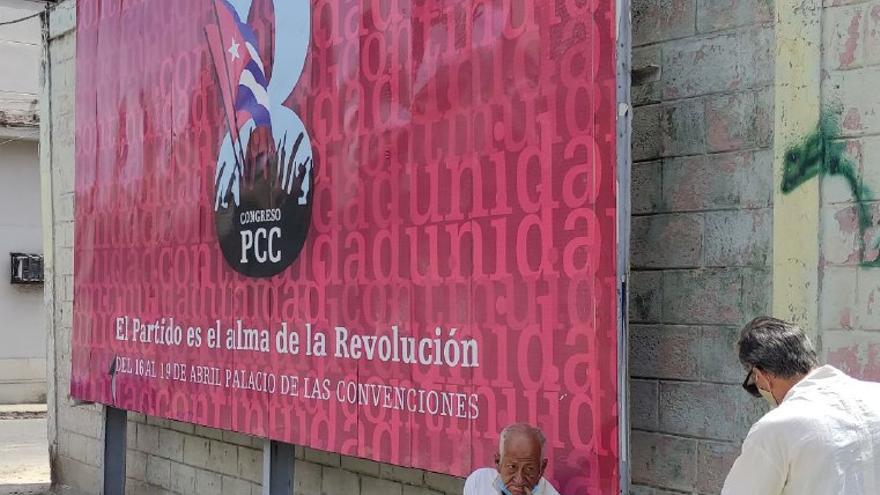
All authoritarian caudillos need to match their personal ambitions with a certain dose of ideology. Billboard: “The Party is the soul of the Revolution” (14ymedio)

14ymedio bigger14ymedio, Yunior García Aguilera, Madrid, 12 May 2022 — I will try to avoid falling into Godwin’s law, according to which, any discussion on the internet that is prolonged leads to the possibility that someone will call someone else a fascist, or compare them to Hitler and the Nazis. However, in the Cuban context a variation of this law usually occurs. If we examine the debates on social networks, we will find that, in almost all cases, someone will insult another by calling them a “communist,” without ever having read a single page of Capital.  

Although it seems obvious, it is necessary to clarify that, beyond the Marxist theories and the rhetoric of those who have claimed to follow their doctrines, communism has never really existed. Marx was closer to Nostradamus than to Hegel. His works might have qualified as mystical lyricism rather than science, but there is always someone willing to take fiction too seriously. The Marxists who survived him would not show such patience for history to take its spontaneous course. If the hated capitalism did not die a natural death, it had to be assassinated.

Lenin modified his readings of the German philosopher as much as he could to make them fit his context. And then Stalin would see to it that all the nightmares that old Marx had refused to speak out loud would come true. If the Soviet experiment did not collapse at that very moment, it was because another monster appeared on the scene that would monopolize universal repudiation: Adolf Hitler.

Fidel Castro triumphantly entered Havana in January 1959. He managed to get a white dove to perch on his shoulder, he swore that he was not a communist to any journalist who asked him the uncomfortable question, he repeated ad nauseam that his revolution was green like the palms, but ended up diving headfirst into the red pool. Was Ángel Castro’s son really a communist? If one examines the phrases of the bearded man, the fascist readings of him immediately come to light.

From the Moncada Statement itself, where he ends with his famous “Condemn me, it doesn’t matter, history will absolve me,” the similarities with Hitler’s Mein Kampf are noticeable . Later, when continue reading

official censorship was regulated in his Words to Intellectuals, Mussolini’s voice would appear behind it. “With the Revolution everything, against the Revolution nothing” is nothing more than an echo of the Duce’s speech: “Everything in the State, nothing outside the State, nothing against the State”. Fidel Castro used against his opponents the same derogatory term used by Hitler against the Jews: maggots. And the phrase “Work will make you men” that was read at the entrance to the forced labor camps where homosexuals and religious believers were imprisoned in Cuba, reminds us of the fateful phrase about Auschwitz: Arbeit macht frei.

All authoritarian caudillos need to match their personal ambitions with a certain dose of ideology. And fascism is the one that best suits their tyrannical aspirations, but it is too discredited. The rhetoric of solidarity and social justice sounds more pleasant to innocent ears. But the truth is that Cuba is closer to State Corporatism than to the Dictatorship of the Proletariat. The poor workers in Cuba have no say in the matter. And the leaders of the Political Bureau are closer to the conservative prototype than to contemporary liberals. To add insult to injury, the infamous Rapid Response Squads are now trying to be replaced by the Red Scarves, a much more blatant carbon copy of the Blackshirts or Brownshirts.

The international left has been running out of causes, after spending its ideological arsenal against globalization. The world is upside down. The great champion of capitalism today is China, a country governed by a communist party. The Asian giant is also the country that pollutes the environment the most, sparing no effort in exploiting and repressing its large population, while surplus value fills their coffers.

The heralded Socialism of the 21st Century, proposed by Chávez, ended up plunging Venezuela into the most painful misery of its history. The Nicaraguan orteguismo [Ortega regime] could not be more despotic, locking up all its political opponents and assuming fraud as the norm. Putin’s Russia shamelessly shows its imperialist face, launching its troops into Ukraine and threatening the planet with nuclear holocaust, while his lackeys applaud him.

The problem of the world today is not left or right, let’s grow up. The problem is authoritarianism, of any color. That is the Fascism of the 21st Century.

____________

COLLABORATE WITH OUR WORK: The 14ymedio team is committed to practicing serious journalism that reflects Cuba’s reality in all its depth. Thank you for joining us on this long journey. We invite you to continue supporting us by becoming a member of 14ymedio now. Together we can continue transforming journalism in Cuba.

Cuba and the New Tweets of the Blue Bird

Twitter was bought this Tuesday by Elon Musk, who promised to wage war on bots. (Caribbean Channel)

14ymedio bigger14ymedio, Yunior García Aguilera, Madrid, 27 April 2022 — When I got on Twitter in April 2018, I almost stopped using Facebook. I was fascinated by the rhythm of the platform, the synthesis, the stark debate held there by a group of young Cubans who were beginning target shooting with just 140 ammunition. Those Creole tweeters, in the absence of a country where they could really participate, distributed tasks in an imaginary village. They felt comfortable, because their parents did not read them. There they would not be told to keep quiet or to “speak softly.”

Cuban president Díaz-Canel joined four months later and they began to consider how to spoil the party. The newly enthroned bureaucrat also had the gift of talking to animals, like his Venezuelan compadre*. But unlike the other, this juvenile was not whispered to by the birds, but by certain opportunistic fish capable of breathing out of the water. Wikipedia describes them as paraphyletic fish, with a uniform dark gray coloration: clarias [catfish].

Iroel Sánchez had joined Twitter almost a decade earlier. Perhaps he did it to spy on one of the Cuban pioneers in using networks in a subversive way. Yoani Sánchez, however, had two years of experience and a great nautical advantage. Iroel had become a political corpse since Abel Prieto denounced him for daring to call him “not very ideological.” When his countryman Miguelito [Diaz-Canel] was seated on the throne, he felt that it was time for him to reincarnate. So, like a biblical story from Genesis, the pupil approached the dictatorial couple. Both rested on the grass of a garden in Siboney, completely naked, from a political point of view. It was time for Iroel to get his teeth into the apple.

Getting serious, there is no Cuban who is unaware of the cyberclaria phenomenon. It is an army of false profiles with the mission of defending the indefensible. The order they receive is clear: like the bosses, position hashtags, attack dissenting voices, sow states of opinion and promote bad taste. They began by assigning this task to State Security agents, although some barely knew how to write their own names. Among them, for every one who thinks (more or less), there are four who are only trained in hitting and abusing. continue reading

So they took on the task of recruiting hundreds of students from the University of Informatics Sciences (UCI). In exchange for a good phone and free navigation, some guys were willing to sell their souls even to a poor devil and assume ridiculousness as a watchword. Later they felt that it was not enough and included thousands of bots. However, officials who own “oil” phones are also forced to tweet revolutionaryly, and it is sometimes impossible to tell the difference between the network activity of a cadre and the behavior of a bot.

When the ministerial cabinet was forced to open accounts on the platform, we understood why the Ñico López (the Party’s little school) has such a bad reputation. The Minister of Education herself published a photo of the beginning of the school year where she said “welcome.” Such was the disaster that Iroel himself, chatting with Ernesto Limia and Pedro Jorge (two outstanding catfishers), recognized that they were losing the battle on social networks.

Twitter is the fifteenth social network in the world by number of users, but it works as the nervous system of our societies. Umberto Eco pointed out that some defenders of social networks even maintained that “Auschwitz would not have been possible with the Internet, because the news would have spread virally.” Even the Iron Man of real life himself, the billionaire Elon Musk, was convinced that the platform is the digital public square where vital issues for the future of humanity are debated. That is why, among other things, he has offered 44 billion dollars for it and has bought it.

Twitter, in the hands of Elon Musk, has generated oceans of ink, between apocalyptic forecasts and messianic hopes. But someone does not sleep since the president of Tesla and SpaceX has solemnly sworn that he will defeat the bots or die trying. The only good news for the cyberclarias and for the Minister of Education is that they will be able to edit all the spelling errors that escape them. Now, where is the project that Iroel wanted to bequeath to posterity? Where will he find substitutes for his catfishers if even the UCI boys have ’gone looking for volcanoes’? Who will be left to give Díaz-Canel a sad ’like’? The dictator has no one to write to him.

*Translator’s note: Nicolas Maduro has claimed that the deceased former Venezuelan president, Hugo Chavez, speaks to him in the voice of a little bird. In this video he demonstrates the voice of Chavez-as-a-bird.

____________

COLLABORATE WITH OUR WORK: The 14ymedio team is committed to practicing serious journalism that reflects Cuba’s reality in all its depth. Thank you for joining us on this long journey. We invite you to continue supporting us by becoming a member of 14ymedio now. Together we can continue transforming journalism in Cuba.
Cuba: The Majority Dilemma

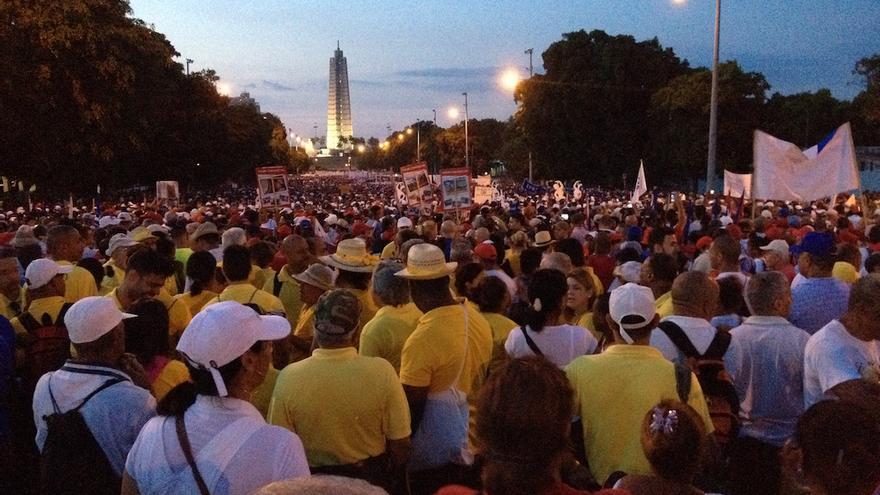
International Workers’ Day March in Havana (14ymedio)

14ymedio bigger14ymedio, Yunior García Aguilera, Madrid, 12 April 2022 — The majority demanded Pontius Pilate crucify Christ. The majority of Germans, in the times of Hitler, acclaimed the Führer. The majority of Cubans, at some point, shouted “Firing Squad” and “Get out.”  This civic immaturity creates Peter Pan societies, which refuse to grow up and hold onto Never Never Land. The immature society sighs for the bad boy, is attracted by the charismatic lunatic who ends up becoming Batman’s Joker. The world has seen more than one Joker wear a presidential sash and fry his country’s democracy in his own vanity while the masses applaud.

In marketing (and, of course, in politics), the bandwagon effect or the drag effect are often discussed. In it, people can be observed doing and believing certain things, based on the fact that many other people believe and do the same. As more people follow something, more want to hop on the bus.

I’ve always obsessed over the word equilibrium. I resist continuing to view reality through the screen of the old Russian television I had as a child. Krim-218* Syndrome makes us see everything in black and white, without nuances. Our parents’ generation felt panic if they were out of line, in a Cuba marked by uniforms. The Revolution imposed the weight of its own opinions, forcing us to repeat the same slogans, converting civil society en masse, into a committee.

The dogma became irrevocable. Those who managed to escape to other shores soon espoused the contrarian discourse, also in a nearly unanimous way. Those who until the previous day called the dictator “Fidel,” even while flaying him (in hushed voices), now began to call him “Castro.” The sad thing is that at times, deep down, opposing positions end up resembling each other. continue reading

Majorities almost never lead real change. It is painful to discover that in the last war for our independence more Cubans fought on the side of the Spanish than the side of the Mambises [rebels]. At the end of the struggle, the Liberation Army had 40,000 members. And many of those joined in the last months, when Spain was practically defeated and the United States intervened in the conflict. In contrast, on the Spanish side, there were 80,000 creoles from the Island, including volunteers and relief soldiers. The majority who greeted Máximo Gómez, when he entered Havana, with hands raised high, had done almost nothing for independence.

The bearded men of the Castro’s Sierra Maestra didn’t receive massive support either, as described in their history books. The assault on the Moncada barracks was a chaotic failure which was met with varied criticism from the same forces that opposed Batista. They were called adventure-seekers and irresponsible. The Chilean daily El Siglo, of a communist bent, even suggested that the assault had been organized by the CIA. Nor could they count on the majority during the frustrated general strike on April 9, 1958. However, a few months later, all of Havana went out to greet the new caudillo with triumphant euphoria.

On the 11th of July 2021, it became clear that the regime has already lost popular support. They’ve had to use repression and fear to halt the protests. Social media is a hotbed of criticism against the ruling class. The apparatus does not dare conduct the “elections” that should have taken place in November to select new “delegates” and have used the pandemic as an excuse. They don’t even dare to reveal the results of the surveys conducted discretely by the Party offices. The State newspaper Granma published an article on April 8th where they recognize they are a minority and speak of “turning off the lights of El Morro”*.

Democracy is not, and should not be, a dictatorship of the majority. The democratic ideal is based on consensus, debates, real participation, transparency, freedom to be a part of or oppose something, adherence to human rights, legality, justice, representation, citizen sovereignty, respect for minorities and the individual. Populism which aspires to dominate the rest while taking advantage of the frustrations, prejudices or the vengeful spirit of the masses always ends in tyranny.

Hopefully, we Cubans will be capable of breaking the vicious cycle. Hopefully, we will overcome the anthropological damage caused by so much propaganda, so much Never Never, so much Krim-218. Hopefully we will be capable of building a plural Cuba, which won’t fall victim to the majority dilemma again.

Translator’s notes:
*Krim-218: A reference to Cuban state television, which much of the country watched on Soviet Krim-218 model black-and-white TVs.
**El Morro is the iconic lighthouse at the entrance to Havana Bay, and ’will the last one…. turn off the lights’ is an iconic phrase used around the world in similar circumstances.

Translated by: Silvia Suárez 

____________

COLLABORATE WITH OUR WORK: The 14ymedio team is committed to practicing serious journalism that reflects Cuba’s reality in all its depth. Thank you for joining us on this long journey. We invite you to continue supporting us by becoming a member of 14ymedio now. Together we can continue transforming journalism in Cuba.
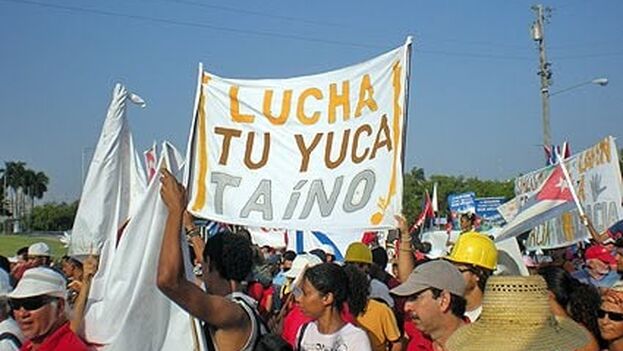
Cuba: a Neo-Taino Chiefdom

I remember with pain how many times I sang that song by Ray Fernández: Lucha tu yucca, Taíno’. (Archive)

14ymedio bigger14ymedio, Yunior García Aguilera, Madrid, 15 March 2022 — These days, social networks in Cuba have harvested the culinary advice of Frei Betto. The Brazilian Dominican friar, liberation theologian, has recommended we eat potato skins, unaware that Solanum tuberosum does not even appear in spiritual centers. Before, the unpopular State TV program Mesa Redonda (Roundtable) had wanted to emulate Master Chef, recommending to us delicious dishes based on guts and decrepit chickens. The Cuban, as always, laughs at his misfortunes and continues his daily struggle, under the hot sun, to bring anything chewable to his table.

I remember with pain how many times I sang that song by Ray Fernández: Lucha tu yucca, Taíno.* Unfortunately, the singer ended up suffering from the same delusions of power and today he only sings at volunteer jobs, ministerial parties and political-recreational activities for cyber-combatants. I guess, in order not to lose all his repertoire, he had to rewrite some of his lyrics. Perhaps today his most popular song is called Lucha tu caney, cacique.**

Five hundred and thirty years after Columbus set foot on the most “beautiful land that human eyes had ever seen,” our Cuba is still a yucayeque (village). And the reader should not believe that I am referring to the romantic idea that our primary school teachers sold us about happy iguana-eating Taínos. The primitive community we live in today is probably more backward, in some respects, than the one where Guarina and Habaguanex breathed.

The neo-Taíno cacicazgo (chiefdom) resides today in Siboney, in large caneyes (cabins) while the bohíos (huts) of the rest of the village are in danger of landslides. The privileged caste is made up of militant nitaínos (subchiefs), with those very white loincloths that look like guayaberas. And the naboría (servant) crowds stand in eternal lines to acquire their regulated ration of cassava. From time to time the behiques (shamans) appear on the news worshiping a huge and sacred stone where the great Cemí (ancestral spirit) rests. continue reading

In the batey (plaza) the areíto is still danced, although there are some prohibitions. Painting things on the abdomen is no longer looked well on, especially in tanned and well defined abdomens. The cacique imposed a decree that establishes who can sing and who cannot, although his musical taste is not shared by the people of the area.

The most skilled batos players have gone to other Caribbean teams. In the village they try to prevent the mass exodus of prospects by spreading stories about sports cannibalism. But the truth is that more and more souls are leaving for other lands, even if it is in search of volcanoes.

Historians say that in Taíno weddings the manicato was practiced. The bride was to have sex first with the groom’s friends. She was locked up with all of them in a room and at the end, she had to leave it with a raised fist shouting manicato, which means brave, strong. Maybe it wasn’t a good idea to be very sociable in the yucayeque. Today Facebook lets you have up to 5,000 friends, fortunately some ancient practices have been lost. In the batey of the Revolution, still millions of Tainos, with their fists raised, continue to shout manicato, when they demand sacrifices.

Not everyone in the village agrees with the cacique’s dictatorship, but mistrust is so great that few dare to confess what they think even to their hammock. Others wait for caravels to appear on the horizon and the white man arrives to free them from the yoke. There are those who dream of a Hatuey rebel who dies at the stake to demonstrate his true leadership. Some prefer to lock themselves in a cave and paint memes against the cacique on the walls, but only incognito. Those who can put their bohío up for sale to buy a cayuco (canoe/kayak) ticket. Most remain silent and continue making holes in the cayuco to survive.

I have in my DNA hints of Taíno. Although my grandfather was black, my friends call me “Chinese,” and although my identity card says that I am white, there are traces of Guamá on my face. And it is true that the Tainos are so peaceful that sometimes we run the risk of becoming extinct. But from time to time they make you want to grab a spear, a bow and an arrow and hold ‘the Guatao Festival’***. Our future does not have to depend on the arrival of La Niña, La Pinta and Santa María. But we have to stop shooting spears at the one next to us and concentrate all our arrows against the cacique. Five hundred and thirty years after Columbus arrived thinking that Cuba was Cipango (Japan), it is time to change the yucayeque.

Translator’s notes:
*Roughly: “Fight for your food.” The Taino were the indigenous people of Cuba.
**“Fight for your hut, Chief”
*** The Guatao festival is one of the urban myths that has toured the provinces of Cuba . For more than a hundred years, a phrase that has become famous has been repeated in that country: “It ended as the Guatao festival.” The curious thing is that it is not really known what party that was, although from the meaning given to the expression it is known that it did not have a happy ending. When in Cuba it is said that an event ended “like the Guatao party” no one doubts that it was something that started well and ended badly. (Source: Translated from: ecured.cu/La_fiesta-del_Guatao)

____________

COLLABORATE WITH OUR WORK: The 14ymedio team is committed to practicing serious journalism that reflects Cuba’s reality in all its depth. Thank you for joining us on this long journey. We invite you to continue supporting us by becoming a member of 14ymedio now. Together we can continue transforming journalism in Cuba.
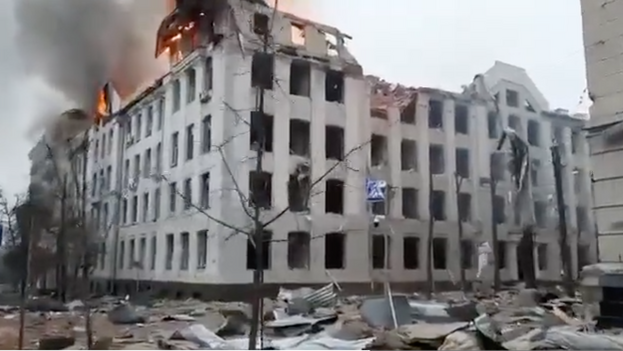
Putin’s Havana Does Not Believe in Tears

Bombing of the Sociology department of the Karmazin University, in Kharkov. (Sreen capture/ MSahuquillo)

14ymedio bigger14ymedio, Yunior García Aguilera, Madrid, 2 March 2022 — When NATO bombed Yugoslavia in 1999, the Cuban government’s statement condemned “the monstrous crime with all energy.” The document placed special emphasis on the elderly, pregnant women and children who lived under the terror of the bombs, listening every minute for the sound of the sirens, running towards the shelters with children in their arms or helping the disabled. And yes, the drama of war is appalling. But also appalling is the hypocrisy and double standards of a cynical regime that will no longer be able to use the word anti-imperialism without sounding like Tartuffe.

Now it seems that, for the Cuban leadership, in Ukraine there are no children, no pregnant women, no elderly. The recent Havana declaration speaks this time of “Russia’s right to defend itself” and “the just claims of the Russian Federation.” For the Caribbean Putinists, the draft resolution vetoed by Russia in the UN Security Council was an unbalanced document, which did not take into account the “legitimate” concerns of all the parties involved. All the media are wrong, except Granma, TeleSur and RT!

In January, the Russian deputy foreign minister bragged about establishing military bases in Venezuela and Cuba. His Latin American lackeys preferred to shut their mouths and smile at Putin, but this threat resurrected the ghosts of the Cold War, which had already been poking their noses in the global context for a long time. We Cubans are very aware of the Missile Crisis of October 1962. Khrushchev did not trust Fidel Castro. For the Soviet leader, Cuba was just a missile carrier 90 miles from his great enemy. The old fox was kind enough to send the nuclear warheads separate from the rockets, knowing that the Cuban soldiers had no idea what such a weapon looked like.

When the reckless cigar smoker suggested in a telegram that he be the first to launch the missiles and stressed that his people were ready to disappear under the nuclear mushrooms, Nikita realized that he had completely screwed up. Khrushchev preferred to resolve the conflict with Kennedy without inviting Fidel Castro. Feeling neglected, they say that he became depressed as he clicked his heels. Maybe he started to have a phobia about the word missiles, who knows? Perhaps that is why in Cuba that event is known as the “October Crisis,” to avoid mentioning uncomfortable little words. Anyway… while the USSR withdrew its strategic weapons, in Havana they chanted: “Nikita, mariquita, lo que se da no se quita” [Nikita, sissy, you can’t take back what you give]. continue reading

In 1968 Soviet tanks entered Prague, giving a direct kick to the “human face” of socialism. In total contradiction to all his rhetoric, the bearded Cuban went on television stating that the socialist camp had every right to prevent, one way or another, Czechoslovakia from choosing the color of its spring. Twenty years later, the USSR itself recognized that this action had constituted an interference in the internal affairs of a sovereign country, but the damage had already been done. And that stain on the record of Castro’s discourse has yet to be erased by any detergent.

In recent days we have seen the president of the Duma, Vyacheslav Volodin, walking around Havana with his come hither eyes. A day earlier, that legislative body postponed the repayment of Cuba’s debt, some 2.3 billion dollars in loans to the Island between 2006 and 2019. That gives us an approximate idea of ​​how much it costs, for the Diaz-Canel team, to pass all his anti-imperialism under the Arc de Triomphe, all his talk about the sovereignty of nations, non-interference, the UN Charter and world peace. We can already imagine how the Cuban delegation will vote* on the resolution being discussed this Wednesday at the special emergency session of the United Nations General Assembly.

The Russian invasion of Ukraine is illegal, illegitimate and unjustifiable. In that 1999 statement on the NATO bombing of Yugoslavia, Cuba ended with exclamation points: “Stop the bombing! Stop the genocide! Stop the war!” This time they give us a document full of zigzags, with a very high dose of cynicism and too much insolence. As I write these lines, the number of Ukrainian refugees rises to 677,000, about 150 civilians have died, including more than a dozen children. But for the Havana of Diaz-Canel, (sorry, of Putin), now it is about “collateral damage.” Putin’s Havana does not believe in tears.

*Translator’s note: In fact, Cuba abstained from the vote in the United Nations General Assembly to reprimand Russia for its invasion of Ukraine; the final count was 141 countries in favor, 35 abstaining, and 5 against.

____________

COLLABORATE WITH OUR WORK: The 14ymedio team is committed to practicing serious journalism that reflects Cuba’s reality in all its depth. Thank you for joining us on this long journey. We invite you to continue supporting us by becoming a member of 14ymedio now. Together we can continue transforming journalism in Cuba.
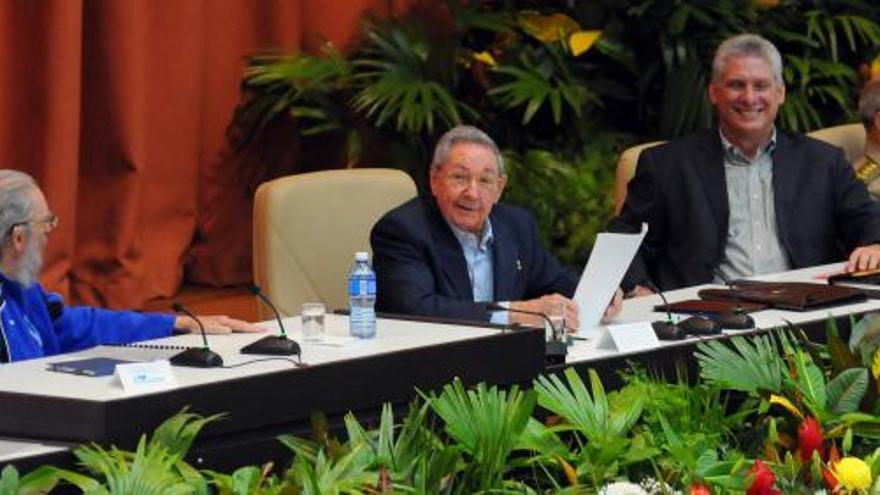
Diaz-Canel, a Continuity without Charisma, Historical Weight, or ‘Ashe’

Fidel Castro, Raúl Castro and Miguel Díaz-Canel at the Seventh Congress of the Communist Party of Cuba. (Cubandebate)

14ymedio bigger14ymedio, Yunior García Aguilera, Madrid, 16 February 2022 — The Cuban dictatorship laid its foundations on the charisma of Fidel Castro. Beyond what fans or detractors may argue, it is undeniable that the bearded man had qualities for oratory, knew how to channel the frustrations of an era in his favor, and was an unparalleled demagogue.

It is difficult to understand how a people quite alien to the ideology of the hammer and sickle embraced Marxism without much resistance. But it could be explained with that guaracha that sounded in the Cuban streets of the 1960s: “If Fidel is a communist, put me on the list.”

Fidelismo became a kind of religion, whose cornerstone would be the cult of the commander in chief, maximum leader, caballo, caguairán, etc. The white dove on his shoulder, his face on the cover of Bohemia magazine as if he were a Christ, his stature and his olive green uniform reinforced the magical halo. And the legend of him spread beyond the borders. He was, for many in the world, a kind of revolutionary messiah.

Despite the ferocious proselytism committed to consolidating his myth, for a good part of Cubans it was quite obvious that the country was headed for disaster. Already at the beginning of the nineties the song that marked the popular vision towards the figure of him was another. And this time it was not a guaracha, but a criollo rock: “That man is crazy.”

Raúl Castro had the good sense to understand that he did not possess a drop of his brother’s charisma. He focused his efforts on being discreet, pragmatic and open. He based his power on the so-called “historical weight.” For some, the administration of the Army general has been the least bad moment that the country has experienced since the Special Period. However, his motto, Without haste, but without pause found so many potholes along the way that the dream of copying the Chinese and Vietnamese ended up getting bogged down. continue reading

The dictatorship urgently needed to find a successor. Raúl had swept away the team that had been near his brother. Those guys from the Battle of Ideas committed the deadly sin of seeing themselves as heirs to the throne. Raul, el chino de La Rinconada had his own list, unrelated to that of Punto Cero [Fidel’s estate]. Raúl personally acknowledged having experimented with a dozen candidate dauphins. Until, finally, one of those test-tubes met his expectations: Miguel Mario Díaz-Canel Bermúdez.

The blond from Las Villas had been holding his breath since he learned he was on the way to the crown. It was obvious that he had microphones and cameras even in the toilet. And that prolonged apnea not only turned his hair gray before its time, but also removed all human expression from his face. Díaz-Canel is incapable of delivering a fluid speech without looking at the notecards that accompany him in all of his interventions. When he has gone a millimeter from the script, he has made mistakes like the one where he stated that “lemonade is the basis of everything.”

Without charisma, or historical weight, Canel had no other option but to choose the least revolutionary motto imaginable: We are Continuity. For a people that cried out for the word “change,” continuity was a bucket of cold water. Nor has ashé (that Santeria concept associated with luck) accompanied it. The sad crash of a plane, the Havana tornado, the collapse of a bridge over the Zaza River and the covid-19 pandemic do not point to the blessing of the orishas.

When it comes to nicknames, he hasn’t been lucky either. In Holguín, when he was first secretary of the Party and insisted on preventing the farmers from bringing milk into the city, he was baptized Miguel “Díaz-Condón [condom].” Later, influencer Alex Otaola would rename it “El Puesto a Dedo [hand-picked].” And finally, from the rapper Maykel Osorbo, the former porn actress Mía Kalifa, to a choir shouted in the streets and labeled on the walls, they have given it the not very friendly name: “El Singao* [motherfucker].”

There is no need to recount in detail the disaster of the Ordering Task*. And to make matters worse, the “combat order” after the social outbreak of July 11 already places him as an irredeemable tyrant. Raúl Castro is probably banging his head against the walls wondering how the hell he came up with such a designation. It is useless that Díaz-Canel’s new slogan is To Cuba, put some heart on it. With such symptoms, the myth of the Cuban Revolution, in his hands, goes in free fall towards cardiac arrest.

Translator’s notes: 
*Tarea ordenamiento = the [so-called] ‘Ordering Task’ which is a collection of measures that include eliminating the Cuban Convertible Peso (CUC), leaving the Cuban peso as the only national currency, raising prices, raising salaries (but not as much as prices), opening stores that take payment only in hard currency which must be in the form of specially issued pre-paid debit cards, and other measures. 
** ‘Díaz-Canel, el singao’ roughly rhymes.

____________

COLLABORATE WITH OUR WORK: The 14ymedio team is committed to practicing serious journalism that reflects Cuba’s reality in all its depth. Thank you for joining us on this long journey. We invite you to continue supporting us by becoming a member of 14ymedio now. Together we can continue transforming journalism in Cuba.
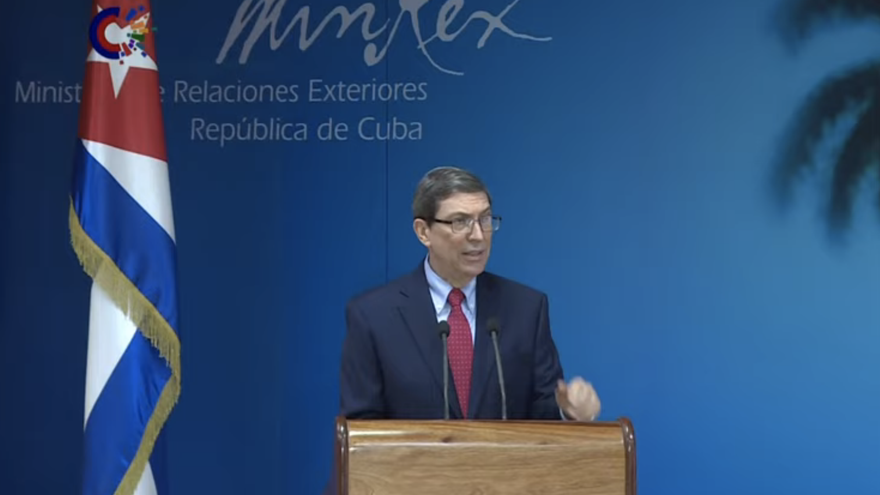
Cuba’s Language of Power, a Soviet Legacy

Cuban chancellor Bruno Rodriguez during a press conference for foreign journalists after protests on July 11 in Havana. (Captura)

14ymedio bigger14ymedio, Yunior Garcia Aguilera, Madrid, February 1, 2022 — Every time their country’s foreign minister holds a press conference, Cubans do not know whether to laugh or cry. We have become so accustomed to certain expressions that they seem to have been lifted from a template. If we examine, for example, statements issued by the ministry in recent years, we will find the phrase “strong rejections” repeated ad nauseam. Perhaps this is simply a question of poor word choice, or maybe it is due to the overconsumption of an energy drink, but the truth is that officials use the same expression all the time in reaction to any criticism.

Needless to say, the cynicism of “comrade” Bruno is unparalleled in history. His statements after the July 11 protests left everyone speechless. The foreign minister flatly denied that a massive display of popular discontent had occurred, denied that the government was engaging in any form of repression and swore that no minors were being detained. Sir, we were there; we saw it with our own eyes; it was recorded on countless videos! I do not know what is worse: what he says or the way he says it. Rodriguez drives the most dispassionate among us to exasperation with his inability to speak in a steady cadence instead of in his usual staccato.

The Cuban regime believes there is no one on the planet with the moral authority to condemn the repeated violations of human rights that are committed on the island. There is the dictatorship, sitting like a matchmaker on a UN commission that purports to ensure compliance with those same rights. And there it will remain, fanning itself until next year, while hundreds of Cuban mothers weep over their unjustly imprisoned children, while so many activists are harassed and repressed by the political police, while people risk their lives to escape the country at any price. And if anyone in the world dares to point a finger at its tyranny, the regime’s representatives will undoubtedly resort to the perfect strategy for getting out of trouble: whataboutism.

This tactic, devised by the Soviets, was used by the Kremlin to deal with criticism. Its delegates shamelessly responded to any accusation with a question: What about…? This involved citing an example of similar behavior continue reading

in another part of the world. In this way, they lessened the impact of accusations against them, questioned the legitimacy of whoever had made the criticism and momentarily got out of a sticky situation. Whataboutism was a kind of “enchanted shrimp”* used to escape a tight spot.

Of course, this is not the only technique Cuban diplomats copied from their Soviet instructors. Who can forget “the shoe incident” at the 1960 General Assembly? During a discussion on colonialism, the head of the Phillipine delegation accused the USSR of also being a colonial power that subjugated other countries. Nikita Khrushchev then took off one of his shoes and began angrily pounding the table. Fifty-eight years later, a  group of Cuban diplomats, faithful disciples of this “flip-flop policy,” shut down a UN event at which the issue of political prisoners was to be discussed.

One of the participants, however, was a distinguished former member of the Young Pioneers, Anayansi Rodriguez. The nightly TV news show, Noticiero Estelar, celebrated her self-assurance at the event as though it were something admirable. Meanwhile, half the world looked on aghast, head in hands. I should clarify that I have nothing against reparterismo.** But it requires an ability to “swing” in a way not taught at the “Nico Lopez” Party School or the Raul Roa Higher Institute of International Relations. Of course, she was later rewarded with the post of vice-minister. It would come as no surprise if, in a few months, she replaced Bruno himself.

Whataboutism is the favored tool of aspiring Cuban diplomats. With absolutely no credible arguments to use in defense a decadent, abusive regime, the only recourse they have is to try to turn the tables. It is undeniable that the regime commits crimes on a daily basis. “But so what? Everyone does it.” And as the world turns, hypocrisy, cynicism and apathy spread like a cancer through the body of civility.

Translator’s notes:
*Reference to a short story for children, El Camarón Encantado“, by Jose Martí.
** A popular form of street dance music.
____________

COLLABORATE WITH OUR WORK: The 14ymedio team is committed to practicing serious journalism that reflects Cuba’s reality in all its depth. Thank you for joining us on this long journey. We invite you to continue supporting us by becoming a member of 14ymedio now. Together we can continue transforming journalism in Cuba.
The Nature of Dictatorships

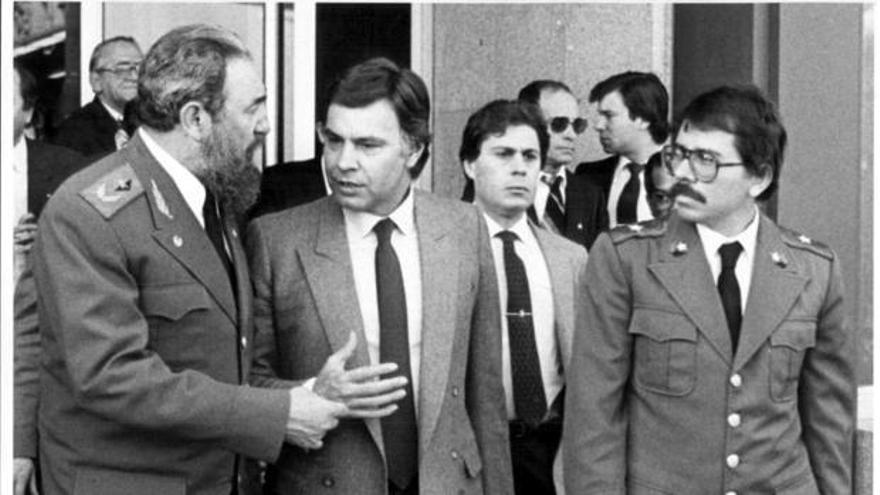
Fidel Castro with former President of the Spanish Government Felipe González and Daniel Ortega. (EFE/File)

“Totalitarian tyranny is not built on the virtues of totalitarians, but on the faults of democrats.”

Albert Camus

14ymedio bigger14ymedio, Yunior García Aguilera, Madrid, 18 January 2022 — In popular culture there is a well-known a fable, attributed to Aesop, where a scorpion, to cross the river, asks a frog to allow it to climb on its back. Faced with the amphibian’s doubts, the scorpion offers a reasonable explanation: there is nothing to fear, because if it were to sting her, both would drown. The frog recognizes the logic of the argument and agrees to carry it across. But when they are only halfway across the river something unusual happens: the scorpion sticks its stinger in the frog’s back and the poison begins to paralyze his assistant. The frog, fatally surprised, wonders how such a thing could have happened. And the scorpion, before sinking, offers him a crushing answer: I’m sorry, it’s my nature.

International institutions have been too ambiguous in the face of openly anti-democratic regimes. It is shameful that the longest-running dictatorship in Latin America occupies a seat on the UN Human Rights Commission and that it will remain there, quietly, until the year 2023. The regime in Havana has brutally repressed popular demonstrations, has acknowledged not believing in the separation of powers, has locked up hundreds of protesters, including children, and has handed out very high sentences much more naturally than it distributes rationed bread. If even more human rights have not been violated in Cuba, it is simply because the Universal Declaration has only thirty articles. It would suffice to say that the mere fact of sharing that document has been considered by the police, on several occasions, as a subversive act.

In Nicaragua, days ago, the scorpions have celebrated their party. Smiling broadly, Nicolás Maduro, Miguel Díaz-Canel and Daniel Ortega pose before the cameras. As it seems a small thing to them to laugh at their own people, now they also laugh at the world and invite a criminal wanted by Interpol to pose with them. Mohsén Rezaí, accused of the attack that left 85 dead and more than 300 wounded in Argentina, held “cordial working meetings” with the Cuban dictator. But it is not surprising that totalitarians in the region celebrate fraud, meet with terrorists or mock democracies. What is outrageous is that legitimate governments feign political dyslexia or ideological strabismus. continue reading

Franklin Delano Roosevelt coined a phrase about ’Tacho’ Somoza, later copied by Henry Kissinger to refer to the second dictator with the same last name: “Yes, he’s a son of a bitch, but he’s our son of a bitch.” And that is precisely what some democratic governments, with progressive agendas, think about the dictators of the Venezuela-Cuba-Nicaragua triumvirate. Going out to defend them is already extremely scandalous, which is why some leaders opt for a less obvious action: to remain silent.  That complicity might sound like “comradeship” if it were the teenage members of a soccer team, but here it is about world leaders who hold the destinies of millions of people in their hands. And that gang mentality is a dangerous time bomb in a historical context marked by instability and polarization.

An effort must be made to understand the logic of some institutions or governments in their relationship with dictatorships. The Political Dialogue and Cooperation Agreement between the European Union and Cuba clearly states among its objectives “the strengthening of human rights and democracy.”

Forgive me if I insist here on recalling Aesop’s fable, but it is very clear that said agreement, beyond the strategic and economic interests it pursues, is turning out to be a complete failure.  Poverty and repression in Cuba are growing at a dizzying pace, while any hint of a negotiated solution collapses. The dictatorship strengthens its ties with China and Iran, while Russia threatens to move troops to Cuban soil. The regime does not know how to stay in power by means other than force, meanwhile ordinary people find no way out other than fleeing the country at whatever price.

Riding the scorpion’s back is not a gesture of solidarity, it is a reckless bet. The sting is not only constantly piercing the flesh of civil society, but also threatens the credibility of lavish global institutions, unable to prevent outbreaks in territories where chaos was predictable. What are we playing at? Dictatorships do not hide their nature, why, then, are they still on your back?

____________

COLLABORATE WITH OUR WORK: The 14ymedio team is committed to practicing serious journalism that reflects Cuba’s reality in all its depth. Thank you for joining us on this long journey. We invite you to continue supporting us by becoming a member of 14ymedio now. Together we can continue transforming journalism in Cuba.
Jose Marti’s Smile

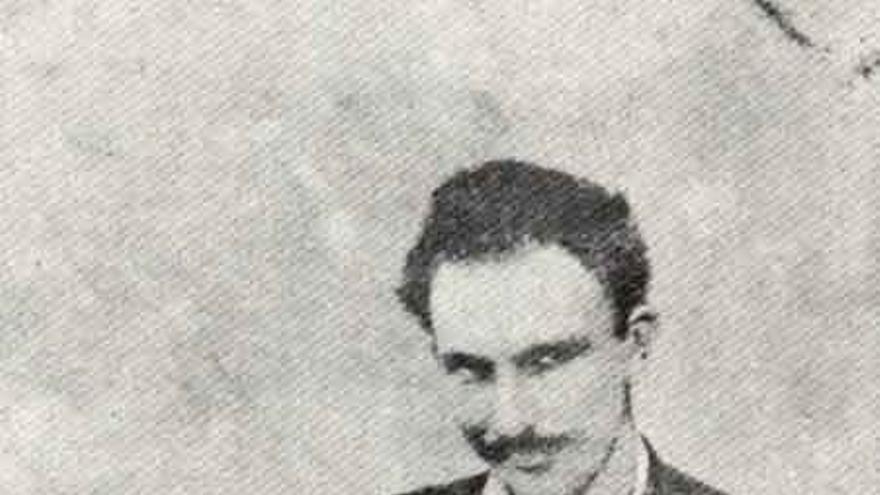
There is still much to write about Martí’s laughter, although only one photo remains where he hints at a timid grin before the camera.

I saw it, I saw it coming that afternoon
I saw him smile in the midst of his grief

José Martí, The Political prison in Cuba

14ymedio bigger14ymedio, Yunior García Aguilera, Madrid, 4 January 2021 — What was José Martí laughing at? History tends to encircle its heroes in a marble seriousness that prevents us from any profane approach. Fortunately, in recent years articles have been appearing that investigate more intimate areas of the biography of “the Apostle.” With less shyness, they dust off insights about his sexuality, his illnesses, and other controversial aspects of his life. However, almost nothing appears on a subject that could offer us a more complete and humane vision of the most universal of Cubans: his sense of humor.

It is true that Martí’s life was marked by suffering. When he was barely twelve years old, he lost his little sister María del Pilar; and later Lolita. He had to face his father’s severity early on. It was impossible for him to show indifference to slavery and the lack of freedom of his homeland. He suffered prison at sixteen. He went into exile before he was eighteen. He had to endure for the rest of his life the consequences left by the shackles. He suffered from a disease (sarcoidosis) that harassed him until his death. He was almost never able to enjoy his son’s company and had to accept the complaints and claims of his family, who never fully understood his obsessive dedication to the cause of independence.

Martí was, in the full sense, a serious man. The colors of his clothes reflected the mourning for his homeland. And the iron ring was perhaps the closest symbol to his character. He himself acknowledged, in response to an article that tried to discredit him, that “the tone of a joke was foreign” to him. However, on a painful occasion he would write to his friend Manuel Mercado: “I smile at myself in all my sadness.”

And he is someone who grew up with six younger sisters, who enjoyed from an early adolescence the very creole humor in Cuban theater, who adored children’s smiles. Someone who, in short, had such a deep affection for spirituality, he could not deny himself the pleasure of laughing and making others laugh. continue reading

Martí, with his closest friends, knew how to make fun of himself. There is a carefreeness in his drawings that points to sympathy. Even in the caricature, the comedy flashes. In a letter to his beloved Fermín Valdés, he talks about his ears. He alleges that the reason that they were separated from his face “more than normal” was due to his teachers pulling on them. Knowing how to make fun of yourself is usually an indication of a healthy sense of humor.

Nicknames or nicknames were not lacking either. The Master’s singular oratory reached evangelical tones. This not only brought him thousands of fans, but also the odd mockery. Since his youth, in Spain, he earned the nickname “Cuba cries” due to an incident where, after saying that phrase, a map of Cuba fell on his head. Martí himself, in a letter to Rafael Serra, says: “I remember that, in the session of the casinistas [socialists who met in casinos or clubs], I burst out with something like Cuba cries … and since then I was left with the nickname among Cubans from Madrid.”

In his work words such as “laugh,” “joke,” “comedy,” “laughter” appear repeatedly. There is in his bibliography a torrent of critical comments about comedies that you read or saw on stage. Ironies, jokes and phrases that seek to elicit smiles from the recipient appear regularly in his letters. A black humor, rarely seen in his literature, suddenly springs up in his chronicle of a jungle trip to Guatemala.

There is still much to write about Martí’s laughter, although only one photo remains where he hints at a timid grin before the camera, breaking his usual seriousness. Martí would speak of Dickens as if he were referring to himself: “Laugh with tears in his eyes; or cry with laughter on his lips.” That, perhaps, is the best definition of Marti’s sense of humor, always a mixture of anguish and joy, or vice versa.

During these “festive” days, many Cubans have expressed their sadness at the repression and the hundreds of political prisoners who could not be close to their families. But pain should never take away the possibility of hope. That inextinguishable ray of light was surely the reason why Alfonso Reyes would describe Martí as “a son of pain, who never lost his smile.”

____________

COLLABORATE WITH OUR WORK: The 14ymedio team is committed to practicing serious journalism that reflects Cuba’s reality in all its depth. Thank you for joining us on this long journey. We invite you to continue supporting us by becoming a member of 14ymedio now. Together we can continue transforming journalism in Cuba.