Mileidis Maceo Quiñones, Edilkis León Giraudis and Oneida Quiñones are accused of public disorder and property damage
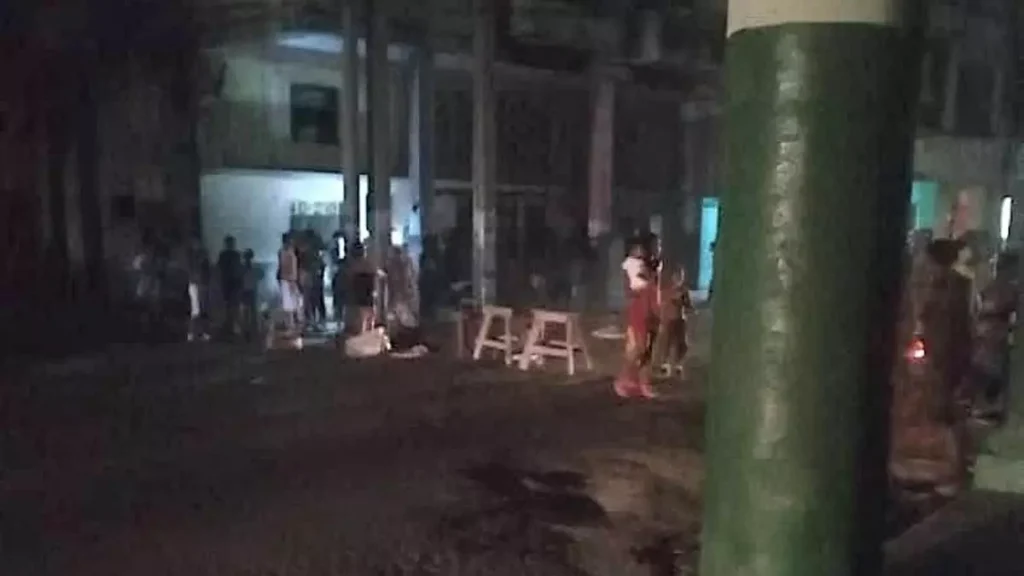
 14ymedio, Madrid, May 18, 2026 — Three women who were arrested at the end of 2024 in Palmarito de Cauto, Santiago de Cuba, are facing lengthy prison sentences for a protest that erupted during a prolonged blackout. Prosecutors are seeking 13 years in prison for Mileidis Maceo Quiñones, eight for Edilkis León Giraudis, and five years for Oneida Quiñones, all accused of public disorder and property damage.
The information was provided by Elba León Giraudis, sister of one of the accused, to Martí Noticias, which described the Prosecutor’s Office demand as “madness.” “They received the prosecutor’s request about a month and a half ago, but they still haven’t been notified of the trial date. They still haven’t set a date,” she said.
On November 15, 2024, tensions were running very high in eastern Cuba due to the slow restoration following the first major collapse of the national electrical system (SEN) on October 18, when a failure at the Antonio Guiteras thermoelectric plant in Matanzas caused the massive blackout that was the first of several.
“They received the prosecutor’s request about a month and a half ago, but they still haven’t been notified of the trial date. They still haven’t set a date”
The protest began “because of an all-day blackout, like every day when they cut the power at 7 in the morning, so many hours pass and they don’t turn it back on, and mothers have no way to cook for their children. It started in the area called Barrio Guano, which is a central street leading from that neighborhood toward downtown Palmarito, where the town square is, and then they turned back,” a local resident told the independent press at the time.
Dozens of people came out banging pots and demanding electricity. Police officers and State Security agents arrived at the scene, along with local government officials and Communist Party members, who unsuccessfully tried to calm the unrest. “The people became outraged because they were beating Mileidis’s mother, and people started throwing stones and shattered the window of an Operational Guard patrol car,” a witness told Martí Noticias at the time. Mileidis Maceo Quiñones, who is also an activist with the Patriotic Union of Cuba, and her mother were arrested, the latter being an elderly woman who is diabetic and disabled.
Edilkis León Giraudi and a first cousin of Maceo Quiñones, named Rafael, who was 17 years old at the time, were also arrested. The young man was detained a day later when authorities summoned several youths from the neighborhood to the local cultural center for questioning. Although charges were initially brought against him, they were ultimately dropped, reportedly because of his age.
Oneida Quiñones remains under house arrest awaiting trial, while Mileidis Maceo and Edilkis León are being held in the provincial prison. Their families have repeatedly tried to request more favorable measures so the women could remain at home until their responsibility is determined, but all attempts have failed, and they have now spent a year and a half imprisoned without knowing when the trial will take place.
The latest report published by the Madrid-based NGO Prisoners Defenders places the number of political prisoners in Cuba at 1,260
The latest report published by the Madrid-based NGO Prisoners Defenders places the number of political prisoners in Cuba at 1,260, ten more than the previous month. The same report, which warns of intensified repression, puts the number of people detained on the Island for protests against the regime at 2,048 from July 1, 2021 through the end of April 2026.
In addition, 23 prisoners were added to the list in the past month, although 13 people were released from prison, mostly due to completion of their sentences. Regarding the release of 51 prisoners announced by the Government in March and the “humanitarian pardon” of 2,010 inmates initiated in April, the organization states that both processes were marked by “deception, opacity, and the deliberate exclusion of the majority of political prisoners.”
In the first case, 27 of the 51 prisoners were political prisoners, while in the second process there were none, according to the organization’s records.
Translated by Regina Anavy
______________________
COLLABORATE WITH OUR WORK: The 14ymedio team is committed to practicing serious journalism that reflects Cuba’s reality in all its depth. Thank you for joining us on this long journey. We invite you to continue supporting us by becoming a member of 14ymedio now. Together we can continue transforming journalism in Cuba.