High Prices and Greater Control: An Old Formula for A Renewed Crisis

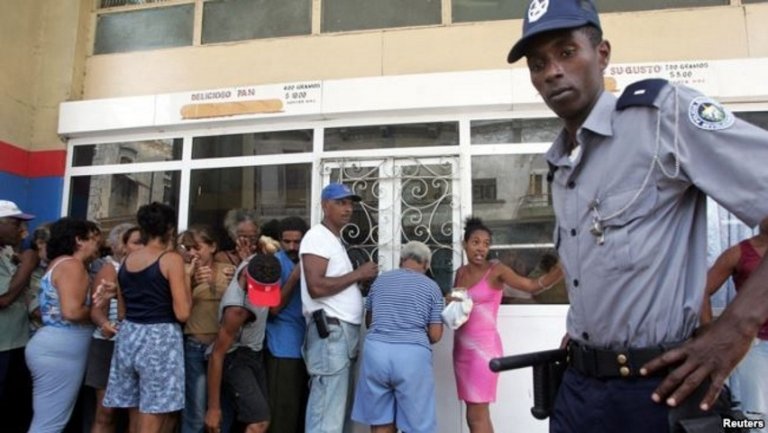
Officer watches as Cubans line up to shop (Reuters)

Cubanet, Miriam Celaya, Havana, 1 April 2019 — It’s Saturday morning and The Carlos III Shopping Plaza in Centro Habana recently opened, but already the butcher shop, in the interior of the establishment, is packed with people while, beyond the windows of the front door, another crowd swarms, expectantly waiting their turn to come in.

The customary shortages, made worse during the final months of 2018, have become chronic in hard currency stores, so that in the few markets where there is some assortment, large crowds gather. People in Cuba devote a large part of their time to the search for and acquisition of food.

“This is the only place I’ve found chicken and ground beef after looking in lots of other stores”, says a mature woman while placing the desired products in her shopping cart. Like her, dozens of people lean over the refrigerators gathering food to buy and take home. continue reading

In comparison with the empty shelves of previous days, this weekend the market has released products of dubious nutritional quality but of popular acceptance, due to their more modest prices: beef burgers, meatballs, sausages, various types of chopped meats, mixed with soy and starches — all of them imported — and artificially flavored and sweetened yogurt produced domestically. Chicken, which has become an obligatory character at the Cuban table and enjoys great popular demand, has reappeared after being absent for several days in this market. Nobody knows when the food supplies will be restocked, so everyone tries to hoard food as far as their limited finances will allow.

The endemic food shortage in Cuba has been joined by a subtle but steady increase in the prices of some foods. At the back of the butcher shop, next to the glass case, a blackboard displays what looks like science fiction for the Cuban pockets. The notice board is insulting: Marbled, bone in Beef Loin 20.25 CUC* / Kg (equivalent to 506.25 CUP). The same boneless product is also offered at 19.30 CUC / Kg (equivalent to 482.50 CUP), in addition to “super” ham at 10.25 CUC / Kg (256.25 CUP), bacon at 3.00 CUC / 250gr (75.00 CUP), Siboney brand processed cheese 4.95 CUC / Kg (123.75 CUP) and several types of sausages produced nationally with mixed capital of State companies and Spanish partners, in tubes of 500 grams whose prices range between 4.65 CUC (116.25 CUP) and 7.10 CUC (177.50 CUP). Most customers are buying only processed cheese, while a large stale piece of beef worth 88 CUC (2,200 CUP) continues to age, dark and forgotten, behind the vitreous refrigerated showcase.

Concerning the agricultural markets, they have joined the upward prices spiral that, usually high, continue to shoot even higher without mercy in the agricultural demand and supply (i.e. unrationed) markets, whose products are of greater variety and of superior quality to the ones offered in the small kiosks of other private sellers. As for the agricultural markets of state cooperatives, they usually have a poor supply, and their products, with some exceptions, are usually of the worst quality, and even their more modest prices do not have a realistic relationship with the purchasing power of the common Cuban.

Although not everyone is aware of the complexity and depth of the economic crisis that grips them and threatens to worsen in times to come, the perception of the deterioration begins to be felt on the minds of the people. The uncertainty about the near future continues to grow, along with the certainty that the government does not have a viable alternative to address the growing problems of the economy and society.

The most recent meetings of the Councils of Ministers have uncovered some of the huge cracks through which finances disappear, as well as other serious ills ailing the national economy that have forced the government to make public certain deficiencies that years ago would have remained hushed. However, far from implementing reforms to end with damaging centralism and to free up the productive forces leading to the development of private initiative, the authorities have opted for the formula, largely unsuccessful, of “control increases,” savings “as source of income” and the eternal calls for the productive efficiency of workers.

However, in crisis situations nothing is as useful to the official script as a villain. And, since the “blockade” (the embargo) is still useful but no longer enough to justify internal failures, in recent issues the television news program has been focusing precisely on the “hoarders-speculators”  — that fauna, the natural daughter of scarcity and unproductiveness — as if it were about a new phenomenon and had not been a permanent character of our existence for at least the last half century.

Thus, in order to remedy the shortages, the hot potato has been launched at the population by the Castro media: “the people” have been invited to go onto the National Television News (NTV) website and other lampoons to present their proposals as to what measures the authorities should take to curb this scourge of parasites that make the lives of the most humble Cubans so expensive by appropriating large quantities of basic goods and then reselling them at multiplied prices in the informal market.

With that amusing touch of modernity — a sign of the new style of media-focused governance with which they have been refreshing the image of the failed Castro experiment in the hands of the “young” commander without command — the power cupola not only evades its direct responsibility in the economic catastrophe into which it has plunged Cuba, and its obligation to present a proposal to mend it, but suggests to the servants of the ruinous medieval village to disburse a part of their already meager pockets to connect to the Internet (also with the onerous prices of its connections) and declare on the official page of the NTV what to do with these lesser delinquents, that is, the hoarders.

What the plan is really about is to set an example by punishing, not the true and biggest hoarders-speculators who have been squeezing all of us for 60 years, but to chastise those petty rascals who engage in small-scale mercantile fiddling and who, in the last instance, also survive, protected by the general corruption of the system.

Because, in a good fight, the State-Government-Party is the first link of the chain of speculators dragging Cubans to poverty. They are officials of the Castro regime — many of them proven corrupt over the years — who are responsible for the ever increasingly insufficient purchases of food at the lowest price abroad later sold for prices that are multiplied several times in the state retail trade networks, in which Cubans must necessarily buy to survive, and it is the economic paralysis of state centralism that fosters the proliferation of those markets and these speculators, in a system that reproduces its own basic vices time and again.

The inefficient and unproductive State-Party-Government is the parasite that sets low prices for food production by peasants, imposes what kind of crops they must develop, monopolizes harvests, which often deteriorate or are lost in the fields or in storage warehouses, and thus pushes producers to sell to intermediary speculators, who offer better prices for the farmers’ harvests, but raise consumer costs.

Thus, by diverting attention to the effect to mask the causes of evil and, at the same time, manipulate national public opinion, the leadership creates a false impression that popular participation is part of the decision-making of the economy and in the solution of the problems that afflict the population, at the same time that it increases the time to implement the essential apertures that, sooner or later, would mark the route towards the inevitable end of the socialist experiment in Cuba.

*Translator’s note: The CUC (Cuban Convertible Peso) is roughly equivalent to one U.S. dollar. Monthly wages in Cuba average roughly 17-30 CUC a month, thus this price for 2.2 pounds of beef is more than many Cubans’ monthly wage.

Translated by Norma Whiting
In Cuba Fear Won / Ivan Garcia

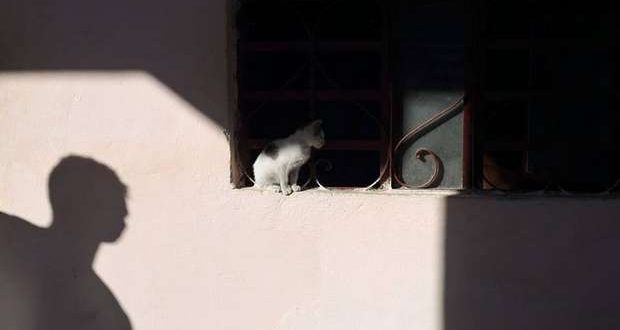
Photo by Juan Suárez taken in January 2019 in Centro Habana. Source: The Havana Times.

Iván García, 27 February 2019 — Ten minutes before 7:00 am on Sunday, February 24, the president of Electoral College Number 3 of District 68 hurried his meager breakfast of bread with mortadella and a cup of a beverage that was brewed from a mixture of coffee and ground peas.

He already had the ballots in order and the pencils were ready for the voters in the four cubicles. On the walls of the premises, located in a garage, were photos of Fidel Castro and several posters in favor of a Yes vote on the revised constitution.

Two “pioneers” — Cuban schoolchildren — commented on the Barcelona-Sevilla soccer game the day before when the president asked them to stand on either side of the small plastic urn of Prussian blue. continue reading

In the first hour of voting turnout was very light. Some retirees who, early in the morning, go out to buy the bread granted by the rationing book, took advantage and voted expeditiously.

“It’s that people like to sleep in, in the morning,” said a woman seated at the school table. The procedure was fast. They wrote down your identity card number, compared your data with the voter registration and then gave you a ballot.

The deficiencies in three of the four voting places visited were palpable. At the number two school in constituency 68 of the Lawton-Vista Alegre people’s council, the day before the vote, voters’ lists had not yet been posted. In three of them, instead of pens, they had put pencils, making it very easy to manipulate the vote.

In all the polls, propaganda in favor of a Yes vote was blatantly on display. The number one electoral college in District 68, where I had to vote, they did not even knock on my door to give me the summons used to call people to vote. They threw mine and my neighbor’s under the door. My name did not appear on the rolls, nor did that of my wife and daughter, eligible to vote. Where the voter’s name was supposed to be placed, they showed an address and an apartment number.

That Sunday, Daniel and his brother took out a bottle of rum and started drinking while playing dominoes with two friends from the neighborhood and listening to reggaeton. “A neighbor who worked at the polling station went through the corridor where we live and jokingly told us, ’when are you going to vote, then get drunk and forget them?’ You know, nobody wants to be marked [for not showing up]. We made a stop and went to vote.”

The domino players say they voted Yes. Do they agree with the text of the new Constitution? Daniel responds: “I have not read it. Everything is pure procedure. If you vote No, they win. If you vote yes, it’s the same.”

It may be true. But automatically a segment of Cubans continues to act like zombies. Luisa, a clerk in a state cafeteria, says she does not approve of the government’s management and is able to overwhelm you for a couple of hours with complaints about market shortages and deficiencies in public services.

But when she votes, she always checks the box that favors the regime. Why? “Hey, the dissidents do not give me a means to vote NO. If I am fired from my job the Embassy of the United States will not grant me asylum as a political refugee. This is the country that I have to live in. And if you do not look like you support the government, you are looking for a problem,” Luisa explains.

Fear always knocks on the door before civic citizenship. The reasons are understood. We Cubans reside in a nation of command and order. The good and bad that can happen to you in life depends to a great degree on your support for the autocracy. Sixty years later, that behavior works as a conditioned reflex.

In spite of everything, the fear has been overcome. In the referendum to approve the 1976 Constitution, 97.7% of Cubans ratified that legal document and attendance was 98%. Forty years later, in the imitation of elections to choose the deputies to the National Assembly, held in 2018, between 23 and 24% of citizens abstained, left the ballots blank or annulled them with rude words and slogans of “Down with Fidel.”

According to reports from observers and alternative media, in the majority of the polls visited, the number of abstentions exceeded the NO vote, while the Yes won comfortably.

Carlos, a sociologist, affirms that “in every election, votes against government proposals increase, but for various reasons, including fear, people feel more comfortable staying at home than going to vote and having to voteno or leave the ballot blank. Abstention can be justified in innumerable ways. I’m sick, I had a family problem, or a lie. But still many Cubans think that in the polling stations there are video cameras and voting NO or putting anti-government slogans can bring you problems.”

Although the ballot boxes are watched over by the young pioneers, in the vicinity of the polling stations the presence of State Security agents dressed in civilian clothes is visible. “Operations are mounted in all elections, with the participation of the police, DTI and Security. In areas where known dissidents live, surveillance is greater. If they are going to audit the vote count they are alert in case of any provocation,” says a former intelligence officer.

These operatives Olympianly transgress their own legal norms implemented by the regime. Dozens of opponents, such as José Díaz Silva, were assaulted or prevented from voting. Yoani Sánchez, director of 14ymedio, chronicled the tension she experienced in an electoral college when she demanded her rights. In the end, at the cry of Viva la Revolución, he had to endure the usual act of repudiation.

This fear of what can happen when acting voluntarily or against the interests of the government is always present among Cubans. That is why people prefer to see things from the stands or record from a distance with their mobile phones the protests and beatings of the political police to peaceful opponents.

In this referendum the victory was pre-ordained in favor of the Yes. After three o’clock in the afternoon of Monday, February 25, Alina Balseiro, president of the National Electoral Commission, appeared in a press conference informing that the new Constitution of the Republic of Cuba it was approved with 86.85% of the votes cast, according to preliminary data. Of the 9,298,277 citizens with the right to suffrage, 7,848,343 (84.4%) went to the polls to answer the question Do you ratify the new Constitution of the Republic?

Accepted as valid were 7,522,569 votes were, of which 6,816,169 voters voted Yes (86.85%) and 706,400 voted No (9.0%). 127,100 ballots were canceled and 198,674 were left blank.

In an article published in, the independent journalist Reinaldo Escobar commented: “The preliminary results of the referendum on the new Constitution confirm what was expected: that the new Constitution was going to be approved by the majority and that the process was going to make clear the increase in citizen dissent by putting a number to that group that rejects the administration of the authorities.

“More than two and a half million voters all over the country have distanced themselves from the new Constitution, between No, null, and blank votes, in addition to abstentions. Many have thus found themselves on the path to distancing themselves from the ruling political and economic system on the island.”

In Cuba, without international observers, reliable automatic voting machines, indelible ink, not to mention the excessive propaganda in favor of the regime, even inside the polling places, the official data usually awakens distrust among the opponents, independent journalists, exiles and analysts who follow Cuba.

Fear, for now, remains an involuntary ally of the olive-green autocracy.

The Man of the White Suit / Fernando Damaso

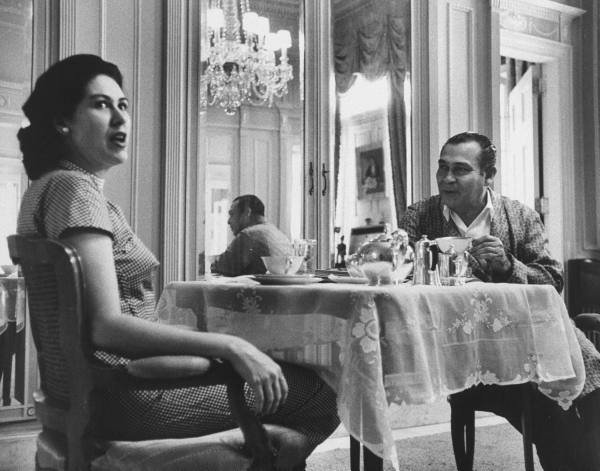
Batista lunching with his wife in the Presidential Palace, 8 months before fleeing Cuba. (Wikicommons)

Fernando Dámaso, 28 February 2019 — As a result of the Constituent Assembly and the elaboration and implementation of a new Constitution of the Republic, in an electoral process characterized by legality and tranquility, Fulgencio Batista Zaldívar became the sixth president, a man who had left the army with the rank of colonel (in February 1942, the new Organic Law of the Army grants him the rank of general retroactively), and fused into this same person the two antagonistic currents during the seven prior years, with losses for both sides and for the Republic: the military and the civilian.

Although he was a military caudillo, and had acted as such in previous years, exerting his influence in the rise and fall of several presidents, his personality also projected on the political plane. His rise to the presidency gave continuity to the Generals-Presidents of the Republic. Perhaps, because of this, he was able to easily defeat the military coup of the Chief of Police, General Jose Eleuterio Pedraza, at the beginning of his term. He exercised power from October 10, 1940 until October 10, 1944. continue reading

The main objective of his government, formed by the so-called Socialist Democratic Coalition, was to consolidate the state of peaceful coexistence that had been achieved during the Constitutional Convention, where parties, organizations and political and social groups of different stripes had managed to debate their proposals with civility and reached important results for the good of the Republic. In spite of this, from the beginning of his mandate, he had to face the opposition of the Cuban Revolutionary Party (Authentic), his main opponents and losers of the elections.

Unlike prior presidential terms, which began in 1902, he set in motion the semi-parliamentary regime established by the 1940 Constitution, appointing as its Prime Minister Dr. Carlos Saladrigas, a relevant personality, who managed to establish and maintain correct relations between the Executive and the Legislative branches.

During his exercise of the presidency,  Batista created the National Development Commission, with the objective of coordinating and promoting the development of the country, set a gold standard for the issuance of monetary certificates and achieved important advances in labor policy, establishing the Sugar Workers Retirement plan.

In addition, he  approved the creation of the National Council of Education and Culture, which achieved good results in the improvement and development of these two important activities, turned over the Calixto García General Hospital and the Limones Central (a sugar mill) to the University of Havana, for their use as learning centers, built the National Archive building, as well as that of the Economic Society of Friends of the Country and established the Order “José María Heredia”, to reward Cuban and foreign personalities in the world of science, letters and the arts.

Upon entering Cuba into the Second World War, he called for national unity, the ABC Party, an ally until that point of the Cuban Revolutionary Party (Authentic), responded favorably and came to collaborate with the government. In the context of the war, important measures were taken, with the aim of avoiding the scarcity of supplies and making the lives of citizens too expensive.

Although the Cuban Revolutionary Party (Authentic) continued in the opposition, it collaborated from the Congress with every act of national defense and with the belligerent attitude that Cuba had assumed. In response to this, the government appointed Engineer Carlos Hevia, an important figure of this party, as President of the ORPA, the Office of Regulating Prices and Supplies.

The President, during the years of his mandate, was able to summon and surround himself with people prepared to successfully carry out his government projects, allowing the country to live a stage of social tranquility and progress, experience that, unfortunately, has been forgotten by the others who suceeded him.

On June 1, 1944, general elections were held, including the candidacies of the Socialist Democratic Coalition, composed of Carlos Saladrigas-Ramón Zaydín, and the Cuban Revolutionary Party (Authentic) by Ramón Grau San Martín-Raúl de Cárdenas.

In an orderly process, honest and with all the guarantees, Dr. Ramón Grau San Martín obtained the victory, as the Republican Party of Dr. Guillermo Alonso Pujol joined his ranks, with the goal of, at the last minute, softening the excessive radicalism of some authentic leaders, among them, mainly, Dr. Eduardo R. Chibás, that affected the intention of voters. The transfer of powers was carried out in the most perfect democratic order.

Fulgencio Batista Zaldívar was the first President elected in democratic general elections, in accordance with the new Constitution of the Republic, after the fall of the government of General Gerardo Machado. His presidential term was characterized by the achievement of peaceful coexistence among Cubans, and the realization of important works, both material and social, which helped the country’s development after the impasse of seven years of political and economic instability. By restoring the democratic order, he created the base for its continuity.

The facts show that Batista was not the illiterate politician that they tried to make us believe, but someone intelligent who made good government during this presidential period. No monument or bust was erected that would honor him, although during his presidential termt the 4th of September flag fluttered next to the Cuban flag in the military camps and institutions.

Translated by Wilfredo Díaz Echevarria

Cuba’s "Sexual Tourist" is No Longer Prince Charming

New technologies, such as chats and dating applications, are widely used by Cubans to arrange a meeting with foreign tourists. (Chris Goldberg)

14ymedio bigger14ymedio, Marcelo Hernández, Havana, 2 April 2019 — The past has many layers for María de la Caridad. In one of them she is the happy wife of an Italian and in another a young woman who has just arrived in Havana with nothing but her own body. In the ’90s she was among the first jineteras (female prostitutes) that took advantage of the legalization of the dollar to offer their services. Today, a widow, grandmother and resident in the island believes that “the business has changed and almost no one is looking for a prince charming.”

“What I did, like many other Cuban youngsters, was more of an escort service and a price was rarely said directly,” she recalls now in a conversation with 14ymedio in her apartment in El Vedado, bought a few years ago when she decided to return to the Island. The death of her husband, a Milanese who fell in love with her “at first sight,” led her to make the decision.

María de la Caridad believes that the business of prostitution on the island “has become hard, direct, without grace.” “Before we knew how to distinguish when it was a client who just wanted one night, versus one who wanted a companion during his entire trip in Cuba, to establish a relationship and perhaps end up in a marriage, but now, from the first moment it is clear that it is an economic transaction,” she says. continue reading

The government kept prostitution under control — considering it a capitalist scourge — through programs of social reinsertion during the first decades of the Revolution, but during the Special Period it became a common exit from the misery.

The characteristics of the Cuban market, where having money did not mean access to a great number of products or more of any one product, in the case of rationed ones, caused a mutation in prostitution. The “companion” sought the privileges of generals, ministers and other leaders.

Starting the 1990s, large areas of Cuba, such as Guanabo beach east of Havana, became the epicenter of jineteras and clients who were seen to come and go, despite police control. Those were the years when, most of the time, the women negotiated directly with the tourists. Many ended up married to foreigners and emigrated.

“In Milan I met several Cubans who had experienced the same thing and we were very supportive of each other in those early years,” says María de la Caridad. “As time passed and we were having our families, we called ourselves the jinatera grandmothers,” she explains with humor.

The landscape has changed a lot since the times of María de la Caridad. The competition is greater with the pingueros (male prostitutes), who offer all kinds of services to men and women. In addition, the pimps and the seclusion in brothels “complicate their situation,” says this Cubana who sometimes interjects words in Italian. “Now women have less independence and finding a good husband is very difficult in those conditions.”

A few yards from her house, two young people were preparing this Saturday to go to 23rd Street, to one of the state clubs that are a frequent meeting point between prostitutes and customers. They are 17 and 19 years old, respectively, and their names in this report are. Both have been in the business since junior high, and the youngest is preparing to enter the university this year.

The two young women use new technologies, such as chat rooms and some dating applications, to meet foreigners who occasionally visit Havana. “Everything is clarified from the beginning and a price is established, he knows that it is not about love, but a bit of fun, and for me it is an important economic support,” explains Karla, who has been in the business for two years.”

“An important sector of women, educated and trained, is marginalized: many of them have a technical or professional training and their individual and family biography would place them in a more favorable position in social life,” explains Cecilia Bobes, who has a doctorate in Sociology. “There is also a change in the values of young people, who begin to see in the activity of the jinetera as a normal job, a way to earn a living and a survival strategy in the face of the crisis.”

Mara and Karla have managed to evade, until now, the pimps because they manage their contacts directly. “But many of those in this business prefer to have more protection and have someone to represent them, to look for the tourist and someone who can help if the thing gets ugly,” she says.

Pimping is one of the main crimes related to human trafficking and the pimps resort, in most cases, to violence, intimidation and drugs to obtain economic benefits, especially exploiting women. “At the moment I am doing well alone and I try not to put myself in high risk situations,” says Karla.

Procuring and trafficking in persons are punishable on the island, but prostitution is legal. Cuban authorities maintain police controls, especially on women, who are fined or deported if they come from another province. In the worst cases, they are interned in work farms to be “re-educated.”

The dream of Mara and Karla is to save some money to leave the country, but they do not believe that they can leave like María de la Caridad, directly through a client.

“All I want is for them to pay me and leave because I can not imagine marrying a man who knows I’m doing this. When I leave Cuba I’ll make a clean slate and start looking for a partner for love,” explains the youngest of the two women. Karla nods: “This is a business, there is no affection or plans for the future, it’s just about sex and money.”

______________________________

The 14ymedio team is committed to serious journalism that reflects the reality of deep Cuba. Thank you for joining us on this long road. We invite you to continue supporting us, but this time by becoming a member of 14ymedio. Together we can continue to transform journalism in Cuba.

Wow Air Shutdown Affects Flights Between Miami and Cuba

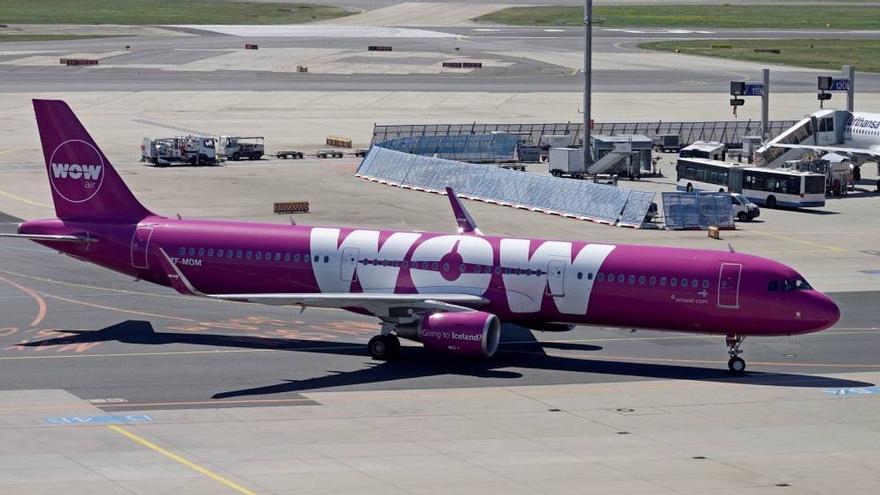
Founded in 2011, Wow Air operated flights between Iceland, Europe and North America, and last year transported 3.5 million passengers.

14ymedio bigger14ymedio, Havana, 29 March 2019 — The Icelandic company Wow Air announced on Thursday it was ceasing operations and cancelling all its flights, which includes several flights scheduled from Miami to Cuba. Two flights had been planned for yesterday, one to Santa Clara and the other to Camagüey.

As of last Friday, dozens of Cubans were stranded at the Miami International Airport due to the cancellation of charter flights operated by Wow. The financial problems of the airline have finally forced it to close.

In the statement, the low-cost airline recommends those affected who they bought their tickets with a credit card to contact their bank to see if they qualify for a possible reimbursement. continue reading

For those who purchased their ticket through a European agency as part of a tour package, the solution is simpler because they are covered by the Community Directive on travel packages. These passengers can contact their agency to fly with another company.

Those who had a travel insurance contract or have it included in their credit card can access the compensations provided in each case.

It will be more complicated if would-be passengers try to get a refund from the company, due to its closure, although the airline also urges them to take advantage of European regulations on air passengers’ rights, stating that they should address their complaints to the administrator or liquidator of the bankrupt company.

In December of last year, the Institute of Civil Aeronautics of Cuba (IACC) authorized the operations of Wow Air to serve Cuba.

Wow faced heavy debts and had tried to close deals and investments with two companies, Indigo Partners LLC and Icelandair Group, without success.

The airline said in a statement last Sunday that its negotiations with Icelandair Group were canceled after the company decided that “its possible participation in Wow’s operations, as announced on March 20, 2019” would not materialize.

The first cancellations occurred at that time and the final outcome now is the end of all operations.

Founded in 2011, Wow Air operated flights between Iceland, Europe and North America, and last year transported 3.5 million passengers.

__________________________

The 14ymedio team is committed to serious journalism that reflects the reality of deep Cuba. Thank you for joining us on this long road. We invite you to continue supporting us, but this time by becoming a member of 14ymedio. Together we can continue to transform journalism in Cuba.

Iberostar and Melia Prepare Their Defenses in Face of the Hardening of the Embargo

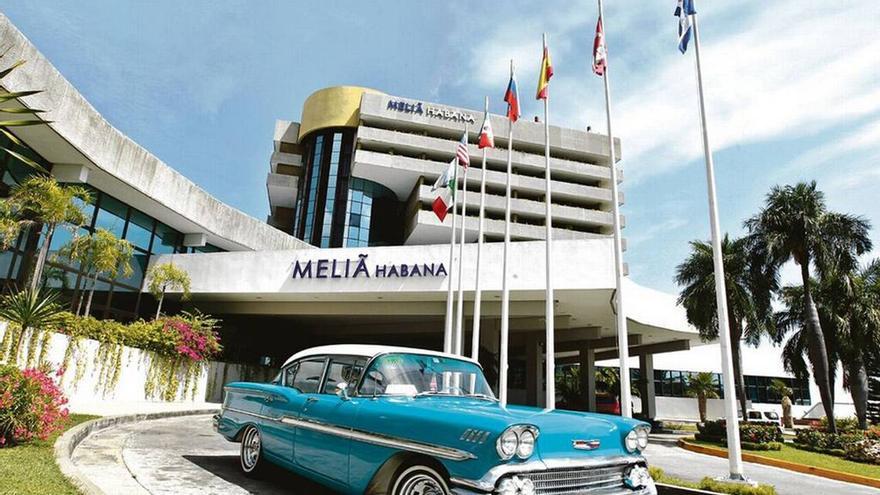
The Spanish hotel company Meliá has 32 hotels operating on the archipelago, 7 in construction, and some 15,000 rooms. (14ymedio)

14ymedio bigger14ymedio, Madrid, March 25, 2019 — Iberostar and Meliá, the two big Spanish hotel companies with major investments in Cuba, are preparing themselves in face of possible claims after the Trump administration partially activated Title III of the Helms-Burton Law. According to the Spanish economic newspaper Cinco Días, the hotel companies had already contracted the services of several lawyers’ offices to face eventual legal problems.

Title III of the Helms-Burton Law, approved by the United States in 1996, provides for the possibility of bringing claims in front of American courts which could result in the confiscation of properties in the United States owned by businesses with operations in Cuba.

In the last 20 years Washington has suspended the application of this title of the Law, but on March 17 the government of Donald Trump made the decision to apply it in a partial manner. continue reading

For the time being, people and companies are able to sue companies sanctioned by Washington that operate in Cuba and that are included on a “black list,” which principally affects those linked to the Revolutionary Armed Forces (FAR). In this case are found some hotels of Gaviota, which manages Meliá.

The main fear is that when April 17 comes, Trump will not definitively renew the suspension and allow the attempts to recover confiscated goods.

According to Hermenegildo Altozano, associate at the law office of Bird & Bird consulted by Cinco Días and an expert in Cuban affairs, Trump intends to use the pressure of economic measures to force political changes.

Marco Rubio is leading that strategy, explains the lawyer. “He is a very important, influential senator, who wants to make a political career and is using his power to try to convince Cubans in exile and in the US to make claims and reactivate the mechanism of coercion,” business sources close to Trump pointed out to the newspaper.

Ignacio Aparicio, associate of Andersen Tax & Legal and director of the Cuban Desk, also consulted by Cinco Días, says that there are around 6,000 certified claims before the Commission of Liquidation of Foreign Claims run by the Government, in the amount of approximately $9 billion, although the figure is conservative.

According to Cinco Días, experts on this matter rule out a priori that it comes to expropriating, but they consider other economic measures possible. “I see it as highly improbable that one of the certified claimants is able to begin the claims process, but if it did this it could generate a deterioration of the credit qualification of the companies and could provoke a cut of lines of credit to the Spanish companies,” said Altozano.

Another office consulted, which did not want to identify itself, doesn’t dismiss the resources so much. “The pulse could intensify if it passed from threats to reality and the American government could also opt to seize cash flows or assets of the company on American soil,” they declare.

Meliá has 32 hotels operating on the archipelago, 7 in construction, and some 15,000 rooms, while Iberostar has 21 hotels and 6,300 rooms. The latter has an important expansion plan approved to reach 12,000 rooms in 2020.

Last week the Spanish Chamber of Commerce called on the European Union for a common stance to fight in this framework. The body asked for actions aimed at avoiding the application of the Helms-Burton Law in an extraterritorial manner to European and especially Spanish citizens and countries.

Among the actions that could be carried out, it points out the application of Article 6 of the Blocking Statute of the European Union, which permits member States affected by the Helms-Burton Law to initiate legal actions on European Union territory against American companies demanding sanctions on European countries with interests in Cuba.

Translated by: Sheilagh Carey

_________________

The 14ymedio team is committed to serious journalism that reflects the reality of deep Cuba. Thank you for joining us on this long road. We invite you to continue supporting us, but this time by becoming a member of 14ymedio. Together we can continue to transform journalism in Cuba.

Sodom: The Cuban Chapter

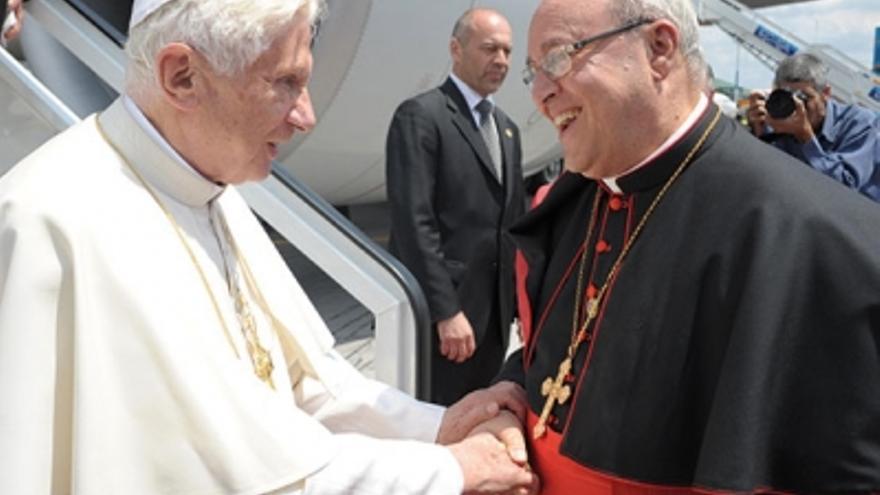
“Sodom” reveals that his trip to Cuba was crucial in the resignation of Benedict XVI. (CubaSí)

14ymedio bigger14ymedio, Reinaldo Escobar, Havana, 19 February 2019 — The newly released book “Sodom: Power and Scandal in the Vatican” can be taken as a scandalous revelation for some or as the confirmation of their suspicions by others. Either way, the 600 pages of the book will create a buzz about the inner life of seminars and parishes, all the way up to the religious elite.

By the French author Frédéric Martel, Sodom is being published simultaneously in eight languages and in twenty countries. The axis on which the text revolves is the extension of homosexuality in the Catholic Church, but it also touches on the crisis of values, pedophilia scandals, cover-ups and power struggles. Cuba is not on the sidelines and the island is signaled as one of the reasons for the fall of a Pope: Benedict XVI.

The author claims to have interviewed about 1,500 people during a field investigation that lasted more than four years. Cardinals, bishops, apostolic nuncios, priests and seminarians gave testimony. “A reality that I myself maligned, although many will consider it pure invention, a fable,” explains Martel. continue reading

Starting with the prologue, Sodom alerts the reader that the revelations refer to the dissolute behavior of those in the clergy who behave publicly as moralists but in private life engage in a wide range of sexual excesses and crimes ranging from orgies to corruption of minors and abuses.

The Cuban chapter is entitled The Abdication because it reports that the resignation of Joseph Aloisius Ratzinger was due, among other reasons, to the traumatic event that proved to him that the Church of the Island was not safe from evils such as pedophilia, which was known to have spread through several countries of Latin America.

In the most daring paragraph on that subject the author relates what happened in 2012, when the pope was flying to Cuba. “When the saintly father listened to what was said to him, and learned above all about the extent of the problem of the archdiocese of Havana, although he already knew the extent of the ‘filth’  of the Church (according to his own words), he now felt repugnance. According to one witness, the Pope, upon hearing this story, wept again.”

The “evidence” of these observations is obtained by Martel, according to he himself, from “three foreign diplomats accredited in Havana and several Cuban dissidents who remain on the island.” To the list of confidants are added “some Catholics from Little Havana in Miami, the Protestant pastor Tony Ramos of Cuban origin, as well as the journalists from WPLG Local 10. ”

The highlight of everything about Cuba is an encounter with Cardinal Jaime Ortega, in which, it seems, the main topic of the conversation was the Government’s relations with the Church. The interviewer physically describes the cardinal, presents a portrait of his personality, details the environment in which he lives and recounts the most familiar passages of his biography.

However, at least because of what was reported in Sodom, the journalist does not seem to have directly asked Jaime Ortega if he knew of cases of sexual abuse or pedophilia among his top hierarchy in the Catholic Church. Nor does it relate whether he asked him directly about his sexual preferences or whether he heard from him about this topic.

Other interviewees such as Orlando Márquez, Roberto Veiga, Monsignor Ramón Suárez Polcari, spokesperson for the archbishop, director of the Felix Varela Cultural Center and a layman named Andura express opinions on various matters, especially on what the Church had to cede in order to reach an acceptable harmony with the government, but rarely do they allude to the core of the investigation of Martel, who has said that “the Vatican has one of the largest gay communities in the world.”

Instead, in the chapter’s plot line, information of a political and diplomatic nature is juxtaposed, which the reader will be able to link in a cause-and-effect relationship with possible internal affairs of the bedroom. The author also takes the ingredients of the rumors and speculation which turns that part of the book into a bundle of gossip rather than a list of certainties.

After talking about Jaime Ortega’s concessions to the Cuban government, he says: “The regime knew perfectly the relationships, the meetings, the travels, the private life and the customs of Jaime Ortega, whatever they were, given his hierarchical level and his frequent connections with the Vatican, it is clear that the cardinal was guarded 24 hours a day by the Cuban political police.”

The idea seems a truth like a mountain, in a country with an extensive network of informers and a sophisticated political police trained in the methods of the German Stasi (Ministry for State Security) and honed with decades of experience, information gathering and the purchase of loyalties.

From a distance without coming to a conclusive statement, Martel adds: “One of the specialties of this police is precisely to engage prominent personalities by filming them in their sexual adventures, at home or in hotels.” A good listener with few words would suffice, but a journalistic investigation needs more than insinuations.

To fit his thesis, the author generously cites the testimony on Miami television of an ex colonel of the Cuban Revolutionary Armed Forces, Roberto Ortega, who “hinted that Archbishop Jaime Ortega would lead a double life: he would have had intimate relationships with an agent of the Cuban secret service.”

Frédéric Martel excessively bases his half-affirmations in “it is said,” “some sources affirm,” or “it seems that.” Too many voices that opt for anonymity, the absolute absence of testimonies from the victims and, of course, no probative documentation.

The scandals that have shaken the Catholic Church throughout the world have been mostly uncovered by those affected and by the voluntary declassification of some files. It would be a real miracle if the Cuban Church did not have similar cases in its 500 years of presence on the island, but obviously these have not reached the hands of the French author.

Instead of revelations, the section devoted to Cuba may seem to the eye of the local reader as a repertoire of gossip, a sequence of half-truths or stories shared from balcony to balcony. As it fails to convince of a dissolute life and the violation of a priest’s vow of chastity, it ends up making them seem like victims of intrigues and opinions issued by the laboratories of State Security.

It’s a shame, because the subject promises a lot. Sodom at least serves to bring to light a reason to open a public debate. It will be up to Cuban social investigators and journalists to take their questions to the temples and to the ecclesiastical authorities, to assume the responsibility of denying the false and revealing the true.

That this book encourages potential victims to speak could be its greatest achievement in this place where secrecy has become an inseparable part of life in too many orders: the State, the Church and the family.

________________

The 14ymedio team is committed to serious journalism that reflects the reality of deep Cuba. Thank you for joining us on this long road. We invite you to continue supporting us, but this time by becoming a member of 14ymedio. Together we can continue to transform journalism in Cuba.

The Glorious People of Cuba Accept Life With Pain and Without Glory

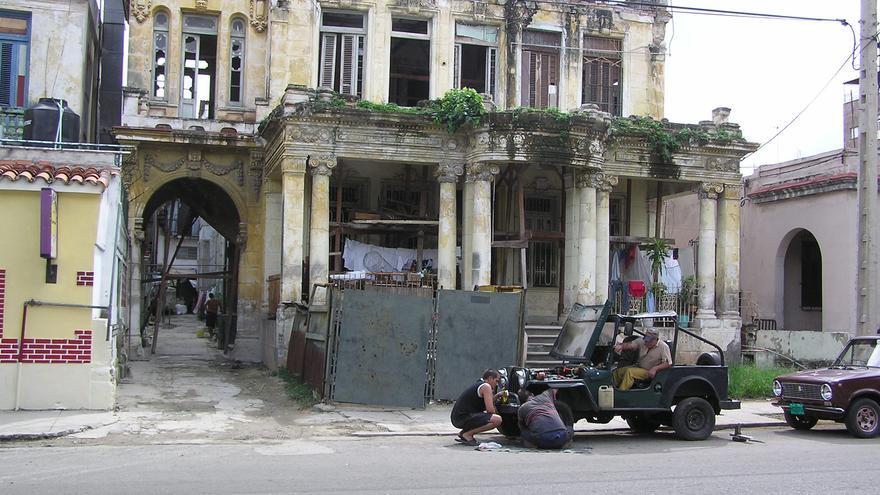
El Vedado, the old stately neighborhood in the heart of Havana, full of ruins. Here, what was a small palace (14ymedio / BDLG)

14ymedio bigger14ymedio, Juan E. Cambiaso, Buenos Aires, 25 March 2019 — It’s the fourth time I’ve been to Cuba. Against my natural inclination to go to a five-star hotel, this time I hired a private apartment in El Vedado, to be with the people. It is located on 17th Street, one block from the Museum of Decorative Arts, which was an elegant street and today is just a gutter through which spoiled memories run.

This time Havana moved me, as always, but I did not like it. Havana, Cuba in general, went from picturesque to stubborn. Struggle for the path that does not suit it and renounce others that would make it better. Cuba is masochistic.

The music and the sound that emerges among the cobblestones delighted me on the first trips. In this return I managed to separate the music from the musicians. The first delights me as always. The musicians, who emerge everywhere, are like smiling zombies that resuscitate an original past, prior to the Revolution, because there is nothing left to show. The Castros and their acolytes replaced reality with hypnotic slogans that generate vibrant attachments, however empty of substance and overflowing with stimuli for primary feelings. continue reading

The owner of the apartment does not get milk for breakfast, the restaurant does not get chicken for fettuccine Alfredo, the bar in front of the Cathedral has the same problem with beer, the international pharmacy has no alcohol, gauze or adhesive cloth to heal a wound I got when I fell, the homeowner with gastritis does not get omeprazole (Prilosec). The explanation is reiterated: “For now, we don’t have any.” And so they live, with what there is for now.

The glorious people of Cuba accept to live with pain and without glory, believing that the latter will be the consequence of living in pain. And from there comes everything else. The dream of the Jesuit alumnus who made it happen was that they believed that the suffering in this Cuban world was the guarantee that the secular paradise would finally arrive. Until victory always, victorious for now, no. Revolutionary Cuba is a victory in gestation. A pregnancy of half a century that has no childbirth in sight.

The most surprising thing is that they do not get angry atthe adversity or its causes, that they live relaxed, lazy, some working and others making like they work. Many believe they are striving to make the dream of el Comandante come true.

Nobody competes with anyone and everyone makes between 25 and 30 dollars per month. The freedom to engage in business is limited, rickety, among the ruins. Private micro-businesses, such as small restaurants and rented rooms in family homes (which are chosen because their low price justifies living with little comfort and seeing what happens), sprout like mushrooms.

The construction in Havana draws attention. But it’s only about foreign companies that build super hotels. Not hospitals, nor schools, nor homes for ordinary Cubans. The Vedado neighborhood continues in free fall and Centro Habana collapses despite a face wash for the facades along the Malecón.

Cuba is a great tide of good people who take it all because, as in the movie The Truman Show, they have been led to believe that this broken stage is true life. I did not hear anyone say that there was going to be a collective civic effort to try to change “the thing.”

A week after leaving the island, the first time, I no longer have the taste of rum, the smell of the sea, the music of the ropa vieja (shredded beef) and the fruits of the sea, which previously lasted a long time tinkling in a glass.

__________________

The 14ymedio team is committed to serious journalism that reflects the reality of deep Cuba. Thank you for joining us on this long road. We invite you to continue supporting us, but this time by becoming a member of 14ymedio. Together we can continue to transform journalism in Cuba.

Congolese Students Protest the Delay in Their Scholarships in the Streets of Havana

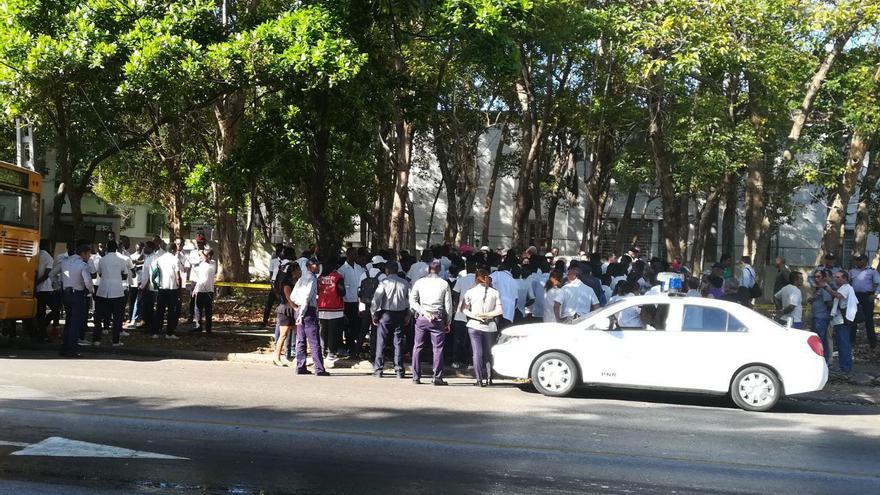
In front of the mansion on Fifth Avenue, between 10th and 12th, a large group of Congolese who study Medicine in Cuba gathered this morning. (14ymedio)

14ymedio bigger14ymedio, Havana, 26 March 2019 — Dozens of Congolese students protested Tuesday in front of their country’s embassy in Havana over the delay in the payment of their scholarships. The diplomatic headquarters of the Republic of the Congo was surrounded by a strong police operation while several officials ask for the young people’s “understanding,”14ymedio was able to confirm.

In front of the mansion of Fifth Avenue, between 10th and 12th, in the Miramar neighborhood, a large group of Congolese who study Medicine in Cuba gathered this morning. The young people shouted for the payment of their overdue stipends and asked the diplomatic headquarters to solve the matter urgently.

“We have gone months without receiving the payment that covers our basic needs for food and transportation,” one student, who declined to be identified, told 14ymedio. The amount, a little over 300 dollars, is essential for the young people because “the shelters where we live are in very bad condition and without that money everything is more difficult.” continue reading

“Since the beginning of the year we have not received a penny and some of us are surviving thanks to the help of other students and our families, but this can’t go on,” said the student. “If this is not resolved, many of us are ready to return to the Congo, because this is not living, so you can not study.”

This is not the first time this type of situation has occurred. At the beginning of 2015, the Congolese Loïc Junior Niombo, aged 20, was missing for two weeks. He was a member of the Union Committee for the Defense of the Rights of Medical Students from his country and was at the forefront of the negotiations during the crisis generated by the non-payment of the scholarships of the first 500 Congolese university students who arrived in Havana in 2013.

In the face of student protests, the then ambassador of the Republic of the Congo in Havana, Pascal Onguiémbi, proposed repatriating the six members of the union. The president of the African country, however, after estimating that it was not necessary to resort to expulsion, ensured that the students received part of their overdue scholarships.

The unionists claimed the remaining amount was seized by order of the ambassador shortly before Christmas, under the eyes of the authorities of the university campus. The Congolese National Convention of Human Rights (Conadho) then said that they were taken to a penitentiary center about 80 kilometers from Havana and released a few days later.

For decades, Cuban authorities have developed an extensive study program for foreigners on the island. It is currently estimated that 2,500 people from the African continent are students of Cuban faculties and, among them, about 800 Congolese are training as future doctors.

The Latin American School of Medicine (ELAM), founded in 1999, offers six-year studies to scholars from different countries and currently  enrolled in its classrooms, for different medical disciplines, are students from 44 African countries.

Recently, Clement Mouamba, Congolese prime minister, conveyed to the Cuban ambassador in that country, José Antonio García González, his gratitude for the invaluable support of Cuba in the training of human resources, according to the official press.

Last January fifty medical students from Kenya announced that if they did not solve the “problems” they are having on the island as soon as possible, they will abandon their studies and return to their country, according to the Standard newspaper of Nairobi.

A protest by a group of medical students from Pakistan was suppressed in 2010 by forces of an unusual anti-riot squadron at their residence at the Santiago Haza School of Medicine, in Jagüey Grande.

________________________________

The 14ymedio team is committed to serious journalism that reflects the reality of deep Cuba. Thank you for joining us on this long road. We invite you to continue supporting us, but this time by becoming a member of 14ymedio. Together we can continue to transform journalism in Cuba.

The Confession of a Tyrant

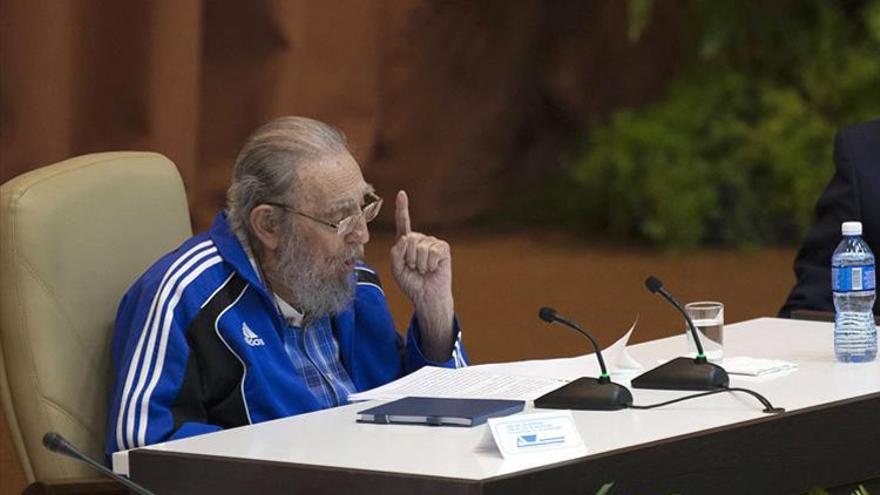
Fidel Castro during one of his last public appearances (Cubadebate)

14ymedio bigger14ymedio, Ernesto Santana, Havana, 31 March 2019 — In 1999, during a visit to Cuba by then Illinois Governor George Ryan, Fidel Castro gave a press conference in the Great Hall of the University of Havana before dozens of journalists. I couldn’t believe I was there, thanks to my role as a guide for the Chicago Telemundo team and as an assistant to the cameraman. Among the journalists covering the governor’s visit was Alejandro Escalona, winner of the Studs Terkel Prize in 2014.

Unusually, at the end of the press conference, Castro allowed himself to be surrounded by the journalists, who interrogated him about a thousand things, but the limelight fell on the editor of Éxito who asked him why he did not hold a plebiscite as Pinochet had done, to which El Comandante replied, stung: “You are comparing things that have nothing in common.”

Jorge Ramos — the Univision journalist who recently drove Nicolás Maduro crazy and who shares a courageous interviewer lineage with Escalona — apparently was there and, shortly afterwards, recounted what had happened in an article. Perhaps memory deceives me and today my description does not agree with his on some minor points, about that question like a gunshot: “If the people have the power, why don’t you leave the presidency?” continue reading

Then, like a bomb, in front of the cameras of half the world was heard, “Because I don’t feel like it!” Shortly after, el Comandante left, but it wasn’t even two minutes later when, in plain sight of all of us, a guard hurried up asking for “the Mexican” and left with Escalona, followed, of course, by all the journalists.

Fidel Castro had understood his enormous error. He had revealed to the international audience that, in effect, he was a despot and ruled “as long as I feel like it,” but the damage had to be repaired. Beside the open door of one of his black Mercedes Benzes, in the middle of the swarm of guards and reporters, with all the cameras and microphones pointed at him, he deployed his acting skills, giving the usual explanations and showing his interrogator a very friendly face.

He didn’t have to say any more. Escalona had achieved what every interviewer pursues and very rarely achieves: revealing the essence of his interviewee: making the truth visible. Ramos himself relates in his article that in 1991, in Mexico, in a brief encounter with the dictator, he had also asked about a plebiscite, but he only managed to get a shove from a bodyguard who knocked him to the grass.

Alejandro Escalona has met many important figures and always, as those who know him well, as a practitioner of the best American journalism of transparency and a follower of the master Studs Terkel, he has objectively pursued information, but surely at that moment in 1999 he was one of those who felt he had most fully realized his role as a journalist and most identified with his professional mission.

___________________

The 14ymedio team is committed to serious journalism that reflects the reality of deep Cuba. Thank you for joining us on this long road. We invite you to continue supporting us, but this time by becoming a member of 14ymedio. Together we can continue to transform journalism in Cuba.

Confirmation of Electoral Constituencies / Cubalex

From Cubalex – January 2019 

Step 5

Before calling elections, the Municipal Assemblies of Peoples’ Power (AMPP), divide their areas up into electoral constituencies, on the basis of the number of inhabitants in the Council area, and, after they have constituted them, present a proposal to the Municipal Electoral Commission, which, in turn, submits them to the respective Provincial Electoral Commission for approval.[1] The law does not lay down a time period in which to do this.

Note: This should happen before the Electoral Constituency Commissions are constituted, which, according to the official media, should happen before January 13th, 2019, the date upon which all the national electoral entities should be in place. The logic is that, in order to constitute the Electoral Constituency Commissions, the electoral constituencies should already have been determined. The law is silent on this matter. continue reading

In view of the haste with which this process has been carried out, it must be assumed that the constituencies approved for the previous elections in 2017 and 2018 will be used. At that point, they created 12,515 constituencies throughout the country, and 24,361 electoral colleges. 8% of the electoral colleges were in private houses.[2]

Step 6

The Provincial Electoral Commission decides the proposals for electoral constituencies submitted to them by the Municipal Electoral Commissions.[3]

Note: This should happen before the Electoral Constituency Commissions are constituted, which, according to the official media, should happen before January 13th, 2019. It is estimated that at least 12,515 electoral constituencies will be created across the whole country, based upon the official data on the elections which took place in 2017 and 2018. [4]

Step 7

The Municipal Electoral Commission designates the members of the Electoral Constituency Commissions in the time period established by the Council of State (between the 4th and 13th of January, 2019) in order to establish the subordinate electoral organs.[5]

[1] Article 12 and Subsection b) Article 26 of Law No. 72 of 29th of October 1992, “Electoral Law”.

[2]  http://www.granma.cu/elecciones-en-cuba-2017-2018/2017-07-21/mas-de-20-000-colegios-participaran-en-los-comicios-21-07-2017-00-07-58

[3]  Subsection f) Article 24 of Law  No. 72 of 29th October, 1992, “Electoral Law”.

[4]  http://www.granma.cu/elecciones-en-cuba-2017-2018/2017-07-21/mas-de-20-000-colegios-participaran-en-los-comicios-21-07-2017-00-07-58

[5] Subsection c) Article 16, Article  21, Subsections c) and ch) of Article 26, Article 29 and Subsection ñ) Article 30 of Law No. 72 of 29th October, 1992, “Electoral Law”

Translated by GH