US Food Exports to Cuba Up 25% in 2017

Half of US food exports to Cuba consists of chicken. (14ymedio)

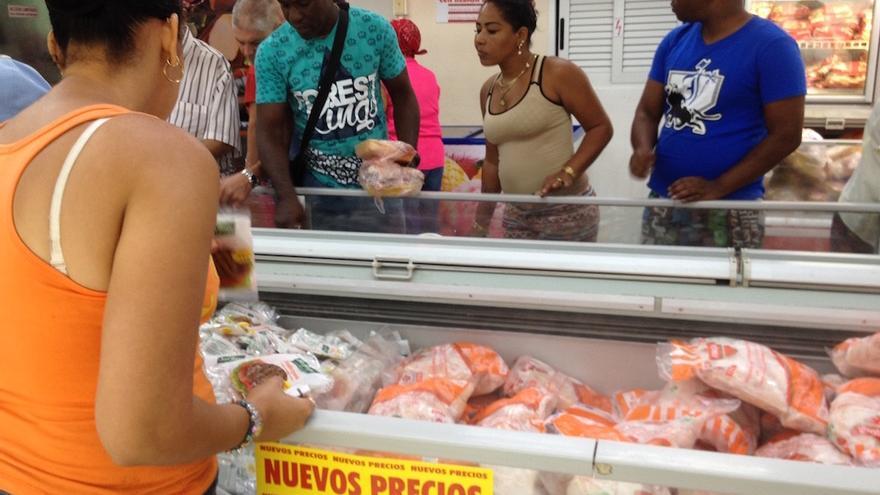
14ymedio bigger14ymedio, Havana, 30 January 2018 — US food exports to Cuba reached US $250 million in 2017, which represented a $50 million increase over the previous year. According to data published on Monday by the Economic Council on US-Cuba Commerce, chicken remains the flagship product accounting for half of total sales of agricultural products.

Despite the hardening of the policy towards Cuba initiated by Donald Trump’s administration in June of last year, US sales grew during the second half of 2017. continue reading

Along with chicken, which for more than a decade has been at the forefront of US exports to the island, Cuba also buys large quantities of soybeans and corn, as a part of the country’s dependence on agricultural imports. The island imports around 80% of what its 11 million inhabitants and 4 million annual tourists consume.

Before the arrival of Trump, the flexibilization measures of his predecessor Barack Obama had allowed an increase in flights, telecommunications, tourism and remittances.

However, all these purchases of food products on the island are made through the intervention of the Cuban State, since the Government of Raúl Castro does not allow its citizens to buy products from the United States individually. This, in turn, makes it difficult for US producers to access all the potential consumers in Cuba.

______________________

The 14ymedio team is committed to serious journalism that reflects the reality of deep Cuba. Thank you for joining us on this long road. We invite you to continue supporting us, but this time by becoming a member of 14ymedio. Together we can continue to transform journalism in Cuba.

Prosecutor’s Office Asks for Prison Sentences for Partying With Minors in Camaguey

Police reinforcements outside the Provincial Court of Camagüey on January 18 when the accused were tried. (14ymedio)

14ymedio bigger14ymedio, Camaguey, 24 January 2018 — An underground shelter in a junior high school in Camagüey served as meeting and leisure space for a group of young people between 13 and 23 years old who have been implicated in a case of corruption of minors and drug use for which the Prosecutor’s Office is asking for sentences of between 9 and 20 years in prison for the adults in the group.

The friends met in the abandoned building without thinking of the criminal consequences their fun might have, particularly for those of legal age, who are charged with crimes of illicit production, demand, trafficking, distribution and possession of drugs, narcotics, psychotropic substances and others with similar effects, in addition to the corruption of minors, that is their teenage friends. continue reading

Prosecutors Yanitsy Pujalá Melero and Camilo Recio Caballero alleged in the trial, held behind closed doors on Thursday, January 18,  with a strong police presence, that the place was used for the consumption of marijuana and sexual relations. The hearing against the eight accused, the adults of the group, took place in the Chamber of Crimes Against State Security of the Provincial People’s Court of Camagüey.

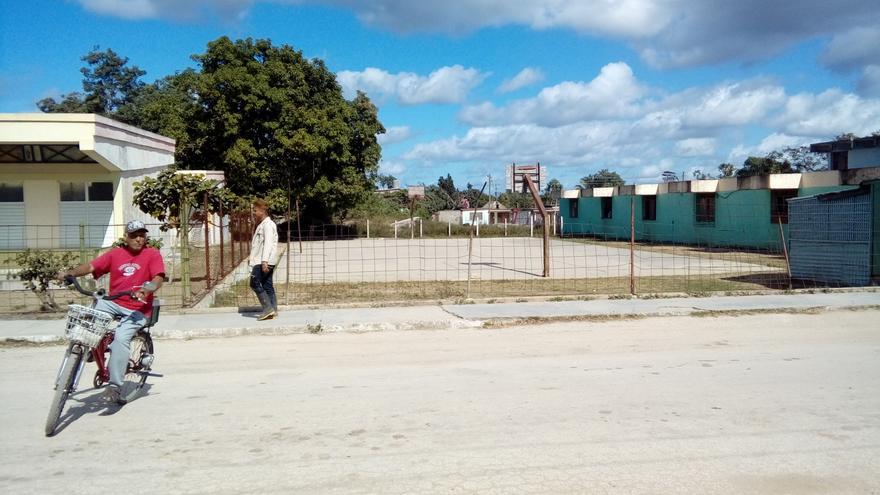
The acts were allegedly committed between January and March of last year and involve at least seven minors from July 26th Junior High School, in the Florat district. The students met with their friends, the eight defendants, in the underground shelter that is located under the sports ground, a place that was not in use and lacked supervision from the school’s administration.

The minors, six girls and a boy between 13 and 15 years old, were there between 3 and 6 in the afternoon with the other young people, ages 16 to 23, who are being tried. On these evenings, alcoholic beverages were ingested, sometimes mixed with controlled medications, such as Tegretol and Benadryl.

A teacher at the center who preferred anonymity told 14ymedio that the teachers had no control over what was happening inside the physical education area, which was closed so that no one could enter it and to prevent neighbors from throwing trash there.

The defendants had also been students at the center. “They were not bad students, none repeated a grade and some of their parents helped with the teaching activities,” says the teacher, who is surprised, like many neighbors, by the severity of the prosecutor’s request.

The majority of the defendants denied the charges and denied having any connection with drugs, which were not found by the police. One of the witnesses in the case was fined by the Court, which found that he had changed his initial testimony by not confirming a part of the charges against the young people.

Among public opinion, there are doubts about whether it is possible to distinguish victims from defendants in a case like this. “The age that separates some of them is only one or two years and when they met there they all felt like teenagers or young people, they were not taking into account that some were going to be seen before the law as corrupters of minors,” laments the aunt of one of the accused who prefers not to reveal her name to “not complicate” things for her nephew.

Some of the neighbors of the school told this newspaper that they did not see anything strange in the weeks in which the crimes were supposedly committed. “It’s a school, boys come and go all the time, why would it seem strange to me that they were around the sports area?” says Mariela, who lives nearby.

The sports area, under which is a shelter, at 26th July Junior High where the events occurred. (14ymedio)

Mariela, the mother of a daughter who studies at the junior high, said her daughter never talked at home about such things happening although she believes that “there has been a noticeable relaxation of behaviors and good manners that is getting worse among young people.”

“These things happen because young people do not have interesting places for recreation that we can afford,” exclaims Yasser, a 16-year-old who found out about the case because it is on everyone’s lips on the streets of Camagüey. After the incident, “the school is very controlled and the police have become very nervous,” he says.

The minimum age to be tried on the Island is 16. The crime of corruption of minors is described in the Penal Code as the act of using “a person under 16 years of age, of either sex, in the exercise of prostitution or in acts of corruption, pornography, heterosexual or homosexual, or other behaviors.”

The defendants’ lawyers, four well-known local attorneys — Juan Manuel Rosell Parada, Jorge Jerez, Walfrido García and Iliana Porro — asked the relatives to be calm at the end of the trial and urged them to wait for the notification of the sentences in the coming days.

However, the scenes of uncertainty were repeated among the relatives of the young accused, who fear they will be given sentences to set an example to others to avoid similar situations in other schools in the city.

The mother of one of the defendants cried outside the court, noting that her daughter is still a child. “She’s barely 16 years old, what’s going to happen to her if she goes to jail?”

 _______________________

The 14ymedio team is committed to serious journalism that reflects the reality of deep Cuba. Thank you for joining us on this long road. We invite you to continue supporting us, but this time by becoming a member of 14ymedio. Together we can continue to transform journalism in Cuba.

Several Cubans Stranded At Amsterdam Airport After Requesting Political Asylum

Migrants stranded at the Amsterdam-Schiphol Airport run the risk of being deported to the Island. (EFE)

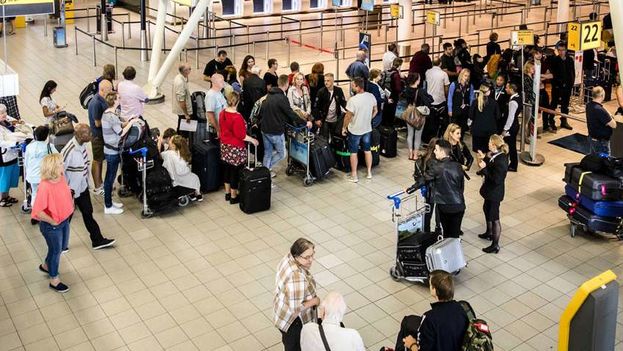
14ymedio bigger14ymedio, Havana, 30 January 2018 — A group of Cubans remains trapped at the Amsterdam-Schiphol Airport after requesting political asylum. The travelers left Havana for Moscow on Saturday and their stopover in the Netherlands coincided with the implementation of a new transit visa requirement for Cubans.

Victor Manuel Dueñas, a contributor to the Havana Times digital site, is among the Cubans who are waiting to receive political asylum in The Netherlands or, if not, to be deported to the island, according to the WPLG Local 10 website. continue reading

The increase in the number of Cubans who have requested asylum in the airports of the Netherlands in recent months caused the foreign ministry of that European nation to impose a transit visa for all Cuban travelers who stop in their territory on their way to a country outside the Schengen area.

The measure came into effect this January 29 and has left in a legal limbo travelers who arrived in Holland on that date.

Dueñas, 23, is also an LGBTI activist who managed the Community Culture Center, a meeting place for human rights lawyers who focus their work on defending this community on the Island.

The headquarters of the independent group was the house of the Dueñas family in Santo Domingo, in Villa Clara, which was seriously damaged by Hurricane Irma last September. The activist also complains that he has been the victim of pressures because the authorities do not look kindly on his work.

“We are the last to arrive at the airport in Amsterdam” without a transit visa, Dueñas told the press. “There are some who have been waiting here for five days for diplomatic officials.”

Dueñas’s cousin, Onasis Torres, and five other Cubans, were at the airport until Monday night while the authorities reviewed their request for asylum in the European Union.

Since the Administration of Barack Obama put an end to the wet foot/dry foot policy in January 2017, Cubans “continue to leave the island in search of opportunities and freedom, but their migration routes have changed,” say the young people. Europe has become a new route for those who decide to leave the country.

Dueñas says that on the Island the police continue to look at members of the LGBTI community as if they were “sex workers.” He complains, “They treat us like second-class citizens.”

The new transit visa that The Netherlands requires has a price of 71 CUC and “will allow the authorities to better evaluate the travel intentions of visa applicants,” said the foreign ministry of that European country in a recent statement.

The measure had already been applied previously by Spain, which requires transit visas for island residents who use their airports as a stopover on the way to countries outside the Schengen area. France, another of the most frequent transshipment points from Cuba, has not yet imposed that requirement.

____________________________

The 14ymedio team is committed to serious journalism that reflects the reality of deep Cuba. Thank you for joining us on this long road. We invite you to continue supporting us, but this time by becoming a member of 14ymedio. Together we can continue to transform journalism in Cuba.

Di Tú Croquettes Are Of “Dubious Quality” Says Official Press

The official media have not said if the industrial croquettes made for state establishments are sold in illegal outlets. (guantanamocity.org)

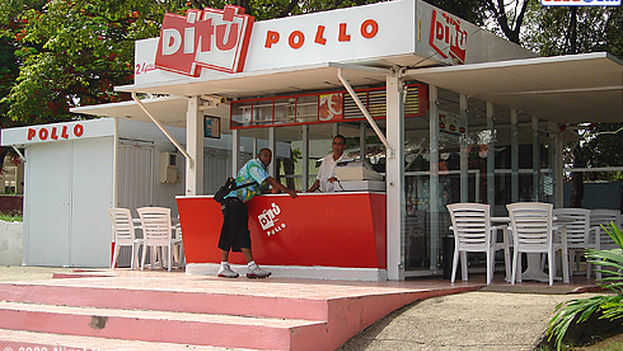
14ymedio bigger14ymedio, Zunilda Mata, Havana, 30 January 2018 — Despite a national inspection almost two years ago, the popular state food chain Di tú continues to illegally sell “homemade” croquettes of poor quality, according to a note published in the newspaper Granma on Tuesday.

The Communist Party’s newspaper reports that following complaints from consumers the Food Production Company (Prodal), the chain’s only supplier, did a study in mid-2016 and “it was found that 75% of the food sold came from other sources.”

These croquettes, sold at 10 cents CUC and usually made with chicken, are very popular on the Island, a situation that for administrators and employees of these state-owned stores is seen as an opportunity to obtain benefits. continue reading

“It is a sound business because the croquette is what sells best in these places, and taking advantage of that margin they sell them to other people who sell them privately, and everyone shares the profits,” Berta Gonzalez, resident of the municipality Diez de October, told Granma.

As a result of this manipulation, consumers claim that Di tú’s croquettes are now smaller and the dough’s taste and appearance is not the same as before, which leads them to suspect that they have been victims of a substitution.

The official press confirms the customers’ complaints and note that these products do not meet the sanitary requirements nor have the same size or flavor as the chain’s original croquettes. In the preparation of the croquettes a series of strict parameters must be followed that detail the ingredients and preparation of this product sold in state food stalls.

Despite the technical inspections carried out by the authorities, the official media have not said whether the industrial croquettes, destined for state establishments, are also sold in illegal outlets.

To correct the situation and meet the demand the Food Industry Business Group has made investments in recent months aimed at “increasing production capacities,” Iris Quiñones, president of Prodal, told the official press.

The state entity processes about 15,000 tons of meat, poultry, fish and shellfish a year for distribution to the hotel network and the domestic market in CUC. Its production is mainly focused on picadillo, croquettes, meatballs, steak and hamburger, which also end up on the dining tables of workplaces, schools and hospitals.

Granma not only laments the “illegal act of introducing merchandise” in the state circuit and thus obtaining “a profit that does not appear in any accounting book,” but also questions where the individuals get the infrastructure to make a “homemade croquette so similar to the one really produced industrially.”

Popular inventiveness has managed to manufacture machines that mimic the finish of a state-produced croquette. Recently, the digital site El Toque told the story of a resident of Placetas, in Villa Clara, who put together one of those devices from bicycle parts, a culinary meat grinder and a piece of a plastic soda bottle.

Previously, small domestic industries dedicated to the falsification of beers and soft drinks have also been detected. However, it is the first time that officialdom has acknowledged that the cooked food offered in its network of stores also suffers from adulteration.

A hand-crafted croquette maker. (eltoque.com)

_____________________

The 14ymedio team is committed to serious journalism that reflects the reality of deep Cuba. Thank you for joining us on this long road. We invite you to continue supporting us, but this time by becoming a member of 14ymedio. Together we can continue to transform journalism in Cuba.

‘Cuban civil society fails to utilize the mechanisms to report human rights violations’

Lartiza Diversent, Director of Cubalex. (DDC)

diariodecubalogoDiario de Cuba, 30 January 2018 — Forced into exile by the Cuban regime, the Legal Information Center (Cubalex) has undergone a “radical and painful change”. However, reorganized in the USA, it aims to continue along the project’s same line: “to internationally denounce the Cuban State for its human rights violations, and spotlight the situation in the country. ”

Director Laritza Diversent spoke with DIARIO DE CUBA about some aspects of the organization’s work, what it has left behind, and, above all, the reasons for the lines it has drawn and the procedures they will use under the new circumstances. continue reading

How has Cubalex reorganized in exile?

Cubalex registered in the state of Tennessee in the USA. We currently have a Board of Directors that governs the organization. The team, which includes me, works online because we live in different states, mostly in Pennsylvania.

What has it meant for the members of Cubalex to have to leave the Island?

It was difficult to accept that you have to start a new life, and adapt to new customs and idiosyncrasies. Everything is missed, especially the aroma of coffee on the terrace where we met up almost every morning to begin our work, and working in the same physical space, and personally receiving those who visited us at the office in Cuba. Today we see each other on a screen. It has been a radical, difficult and painful change. All of us have shed tears of nostalgia.

Have your relatives suffered reprisals in Cuba?

As long as we continue doing the same work as in Cuba, which is vexing for the Government, and it continues to yield results, as we appeal to international human rights organizations and shine a light on the situation in the country, our relatives in Cuba will be at risk. It is one of the forms of punishment that the regime wields best. We have to recognize it. They are effective. We are powerless in this regard.

What difficulties does having to work from outside Cuba entail?

Obtaining the resources to keep the organization running and including the entire Cubalex team that left Cuba as part of the staff. On another front, making the activists in Cuba understand the importance of reporting, at the international level, the human rights violations of which they are victims, which is a difficulty that we had in Cuba. Thus far we have not managed for many to report the repression to which they are subjected. The record of complaints lodged with international organizations for human rights violations by the Cuban government is paltry.

Has the project had to modify its objectives given this new scenario?

Not yet. We changed the population group that the organization focused on. Between 2011 and 2015 54.85% of the cases we dealt with were related to criminal matters brought to us by persons deprived of their freedom. In 2016, up until the time that our headquarters was searched, 61% of the requests for our services were made by inmates in prisons, 48% of whom presented their cases directly at our offices, through a family member, generally mothers.

After leaving the country, we cannot continue providing counsel in a personalized way, at least not directly. The deficient Internet access on the Island makes it unlikely that we can keep up this pace of work. We are currently focused on monitoring and following up on activists at risk. But, as I said before, it is a difficult task that requires a lot of patience and perseverance on our part.

In Cuba, we assisted 982 human rights activists, members of different civil society organizations who claimed to be victims of arbitrary short-term arrests, repudiation rallies, official citations, as well as searches in their homes. We conducted 96 training workshops for 613 activists in eight provinces of the country, most of them in the east. We also provided legal advice to activists in an individualized manner, but the statistics compiled by our office show that of the vulnerable groups at risk, they are those who least turned to us.

One of the main struggles with activists in Cuba is to get them to follow our recommendations to document cases of violations of their rights, which is essential to carrying out our work at the international level. We are aware of the ignorance in Cuban civil society of the mechanisms for reporting human rights violations at the domestic and international levels. This prevents the development of strategies to mitigate the risks and threats to the activities they carry out.

How is the activists’ lack of awareness of complaint mechanisms, and their importance, evidenced?

In August of 2016 Cubalex prepared basic human rights courses to teach activists from partner organizations. We formally invited 13 organizations, but only 10 responded, of which 7 appointed a representative to attend the course. Then 6 confirmed they would appear, but the course was ultimately attended by 3. This means that there is not only ignorance, but also a lack of interest.

Cubalex has observed that most activists use social media as their favorite means of reporting violations of their rights. At the beginning of 2017 we surveyed 106 activists, and 84.91% said that they defended their rights through this channel. We also monitored the social media accounts (Twitter and Facebook) of 72 activists or members of at least 9 organizations operating informally in the country. The information was insufficient to monitor the specific situation and document human rights violations. Example: the names of the victims of the acts committed were not mentioned, who committed them, or when.

Social media, despite being the most used via by activists to denounce human rights violations and get the public’s attention, is not the appropriate way to attract that of international human rights organizations capable of pressuring the Government. These organizations do not use social media as a source of information. It is necessary to document the violations, draft a report, and send it to these institutions. Complaints on the social networks must be maintained, while improving posting strategies to provide more information about the incidents reported, but it should not be the main tool.

How do you get information from inside Cuba?

Directly from the victims, by telephone and by email. We use social media to identify activists at risk or to report violations occurring at the moment. If the person does not offer data to locate him, we inquire through other activists until coming into direct contact with the victim.

What is the situation like for those members of Cubalex who remained in Cuba?

They are awaiting a final decision by the US Government in the political asylum case. We keep abreast of the status of each one, especially Julio Ferrer. We presented his case to the Working Group on Arbitrary Arrests while we were still in Cuba, and it worked. He is currently free, although he is not out of danger.

What has happened to the cases that Cubalex was handling? Did the regime’s action have any consequences for those people?

For now, we don’t know. The prohibitive prices of the Internet and telephone calls off the island make it impossible for people to contact us. We, from outside, also have economic restrictions on making calls to Cuba and following up on them. Our long-term plans including creating strategies and conditions so that the population, especially the poor, have access to a free legal advice service.

What lines of work is Cubalex currently pursuing?

We are following the same line. Reporting human rights violations by the Cuban State, and spotlighting the situation in the country. The filing of complaints in accordance with special United Nations procedures is one of the few tools we have to report human rights violations in the country, and the only one that the State officially reacts to. Between 2011 and 2016 the Government received 24 communications from UN bodies, and responded to 21 of them. The Cuban Commission for Human Rights and National Reconciliation, however, reported 44,604 acts of harassment during the same period. Cubalex intends to change this reality.

Cubalex is working on another report on violence against women in Cuba. Why is it necessary to revisit this issue?

In general, women in Cuba, although they have access to education, health, employment, sexual and reproductive rights, and equal pay for equal work, continue to do most of the work at home, and to raise their children, despite the fact that most of them work outside the home too. Even so, Havana does boast high gender standards compared to other countries in Latin America. The Cuban State subscribes to the Convention for the elimination of all forms of discrimination against women, but to date there is no gender law in the country that protects women from violence, and there are no shelters for victims of this scourge.

Added to this phenomenon is institutionalized discrimination, especially through criminal law. For example, the designation of people as “pre-criminal social hazards,” which allows the authorities to categorize and punish people for what they are, and not for what they do, perpetuates prejudices and stereotypes of a racial nature, based on gender, socioeconomic level, marginality, lifestyle, ideology and political opinion.

The “pre-criminal social hazard” measure, in addition to being selective and discriminatory, is an institutionalized form of violence against women. It is wielded against girls between 16 and 18 years of age who engage in prostitution, an activity considered by the authorities to be a socially reprehensible vice. Prostitution is not a crime, but the Government says it “does not tolerate it”. It represses those offering these services, but not those soliciting them, most of whom are tourists.

Many of the women offering sexual services migrate from rural to tourist areas in search of better economic opportunities. They grow more vulnerable when they are forced to submit to the sexual exploitation of pimps, to shield themselves from police repression and corruption. The “pre-criminal hazard” designation linked to prostitution is also used against trans women and other members of the LGBTI community.

Discrimination and marginalization on the grounds of gender and sexual orientation is a widespread phenomenon, but is overlooked even by civil society organizations that describe themselves as defenders of human rights, and whose members are also victims of institutionalized forms of violence and discrimination. This legal mechanism is also used to harass, threaten and prosecute human rights activists, who are stigmatized as “subversives and terrorists”.

Given this situation, what particularities do cases like that of the Damas de Blanco (Ladies in White), who are systematically repressed, feature?

In the case of the Ladies in White, this violence acquires a special significance. They are victims of acts of torture and degrading treatment that places their lives in danger. In 2017 the organization was the target of 54.10% of the acts of harassment reported on the social networks and in other media. Its members constituted 45% of female human rights activists who were victims of repression. They suffered 53 violent attacks, which in 94.34% of the cases occurred during arrests.

The death of Ada María López Canino, a member of the organization, on December 12, 2017, is a wake-up call. In 2016 and 2017 she was arrested 81 times. She received several beatings during operations and acts of repudiation, and she was diagnosed with a subdural hematoma, the result of cranial traumas inflicted by blows to the head.

This brain injury produces multiple symptoms, including strong and constant headaches, which do not go away by themselves. They can lead to complications over time and cause permanent brain damage. It is also aggravated by repetitive head trauma. Cubalex knows of other Ladies in White with similar symptoms.

The Ladies in White are part of a social group that is doubly vulnerable: as women and as defenders of human rights. They suffer from aggravated forms of discrimination and violence, not only from the authorities, but also from civil society organizations themselves, which find it difficult to accept women’s leadership capacities. However, this organization does not specifically and directly address gender issues. On the contrary, they defend and fight for the rights of political prisoners.

Note: Translation is from Diario de Cuba
Third ‘La Hora De Cuba’ Editor Charged With Illegally Practicing Journalism In Camaguey

Iris María Mariño García (left) with Sol García Basulto (right). (Facebook)

14ymedio bigger14ymedio, Havana, 30 January 2018 — Iris Mariño García, a journalist from La Hora de Cuba (Cuba’s Hour), was charged on Monday with the crime of “usurpation of legal capacity” and is facing a sentence of up to one year in prison, the magazine’s director Henry Constantin told 14ymedio. Mariño is the third member of the editorial team of the independent publication to face prosecution.

On Sunday, Mariño received a verbal police summons at her home from an officer who told her to appear on Monday. The reporter presented herself to the First Police Unit in the city of Camagüey.

At the station, Captain Yanet Díaz informed Mariño of an accusation similar to that received received last year by Constantín himself, along with the reporter Sol García Basulto. The official, however, did not give her a copy. continue reading

“Supposedly someone is accusing her of having conducted an interview on the street, the same script they used with us,” says the director of La Hora de Cuba.

Mariño now faces the possibility that a judicial process will be opened against her, charging her with violating Article 149 of the Penal Code which makes it illegal for individuals to “perform acts proper to a profession which they are not properly authorized to exercise.”

The official did not specify which of Mariño’s articles will serve as evidence in a court but, Constantín reported, she mentioned “the interviews published in the magazine in a general manner and specifically the opinion polls which are published on the last page.”

The official reproached Mariño for engaging in journalism without authorization and warned her that they will meet “many more times.”  The reporter did not receive any information about possible precautionary measures that limit her freedom of movement.

Last year, following the accusation against Sol García and Henry Constantín, the Inter-American Press Association stated that the actions against the two journalists are contrary to international provisions that support “the right to seek, receive, and disseminate information and express opinions.”

__________________

The 14ymedio team is committed to serious journalism that reflects the reality of deep Cuba. Thank you for joining us on this long road. We invite you to continue supporting us, but this time by becoming a member of 14ymedio. Together we can continue to transform journalism in Cuba.

Until the Last Breath / Fernando Dámaso

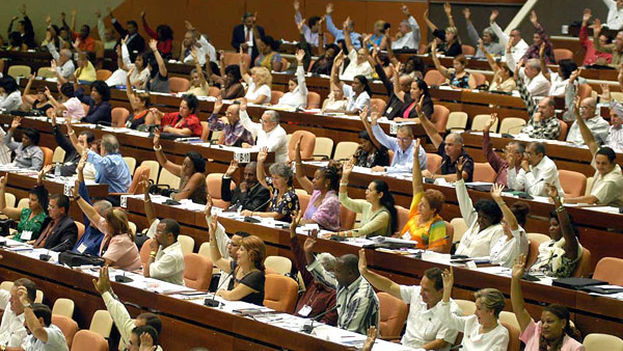
A session of Cuba’s National Assembly of People’s Power, showing the deputies voting unanimously, as is the norm.

Fernando Damaso, 28 January 2018 — When reading the list of candidates for deputies to the National Assembly of People’s Power, prepared by the National Candidacy Commission (formed and directed by the Party, with designated representatives of the so-called mass organizations), I am struck by some of the elderly people which are part of it, some of them over 80 and others even over 90, although they are practically unable to exercise their duties due to their advanced physical deterioration.

I do not question their accumulated merits, real or fictitious, but the National Assembly should not be satisfied with deputies and honorary deputies: for this there are other institutional spaces. continue reading

It is assumed, although in reality it is not so, that in the National Assembly all currents of political, economic and social thought are represented and, through debate and confrontation, laws are drawn up and approved for the benefit of the Nation.

The current spawn, which represent a single thought and a single party, where only unanimity works, is a great farce. For that reason, it is possible to use the Assembly as a showcase for figures which might more appropriately be displayed in a museum.

On the street it is thought that, at least out of simple decency or out of respect for the citizens and themselves, some of the nominees should not be on the list, and rather should give way to representatives of the new generations, but this, it seems, was not the order that the National Candidacy Commission received. Instead, they were told to keep them until the last breath.

Today, January 28, the anniversary of the birth of José Martí, the greatest of all Cubans, it is good to remember this thought of his: “Only strong heads resist the poisonous vapor of power. The despotic spirit of man attaches itself with mortal love to the pleasure of looking down from above and commanding as an owner, and once having enjoyed this pleasure, he feels as if his life been torn up by the roots when they deprive him of it.”

Pioneer Ruling in Cuba Grants Custody of Children to Grandmother With Lesbian Partner

Violeta Cardoso obtained legal custody of her three grandchildren, after their mother, daughter Karen Díaz, died of lymphatic cancer in March 2016. (Facebook)

14ymedio biggerEFE, via 14ymedio, 28 January 2018 — A Cuban court granted custody of three children to a grandmother who lives with her same sex partner, who was recognized as a key figure in the upbringing of the children, an unheralded event in a country where gay marriage is not legally recognized.

The October 2017 ruling in favor of 54-year-old Havanan Violeta Cardoso, was posted on the Facebook page of the Cuban community Accepto, which seeks to open a space for dialogue in favor of the legalization of equal union in the island. continue reading

Cardoso obtained legal custody of her three grandchildren after her daughter, their mother Karen Diaz, died of lymphatic cancer in March 2016.

According to the document, Karen Díaz gave birth to two girls and a boy during the time she was married to Guillermo Gómez, who “neglected his duties as a father,” including during the mother’s illness.

In that period, the grandmother of the children, Violeta Cardoso, “together with her partner, the children’s godmother, and the children’s mother, jointly assumed, among the three of them, the duties of feeding, caring for and educating the children,” says the ruling.

After the death of the mother, the de facto guardianship of the children was left in the hands of the grandmother “always helped by her partner,” the text of the ruling clarifies, which emphasizes that both women treat the children “as if they were their own children.”

The decision of the court is based on the Cuban Family Code, which, although it privileges the parents in matters of custody, allows other solutions for “special reasons.”

In this case, the value of the “extended family” formed by aunts, uncles and grandparents in the interest of the well-being of the children was recognized.

“The legal system must be compatible and consistent with the reality in which it develops, and ours does not fall below these expectations,” said the court.

The coordinator of Accepto, Lidia Romero, highlighted to EFE the significance of this “important precedent,” which the group sees as another “step forward” for the Cuban LGTBI community.

“The decision of the judges was praiseworthy, because it is evident that for them there was no possible solution other than granting custody to Violeta Cardoso, it is an acknowledgment of fact and of law,” she says.

Romero adds that in this case the formal guardianship is given to the grandmother, not to the couple, because the link between them is not a legally defined one; the community intends to consult with a family law specialist to understand the legal effects of this decision.

“Up to now it’s the first similar case we know of; we’ve put out a call on our Facebook page to see if there are any similar ones,” she said.

Violeta Cardoso and her partner, Isabel, were contacted by EFE, but declined to comment.

Accepto Cuba is an alternative community to the official voices that advocate for a legal change to recognize homosexual families in their right to formalize their unions, to adopt and, in the case of lesbians, to use assisted reproduction.

In Cuba official efforts on behalf of the LGTBI community are led by the state-run National Center for Sex Education (Cenesex), led by Mariela Castro, daughter of Cuban President Raúl Castro.

Within Cenesex, Castro has promoted sex change operations for transsexuals, the labor rights of the LGBTI community and has presented before the Parliament a bill, still pending, that would modify the current Family Code, with aspects such as legal union between same-sex couples.

___________________

The 14ymedio team is committed to serious journalism that reflects the reality of deep Cuba. Thank you for joining us on this long road. We invite you to continue supporting us, but this time by becoming a member of 14ymedio. Together we can continue to transform journalism in Cuba.

Teachers Prefer To Work As Private Tutors In Villa Clara

In the last five years more than 450 teachers have left Villa Clara classrooms. (Telesur)

14ymedio bigger14ymedio, Carlos A. Torres Fleites, Santa Clara, 29 January 2018 — The constant trickle of teachers leaving the classrooms in Villa Clara province to work in another occupation or as private tutors does not cease. During the first four months of the 2017-2018 school year, 82 teachers left the classroom, increasing the deficit of professionals in the region, which in the last five years has seen the loss of more than 450 teachers throughout the province.

An official of the Ministry of Education (MINED), who preferred to remain anonymous, confirmed to 14ymedio that professionals who decide to abandon teaching are mainly driven by the low salaries, and it is not uncommon for them to end up self-employed, working as private tutors. continue reading

Blanca Estévez Díaz, who works in the provincial labor department in Villa Clara, says that in the region there are some 70 private teachers in the provincial capital alone, and according to her they claim they have better working conditions and higher salaries than they did working in public education.

As of December of last year, a total of 322 teachers who at some time had been working in MINED educational institutions were self-employed in the province, where tourism, commerce or food service have also become sectors of refuge for those who decide leave teaching.

For Laura Martínez López, a former teacher at the Ernesto Guevara Vocational School in Santa Clara, exchanging her position as a teacher for her own food service business has been a relief that has solved multiple problems she faced in the 18 years in which he worked as a teacher.

Martínez received a monthly salary of 750 Cuban pesos (less than 30 dollars) without a benefit popularly called “stimulation” – i.e. a bonus – which is received by workers in other state sectors and which supplements the basic salary with a sum in cuban Convertible pesos, or with a bag of food and cleaning supplies.

In the opinion of several teachers consulted by this newspaper, the State must at least triple current salaries and improve conditions in schools to reverse the exodus of professionals seeking better economic and employment opportunities.

The authorities have tried to alleviate the deficit by accelerating the graduation of new teachers. Last year more than 3,800 teachers graduated nationally in the 24 schools of education across the country.

In the case of Villa Clara, more than 200 of these new teachers started in September teaching in pre-schools, primary schools and English education, after graduating from the Manuel Ascunce Domenech School of Education.

However, the shortage of teachers far exceeds in numbers those who arrive in the classroom from the pedagogical schools, along with the retired teachers who return to support their recently graduated colleagues and university students who teach some subjects. The current school year started with a deficit of 16,000 teachers throughout the country, as acknowledged by the Minister of Education, Ana Elsa Velázquez.

__________________________________

The 14ymedio team is committed to serious journalism that reflects the reality of deep Cuba. Thank you for joining us on this long road. We invite you to continue supporting us, but this time by becoming a member of 14ymedio. Together we can continue to transform journalism in Cuba.

Tourists and New Rich, Magnets For Thieves in a Country Not That Safe

The most common crimes in Cuba are robbery with force, theft, injury, possession and illegal possession of weapons. (14ymedio)

14ymedio bigger14ymedio, Marcelo Hernández, Havana, 25 January 2018 — It’s 11:00 in the morning when two Germans show up at the Zanja y Dragones Police Station in Havana. A man has stolen their camera in the vicinity of Hamel alley, an area much visited by foreigners. The officer on duty seems to be accustomed to these cases and begins to fill out the complaint for “a robbery of tourists.”

“It’s like this every day, in this part of the city this is our daily bread,” says a uniformed officer who stands guard outside and is happy that the sun is not punishing him too much this week. “When I see a foreigner approaching, I know what is coming because here, in Centro Habana and La Habana Vieja, there is a lot of theft from tourists and scams.” continue reading

A short distance from the historic center, the area of the city most visited by tourists and the most densely populated place in the country, the Zanja y Dragones station is a good barometer to measure the most common crimes in a place where poverty, criminality and opportunity meet.

Near the Inglaterra Hotel, in front of Central Park, an independent tour guide “lays down the law” to his customers. “Do not go into any hallways or stairs with strangers, especially if they offer you cigars.” Before the attentive look of the foreigners he adds: “Do not exchange money except in the Cadecas (government currency exchanges), and hold on tight to your bags and backpacks.”

The lesson also includes other tips for less dangerous situations. “If someone tells you that today is their birthday and that’s why you should give them a gift or money for a party, demand his identity card to check the date of birth. Watch out for those who say they will take you to see where the Buena Vista Social Club is because that is a very common scam.”

The list of warnings is long and ends with advice to the bewildered tourists that they should go “as soon as possible” to the police station if they are victims of any of these events. “Do not try to confront anyone if they take your purse, do not chase anyone who has stolen from you inside a house or vacant lot, instead look for a police officer.”

These warnings contrast with the recent statement by the American journalist and specialized tourist planner in the Island, Christopher P. Baker, who considers Cuba among “the safest countries for tourists,” a classification Cuba also received last week during the 38th International Tourism Fair (Fitur), in Madrid, Spain.

“It is true that we do not have many cases of tourists wounded with knives, or firearms or murdered,” a police captain, who preferred anonymity, told 14ymedio, “but the rates of robbery and fraud have grown in recent years because more and more visitors are entering the country.”

The official believes that “more work should be done on awareness so that agencies and guides alert foreigners not to make certain mistakes such as going into neighborhoods that are not recommended at night, and not walking the streets with large sums of money or trusting the first person who smiles at them. They should not carry their passports, just a photocopy.”

The Germans at the police station had to go through a long interrogation separately. “What did the man look like, what clothes was he wearing, what model was the camera, why did you go to that place at that time, do you have any proof that you entered the country with that camera?” were some of the questions asked of the travelers. On the day of the robbery, it was already night when they left the  Zanja y Dragones Police Station after trying to identify a face from a book full of suspects.

When they returned to the rental house where they were staying in Centro Habana they breathed a sigh of relief when they noticed something they did not notice on the night of their arrival in the city: the bars and railings on the doors and windows, next to a double bolt at the entrance that the owner closed with zeal every time he entered or left.

The houses that rent rooms to tourists, the families that have a relative abroad, the more prosperous self-employed, the musicians who travel abroad and the new Cuban rich also suffer the pressure of robberies. The “emptying” of a house is one of the recurring nightmares of this emerging social class.

“They entered through the roof and took the video player, the flat screen TV and the rice cooker,” says Ricardo, a neighbor of a tall building in Nuevo Vedado who thought he would “be safe” because his apartment was more than 40 feet above street level.

“They were like ninjas and they risked their lives to steal those things,” the victim comments. Ricardo reported the theft, but a year later “they have not caught anyone.” When the police arrived at the house, after the crime was committed, the fingerprints of the thieves were found in several places because they got their hands dirty on the roof.

“When I told the cops to take the prints to check against the database, they laughed and told me I was watching a lot of CSI.” Shortly afterwards Ricardo withdrew the complaint because the police began to question the ownership of a computer that the thieves did not steal, which had been augmented with parts purchased on the black market.” They saw that and I immediately went from victim to victimizer.”

Last December, the president of the People’s Supreme Court, Rubén Remigio Ferro, confirmed to Parliament that the crimes most prosecuted on the island continue to be cases of “robbery with force, theft, injury, possession and illegal possession of weapons, among others.”

Remigio Ferro did not give figures, perhaps because he did not have them since the Government has hidden them for decades. In Cuba there are no official reports on crime levels and the official press lacks a police blotter, as if crime did not exist.

 ________________________________

The 14ymedio team is committed to serious journalism that reflects the reality of deep Cuba. Thank you for joining us on this long road. We invite you to continue supporting us, but this time by becoming a member of 14ymedio. Together we can continue to transform journalism in Cuba.

Cuban Police Admonish Victim of Homophobic Attack for Speaking to Media

José Enrique Morales Besada, 21, was cited by the police for speaking to media about a homophobic attack he suffered. (Courtesy)

14ymedio bigger14ymedio, Havana, 28 January 2018 — José Enrique Morales Besada, victim of a homophobic attack last June, was cited by the police on Friday for having called attention to his case by talking to “many media,” both independent and international, as well as for expressing himself on Facebook.

Morales Besada, 21, was summoned to the police station by a plainclothes officer who visited his grandfather at his workplace. “He told him that he had to go this afternoon to see the head of the National Revolutionary Police Department.” continue reading

The young man commented to 14ymedio that throughout the conversation they never told him the reason for the citation, but they emphasized the visibility of his case because of his statements to the press. The official media have not made any mention of the attack on him.

At another moment in the interview, the police officer promised him that his assailants would soon go to trial, and said they they were only waiting for the specialist in maxillofacial surgery who is treating him for the consequences of the beating to give him a medical discharge.

“I felt that their real objective was to show me that something was being done to make me be calm and quiet,” says Morales Besada. So far the young man has no news that his attackers have begun to be prosecuted.

“I do not believe a single word of those promises, they say it just so I won’t give more interviews,” laments the Avilanian. “Until I see the outcome of the trial, I won’t believe in the sudden interest they are showing in my case because they have not done their job well and their idleness toward my situation has been cruel.”

“I am convinced that they [the police] only work when demands and disagreements are made public; staying quiet will never help me,” he said in a telephone conversation.

“I am sure that my statements on Facebook about my case, bringing it to the cold light of day nationally, have resulted in someone from above bringing pressure on them and that’s why they called me in to tell me to calm down,” he explained.

In a video posted on his Facebook page on January 21, Morales Besada affirms that the greatest injuries that the aggression left him were “psychological.” Although he has not overcome the trauma he suffered, he says he feels “quite a bit better.”

In the video the young man criticizes the Cuban system. “Nothing is resolved. This is not going to change, no one does anything to change this,” he says with pessimism.

Morales Besada was attacked by a group of men when he went out to connect to the internet in a park with a Wi-Fi zone. In the middle of the street they hit him in the jaw with a bottle while insulting him with homophobic slurs.

The Cuban penal code does not include mention of “hate crimes” with regards to attacks due to ethnic origin, religion, race, gender, orientation and sexual identity. The latter are not detailed in the current legislation and are processed by the police and the courts like any other crime.

The young man, who had a career as a singer before being a victim of the attack, has asked through social networks for help from Mariela Castro, daughter of President Raul Castro and director of the National Center for Sex Education (Cenesex).

However, the victim confirmed to 14ymedio that so far he has not received any news, help or legal advice from Cenesex and has “not even received a call” from that organization, headquartered in Havana.

The official institutions do not publish statistics on murders or violent acts against lesbian, gay, bisexual, transgender and intersex people. This news only comes to light thanks to social networks, which allow the LGBTI community to make a record of the aggressions and hate crimes against members of this group.

________________________

The 14ymedio team is committed to serious journalism that reflects the reality of deep Cuba. Thank you for joining us on this long road. We invite you to continue supporting us, but this time by becoming a member of 14ymedio. Together we can continue to transform journalism in Cuba.

Cuban Emigration Carries On / Iván García

Photo from El Nuevo Herald.

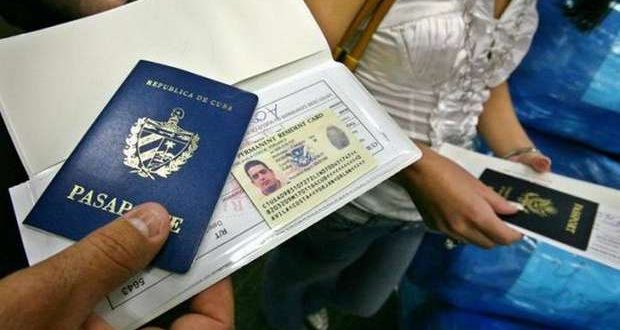
Ivan Garcia, 26 January 2018 — When it seems that all the doors for emigration to a first world country are closed, that the blue Cuban passport is not welcome at most border crossings, and putting yourself into a boat to get to the United States is not just useless but suicidal, Mayra, a university student, puts together her emigration strategy spending many hours surfing different websites looking for a gap through which she can squeeze out.

Between 1962 and 1994, the traditional way for Cubans wanting to leave Cuba illegally was to build a flimsy wooden boat able to survive the strong currents of the Straits of Florida, drop anchor, and be rescued by a US coastguard, which automatically got you US residence. continue reading

Following the summer of 1994, with the migration agreements signed by Bill Clinton and Fidel Castro, they tried to impose some order and security for illegal maritime immigration. They agreed to approve 20,000 family reunification visas a year. And, to put a brake on the exodus of the boat people, although they didn’t know how many people had drowned and were lying in the Straits of Florida, the Washington officials had the idea for the “wet foot/dry foot” policy, a rather cynical version of American benevolence.

If a boat is captured in the open sea, the people are sent back to Cuba with an undertaking that they will not be put in jail. If they have managed somehow to enter US waters, then bingo!, they open the revolving door to get into paradise.

In January 2017, Barack Obama repealed the wet foot/dry foot policy. Following the island authorities’ actions to make migration more flexible, starting in winter 2013, Cubans started to arrive by plane, as well as by sea or land (crossing borders).

Between 2013 and 2017, if we add to the 80,000 Cubans who emigrated with pre-approved paperwork to join their families (20,000 each year), those who travelled thousands of miles from Ecuador and Central America to the US border, around 800,000 Cubans emigrated from their country in the last four years.

There began to appear in the social networks instructions on how to avoid dangerous journeys , and dozens of tricks on how to hide your money. It all started in cyber cafes or wifi hotspots in parks in all the provinces of the island. Future emigrants got in touch with people-traffickers or middlemen, who advised them about the journey.

People began to burn their bridges. They sold their houses, cars, motorbikes, and domestic appliances to get money, or they saved what they made running small private businesses. In many cases, their relatives sent them the money through Western Union.

But, after January 2017, the overland marathon to the United States stopped. Donald Trump, a record-breaking tweeter, withdrew sixty per cent of the consular officials, because of the supposed acoustic attacks on US diplomatic staff located in Havana.

Now, those people wanting to emigrate to join their families have to go via Colombia, at much greater cost. In one year, the number of Cubans getting into the US fell dramatically. More than 50,000 Cubans entered the US in the 2016 fiscal year and, according to the State Department, in 2017 the new policy reduced informal immigration from Cuba by 64% in comparison with 2016.

But thousands of Cubans have not stopped wanting to emigrate. Three times a week, Mayra, the student, trawls the internet, looking for “a scholarship or summer school, anything, which lets me go abroad, preferably to a first world country, and then weigh up the chances of moving temporarily or permanently.”

The Cuban academic world is like the sinking of the Titanic. To the tune of the songs in praise of Fidel Castro, and while the boat is sinking, hundreds of professors, postgrads, doctors and scientists, are individually trying to get an internship or attend a conference organised by a higher education organisation abroad.

“It’s every man for himself. One way or another, everyone who has contacts calls them up to get a scholarship or a post in a foreign university. The ideal is the highest level US academic network. But a place in a German, Swiss or Nordic university isn’t bad either. Or in Chile with its economic stability, which is fashionable. Also Mexico, with all its problems of violence, has for many years been the destination for many Cuban intellectuals and university professors,” comments an academic.

Information, cybernetics, software and automatic control specialists are also creating opportunities for personal development and distance-based work contracts. Those without university degrees are also looking for shortcuts.

That’s what Luis Mario, an auto mechanic, is doing. In his opinion, “although the pickings have slimmed down, and emigrating the the States is a pipe-dream, you have to keep looking worldwide for other viable options for getting out of Cuba. I am looking at four possibilities: a two year work contract in Uruguay, the Dominican Republic or in Chile, because the authorities in Chile are pretty easy-going on the Cubans.  And, if none of those three works out, the fourth option is marry a foreign woman who lives in Kansas.”

The average Cuban doesn’t let himself be pigeonholed with a specific endpoint. Obviously, Miami or Madrid are ideal. “But, if you can’t get into the United States, look somewhere else. Spain isn’t a bad place, because, although Cubans going there are illegals, the immigration police concentrate on the Africans and Arabs. You can get to Spain via Italy. You buy a package trip for a week in Italy, and the embassy issues you with a month’s European visa, and then you go to Madrid or Barcelona by train. Spain is hot, but it’s ten times better than Cuba”, says Silvio, from Pinar del Rio, now living for a year with his wife in Valdedebas in Madrid.

Yeni, an ex-prostitute, on vacation in Havana, says “what every prostitute dreams of is getting out of Cuba. Thanks to my Chilean boyfriend, six months ago I set up in Valparaiso.”

You can find Cubans as far away as Canberra, the capital of Australia, or in a kibbutz in Israel. “The problem is adapting to the languages, food and customs. I have been in Qatar seven years, and I can tell you I wouldn’t change it for any other country in the world”, says Cesar, from Bayamo, Oriente.

Although you can of course choose where you go, thousands of Cubans planning to emigrate prefer the United States. And one city, Miami. The same culture, the same climate, and 2.5 million countrymen talking at the tops of their voices in the Publix supermarkets. And if you stop at the Key West lighthouse, some say, you can smell Havana.

Translated by GH

US and Cuba Address ‘Irregular’ Migration in New Meetings

A group of Cubans stranded in Panama who hope to continue their trip to the United States. (14ymedio)

14ymedio bigger14ymedio (with information from agencies), 24 January 2018 — The United States and  Cuba addressed bilateral cooperation on the issues of irregular migration and drug trafficking in two new technical meetings held this Monday and Tuesday in Florida. The meetings coincided with the publication of figures from the US Department of Customs and Border Protection, showing that in the last three months of 2017, 1451 Cubans unsuccessfully tried to enter US territory.

The migrants were detained at US/Mexican border points such as El Paso, Laredo, San Diego and Tucson. In the last fiscal year (ending in September), 14,592 Cubans entered through these same entry points, a figure much lower than the 41,523 of the previous year, when the wet foot/dry foot policy was still in effect. continue reading

The end of that policy has not only reduced the entry of Cubans to the United States by land, but also decreased the number of rafters attempting to enter by sea. During the first six months of 2017, 322 Cubans were intercepted at sea, compared to 2,295 in the same period of 2016.

For the fiscal year as a whole — October 2016 through September 2017 — 1,934 Cubans tried to enter the country by sea through the Florida Straits. That figure is a huge reduction compared to the previous fiscal year, when 7,411 people were intercepted, and even with 2014-2015, where there were 4,473 detainees.

The technical meeting this week is the eighth between representatives of the Cuban Coast Guard and the United States Coast Guard, according to a brief statement issued by the Cuban Embassy in Washington on Wednesday.

In this round, the statement said, the two countries talked about “ways to increase bilateral cooperation in confronting irregular migration and drug trafficking, as well as search and rescue operations.”

The meeting “took place in a climate of respect and professionalism,” the statement continued, and both delegations “agreed on the importance of advancing cooperation in this area” and “agreed to continue these technical meetings in the future.”

In recent days, the Cuban government has reported several technical meetings in Washington with US officials on cybersecurity, drug trafficking and terrorism, meetings that the State Department has not commented on and which have been given a very low profile in the American capital.

Relations between the United States and  Cuba are going through a very delicate moment because the US government accuses Cuba of knowing who perpetrated the alleged acoustic attacks, between November 2016 and August 2017, on 24 of their officials on the island. The US believes that the Cuban government is refusing to say who the guilty party or parties are and, in addition, failed to protect US personnel from the attacks.

Although  Cuba denies these assertions, the United States reduced its embassy staff in Havana to a minimum last September because of this crisis, and expelled 17 officials from the Cuban legation from Washington.

This is in addition to measures to limit trade and travel of Americans to the island, all initiatives that have alienated the two countries after the hope that accompanied the thaw initiated by the former president Barack Obama.

The US announced on Monday the creation of a working group to expand Internet access and independent media in Cuba, one of the measures outlined in the memorandum that sets out President Donald Trump’s policy toward the island, which is intended to paralyze the opening without suspending diplomatic relations.

 _______________________

The 14ymedio team is committed to serious journalism that reflects the reality of deep Cuba. Thank you for joining us on this long road. We invite you to continue supporting us, but this time by becoming a member of 14ymedio. Together we can continue to transform journalism in Cuba.

Young Man in Coma Due to Medical Negligence in Cuban Prison / Juan Juan Almeida

Juan Juan Almeida, 22 January 2018 — A young employee of a Cuban company run by the military company, on remand in Havana, is in a coma due alleged medical malpractice and the irresponsibility of the prison authorities, his family reported.

Raidel Garcia Otero, 29, an economic technician, has been under arrest at Valle Grande Prison since 27 October. The young man suffers from a disease that causes inflammation in the vital organs . continue reading

On 15 January, his mother Delia Otero, and his father, an administrative employee of the pro-government newspaper Juventud Rebelde (Rebel Youth), were worried because they had not received his usual Monday  phone call. They called the prison and and were told that the boy was suffering from a cold.

On Saturday, Cuban photographer Pablo Pildain Rocha, a family friend, published the young man’s photo on his Facebook page, accompanied by a message in which he says he will report the case if the outcome is fatal.

Raidel Garcia Otero

Valle Grande prison is a part of the Ministry of the Interior’s Department of Penitentiary Establishments and is located in Arroyo Arenas, on the outskirts of Havana.

“On Tuesday, 16 January, one of Raidel’s classmates called the family and alerted them that the young man was sick and that he was not receiving adequate medical attention. His parents went to the prison but received no information and were not allowed to see him,” a source close to the family told Marti Noticias.

The source said that it was not until Friday of that week that the prison called the parents to tell them the young man had been admitted to Salvador Allende Hospital, formerly Quinta Covadonga, in Havana’s Cerro municipality.

According to the source, at 2:00 PM on Friday, 19  January, García Otero was transferred in critical condition from Valle Grande prison to Covadonga.

According to information obtained from the hospital, the patient must have been in critical condition for at least 4 or 5 days before his transfer, considering his condition when he arrived there.

This case from Valle Grande prison is not an isolated incident.

In March 2010, in the same prison, the death of prisoner Pedro Márquez Bell due to lack of adequate medical attention was reported. The testimony of then inmate Raúl García Ramos was also made public; Garcia Ramos, despite demanding specialized attention for acute liver cirrhosis and esophageal cancer, was always denied assistance.

Far from being solved, the demands and protests of the convicts only seem to aggravate their reality. It is unknown if García Otero’s parents will file a complaint, although there are enough factors to file complaints of a civil and criminal nature against the authorities and doctors of the penitentiary.