For our readers who understand Spanish…
Our apologies for this being in Spanish and not subtitled.
Here is an article about the movie and with links to excerpts from the movie that are subtitled.
English Translations of Cubans Writing From the Island
For our readers who understand Spanish…
Our apologies for this being in Spanish and not subtitled.
Here is an article about the movie and with links to excerpts from the movie that are subtitled.
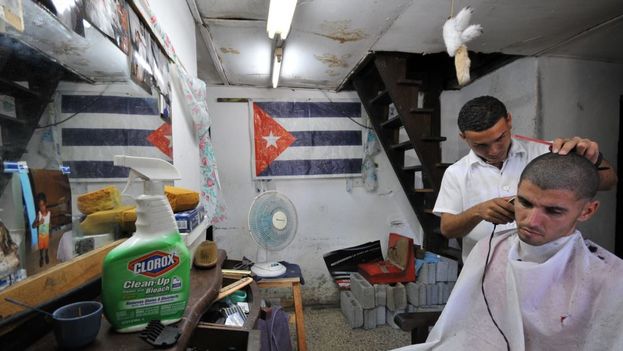
 14ymedio, Havana, 1 February 2017 — The latest audit carried out by Cuba’s Office to the Comptroller revealed losses of more than 90 million Cuban and more than 51 million Cuban convertible pesos in public enterprises and non-agricultural cooperatives in Havana, a situation that contributes to the failure to meet economic plans in the state sector, according to Miriam Marbán González, the chief comptroller for the capital.
The results of the Eleventh National Assessment of internal control, which were presented Tuesday at a press conference at the Ministry of Energy and Mines, show a disturbing picture for the Cuban economy because of poor management efficiency and lack of integrity in planning. continue reading
The main objective of the analysis, carried out between 31 October and 9 December 2016, was the decentralization of administrative decision-making, the operation of non-agricultural cooperatives and the application of systems of payment for results.
In Havana, 67 inspections were carried out in which 301 auditors had to confront “the lack of reliability of the primary documentation or the lack thereof.”
The inspection detected “ineffectiveness in information mechanisms, the existence of some individualistic behaviors, lack of foresight and vigilance and little cooperative culture”
Non-agricultural cooperatives also revealed worrying results for this form of business management that has been expanding since its adoption in 2012. The inspection detected “ineffectiveness in information mechanisms, the existence of some individualistic behaviors, lack of foresight and surveillance and little cooperative culture.” The island currently has a total of 397 of these companies, mainly linked to food, personal and technical services.
In total, the Comptroller’s Office has examined 346 economic entities throughout the country, with the exception of Guantánamo Province, which was excluded because of economic damages caused by Hurricane Matthew.
The results of the assessments in the provinces of Cienfuegos, Matanzas, Pinar del Río, Villa Clara and Holguín have also been alarming. In this last province, the Comptroller General of the Republic, Gladys María Bejerano, was blunt: “If there is no organization, discipline and control, it is impossible to achieve the prosperous and sustainable development that we have set ourselves.”
The state, which seeks to stop, with these controls, the administrative disorder that prevails in the business sector of the island, has been attacked especially against idle inventories, criminal acts and corruption.
The national report could be presented mid-year at the next session of the National Assembly.
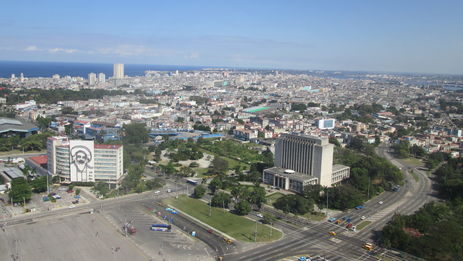
14ymedio, Yosmany Mayeta Labradea, Havana, 2 February 2017 — After three years of being closed to the public, the viewpoint of the José Martí Memorial in the Plaza of the Revolution reopened its doors on Wednesday. The highest point in Havana has been out or service for domestic and foreign visitors since the elevator broke after more than five decades of use.
Only a small group of invited guests and press were allowed access to the reopening, despite the fact that from the early hours more than a dozen people waited to ascend to the top of the tower, which occasioned annoyance and complaints. continue reading
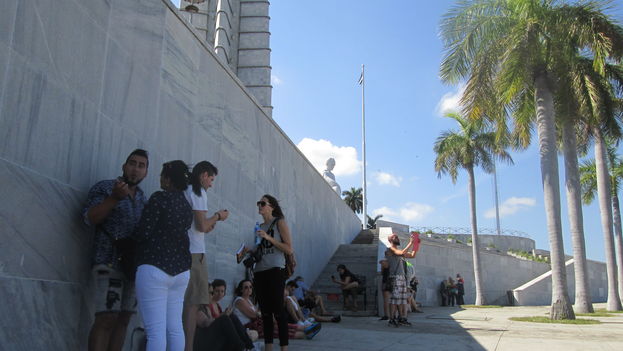
The access to the viewpoint, some 460 feet above sea level and with a 30-mile view, was finally restored asof 1 February, after several days of testing of the new elevator.
The pilot test was not announced in the national press, which only released the date on Wednesday, to “not detract significance to the symbolic reopening”
Ana María Troya Ávila, in charge of the public relations for the monument, told 14ymedio that the service is in “high demand.” She added, “In just seven days this place welcomed around 3,000 visitors, both Cubans and foreigners.”
The pilot test was not announced in the national press, which only released Wednesday date, so as “not to detract from the significance of the symbolic reopening,” she said. One element that contributed to the annoyance of those waiting outside who were not allowed to enter.
One Spanish tourist said she was outraged by the constant bureaucracy of the island. “They keep us waiting for hours and in the end don’t open it,” she protested. Cubans just shake their heads. “We are used to this, the foreigners just have to adapt,” says an old man to calm tempers.
The incident, however, did not diminish the enthusiasm of the employees who made the inaugural tour with an unusual joy. “From this high site you can see points of extreme importance of our capital that distinguishes us in any part of the world”, detailed Troya Ávila.
According to Jorge Estany Ramírez, administrator of the memorial and the person in charge of the process of buying and assembling the elevator, the supplier of the equipment has been the Spanish company Electra Vitoria. “Its speed is six feet per second and is among the fastest in the city right now.” He also highlighted the hard work in the installation and adjustment process that began in early 2016 and has lasted until this January.
“The repair was complicated, because a major change was made, the entire elevator system was replaced from the machinery to the counterweight, so it was a year of hard work that involved not only the change of the old structure, but the need for other repairs that came up during the assembly and in the years that no service was provided,” said Estany Ramírez.
“For us this reopening represents a profit from the economic point of view , because it is a benefit that raises a lot of money and the income is soaring”
One important fact that Troya Ávila wanted to emphasize is the compass of the winds that is inlaid in the floor of the viewpoint, showing the distances between the Memorial and the six provinces at the moment of the construction of the monument and some capitals of the world, and also the significant places related to the life of José Martí.
“For us this reopening represents a benefit from the economic point of view, because it is a that raises a lot of money and the income when we provide these services are soaring and favors us,” said the official.
The Venetian ceramic murals, which are the work of the Cuban Enrique Caravia, in addition to all the images of the floor will be restored in cooperation with the Office of the Historian of the City. The managers of the place plan for the work to be carried out without affecting the access of the visitors.
The José Martí Memorial is open to the public from Monday to Saturday from 9:30 am to 4:00 pm and offers a full tour for 8 Cuban pesos (CUP -roughly $0.32 US) for residents on the Island or 6 CUP if they only want to access the lookout point. Foreigners must pay 5 Cuban convertible pesos (CUC – roughly $5.00 US) and 3 CUC for the same services.

14ymedio, Mario Penton, Miami, 2 February 2017 — Dozens of Cuban doctors stranded in Colombia are preparing to travel to the United States on Monday after receiving a visa as part of the recently repealed Cuban Medical Professional Parole (CMPP) program.
The doctors will be the first to reach North American soil after the end of the program that, every year, sheltered every year hundreds of health professionals who escaped from Cuban medical missions abroad.
“There will be more than 20 of us who will fly on Monday, because another flight planned for Friday was suspended,” explains Maikel Palacios by telephone from Bogota. continue reading
The health worker, who spent six months in Colombia after escaping from the Cuban medical mission in Venezuela, says he lives in “an atmosphere of hope among the hundreds of physicians stranded in that country.”
“The news that comes to us from Miami is encouraging. Solidarity Without Borders has been interested in our case,” he explains.
“We are worried about more than 20 professionals who escaped the mission before the program was eliminated and now they have no way to reach the United States and cannot return to Cuba”
Solidarity Without Borders is a non-governmental organization created by Cuban doctors who fled the countries to which the Cuban Government had sent them. Its purpose is to help colleagues, once they arrive in the United States to revalidate their titles and integrate into that country’s medical system.
According to Palacios, dozens of visas have been issued since last January when former President Barack Obama, in a surprise move, gave in to the old request of the government of Raul Castro and repealed the program created by George Bush in 2006.
The export of health personnel generated income for Cuba ion the order of US $8.2 billion in 2014.
In the ten years of existence of the CMPP more than 8,000 doctors and health personnel escaped to the United States.
“We are worried about more than 20 professionals who escaped the mission before the program was eliminated and now they have no way to reach the United States and cannot return to Cuba,” Palacios explains.
Personnel who leave medical missions are prohibited from returning to Cuba for eight years and are considered “deserters” by the Cuban authorities.
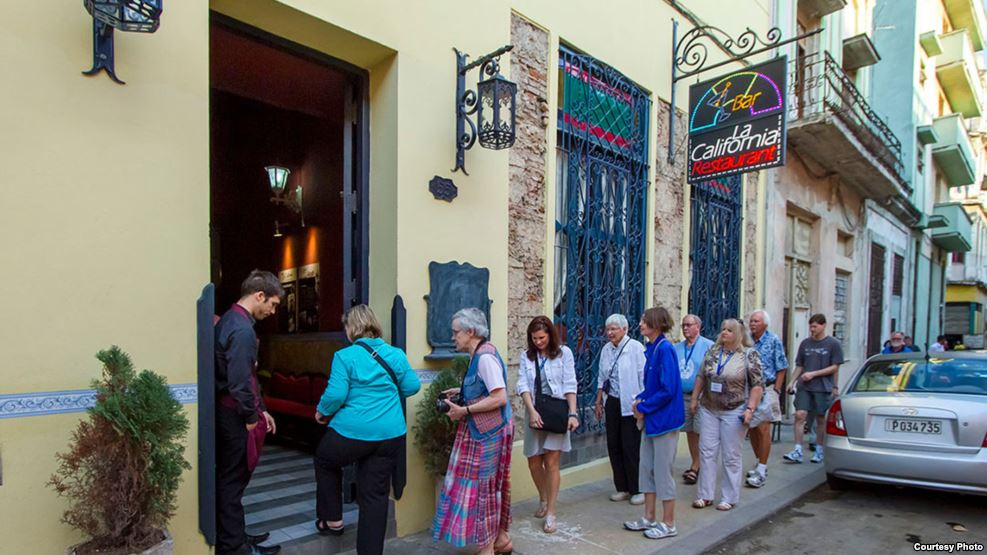
Juan Juan Almeida, 30 January 2017 — A fine that is stranger than fiction. More than 400,000 Cuban convertible pesos (roughly the same in dollars), is the astronomical figure set as a penalty for La California restaurant, a palader (private restaurant) a few steps from Cuba’s Malecon.
Established in abeautifully restored 18th century building at 55 Crespo Street between San Lazaro and Refugio in Central Havana, La California restaurant-bar offers Italian and Cuban-international fusion food, as well as exquisite service, attractive and entertaining, where the customer can enter the kitchen and prepare their own delicacy. Part of what is consumed in this agreeable place is grown on the private estate of a Cuban farmer, and the rest — according to co-director Charles Farigola — is imported. continue reading
“During the plenary session of the National Assembly Cuban vice president Machado Ventura referenced the food in the paladares, making particular note of the products offered that are not acquired in the national retail network,” began an explanation of a Cuban entrepreneur passing through Miami to buy supplies for his restaurant in Havana.
“The reality,” he continued,” is that the paladares import very little, most of the food and drink comes from the hotels*, especially those that offer ‘all-inclusive’ plans. Vacuum-packed filets, serrano ham, fresh vegetables, salmon, sausages, octopus, squid, etc. Almost everything comes from Matanzas Province, where tourism is concentrated. There are police checkpoints to search vehicles coming from the resort town of Varadero to Havana; but almost everything is transported in tour vehicles and they avoid the controls, because the national police don’t want to bother the tourists.
“The strategy, in response, was to inspect the paladares that boast about having these kinds of imported products, and La California fell. They also say that the inspection report specified that the sales report didn’t match observed reality. Parameters and factors that seem subjective.”
Can a Cuban paladar pay such a huge fine?
“I don’t think so. Look, the inspectors collect a percent of every fine they impose, and the private businesses offer the inspectors a greater percentage than they would receive. So that’s how we all survive because it’s a game of give and take.
“It could be that La California didn’t want to play this game, they could have accepted an arrangement to pay in installments, they could default and accept an ugly penalty, they may fight the fine in the courts. Anything can happen.
“No, we self-employed are not criminals, we are a social group that makes things and not communist dreams nor libertarian utopias; we are the part of civil society most dedicated to work, to generating income, jobs, and bringing money to the national economy, and even so the policy of the government is to push us toward crime,” concludes the entrepreneur before boarding his plane to Cuba, the island that, with a certain euphemism, he calls the “Barracks.”
*Translator’s note: That is, it is “diverted” (the term Cubans prefer rather than “stolen”) and sold to private businesses by a chain of state workers that can range from the highest to the lowest levels.
Translated by Jim
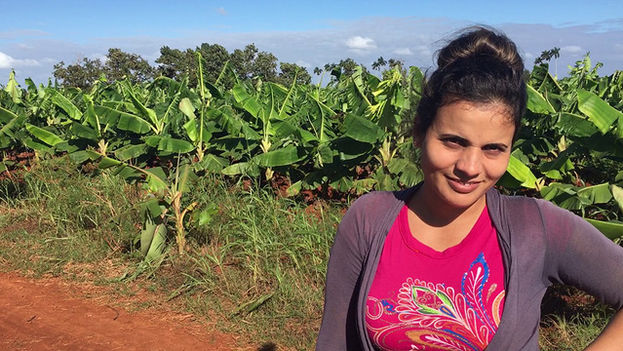
14ymedio, Zunilda Mata, Alquizar (Artemisa), 30 January 2017 –In Alquízar the red earth covers everything with a reddish layer. To Gladys Montero that crimson powder gets into the wrinkles of the face. “I come from the deep field,” she warns. In Cuba, 21% of women live in rural areas, wake up when the rooster crows and make their lives at the rhythm marked by the crops.
Formerly praised as a “loving guajira,” drawn in a bucolic environment or photographed with her starving children, the peasant woman no longer resembles any of these stereotypes. However, her peculiarities are scarcely heard today amidst the bustle of urban centers and macho prejudices. continue reading
Gladys is close to turning 70 and carries the memories of her childhood as “fresh as a lettuce.” As a child, she helped her parents to plant “corn, beans and squash.” She only finished the eighth grade, although she detects with a glance whether a furrow was planted with dedication or sloppily.
The female workforce in the agricultural sector represents 19.2% of the total of its workers and only 17.3% of the management positions in these areas are occupied by them
Although in 2013 more than 142,300 women worked in the fields of the island, in the popular imagination these tasks remain “a thing of men.” The female workforce in the agricultural sector represents 19.2% of the total workers and only 17.3% of the management positions in this area are occupied by them.
Inside the houses the picture is totally different. 56% of rural women are engaged in household chores. Statistics from the Ministry of Agriculture indicate that for every 100 men with stable employment in the countryside, there are scarcely 30 women.
As a young woman, Gladys also cut cane, hard work that is scary even for many men. “I gave birth to my first child very young and shortly after the second one came,” she recalls. When the children grew up, her mother became ill and she took care of her until the end of her days.
The majority of her neighbors and relatives have gone through a similar situation. Hundreds of miles from the village of Artemisa, where Gladys lives, Rosa María also lives a life in front of the fire in Florida, Camagüey. “There are nights when I go to bed, everything hurts and my feet are very swollen.”
The main problems that both must overcome each day are linked to the energy source with which they process food, the water supply, domestic violence and economic difficulties. None have a hobby, they hardly participate in social activities nor have they gone to the movies in the last ten years.
The qualitative study, Fifty Voices And Faces Of Cuban Peasant Leaders, sponsored by OXFAM-Canada and the Government of Andalusia, revealed that the empowerment of rural women is failing on the overload of domestic responsibilities and childcare, along with insufficient technical preparation and sexist stereotypes, among other factors.
For every 100 hours of men’s work, women perform 120, most of them simultaneous activities
Across the country, females devote 71% of their working hours to unpaid domestic work, according to a 2002 Time Use Survey. For every 100 hours of men’s work, women perform 120, most of them simultaneous activities. A situation that is aggravated in the towns and villages.
Specialist Mavis Álvarez Licea believes that “a still significant majority of rural men behave with a strong hegemonic masculinity.” While women “are still subjected to male power, perhaps not in the same degree and condition as their predecessors but, overtly or openly, they are repressed and discriminated against.”
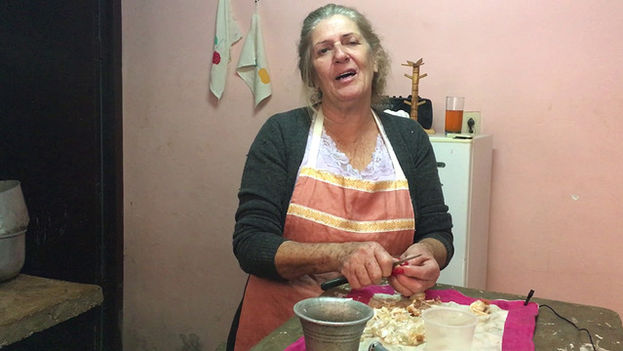
The case of Teresa González is different. From the age of 17 she began to keep the accounts at the José Antonio Echevarría credit and service cooperative at Artemisa. Today she holds the presidency. “I spent the day doing the accounts and at first the men who were in the field thought that this was not work,” she recalls. Over time she has made everyone respect her work.
In 2008, the government of Raúl Castro implemented a series of measures to revive agricultural production. Among them was the delivery of idle land in a form of leasing known as usufruct, under Decrees-Laws 259 and 300, but according to figures from the Ministry of Agriculture, four years after the start of the process, of the 171,237 beneficiaries, only 9.5% were women.
Men continue to have property control over agricultural resources such as land, water, inputs and credits, and make most of the decisions. Of women, only 12,102 are landowners, for 11% of all landowners.
Men continue to have property control over agricultural resources such as land, water, inputs and credits, and make most of the decisions. Women represent only 11% of landowners
The Cuban authorities favor the figures comparing the situation between men and women in terms of access to health, education, employment and administrative positions. But little is published about the gender wage differences and the contrasts of opportunities, especially those linked to regional location.
In the middle of a furrow where she picks tomatoes, Marisol says she always has something to do. “After this comes the harvesting of garlic that pays better,” she tells 14ymedio. Her husband prefers to have her “in the house all day polishing on the floor,” but economic constraints have forced him to accept that she works in agriculture.
At her side, under the inclement sun, is Mirta, who, every day after completing the tasks of reaping and arriving at her modest house, carries the water from a nearby irrigation channel to bathe, wash clothes and cook. “We do not have a television because the current comes to us from a ‘clothesline’ (an informal wire run off someone else’s line) and the voltage is very low.”
She has not been able to convince her children to stay in that house surrounded by fields and pigsties. Her son decided to remain in the military when he finished his military service and her daughter married a man who “took her to Havana.”
_______
Editorial Note: This report was made with the support of Howard G Buffet Fund for Women Journalists of the International Women’s Media Foundation.
EFE (via 14ymedio), Havana, 1 Februday 2017 — The global organization Amnesty International on Tuesday called for the “immediate and unconditional” release of Cuban dissident Eduardo Cardet, who has been detained for two months accused of the crime of assault.
Amnesty International believes that Cardet, the national coordinator of the illegal Christian Liberation Movement (MCL), is a prisoner of conscience who is imprisoned “solely for the peaceful exercise of his right to freedom of expression,” according to a statement EFE had access to.
He also says that Cardet was violently arrested when he returned from visiting his mother on November 30, five days after Fidel Castro’s death, and since then has been held in a prison in the eastern province of Holguin. continue reading
Cardet, according to his wife, Yaimaris Vecino, cited by Amnesty International, is accused of attacking an agent of the authority, so that the prosecution could seek a three-year prison sentence.
In the middle of this month, Amnesty International also called for the release of Cuban dissident graffiti artist Danilo Maldonado, known as El Sexto (The Sixth), also considered a prisoner of conscience who was imprisoned without trial in the high security Combinado del Este in Havana.
El Sexto was released without charge on January 21 after spending nearly two months in prison for having written the phrase “He’s gone” on a wall of the Habana Libre hotel in the capital on November 26, 2016, after the death of Fidel Castro.
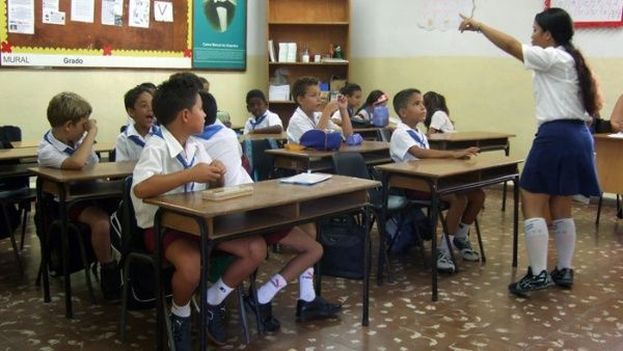
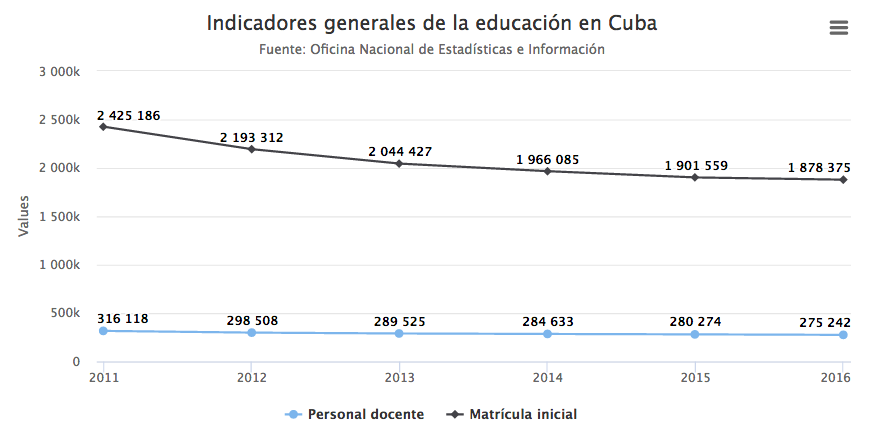
14ymedio, Mario Penton, Miami, 1 February 2017 – The rapid aging of the population, joined with the reduction in available resources and the decline in the quality of teaching, are three of the features with which the economist Carmelo Mesa-Lago has characterized the situation of Cuba’s educational system.
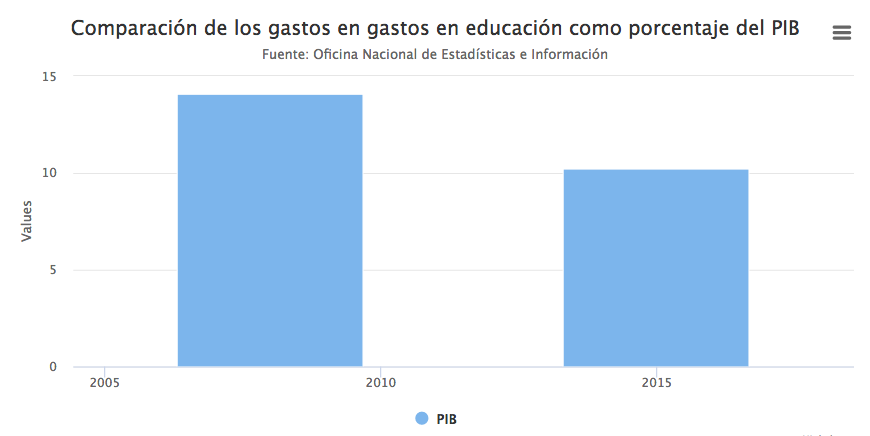
“In 2007, the government of Raul Castro declared that he could not sustain the expenses of the educational system inherited from the previous administration, since then the investment in education and social spending in general have been reduced,” Mesa Lago explained on Saturday at a conference sponsored by the Center for Coexistence Studies.
“It was supposed that Cuba was going to have the same indicators as Uruguay by 2025, but today not only has it reached the level of that country, it has surpassed it,” said the researcher referring to the aging of the population. continue reading
Cuba is now the oldest country on the continent and this has a direct impact on the education system. The students enrolled in primary school have been fewer year after year. As has the numbers in their productive years, which in the opinion of the economist poses a serious danger, because that segment of the population is responsible for financing society’s old and young.
Specifically, the education system has seen its budget shrink by 4 percentage points between 2008 and 2015.
Some of the measures that Raul Castro took when taking power were the closure of “schools in the countryside,” (boarding schools), as well as the gradual elimination of more than 3,000 university seats opened by his brother Fidel in the years of the Battle of Ideas. There has also been a progressive readjustment in schools, closing those with less enrollment, and moving the remaining students to other educational centers.
Castro also eliminated costly programs like social worker programs, which graduated thousands of young people who ended up controlling fuel consumption at gas stations or handing out refrigerators and light bulbs in massive exchange programs. Programs for emerging teachers and art instructors were also dismantled, while universities for older adults and the use of technological devices in classrooms were reduced.
Between 1989 and 2007 there was an increase of the offerings of careers in the area of humanities and social sciences were greatly increased, while university-related careers in the natural sciences were greatly reduced.
With Raul Castro in command, the panorama changed radically with a decrease of 83% in humanistic careers and a 13% increase in those related to the natural sciences.
However, university enrollment declined by 30% in 2014, a trend shared by other sectors, such as secondary education, where enrollment dropped by 11%.
Mesa Lago recognizes that universal and free access to education is a very important achievement that has had positive effects “in the lower income sectors such as Afro-Cubans, women and peasants.” However, the researcher emphasized that the ideologization of education and absolute control of the State on educational projects are its most important shortcomings.
Another criticism, in the opinion of Mesa Lago, is teachers’ salaries, which are among the lowest in the continent. The average salary of the educational sector is 537 Cuban pesos, which is equivalent to 21.40 dollars a month.
“Cuba has extraordinary human capital, but it is lost because it emigrates to other economic endeavors that have higher remuneration,” he explained.
According to a study carried out by the academic, in 2015 real wages adjusted for inflation only covered 28% of the purchasing power of incomes in 1989.
In order to guarantee the presence of a teacher in front of the classroom, the Government has had to transfer teachers from one region to another, as has been the case in Matanzas and Havana, where there is a significant presence of teachers from the eastern region of Cuba.
Although Cuba does not participate in the international examinations that measure the quality of educational programs, the government itself has offered a mea culpa for the deterioration of the system.
Mesa Lago proposes eleven points to take into account in the future of the management of the educational system. According to the economist, resources must focus on the population most in need in the poorest provinces. The demand for work for training programs should also be taken into account.
To achieve the sustainability of the system, the economist proposes to collect tuition in higher education from those with a high income. The education system must be open and oriented to the world market.
Another important aspect is to offer more university careers in those specialties of greater demand. The fair payment to teachers and the opening to private education, through the de-ideologization of the educational system, would be indispensable for the future of the Island.
Finally, the academic proposes to restore the financial autonomy of the research centers so that they can attract international investments and allow self-employment in the educational area.
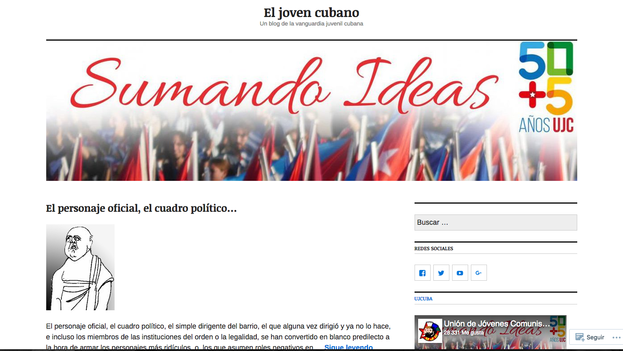
14ymedio, Havana, 1 February 2017 — The Union of Young Communists (UJC) has joined the national blogosphere, the newspaper Juventud Rebelde (Rebel Youth) reported on Wednesday. The Young Cuban arrives ten years behind the world of blogs, that the opposition, independent journalism and civic activism have successfully developed over the last decade.
The managers of the new digital site seek to turn it into “another alternative” so that young Cuban internauts can participate in a “scenario of debates and displays of opinions,” according to the official media. It is hosted on the free WordPress platform and is defined as “a blog of the vanguard Cuban youth.” continue reading
Asael Alonso Tirado, an official of the UJC National Committee, clarified that the space is committed to “a fresh language that is consistent with the codes of youth,” and “stipped of all formalism.” However, he said that in the debates there should be first “respect for and defense of the best values of the Revolution.”
The official is optimistic and says that the space has 31,500 followers and in “less than five days has achieved almost 1,000 visit, mainly from Cuba, the United States, Brazil, Argentina, Venezuela, Ecuador, Chile, Namibia and Angola.”
Nevertheless, the UJC’s blog lands in a tangled jungle of digital spaces that gain presence on the Island in spite of the low rate of connectivity to the internet. Most young people consume content that they acquire through informal distribution networks.
The Cuban Youth blog joins the most important official services and social networks. Prominent among them is Ecured, which attempts to rival the volunteer led Wikipedia; Reflections, similar to blog hosting services like Blogger; The Washing Line, which tries to compete with Facebook; and Backpack, a substitute for the informal but ubiquitous weekly packet.
None of these copies has achieved the popularity of the originals, so we will have to wait to see if the new UJC blog is able to overcome the indifference of users to official initiatives and mass organizations.

14ymedio, Mario Penton, Miami, 30 January 2017 — A pluralistic education, deeply democratic, with a privileged use of technology and communications together with a vision of culture open to universality: these were some of the proposals of the third meeting of the Center for Coexistence Studies (CEC) for the future of Cuba held this weekend in Miami.
The Cuban think tank, based in Pinar del Rio, held its meeting at Florida International University (FIU) within the framework of an journey of thought for Cuba. A similar process is taking place in parallel on the island, although that meeting had to be suspended in the face of the repression of the political police. Paradoxically, the prohibition decreed by the authorities facilitated greater interaction through alternative means such as email. continue reading
Dagoberto Valdés, director of the CEC, offered an overview of the national reality that, in his opinion, is marked by several elements, including the country’s economic crisis “in free fall,” the death of Fidel Castro and the end of the wet foot/dry foot policy that allowed Cubans who touched American soil to remain in the country, regardless of whether they had a visa.
The analysis of Cuban culture involved preparing a list of paradigmatic personalities, institutions and referential processes that make up the nucleus of the nation’s identity. It also addressed “weaknesses” and “negative features” in the country’s cultural processes.
With regards to education, there was a discussion of pedagogical models that tend to strengthen ethical values and individual autonomy.
“The projects presented seek to clarify the roots of identity that should be rescued and maintained, as well as detail models, content and methodologies. Also, the types of institutions and educational spaces that should predominate in the future, and what the profile of an educator should be,” said the press release issued by the institution.
Four sessions enriched the meeting, including one led by the economist Carmelo Mesa Lago, another by anthropologist and journalist Miriam Celaya, as well as two led by members of the editorial team of Coexistence magazine, Dagoberto Valdes and Yoandy Izquierda.
The meeting at the FIU, together with the work being done in Cuba, has enabled the drafting of 45 legislative proposals for a new Cuban legal framework.
The results of the workshops will be compiled by the Center’s Academic Council and the Board of Directors and published on its website.