Cuba: Capitalism From Afar / Iván García

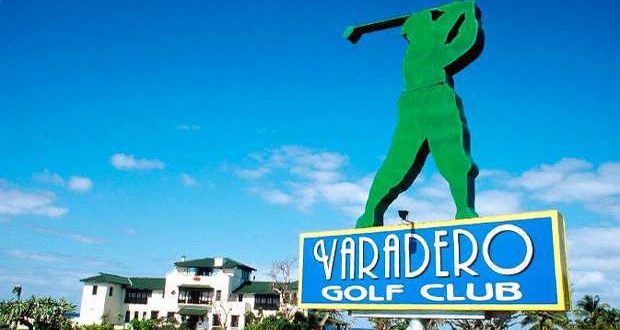
Golf Course in Cuba
Golf Course in Cuba

Ivan Garcia, 14 May 2016 — Eight months haven’t been enough for the state-owned employer in the tourism sector to hire Yasmani, 23, a black guy nearly six feet talk who is perfecting his English in a private academy in Havana and who has wasted time and money learning the secrets of golf at a club south of the city.

Almost a year ago, on a night of drinking and reggaeton, Yasmani, with a degree in tourism, met a British businessman who wants to do business in Cuba in high class tourism.

“Do you know golf?” the man asked me. “I told him a remembered reading somewhere about Tiger Woods, little more. He said to try to learn the sport, with my command of English and the education I have, maybe I could get a job as a caddy,” said Yasmani, speaking from the doorway of his house. continue reading

The olive-green regime buried golf, labeling it aristocratic. One morning in 1961 Fidel Castro and Ernesto Guevara planned a round of golf at the old Havana Biltmore Country Club, with the intention of staging a parody of the golf parties in the United States were Eisenhower and Nixon played.

Five and a half decades later, Raul Castro, hand-picked by his brother, has among his master strategies the development of golf courses in the country in exclusive luxury resorts for tourists with checkbook balances ended in six zeros.

In Cuba, there aren’t even a hundred a people who play gold. The majority are the children of the Communist bourgeoisie officials bewitched by haute couture, the bon vivant, and consumer luxuries. While their fathers speak through tight lips about the proletariat, they pull out all the stops living like magnates from Wall Street.

But this doesn’t matter to Yasmini. “Some friends have told me that in one day working as a caddy you can stuff your pockets,”boasts the young man, still hopeful of being hired by the state company.

The criolla autocracy pays no attention to the voices of citizens who warn of the environmental risks and the ecological strategies of maintaining land that wastes a ton of water.

In 2013, the British company Esencia Hotels and Resorts and the Cuban company Palmares agreed to the creation of a joint venture, Havana Resort, for the development of golf courses. The Carbonera Club, with 18 holes, about 15 kilometers from Varadero and worth about 350 million dollars, was presented as the first initiative of this association, while similar projects are being negotiation with investments from China, Spain, Vietnam and Russia.

Guy Chartier, President of Wilton Properties, confirmed in February that the company plans to start a mega project with an investment of 1.4 billion dollars, in Jibacoa 60 kilometers east of Havana, to build buildings and a luxury hotel, surrounded by seven beaches, golf courses and tennis courts, an equestrian center and a ’village’ for artists.

The Catalan company Urbas, despite losses in 2015 of $ 4.2 million, will begin the development of a large tourism and real estate project in Cuba, which includes the construction of luxury hotels and golf courses, among others facilities, in the city of Cienfuegos, after acquiring 30% of Caribbean Resort and Golf, with an option to buy up the remaining 70%, according to Europa Press.

The huge complex is projected to cover six to eight square iles in on the Rancho Luna-Pasacaballos peninsula. Specifically, they plan to build a marina, six golf courses, six five-star hotels, three apartment-hotels, 1,500 villas and 3,000 apartments, whose development would be undertaken through a joint-venture, with private and state capital, through Cubagolf, whose second partner is the Spanish Company Caribbean Resort and Golf.

These capitalist options, like the Chanel show, recently held in Havana, the Havana Festivals and the arrival of cruises to various ports on the island, can only be observed by ordinary Cubans from a distance, and behind barriers guarded by the police and State Security agents.

In Cuba we see the implementation of a two-headed version: the worst of Marxist socialism overlapped with the most primitive capitalism of the African court.

For domestic consumption, along with ideological propaganda that we have to be wary of imperialism, and the false promise of a prosperous and sustainable socialism. Meanwhile, ordinary Cubans, look through the display windows at the exorbitant prices in hard currency of LED TV sets or domestic appliances.

Josué, a taxi driver on the Palma-Fraternity Park line, is clear. “This is capitalism for a while now. Only for a few. The rest can go fuck themselves,” he says, navigating around the numerous potholes on Diez de Octubre Street in Havana.

But Yasmani, who aspires to be a caddy, is trying to save himself by entering the capitalism club. Even if he has to carry the clubs.
Cuba to Close Medical Missions in Brazil and Venezuela / Juan Juan Almeida

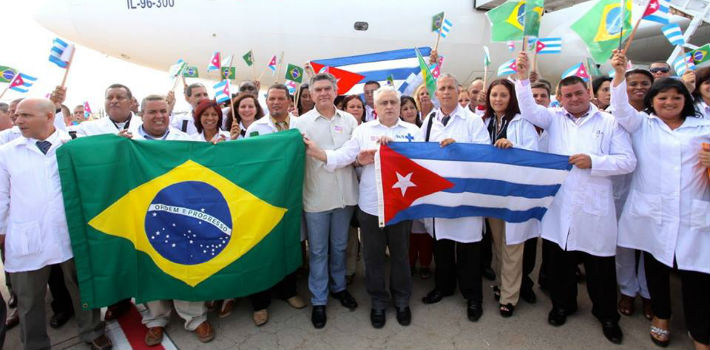
Cuban doctors on medical missions in Brazil (Source: am revista)
Cuban doctors on medical missions in Brazil (Source: Ceara em Revista)

Juan Juan Almeida, 16 May 2016 — Quite unexpectedly, Cuban authorities say they are prepared to suspend or cancel medical missions to Brazil and Venezuela.

Ever since Cuban informants, who are spread across the continent, warned that Brazilian legislators were planning to remove President Dilma Rousseff from power and long before President Maduro began facing pressure from the opposition-controlled National Assembly, the Cuban government — calculating as ever and with a proven penchant for creating adversity — secretly devised a plan B, which has now begun to take effect. continue reading

The interim president of Brazil, Michel Temer, publicly stated that his government does not intend to get rid of the Cuban medical program “More Doctors,” which was established by Rousseff’s government. Such assertions only demonstrate that the acting president is unaware of the surprise Cuba’s shifty ideologues have in store for him.

Perhaps he will learn the hard way that, for the island’s government, the medical missions are more than just a charitable undertaking and a very profitable enterprise. The are above all instruments of pressure that are one aspect of an aggressive foreign policy.

A commission made up of members of the Communist party, the government, the Ministry of Public Health (MINSAP) and local officials are touring the island of San Antonio de Maisi to brief staff at every hospital on plans for removing all Cuban health care workers from Brazil and Venezuela at a designated time and returning them to Cuba.

This action has two objectives. One is to forestall more doctors from deserting. The other and more important one is to strike a timely political blow by withdrawing the services of Cuban doctors in remote and impoverished areas.

In conversations with staff, this itinerant commission reported that Cuba receives significant subsidies by leasing out its professionals’ services as part of various overseas health care programs. But it now plans to amortize its economic losses by backing out of its agreements with Venezuela and Brazil.

Cuba is fashionable and there will always be places in the world with a profound need for health care workers. Thus the idea is to redirect Cuban medical cooperation to other countries and gradually increase health care access on the island. But not to Cubans. On April 3 the minister of health, Lina O. Pedraza Rodriquez, signed Resolution 145/2016 which allows doctors to collect up to five percent of the fees billed to foreign tourists.

Concurrently, MINSAP has released more than 200,000 dollars from the hard currency reserve on orders from the Central Committee to launch a big ad campaign that includes an untold number of printed flyers for distribution through privately owned rental homes, hotels, travel agencies (both inside and outside the island), the official Ministry of Foreign Affairs website, Cuban diplomatic missions abroad and MINSAP affiliated facilities, including hospitals. It is intended to promote and sell a range of health care services that the country offers.

Revolutions and Democracy / 14ymedio, Regina Coyula

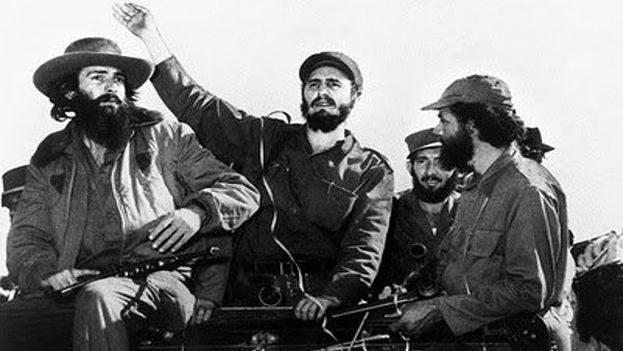
Entry of Fidel Castro into Havana in 1959 (Camilo Cienfuegos, Fidel Castro and (in profile) Huber Matos). (File)

We observe a man who always speaks of patriotism and he is never patriotic, or only with regards to those of a certain class or certain party. We should fear him, because no one shows more faithfulness nor speaks more strongly against robbery than the thieves themselves.

Felix Varela (in El Habanero, 1824)

14ymedio bigger14ymedio, Regina Coyula, Havana, 19 May 2016 – Observing the tranquil surface of Cuban society offers a misleading impression. The stagnation is localized only in the government and in the party; and even there it is not very reliable. There is no doubt that many party members participated in and observed the 7th Congress of Cuban Communist Party (PCC) hoping for changes and, watching the direction of the presidential table, dutifully (and resignedly, why not) voted one more time unanimously.

Outside this context, where one thing is said but what is thought may be something else, there is right now a very interesting debate in which all parties believe themselves to be right. The most commonly used concepts to defend opposing theses can be covered in the perceptions of revolution and democracy, which each person conceptualizes according to his or her own line of thinking. continue reading

There are generalities that are inherent in the concept itself. In the case of the concept of revolution, it involves a drastic change within a historic concept to break with a state of things that is generally unjust. Although it is a collective project, revolutions don’t always enjoy massive support; it is not until it is resolved that the great majority of citizens are included.

That said, from the official positions of the Cuban government they are still talking about the Revolution that overthrew the Batista tyranny and initiated profound changes in Cuba as a continuing event. This group believes itself still within the revolutionary morass, but can a country live permanently in a revolution?

One immediate consequence of a social revolution is chaos; everything is changing, and after a nation experiences a revolutionary process it needs stability to return to the path of progress, a natural aspiration of society and of the individual.

The 1959 Revolution became a government many years ago and its young leaders are, today, old men who in their long time in power ensured mechanisms for the control of the country. It could be nostalgia for not having been there or it could be comfort with the idea of having made mistakes and implemented bad policies, all justified as an appropriate effect of the revolutionary moment.

It is here that democracy intervenes. Whatever kind it is, it must characterize itself because popular decisions are effective; directly or through the leaders elected through voting. And also through debate. One can’t insist on continuing to wear children’s clothes when one is an adult. Norberto Bobbio’s concept is always widely accepted: without recognized and protected human rights there cannot be a real democracy, and when we are citizens of the world, and not of one state, we are closer to peace.

We do not live in a democratic country, however much they want to minimize the lack of freedoms and blame it on the “blockade,” the “imperialist threat” and novelties such as “opinion surveys” or “media wars.” Because democracy is an umbrella that should also protect minorities of every kind.

We can see vestiges of Marxism-Leninism in this stumbling march toward capitalism without democracy, we see in the free state version of the idea enclosed in this disturbing paragraph of a letter from Engels to August Bebel, regarding power and those who oppose it: “So long as the proletariat still makes use of the state, it makes use of it, not for the purpose of freedom, but of keeping down its enemies and, as soon as there can be any question of freedom, the state as such ceases to exist.”

Where are the rights of minorities? How do we know if they are real minorities? So far, certainly, the public support for the government has been a matter of trust, but the suspicion showed by the government when asked for transparency is striking.

From the polemics that are shared among websites and from closed-door meetings to emails and the chorus of the interested, and from there to the classic rumor on the street, it is clear that there is an imperative to widen the debate. Patriotism is not a state monopoly nor is it reflected only in talking about history and honoring symbols, much less in the cult of personality, which by the way, this year promises North Korean dimensions.

One of the ideas that is addressed in this debate is the danger posed by “non-revolutionary transitions in the name of democracy,” but we know that this is a concern of the hardline defenders of that model that they stubbornly insist on calling socialist; ‘they’ being those who consider themselves anti-imperialists, those who “won’t budge an inch,” and who sleep peacefully without looking for other culprits for the collapse that surrounds them on all sides.

My concern as a citizen is not having democracy in the name of the Revolution.

The War of the Blacks / Somos+

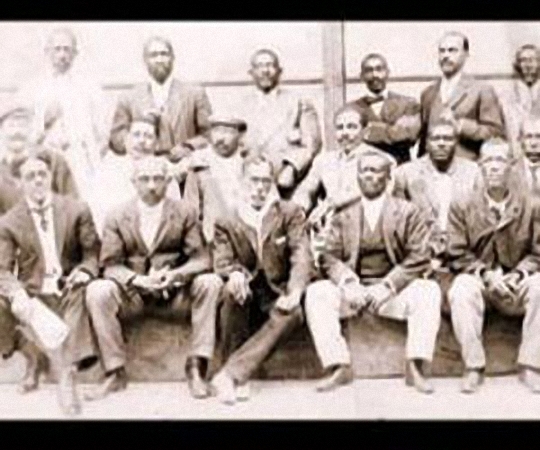
Somos+, Jose Manuel Presol, 17 May 2016 — If there is something shameful in our republican history, it is the events of 1912. Nothing much is being said about it, not even in the government’s current propaganda. It is mentioned, articles and books are published about it, although it is not widely exposed.

Relatively few things have been written about it; the data, which is scarce at the source, are lost, and it is difficult to achieve an in-depth knowledge about it. Oral transmission is likewise poor, perhaps out of shame by some or out of fear by others.

I am referring to what is called the “War of the Independent People of Color,” or the “War of the Blacks.” continue reading

Whoever denies the significance of our compatriots of color in the War of Independence is blind. Their freedom from slavery, their recognition as citizens and all their rights as Cubans stem from it. Apparently, there was something deeper: friendship and brotherhood amongst whites and blacks who had jointly fought as mambises (patriotic fighters).

But that equality was merely on the paper the Constitution was written on and in multiple laws. The fact is that Cuba had, and still has, an important racist component. At the 7th Cuban Communist Party Congress, Raúl Castro himself mentioned that “the fight against any vestige of racism which hampers or slows down the promotion of blacks and mestizos to leading positions shall be relentlessly pursued.” And even after 57 years of a theoretical “egalitarian revolution” and three generations under “socialism,” we still encounter expressions such as “Dude, you strike me as an ’Oreo’.”

Legal equality had been achieved, but not in reality.  In 1902 began the creation of organizations in defense of the rights and interests of black people, such as the Black Veterans Committee, some of whose meetings were presided over by Juan Gualberto Gómez.

In 1908 the Group of Independent People of Color was created, a rather more political organization, which on August 7 of the same year became the Party of Independent People of Color (PIC, according to its Spanish acronym). Its platform was not only anti-racist but also social, as it called for an eight-hour working day and general and free education.

However, from then on big mistakes were made by both parties:

On the part of the State a black senator, Martín Morúa Delgado, filed a motion against that party, by considering a party based on racial principles to be unconstitutional, and the “Morúa Amendment,” modifying Section 17 of the Electoral Act was adopted and the PIC was declared illegal.

Morúa, in his–likely honest–attempts to avoid social division, even forgot the continuous insults to which he and other black and mixed race senators and congressmen were subject. One of the most frequent was that in all receptions, these were directed to the guest and companion or mistress, while discriminating against their wives.

On the other hand, Evaristo Estenoz, a slave-born PIC leader, distanced himself from many whites who supported him, thus politically isolating himself, and attempted to foster a new U.S. intervention, to which end he held meetings with figures such as Charles Magoon, the U.S. occupation governor between 1906 and 1909, and Enoch Crowder, former Military Governor of the Philippines, who had taken part in U.S. interventions in Cuba and in wars against the Apaches, led by Jeronimo, and the Sioux, led by Sitting Bull. Both of them being “very good company.”

Finally, on May 20, 1912, a PIC armed uprising took place in Pinar del Río, Havana, Santa Clara and Oriente to achieve their demands, although it did not contemplate the overthrow of the government presided by José Miguel Gómez.

Originally no attention was paid to it, but the contacts initiated by Estenoz were in motion, and the Cuban government was warned that, in order to defend U.S. interests, armed troop vessels were being sent to Guantánamo and other destinations.

Thus, the President ordered the army to intervene, which put an end to the uprising–to the embarrassment of all–by murdering all the black and dark-skinned mixed-race people encountered, whether or not they had participated in the revolt; it even removed peaceful workers from their homes and killed them in front of their families.

The leaders of the uprising, Evaristo Estenoz and Pedro Ivonet, perished. Regarding the former there are versions that he committed suicide and that he died in combat; his body had a shot in the temple. Ivonet was simply murdered after being taken prisoner.

It is not known how many victims there were. Some mention 60 victims, which could be ludicrous if we were not referring to human lives, others mention 6,000. The safest thing is that they ranged between 3,000 and 4,000.

In order not to revisit similar mistakes and embarrassments, let us recall that we are all Cubans and it is no good to merely state it on a piece of paper. This is another pending change which has to be begun, as all changes, by ourselves.

Maduro and the Country That is Disintegrating in His Hands / 14ymedio, Yoani Sanchez

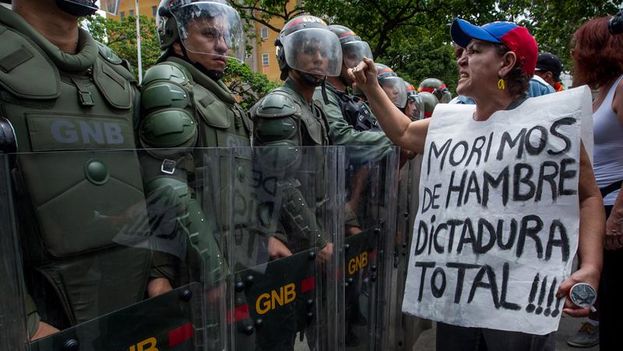
A woman protests against members of the Bolivarian National Guard in the march on Wednesday in Caracas. (EFE / Miguel Gutierrez)
A woman protests against members of the Bolivarian National Guard in the march on Wednesday in Caracas. “We are starving to death. Total dictatorship.” (EFE / Miguel Gutierrez)

14ymedio, Generation Y, Yoani Sanchez, Havana, 19 May 2016 — All signs point to the collapse of Venezuela. Every minute that passes the country is disintegrating in the hands of Nicolas Maduro, who insists on maintaining with revolutionary violence a power that he has not known how to keep through efficiency or results. His stubbornness has led a nation rich in resources to misery and his incendiary oratory is now pushing it towards a violent explosion.

In front of the microphones, Maduro claims to defend a chimerical 21st century socialism that only works in the minds of its progenitors. However, his political and repressive actions are aimed at preserving the privileges of a clan that rants against the bourgeoisie while living in opulence and looting the public coffers. He believes in the Robin Hood of the children’s stories, but this time Sherwood Forest has become unlivable, even for the poor. continue reading

Power outages, insecurity in the streets, food shortages, emigration of the young and professionals, along with the highest inflation in the world, are some of the signs of deterioration experienced by a nation trapped for almost two decades in a populism that has bled the economy and polarized society.

Corruption, mismanagement and a string of neighboring countries that have behaved more like leeches than allies, have drowned Venezuela in less than twenty years. Few still have the shamelessness to publicly support the delusional regime that has installed itself in Miraflores Palace and brought the nation to the verge of collapse. Even former fellow travellers, such as Spain’s Podemos Party, led by Pablo Iglesias, and former Uruguayan president José Pepe Mujica, have distanced themselves from Maduro.

A member of Podemos has criticized the Venezuelan president’s attacks against Spain, while the Uruguayan politician described Hugo Chavez’s heir as “mad as a hatter.” Others, like Raul Castro, remain complicity silent while, from the shadows, weaving the threads of support for the Bolivarian forces. No wonder Evo Morales has rushed to Havana to receive instructions about how to proceed in the face of his floundering comrade.

However, Chavism, and its bad copy “Maduroism,” has entered its endgame. Its motorized faithful can instill fear in the population and the National Electoral Council can delay ad infinitum the review of the signatures on the recall referendum, but this will not restore the popularity enjoyed in the times when a military coup hypnotized millions with revolutionary rhetoric interspersed with anecdotes and songs.

Nicolas Maduro is collapsing and dragging a nation down with him. In this fall into the abyss of violence, a military coup or other demons, he has not shown a single instance of the greatness that would put the interests of Venezuela first, ahead of his party and ideological affiliation. History will remember him in the worst possible terms and he deserves it. He has ruled from caprice and exclusion, ultimately inserting his name on that deplorable list of caudillos, satraps and authoritarians who have trampled our continent.

Meeting in New Jersey with Eliecer Avila this Saturday / Somos+

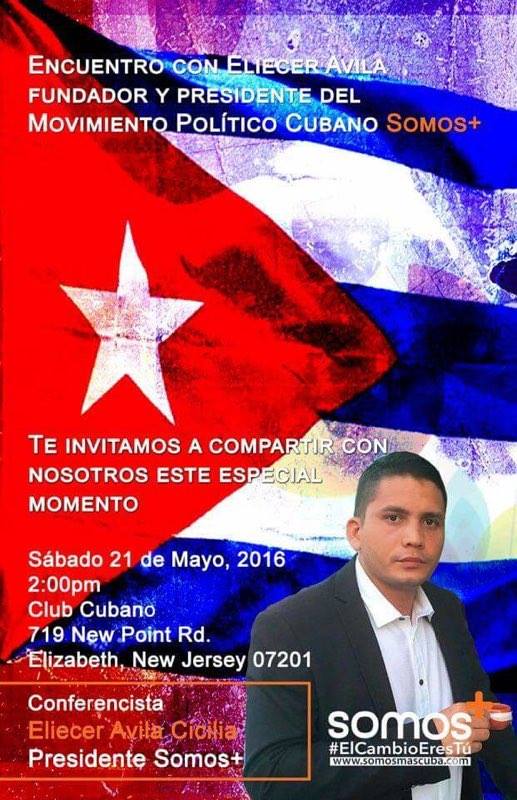
13220111_10207578844722699_1539987182_nSomos+, 17 May 2016 — On Saturday, May 21, at 2:00 p.m., at the Club Cubano de New Jersey (New Jersey Cuban Club), the president and founder of Somos+ Political Movement, will give a lecture about current issues in Cuban society. After several months of efforts, this meeting is possible thanks to the cooperation of the members residing in the U.S. You are all invited to this meeting and debate. Hoy Somos+.

Rules to Prevent Debate / 14ymedio, Miriam Celaya

Merchants at El Trigal protested closing of the market. (14ymedio)

14ymedio bigger14ymedio, Miriam Celaya, Havana, 18 May 2016 — A small protest convoy and a demand by a group of bicycle taxi (pedicab) operators at the Plaza of the Revolution; indignation and astonishment among producers and traders about the arbitrary and unannounced closing of the wholesale market for agricultural products in the capital; irritation of several citizens who verbally attacked the policemen who were trying to maltreat a blind and helpless beggar, who was at the Carlos III marketplace; a sit down strike led by workers at a cigar factory in the city of Holguín over wages… These are some of the events that demonstrate both the state of dissatisfaction and frustration that are taking shape in Cuba’s population, the emergence of a sense of questioning the system and the incipient rebellion against the power and the authorities that represent it.

It is without a doubt, good news. The bad news is that social balance becomes dangerously fragile in a society where rights and prosperity have been banned, where institutions respond fully to the interests of the parasite power, where any opposition to the government is illegal and where public debate and dialogue between the power and “governed” are non-existent. continue reading

As the social tension grows and the government increases the obstacles, uncertainty becomes greater as to ways a conflict could be unleash that would elude institutional control.

If the power caste did not suffer from the colossal blindness of its proverbial arrogance, it would have enough lucidity to interpret the current signs

It seems that the above facts are insignificant and isolated amid the general acquiescence of Cubans with respect to their government. However, such events were unthinkable just five years ago, and even less so during the period prior to July 30, 2006, when the “Proclamation” was made public, which declared Fidel Castro’s supposed temporary withdrawal from the presidential chaise lounge, which he had intended to be his for life. The proclamation gave some hope to the people about improvements in their living conditions.

If the power caste did not suffer from the colossal blindness of its proverbial arrogance, it would have enough lucidity to interpret the current signs, especially when the still timely efforts of the people’s protests are taking place just weeks after the conclusion of the last Congress of the Cuban Communist Party, where presumably national economic and socio-political strategies were drawn for at least until 2030. A moderately insightful Government would at least have the perception that the social acceptance of its eternal monologue had ended and that the urgencies of the national reality far outweigh the temporary and strategic limits set by the Party Guidelines.

Like it or not, the lords of power must understand that the Cuban crisis demands changes dictated from social slogans, not from the Palace of the Revolution, and that such changes must occur willingly–that is, starting from a real national debate from which a transitional covenant might emerge–or by force, when an undesirable social explosion could take place due to the unstoppable deterioration of the population’s living conditions, with unpredictable consequences.

It turns out that autocracies are not designed for public scrutiny. Far from establishing a national dialogue which would, in principle, act as an escape valve for frustrations, the last page of the Party newspaper Granma on Tuesday May 17th, 2016 contained an article which is the absolute denial of this possibility. The article is titled Rules for Debate or Matter of Principles, signed by a (let’s use the term they prefer) “revolutionary intellectual” by the name of Rafael Cruz Ramos, which establishes two simple “rules” for an imaginary debate which, by the way, the reader never catches a glimpse of.

In Cuba, we know, all money is cursed, unless it is blessed and managed by the leaders of the Castro-cracy

Summarizing a substantial verbal extraction that fills an entire page with what might have been said in a few paragraphs, Mr. Cruz tries unsuccessfully to enunciate a first rule, designed not to establish the basis or topics for that nonexistent debate-monologue of his, but what will not be included in it, under any circumstances.

We should not ever debate with “those who come to us carrying a political fragmentation grenade ready to have it explode in the heart of the country, of the Republic, of the motherland, in order to destroy the socialist system under construction and restore the archaic and worn-out capitalist system” Cruz Ramos assures us, though no one knows what authority or supranational power this unknown subject has that he can issue such categorical guidelines.

The second rule is also set from denial, and validating the same old Castro-style singsongs: “We will not deal with anyone who is funded, backed, or supported by the terrorist anti-Cuban money from Miami or any other nation, including those of old Europe”. Because in Cuba we already know that all money is cursed unless it is blessed and managed by the leaders of the Castro-cracy, who will later distribute some loose change or other prizes among its most faithful servants. This may well be Mr. Cruz Ramos’s case.

The article is extremely emotional and perhaps because of that it is extremely vague. It is hard to figure out what he means by “we,” what topics would be subject to debate, who would participate, who would carry the dangerous “political fragmentation grenade” or what it consists of. Instead, it can be assumed that there will be no debate with anyone who is not on the side of the political power. Therefore, from this point any possibility for debate is null.

Cruz Ramos could have saved his efforts. Because if we are talking about a debate, it would be a discussion between two or more individuals, groups, etc., on topics or issues of public interest, in which a moderator and audience would also participate. It may be oral, written, or take place in an internet forum, but in all cases certain rules and recommendations must be observed that will allow for the development of the discussions, and, in the best of cases, making agreements.

The standards and recommendations are universal and unavoidable for the development of any discussion, and consist of observing principles as basic as not imposing one’s personal views, making a point through argument and counter-argument, listening carefully to others, without interrupting or underestimating their criteria, being brief and concise, respecting differences, speaking freely, expressing ourselves clearly, using appropriate vocabulary, avoiding verbal or physical attacks as well as mocking and other behaviors that might disqualify the antagonist, among others.

Cruz Ramos does not propose a debate, but total commitment of Cubans to the Government

But Cruz Ramos violates every one of these rules, ending exactly in the opposite corner: he disqualifies a priori the potential antagonist, he refuses to listen to arguments other than his own, he has no argument but argues, criticizes in the abstract without offering concrete proposals, he extends unnecessarily without managing to explain or make himself clearly understood. Cruz Ramos does not propose a debate, but total commitment of Cubans to the Government

On the other hand, his convoluted discourse mixes dissimilar topics and out of context references, distorting facts, history, characters and his and others’ realities. An apparent inconsistency which is, nevertheless, perfectly consistent with the system he defends. So, to refute each and every one of the passionate lines of Rules for Debate… would be as extensive as it would be unproductive, especially when it becomes obvious that this is his intention: to distract from the essence, which is the failure of the Cuban sociopolitical system imposed on Cubans more than half a century ago.

But, at least it is useful to note what is unable to be concealed of the conjunction of two great fears of the Government cupula: the real possibility that popular protests might become more generalized–which is not or does not have the same political costs to strike dissident demonstrations or repress poor people for whom, de jure, the Revolution was created more than half a century ago–and the impossibility of further delaying, without consequences, a broad and inclusive debate over Cuba’s destinies.

It becomes clear that if the Castro regime does not feel capable of withstanding the test of a national debate, then its weakness is as great as its arrogance. But if, in addition, the best of its think-tanks, in order to deal with that eventuality carry the same argumentative-theoretical baggage as Rafael Cruz Ramos, the debate can already be considered lost.

Translated by Norma Whiting

Fidel And Raul Castro “Are Very, Very Spanish” / 14ymedio

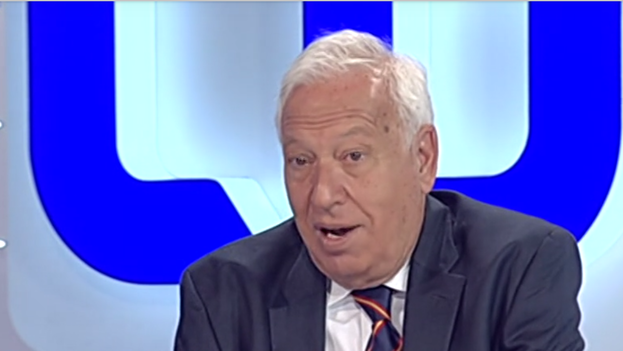
José Manuel García-Margallo during the interview in the Breakfasts program on Spanish Television (TVE). (Video Capture)

14ymedio bigger14ymedio, Madrid, 18 May 2016 — The Spanish Minister of Foreign Affairs and Cooperation, José Manuel García-Margallo, in an interview on Spanish Television on Wednesday, defended his meeting with Raul Castro in Cuba, recalling the ties that unite the two countries, among them the “Spanishness” of the Castros.

“In Cuba, apart from human relationships, Fidel and Raul’s father was a soldier who fought with our troops [on the Spanish side] in [Cuba’s war of] independence, and then turned. They are very very Spanish,” he said. continue reading

The minister appeared on TVE’s “Breakfasts,” a program on a state channel dedicated to political analysis, on his return from a trip to Cuba and Ecuador. Among the questions raised during the interview, García-Margallo was asked about his meeting with the Cuban president and the possible image of legitimizing the regime that this might have sent. The foreign minister asked that his meeting with Raul Castro be seen in context, recalling that Castro had also met recently with Pope Francis and the president of the United States, Barack Obama, as well as representatives from many European countries.

“We have initialed an important chapter in European Union-Cuba [relations] in which we are talking about human rights. In addition, we have normal contact with civil society. Therefore, incorporating this whole chapter of human rights in the agreement is a good sign and Spain cannot be, being who we are and what we have been in Cuba, the only country that is reticent and decides not to go,” defended the minister.

García-Margallo pointed out that Spain is the island’s third largest trading partner, behind only China and Venezuela, and companies in his country manage 90% of the 5-star hotels in Cuba, and 60% of all hotels. In addition, he said Spanish companies are negotiating tenders for the construction of four airports in Cuba, a country with many opportunities for infrastructure. “With Cuba we have such a special relationship that it would be very bad if Spain sat on the sidelines and we let everyone else on the right and the left get ahead of us,” he affirmed.

García-Margallo has framed Spain’s relationship with Cuba in different historical contexts, from the European Union Common Position (promoted in 1996 by former president José María Aznar) up to the new relations of the EU and the US with the island. In addition, he recalled that his position on human rights is clear and was defended by himself during speech on his previous visit to Havana. “The Cuban people, at this moment, primarily want progress and economic development, and we are going to help them in this change,” he concluded.

With regards to Venezuela, García-Margallo announced in this television interview the return to Caracas of the Spanish ambassador, Antonio Perez Hernandez. The minister gave instructions this same morning for the ambassador’s return to Venezuela; he left last April in protest at the “insults” of President Nicolas Maduro toward Spain’s prime minister, Mariano Rajoy. The Venezuelan president called the Spanish president “racist, corrupt trash and colonialist garbage.”

The chief of Spanish diplomacy explained that the reason for the return of the ambassador is the presence or 400,000 citizens with dual nationality who “need protection.” In addition, he said that former Prime Minister Jose Luis Rodriguez Zapatero is in the country and that Albert Rivera, leader of the Citizens Party, will travel there next Monday.

Venezuela is in an “absolutely impossible” situation, Garcia-Margallo said, adding that “we must deploy the foreign service.”

Jose Daniel Ferrer Gets a Passport / 14ymedio

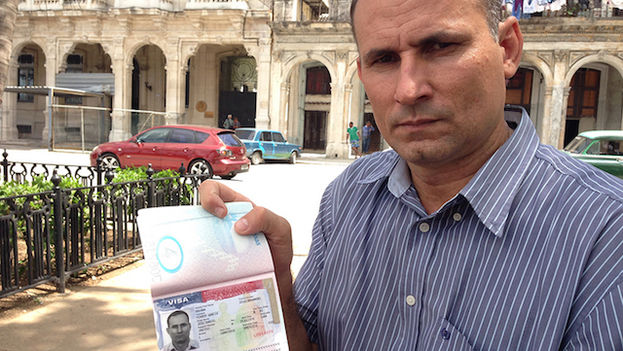
José Daniel Ferrer with his passport with a visa for the US. (14ymedio)

14ymedio bigger14ymedio, 18 May 2016 – Government opponent José Daniel Ferrer received his new passport on Tuesday, and will be able to travel outside the country for the first time. The former prisoner of the Black Spring has permission to leave the country only once, according to information from Cuban authorities. During his trip he plans to visit the United States and several European countries, according to what he told this newspaper.

The leader of the Patriotic Union of Cuba (UNPACU) will fly to Florida on Wednesday, where his plans to visit his mother and brother, Luis Enrique Ferrer, also a former political prisoner. “I want to see many good Cubans, especially those who in one way or another support the cause of the democratization of Cuba. I want to hug them,” he said.

Ferrer also plans to go to the Swiss city of Geneva, to appear before the United Nations Human Rights Council, and then he will visit Spain. “If I have the time I want to go to Poland, to the Gdansk shipyards, where the great demonstrations of the Solidarity Union took place,” he told 14ymedio.

Earlier this year, Ferrer received, along with other former political prisoners, the Homo Homini Prize awarded each year by the Czech NGO People in Need, for his contribution “in an outstanding way to the promotion of human rights, democracy and the non-violent resolution of political conflicts.” None of the award recipients were able to attend to the award ceremony because of travel restrictions imposed on them by the Cuban government.

Pedicabs, A Battle For The Streets / 14ymedio, Luz Escobar

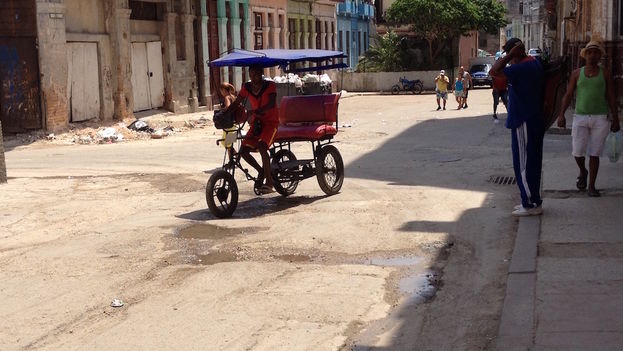
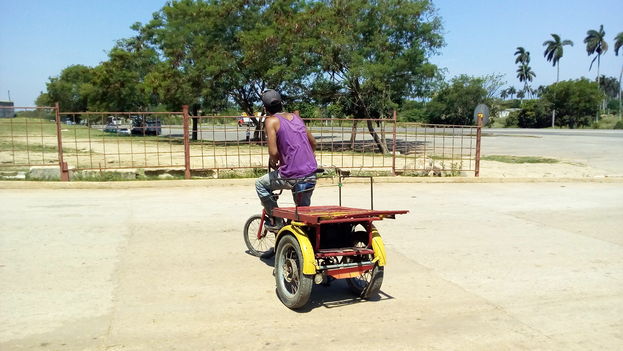
Pedicab in Havana. (14ymedio)

14ymedio bigger14ymedio, Luz Escobar, 16 May 2016 — A fine drizzle falls on the city and Felix, a pedicab driver for 22 years, takes advantage of the chance to take a break. Beside Havana’s Capitol building the man recalls a protest held last Monday by a group of his colleagues in the Plaza of the Revolution. They were demanding the right to use several streets that are now closed to their tricycles, along with less harassment from inspectors.

From a pocket in his fanny-pack he extracts a wad of papers and displays them with chagrin. They are the traffic fines that have been imposed on him so far this year, some thirty folded gray papers from the many he displays. Every one bears a stamp where we can read the word “paid.” continue reading

“Every day I have to keep all these receipts with me,” the man explains, and recalls that once he had to spend three nights in the police station because the data base of traffic fines hadn’t been updated with his information. “They work very badly, sometimes after paying, your name still shows up on the list of the defaulters,” comments Felix.

While he details the police harassment they receive, another pedicab driver arrives. The driver, Alejandro, joins the conversation and points out that even though they pay for a license to do their work, they don’t have “the right to travel on many of the important streets, like Galiano, Reina and Monte.”

Those three major arteries connect several districts and for decades have been the principal thoroughfares for this mode of transport, greatly used by Cubans for short distances. However, the pedicab drivers complain that the travel restrictions have been imposed on them under the justification of moving traffic at a higher speed on the avenues.

Yaseil Rodriguez, who has made his living pedaling for nearly a decade, says that the authorities have informed them that these vehicles move “very slowly.” A justification that does not convince him. “We aren’t allowed on these streets and the horse-drawn carts full of tourists managed by Eusebio Leal are?”

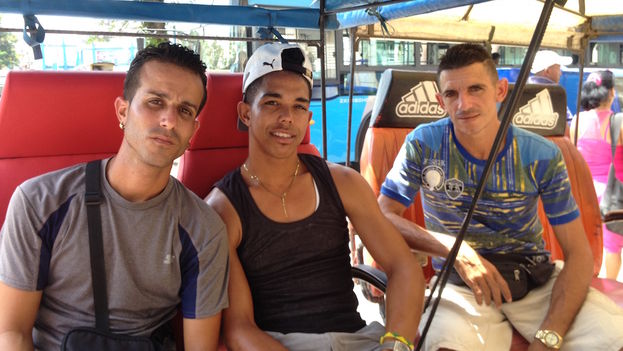
Pedicab drivers in Havana. From left to right, Yasiel Rodríguez, Noslen López y Hector Hernández. (14ymedio)

Rodriguez enumerates the streets where it is no longer possible to travel in a pedicab: “Monte, Monserrate, Zulueta, Prado, Egido, Industria, San Lázaro, la Avenida del Puerto y Cuba.” This latter “was a street in Old Havana where we were always able to travel without problems.”

The fines imposed for violating these restrictions range from 700 to 1,500 Cuban pesos. The police pay special attention to keeping the pedicabs outside the area around Fraternity Park. But the fines are not the most severe punishment; the worst is having the vehicle held at the police station until the driver pays or clarifies the situation.

Many pedicab drivers consider the application of the law “excessive.” This disagreement led to some forty of them traveling in a caravan to the Plaza of the Revolution on 10 May, with the intention to demand an end “to the abuse” against the drivers. So far they have received no response from the authorities.

For Nolsen Lopez, another young pedicab drivers, the pressure has become unbearable. “You have to travel looking on all sides as if you were transporting arms or drugs,” he said, explaining the stress he experiences during the workday. The man complains of the excessive cost to keep pedaling, because “you have to pay these fines, pay for the license, pay into social security, insurance, and if I get sick I have to use my savings because they don’t give you anything in these cases.”

Among the demands these self-employed workers are championing is also a reopening of the licenses to practice the occupation. The young man says that at the National Tax Administration Office (ONAT) it’s been ”four and a half years without their issuing permission to drive a pedicab.” For that reason they must work under the category of “helper,” a condition that limits their work even more.

“If the authorities do not respond on this issue, on Tuesday we will go to the Plaza again,” said Lopez, who did not take part in the first protest. “This time I’ll go because abuse has to end, if more of us go, it’s much better.”


Cuban Phone Company to Block “Blacklisted” Phones / 14ymedio

Cuba’s phone company says that its new measures are to prevent fraudulent use of lost or stolen phones. (DC)

14ymedio bigger14ymedio, Havana, 16 May 2016 – Cuba’s government-owned phone company, Empresa de Telecomunicaciones de Cuba (ETECSA), has announced that starting this Wednesday, May 18, new rules will come into effect for cellphones which will more strongly control their use.

According to the newspaper Juventud Rebelde (Rebel Youth), the measures will include an automatic blocking of a line if the SIM card inserted in the phone is on the “blacklist.” continue reading

According to that official newspaper, the new regulation is the result on an “increase in reports associated with criminal acts including theft and/or loss of cellphones, fraudulent changing of the IMEI (International Mobile Station Equipment) code which allows each mobile phone to be uniquely identified worldwide, which is done by unscrupulous citizens to facilitate the illegal use of these cellphones which are on the blacklist (blocked), and the desire to protect the population from the acts of these teams [of thieves].”

Owners of a line whose phone has been stolen or lost, according to the official note, can ask to have their device included on the “blacklist,” “upon presentation of documentation that validates the ownership or property.” ETECSA has made available through its website (www.etecsa.cu), it says, a site where you can find out if your phone is on the blacklist, by entering the IMEI, which can be obtained by dialing *#06#.

If the line is blocked, the owner has five days to “appear in ETECSA’s commercial offices and to clarify the causes of the event in order to unlock the line,” otherwise the service will be cancelled.

In addition, the new measures establish that users who have an IMEI that “is not valid (incorrect IMEI numbering)” must replace their device by this Wednesday. The newspaper warned that “those customers who are in this situation will be notified promptly by phone.”

Cellphone repair workshops managed by private individuals have become very popular in Cuba in recent years. One of their most provided services is unlocking devices that have been blocked by the phone company, or devices that have been stolen.

Cuban Government Announces New Set of Price Reductions / 14ymedio

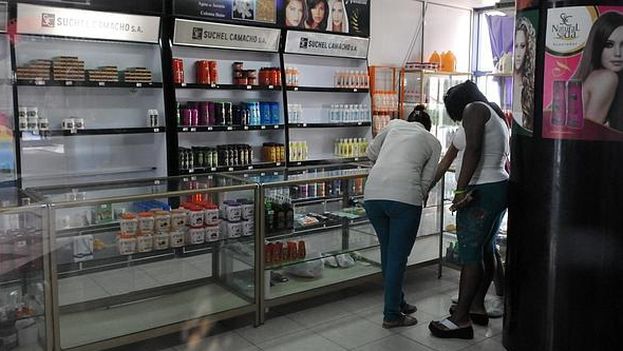
A store that sells in convertible pesos, Havana. (EFE)

14ymedio bigger14ymedio, 17 May 2016 – The Cuban government has published an “official note” announcing price reductions for products sold in Cuban convertible pesos (CUC) which will go into effect on Tuesday. The measure is aimed at “gradually increasing the purchasing power of the Cuban pesos (CUP),” explained the Ministry of Finances and Prices in the announcement read on primetime television news this Monday.

Among the products that will benefit from the reductions is powdered milk, the price of which was reduced by 9%, and liquid milk which was reduced by 20%. continue reading

“Powdered milk in half-kilo tri-laminate bags is reduced from 2.90 CUC to 2.65 CUC [the average monthly wage in Cuba is the equivalent of about 20-25 CUC]. The same product, in a half-kilo lithographed nylon bag is 2.55 CUC,” the note offered as an example.

The decision includes offering some items wholesale in several stores of the government-run chains TRD-Caribe and CIMEX, which already sell chicken in large boxes. Starting now, milk will also be added to this with “powdered milk in a 25 kilo sack for 119.85 CUC.”

The drop in prices will include “custards, jellies, grain rice, dried beans and canned goods (meat, seafood, fruit and vegetables) between 25% and 30%,” the note detailed.

In addition, children’s footwear will be reduced approximately 6%, a decision the government defines as part of “the societal strategies to address the effects of the current demographic dynamics.”

In late April, the government announced a reduction in the prices of various foods and other commodities sold in stores in convertible pesos (CUC) and national currency (CUP). The move came at a time of growing popular disconnect in the rising cost of living and shortages.

See also:


A Hundred to One / Rebeca Monzo

Rebeca Monzo, 16 May 2016 — During the recent meeting of the National Council of the Union of Writers and Artists of Cuba (UNEAC), archaic terms and concepts were were complacently dusted off in response to the reappearance in public of the Revolution’s aged leader.

In an evocation of old ghosts, the meeting took place in the exact same location where fifty-five years earlier his comments to intellectuals unleashed the great witch hunt that laid the groundwork for our highly ideological political culture. continue reading

During this meeting, the members of the Permanent Commission on Culture, Tourism and Public Spaces released a statement declaring, “Cuban writers and artists have reacted with surprise, disbelief and outrage at images of the reception for passengers on the cruiseship Adonia, which docked at the Havana port terminal early this month. Girls dressed in swimsuits that replicated the national emblem, imitating one of our traditional dances with their movements and providing a deplorable spectacle to those visiting Cuba for the first time.”

In light of the possibility of ideological contamination resulting from the reestablishment of relations between our country and the United States, the critic Rolando Perez Betancourt offered an alternative, suggesting that we not “succumb to fear of the vampire but rather avail ourselves of a silver bullet to kill it.”

It seems Betancourt has forgotten that those who first desecrated our national emblem were in fact the country’s leaders. The man at the forefront of the Revolution accepted an invitation to sign a Cuban flag presented to him by the head of the Union of Young Communists at the time on the main staircase of the University of Havana.

For some time now it has also been common to see flags adorned with a portrait of Che printed on them. Or to see groups of them hanging, without rhyme or reason, in shops and offices, or in the oversized windows of some state-owned enterprises, used like curtains to keep the sun out. Others fray and fade on the facades of government buildings without anyone ever thinking to remove and protect them.

Corraling a U.S. flag with a hundred ours, as this critic proposed, ignores our reality. Perhaps he is unaware that our tricolor flag (made in China) can only be purchased at hard-currency stores with CUCs, to which only a very lucky few have access.

El Trigal Wholesale Market’s Last Day / 14ymedio, Luz Escobar

A cart driver at the El Trigal wholesale agricultural market in Havana (14ymedio)

14ymedio bigger14ymedio, Luz Escobar, Havana, 14 May 2016 — The line of trucks extends along the embankment that provides access to the only wholesale agricultural market in Havana. But unlike other days, the farmers who have come with their merchandise neither unload it nor sell it. The place is surrounded by police and someone is passing out a flyer confirming the announcement on TV primetime news: El Trigal market has closed.

Many of those who congregated this Friday in front of the access to large space hadn’t heard the “bad news.” They came with their boxes and sacks loaded with farm products and found the employees as surprised as they were over the suspension of sales in the 292 spaces where, until a few hours ago, beans, onions, avocados and other fruits and vegetables were for sale. continue reading

The driver of a truck loaded with mangos almost begged the custodians of El Trigal to let him sell his merchandise. “I came from Santiago de Cuba and now the whole trip is wasted,” complained the man. “I’m a farmer,” he clarified, to avoid being labeled an “intermediary.” An inspector warned him that if he stayed in the vicinity he would be fined and his product would be confiscated.

After noon the place is a beehive of dissatisfaction and complaints. “Boris Fuentes, the wine writer for Cuba Dice was here,” said one of the carters, a man who until Thursday made a living carrying merchandise from the trucks to the stalls and pallets. The young man recalled when an official reporter wanted to record a program about the high prices of food in a market conceived to lower the cost of basic food supplies.

“People insulted him and asked him why he didn’t do a story about the high prices in the [officially-named] Hard Currency Collection Stores run by the State,” said a carter. A few yards away, Diosbel Castro Rodriguez, 24, can’t quite believe he has lost the job that supports his family. “As long as I work and can feed my family everything is fine. But I have two kids and now without work I can’t stop thinking about what I can do,” insinuates the man.

Rodriguez Castro repeated the claim of many others in El Trigal: “They can’t do this from one day to the next, they have to give us some time, so we can look for other work,” he laments.

Yerandy Diaz, a resident of Fortuna, believes that it was on purpose that the place was closed without any notice to users and facility workers so they “did not have time for anything, for protests or to go anywhere.” According to him, the president of the cooperative that managed the market, Carlos Sablon Sosa, was called to an emergency meeting late on Thursday afternoon.

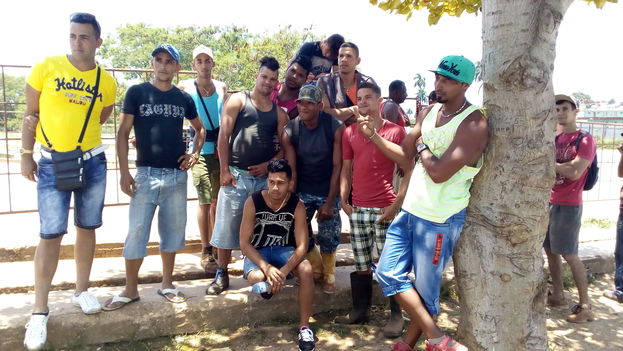
A group of vendors waiting for El Trigal to be reopened because of people’s pressure

While Sablon Sosa was in the meeting a group of inspectors showed up and passed out a paper confirming the closure. “They came here with two police cars to intimidate people and make sure there wasn’t any hassle,” recalls Yerandy Diaz.

Working in the place were 66 carters who paid license fees to exercise their occupation, more than 30 vendors and a hundred people in the dining areas, and “over a thousand peasants who come here to sell every week,” said Diaz. All have been perplexed by the government’s decision to suspend sales.

“We have officially become unemployed, up in the air, they have not given us another alternative work,” Diaz complains facing the police as tempers begin to flare. The young man criticizes the lack of transparency because the TV news reported it was being closed “for illegalities but they didn’t detail them.”

The line of trucks continues to grow, spending hours in front of the door of El Trigal trying to convince the inspectors and the police that “at least give us one last chance to sell what we already brought here,” but authorities do not give in.

Yorenny Cobas, a resident of Fortuna, was carter at El Trigal and explains that he worked moving the product from one place to another. “We charge for the service at the time we provide it, depending on the load, it can be 10, 15 or 20 Cuban pesos; we pay for a license that costs 200 pesos a month, plus more than 87 pesos for social security and 60 pesos a day every time we work, for renting the cooperative’s truck.”

The carter, without much hope, questions an inspector. “Do you know how many families are now left with nothing?” He considers that what happened with El Trigal will bring out “more illegalities” because the farmers “will try to bring the merchandise and sell it.”

The evening falls and El Trigal remains closed, there is another police car and on the market access road a farmer tries, at a whisper, to sell his mangoes at a liquidation price.

Cuban Officials in the Panama Papers / Hablemos Press

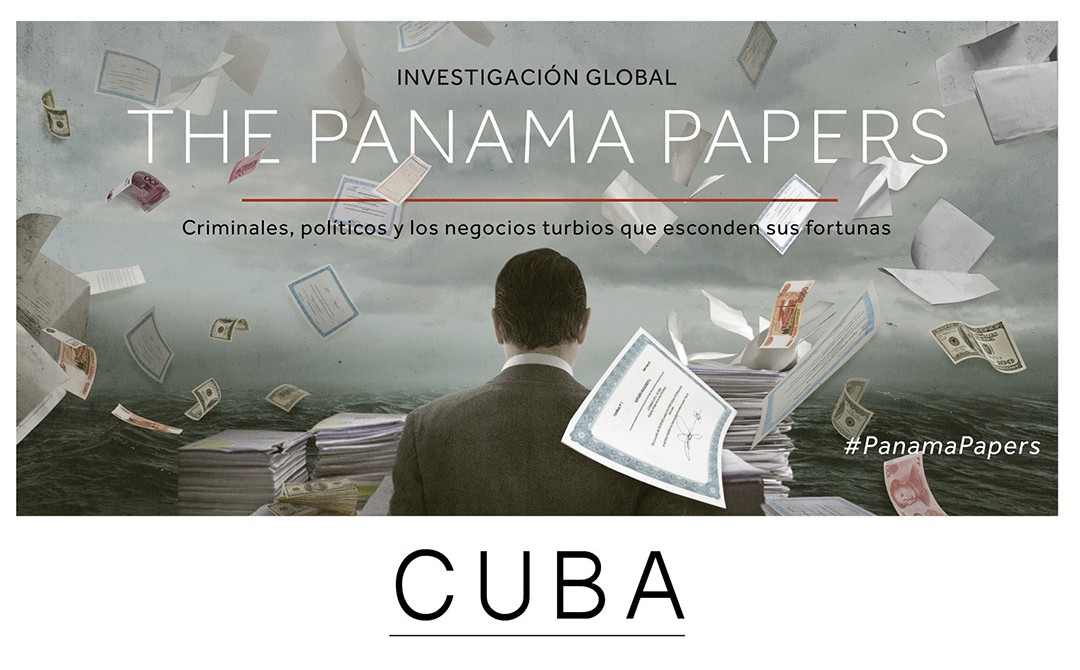
PP_Cuba_-1080x670

Hablemos Press, Cuban Journalists and others* (see below), 13 May 2016 — Officials of the Cuban Communist Party hired a Swiss attorney to establish offshore companies for their global business activities, the Panama Papers reveal. The unprecedented leak of 11.5-million documents from the legal firm Mossack Fonseca in Panama exposed the offshore actions and suspicious financial transactions of chiefs of state, government officials and celebrities worldwide.

Cuban law does not include any specific legislation regarding State functionaries and offshore enterprises, however such activities would be questionable in the strictly communist country. continue reading

The documents reveal that Albert-Louis Dupont Willemin, a lawyer from an aristocratic Swiss family, was a high-level legal advisor and intermediary in more than 20 offshore concerns with commercial ties to Cuba. Dupont Willemin, who also represents Guatemala as honorary consul in Geneva, created two offshore companies, located in the British Virgin Islands, via the registered agent Mossack Fonseca—Curtdale Investments Limited, and Ardpoint Company, Inc. Dupont Willemin’s office stated that he had no interest in commenting on this matter.

Hernán Aguilar Parra, member of the [Cuban] National Assembly of People’s Power, appears in the Panama Papers as director of both companies. Parra ceased being a member of the Assembly in November 2015, a year after the general elections of 2014.

According to the leaked information, the tax havens are associated with Grupo Empresarial Tabacuba, a state-run company that controls all production and sale of Cuban tobacco. Parra also served as director of Tabacuba until 2015. It is believed that Parra has left the tobacco business.

“The deputies (of the Cuban assembly) have restrictions,” said a spokesperson from the Cubalex Center for Legal Information. “The function of the deputies is ad honores (they do not seek compensation) and cannot be utilized for personal gain. It is one of the duties established by existing law.” The spokesperson continued, “The law does not impose on the managers or directors of companies any restriction with respect to establishing relations with private firms. However, it would not be very well regarded for a State official, taking advantage of the function of his position, to establish commercial relations with private companies.”

The former director of production for Tabacuba, Inocente Osvaldo Encarnación, was also tied to the offshore Ardpoint Company Inc. During a telephone interview, Osvaldo Encarnación confirmed that he held shares in a company, but declined to name it. Likewise, he also refused to comment on his ties to Ardpoint.

The records of Mossack Fonseca were obtained by the German publication Süddeutsche Zeitung and shared with colleagues of the International Consortium of Investigative Journalists (ICIJ)

Offshore Interests

Although the leaked data do not indicate any specific violation of the law, they do offer an intriguing perspective on the web of relationships.

Corporación Panamericana, headquartered in Havana, is the responsible party for providing the services of Mossack Fonseca to Cuban companies. According to the documents, the Cuban attorney Katiuska Penado Moreno has been the firm’s legal representative. During a brief telephone interview, Penado Moreno claimed to have no ties “currently” to Mossack Fonseca nor to Corporación Panamericana.

Penado Moreno’s name appeared in the Panama Papers in relation to four offshore companies: Miramar Investment Corporation Ltd., Mercaria Trading, Caribbean Sugar Trader, y Sanford Financial Management. Penado Moreno appears as “beneficial owner”—a legal term for when property rights belong to one person despite the legal title belonging to another. Dupont Willemin appears as director of the four firms.

Through Mossack Fonseca, Dupont Willemin founded Racuza S.A., a firm that sells computers, peripherals and software to the Cuban market.

The general director of foreign investments for Cuba’s Ministry of Foreign Commerce, Déborah Rivas Saavedra, is named in the Panama Papers as director of Racuza. Similarly, she appears as director of Miramar Investment Corporation Ltd and Caribbean Sugar Trader. After two days of trying to contact Rivas Saavedra, her office directed requests for information to Roberto Berrier Castro, director of the Center for Foreign Commerce and Investment. Berrier said that he had no information on the matter.

Among Racuza’s assistant directors are José L Fernández de Cossío, former Cuban ambassador to Japan, as well as Porfirio Medero Paiva and Hermes Vaillant, two Cuban attorneys who work for Panamericana. Paiva, Cossío and Vaillant also are listed as directors of Miramar Investment Corporation Ltd and Caribbean Sugar Trader. It was not possible to locate any of them for comments.

The Panama Papers expose the legal agreements between the Cuban government and Mossack Fonseca.

International Juridical Consultants (CJI) is a Cuban law firm that lends assistance and legal consultation to privately-owned businesses and companies. It is also a legal partner of Mossack Fonseca. The firm became the principal agent between the Cuban government and Mossack Fonseca in charge of providing legal services.

Upon being contacted, CJI directed information requests to attorney René de Jesús Burguet Rodríguez, whose name also appears in an email exchange between CJI and Mossack Fonseca. No reply had been received as of press time.

The leaked data include other links between officials and offshore enterprises.

The Union of Hydraulic Research and Projects is a consulting service of the National Institute of Hydraulic Resources (INRH), the government agency in charge of hydraulic networks and sewerage systems on the Island. The Union appears as a shareholder in Técnica Hidráulica, an offshore company headquartered in the British Virgin Islands and created through Corporación Panamericana. The company, property of a commercial enterprise of INRH called Técnica Hidráulica S.A., operated until 2015, when, according to the Panama Papers, it was liquidated.

CJI was in charge, according to a contract, of representing the legal affairs of the offshore companies of Técnica Hidráulica S.A., which are run by Mossack Fonseca.

The Panama Papers identified Wilfredo Leyva Armesto, also known as William Leyva, as the director of Técnica Hidráulica. Leyva could not be contacted for comments.

A spokesperson for Cuba’s National Assembly said that they could not respond to questions related to the Panama Papers.

*This work is a collaboration of the Czech Center for Investigative Journalism, the Institute for War and Peace Reporting, Independent Cuban Journalists, Cubanet and Diario de Cuba.

Translated by: Alicia Barraqué Ellison