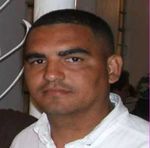
Speaking is Idania Yanes Contreras, president of the Central Opposition Coalition, Santa Clara and a member of the Women’s Movement for Civil Rights Rosa Parks. February 1, 2012.
“Well we are here at the headquarters of the Central Opposition Coalition located on the Extension of Marta Abreu 93 A between B and C in the Virginia neighborhood here in the city of Santa Clara. This march is held the first day of each month and at the moment we are surrounded by a large number of State Security and Police officers.
“Also this march… the last March we dedicated to demanding the release of Ivonne Malleza Galano and her husband Ignacio Martinez, and this march is dedicated to demand the release of Yazmín Conlledo Riverón and her husband Yusmani Rafael Álvarez Esmoris, who have been incarcerated since last January 8 and that unjustly and falsely accused of crimes. But I also take this opportunity, since February 4 marks the 99th anniversary of the birth of Rosa Parks, and our movement honors her name.
“From the town of Placetas: Xiomara Martín Jiménez, Yris Tamara Pérez Aguilera, Yaité Diosnelly Cruz Sosa, and from Santa Clara are Yanisbel Valido Pérez, Damaris Moya Portieles, María del Carmen Martínez López, and the speaker Idania Yanes Contreras.
“We are carrying a sheet that says March for Freedom and Against Impunity, Release Yazmín Conlledo and Yusmari Álvarez Unjustly Imprisoned. Rosa Parks Women’s Movement. Long Live Human Rights.
“We’re leaving here, and well, we know we aren’t going to walk very far, they are already there, and they are watching us and we are leaving here on this march.”
Beginning of March: The continuation of transcript includes the audio of the march.
Freedom for Yazmín Conlledo Riveron y Yusmani Rafael Álvarez Esmoris, Freedom ….
Long live human rights, long live …
Down with repression, Down ….
We are being arrested.
And piercing screams of pain and protest from different women.
“Don’t put your hands on my breasts, murderer, don’t put your hands on my breasts, murderer, murderer human rights violator. Do not hit me, murderer, stop hitting me, you are going to kill me, don’t put your hands on my breasts, don’t put your hands there again henchman, don’t put your hands on my breasts, don’t put your hands on my breasts, murdered, dog, Ahhhhhh! Don’t put your hands on my breasts.”
Voice of a soldier talking to another: “She has a cellphone there, she has a cell phone there.”
“Murderer, I do not stick your hands in the breasts, Ahhhhhh! … Stop that …”
Here the call was cut off. Minutes after the arrest Barbara Moya, eyewitness to the events and mother of Damaris Moya Portieles, one of the victims of the cruel and brutal act against these defenseless women, said:
“Look at the officials of State Security and the National Revolutionary Police they were all over the women in the Rosa Parks Women’s Movement, they pushed them, they threw them to the ground because there are peaceful and it took between six and seven police officers for each one the grabbed from the ground, pushing and mistreating them like the political police do in this country. There were about 20 or 30 policemen for the ladies of Rosa Parks.
“We were recording everything they were doing and the people from State Security took a blanket they brought to cover it up and put it in front of the camera so that we could not record them. We said that the world would find out all this, because even though they put that blanket up we could record something.”
Hey, guajiro, it’s me Julio Machado, how are you my brother? And your wife? How’s it going? Hey I’m following you on the news.
He made it hard for me to recognize his voice, he disguised it to not sound bad and the cell phone coverage was poor. Hey, guajiro, how’s it going, listen buddy, I don’t know your voice, in these days when communication is hellish. His voice sounded tired but never lost its usual humor and he never treated his compatriots on the island with anything but affection and friendship. His disease was taking over but he persisted in living. Listen, brother, don’t worry, I’m thinking back to Radio Marti in September. He knew the internal resistance needed him, that he wasn’t just another journalist. Perhaps now I sensed his approaching end but to avoid one more source of pain and worry we ignored the seriousness of it. It was late July.
When he was only 16 this peasant from Baez had gone to prison for distributing proclamations against the Castro dictatorship. After he was released, still very young, he was forced into exile among the captive peoples of the western provinces of Cuba. Little did this simple, natural and always cheerful peasant who would later leave for exile in the United States, imagine that he would wind up on Radio Marti in one of the most noble jobs: reporter. Nor did he know he would make so many friends all over Cuba and that his death would be so mourned.
From Thursday to Tuesday during the night we would listen to him. How are you man, how are things going, who should I call? Or, I called so-and-so or what’s-his-face, I’m very concerned about this or that. I remember one time of crisis in a certain sector of the opposition with the radio station, when he was worried and advised that we weren’t acting in the best way, something we understood.
I don’t forget how much he insisted that people and the opposition understand the real magnitude of remaining in the air for a station like Radio Marti living under the eyes of and with the sinister attempts of the regime and its agents on and off the island to remove it. When there were any awards or recognition for an opponent or an independent journalist Julio vibrated with emotion as if it were his own. I remember when the political police through known agents in Havana posted on the internet the false information that I was in negotiations to move to Chile. Guajiro, hey, hey Chilean peasant, he said laughing, call me when you get to Chile. Ah, don’t fuck with me, brother, I said. He relaxed me telling me that these slanders were normal and I should be prepared for it and not devote my time to responding to provocations, that was their goal, to divert my attention. And it was true, my slogan, “I won’t shut up and I’m not going,” annoyed and ate away at them and especially worried the tyranny and its henchmen.
And Julio Machado was not only the journalist who called in a formal tone to record a report and I don’t think he could have ever done more because his solidarity, affection and concern overflowed. There is an anecdote which speaks so little but it so illustrative of what that great Cuban meant and radiated: once there was a group of opponents and independent journalists in a video conference meeting in Havana in which were present, from the other side, several journalists from the station and they suddenly began to request the presence of Julio Machado and they had to go looking for him. I was not present at this conference but all the attendees I asked told me that when Julio appeared everyone stood up and started clapping and his reaction was to blush from embarrassment.
Although at the time of death he had been absent for many months because of his illness, he had something that made an impact and it will be difficult to recover from this loss. It always hurts to lose a friend, but it hurts more when it is someone we have come to love so much.
When I spoke by telephone with his wife from the funeral home thanks to Janisset Rivero and my sister Bertha who accompanied her in her grief, I tried to explain what is Machadito meant for us which is unimaginable, when I say we, I mean not those of any organization, tendency or particular region of the country but for all Cubans. And even sometimes we would say, hey, guajiro, how is it possible you call for so few hours and communicate with so many people; he replied with his smile and just told me, because, brother, it’s me who’s sorry and I do he work I can as a patriotic duty and I suffer with you and he added, you are unable to imagine how I suffer, Antunez, when they are beating you, when I arrive and I hear they beat Idania, Yris, Sara, Rondon. When he finished with his speech I was left thinking, this Julio is really special.
One of the things that made him greater and immortalized him is that despite having their own vision of the Cuban reality, he never questioned any project or initiative, let alone opposition groups or leaders, and he would have been able to do because he was connected and knew everyone, but it was quite the opposite. As a journalist he reported all views and opinions even in the most contentious issues.
Julio was also a school friend and inspiration to independent journalism on the Island. While recording GE listened to you and without diminishing you, he would suggest, and anyone who reported always wanted to record with him. He also had a trick that made his friends laugh and excited novices and beginners. I asked him what had happened and when he finished there were recordings with the raw and unedited testimonials. And after the stress and fear of talking on the radio, he would say forget about everything around you and that you’re going out on the radio, concentrate on me you’re talking with as a friend, and say it in your own words.
His great concept of friendship, his love for his fellow workers and the workplace he showed openly and without an air of bravado. Antunez, here we’re a group do not worry, he would tell me when I reported the news that another journalist that I had wanted to report to him. The opposition or the journalist who gave the news to Julio Machado had the certainty that it would air and that detail increased the confidence in him and his work. Now I wonder what would Machadito would have felt if he had known about the later repression and the lewd abuse to the girls of Rosa Parks whom he so admired. Now I wonder if he learned of the murder of Wilman Villar? God forbid, otherwise such suffering and helplessness would surely have precipitates his death. Until when will worthy Cubans keep falling without seeing their homeland free.
Brother Julio, you know what I regret most in what you just happened to you? That physically there is no remedy, that I can not hear your voice any more, and your sincere smile, that we could never get together here in Baez Park or Casallas in Placetas to have the coffee that we had promised we would when Cuba was free and that sooner or later stations like the one you performed on you with so much love would not have to report violations, abuse and all forms of human rights violations, because we assure and promise that our efforts and teachings and examples of men like you, will make the tyranny that oppresses us fall, guajiro, and that your descendants will not be captives people nor will they die in distant soils and among strangers.
Rest in peace dear brother, the country is grateful and proud of your worthy passage through life.
* Julio Machado, a journalist of Radio Marti, who died on February 3, 2012 in Miami.
Compatriots, brothers, sisters, all Cubans, executive directors and members of this coalition of coalitions appalled by the cowardly assassination of political prisoner Wilman Villar Mendoza, who died on Thursday afternoon as a result of torture and mistreatment during a long agony on hunger strike during which he demanded fair and transparent criminal proceedings, which would provide all the procedural guarantees for his defense, we want to share with all our countrymen out of Cuba this declaration.
First Orlando Zapata Tamayo, then Wilfredo Soto García, and later Laura Pollan and Wilman Villar Mendoza, are murdered by the Castro-Communist tyranny, all in just a few months. The latter was a cunning display of impunity and cruelty, another innocent life is lost and another family suffers.
How long will we allow them to continue killing such worthy Cubans? Why is the international press accredited in Havana silent in the face of this new crime and silent and indifferent to the heartrending cries of his wife and the desperate pain of his orphaned little girls? Why so much fallacy and complacency? Why are there so few strong statements from the democratic governments of the world and international organizations?
We do not see anywhere international sanctions to condemn and stop this crime wave. What do Pope Benedict XVI and those who organizing and preparing his famous visit to the Island say? Where is the Vatican’s reaction before the murder of this young 31-year-old Christian and defender of human rights?
This new and cruel murder shows that evil and death are not isolated events in Cuba, but are part of a strategy of annihilation and terror by a sinister machinery of terror and extermination called Castro-Communism that can continue killing if we do not take urgent and concrete steps to stop it.
Compatriots in the crime of Wilman is the answer to those who opt for the approach to and compromise with Castro, those who believe the Vatican visit will contribute to the freedom of Cuba. How long will you continue to allow opportunistic lacks of faith and promoters of discouragement and continue to contribute to crimes like these, oxygenating a tyranny that kills and does not pay?
Wilman’s murder shook the entire Cuban nation. His executioners should have no illusions, hundreds, thousands and thousands of Wilmans, as happened with Boitel and Zapata, will continue rising up until Cuba is free and we will do in spite of those who divide inside and outside, of those politicians and mobsters who persist in depriving the resistance of its resources and attack those who support those who resist and fight in Cuba.
Given the current situation and the seriousness of police violence against the peaceful opposition Cuba, we believe that the moment demands a tough position against the Castro tyranny, lest our brothers continue to fall. Our Front says to you, brother Wilman, they killed you physically, but morally you is more alive than ever, because like Zapata and Boitel you overcame those jailers who thought to make you surrender and your resistance forms part of the path and we will follow your example of calling things by their name, and those outdated and deluded people who chose to approach, be flexible, and compromise are precisely those who killed you.
The international community must be very alert because we do not know what will happen in Cuba in the coming hours. The hordes of the tyranny are terrified because they know the crime they committed. At present important civil society leaders have been arrested and others are besieged within their homes. What do they fear? The awakening of the people who said enough is enough with crime and impunity. The regime knows what it did and just like in the Arab world the Cuban spring is at their doors and Wilman’s death brings us closer to that time.
These are Raul’s reforms, these are the openings, these are the opportunities totalitarianism provides us. So they kill the best sons of the people, those who try to buy us with bigger remittances and leisure travel. That is the answer to those who believe that Cubans are just pigs for fattening with materialistic things and not people with rights, No! Know that Cubans on the island need is freedom and democracy and that we condemn out oppressors and will not continue to give them oxygen to commit crimes as horrific as that committed against Wilman. Marti said freedom is very expensive and we must be resigned to living without it or pay its price and its price was paid by our brother Wilman.
The Orlando Zapata Tamayo National Front of Civic Resistance and Civil Disobedience and the signatories of this document say, Fidel and Raul Castro, the Civic Resistance Front loudly calls you MURDERERS and assures you that your crime will not go unpunished, you will pay for it.
Signed
Raúl Luis Risco Pérez, a political adviser
Sara Marta Fonseca Quevedo, National Spokesperson
Eriberto Liranza Romero, coordinator in the west
Idania Yanes Contreras, coordinator in the center
Julio Columbie Batista, regional coordinator in Ciego de Avila, Camaguey.
Delmides Fidalgo Lopez, coordinator of the east
José Díaz Silva, political advisor and director of the independent libraries project of the Front.
Ricardo Pupo Sierra, Cristian Toranzo Fundichely and Yoan David González Milanés Front leaders.
Rolando Rodriguez Lobaina, national coordinator
Jorge Luis García Pérez Antúnez, general secretary of the Front.
Taking into account the time elapsed between the first and the second papal visit (fourteen years and two months), for most of my generation, this was the last chance to see a pope at home. The Pope came, bowed, prayed, celebrated two Masses, talked, met and prayed to God for all Cubans. In the media the presence of believers and unbelievers was constantly highlighted, but the correct thing to say would have been Catholics or non-Catholics, because here everyone is a believer, including those who don’t publicly say so, it’s just that some believe in God or gods and others in the Devil.
Although expecting results from such a short visit (three days) is absurd, (remember that God needed at least seven), it should be noted that in Santiago de Cuba neither party said anything new that has not been repeated to the point of boredom for decades.
The words of welcome: propaganda, repetitive and gray, seemed more like a summary of some known reflections. The appreciation for the visitor: poetic, generic and only good wishes. Moreover, the intervention of the Archbishop of the Diocese, was well below that of his predecessor, Pedro Meurice Estiu, in 1998 before Pope John Paul II.
In the Mass there was much Gospel and little connection with reality, despite the flags on high and the chanting religious. It is possible that the papal intention here was only to honor the Virgin of Charity of Cobre, to celebrate the four hundredth anniversary of her apparition to Cubans in the waters of the Bay of Nipe, and to give her the Golden Rose. As a reason, it is valid.
In Havana, where they expected something more important and solid, apart from the reading of an opportune verse from the Gospel (here was in connection with reality), everything focused on a call to search for the truth that will set us free, something many of us have been doing for a while.
At the official reception some truths, half truths and too many lies were said, for general consumption and the media, rather ceremonial and of no great importance.
A friend quite profane, a boxing fan, told me that the meeting between Church and State had been more of feints and calculated moves inside the ring, they fight, pretty much disappointing the audience, who expected a little more action. It seemed that the combat was agreed to in advance around the table, since no one scored any hits. Sometimes, in the results from the conference tables, no one wins but both lose.
I think my friend is wrong and that, in addition to what was published, there were agreements and commitments made under the table, as has happened throughout history, among the various representatives of divine power and earthly power.
I hope that the Church has not only raised its interests as an institution, but has also concerned itself with the interests of Cubans as a nation. If this is the case it will come to light over time and through events, touching on the Government, the Church, and principally on Cubans, so that it doesn’t all just end up in words and good intentions, which we’re a little tired of.
In short, the most important is the citizenry, leaving behind the fanaticism of so many years, introducing into their life plans the absent and so necessary civic point of view. It imposes on us to act as responsible citizens, although the task is not easy, as it needs conviction and practice.
The double standard (which is nothing more than lack of standards, or morals), the false unanimity, the acceptance of what should be repudiated, the intolerance, material and moral corruption, lack of ethical principles and other evils, fully developed and installed in our country, must be fought against and eradicated.
Citizen will for real economic, political and social changes also needs to materialize. On then will these three days have some reason to be remembered.
I turned on the TV early on March 26 to “distract” my palate from the taste of a steaming cup of bodega coffee — when it’s cold there’s no way I can drink it — and was surprised by the information in the morning magazine, Buenos Dias, about an event on racial discrimination in Cuba. It was being held in the province of Ciego de Avila and was sponsored by the Writers and Artists Union, UNEAC.
This is one of the many problems that the Revolution promised to resolve and did not. On the contrary, it has been characterized by discriminating against Cubans and they have systematically violated basic fundamental rights.
Despite the high level of educational attainment in Cuba, there are still marginalized attitudes in society in various aspects of national life. Obviously, the event — whether directed or not — confirms the spaces for debate that are being created between different social sectors and that should be opened and increasingly diversified, to assist in promoting scenarios f coexistence more fair and equitable among Cubans.
This is perhaps an isolated event aimed at promoting increased “orderly” and progressive “democratic” dialog about issues that do not prove to be too uncomfortable for the authorities, or jeopardize their remaining in power. While not addressing core political issues such as a multi-party system and fundamental freedoms in general, it will be a mediated exchange. However, I new hope these expressions of concern for debate — and hopefully they may be in the mood to resolve — these neglected matters that are lacerating our nation.
I hope for me, but “I can’t ask pears to grow on elms,” as we say, speaking of asking for the impossible. And even if not defining, for now, the news excited me, because as another saying goes, better late than never.
Rarely has an article written by one of the authors of this blog seemed so wrong to me.
Starting from the recent entering of a church — and “the invitation to leave the temple,” according to me — of a group of dissidents, you echo the rejection of a friend before the fact. That’s not what is bad, expressing opinions is what we need, and this group of people must have been aware that their actions would attract approval and disapproval. But right there you launch into the indefinite plural and affirm that they have no credibility with the people.
At best I missed something. Perhaps the press already published the note from the Church, published the demands of the group? At some point did some individual or group opponent have the opportunity to divulge their purposes from within Cuba? The immense majority of Cubans know these and all groups of opponents from the “free” translation the media — in the hands of the government — has made of them.
I cannot affirm that the dissidence is sincere, as you cannot affirm that those who support the government are. It is like any social conglomerate. You are young and you’re a university graduate. Do you just believe what it says in the national press and if that press doesn’t mention it, it doesn’t exist? Isn’t it curious that according to the same source there is not one honorable opponent?
your reading confirmed for me the anthropological damage that over fifty years of totalitarianism has done to us as citizens. Wherever there is government and opposition, the citizens sympathize with one side or the other, or they look elsewhere, but only in totalitarian societies is this polarization seen to make enemies.
You point out things I can agree with, but your work in general runs in a direction contrary to mine; I don’t want to stir up hatred or contempt just because someone thinks different. The verbal attack is inconsistent with the ethics of a blog. Or is it perhaps that when you write you don’t use the term “Brute” disparagingly, the impression of the total opposite disappears?
(Note: Was that part about the majority of Cuban homes having a DVD a joke?)
My neighborhood seems peaceful at night, but it operates in an irrational paradox, because in some streets the few lights that work are on in the day and at dusk they go off giving an atmosphere complicit with criminals and lovers. In the middle of the night we sometimes hear the exalted meows of some human “kittens” cooing in the passages between houses or in the gardens they can access, to satisfy the inherent needs of sexuality.
In my country there were “love nests” or inns, handed over years ago to some families that had lost their homes for different reasons, and so there was no place to go, not only furtive lovers, but also for couples who used to go to them for lack of housing or because they had no privacy in overcrowded conditions.
The prices in hotel are prohibitive and must be paid in hard currency (CUC), while the majority of workers earn a symbolic salary in a depreciated currency (moneda nacional). Even private owners who rent rooms by the hour charge in CUCs, with a price out of reach for the majority of Cubans.
Everyone who goes to take a swim in our beaches witnesses that many couples, taking advantage of immersing their bodies in the water, vent their repressed erotic passions because of the absence of suitable sites and act inappropriately in front of everyone.
Also, almost nobody would think to walk through a park after 9 pm, because there is no serenity nor guards, and the lamps almost always dark, powerless or broken, are sentinels that safeguard the privacy of lovebirds and divert the steps of passersby.
Those who know the Pythagorean theorem who often cross them in the the day to save a few yards of theroad on the hypotenuse, evade the ambush of moans and choose the option of two legs.
It is ironic that the Cuban government sent builders to other countries, whenthe housing shortages in ours are not resolved, nor have they compensated those who suffered the loss of their homes due to cave ins caused by the poor condition of their buildings, fires, meteor impact or other causes.
In Cuba, the prices of building materials are impossible for most Cubans, who cannot properly maintain their homes. Paint is also sold in hard currency, and it becomes almost impossible to patch or disguise the discolored walls of our houses and tidy them up from the aesthetic point of view.
Of course, when any extra financial or economic injection permits it, everyone pays the high costs to place the bars on doors and windows and ensure the safety of their families and property.
For years it has been common to see some people diving into dumpsters where before there were only cats. Thus the roof of a neighbor may became the risque bed oflovers with emergency housing shortages.
They have relaxed a lot of the Committee for the Defense of the Revolution (CDR) surveillance in the darkness of the night, and they are not too anxious to see two silhouettes move surreptitiously — like cats — in the wee hours on the roof next door, because perhaps their own roof is currently serving as a bed for others.
For my part, I don’t think it’s thieves lurking my residence in the morning, or that is an operation by the State Security. I will look to the other side of my dreams confident that “nothing fishy” is going on, purring away and continuing to sleep “like the cat’s pajamas” to get a good night’s rest. Meow!
I have to act very small, if my blog has given me a gift, it is to express myself. Everything I’ve lived, everything I’ve read are short-circuited and for the first time I see who I am. I am an heiress, that’s fair. But I from this inheritance I emerge at the beginning, for a long time I planted my roots in the face of the abyss, and it’s marvelous. Since then, I’ve searched in sex, friendship, reading, motherhood, the Gospels, poetry, psychoanalysis, fairy tales. Not in that order, the order is always alternating. In the Gospels and in motherhood, in me, for sure.
Recently, many of my friends, and others I don’t know, have written about the imminent visit of the Vatican Head of State to Cuba, but the problem is the majority of them are atheists. Supposedly Ratzinger is the custodian of that charge Paul left to Timothy. Only supposedly. My friend Felix, Baptist pastor, is right, you don’t need an intermediary to communicate with the living Christ, who with his sacrifice gave us a gift that everything indicated was not previously possessed in such fullness.
I would expect a libertarian speech from Ratzinger. But this would be if the Pope himself broke the causality this is predetermined. We don’t need it. I don’t need it. I need to have read St. John of the Cross for my heart to know that when the powers of the soul are darkened — as is said in the baroque — understanding, memory and will, my faith in the person of Jesus Christ is more certain.
I don’t want to be a beginner, so to speak of recompense as I once used to do, thinking of miracles and gardens of Eden, it seems to me now, to this Lili of 35, bait for children. It’s true that I trust in his protection for what I love most. In the salvation knowing all that this implies and the full healing of all my wounds.
But there is something higher to see and it is to steep myself in the love of his person with the faith of a lover who knows she is loved. When I am: In darkness and safety. By the secret ladder, disguised. Now it makes sense and is thanks to my 35 years and my blog. One is like a pot where we cook everything we go out and get in the street. I am going to burn in this love. And to do knowing that the world, the flesh, and the devil are the enemies of my soul, and that these three words are closer and more straightforward than usually believed.
To see them close supposes being in some place where I feel planted. This is my dark night. And for some reason that God knows better than I do, I consider the situation that affects the spirit of Cubans today not as merely a political situation, but as a question similar to that which faced the early Christians. I am going to stay in my cave and from there I will take Freedom. I will not do it, I will ask God to do it. It won’t fail.
In addition, and more subject to temporal space, Sunday I will try not to oversleep and to go to Mass, and I will ask my Mother of Cruces and Manacas, the most beautiful and good guajira in the world, that for reasons of discretion she not write her name in my blog, and ask Father Uña for that book of St. John of the Cross what is the log of his navigation through these same waters that, after that unavoidable pledge, you have to traverse to pronounce the keys of love, which inevitably will bring the liberation and clarify who are those crushed and who are those who crush them. To free the oppressed and imprison the guilty.
No one confuses Ratzinger for Christ, Christ is for everyone.
In Cuba, there have been few priests who have bended their knees on the ground with the poor and persecuted, like Oscar Arnulfo Romero, the Salvadoran Archbishop assassinated in 1980. Or the Peruvian, Brazilian, Colombian and Spanish Jesuits who, in 1972, founded the Theology of Liberation.
This defense of the most underprivileged and those repressed for their ideas, was outstanding during the Republican period (1902-1958). And almost nil in the 53 years of government commanded by the olive-green Castros. Before the War of Independence, the Catholic hierarchy was in favor of the Spanish metropolis.
Although there were exceptions, such as Spanish or Cubans Fray Bartolomé de las Casas; Antonio María Claret, Archbishop Emeritus of Santiago de Cuba; Prebístero Félix Varela; Juan José Díaz de Espada, Bishop of Havana; Evelio Díaz, Bishop of Pinar del Rio; Ismael Testé, pastor of the Church of Pilar, Archbishop Pedro Meurice and Father José Conrado.
Among the most significant are Bishop Eduardo Boza Masvidal and Enrique Perez Serantes (Pontevedra 1883-Santiago de Cuba 1968), Archbishop of Santiago de Cuba and Primate of the Catholic Church in Cuba. In the 50s, Perez Serantes maintained strong links with the July 26th Movement, a political organization that turned into an armed organization to fight against the Batista dictatorship, from the coup of March 10, 1952. Santiago Archbishop not only denounced the violence in the country, if not openly collaborated with the rebels, in whose ranks were many devotees of Catholicism.
But on the island practicing Catholics were never the majority. For a long time, the leaders of the Archdiocese have looked dog-faced the growing influence of Afro-Cuban, Protestant and evangelical religions among the citizenry. After Fidel Castro, with his holy war in the 60’s, turned Catholic schools in barracks and expelled a third of the Catholic clergy.
Sunday Masses are given in empty temples. The cleric champions weathered the storm as they could. And in the 90s, by government strategy, the door was opening to Catholicism. With the regime standing and the priests on their knees.
It is good that the church struggles to expand its minimum spaces. But they should not discard the Bible so quickly in their negotiations with the autocracy. While they dialogue with fine wines in the capital and other provinces, the slums have tripled.
Today, Cuba is among the five countries with the highest prison population in the world. The future is a bad word. There are so many prostitutes it’s scary. And psychotropic drugs are as common among adolescents as drinking rum.
The escape valve from the precarious life is not exactly to go to Catholic churches to hear sermons. People prefer to take refuge in witchcraft or other, sometimes bizarre, beliefs. When young people don’t find a spiritual response, they throw themselves into the sea in a rubber boat, at the risk of becoming a snack for the sharks.
Also of concern is the absence of mulattos and blacks in the Catholic hierarchy. In a largely mestizo nation, the message sent has racist overtones. If the national church has not been a refuge for Santeria, babalaos, and other cultivators of the Yoruba religions, imagine it for the beleaguered dissidents.
In mid-March, allowing the political police to go into a temple in Havana, Cardinal Jaime Ortega slammed the table with his authority and conveyed a message loud and clear to the opposition that they are not welcome at this meal. The clergy forget something. Under any circumstances, present or future, we must have dissent. He achieved nothing except to exacerbate passions.
Externally, Cardinal Ortega has done a commendable task. In 14 years, two Popes have made pilgrimages to one of the least Catholic nations on the continent.
At the Pope’s Mass in Santiago de Cuba, on Monday, March 26, a Cuban screamed “Down with communism!” Hitting him they took him away. So far, we do not know his identity and whereabouts. At Mass on Wednesday 28 in Havana, there were no incidents, but some Cubans dared to express their opinions to the foreign press.
Benedict could not spend ten minutes taking a picture with the Ladies in White, who for nine years, since April 2003, have been attending Mass every Sunday in the Church of Santa Rita. Or five minutes to give a rosary to a representation of the opponents who have professed Catholicism their whole lives. But in his busy schedule he had half an hour with Fidel Castro. Perhaps, as Juan Juan Almeida wrote, the meeting between the Pope and the ex-leader, also served to give the last rites to the one responsible for the endless nightmare of the Cuban people.
What the peaceful opposition in Cuba has suffered for half a century, far outweighs the bitter accusations and expulsions of priests and nuns by Fidel Castro in the 60’s. In five decades, dozens of opposition members have died in prison due to ill-treatment, executions and hunger strikes. And hundreds have been banished or forced into exile.
In their humid galleys, almost all political prisoners had a little Bible and found praying before sleeping a comfort. Many received pastoral visits and more than one converted to Catholicism while in prison. If Jaime Ortega disappointed anyone with his rudeness, it is the dissent that worships Jesus.
The Archbishop should pressure the government to engage with the opposition. Sit down and negotiate inescapable rights such as freedom of expression and association, which allow independent groups in society, whether or not they are protesters. It’s a positive that the church will continue to increase its pastoral and social spaces. And hopefully one day Cuban children will study in Catholic schools, similar to those existing before 1959.
Jaime Ortega should have more tact in dealing with dissent. While in Cuba, by tradition, the Catholic hierarchy has always rubbed shoulders with the power, the Cardinal could rethink their strategies. Keeping the smiley face just for those in power, the Church of Christ will lose more members. Cubans continue to baptize their children at home and keep the images of the Sacred Heart and Our Lady of Charity. But prefer to bet on other religions. This is what is happening.
Iván García
Side comment from Tania Quintero:
The Pope’s visit has been a shame and a great putting on of an act. The regime, to seek publicity and hard currency, and the Vatican, to get a slice the totalitarian cake, with the complicity of the Catholic Church in Cuba.
Given the attitude of the Cuban diocese toward the dissent, which they know well is peaceful, and not violent or is not walking around with guns like Fidel Castro, and does not attack military barracks nor place a bomb in a cinema, the least Catholic opponents can to is to not enter a Catholic parish again. The Ladies in White should stop going to church on Sunday in Santa Rita, in the Havana neighborhood of Miramar. If they really believe, pray at home.
One way or another. Reply with less Catholicism, more agnosticism and atheism. Or go to Baptist churches, Protestant, evangelical or any other where the dissidents are welcome. Or become followers of Spiritualism and Afro-Cuban religions, in the end they are more indigenous than the Catholicism imposed by the Spanish conquistadors, the same people who decimated the Indians. The best example of dignity and rebellion is found in Hatuey, the Domincan chief who moved to Cuba and preferred to die burned at the stake before accepting the imposition of a religion that had nothing to do with him.
We do not yet know the name, where he lives or what he does, the person who, during the Cuban Pope’s Mass in Santiago de Cuba, had the courage to shout Down with Communism. Apparently he is not a dissident, but it is a sign of the least expected, the anger that is inside people, can explode. When writing as a freelance journalist from Havana several times I said: the real dissent are not the public opponents, it is the thousands of Cubans who are silent for 53 years, holding it in, swallowing bitter mouthfuls. Until one day. There is no evil that lasts a hundred years, no body stand it.
Watered down, like everything of this German pope, was the request that the regime allow Good Friday as a holiday. But he doesn’t know that if the regime did that, on that day Cubans would go out with their bags into the street to try to find something to eat. And if they get a piece of pork they will eat, and if by some miracle they get a piece of beef steak they will eat well. Few Cubans on the island know the Catholic tradition, that on that day they should be abstinent and not eat meat, because it allegedly was the day Jesus was crucified on Golgotha, between two thieves. Those who eat fish or cod croquettes are the same Catholics as ever, like all Good Fridays they will go to their churches, to hear the Liturgy of the Passion. And if in 2012 the regime authorized street processions, they will also go.
I hope that once the Alitalia plane leaves heading to the Vatican, the authorities immediately release all the opponents arrested and the beggars, drunks and street vendors rounded up in Havana and Santiago so as not to make the city “look ugly.”. And let us not fail to be aware of that Cuban who shouted Down with Communism, because although the Vatican authorities have interceded for him, it is more likely they will judge and condemn him. (Tania Quintero).
I don’t support embargoes or blockades or extraterritorial or interventionist politics of any country. I start from the basic rules of human coexistence and basic principles of international law. Thanks to modernity and the implementation and universalization of human rights, there are ever more of us who oppose the policies of force and prefer friendly relations and mutual respect between peoples and governments.
I also repudiate dictatorships of the left or right, sometimes justified by the recognition of a few basic rights which are convenient and that inflame their propaganda, while other also basic rights are ignored and violated, or for economic standards more or less prosperous. Both are repressive and embargoes of the inalienable rights of people and of human dignity.
The disputes between countries are often subject to government decisions involving the sovereignty of peoples and individual freedom of its people. To prevent or hamper the citizens of a country from traveling to another, that attempt is a violation of fundamental freedoms. However, I don’t have a telescope — as the Cuban government often does — to look at the speck in my neighbor’s eye, but I start at home,”not to be the light on the street and the darkness to my compatriots.”*
I do not agree with those who imitate the dissociative practices of the Cuban dictatorial government, which concerns itself with issues of humanity and interventionist campaigns for the rights of foreigners, to give the false idea that we are a model with almost all problems solved. If you really want to contribute to equity and social justice in the world, begin at home.
*Translator’s note: This lovely expression, slightly modified by Rosa, is: “Candil de la calle y oscuridad en casa” — A lantern in the street and darkness at home. It means a person who behaves nicely (cheerful, friendly, etc.) when away from home and with other people, but with their own family is “a black cloud.”
When Granma and the National Televised News publicized on Thursday, February 23rd the previous day’s meeting between hierarchies of Cuban religious denominations and fraternal organizations with representatives of the Cuban regime, many were alarmed to discover the existing communion between religious and political leaders. Such agreement places both on the same playing field.
Esteban Lazo, a member of the Political Bureau of the Central Committee of The Party and vice president of Advisors of the State, summarized everything when he declared clearly, “It’s good for them to know we are united.” Granma confirms this by claiming that these meetings convene annually to reflect the unity between the Cuban government and religious and fraternal organizations.
Such images and declarations place many clerics in a difficult position. In the past, some of these leaders revealed themselves as critics of the Advisory for Cuban Churches by accusing them of appeasing the government, some whose denominations still do not belong to this ecumenical group. What is certain is that belonging to the CIC (Advisory for Cuban Churches) or not does not determine the degree of submission to the regime, which is realistically channeled through the Attention Office of the Central Committee for Religious Matters in charge of punishing or rewarding according to the required behavior.
As a matter of fact, it has been a while since the government discarded the use of the CIC as a control mechanism. All the CIC has is its fame. The government no longer needs them so much. Its own Attention Office for Religious Matters has managed to fix control, and its methods of reward and punishment are turning out to be extremely effective. In encounters like this, petitions are made, as in years past, in which ecclestiastical leaders were asked to make the changes necessary in their religious structures that would allow them to remain in power, a subject in which these political officials have so much to teach, and the reason is obvious: we already know you.
After returning to their own institutions, as on prior occasions, a good part of these leaders intend to remove so much dust from the top, located between the sword and the wall, between the people and the God they say they serve and the human princes to whom they show their true servitude.
We fell into a trap, they say: we have the duty, as your representatives, to attend the meetings the authorities call us to, and later they take our photos and videos so they can publish them with declarations of politics, boasting about their intimacy with us.
What is certain is that they comment on this in their offices, in their comfortable cars or corridors, but no one dares to publicly refute the hand that pets them, such as Lazo or Caridad Diego, head of the Office that gives the orders.
Entirely the opposite: in practice, they point out the certainty of politicians’ declarations. Some of them hierarchical, critical of the CIC in the past, smiling from ear to ear in front of Lazo or Caridad, but with a different story before their constituency. Demonstrating a double standard, they have arrived at the height of prohibiting their members from attending any of the church’s activities in which I take part, or relating as they used to, not only with me, but with any of the brothers that have remained firm in our congregation, since we could become a danger for its prioritized interests if Caridad Diego finds out.
For them, it is preferable that their constituents have better relationships with the members of the CDR (Committee for the Defense of the Revolution), which many times even they themselves direct, than with brothers in Christ with whom for years they have cultivated relationships and whose houses may be separated by just one door.
Not even these same officials of the regime offices put up with the amoral behavior of these religion merchants bartering the principles of the Kingdom they are called to live for plates of lentils. Some of these politicians have confessed to being perfectly convinced that many of these over-pious white-collar individuals, who in their presence feign being more faithful to the regime than those who show their true devotion when turning their backs, know and exploit very well the eagerness for comfort and lifestyles, which are, of course, ever more remote from the large part of their suffering constituents.
They is sad, these elites, who claim to represent the Kingdom of heaven in Cuba but who, in practice, only demonstrate submission to and complicity in the same regime that extorts the masses, whom they are called on to minister, to change the privileges and salaries. The recent meeting is without a doubt a true confirmation of the degree of “constantinization” of Cuban religious organizations.
But there is no doubt that the axe is at the base of the trees and that Jesus will return to throw the merchants from the temple, those that have been allowed to set prices to be able to buy and sell, while their people perish for lack of vision. But yes, Lazo, while that day approaches, it is good to know, although not even you yourself really believe it, that they are united, at least in the mire of their hypocritical bedfellow relationship.
Let’s talk about Steve Jobs, Freedom, and how an official from Cuban Intelligence can’t turn off an iPod.
Like the Cuban language itself (impossible), like the poverty into which the imagination here has fallen, like the remains of the island culture (fortunately now Balkanized without origins or teleologies of chastity), like our insulting ignorance of the civil, like our infantilized institutions (rudeness as one of the fine arts and despotism as a measure of all things), like our pedestrian diplomacy and our governance of the stick (sticks), like Cuba itself, the State Intelligence of thisforever lost country did not have to be the exception: the political police can not think well and, in consequence, act much worse. The repression of ridicule.
Let’s not get into State statistics — hundreds of cases in a few hours — that State style that while more informed with data means less significance can be shown. Let’s not get into the customary whining about you-violated-my-rights and I’m-going-to-denounce-it-internationally. Let’s not get into the biography of two Cubans who want a little more, now that they shared a hunger and thirst strike for two days in the extra-judicial jail cell, hunted like vermin at 3rd and 30th, in Miramar, handcuffed at full speed by the Geely 801 of State Security, until spit out at the Regla Police Station (some day China will have to compensate the Cuban people for the damage caused by these vehicles). Let’s not get into anything. Let’s run the memory in its absolute and desperate freedom.
I never heard shouts of “Down with Fidel.” Surely it’s a little late to topple this name in the past perfect, but nor did I hear anyone shout “Down with Raul.” Pastor, Emilio and Judit, three of the ex-occupants of the Church of La Caridad on March 13, undertook to hammer those screams from one end of the neighborhood to the other, shattering the solemnity of death of the thousand and one uniforms of I don’t know how many colors that swarmed there. They’d crossed half of Havana to get there, to find out about the old activist Corzo, but were ipso facto detained for a crime against solidarity. The station was converted into a barracks. it was obvious they were expecting military intervention (or perhaps Cuban planned one against the enemy government of the region).
They didn’t beat me (my right hand is typing still numbed by some handcuffs placed not to immobilize me to cause damage to my blood circulation: I didn’t confess it then, but it did work). I have a deal pending with one of those who kidnapped and beat Yoani Sanchez on 9 November 2009. An overwhelming man who tried to force us toward the hospital, according to him evidence that there was no damage (as if to exist in Cuba knowing that he remains on the loose not having committed was not already enough damage).
I gave my word (my word as a lying mercenary, as he graciously called me in front of his subordinated with his gray atlas complexion). He’s here now. They didn’t hit me. In fact, beyond the swagger of a Station Chief who perhaps took advantage of the incident for a promotion, I felt protected by a National Revolutionary Police (PNR) who confessed to me they had nothing to do with it, they themselves were captives of a higher official.
What that does not make them, of course, is less complicit or less violators of the police code. They never allowed me to make a phone call or to advise anyone. So I had to shout, through the free half-inch clearance between the boarded up bars, to see if some passerby would take my phone number and address. Most walked on, I guess. But more than one noble Cuban man or woman called. Thank you. Thank you from my heart. Someone should do that in all the prisons of the Island and the world: walk by the bars to listen and spread the cries of the disconsolate.
THEY DID NOT BEAT ME. Friday, November 6, 2009 is history. Do not hit me, anonymous official, you know everything about me and have even protected me from the Islamic fundamentalist who were targeting @OLPL with their Tweets about the criminality that flows from the Koran (like the Bible and all sacred books). DO NOT HIT ME. The open question is: Was such a mafioso act of atrocity probable? What God will protect me from the earthly wrath of State Security? What Pope on the front page with the General President or what Cardinal to whom that too large an office is left (there is only one step in the ineptitude of the heresy)?
I was imprisoned. For the first time in my life and without charges. I did not see nor will ever see, the Holy Mass that the Pope simulated simultaneously in the Plaza of the Revolution. A mass of materialistic marionettes trained to chant in Latin. Speaking with the people at street level (and renting a State SEPSA van as a taxi), I knew that the three cordons of coordinated public or in the Ministry of Interior gang (a ministry that increasingly guards its ministers badly). And of the hundreds of workplaces called to coagulate the railed cubicles of the expanse (no posters, please). And the traffic sequestered more than 24 hours in advance. And the compulsory collection of beggars and dissidents, this wonderful mix. Still shining from those below not know why I always fill myself with a hopeful illusion.
I did not have, nor do I have yet, mobile phones or home. The slow dial-up official Internet also vanished as if by magic (the Three Evil Kings: freedom of movement, freedom of information, freedom of expression). That little game of they-are-orders-from-above and who-pays-orders is technically a criminal irresponsibility (such as the PNR) and some day there will have to be compensation from ETECSA and CUBACEL to their respective users, cheated from above even the official contract.
I do not believe in God, but despite the absence of the divine, Good sometimes manages to inhabit Man. It’s hard to be yourself and be along and above not to have the Evil of pure fear and hatred of reality (of ourselves, a unique feature of the biosphere). I don’t believe in God but I do believe, for example, in the excommunication of the Cuban cardinal who enrolled (and muddied) his Holiness Benedict XVI in a foretold Vatican shame, such as the only two Masses of little lies in the history of mankind. The Guinness Book of World Records threatens to be the posthumous blog of the Revolution.
The apostolic retractions and little notes halfway to the Nunciatures will be of little use now. We children of Cuba are living a black day due to the presence of this success of Peter, perhaps his superior attributes already weigh more than they’re worth. His word was elsewhere. Not here and now. And it makes sense being an institution doomed to the hyper-realistic myth of transcendence.
I never knew my body could be fine without water and without food for so many (and so few) hours. From cell to cell I asked Silvia in signs who would not insist. By signs she let me know that her situation was much more insulting: a License to practice dentistry without any kind of militancy or activism (except teaching), she was imprisoned by mistake, for love, out of horror. Silvia was hiding her tears, but not her contempt for the officers (meanwhile more intimidating, more outrageous). I felt nothing but infinite sympathy.
Eventually we started to talk out loud from cell to cell. We gained courage. We remembered a prison clip from the reggaeton “Patry White The Dictator,” a super woman we both like. We agreed on what to do and to remain silent if they separated us. I asked her what she wanted for the next day. We lamented our baby cats, locked in the house in a state of involuntary starvation.
She encouraged me with her sketches of the life of Steve Jobs and asked me to take her to live in a giant Mac, a planet of silver and free creativity. I told her how humiliating it was to see our digital objects manhandled with this primitive curiosity, a primate, a violator who doesn’t understand the intimate logic of personal property (shamelessly exposing for the first time in decades the vegetable viscera of my godfather’s charm from my childhood).
I assumed they were copying our house keys (or they were using them to conduct an illegal search in our absence, as well as to intimidate her). Silvia told me that Cuba was a sick country because no one like Steve Jobs was born here (or could fit here). I told her our taken iPod had run down because those who took it couldn’t find the OFF switch (they tried to get me to instruct them but I shut up out of revenge). They were obviously analog minded repressors, anachronistic, in any case users of the more commercial Windows.
Purely to shock my captors and compañeros I ended up singing, with the tenor echo of the catacombs (“MediastinumLumberjack,” an Eduardo del Llano mockery of me), gradually losing my timidity of the complacent inmate, fine tuning a Catholic fashion theme about this little doll to whom all your children / we cry to you / Mambisa Virgin / who are you brothers. And then songs in English from some animated feature films, including the classic Voltus V. As Papa Lorenzo would say in “El Juego de la Viola,” these people really like cartoons… Our tragedy will be weightless, our destiny a cartoon.
They told us we were under “investigation” for a “public scandal” in the future tense or perhaps in the subjunctive mode (verb tenses are not the forte of those in uniform). We passed from the jigsaw puzzle of “occupation” of our possessions that would be and, in fact, were fastidiously returned to us to the last cable and the next ticket (it was all Silvia’s, nothing of mine, including packets of milk powder with a “receiving” stench).
They tried a police line up en masse which we resisted (and locked against the bars the three ex-occupants of the Cuban Republican Party). We never signed anything, we never wanted to admit that they’d violated us abducting us there (disappeared, that’s the word, because the Power is not worried about any family angst blindly calling on the medical corps on duty).
Only with the lifting of the landing gear did we once again recover our freedom, that unspeakable gift.
I implore the world not to schedule any great event in Cuba. I pray that nothing significant happen in this country again, please. One day they will they will kill us like they couldn’t help it: the chain of command is that lazy (and innocent). I guarantee the list of victims is already written, I can almost read one of its pages in the moving hands of an officer. I swear by my faith in Man that the staff to carry it out is guaranteed: I saw them throughout this long and sleepless night of shadows, with almost no children (or angels).
There will be no Plaza of the Tahrirevolution in Cuba. The exile is already further off than usual. The digital telephone is just that: digits in a cloud that retains a highly visible OFF switch. Not even the most incompetent of the Counter-Intelligence Cubans could miss it. One click and the Holocaust will click in behind closed doors, like in the pre-Internet 1970s. This button, reminiscent of the Cold War Red Button, is perhaps a programmed keyboard from the Era of Eliecer at the University of Information Sciences, this little tap of bits will unleash the barbarianism of excess in Cuba, enough to erase the genealogy of a civil society at the margin of the totalitarian idyll that mutates here and kills without symptoms of extinction.
My blog is running a week late. So I can’t put up the post of my experience of the Pope’s visit in ral time. I understand that he will arrive in Cuba on Monday, I think his plane will land at Santiago and on Wednesday he will celebrate Mass in the same plaza where that people have applauded the scaffold. I will not go on that occasion.
I am 35, and now in control of most of my decisions, perhaps I am no longer a plaything in the hands of Fate. I don’t know. But nothing tells me this year that I should be there, However, moved by strange tides, I was present in that Plaza in 1998 — without managing to see John Paul II — holding one of those poles attached to a large cloth that read, “With the Pope and the Church for a plural education.”
That was random, I was the girlfriend of a boy who had Catholic friends. I still had not come to this temple of St. John Lateran, where without haste, in this mania of mine to inherit the luxury of time, I wanted to believe that it would happen with me as with St. Augustine, who was stripped of all his heresies in that definitive “Take up and read.”
It happened to me listening to the liturgy of the Eucharist, beautiful, distilled over the centuries by the Fathers of the Church, pearls, And I decided to give myself the gift of being baptized at 26 in the name of the Father, Son and Spirit. But this year I’ve been tempted, as I will not go to the Plaza, to put it to the test by asking one of the Dominican priests who officiate in my community of I can make a poster like that.
For that I could bear that babbling morning I left at dawn, I still remember it, the Carmelo de Linea, made by the youth of that time with the blessing of those protesting priests. Now it is different. Sometimes it is better to preserve enmity, or at least to maintain your belligerence and not give way until you have reached the satisfaction of your just demand.
At the time when the Church of Roma, my Church, behind closed doors has made a pact of friendship with the dictatorship, there will be no posters, no fabric, no songs of epiphany.
*Translator’s note: “Plural” in this post is in regards to allowing Catholic schools.
Observing the chapel installed in the Antonio Maceo Plaza in Santiago de Cuba, accompanied by the aggressive machetes raised towards the sky that make up a part of the monument to the famous equestrian statue of the Mambi General, I think, perhaps, was not the best place to celebrate a Mass: it projects too much violence and spirit of war, valid in the era of the general, but anachronistic in a time when the mood is one of peace, love and moderation. Raised machetes rather represent a threat, like the famous sword of Damocles, especially whenlately some inflamed young people have been launching cries of “Give them the machete, they are few,” to repress peaceful opposition.
These plazas, were built in the last half century in most provinces and many municipalities, warriors all, respond to the old totalitarian megalomania that concentrates and marches the masses in front of their leaders, situated on elevated stands (do they have something to do with Mr. Olympus?), making them false substitute for parliaments, assemblies and other democratically elected institutions, which should discuss and approve or reject all laws affecting citizens.
I think the warrior exception is Havana, built but not completed before 1959, where a meditating Marti looks out over the immense and boring arid surface in front of him, that should be planted with trees and adorned with fountains and walkways for the recreation of Havana’s residents, as planned in the original project.
It also become a plaza for rallies and parades (at one time also served to honor brother leaders but today there are not so many brothers), has been framed for some time, bearing the images of Che and Camilo on the facades of two government buildings, who will observe the Pope from eternity when he officiates at the Mass and addresses to the audience.
Che, eternal atheist, perhaps will look away, disappointed that the Cubans have become so religious. Camilo, without the physical time to officially define his faith, can keep his eternal smile, like the good-natured Cuban he always was, and he can even offer a knowing wink to the image of the Virgin of Charity, temporarily displayed on the facade of the National Library: in short, her brimmed hat looks a lot like the halo of a saint, especially at night when illuminated.
Fortunately, they no longer build plazas, their principal user being physically impeded. So many materials and efforts falling apart over the years, could have been better used to repair buildings and construct housing and other buildings, which would have prevented or at least ameliorated the disastrous situation existing today.
Some not too distant day, earlier rather than later, some sill be forgotten and their spaced transformed into beautiful parks and promenades. In sort, our real heroes, starting with Marti, never needed them: for them the collected parks and people of our city were sufficient, where they will always be remembered.
They may have busts or even statues of eminent and important teachers, doctors, architects, scientists, lawyers, artists or athletes, both men and women. In short, people do not live by warriors alone!
 Transcript of recording.