One More Time / Rafael León Rodríguez

Another tragic event focused again on the eastern Cuban provinces started the year. Wilman Villar Mendoza, sentenced to four years’ imprisonment, died after conducting a hunger strike, which has rocked the Cuban dissidence and international public opinion which follows events of the island. The rapidity with which these events developed surprised everyone. In October of last year, according to Jose Daniel Ferrer, Wilman had joined the opposition organization, the Cuban Patriotic Union. In November he was arrested and tried on charges of contempt, assault and resistance, and began serving his sentence on the 25th of that month. On January 13, he was admitted to the emergency room of Saturnino Lora Provincial Hospital; seven days later, at eight in the evening, he was buried in Contramaestre, in the province of Santiago de Cuba, a town where he had lived with his wife and two small daughters.

The authoritarian authorities have traditionally handled the issues of prisoners and prisons under a cloak of strict information secrecy. Thus there is reasonable doubt and suspicion involving all matters relating to these areas of Cuban society. But these are no longer the first years of the dictatorship, rather it seems they are the final years, and the information flow from all directions and the truth is emerging. However it occurred, the sad result is another preventable death.

When last Friday twenty of us went to the headquarters of the Ladies in White, located in the house where Laura Pollan lived, to sign a condolence book that was opened in memory of Wilman, we noted the operation mounted by the political police at the corners of the surrounding streets. Similarly, in Santiago de Cuba, Guantanamo and surrounding areas, people seeking to attend the funeral were intercepted by the same police force. It is outrageous that they prevented demonstrations of solidarity with the relatives of the deceased. And if we who are outraged are on the ethically correct side, that of the victim, on the other side can only be those outrageous people who provoked and continue to provoke these detestable events one more time.

24 January 2012

The Passion Kills Us / Ernesto Morales Licea

If the rumor about Cuban baseball is confirmed, I think the bad news for the national sport will exceed that having played a tournament in Rotterdam to forget, or that of having been deprived, for the umpteenth time in recent years, of an international title (this time, by Taipei of China).

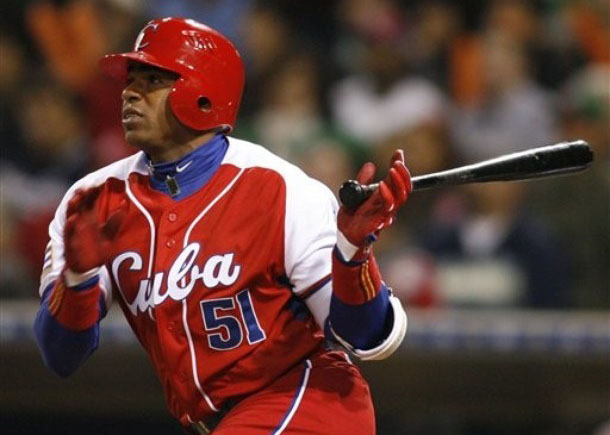
The threatening rumor is another: Yoennis Cespedes, the greatest slugger in Cuban baseball today and without a doubt one of the shining talents of the island, could be out of it, and not in an official tournament.

The comment has been gaining strength while a not to clarify the lie or confirm its veracity has not appeared. The story, roughly speaking, there would be this: the burly player from Granma province, current owner of the record for home runs in the National Series (with 33), “disappeared” as of last Tuesday, when he should have gone to the capital to complete the preparation towards a trivial ALBA tournament.

An unfortunate incident had occurred a few days before, Cespedes hit a pedestrian while driving a touring car near the coastal town of Manzanillo. The pedestrian was killed in the accident. Yoennis was arrested by the authorities, and after being cleared of responsibility for the event (it is said that the pedestrian was all the fault), was immediately released.

A few days later, according to the rumor, he vanished from the face of the earth, along with his mother and another star player, although not one of the stature of Cespedes, Henry Urrutia from Las Tunas.

All the Cuban specialists, residents on the island, with whom I’ve communicated about it, agree on one thing: if in reality Yoennis Céspedes chose to illegally depart from Cuba in a way that has not been specified, the fatal accident was not the fundamental motive. At best, it would be a complement, not the essence.

How might I describe what would be the reason that another “out of this world” player abandoned his League, his country, in search of another destination, unknown to us but we can surmise. From a mixture of professional dissatisfaction (despite his status as supreme batter, he was not chosen to represent Cuba in the next tournament in Canada, and instead was relegated to an ALBA event that doesn’t even interest the convalescent Hugo Chavez), and personal dissatisfaction: his position as a world “sub-champion”, of an athlete competing and winning internationally, he manages — oh supreme reward! — to collect $100 a month, and receives an electric bicycle as a reward for his effort.

Seen through Cuban eyes: tremendous. Seen through non-Cuban eyes: ridiculous.

The truth is that behind the mysterious and suspicious history of Yoennis Céspedes, a peasant from Campechuela, who through the force of his hits and his overwhelming talent became known throughout the country and beyond, whether or not his escape is true*, whether he appears triumphant in the morning before the cameras of Cuba or Miami, lies a more comprehensive and robust fact of one more potential migrant: the quick galloping death of Cuban baseball as a reflection of a national death.

Cuban baseball is sick. And critically so.

It would be an agonizing enterprise to list the number of players who in the past, say, ten years have left the country in the most diverse ways. Some take the simple road: scuttling off from their delegations as they compete in a certain nation; others with more risky route, sailing the sea or crossing borders.

Gone are the days of the impact generated by Kendry Morales and Barbaro Canizares when they deprived the Industriales team of a first class player in the first case, and an important player in the second. These, in turn, had replaced the earthquake that originated earlier with the supersonic pitchers Jose Ariel Contreras and Duke Hernández, when they abandoned the National Series for the Major Leagues. The constant rocking, the endless saga that becomes dangerously large, includes names that echo to young fans, both in the cases of Maels Rodriguez and Yadel Marti, and one who with his fabulous touches of the bat was the best lead-off hitter the team has had Cuba in recent years: Leonys Martin from Villa Clara. The new history of absences, of sudden vaporizations that yesterday shook the national stadiums, and the suddenly signed millionaire contracts with MLB: like the impressive Alexei Ramirez.

Yes, Cuban baseball is sick unto death. The national apathy infected. Infected with the virus of despair, injustice, of the prohibitions, a system that is not satisfied to destroy buildings and cane fields; is not satisfied with depopulating the streets and populating the prisons; is not satisfied with engineers throwing peas into the traditional coffee; is not satisfied with destroying the economy and the family unit, is now stoning the national sport.

How? Maintaining its iron fist. Keeping archaic restrictions that are impossible to observe. Pretending to tie the freedom of athletes who know themselves used for the most revoltingpolitics, tying their freedom with humiliating gifts such as an electric bicycle or a half-finished apartment.
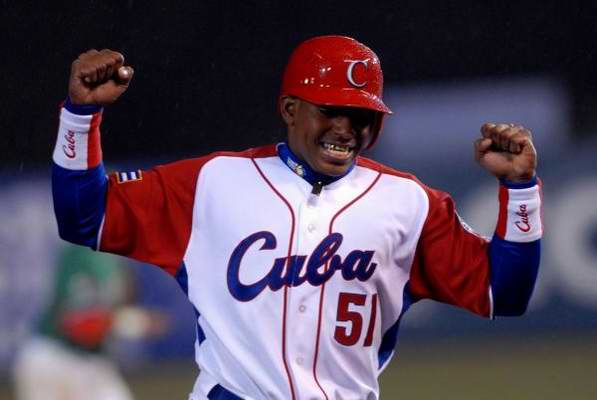
And these young athletes have something, against the will of their jailers: a worldview. They have played in real stadiums. They have known real cities. They have talked with their colleagues of other nations, have known their real salaries, including of athletes of lesser stature.

And above all: have known, smelled, felt, what true freedom is. They have looked at the World Baseball Classic at the galactic Japanese playing their seasons in the U.S., but defending the uniform of Japan internationally. They have compared their situation as slaves, flagged with quasi-military orders, obedient to a miracle of longevity — the near cadaver — like the Gallego Fernández (president of the Cuban Olympic Committee), with the rest of the contestants who, no matter what the team in the Major Leagues sweat baseball talent, return to the Dominican Republic, Puerto Rico, Panama, Venezuela, to play for their countries in world events and to bring hope to their fans.

Would not those same players, those Cuban stars, dazzle in the leagues dazzle in the U.S. or Japan, and finance on the Island the construction of real stadiums, sponsor children’s teams? Of course. The stories of Bartolo Colon, Alex Rodriguez and Tino Martinez, are drops of water in a sea of similar practices.

To open the floodgates to recognize the free will of Cuban baseball players, would allow them to return to their homeland after competing in other leagues in the world, would it not avoid the inevitable and unidirectional exodus, and would it not again raise the level of Cuban baseball to the days when there was a real pride in their international supremacy? Who doubts.

A Cuban team today, with the pitching of Livan Hernandez Aroldis Chapman, where Leonys Martin, Kendry Morales and Alexei Ramirez returned to the fields, and where global experience merged with local training among all its members, would surely not the fools that define today’s “Cuba” in almost every tournament it attends.

Of course, recognizing the right to individual liberty and the inviolable belonging to a nation, is not something done by leaders who choose to own the souls of their subjects. When Fidel Castro and his followers found that an effective way to “prove” the superiority of the system in place in the island was by dint of hits and strikes, Cuban baseball players were hung with a golden shackle on their foot, almost more visible and heavier than that of the rest of their countrymen. Among baseball players and Cuban doctors there is a strange coincidence of tropical slavery.

So Cuba falls, Cuba lost, Cuba is wrong over and over in recent years. So Cuba not only loses tournaments, games, important or unimportant, with American university students: it now loses to Curacao, to Taipei, to geriatric squads from the Dominican Republic, and to any team from Korea and Japan that they face.

Is there reason to rejoice? For some, yes. The Baseball-Player-in-Chief no longer has bragging rights. For others, for me, no: I’m not a passionate follower of baseball, I know the suffering of my people who, at least during nine innings in a crumbling stadium in Bayamo and Pinar, feel something like happiness, and that with each loss, with each player that escapes and will never play again, it saddens them with the same intensity with which they assimilate the food shortages, water shortages, lack of love.

Is it bread and circuses for the hypnotized populace? Maybe. But anything that gives a glimmer of peace for Cubans is something that I defend with passion.

To clarify, the story of Yoennis Céspedes, with 33 home runs over his shoulder, is nothing more than another number, another point in sports history today. It will be the same whether his escape is confirmed, or if it’s nothing but a wretched rumor. Anyway, in my opinion, even if he stays on island his career could come to an end: with such a “suspicion of desertion” in tow, superior Cespedes would play in no international events as punishment for the crime he never committed, but might have.

With Tony Castro, (Fidel’s son), a sports doctor made the vice president of the Cuban Baseball Federation, by the grace of his name with pedigree, there will be no second chances for the unreliable Cespedes. Now that I think of it, one of the bizarre ironies of this tragedy to the rhythm of sweat and conga baseball, is that a doctor dressed in Adidas supervises the comatose gravity of our national passion.

Translator’s note: Since this blog post appeared several months ago, Cespedes did leave Cuba and, as of January 2012, has established residency in the Dominican Republic, making him eligible to play in the major leagues in the United States.

July 5 2011

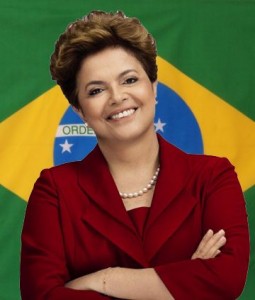
Dilma Rousseff’s Trip to Cuba: A Return to the Past / Iván García

One gray afternoon, after working an intense 12 house in her office in Planalto, Brasilia, the Brazilian president Dilma Rousseff, 63, took her laptop which she took everywhere, and confessed to the Newsweek reporter Marc Margolis, “When I was a little girl I wanted to be a firefighter or a ballerina, period.”

It was not to be. Dilma, like many of her generation, was a product of her times and circumstances. In the years she was studying at the university, her colleagues around the world, while defending making love and not war, were listening to the Beatles, wearing Che Guevara t-shirts and chewing Havana cigars like Fidel Castro.

Those were other times. The Paris of 1968, the conflagration in Vietnam, the specter of communism that dazzled many intellectuals and the cold war period.

Dilma, daughter of her time, also went out into the streets to protest against the military regime in Brazil and believed a different world was possible. She joined the guerrillas and suffered bad treatment and jail cells.

Now, at the age of a grandmother, in her spare time, she may review her hectic life as if looking into a kaleidoscope. In this age of the internet and globalization, the first woman president of Brazil knows that good intentions are not always the ideal way to design a model that integrates the excluded and hungry.

Dilma was forged by her political manager, the legendary Luiz Inacio ’Lula’ da Silva, a metalworker from Sao Paulo, who despite having completed only a primary education, became Brazil’s most popular president. And into a political diva, whom everyone rushed to invite to any important forum convened by the powerful.

From Lula she learned a simple and real lesson: the barricades, chaos and disorder, should be left at the door when trying to administer a powerful nation with a huge gap between rich and poor.

Rousseff knows well that governing is a balancing act. Zero hunger is not bad. Possibilities for the forgotten of the favelas and improving the quality of education and public health will always be something praiseworthy.

But for people like Dilma or Lula, a more just society need not polarize the country and denigrate the productive Brazilian middle class, an essential factor in generating wealth. They belong to the modern left which long ago dismissed the strange theories of Karl Marx because they never worked.

Dilma, in addition, bets on the greatness of her country. And puts it on the map of the first economic powers. She plans to socialize the favelas, and end the violence and drug trafficking. Create a memorable World Cup and Olympics and, above all, to do away with the endemic corruption in the giant country.

Brazil is a privileged partner of the United States and the leftist Lula was one of George W. Bush’s good friends. The Brazilians do not have the destructive and deep-rooted anti-gringo complex. But Dilma, like other Latin American leftist leaders, is guilty of dishonesty when the time comes to condemn or publicly criticize a student of the same class. Especially if that student is called Fidel Castro.

She grew up reading the long speeches of the bearded Caribbean. And in one way or another the olive green Revolution was a symbol. A stateswoman of Rousseff’s stature may intuit that the Castro brothers are part of an epic past. Old newspaper. Dinosaurs running the final stretch.

But like the old songs of the decade prodigious marijuana joint or the hippie, nostalgia is a powerful rip-off artist.

The past always matters. And Fidel Castro and his personal revolution is a parade of longing for people like Lula and Dilma. Rousseff does not come to Cuba to ask, out loud, that human rights be respected.

Nor will she summon the regime to stem the tide of sticks and slaps inflicted on the peaceful dissidence in the public street. Much less will she honor the memory of the regime opponent Wilman Villar Mendoza, who died on January 19 after a 50-day hunger strike.

Nor even in a whisper, after mojitos and canapes, and taking stock of how business is going between the two countries, will the ex-guerrilla chat about the urgent changes needed on the island.

She will not be heard to say that Havana needs to lift the government lock on the Internet and legalize the independent press. Dilma comes to Cuba for other adventures.

To make a 70 million dollar loan to buy agricultural equipment. To inspect the work in enlarging and modernizing the Port of Mariel, where Brazilian banks, thanks to Lula, have invested more than 600 million dollars. To review bilateral relations and sign cooperation accords on the economy, science and technology, among other sectors.

Of course, Dilma is brave and honest. A few days ago she took to task the unpresentable Mahmoud Ahmadinejad for his systematic violations of the rights of Iranian women.

Rousseff has always been adamant about democracy and freedom of expression. Asked by a journalist about State control of the media, she replied, “The only control I know is the command to change the channels on the TV.”

Obviously, in Cuba we will not see that Dilma. The Latin American left still is not ready to publicly condemn autocrats like the Castro brothers.

They form part of its past. They are a specter that frightens them. The ideology of traveling companions eventually turns into ties of blood. Dilma knows it well.

January 30 2012

Painting the Forgotten

He has drawn a table and put a patched plate on the worn paper: there is no canvas nor oils because of the scarcities. Even the air is going hungry, and the brushes go back and forth over the watercolor in an effort to hypnotize the spiritual asthma that such poverty provokes. He loves his Casablanca so much that he wants to go far away, where the nostalgia won’t force him to dream of it and he won’t have to live in his abandonment.

He waits for success with his brushes and a degrading sign — that they profaned with white — that he rescued from his big neighborhood. Long ago he left off the practice of painting bars. Now he draws on the potholed pavement and broken sidewalks, his alienated steps back to what he will remember if he does not return.

January 30 2012

Hot War / Lilianne Ruíz

Since the socialist camp fell, our politicians miss the Cold War and now should be celebrating the possible war between the dictators and the western democracies.  They have worked for years with this objective.  But they still talk on the radio about their ideological press releases, hypnotizing multitudes, that “the world cries out for peace.”

If the world were governed by religious dictators or by a proletariat dictator, there would not be much hope for human beings.  If, although they didn’t come to dominate, two blocks of power were established as in the fateful Soviet times, the fate of civilians would be like in the 60s, 70s, and 80s, where they jailed and abused citizens with the impunity that conceded the Cold War, in that the priority of the whole world was to not descend into a nuclear war.

It is not that the dictators have learned to respect religious differences, nor differences in sexual orientation, nor have they come to the time in which they have to respect political differences, there were concessions they made at some point, with their call of the “sense of the historical moment” to preserve their power.  If this sense changes they will return to show how they are:  “if the enemy tires out you have to annihilate them”, land of macho men, atheists, and revolutionaries.

People say that in the 80s, the markets were packed with food, condensed milk at 20 centavos, all we children went to school and we believed that the Americans were very evil and that some mercenaries had come to invade us and that bearded figurehead who would not stop speaking and gesturing had brought at last the first defeat of Imperialism in Latin America, and that was good.

Nobody told us in school that the President of the United States withdrew support of that invasion where imperialism wasn’t defeated but other Cubans coming from the country that historically has been the refuge of Cubans to overthrow tyrants.

In that historic lie taught in school, one can discern traits of the beneficiary of the lie.  If I had been an adult in that time and I wouldn’t have agreed that there was an abundance of food in the markets and never would have believed that that figurehead was better than me or my friends, because in all of the versions from my life, in all the endless pastures of space, in parallel universes, I detest the underdevelopment and servility of Castrocommunism.

What surprises me the most is the similarity with Stalinism, it isn’t possible they haven’t even learned the most minimal details.  It comes to them from inside, it is human nature.  Like an opportunistic sickness, they appear when capitalism has left the masses of people discontented, they offer them a better society, but they don’t tell them the conditions of this contract that never appears anywhere means that the payment will be the person himself, a debt that will not be paid with money because the leaders are in charge of that and nobody can own anything because they can’t be unequal, a lot of poverty for everyone and no freedom of conscience, nor of expression, no type of initiative.

All the dictators are similar, the same aesthetic, a grey curtain, a photo of the leaders, some flowers, very bad energy.  Now that the news in Cuba suspiciously announced the manifestations of support for Putin and the legality of the elections in Russia it makes me wonder if a secret fraternity exists with the KGB. I who in those days looked on with so much happiness, with more than 20 years of difference, the documentary about M. Gorbachev, on the History Channel on pirated video.

 Translated by: BW

December 19 2011

Resonance / Laritza Diversent

Cuba, the little island difficult to locate in the Caribbean Sea and the big booty in the new world order. Often I hear that it is under siege by the voracious appetite of the empire, its eternal enemy. Other big powers in the great Europe also lurk for prey.

A nice opening for a fiction novel.However, we Cubans feel we are at the center of the world, thanks to the eagerness of the socialist government for persecution. “The little besieged nation survives the attempts to dominate it.” Lyrical and melodramatic. In reality, we are the oldest of the Antilles, but not as important nor the most well-known among the citizens of the world.

It is there where the problem lies of those who decide to say, from within and faces uncovered, what they feel and think. How can we make ourselves heard in this world, inside a great act that is called the Socialist Revolution, when the media does not allow us to use new information technology. How can we show up the other side of the system and with angered eyes of repression?

It’s not a question of patriotism. It’s necessity. The human being is nothing without self-expression. Nevertheless, the problem remains.How can we make the world listen when we are surrounded by such obvious successes, free health care and education. Resonance is the only way we can make our voice heard.

Moving away from the methods, the positions, including the work of lobbying the diplomats and politicians, it is fair to recognize that in Europe and United States there are many people who help and multiply our voice, overcoming the differences in customs and languages. Also, its true that many times we don’t attach enough importance to or know how to appreciate the extent of this support.

On a personal level, I am thankful that they are where it is impossible for us to be, they help us get around the exit permit and conquer the borders of the Ministry of the Interior. Also I know that many of us hope for more. Some an aggressive Europe and other a less intransigent United States. Nevertheless, we ask for a little and nothing from ourselves.

That support achieves much more. It counteracts the loneliness when friends are afraid to share with you so that the State Security doesn’t place a mark on them. Only God knows how many times I asked myself, if what I do really is worthwhile. The attention of the outside world feels like a pat on the back, that keeps us from surrendering.

The interest and help from the outside world, in my opinion is an important factor in our struggle for freedom. It shows, as if we, ourselves, were the other side of the coin: the beatings that the Ladies in White received, the arbitrary detentions, the conditions of political prisoners, the persecution of news reporters, the death of Orlando Zapata Tamayo and most recently of Laura Pollán.

The part that touches me, I not only am thankful, I also admire those in the outside world who morally and materially support the Cuban dissidents. Especially so to those, knowing the risk, who come to Cuba and contact us.

I am not interested in the background if there is one, for me it is pure altruism. If another were in my situation I don’t know if I would be interested in those who endure repression in this world and, regretfully, there is no shortage. For that reason, I am extremely thankful to those in the outside world who make the voice of the Cuban dissidence resonate.

Translated by: BW

January 31 2012

Conscience / Lilianne Ruíz

I thought this week I wouldn’t manage to write anything. Who am I to talk about Russia’s foreign policy which keeps me from my sleep? What powers do I possess to dare to face off against a system that has caused so many victims in Cuba, just because they exercised their human right to freedom of expression as the only defense?

Before when I saw all of this I preferred to remain silent, as if the physical and spiritual hardships that a dictatorship imposed was the destiny that, in a prenatal time, in some place of conscience, we had chosen.

It’s true that there are schools, but I can’t choose what values to teach my children. It’s true that there is public heath, but the hospitals terrify me. That I get a pound of chicken a month, five of rice, because according to the radio, the billboards, the official ideology, if we had been born in capitalism we would be illiterate, lacking in medicine, and with less than a pound of chicken a month.

As if my destiny, my creativity, my rights, are worth nothing. If, above all, as if life were a school of ideology, a hospital that values state policies more than its patients, a pound of chicken a month that humiliates me and makes me want to tear up the ration book.

And from this reduction I emerge, and I discover myself to be immense, contradictory, free and different. The State and its totalitarian systems are omnipresent, it is the death of consciousness. There is no collective consciousness because we are not a collective, within each collective rebels of individuality emerge.

I know this is old stuff, that many before me have suffered. To act according to our conscience is not something we mothers can teach our children, because in a country dominated by ideology you cannot live as your own conscience dictates, but rather as most convenient for the debt to the State we all have from birth.

Sometimes it’s a job, a house, some perk, but in all cases it is freedom, better not to look for trouble for something one dares to say, or for some position one dares to have. After the sowing of socialist morality, ideology, the associated terror, we all have to respond like Ismena, Antigone’s sister: “And how, oh wretch, if things are so, can I heal myself, whether I disobey these orders or follow them?”

December 19 2011

Paint Used to Cause Terror / Luis Felipe Rojas

Translation of this collage which shows the homes of some dissidents, targets of state vandalism:

(1st row)

Terrorist paint attack in homes of peaceful dissidents.

It is common practice to carry out these attacks at night, while everyone is sleeping. However, they tend to also do them during mob repudiation attacks, organized by State Security and carried out by paramilitary mobs trained under their shield, known as the Rapid Response Brigades. The photos below show the home of Agustin Cervantes in Contramaestre, Santiago de Cuba.

(2nd row)

The three following photos show the home of Raudel Avila Losada in Palma Soriano, Santiago de Cuba.

(3rd row, on the Right)
The photos on the left are of terrorist paint attacks in the home of Sara Marta Fonseca Quevedo in the neighborhood of Rio Verde, Havana.

(4th and last row, to the left)
Blue paint attack in home of independent journalist Luis Felipe Rojas in San German, Holguin, different to the accustomed black tar commonly used. These are similar to the fascist methods applied against Jews during the Second World War, as their homes were marked.

Translated by Raul G.

31 January 2012

Reflections of Hell / Anddy Sierra Alvarez

As someone with other views of the events happening in the world, nothing more, I haven’t seen a robust reflection on the situation in the country of Cuba. The words fade, between their external motivations, their creations coming from the underworld rejected by humans as in the cases of Presidents Hugo Chavez, Rafael Correa, Evo Morales, this latter recently emerging from ideological and illiterate underdevelopment.

In Fidel’s “Reflection” called The Genius of Chavez, we read his great satisfaction at having managed that a rich country should fall into a totalitarian system, praising the president for his way of confronting the truth with lies. He couldn’t stop himself from calling out U.S. intervention in Latin America problems; it seems to me as if he is falling into an obsessive mental illness, perhaps we have been guided by a paranoid-schizophrenic  — who knows — this government has always surprised us.

The attitudes of these presidents are no more than one copy of the subhuman, now called the companion of the illegalities and corruption. What I can confirm is that the U.S. has managed to make Fidel and Raul Castro Ruz psychologically ill.

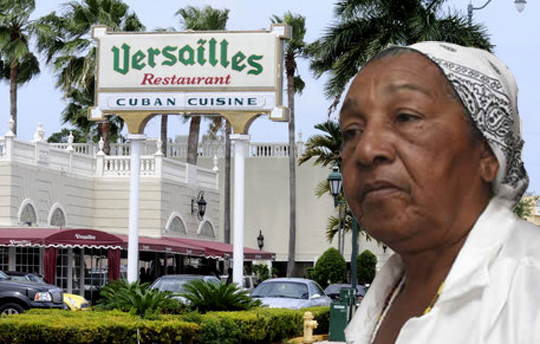
Reina Luisa’s Other Versailles / Ernesto Morales Licea

If, at the moment she stepped foot on U.S. soil that June 9, 2011, someone had whispered in Reina Luisa Tamayo’s ear that barely seven months later, this January 31, 2011, she would be at the Versailles Restaurant not as a heroic mother, but as a woman in need of support and understanding; no longer a protagonist of a campaign to defend universal human rights for which her son died, but rather in a campaign for her own economic aid, she wold have thought it was one more of Castro’s manipulations.

Too many lies had been targeted at this humble woman who, in the midst of her pain, had to see herself on Cuban television, spied on by a hidden camera in the office of her son’s doctor, maligned, even about her integrity as a mother.

Seven months ago Reina Luise appeared before other cameras, at the Miami International Airport, with the ashes of her poor son in her arms, surrounded by a delegation of activists and leaders of the exile — including a federal congresswoman — receiving the treatment of a heroine: admiration, promises of aid, family invitations, a site for the eternal rest of her son. The media fought over her. Everyone wanted to talk to her, congratulate her, honor her. Reina Louisa was news.

Behind the scenes, the only ones ignorant of what would soon happen in their lives, were the twelve family members who sought political asylum at her side, and Reina Luisa herself.

Recent statements by the Lady in White, offered to the journalist Pedro Sevcec on his program “Sevcec a Fondo” of América TeVé, where she stated explicitly that on her arrival in the United States she was manipulated, and that she and her twelve family members felt cheated, and where she tried to keep her voice from cracking when she responded the question of the host about whether she regretted coming to this country, were the sad time bomb that we all knew would eventually have to explode.

The first signs appeared months earlier. A man who carries the same surnames — Zapata Tamayo — Rogelio, Orlando’s older brothers, told a reporter of the Gen TV chain words that shocked the ears of the Cuban “historic exile”:

“This has all been a deception, since we arrived, first they told us one thing, then they told us another, and at the end of the day, the truth is we don’t know what’s what. Everything becomes political. I’m not political, I don’t engage in politics… what I lived in Cuba, I did in Cuba. My principal objective here is to work and I can’t figure out how to do that.”

Lately, Reina Luisa prefers not to give interviews. It’s easy to see why.

But now she has broken her silence and returned to the news, this time to look at the promises that lured her to American soil which turned out to be unreal, to present how she and her family have been simply used by a political and ideological machinery opposed to what harassed her in Cuba, the real story has surfaced. And in a very painful way.

First the family was lacerated by the Cuban government’s repression. Then, the sordid reality of a distant exile, where many end up dying of a badly healed nostalgia, and where those who don’t know how to care for themselves only have one option in the range of possibilities: to never come.

Would it be wroth it to investigate the history of the broken promises made to this family by the exile organizations and leaders? Of course. Not to corroborate what we already know, but to demonstrate how much these humble Cubans were lied to in order to bring more victims to Miami, at any cost.

It would be worthwhile to ask who told thirteen people, with poor educations, and a woman of 65 with health problems, that they would be supported indefinitely in a city where everyone has to strive not to increase the existing 11.5% unemployment figure, and where thousands of those born here, bi-lingual, and with full knowledge of the society, cannot get jobs to support themselves, or must work as cleaners — as Reina Luise states she has had to do — in order to pay their bills.

When Reian Luisa, implored from Banes, Holguin, to change the family’s original destination from Arizona to warm and “known” Miami, she thought she knew what she was doing. That is: to arrive at the place where her comrades in the cause and pain could better help her and hers. The efforts of the Chair of the Foreign Affairs Committee of the House of Representatives, Congresswoman Ileana Ros-Lehtinen, turned her request into an immediate order.

Today, Orlando Zapata Tamayo’s mother is learning her lesson in the most difficult was possible: in free societies, not only do we enjoy inalienable rights, we also contract enormous obligations. The first and foremost: the obligation to take care of our own lives. So we live in the best part of the civilized world. So we live in the society of the United States where, hopefully I’m wrong, Reina Luisa will probably never adapt.

To all this, the crossfire. From Cuba the propaganda apparatus laughs and shows a captive people the benefits of an exile, where icons, like Reina Luisa, say they feel betrayed seven months after arriving in freedom. In Miami, too many voices begin to use words like “ungrateful” and “unfair” to name the thirteen relatives of the martyr.

How do you explain to a woman who did not choose her own destiny, who has been a victim of it; a woman lacking education, without her Santiago birthplace and her adopted Banes, without an existence beyond the excruciating pain of losing a child; how to you explain to her that now she and hers must fend for themselves, away from the television cameras, away from the headlines, without organizations or politicians now too absorbed in election year politics?

How do you make her understand that the concept of the paternalistic State, where houses “are given,” where you don’t have to pay for health care, where if you lack sugar or rice the solution is to ask to borrow from the misery of your neighbor, that all that is in the past, that in this land not only is freedom won, but, above all, responsibility for one’s own destiny.

How do you make her understand that she would be invited to speak to the Congress of the United States, that she would be invited to tell her story in Boston and Puerto Rico, but that once the narration was finished she would have to pay her own bills for electricity, cable, telephone and transportation?

No, it’s not possible. As it is not possible to return her son to her, and to return her happy and humble life in Banes from years earlier to her. Like it will not be possible to go from door to door of all those in Miami who promised her guaranteed support, and demand that they fulfill their promises.

The image of Reina Luisa Tamayo this January 31 in the Versailles restaurant, appealing to her symbolism to move the sentiments of anyone who could offer a job in consolation for her and some of her family members, seems to me a huge sadness. And I suspect that those directly responsible for this reality don’t even know what has happened today to the mother of Orlando Zapata, nor do they care.

February 1 2012

Marti for Everyone? / Luis Felipe Rojas

This past 28th of January, the Cuban government presented us a renovated Jose Marti amid the shouts of the little red pioneers, portraits of Fidel Castro, and songs of Silvio Rodriguez. The celebration was also marked by beatings, arrests, and restrictions on movement of various pro-democracy activists throughout the entire island who were trying to pay tribute to the Apostle of Freedom.

For years now, the regime has always acted in this way on this holiday, and it no longer surprises me to see so many arrests, but what I didn’t know was that the masonry lodges and other fraternities have to obtain a permit from the local government and from the Department of Religious Issues of the Community Party of Cuba in order to deposit flowers in any statue of Marti on that day.

In San German, political police officials Captain Abel Ramirez and Lieutenant Saul Vega, accompanied by uniformed agents, punctually showed up to my house this Saturday to arrest Eliecer Palma, releasing him hours later. Meanwhile, in Banes, Rafael Meneses Pupo, Ariel Cruz Meneses, and Derbis Martinez were arrested for more than 8 hours in order to impede them from honoring the Apostle.

And as if the 28th was not enough with arrests to impede independent tributes to Jose Marti, on Sunday morning olive-green uniformed officials driving a Mosckovich car detained Jose A Triguero Mulet near the Peralta neighborhood of that city. Mulet, a 68 year old dissident, explained to me that they left him abandoned in a remote zone nearly 30 km away from Holguin. He added that the soldiers did not explain anything to him, as far as motives for the kidnapping.

In that same city, Caridad Caballero, Suleidis Perez Velasquez, Isabel Pena, Ana Maria Aguilera, Berta Guerrero and Adis Nidia Cruz were also kept from going to church, as they were kept in different dungeons within police units throughout the municipalities located far from their homes (Gibara, Santa Lucia, Cacocum, and the G2 Operations Barrack known as Pedernales). Meanwhile, the men who were arrested- Esteban Sandez, Luis Jaime Merino, and Felix Tomas Farat- were victims of violence at the hands of their oppressors. Even while they were kept inside cells, the agents trained to beat those who think differently continued to attack the men.

All of this to impede both men and women from going to church for Sunday mass.

My house remained surrounded by uniformed agents, political police officials, and henchmen of the paramilitary Rapid Response Brigades, among them Maikel Rodriguez Alfajarrin, aka ‘The Spark’ (Chief of Home Inspections), and Gustavo Utria Garzon, who has been identified by neighbors as the culprit of the terrorist paint attack in my house this past 25th of January. I don’t usually make comments like this, but both Utria and Alfajarrin enjoy the benefits of favors granted to them by emigrated neighbors from San German who live in Miami and who visit the town every year. Perhaps they do not know about the crimes their friends are committing.

Oppressors watching. Photo by Luis Felipe Rojas

This Monday, I sent a notification to Amnesty International, Reporters Without Borders, and the Committee for the Protection of Journalists (CPJ). As the pressure and actions against me escalate, the script of the repressive acts should continue and I don’t doubt that “unknown people” will beat me in the middle of the night, after two or three mob repudiation attacks outside my house. And, finally, if they have no other method to try and make me obedient, they will sentence me for social dangerousness and hold me accountable for having stared a sunset. Although this alert will not save me from the abuses of power, I want my friends in and out of Cuba to remain attentive and ready to disprove any absurd story about my family.

In fact, I began this post talking about Jose Marti, the most universal of Cubans, a man who dreamed of a nation for all, and I ended up detailing the government repression against non-conformed civilians, a key element for understanding the day to day Cuba.

Translated by Raul G.

1 February 2012

One Hand Washes the Other / Rebeca Monzo

My friend lives in a beautiful apartment building from the 1950s, on Línea street. This morning, as always, she prepared to leave for work, when suddenly, the washbasin that had heroically resisted the pounding of 50+ years of survival, had given way to the implacable advance of the years, and a crack had finally caused it to burst.

That same afternoon, when she arrived at the office, she started the arduous task of finding a plumber, who in addition to knowledge of his profession, would give his word and come to repair the breakdown.After two days of making multiple calls to different telephone numbers recommended by neighbors and friends, she finally found one who promised to go without fail that same afternoon, to see if he could take a look at it. Actually, the man lived up to his word and turned up for the appointment. The judgment was finally declared to be a malfunction of the washbasin. That is where the odyssey began.

The first thing he did was to look into different chains of stores with a hardware department to learn which one to go to and not lose time and gasoline, that is really $1.15 CUC per liter, although that’s not what I’m talking about now. After going around to the best stores fruitlessly in the city, finally he found it in Roseland, at half the price of the same thing that he had see in Palco days before, and couldn’t buy because it was excessively expensive.

Happy about the discovery, she arrived at the store with measurements recommended by the experienced plumber. The happiness ended there. The salesperson that was in the department in question, told her — after greeting her “good afternoon”, and finding out what the client would like — that she couldn’t help her because today she was lacking many workers.

Before many requests and pleas from the possible buyer, the employee, with a very bad character, decided to call another sales assistant so that he could work on the issue. The first thing that this person did, was to talk with my friend about the annotated measurements that she brought, telling her that they didn’t exist, but at her insistence, visibly contradicted, she agreed to go down to the warehouse, but at that moment, it created a tremendous discussion between the two employees, where the person who just recently arrived told the bad tempered worker from the department: I’m going to have to kick your A-S-S.

My friend, horrified but turning a deaf ear, told the boy, Go on, I’m going to give you $2 if you help me, to which this swift guy answered, if you want me to help you give me $5, now you know, madam, one hand washes the other, and two hands wash the face.

Note: the facts are true and if someone from the Roseland store, is, by chance, reading this post, he knows that what is related here is absolutely truthful.

Translated by: BW

January 30 2012