State Security forbids Dagoberto Valdés from any contact with the US ambassador and assures that what happened in Venezuela, where there was “betrayal and collaboration with the enemy,” will not happen in Cuba.

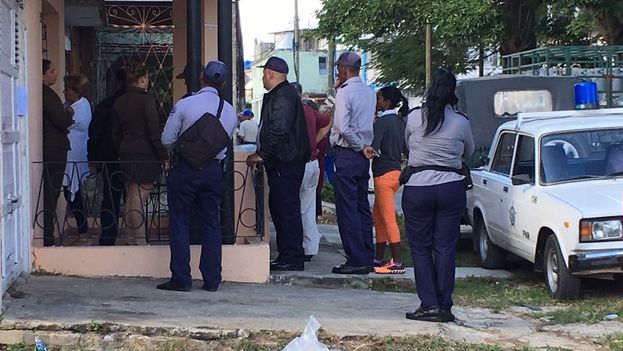
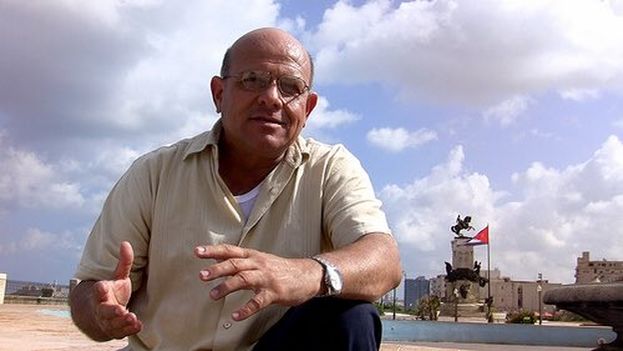
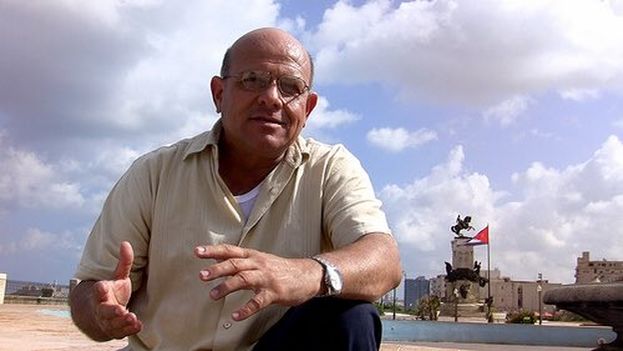
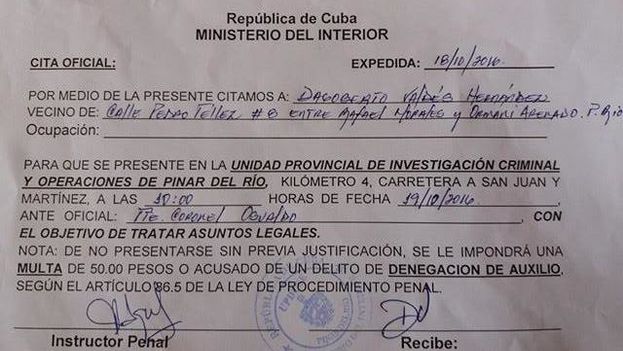
 14ymedio, Havana, 23 January 2025 — The Center for Coexistence Studies (CEC) confirmed that Dagoberto Valdés Hernández was arrested and interrogated this Friday at the State Security headquarters in Pinar del Río, in an operation led by Majors Ernesto and Manuel, both officers of the political police. The arrest, carried out without a warrant or the right to be summoned, was motivated—according to the officers themselves—by a recent visit Valdés made to Mike Hammer, Chargé d’Affaires of the United States Embassy in Cuba.
According to the statement released by Convivencia, officers arrived at Valdés’s home in the morning, accompanied by a police patrol. They ordered him to clear the house of any visitors present, lock it, and accompany them immediately, without explaining the reason for his arrest or allowing him to make a phone call. Valdés was taken directly to the State Security headquarters in the provincial capital.
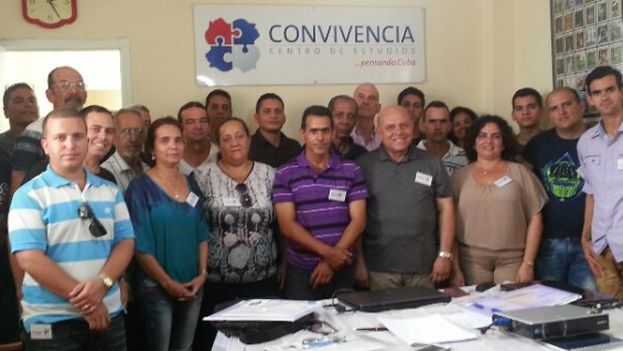
After learning of the arrest, members of the Community Relations team went to the Police Headquarters to try to locate him. The officer on duty stated that they had not received any patrol cars that morning. Given this response, they went to the State Security headquarters, where initially no information was provided either. Only after insisting on speaking directly with someone in charge did Majors Ernesto and Manuel appear at reception to inform Yoandy Izquierdo Toledo that Valdés was being held there.
In that same exchange, the officers told Izquierdo that he had “saved them a trip because they were going to look for him too,” demanded he hand over his identity card, and informed him that he would be interrogated as well. Valdés was taken to internal offices, where an interrogation of more than two hours took place, involving the head of the Legal Department of State Security, Major Ernesto—the officer who “handles” Convivencia—Major Manuel, head of the Counterrevolution Brigade in the province, and a young officer who did not identify himself.
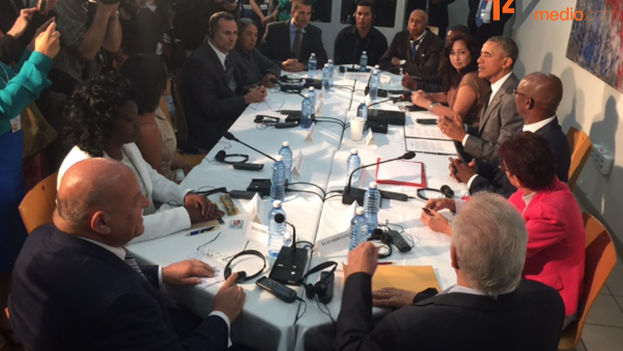
The legal officer explained that the reason for the arrest was Valdés’ visit to Mike Hammer
During the interrogation, the legal officer explained that the reason for the arrest was Valdés’s visit to Mike Hammer. In that context, he accused him of terrorism and of collaborating with a foreign power that—he claimed—had threatened Cuba with military intervention. The officers asserted that they would not allow the U.S. diplomat to contact people continue reading
Major Ernesto read excerpts from a column published by Valdés in Convivencia on Monday, January 19, in which he urged preparations for peaceful change in Cuba under the premise that “the future is already here.” He asked if this text was related to the visit to the diplomat. Valdés responded by quoting his own article, in which he recalled the words of Saint John Paul II, according to which Cubans “are and must be the protagonists of our own personal and national history,” emphasizing that change must be undertaken by the citizens themselves.
Valdés further explained that the meeting with Hammer was related to the distribution of humanitarian aid donated by the United States through the church, and that the purpose of the conversation was to learn his opinion on the process. Despite this, the officials insisted on portraying the contact as a hostile act and reiterated warnings about future interactions with foreign diplomats.
At the conclusion of the interrogation, the officers informed Valdés that it was a warning document, which he refused to sign. They advised him not to respond to any further invitations from the U.S. diplomat or participate in activities organized by the Embassy, although they indicated that he could travel to Havana for reasons related to the Church, studies, family matters, or caring for sick people.
The arrests and interrogations confirm the state of panic gripping the regime’s repressive forces.
Later, Yoandy Izquierdo was interrogated under the same pretexts. The officers warned him about alleged manipulation by the U.S. Chargé d’Affaires and other embassies, demanded he “maintain the profile” of Convivencia, and asserted that sharing the ideas of the “enemy” also constitutes a crime.
They alluded to Venezuela as an example of what, they said, they would not allow to happen in Cuba, that they “knew everything” because of Cuban intelligence reports, but there “there was betrayal and collaboration with the enemy,” and that here that was not going to happen because “the Revolution is stronger than ever.”
Izquierdo responded that he is responsible for what he writes and for his work with the Coexistence Project and the Center for Studies for over 15 years, but not for official interpretations or “hypothetical futures.” He also questioned the proportionality of the police deployment to address the content of the interrogation, to which Major Ernesto replied that it was a matter of “action-reaction” due to the gravity of the situation in the country.
The arrests and interrogations confirm the state of panic experienced by the regime’s repressive forces in the current regional geopolitical scenario, marked by the capture of Nicolás Maduro and the abrupt realignment of alliances and loyalties on the Cuba-Venezuela axis.
____________
COLLABORATE WITH OUR WORK: The 14ymedio team is committed to practicing serious journalism that reflects Cuba’s reality in all its depth. Thank you for joining us on this long journey. We invite you to continue supporting us by becoming a member of 14ymedio now. Together we can continue transforming journalism in Cuba.