After 10 pm, the National Electric Union said, the system was restored, four hours after the Felton plant came back online
 14ymedio, Havana, 28 August 2026 / A new “oscillation” once again pushed the battered national electric system (SEN) to the brink this Thursday. A disturbance in the transmission lines caused the disconnection of the eastern region and knocked three thermoelectric units out of service, in an incident that authorities are investigating and that once again puts the spotlight on the growing instability of the Cuban grid.
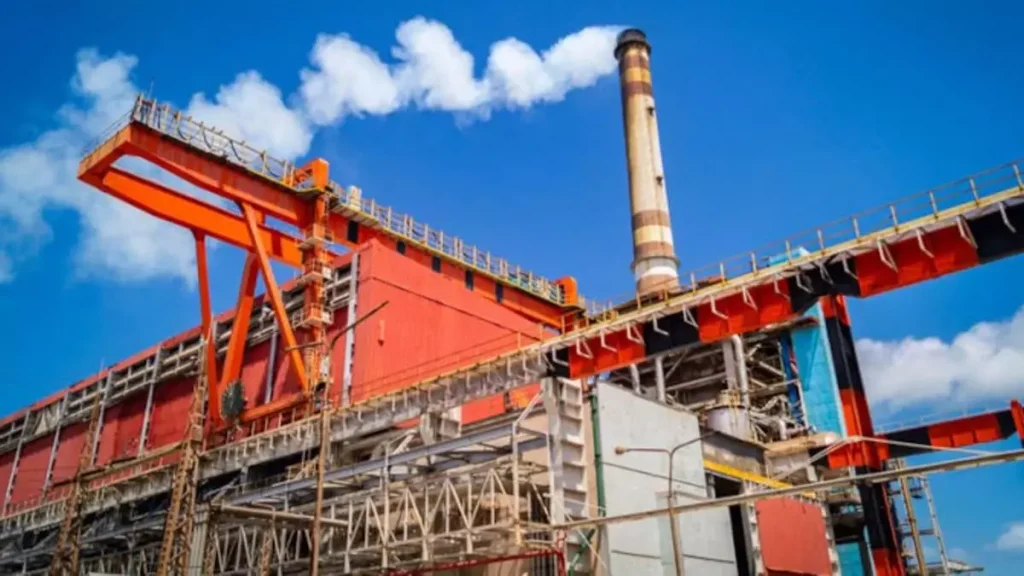
According to the information released by government-aligned journalist Bernardo Espinosa, the National Load Dispatch reported an “extreme failure” that left the provinces from Holguín to Guantánamo separated from the SEN. As a result of the disturbance, unit 1 of the Lidio Ramón Pérez plant in Felton, unit 6 of the Diez de Octubre plant in Nuevitas, and unit 6 of the Antonio Maceo plant in Renté were taken out of service.
After 10 pm, the National Electric Union said, the system was restored, four hours after Felton came back online. From there, the Camagüey-based Diez de Octubre plant was reconnected, although authorities did not provide information about Renté.
In total, the SEN has already suffered seven complete disconnections so far in 2026, in addition to several large-scale partial separations
This is not the first time an “oscillation” has preceded a breakdown of the SEN this year. On March 21, just five days after the first national collapse of 2026, Cuba was once again plunged into complete darkness following a phenomenon officially described using that same term. On July 14, the shutdown of Felton’s unit 1 caused, according to the official version, a “sharp oscillation in the system’s frequency” that ended in another total blackout.
In early August it happened again. As the country was still trying to recover from the year’s sixth national collapse, rain and electrical storms caused an oscillation that brought down the system once more – the second collapse in less than 24 hours.
In total, the SEN has already suffered seven complete disconnections so far in 2026, in addition to several large-scale partial separations. The first national blackout occurred on March 16. After that came the one on March 21, three in July – on the 6th, 10th, and 14th – and two consecutive ones in early August.
The recurrence of these oscillations takes on particular significance at a time when the Government is rapidly incorporating photovoltaic generation into a grid that operates with very little reserve and numerous damaged thermoelectric plants
These collapses are in addition to regional breakdowns such as the one that left western Cuba without electricity for nearly seven hours on August 1, affecting Pinar del Río, Artemisa, Mayabeque, Havana, and Matanzas.
The recurrence of these oscillations takes on particular significance at a time when the Government is rapidly incorporating photovoltaic generation into a grid that operates with very little reserve and numerous damaged thermoelectric plants. Based on the information available, solar energy cannot be identified as the cause of Thursday’s incident, but the authorities themselves have acknowledged the problems involved in compensating for fluctuations without the anchor of the thermoelectric plants that are essential to ensuring the SEN’s stability.
Miguel Díaz-Canel admitted in March that instability was such that not all the energy available at solar farms could be used during the day. Its connection had to be increased or reduced, he explained, in order to regulate frequency and “avoid another blackout.” The president then announced the installation of battery systems intended precisely for that function.
The problem does not lie in solar energy itself, but in integrating it into a weakened grid. Traditional thermoelectric plants provide synchronous generation and help cushion sudden frequency changes, while photovoltaic farms depend on electronic inverters and their output can vary rapidly. Modern systems compensate for these fluctuations through batteries, electronic regulation, and sufficient generation reserve – elements that Cuba has only to a very limited extent.
In Cuba, where the loss of a single large unit can represent a significant share of all available generation, the margin for absorbing a disturbance is very limited
During the recovery from July’s blackout, the Director General of Electricity, Lázaro Guerra, specifically highlighted the importance of the batteries installed in El Cotorro (Havana), capable of “regulating the frequency” of the small systems that were forming before the national grid was reconnected.
Thursday’s incident now requires clarifying what happened first. Official information does not specify which line began to oscillate, what type of disturbance occurred, or whether the shutdown of Felton, Nuevitas, and Renté was the cause or the consequence of the instability. Nor has any information been provided on how much photovoltaic generation the SEN was delivering at that time.
These questions take on special relevance following the blackout in Spain and Portugal on April 28, 2025, whose investigation showed just how quickly oscillations, voltage problems, and cascading disconnections can spread through an electrical grid. In Cuba, where the loss of a single large unit can represent a significant share of all available generation, the margin for absorbing a disturbance is much smaller.
Translated by GH.
______________________
COLLABORATE WITH OUR WORK: The 14ymedio team is committed to practicing serious journalism that reflects Cuba’s reality in all its depth. Thank you for joining us on this long journey. We invite you to continue supporting us by becoming a member of 14ymedio now. Together we can continue transforming journalism in Cuba.