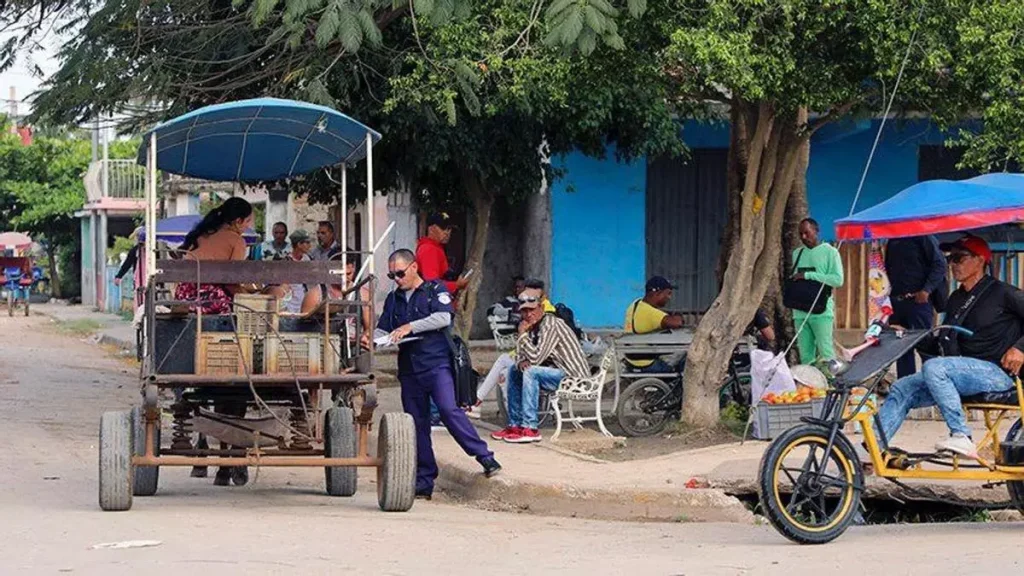
Damaris Ricardo, 48 years old was “violently attacked” by her parrtner, who then killed himself.
In August, seven femicides were reported on the island. / YoSíTeCreo en Cuba
14ymedio, Havana, September 3, 2025 (delayed translation) — Three new femicides recorded during the last month in Cuba. The Observatorio de Género Alas Tensas reported the killing of Damaris Ricardo Martínez, Dayli Villa Ortiz and Yolennis Rojas Rojas. Two of the attacks happened in August and the third one in July.
According to the NGO, last August 28th, Damaris Ricardo, 48 years old, “was violently attacked by her partner, who took his own life afterwards. The woman’s body was found by the police in the Cueto municipality, in Holguín.
The second reported case was in Matanzas. Dayli Villa Ortiz, 24 years old, died at the hands of her partner in their home in Carlos Rojas, Matanzas. “Sadly this terrible act took place in front of one of Dayli’s daughters, who, hopefully will receive the specialised support she needs” said Alas Tensas.
Finally, there was a case reported last July 29th. This was Yolennis Rojas Rojas, 32 years old, stabbed to death by her husband in the Rafael Freyre municipality in Holguín. This occurrence “underlines the urgent need for specialised protection systems to support women fleeing violent homes. Yolennis tried to do it and was helped by her father, who was injured and nearly died”, added the organisation. The woman leaves two small children. continue reading
The aggression “underlines the urgent need for specialised protection systems to support women fleeing violent homes”
With these three new cases confirmed by the observatory, this brings the total number up to 28 femicides so far this year, according to 14ymedio’s calculation.
In August, the number of such violent attacks reached an alarming level, with seven murders. The first was Mailenis Blanco Amor, 47 years of age, on August 4th in Piareña district of Puerta de Golpe, in Consolación del Sur Municipality.
One day later, on August 5th, there was another one in Holguín city. 56 year old Milagros Batista Estévez died at the hands of her ex-partner, in her home in Alex Urquiola.
The third victim in August was Bárbara Elena Tejería Magdaleno. also 56 years of age, living in Calabazar, Boyeros, in Havana. She was attacked on August 11th with a machete by her partner, who denied having seen her. Bárbara’s body was found three days after in some waste land in Las Cañas slum. The attacker killed himself shortly after.
Another case confirmed by the ONG was Ledisvannielis Acosta Echavarría, 19 years old, on August 12th. Her body was found in the bath in her home, in calle Amistad between San José and Barcelona, in Central Havana.
The last instance reported by the observatory was August 25th. Rosa Delia Morales, between 61 and 62 years old. She was attacked in her house in Placetas, Villa Clara, August 22nd, by her partner, who later killed himself.
Translated by GH
____________
COLLABORATE WITH OUR WORK: The 14ymedio team is committed to practicing serious journalism that reflects Cuba’s reality in all its depth. Thank you for joining us on this long journey. We invite you to continue supporting us by becoming a member of 14ymedio now. Together we can continue transforming journalism in Cuba.
Of the 14.8 million fry planned for 2025, only 5.4 million have been produced so far this year
This year, the energy crisis has struck the fish hatchery / Granma
14ymedio, Havana, September 30, 2025 — The largest fish breeding station in Granma province and the second largest in Cuba, the René Ramos Latour Basic Business Unit (UEB), in the municipality of Bartolomé Masó, is experiencing a production crisis. Of the 14.8 million fry planned for 2025, only 5.4 million have been produced so far this year. At best, the figure could exceed 6 million, still far from what was expected.
According to an article published on Tuesday in the official daily Granma, the production debacle dates back at least to 2023 and has different causes. Two years ago there was a shortage of feed. However, this year it is the energy crisis that has taken its toll on the hatchery.
Specific conditions are required for fish to breed: “They don’t reproduce by themselves, alone in ponds,” explained Alejandro Socarrás Parra, the company technician. The cyprinids [family of freshwater fish], including white and spotted tench, common carp, wild carp and catfish, come from large rivers in Asia and Europe. “There the male goes behind the female and gently pats her abdomen until she releases the eggs and he immediately fertilizes them,” added the worker. Therefore, he said, they need a constant stream of water, because the eggs need pressure to hatch. “Otherwise, they are most likely to be born deformed or not at all.”
This year, the energy crisis has hit the nursery
Although on-site incubators are prepared to imitate this process with mechanisms that generate a current, the lack of electricity does not allow them to operate. Before this, the company installed an internal combustion engine that “has been a relief,” but not totally, because “you have to throw in more than 700 liters [185 gallons] of fuel, and often you don’t have it.” At most, it is done twice a month, Socarrás Peña said. continue reading
Another factor has been the water shortage, which has affected the entire country in recent months. In February, when the production was going according to plan, the level in the ponds dropped, causing the fry to lack oxygen and die. “They completely disappeared,” said the technician.
Despite having “20 concrete ponds,” few are in use. Catfish inhabit three of them but don’t represent large populations. The others are empty, “full of weeds or ashy concrete from so much sunlight.” Of those that contain water, none is full. “It takes a whole day of current to fill,” said the company director, Rudisnel Santos.
As there is barely electricity for three hours a day, they only fill those that are already in use
As there is barely electricity for three hours a day, they only fill those that are already in use, because the combustion engine “does not work. The pumps are huge. You need a lot of current to get them working,” remarked the official.
“A few weeks ago we made a proposal to have 12 hours of power on a daily basis for at least 10 days. With that we could fill at least four ponds. The point is that, in order to give power to this station, it must also be given to half of Masó. And that, in these times, would be like bragging about what we have while others are in need,” said Yuniesky Rosabal Rosa, director of General Services, with an air of resignation.
Another problem is the presence of “predators of all kinds. With more than 50 hectares [124 acres] of fish, up to 10 or 12 people can enter in one night.”
Although there are places available to integrate security guards, no one will take the job. “What happens with these positions is that people have already run the numbers,” said Rudisnel Santos. They pay 2,300 pesos a month for this work. “That has demotivated the troops: they don’t get money in their pockets. Political work can be adopted for it one day, but… what about food? It’s complicated. It takes sacrifice. It takes stamina,” he added.
“Political work can be adopted for it one day, but… what about food? It’s complicated. It takes sacrifice.”
Granma’s report is only a sample of the crisis in the country’s fisheries. It was also reflected in the largest reservoir of Cuba, in Sancti Spíritus. The frenetic fishing that started last year in Zaza, due to the drought, caused the cooperatives to go out and fish as much as they could.
One year later, the fish became feral, scarce and afraid to surface, which has impacted the campaign planned for this year. From 914 tons of fish that was programmed for the first four months, they barely managed to catch 658 tons.
Translated by Regina Anavy
____________
COLLABORATE WITH OUR WORK: The 14ymedio team is committed to practicing serious journalism that reflects Cuba’s reality in all its depth. Thank you for joining us on this long journey. We invite you to continue supporting us by becoming a member of 14ymedio now. Together we can continue transforming journalism in Cuba.
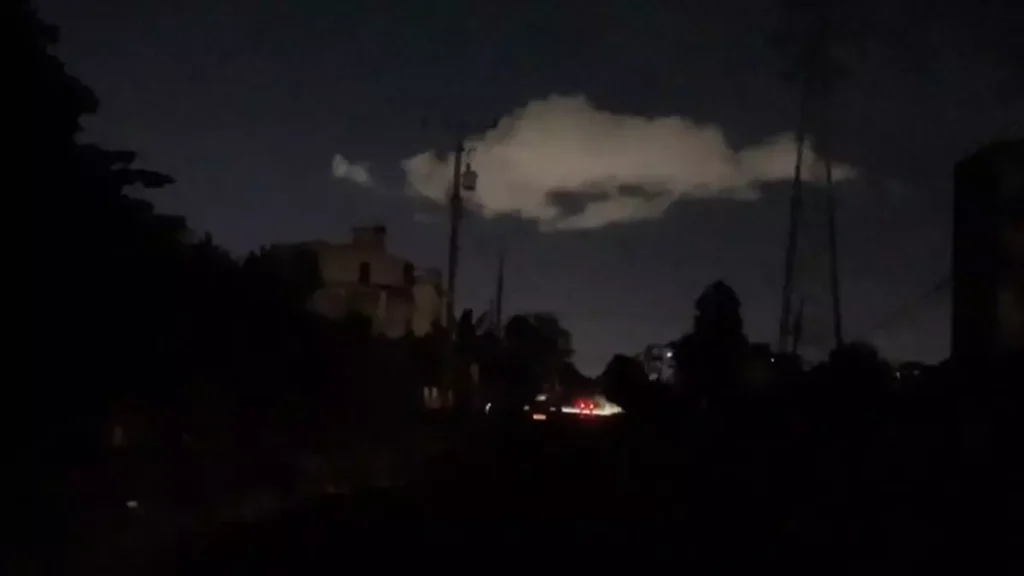
The energy crisis that afflicts the Island comes to the surrounding areas of the Casino Deportivo, where villas with gardens are plentiful
The areas surroundings the Casino Deportivo, in the municipality of Cerro, Havana, this Monday / 14ymedio
14ymedio, Havana, Darío Hernández, September 30, 2025 — The areas surrounding the Casino Deportivo, in the municipality of Cerro, were pitch black on Monday night. Dark, but not at all silent. In streets like Primelles and Santa Catalina the cacerolazos (street demonstrations with people banging on pots) were forceful. “The schedule isn’t working; people can’t sleep,” a neighbor reports to this newspaper, saying that in recent days they have had 12 hours of blackout daily.
Yesterday, the Havana Electric Company reported that a break in two circuits lefts some substations in operable: Melones and Tallapiedra, in addition to the only Turkish patana (floating power plant) that remains in Havana, in Regla. Old Havana, Centro Habana and part of San Miguel del Padrón and Diez de Octubre were left without light. On Tuesday morning, the State-owned company announced that six blocks in the capital were “affected” and “the schedule could not be met.”
According to today’s report from the Electric Union of Cuba (UNE), an allocation of 1,798 megawatts (MW) was reached on Monday at peak demand time. On Tuesday it is expected to be even worse. For peak time, the estimated demand is 3,550 MW and and the estimated availability is 1,780 MW, resulting in a deficit of 1,770 MW. The actual impact, however, is estimated at 1,840 MW.
“Now everyone is banging on a pot, something that was unthinkable a year ago”
Although what Havana experiences is far from the power cuts of the provinces, where blackouts have lasted 26 hours in recent weeks, its residents are becoming fed up. “Now everyone is banging on a pot, something that was unthinkable a year ago,” says a resident of the Casino Deportivo neighborhood. continue reading
The neighborhood, with an image of a well-to-do area in Havana where families with better economic status live, used to appear in the classified ads for homes as an area where “the lights stay on.” However, the energy crisis that afflicts the Island has also knocked on the door of the villas with gardens and spacious salons that abound in its perimeter.
Arbitrary prison sentences for some of those who have gone out to protest the energy crisis by beating on pots are an effective deterrent, but the mood is getting angrier. This Monday, despair, mainly due to the lack of water but also of light, led a group of mothers to close Monte street with their children in their arms, hoisting empty buckets.
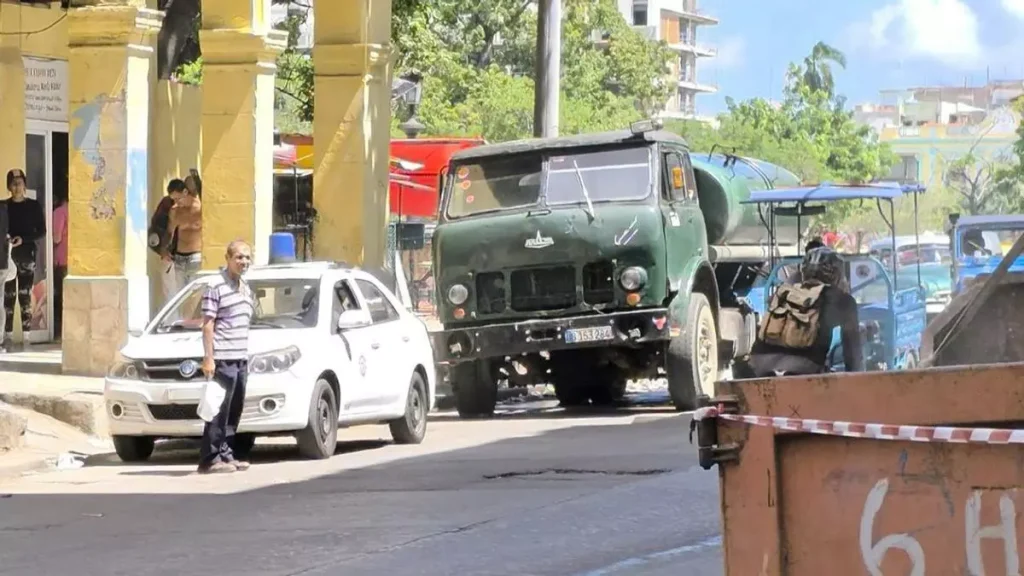
Police officers tried to break up the protest by shoving and cursing, although moments later a water truck appeared on the scene, guarded by a patrol car, to appease the crowd.
Translated by Regina Anavy
____________
COLLABORATE WITH OUR WORK: The 14ymedio team is committed to practicing serious journalism that reflects Cuba’s reality in all its depth. Thank you for joining us on this long journey. We invite you to continue supporting us by becoming a member of 14ymedio now. Together we can continue transforming journalism in Cuba.
The state-owned company admits it faces difficulties in repairing the 78-inch pipeline for the Cuenca Sur water supply.
Moments later, a truck arrived on Monte Street, guarded by the Police / 14ymedio
14ymedio, Juan Diego Rodríguez, Havana, 29 September 2025 — Women taking to the streets with their children and men with machetes forcing a truck driver to hand over part of his load: these two scenes reflect the desperation of Havana residents seeking water after several days without a supply. This Monday, police officers tried to dissuade a group of mothers from blocking Monte Street by grabbing their buckets and pushing them away, a few meters from Fraternidad Park.
Leading the demonstration was Magalys Anglada Mena, daughter of US-based activist Ariadna Mena Rubio. Moments later, a truck arrived at the scene, guarded by the police.
The protest, similar to one staged almost two years ago by other mothers nearby for the same reason, highlights the critical water supply situation in the capital, which has worsened in recent weeks and affects almost every municipality.
In El Vedado, a resident says, several men with machetes stood in front of a water tanker truck to block its path until it delivered water to them as well. “It’s not clear if it was privately paid for or if it was one of the few state-run trucks that come and deliver a little water and then leave,” the man says.
In many Havana neighborhoods, the sight of police officers guarding supply trucks is a common sight. And every morning, people are seen leaving their homes carrying empty buckets. “I don’t know where they get their water,” says an elderly woman from Old Havana. “I imagine they go to get it from a workplace or from the house of someone who has a cistern.”
“People are desperate because they don’t have water to drink, to wash, or anything,” laments Mary, a resident of Luyanó. “There are places that haven’t had water for ten days, others that have been without service for twelve days. We haven’t had water since last Monday. And I called today, and they told me they were going to pump it but didn’t know when.” There are numerous Facebook posts from Havana residents lamenting having to wear dirty clothes because they can’t even run a washing machine.
By the end of August, Mary says, there was trouble. “In my sister’s apartment building, a crowd of people forced the driver of a water truck that another neighbor had spent her money on to give them water as well. They wouldn’t let him go until the man did.” continue reading
In early September, official media acknowledged the city’s “complex water situation,” with a deficit of 2,500 liters per second, which was affecting “on a daily average” some 150,000 residents. Some interviewees said they had been without water for “at least three months,” and authorities mobilized 90 vehicles to deliver water to homes.
On the Aguas de La Habana Telegram channel, the few messages early Monday morning reporting the restoration of pumping in some locations gave way to a larger arsenal of communications about service interruptions. This Saturday, after several days of water outages to repair the system known as Cuenca Sur, the pipeline broke down again.
The following day, the state-owned company explained, “the final phase of replacing 250 meters of 78-inch pipeline at the Cuenca Sur water supply source was completed.” However, the company faced another problem: “When service was restored, a section of the same pipeline, upstream, which was also significantly weakened, collapsed.”
“When they installed them, they had a factory nearby to make them, but these communists shut it down because they said it was old technology.”
The statement asserts that this situation was “foreseeable,” but that a “thorough inspection of the well field could not be carried out because it would have required shutting down service to the entire system, which would have further impacted municipalities already experiencing supply difficulties. It was decided to move forward with repairs to minimize the initial inconvenience.”
The company remained optimistic and added that it views this as an opportunity to further strengthen the system, identifying another critical point. “In addition to replacing the pipeline, we are taking advantage of this opportunity to carry out another key action: the interconnection between wells 1 and 2. This interconnection will improve service to the municipalities in the central system,” the communication added.
However, a longtime Havana Water Works worker attributes the problems of the collapse of the Cuenca Sur pipeline, which was originally “built by the capitalists”—that is, before January 1959—to another issue. “The original pipes are made of cement-coated iron. When they were installed, they had a factory nearby to make them, but these communists closed it down because they said it was outdated technology,” he says.
And he continues: “Last week, they announced on the radio, television, and the internet that Cuenca Sur would be shutting down for three days to replace 50 meters of pipeline. They put out tremendous propaganda. Well, on Friday, they started the pipeline, and everything they had built broke down.”
A colleague of his elaborates: “The original pipe was 90 centimeters long. To bring it to the required diameter, they added two 45-centimeter PVC pipes. They made an iron nozzle on the sides at each joint and screwed them in, but it broke again because they have to use suction cups to prevent the water pressure from bursting the pipe again.”
Technically, it is possible to connect two 45-centimeter pipes to a 90-centimeter pipe for water supply, provided that appropriate fittings and components, such as flexible hoses and couplings, are used. Velocity, flow rate, and pressure drop must be properly calculated to ensure that the transition from two smaller-diameter pipes to a larger one does not generate excessive turbulence or a loss of hydraulic efficiency.
Something went wrong in Cuenca Sur, something Aguas de La Habana hasn’t reported. The state-owned company’s workers, in any case, “are mobilized,” the workers assert. “And in August, the DTI [Intelligence Directorate] installed a listening and monitoring center at the company,” one of them adds. Supplying the capital is now a matter of national security.
____________
COLLABORATE WITH OUR WORK: The 14ymedio team is committed to practicing serious journalism that reflects Cuba’s reality in all its depth. Thank you for joining us on this long journey. We invite you to continue supporting us by becoming a member of 14ymedio now. Together we can continue transforming journalism in Cuba.
The V2V Empress will replace the catamaran Perseverancia, which needs extensive maintenance
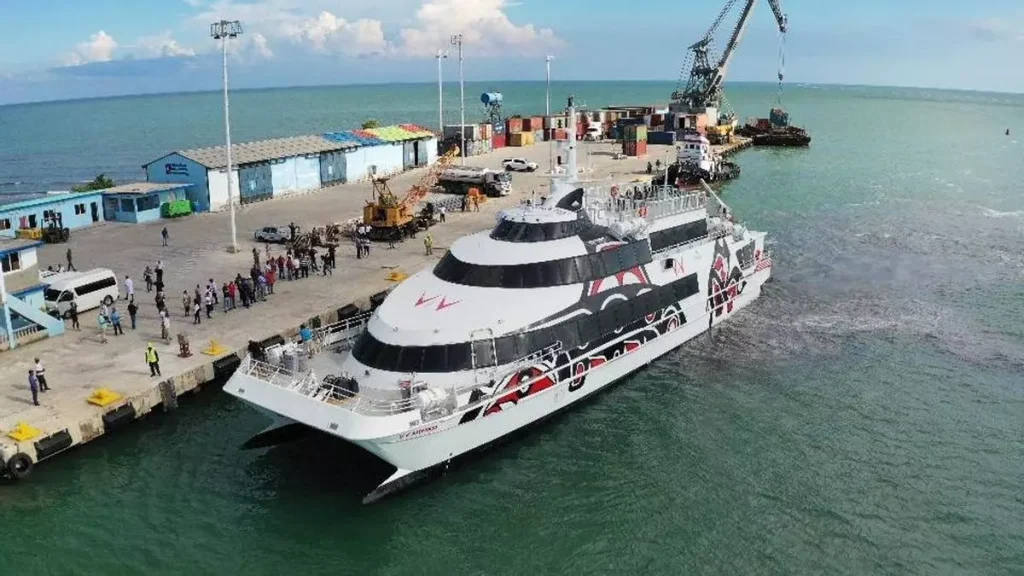
The V2V Empress arrived in Cuba this Saturday and will start operating on Monday / Facebook]
14ymedio, Havana, September 28, 2025 — Finally there will be some rest for the ferry Perseverancia, overused in recent months, which covered the circuit of Batabanó-Nueva Gerona-Cayo Largo del Sur. The catamaran V2V Empress, with the flag of Belize and coming from Yucatán, arrived in Cuba this Saturday to take Perseverancia’s place. No details were given on the type of contract signed with the Mexican owner of the ship, the company Naviyuc, which is already present in Cuba and has participated in numerous maritime projects of the oil company Pemex.
The Minister of Transport, Eduardo Rodríguez Dávila, made the announcement through his social networks. In his message, the official said that the new vessel “marks a change in the operation of this vital crossing for the connection between La Isla de la Juventud and the western region of the country.”
According to Rodríguez Dávila, the commissioning of the V2V Empress is linked to the “scheduled departure for maintenance” of the Perseverancia, which “will have a necessary pause to renew itself with a full maintenance. This replacement promises to keep the vital connection between the two islands alive.” continue reading
According to Rodríguez Dávila, the commissioning of the V2V Empress is linked to the “scheduled departure for maintenance” of the Perseverancia
The new catamaran, meanwhile, will follow a schedule of daily routes starting next Monday, and will alternate between Batabanó and Cayo Largo, “including one day a week dedicated to the maintenance of the boat to ensure safety standards.”
The V2V Empress, before arriving in Batabanó, left on September 25 from the port of Yukalpetén (Progreso), in Yucatán, according to the Vessel Tracker platform. It is owned by Naviyuc, a “100% Mexican private capital firm” based in Mérida, the capital of Yucatán, which acquired the ferry from a Canadian company in January 2023.
This company is no stranger to Cuba. It has had maintenance and repair contracts since 1999 with the Asticar shipyard, in Havana. In addition, in October 2022, it announced the development in Cuba of “the first multimodal port for rolling cargo, passengers and cruises in the province of Pinar del Río, in the Gulf of Guanahacabibes, the point closest to Mexico,” along with “the 100% Cuban-owned commercial company, Coral Marítima S.A.”
The information was announced during the International Transport and Logistics Fair, held in Havana that year. Without going into detail, it was also indicated that it would seek to encourage the development of tourism and the creation of a cruise port, which could be inserted in the Cozumel-Mahahual-Cuba triangle. At that event, on the last day, Minister Rodríguez Dávila was present.
This company is no stranger to the Island. It has had maintenance and repair contracts since 1999 with the Asticar shipyard
Despite the fact that the company has a website and a contact phone in the records of the Secretariat of Communications and Transport of Mexico, it is not possible to contact them to find details of the agreements with Havana, because their website does not work and their phone is out of service.
As for the history of the V2V Empress, Naviyuc has already licensed it to other governments, although it is unknown whether this is the type of deal that it made with Havana or if it is a donation or purchase. Months after acquiring it, in October 2023, the company signed a contract with the Administration of the Caribbean island of Montserrat to provide a passenger ferry service between Montserrat and Antigua beginning in November of that year.
The agreement stipulated that the term was for five months, until March 31, 2024. It operated five days a week during the period of low demand and six days during the periods of high demand, between December 2023 and March 2024. “The schedule will also include several day trips to Antigua and Nevis, with the option of traveling from Antigua to Nevis or from Nevis to Antigua, with a short stopover in Montserrat,” it added.
As for the history of the V2V Empress, Naviyuc has already licensed it to other governments
The contract was signed by Daphne Cassell, permanent secretary of the Office of the Prime Minister of the Government of Montserrat, and the representative of Naviyuc, Roberto Chami Lizárraga. However, the gamble lasted for a shorter time than expected, as despite the promised renewal of the contract for another year, the end of the agreement was announced in May last year.
The vessel, built in 1995, was designed as a high-end service vessel. Its history began in 2017, when it launched a premium cruise service in British Columbia, Canada. It connected the city of Vancouver with Victoria, the provincial capital; however, this was not successful. The company that operated it announced in 2020 – before the COVID pandemic began – that it would shut down operations. The catamaran with 242 seats “remained practically abandoned for almost three years,” until the sale to Naviyuc.
Translated by Regina Anavy
____________
COLLABORATE WITH OUR WORK: The 14ymedio team is committed to practicing serious journalism that reflects Cuba’s reality in all its depth. Thank you for joining us on this long journey. We invite you to continue supporting us by becoming a member of 14ymedio now. Together we can continue transforming journalism in Cuba.
Expert Jorge Piñón believes that the support of China and Russia will not be enough to rescue the national electricity system
The biomass plant of Ciego de Ávila, with Chinese technology, was opened in 2020. / Granma
14ymedio, Madrid, September 29, 2025 — The Cuban government’s strategy to recover the national electricity system (SEN) is completely wrong, explains University of Texas researcher Jorge Piñón in an interview published on Monday by Bloomberg Linea. The expert is clear that, in the short term, it is impossible to have a solution by betting on a radical change through the use of liquefied natural gas and biomass – the latter especially, because it would regenerate, in parallel, the sugar industry.
“If you say to me tomorrow: ‘Hey, here’s a $20 bill, where are you going to invest it?’ I will tell you in biomass, because it gives me sugar, electricity and ethanol, which, as fuel, can reduce the need to import gasoline,” Piñón tells the economic media. In his opinion, the Island has a huge potential in sugar as an energy generator, a model that follows Brazil. However, the condition of the sugar mills and an ever shrinking sugar harvest act against it. “I would forget drilling for oil and bet on the Cuban countryside to repair the sugar mills and increase cane production.”
In the face of the usual announcements by the Cuban authorities, above all about the small solar installations, which generate only 21 megawatts (MW) each, the specialist rejects the national source of crude oil as energy, due to its high sulphur content, which has contributed to the deterioration of the currently declining thermoelectric plants due to overuse. Pìñón qualifies the national crude oil as “harmful, very harmful” for the thermoelectric plants. “It is a vicious circle: they repair the plants, but they break again because of the crude oil used for fuel.” continue reading
“It is a vicious circle: they repair the plants, but they break again because of the crude oil used for fuel”
Piñón admits that the U.S. sanctions weigh on the “recapitalization” of the Cuban system, but denies that they are the main cause of the SEN’s deterioration. “There are several projects that Cuba could not complete, such as a wind farm in La Herradura, Las Tunas, a project 100% financed by China. Another example is Ciro Redondo, a biomass plant that cost 186 million dollars, also financed by China, to generate 62 MW, which is inactive due to the lack of sugarcane biomass,” he states.
Other foreign actors cited by the specialist are the companies Total (France) and Siemens (Germany), which in 2018 were considering the construction of a power plant in Cuba with natural gas, without success. “It was going to take three to five years and there was no money to build it, nor financing,” he says, recalling that neither the Cubans with their pesos, nor the bankrupt State can pay, nor are there international organizations that can or want to loan money to the Island. “As you can see, the only thing is for the Russians and the Chinese to give Cuba new power generation plants. I don’t envision a solution in the short term,” he admits.
Piñón also refers to the contribution of China with solar energy, which, in his opinion, cannot be the only solution, especially with the small installations, which generate only 21 MW each. “I support renewable energies, such as solar, wind and biomass that this plan includes, but you can’t put all the eggs in one basket,” he says. The lack of batteries, which do not store the energy generated, is a burden at the moment, he adds, and gives as an example a park that has just been built in Texas – where he lives – by a French company that provides 720 MW with 225 MW storage.
The expert is also very skeptical about the support of China and Russia and believes that, beyond political support, in practice it is not the Island that interests Beijing and Moscow. “Cuba is like a chess pawn, a small piece. For Russia and China, Venezuela and Guyana are more important. They want to show their political support for Cuba, but not an economic support that guarantees a long-term income,” he argues.
“Cuba is like a chess pawn, a small piece. For Russia and China, Venezuela and Guyana are more important. They want to show their political support for Cuba, but not an economic support that guarantees a long-term income”
Among the errors of the Cuban strategy, Piñón points out again and again, is that the national oil is a hindrance. Distributed generation, which he describes as a “carbon copy of the thermoelectric plants,” requires very expensive maintenance, which Cuba cannot afford, as happened with the floating power plants from Turkey. “The Island leased all the equipment but also had to supply the fuel, and since it did not have cash available to pay the rent, only two remain out of the eight that they originally had. The others have gone to Ecuador, Guyana and the Dominican Republic.”
In the midst of this desolate panorama and the certainty that solving the problem of the moribund thermoelectric plants requires years and huge amounts of money that do not exist – “starting from the generation of 60% energy with plants using 100% natural gas, which would require between $8 billion and $10 billion and three to five years of work” – the expert is blunt.
“We applaud the target of 37% renewable energy, but what about the rest? It should be liquefied natural gas, following in the footsteps of the Dominican Republic, Puerto Rico and Panama. Liquefied natural gas can be brought from Trinidad and Tobago, from a future Venezuela, from Angola, from countless markets, to supply the thermoelectric plants instead of using oil with high sulphur content,” he concludes.
Translated by Regina Anavy
____________
COLLABORATE WITH OUR WORK: The 14ymedio team is committed to practicing serious journalism that reflects Cuba’s reality in all its depth. Thank you for joining us on this long journey. We invite you to continue supporting us by becoming a member of 14ymedio now. Together we can continue transforming journalism in Cuba.
Classes are suspended in Santiago de Cuba and Guantánamo this Monday, when lighter rains are expected
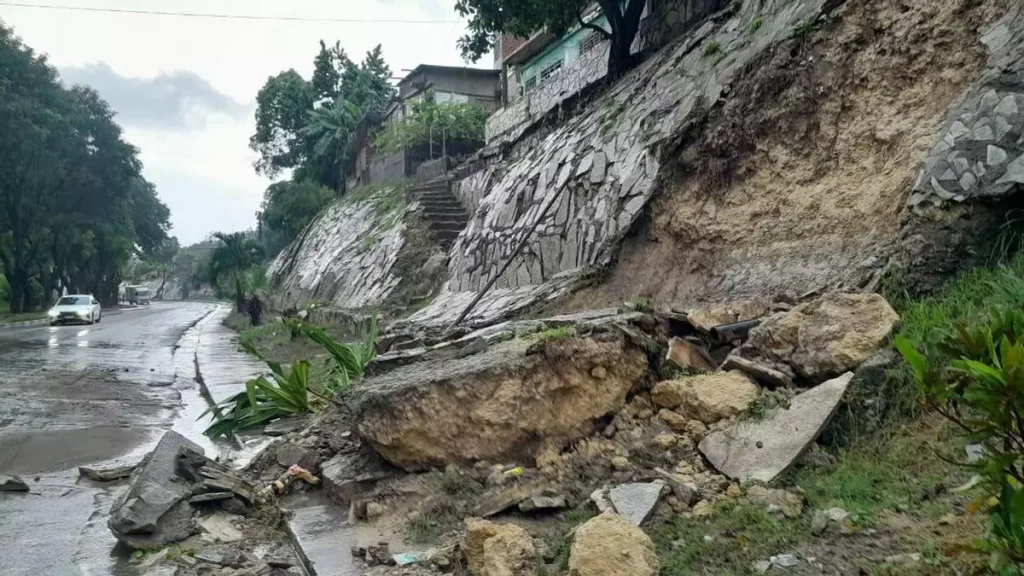
Landslides in Santiago de Cuba this weekend / Santiago press office
14ymedio, Madrid, September 29, 2025 — The intense rains that tropical storm Imelda left in Santiago de Cuba have resulted in one fatality: Luis Mario Pérez Coiterio, a 60-year-old man whose house collapsed early in the morning while he was sleeping, due to a landslide.
The house was located on a hillside of the Veguita de Galo division, in Santiago de Cuba, and according to the official version published by TV Santiago, it was not a suitable place to live. “Close relatives present at the site informed the authorities that while he was living with them, Luis Mario was happy and had a safe home but unfortunately decided to return. They even asked him to stay with them during the storm because his home wasn’t safe,” said the report.
From the hundreds of comments that followed the publication, it is clear that the deceased was a vulnerable person. “What painful news. Great person, he was my neighbor. A person who because of his physical situation was able to go out day by day to fight like a warrior, selling mops, brooms, look for wood to cook his food, how sad. Rest in peace, my friend. May God hold you in glory, fly very high,” wrote one user.
The official information highlighted that the body was recovered by rescue teams, but the deceased’s sister posted several messages in the comments thanking everyone for the condolences but asking to tell “the truth” and denying that Beatriz Johnson Urrutia, first Party secretary in the province, was present on the spot. “From 1:00 am my brother was under the rubble, continue reading
and a neighbor warned us at 1:00 pm. My eldest son along with neighbors took him out; before the firefighters arrived they had already taken him out,” said Nivia Pérez, who also pointed out that her brother was not married, contrary to what the publication claimed.
“Don’t write lies, respect the pain of others. My brother lived alone in that house in bad condition,” she said.
A neighbor also referred to the insecurity of the area. “My mom has a ceiba tree next to her house; these rains knocked down a wall and nobody does anything. As much as the need for pruning was reported, they didn’t say anything except that have no gas or no crane that can get there. It’s always something. And the life and integrity of the home is at risk. It rains inside the house because a wall has collapsed and is open, and the ceiba stands as the new wall, and in Santiago there is no one to respond. They wait for the worst to happen to act,” she lamented.
The force of the rain has also caused significant structural damage to the Cañizo bridge in the municipality of Guamá. “The weather phenomenon undermined one of the corners of the infrastructure, leaving exposed the concrete base that supports the passage.”
“Currently, the only visible and functional part of the bridge is the top slab, which poses a potential risk to vehicles and pedestrians. Any additional weight on the structure could compromise its stability, so extreme caution is required when transiting through the area,” official sources have noted.
The Cañizo bridge connects several rural communities with the center of the municipality and is used daily by residents, trucks and basic services, the report indicates. However, the road has not been completely cut off, although there are calls for “traffic limitations and safety measures to prevent accidents.”
Another damaged infrastructure has been the already weakened electricity grid. The provincial manager, Javier Calero Román, indicated that there are fallen poles and faults in distribution lines, especially in the area of Guamá and the capital city of Santiago. The general manager of the Provincial Electric Company stated that the main incidents are due to fallen poles and the deterioration of distribution lines.
“We are giving priority to circuits that feed vital centers such as hospitals, pumping stations and areas of high population concentration. Coordination with the Provincial Temporary Working Group has been key to organizing response actions and ensuring access to affected areas,” said Calero Román. The damage is not great, he says, but recovery also depends on how the storm develops.
Imelda has left more than 18,000 evacuees in Guantánamo. According to the latest report of the Institute of Meteorology (INSMET), it is expected that the rains will continue to be strong, at least in the south and the mountainous areas of the east. The center may suffer some showers, while in the western area, which will be cloudy, isolated rains are expected.
Given the current situation, local authorities have suspended classes at all levels of education in Santiago and Guantanámo, although childcare centers will be open.
The hydraulic company of Santiago de Cuba said that 8.2 million cubic meters [2,166.2 million liquid gallons] have currently been collected in the province’s 16 reservoirs, which until now suffered from a long drought.
Translated by Regina Anavy
____________
COLLABORATE WITH OUR WORK: The 14ymedio team is committed to practicing serious journalism that reflects Cuba’s reality in all its depth. Thank you for joining us on this long journey. We invite you to continue supporting us by becoming a member of 14ymedio now. Together we can continue transforming journalism in Cuba.
A neighbor explained that the three metal beams holding up the roof were rotten from moisture.
The rubble left by the collapse still obscured part of the entrance to the building on Sol Street in Old Havana this afternoon. / 14ymedio
14ymedio, Havana, September 28, 2025 – A collapse that occurred this Sunday in Old Havana claimed the life of an elderly man. The partial collapse of a building, located at 466 Sol Street between Egido and Villegas Streets, occurred around 9:00 a.m., reported the Municipal Administration Council.
According to the official statement, the building “was not in good condition for several years” and people were staying inside “illegally, and were often offered transfers to other locations, which they did not accept in a timely manner.” The statement added: “We regret the loss of one person killed in the incident. The local authorities responded immediately and are assisting the remaining victims.”
The debris left by the collapse was still blocking part of the building’s entrance this afternoon, according to 14ymedio. A police officer guarding the area to prevent entry told this newspaper that “things are still falling.” A neighbor explained that “the three metal beams holding the roof were rotten from moisture,” which contributed to its fall. The wooden posts supporting the roof failed to stop the structure from collapsing.
The tragedy occurred just hours after a balcony collapsed on San Lázaro Street on Saturday, injuring a passerby.
The tragedy occurred just hours after a balcony collapsed on San Lázaro Street, between Hospital and Espada Streets in Centro Habana, injuring a passerby on Saturday. “The girl was about 40 years old. A piece of the balcony came loose, and a rock fell on her, knocking her to the edge of the continue reading
sidewalk,” a neighborhood resident told 14ymedio. The resident claims debris still remains on the road.
San Lázaro Avenue, like so many others, reflects the deterioration of the capital: neglect, salt water, and a lack of resources have turned its buildings into examples of architecture that is practically beyond repair. Outside the restored historic center and far from the more modern Vedado neighborhood, the buildings that line the waterfront are on the verge of collapse.
On social media, residents near the scene reported Saturday’s collapse, generating strong criticism of the government for its lack of investment in large areas of the Cuban capital. “At any moment, Old Havana will be left like a desert, nothing but dust, except for the Capitol and the hotels, which are the only things they repair annually,” wrote one internet user.
Other comments described what happened as part of a growing number of daily problems in the capital. “The situation we have here in Havana is deplorable. The filth eating away at us everywhere, the desperation, the lack of electricity, the hunger, the misery, people dying, children without food, and the elderly yearning for a little attention and help.”
These are not isolated incidents. Last August, an elderly woman was injured after a building partially collapsed on Reina Street, between Manrique and San Nicolás, also in Central Havana. Some 15 families lost their homes and spent the night on the streets, surrounded by furniture and appliances. One of those affected told this newspaper that on that first day, “no one came” from the government to inquire about her situation.
Weeks earlier, another collapse at the corner of San Rafael and Galiano streets killed a worker at Café Boulevard, located on the ground floor of the building. The collapse of part of the roof trapped several people. Neighbors explained that the upper floor houses a boarding house with serious infrastructure and overcrowding problems. The collapse buried one of the employees under the rubble. The entire block where the building stands shows alarming signs of deterioration and neglect.
_______________
COLLABORATE WITH OUR WORK: The 14ymedio team is committed to practicing serious journalism that reflects Cuba’s reality in all its depth. Thank you for joining us on this long journey. We invite you to continue supporting us by becoming a member of 14ymedio now. Together we can continue transforming journalism in Cuba.
This week alone, more than 7,500 fines were imposed nationwide.
Stock photo of an inspector collecting a fine from a street vendor / Invasor
14ymedio, Havana, September 28, 2025 — The recent deployment of inspectors in Sancti Spíritus province, described with pomposity by the official media Escambray, is nothing more than a new assault against the few commercial spaces where food and basic products can still be bought, although at high prices. More than 800 inspections, nearly 190 fines, business closures and seizure of goods are part of what the authorities celebrate as an achievement in the so-called “fight against corruption and economic crime.”
In the province, irregularities such as illegal chalkboards, “abusive prices” and “improper” use of electronic payment gateways were penalized. The sanctions were mainly imposed on self-employed workers and private businesses, who handed over more than a million pesos in fines. The products with the most price violations were rice, cooking oil, detergent, powdered milk and sausages, all more or less staples in Cuban homes.
Those who didn’t have their goods confiscated were again warned to sell at capped prices, which, as sellers have complained in several cases, sometimes do not even cover the cost of acquisition.
What is in theory a matter of ensuring “legality” and “consumer protection,” has in practice become a witch hunt by the Government that occurs more and more frequently. The situation is also not unique to Sancti Spíritus. In Havana, the “Fourth National Exercise for Preventing and Combating Crime” has also resulted in surprise inspections, millions of pesos in fines and business closures. continue reading
In Metropolitan Park, reported the Havana authorities, the private business Salsa Rio was sanctioned for not properly facilitating payments by digital gateways
In Metropolitan Park, reported the Havana authorities, the private business Salsa Rio was sanctioned for not properly facilitating payments by digital gateways. In the municipality of Plaza de la Revolución, “90 control actions were carried out with fines amounting to more than 1.2 million pesos, and the temporary immobilization of 20 actors for hygiene violations along with the detection of 11 illegal vendors. Documents on three projects were inspected and non-performing activities halted,” the official press reported.
At the national level, according to a report on the site Cadena Agramonte, this week alone more than 7,500 fines were imposed nationwide, the result of more than 12,000 inspections. The sanctions amounted to almost 24 million pesos collected. A blow not only for those who try to survive with their business, but for a whole population that depends, in many cases, on the informal market to find products that the State is unable to put on the counters. However, the official press proudly declared that not a single province was freed of fines for “illegalities.”
The emblematic example has been that of La Cuevita, temporarily closed by the government of Havana with the excuse of carrying out repairs, but this week it is still crowded. “This is what the people live on; they can’t shut it down,” a seller told 14ymedio.
La Cuevita, temporarily closed by the government of Havana with the excuse of carrying out repairs and this week still crowded
At the beginning of the year, in April, something similar happened on Holguín’s 13th Street. After a “control operation” an informal market was closed; fines were imposed, and there were confiscations and detentions. The sellers pretended for a few days to respect the capped prices, but the candonga [deception] soon returned to its usual rhythm.
On more than one occasion the sellers themselves have denounced the arbitrariness of the Government, which not only imposes prices that do not match the demand and cost of acquiring the products, but also sends hordes of inspectors who, record book in hand, seek more to collect money in fines than to control illegalities.
Osmel Ramírez, a self-employed man from Mayarí, was summoned by the police this week after denouncing an inspector for her abusive behavior. According to Ramírez, the official frequently visits him, and when she finds the slightest infringement, she imposes the maximum fine possible. “People like her hurt more than the blackouts,” he wrote on social media.
The inspector, he said, had already fined him 45,000 pesos when he started his business, and now wanted to collect another 16,000 “for some cigarettes I had in my pocket. That’s the way they stimulate the private sector: encourage us to go bankrupt.”
Translated by Regina Anavy
____________
COLLABORATE WITH OUR WORK: The 14ymedio team is committed to practicing serious journalism that reflects Cuba’s reality in all its depth. Thank you for joining us on this long journey. We invite you to continue supporting us by becoming a member of 14ymedio now. Together we can continue transforming journalism in Cuba.
Enyer Fernández spent several months stranded in the Dominican Republic for lack of money.
Enyer Fernández returned last Friday to Cuba. / Swing Completo
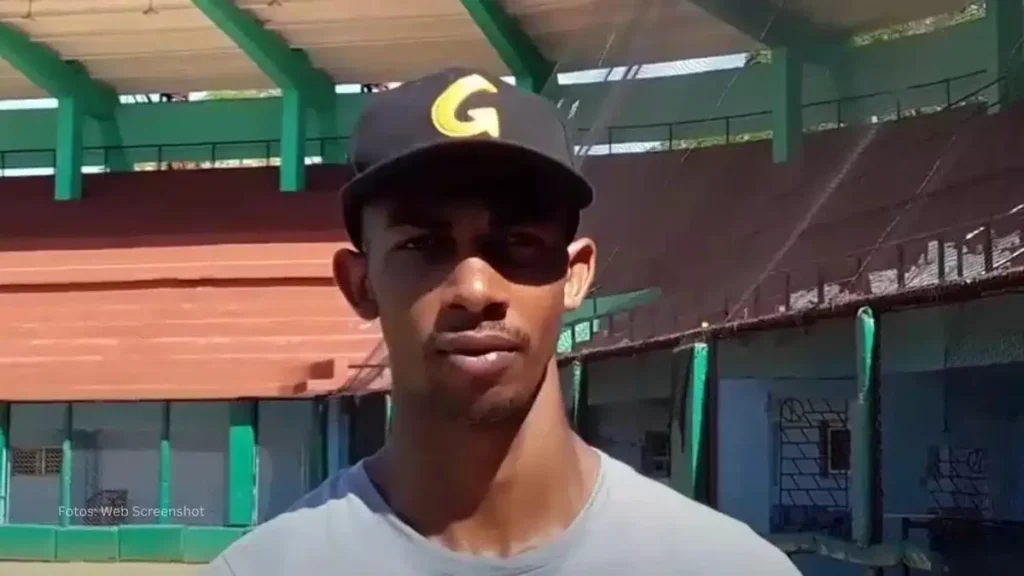
14ymedio/Swing Completo, Havana, September 28, 2025 — Baseball player Enyer Fernández returned to Cuba last Friday after his attempt to be picked up by a professional team in the Dominican Republic failed. After leaving the national sport last November, the 24-year-old from Guantánamo hopes that the Island’s National Baseball Commission will welcome him with open arms.
Fernández returned after spending ten months in the Dominican Republic and not getting a contract. “At the time it was a possible starting point for new personal goals. However, it became a personal ordeal,” highlighted the specialized medium Swing Completo. Without money or prospects of a contract, he was stranded with no chance to return. His case even prompted a collection, intended for paying his return ticket to Cuba, but the initiative failed.
The left-hander arrived preceded by a National Series in which, with 70 strikeouts, he placed third with an average of 3.96 ERA (allowed clean runs), and a pitching speed between 90-92 miles per hour. In addition, he was in the pre-selection of the national team of the Premier 12 tournament and participated in the Caribbean Cup. Before, in 2022, he joined the U23 representation.
Fernández tried out for Major League organizations with pitches between 89-91 miles per hour (mph), below his personal mark
Fernández’ characteristics placed him as an ideal prospect for the talent scouts. The power of his arm, according to journalist Francys Romero, opened up the possibility of “commanding the strike zone and aspiring to a contract with a professional team.” continue reading
During his stay in the Dominican Republic, the lefty perfected his skills at the TBT Baseball Academy under the tutelage of Julio Estrada, a center where other Cubans have also trained, like Andey Garrido, Pedro Pablo Revilla and Daniel Reyes, whom he met.
Last July 7, Fernández appeared before Major League organizations, but it was not the best day for him: he recorded pitches of 89-91 mph, below his personal mark, and a 76-79 mph slider.
His chances were slim after “the franchises of Major League teams concentrated during the last months of the international period on pitchers. Of the 75 players signed in May, 53 were pitchers,” said journalist Francys Romero.
Translated by Regina Anavy
____________
COLLABORATE WITH OUR WORK: The 14ymedio team is committed to practicing serious journalism that reflects Cuba’s reality in all its depth. Thank you for joining us on this long journey. We invite you to continue supporting us by becoming a member of 14ymedio now. Together we can continue transforming journalism in Cuba.
Several municipalities in the province, including the capital city, have been affected by floods
Baconao road in Santiago de Cuba, flooded by the river Sigua / Facebook/Cuscó Tarrade
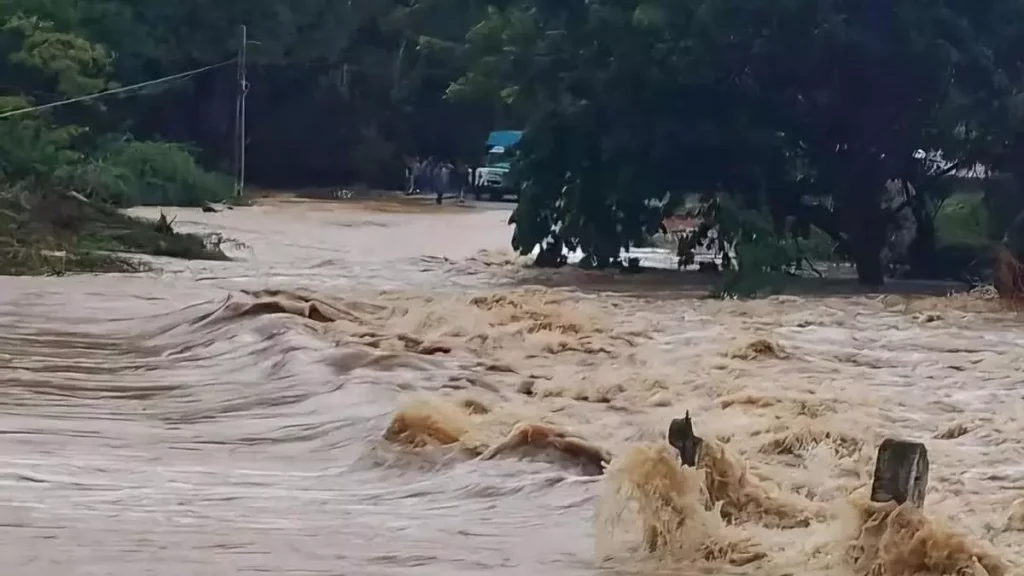
14ymedio, Havana, September 28, 2025 — During Saturday afternoon and evening, both the official press and residents in Santiago de Cuba posted photos and videos showing flooded houses and villages. In some areas the residents had to take refuge on the roofs because the water was over three feet high.
An almost stationary tropical depression north of Holguín has brought heavy rains to all the eastern provinces and Camagüey. Granma and Santiago seem to be the most affected at the moment. According to the Institute of Meteorology of the Island (INSMET), there will be rain in this region on Sunday morning, which will intensify in the afternoon, “become strong in some localities and extend until late at night.”
According to the latest INSMET report, the morning tropical depression “over the past hours has remained with little change. In the night and early morning this Sunday, areas of heavy rain were concentrated in eastern Cuba, mainly in the provinces of Guantánamo and Santiago de Cuba. This produced showers, rain and electrical storms that became strong and locally intense, with significant rain accumulated.”
The depression threatens to become a hurricane. “For the next few hours this system will remain on a similar trajectory increasing its speed [currently 6.8 miles per hour], as it continues to gain in organization and intensity, becoming during the next 12 to 24 hours a tropical storm,” said the Institute, which added that the rain can be very intense in the East, especially in mountainous areas. continue reading
The depression threatens to become a hurricane. “For the next few hours this system will remain on a similar trajectory, increasing its speed”
On social networks, residents of Santiago have reported floods in the municipality. “Hundreds of completely flooded streets keep residents on alert. The dawn has given way to day, and many families continue to have water coming into their homes,” official journalist Cuscó Tarradell wrote on Facebook.
There are also “more than 80 reports of failures in primary and secondary circuits of the municipality of Santiago de Cuba, according to confirmations of workers on duty at the Provincial Electrical Office,” which have caused power outages in several areas of the city. “In the municipality of Guamá, the villages of Aserradero and Uvero are among the most affected by electrical contingencies and floods,” added Tarradell.
In Baconao, where the Sigua River overflowed, five people were trapped on the roofs of facilities at Parque de la Fantasía. According to Cubadebate, two were rescued by Cuban Red Cross personnel in Santiago and the rest were assisted by local lifeguards.
“It should be noted that to reach this location you have to cross several dangerous rivers whose banks have overflowed,” said Aris Arias Batalla, provincial head of Aquatic Security Operations and Relief in Santiago de Cuba.
According to the rescue team, the village of Los Mamoncillos in Playa Verraco was also isolated due to the storm. “Homes were destroyed by its passage, and this was reported on Messenger by families living in rubble and brick houses with metal roofs,” he wrote.
In Granma, where the situation was more critical on Saturday, the consequences of the storm are still being felt. “The settlement of Hatibonico, in the municipality of Caimanera, has recorded the largest accumulated rainfall in the country in the last 24 hours,” reported Radio Bahia.
Translated by Regina Anavy
____________
COLLABORATE WITH OUR WORK: The 14ymedio team is committed to practicing serious journalism that reflects Cuba’s reality in all its depth. Thank you for joining us on this long journey. We invite you to continue supporting us by becoming a member of 14ymedio now. Together we can continue transforming journalism in Cuba.
An Argentine film aims to rescue the figure of Hilda Gadea, who has been erased from official history.
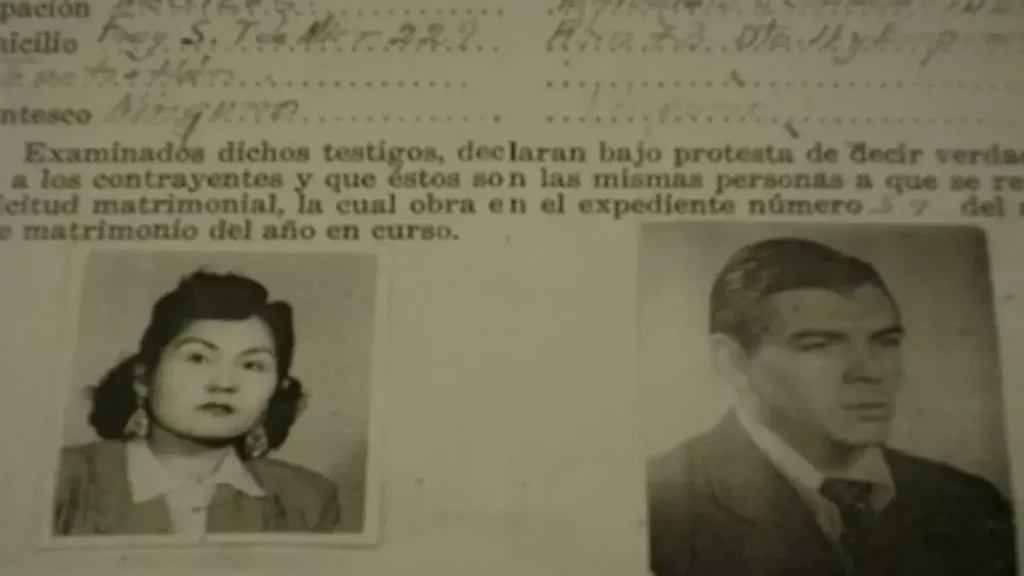
Image of the marriage certificate between Hilda Gadea and Ernesto ‘Che’ Guevara / Special
14ymedio, Havana, 23 September 2025 — The life of Hilda Gadea, Ernesto Che Guevara’s first wife, is being adapted into a film. Variety magazine revealed this Monday that filming is underway, based on the Peruvian economist’s memoirs.
Silvina Estévez, the film’s Argentine director, explained in an interview with the outlet that the film will focus on Gadea because she is a “woman whose influence was fundamental in shaping the political vision of one of the most important icons of the 20th century, but whose voice is largely lost in the narrative of her life. She wasn’t just Che’s wife. She was a woman of strong ideas, a professional, an activist, and a mother.”
The film is set in the 1950s, the period in which the two met in Guatemala. Gadea, an economist by profession and a woman who was forward-thinking for her time, gained followers from a young age in a male-dominated environment. She was the first woman to serve on the National Executive Committee of the Apra (American Popular Revolutionary Alliance). After the 1948 coup d’état in Peru, and due to her political activism, she went into exile .
Shortly afterwards, she arrived in Central America, where she quickly joined the progressive government of Guatemalan President Jacobo Arbenz. In December 1953, she met Guevara, a defining moment for the Argentine, as he learned to use weapons and became close to Castro’s Cuban followers for the first time. Although the film “delves into their romantic relationship,” the relationship between the two was not, at first, reciprocal. “Hilda Gadea declared her love for me both in letter form and in practice. I had quite a bit of asthma; otherwise, I might have caught it. I warned her that all I could offer her was a casual contact, nothing definitive. She seemed very embarrassed. The little letter she gave me when she left is very good; it’s a pity she’s so ugly,” Guevara wrote at the time. continue reading
Gadea separated from Guevara, but remained in Cuba until her death in 1974.
Their relationship eventually strengthened. Two years later they married, in August 1955, in Tepotzotlán, State of Mexico (in the center of the country). By then, Gadea was already pregnant with their first child, Hilda Beatriz Guevara Gadea.
The union barely lasted four years, as Che, following Fulgencio Batista’s departure from power on the island, had already found a new partner in Aleida March. Gadea separated from Guevara but remained in Cuba until her death in 1974.
“Interpreting Hilda Gadea is a privilege and an enormous responsibility,” Mexican actress Adriana Paz told Variety. “Her story reminds us that behind every historical figure there are voices that deserve to be heard, especially the voices of women who influenced and transformed their era.” She also confesses: “Being part of this film is a way to revive that memory and question how history is told. Furthermore, being part of a Latin American production that unites us through Spanish and our shared roots is deeply meaningful to me.”
Agustín Pardella, who will play Che Guevara in the film, celebrated the fact that this “is a project narrated by women. I firmly believe there are ways of seeing the world that only exist if we have the opportunity to capture them on screen. Just as Hilda understood that the economy was a tool of power, so too is cinema.”
The project, the magazine explained, is currently in development and is seeking international production partners to help bring to life a story that “weaves the personal and the political into a powerful, globally resonant narrative.”
COLLABORATE WITH OUR WORK: The 14ymedio team is committed to practicing serious journalism that reflects Cuba’s reality in all its depth. Thank you for joining us on this long journey. We invite you to continue supporting us by becoming a member of 14ymedio now. Together we can continue transforming journalism in Cuba.
“A piece of the balcony came loose and a stone fell on her, sending her rolling to the edge of the sidewalk,” says a neighbor.
File photo of San Lázaro Street. / 14ymedio
14ymedio, Havana, 28 September 2025 — A balcony on San Lázaro Street, between Hospital and Espada streets in Central Havana, collapsed this Saturday and fell on a woman who was passing by the block at the time. “The girl was about 40 years old. A piece of the balcony came loose, and a rock fell on her, knocking her to the edge of the sidewalk,” a neighborhood resident told 14ymedio, adding that the debris is still visible in the street.
“A friend helped her up and left with her. Rumors spread that she was dead, but then the police came and said she was alive and in the hospital. It was learned that she lives on Infanta and is from this area, but I don’t know who she is,” the resident adds. She explains that the residents of San Lázaro are alarmed by the condition of the buildings on the street, which periodically collapse.
“Where the stones fell, many elderly people are always sitting, but this time it was a miracle they didn’t die. They were already gone when the balcony collapsed,” she says, although she fears that the next time a balcony or part of a facade collapses, the residents won’t be so lucky.
“At any moment, Old Havana will be like a desert, nothing but dust, except for the Capitol and the hotels, which are the only things that are repaired annually.”
The neglect, the salt air, and lack of resources of the residents of San Lázaro have turned the avenue into an example of the capital’s already unsalvageable architecture. Untouched by the restoration of the historic center and somewhat removed from the more modern neighborhood of El Vedado, the buildings along the artery that runs parallel to the sea are clearly beyond repair. continue reading
On social media, some residents also reported the collapse, sparking criticism of the government, which has abandoned the neighborhood and other areas of the capital to their fate. “At any moment, Old Havana will be left like a desert, nothing but dust, except for the Capitol and the hotels, which are the only things they repair annually.”
Other commentators described the problem as just another of the daily hardships Havana residents face. “The situation we have here in Havana is deplorable. The filth eating away at us from all sides, the desperation, the lack of electricity, the hunger, the misery, people dying, children without food, and the elderly yearning for a little attention and help.”
“Where the stones fell, there are always many old people sitting, who this time did not die thanks to miracle.”
Last August, another elderly woman was injured after a building partially collapsed on Reina Street , between Manrique and San Nicolás, also in Central Havana. The woman was hospitalized, and nearly 15 families were left homeless, with their furniture and appliances scattered in the street.
That night, most of them had to spend it outdoors, and, according to one of those affected, who spoke to this newspaper, on that first day, “no one came” from the government to check on their situation.
A few weeks earlier, a building on the corner of San Rafael and Galiano streets in the same municipality partially collapsed, killing an employee of the Café Boulevard, located on the ground floor. The collapse of part of the roof trapped several people. According to neighbors who spoke to 14ymedio at the time , the building has a tenement apartment on its upper floor, which suffers from infrastructure problems and overcrowding. Part of the roof collapsed on the employees, and one of them died beneath the rubble. The entire block where the building is located shows alarming signs of deterioration and lack of maintenance.
____________
COLLABORATE WITH OUR WORK: The 14ymedio team is committed to practicing serious journalism that reflects Cuba’s reality in all its depth. Thank you for joining us on this long journey. We invite you to continue supporting us by becoming a member of 14ymedio now. Together we can continue transforming journalism in Cuba.
Fernández de Cossío, Cuban deputy foreign minister, denied knowing this case in an interview
Morales, who was sentenced in the U.S. to 89 years in prison for possession of weapons and explosives, has been protected by the Havana regime since 1988. / latinamericanstudies.org
Madrid, Yunior García Aguilero, September 27, 2025 — William Guillermo Morales is a name that sums up several decades of tensions between Washington and Havana. His case is one of the most cited when there is talk about fugitives sought by American justice who found asylum on the Island, and it returns to relevance after the recent interview that the Cuban Deputy Foreign Minister, Carlos Fernández de Cossío, granted to journalist Mehdi Hasan. The diplomat rejected the accusations that Cuba is supporting terrorists, but there are elements in Morales’ story that hardly fit this official version.
Morales, a Puerto Rican-born New York engineer, was a member of the Armed Forces of National Liberation (FALN), a clandestine group that carried out dozens of bombings in the U.S. in the 1970s to demand Puerto Rico’s independence. The FALN’s bloodiest action occurred in January 1975, when a device exploded at the Fraunces Tavern restaurant in Manhattan, killing four people and injuring dozens.
Although Morales was not directly convicted of the attack, he was arrested in 1978 after an accidental explosion at a bomb factory in Queens. The blast left him severely mutilated, with his hands shattered and face disfigured. In the apartment, police found explosives and documents linking him to the FALN network and the Fraunces Tavern bombing.
Morales was sentenced to 89 years in prison for possession of weapons and explosives. He was hospitalized at the Bellevue Hospital Center in New York to receive prostheses when, in May 1979, he participated in a breakout worthy of a documentary. The terrorist used an improvised rope made with bandages to hang from the bathroom window, aided by supporters of the underground movement. He fled to Mexico, where in 1983 he was arrested after a shoot-out with police that left an officer dead. He spent five years in prison in that country and, upon his release in 1988, was able to travel to continue reading
Cuba where he obtained political asylum. Since then he has been living in Havana, free and protected by the Cuban government, despite U.S. extradition demands.
The families of the deceased at Fraunces Tavern have repeatedly asked that Morales be extradited and serve the sentence he evaded
The case of Morales shows how the Cuban regime has served as a refuge for individuals accused of terrorism or serious crimes in the U.S. The best-known example is Joanne Chesimard, aka Assata Shakur, a former member of the Black Liberation Army who was convicted of murdering a New Jersey police officer in 1973 and has been on the run since 1979. Shakur died in Havana this September 25, due to health problems and her advanced age.
Charles Hill is also mentioned, implicated in the murder of a policeman in New Mexico in 1971 and living in Cuba since the 1970s. For the U.S. authorities, these cases are proof that Havana is violating international agreements on judicial cooperation and combating terrorism. For the Cuban government, they are political fighters who faced persecution and deserve asylum.
Fernández de Cossío, in his dialogue with Mehdi Hasan, denied knowing the case of Morales. He argued that Cuba does not protect terrorists and said that Washington’s accusations are part of a political pressure campaign. However, the argument does not solve the dilemma of the victims, who continue to demand justice half a century after the events. The families of the deceased at Fraunces Tavern have repeatedly asked that Morales be extradited and serve the sentence he evaded. For them, the decision of Havana is an affront that prolongs the pain.
The asylum granted to Morales has implications that go beyond the legal. The Cuban regime’s refusal to cooperate with the U.S. justice system in cases of civilian killings raises an ethical problem. Morales is a kind of political ghost in Havana: he does not appear in the official press and does not participate in public events, but he is a symbol of the old alliance between armed independence activists and the Cuban government. At a time when Havana is desperately seeking to improve its international image and normalize relations with Washington, protecting fugitives from violent crimes on the Island is a burden that fuels mistrust and provides arguments for maintaining sanctions.
The case of William Morales is a reminder that historical debts do not expire and that political refuge, when extended to perpetrators of attacks against civilians, ceases to be a humanitarian gesture and becomes a political decision with consequences.
Translated by Regina Anavy
____________
COLLABORATE WITH OUR WORK: The 14ymedio team is committed to practicing serious journalism that reflects Cuba’s reality in all its depth. Thank you for joining us on this long journey. We invite you to continue supporting us by becoming a member of 14ymedio now. Together we can continue transforming journalism in Cuba.
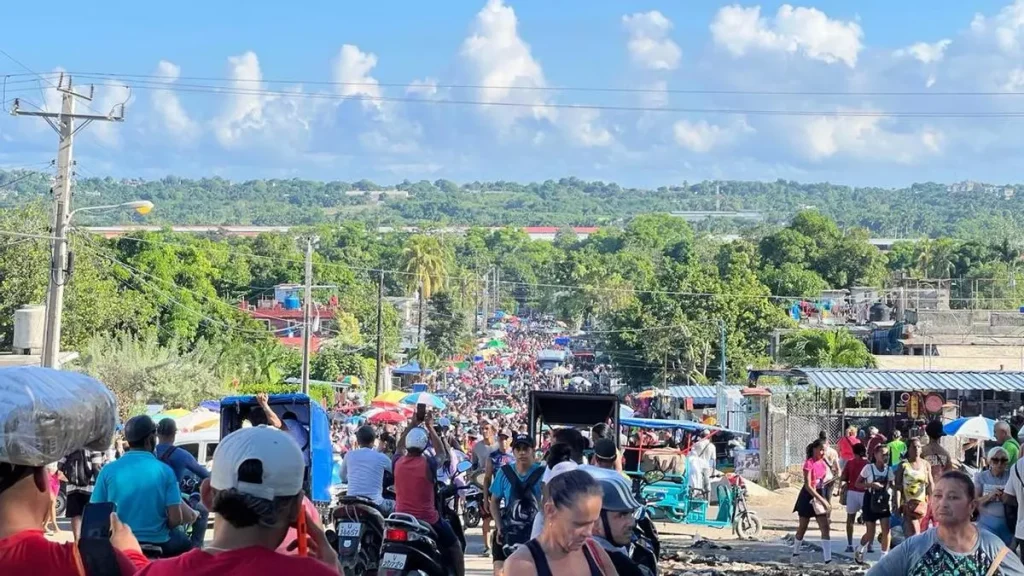
At this mecca of popular commerce in Havana, you can find everything, including the buying and selling of dollars.
The vendors relocated to nearby streets and in the doorways of neighboring houses. / 14ymedio
14ymedio, Darío Hernández, Havana, 26 September 2025 — “Water!” was heard with unusual frequency this Wednesday at La Cuevita, among a crowd of self-employed workers, clandestine vendors, and desperate customers. It wasn’t a shout announcing drinks or a storm warning, but rather the code word used all over Cuba to let people know that the police are on the move. Authorities, who usually turn a blind eye to irregularities in these spaces, decided this time to close the place for a month. The official reason: “to carry out repairs,” some residents told this newspaper.
La Cuevita is the mecca of popular commerce in San Miguel del Padrón, Havana. There, you can find everything from food, hygiene products, clothing, and household appliances to toys, medicines, and currency exchange. Merchandise arrives via a variety of channels, including mules, middlemen, or diversions from state channels, generating income for both self-employed workers and those operating without a license.
So, despite the closure order, few people were willing to leave. Vendors relocated to nearby streets and in the doorways of neighboring houses.
So, despite the closure order, few people were willing to leave. The vendors relocated to nearby streets and the doorways of neighboring houses. “We need to eat,” exclaimed an undocumented vendor as she hurriedly gathered her wares as the uniformed officers passed by. Minutes later, she set up her stall again in the same place.
The history of La Cuevita dates back to the Special Period and has been strengthened by the economic reforms of recent years. It emerged as a response to chronic shortages and the need to obtain goods in foreign currency, and so became a crucial supply point for Havana residents and buyers from other provinces.
This Wednesday, however, the place looked more chaotic than ever. Stalls crowded in front of homes, food vendors stood right next to stinking garbage dumps, open sacks of rice mingled with the mud, and a chorus of shouts from anxiousv endors continue reading
This Wednesday, La Cuevita looked more chaotic than ever. / 14ymedio
The closure coincides with the 4th National Crime Prevention and Response Exercise, which includes patrols, “prophylactic” meetings with so-called “potential offenders,” and social control measures. In addition to the police, students, workers, and Party activists are participating. Previous exercises have not restored order to the streets, but they have swelled the state coffers with money from fines and confiscations.
“There aren’t enough police to get so many people out,” said a vender selling stockings and underwear, who ran for cover upon hearing the alarm. Minutes later, seeing the officer riding away on his motorcycle, he returned to his stall and added: “This is what the town lives on; they can’t close it down.”
Some call these informal markets that exist throughout the island “candonga,” a term that came from Angola with the Cubans who went to war in the 1970s and 1980s. But today’s battle is different: putting food on the table, shoes on children’s feet, and earning enough money to survive for a month, something no state salary guarantees.
The police close La Cuevita, but vendors and customers reopen it.
____________
COLLABORATE WITH OUR WORK: The 14ymedio team is committed to practicing serious journalism that reflects Cuba’s reality in all its depth. Thank you for joining us on this long journey. We invite you to continue supporting us by becoming a member of 14ymedio now. Together we can continue transforming journalism in Cuba.

 14ymedio, Havana, September 3, 2025 (delayed translation) — Three new femicides recorded during the last month in Cuba. The Observatorio de Género Alas Tensas reported the killing of Damaris Ricardo Martínez, Dayli Villa Ortiz and Yolennis Rojas Rojas. Two of the attacks happened in August and the third one in July.