In Cuba 56% of Santiago Residents Are Still Without Electricity Two Weeks After Hurricane Melissa

Díaz-Canel and Marrero tour the province devastated by the cyclone amid controversy over the sale of water and mattresses


Fallen poles on a street in Santiago de Cuba on the day Melissa passed through. / EFE

14ymedio bigger14ymedio, Madrid, November 14, 2025 — President Miguel Díaz-Canel travelled to Santiago de Cuba to see the situation for himself two weeks after Hurricane Melissa struck. A meeting of the National Defence Council was held there and broadcast on the television programme Mesa Redonda. Ironically, not many Santiago residents were able to watch it, as almost 60% of the province is still without electricity. And those who do have it are suffering power cuts.

“Many towns still have no electricity or drinking water. Hundreds of people have been evacuated, and most of the work still hasn’t been done in all the areas that were flooded,” said the president, whose prime minister has taken on the task of containing criticism over the sale of supplies, including water. Donated products are “completely free,” said Manuel Marrero, “but others must be paid for, which sometimes confuses people.”

The official explained that “the community group decides” who receives the aid, since it knows “the situation of each family.” This process must be carried out “with transparency and public oversight; people need to know what is arriving and who is receiving it.”

The official explained that “the community group decides” who to give it to, since they know “the situation of each family”.

This came up at the right time, in a week when questions about donated and subsidised aid began circulating on social media. On Wednesday, the director of Trade and Gastronomy in Granma said that water was being sold in the 10 Zone Defence Councils at a price of 40 pesos a bottle per household. “This resource comes from the state disaster reserve, it is not a donation, and it covers logistical costs at a token price,” she said in an continue reading

official message. There was prompt criticism from people who considered it shameful to have to buy a basic necessity in the midst of a catastrophe.

The sale of mattresses has also been the talk of the town, to the point that even in Granma, the authorities have had to put up an argument, that not many agree with. A note from the Department of Prevention and Social Work mentions two types of mattresses, so that “the victims receive the necessary support in an equitable manner, taking into account their economic situation”.

There is talk of “cameros”, which are mattresses donated from abroad and distributed free of charge, and “personales”, which are mattresses purchased by the State for emergencies. These cost 911 pesos, but are subsidised by 50% for those who are “financially solvent”. The note adds that the State finances 100% of the mattresses for vulnerable people and mentions the “payment facilities” available to families in need, although no details have ever been given about these loans. Incidentally, it was revealed at yesterday’s meeting that more than 8,300 mattresses were lost or damaged, which is why production in Jíbaro has had to be increased and donations sought.

Díaz-Canel admitted that the situation in the affected area is “extremely difficult” and Marrero added that more than 149,000 homes and 158,000 hectares of crops have been affected. This, together with the restoring of electricity – which is at 98% in Guantánamo, 86.2% in Granma and 44% in Santiago de Cuba, meaning nothing more than a return to planned power cuts — and the epidemiological situation are the main concerns.
Palma Soriano, Songo La Maya, San Luis y Santiago se han identificado como municipios con epidemia, la misma que sacude al país entero

Palma Soriano, Songo La Maya, San Luis and Santiago have been identified as municipalities with epidemics, the same epidemic that is shaking the whole country.

Palma Soriano, Songo La Maya, San Luis, and Santiago have been identified as municipalities with epidemics, the same ones that are shaking the whole country, mainly dengue and chikungunya. In response to this, they stated that fumigation protocols have been reinforced.

The president of the Provincial Defence Council of Santiago de Cuba, Beatriz Johnson Urrutia, said that 43% of the capital city has already been cleaned up – an ideal breeding ground for mosquitoes – and expects 100% to be achieved by the 28th. The official acknowledged the government’s failure in her own way, admitting that there are still 6,900 areas without housing solutions since Sandy struck in 2012, and to these are now added more than 2,300 total collapses and more than 19,000 partial or total roof damages. More than half of the 1,244 schools have been affected and students have had to be relocated.

In Granma, Yanetsy Terry Gutiérrez highlighted the progress made in recovery, but acknowledged that many homes (more than 8,000) have been damaged, in addition to 52,000 hectares of land. Holguín is in slightly better shape, despite more than 900 total collapses and half of its educational institutions damaged. Party Secretary Joel Queipo Ruiz said the province is focusing on the psychological damage to the population. But not only that: there were more than 4,700 confiscations from those who took advantage of the situation to charge abusive prices. “There are people who have not understood the present situation,” he snapped.

Translated by GH

____________

COLLABORATE WITH OUR WORK: The 14ymedio team is committed to practicing serious journalism that reflects Cuba’s reality in all its depth. Thank you for joining us on this long journey. We invite you to continue supporting us by becoming a member of 14ymedio now. Together we can continue transforming journalism in Cuba.
The Trial of Cuba’s Former Economy Minister Alejandro Gil Is Extended One Day Longer Than Expected

The TPS president who is judging the former official made a public argument in favor of the death penalty two years ago.

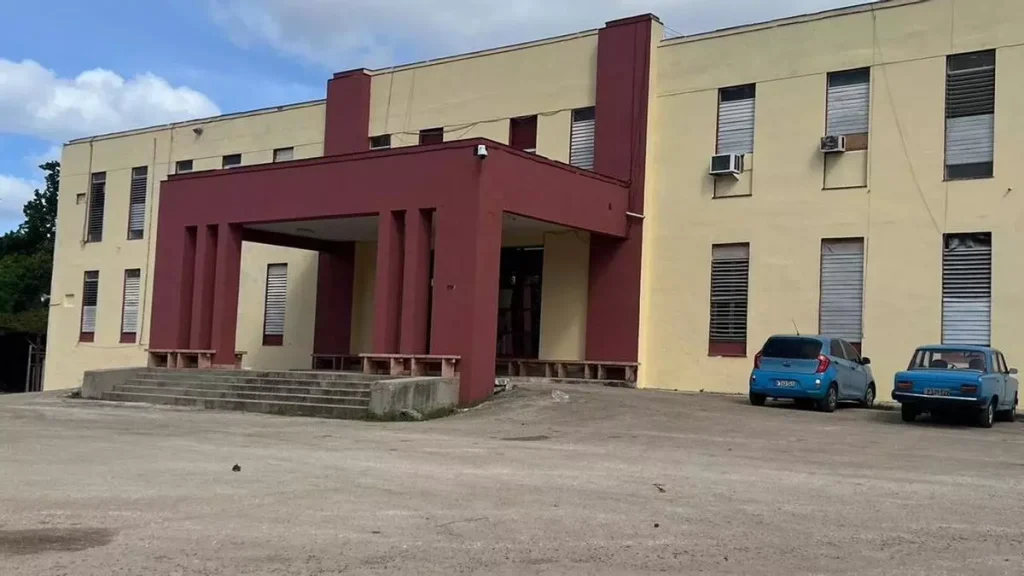
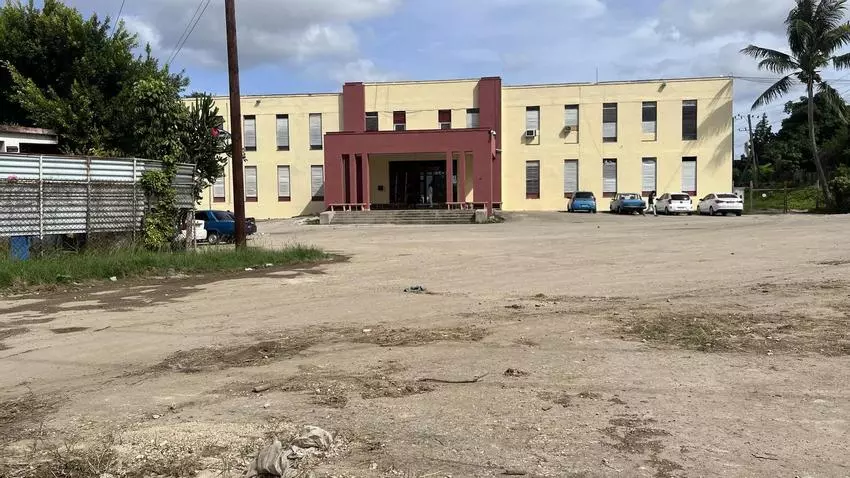
The People’s Civil and Family Court of Marianao, in Havana, where the espionage trial against Alejandro Gil took place. / 14ymedio

14ymedio bigger14ymedio, Madrid, November 13, 2025 — The trial in which former Economy Minister and Deputy Prime Minister Alejandro Gil Fernández was accused of espionage concluded this Thursday, one day longer than expected, according to sources close to the proceedings who spoke to EFE. The Supreme People’s Court (TSP) did not indicate whether the case had been submitted for judgment.

A source connected to the case, who requested anonymity, told 14ymedio that the secrecy surrounding the matter is “total.” Inside the courtroom where the trial was being held, at the People’s Civil and Family Court of Marianao, in Havana, the only family member allowed to attend was the former official’s son, Alejandro Gil González, from whom “no statement of any kind” is expected, the same source said.

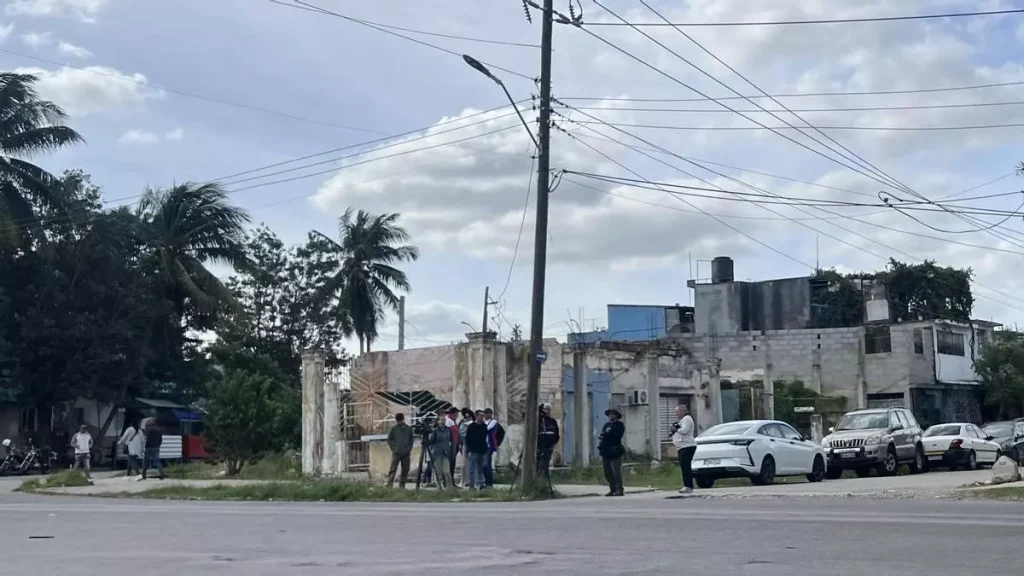
In the vicinity of the courthouse, both this Thursday and yesterday, the activity that had been present on Tuesday, the first day of the trial, announced less than 24 hours in advance on the midday news, was nowhere to be seen. Only three State Security agents, one of them on a motorcycle, were monitoring the area, a stark contrast to the operation two days prior, when streets and businesses were closed. No international press has been observed either this Wednesday or today, unlike on Tuesday.

The former minister’s sister, María Victoria Gil, a lawyer by training, is puzzled that he is being tried in that court in Marianao.

The former minister’s sister, María Victoria [‘Vicky’] Gil, a former Cuban television presenter and lawyer by training, is puzzled that he is being tried in that court in Marianao and not at the main TPS [Tribunal Supremo Popular] headquarters, the agency handling his case, in Old Havana. She has no explanation for it. “I’m at a loss for words,” she told this newspaper.

This Wednesday, in an interview with Cuban influencer Darwin Santana, who resides in Canada, Vicky Gil outlined three possible scenarios. The first, she said, is that “the prosecution will finalize its provisional conclusions and maintain its request for a life sentence,” even though the prosecution’s specific request is for continue reading

30 years. The second is that the prosecution will reach “more moderate conclusions, resulting in a lesser sentence,” and the third is that “the prosecution will withdraw the charges,” something she confessed “is like asking God for the impossible.” For the former minister’s sister, in any case, “it is a sentence that has already been handed down.”

A fourth scenario, not mentioned by María Victoria Gil, is that the Court, with Rubén Remigio Ferro at the helm, raises the prosecution’s request and hands down the maximum penalty, one of the punishments foreseen for the crime of espionage and in force in the Penal Code although it has not been applied on the Island since 2003. The TPS president himself, two years ago, made a public argument in favor of the death penalty, which he defined as the “crown jewel” of the Military Penal Code Law.

At that time, Ferro noted that a “death penalty” had not been applied for twenty years, since “those events of the boat hijacking and the whole situation that ensued,” referring to the 2003 theft of the Regla Ferry vessel that traveled between Regla and Old Havana with the goal of reaching the United States. The boat quickly ran out of fuel, and ten people were arrested and prosecuted. Among them, nine days later, after a summary trial, Lorenzo Copello, Bárbaro Sevilla, and Jorge Martínez were executed by firing squad.

“There is no official statement on the matter, but all this time that has passed is a kind of undeclared moratorium. That doesn’t mean it doesn’t exist.”

“There is no official statement on the matter, but all this time that has passed is a kind of undeclared moratorium. That doesn’t mean it doesn’t exist,” said the TPS president regarding the maximum penalty. He justified it by saying, “We have to have it there as a defense for our society, for our State, for our Revolution, against the very serious threats we constantly face.”

The government has remained silent on this potential outcome of the trial against Gil Fernández, who faces another trial on the remaining charges—a dozen in total, including embezzlement, tax evasion, and influence peddling—in which some twenty other people, including high-ranking regime officials, will also be prosecuted. These days, it has limited itself to disseminating, through various media outlets, excerpts from the interview conducted by the newspaper Granma with Arnel Medina Cuenca , a “Doctor of Juridical Sciences,” who explained why the trial is being held behind closed doors.

“That decision rests exclusively with the Court, which is the one analyzing the specific case and it has all the evidence from both the prosecution and the defense,” the specialist told the Communist Party newspaper. “The Cuban criminal process, regulated by Law 143, establishes in Article 477 that the oral trial is public, unless reasons of national security, morality, public order, or the respect due to the victim or their family advise holding it behind closed doors.” The fact that the crime being tried is espionage—”extremely serious, because it directly threatens national security,” Medina Cuenca said—is the TPS’s excuse for not holding a public hearing.

The decision denied the request for an open trial made by the former minister’s daughter, Laura María Gil, in social media posts after the Court’s decision was announced on television on Monday afternoon.

Alejandro Gil Fernández is being defended by lawyer Abel Solá López, who has extensive experience in trials related to state security. One such case was the 2017 trial that sentenced Alina López Miyares and her husband, Félix Martín Milanés Fajardo, to 13 and 17 years in prison, respectively, for espionage. That trial, held on October 2nd in the Marianao Military Court’s Justice Room, was also closed to the public and “without access for the defendants’ families.”

Translated by Regina Anavy

____________

COLLABORATE WITH OUR WORK: The 14ymedio team is committed to practicing serious journalism that reflects Cuba’s reality in all its depth. Thank you for joining us on this long journey. We invite you to continue supporting us by becoming a member of 14ymedio now. Together we can continue transforming journalism in Cuba.


At Least 30% of the Cuban Population Has Had Dengue or Chikungunya

Health authorities deny that the current epidemic is due to a new disease.

They indicated that all patients with symptoms should be hospitalized, but that it is not necessary to be in a healthcare facility. / 14ymedio

14ymedio bigger14ymedio, Havana, November 13, 2025 — On the Cubadebate page, after the arrival of Hurricane Melissa, the hashtag #FuerzaCuba, which gave encouragement to more than 3.5 million people affected by the rains in the east of the island, still reigns. The slogan could also be applied to the victims of the epidemic that has spread throughout the country and for which, after several weeks, the authorities have decided to give explanations.

To be blunt, at least 30% of the population has been infected at some time, calculates Public Health. The national director of Epidemiology, Francisco Durán García, brought little news regarding the meeting this Tuesday of political authorities and science experts, although he did want to make clear that it is not a new disease or influenza, but dengue and chikungunya.

Chikungunya was emphasized in the television program this Monday, leaving out dengue, which is better known by the population. Its expansion is located – as was said the previous day – in 98% of the north and center of the island, mainly in Matanzas. María Guadalupe Guzmán Tirado, director of the Centro de Investigación, Diagnóstico y Referencia del Instituto Pedro Kourí (IPK), explained that citizens feel more fear at this moment because chikungunya is a relatively new virus in Cuba, transmitted by the mosquito Aedes aegypti, the same vector for dengue and Zika.

The symptoms can take up to three months to go away and joint pain is severe

The doctor gave extensive explanations about this disease that keeps the island in check, since its symptoms can take up to three months to disappear and the joint pain is severe. Guzmán wanted to settle a very lively controversy about the need to carry out diagnostic tests to determine the suffering and the inability of Cuba to do so due to lack of means. “It is not necessary to perform a laboratory test for every patient with symptoms, as the clinical picture is very typical. Diagnosis by epidemiological link is continue reading

sufficient for public health notification and action, reserving virological confirmation for specific situations such as the detection of initial circulation, serious or complicated cases,” she said.

The protocols of the Pan American Health Organization (PAHO) determine, in effect, that laboratory diagnosis is indicated only to identify the beginning of a virus or in specific cases, but not when there is a community outbreak already, as is the case in Cuba, where up to date there are 21,681 cases, according to official sources. This represents a rate of 223.5 cases per 100,000. To get an idea of the dimension, in one of the most recent regional outbreaks (2022), the incidence on the continent was 27.2 per 100,000 inhabitants, with Belize at the top (more than 600), followed by Brazil with 124.

The disease has been rooted in the continent for decades, with a stage between 2023 and 2016 of great virulence, but in Cuba its presence was much more controlled. “It has now reached us, and it may have entered through travelers from places where transmission is maintained,” she said. What has happened to make the situation out of control? One of the things clearly pointed out by the doctor is the disastrous management of garbage. The proliferation of water tanks in homes — which is a response to the poor provision of water service — is coupled with “inadequate management of solid waste and deficiencies in sanitation.”

This accusation was accompanied by the testimony of Madelaine Rivera Sánchez, head of the National Directorate for Surveillance and Vector Control, who cushioned the impact by accusing the “US economic blockade” of the difficulty in acquiring fumigation equipment and repair parts.

She argued that there may be “delay” or “low availability of some medicines” but there is care and beds

“Fumigation teams should soon reach all the provinces,” she said, before asking residents to open their doors to the brigades and insisting that there are only 45 minutes of emissions. “We are back in the same circle if we do not act together,” she said, urging people to keep their homes clean.

Doctor Yagen María Pomares Pérez, Director of Primary Health Care at the Ministry of Public Health, indicated that all patients who have symptoms should be hospitalized, but pointed out that it is not necessary to be in a health facility. “When I speak of hospitalization, I mean that admission may be at home or in primary or secondary institutions.”

However, she defended the health system and argued that there may be “delay” or “low availability of some medicines,” but there is care and beds. “We must assume the same response dynamics that we applied during Covid-19. Chikungunya can lead to death and must be treated with due seriousness,” the doctor warned. “The key from the first symptoms is to maintain hydration and rest, and go to the doctor without self-medicating.”

In addition, Doctor Daniel González Rubio, infectologist of the Instituto de enfermedades tropicales Pedro Kourí, described the symptoms of the disease, especially joint pain, and its stages. After incubation of one week, the acute stage begins, with intense pains and fevers of 40 degrees or more. “This arthritis can make the person an invalid who has difficulty in performing daily tasks,” explained the specialist.

This is followed by the subacute phase, up to three months, with persistent pain, stiffness and possible relapses. In addition, there is a group of patients who evolve to a chronic phase, and their symptoms can last for years.

Durán closed the program saying that clinical trials are being organized and approved to test the drug Jusvinza in chronic cases of chikungunya arthritis. “It’s not that we’re slow, it’s that there’s a process,” he said. In the meantime, “we all need to be actively involved in vector removal and environment management.”

Translated by Regina Anavy

____________

COLLABORATE WITH OUR WORK: The 14ymedio team is committed to practicing serious journalism that reflects Cuba’s reality in all its depth. Thank you for joining us on this long journey. We invite you to continue supporting us by becoming a member of 14ymedio now. Together we can continue transforming journalism in Cuba.

Sick Doctors and Overwhelmed Hospitals, the “Virus” Spreads Throughout Cuba

After months of inaction, health authorities warn of an “exponential” rise in chikungunya and dengue fever.

Hurricane Melissa not only left broken roofs, flooding and endless power cuts in its wake, it also complicated the health situation, which was already serious before the cyclone struck. / Girón

14ymedio bigger14ymedio, Havana, November 7, 2025 — “At my workplace, there are 14 doctors, nurses and staff members recovering from the new viruses,” a worker at the Doctor Cosme Ordóñez Carceller polyclinic in Havana’s Plaza de la Revolución municipality tells this newspaper. “Most of my colleagues are ill,” she adds, confessing to feeling “overwhelmed” by the number of daily cases she has to deal with at the medical centre.

Tamara Alonso, who lives in Lawton, writes: “Here, every family has had at least one person with the disease, at a minimum. On my block, everyone has had it and is still going through it. There are three of us in my house, and all three of us had it. I also have a friend who went to Vedado four days ago, and he told me that on 23rd Avenue, almost everyone was walking around like robots. It’s horrible, both during and after.”

The health crisis has the entire country in check. The José Martí Pérez Paediatric Teaching Hospital in Sancti Spíritus has increased its capacity in response to the rise in arbovirus cases in the province. According to its director general, Ramón Aquino Lorenzo, 20 beds have been added to the 152 already in place, and the emergency room and nursing areas have been reinforced. The doctor asks the population “not to stay at home” and “to see a doctor in the early hours to prevent possible complications that may arise in this type of pathology,” something that Cubans tend to resist, especially due to the shortage of resources and reagents in health centres.

The news, published on Friday in the provincial newspaper, along with other reports in the official media about the health emergency, reflects the sudden concern of the authorities after months of ignoring it. On Thursday, Adelante warned of an “exponential” increase in Camagüey in diseases transmitted by the Aedes aegypti mosquito, especially chikungunya and dengue. In the provincial capital, there is “a daily average of 450 people continue reading

with feverish symptoms and a cumulative infestation rate of 2.16″.

The scene described here seems to be taken from the dystopian film ‘Juan de los Muertos’

Clinical trials also began on Thursday for the drug Juzvinza, intended for the treatment of “joint inflammation that persists in many patients after the infection has been overcome” in chikungunya. Dr Perla María Trujillo Pedroza, a specialist in comprehensive general medicine at the Manuel Piti Fajardo Polyclinic in Santo Domingo (Villa Clara), who had been highly critical of the authorities’ inaction in the face of the epidemic, welcomed the announcement of the trials – “Late? Yes, but something is better than nothing,” she wrote on her Facebook page – although she called for “continued work on prevention, on which very little has been done.”

Many Cubans in exile are distressed about the situation of their relatives in Cuba. “Some of my uncles and aunts in Cruces, Cienfuegos, are bedridden,” a Cuban woman living in the US tells this newspaper. “They are very old, aged 89, 91 and 94. The only one still on her feet was a 69-year-old daughter, but she fell ill this week.” The scene she describes seems to be taken from the dystopian film Juan de los Muertos, by Cuban director Alejandro Brugués: “During the day, in the part of town where they live, you don’t see a soul on the streets. Everyone is convalescing. And at night, with no electricity, as is almost always the case, all you can hear are moans. In the silence, you can hear people giving vent to their pain.”

Hurricane Melissa not only left broken roofs, flooding and endless power cuts in its wake, it also complicated the health situation, which was already serious before the cyclone struck. Arboviruses – dengue, Zika, chikungunya, the more recent Oropouche, and others not yet recognised – are no longer seasonal events, but part of everyday life in neighbourhoods where water stagnates without reaching household tanks, garbage accumulates even though the government poses for photos in “volunteer work” and sanitation depends more on neighbourhood ingenuity than on the management of the authorities.

The mother of Duannis León Taboada, a political prisoner from the Island-wide ’11J’ protests of 11 July 2021, reported that her son has been ill since Wednesday and has still not received medical attention. “My worst fear has come true. My son is unjustly imprisoned and has been struck down by the damn virus. He has a fever and is vomiting and in a lot of pain,” wrote Jenni Taboada. Her message conveys uncertainty and despair: “What do they want, for him to die? I am extremely concerned for my son’s life,” she concluded.

Opacity in Cuba is part of the political model. For decades, the island was a regional benchmark in epidemiological surveillance. Today, there is talk of “controlling outbreaks” but not of incidence rates. It is claimed that “reagents are available”, while patients and doctors quietly confirm that diagnoses depend on luck or on who you know in the health sector.

Arboviruses find fertile ground in a population without defences or minimum hygiene conditions.

Tamara Moisés, living in Santiago de Cuba, posted extensively on social media about the critical deterioration of living conditions after the hurricane, which has had a direct impact on the spread of arboviruses. According to her testimony, the city has been without sanitation for more than nine days, with accumulated rubbish and branches, blocked drains and an explosion of mosquitoes and gnats. In her street, with only a few houses, 17 cases of chikungunya have already been reported.

Moisés attributes the spread and severity of these diseases not only to unsanitary conditions, but also to widespread immune deterioration caused by poor nutrition, which she describes as “starvation.” She also points to critical shortages of food, medicine and drinking water, as well as endless power cuts, no gas to boil water and pharmacies without basic medicines.

Her testimony warns of a possible worsening of the health crisis with risks of multiple outbreaks, an increase in tuberculosis and diseases associated with malnutrition, in a context that the Santiago native describes as  “a failed state” and “inhumane,” where arboviruses find fertile ground in a population without defences or minimum hygiene conditions.

State media outlets talk about “anti-vector battles,” “community mobilisations,” and “the people’s struggle alongside the authorities.” But these reports never mention the essential details: How many people are sick? In how many municipalities? How fast are infections spreading? How many deaths are actually attributed to complications from arbovirus infections, and how many are diluted into generic clinical categories?

Translated by GH

____________

COLLABORATE WITH OUR WORK: The 14ymedio team is committed to practicing serious journalism that reflects Cuba’s reality in all its depth. Thank you for joining us on this long journey. We invite you to continue supporting us by becoming a member of 14ymedio now. Together we can continue transforming journalism in Cuba.
US Accuses a Pilot Who Participated in the Shoot-Down of Brothers to the Rescue of Immigration Fraud

Luis Raúl González-Pardo faces charges that could cost him up to 15 years in federal prison

González-Pardo, in the center, with a group of pilots from the Cuban Armed Forces / Martí Noticias

14ymedio bigger14ymedio (via EFE), Miami, November 13, 2025 — Authorities in Florida accused Cuban pilot Luis Raúl González-Pardo of immigration fraud for lying about his past in the Cuban Air Force after arriving in the US under Humanitarian Parole in 2024, despite being implicated in the deaths of four Americans.

The Attorney General’s Office in the South Florida District announced that González-Pardo, 64, faces charges of fraud and misuse of visas, permits and other documents, and of giving false statements to a federal agency, which could get him up to 15 years in federal prison.

“This man’s past as a longstanding military pilot for the evil Castro regime, which has brought unspeakable suffering to the Cuban people, should have been front and center in his immigration file,” Attorney General Pam Bondi said in a statement.

“This man’s past as a longstanding military pilot for the evil Castro regime, which has brought unspeakable suffering to the Cuban people, should have been front and center in his immigration file”

The pilot, who arrived in April 2024 under the humanitarian parole program of former President Joe Biden (2021-2025), submitted “false declarations” about his membership in the Cuban Air Force from 1980-2009 on his I-485 form, in order to adjust his immigration status, according to the Department of Justice.

The complaint alleges that “he falsely stated that he had never received any military or weapons training, never participated in a group of any kind that used weapons or threatened to use weapons, and never served in a military or police unit, when in fact he received such training and served in the Cuban Army.” continue reading

Authorities accompanied the indictment with a photo of the suspect while working in the Cuban Air Force.

La polémica estalló en octubre de 2024, cuando legisladores republicanos de Florida, como el entonces senador Marco Rubio, ahora secretario de Estado, enviaron una carta a la Administración de Biden para denunciar que la llegada de González-Pardo implicaba admitir a “individuos ligados al régimen ilegítimo de Cuba”.

The controversy erupted in October 2024, when Florida Senator Marco Rubio, now Secretary of State, sent a letter to the Biden Administration denouncing that the arrival of González-Pardo “implied admitting individuals linked to the illegitimate regime of Cuba.”

Authorities accompanied the indictment with a photo of the suspect while working in the Cuban Air Force

Lawmakers reported that the pilot is “notoriously linked” to a 1996 incident in which Cuban MiG-29 jets shot down two planes of the humanitarian organization Brothers to the Rescue, resulting in the death of four “innocent Cuban-American pilots.”

The current US president, Donald Trump, revoked the Humanitarian Parole program, a temporary legal protection that the Biden government granted to some 532,000 Cubans, Nicaraguans, Venezuelans and Haitians.

“This Department of Justice will vigorously pursue anyone who lies about their past and takes advantage of the US immigration system,” Bondi warned.

Translated by Regina Anavy
____________

COLLABORATE WITH OUR WORK: The 14ymedio team is committed to practicing serious journalism that reflects Cuba’s reality in all its depth. Thank you for joining us on this long journey. We invite you to continue supporting us by becoming a member of 14ymedio now. Together we can continue transforming journalism in Cuba.
“Sometimes I Think This Pain Will Last Forever”

In Matanzas, patients with symptoms of chikungunya do not find relief in the line at the hospital

Patients despair for the lack of relief from pain that they feel will not go away. / 14ymedio

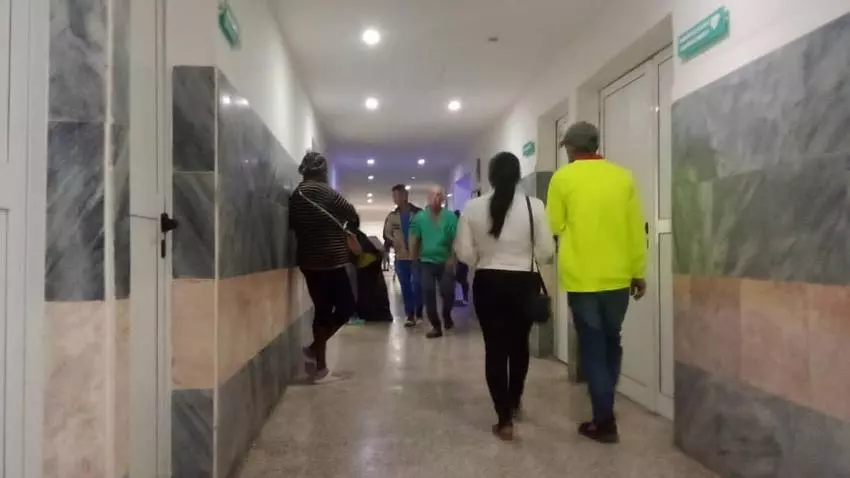
14ymedio bigger14ymedio, Julio César Contreras, Mantanzas,November 13, 2025 — The corridor at the Faustino Perez hospital seems to have no end. The white light is reflected in the worn-out tiles, and the air is still, saturated with disinfectant and resignation. It is 8:00 am, and the line in front of the post-arbovirosis clinic now stretches to the end of the corridor. Among those who wait, a woman, walking slowly with bandaged knees and tired eyes, asks if this is where they attend the patients with chikungunya. Her name is Yolanda, and she is 59 years old. For two months she has barely managed to walk.

“Since I got the virus, I haven’t been able to leave my house,” she says, leaning against the wall. “The swelling and pain in my knees are terrible. No one has explained to me if there is a cure or if I will stay like this forever.” Other patients hear her and nod in silence. They all share the same evil: the long aftermath of a fever that went away but left a broken body.

Yolanda says that in the La Playa polyclinic, the doctor could only refer her to the hospital: “She didn’t have a prescription for me.” In her neighborhood, Facebook groups and Google searches have become the new consultation rooms. “You learn on your own, because if you wait for them to guide you, you die of pain,” she complains. After a while, she finds a seat on a metal bench. Sitting down with difficulty, she takes a deep breath and watches as the other patients move slowly, dragging their feet.

In front of the intake window, the scene repeats itself: faces of fatigue, moans of pain and an employee who notes down names on an endless list. The health system tries to maintain the protocol, but the shortcomings are visible. Doctors repeat continue reading

the same recommendations over and over again –rest, painkillers, compresses — while patients look for answers.

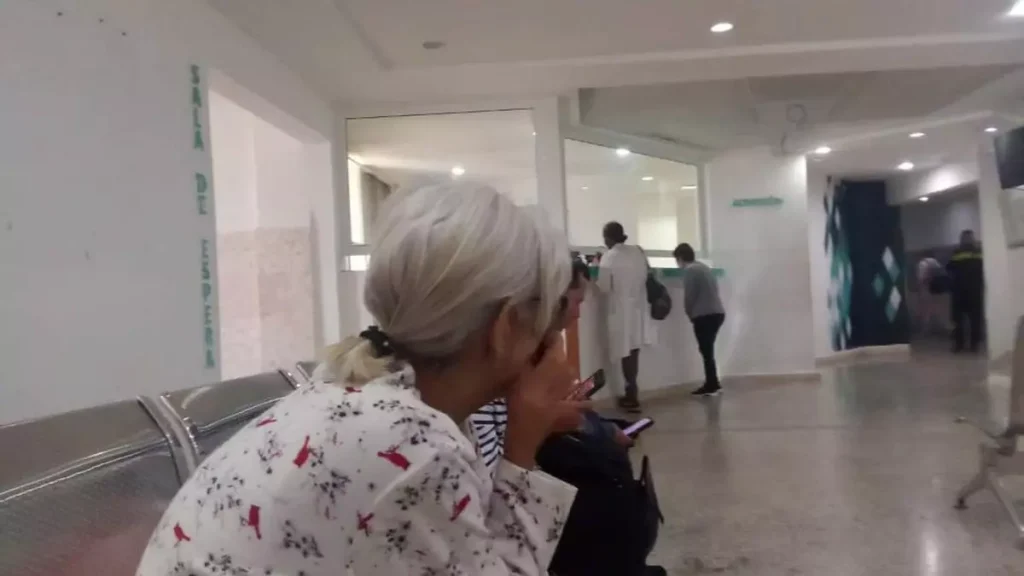
The line in front of the post-arboviral consultation room now stretches to the end of the corridor. / 14ymedio

Tania, with swollen hands and red fingers, has been like this for five weeks. “I took a taxi from Limonar to get here, only to be told to take paracetamol,” she says. She was treated by three doctors, but none seemed to look beyond her file. “They talked to each other about their stuff, and in the end asked me if I had any risk factors. They don’t even know what virus I had. I spent eight days in bed without being able to get up. And now I arrive and leave the same way: no diagnosis and no relief.”

In the waiting room, an elderly woman wears a white robe printed with flowers and holds a phone in her hand. “Sometimes I think this is a test of endurance,” she whispers. She is accompanied by a young man who barely looks up. “Here the only thing that works without interruption are the lines,” she adds with an attempt at humor.

Sergio, a 52-year-old carpenter, managed to get a turn by calling the registration department directly. “Since the end of August I haven’t been able to pick up a hammer,” says this worker who makes baby furniture and cribs, rubbing his swollen hands. “I have spent more than 20,000 pesos on medicines, and neither paracetamol nor prednisone has worked for me.” The man speaks without anger, but with a resigned sadness. “I tried ice, exercises, massages… The only thing left is acupuncture. I don’t know if it will work, but I don’t have another option.” The silence of the corridor is interrupted by moans. Someone moves around in a wheelchair, another calls for help to find the consultation room.

The silence of the corridor is interrupted by moans. Someone moves around in a wheelchair, another calls for help to find the consultation room.

The most heard words are “rest” and “patience.” However, in the gestures of the sick there is more fatigue than hope. Arbovirosis has gone from being a seasonal news item to becoming a chronic disease of Cuban life. Not just for the viruses but for what comes with them: the after-effects and limitations to resume normal life.

Yolanda gets up when she hears her name. “At least today they will see me,” she says, although she knows that there will not be a treatment other than the one she already knows. Before entering, she says goodbye to those who are still waiting. “Beware of the mosquito,” she recommends with a faint smile.

When she leaves, more than a half-hour later, the line remains, with the same faces next to others who have arrived with similar symptoms. Only the time has changed. “I was told that I have to continue taking the same medications,” she says. She walks slowly towards the exit, clinging to the wall. “Sometimes I think this pain will last forever.”

Outside the hospital, the traffic noise reminds her that the day continues. “I’m going to take a taxi and go back home. I’ve done what I had to do.” She adjusts her backpack, takes a deep breath and crosses the street with slow and clumsy steps.

Translated by GH and Regina Anavy

____________

COLLABORATE WITH OUR WORK: The 14ymedio team is committed to practicing serious journalism that reflects Cuba’s reality in all its depth. Thank you for joining us on this long journey. We invite you to continue supporting us by becoming a member of 14ymedio now. Together we can continue transforming journalism in Cuba.
Faced With the Increase in Deaths, Cuba’s State Telecommunications Company Etecsa Is Converting Its Vehicles Into Hearses

All the conversations in both Havana cemeteries revolved around “that virus” that “everyone is sick” with.

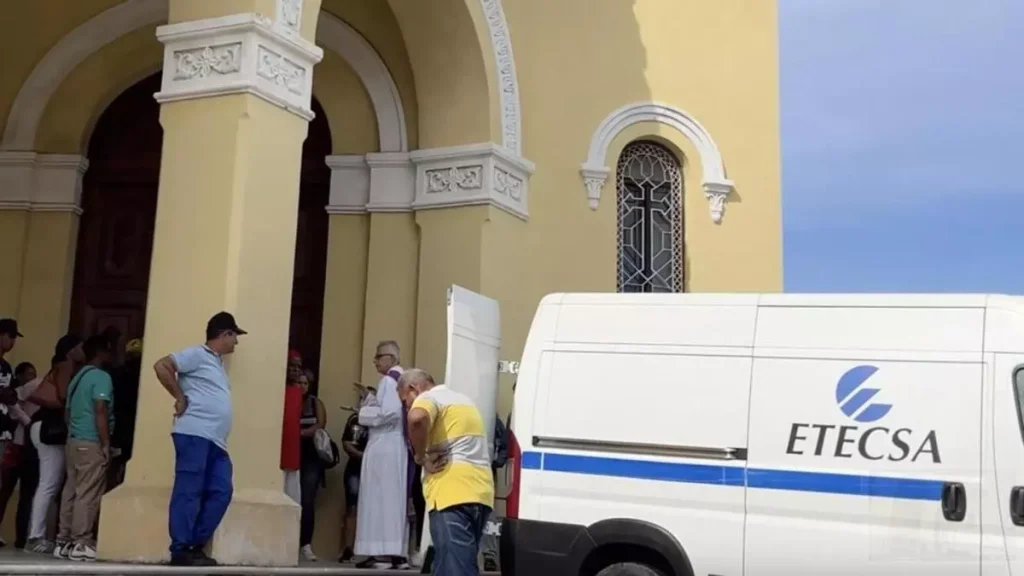
In Colón, an Etecssa van waited outside the chapel until the service ended. / 14ymedio

14ymedio bigger14ymedio, Dario Hernandez, Havana, November 12, 2025 —  “There’s more funeral activity these days.” The statement, made by a worker at the Colón Cemetery in Havana, once again contradicts the government’s reassuring messages about the arboviral epidemic plaguing the country . A simple stroll through several of the island’s cemeteries confirms the situation.

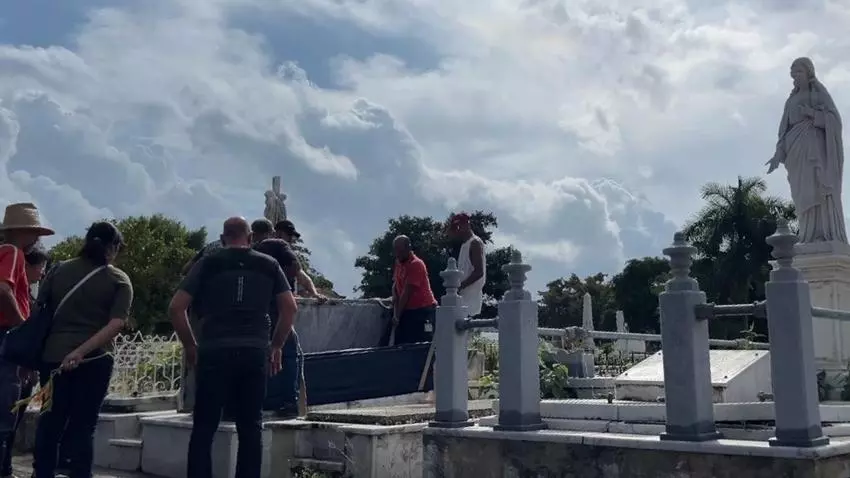
At ten o’clock on Monday morning, the chapel located inside the island’s main cemetery in El Vedado was packed with people, and the parking lot was full of cars. Numerous burials were also taking place within the cemetery itself. The same scene was observed in Regla. All this activity is consistent with what can be seen at funeral homes in the capital, which have also seen increased activity in recent days.

The most striking thing, however, is the unusual transport being used to carry the coffins: vans from the Telecommunications Company (Etecsa). In Colón, one of them waited outside the chapel until the service was over. In Regla, a car from the telephone monopoly slowly led a funeral procession. The sight of the mourners weeping behind the state-owned vehicle was jarring.

Numerous burials could be seen throughout the Colón cemetery. / 14ymedio

One of them, however, was relieved: “Thank goodness at least these Etecsa vans are here, because I don’t know what happened to the hearses.” The man recounts that five years ago, when his mother died, even with the availability of proper vehicles, “it was already complicated.” “I don’t know if they’re sending these vans because so many people are dying and the hearses can’t keep up, or because the municipal services department simply doesn’t have them anymore,” this Havana resident ventures, wondering if the “diversion” of Etecsa vans might be affecting telecommunications service.

Although they did not mention the cause of death of the deceased about to be buried, all the conversations in both Havana cemeteries revolved around “that virus” that “everyone is sick” with.

This is the second consecutive week that the number of infections of what the Government now calls “non-specific febrile syndrome” has decreased, according to the Ministry of Public Health at a government meeting this Tuesday, but the cumulative total is starting to be alarming. continue reading

There are eight provinces where the number of cases is beginning to decrease—Havana, Matanzas, Villa Clara, Cienfuegos, Ciego de Ávila, Granma, Santiago de Cuba, and Guantánamo—suggesting that in the rest of the country, the number is at least stable, if not increasing. The province with the highest rate remains Sancti Spíritus, according to an article published Wednesday in the Escambray newspaper. However, the data on dengue fever, the most dangerous of the arboviruses circulating on the island this year, were very vague. 

The sight of the mourners weeping behind the state vehicle in Regla was shocking. / 14ymedio

Authorities have been reluctant to give an absolute figure, but data from the Pan American Health Organization (PAHO) shows that a total of 9,602 people have now been infected, compared to 6,519 on October 23. This means the incidence rate has risen to 87.79 cases per 100,000 inhabitants, up from 59.6 per 100,000 three weeks ago. These numbers represent only a small part of the true situation, as the population is hesitant to go to health centers.

Chikungunya cases are also on the rise. As of Tuesday, the cumulative total was 21,681, compared to just over 20,000 last week. Regarding oropouche, experts stated that there have been no confirmed or suspected cases since September 26.

https://www.facebook.com/14ymedio/videos/1383194196792466/

____________

COLLABORATE WITH OUR WORK: The 14ymedio team is committed to practicing serious journalism that reflects Cuba’s reality in all its depth. Thank you for joining us on this long journey. We invite you to continue supporting us by becoming a member of 14ymedio now. Together we can continue transforming journalism in Cuba.
Castro’s Mistrust of Havana Politicians

The Castro brothers consolidated their power through purges that eliminated key figures of the Revolution, many of them born in the capital.

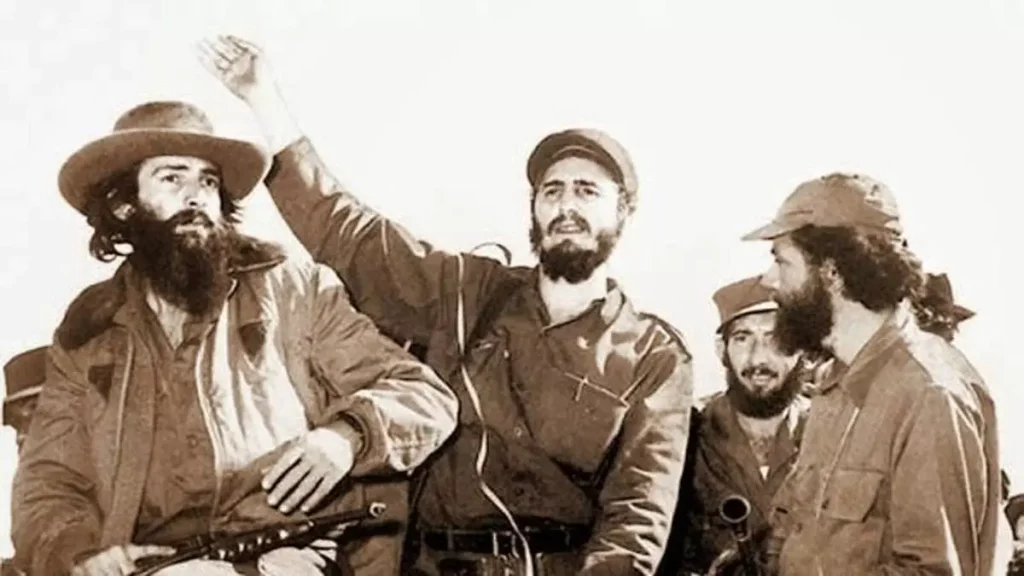
Fidel Castro entering Havana in 1959, flanked by Camilo Cienfuegos and Huber Matos. / Venceremos

14ymedio bigger14ymedio, Rafael Bordao, Miami, November 12, 2025 —  It is striking that, for the past 73 years, Cuba’s main heads of government have shared a common origin: a rural background. From Batista, Fidel, and Raúl, born in the province of Holguín, an agricultural region in eastern Cuba, to Miguel Díaz-Canel, also from a province outside the capital, political leadership has been marked by figures formed in environments far removed from Havana’s cosmopolitanism. This campesino root profoundly influenced their vision of the country, favoring a revolutionary narrative centered on the countryside, the fight against urban elitism, and the redistribution of wealth, although often with contradictory and catastrophic consequences.

When Fidel Castro seized power in 1959, a considerable portion of Havana’s population—especially from the middle and upper classes—emigrated into exile, primarily to Florida. In their place, Havana was repopulated by campesinos brought from the interior of the country, many of whom were housed in the former mansions confiscated from the bourgeoisie. This forced relocation generated a culture shock: the new inhabitants, unfamiliar with the codes of urban life, felt uncomfortable in spaces they didn’t fully understand; some didn’t even know what a bidet was for. The revolution, by appropriating properties without compensation, unleashed a wave of resentment and social upheaval. The country, in its attempt to reinvent itself, saw its traditional structures dismantled, giving way to a chaos that, for many, was both a punishment and the consequence of a historical vendetta.

The history of the Castro regime is marked by a liturgy of silences and defenestrations

The Castro brothers consolidated their power through a series of political purges that systematically eliminated key figures of the Revolution, many of them Havana natives, such as Ricardo Alarcón de Quesada, who had the potential to succeed them. The history of the Castro regime is marked by a liturgy of silences and defenestrations. From the removal of President Manuel Urrutia in July 1959, the mysterious disappearance of Camilo Cienfuegos, and the arbitrary arrest of Commander Huber Matos, the continue reading

Castros initiated a strategy of absolute control, which involved marginalizing fellow revolutionaries who posed a threat to their one-man rule.

Over the decades, leaders such as Carlos Lage, Felipe Pérez Roque, and José Abrantes (all from Havana), and Carlos Aldana were removed from power without credible public explanations, victims of a system that punishes autonomy and popularity. Even Eusebio Leal Spengler, the cultured and revered historian of Havana, was quietly sidelined, and although he died—according to the authorities—of a painful illness, his Catholic faith and his cosmopolitan and cultural vision of the country not only contrasted with the military stubbornness of Castroism, but also distanced him from socialist dogma, which probably prevented him from rising to positions of greater influence.

These purges were not merely a response to political errors, but rather to a logic of structural distrust. Power in Cuba is not shared: it is inherited, monitored, and purified. The fall of each figure (the most recent being that of economist Alejandro Gil Fernández) is accompanied by a eulogy that sounds like an epitaph, and the ensuing silence is as eloquent as the accusation. In this context, the Revolution has become a closed space, where absolute loyalty to the Castro leadership is the only guarantee of permanence.

____________

COLLABORATE WITH OUR WORK: The 14ymedio team is committed to practicing serious journalism that reflects Cuba’s reality in all its depth. Thank you for joining us on this long journey. We invite you to continue supporting us by becoming a member of 14ymedio now. Together we can continue transforming journalism in Cuba.
A Heavy Police Presence and Closed Businesses Surround the Courthouse Where Alejandro Gil Is Being Tried

The regime is deploying surveillance not only in Marianao, where the hearing is taking place, but also at the main headquarters of the Supreme People’s Court in Old Havana.

International press gathered outside the trial of Alejandro Gil this Tuesday in Marianao. / 14ymedio

14ymedio bigger14ymedio, Darío Hernández/Yaiza Santos, Havana/Madrid, November 11, 2025 — The area surrounding the People’s Civil and Family Court of Marianao, in Havana, was heavily guarded this Tuesday morning, but with a visible presence of the international press. The trial of Alejandro Gil Fernández, the highest-ranking official prosecuted by the Cuban justice system in recent decades, is taking place there, starting at 9:30 a.m. Gil Fernández is a former Minister of Economy, former Deputy Prime Minister, and for years the right-hand man of President Miguel Díaz-Canel.

The only relative of the former official allowed entry, according to a source close to the case who requested anonymity, is his son, Alejandro Gil González. The hearing will continue tomorrow.

“I saw a lot of photographers and a pile of cars when I took my son to school early this morning,” Susana, a resident of the area, located at 100th Street and 33rd Avenue, told 14ymedio. At that time, traffic was not yet blocked, unlike during the court hearing. Shops and businesses of all kinds were also closed, and dozens of State Security agents in civilian clothes could be seen scattered around the street corners, as 14ymedio confirmed.

The People’s Civil and Family Court of Marianao, in Havana, where the trial of former minister Alejandro Gil is taking place this Tuesday. / 14ymedio

The same thing was happening in the streets adjacent to the Supreme People’s Court in Old Havana, the body that issued the statement on Monday announcing today’s trial time. On every corner near Aguiar Street, between Obrapía and Obispo, State Security agents, “disguised” in civilian clothes and working in pairs, were stationed, intently watching everyone who walked by, even for just a few seconds. “I don’t know why they’re wasting so many resources, if the trial is happening somewhere else,” a witness to the operation said ironically. continue reading

This Monday, without prior notification to Gil’s family, the midday news broadcast the TPS statement announcing that the oral hearing against the former minister would take place less than 24 hours later. The hearing, scheduled for 9:30 a.m. this Tuesday, would be conducted by the State Security Crimes Chamber, although neither the court that would try him, nor the address, nor the charges to be addressed were provided.

The accused’s sister, María Victoria Gil Fernández, told 14ymedio that the process would take place in two separate trials, and that today would be the one that includes the espionage charge, for which the Prosecutor’s Office is asking for 30 years in prison.

Police operation outside the courthouse where Alejandro Gil is being tried. / 14ymedio

According to the Supreme Court’s statement, the trial would be held behind closed doors for “national security reasons,” citing Articles 153 of the Constitution and 477.1 of the Criminal Procedure Law. Only “the parties and persons authorized by the court” would have access, the statement continued, the news anchor read almost without looking up from the page. This decision confirmed the opacity with which the government has handled the case since the minister’s dismissal in February 2024, and effectively canceled the request made on social media by Gil’s daughter, Laura María, for a fair, public, and transparent trial with media presence.

The court’s decision overturns the young woman’s demand, made on social media , for a transparent and public trial, so that the public could directly learn the arguments, evidence, and details about her father’s alleged crimes. “If they are so sure of their case, why hide it?” Laura María Gil questioned, demanding a process that goes beyond official statements and controlled leaks.

Surveillance operation on Aguiar Street in Old Havana this Tuesday. / 14ymedio

According to a source familiar with the case, who requested anonymity for security reasons, the case against the former Minister of Economy and Finance involves some twenty other defendants, including “a member of the National Assembly of People’s Power and a secretary of the Communist Party.” “The request for him is 30 years, while all the others face minimum sentences of 15 years,” the same source told 14ymedio, while specifying Gil’s whereabouts, which had not been made public since his arrest in March 2024: the maximum-security prison of Guanajay, Artemisa, “under a regime against state security.”

The defendants, he continued, number 15, “plus another five or six who were released on bail.” He asserted that “the names of some of them are not being released; they are under strict secrecy, which implies that they could be military personnel or high-ranking officials.”

Alejandro Gil Fernández is being defended by the lawyer Abel Solá López , who has extensive experience in trials related to state security. One such case was the 2017 trial that sentenced Alina López Miyares and her husband, Félix Martín Milanés Fajardo, to 13 and 17 years in prison, respectively, for espionage. That trial, held on October 2nd in the Marianao Military Court’s Justice Room, was also closed to the public and “without access for the defendants’ families.”

____________

COLLABORATE WITH OUR WORK: The 14ymedio team is committed to practicing serious journalism that reflects Cuba’s reality in all its depth. Thank you for joining us on this long journey. We invite you to continue supporting us by becoming a member of 14ymedio now. Together we can continue transforming journalism in Cuba.
Cuba Acknowledges 60% More Serious Cases of Dengue to the Pan American Health Organization (PAHO) and Promises To Handle It ‘Like We Did With COVID-19’

Cuban authorities report that the number of infections is beginning to be controlled, but in just three weeks the number of cases has soared

Fumigation in a street in Matanzas. / Girón

14ymedio bigger14ymedio, Madrid, November 12, 2025 — Cuban President Miguel Díaz-Canel Bermúdez spoke words that were as feared as they were expected on Tuesday. “We are going to handle this epidemic like we did with Covid-19,” he said at the meeting of health experts, who analyzed the situation created since viruses associated with arbovirosis began to spread on the island. The population has assumed for weeks that the spread is rampant and expected the authorities to do the same, although they fear that the mention of coronavirus will cause more worry.

The authorities spoke yesterday of an “unspecific febrile syndrome,” as it is known in medicine: a condition characterized by the presence of high fever and commonly associated with a wide variety of diseases such as dengue, zika, chikungunya and many others. According to the data offered by Public Health at the meeting, it is the second consecutive week that the number of infections has decreased, but the accumulation of cases is frightening.

Dr. José Raúl de Armas Fernández said that there are eight provinces in which the number is beginning to fall — Havana, Matanzas, Villa Clara, Cienfuegos, Ciego de Ávila, Granma, Santiago de Cuba and Guantánamo — from which it can be inferred that the others have at least stable, if not increased, numbers. Sancti Spíritus, according to an article published this Wednesday in the newspaper Escambray, maintains the highest rate of suspected cases. Data on dengue, the most dangerous of the arbovirosis circulating on the island this year, were very unspecific. continue reading

Sancti Spíritus, according to an article published this Wednesday in the newspaper Escambray, maintains the highest rate of suspected cases.

The authorities have been reluctant to give an absolute figure, but the data provided by PAHO show that a total of 9,602 people have already been infected, compared to 6,519 on October 23. This means that the incidence is 87.79 cases per 100,000 inhabitants, compared to 59.6 cases per 100,000 three weeks ago.

The numbers are from suspected and confirmed cases, in the 46th week of data, although they represent a small part of those actually on the island, since a large part of the population is reluctant to go to health centers despite the insistence of the authorities. Three weeks ago, when this newspaper reviewed the PAHO data on dengue, Cuba had reported 71 cases of severe dengue, but today it reports 115 cases, 62% more in just 21 days. Deaths are also reported: three in total, unchanged from mid-October.

Dr. Armas Fernández did give more precise figures for chikungunya, not for the first time. Last week, the national director of Epidemiology, Francisco Durán, placed the number at 20,062, while yesterday the cumulative figure had increased to 21,681, of which more than 20,000 had a clinical suspicion of the disease in 14 provinces, 93 municipalities and 151 health areas. Matanzas, Havana, Camagüey, Cienfuegos, Artemisa, and Villa Clara have almost all the cases, 98.5% of those diagnosed.

As for oropouche, experts stated that there has been no confirmed or suspected case since September 26.

“El objetivo fundamental de nuestro sistema es lograr el ingreso de todos los pacientes que tienen síndrome febril. Este ingreso puede ser en la vivienda o puede ser por los criterios que ya están aprobados”, afirmó Yagen Pomares Pérez, directora general de Atención Primaria y doctora en Ciencias.

“The fundamental objective of our system is to accomplish the admission of all patients with febrile syndrome. This can be home admission, according to criteria that are already approved,” said Dr. Yagen Pomares Pérez, the director general of primary care.

Pomares said that a new protocol has been approved for this situation based on the experiences of the Covid-19 pandemic, in which it is essential “to admit patients,” beginning with isolation at home, which, she admitted, is complicated.

She also indicated that there is a need for the health teams to continue monitoring the patient. For this, and in the midst of a collapse of staff and human resources in the health sector, “fifth-year medical students who now have the sufficient competence” have been mobilized. The experience now has been tested, as this newspaper reported last month and now confirmed on Tuesday by the official in Matanzas, the first province to suffer the serious epidemic.

The experts reported that there are demographic groups that must be hospitalized in all cases, such as children under two years of age, pregnant women and older adults

The experts reported that there are demographic groups that must be hospitalized in all cases, such as children under two years of age, pregnant women and older adults. They should be joined by people suffering from any disease that can be aggravated with a virus, from the hypertensive to the diabetic and any other condition that produces comorbidities. But the authorities are faced with the great challenge of citizens’ mistrust, who fear finding themselves in an institution where there are shortcomings of all kinds, including sanitation and being surrounded by others affected.

“We all know that the main concern of our population today is pesticide treatment, fumigation,” added Madelaine Rivera Sánchez, national director of Surveillance and Vector Control. She claimed yesterday that “it has not been possible to reach everywhere, as we have been accustomed to during the years of epidemic outbreaks.” However, it is not the first year that problems of fuel, supplies and personnel have complicated the task or made it impossible.

Although Rivera promised to try to reach urban areas or others where an intervention is called for, “there are some provinces in which it has not gone well because the teams have remained on the ground.” This disease, she said, “has had a very fast transmission rate due to the presence of the mosquito, and we must continue to carry out the main actions against the vector in order to be able, in the shortest possible time, to solve this problem that is affecting the entire population.”

Translated by Regina Anavy

____________

COLLABORATE WITH OUR WORK: The 14ymedio team is committed to practicing serious journalism that reflects Cuba’s reality in all its depth. Thank you for joining us on this long journey. We invite you to continue supporting us by becoming a member of 14ymedio now. Together we can continue transforming journalism in Cuba.
A 23-Year-Old Nurse Murdered in the Street in Pinar Del Río, Cuba, by Her Ex-Partner

This is the third femicide recorded in November, following the case of 28-year-old Yudislaimi Valdés Silediro in Mayabeque.

The young woman was stabbed multiple times on the night of the 6th in the middle of the street. / Facebook

14ymedio bigger14ymedio, Madrid, 12 November 2025– Liena de la Caridad Reinoso Ramos, aged just 23, was murdered on 6 November by her ex-partner in broad daylight in the La Conchita neighbourhood of Pinar del Río. The news, which had been circulating on social media for days, was verified on Tuesday by the observatories Yo Sí Te Creo en Cuba and Alas Tensas. This brings the number of femicides committed in Cuba so far this year to at least 36, according to the 14ymedio registry.

Reinoso, a nurse by profession, was stabbed multiple times by her ex-partner, identified on social media as a security guard and son of a senior official in the Ministry of the Interior. Some reports claim that this would have meant favourable conditions for the alleged murderer, who was arrested and taken, without handcuffs, to the police station, accompanied by his father.

Ramos has been praised on social media by a fellow student who describes her as “an excellent girl, very hard-working, loved and respected by all who knew her. I speak from first-hand experience, because I studied with her at the Pre,” he said, before calling for the person responsible to be “punished to the full extent of the law”.

Some reports claim that this would have meant favourable conditions for the alleged murderer, who was arrested and taken, without handcuffs, to the police station, accompanied by his father.

It had only been four days since the second gender-based crime reported in November had been confirmed, the one that took the life of 28-year-old Yudislaimi Valdés Silediro. The femicide took place on the 3rd at the hands of her partner in the home they shared in the village of El Mamey, in San Nicolás de Bari, Mayabeque. The deceased had a young daughter, although it has not been disclosed whether the alleged murderer was her father. continue reading

Feminist observatories put the number of sexist murders committed in Cuba so far this year at 40 – four of which are counted as violent deaths by this newspaper – in addition to 15 attempted femicides and three cases that require police investigation: those of Hilda Puig Peña, Nieves Rosa Castrillo Núñez and Fredesvinda Zaida Pérez Poey. They also mention a man murdered for gender-based reasons and four possible new cases that are pending information. “Citizens, reporting these crimes is not a crime,” they urge Cubans.

One of the previous reported cases took more than a month to be confirmed. It was the case of Maidelín Reyes Hernández, allegedly attacked by her ex-partner on 24 September in Camagüey, whose femicide was confirmed on 4 November.

Yo Sí Te Creo en Cuba and Alas Tensas also recalled on Tuesday that it has been a year and three months since Yanara Fernández Méndez disappeared, and there is still no news of her. The 39-year-old woman was last seen on 5 August 2024 in Las Tunas and suffered from schizophrenia, although it was under control thanks to the medical treatment she was receiving and the support of her family, who are even more fearful about what may have happened to her.

With less than two months to go before the end of the year, there have been 16 fewer femicides than at the end of 2024, when there were 52 according to the ‘14ymedio‘ registry.’

With less than two months to go before the end of the year, there have been 16 fewer femicides than at the end of 2024, when there were 52 according to the 14ymedio registry. The number of murders due to gender-based violence on the island is unknown, as a significant number are not reported on social media and the government only provides figures for cases that have gone to trial. Last year, 76 femicides reached the courts, although the dates on which the crimes took place were not provided.

The country is still waiting for a comprehensive law against gender violence, the first steps of which were promised by the authorities for 2026.

Translated by GH

____________

COLLABORATE WITH OUR WORK: The 14ymedio team is committed to practicing serious journalism that reflects Cuba’s reality in all its depth. Thank you for joining us on this long journey. We invite you to continue supporting us by becoming a member of 14ymedio now. Together we can continue transforming journalism in Cuba.
A Crowd in Love With Celia Cruz Defies Censorship at a Tribute in Havana

“They have been fearing that voice for 60 years, terrified of its extraordinary power to draw a crowd”

Few managed to stay seated during the parade of Celia Cruz’s songs. / 14ymedio

14ymedio bigger14ymedio, Reinaldo Escobar, Havana, 10 November 2025 —  Spectacular. There is no other word to describe the tribute paid to Celia Cruz this Sunday night at the El Cabildo cultural center, near the Almendares River in Havana. The gala, commemorating the centennial of the Queen of Salsa, had been previously censored when it attempted to be presented on Sunday, October 19, at the Fábrica de Arte Cubano (FAC).

With all the seast occupied, and dozens of people standing because they couldn’t get a seat, despite transportation problems and the arboviruses that continue to plague the population, the show organized by the El Público theater group began. The baritone, Ulises Aquino , founder of the Ópera de la Calle company and promoter of El Cabildo, took the microphone and thanked the theater company for their courage in finally presenting the play dedicated to the Queen of Salsa

During the night, there was dancing, applause, and enjoyment. Few managed to remain seated during the parade of musical themes, as infectious as they were representative of a woman who symbolizes the most optimistic, sensual, and festive part of the Cuban soul, so battered after decades of feigned severity and public discourse that glorifies resentment and hatred of those who are different. Artists including Roberto Romero, Estrellita, Freddy Maragoto, Lucho Calzadilla, Georbis Martínez, Daniel Triana, and the dancers Brian Ernesto Pérez and Chay Deivis shone, and made the show shine.

While the official discourse was gray and subdued, the songs that resonated this Sunday at El Cabildo were expansive and direct

The show was not only a moving tribute to Celia Cruz, but also the best possible response to the National Center for Popular Music, which, in a terse message that didn’t even mention the name of the Queen of Salsa, announced last October that the gala at the FAC would not take place. While the official statement was subdued and timid, the songs that resonated this Sunday at El Cabildo were expansive and direct.

With the direction of Carlos Díaz and with the dramaturgy of Norge Espinosa, the show “Celia” found a fitting venue at El Cabildo. Among the foliage of the area, the event had a certain air of rebellion, of something done even though the dogs of censorship were barking nearby, very nearby. “We’ll see what they publish tomorrow,” commented a woman, who danced all night, alluding to possible official attacks against El Público and El Cabildo for preparing and hosting the gala. continue reading

“Quimbara, cumbara, cumba quimbambá” blared from the loudspeakers of the cultural center, and hips, as if possessed by a spell, swayed and swayed without rest. Amid the somber times being experienced in Cuba, with the fear that a mosquito bite might end in fevers, swollen joints, or a funeral, what happened at El Cabildo was more than a balm; it was a true injection of life, hope, and enthusiasm

An enormous mouth, bright red and with teeth peeking out in festive laughter, appeared on the stage screen. Contagious laughter that defined the evening from the start as a time to have fun, enjoy oneself, and let loose, dance and be happy. Creating that kind of festive atmosphere is no small feat these days, but the tribute to Celia Cruz achieved it. It transported the audience to a state of boisterous celebration that lasted even after the stage lights had gone out and people began to leave the venue

“I’m still a little sore, but I couldn’t miss this,” commented a young man still recovering from chikungunya, who could barely sit still at the table he shared with a couple. “I found out through a WhatsApp group, and even though I live far away, I arranged with some friends to pay for a ride here. Of course, we came covered in insect repellent, just in case,” he joked.

El Cabildo stage, this Sunday, during the tribute to Celia Cruz for her centennial. / 14ymedio

There was no lack of glances toward the entrance of the place, fearing that at any moment some guayabera-clad bureaucrat with a stern face might burst in and order the microphones turned off. “I came for Celia, but also to make sure this show was really going to happen because after what happened at the Fábrica de Arte, I couldn’t believe it until I saw it with my own eyes,” commented Ana María, a Havana native born in 1960, the same year Celia Cruz left Cuba.

“In my house, we never stopped listening to her. My parents had their Communist Party [PCC] membership cards on one hand and their adoration of Celia Cruz on the other,” she told this newspaper. “When my mother died, she had long since left the PCC, but she never stopped being a fan of Celia. That was one of her lifelong dreams. The last New Year’s Eve we celebrated as a family before she died, she danced to ‘La Negra Tiene Tumbao‘.”

For some of those who attended Sunday’s tribute, it was the first time they had heard the Queen of Salsa in a space other than a private party or family gathering. Hearing her in a space packed with people, practically under the open sky, without subterfuge or hiding, proved to be a liberating experience. No musical closet can withstand a shout of “Azúuuucar!”

The affection for Celia Cruz and the joy of dancing to the rhythm of her voice acted as a magical connection among those attending the tribute. The atmosphere was very different from that of the attacks that, these days, government spokespeople are launching against the artist. If in the dark offices of ministries and institutions they decree to silence her, in El Cabildo she resonated powerfully; they could not muzzle her

Rosa Marquetti, a specialist in the life and work of the Queen of Salsa, had already warned that Cuban censors “have spent 60 years fearing that voice, trembling with fear at the mere mention or writing of her name, terrified by her extraordinary power to draw people in.” According to the expert, the songs popularized by Celia Cruz “are far more compelling and convincing than the bitterness and karmic negativity with which they impose orders, wield power, and threaten with the only thing they possess: the force of de facto power.”

That contrast between joy and anger, jubilation and resentment was more than evident at El Cabildo, transformed on Sunday night into a magical space where insults, hatred, and pessimism were banished. The gala’s closing couldn’t have been more in tune with that atmosphere of happiness. “I will live, I will be there/ As long as a comparsa passes by, I will sing my rumba,” was heard over the loudspeakers. “Oh, I want that to be the national anthem of Cuba,” a young woman said as she left, with tears and a smile on her face.

____________

COLLABORATE WITH OUR WORK: The 14ymedio team is committed to practicing serious journalism that reflects Cuba’s reality in all its depth. Thank you for joining us on this long journey. We invite you to continue supporting us by becoming a member of 14ymedio now. Together we can continue transforming journalism in Cuba.
After a Pause Caused by the Effects of Hurricane Melissa, in Cuba the Dollar Rises Again

Officialdom has failed in its attempt to disqualify the publication of informal exchange rates by El Toque

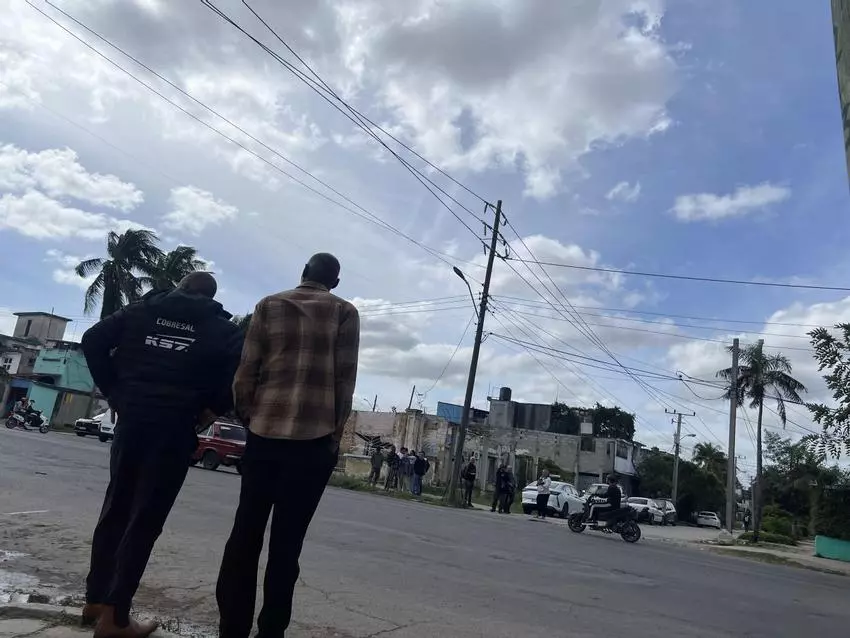
El Toque explains that its information is based on advertisements and publications in networks collected daily. / 14ymedio

14ymedio bigger14ymedio, Madrid, November 10, 2025 — As expected by the specialists, after a few days of truce in which its price began a rapid fall from 490 pesos to 410, the dollar is back up strongly on the informal market. The new war waged by the government against El Toque, which publishes daily sales rates in the streets, is of little use. If this Saturday the dollar had already started to rise to 415; the next day it cost 420 pesos and, this Monday, 430 pesos.

The independent media itself never tires of illustrating how it extracts the information it offers, most recently this Sunday. Far from operating as a denunciation of the regime, which accuses it of “speculative manipulation” serving the US as part of an “integral program of destabilization” and “usurping” the task of the Central Bank of Cuba, El Toque, without referring to this smear campaign, explains that its exchange rate is based on advertisements and publications in networks collected daily and from responses by users.

This is exemplified by the data collected on Saturday and Sunday. In the first graph they report the “histogram of published offers” and explain: “Most offers are concentrated between 410 and 430 CUP/USD, with an average point of 420 CUP,” which “indicates that the majority of participants in the market coincide in this price range.” The average, 421.81 pesos, is slightly above the median (420 CUP), which suggests that some providers are starting to request higher prices. This slight difference may indicate upward pressures; that is, an increase in the dollar rate.” continue reading

Towards the end of October, a change in trend is observed: requests for purchase (demand) increase, and sales offers decrease (offer)

In a second graph, they present supply and demand aggregates, showing the evolution of the number of people interested in buying or selling dollars over time. The figures, insists the media, “are based on amounts declared by users in their messages.” But they clarify: “Not all offers include precise amounts; therefore, the values presented constitute a sub-record of the actual movement; that is to say, the detectable minimum of transaction intentions. As a result, the total market volume is likely to be much larger.”

And they conclude: “During the month of October, the volume of transactions remained relatively stable. However, towards the end of the month a change in trend was observed. There was an increase in purchase requests (demand) and a decrease in sales offers (supply). This imbalance –more people willing to buy and fewer to sell — usually anticipates increases in the dollar price if the trend continues.”

The article recalls that economist Pavel Vidal, head of the Observatory of Currencies and Finance (OMFi), has also explained many times that movements in the informal exchange rate are given by the balance between supply and demand. “If the demand for dollars, euros or MLC (freely convertible currency) exceeds the supply — because many people or private enterprises seek foreign exchange to import, travel or protect their savings against inflation- the price of these currencies in Cuban pesos tends to rise. Conversely, if more people are willing to sell currencies than they are willing to buy — through increased remittances, tourism or a recent appreciation of the dollar- the rate may be lowered.” This is the basic law of supply and demand, which is practiced all over the world, except in Cuba, where the regime tries to ignore it without success.

It is also influenced by “expectations,” such as “rumors of new sanctions, announcements of regulatory changes for MSMEs, remittances or banking operations, as well as changes in monetary policy” and other factors, such as liquidity or financial regulations.

In the case of the drop that occurred last week, some experts associated with OMFi link it to the effects of Hurricane Melissa, specifically the sending of currency and donations to support the country and families.

In his report of last October, Pavel Vidal stated that the economic crisis on the island “has not yet hit rock bottom, and no possible exits are perceived in the short and medium term.” He ventured that the dollar could even exceed 500 pesos at the end of October, in an “extreme” scenario. Before the descent of the past days, it was close to reaching it.

Regardless of specific predictions, the scenario outlined by the Cuban economist, who resides in Colombia, for the unstoppable devaluation of the national currency remains valid. For example, there is the debacle of tourism, essential to foreign exchange earnings. Also, having cash is the only way to be able to buy in the dollarized stores, which are becoming more numerous. In addition, the energy crisis and the “very limited access” to inputs and financing negatively affect production, which increases the dependence on imports. “Mistrust in the future of the economy and the Government’s ability to face the crisis” causes capital flight and encourages the “accumulation of savings” in hard currencies.

Translated by Regina Anavy

____________

COLLABORATE WITH OUR WORK: The 14ymedio team is committed to practicing serious journalism that reflects Cuba’s reality in all its depth. Thank you for joining us on this long journey. We invite you to continue supporting us by becoming a member of 14ymedio now. Together we can continue transforming journalism in Cuba.
A Total of 27 People Injured in Another Major Crash on Cuba’s National Highway

The country’s main highway has seen fifty people injured and two killed in just 72 hours.

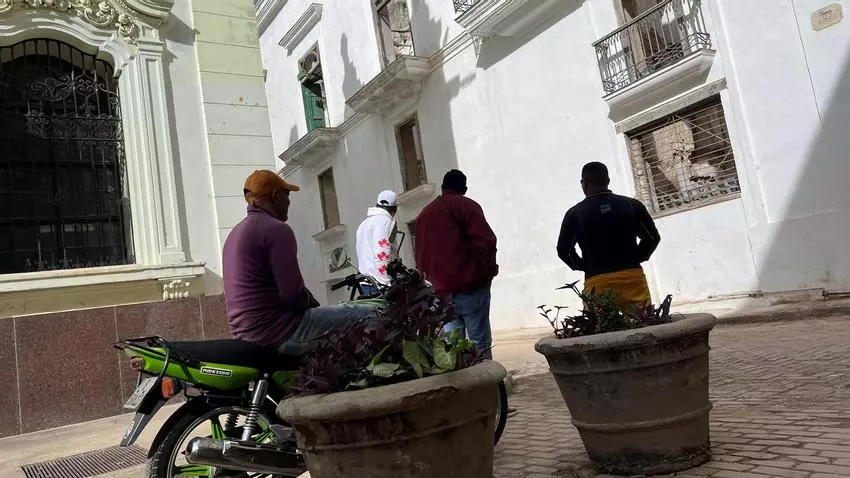
“At seven in the morning, the first ambulance still hadn’t arrived,” said a witness to the accident. / Facebook

14ymedio bigger14ymedio, Havana, November 10, 2025 — A bus collided with a cart in the early hours of Monday morning on the National Highway, leaving 27 people injured, four of them with life-threatening injuries. The crash occurred just three days after another massive crash at kilometre 183 of the same road. This time, the collision took place near the community of La Caoba, in the municipality of Venezuela, in Ciego de Ávila.

The official newspaper Invasor reported on its Facebook page that most of the injured were taken to the Antonio Luaces Iraola Provincial Teaching Hospital, and the rest to the local polyclinic. In the same publication a witness criticised the delay in help arriving: “At seven in the morning, the first ambulance had still not arrived,” he wrote. According to his testimony, the injured were rescued by “neighbours in carts as best they could”.

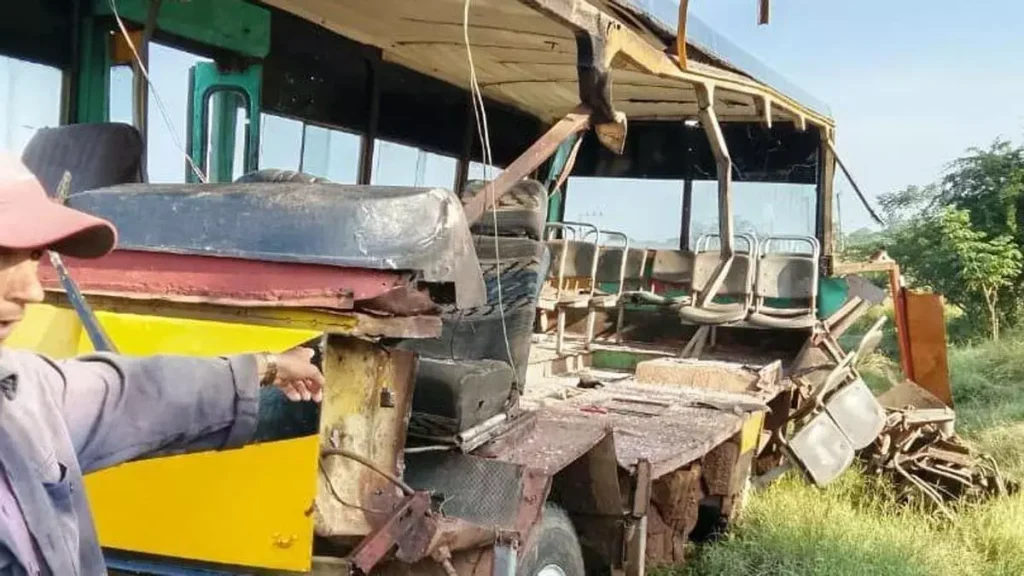
The crash involved a bus carrying workers from the El Fortín Credit and Trade Cooperative. Images posted on social media show the left side of the vehicle completely destroyed.

A fourth seriously ill patient, with a fractured pelvis, remained at the Venezuela municipal polyclinic.

Dr Inés Padrón González, a specialist in intensive care and emergencies, later reported that the hospital in Avila had received 20 patients, although “not all cases have arrived”. Of those admitted to the centre, three were in a life-threatening condition: two with severe head trauma and another with “abdominal trauma with free fluid in the cavity”, whose condition was being assessed for possible surgery. A fourth seriously injured patient, with a pelvic fracture, remained at the Venezuela polyclinic. The rest of the injured were reported to be stable, with minor injuries and orthopaedic trauma. continue reading

Last Friday, when a Yutong bus veered off the road at kilometre 183 of the National Highway, two women died: Mikenia Valenciano Godínez, 36, originally from Songo La Maya, Santiago de Cuba, but residing in Havana; and Dainé Rodríguez Hernández, 22, also from Santiago.

Of the more than 20 people injured in the crash, two remain in critical condition, connected to artificial ventilation in the intensive care unit of the provincial hospital in Cienfuegos. Two other patients are reported to be in serious condition, with hip fractures and post-traumatic hemorrhages.

In just three days, these two massive crashes on the National Highway have left nearly fifty people injured and have once again exposed the deplorable state of Cuba’s main road. The proximity of both crashes highlights the fact that Cuban roads have become increasingly lethal.

Translated by GH

____________

COLLABORATE WITH OUR WORK: The 14ymedio team is committed to practicing serious journalism that reflects Cuba’s reality in all its depth. Thank you for joining us on this long journey. We invite you to continue supporting us by becoming a member of 14ymedio now. Together we can continue transforming journalism in Cuba.
Independent Lawyer Wilfredo Vallín, Founder of the Cuban Legal Association, Dies in Havana

He was a tireless promoter of legal education for citizens in the face of repression.

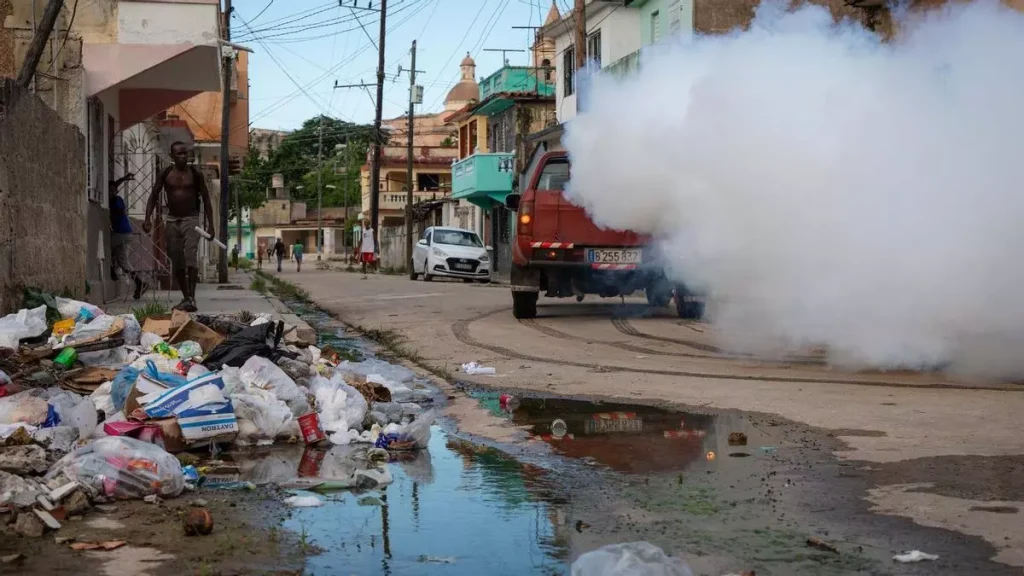
In his work, Wilfredo Vallín always emphasized the need to denounce abuses of power. / 14ymedio

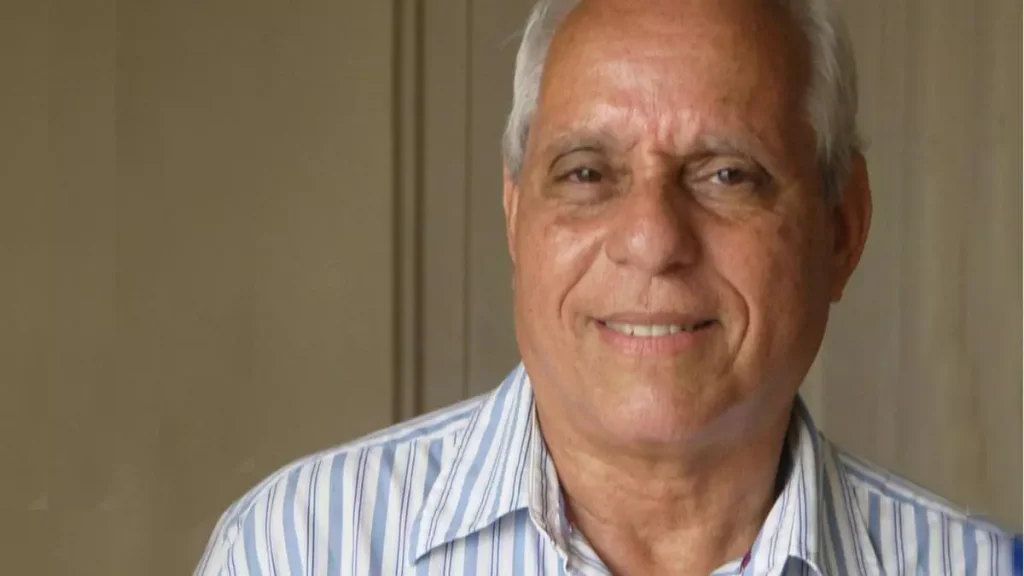
14ymedio bigger14ymedio, Havana, 8 November 2025 —  Independent lawyer and civil rights advocate Wilfredo Vallín Almeida passed away early Saturday morning in Havana at the age of 77, according to sources close to the family who confirmed the information to 14ymedio. The jurist leaves behind a profound legacy as the founder of the Cuban Legal Association (Ajudicuba) and a tireless promoter of legal education for citizens in the face of repression.

Originally from Havana, he graduated with a law degree from the University of Havana in 1992 and worked briefly as a lawyer within the state system before transitioning to independent legal practice. In 2008, he founded the Cuban Legal Association (Ajudicuba), with the aim of promoting legal education within Cuban society and providing free legal advice services.

One of the most difficult moments of his activism occurred in 2018, when his home was raided by State Security agents who seized numerous work tools and case files related to the cases the independent lawyers’ group was advising. This episode marked a turning point in his work, due to the intense threats he received from the political police during and after the raid.

Vallín was also a pioneer in the use of new technologies, blogs, Twitter accounts (now X), and social media as tools to disseminate legal analyses, advice, and reports of human rights violations. In his articles, he always emphasized the need to denounce abuses of power and reminded readers that “a Constitution is a living and practical law that cannot be built on continue reading

ideological elements.”

Under his leadership, Ajudicuba advised relatives of numerous political prisoners, documented cases of arbitrary detentions, and offered legal defense seminars.

Under his leadership, Ajudicuba advised the families of numerous political prisoners, documented cases of arbitrary detentions, and offered legal defense seminars in a context of increasing repression. In one of his reports, Vallín wrote: “All citizens who do not find justice in the government courts can come to us; our service is completely free.”

The independent lawyer also taught at the Blogger Academy (2008-2009), where his workshops on law, Cuban regulations, and defense strategies against repression were very well received. He became a role model for young lawyers, activists, and citizens seeking a basic understanding of citizenship, rights, and access to justice in Cuba.

A man of even judgment, willing to listen and with a great capacity to bridge the gap between other independent projects, he quickly became an indispensable figure in Cuban activism. His voice was heard in numerous international forums, and several of his investigations into human rights abuses ended up before the Inter-American Commission on Human Rights.

Vallín promoted the “Citizen Demand for Another Cuba,” urging the State to ratify the Covenants on Civil and Political Rights and on Economic, Social and Cultural Rights.

Vallín spearheaded the “Citizens’ Demand for Another Cuba,” urging the Cuban state to ratify the United Nations International Covenants on Civil and Political Rights and on Economic, Social and Cultural Rights, which Havana had signed but not fully implemented. The jurist’s commitment was to view the law not merely as written words, but as a genuine instrument of protection. As he himself maintained, “Knowledge of the law is the first step toward individual freedom.”

Wilfredo Vallín’s health deteriorated rapidly in recent days. His funeral will be held this afternoon in Havana.

____________

COLLABORATE WITH OUR WORK: The 14ymedio team is committed to practicing serious journalism that reflects Cuba’s reality in all its depth. Thank you for joining us on this long journey. We invite you to continue supporting us by becoming a member of 14ymedio now. Together we can continue transforming journalism in Cuba.