More Than 41,000 Cubans Have Benefited From Humanitarian Parole Through July

More than 181,000 natives from Cuba, Haiti, Nicaragua and Venezuela have benefited from humanitarian parole.(Screenshot)

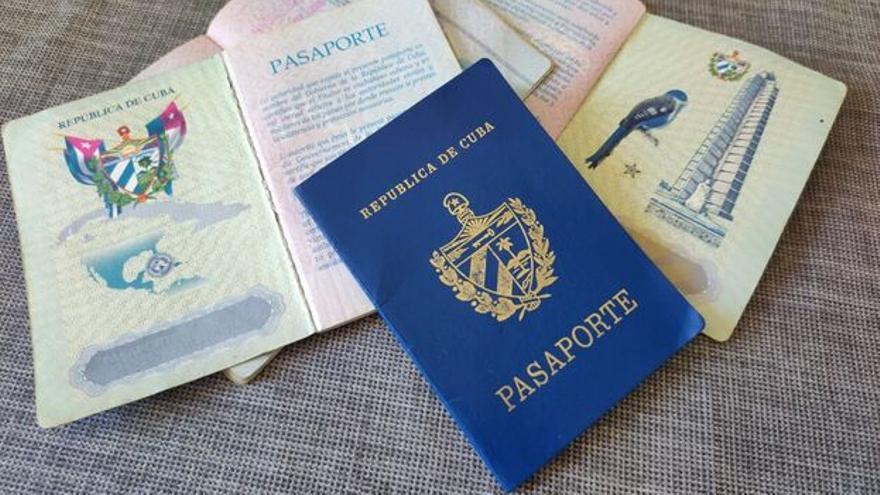
14ymedio bigger14ymedio, Havana, 20 August 2023 — Between January 5 and  July of 2023, more than 41,000 Cubans have benefited from humanitarian parole. According to figures published by the United States Customs and Border Protection Office (CBP), in total, “more than 181,000 natives of Cuba, Haiti, Nicaragua and Venezuela have arrived legally under this process.”

Meanwhile, 34,000 Nicaraguans, 63,000 Venezuelans and 72,000 Haitians have also benefited.

According to official statistics, in July alone, 7,486 Cubans were registered by the border authorities at U.S. entry posts. The arrival of natives of the Island totaled 171,958 in the last nine months.

After finalizing Title 42 last May – a rule created by the Trump Administration for the return of migrants during the pandemic – Washington decided in January to open the same program it had implemented with Ukraine and Venezuela to applicants from Cuba, Haiti and Nicaragua to grant “humanitarian parole.” To take advantage of it, those interested need to have a sponsor to endorse their support in the country, and the documentation must be delivered from outside the United States.

The CBP statement reported that with the implementation of the program for the citizens of Cuba, Haiti and Nicaragua, announced by U.S. President Joe Biden, irregular migration has been significantly reduced. continue reading

This information was released a few days after the NGO Proyecto Migrantes Desaparecidos [Missing Migrants Project] documented the death in the first half of the year of 71 Cubans, including 27 men, six women and 38 others of undetermined gender (due to the condition of their bodies), who tried to reach the United States by sea.

“Rarely do you know exactly how many people were on board boats that were in trouble on the high seas, complicating the task of verifying the number of people who disappeared or of having some kind of information about their identities,” the organization emphasizes.

The report says that 69 of these rafters died “from drowning” in their attempt to achieve the American dream. One died due to “extreme environmental conditions” and for another there were no precise details about the cause of his death.

Since last October 1st, 6,967 Cuban rafters attempting to reach the U.S. have been intercepted by the Coast Guard.

Translated by Regina Anavy

____________

COLLABORATE WITH OUR WORKThe 14ymedio team is committed to practicing serious journalism that reflects Cuba’s reality in all its depth. Thank you for joining us on this long journey. We invite you to continue supporting us by becoming a member of 14ymedio now. Together we can continue transforming journalism in Cuba.
Five-Year Tourism Visas Are Back for the United States but the Processing Will Be Done Outside Cuba

The visa allows entry into the U.S. for family visits, medical procedures, tourism or shopping. (14ymedio)

14ymedio bigger14ymedio, Havana, 18 August 2023 — The United States will reissue B2 visas, valid for five years, which allow Cubans to travel to the US as tourists, according to three official Washington sources speaking to journalist Mario J. Pentón from América Noticias. However, these long-term permits must be granted at third-country offices, since the White House does not foresee, for the moment, their processing in Havana.

This category of visa allows entry into the country for people who intend to make family visits, receive medical treatments, go to tourist places or go shopping. However, applicants must prove that they are not possible migrants and document their roots on the Island. Once this document is obtained, travelers will be able to enter several countries in Latin America and the Caribbean without the need for a visa.

According to Pentón, his contacts asked to remain anonymous because the U.S. Government will not make an official statement until the end of August.

The possible restart of five-year tourism visas for Cubans is good news for thousands of residents on the Island who have Spanish nationality and who, after the inclusion of Cuba in the list of countries that support terrorism, have seen their entry into the United States limited by the restrictions imposed on those who enter or live in Cuban territory, to benefit from the ESTA visa exemption program. continue reading

The “mules” have also welcomed the news. With such a visa, Cubans have doors open to them, without having to obtain a visa for Panama, Costa Rica, El Salvador, the Dominican Republic and Mexico, all countries in the region that are the closest market for the purchase of goods to import and resell on the Island.

In 2019, the U.S. Embassy in Havana suspended the issuance of five-year visas and replaced them with three-month and single-entry permits as a sign of “reciprocity” to the Island, which offers similar conditions to U.S. travelers. During Donald Trump’s term, and with the COVID-19 pandemic in full swing, the Embassy limited its functions.

According to figures issued by the U.S. State Department, in 2022 barely 3,000 visas were delivered to Cubans, while from 2012 to 2014, in full “thaw” between Washington and Havana, the figures reached 40,000.

Joe Biden’s policies, for their part, have followed the line of fellow Democrat Barack Obama and are committed to opening legal migratory routes that reduce the waves of travelers who arrive daily at the Mexico-US border.

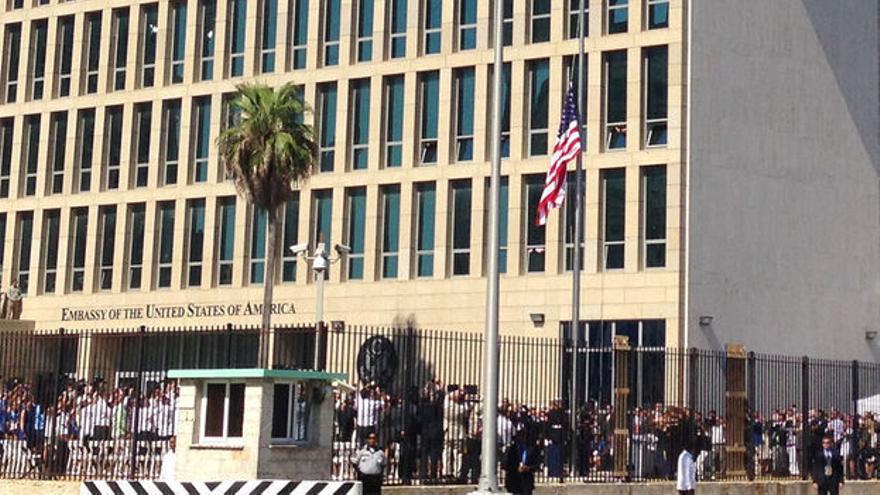
On Thursday, the U.S. Government announced the reopening of an Embassy office in Havana to process applications for family reunification visas and requests for political asylum, a service it had not provided for five years.

The Secretary of the Department of Homeland Security, Alejandro Mayorkas, pointed out that the main objectives are “to reduce the number of irregular crossings” at the U.S. border, to leave human traffickers without resources and “to simplify access to legal, safe and orderly paths for those seeking humanitarian relief” in the United States.

The office will also provide other services, such as the processing of refugee cases and the collection of biometric data for U visa applicants, for victims of criminal acts.

Translated by Regina Anavy

____________

COLLABORATE WITH OUR WORKThe 14ymedio team is committed to practicing serious journalism that reflects Cuba’s reality in all its depth. Thank you for joining us on this long journey. We invite you to continue supporting us by becoming a member of 14ymedio now. Together we can continue transforming journalism in Cuba.

Choreography of a Line to Buy Propane Under a Blazing Sun in Cuba

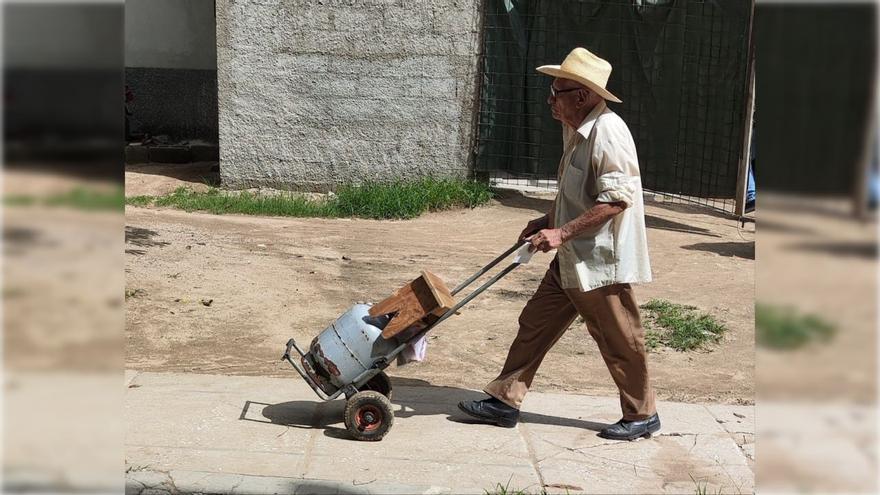
The old man is one of those who can’t pay 5 pesos for someone to stand in line for him while he rests in the shade. (14ymedio)

14ymedio bigger14ymedio, Mercedes García, Sancti Spíritus, 17 August 2023 — They begin to arrive very early. Some carry a bottle of water, others a bench to sit on, and all drag a cart to carry the tank of propane in the neighborhood of Pueblo Nuevo, Sancti Spíritus. The only shade several meters around is provided by a primitive building built in the 80s. The rest is mud and sun. The line assembles itself on the mud and under the arrows of the harsh sun. Some have got a place through the Ticket application, but most line up the old-fashioned way: one behind the other until it is their turn.

The wait time for the purchase of the tanks by the family nucleus is 26 days, but it is never met. “Now it takes you up to a month and a half to have the right to a new tank,” says Evaristo, a retiree who alternates propane “with a lifelong coal supply” to be able to cook food at home. The old man is one of those who can’t pay 5 pesos for someone to stand in line for him while he rests in the shade. For that amount and 100 more, some informal entrepreneurs even offer to take the full tank to the door of your house.

“Disabled!” shouts the employee from the small cubicle where the cylinders are dispatched. Workers line up people with disabilities and customers who got the ticket through electronic gateways. “They’re supposed to bring 100 tanks every day, but what’s coming are 20 or 30 small ones,” explains a young man waiting in line. Umbrellas and long sleeves can be seen everywhere. Nobody wants his skin scorched in the August sun.

When someone gets to the counter, the line moves slowly. Some bring their stools closer to the store, others shorten the distance with the person in front of them, and there are also those who come out of the shade next to the building to show that they are still in line and keep their position. It’s a well-learned choreography with decades of “lining up until you die,” says Evaristo. continue reading

The time for the sale exceeds 15 minutes for each consumer because they must register everything on an old laptop, check that the person really gets a new quota of propane and compare the number on the tank with the one in the database. “There are more requirements than for obtaining the Communist Party card,” a woman mocks. An old woman approaches dragging her cart through the mud and claims priority for belonging to the Cuban Association of Limited Physical Motor Ability. But there are already several like her waiting.

When noon arrives, the employee’s scream is an explosion that sends the line into pieces. “That’s all for today, we’re out of tanks!” sums up the bad news. Long faces, murmurs and phrases of discomfort are heard everywhere. Tomorrow everything will be repeated from the early hours of the morning and so on, with no hope that the line to buy propane will become shorter or easier one day.

Translated by Regina Anavy

____________

COLLABORATE WITH OUR WORKThe 14ymedio team is committed to practicing serious journalism that reflects Cuba’s reality in all its depth. Thank you for joining us on this long journey. We invite you to continue supporting us by becoming a member of 14ymedio now. Together we can continue transforming journalism in Cuba.

Two Provinces in Central Cuba Enter the ‘Epidemic Phase’ From an Upsurge in Dengue Infections

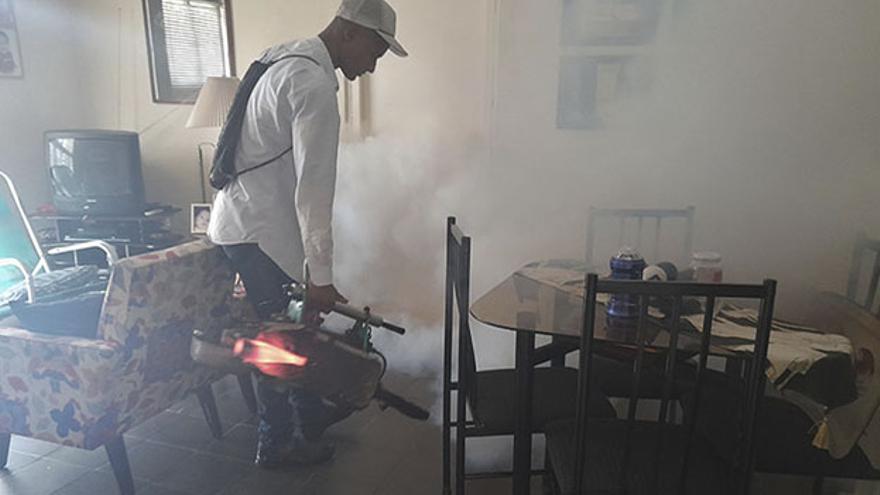
The municipalities of Morón, Ciro Redondo and Majagua, in the province of Ciego de Ávila, show the highest rates of dengue fever infection. (Invasor)

14ymedio bigger14ymedio, Havana, 17 August 17, 2023 — The authorities of Sancti Spíritus and Ciego de Ávila have decreed the “epidemic phase” in the rise of dengue fever infections. After registering a rate of 14.4 patients per 1,000 in the last week – and although the neighboring province does not reveal its figures – the Ministry of Public Health said that there are different variants of the disease circulating in the central area of the country, and the panorama tends to get complicated.

In an interview published this Wednesday in the official media Escambray, the director of the Center for Hygiene, Epidemiology and Microbiology in Sancti Spíritus, Carlos Ruiz, said that the numbers in the province are below the national average, but the situation is still “worrying.”

Although many municipalities are not at risk presently, others have high rates of infection. The most complex case is that of La Sierpe, an area with few inhabitants but one that has presented a rate of 108.8 patients per 1,000 inhabitants in the last week.

As for the head municipality and Trinidad, two of the most affected, the diagnosed rate is 14.2 and 14.7 people per 1,000 inhabitants, respectively. continue reading

For their part, the authorities of neighboring Ciego de Ávila also warned of the presence of two dangerous variants of the virus, which accelerate discomfort in the infected, and an increase in infections. In mid-June, the province registered 152 outbreaks in just one week in the head municipality alone. In others, such as Baraguá, Morón and Ciudad del Gallo, up to 21 possible infections were recorded daily. This August, Morón became the second municipality with the most infections, behind Ciego de Ávila.

According to a report in the official newspaper Invasor this Thursday, the situation in the province has not improved, and the authorities admit that “not much has changed.”

The responsibility, they add, lies with the families, who “do not comply with staying at home” and go to work or on vacation. They do not check the possible foci, refuse to take the test to identify the virus or don’t declare symptoms.

To this is added the lack of personnel to carry out investigations, the malfunctioning of community groups, the shortage of medical supplies to diagnose and treat the disease, and the absence of fuel to fumigate, which has forced them to cut down on services.”

Another critical situation, which contributes to the spread of dengue on the Island, is the number of landfills and garbage dumps that have appeared in Cuban cities in recent years, without anyone taking care of them.

“Today the course of dengue in the province tends to increase the number of suspected cases, the incidence rate and the speed of transmission. Intensive actions in the areas identified as high epidemiological risk are limited to the blocking off cases (fumigating the patient’s house and the adjacent ones),” says the newspaper. With these statistics, and although the officials are not clear about it, the country already entered the epidemic phase some time ago.

Cuba has been announcing the development of an immunogen against the dengue virus for 10 years. This February, Eduardo Martínez Díaz, president of BioCubaFarma, said that finally this 2023, they will have the first vaccine candidate, but so far neither the authorities of the Ministry of Public Health nor the state group have given details of the progress of the research. The Government defends itself by saying that the delays in the development of the drug are due to the complexity of the four serotypes of the virus.

Meanwhile, cholera has also become a risk for the families of Guantánamo. The Ministry of Public Health announced on Wednesday that it will strengthen surveillance after an increase in cases of the bacterial disease in neighboring countries, especially in Haiti.

The airport authorities have already begun to take measures to prevent cholera from reaching the Island by air. Passengers entering countries with active cases are given a dose of doxycycline, an antibiotic used to prevent the development of bacteria. In addition, there will be clinical surveillance for two weeks from entry. In the case of people who are dehydrated, they will be tested to rule out contagion.

Translated by Regina Anavy

____________

COLLABORATE WITH OUR WORKThe 14ymedio team is committed to practicing serious journalism that reflects Cuba’s reality in all its depth. Thank you for joining us on this long journey. We invite you to continue supporting us by becoming a member of 14ymedio now. Together we can continue transforming journalism in Cuba.

The First Group of Chinese Tourists Arrives in Cuba After the COVID-19 Pandemic

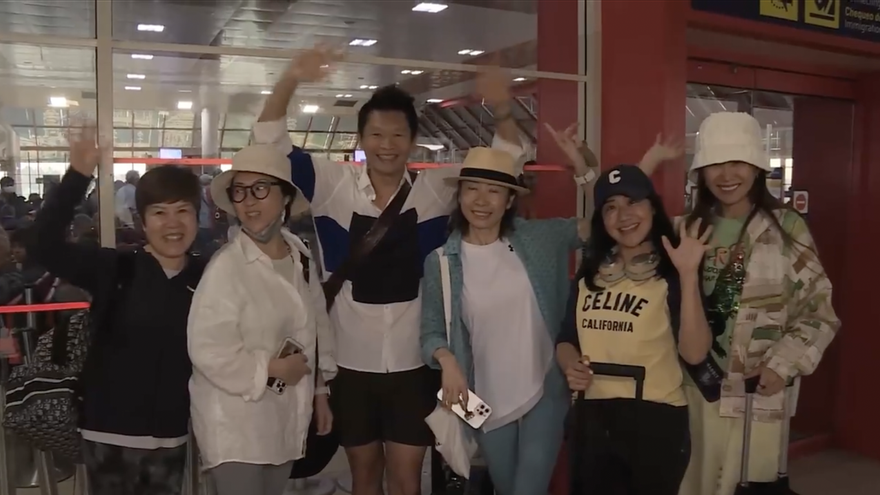
Since Cuba noticed the high profitability of Asian tourism in Europe, the Island’s campaigns to sell itself as an ideal destination have not ceased. (Captura/Xinhua)

14ymedio bigger14ymedio, Havana, 16 August 2023 — The first group of Chinese tourists traveling to Cuba since the beginning of the coronavirus pandemic arrived at Havana airport on Monday. The Island, which last received visitors from the Asian country in 2020, has been preparing the ground for months, not only for the massive arrival of vacationers but also for entrepreneurs and investors.

The Cuban authorities see in China, which came to occupy the 14th place in the list of countries sending tourists to the Island in 2019, a double opportunity. First, China’s “large population” guarantees continuous and numerous visits. Second are the commercial privileges offered by Beijing, with which Havana maintains “good diplomatic relations,” said Elizabeth Vela, Cuban Ministry of Tourism advisor for Asia and the Pacific.

The official explained in an interview with the Xinhua agency that Cuba plans to double the number of tourists from China in a short time, so she has put her efforts into promoting its “attractiveness.”

The new promotional plans are aimed at a key market, that of young Chinese, “who are looking for longer, different trips” and who, according to Vela, are looking for more striking options than Europe or Southeast Asia.

The Island offers the new traveler a “tourism of nature, culture and health,” something that, Vela estimates, will be well received by Asians, who “not only see a country of sun and beach but also want to understand its history, culture and heritage.” continue reading

Huo Yaofei, one of the tourists who arrived in Havana from Beijing on the inaugural flight, expressed his enthusiasm for traveling to a country he considers exotic. “Cuba has many good things. It’s a legend, unique, with the best music, dance, food, tobacco, rum, everything,” he said, making it clear what kind of experiences he is looking for.

At the end of July, a delegation of 16 businessmen traveled to Havana in order to attract foreign capital and encourage visits. The guests visited the main tourist centers (Varadero, Cienfuegos, Trinidad) and were offered a portfolio of investment opportunities at the end of the trip.

Other initiatives included sending a “promotional ambassador” to China and the creation of the Cuba Única campaign, an initiative of the Ministry of Tourism to “show the world the wealth and diversity of the Antillean nation.”

Since Cuba noticed the high profitability of Asian tourism in Europe, the Island’s campaigns to sell itself as an ideal destination have not ceased. China has become, in a few years, the most important tourist market in the world, not only because of the potential number of travelers it contributes (about 200 million of its inhabitants visited foreign countries in 2020), but because, on average, they spend a good deal of money.

Before the pandemic, in 2019, the International Tourism Organization published a report indicating that the Chinese left a total of 276 billion dollars on their trips abroad, almost double that of the Americans, second in the ranking, with 144 billion.

However, even if the Chinese like to spend generously, they will be able to do little on an island where the offer of all kinds of products is almost non-existent, especially outside of hotels where they will not even be able to have reliable Internet service.

In its accelerated debacle, Cuba has resorted to all kinds of techniques to replace the travelers – usually Europeans – that it is losing. In this sense, relations with Beijing represent an opportunity that it cannot miss.

An even more desperate measure has been the attempt to attract Russian tourists. In the best years of the sector for the Island, travelers from this country grew exponentially (40% in 2017 compared to the previous year). However, the exploitation of this market has proven to be stagnant, and the decline began before the pandemic and was given the dearth blow after the invasion of Ukraine. The trend over the last four years has been downward.

Even so, the Government continues to promote travel through all possible channels to reach Russian travelers. The Aeroflot Group announced on Tuesday the establishment of a new air route between Moscow and Havana, in charge of one of its subsidiary companies, in addition to the one that already existed between the Russian capital and Varadero. The Rossiya airline will operate flights beginning December 24, twice a week, on Wednesdays and Sundays.

Translated by Regina Anavy

____________

COLLABORATE WITH OUR WORKThe 14ymedio team is committed to practicing serious journalism that reflects Cuba’s reality in all its depth. Thank you for joining us on this long journey. We invite you to continue supporting us by becoming a member of 14ymedio now. Together we can continue transforming journalism in Cuba.

Gunboat Intimidation, Rising Crime and Alleged Sabotage Fuel Cuba’s July Rumors

The presence of the Russian warship Perekop in the port of Havana, whose arrival coincided with the the anniversary of July 11 protests, was read as a warning signal. (Sputnik)

14ymedio bigger14ymedio/Yucabyte, Havana, 17 August 2023 — Heightened tensions during the second anniversary of the mass protests on July 11, 2021 (known in Cuba as 11J), a seemingly unstoppable rise in crime and alleged sabotage of state institutions were among the concerns fueling rumors that circulated throughout the country in July. On the other hand, efforts by various social network accounts linked to the regime to control the narrative and whitewash police actions during those protests also sharply increased.

On the eve of the 11J anniversary, several social media users reported a series of “preparations” by the government which included guard shifts at workplaces, the organization of rapid response brigades to deal with any incident that might occur, and surveillance and militarization of key public spaces such as parks and plazas.

In this context, it was not difficult to view the arrival of the Russian warship Perekop as one more attempt at intimidation. Even more surprising was the abrupt cancellation of two previously announced tours of the ship to which the public had been invited

Among the theories used to explain the cancellation was the fact that independent media had reported that the Perekop’s arrival happened to coincide with the anniversary of the June 11 protests. There was also speculation that the Russian crew were concerned about the possibility of Cubans spying on the ship. Neither Cuban nor Russian officials offered an official explanation however. continue reading

Poor internet service during the anniversary of the protests also got people talking. There was speculation the regime had found a formula to block VPN (virtual private network) apps that allow users to access webpages that are banned on the island. Reports of severed phone lines and connectivity problems as well as attacks — both virtual and physical — on activists, who were prevented from leaving their homes, were also confirmed.

Several social media accounts, especially on Facebook, have been reporting almost daily on crime in the country. The level of detail in these reports , as well as their defense of both Cuban counterintelligence and the police, has led many to conclude the Ministry of the Interior is behind them. These mostly anonymous accounts (with names such as Mauro Torres’ Page, Cuban Legionnaire, and The Faithful Cuban) as well as the  apparently collective or regional ones (Force of the People, Realities from Holguín), are frequently cited as sources by the official press.

This has not prevented numerous users from reporting acts of violence such as the assault in Havana’s Plaza of the Revolution district on an elderly parking lot attendant in which three electric motorcycles were stolen. It was also reported that a retired police officer, with backup from of a few residents, was the only person available to catch the thieves. The men had tried to rob a house in San Juan y Martínez, a town in Pinar del Rio province .

Tourists have not been immune to the crime wave affecting the island according to several rumors. A car with tourist license plates was allegedly stolen in Gibara, a town in Holguín province. Several social media users report the vehicle was ultimately returned and the thieves apprehended.

Havana’s Vibora Park neighborhood stands out as an area plagued by police inaction, where criminals are protected by certain high-ranking officers. According to rumor, assaults that occur in this area go unpunished and local residents usually do not rush to aid the victims.

One case that has gone viral involves the assault of a young man by four police officers. After beating him, the rumor alleges, they robbed him of his mobile phone, more than 50,000 pesos and a bottle of rum. Although the claim was accompanied by a video shot in front of Havana’s Dragones police station, with comments from an unidentified voice denouncing the aggression, there are no clear images confirming the alleged attack.

Rumors were also circulating this month that sabotage by unidentified opponents of the regime may have been the cause of several fires on the island. Since most of these incidents occurred in state buildings such as the Astilleros del Golfo in Granma, and the local radio station in Manzanillo, there has been speculation that they were set intentionally.

____________

COLLABORATE WITH OUR WORKThe 14ymedio team is committed to practicing serious journalism that reflects Cuba’s reality in all its depth. Thank you for joining us on this long journey. We invite you to continue supporting us by becoming a member of 14ymedio now. Together we can continue transforming journalism in Cuba.

Cuba’s Twisted Path to ‘Bankification’, Propaganda and Demagoguery Open the Way

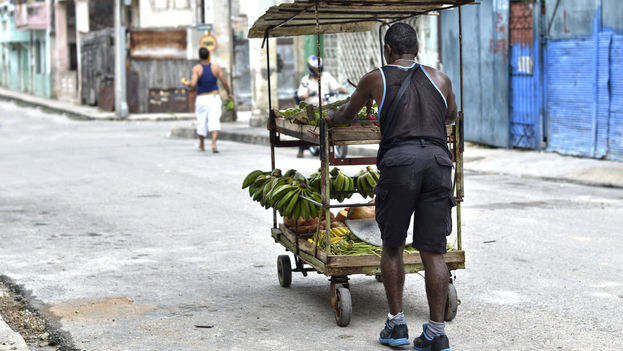
A cart vendor plies his trade in Havana. — cash only.

14ymedio bigger14ymedio, Elías Amor Bravo, Economist, 19 August 2023 — Every other day the regime seems to spare no effort to try to convince Cubans that bankification — banking reform — is something good for them. An article in the oficial newspaper Granma entitled “Technology and bankification” is a historical review of facts intended to justify an expeditious path towards bankification in Cuba. Of course, at no time is it recognized that cash is preferred by Cubans for transactions, and the reasons for this are not taken into account. The important thing is to follow the hierarchical orders, whatever the price.

Now someone tells me that the Youth Club created by Fidel Castro in 1987 has something to do with the bankfication that is being pursued now. It doesn’t. The experience, 36 years later, has been a failure, nor has it served to computerize society or to advance digitization. Not so long ago these two concepts were confused by the leaders of the regime. Anyway, what are they talking about?

They even tell me now that bankfication has something to do with the allegations of Eduardo Galeano, cited repeatedly in the Cuban communist state press. He was the author of phrases such as “when it comes to Cuba, the big media apply an immense magnifying glass that distorts everything that happens there when it suits enemy interests, focusing on the Revolution while it doesn’t notice other important things.” Let’s not exaggerate, as the saying goes.

Or what do past experiences, like the 1992 Infomed network, conceived as a project of the National Information Center of Medical Sciences, have to do to with the need to facilitate the exchange of information among professionals, academics, researchers, students and managers of the Cuban National Health System? continue reading

With an alleged false allegation that was intended to exclude young people from access to information technologies, in September 2002, the University of Computer Sciences opened its doors to the first academic year, with 2,008 students from all the municipalities of the country. A university with more than 20 years of delay compared to similar ones in less developed countries.

The 2001 Battle of Ideas is even cited, with the foundation of the program for community television rooms, another collectivist initiative that they say allowed almost half a million Cubans to benefit from these facilities.

The count does not end there, and EcuRed is cited, in 2010, when the country had a bandwidth for the Internet connection of 393 Mbps inbound and 209 Mbps outbound, a cultural, educational and “decolonizing” platform, the most visited Cuban site on the Internet. Anyway, that’s what they said.

And of course, let’s not forget the scientific pole of western Havana, created by Fidel Castro in the early 90s of the last century.

Castro propaganda highlights that “all this and much more was done without having the ideal infrastructure and technological conditions essential for those processes.” The article says that the same happens today with the bankification process, confirming once again that the regime’s decisions have incorporated much more political will than technological conditions to move forward. If these conditions are not created, it will be difficult for projects and initiatives to prosper.

What good is it that 83% of the places where Cubans live have mobile phone coverage, 50% 4G coverage, and 75% 3G if, later, people prefer to carry out economic operations in cash? Is this the barrier that the regime faces or is there more?

A good example is offered in this article by Granma. It turns out that 13 kilometers of lead cable are still in service in the Santiago de Cuba telecommunications network that have more than 80 years of operation, which have not been replaced, because the necessary financing has not been available. And yet, Santiago de Cuba advances in the processes of computerization and digital transformation. How they will do this is totally unknown.

The article goes out of its way to offer a myriad of indicators and figures recognized by international organizations, facts and achievements that place Cuba as a country advancing in telecommunications and information technology in recent years. More or less the same thing that happens with the indicators of human development, which place Cuba in the top 50 positions in the world, when the reality is quite different.

These amazing data show that in the period 2021-2022, monthly Internet traffic increased by 3.2 times and 1.9 times for international connectivity. From January to November 2022, Internet traffic in Cuba was, on average, 113,045 Gigabits per second (GBPS) in reception and 16,914 GBPS in transmission. The need for Cubans to be connected to the world to know reality and maintain relationships with their families explains these results.

Another piece of information: Traffic on digital social networks in 2022, measured over a period of 48 hours, reached the figure of 377 Terabyte (TB) and 4.2 million subscribers. In 2021, at a similar time, the behavior was 4 TB with 3.6 million subscribers. Videos and photos in that same period registered 217 TB with 3.9 million users against 14 TB, and 3.6 million consumers at the same stage of the year 2021. In short, these were family communications to face the rupture of exile caused by the regime. But not much more.

In instant messaging, there was also an increase of 135 TB compared to the previous year. In the same way, there is a substantial increase in the number of people who access games and consume movies and other audiovisual materials. This growth is also motivated by that need to be connected.

And what about the data at the end of last year? Facebook had 4.1 million subscribers (+600 000); YouTube 3.9 million (+600 000); WhatsApp 3.9 million (+300 000), Telegram 3.7 million (+300 000) and Twitter 3.7 million (+1.4 million). It’s the same thing, the need to know and expand horizons, thus overcoming the chokehold that the Island has become.

The propaganda is recreated in the development by Cuba of two national electronic payment gateways: Transfermóvil and EnZona, and they emphasize that this result is achieved by very few countries. False. What happens is that in other countries these gateways do not have to be developed because there are large international operators that provide these services globally. In  Cuba, these are controlled by the regime and its state agencies and entities.

In the case of Transfermóvil, it has 4.3 million active customers. In the first half of this year, 444 million operations were carried out, and it is estimated that by the end of the year one billion operations will be reached; the user experience is 4.78. Payment of services has grown steadily for this gateway in recent years. The reality is that only 60% of Cubans perform operations with a magnetic card.

The propaganda emphasizes that 87.8% of telephony, 40.05% of electricity, 60% of taxes, 25.6% of gas and 8.35% of water are paid by electronic means, really very low percentages that offer an idea of the lack of confidence Cubans have in state banks, which will not rise quickly in the short and medium term.

It is pointed out that the achievements on the Island in recent years in Internet access have destroyed the stereotype. We would have to ask ourselves what stereotype they are talking about, because maybe there is some confusion. The communists will always justify their failures by the economic blockade, which in the last ten years caused damages of more than 500 million dollars to telecommunications alone. Increasingly absurd and irresponsible data.

The article ends by pointing out that since the beginning of the bankification process in Cuba was announced, there has been the opinion that the technological conditions do not exist to assume such a challenge. This opinion is based on an unquestionable fact: Cubans do not use magnetic cards for their operations; they reject bank control and prefer the use of cash. So far no one has explained why this happens, and they won’t, preferring to resort to disqualifications and insults. But the order has been given and must be followed. Another disaster is on the way.

Translated by Regina Anavy 

____________

COLLABORATE WITH OUR WORKThe 14ymedio team is committed to practicing serious journalism that reflects Cuba’s reality in all its depth. Thank you for joining us on this long journey. We invite you to continue supporting us by becoming a member of 14ymedio now. Together we can continue transforming journalism in Cuba.

Brazilian President and Former Uruguayan President to Meet with Cuban Leaders to Urge More Openness

Lula da Silva with former Uruguayan president Jose Pepe Mujica last January in Montevideo. (Ricardo Stuckert/Presidencia Brasil)

14ymedio bigger14ymedio, Madrid, 18 August 2023 — In its most recent issue, the Uruguayan weekly Búsqueda reported that the Brazilian president, Luiz Inacio “Lula” da Silva, and former president of Uruguay, Jose Mujica, will travel to Cuba before year’s end in an effort to convince the regime to allow “greater openness” in the economy and international relations.

According to the article, the two leftist leaders plan to meet with both government officials and representatives of civil society in order to “help them promote greater openness and offer them local and international support.” This suggests they will not be meeting with opponents of the regime or those with differing political views but rather with businesspeople and self-employed workers.

If it does take place, the visit would be similar, at least officially, to one last May by Josep Borrell, the European Union’s top foreign affairs representative. During that trip, Borell met with Cuban officials and Catholic bishops, and attended a forum for small and medium-sized companies. His counterpart, Bruno Rodriguez, was absent during these meetings, claiming he had an infection.

A few days later, however, Borrell himself said in an interview that he had met with relatives of prisoners arrested in the aftermath of the mass protests that took place on the island on July 11. One of them, Barbara Alina Lopez, confirmed that she and other members of civil society, whose names were not disclosed, had met with Borrell. Lopez has since been subjected to retaliations by the regime. continue reading

The article points out that Lula and Mujica share a common concern about the current situation on the island with regard to widespread shortages of food, electricity and consumer goods. Another concern, heretofore unexpressed by either men, relates to demonstrations and accusations by Cuban citizens about “restriction of their liberties.”

The Uruguayan government is aware of the trip, which is no trivial matter given that current president Luis Lacalle Pou is, among Latin American leaders, one of the most critical of Havana. There was a tense moment at the 2021 Summit of the Community of Latin American and Caribbean States (CELAC) when Lacalle Pou quoted a few lyrics from Patria y Vida, a popular anti-government anthem in support of the July 11 protests, for Cuban president Miguel Díaz-Canel.*

Mujica’s visit will presumably be in a personal capacity and not on behalf of the government, so Lacalle has no grounds to object. The article notes, however, that the attitude among the region’s leaders towards the trip is positive: “Information about the joint visit of Lula and Mujica to Cuba, which has been under communist rule since 1959, is already making the rounds in diplomatic circles and is viewed favorably by representatives of different governments according to political sources,” reads the article.

The two leaders share a past closely linked to trade unionist and leftist guerrilla movements. Both were jailed in the 1980s. (Lula was detained for a month in 1980 for inciting workers to carry out an illegal strike while Mujica spent 12 years in jail, between 1973 and 1985, under the military dictatorship). Although they have maintained excellent personal and political relations with members of the Cuban regime, each has also served as the democratically elected president of his country on more than one occasion, making them ideal emissaries.

Though he maintained a close personal relationship with Fidel Castro, whom he admired, Mujica has been publicly critical of the regime, especially in the last ten years. “We know all too well about socialist realism — all the troubles of the Cuban revolution and culture — so don’t fuck with me!” he was once quoted as saying. Barack Obama is believed to have asked him to serve as mediator in negotiations for the release of U.S. government contractor Alan Gross from a Cuban prison and to facilitate the subsequent thaw in relations between Cuba and the U.S., so it would not be the first time he has attempted to play this type a role.

As for Lula, he has always been the more ambiguous of the two. His formed a very public alliance with Fidel Castro which lasted until Jair Bolsonaro was elected president in 2019. When Lula won reelection last January, he reestablished relations with both Venezuela and Cuba, and he has never been openly critical of the communist regime. In February, however, he had a meeting with Joe Biden at the White House, at which time the Cuban situation was apparently discussed.

This week, the Brazilian president sent his special adviser, Celso Amorím, to the island in order to make sure he would not have to speak with Bruno Rodriguez again. A tweet from the Cuban foreign minister was the only public comment he made about the meeting, reaffirming “the desire to strengthen bilateral relations and take advantage of existing potentialities.”

*Translator’s note: Diaz-Canel reacted angrily to the remarks, saying, “I believe President Lacalle has very bad tastes in music.”

https://www.facebook.com/CiberCubaNoticias/videos/presidente-de-uruguay-luis-lacalle-pou-cita-canci%C3%B3n-patria-y-vida-en-debate-con-/283947106597406/

____________

COLLABORATE WITH OUR WORKThe 14ymedio team is committed to practicing serious journalism that reflects Cuba’s reality in all its depth. Thank you for joining us on this long journey. We invite you to continue supporting us by becoming a member of 14ymedio now. Together we can continue transforming journalism in Cuba.

Artificial Intelligence Facilitates the Proliferation of Fake Profiles and the ‘Fidel’ Virus of Cuba Ransomware

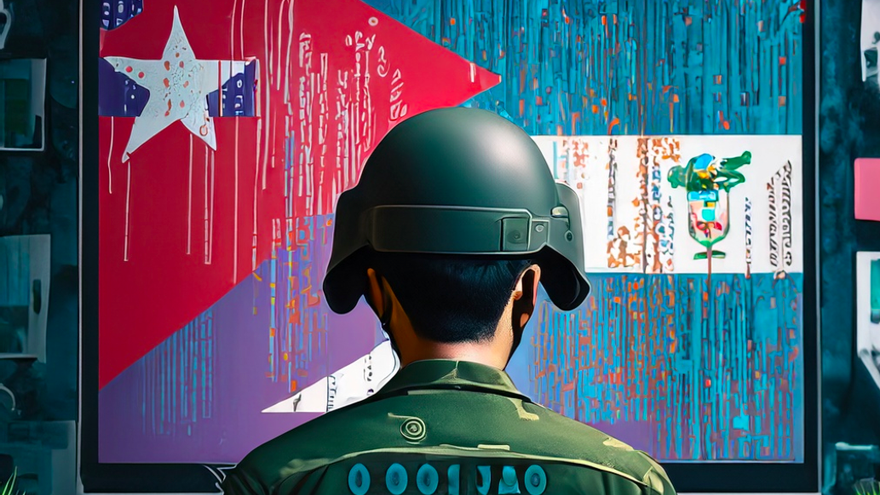
Image generated by artificial intelligence when asked by this newspaper to describe the work of hackers at the service of the Havana regime. (14ymedio)

14ymedio bigger14ymedio, Havana, 19 August 2023 — The American company Mandiant, dedicated to cybersecurity and linked to Google, warned this week that digital groups related to several governments, including Cuba, have intensified their information manipulation campaigns since 2019 as part of a political agenda.

The proliferation of anonymous profiles, the generation of images and videos by artificial intelligence (AI) and the dissemination of false content are some of the activities that characterize the work of these Internet groups, related to the Cuban regime and the governments of Russia, China, Iran, Mexico, Argentina and El Salvador; and, in addition, with organizations from Ethiopia, Indonesia and Ecuador.

Although Mandiant does not reveal to what extent the Cuban regime is involved in the financing of these groups, its report takes as an example one of the false profiles created by a group related to the Government of Havana. The technique, they explain, is the recreation of a digitally altered face to make it look like the profile of a real person.

However, some indications in the image itself – such as posters or AI watermarks that alter the photo – allow us to easily recognize that it’s not a personal profile but a ghost account. continue reading

The trick shouldn’t take anyone by surprise. The Cuban regime has a long history of manufacturing false profiles aimed primarily at spreading its official propaganda, attacking opponents and questioning the quality of the independent press. Its presence has been so marked in the virtual debates about the Island, that Internet users have nicknamed these profiles claria, catfish, an invasive species that is raised in several provinces.

For more than a decade, activists have pointed to the University of Computer Sciences in Havana as the origin of these campaigns. Testimonies of graduates of that center confirm the hypothesis that students, among their teaching tasks, must perform hacking and denial of service attacks on dissident sites, and must fill the comment areas with insults or slogans.

The rise of AI in recent months and the potential of this technology in the wrong hands have set off alarms for cybersecurity experts, although they clarify that, for the moment, there have been no highly dangerous “intrusions” among those studied by Mandiant; all were of “limited” impact.

The company has studied the behavior of groups linked to authoritarian governments since 2019, and although it expects that in the coming years the use of AI for malicious purposes will increase, it also says that this point has not yet been reached. The danger lies in AI’s ability to manufacture “realistic content for deceptive purposes.”

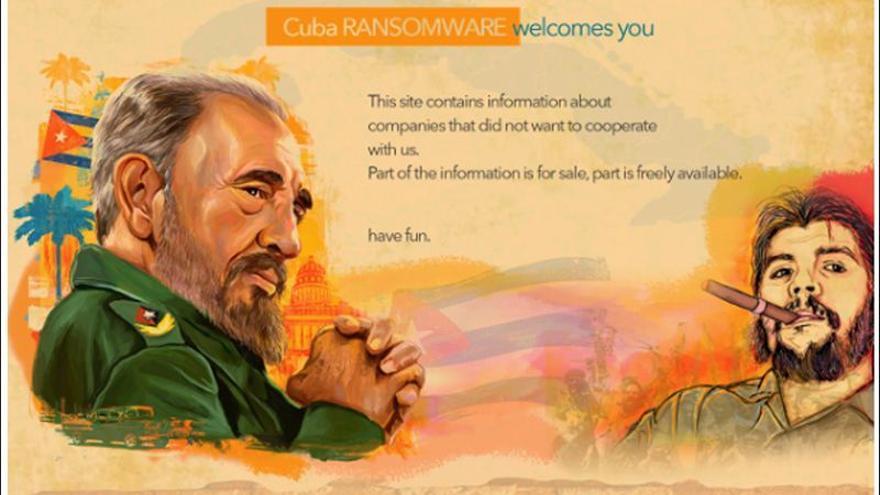
On the Cuba Ransomware website, decorated with Cuban “nationalist” motifs, there is an image of Fidel Castro and another of Ernesto Guevara welcoming users.

In addition, with the democratization of this technology, Mandiant points out, it will be increasingly easier to produce content on a large scale and disseminate “specific narratives” with a political focus. Several studies show that, if not addressed critically, images generated with AI have a great “persuasive power” over the audience.

Another of the techniques used is the manipulation of real audios and even the “fabrication” of voices that successfully imitate public figures and attribute false messages to them, one of the favorite strategies of the Russian hacktivists CyberBerkut. This can also have a visual component, whose most famous recent example is the video of the false capitulation of Ukraine, announced by a computerized re-creation of its president, Volodymyr Zelensky, and disseminated by Russia in 2022.

One of the most expansive campaigns, Mandiant details, was the one known as Dragonbridge, whose objective was pro-Chinese propaganda, and its dissemination on more than 30 platforms in 10 different languages. Dragonbridge was born as a mechanism to counteract the impact of the protests in favor of a democratic opening in Hong Kong, in 2019.

Finally, Mandiant warns against the proliferation of malicious programs, for which AI also offers services. One of the viruses that has most attracted the attention of cybersecurity experts in recent years has been the so-called ’Cuba Ransomware’, also known as ’Fidel’.

This Thursday, the blog of the BlackBerry company – the former phone manufacturer now focused on cybersecurity – said that it had discovered “new tools” with which Cuba ransomware has perfected its operations. However, BlackBerry points out that although it has not been able to directly link the evil program called ’Fidel’ to the Havana regime, it has traced the origin of many of its activities to the servers of one of its main allies: Russia.

Discovered in 2019, Cuba Ransomware has been increasing its threat radius. Its objective is, above all, to infect government servers or official U.S. organizations. On its central website, decorated with Cuban “nationalist” motifs, there are images of Fidel Castro and Ernesto “Che” Guevara welcoming users: “This page contains information about companies that do not want to cooperate with us. One part of it is free, the other is for sale. Have fun.”

For several months, the Government of Miguel Díaz-Canel has signed decisive agreements for the development of cyberespionage and digital surveillance on the Island. During his trip to Beijing, in November 2022, the president obtained financing from China to implement several computer security initiatives. Simultaneously, in Havana, a National Working Group on Cybersecurity was created, in charge of Xetid, the technological company of the Armed Forces.

International tension over the collaboration between Beijing and Havana reached its zenith last June, when several Washington officials revealed to The Wall Street Journal that China was about to build an electronic espionage base on the Island.

Officials claimed to have information – although they refused to disclose it – about the location of the base, which would allow China to have a signals intelligence network (sigint) to intercept communications, including emails, phone calls and satellite transmissions.

Both Russia and China, the newspaper warned at the time, are looking for allies geographically close to the United States to implement strategies that recall the peak moments of the Cold War.

Translated by Regina Anavy

____________

COLLABORATE WITH OUR WORKThe 14ymedio team is committed to practicing serious journalism that reflects Cuba’s reality in all its depth. Thank you for joining us on this long journey. We invite you to continue supporting us by becoming a member of 14ymedio now. Together we can continue transforming journalism in Cuba.

Despite the Closure of the Land Border With the United States, the Flow of Cubans to Nicaragua Does Not Stop

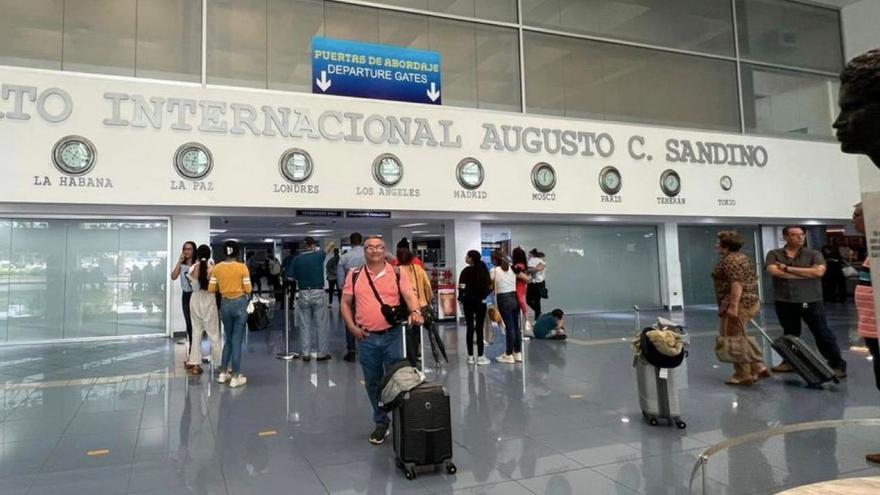
Many of the newcomers to Managua continue their journey to countries south of Nicaragua. (Augusto César Sandino Airport/Facebook)

14ymedio bigger14ymedio, Havana, 17 August 2023 — The frequency of flights between several air terminals in Cuba and Nicaragua has increased significantly this summer, according to information collected by 14ymedio at the Augusto César Sandino airport, in Managua. With the closure of the U.S. border since December 2022 and the entry into force of the humanitarian parole program, the migratory flow along the Central American route decreased considerably, but that has not prevented Cubans from continuing to take advantage of the free visa to Nicaragua.

“There are up to nine daily flights arriving from Cuba,” says Julio, who has been attentive in recent years to the movements of migrants from the island. The staff of the Managua airport, who got used to the exodus of 2022, is surprised by the number of Cubans who arrive in the Nicaraguan capital every day. “If it continues like this, in two or three years the Island will have lost a million more inhabitants,” he adds.

On Thursday morning, the electronic board of arrivals from Managua airport indicated the entry of four flights from the Island, of which three originated from Havana and the last from Cancun, a city that serves as a stopover for some connections. “All charter flights come from Cuba and stop in a dozen cities, including Mérida and Cancún, in Mexico, but also in Port-au-Prince (Haiti),” says Julio.

This newspaper compared the frequencies of the route from Cuba to Managua – as announced by the Island’s airports – and noted an increase in flights on several airlines. In the case of the José Martí International Airport, in Havana, the flights of the Venezuelan Conviasa went from three weekly frequencies in July to six this August. continue reading

Another striking case is that of the Mexican airline Viva Aerobus. From Havana, the company increased its frequency with a stopover in Mérida from two weekly flights in July to seven in August, in addition to the 10 weekly routes it makes directly to Cancun. Although it is difficult to determine how many of these planes continue their journey to Managua, it is known that this airline organizes most of the flights that are made to the Central American country.

In addition, its operations are not restricted to the capital, but cover other routes, with three weekly flights to Abel Santamaría Airport, in Santa Clara, three to Ignacio Agramonte, in Camagüey, and two more to Frank País, in Holguín. Last June, these routes from the interior of the country were limited to just one weekly flight per airport.

The Dominican airline Air Century will also begin flying this August from Holguín to Nicaragua with two weekly flights, making a stopover in Santo Domingo. However, like the rest of the companies that carry out this route, it is possible that they will not declare Managua as their final destination. This is what the 14ymedio source in Nicaragua supposes: “The planes that say Dominican Republic on the airport board usually come from Santo Domingo but they can also be from Santiago de los Caballeros or Puerto Plata, because I have seen them,” he says.

Aruba Airlines and Aeromexico also fly to Nicaragua, with variable frequencies. Aeromexico makes a stopover in Mexico City.

Many of these companies do not offer their flights from Cuba to Nicaragua on their official booking pages, and in some cases, for those who intend to fly from the Island, the Managua destination does not even exist. This type of management has opened a gap for ticket resellers and several travel agencies to profit from flights between the two countries.

Currently, if a person wants to fly to Nicaragua, it is necessary to pay reservation agencies such as the Mexican Vagamundo from abroad. For residents of the Island who do not have this option, they can deal with resellers, who offer prices that in all cases exceed $1,000 per person – except for some tickets for children – and who have, at the moment, all flights covered until the end of October, according to several groups of migrants on WhatsApp and Facebook.

Ultimately, those who cannot afford what is offered by agencies or illegal merchants – who only accept transfers in dollars to U.S. banks or through Western Union for payments in Cuba – have to wait in long lines at Conviasa’s Havana offices to track down a ticket.

With the measures taken by the United States to control Latin American migration in 2022, and after offering humanitarian parole to Cubans, Haitians, Venezuelans and Nicaraguans, many estimated that, given the impossibility of obtaining a sponsor, a large number of people would desist, at least temporarily, from traveling to Nicaragua.

However, for Cubans that has not been the case. According to Julio, many of the newcomers to Managua continue their journey to countries south of Nicaragua. “Something that is completely unknown in Cuba is that there is a growing number who – at least for now – do not go to the United States but to the ’rich’ south of Central America: Costa Rica and Panama,” he explains.

In addition, the constant movement of people has led to the creation of networks of already installed Cubans who assist newcomers. “A friend knows a friend’s friend, and that’s how they help each other.” “However, not everyone is leaving,” Julio says. “Some are staying here temporarily, while they decide what to do, whether they head north or go south.”

The Nicaraguan says that, in practice, almost “all Cubans are being granted asylum in those countries. The phenomenon will probably continue to increase,” he estimates.

“For a while here, I’ve had several surprises because it’s something you don’t expect, like the cashier who serves you at the supermarket is Cuban or the guy who pumps your gas,” he says.

In his case, he says, a young Cuban was recently found working in a restaurant that he frequently visits with his family and found him very “nice and attentive.” Even Nicaragua, a country allied with Havana and subjected to the regime of Daniel Ortega, has been a viable option for Cubans, who are willing to exhaust all options in order not to remain on the Island.

Translated by Regina Anavy 

____________

COLLABORATE WITH OUR WORKThe 14ymedio team is committed to practicing serious journalism that reflects Cuba’s reality in all its depth. Thank you for joining us on this long journey. We invite you to continue supporting us by becoming a member of 14ymedio now. Together we can continue transforming journalism in Cuba.

Advertising To Attract Consumers to Online Shopping: Another Failure in Sight

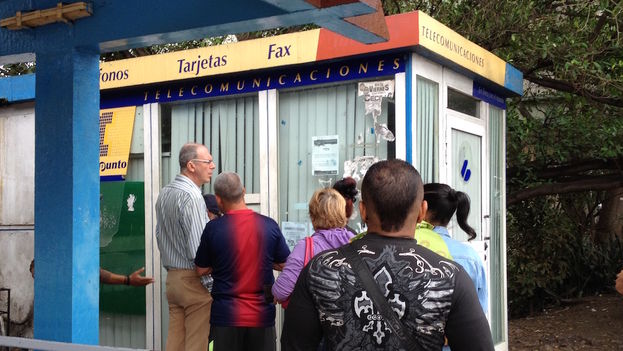
ETECSA Telepoint in Havana. (14ymedio)

14ymedio biggerElías Amor Bravo, Economist, 16 August 2023 — The Cuban communist regime is committed to advancing banking reform — the so-called “bankification” — and now they have gotten into advertising, promoting a campaign in which state banks offer a bonus of up to 6% to customers who pay for goods and services with cards or payment gateways. We will have to wait to see if this clear incentive has the intended result and if the authorities are willing to assume costs for its implementation.

The truth is that these publicity campaigns logically have a cost, and no one will have to account for the impact on the operation, so experimenting can be an opportunity to see if Cubans will use plastic money, as the regime wants, and stop using cash.

The 6% bonus is small, considering the high inflation that currently exists in Cuba, but it has its quantitative scope and in some cases could act as a mechanism of attraction for the realization of electronic payments in shops.

The advertising campaign is aimed at the three options that exist on the Island: mobile transfer for the online payment option through the QR code, Enzona; the option to scan a QR and TPC code; and POS to use a magnetic card. In addition, the bonus of commercial banks (Bandec, BPA and Metropolitan) benefits natural persons who pay electronically without distinction of the type of ownership of the establishment or entity that makes the sale. continue reading

Will this campaign yield results? It’s not easy to predict, but it must be taken into account that success will depend not only on the discount or bonus, but on other things that in the current reality of Cuba are essential for this to work.

And what will happen if the electronic payment is made  and the dreaded daily blackout occurs?

The daily reports of the Cuban Electric Union [UNE] are still calamitous. On Monday the 14th, the service was again affected by a generation capacity deficit from 7:45 p.m., although it was reportedly restored at 1:39 a.m. on Tuesday the 15th.

The electrical system continues to be affected by all kinds of events daily, some predictable and others less so, such as the unforeseen exit in the morning schedule of unit 5 of the CTE Nuevitas electrical plant and the non-recovery of fuel levels in the engines of the mobile generation of Melones and Regla, as well as the breakdown of the CTE Felton, the CTE Mariel and the CTE Renté, the latter under eternal maintenance.

The UNE continues to strictly comply with President Diaz-Canel’s order to report on the availability of the National Electrical System (SEN) every day and anticipate a possible lack of service, and people begin to get fed up because the problem still isn’t resolved, even when the whole system is in service.

That said, what could happen if a blackout occurs when making the electronic payment? What happens to bankification then, and what happens to the 6% advertising campaign? You have to think about everything so that when the “affectation” arrives due to the difference between the availability and the demand on the SEN, the customer who is going to make the electronic payment is not stuck halfway. That happens and can continue to happen.

And if upon making the electronic payment the network goes down or begins to work with the usual slowness, that would exasperate anyone.

The complaint of Cubans about the terrible services of the state telecommunications company ETECSA is providential, and if the basic services are affected by the cuts and control systems of the regime, the electronic transactions, somewhat more sophisticated, can end up creating a martyrdom of waiting for the seller and the buyer. Seen from this perspective, it may seem that the 6% incentive is too small.

And if when going to the store to buy the product, it turns out that the last unit has been sold and there is no guarantee of when the next one will arrive, even in an establishment that sells in MLC [hard currency], this is where the deficiencies begin to be distressing.

The lack of replenishment of State stores is a feature of Cuban commerce that is magnified by the shortage of foreign currency. The really necessary products are scarce, and this objective reality can be a hard blow to the bankification that the regime intends.

So in these three cases and their multiple combinations, the electronic purchase, no matter how much the bonus, cannot be made, and the consumer, disappointed, will be forced to postpone his decision.

What do you think he will do the next time he needs that product?

What he always does. He will take money from any ATM that he finds stocked, and he will go to the informal market where it will be easier for him to carry out the transaction and return home with what he needs.

You don’t have to be a commercial and marketing strategist to understand these processes. Electronic payment can work as an incentive, but other simultaneous conditions must happen for the desired operation to take place.

And then there is the timing for the launch of this incentive. In principle, barely two weeks, from August 15 to 30. Totally insufficient. But what do the authorities intend? Perhaps Cubans will be aware of these actions immediately and will be ready to carry out the operations.

Those who fear electronic means of payment do not need to buy anything, and this campaign does not interest them. Those who don’t have a means of payment, given the deadline and the shortages (plastic money is scarce because it has to be imported) also won’t have time before the 30th.

Who are the communist leaders fooling with these distasteful improvisations that strike a blow to the morale of a people who just want to be able to eat every day? Everything is very simple and at the same time contradictory. Banks, as state agents that don’t have to answer for the operating account, increase the bonus to 6% for customers who pay for goods and services through cards or payment gateways, but they do not estimate the cost that this can entail for their accounts, and what is worse, whether they will gain customers willing to continue with electronic payments.

It is an attempt to comply with the orders of the communist hierarchy, so that the regime sees that what they order is done. And it’s an embarrassing exercise that will end in absolute failure.

Translated by Regina Anavy 

____________

COLLABORATE WITH OUR WORKThe 14ymedio team is committed to practicing serious journalism that reflects Cuba’s reality in all its depth. Thank you for joining us on this long journey. We invite you to continue supporting us by becoming a member of 14ymedio now. Together we can continue transforming journalism in Cuba.

‘Cuban Baseball Does Not Guarantee a Living,’ Admits an Expert From the Official Press

The Las Tunas team celebrates a victory in another catastrophic National Series. (EFE)

14ymedio bigger14ymedio, Madrid, 16 August 2023 — Just after the 62nd edition of Cuba’s National Baseball Series, with the victory of the Leñadores de Las Tunas, the newspaper Escambray published an analysis of the season in which, within limits, it doesn’t hesitate to clearly point out the serious problems that affect the national sport, which occur in full view of all Cubans without measures being taken to tackle them.

“A trend was set in previous campaigns, and most of the teams suffered from the loss of important players, not only because of emigration, but because many decided on other career paths. Baseball definitely does not guarantee a family a living,” says Elsa Ramos, author of the article and an award-winning journalist specializing in sports.

The text is published one day after the departure of Jaider Miguel Suárez, just 14 years old, to the Dominican Republic. It is not a mere coincidence; of the 20 Cuban players who participated in the U-15 World Cup in 2022, there are now 15 who have emigrated, an extreme situation since it is no longer only about the players who are at their best and looking for an opportunity abroad, but also about a future that they will never have in Cuba.

Escambray’s article speaks, precisely, of the under-23 players and the adolescents, whom they have to call on to cover the absences. They don’t have the “sufficient maturity,” which aggravates the situation in their respective categories. They not only can’t run but they also play badly, or “they can’t finish the season for logistical reasons.” continue reading

The author reviews some other nonsense that took place this season, such as the fiasco of the balls sent by the Italian company Teammate, barely mentioned in passing but remembered for their  influence on the teams’ poor performance – one of the most embarrassing things of the year.

The company, linked to Riccardo Fraccari, president of the World Baseball and Softball Confederation (WBSC) and close to one of Fidel Castro’s sons, Antonio, sold the poor-quality balls at 12 dollars a unit to the regime. Seven months later and in the face of the avalanche of complaints and information in the independent press, they decided to open one and found that it was missing the core, as, in some cases, were the others.

“The unfortunate thing is that only at the end of the series and after complaints of all kinds did the National Commission release the information. The communication was lame, and [the information] didn’t come out as it should have at the Cuban baseball press conference,” reproaches the journalist.

“The prohibition by the winning team of a type of bat that was authorized for use during part of the season, and the “elimination of the clause that prohibits repatriation to play in the postseason, approved in the heat of the ’pressure’ for Yasmani Tomás to wear the blue uniform again [for the Havana team, the Industriales],” are also serious errors that add to the poor statistics of the National Series.

In summary, 288 offensive averages were reached (only 626 home runs), less than five fastballs per game and 969 defensive plays, “a figure that few leagues of respect exhibit,” she says.

As a whole, all these “deeds” affect the few remaining players, closing a vicious circle. “It puts back on the table,” adds Ramos, “the issue of how far such practices end up stimulating the emigration of athletes to the detriment of those who continue to bet on staying.”

As if that were not enough, public attendance was dismal, and not only, the journalist reasons, because of the “intense sun they played in because of the energy deficit in Cuba.” The reasons go beyond, and the players “didn’t manage enjoy playing  enough to guarantee a better presence of the public, who were eager to enjoy the show.”

Before her paragraphs about the terrible season, Ramos mentions the good work of the champions, saying they deserved a victory, and she discusses the factors that led the Lildores to follow a style of play more attached to the Cuban tradition than to “the formulas of others.” But there are more shadows than light in her report.

Finally, the article ends with a warning of what is coming: the Pan American Games and other international tournaments in which numerous players from the province compete. On the other hand, there is the Second Elite League, which “seeks to attract the hearts of geographic proximity, although that will not be enough to overcome the first edition, which left much dissatisfaction.”

Last year, the competition made its premiere, but it left behind numerous troubles, among them another failure of Teammate, which didn’t send the kit on time, resulting in a postponement. Because they criticized the tournament, several official sports journalists were punished and excluded from the press conference, where explanations were given for the delay of the uniforms.

Translated by Regina Anavy

__________________

COLLABORATE WITH OUR WORKThe 14ymedio team is committed to practicing serious journalism that reflects Cuba’s reality in all its depth. Thank you for joining us on this long journey. We invite you to continue supporting us by becoming a member of 14ymedio now. Together we can continue transforming journalism in Cuba.

The United States Reopens an Office in Cuba for Asylum and Family Reunification Procedures

The office, administered by the Citizenship and Immigration Service, will conduct the relevant interviews and study the applications. (14ymedio)

14ymedio bigger14ymedio, Havana, 17 August 2023 — The United States Government announced on Thursday that it will reopen an office in Havana with the aim of processing applications for family reunification programs and relatives of political refugees, a service that has not been available for five years. The announcement coincides with the return to the Island of 29 Cubans, deported from Miami by air.

In a statement, the U.S. Department of Homeland Security said that the office in Havana, administered by the Citizenship and Immigration Service, will conduct the relevant interviews and study the applications.

The objectives of this reopening, according to the US Secretary of Homeland Security, Alejandro Mayorkas, are to help “reduce the number of irregular crossings” at the border, leave human traffickers without resources and “simplify access to legal, safe and orderly routes for those seeking humanitarian relief” in the United States.

The office will also provide other services, such as the processing of refugee cases and the collection of biometric data for U visa applicants, for victims of criminal acts. continue reading

While the announcement was being made public, a flight with 29 Cubans arrived in Havana from Miami. The migrants returned on this trip, the fifth of their kind since last April, tried to enter the country “without authorization,” explained a brief statement from the U.S. Embassy in Havana.

Among the Cubans who arrived on the Island is Ariel Zayas Muñoz, who escaped from the Island five years ago and whose deportation came after his arrest, three weeks ago – by virtue of a deportation order I220B – while attending an appointment of the Immigration and Customs Enforcement Service (ICE).

As usual in every deportation notice, the U.S. authorities officially warned Cubans not to put their safety or that of their family at risk with illegal travel.

After the resumption of repatriation flights last April, the U.S. returned 123 Cubans to the Island. The following month, a second operation returned 66 migrants to Havana.

Last June, 36 Cubans were deported from Miami International Airport. The U.S. authorities warned that “they will not be able to return to the U.S. in the next five years. In July, another 33 Cubans were expelled on a fourth flight.

The return by air was adopted by the Barack Obama Administration in 2017 as a “limited” tool to curb the number of Cubans crossing the U.S. border with Mexico, but it was suspended during the coronavirus pandemic.

Data from the Customs and Border Protection Office (CBP) specify that the number of Cubans who have crossed the southern border has increased from 38,139 in fiscal year 2021, to 220,321 in 2022 and to more than 110,000 in the first 9 months of the current fiscal year.

During the current fiscal year, which began on October 1, more than 6,800 Cubans have been intercepted and returned by the U.S. Coast Guard.

Translated by Regina Anavy 

____________

COLLABORATE WITH OUR WORKThe 14ymedio team is committed to practicing serious journalism that reflects Cuba’s reality in all its depth. Thank you for joining us on this long journey. We invite you to continue supporting us by becoming a member of 14ymedio now. Together we can continue transforming journalism in Cuba.

A Florida Judge Dismisses a Lawsuit Against Several Hotel Agencies Linked to Cuba

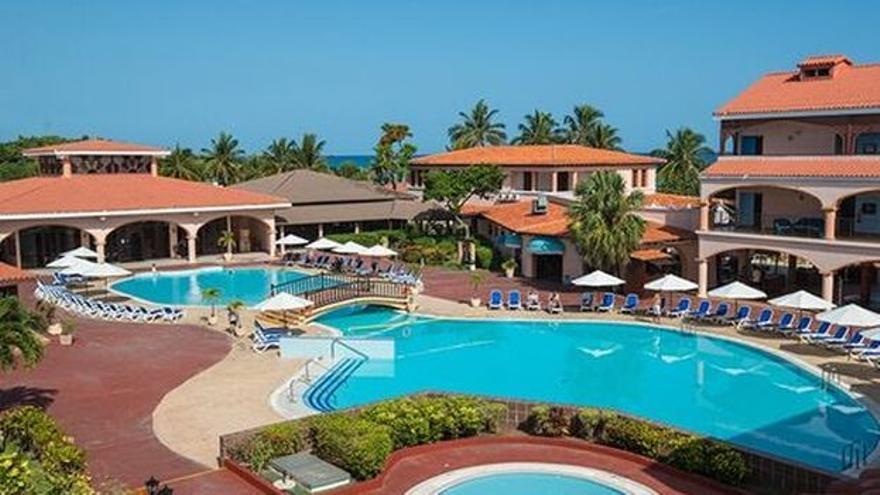
The Starfish Cuatro Palmas is one of the hotels built in the area expropriated from the plaintiffs. (Kayak)

14ymedio bigger14ymedio, Havana, 15 August 2023 — For the third time, South Florida district judge Robert N. Scola has dismissed the claims of the heirs of several properties confiscated by the Cuban regime after the triumph of the Revolution against the travel agencies Booking, Hotels, Expedia and Orbitz. The plaintiffs, who inherited the land on which the Starfish Cuatro Palmas hotel and the Memories Jibacoa resort were built, have been trying to obtain compensation from the four companies since 2019, under Title III of the Helms-Burton Law.

In a resolution, partially published on the page of the U.S.-Cuba Trade and Economic Council, the judge again rejected the claim, amended for the third time, for the reasons he had previously alleged.

The magistrate points out that the plaintiffs, Mario del Valle, Enrique Falla, Angelo Pou and Mario Echeverría obtained ownership of the land by inheritance in 2004 and 2014, which excludes their right to claim in accordance with the provisions of the Helms-Burton rule approved in 1996 by then-President Bill Clinton. Title III of the law authorizes Americans affected by the Cuban State’s confiscations, who were owners before the law went into effect, to make a claim.

The judge emphasizes that due to this fact, lawsuits of this type have already been dismissed, and he cites them in the verdict. continue reading

In addition, according to the magistrate, the businessmen still have not duly proved that the agencies were aware of intentionally “trafficking” with those properties. The court considers that, for all the reasons analyzed in the resolution, there are no reasons to initiate a compensation process, and, without going into the merits of the matter, it again puts an end to the procedure.

“These findings are sufficient to resolve the amended third lawsuit, which must be rejected and, therefore, dismissed. The Court refrains from addressing the rest of the parties’ arguments related to the law, its definitions and its application,” the court said.

In February 2023, the Court of First Instance of Palma, in Spain, agreed with the Cuban State entity, Gaviota, in a lawsuit against the hotel Meliá, filed in 2021 by the Sánchez-Hill family. The judicial headquarters alleged the lack of jurisdiction of the Spanish courts in this process since the confiscation was a “sovereign act carried out by Cuba through its own laws.”

In 2019, the plaintiffs filed a legal action against the Balearic chain Meliá for the operation of two hotels, Paradisus Río Oro y Sol and Río y Luna Mares, on land that belonged to their family before 1959. On that occasion, the judge issued the provisional file of the case for the same reasons as now, but the Sánchez-Hills appealed to the Provincial Court (higher authority), considering that the tax domicile of the company made the lawsuit possible.

For its part, the State company maintained that Cuba enjoys immunity from jurisdiction and, since the lawsuit was directed against the Island, the privilege was extended to the rest of the defendants. In addition, Gaviota added that meeting the demand meant ruling on goods located within Cuba without extraterritorial effects in Spain, as well as something impossible: ruling on sovereign acts of a State.

Translated by Regina Anavy

____________

COLLABORATE WITH OUR WORKThe 14ymedio team is committed to practicing serious journalism that reflects Cuba’s reality in all its depth. Thank you for joining us on this long journey. We invite you to continue supporting us by becoming a member of 14ymedio now. Together we can continue transforming journalism in Cuba.

Cuban Hammer Thrower Yasmani Fernandez Escapes in Paris, Prior to the World Athletics Championships

Cuban hammer thrower Yasmani Fernández in an international competition. (Escambray)

14ymedio bigger14ymedio, Havana, 16 August 2023 — The hammer thrower Yasmani Fernández, who was included at the last minute in the Cuban team that will participate in the World Athletics Championships, escaped this week. According to the information published this Wednesday by the pro-government media Jit, he “abandoned” the delegation during his stopover in Paris (France). According to the national commissioner of the specialty, Rolando Charroo, the rest of those selected are “focused” on obtaining their best results.

Fernández, according to the same media, was included on a list of 21 athletes due to his location in the ranking. His best record was achieved this year in Havana with a 249.5-foot throw that he recorded during the José Barrientos Memorial, which was held at the Pan-American Stadium.

Cuban athletics is going through a crisis, which increases with Fernández’s abandonment. Commissioner Rolando Charroo said the team of 20 athletes was “in very good shape,” and he limited himself to talking about the number of possible medals they hope to achieve.

“Lázaro Martínez and Cristian Nápoles among the men, as well as Leyanis Pérez and Liadagmis Povea among the women, are the best candidates for medals,” published Play-Off Magazine prior to the Cuban delegation’s trip to Budapest. continue reading

The Cuban team is concentrated in the Danubio Arena Hotel. So far two groups have arrived, one from Havana and another from the Spanish town of Guadalajara, where they “trained for several weeks.”

Cuba will open the competition this Saturday, when Ronald Mencía seeks to qualify for the hammer throw. From Sancti Spiritús, he arrives with a personal record of 251.5 feet from last June. In the afternoon of the same day, the discus thrower Mario Díaz will make his debut. His best record is 213.9 feet (2022), but this year he reached a maximum of 209.7.

“The triple jumpers Lázaro Martínez and Cristian Nápoles will be the ’main course’ for the followers of athletics in Cuba,” according to Jit, which also proclaimed Martínez’s record with a jump of 57.7 feet.

Translated by Regina Anavy

____________

COLLABORATE WITH OUR WORKThe 14ymedio team is committed to practicing serious journalism that reflects Cuba’s reality in all its depth. Thank you for joining us on this long journey. We invite you to continue supporting us by becoming a member of 14ymedio now. Together we can continue transforming journalism in Cuba.