
The Most Expensive Ice Cream Shop in Havana Opens Its Store for Christmas

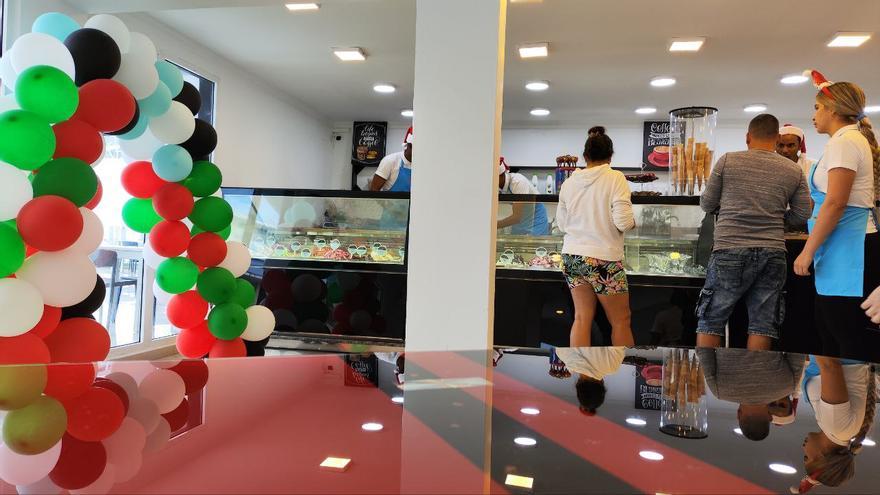
Bright and well stocked, the ice cream shop replaces the old BimBom at the gates of the Malecón. (14ymedio)

14ymedio bigger14ymedio, Juan Diego Rodríguez, Havana, December 14, 2023 — Christmas has brought a gift in advance for those who can afford it, like everything today, in the frustrated revolutionary utopia. Bueníssimo Soderia Gourmet, the new ice cream-sweet shop that succeeds the old BimBom in the Havana neighborhood of El Vedado opened its doors this Wednesday, two months after beginning sales from a cart in front of the premises, on Infanta and 23, then under construction.

“They have made it very beautiful, very beautiful,” said Rachel, a customer attracted by the Christmas atmosphere and the dedicated workers, dressed in reindeer hats, and Santa Claus himself, who approached the door to stop the curious from pushing. “It’s already open, you can now come in,” they were kindly urged from the street.
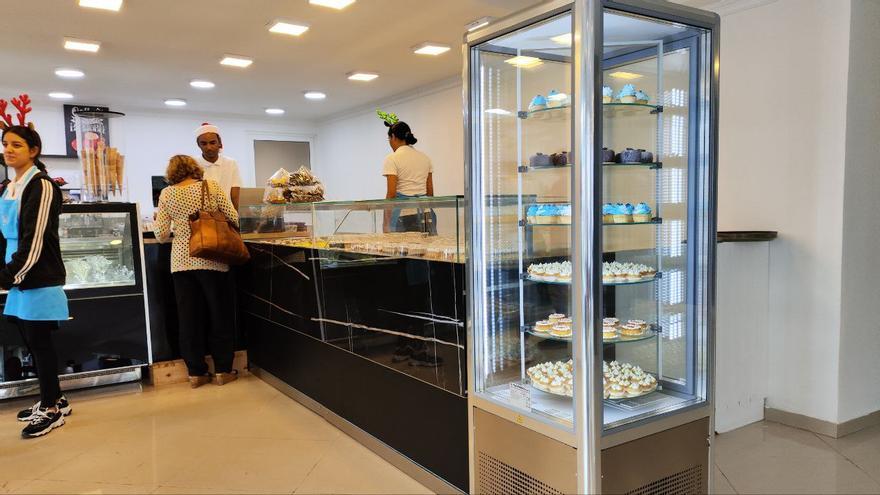
The refrigerators with rotating sweets caught everyone’s attention, until they saw the prices. (14ymedio)

Decorated in black and white, the glass refrigerators stood out with spinning cakes and desserts, all very bright and well air-conditioned. “You can see that they use a lot of quality ingredients,” Rachel said. “Everything looks good and tastes good, too!” She exclaimed, highlighting how delicious the ice cream was. Her bill: 955 pesos for a glass dish with three scoops, served in an oval shape with a little syrup and a vanilla cupcake (panqué). continue reading

Attractiveness and novelty played a part in the premiere of the Bueníssimo Soderia Gourmet, which has adopted as its motto Esto Está Bueníssimo (This is really good), which shines on its facade. Inside you could see quite a few customers, and many  were shocked to see the price range. One scoop of ice cream, which in October sold in a paper cone on the ground level for 195 pesos, rises now, inside the premises, to 220 pesos, and this is the most economical item. Most of the sweets, some tiny, exceed 200 pesos, and others cost 700, like the tocinillo del cielo, a pudding made with egg yolk and syrup.

“Well, nowadays everything is like this, prices through the stratosphere,” said a customer who was waiting for his turn to order. “I can imagine the investment that those people have made here. They have made it very nice; to be honest, they can’t charge cheaper than that, I guess,” he said with resignation. The experience, he explained later, was worth it, because the quality is higher than its closest competitor on the street, Monte Freddo.

The ice cream, he explained to 14ymedio, is somewhat cheaper there, 400 pesos for two scoops, but not as good in terms of originality and taste. “The desserts here are different; I haven’t seen them anywhere else. The ice cream is the Italian type, with flavors that are not tropical.” Stracciatella and amareto alternate with traditional chocolate and strawberry, either in a cone or in a glass dish.

The workers, in Christmas outfits, go out to invite the curious to stop by. (14ymedio)

“Look, I’m sick,” Mario, a client on a medical diet after a recent illness explained to the saleswoman. “I can’t eat anything that has cream, custard, none of those things. The sweet has to be as simple as possible, without additives, without any filling,” he explained. “The employee was quite kind and recommended everything to me,” he told 14ymedio after finishing his sweet, a small caprice after several days in a hospital.

Accustomed to the shortages of state shops and the laziness of their employees, the people were thankful for the new place, revived under private management in an environment that took wings in the 90s, when young people and the LGBTI group began to frequent this area between the Malecón and 23rd Street, making it a meeting point of the capital.

The BimBom, which occupied the premises until the pandemic and the Ordering Task* finished off the city’s idleness, has found a successor that is made to the new measure of Havana: for the newly rich and tourists.

*Translator’s note The  Ordering Task is a collection of measures that included eliminating the Cuban Convertible Peso (CUC), leaving the Cuban peso (CUP) as the only national currency, raising prices, raising salaries (but not as much as prices), opening stores that take payment only in hard currency, which must be in the form of specially issued pre-paid debit cards, and a broad range of other measures targeted to different elements of the Cuban economy. 

Translated by Regina Anavy

____________

COLLABORATE WITH OUR WORKThe 14ymedio team is committed to practicing serious journalism that reflects Cuba’s reality in all its depth. Thank you for joining us on this long journey. We invite you to continue supporting us by becoming a member of 14ymedio now. Together we can continue transforming journalism in Cuba.
‘They Discovered the Child’s Body at Midnight and Waited Seven Hours to Notify the Family’

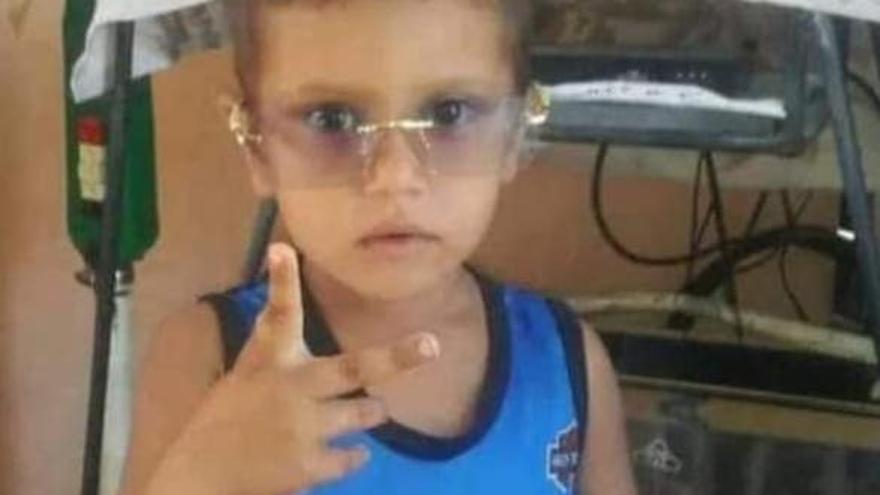
Little Eudis Yanyel Bueno Bec, in a photo released by his relatives when he disappeared. (Facebook)

14ymedio biggerA month after the body of Eudis Yanyel Bueno Bec , a three-year-old boy living in the Havana municipality of Guanabacoa, was found lifeless inside a disused refrigerator, the case has taken an unexpected turn with the release of the alleged suspects responsible for the incident. Given the silence of the Police, the minor’s family insists that there are still many questions to be answered.

“No authority has come to the neighborhood to say whether the investigation is continuing or not,” a close relative of the victim, a resident of the La Choricera neighborhood, where the body was found, tells 14ymedio . However, he alleges, “the suspects are free, when they should be detained until the case is closed.”

After the discovery of Bueno Bec’s body, the Police arrested the person who found the body in his backyard. He is known in the neighborhood as El Guajiro (the Peasant) – whom this newspaper’s source calls Pedritín – and his two children, identified as Los Jimaguas (the Twins).

“One of those involved,” says the relative interviewed by this newspaper, “was talking to a nephew of the minor’s parents. The man admitted that El Guajiro’s young granddaughter notified her grandfather at 12 at night that the body was in the refrigerator. The grandfather got up, opened the device and closed it again. They say he got nervous.” continue reading

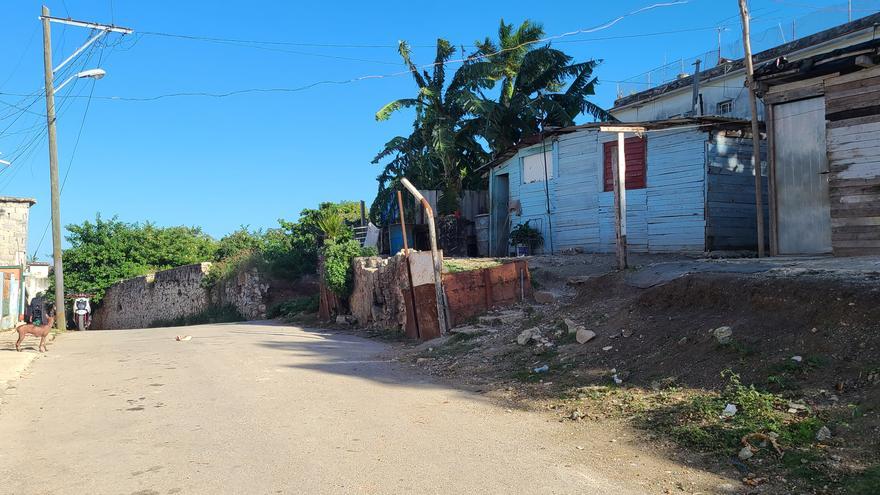
The Bueno Bec family home in La Choricera, one of the most humble and precarious areas of Havana. (14ymedio)

El Guajiro did not know how to break the news to Bueno Bec’s family and consulted with one of his sons – the girl’s father – as to what to do. They agreed to “wait until morning” and, at 7, they gave notice. “They had been aware for hours that the child was dead and they did nothing”, says the relative interviewed by 14ymedio.

When Bueno Bec’s father arrived, the refrigerator was still closed.

“The suspects deny it, but the family thinks it was a cover-up crime,” he adds. After several disagreements, El Guajiro accused the victim’s father of “threatening” him, and although he did not present “the testimony of any witnesses,” the family member insists, “now the child’s father must go to the police station every Tuesday and Thursday, to sign an act”.

“The family thinks it is a murder, although it cannot be stated with certainty. Although these people’s duty was to notify them at any time” the source interviewed by this newspaper states bluntly. Both parents are “pained and dissatisfied” due to the lack of attention from the authorities. Meanwhile, he adds, El Guajiro and Los Jimaguas “pass by the front of the house and can’t do anything to them,” he laments. “He died, we buried him and it’s as if nothing had happened.”

The authorities took their time to give an official version of what happened. When the news was already circulating in several independent media, the Havana Citizen Portal published a note in which it offered details of the event and warned that “the specialized authorities are working until they reach the truth of all the reasons surrounding this event”.

“It was the same man who lives in that house who notified the family that he was there, it was not the Police,” a nearby resident told this newspaper

Bueno Bec had disappeared on a Thursday and was found on Saturday. The Police had come “with dogs” the day before, after the family reported the child missing, several residents of the area then told 14ymedio .

“It was the same man who lives in that house who notified the family that the child’s body was there, it was not the Police,” a nearby resident told this newspaper. “Even with the dogs, the police did not find the child.” According to the note, the minor, who died of “asphyxiation”, “had not been molested or abused”.

For his part, the official spokesperson El Necio is confident that Bueno Bec was playing “hide and seek” with other children his age when he hid in the refrigerator. “This refrigerator is one of the old ones, which has the lock on the outside, they left him locked there for several hours, which caused his death,” he said, suggesting that one of the other children might have closed the device.

The boy’s wake, which took place the same day he was found, brought together dozens of relatives and neighbors from the area, one of the most humble and precarious in the Cuban capital.

Translated by Norma Whiting
___________________

COLLABORATE WITH OUR WORKThe 14ymedio team is committed to practicing serious journalism that reflects Cuba’s reality in all its depth. Thank you for joining us on this long journey. We invite you to continue supporting us by becoming a member of 14ymedio now. Together we can continue transforming journalism in Cuba.
The Center of the Cuban Film Poster is Inaugurated, After its Registration as Documentary Heritage

The Cuban film poster led the formal and conceptual experimentation. (EFE)

14ymedio biggerEFE (via 14ymedio), Havana, December 13, 2023 — The cultural authorities of Cuba inaugurated on Tuesday the Center of the Cuban Film Poster, a place that exhibits part of the collection registered in May in the Memory of the World list of the United Nations Educational, Scientific and Cultural Organization (UNESCO).

The event was attended by the Minister of Culture, Alpidio Alonso Grau, and the representative of the UNESCO Regional Office for Culture in Latin America and the Caribbean, Anne Lemaistre.

The Center opened its doors as part of the 44th edition of the International Festival of New Latin American Cinema in Havana, which ends on December 17. The inauguration was also part of a day of celebration for UNESCO’s recognition.

Among Tuesday’s activities was the delivery of the diploma that attests to the inscription of the collection of the Cuban Institute of Cinematographic Art and Industry (ICAIC) in the Memory of the World list, as well as a panel with experts and figures of the Island’s culture. continue reading

Today is the culmination of a long process that began in the first years of the Revolution, when it was decided that a Cuban poster was going to be made here, wherever the film originated   

“Today is the culmination of a long process that began in the early years of the Revolution, when it was decided that a Cuban poster was going to be made here by Cuban designers, wherever the film originated,” said Sara Vega, a graphics specialist at the Cinemateca de Cuba and in charge of the almost 3,000 pieces that make up the collection.

Among the designers of these posters, artists such as Eduardo Muñoz Bachs, Antonio Fernández Reboiro, Rafael Morante, Alfredo Rostgaard, Julio Eloy Mesa and Antonio Pérez (Ñiko) stand out.

In Cuba, this type of piece, which revolutionized the visual arts in the country and the region, had a boom in the 60s, the golden age of the Island’s cinema.

The film poster then led the formal and conceptual experimentation, incorporating aesthetic trends that dominated the international visual arts panorama such as pop art, op art and kinetic art.

Translated by Regina Anavy

____________

COLLABORATE WITH OUR WORKThe 14ymedio team is committed to practicing serious journalism that reflects Cuba’s reality in all its depth. Thank you for joining us on this long journey. We invite you to continue supporting us by becoming a member of 14ymedio now. Together we can continue transforming journalism in Cuba.

The Body of a Cuban Mother Who Disappeared Three Weeks Ago Was Found in Banes

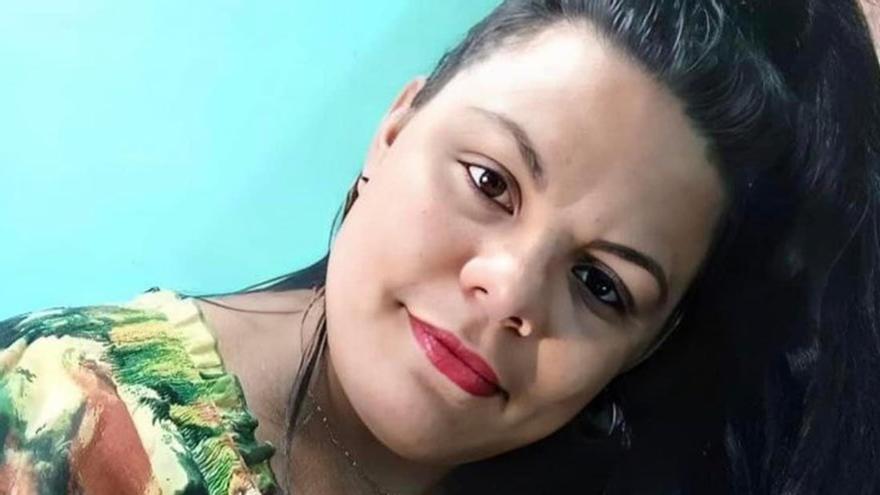
Domínguez Torres was 36 years old and the mother of a child. (Facebook)

14ymedio bigger14ymedio, Havana, December 13, 2023 — The lifeless body of Yamilet de Jesús Domínguez Torres, who had been missing since November 24 in Banes, Holguín, was found this Wednesday, according to dancer and choreographer Norge Ernesto Díaz Blak, known on social networks as Noly Blak.

“Yamilet was found in her room,” Noly Blak wrote in a brief message on Facebook, a platform that the artist has used to give visibility to the case and raise funds to help the family of the deceased. He also managed a reward of 400,000 pesos for those who provided information about the woman’s whereabouts.

“I was informed of what is happening in Banes. At the moment they are digging up the area where she was buried,” Noly Blak said in a live broadcast without offering more details. In the comments of this and other publications, neighbors of the community confirmed that there are policemen and a forensics team in the house of the deceased. continue reading

Her family notified the police a day later, and “there have been citizen searches in addition to those by the authorities”

Domínguez Torres, 36 years old and mother of a child, was last seen on November 24 at her house, around 11 pm, Yo Sí Te Creo reported on December 5.

Her family notified the police a day later, and “there have been citizen searches in addition to those by the authorities,” added the independent platform, which also explained that the woman “was wearing a white house robe and had recently come in from the street.”

So far this year, 79 women have been victims of sexist violence on the Island, according to the 14ymedio record that is compiled from independent platforms. The most recently confirmed cases were the murder of 15-year-old Dorka Velázquez Casal, which shocked the rural town of Aguacate, in the municipality of Palma Soriano, in Santiago de Cuba. The independent platforms for monitoring femicides also denounced at the beginning of the month the death of Beatriz García, murdered in Bayamo.

The Cuban Government does not produce reports, which means that the independent organizations are responsible for verifying femicides; in addition, they have no data to compare. To this is added the silence of the official press, which rarely publishes these facts and, in most cases, does not classify them as femicides.

However, recently the official media Girón and 26, from Matanzas and Las Tunas, respectively, broke their silence. Girón acknowledged that seven women were murdered in the province in the first half of 2023, and 26 published that the Prosecutor’s Office of Las Tunas this year has opened more than 200 legal proceedings for “threats, injuries, sexual assaults and murders” of women and girls.

Translated by Regina Anavy

____________

COLLABORATE WITH OUR WORKThe 14ymedio team is committed to practicing serious journalism that reflects Cuba’s reality in all its depth. Thank you for joining us on this long journey. We invite you to continue supporting us by becoming a member of 14ymedio now. Together we can continue transforming journalism in Cuba.
Mexico Donates Tractors and Nurseries to Cuba as Part of a $6 Million Program

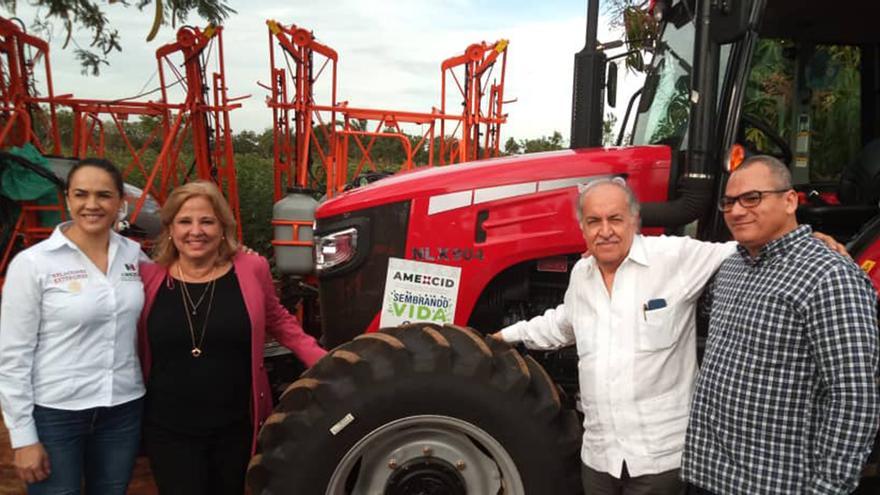
In the image, one of the tractors that Mexico donated as part of the Sembrando Vida program. (X/AnaTeresita Gonzaléz)

14ymedio bigger14ymedio, Havana, December 12, 2023 — With the donation of half a dozen tractors to Cuba and the inauguration of two fruit and timber tree nurseries in the municipalities of Artemisa and Mayabeque, the Government of Mexico proclaims that 5,000 people have benefited as part of the Sembrando Vida (Sowing Life) Program, which was announced last June with an investment of 6,000,000 dollars.

According to the statement of the Ministry of Foreign Affairs (SRE), “support and inputs in kind” have been delivered, in addition to technical assistance from Cuban and Mexican agronomists to improve cultivation techniques.

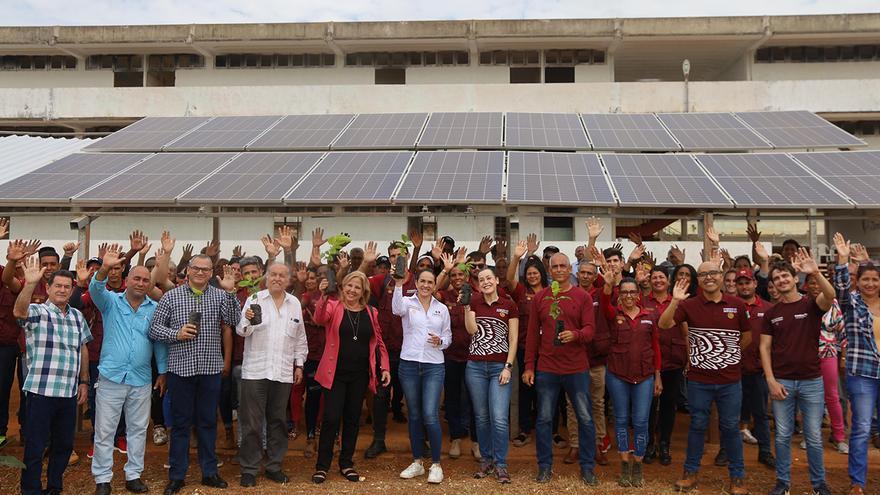
As part of the benefits, the report emphasized that the nurseries have an irrigation system that works with solar panels. Donors emphasize that no electrical energy or “other fuel” is necessary, but the truth is that the tractors will need fuel, which is scarce on the Island despite the constant arrival of oil tankers, mainly from Venezuela and Mexico.

Los viveros de Sembrando Vida en Cuba cuentan con paneles solares. (SRE)
The Sembrando Vida nurseries in Cuba have solar panels. (SRE)

The Mexican Agency for International Development Cooperation (Amexcid), in charge of the program, already implemented in El Salvador, Guatemala and Belize, announces the progress on the Island two months after it reported on the drawing up of a list of beneficiaries. Until then, only a small hoe, a metal file, pruning scissors and a pair of boots had been delivered to the beneficiaries.

continue reading

The agency says nothing about the $150 per month that Sembrando Vida planned to deliver directly for eight months to the people enrolled in the program, as announced in June by the executive director of Amexcid, Laura Elena Carrillo Cubillas.

Sembrando Vida was implemented by the López Obrador Administration as “the largest job creation program in the history of Mexico,” with a budget, this year, of almost half a billion pesos. The Government of Mexico included it in the Development Plan for Migration.

López Obrador’s proposal focuses on containing the irregular exodus of people through the implementation of social programs in the Northern Triangle of Central America made up of Guatemala, Honduras, El Salvador, Cuba and Belize.

However, Sembrando Vida has been denounced for mismanagement by some media and organizations. The information platform Connectas revealed that this program, to which 63.5 million dollars were initially allocated, “has received criticism for the expulsion of beneficiaries in a discretionary manner, the opacity in the management of farmers’ savings and the delay in the investigations that denounce their mismanagement.”

Translated by Regina Anavy

____________

COLLABORATE WITH OUR WORKThe 14ymedio team is committed to practicing serious journalism that reflects Cuba’s reality in all its depth. Thank you for joining us on this long journey. We invite you to continue supporting us by becoming a member of 14ymedio now. Together we can continue transforming journalism in Cuba.
Heavy Rains Lead to Partial Collapse of a Havana Building

The building at the corner of San Lazaro and Perseverancia streets was still inhabited in spite of its precarious condition.

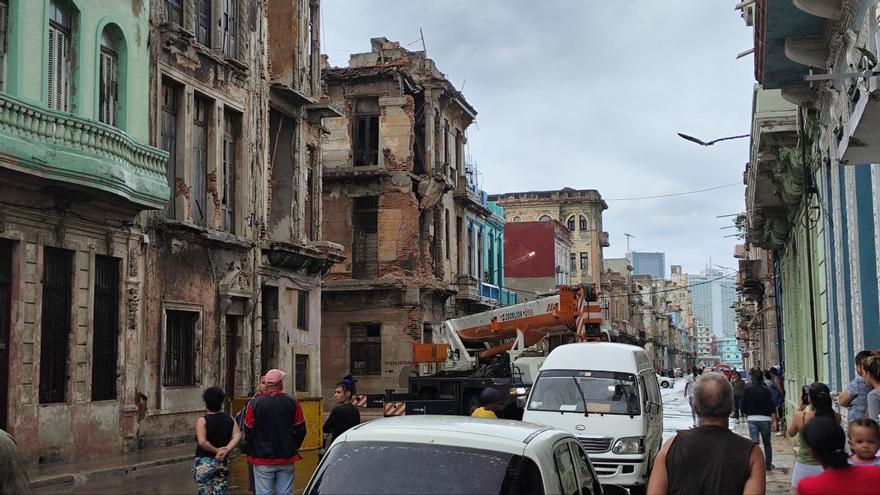
14ymedio bigger14ymedio, Havana, 13 December 2023 — The thing that residents of the building on the corner of San Lázaro and Perseverancia streets in Central Havana feared most finally happened early Wednesday. Heavy rains that had lashed the Cuban capital for hours led to a partial collapse of the building, which has been in danger of falling down for years.

Fallen building debris partially blocked traffic on San Lázaro Street, one of Havana’s most important thoroughfares. The Municipal Assembly confirmed the news on its Facebook page, adding that no one had been injured and that those affected had been transferred to a shelter.

Central Havana’s San Lázaro Street can pose a mortal danger on a rainy day like this one.

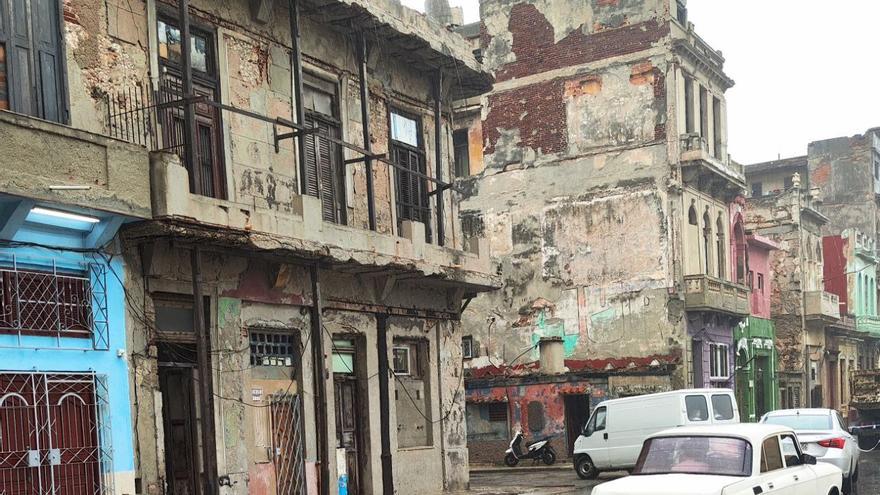
The building, whose precarious situation 14ymedio had reported on last August, is located in one of the areas most affected by deterioration and lack of maintenance. Proximity to the sea, frequent coastal flooding, salty sea air and strong coastal winds have also contributed to the demise of a significant number of other buildings on San Lázaro Street as well.

Though the entire avenue is under threat, from its starting point at the Malecon to its terminus at the University of Havana’s grand staircase, it is the stretch from Paseo del Prado to Belascoaín Street that is most affected. It was in this precise area that this morning’s partial collapse occurred. continue reading

14ymedio confirmed that, by early morning, most of the debris from the collapse had been removed from the street though some fragments remained in piles on the sidewalk. No warning tape surrounded the site but passersby avoided going near the corner and preferred walking almost in the middle of the roadway rather than risk more debris falling on their heads.

The Cuban Meteorological Institute reported that “rains were inundating broad swaths of the capital— 14ymedio (@14ymedio)  This part of the road is closed to traffic. A few yards away, at 413 San Lázaro between Campanario and Manrique streets, a building suffered a partial collapse, its balconies and cornices falling off. The property, which had been propped up after a previous collapse, is still inhabited by several families despite heavy damage to its structure. 

On the same thoroughfare, fragments of a building near Galiano Street also fell off in heavily trafficked area.

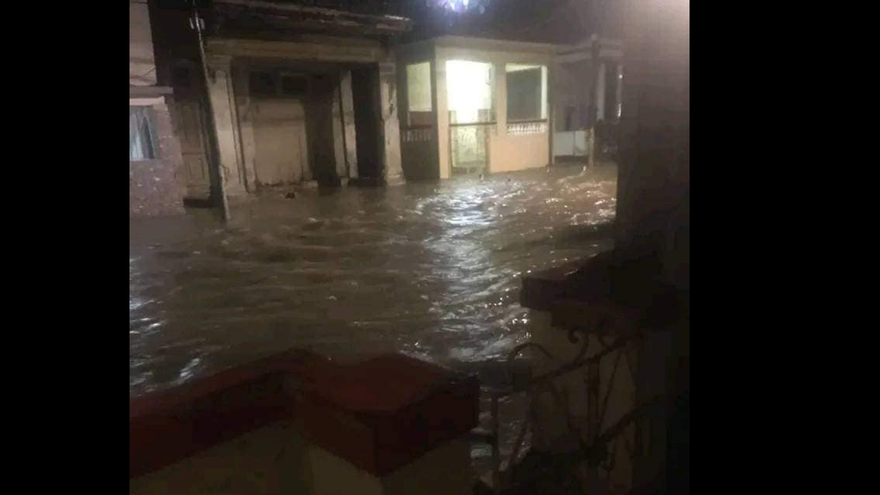
Images of flooding is some areas of the capital shared on social media. (Judith Delgado)

At three in the morning, as the storm inundated large areas of the capital, the Cuban Meteorological Institute’s website warned that Wednesday would see “some rain in the western region beginning in early morning.” Interestingly, minutes after this low-key forecast, the same organization posted an alert on social media regarding the serious weather event that was impacting the city.

“Huge mesoscale convective complex affecting Havana’s northern coast, with significant lightning flashes and heavy rain,” read the message, which was illustrated with a map.

The rain began at approximately 11:00 PM, Tuesday. It was accompanied by a strong lighting storm that lasted for at least an hour and a half. From the 14ymedio newsroom could be seen a large area of ​​Cerro plunged into darkness. Blackouts were also reported in Central Havana, Alamar and Luyanó and the gusts of wind are intense.

According to officials, some areas of the capital had as much as 131 mm (1.22 inches) of rain. Heavy precipitation continued falling this morning throughout the city as residents took to the streets with umbrellas and ponchos, avoiding flooded areas and trying to go about their business on a day when forecasts were predicting more  rain.

____________

COLLABORATE WITH OUR WORKThe 14ymedio team is committed to practicing serious journalism that reflects Cuba’s reality in all its depth. Thank you for joining us on this long journey. We invite you to continue supporting us by becoming a member of 14ymedio now. Together we can continue transforming journalism in Cuba.
The Cuban Regime’s Scriptwriters No Longer Scare Anyone

The official spokesperson Humberto López at a moment during the broadcast of the program on Cuban Television. (Razones de Cuba/YouTube/Screen capture)

14ymedio bigger14ymedio, Yoani Sánchez, Generation Y, Havana, 13 December 2023 — There was a time when official stories were better constructed or perhaps we were more gullible. In those years, they painted dangers that were really scary, bad guys that were truly fearful, and attacks that made everyone’s hair stand on end. Perhaps it was our naivety as a people combined with the information monopoly enjoyed by the Communist Party at the time, but it was enough for us to be told that “the enemy” was planning to poison the cisterns of day care centers and schools for us all to stop, for a few days, drinking even one drop of water at school.

Of those skillful narrators and our innocence not even a memory remains. For this end of the year, Cuban Television has launched itself to create the umpteenth story that, from the Cuban exile, sabotage is being prepared, weapons are being prepared and landings are planned. The example given is laughable. A lone man, who supposedly arrived on the island on a jet ski, armed with three pistols and a few bullets. Faced with such a description, one cannot help but remember when, in the stories of yesteryear, the villain really instilled fear and not pity. continue reading

For this end of the year, Cuban Television has launched itself to create the umpteenth story that, from the Cuban exile, sabotage is being prepared, weapons are being prepared and landings are planned

It is no coincidence, either, that every time the economic crisis escalates and popular indignation grows, these reports appear with all the traces of following a script to scare Cubans and thus prevent us from showing our discontent, taking to the streets or join a general strike. The theatricality of the scripts created with this objective abandoned realism long ago and has entered the realm of the fantastic, appealing to increasingly bizarre individuals, plans and devices.

The most recent delusions of persecution and invasion that official propagandists have spread show a very high level of desperation. They have lost any hint of objectivity, if they ever had it, to end up in the absolutely grotesque. Thus, with these caricatures of alleged evildoers and attacks, no one believes anything.

A piece of advice for bad writers of so many serials: perhaps training with Marvel or Netflix would give them more credible results.

____________

COLLABORATE WITH OUR WORKThe 14ymedio team is committed to practicing serious journalism that reflects Cuba’s reality in all its depth. Thank you for joining us on this long journey. We invite you to continue supporting us by becoming a member of 14ymedio now. Together we can continue transforming journalism in Cuba.
Rice from Uruguay for Santiago de Cuba, Rice of Unknown Origin for Havana

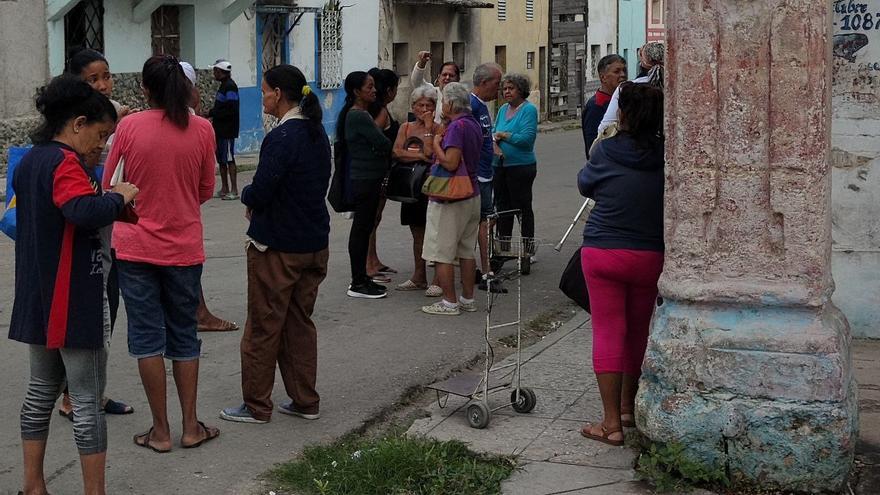
Hunger and sadness were palpable in the lost looks of people waiting in line to buy rice on Perez Street in Havana’s Luyanó district. (14ymedio)

14ymedio bigger14ymedio, Juan Diego Rodriguez, 11 December 2023 — It’s Monday and, on the streets of Havana, no one is talking about anything but rice. An article in Cubadebate, a digital state-run news platform, announced that 25,000 tons (more than half a million fifty-kilogram bags) had been offloaded at the Guillermón Moncada port in Santiago de Cuba. The news was met with predictable eagerness despite the fact that Cubadebate reported the rice will not be available in stores for another two weeks.

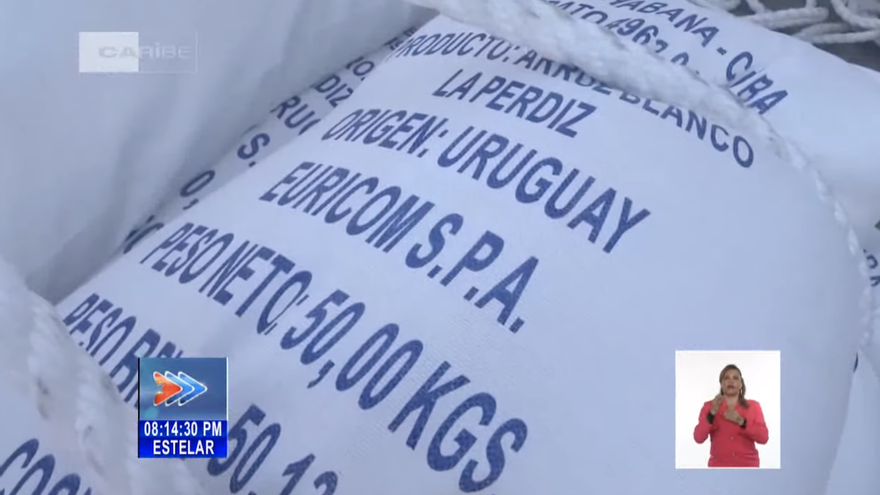
Cuban broadcaster Canal Caribe also provided images of the delivery. It reported that distribution of the cargo, which will first be shipped to the five eastern provinces, “is also guaranteed for the rest of the country.” The label printed on the bags indicates the rice originated in Uruguay, from where the Eco Bushfire — a cargo ship registered in the Marshall Islands — set sail as 14ymedio was able to confirm through maritime geolocation logs.

With nearly half the month of December gone, many of the country’s bodegas (ration stores) have yet to receive their regular deliveries of rice, a basic staple of the Cuban diet.

Some of those that did manage to get it, like establishments in Havana’s Nuevo Vedado district, were open for business on Sunday, an indication of the level of consumer desperation. Of the list of rationed goods to which Cubans are theoretically entitled, rice is the most in-demand product. Delivery delays have been especially hard on families who cannot afford to pay free-market prices — more than 170 pesos in some places — for a pound of rice. continue reading

The label printed on the bags indicates the rice originated in Uruguay, from where the Eco Bushfire — a cargo ship registered in the Marshall Islands — set sail, as 14ymedio has confirmed. (Screen capture)

Customers at the ration store on Perez Street in Havana’s Luyanó district were in luck; the much sought-after staple had been delivered. Hunger and sadness were palpable in the lost looks of people waiting in line. However, many of them changed their minds once they saw the poor quality of this rice of unknown origin was, a far cry from the rice that Santiago de Cuba got. “It’s the kind they call ‘Indian’. It’s steamed, yellowish and doesn’t taste good,” complained a forty-something woman who was also upset because she was allowed to buy only three pounds per person instead of the usual seven pounds.

Those who cannot afford to buy unrationed goods find themselves in a critical situation in spite of the government’s efforts to calm the public mood. Last month, for example, the deputy minister of Domestic Commerce, Yosvani Pupo, appeared on national television to reassure viewers that end-of-year basic staples would, in fact, be available. At that point, it was already past November 15 and, like this month, rice deliveries were delayed.

Domestic production, as some provincial news outlets have indicated, is not and will not be enough to meet consumer demand anytime soon. With hopes pinned on exports, Cubans salivate at the sight of every cargo ship, like the one that arrived on Sunday.

____________

COLLABORATE WITH OUR WORKThe 14ymedio team is committed to practicing serious journalism that reflects Cuba’s reality in all its depth. Thank you for joining us on this long journey. We invite you to continue supporting us by becoming a member of 14ymedio now. Together we can continue transforming journalism in Cuba.
China Donates Food for the ‘Basic Family Basket’ in the Cuban Province of Artemisa

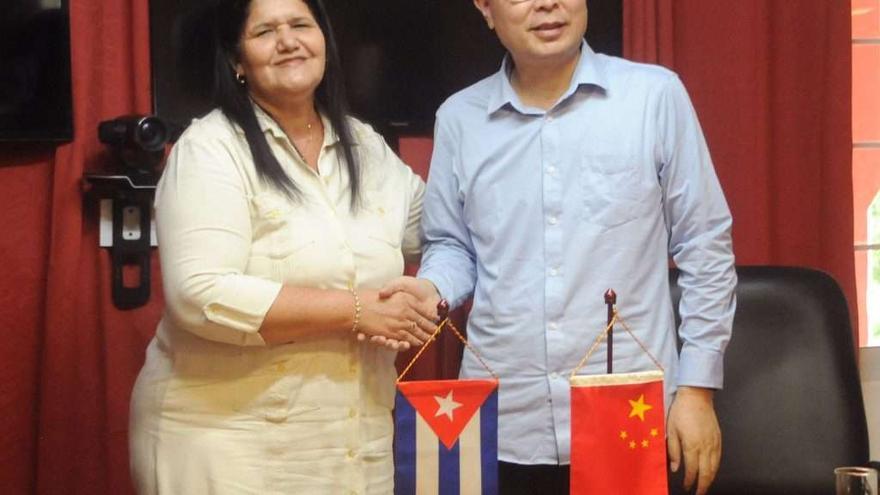
The agreement for the delivery of the donation was signed by Ambassador Ma Hui and the secretary of the PCC Gladys Martínez. (El Artemiseño)

14ymedio bigger14ymedio, Havana, 13 December 2023 — The province of Artemisa, considered until recently one of Cuba’s granaries and a supplier of agricultural products to Havana, increasingly depends on the generosity of international cooperation for its own food. After donations of tractors and other materials from Mexico, it was China’s turn this Tuesday to deliver food for the basic family basket sold through the ration system — in particular, rice, wheat flour and milk.

According to the Xinhua agency, the donation was delivered by the Asian country’s ambassador to Cuba, Ma Hui, and received by the first secretary of the Communist Party of Cuba (PCC) in Artemisa, Gladys Martínez Verdecia, who said that these products will also benefit health centers and families in vulnerable situations.

Ma explained during the signing of the gift’s delivery that it is not a large donation in quantity or value. However, “it is a ’small and beautiful’ project with enormous significance for both countries” that constitutes a joint action between the Chinese and Cuban parties to promote “the philosophy of development centered on the people.”

“This is a vivid example of the promotion of the joint construction of a shared future between China and Cuba,” said the Chinese ambassador, who said that his country has always felt “in its own flesh” the needs of Cubans, so he hopes that this act of kindness – which will not be the last – will strengthen the ties between the two countries. continue reading

Martínez Verdecia, thanking him for the donation, explained that it arrives at a “crucial moment” for the Cuban economy

Martínez Verdecia, thanking him for the donation, explained that it comes at a “crucial moment” for the Cuban economy, and she blamed the U.S. embargo on the Island for the shortage of basic necessities, such as food and medicine, that Cubans suffer today.

Before signing for the delivery of the contribution, the ambassador visited the Muchurri Farm, in the municipality of Caimito, dedicated to the production of exotic birds. This activity coincides with others that have recently been carried out in Artemisa by officials of the Government and the Communist Party of China (PPCh) when visiting the province to learn about its potential. A senior official of the PPCh, Li Xi, visited the Frank País Credit and Services Cooperative in Güira de Melena in September.

The Mariel Special Development Zone in Artemisa was created from the experience of China, according to its general director, Ana Teresa Igarza Martínez, who accompanied Ambassador Ma Hui on a tour of the facilities in November 2021.

China already has a long history of providing aid to the regime. During 2023, the Asian country has given several gifts to the Island. In January, the donation of 100 million dollars was made after Miguel Díaz-Canel’s trip to China in November 2022.

Subsequently, in June, the Chinese Red Cross Society gave the Government of Cuba an emergency donation of 100,000 dollars for the recovery of the eastern region of the Island after flooding, and last September China gave more than 114 million dollars for the construction of a 5 megawatt photovoltaic park in the province of Holguín.

Translated by Regina Anavy

____________

COLLABORATE WITH OUR WORKThe 14ymedio team is committed to practicing serious journalism that reflects Cuba’s reality in all its depth. Thank you for joining us on this long journey. We invite you to continue supporting us by becoming a member of 14ymedio now. Together we can continue transforming journalism in Cuba.
Thousands of Worshipers and a Russian Pastor at a Massive Religious Event in Central Cuba

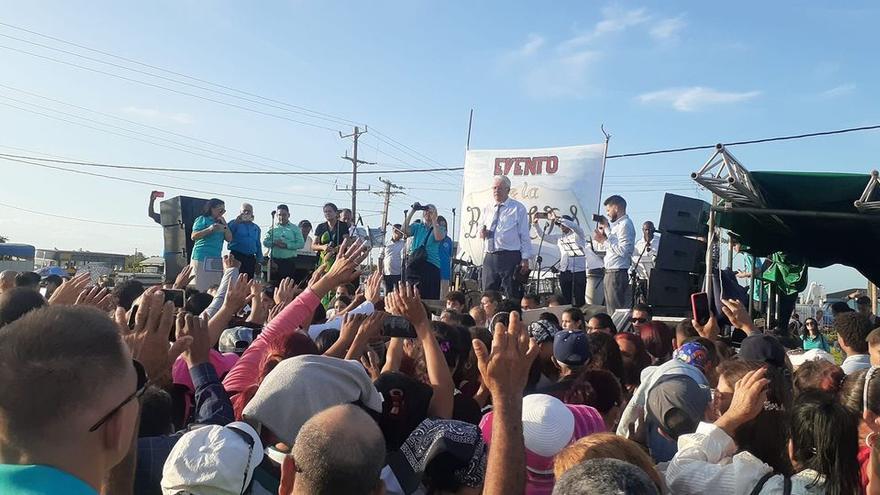
The words in Spanish, recited by a woman into a microphone, are a partial translation of those spoken by a Russian preacher. (Facebook/Antonio Miguel Barrientos Fernandez)

14ymedio bigger14ymedio, Madrid, 11 December 2023 — “We are now going to pray in a special way. Come all you who need the water of life, who need forgiveness from God. Tell him, ’Father, I am coming to you. Father, I am here. I am going home.’ Come to Christ, come.” The words in Spanish, recited by a woman into a microphone, are a partial translation of those spoken moments earlier by an unknown Russian preacher. In front of a stage on the outskirts of Camagüey from where the two are speaking, thousands of attendees raise their arms and sway to the beat of an out-of-tune choir on Sunday. ​

Images of the event posted on social media are shocking in a country where not only were religious beliefs surpressed for decades but where any large-scale gathering is subject to the stictest government surveillance.

The “Bible Event,” as it is billed by its organizers, draws more than 10,000 people, “both Christians and non-Christians.” It was convened by several evangelical denominations including the Camagüey branches of the Baptist Church and the Assemblies of God.

“Camagüey trembles!!! “Bible Event” More than 10,000 people gather together at Cabeza de Vaca to worship the All-Powerful God, Jesus Christ. Dozens of trucks, thousands of non-Christians, hundreds of children and a great multitude of believers in Jesus Christ. Camagüey is the cradle of the next revival of our downtrodden but beloved Cuba…” continue reading

“A platform like this without state support?” asks a skeptical Aaron Ruby on social media. Someone named Keyler Fernandez, who seems to have some knowledge of the organization, replies, “A group in Ciego [de Ávila] who are not Christians rented a space that had good audio and a stage.” Ruby is not satisfied with the response and asks, “And how did they get 10,000 people to a town of 100 inhabitants? And the government didn’t ask any questions?”

In images shared by some of the attendees dozens trucks can be seen transporting participants to a site in Camagüey known as Cabeza de Vaca.

For years the Cuban government has taken a selective approach in dealing with Evangelical churches. It has harassed some religious figures such as Mario Felix Lleonart, a Baptist who currently lives in exile in the United States. A church run by Faustino Palomo and his wife, Orlis Leyva, in Santiago de Cuba was dismantled by authorities in 2020. Meanwhile, other religious groups with ties to the regime are allowed to practice their faith freely.

For example, the Council of Cuban Churches, an umbrella organization of twenty-eight different Christian groups operating on the island is openly aligned with the government.

____________

COLLABORATE WITH OUR WORKThe 14ymedio team is committed to practicing serious journalism that reflects Cuba’s reality in all its depth. Thank you for joining us on this long journey. We invite you to continue supporting us by becoming a member of 14ymedio now. Together we can continue transforming journalism in Cuba.
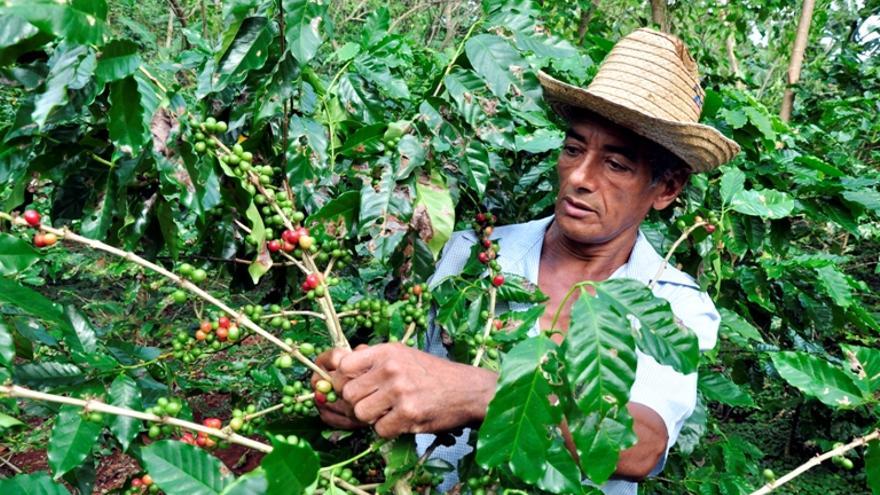
For Every Kilo of Coffee Exported, One Kilo for Cubans, an Italian Businessman Promises

Santiago de Cuba produces  40% of the island’s total volume of coffee beans, making it the benchmark for Cuba’s coffee production say officials. (Latin Press)

14ymedio bigger14ymedio, Madrid, 7 December 2023 — On Wednesday, Michelle Curto made a promise in Santiago de Cuba’s Hall of Mirrors for which he will be held accountable if he does not make good on it. “For every kilogram of Cuban coffee that is exported, the same amount must be made available to Cuban consumers,” said the Italian businessman, who serves as president of the Association for Cultural and Economic Exchange with Cuba. A political activist, Curto has also been trying for years to get the BioCuba Caffe project off the ground. That finally happened yesterday when the new public/private partnership had its official launch.

“Whenever we export coffee, we will have to ensure that there will be enough for the Cuban market. We will always keep the producers front and center,” said the Italian businessman. Many Cubans will find his statement hard to believe. They have grown tired of drinking a foul blend of equal parts coffee and peas while the authorities crow about how high the demand is for Cuban coffee and sign export deals.

The deputy minister of Foreign Trade, Ana Teresita Gonzalez, said the new venture is taking an innovative approach, moving away from conventional methods of coffee production

“The new venture is taking an innovative approach in that it does not rely on conventional methods of coffee production,” said the deputy minister of Foreign Trade, Ana Teresita Gonzalez. “It is committed to a clean product, promoting its preservation and [prioritizing] social responsibility. At the same time, it will encourage good agricultural practices in order to improve crop yields and coffee quality.” continue reading

Participating in the signing ceremony were Mario Cerruti, director general of the Italian Lavazza Foundation; Matteo Saccani, director general of Made in Italy; and Tamara Arzuaga, president of Cuba’s Agroforestry Mercantile Society.

Santiago de Cuba “is the benchmark for coffee production, supplying 40% of the country’s total volume of coffee beans,” explained the Agroforestry Mercantile Society’s Robeldi Nicot. Nevertheless, the province’s output has been falling dramatically for years, reducing the supply of rationed coffee in the entire eastern area of the country. Cerutti predicted, however, that “the results could be very good for this market sector” within a few years.

Lavazza, a prestige, moderately high-priced European brand, introduced Reserva de ¡Tierra! Cuba last October at an event in Madrid. The new coffee — a premium organic blend that is part of the company’s Reserva collection — will be marketed to the hospitality industry.

At that event, the company boasted of having launched a sustainable development program on the island in 2018 in collaboration with various institutions and local officials. Its goal has been to revive coffee cultivation in the country and restore the quality of raw Cuban coffee. It delighted in highlighting the benefits of the bean, extoling its “velvety body, with notes of almonds, milk chocolate and a sweet aftertaste of wine.” It stated that it was working closely with farmers, increasing the role of women and young people, and promoting respect for the environment.

Additionally, Lavazza attributed the drop in the island’s coffee production to the outbreak of rust disease. It failed to  mention problems in the field including government defaults, supply shortages, the exodus of coffee producers and bad business practices, all which have made coffee largely unavailable to Cuban consumers.

It is not the first European company that has tried to get into the business of producing what was once one of the island’s premier products

It is not the first European company that has tried to get into the business of producing what was once one of the island’s premier products. The French company Malongo has also been to Santiago and plans to invest in a project located in Ramón de Las Yaguas (near the town of Songo la Maya) aimed at increasing coffee bean production.

The irony is that the old coffee plantation La Fraternidad, which was founded in 1791 by refugees fleeing the French revolution, is located on this site. It is currrently being restored with funds provided by the European Union and Malongo itself.

Another member of the Cuban-Italian alliance is Filorosso, a social justice and local development organization which provided the island with several ambulances and other medical equipment in September. The donation was financed with money it earned from sales of Cuban products, including Eastern Front coffee (at 15 euros for a 250 gram package), sold in Italy through its fair-trade store. It noted that these profits were being reinvested “in solidarity” with Cuba.

The thread connecting all these endeavors is the Agency for Cultural and Economic Exchange with Cuba, presided over by Curto himself. In a lengthy interview a year ago with a state-run news outlet entitled “Cuba Has Reconnected Me with My Utopias,” he bragged about having actively opposed a proposal by the mayor of Turin to grant honorary citizenship to Yoani Sanchez a year before the creation of 14ymedio, which she has directed since 2014.

____________

COLLABORATE WITH OUR WORKThe 14ymedio team is committed to practicing serious journalism that reflects Cuba’s reality in all its depth. Thank you for joining us on this long journey. We invite you to continue supporting us by becoming a member of 14ymedio now. Together we can continue transforming journalism in Cuba.
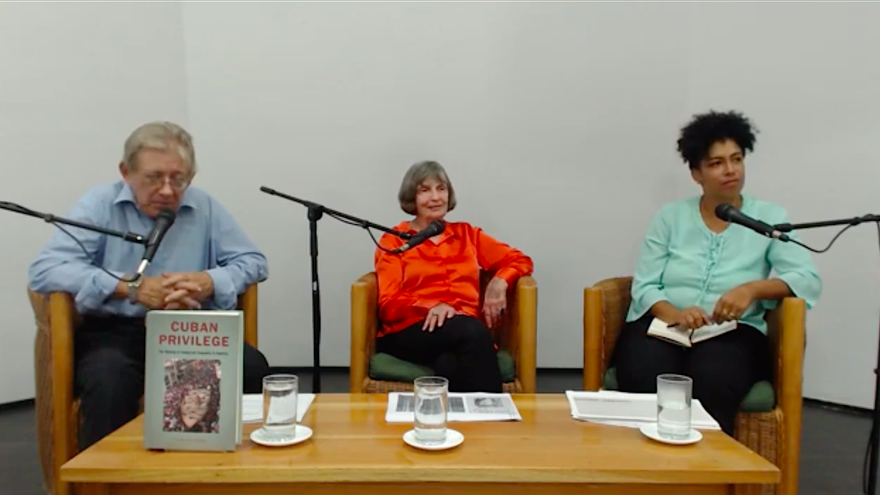
The Author of the Controversial Book ‘Cuban Privilege’ Receives an Enthusiastic Welcome in Havana

Professor Susan Eckstein is not a stranger at Casa de las Américas in Havana, where she appeared the first time in the 1970s. (X/Casa de las Américas)

14ymedio bigger14ymedio, Havana, 9 December 2023 —  “It is a pleasure not to be in a hostile environment, unlike Miami,” American professor Susan Eckstein said this Friday at Casa de las Américas in Havana,  amid laughter and the complicity of the public. The author of Cuban Privilege (Cambridge University Press, 2022), a controversial study on the immigration facilities granted to Cubans in the United States, the academic recalled that she was an old friend of Havana.

Eckstein, her hosts celebrated, has developed a “systematic work” to promote “the Cuban Revolution and its impact within the United States,” although – they clarified – always “from her position as an academic in Boston.” Her book has attracted “a lot of attention” from exile, they added, prompting laughter from those present at the allusion to Miami, where a tense presentation of the volume was organized last year.

The professor is not a stranger to “la Casa,” where she was for the first time in the 1970s, she said. “You may know the image on the cover of the book,” said the academic, showing a huge raft dragged by a crowd of Cubans during the so-called Maleconazo of 1994. The photo, which reminded emigrants from Miami of the painful journey between one shore and another, fleeing the desperation of the Special Period, was Eckstein’s starting point to criticize US immigration policies. continue reading

Why does Washington allow Cubans to enter and settle in US territory? Because, according to Eckstein, they are “white,” “many” and “millionaires”

Why does Washington allow Cubans to enter and settle in US territory? Because, according to Eckstein, they are “white” – unlike Haitians, she noted – they are “many” – 2.3 million, the majority of whom are in Florida, “the most suitable state to stay in,” she mocked – and they are “millionaires” (several large Florida fortunes belong to Cuban-Americans). To facilitate this entry, the authorities have offered “unprecedented benefits,” the latest of which is the parole program promoted by the Joe Biden Administration.

Washington, the professor added, has always wanted to “overthrow the Cuban Revolution,” and one of the strategies has been to “attract the upper class” and professionals, to strip the regime of human capital. Once in the United States, the objective has been to “train” Cubans for a future state “post-Castro and friendly to the United States.” Presidents Barack Obama and Biden have tried to “suspend” the privileges, but the influence of the exile community in Florida is too strong and, ultimately, they have only managed to “purify” the flow: the only people who migrate are those  whose relatives in Florida have money.

Eckstein successfully avoided the elephant in the room: if Cuba is such an advanced country in social security, health, and education, why do its inhabitants leave? The explanations that the academic gave are not the same as the ones she offered in Miami, but they went down better with the public. Cubans leave the country due to the “contagion effect”: if a person decides to emigrate, it is logical that his neighbors will have an urgent desire to leave as well.

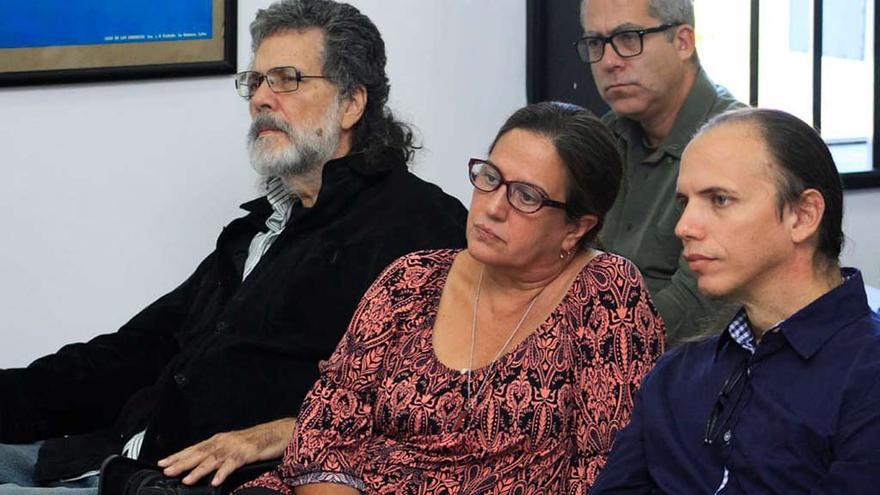
Abel Prieto, along with pro-government officials and journalists, in the front row of the presentation. (Cubainformation)

It is true, she admitted, that many Cubans are disappointed in their Government, but that, in an “open society” like Cuba, is not decisive, she insisted. She blamed, curiously, an ally of the Havana regime, Nicaragua, for implementing visa-free status for Cubans and facilitating the work of migrant “smugglers.”

Although Eckstein was interested in commenting on the main ideas of her book, she saved the best for last: a photograph of the presentation of Cuban Privilege in Miami, on 9 December 2022. The displeased faces of the public, in a Florida International University auditorium, were the best counterpart to the enthusiastic Casa de las Américas audience. “I thought you would enjoy seeing it,” she said. “There I was attacked by the Cuban-American community.”

Eckstein emerged successfully from a round of questions and answers that did not cause her in any trouble. The public, however, was not up to the task: without bookstores or online shopping platforms, few people in the country have been able to purchase the book. One of the few people on the Island who has a copy is President Miguel Díaz-Canel, who was careful to display the book on his desk a few days after its presentation in Miami.

The academic concluded by defining Florida as a hindrance to implementing any radical immigration policy, criticizing – it could not be missed – the embargo and was grateful for being able to feel “at Home.” In an audience made up of stalwarts of the regime, such as the former Minister of Culture Abel Prieto, current president of the Casa de las Américas, and the Spanish journalist Ana Hurtado, it could not be otherwise.

____________

COLLABORATE WITH OUR WORKThe 14ymedio team is committed to practicing serious journalism that reflects Cuba’s reality in all its depth. Thank you for joining us on this long journey. We invite you to continue supporting us by becoming a member of 14ymedio now. Together we can continue transforming journalism in Cuba.
Lessons from Argentina and Venezuela for Building Democracy in Cuba

With María Corina Machado, the Venezuelan opposition now has a leadership legitimized by the participation of the political parties and their voters (EFE).

14ymedio bigger14ymedio, Julio Aleaga Pesant, Manzanillo, 29 October 2023 — Last Sunday, October 22, was a noteworthy page in Latin American politics from which the Cuban democratic opposition can learn. Firstly, the fact that Javier Milei was not elected in the first round of Argentine presidential elections, and secondly that María Corina Machado (MCM) was elected in the primaries for the Venezuelan democratic opposition, are points to consider.

What happened to Milei? In the pre-presidential elections last August, known as Paso, he came in first place. There was such a state of euphoria that he himself boasted that on his birthday he would be elected as President of the Argentine Republic. But he was ultimately relegated to a merited second place in the general election.

What happened was something unique to democracies with parties. Sergio Massa is the candidate of the ruling Peronist coalition, The Union for the Homeland (Unión por la Patria). Given that Massa is an ally of the convicted Christina Fernández de Kirchner, President Alberto Fernández and the continental leftist group el Grupo de Puebla hit the gas pedal of the political structure. Between Kirchner, Fernández, Massa and other “weeds”, they set the party’s electoral machinery in motion.

The Union for the Homeland flexed its muscles and beat the candidate of Liberty Advances (la Libertad Avanza) by 7 points. An organization that recently debuted and is full of euphoric citizens disenchanted  with the “caste”, but who still have much to learn when it comes to politics. continue reading

I do not rule out that the strategists and the money of the Puebla Group were poured into Buenos Aires for that result to occur

I do not rule out that the strategists and the money of the Puebla Group were poured into Buenos Aires for that result to occur, and also that they may color the next runoff election. Everything remains to be seen– in politics, two plus two may not be four.

And in Venezuela? There, they carried out the primary elections of the opposition in order to elect a leader and a team that would promote and set out an agenda that would remove the country from the pit in which it finds itself, based on concrete actions and public policies that would end the long Chavo-Maduro night. Is it the key to The Seven Thunders?  No! But it is an important step toward giving a voice to the Venezuelan citizens.

How did they do it? Well, in the only, and complex, way it can be done. The leaders of the political organizations (United Platform, or Plataforma Unitaria) agreed to hold elections (primaries) to elect the leader of the opposition before the presidential elections. The leaders convened their bases and enlisted them in an independent electoral commission (the National Primary Commission), made up of prestigious lawyers and representatives of the different organizations that participate.

In that process, fiercely bombarded by the caste of  Bolivar-invoking dictators, María Corina Machado, from Vente Venezuela, was elected. In this way, the opposition now has a leadership legitimized by the participation of political parties and their voters. Does it mean that they summited Mount Zion? Also no. Only that they began to travel their “road to Damascus.”

And when will we learn from others?

“The sorrows that mistreat me / are so many that they run over each other / And when to kill me they try / They crowd each other out and that’s why they haven’t killed me”, says Sindo Garay’s song, performed by the unforgettable Silvia Perez Cruz, as the voice of the Cuban democratic opposition in exile or “inxile”, but without a doubt in the center of its labyrinth.

And why don’t we get on with it?

Under the predatory communist regime’s conditions of cruel repression  against all, it is difficult to organize a leadership selection process within the island, like the one that has just been carried out in Venezuela. Especially when the most important opposition parties and organizations also disappeared from the Island in the last seven years under the blows of repression, exile, the old age of the founders, or the lack of interest of young people.

But does something prevent compatriots abroad from forming and accepting leadership, with goals and challenges, and that it be pro-tempore, asks Ernesto Gutiérrez Tamargo from Europe. And he focuses on the exile, for its “freedom of political action and international logistical maneuverability,” and because he has the opportunity to “tune in with the internal opposition on the Island to develop strategies.”

The foundation of these “primaries” that we dream of, he continues, is that “they must represent the essential pillars of building a Constitutional and Democratic State of Law with national proposals to confront the regime in international forums.”

Of course, to feed this proposal, the reluctance of so many “Taifa kingdoms” [petty political factions] must be overcome

Of course, to feed this proposal, the reluctance of so many “Taifa kingdoms” [petty political factions] and political parties without representativeness or leadership capacity must be overcome. But it would be a step. They have denied us the right to exist as a democratic political alternative: “The Pax Castro” classifies us as criminals in its Penal Code.

I agree with the Cuban lawyer, and I would only add that an opposition primary would be the opportunity to make the decision-making process transparent within the democratic opposition. Above all, with regards to the citizens and with the relevant consensus, it would have an effect upon the entire Cuban society, directly affecting the foundations of the regime. It would be a special time of identifying the forces at play and the existence of ideologies, which would begin to coexist for a common good, the homeland and a higher objective: building democracy.

The lessons of October 22 are found in both Argentina and Venezuela: in order to face our national challenges, we need strong and qualified leadership and structures, chosen by the citizens.

Translated by Lucie McCallum (University of Miami/Spanish 321)

____________

COLLABORATE WITH OUR WORKThe 14ymedio team is committed to practicing serious journalism that reflects Cuba’s reality in all its depth. Thank you for joining us on this long journey. We invite you to continue supporting us by becoming a member of 14ymedio now. Together we can continue transforming journalism in Cuba.
‘The Right to Dissent Is Restricted and Criminalized,’ Says Ernesto Daranas at the Havana Film Festival

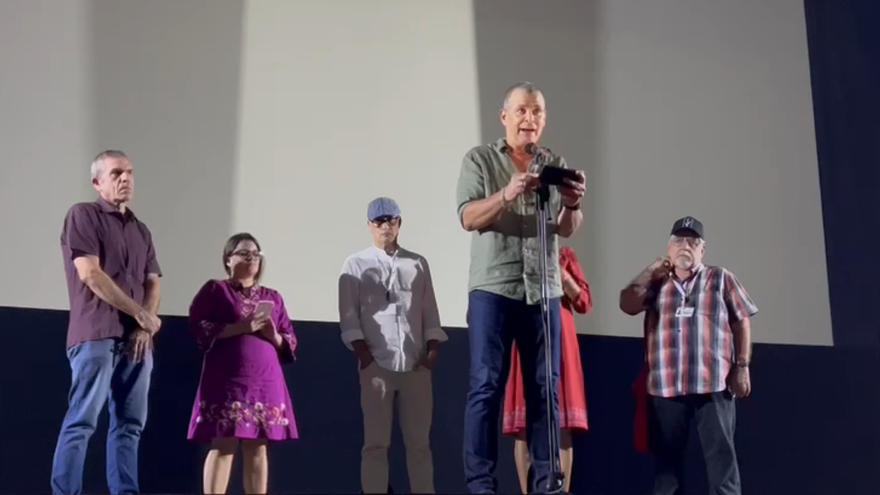
Ernesto Daranas presented his documentary Landrián this Sunday with a very combative speech. (Capture)

14ymedio bigger14ymedio, Havana, December 11, 2023 — On Sunday, three years after the Cuban Institute of Cinematographic Art and Industry (ICAIC) began the restoration of the filmography of the censored Nicolás Guillén Landrián, the Latin American Film Festival showed the documentary titled with the filmmaker’s surname. The director, Ernesto Daranas, surprised the audience when he took the stage and presented the film he described as “visionary of a Cuban cinema submitted to ostracism, imprisonment and finally to exile.”

He did not stop there and managed to deliver a speech of almost three minutes — which was applauded at the end — against a censorship “that is not a case of the past,” since “still today” it is exercised not only on the works, but also on the right of the people “to freely access their films, and on the very institutions of Cuban cinema, which includes this beloved festival.”

“The question then is: why do filmmakers insist on being here? The answer is in you, the people of whom we are part, the true producer and protagonist of our films,” said Daranas, who claimed the event as “the only opportunity” to meet with the public “in a country without cinema,” and to be sure that “a film can change the world, even for 90 minutes.”

The question then is: why do filmmakers insist on being here? The answer is in you, the people of whom we are a part, the true producer and protagonist of our films”

Daranas reclaimed the figure of Guillén Landrián, nephew of the poet Nicolás Guillén, an active fighter against the Batista dictatorship but later repudiated for his “licentious attitude” and comments “not in accordance with a young revolutionary,” according to the documentary itself. His figure embodies the raison d’être of the Assembly of Cuban Filmmakers, said the director, who asked to open a debate on the “stigmas of Cuban culture and society in general.” continue reading

“The true problem has never been in our movies, but in the reality to which they are owed. There can definitely be no different country for cinema than the one we have as a people. That’s why censorship persists; that’s why the right to dissent is restricted and criminalized,” he continued, in the midst of the apparent tranquility of those who accompanied him on stage and the public.

“Permit me then to dedicate this presentation to all colleagues and compatriots subject to exclusion and censorship. To those who in any corner of Cuba and the world are still determined to freely tell their stories, to freely express and defend their ideas. And of course let me dedicate this film today to our Assembly of Cuban Filmmakers, of which I like to think that Landrián, along with so many greats of our cinema, would also have been part,” he concluded.

The video of the presentation was disseminated by the Facebook group of the Assembly of Cuban Filmmakers, which expressed its emotion at what was seen or experienced, according to those who were in the room. Although not everyone assumes that the action will not be punished. “What will happen now with Daranas? Because those of us who were born in Cuba know that censorship and exclusion cannot be condemned without consequences,” said one commentator.

What will happen now with Daranas? Because those of us who were born in Cuba know that censorship and exclusion cannot be condemned without consequences”

The presentation of Daranas’ film was announced in Prensa Latina this Sunday. Landrián was spoken of as a “recognized avant-garde figure within national cinema,” and it was described as a “paradox” that he is “one of the filmmakers least known to the Cuban public” despite his being of great academic interest.

The article also calls the filmmaker “controversial” and adds that the film narrates, among other things, Landrián’s “phase as a poet and the reasons that led him to emigrate to the United States.”

Daranas told Prensa Latina that his film is “a spiritual mass that bears witness to suffering and many things that unfortunately continue to damage our cinema.” The pro-government media did not respond.

Landrián – a Spanish-Cuban co-production – was premiered in the Clásicos de la Mostra program at the prestigious Venice Festival, class A, held in September. The international press then reported details such as the psychiatric hospitalizations that the filmmaker suffered, during which he underwent electroshock therapy for his “ideological deviation,” until in the 80s he managed to go into exile in Miami, expressly authorized by Fidel Castro.

In 2019, 16 years after Landrián’s death from pancreatic cancer, Daranas found his film file on the Island in very bad condition and began the restoration, after an agreement with the ICAIC. “With the restoration that we have made of ten of his films and with this documentary we seek to present to the general public an exceptional filmmaker who faced a problem that unfortunately many Cuban filmmakers still face today: censorship,” Daranas declared in Venice.

The international press did then reported details such as the psychiatric hospitalizations that the filmmaker suffered, during which he underwent electroshock therapy for his “ideological deviation”

With Daranas’ appearance yesterday, the Assembly of Cuban Filmmakers partially removed the discomfort of having two “uncomfortable” films not accepted by the selection committee: Llamadas desde Moscú [Calls from Moscow], by Luis Alejandro Yero, and La Habana de Fito [Fito’s Havana], by Juan Pin Vilar. The latter was precisely the person who started an open war between the authorities and this group, born in June of this year, which was manifested through a letter signed by more than 600 professionals in the sector who demanded changes from the Ministry of Culture.

Ernesto Daranas, director of the award-winning Conducta [Conduct], has been involved in more protests against government policies, such as the G-20 film collective, which in 2014 demanded a new Law of Cinema and the end of censorship. Almost ten years later, the complaint is still valid.

Translated by Regina Anavy

____________

COLLABORATE WITH OUR WORKThe 14ymedio team is committed to practicing serious journalism that reflects Cuba’s reality in all its depth. Thank you for joining us on this long journey. We invite you to continue supporting us by becoming a member of 14ymedio now. Together we can continue transforming journalism in Cuba.
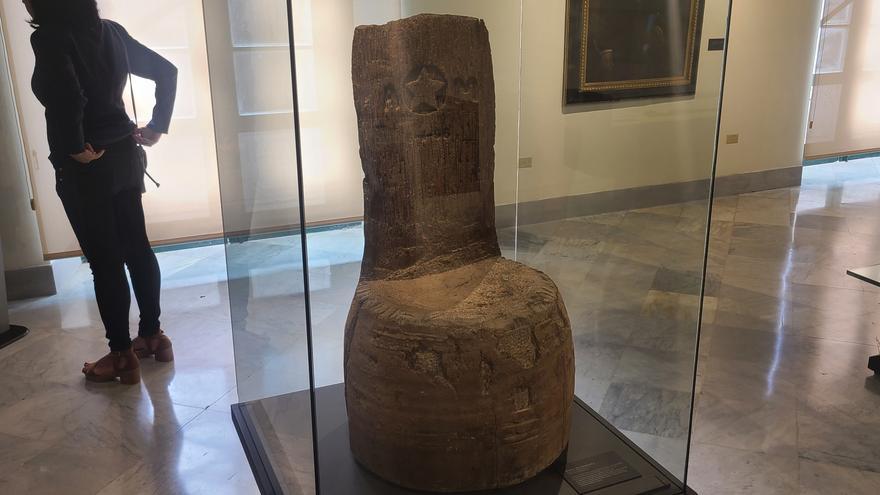
Demanded Back by Mallorca, Antonio Maceo’s Chair is the Star of a Cuban Exhibition

The exhibition revolves around the chair but there are other objects, either used by the major general or otherwise connected to him. (14ymedio)

14ymedio bigger14ymedio, Nelson García, Havana, 9 December 2023 – If the mayor of Palma de Mallorca wants to get Antonio Maceo’s chair back he’ll certainly know where to find it. The Captain Generals’ Palace in Old Havana has opened an exhibition of objects connected to this commander of the independence movement, which includes the trunk of a palm tree made into a chair. This piece of furniture, expropriated by one Valeriano Weyler after Maceo’s death, actually belongs to the local council of the Balearic island, which loaned it to Cuba in 2018 and is now demanding it back.

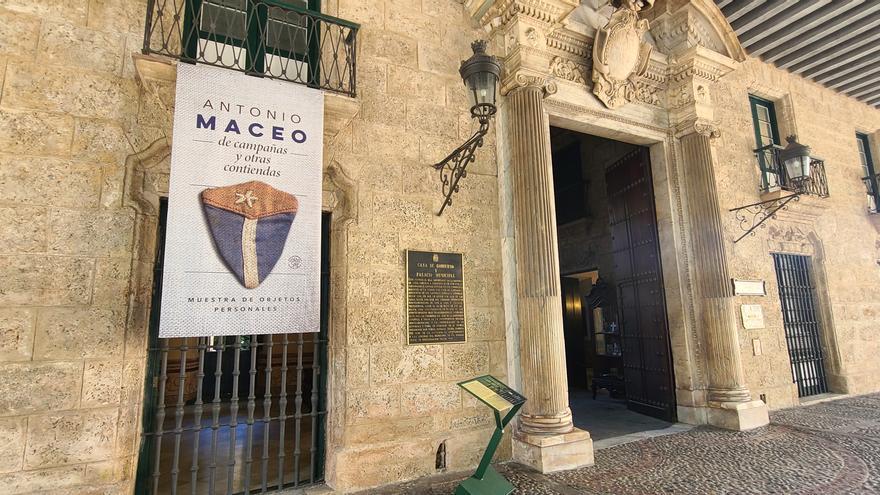
The expiry date of the loan – 16 November, which was extended on more than one occasion at the request of the late official Havana Historian Eusabio Leal – was the subject of a meeting between the mayor of Mallorca, Jaime Martínez, and Alejandro Castro Medina, the Cuban consul in Barcelona. The request to return the chair to Palma fell on deaf ears and Havana confirmed this with the Antonio Maceo exhibition – along with other campaigns and arguments – organised by the Historian’s Office and open to the public from 7 December for the anniversary of the leader’s death.

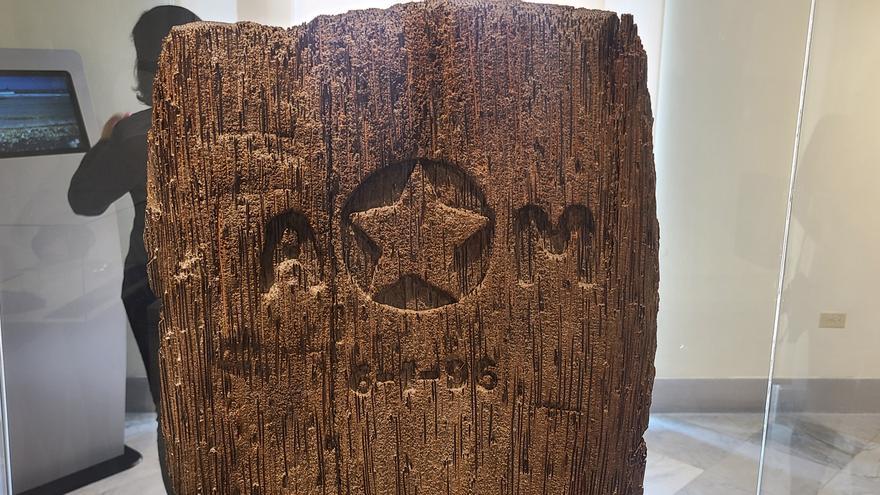
The back of the chair has carvings  of a star, the leader’s initials and the date the chair was made. (14ymedio)

The exhibition revolves around the chair but there are other objects, either used by the major general or otherwise connected to him, such as the well known oil painting, The Death of Maceo, by Armando Menocal, which depicts – but not without many historical inaccuracies – his fall at Punta Brava on 7 December 1896.

Another well known painting, by Aurelio Melero, of a besuited Maceo, also forms part of the exhibition, as well as a good luck charm relic – a piece of a shirt – “authenticated” by the ex president of Cuba, Salvador Cisneros Betancourt.

Behind glass screens one can also view the leader’s riding saddle, his German ’Fernando Esser’ machete – replicas of which the regime entrusts to dignitaries of the island – a Winchester rifle from 1873, a Smith & Wesson 44 calibre revolver, a watch, a wallet, a sword, shoes and other personal effects.

In September, when the Mallorcan Martínez met with the Cuban Castro Medina, this newspaper established that the chair wouldn’t be exhibited to the public, as the second floor of the Captain Generals’ Palace was under repair. The restructuring of the building has not been completed, but a small room on the ground floor has been air conditioned to house the object. continue reading

A Winchester rifle and a sword, both owned by Maceo. (14ymedio)

Maceo’s chair arrived in Cuba as part of Spanish president Pedro Sánchez’s luggage when he visited Havana in 2018. Eusabio Leal said at the time that the chair was of significant importance to Cuba. The Weyler family had donated it to the Palma de Mallorca council in 1931, and it remained on exhibition until negotiations for its loan to the island bore fruit.

The Spanish press gave assurance, before the polemic about the return of the object, that Havana was exhibiting it in “a special room”, as it was a “treasure of incalculable value for strengthening the revolutionary message which still prevails in the post-Castro era”.

The Historian’s Office itself gave assurances that it would quickly build a room for what Leal described, just a few days before he died, as “an important part of the soul of our country”. And in doing so, it sent – through the very mounting of the exhibition – a clear message to Madrid: the chair is staying in Cuba.

The Captain Generals’ Palace, where the exhibition is held. (14ymedio)

Translated by Ricardo Recluso

____________

COLLABORATE WITH OUR WORKThe 14ymedio team is committed to practicing serious journalism that reflects Cuba’s reality in all its depth. Thank you for joining us on this long journey. We invite you to continue supporting us by becoming a member of 14ymedio now. Together we can continue transforming journalism in Cuba.