A neighbor improvised a bridge of blocks to be able to leave her house: “You can’t even go out in flip-flops if you don’t want to come back with dirty feet.”
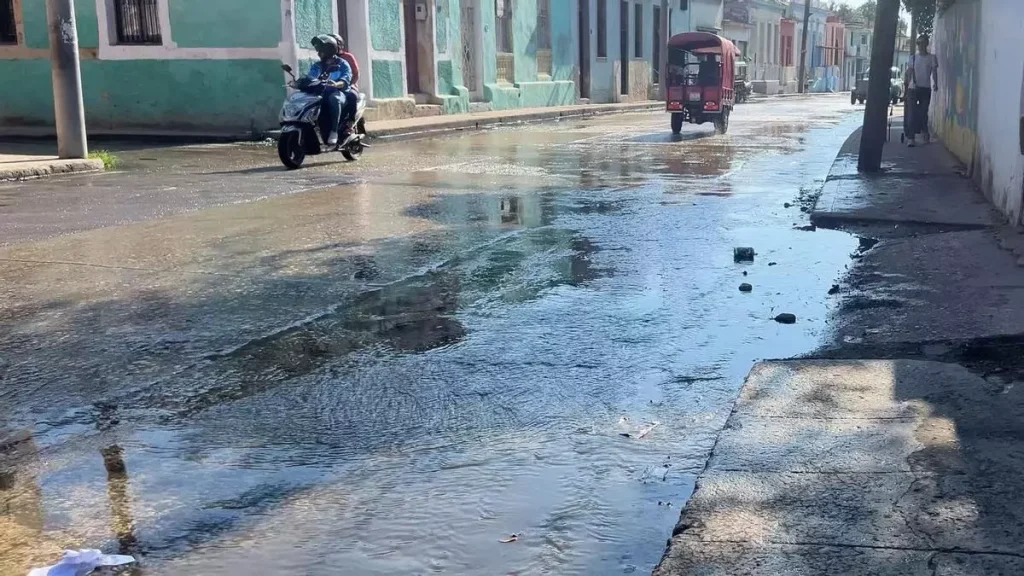
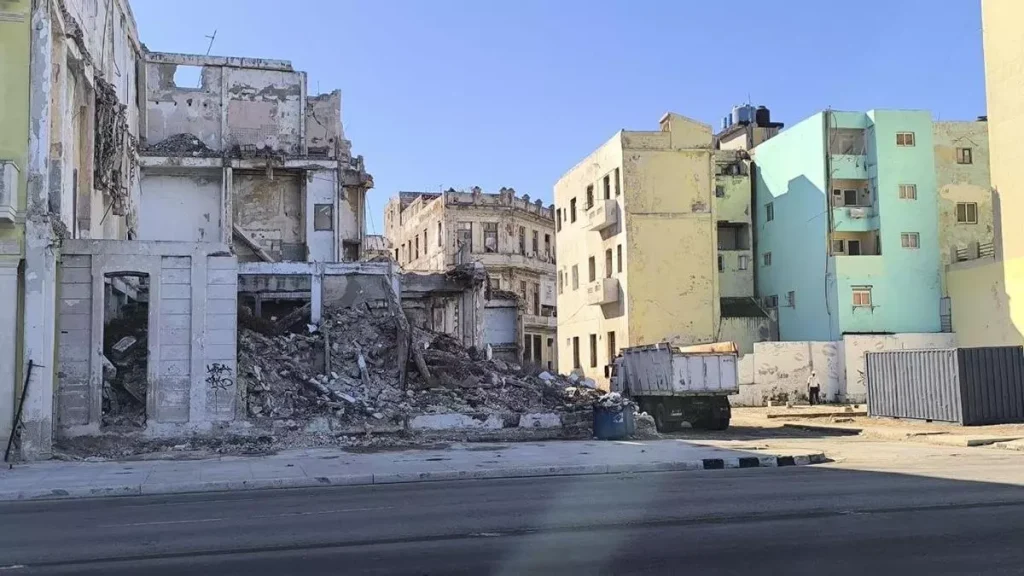
 14ymedio, Darío Hernández, March 21, 2026 – Havana / Sewage water flows freely through the streets of Guanabacoa, to the point that Corral Falso, the municipality’s main avenue, is impossible to cross in stretches that span several blocks. Overflowing septic ditches have further undermined sanitation in the area, and residents are forced to live with a dark, green, viscous river up to 20 cm deep, under a blazing sun and temperatures above 30 degrees.
Overflowing drains can be seen even in the most unsuitable places. For example, on the corner by the Guillermo Tomás music school, which also has a garbage dump nearly 30 meters long in front of it. Or every weekend, around the agricultural markets, where trucks arrive and distribute food for the population on improvised platforms.
The problem of sewage water in Havana goes back a long time, and in most cases is due to breaks, lack of sanitation, and above all the poor condition of the capital’s sewer system. However, it has worsened with the unchecked proliferation of garbage dumps due to the lack of fuel.
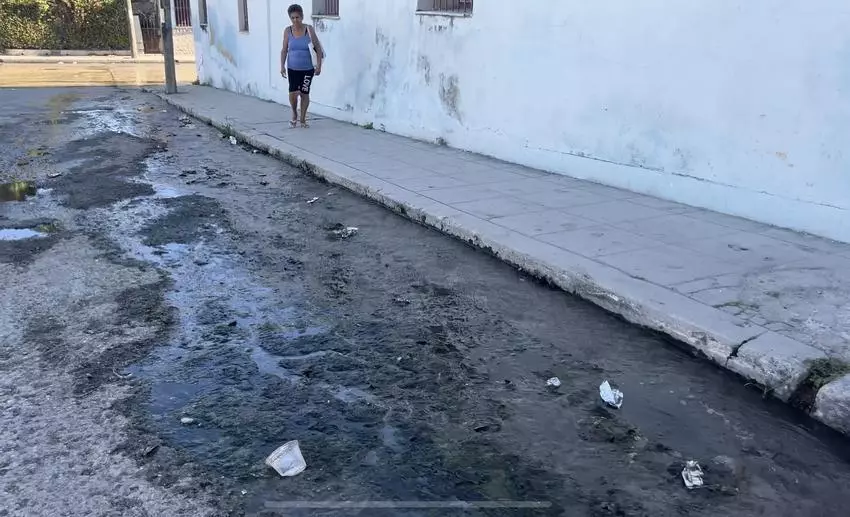
“This is a never-ending war. You call Aguas de La Habana or Communal Services, and they come when they can and unclog the sewer in question, but as soon as the water starts flowing again, the blockage and the rot return,” says Zulema, who has one of those “multicolored springs,” as she ironically calls them,running in front of her doorway.
“That green stuff you see there shows you that the water stagnates here for weeks. The stench, the flies, the mosquitoes, and everything that comes with it is something we have to live with,” Zulema continues. The neighbor has had to improvise a “bridge” of blocks to be able to leave her house. “You can’t even go out in flip-flops if you don’t want to come back with dirty feet.”
Tricycles and electric motorcycles—because there are no longer cars—slow down on these blocks so as not to splash and dirty continue reading
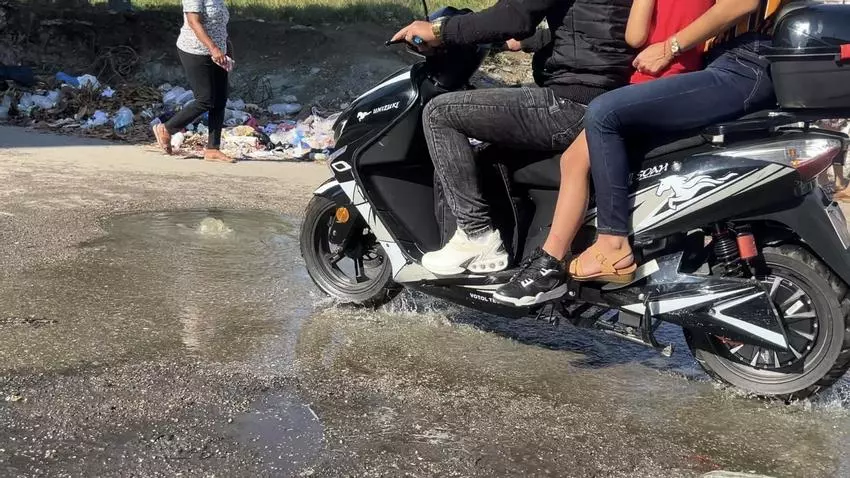
Lázaro, another affected resident, says the problem already existed before, but that “the water was more potable, not as unsanitary.” The problem worsened, he recounts, when workers from Communal Services recently broke a pipe while doing cleaning work, “and now the sewer overflows more easily.” Added to this, he continues, is that at every corner there is a “mini dump.” “If you put those two things together, the result is what we are living through,” he summarizes. “What are we living through? I can’t define it in words, but it’s profoundly immoral.”
“When the agricultural fairs began, I had my stall on that block. They were all around the Amphitheater, but we had to move over here,” says Miguel, who now sells root vegetables and produce on the block next to the Amphitheater. “There was one time when the entire fair was moved to another location, a few blocks from the Municipal Party headquarters, precisely because of this, because of the filth in this place. Apparently there were complaints from residents. It really was just one block that, although wide, was uncomfortable for everyone, and the following week we came back here. In other words, they know this is not the ideal place to sell food, but there’s no alternative.”
River of sewage in Guanabacoa: living among waste / 14ymedio
Translated by Regina Anavy
______________________
COLLABORATE WITH OUR WORK: The 14ymedio team is committed to practicing serious journalism that reflects Cuba’s reality in all its depth. Thank you for joining us on this long journey. We invite you to continue supporting us by becoming a member of 14ymedio now. Together we can continue transforming journalism in Cuba.